Home Blog Page 36

New Google Gemini update enables beginners to create software

GOOGLE AI STUDIO

Multinational technology firm Google announced on Thursday a major update to its artificial intelligence (AI) model, Gemini, where users even beginners, can begin developing software through the new Google AI Studio.

​In a statement, the tech company said that through Google AI Studio, powered by Gemini 3, software development is now heading into an era of “vibe coding.”

​This means that the user can just provide a prompt or idea, while the AI, such as Google AI Studio, does the work by handling the code, visuals, and logic.

​Google said that, basically, even beginners with no programming background can create software with the new update.

​”We’re moving from a world where you have to write every line manually, to a world where you orchestrate,” said Logan Kilpatrick, group product manager at Google DeepMind, the company’s AI research lab.

​”The fundamental skills of critical thinking and creativity are becoming more valuable, not less,” he added.

​Google AI Studio can be accessed through the website aistudio.google.com. Upon visiting the website, there is a chatbox that allows the user to write a prompt for the desired software or application.

​Based on an initial attempt, the indicated prompt generated a working result in minutes, which is aligned with what Google claimed in its statement.

​Multimedia formats such as video, image, and audio inputs can also be uploaded to the platform and integrated into the generated application. Then it can deployed to Google Cloud with a single click, Google said.

The tech giant  said that by removing traditional coding barriers, Google is empowering users such as students, educators, and entrepreneurs to focus on innovation, creativity, and real-world problem solving.

​The Gemini app is being used by over 650 million users per month, according to Google’s report in November.— Edg Adrian A. Eva

US withdraws from the World Health Organization

THE World Health Organization (WHO) logo is seen on the exterior of entry door at WHO Headquarters in Geneva, Switzerland, on July 19, 2023. — WHO/PIERRE ALBOUY

LONDON — The United States officially left the World Health Organization on Thursday after a year of warnings that doing so would hurt public health in the US and globally, saying its decision reflected failures in the UN health agency’s management of the COVID-19 pandemic.

President Donald Trump gave notice that the US would quit the organization on the first day of his presidency in 2025, via an executive order.

According to a press release from the US Health and State Departments, the US will only work with the WHO in a limited fashion in order to effectuate the withdrawal.

“We have no plans to participate as an observer, and we have no plans of rejoining,” a senior government health official said. The US said it plans to work directly with other countries – rather than through an international organization – on disease surveillance and other public health priorities.

DISPUTE OVER US-OWED FEES
Under US law, it was supposed to give one-year notice and pay all outstanding fees – around $260 million – before departing.

But a US State Department official disputed that the statute contains a condition that any payment needs to be made before withdrawal.

“The American people have paid more than enough,” a State Department spokesperson said in an email earlier on Thursday.

The Department of Health and Human Services said in a document released on Thursday that the government had ended its funding contributions to the agency. Mr. Trump had exercised his authority to pause the future transfer of any US government resources to the WHO because the organization had cost the US trillions of dollars, the HHS spokesperson said.

The US flag had been removed from outside the WHO headquarters in Geneva on Thursday, according to witnesses.

In recent weeks, the US has moved to exit a number of other United Nations organizations, and some fear that Mr. Trump’s recently launched Board of Peace could undermine the UN as a whole.

Several WHO critics have also proposed setting up a new agency to replace the organization, although a proposal document reviewed by the Trump administration last year instead suggested the US push for reforms and American leadership at WHO.

QUICK RETURN UNLIKELY
Over the last year, many global health experts have urged a rethink, including most recently WHO Director General Tedros Adhanom Ghebreyesus.

The WHO also said the US has not yet paid the fees it owes for 2024 and 2025. Member states are set to discuss the US departure and how it will be handled at the WHO’s executive board in February, a WHO spokesperson said.

“This is a clear violation of US law,” said Lawrence Gostin, founding director of the O’Neill Institute for Global Health Law at Georgetown University in Washington, a close observer of the WHO. “But Trump is highly likely to get away with it.”

Bill Gates – chair of the Gates Foundation, a major funder of global health initiatives and some of the WHO’s work – told Reuters at Davos that he did not expect the US to reconsider in the short term.

Mr. Gates said he would still advocate for the US to rejoin. “The world needs the World Health Organization,” he said.

WHAT THE DEPARTURE MEANS
The US departure has sparked a financial crisis that has seen the WHO cut its management team in half and scale back work, cutting budgets across the agency. Washington has traditionally been by far the UN health agency’s biggest financial backer, contributing around 18% of its overall funding. The WHO will also shed around a quarter of its staff by the middle of this year.

The agency said it has been working with the US and sharing information in the last year. It was unclear how the collaboration will work going forward.

Global health experts said this posed risks for the US, the WHO, and the world.

“The US withdrawal from WHO could weaken the systems and collaborations the world relies on to detect, prevent, and respond to health threats,” said Kelly Henning, public health program lead at Bloomberg Philanthropies, a US-based non-profit.— Reuters

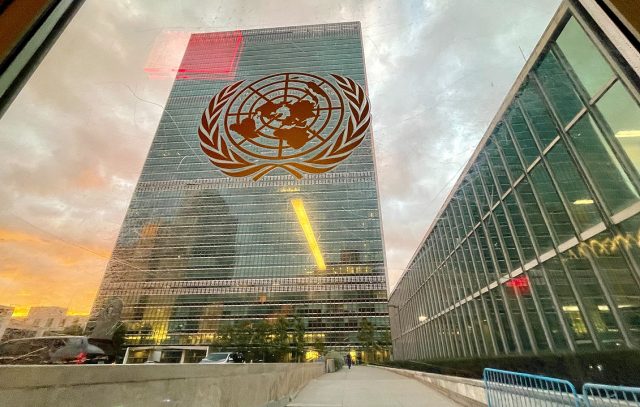
UN agencies take responsibility for IS camps in Syria after Kurds retreat

REUTERS

BAGHDAD/UNITED NATIONS — The United Nations said on Thursday it was taking management responsibility for vast camps in Syria housing tens of thousands of women and children associated with Islamic State (IS), after the rapid collapse of Kurdish-led forces who guarded them for years.

Iraq, which has begun taking in detainees transferred from prisons in Syria as the Kurds retreat, said it would begin prosecuting them through its criminal justice system, and called on other countries to help take them in.

More than 10,000 members of Islamic State, and tens of thousands of women and children associated with them, have been held for years in about a dozen prisons and detention camps guarded by the Kurdish-led Syrian Democratic Forces (SDF) in Syria’s northeast.

The SDF has rapidly retreated this week after clashes with Syrian government forces, raising concern about security at prisons and humanitarian conditions at the camps.

The United Nations said the SDF withdrew on Tuesday from al-Hol, which along with another camp, Roj, houses 28,000 civilians, mainly women and children who fled Islamic State’s strongholds as the group’s self-proclaimed caliphate collapsed. They include Syrians, Iraqis, and 8,500 nationals of other countries.

Syrian government forces had established a security perimeter around the camp and teams from the UN refugee agency UNHCR and the UN children’s agency UNICEF reached the camp on Wednesday, officials said.

“UNHCR – which has taken over camp management responsibilities – is actively coordinating with the Syrian government to urgently resume the safe delivery of life-saving humanitarian assistance,” senior UN aid official Edem Wosornu told the UN Security Council.

UN officials had not yet been able to enter because “the situation in the camp remains rather tense and volatile with reports of looting and burning,” UN Spokesperson Stephane Dujarric told reporters. He said the Syrian government had expressed a willingness to provide security and support for UNHCR and aid groups.

DETAINEES SENT TO IRAQ
The US military said on Tuesday its forces had transferred 150 detainees from Syria to Iraq at the start of an operation that could eventually see up to 7,000 detainees moved out of Syria.

A US official told Reuters on Tuesday that about 200 low-level IS fighters escaped from Syria’s Shaddadi prison, although Syrian government forces had recaptured many of them.

Iraq’s Deputy UN Ambassador Mohammed Sahib Mejid Marzooq told the UN Security Council on Thursday that Iraq was accepting detainees to protect regional and international security, but that other countries should be prepared to help.

“This issue should not be left to become a long-term strategic burden on Iraq alone. The insistence of some states on considering their terrorist nationals a threat to their national security and the refusal to repatriate them is unacceptable,” he said.

Islamic State emerged in Iraq and Syria, and at the height of its power from 2014-2017 held swathes of the two countries, ruling over millions of people. Its “caliphate” eventually collapsed after military campaigns by regional governments and a US-led coalition.

An Iraqi military spokesperson confirmed that Iraq had received a first batch of 150 IS detainees, including Iraqis and foreigners, and said the number of future transfers would depend on security and field assessments. The spokesperson described the detainees as senior figures within the group.

RELATIVES OF SOME DETAINEES WORRIED ABOUT THEIR FATE
Iraq’s Supreme Judicial Council said Iraqi courts would take “due legal measures” against detainees once they are handed over and placed in specialized correctional facilities.

“All suspects, regardless of their nationalities or positions within the terrorist organization, are subject exclusively to the authority of the Iraqi judiciary,” the statement said.

Iraqi officials say IS detainees will be separated, with senior figures including foreign nationals to be held at a high‑security detention facility near Baghdad airport previously used by US forces.

The transfers have raised concern among some relatives of IS detainees in Europe. A European woman whose relative joined the group and was detained in Syria said her family was alarmed by reports that prisoners were being moved to Iraq, noting that Iraq has the death penalty.

Speaking on condition of anonymity, she said the family initially hoped changes in control in Syria might bring information on her relative’s fate.

“At least we thought we might finally learn where he is, whether he is alive or sick,” she said. “But when we saw that the prisoners were being taken to Iraq, that frightened us.”

Two Iraqi legal sources said the IS detainees sent from Syria include a mix of nationalities, with Iraqis making up the largest group, alongside Arab fighters from other countries and nationals of Britain, Belgium, France, Germany and Sweden.— Reuters

In Davos debut, Musk says US tariffs make solar power a challenge

ELON MUSK — REUTERS

DAVOS, Switzerland — Elon Musk marked his last-minute Davos debut on Thursday with a critique of US solar tariffs and aggressive targets for Tesla, including humanoid robot sales next year, as well as flagging European approval for self-driving tech within weeks.

After years of describing the World Economic Forum’s annual meeting as elitist, unaccountable and disconnected from ordinary people, the world’s richest man was interviewed by World Economic Forum interim co-chair Larry Fink.

The BlackRock CEO expressed his admiration for Mr. Musk at the start of the wide-ranging discussion, which covered the future of robots and AI, the economic benefits of reusable rockets and Mr. Musk’s childhood fascination with science fiction.

Mr. Musk has become more prominent in recent years, driven by his proximity to US President Donald Trump and his stewardship of firms including Starlink-owner SpaceX, social media platform X, and artificial intelligence startup, xAI.

Breaking ranks with Mr. Trump on renewable energy, Mr. Musk said the United States could produce enough solar power to meet all of its electricity needs, including booming demand from the proliferation of Big Tech’s power-hungry data centers.

“You could take a small corner of Utah, Nevada or New Mexico – a very small percentage of the area of the US – to generate all of the electricity that the US uses,” he added.

“Unfortunately, the tariff barriers for solar are extremely high and that makes the economics of deploying solar artificially high,” Mr. Musk said.

Mr. Trump has been openly critical of clean energy sources while encouraging oil majors to drill more for oil and gas.

His freeze on approvals for major onshore wind and solar projects has left thousands of megawatts of capacity in limbo at a critical time for the US as it rushes to secure enough power to meet soaring AI-driven requirements.

‘WE DON’T WANT TO BE IN TERMINATOR’
The interview did not touch on other major geopolitical and economic themes that have dominated the forum this week, including Mr. Trump’s ambitions for Greenland and Russia’s war in Ukraine, focusing instead on technology and robotics.

The pair joked about aliens, life on Mars, and the “Terminator” film series.

“We need to be very careful with robotics. We don’t want to find ourselves in a James Cameron movie. Love his movies, but we don’t want to be in Terminator, obviously,” said Mr. Musk, referring to the fictional AI system from the “Terminator” films that becomes self-aware and turns on humanity.

Among the highest profile executives speaking at the Swiss mountain resort this week, Mr. Musk predicted robots will eventually outnumber humans, leading to a huge economic boom, and joked about traveling to Mars.

“People ask me do I want to die on Mars, and I’m like: ‘yes, but not on impact’,'” he said towards the end of the 30-minute session, drawing laughter from the audience.

His appearance at Davos comes as governments and regulators from Europe to Asia crackdown on sexually explicit content generated by his xAI chatbot Grok on X, launching probes, imposing bans and demanding safeguards, in a growing global push to curb illegal material.— Reuters

BIR to resume issuance of LoAs within Q1

Finance Secretary Frederick D. Go — COURTESY OF DEPARTMENT OF FINANCE

THE BUREAU of Internal Revenue (BIR) may resume the issuance of letters of authority (LoA) within the first quarter, as the agency seeks to boost revenue collection.

Finance Secretary Frederick D. Go said tax audits should be resumed as the BIR seeks to meet its revised P3.431-trillion revenue target this year.

“We need to resume that. We need that for revenue collection,” he told reporters on Wednesday evening.

An informed source said the BIR will likely resume LoA issuance within the first quarter.

The LoA is a document from the BIR that allows an examiner to inspect taxpayer accounts. It is required before any tax audit can proceed.

Last November, the BIR banned all field audits, including the issuance of LoAs, mission orders and examinations, following misuse allegations by business groups and lawmakers.

“I must tell you that the Bureau of Internal Revenue (BIR) cannot also survive with these letters of authority suspended forever,” Mr. Go said during his speech at the Financial Executives Institute of the Philippines event on Jan. 21.

The BIR collected only P3.11 trillion in 2025, missing its full-year target of P3.22 trillion.

Data provided to journalists showed that the BIR has lowered its revenue collection target this year to P3.431 trillion, 4.14% lower than the previous goal of P3.579.9 trillion. However, it is 10.5% higher than the actual collection in 2025.

“When we resume this (LoA) activity, we will reduce the number of departments within the BIR authorized to issue letters of authority, and reduce the number of letters of authority a taxpayer can receive in any given year,” Mr. Go said.

Mr. Go said the BIR will also digitalize and institutionalize a data-driven audit selection process for LoA.

“By leveraging automated risk-based modeling, we are creating a system that minimizes discretion and strengthens accountability. The keyword here is quality assessments, and we will not allow arbitrary or abusive audits,” he said.

The BIR earlier announced preparations ahead of the suspension’s lifting to address concerns of businesses. Business groups have long complained that inconsistent audit practices create uncertainty and expose firms to potential abuse.

BIR Commissioner Charlito Martin R. Mendoza has said the agency earlier established a Technical Working Group Review Committee on Assessment Integrity and Audit Reform following the suspension of tax audits.

The committee is now in the final stages of completing the policy issuances that will guide audit procedures once the freeze is lifted, he said.

Mr. Mendoza had said that once audits resume, taxpayers will have access to an LoA verifier through the BIR’s Chatbot REVIE, and a new policy will limit audits to one LoA per taxpayer.

He added that the agency will also implement a “revalida,” or audit‑the‑auditors system, to tighten accountability among revenue officers.

These reforms are part of the BIR’s five-point priority reform agenda, called BIR DARES, with audit reforms as its top priority.

DARES stands for Digital and Data Transformation, Audit Reform and Accountability, Revenue Collection and Base Protection, Employee Empowerment and Welfare Promotion, and Service Excellence and Stakeholder Engagement.

Meanwhile, the Bureau of Customs’ (BoC) 2026 collection target has also been lowered to P1.003 trillion, 1.07% below the original goal of P1.0138 trillion but 7.34% higher than the P934.4-billion actual collection last year.

Customs Commissioner Ariel F. Nepomuceno earlier said the agency missed its P958.71-billion target in 2025 due to slower import activity amid the rice import ban and the corruption scandal.

In addition, the government raised its nontax revenue collection target by 40.47% to P349.9 billion from its previous target of P249.1 billion.

For 2026, the collection target for other offices is pegged at P38.7 billion. — ARAI

Philippines falling short of its RE targets, says S&P Global

Solar panels are seen in Batangas in this file photo. — PHILIPPINE STAR/NOEL B. PABALATE

By Sheldeen Joy Talavera, Reporter

THE PHILIPPINES may not be able to hit its renewable energy (RE) targets on time due to grid constraints and challenges in securing permits, according to S&P Global.

Vince Heo, director of Asia-Pacific Power and Renewables Research at S&P Global, said that RE’s share in the national power mix may only reach 27% in the next four years and 50% by 2050.

“We are making a forecast. It’s our own view. It’s not based on our base case,” Mr. Heo told reporters on the sidelines of an event in Makati City on Wednesday.

S&P Global’s latest forecast falls short of the Philippines’ target to raise the share of renewables in the power generation mix to 35% by 2030 and 65% by 2050.

RE accounts for 25% of the country’s energy mix.

Coal still dominates the energy mix but the Philippines is trying to move away from fossil fuel and tapping renewables to have a cleaner and more sustainable source of power.

The Department of Energy (DoE) has been launching a series of green energy auctions (GEAs) to entice more developers to harness renewable energy sources, which has so far promised around 20 gigawatts (GW) of potential capacity.

Despite this, Mr. Heo said that there is still “a big gap” between the government targets and the green energy auction.

“They always disclose a very big number but when let’s say the GEA-4 was announced, we discounted the actual capacity to be installed knowing that there will be challenges in meeting all these targets,” he said.

“Let’s say all these solar projects, seven gigawatts are all operational, there’s an issue with dealing with this intermittency from solar and there’s not enough storage in the power grid,” he added.

Mr. Heo said this would likely push the country to rely more on “firm capacity” from coal and gas, which can provide round-the-clock power.

Earlier this year, the National Grid Corp. of the Philippines — the country’s sole grid operator — has called for “a more incisive and progressive policies” on the entry of variable renewable energy to ensure grid stability.

At the same time, Mr. Heo pointed out that the cost of financing a project in the Philippines is higher than in other countries.

“I think [the Philippines has] a WACC (weighted average cost of capital) estimation of about 10-11% for solar project which is about 3-4% higher than the other markets and that’s a big portion of your project,” he said.

Mr. Heo said the Philippines has higher country risk, making it difficult for international banks to finance projects in the Philippines.

“A lot of things on the government regulation, uncertainties in the transmission, etc. It’s much more clear and visible in other advanced markets than the Philippines,” he said.

Mr. Heo said the DoE’s termination of RE contracts is “good news,” as it shows the government is committed to transparency.

“I think it’s good that the government came out and announced this news so that everyone knows what’s happened and the consequences of not meeting the timeline,” he said.

The DoE earlier said it has terminated and relinquished 163 RE contracts, which is equivalent to nearly 18 GW of potential capacity, due to the failure of developers to implement these projects.

Also, Mr. Heo said the Philippines is attracting more foreign interest after it opened its RE market to 100% foreign ownership.

“Philippines is an interesting market, but definitely the government lifting the foreign ownership restrictions was a good trigger. We see a lot of foreign developers and investors now interested in the Philippines market,” he said.

Meanwhile, Avril de Torres, deputy executive director at think tank Center for Energy, Ecology, and Development, said that failing to meet the RE targets “is certainly a possible scenario for the Philippines.”

She said that this is due to the government’s policy directions that allow coal, gas, and other “detrimental energy sources” to crowd out renewable energy, rather than be displaced by it.

“The government must ramp up support for distributed and community-based RE initiatives to help take advantage of this untapped potential, such as through incentives and concessional financing,” Ms. De Torres told BusinessWorld.

Rice millers committed to higher farmgate prices for palay — DA

A farmer dries rice grains on a road in Baliuag, Bulacan in this file photo. — PHILIPPINE STAR/KJ ROSALES

By Vonn Andrei E. Villamiel

RICE MILLERS have committed to raising their buying prices for both wet and dry palay (unmilled rice), while importers agreed to an initial shipment of 300,000 metric tons (MT) to arrive by the end of February, ahead of the peak harvest season, the Department of Agriculture (DA) said.

At a briefing on Thursday, Agriculture Assistant Secretary Arnel V. De Mesa said the commitment followed consultations by the DA with rice millers and importers, amid the early start of the dry-season harvest.

Mr. De Mesa said millers agreed to buy unmilled grain at a minimum of P17 per kilo for wet palay and P21 per kilo for dry palay, particularly in major rice-producing provinces in Northern and Central Luzon.

“The millers committed that they will buy at that price. Hopefully, it will be maintained until the end of the harvest season in April,” he said in mixed English and Filipino.

The higher farmgate price is expected to provide much-needed support to farmers, as palay prices have dropped over the past year.

Preliminary data from the Philippine Statistics Authority showed that the national average farmgate price of dry palay in 2025 was P17.70 per kilo, down 24.62% from P23.48 a year earlier.

Following consultations with importers, the DA also identified an initial import volume of about 300,000 MT through the end of February, subject to further review based on market conditions.

“The volume needs to arrive on or before the end of February, so that it will not coincide with peak harvest in March and April,” Mr. De Mesa said.

According to guidelines issued by the Bureau of Plant Industry, rice shipments arriving beyond the Feb. 28 deadline will be returned to the source country at the expense of the importer.

Data from the bureau showed that 178,397 MT of imported rice arrived in the country from Jan. 1 to 15, more than double the 71,772 MT initially projected for the period.

Mr. De Mesa said the DA will study whether to reimpose an import ban or further limit import volumes once the peak harvest season begins in March.

He added that the tariff rate on imported rice remains at 15%, pending an official announcement from the agency.

In a separate statement, the DA said rice tariffs will not be raised until February and that the final details will be “carefully managed to avoid unnecessary market speculation.”

Under the implementing guidelines of Executive Order No. 105, the rice tariff rate for January was scheduled to be announced by Jan. 15, based on December prices of Vietnam 5% broken rice, and will remain in effect until May 15.

InstaPay, PESONet transfers reach P24.7 trillion in 2025

STOCK PHOTO | Image by David Dvořáček from Unsplash

By Katherine K. Chan, Reporter

DIGITAL PAYMENTS in the Philippines continued to grow in 2025 as transfers made through InstaPay and PESONet amounted to P24.745 trillion last year.

Data from the Bangko Sentral ng Pilipinas (BSP) showed that the combined value of transactions done via the payment gateways stood at P24.745 trillion at end-2025, surging by 42.02% from P17.423 trillion at end-2024.

Meanwhile, the volume of payments more than tripled to 4.773 billion last year from 1.508 billion in 2024.

As of December 2025, the value of transactions done on InstaPay soared by 57.27% to P11.554 trillion by the end of last year from P7.347 trillion at end-2024.

Meanwhile, the volume of transactions coursed through the payment gateway jumped by 231% year on year to 4.656 billion at end-December from 1.407 billion previously.

Local households and businesses’ increasing use of digital payments led to the strong growth of InstaPay and PESONet transactions in 2025, Union Bank of the Philippines Chief Economist Ruben Carlo O. Asuncion said.

“Wider adoption of mobile banking and e‑wallets, improved interoperability across banks and fintech (financial technology) platforms, and the growing use of digital payments for salaries, bill payments, and business-to-business transactions all contributed to the rise in transaction values in 2025,” he added in a Viber message.

Mr. Asuncion noted that consumers and businesses have been using such automated clearing houses for large value transactions.

Meanwhile, Rizal Commercial Banking Corp. Chief Economist Michael L. Ricafort said the convenience and security of digital payments likely boosted traffic in both payment gateways.

“The strong, double-digit growth rates reflect the continued adoption of these digital payment solutions by Filipinos, who are shifting from over-the-counter payment transactions to digital banking due to greater convenience, lower costs, faster, safer and more reliable transactions,” he said via Viber.

BSP data also showed that P13.191 trillion worth of transactions went through PESONet last year, jumping by 30.91% from the P10.077 trillion recorded in 2024.

In terms of volume, PESONet processed 117.246 million transactions in 2025, up by 16.25% from 100.853 million in the previous year.

InstaPay and PESONet are automated clearing houses under the central bank’s National Retail Payment System framework.

InstaPay is a real-time, low-value electronic fund transfer facility for transactions of up to P50,000 and is mostly used for remittances and e-commerce.

Meanwhile, PESONet is mainly used for high-value transactions and may be considered an electronic alternative to paper-based checks.

Analysts said further digitalization push in the financial system would help prop up transactions in both InstaPay and PESONet this year.

“We expect InstaPay and PESONet transactions to continue expanding this year, supported by sustained digitalization efforts, further onboarding of users into the formal financial system, and the growing role of digital payments in commerce and government transactions,” Mr. Asuncion said.

“Continued investments in payment infrastructure, enhanced consumer trust in electronic channels, and policy initiatives promoting cash‑lite transactions should help underpin growth moving forward,” he added.

John Paolo R. Rivera, a senior research fellow at the Philippine Institute for Development Studies, also said that InstaPay and PESONet may see more transactions this year amid growing partnerships between digital wallets and banks as well as government and merchant payment systems.

“These transactions are likely to continue rising in 2026,” Mr. Rivera said in a Viber message. “Key drivers include financial inclusion efforts, expanding digital wallets and bank partnerships, deeper integration with government and merchant payment systems, and rising comfort with cashless everyday transactions.”
“Ongoing fintech innovation, improved trust and security, and broader education on digital tools will also support sustained growth for InstaPay and PESONet,” he added.

The BSP wants digital payments to account for 60%-70% of the total volume of retail payments by 2028, in line with the Philippine Development Plan.

In 2024, the share of online payments in monthly retail transactions stood at 57.4% in terms of volume and 59% in value terms, the BSP’s 2024 Status of Digital Payments in the Philippines report showed.

Gaming sector seen to post modest growth in 2026 — analysts

STOCK PHOTO | Image by Rawpixel

By Alexandria Grace C. Magno

ANALYSTS expect the Philippine-listed gaming and casino sector to see modest growth this year, fueled by online gaming expansion and steady mass-market play at physical casinos, though performance is likely to vary across operators due to regulatory challenges, rising costs, and uneven market conditions.

“Listed gaming firms are shaping up to be a tale of two segments for 2026. Online gaming remains the main growth driver, while physical casinos are expected to deliver more stable but moderate returns, anchored on mass-market play and non-gaming revenues rather than a full recovery in VIP volumes,” said F. Yap Securities analyst Marky Carunungan.

He noted that companies with diversified revenue streams, strong balance sheets, and exposure to stable tourism markets are better positioned for steady growth, while those reliant on a single customer type or regulatory framework could face greater risks.

“Online gaming continues to be a key catalyst, benefiting operators with established digital platforms such as DigiPlus Interactive Corp., although earnings visibility remains clouded by regulatory uncertainties,” Mr. Carunungan added.

Integrated resort operators, including Bloomberry Resorts Corp. and Belle Corp., are expected to benefit from gradual tourism recovery and resilient domestic mass-market play, he said.

Toby Allan C. Arce, head of sales trading at Globalinks Securities, described the sector outlook as cautiously optimistic, noting that growth will likely continue but at a more measured pace than during the post-pandemic rebound.

“Demand for gaming and resort experiences is likely to remain supported by recovering tourism, rising disposable incomes in key markets, and the appeal of entertainment-focused destinations,” Mr. Arce said.

“However, performance is expected to be uneven, reflecting differences in geographic exposure, regulatory environments, and operators’ ability to diversify revenues beyond traditional gaming.”

Analysts flagged regulatory and policy risks, heightened competition, and higher operating costs — including labor, utilities, compliance, and promotions — as key hurdles that could cap earnings growth despite improving revenues.

“Any slowdown in regional or global economic growth could weigh on discretionary spending, particularly for high-end gaming and entertainment offerings,” Mr. Arce said.

“For land-based operators, VIP and premium gaming recovery remains uncertain, while operating expenses and promotional intensity continue to pressure margins,” Mr. Carunungan added.

Last year, listed gaming and casino companies showed mixed financial results. DigiPlus Interactive posted signs of recovery in the fourth quarter after regulatory changes affected e-wallet access earlier in the year. Pacific Online Systems reported higher net income for the January-to-September period, supported by stable lottery operations through its joint venture, PinoyLotto Technologies Corp.

Bloomberry Resorts recorded a third-quarter net loss due to higher costs on its MegaFUNalo! online platform and weaker international casino performance. Belle Corp. also saw net income decline for the same period, while PhilWeb Corp. reported a net loss.

Looking ahead, analysts said sustained travel and tourism, especially in regional hubs with strong cross-border visitation, could help integrated resorts, which combine casinos with hotels, retail, dining, conventions, and entertainment, tap diverse revenue sources.

“Mass-market and premium mass segments are expected to outperform high-roller play in many markets, as operators focus on volume, stability, and lower credit risk,” Mr. Arce said. “Digitalization, loyalty programs, and data analytics will continue to enhance customer engagement and support repeat visitation, while non-gaming revenue streams will play a growing role in stabilizing earnings.”

Mr. Carunungan said the shift toward mass-market gaming, non-gaming amenities, and technology-driven customer acquisition will shape the sector’s medium-term outlook.

“Sustainability, responsible gaming initiatives, and stronger regulatory compliance frameworks are expected to become central to long-term strategy and investor perception,” he added.


Ayala Corp. plans up to P30-billion bond program

AYALA.COM

LISTED CONGLOMERATE Ayala Corp. has moved to secure regulatory flexibility for future fund-raising after its board approved a plan to register up to P30 billion in peso-denominated bonds with the Securities and Exchange Commission (SEC).

In a disclosure on Thursday, the company said its board, acting on the recommendation of its finance committee, approved the filing of a five-year shelf registration.

The registration will allow Ayala Corp. to issue bonds in tranches over time, instead of seeking separate regulatory approval for each offering.

The company said the required documents and disclosures will be submitted to regulators in the coming months.

AP Securities, Inc. Equity Research Analyst Shawn Ray R. Atienza said the move is typical for large, diversified groups with ongoing capital requirements across multiple businesses.

“The shelf registration improves Ayala Corp.’s capital-raising flexibility and streamlines future bond issuances by eliminating the need for repeated SEC approvals,” he said in a Viber message.

Ayala Corp. is the holding company of the Ayala Group, with businesses spanning real estate, banking and financial services, telecommunications, power generation, healthcare, logistics, infrastructure, industrial manufacturing, education, and technology services.

At the stock exchange on Thursday, shares in Ayala Corp. rose 2.1% to close at P534 apiece. — Alexandria Grace C. Magno

Megawide inks lease for P1.19-B Baguio City transport terminal

THE BAGUIO CITY Integrated Terminal project involves leasing, operating, and maintaining an intermodal terminal to serve provincial buses arriving from outside Baguio City. — BAGUIO CITY PUBLIC INFORMATION OFFICE OFFICIAL FACEBOOK ACCOUNT

MEGAWIDE Construction Corp. has signed a lease agreement with the Baguio City Government to implement the P1.19-billion Baguio City Integrated Terminal (BCIT) project.

In a stock exchange disclosure on Thursday, the listed engineering and infrastructure company said the agreement follows its receipt of the notice of award for the project last year.

The lease covers the development, construction, and operation of an integrated transport terminal, including mixed commercial spaces within the premises, Megawide said.

The lease term will not extend beyond the 40th anniversary of the construction start date or the expiration of the applicable usufruct arrangement.

Megawide noted that the project was awarded after no competing bids were received to challenge the company’s unsolicited proposal.

The BCIT is designed to handle up to 25,000 passengers daily and will initially serve seven southbound routes, including La Union, Pangasinan, Tarlac, Pampanga, Bulacan, Metro Manila, and Cavite via the planned South Luzon Integrated Terminal Exchange.

The terminal will be built on a five-hectare property in Barangay Dontogan, about five kilometers from Baguio City proper.

The project aims to ease traffic congestion in the city by relocating provincial buses and UV Express vans outside the central district.

On Thursday, Megawide shares rose 17 centavos, or 5.41%, to close at P3.31 apiece. — Ashley Erika O. Jose

Cebu Pacific to complete turboprop transfer to Clark by March

CEBUPACIFICAIR.COM

BUDGET CARRIER Cebu Pacific Air, Inc. said it will complete the transfer of its turboprop operations from Ninoy Aquino International Airport (NAIA) to Clark International Airport by March.

Starting March 29, Cebgo, the airline’s regional brand, will operate from Clark, covering its Coron (Busuanga) and Naga routes, the company said in a statement on Thursday.

The move follows a 2025 resolution issued by the Department of Transportation’s (DoTr) Manila Slot Coordination Committee directing the relocation of turboprop operations outside Metro Manila.

Boutique airline AirSWIFT, a wholly owned subsidiary of Cebu Pacific, will also transfer its operations to Clark from NAIA Terminal 2.

The shift will affect its Manila-El Nido-Manila flights, the company said.

Cebu Pacific said affected passengers will be automatically rebooked on new flights departing from Clark.

It added that passengers may opt for free rebooking, refunds, or travel fund conversion should they prefer alternative arrangements.

The government had earlier deferred the implementation of the turboprop relocation to March this year from October last year to give airlines additional time to complete the transition.

The transfer aims to help decongest NAIA and improve air traffic flow, the airline said.

Cebu Pacific also said it will increase flight frequencies for selected domestic and international routes from Manila.

Weekly flights will rise to 63 for Bacolod, 46 for Butuan, 69 for Cagayan de Oro, 108 for Cebu, 90 for Davao, 42 for Dumaguete, 14 for Ozamiz, 49 for Tacloban, and 45 for Zamboanga.

Internationally, the airline will increase Manila-Hong Kong flights to 35 per week from 28, and Manila-Kaohsiung flights to five per week from three.

Cebu Pacific currently serves 37 domestic and 26 international destinations with a fleet of 100 aircraft. — Ashley Erika O. Jose