Home Blog Page 3588

Yen fired up by speculation of March BOJ policy shift
JUN RONG LOO-UNSPLASH

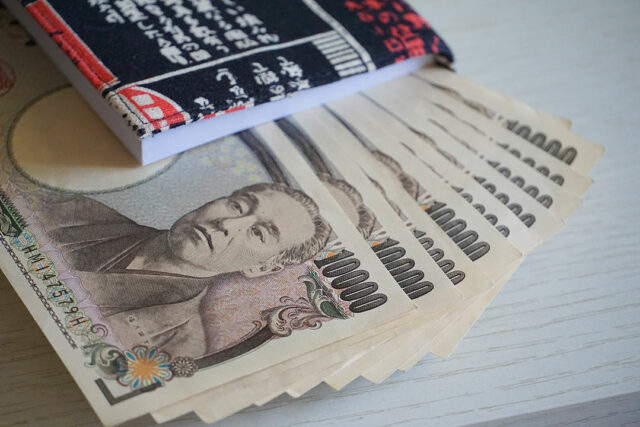
 – The yen was set for its biggest daily rally versus the dollar this year on Thursday, driven by growing speculation that the Bank of Japan could finally raise rates this month, while the euro steadied ahead of a European Central Bank meeting.

The Japanese currency JPY=EBS rallied by as much as 1.2% against the dollar, the most in a day since mid-December, and made gains against the euro EURJPY=EBS and sterling GBPJPY=.

The euro was last 1.1% lower at 161.04 yen, while the pound fell 0.9% to 188.51 yen.

BOJ board member Junko Nakagawa said on Thursday Japan’s economy was moving steadily towards sustainably achieving the central bank’s 2% inflation target.

Her comments come one day after Jiji news agency reported that at least one of the central bank’s nine board members is likely to say that removing negative interest rates would be reasonable at this month’s policy meeting.

The yen has gained nearly 1.8% in the last three trading days alone, thanks also to data that has shown inflation, and specifically wage inflation, continues to pick up in Japan.

“The market, over the last couple of days, has started to buy into the idea that the BOJ are probably quite close to getting rid of negative rates and that could actually come as soon as two weeks time,” Pepperstone strategist Michael Brown said.

“There seem to be a number of jigsaw pieces that the BOJ want to see in order to deliver that hike – and we’re only talking about a 10-basis point hike, but it’s significant nonetheless – it seems like everything is starting to fall into place,” he said.

The yen has been under pressure for most of the past two years because of the gap between sub-zero Japanese interest rates and a global rise in rates, as other major central banks aggressively hiked interest rates to tame inflation.

A move by the BOJ away from negative interest rates would coincide with growing bets on rate cuts elsewhere – particularly from the Federal Reserve – which would give some much needed support to the battered Japanese currency.

In the broader market, traders warmed to the idea that U.S. rates are likely to fall this year, even if inflation is still persisting longer than expected, which dented the dollar.

Fed Chair Jerome Powell said on Wednesday rate cuts will “likely be appropriate” later this year “if the economy evolves broadly as expected” and once officials gain more confidence in inflation’s steady deceleration.

Those remarks, coupled with data released the same day that pointed to an easing of labor market conditions, sent US Treasury yields skidding, which in turn pushed the dollar broadly lower.

Carol Kong, a currency strategist at Commonwealth Bank of Australia, said Powell’s comments were less hawkish than some had expected.

“Markets were likely relieved that Powell didn’t change his risk assessment on inflation even after the January CPI figures,” she said.

All of that left the greenback pinned near a one-month low against a basket of currencies. The dollar index =USD dipped 0.2% to 103.15.

The euro EUR=EBS and sterling GBP=D3 held near one-month highs struck in the previous session and last bought $1.0899 and $1.2755, respectively.

The ECB releases its decision on interest rates later on Thursday. The central bank is not expected to make any changes to monetary policy this month.

The yuan was little changed and last stood at 7.208 per dollar in the offshore market CNH=D3, brushing off China’s stronger-than-expected export and import growth in the January-February period.

In the cryptoverse, bitcoin BTC= retreated from a record high struck earlier in the week, but still rose 0.67% on the day to $66,922, while ether ETH= fell 1.6%% to $3,788, having peaked at an over two-year high on Wednesday. – Reuters

US threatens action against Iran at IAEA over continued ‘stonewalling’

STOCK PHOTO | A billet of highly enriched uranium that was recovered from scrap processed at the Y-12 National Security Complex Plant. Original and unrotated. Source: https://tinyurl.com/4rrrydku

– The United States on Thursday threatened future action against Iran at the U.N. nuclear watchdog if Tehran keeps “stonewalling” the watchdog by denying it the cooperation and answers it seeks on issues including long-unexplained uranium traces.

At a quarterly meeting of the International Atomic Energy Agency’s 35-nation Board of Governors, Washington again told Iran to cooperate with IAEA inspectors who for years have been seeking explanations from Tehran on the origin of uranium particles at undeclared sites.

The United States has stopped short, for now, of seeking a resolution against Iran, however. Diplomats have cited the US presidential election in November as a reason Washington has been reluctant to do that. Tehran bristles at such resolutions and often responds by stepping up its activities.

“We believe we have come to the point that we and the broader international community must consider anew how to respond to Iran’s continued stonewalling,” the United States said in a statement to the Board meeting. “We cannot allow Iran’s current pattern of behavior to continue.”

It is now more than a year since the last Board resolution against Iran, which ordered it to cooperate urgently with the investigation into the particles. Tehran dismissed the resolution as “political” and “anti-Iranian” even though only China and Russia opposed it.

The United States and its three top European allies – Britain, France and Germany – again opted against seeking a resolution against Iran at this week’s meeting but the United States said that if Iran did not provide the necessary cooperation soon, it would act.

“It is our strongly held view that Iran’s continuing lack of credible cooperation provides grounds for pursuing further Board of Governors action, including the possibility of additional resolutions and consideration of whether Iran is once again in noncompliance with its safeguards obligations,” it said.

In 2018 then-President Donald Trump pulled the United States out of a 2015 deal under which major powers lifted sanctions against Iran in exchange for restrictions on its nuclear activities. After sanctions were re-imposed, Iran expanded those activities far beyond the deal’s limits.

It is now enriching uranium to up to 60% purity, close to the roughly 90% of weapons grade and far above the deal’s cap of 3.67%. Western powers say there is no credible civil explanation for enriching to that level and the IAEA says no country has done so without producing a nuclear bomb.

Iran says its aims are entirely peaceful and it has the right to enrich to high levels for civil purposes.

The United States said Iran should provide the IAEA with cooperation including access “for the purposes of collecting environmental samples … and it must begin to do so now”.

If it did not, it would ask IAEA chief Rafael Grossi to provide a “comprehensive report” on Iran’s nuclear activities more wide-ranging than his regular quarterly ones, it said.

“Then, based on the content of that report, we will take appropriate action in support of the IAEA and the global nuclear nonproliferation regime,” it added. – Reuters

Japan backs arbitral award, urges China, PHL to prioritize diplomacy

AN AERIAL view shows the Nanshan Island, locally known as Lawak, one of the nine features the Philippines occupies in the disputed Spratly Islands, in the South China Sea, March 9, 2023. — REUTERS

By John Victor D. Ordoñez, Reporter

AS MARITIME tensions heighten between the Philippines and China, Japan urged both nations to prioritize diplomatic solutions and comply with a 2016 arbitral award over conflicting claims in the South China Sea.

“The arbitral award is final and legally binding on the parties to the dispute under the provisions of the United Nations Convention on the Law of the Sea (UNCLOS),” the Embassy of Japan in Manila said in a statement late Wednesday.

“Japan strongly hopes that the parties’ compliance with the award will lead to the peaceful settlement of disputes in the South China Sea.”

On Tuesday, the Chinese Coast Guard (CCG) fired water cannons at Filipino vessels on a resupply mission to a Philippine detachment in an area within the country’s exclusive economic zone (EEZ).

At least four Philippine Navy officers were injured in the incident.

The water cannons shattered the windshield of Unaizah Mae 4, a civilian boat contracted by the Philippine Navy that was carrying supplies to the BRP Sierra Madre, a World War II-era vessel that Manila deliberately grounded at Second Thomas Shoal (Ayungin Shoal) in 1999 to stake Manila’s maritime claim.

In 2016, a United Nations-backed tribunal voided China’s claim to more than 80% of the South China Sea. China has disregarded the ruling as it has continued its island-building activities in the waterway.

Japan said it “highly appreciates” the Philippines’ continued compliance with the arbitral award and its commitment to a peaceful settlement to disputes in the South China Sea.

RESUPPLY MISSIONS SHALL CONTINUE — PHILIPPINES
The Philippine military on Thursday said its resupply operations in the South China Sea will continue despite increasing harassment from Chinese vessels.

Armed Forces of the Philippines Western Command chief Alberto Carlos said they are “undeterred” and “will not yield,” days after the Chinese coast guard fired water cannons at a civilian boat contracted by the Philippine Navy to send food and other supplies to the grounded BRP Sierra Madre, which serves as an outpost for Filipino troops in Second Thomas Shoal.

“Our operations in the WPS will continue, along with our patrols and along with the exercise of our sovereignty, sovereign rights and jurisdiction,” he said in a radio interview.

“We will do everything to ensure that BRP Sierra Madre, which is the symbol of our sovereignty, stays there.”

Mr. Carlos said President Ferdinand R. Marcos, Jr.’s order is clear, and that is to ensure “continuous” resupply and rotation missions to the Navy outpost.

During the collisions due to a series of blocking maneuvers and the firing of water cannons by the Chinese Coast Guard on March 5, Mr. Carlos was among the injured who sustained cuts when the glass windows of Unaizah Mae 4 were shattered. 

“We will legitimately defend our rights in accordance with the law,” Chinese Foreign Minister Wang Yi told a news briefing on Thursday. He said that “certain countries outside the region” should not stir up trouble in the maritime dispute.

Aside from the Philippines and China, Brunei, Malaysia, Taiwan and Vietnam also have claims to parts of the waterway.

As the incident gained the ire of the international community, the US State Department reiterated on Wednesday that an armed attack on Philippine armed forces, vessels, and other assets anywhere in the South China Sea would lead to the activation of its 1950s mutual defense treaty with the Philippines.

But Marcos said the latest incident would not merit the activation of Manila’s 1951 Mutual Defense Treaty with the United States, which arguably has the world’s most powerful military force.

The Philippine Department of Foreign Affairs (DFA) on Tuesday summoned Chinese Deputy Chief of Mission Zhou Zhiyong to convey the Philippine government’s protest against the Chinese coast guard’s actions.

DFA Secretary Enrique A. Manalo said last month that negotiations with Japan on the Reciprocal Access Agreement have been progressing and that the Philippines would be willing to hold more bilateral meetings between their military counterparts.

Both countries started negotiations on the agreement last year, which would allow forces to be deployed on each other’s soil.

The pact would be submitted to the Philippine Senate and Japanese legislature for ratification.

“Japan has consistently advocated upholding the “rule of law” at sea, and will continue to cooperate with the international community such as ASEAN (Association of Southeast Asian Nations) Member States and the United States to protect the free and open international order based on the “rule of law,” the Japanese embassy said. — with a report from Kyle Aristophere T. Atienza

2 Filipinos killed in Houthi attack

REUTERS

AT LEAST TWO Filipinos on Thursday were killed in a missile attack by Iran-backed Houthi rebels on ships plying the Red Sea and the Gulf of Aden, the Philippine Department of Migrant Workers (DMW) said. Three other Filipino seafarers on board were hurt.

“The DMW is in touch with the ship’s manning agency and shipowner to ascertain the conditions of the rest of the ship’s crew, particularly the remaining Filipino crew members, as we have been informed that they have been taken to a safe port,” the department said in a statement.

The Department of Foreign Affairs (DFA) later confirmed that 13 Filipino seafarers on the civilian bulk carrier, True Confidence, have been taken by the Indian Navy to Djibouti. The three who suffered “serious injuries” were hospitalized.

“The Philippine Embassy in Cairo, Egypt is dispatching a team to Djibouti to provide them the necessary assistance, including replacing their travel documentation which was left on the ship,” the DFA said.

In November, Houthi rebels from Yemen seized an Israel-linked cargo ship in the Red Sea and took 17 Filipino seamen hostage.

Houthis military spokesman Yahya Saree had said the ship’s seizure was in response to “heinous acts” against Palestinians in Gaza and the West Bank.

Earlier, the DMW had marked the Gulf of Aden sea lanes and the Red Sea as high-risk areas.

The Houthis has taken control of most of northern Yemen and said they would not stop attacks in the Red Sea until Israel’s “aggression stops and the siege on the Palestinian people in the Gaza Strip is lifted.”

The United States State Department stated: “The United States will continue to hold the Houthis accountable for their attacks, which have not just disrupted international commerce, not just disrupted the freedom of navigation and international waters, and not just endangered seafarers, but now tragically killed a number of them.”

On Wednesday, the DFA said: “The Philippine Government remains steadfast in the belief that through diplomacy and adherence to international law, the inter-related conflicts affecting the region at present will eventually be resolved, leading to the resumption of free and unimpeded commerce for the world economy and freedom of navigation for the international community.”

Israel launched a barrage of airstrikes in Gaza after Hamas militants backed by waves of rockets stormed from the blockaded Gaza Strip into nearby Israeli towns on Oct. 7, killing about 1,200 Israelis.

Gaza health’s ministry earlier said more than 30,000 Palestinians have died in the war. At least four Filipinos died.

In December, the Philippines joined 152 countries in favoring a United Nations (UN) General Assembly resolution calling for a humanitarian ceasefire between Israel and Hamas in Gaza, including the unconditional release of all hostages.

“The DMW also calls for continued diplomatic efforts to de-escalate tensions and to address the causes of the current conflict in the Middle East.” — John Victor D. Ordoñez

Nothing irregular in selling of rice stocks, says suspended NFA chief

PHILSTAR FILE PHOTO

By Kenneth Christiane L. Basilio

THERE are no irregularities in the alleged improper selling of rice stocks by the National Food Authority (NFA) because the agency followed regulations at its disposal, NFA Administrator Roderico R. Bioco told a congressional hearing on Thursday.

“There is no irregularity in our disposition of this (rice stocks),” Mr. Bioco said as he explained that the sale of NFA rice to commercial traders was done by the book.

He said the NFA follows a “6-3 rule” when it comes to the selling of rice buffer stocks to private rice millers.

“We have a general 6-3 rule as the general guideline when we buffer (rice stocks) for relief,” Mr. Bioco said to the House panel in mixed English and Filipino. “Rice is stocked in palay form for six months, after six months it is kept in milled rice form for three months as reserve for calamity relief.”

The House panel had called for the inquiry to scrutinize the alleged “disadvantageous sale” of rice stocks to private rice millers as a report surfaced that some “75,000 bags” of “aging and deteriorating” rice were sold without following the proper guidelines.

NFA Assistant Administrator for Operations Lemuel B. Pagayunan said that the sale of rice stocks was “irregular” as it did not follow bidding procedures nor had the approval from the NFA council.

Mr. Bioco said that the disposal of rice does not require bidding “because this is a regular function of disposal.” He added that rice for disposal is exempted from the procurement law.

He added that the rice being stocked by the NFA is ranked accordingly into “excellent, very good, good, fair, and poor” conditions. He added that rice falling under “fair” conditions should have to be disposed before it further deteriorates into “poor conditions” and no longer be fit for human consumption.

To prevent losses in rice stocks, NFA resorts to disposing of rice stocks to requesting government agencies before considering private rice millers, he said.

“We try to dispose it to various programs of the government while ensuring that it is safe for human consumption,” Mr. Bioco said. “We try to give it to government agencies if the quality of the rice is okay, if not we sell it.”

NFA has to resort to selling rice to rice traders and retailers as the government cannot shoulder all deteriorating rice stocks.

A total of 139 NFA officials were placed on preventive suspension by the Office of the Ombudsman over allegations of improper disposal of rice stocks to private millers.

Tax bureau lists 20 more medicines exempted from VAT

STOCK PHOTO | FREEPIK

By Kyle Aristophere T. Atienza, Reporter

THE PHILIPPINES on Thursday exempted 20 more medicines for cancer, diabetes, high cholesterol, hypertension, kidney disease, mental illnesses, and tuberculosis from value-added tax (VAT).

The move is part of the agency’s shift to a more service-oriented culture from a collection goal-oriented on, Internal Revenue chief Romeo Lumagui said in a statement.

“The VAT exemption of these medicines for cancer, hypertension, and mental illness is a step towards a healthier country,” he said.

Among the medicines for cancer exempted from VAT are Sonidegib as phosphate (200 mg), Pemetrexed as disodium heptahydrate (100 mg), Asciminib as hydrochloride (20 mg), Asciminib as hydrochloride (40mg), and Palbociclib (75 mg).

For hypertension, VAT-exempted medicines are Losartan Potassium + Amlodipine as besilate (100 mg/10 mg), Losartan Potassium + Amlodipine as besilate (100 mg/5 mg),  rbesartan + Amlodipine as Besilate (300 mg/5 mg), and Irbesartan + Amlodipine as Besilate (300 mg/10 mg).

Medicines for mental health that are VAT-exempted include Cariprazine as hydrochloride (1.5 mg), Cariprazine as hydrochloride (3 mg), Cariprazine as hydrochloride (4.5 mg), and Cariprazine as hydrochloride (6mg).

The bureau in January exempted 21 medicines for cancer, diabetes, hypertension, kidney disease, mental illness, and tuberculosis from VAT.

The move was in line with a provision under the National Internal Revenue Code of 1997, as amended by the TRAIN Law and CREATE Act.

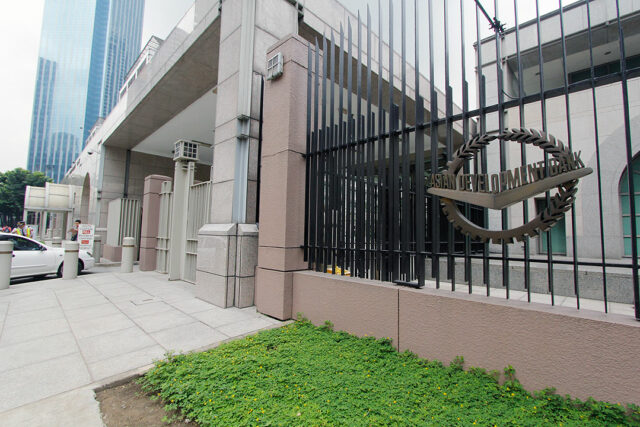
ADB urges governments to revise trade policies to meet sustainability goals

BW FILE PHOTO

By Beatriz Marie D. Cruz, Reporter

GOVERNMENTS must revise their trade policies based on environmentally conscious efforts to reduce carbon emissions and other adverse impacts that speed up climate change, the Asian Development Bank (ADB) said on Thursday.

“Trade can be a force of technology diffusion of green technologies. And by reducing or removing subsidies, on carbon products, we can also encourage the flows of greener products,” ADB senior economist Neil Foster-McGregor said in a webinar.

The Philippines has committed to reduce greenhouse gas emissions by 75% by 2030. It is also a signatory to the Paris Agreement, which requires countries to limit global warming to 1.5°C above pre-industrial levels.

“Through lowering tariffs and non-tariff barriers on clean products, we can encourage trade in these green and clean products,” said Mr. Foster-McGregor.

Government must also issue regulations and standards on “dirtier” products to limit their trade.

Mr. Foster-McGregor noted that policies still generally encourage carbon intensive trade.

“Tariffs and non-tariff barriers tend to be lower on carbon intensive goods, particularly those goods that are upstream in value chains, so sort of those involving extraction, for example,” he said at the webinar.

“But things may be changing. And we also highlight in the report that trade policies are being increasingly used by countries in their decarbonization plans,” he added.

In its “Asian Economic Integration Report 2024: Decarbonizing Global Value Chains,” the ADB said that Asian economies are “contributing substantially” to the increase in greenhouse gas emissions.

Earlier, it urged developing Asia to push for carbon pricing schemes to lessen carbon emissions.

In developing Asia, carbon dioxide emissions increased by 114% between 1995 and 2018.

Last year, the ADB approved $3.5 billion worth of loans to invest in 14 projects in the Brunei Darussalam–Indonesia–Malaysia–Philippines East ASEAN Growth Area (BIMP-EAGA).

Senator seeks rice law review

PHILSTAR FILE PHOTO/ SENATE PRIB/JOSEPH VIDAL

A PHILIPPINE senator on Thursday filed a resolution seeking a review of the Rice Tariffication Law (RTL) citing the law’s failure to boost rice production and support farmers.

Under Senate Resolution No. 956, filed by Senator Ana Theresia N. Hontiveros-Baraquel, the government is urged to consult with farmers and other stakeholders to conduct a comprehensive review of the RTL and procurement practices of the National Food Authority (NFA).

“These investigations will also aid in enhancing the implementation of the RTL in the period remaining till its expiration in 2025,” she said in the resolution.

The law, which was enacted in 2019, deregulated rice imports, allowing private parties to import a tariff of 25% on grain brought in from Southeast Asia.

It also established the Rice Competitiveness Enhancement Fund (RCEF), which is intended to modernize the rice industry and is funded by import tariffs generated from the RTL.

RCEF supports the supply of machinery, seeds, and fertilizer among others to farmers.

In 2022, the Department of Agriculture said it would conduct a full review of the law this year of how RCEF, which is given P10 billion in yearly funding, was used.

Senator Cynthia A. Villar told reporters on Wednesday that she seeks to extend the RCEF, which is set to expire in June, by six years and to raise its yearly funding to P20 billion. She said she would seek the Senate’s approval of the extension by June.

“Be it further resolved, that this process be consultative and include engaging with rice stakeholders… to ensure the RTL fulfills its objectives of enhancing the competitiveness of the rice sector and ensuring food security for the nation,” Ms. Hontiveros-Baraquel said. — John Victor D. Ordoñez

MR on junked PUVMP petition eyed

PHILIPPINE STAR/EDD GUMBAN

A COALITION of jeepney drivers and operators challenging the legality of the government’s public transport modernization program is pinning all hope on their lawyer’s last attempt to sway the Supreme Court (SC) to reconsider its decision dismissing their petition.

On Wednesday, the SC En Banc came out with its unanimous decision dismissing the consolidated petitions of three parties seeking to void Transport Department Order (DO) No. 2017-011, which provides for the implementation of the Public Utility Vehicle Modernization Program (PUVMP).

“The petitioners are sad and disappointed. But the battle is not over yet. We are filing a motion for reconsideration (MR),” said Bayyo Association, Inc. lawyer Jose Sonny G. Matula in a Viber message.

Anselmo D. Perweng, Bayyo president, said the SC ruling does not change the fact that the PUVMP’s mandate to replace jeepney units with costlier “environment friendly” vehicles would bury jeepney drivers and operators in debt.

Transportation expert Rene S. Santiago told BusinessWorld via text message that the SC’s denial of the petition does not affect the arguments of the petitioners. “SC dismissed the petition on purely legal grounds, and it is not a trier of facts. The negative impact of PUVMP to jeepney operators has to be established at lower courts,” he said.

Apart from failing to follow the hierarchy of the courts, the petitioners also failed to prove its legal standing as a legitimate association to represent jeepney drivers and operators, the SC said.

There are two other petitions pending before the High Court that seeks to stop the implementation of the PUVMP — one, filed by Pagkakaisa ng mga Samahan ng Tsuper at Operator Nationwide (PISTON), and the other by filed by seven transport groups led by Pasang Masda. — Chloe Mari A. Hufana

Marcos set for Europe next week

PHILIPPINE STAR/KRIZ JOHN ROSALES

PRESIDENT Ferdinand R. Marcos, Jr. will visit Germany and the Czech Republic next week, his office said on Thursday, a few days after his return to Manila from a back-to-back trip to Australia.

His trips to the two central European nations from March 11 to 15 “seek to strengthen bilateral relations,” the presidential palace said.

“The President will also meet with prominent business leaders to bolster trade and investment opportunities,” it added. Mr. Marcos will meet with German Chancellor Olaf Scholz in Berlin.

In the Czech Republic, he will meet with the four heads of the Czech government — President Petr Pavel and Prime Minister Petr Fiala, Senate President Miloš Vystrčil and President of the Chamber of Deputies Markéta Pekarová Adamová.

“The visits come at a significant juncture as the Philippines just celebrated the 50th anniversary of bilateral relations with the Czech Republic last year and will commemorate the 70th anniversary of diplomatic relations with Germany this year,” the palace said.

Mr. Marcos, 66, has already made over 20 international trips since assuming office in June 2022.

About P1.408 billion has been allocated for his domestic and international travels in 2024, a 58% increase from just P893.57 million last year. — Kyle Aristophere T. Atienza

House awaits Senate on ‘Cha-cha’

PHILSTAR FILE PHOTO

LAWMAKERS on Thursday said that passing economic Charter change is now in the hands of Senate as the Resolution of Both Houses (RBH) No. 7 has already passed in the House.

House lawmakers said that the pressure is now on Senate President Juan Miguel Zubiri to pass Resolution of Both Houses No. 6 as he would need 18 votes calling for the approval of the resolution for economic “Cha-cha” to materialize.

“Now it is a challenge to his leadership because this time, people now understand the importance of ‘Cha-cha,’” Quezon City Rep. Marvin D. Rillo spoke in mixed Filipino and English at a media conference.

RBH No. 6 is the counterpart measure of economic “Cha-cha” in the upper Chamber. It contains the same provisions outlined in RBH No. 7, with a sole difference being how senators would vote on the proposed constitutional amendments. 

“He (Zubiri) has all the available techniques, strategies to come up with this number (of votes),” Lanao del Sur Rep. Zia Alonto Adiong said in a media briefer. “In fact, that he’s still there as the Senate President proves that he has the numbers to deliver.”

Talk was rife last month of a coup plot to remove Mr. Zubiri as senate president. However, the supposed plot to unseat him seems to have died down as senators signed a resolution supporting his leadership.

House lawmakers remain confident in Mr. Zubiri’s ability to deliver the votes to pass RBH No. 6 amid statements from fellow senators earlier this week that they would strike down the proposed economic “Cha-cha.” Kenneth Christiane L. Basilio

DA plans KADIWA in Bataan

DA.GOV.PH

THE DEPARTMENT of Agriculture (DA) said on Thursday that it has opened another permanent location for its KADIWA market project within a trading center in Bataan.

In a statement, the DA said the trading post is expected to benefit 28 farmers’ cooperatives and associations with a total 3,826 members. The project costs around P5 million.

“A permanent KADIWA store in Limay, Bataan promises affordable, fresh, and safe food for local consumers while providing farmers with increased income opportunities,” Agriculture Secretary Francisco P. Tiu Laurel, Jr. said.

KADIWA stores were rolled in various localities at the height of the coronavirus pandemic to facilitate access between growers and buyers amid mobility restrictions.

The agency said that it would provide interest free loans to local producers from the province in partnership with the local government of unit.

“This is just the beginning: more initiatives are needed to sustain this momentum,” he said.

Additionally, the DA said that it had launched a project promoting healthier food, while minimizing cost and impact on the environment.

This is through consuming locally-grown fruits, vegetable and other agricultural products, it said.

“This grassroots approach fosters a deeper understanding, better planning, and effective management of our food systems,” Mr. Tiu Laurel added. — Adrian H. Halili