Home Blog Page 3566

Teenagers lead Liverpool into FA Cup quarters

LIVERPOOL, England — Jayden Danns struck twice and fellow teenager Lewis Koumas also scored as a young Liverpool side booked an FA Cup quarterfinal against Manchester United with a 3-0 victory over Championship Southampton on Wednesday.

The 18-year-old son of former Premier League and Wales international Jason Koumas received a superb pass from Bobby Clark on the edge of the penalty area before shooting into the bottom corner via a deflection off Jack Stephens.

The 18-year-old Mr. Danns netted his first goal for Liverpool’s senior team in the 73rd minute when he dinked the ball over keeper Joe Lumley, and scored again 15 minutes later when he pounced on a loose ball after Mr. Lumley batted away Conor Bradley’s shot. — Reuters

Casemiro sends Man United into FA Cup quarters

NOTTINGHAM, England — Brazilian Casemiro scored in the 89th minute to send Manchester United into a record 48th FA Cup quarterfinal with a 1-0 victory over Premier League rivals Nottingham Forest on Wednesday.

The 32-year-old midfielder headed in a low bouncing free kick from Bruno Fernandes from close range to keep alive United’s last hope of lifting a trophy in a difficult season for the 12-times FA Cup winners. — Reuters

James’ desire to win

The Lakers were all but dead in the water heading into the fourth quarter. Facing the superior Clippers, they found themselves playing catch-up ball from the second period onward, and the 19-point deficit that stared at them made the last 12 minutes look like a formality. Even the 19,370-strong capacity crowd, split in allegiance between the co-tenants of the Crypto.com Arena, had a sense of the inevitable. Nothing the purple and gold did appeared to affect the juggernaut that faced them.

And then LeBron James happened. The elder statesman of the National Basketball Association evidently had other plans and took it upon himself to will a change of fate, and the Lakers were wise enough to ride on his coattails until the end. It helped, of course, that he had paced himself — posting decent numbers in the 25 minutes he was hitherto on the court to set up his 19-point barrage in the final canto. And it wasn’t simply that he outscored the Clippers all by himself when the final buzzer sounded. It was that he orchestrated the proceedings like no other marquee name before him — and undoubtedly like no other long after he has hung up his jersey.

It’s fair to contend that no other player has the coin to simply decide to take matters into his own hands. The pace-and-space era of today has become so sophisticated that all hands on deck — even those on the bench — are necessary to frame victory. For James, however, the game can still be broken down to its basics. And, when he is at his best, there can be no arguing against the results. Yesterday, his stubbornness was on full display. He elephant-walked his way to a half-court drawl that had him actively seeking out mismatches and letting the defense dictate his choices.

Indeed, James toyed with the coverages thrown at him by the Clippers. The latter first allowed him to get his way and set up one-on-one forays versus big men, leading him to can three-point shots with regularity. Against smaller defenders, he would keep his dribble and drive to the hoop. And when double teams came his way, he would pass to the open man for even more treys. In short, he was predictable. That he also happened to be successful underscored his genius — knowing precisely when to shuffle the pieces on the board, and then make moves, to his liking and timing.

Granted, a lot of other things tilted in the Lakers’ favor yesterday. Certainly, they would not have been able to forge a comeback had their defense not been stout — and, accordingly, had the Clippers not folded big time. Neither was expected, and yet both happened. That said, there can be no discounting the extent of the effort they poured to forge the triumph. When the battlesmoke cleared, they deserved to be on the better end of the final score.

James does not have a lot more of the same magic in his bag. Father Time is beckoning. And even at his best in recent memory, he has occasionally bowed to the type of fatigue that plagues those already long in the tooth. If there’s one thing that has not diminished, however, it’s his desire to win. The Lakers got one yesterday because of him. How many more times they can say the same is anybody’s guess. Meanwhile, they’re only too glad to latch on to him in the belief that there’s only one way for him to forge his exit: in a blaze of glory.


Anthony L. Cuaycong has been writing Courtside since BusinessWorld introduced a Sports section in 1994. He is a consultant on strategic planning, operations and Human Resources management, corporate communications, and business development.

Thailand set to ban recreational cannabis use by end of 2024

REUTERS

BANGKOK — Thailand will ban recreational use of marijuana by the end of this year but continue to allow its use for medical purposes, the health minister told Reuters in an interview.

After Thailand became the first country in Southeast Asia to free up medicinal use in 2018, and then recreational use in 2022, tens of thousands of cannabis shops have sprung up in an industry projected to be worth up to $1.2 billion by next year.

Critics say piecemeal rules were rushed out and adopted within a week of decriminalization, and the government has drafted a new law to regulate cannabis use that is expected to take effect by yearend.

The draft bill will go to cabinet for approval next month before heading to parliament to be passed before the end of the year, Health Minister Cholnan Srikaew said.

“Without the law to regulate cannabis it will be misused,” Mr. Cholnan said on Wednesday, referring to recreational use.

“The misuse of cannabis has a negative impact on Thai children,” he added. “In the long run it could lead to other drugs.”

The previous government had failed to push legislation through parliament before the general election of last May, leaving Thailand without an umbrella law to regulate its use.

Cannabis shops that operate illegally will not be allowed to continue, while home-grown cannabis will also be discouraged, added Mr. Cholnan, who put the number of legally registered shops at 20,000.

“In the new law, cannabis will be a controlled plant, so growing it would require permission,” he said. “We will support (cannabis cultivation) for the medical and health industry.”

The draft law specifies a fine of up to 60,000 baht ($1,700) for recreational use, while those selling cannabis for such use and participating in advertisement or marketing of buds, resin, extract or smoking devices face jail terms of up to a year, or a fine of up to 100,000 baht ($2,800) or both.

It also toughens punishment for cannabis farming without a license, with jail terms ranging from one to three years and fines from 20,000 baht ($560) to 300,000 baht ($8,000). Import, export, cultivation and commercial use of cannabis will also require permits now, the minister added.

The government, recognizing the economic benefit of the cannabis industry, would give businesses time to adjust to the new regulation, Mr. Cholnan said.

Such shops could operate until their licenses expire and convert to legal cannabis clinics if they follow the new rules, Mr. Cholnan said, adding that the new regulation would have no impact on tourism. — Reuters


Indonesia aims to become first Southeast Asian nation in OECD

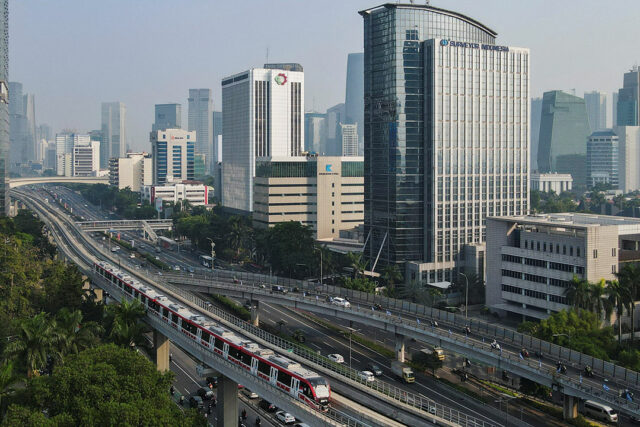
A VIEW shows Light Rail Transit (LRT) train in Jakarta, Indonesia, Aug. 23, 2023. — REUTERS

JAKARTA — Indonesia aims to complete the accession to become the member of Paris-based Organization for Economic Co-operation and Development (OECD) within two to three years, a senior cabinet minister said late on Wednesday.

The Southeast Asia’s largest economy hopes to attract more investment and trade deals by becoming OECD member.

The statement came after OECD, which has 38 member countries, decided last week to open discussion for Indonesia’s accession, following its application last July.

Chief economic minister Airlangga Hartarto said the country is optimistic about being accepted as an OECD member because he said Indonesia had already complied with the organization’s standards, including for a fair economy and anti-corruption.

“Various principles are relatively the same…so basically we already complied with their (OECD) standards,” he said in a press conference after holding a dinner event on Wednesday with the ambassadors of 33 OECD member countries.

“We hope the process of becoming an OECD member can be completed within 2 to 3 years.”

Indonesia is the first Southeast Asian nation applying for the organization’s membership, according to OECD.

The minister said Indonesia will now jointly work with OECD to complete a roadmap document, which sets out the terms, conditions and process for accession, and aimed to present it at the OECD’s ministerial council meeting in May.

Indonesia’s accession process will go through a rigorous examination, which will cover issues of trade, anti-corruption, and climate change, to ensure the country meets OECD standards.

The OECD said there is no deadline for completion of the accession process as the outcome depends on the country’s capacity to adapt with OECD’s standards and best practices. — Reuters

Leap year software glitch closes fuel pumps across New Zealand

BLOOMBERG

NEW ZEALAND gas stations reported nationwide outages at self-service pumps on Thursday, apparently because their software is unable to deal with the date of Feb. 29.

Fuel suppliers Z Energy, Allied Petroleum and Gull said automated pumps were down across the country, leaving only staffed stations able to process payments.

“We think it’s the inability of the payment software to cope with the leap year,” said Gull spokesman Julien Leys. “That’s our understanding but we’re waiting for confirmation from our technology provider.”

New Zealand is one of the first countries in the world to greet the day and therefore experience Feb. 29, the extra day added every four years to account for the Earth taking slightly longer than 365 days to orbit the sun.   

“We are aware of an issue with our third-party payment system that is impacting companies across New Zealand today, including Z Energy,” Z said in a statement on its website. “We are working closely with our third-party payment provider to resolve this issue as quickly as possible.” — Bloomberg

India, South Africa block major deal at WTO talks

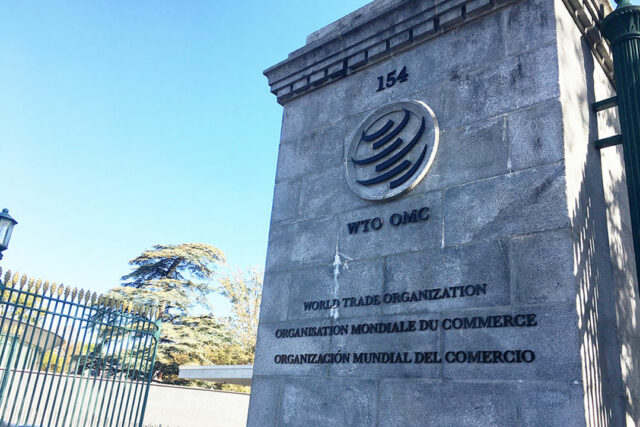
ABU DHABI — India and South Africa have filed a formal objection against an investment agreement at a World Trade Organization (WTO) meeting in Abu Dhabi, blocking its adoption in a move that observers say could block hundreds of billions of dollars in investment.

The deal agreed by some 125 countries, or about three-quarters of the WTO’s members, aims to simplify red tape, improve the investment environment and encourage foreign direct investment.

But according to WTO rules, any of its 164 members can block a deal from being adopted by the body — a step which is necessary to ensure that countries are in compliance.

“We underscore that given the lack of exclusive consensus, this is not a matter for the…(meeting) agenda,” a WTO document showed.

The Indian and South African delegations did not immediately comment publicly on the development.

Alan Yanovich, partner at Akin Gump Strauss, said the “deplorable” development would hurt the world’s poorest countries the most.

“The notion that two members can prevent a broad group of willing members from moving forward is absurd,” he said.

A Western trade delegate at the talks called it “ironic that India and South Africa stand in the way of something with such manifest benefits for developing countries.”

The initiative known as the Investment Facilitation for Development (IFD) Agreement led by Chile and South Korea with China’s strong support, could lead to between $200-$800 billion of improvements in global welfare, according to one study.

“Members have expressed a readiness to discuss this issue at the General Council in Geneva after (the ministerial conference)… And I would want to encourage them to do so,” said Kerrie Symmonds, the facilitator for negotiations on developments at the meeting, and minister of foreign affairs and foreign trade of Barbados.

Four-day WTO talks to set new global trade rules on a broad range of topics including fishing and agriculture are due to wrap up on Thursday, although delegates said that little progress has so far been made, barring the formal accession of two new members to the body: East Timor and Comoros.

The US trade chief on Tuesday ruled out a deal on reforming the WTO dispute settlement system, hobbled for four years due to U.S. objections.

A paragraph on climate change is confined to a WTO annex of the draft package of deals since members cannot agree.

“These are not small, easy to deal with issues, these are some of the big things that either distort trade or stop nations from being able to feed their own people,” New Zealand’s trade minister Todd McClay told Reuters.

“They are hard and they are challenging.” — Reuters

Older Americans should get another COVID shot this spring, CDC advisors say

REUTERS

AN EXPERT advisory group to the US Centers for Disease Control and Prevention (CDC) on Wednesday said U.S. adults aged 65 and older should get a second annual COVID-19 shot this spring, strengthening their recommendations from last year.

The CDC’s Advisory Committee For Immunization Practices (ACIP) voted 11-1 to say that older Americans should get another shot this spring, according to the agency.

Last year, the committee only recommended an optional additional dose for the age group.

CDC Director Mandy Cohen still needs to sign off on the committee’s recommendation for the agency to adopt them. Historically, the CDC has generally adhered to the group’s suggestions

According to CDC estimates, around 22% of adults in the US have received the COVID vaccine that was updated for the 2023-24 vaccination season, including close to 42% of those aged 65 or older. — Reuters

World Bank to streamline loan, investment guarantees with $20-B annual goal

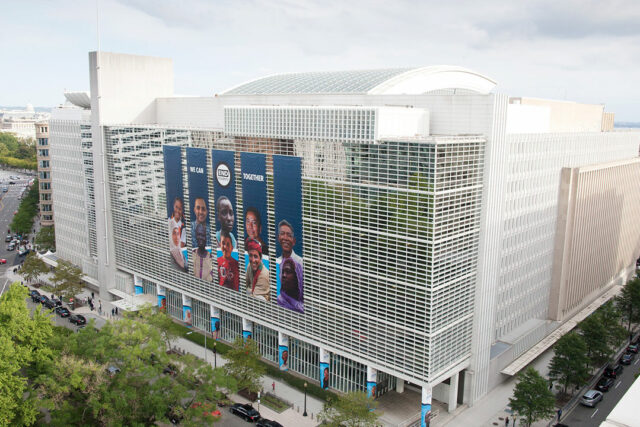
WORLD BANK PHOTO COLLECTION

WASHINGTON — The World Bank Group said on Wednesday it would consolidate its loan and investment guarantee structure as part of its goal to triple its annual guarantees to $20 billion by 2030 to boost private renewable energy investments in developing countries.

The reforms, announced on the sidelines of a G20 (Group of 20) finance leaders meeting in Sao Paulo, Brazil, would move all of the guarantee experts from across the World Bank’s business units into a single platform.

The bank said the changes, to start on July 1, would provide “a seamless experience for clients and easier access to the full suite of guarantees” and speed approvals.

World Bank President Ajay Banga said the $20-billion annual guarantee target over the next five to six years was a somewhat arbitrary figure meant to show ambition to expand these products.

“Our ambition is to go in quantum number from where we are today,” Ajay Banga told a news briefing, adding that capital adequacy would need to be reviewed.

“So don’t think of this as a cap that is imposed by the bank,” Banga said. “If you want to get to three times where we are today, the quicker we get there, the better we do it, the happier we’ll be, and the more ambitious we’ll be about the next step.”

The World Bank Group currently provides guarantees on about $6.8 billion worth of loans and investment contracts annually across its business units, including the Multilateral Investment Guarantee Agency (MIGA), the private-sector International Finance Corp and its main International Bank for Reconstruction and Development lending arm.

The guarantees include credit enhancements, insurance for political risks, commercial risks such as breach of contract, currency restrictions and other impediments to private investment in developing countries. Expanding these guarantees is a key component of the bank’s efforts to stretch its balance sheet and boost lending by more than $150 billion over 10 years to help fight climate change and other global crises.

The changes announced on Wednesday are the first tangible results from a group of private-sector investment executives assembled last year by World Bank President Ajay Banga, dubbed the Private Sector Investment Lab, to develop ideas to draw more private capital to clean energy and other investments in developing countries.

The World Bank said the plan called for simplifying guarantee products into a single comprehensive menu that would allow clients to easily identify and select the instrument best suiting their needs. A new common approach would standardize guarantee reviews, replacing a patchwork of different processes, rules and standards that now “holds back their potential and impedes client access,” the bank said.

Mark Carney, UN climate envoy and asset management executive who chairs the Private Sector Investment Lab, said he expected clean energy projects to take the “lion’s share” of the World Bank guarantees, but heavy industry de-carbonization projects also could become customers in emerging market and developing countries.

“Political risk is often a deal breaker for energy infrastructure investments, Carney said. “And the private sector just can’t manage that on its own.” — Reuters

Rising rents offset rate hit for UK retail landlords

BLOOMBERG

A surge of new restaurant, shop and bar openings helped push rents in London’s tourist hot spots higher last year, boosting landlord Shaftesbury Capital Plc, which owns a sprawling portfolio from Covent Garden to Chinatown.

The landlord signed 526 new leases at higher than expected rents, lifting its income by 10.4%, according to a statement Thursday. That included 68 new retail and hospitality brands and concepts making their debut in the firm’s properties.

The rising rents helped offset the impact of higher interest rates, meaning the value of the company’s portfolio dipped just 0.8% to £4.8 billion ($6.1 billion), a much smaller hit than that reported by warehouse and office landlords Segro Plc and Derwent London Plc earlier this week.

Retail property values plunged in the second half of the last decade as the rise of e-commerce led to falling rents and store closures. But that’s left owners less exposed to the sharp hike in interest rates unleashed by central banks over the past two years — and there are now signs rents are starting to rise again as retailers jostle for the best space.

“The West End has bounced back,” Shaftesbury Capital Chief Executive Officer Ian Hawksworth said in an interview Thursday. “We have 430 restaurant units in our portfolio and all of them are full.” 

SHOPPERS RETURN
Mall landlord Hammerson Plc provided further evidence that UK retail rents are finally improving when it reported like-for-like income up 6% for 2023, according to a separate statement Thursday. The owner of Birmingham’s Bullring shopping center signed a slew of new deals at rents that were 37% higher than tenants were paying previously and 12% above its valuers’ estimates.

Both Shaftesbury and Hammerson also reported rising footfall as more consumers came back to physical stores, boosted by the gradual return of office workers to city centers.

Hammerson, which has been selling assets to deal with a debt pile that had become ominous in the face of collapsing retail property values, slashed its net debt by 23% and has brought its loan-to-value ratio down to 34% from 39% a year earlier. It’s also been slashing costs, which are down by almost a quarter since 2020.

Its portfolio is now valued at £4.7 billion, down from £5.1 billion last year, with the reduction mainly due to disposals. The landlord has now completed its plan to sell £500 million of property in 2022 and 2023, including its exit from a redevelopment project in Croydon with Unibail-Rodamco-Westfield, and the disposal of the Italie Deux mall in Paris.

“We have continued to strengthen the balance sheet,” Chief Executive Officer Rita-Rose Gagne said in an interview Thursday. “That has brought us to focus on our core city center portfolio where we see high demand.”

Shaftesbury Capital, which was formed from the merger of Shaftesbury and Capital & Counties a year ago, is about two-thirds of the way through its plan to sell £250 million of non-core assets following the tie-up. The £150 million of sales it has achieved so far were at a premium of about 8% to their valuation, underlining investor demand for property in the West End, Hawksworth added. — Bloomberg

Philippines eyeing other oil-rich areas as China deal stalled

BLOOMBERG

The Philippines is working to explore other parts of the country that are potentially rich in oil and gas, according to an energy official, as talks with Beijing on joint resource development in the South China Sea are stalled by tensions between the two nations.

Manila cannot rely solely on the resources in Reed Bank in the South China Sea, where exploration by a Philippines-contracted group has been halted amid a lingering territorial dispute with Beijing, Energy Undersecretary Alessandro Sales said in an interview.

“We are looking at the Sulu Sea area as the new exploration hot spot and there are companies now involved here,” Mr. Sales said on Monday on the sidelines of an auction for new coal, hydrogen and petroleum contracts to boost energy supply.

Israeli company Ratio Petroleum Energy LP, one of the contractors that will explore the area that’s within “internal waters,” is planning to send a vessel next month to collect 3D seismic data, Sales said. The undertaking, which may cost $10 million to $20 million, is part of the initial work before drilling, he added.

The Philippines is developing other energy sources as its key Malampaya gas field — which supplies a fifth of the country’s power requirements — nears depletion. PXP Energy Corp.’s exploration work on Reed Bank, another potential source for gas, has been suspended “because of the geopolitical situation,” Mr. Sales said.

Philippine President Ferdinand Marcos Jr. and Chinese President Xi Jinping in January last year agreed to resume joint oil and gas exploration talks in the South China Sea. In December, Marcos said talks were at a “deadlock” as tensions between Manila and Beijing escalated in contested waters.

“But we’re not sitting on our hands. That’s why we are actively doing this, to continue fostering and encouraging upstream exploration,” Mr. Sales said. — Bloomberg

China militia presence increases in South China Sea, report says

BLOOMBERG

The number of Chinese maritime militia vessels around key features across the South China Sea grew by 35% last year as Beijing continued to bolster its presence amid rising regional tensions, according to data by the Washington-based Asia Maritime Transparency Initiative.

A report released on Wednesday and based on satellite imagery of nine features in the sea, including reefs and shoals, identified an average of 195 militia ships present on any given day.

The increase from a year earlier was accompanied by “a dramatic shift” in vessels to Mischief Reef in the summer of 2023 when over 180 boats were observed gathered there from July. The reef is also claimed by the Philippines and Vietnam.

“The data shows that China’s militia is as active as ever,” the report says. “The reason for this increase, an anomaly compared to the previous year’s peak of only 37 vessels at Mischief, is unclear.”

The initiative, part of the Center for Strategic and International Studies, describes China’s maritime militia as “a force of vessels ostensibly engaged in commercial fishing but which in fact operate alongside Chinese law enforcement and military to achieve political objectives in disputed waters.”

Located within the Philippines’ exclusive economic zone, Mischief Reef has been controlled by China for nearly three decades, with Manila accusing Beijing of turning it into a “militarized artificial island.” In response, Manila has established a military outpost at the nearby Second Thomas Shoal in the form of a rusting warship it grounded there in 1999.

Last year, that ship — the BRP Sierra Madre — became the center of renewed tensions between the two nations amid water cannon fire and near collisions with Chinese ships during attempts to resupply troops stationed at the outpost.

While Chinese militia vessels seen active around the Second Thomas Shoal typically operate out of Mischief, the summer surge at the reef appears mostly unrelated to efforts to oppose the resupply missions, AMTI said.

Instead, the purpose-built professional militia ships from the southern Chinese province of Hainan “routinely worked with the China Coast Guard to physically oppose Philippine resupply missions to the BRP Sierra Madre.”

Apart from the groupings at Mischief Reef, the largest consistent collection of militia ships continued to be seen at Hughes and Whitsun reefs, the report said. A persistent militia presence was also maintained near China’s outpost at Gaven Reefs, and smaller groups could be seen at the reefs east of Philippine occupied Thitu and at Iroquois Reef. — Bloomberg