PHINMA Service Awardees (L-R) Jejomar Quiros, David John Cadiao, Ron Ranier Reyes, Aida Santamaria, Maribel Esguerra with executives of PHINMA Corp.
Ever since she was young, Maribel Esguerra has always wanted to become a teacher—even going as far as roleplaying as one with her neighbors and cousins at the age of six.
“Grade 1 po ako nun. ‘Yung mga batang pinsan ko po kasi hindi pa nag-aaral kaya kung ano inaaral namin sa school, ‘yun ‘yung ginagaya namin na activities. ‘Yun po ‘yung idea ko ng pags-serve noon,” she said.
After over a decade of student leadership along with several side hustles in university to make ends meet, Esguerra is now a college instructor and a remote and distance learning program coordinator at PHINMA Saint Jude College Manila.
1 of 2
On top of teaching, Maribel Esguerra continues her volunteering efforts beyond her days as a PHINMA scholar.
On top of teaching, Maribel Esguerra continues her volunteering efforts beyond her days as a PHINMA scholar.
She’s also among the recipients of the PHINMA Service Awards, which returned this 2024 after eight years.
Service beyond work
Together with the PHINMA Foundation, PHINMA brought back the Awards this March 22 to honor individuals who have impacted their communities outside of work. In his remarks, PHINMA Chairman and CEO Ramon del Rosario, Jr. said the recognition goes beyond tenure—it’s given to employees whose initiatives have made lives better whether through volunteerism, advocacy, or innovative problem-solving.
Esguerra was recognized under the PHINMA National Scholarship (PNS) Scholar Category for her ongoing volunteer efforts with organizations like Silid Aralan Inc. since her days as a member of PNS Batch 2023, with her advocacies including stray animal welfare.
The Awards also recognized the service of mentors, known as Big Brothers and Sisters, to these scholars. The category awardee for this year is PHINMA human resources manager Aida Santamaria, who witnessed the graduation of six PHINMA scholars over her 16-year mentorship.
Aida Santamaria with her Service Award trophy, which is made of repurposed materials and serves as a lamp too. She was recognized for her mentorship efforts benefitting six PHINMA scholars during her over 20-year stay in the company.
“Hindi lang naman customers natin or employees ang pwede maging better ang lives. Baka kako eh anointed ako na magpaganda ng buhay ng mga batang ito,” said Santamaria, who retired this year after more than two decades with PHINMA.
She treated these scholars as if they were her own children through the years, where she always made it a point to have lunches and dinners with them or simply check up on them given how living away from their families can be difficult.
Giving back, investing in the future
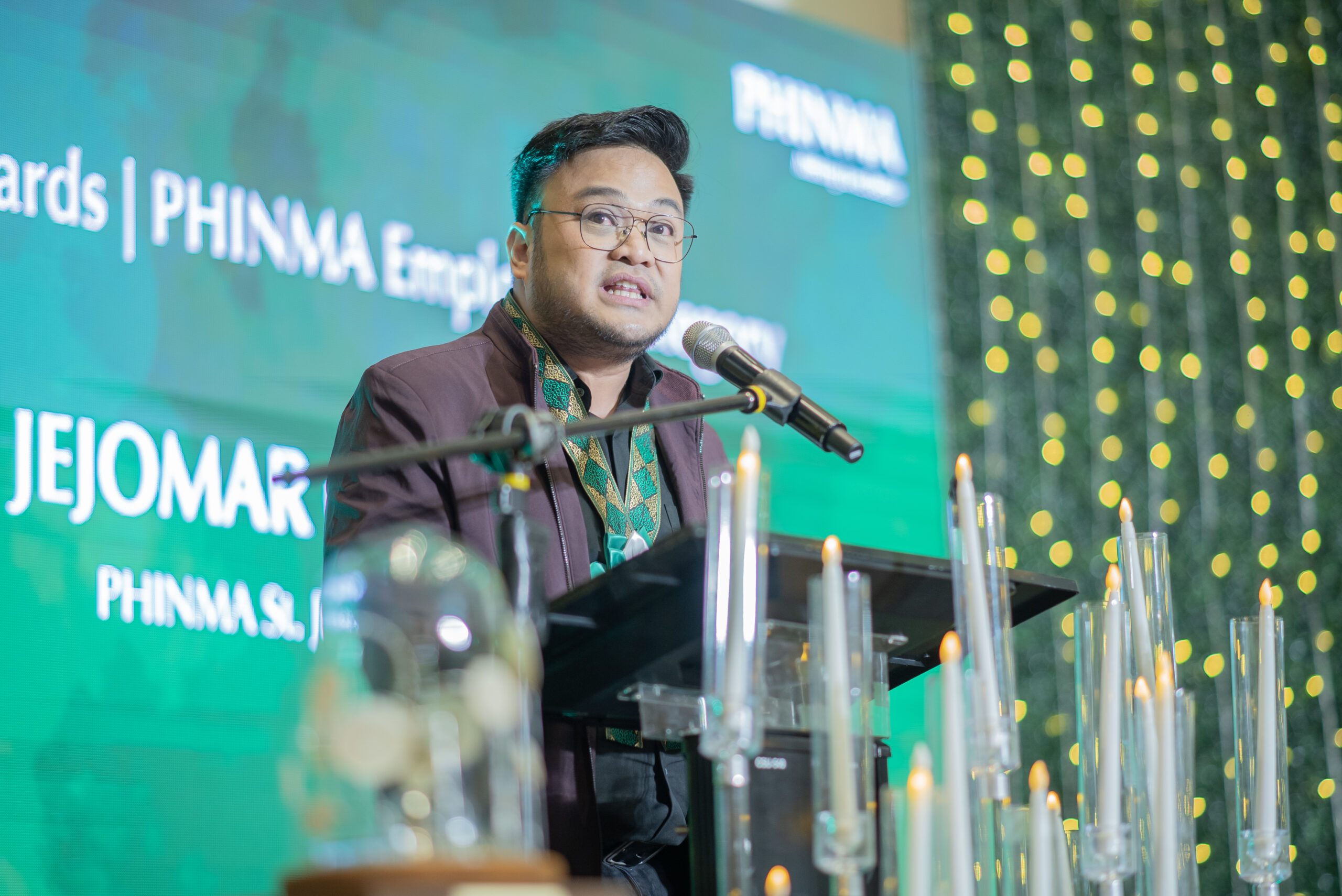
Jejomar Quiros delivers his award acceptance remarks before the Service Awards audience. He was recognized for his “Pamaskong Handog 100” initiative mainly aimed at poor families.
Jejomar Quiros is no stranger to difficulties and even loss. From his familiarity with grief stemmed an initiative he put up in 2018, as he aimed to uplift children’s lives by giving their families noche buena packs and school supplies.
This effort of Quiros, now the dean of PHINMA Saint Jude College’s College of Allied Health Sciences, has since become a full-blown “Pamaskong Handog 100” program embraced by schools and organizations associated with him.
“Pag hindi mo alam kung papaano maging walang-wala, hindi mo mae-experience o mararamdaman kung papaano maging wala…So ngayong able na tayo, na kaya na nating tumulong, let’s be the changemakers na tumulong sa kanila ngayon,” said Quiros, PHINMA Service Awardee under the employee category.
Also exposed to life’s hardships himself, David John Cadiao powered through financial obstacles to become the first member of his family to earn a four-year college degree. The son of a construction worker and a housewife is now the senior high school principal at PHINMA University of Pangasinan – Urdaneta Campus.
David John Cadiao reads a book to an audience of children under the LibLibrary Project, which sets up mini-libraries in underserved communities.
Cadiao, also a Service Awardee from the same category, recalled how the overwhelming support he got inspired him to join the non-government organization Junior Chamber International where he initiated projects under his leadership like the LibLibrary Project which establishes mini-libraries in underserved communities.
“Maliban sa pagtuturo ko ito ang obligasyon ko, ito ang responsibilidad ko sa ibang tao,” he said, also stressing the importance of investing in the leaders of tomorrow.
This is a view shared by fellow awardee Ron Ranier Reyes, PHINMA’s public affairs manager who was lauded for his efforts to prepare future leaders from underserved communities. He co-founded non-profit organization Hirayang Kabataan in 2018 which provides learning opportunities and development workshops to youth who want to serve, particularly from rural areas.
Ron Ranier Reyes (second to the left, seated) with his org Hirayang Kabataan and their facilitators and institutional partners during their Tara Takbo sessions in 2023 for youth leaders preparing for the Sangguniang Kabataan polls.
“Their individual stories, challenges, and dreams inspire me and my peers to stay optimistic and pass on the torch to other well-meaning individuals, igniting a sense of purpose that transcends the challenges encountered along the way. Ang tunay na pagbabago sa ating bansa ay makakamit lang kung ang bawat isa sa atin ay magtutulungan at magtitiwala sa ating kapwa,” Reyes reflected.
Onwards with redefining service
The stories of service of the five awardees show the many different ways PHINMA’s employees can make lives better and fulfill this mission wherever they are headed.
“This is just the start of the new PHINMA Service Awards, which will be an annual recognition of these stories and their impact on our communities,” said PHINMA President and COO Dr. Chito Salazar during the ceremony.
As for the awardees, the recognition is more than just a welcome surprise: it’s a reminder of their commitment to service and what lies ahead for their efforts within and beyond the Group.
“Mas lumawak ‘yung pwede kong magawa dahil syempre nasa isang organization ako na ang mission nila ay gumanda ang buhay ng tao…mas lumawak ‘yung kakayahan ko para makatulong sa ibang tao through PHINMA,” Cadiao concluded.
“At PHINMA, service isn’t just about giving back; it’s about leading with empathy, humility, and a genuine commitment to uplifting others. This has become a guiding principle in the work that I do inside and outside the organization,” said Reyes.
Spotlight is BusinessWorld’s sponsored section that allows advertisers to amplify their brand and connect with BusinessWorld’s audience by publishing their stories on the BusinessWorld Web site. For more information, send an email to online@bworldonline.com.
Join us on Viber at https://bit.ly/3hv6bLA to get more updates and subscribe to BusinessWorld’s titles and get exclusive content through www.bworld-x.com.
Hyundai Motor Philippines, Inc. (HMPH) celebrates the second anniversary of its inauguration as the official sales subsidiary and official distributor of Hyundai Motor Company in the Philippines, this month of June. As a brand committed to “Progress for Humanity,” HMPH will be marking this milestone alongside its loyal customers through a special anniversary promotion.
To further enhance the customer experience and express appreciation for their unwavering support, HMPH is providing an after-sales promo for all Hyundai Customers who will bring their vehicles for Preventive Maintenance Service (PMS) at any of the authorized Hyundai Service Centers nationwide. Until June 15, customers can get a free 23-point vehicle checkup and Global Diagnostic System (GDS) Scan. As an added treat, a Hyundai branded sling bag or duffle bag await customers who avail of parts and services amounting to at least P5,000 and P8,000, respectively. Customers simply have to answer a customer experience survey to be sent to them via e-mail. Additionally, vehicles with free PMS, namely the Palisade, IONIQ 5 & IONIQ 6 are automatically eligible for this anniversary exclusive.
“We are immensely grateful to our customers for their trust and support over the years. Our anniversary promotion is our way of giving back to the community that has made our journey so remarkable. As their chosen mobility partner, Hyundai aims to continuously find innovative ways to sustain customer satisfaction and elevate ownership experience,” says Cecil Capacete, HMPH managing director.
Spotlight is BusinessWorld’s sponsored section that allows advertisers to amplify their brand and connect with BusinessWorld’s audience by publishing their stories on the BusinessWorld Web site. For more information, send an email to online@bworldonline.com.
Join us on Viber at https://bit.ly/3hv6bLA to get more updates and subscribe to BusinessWorld’s titles and get exclusive content through www.bworld-x.com.
Becoming a world-class real estate developer requires a portfolio of master-planned, multi-use developments built not only with concrete, metal, and cables but also on the values of trust, reliability, and integrity.
Since the completion of their first project, the Soler Tower in Binondo in 1972, Federal Land, Inc., a subsidiary of GT Capital Holdings together with Metropolitan Bank and Trust (Metrobank), Toyota Motor Philippines, and PSBank, has been at the forefront of real estate development in the Philippines, evolving from single-tower buildings to a collection of renowned residential condominiums, office buildings, retail and commercial centers, five-star hotels, and mixed-use townships all over the country.
For over 52 years, Federal Land has consistently elevated the Filipino lifestyle and developed notable projects, including Grand Hyatt Manila in Bonifacio Global City, the Met Park development in Pasay City, and Marco Polo Residences and Marco Polo Plaza Cebu at the Queen City of the South. With an even more promising future ahead, Federal Land stands poised to meet the changing needs of the market as it expands its footprint further across the country. Most of these bold new strides will be alongside another world-class developer whom they have recently formed a strong new collaboration with, to transform these ambitious visions into reality.
Federal Land’s Developments Meeting Rising Demand
As the Philippine economy continues to improve, more and more Filipinos are realizing the value of real estate investments. Results from Colliers Philippines Research’s Property Market Updates 2024 indicate that demand for residential properties is on the rise, with significant growth observed in both the vertical and horizontal housing segments.
The growing demand by Filipinos for condominiums and lots is further highlighted by the growth of their respective markets, where price appreciation of pre-selling condominiums grew to 12.4% and 11.0% for lot-only units, whether inside or outside Metro Manila, reflecting the increasing desire for urban and provincial living and the amenities it affords.
Additionally, 30% in lot-only properties, and 26% in condominiums, reflecting a diverse range of preferences varied by individual lifestyle choices, investment goals, and market dynamics.
Federal Land recognizes such evolving demands, and its latest projects are set to meet the preferences of modern homeowners and investors alike.
One of the highly acclaimed vertical developments is The Seasons Residences in BGC. Recently, Federal Land started unit handovers at the newly completed Haru Tower, while construction remains on schedule for the rest of the four towers. The Seasons Residences’ first tower features Japanese innovations that elevate the standards of comfort, convenience, and functionality for urban living.
Situated prominently at the northern gateway of BGC, The Seasons Residences is the country’s first residential project with a distinct Japanese concept. Elevating the Japanese living experience in the business district is MITSUKOSHI BGC which offers Japanese retail brands within a well-thought-out commercial development.
These projects are built under the partnership between Federal Land and two Japanese giants, Nomura Real Estate Development Co. Ltd., the renowned real estate arm of the Nomura Group of Companies, and Isetan Mitsukoshi Holdings, Ltd., one of the largest department store groups in Japan.
Meanwhile, The Grand Midori in Ortigas also meets the needs of the modern Filipino lifestyle while being conveniently located at the very center of one of Metro Manila’s prime locations. With the company’s launch of the development’s second tower last year, residents and city dwellers now have the rare opportunity to own either a studio (35.5 to 38 sq.m.), one-bedroom (48 to 64 sq.m.), or two-bedroom (69 to 107 sq.m.) unit with a distinct zen-inspired design from renowned architectural firm Tange Associates. This prime development is also replete with captivating amenities conducive to realizing tranquility in the dynamic core of the Ortigas business district.
For home buyers looking for resort-style condominiums, Federal Land’s Six Senses Residences offers a wide and well-appointed array of amenities, such as a swimming pool with pool bar, dance studio, function room, karaoke room, and more, while being situated strategically within Met Park, Federal Land’s 36-hectare (ha) master-planned community unveiled under its Federal Land Communities township product line.
Touted as a modern cultural district, this cosmopolitan art district further elevates the multisensory living experience of Six Senses Residences while at the same time being conveniently located near the broader and emerging Manila Bay Area’s major redevelopments.
Similarly, the developer’s newest vertical residence within the Met Park township, Mi Casa, is set to become another icon of the Bay Area ideal for homeowners striving for an active life with its various designer amenities and access to bustling retail and the outdoors. The development is an upmarket Hawaiian-inspired residence that offers spacious studio, one-, two-, three-bedroom, and penthouse unit variations and a complete community living experience through its highly integrated and highly networked location.
The resort-styled Six Senses Residence, the upscale leisure-themed Mi Casa, and the tropical-inspired Palm Beach West developments are still offering ready-for-occupancy (RFO) units which will enable prospective homeowners to immediately benefit from the many perks that come with investing in a fully built signature Federal Land community.
Similarly located in Met Park in the Bay Area is Palm Beach West, a flagship development by Horizon Land, Federal Land’s smart value brand. It promises a beach-inspired condo experience “where every day is crafted for relaxation and adventure under the sun in a master-planned community.” This low-density four-tower development features an expansive amenity podium and offers no more than 16 units per floor — allowing investors to buy as much as they need, with sizes ranging from 26 sq.m. for studio units to 94 sq.m. for three-bedroom units.
Horizon Land also offers pocket-friendly properties around the Pasay City area through Quantum Residences. The three-tower, high-rise residential condominium is conveniently located near the intersection of Taft Ave. and Gil Puyat Ave., making it a practical and safe address for young professionals, students, and start-up families due to its proximity to shopping malls, universities, transport terminals, and hospitals. While in Marikina, Horizon Land’s Siena Towers offers a convenient central address near the city’s emerging IT-BPM sector.
All these RFOs offer homebuyers a unique blend of convenience, security, and immediate earnings, making them the ideal investment for those seeking stability and swift entry into the real estate market. With Federal Land’s strategic locations and high-quality developments, their properties promise long-term value appreciation, further enhancing their appeal to savvy investors looking to diversify their portfolios.
Filipinos are looking to invest in horizontal developments as well. According to Colliers’ Q1 Metro Manila Residential Report 2024, there has been a steady demand for house-and-lot and lot-only projects outside of Metro Manila including developing provinces such as Pampanga, Bulacan, Cavite, Laguna, and Batangas.
This demand for properties in emerging areas is driven by several factors, such as improved infrastructure, competitive pricing compared to Metro Manila, and the appeal of a suburban lifestyle that offers the tranquility of provincial lifestyle and accessibility due to its proximity to the capital.
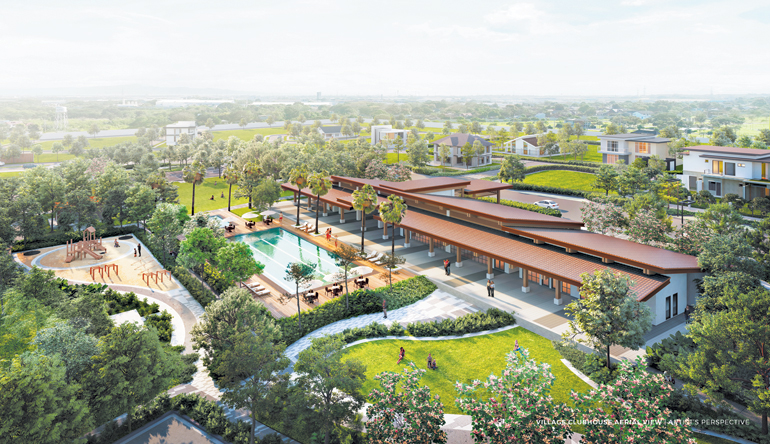
Hartwood Village at Meadowcrest (Artist’s Perspective)
One of the company’s projects set to meet such demand is Hartwood Village, Federal Land’s latest horizontal development nestled within Federal Land Communities’ Meadowcrest in Biñan, Laguna. Meadowcrest embodies the 15-minute community concept that ensures access to essential services and recreational facilities within a short distance for its residents.
Situated near the newly completed Cavite-Laguna Expressway (CALAX) segment, the horizontal development will be a 48-ha carefully planned, human-scaled neighborhood township strategically positioned near key centers, major thoroughfares, and well-regarded establishments, such as De La Salle University Laguna, NUVALI, and Laguna Technopark. The pioneer upscale residential address in Meadowcrest is Hartwood Village.
The horizontal development features sustainable amenities like pedestrian pathways, bike lanes, and facilities that promote community engagement and environmental stewardship. The Hartwood Village possesses a wide range of lot classifications from standard village lots to park premier lots with lot sizes ranging from 300-542 sq.m.
Federal Land Nomura Real Estate Global: A Powerhouse Collaboration Transforming Philippine Real Estate Landscape
In 2022, Federal Land Inc. formed a ground-breaking joint venture with one of Japan’s leaders in residential developments, under the banner Federal Land NRE Global Inc. (FNG), with a vision to redefine local real estate as its investment into the future and usher in next-generation developments.
This partnership branches out of the Ty group of companies’ enviable ventures with leading Japanese companies that have strengthened economic relations between the two countries and is expected to set the standard in real estate excellence, drive innovative urban development, and significantly boost bilateral investments, further cementing the Philippines’ position as a prime destination for global investors.
Fusing Japanese innovation with Filipino sensibility, this joint venture is redefining Metro Manila’s skyline with projects that aim to further address the demand for condominium investments, as well as provide additional options for prospective homeowners.
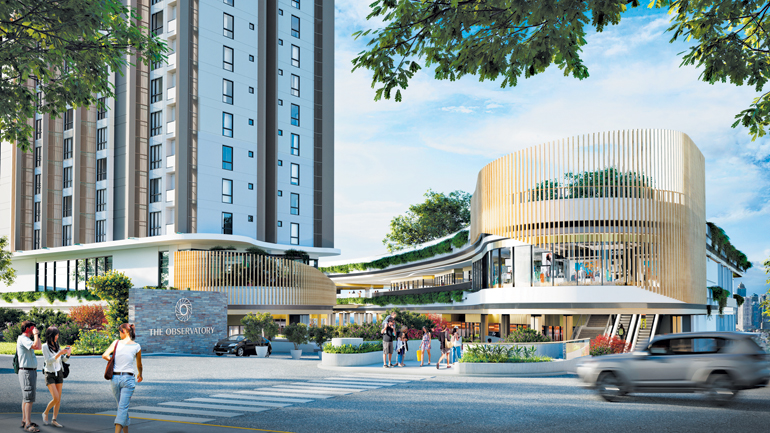
FNG’s The Observatory Cybergate Entrance (Artist’s Perspective)
Among these projects is The Observatory in Mandaluyong City, a 4.5-ha mixed-use community that is strategically located in close proximity to major central business districts. It features a neighborhood of residential towers, sprawling retail facilities, and an office building, all seamlessly connected through walkable and open spaces.
The Observatory Sora Tower, the first residential tower to rise in the development, will feature a total of 650 units that will cover the aforementioned types. The development in Mandaluyong features a range of unit sizes, from compact studios measuring 28-33.5 sq.m. to spacious penthouses ranging from 155-205 sq.m.
In addition to vertical developments like condominiums, FNG is well-prepared to meet the market’s growing demand for horizontal developments, particularly beyond the Metro. Data from the Colliers’ Q1 Metro Manila Residential Report suggests an increase in the annual average take-up for horizontal projects in these areas from the 28,700 average units sold from 2020 to 2021 to more than 29,000 units in 2022 to 2023.
This rise in demand for residential properties presents an opportunity for FNG to further broaden its portfolio and expand its presence in emerging provincial markets, reaching a wider segment and providing more product options bearing the Federal Land mark.
Establishing a significant presence in General Trias, Cavite, FNG is expanding its horizons within the 600-ha Riverpark, a large-scale, multi-use township also spearheaded by the Federal Land Communities brand. Envisioned as the “Next Gen City of the South,” Riverpark aims to provide smart living and lifestyle-enhancing developments with river and park-side experiences.
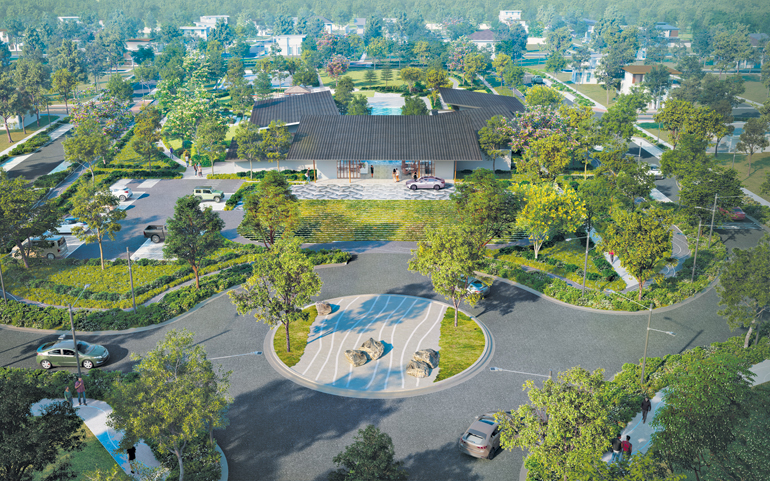
FNG’s Yume at Riverpark Drop off (Artist’s Perspective)
Among these developments, Yume at Riverpark shines with its fusion of Japanese culture and design, tailored to meet the practical needs of family-oriented Filipinos, making it an ideal choice for young families seeking a tranquil retreat away from Manila’s busy streets. Presenting a range of residential options with lot sizes spanning from 300 to 527 sq.m., the FNG development provides ample space for families to create their dream homes.
With General Trias City’s leap from being an agricultural municipality to an industrial and urbanized city, as well as its proximity to infrastructure projects that heighten access to major roads, Yume at Riverpark is located in the heart of the country’s latest property investment destination.
Additionally, the impending completion of the Cavite-Laguna Expressway (CALAX) Project reduces travel time from the Cavite Toll Expressway (CAVITEX) to the South Luzon Expressway from two hours to half an hour. This improved connectivity makes property investments in Yume at Riverpark, more attractive, valuable, and practical.
With a legacy spanning over five decades, Federal Land’s decades-long journey exemplifies a relentless pursuit of excellence and innovation. As the company and FNG continue to expand their footprint outside Metro Manila, their powerhouse collaboration is poised to redefine residential living and urban development in emerging regions across the Philippines — one landmark property at a time.
For more information on the developments of the Philippines’ premier real estate developer Federal Land and its subsidiary, Horizon Land, visitwww.federalland.ph. For more details on FNG, the joint venture redefining the real estate industry in the country, visit www.fng.ph.
Spotlight is BusinessWorld’s sponsored section that allows advertisers to amplify their brand and connect with BusinessWorld’s audience by publishing their stories on the BusinessWorld Web site. For more information, send an email to online@bworldonline.com.
Join us on Viber at https://bit.ly/3hv6bLA to get more updates and subscribe to BusinessWorld’s titles and get exclusive content through www.bworld-x.com.
The Philippines, among the world’s most vulnerable to the impact of climate change, plans to increase the share of renewable energy in its total power mix to 50% by 2040 from 22% as of 2022. — BLOOMBERG
Citicore Renewable Energy Corp. aims to build more solar power plants to secure over half of the Philippines’ total capacity in five years, its chief executive said, as the company joins a growing group raising funds to ride the country’s green energy push.
Citicore is seeking to raise up to P5.3 billion ($90 million) in an initial public offering that closes on Friday. That’s the largest by a domestic renewable energy company in nearly two decades, but just about a third of Energy Development Corp.’s P16.7-billion share sale in 2006, according to data compiled by Bloomberg. The company cut its public offer size after selling a stake in Citicore Energy REIT Corp. to SM Investments Corp. in March.
An affiliate of major Philippine construction firm Megawide Construction Corp., Citicore is prepared to spend P175 billion over the next five years to build 5 gigawatts of solar power capacity, CEO Oliver Tan said. The company’s pipeline of solar, wind and hydropower projects with a combined capacity of around 10.4 gigawatts will be operational by 2028.
The Philippines, among the world’s most vulnerable to the impact of climate change, plans to increase the share of renewable energy in its total power mix to 50% by 2040 from 22% as of 2022. It’s seeking to cut its reliance on fossil fuels by taking advantage of the archipelago’s abundant renewable energy resources.
In the past 14 months, three of the five IPOs in the Philippines, including Citicore, have been renewable energy companies seeking to bankroll projects.
“Our shift to renewable energy is actually for the survival of our country,” Mr. Tan said in an interview on Wednesday. “It’s energy security, energy independence.”
Ahead of Citicore in listing were Repower Energy Development Corp. and Alternergy Holdings Corp., which raised P1 billion and P1.47 billion, respectively. Shares of Repower were up 1.4% while those of Alternergy have dropped 48% from their public offer prices.
Citicore’s portfolio of 285 megawatts as of end-2023 accounts for about a fifth of the Philippines’ installed solar capacity. Bigger peer ACEN Corp., a unit of conglomerate Ayala Corp., has 964 MW of installed solar capacity and plans more projects in the country. Citicore is building smaller solar plants in multiple locations and planting crops below the panels to maximize land use, said Joan Cosico, chief investor relations officer.
Citicore’s first gigawatt should be on stream by next year, although hitting expansion targets may face challenges, said Nicky Franco, vice president for research at Abacus Securities Corp.
“Further out, it gets murky because land acquisition or conversion can take time and right of way plus permitting for transmission lines can take even longer,” Mr. Franco said. “But construction is in CREC’s DNA so it’s an IPO we are quite positive about especially for long-term investors.” — Bloomberg
BEIJING/MANILA – China’s defence ministry on Thursday strongly condemned the deployment of a U.S. intermediate range missile system in the northern Philippines during military drills in April, saying it “brought huge risks of war into the region”.
Defence Ministry spokesperson Wu Qian told a press briefing in Beijing that China remained highly vigilant and opposed the deployment, the first in the Indo-Pacific region.
“The United States and Philippine practices put the entire region under the fire of the United States (and) brought huge risks of war into the region,” Mr. Wu said, adding it “seriously undermined” regional peace.
“Intermediate-range missiles are strategic and offensive weapons with a strong Cold War colour,” Mr. Wu said.
China deploys its own advanced intermediate-range missiles as part of an extensive conventional ballistic missile arsenal.
The U.S. said last month it had deployed its Typhon missile system to the Philippines as part of their Balikatan or “shoulder-to-shoulder” military drills.
Philippine military official Col. Michael Logico said in April that the missile system, which can fire Tomahawk land attack and SM-6 missiles, was brought to Laoag city in Ilocos Norte province in the northern Philippines.
But officials did not say if the weapon system was transported elsewhere, or if it remains in the Philippines.
The Philippines and U.S. military did not fire the missile system during the exercises, but Mr. Logico said it was shipped to test the feasibility of transporting the 40-ton weapon system by air.
A Philippines military spokesperson could not be reached for comment on Thursday.
The annual drills this year involved around 16,000 Filipinos and U.S. soldiers, some of which were staged in northern Philippine islands near Taiwan and in western waters facing the South China Sea, where China is in dispute with the Philippines and other regional claimants.
The exercises irked China at the time and it warned of destabilization when countries outside the region “flex muscles and stoke confrontation”.
Philippine and U.S. officials had said the exercises were meant to improve interoperability between their forces and were not directed at any third country. — Reuters
THE NATIONAL Government’s (NG) outstanding debt returned to the P15-trillion level as of end-April due to the weaker peso, the Bureau of the Treasury (BTr) said.
Data from the BTr on Thursday showed outstanding debt rose by 0.61% to P15.02 trillion as of end-April from P14.93 trillion as of end-March.
“Total debt increased by P91.5 billion or 0.61% from the end-March 2024 level due to government net financing and the impact of local currency depreciation on the valuation of foreign currency-denominated debt,” the BTr said.
Year on year, the outstanding debt stock jumped by 7.95% from P13.91 trillion in the same period a year ago.
Of the total debt, more than two-thirds or 68.64% came from domestic sources.
As of end-April, outstanding domestic debt edged higher by 0.3% to P10.31 trillion from P10.28 trillion as of end-March. It also increased by 8.99% from P9.46 trillion in the same period a year earlier.
Government securities made up almost the entire domestic debt as of end April.
“For the month, the increment resulted from the P27.23-billion net issuance of government securities and the P3.78-billion effect of peso depreciation on foreign currency-denominated domestic debt,” it said.
Data from the BTr showed the peso closed at P57.583 against the dollar at end-April, weakening by P1.323 from its P56.26 finish a month ago.
Meanwhile, external debt went up by 1.3% to P4.71 trillion as of end-April from P4.65 trillion as of end-March. Year on year, foreign debt rose by 5.74% from P4.45 trillion.
“Although there was a net repayment of P32.91 billion in foreign loans within the month, the considerable depreciation of the peso caused a P109.31-billion upward adjustment in the local valuation of US dollar-denominated debt, partly offset by the P15.91-billion downward adjustment brought about by the opposite movement of third-currency debt,” the BTr added.
External debt was composed of P2.25 trillion in loans and P2.46 trillion in global bonds.
Broken down, global bonds consisted of P2.07 trillion in US dollar bonds, P212.85 billion in euro bonds, P64.03 billion in Japanese yen bonds, P57.58 billion in Islamic certificates and P54.77 billion in peso global bonds.
Meanwhile, the NG’s guaranteed obligations stood at P356.06 billion as of April, up by 2.89% from P346.04 billion in March. However, it dropped by 6.47% from P380.69 billion in the same period in 2023.
“The increment was due to the net availment of domestic guarantees amounting to P7.54 billion and the impact of peso depreciation on foreign currency-denominated guarantees amounting to P3.8 billion,” the BTr said.
“On the other hand, third-currency adjustments against the US dollar trimmed P1.32 billion,” it added.
Analysts noted that the peso depreciation contributed to the increase in debt as of end-April.
“This 0.61% increase from March is due to a combination of government borrowing and a weaker peso. Domestic debt grew slightly, impacted by new government security issuances and peso depreciation,” Security Bank Corp. Chief Economist Robert Dan J. Roces said in a Viber message.
Mr. Roces said the higher external debt was “primarily due to the peso’s depreciation inflating the value of dollar-denominated debt, outweighing a small decrease from other currencies.”
In mid-April, the peso sank to the P57-per-dollar level for the first time since November 2022, which was also its worst close in 17 months at the time.
“Weaker peso exchange rate over the past two years could have also increased the peso equivalent of foreign debt,” Rizal Commercial Banking Corp. Chief Economist Michael L. Ricafort said in a Viber message.
Mr. Ricafort said that outstanding debt could rise further after the government’s dollar bond issuance in May and other planned borrowings for the rest of the year.
The Philippine government raised $2 billion from its dual-tranche dollar bond issuance in May, its first global bond sale for the year.
The government’s borrowing program is set at P2.57 trillion this year, of which 75% will come from domestic sources and the rest from foreign sources.
As of the first quarter, the NG’s debt as a share of the gross domestic product (GDP) stood at 60.2%. This was below 61.1% a year ago but higher than 60.1% at the end of 2023.
The government’s debt-to-GDP ratio target this year is set at 60.3%. It seeks to bring this down further to 55.9% by 2028.
THE PESO sank to a near 19-month low on Thursday due to a strong dollar as US Treasury yields surged amid a hawkish US Federal Reserve.
The local unit closed at P58.635 per dollar on Thursday, weakening by 21.5 centavos from its P58.42 finish on Wednesday, Bankers Association of the Philippines data showed.
This was the peso’s worst finish in almost 19 months or since its P58.80-per-dollar close on Nov. 3, 2022.
The local unit is now down by P3.265 from its end-2023 close of P55.37 versus the greenback.
The peso opened Thursday’s session weaker at P58.50 against the dollar, which was already its intraday best. Its worst showing was at P58.73 versus the greenback.
Dollars exchanged inched down to $1.39 billion on Thursday from $1.4 billion on Wednesday.
The peso slumped due to a generally stronger dollar following a rise in US Treasury yields, Rizal Commercial Banking Corp. Chief Economist Michael L. Ricafort said in a Viber message.
“The dollar strengthened across the board with higher Treasury yields and recent hawkish Fed speak. The market was a bit on the edge with sticky inflation potentially indicating higher rates for longer,” Security Bank Corp. Chief Economist Robert Dan J. Roces likewise said in a Viber message.
The dollar held steady on Thursday after rising to a two-week high as a rout in US Treasuries pushed up yields, boosting the currency’s allure, Reuters reported.
The index tracking the US currency against its major peers climbed to 105.18 overnight, the highest since May 14, and was slightly lower at 105.05 in early European trading.
A two-day, 15-basis-point jump above 4.6% for long-term Treasury yields helped push the dollar higher. The rise in yields, which move inversely to prices, has been driven by a spate of stronger-than-expected data, tough words from Federal Reserve officials, and a run of poorly received bond auctions.
Expectations for Federal Reserve interest rate reductions this year have been pared back amid signs of sticky inflation, most recently with a surprise uptick in consumer sentiment in data on Tuesday.
Traders currently see 56.6% odds of a quarter-point cut by the conclusion of the September meeting, down from 57.5% odds a week ago, according to the CME Group’s FedWatch Tool.
For Friday, Mr. Roces said peso-dollar trading will be driven by the second estimate for first-quarter US gross domestic product scheduled for release overnight.
Mr. Ricafort expects the peso to range from P58.50 to P58.70 per dollar on Friday. — A.M.C. SywithReuters
Shoppers look for toys at a mall in Parañaque City in this file photo. — PHILIPPINE STAR/MIGUEL DE GUZMAN
THE BANGKO SENTRAL NG Pilipinas (BSP) may need to keep rates higher for longer or even hike rates further to cool inflation, HSBC said.
This as it sees private consumption staying strong and spending patterns shifting as the Philippines inches closer to becoming an upper middle-income economy.
In a report, HSBC economist for ASEAN (Association of Southeast Asian Nations) Aris D. Dacanay said that monetary policy reins may need to be “tighter than before” in order to keep inflation within the 2-4% target band.
“With Filipino consumers changing, so, too, should inflation and monetary policy. We can expect core consumer price index (CPI) to be stickier as consumers become wealthier and allocate more of their budgets to services and less to staples,” he said.
“Policy makers would then need to tighten the monetary reins even further if inflation were to surge in the future, supporting our view that, when the dust settles, monetary policy in the Philippines will likely be higher for longer,” he added.
The Monetary Board earlier this month kept its benchmark rate at a 17-year high of 6.5% for a fifth straight meeting.
BSP Governor Eli M. Remolona, Jr. earlier said that it was “highly unlikely” for the central bank to deliver further rate hikes. Instead, he signaled the possibility of a rate cut as early as August.
While high inflation and interest rates have dampened household consumption, HSBC said the Philippines still remains to be “one of the strongest in ASEAN.”
“But, despite household budgets getting tighter, consumers are, interestingly, reallocating their spending from ‘essentials’ — such as food and clothing — to restaurants and other miscellaneous goods services, even as prices have climbed. It’s a bit of a paradox,” Mr. Dacanay said.
Despite a “squeeze in purchasing power,” HSBC said Filipino consumers are spending more on nonessential products such as skincare, sports and takeout meals.
“This is a testament that tastes and preferences change, more so with the Philippines being inches away from becoming an ‘upper middle-income’ economy.”
The government is targeting to achieve upper middle-income status by 2025. An upper middle-income country has a gross national income (GNI) per capita between $4,466 and $13,845.
At present, the Philippines is classified as a lower middle-income country with a GNI per capita of $3,950.
“All things considered, the slowdown in household consumption is likely temporary as Filipino households adjust their spending given how much inflation soared last year,” HSBC said.
Household spending, which accounts for more than three-fourths of economic growth, rose by 4.6% in the first quarter, the slowest since 2010.
“When inflation stabilizes, consumption should broadly pick up. But, when it does, demand for nonessentials will likely grow faster than essentials — a trend apt for a country that is inches away from becoming an ‘upper-middle income’ economy,” it added.
Headline inflation accelerated for a third straight month to 3.8% in April, bringing the four-month inflation average to 3.4%. The BSP sees full-year inflation at 3.5%. — Luisa Maria Jacinta C. Jocson
Tensions remain high amid maritime sovereignty disputes in the South China Sea. — PHILIPPINE STAR/RYAN BALDEMOR
By Kyle Aristophere T. Atienza, Reporter
PHILIPPINE President Ferdinand R. Marcos, Jr. said countries outside the region should consider tensions in the South China Sea as a major issue for their economies, citing the waterway’s importance to international trade.
He made the remarks ahead of the premier summit of defense leaders and analysts across the world, and as China pushes policies seen restricting access to one of the world’s most important waterways.
“It’s so important to international trade that we can actually say that the stakeholders are no longer limited to ASEAN (Association of Southeast Asian Nations), Asia, Indo-Pacific. It really involves the global economy already,” Mr. Marcos told reporters, based on a transcript from his office.
He said he would highlight the government’s position amid tensions in the South China Sea and “see the ways forward for the Philippines and for the region.”
“The fact that they asked the Philippine President to come and speak on that very subject is significant in the sense that it is a recognition that there are challenges facing the Philippines, specifically,” he said.
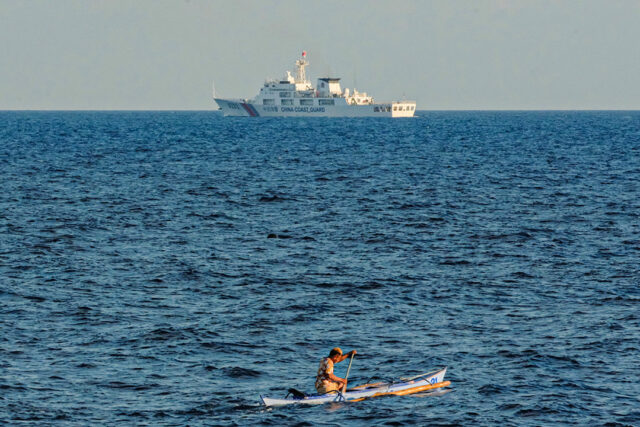
China has been blocking Philippine government and civic missions within Manila’s exclusive economic zone (EEZ). Scarborough Shoal, a traditional fishing ground, and Second Thomas Shoal, in which a Filipino military outpost was established in 1999, have been among South China Sea features most frequented by Chinese Coast Guard vessels last year.
The Philippines has also been reporting increasing Chinese presence in features near Reed Bank, a large tablemount in the waterway that according to the US Energy Information Administration could hold up to 5.4 billion barrels of oil and 55.1 trillion cubic feet of natural gas.
As the country deals with the potential depletion of its sole indigenous source of natural gas — the Malampaya gas field, there’s been growing focus on the waterway’s economic importance.
Two Philippine tycoons recently backed the government’s efforts to defend the country’s claims in the waterway, with San Miguel Corp. Chief Executive Officer (CEO) and President Ramon S. Ang citing its vast energy potential.
“We have a big reserve in the West Philippine Sea,” he said at a government economic briefing earlier this week, referring to parts of the South China Sea that fall within the Philippine EEZ.
Manny V. Pangilinan, chairman and CEO of Manila Electric Co. (Meralco), said Mr. Marcos “has been making the right decisions” amid tensions with China.
“We fully support what he’s been doing,” he said last month.
PXP Energy Corp., which is chaired by Mr. Pangilinan, has struggled conducting drilling and exploration activities for its Reed Bank concession or Service Contract 72.
VITAL TO TRADE Joshua Bernard B. Espena, vice-president at Manila-based International Development and Security Cooperation, said the Philippines is on the right track of “internationalizing” the dispute with China since the South China Sea is vital to international trade.
He said China keeps on insisting that disputes in the waterway should only involve claimants, but the Marcos government has “resisted” and kept doing what it needed to do — “unilateral and minilateral approaches to contain Chinese excessive moves so that the Philippines might stand to gain amid geopolitical shifts.”
“This is vital given the limitations on the Philippines’ capability to protect its fishers and deny Chinese arrests,” he said in a Facebook Messenger chat.
On the other hand, Ateneo de Manila University economics professor Leonardo A. Lanzona said the Marcos administration’s South China Sea policy may be “frightening investment out of the Philippines.”
“The exodus of firms from China because of these geopolitical issues is unlikely to benefit the country since the government has put the Philippines at the center of this tension,” he said via Messenger chat.
“Southeast Asian countries even closer to China, such as Thailand and Vietnam, are taking advantage of this situation as the firms exiting China are moving into their borders,” he said, noting that these countries are unlikely to get involved in the issue.
Mr. Lanzona said Manila should maintain stable diplomatic ties with China even as it defends its sovereignty and “most importantly focus on making our industry more attractive to investors.”
The Philippines has gained strong international support after it launched a transparency campaign last year that seeks to expose China’s aggressive acts within the Philippine EEZ such as the use of water cannons and dangerous maneuvers.
Mr. Marcos is set to deliver a keynote message for the IISS Shangri-La Dialogue in Singapore on May 31.
Beijing recently announced a four-month fishing ban in the entire waterway, just weeks after it adopted a policy authorizing its coast guard to detain foreigners it suspects of violating its exit-entry rules “in the waters under the jurisdiction of China” for up to 30 days — and in some cases for as long as 60 days — without a trial.
The Philippine military on Thursday said it had prepared contingency plans amid China’s fishing ban and new coast guard policy, which it said will be handled by law enforcement agencies such as the Philippine Coast Guard.
“We have contingency plans in place,” Armed Forces of the Philippines spokesperson Colonel Francel Margareth Padilla told ABS-CBN’s Teleradyo Serbisyo, noting that Manila regularly conducts patrols within the Philippine EEZ.
“We also have additional resources that are available and on standby.”
A group of fishermen from Zambales, Pangasinan, Bataan and Palawan provinces said their fishing rights are continuously “threatened by harassment and intimidation from China’s coast guard and maritime militia who are keeping Filipinos away from the rich waters.”
While the Philippine Coast Guard and the Bureau of Fisheries and Aquatic Resources provide them effective protection, the government needs to step up efforts to provide “economic support services” to affected fishers “who are mostly neglected and left on their own with little state benefits,” they said in a statement.
John Paolo R. Rivera, president and chief economist at Oikonomia Advisory & Research, Inc., said the South China Sea “will be an economic issue if the situation poses economic impacts to countries involved.”
Over $3 trillion worth of trade passes annually through the South China Sea.
Meanwhile, Rizal Commercial Banking Corp. Chief Economist Michael L. Ricafort said Manila is well-positioned to forge more economic partnerships with friendly nations amid increasing tensions with China.
China is the Philippines’ largest source of imports and second-largest export market. On the other hand, the United States, a major defense ally that has backed Manila amid Beijing’s intrusions at sea, is the largest destination of Philippine products and the fifth-largest source of imports.
A recent report from Nomura Global Markets Research said geopolitical concerns from the South China Sea dispute “could be an impediment to Chinese companies looking to diversify supply chains into the Philippines.”
Philip Arnold “Randy” P. Tuaño, dean of the Ateneo School of Government, said via Messenger chat the expected establishment of an economic corridor on the main island of Luzon will help Manila in its efforts to diversify the country’s trade ties away from China.
Philippine Ambassador to the US Jose Manuel Romualdez earlier said Washington and Tokyo, which has also been backing Manila in the South China Sea dispute, are expected to marshall $100 billion worth of investments for the country in the next 5 to 10 years.
Philippine flags are seen along a highway in Imus City, Cavite. — PHILIPPINE STAR/EDD GUMBAN
THE PHILIPPINES saw an improvement in its budget transparency score in the 2023 Open Budget Survey (OBS), making it the “most fiscally transparent” country in Asia.
In the survey by the International Budget Partnership (IBP), the Philippines’ transparency score went up by seven points to 75 out of 100 from 68 in 2021.
This surpassed the government’s target score of 71 under the Philippine Development Plan 2023-2028 and was well above the global average of 45.
The Philippines’ score placed it at 15th place out of 125 countries. In the 2021 OBS, the country ranked 19th out of 120 countries.
“[The] Philippines has increased the availability of budget information by publishing the midyear review online in a timely manner,” the IBP said in the report.
The Philippines’ budget transparency score of 75 was higher than its Southeast Asian peers like Indonesia (70), Thailand (60), Vietnam (51), Malaysia (48), Cambodia (43), Timor-Leste (37), and Myanmar (3).
To further improve budget transparency, the IBP said the Philippines must sustain and institutionalize the timely publishing of its midyear review timely online, including updated spending estimates.
“The DBM (Department of Budget and Management) will continue its best practices in ensuring a transparent, participatory, and accountable people’s budget,” Budget Secretary Amenah F. Pangandaman said in a statement.
However, the Philippines received a score of 33 out of 100 on public participation in the budget. This was still better than the global average of 15, and highest among Southeast Asian peers.
This pillar looks into the executive, legislature, and its main audit institution’s practices in line with the Global Initiative for Fiscal Transparency’s Principles of Public Participation in Fiscal Policies.
To enhance public participation in the budget process, the IBP said there is a need to engage vulnerable and underrepresented sectors.
“To further strengthen public participation in the budget process, [the DBM] should also prioritize expanding mechanisms during budget formulation and implementation to engage any civil society organization or member of the public who wishes to participate,” it said.
It also called on lawmakers to conduct public consultations before approving the budget, and allow the public or civil society organizations to testify during audit report hearings.
Meanwhile, the Philippines received a score of 83 out of 100 in budget oversight, noting that Congress and audit agencies provide “adequate oversight” in monitoring the country’ budget use.
“To strengthen independence and improve audit oversight by the Philippines’ Commission on Audit…. [it must] ensure that audit processes are reviewed by an independent agency,” IBP said.
Rizal Commercial Banking Corp. Chief Economist Michael L. Ricafort said the government must ramp up its digitization efforts to ensure budget transparency.
“Further digitization of National Government and local government processes and transactions internally and with the general public would help improve transparency and overall rankings,” he said in a Facebook Messenger chat.
Institute for Leadership, Empowerment, and Democracy, Inc. Executive Director Zy-za Nadine M. Suzara, who also worked on the data gathering of the survey, said confidential funds hamper budget transparency.
“There’s lack of transparency in the use of confidential funds and it really isn’t the best example in terms of promoting, better yet, ensuring transparency,” she said in a Viber message.
“Though there are guidelines on how to use the confidential funds, we have seen since the Duterte administration how the allocation and use of them by non-security agencies have been so prone to abuse,” she added.
There are at least P9-billion confidential and intelligence funds in the 2024 national budget. — Beatriz Marie D. Cruz
BusinessWorld Economic Forum 2024 — Photo by Jesse Bustos | The Philippine Star
BusinessWorld Economic Forum 2024 tackles the socioeconomic imperatives to drive the country forward
By Bjorn Biel M. Beltran, Special Features and Content Assistant Editor
The quest for sustained and inclusive growth is akin to nurturing a delicate ecosystem. It requires the harmony of various factors like vision, strategy, and execution, where every component, from robust policy frameworks to innovative private sector initiatives, plays a pivotal role.
For a developing economy to thrive, it must cultivate a fertile ground where education and skills development flourish, creating a workforce capable of driving innovation and productivity. Equally vital is the establishment of resilient infrastructure that not only supports economic activities but also enhances the quality of life for its citizens. Moreover, fostering a business environment that encourages entrepreneurship and attracts investment is essential to fuel job creation and economic diversification.
But as times continue to change and foster uncertainty, so too must one’s strategy to change and adapt. This is the riddle that haunts many countries today, particularly the Philippines. Even in the most adverse conditions, the country has posted economic growth competing with many of the world’s leading economies. This has invited attention and scrutiny from many foreign investors and created certain expectations as to how the country might sustain this growth.
National Economic and Development Authority Secretary Arsenio M. Balisacan — Photo by Jesse Bustos | The Philippine Star
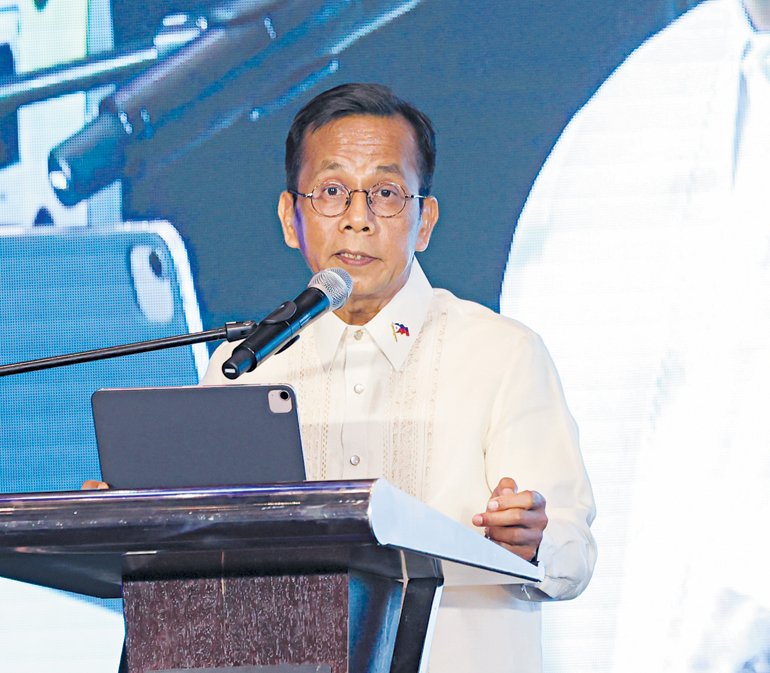
“Our macroeconomic fundamentals are sound and have proven time and again to be instrumental in fostering the sustained growth of the Philippine economy,” Secretary Arsenio M. Balisacan, head of the National Economic and Development Authority, said as he kick-started the recently concluded BusinessWorld Economic Forum by delivering a speech on the “Imperatives for Sustaining Philippines’ Economic Growth.”
Mr. Balisacan spoke to shed light on the crucial factors needed to maintain the country’s current economic momentum, such as controlling food inflation, managing debt, and monitoring fiscal risks. He painted an illustration of the country’s current economic situation, and highlighted the areas and issues that needed addressing, such as the growing digital divide and the inequalities of opportunities in the different regions of the country.
“As many of the world’s leading economists will tell you, a high growth trajectory can only be sustained with the whole of society and government working together. Critical development challenges and policy issues require decisive actions to maintain inclusive socioeconomic growth,” he said, adding that the government remains committed to doing all it can to sustain the country’s momentum and bring a more inclusive prosperity to the Filipino people.
“We are confident of meeting our short-term development objectives and we aim for no less socioeconomic transformation in the medium term,” Mr. Balisacan said.
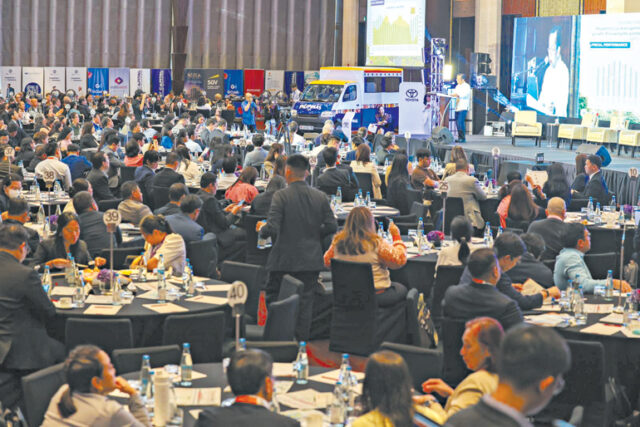
BusinessWorld Economic Forum 2024, titled “PH Next: Growth Drivers,” was held last May 22 at the Grand Ballroom of Grand Hyatt Manila in Bonifacio Global City, Taguig. The whole-day forum brought together policy makers, industry leaders, and top executives to explore the Philippines’ emerging opportunities and key drivers of economic progress.
BusinessWorld Publishing Corp. President and Chief Executive Officer Miguel G. Belmonte — Photo by JLCG Creative and Digital Solutions
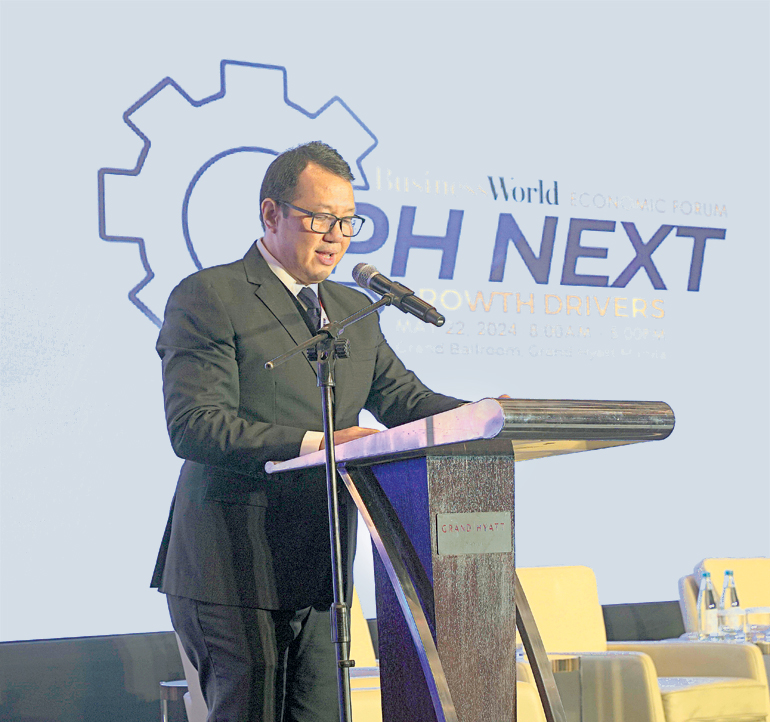
In his welcome remarks, BusinessWorld Publishing Corp. President and Chief Executive Officer (CEO) Miguel G. Belmonte highlighted that the Philippines has been achieving “impressively steady” growth in spite of recent headwinds, driven by favorable drivers. Nonetheless, he added, such growth should benefit every Filipino.
“[E]conomic growth alone is not the endgame. The true gauge of success will always be ensuring inclusive prosperity: How we can ensure that every Filipino benefits from a thriving economy?” Mr. Belmonte stressed.
“Through these Economic Fora, BusinessWorld has always served as a platform to explore solutions, foster dialogue, and forge partnerships that will create a bit better future for all,” he added.
JG Summit Holdings President and CEO Lance Y. Gokongwei — Photo by Jesse Bustos | The Philippine Star
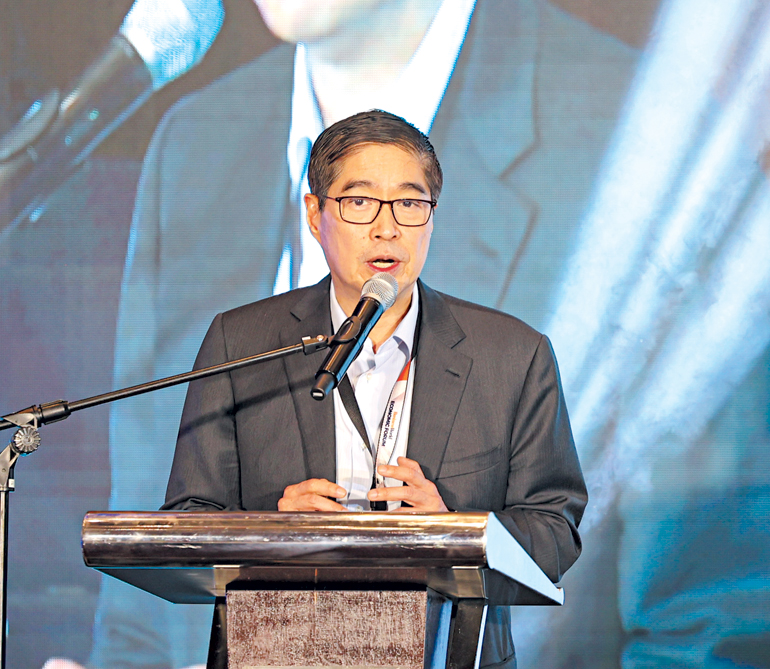
Lance Y. Gokongwei, president and CEO of JG Summit Holdings, Inc., also delivered a keynote address, talking about “Boosting the Private Sector’s Share in Fueling Economic Growth” and sharing his perspective on the role of private enterprises in driving the Philippine economy forward.
“The private sector, which is a major contributor to our nation’s economy, is a catalyst for economic growth and development. With its ability to mobilize resources, enhance productivity and innovate, the private sector is a wealth creator, providing employment opportunities to deliver goods and services. But despite its impact on our country’s economy, it is imperative for the private sector to partner with the government to push forward its agenda,” he said.
Mr. Gokongwei believes that there are three key areas in which mutual cooperation between the public and private sectors can “make a tremendous impact”: education and training, revitalizing manufacturing, and enhancing tourism. Underlying these key areas, he stressed that the investment in both physical and technological infrastructures will be critical.
“The task of nation-building is a humongous challenge. It is not a straight and easy path. It requires planning, cooperation, sacrifice, grit, and unity. But it is comforting to know that it is a shared responsibility, buoyed by the concerted efforts and founded on a high level of trust among all of the key players in our economic ecosystem — government, business, and labor — all working towards the same goal: a greater Philippines for every Filipino,” he said.
From L-R: Prudential Guarantee & Assurance First Vice-Chairman Peter G. Coyiuto; GT Capital Holdings Vice-Chairman Alfred V. Ty; JG Summit Holdings President and Chief Executive Officer Lance Y. Gokongwei; National Economic and Development Authority Secretary Arsenio M. Balisacan; BusinessWorld President and CEO Miguel G. Belmonte; Ambassador of Israel to the Philippines Ilan Fluss; BusinessWorld Executive Vice-President Lucien C. Dy Tioco; and Angkas CEO George Royeca — Photo by Jesse Bustos | The Philippine Star
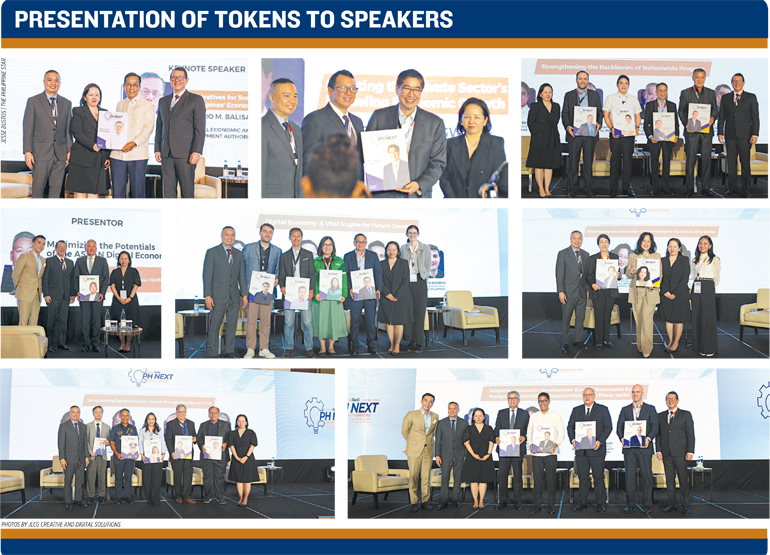
This year’s forum also delved into the various opportunities for the Philippine economy, particularly through the country’s seen next drivers of growth, in the succeeding sessions.
In the first panel, “Strengthening the Backbones of Nationwide Progress,” Aboitiz InfraCapital, Inc. Head of Economic Estates Rafael F. de Mesa shared his insights on infrastructure development; and George I. Royeca, CEO of ride-hailing service Angkas, shared his knowledge of the transportation industry. Meanwhile, Emmanuel “Manny” L. Estrada, vice-president for regulatory development and strategy at Globe; and Jesus C. Romero, senior executive vice-president and chief operating officer of Converge ICT Solutions, shared their insights on the state of the telecom industry.
Priming the following discussions on the digital economy, World Economic Forum Head of the Regional Agenda, Asia-Pacific Joo-Ok Lee delved into the negotiations on the Association of Southeast Asian Nations (ASEAN) Digital Economy Framework Agreement (DEFA) in a presentation titled “Maximizing the Potentials of the ASEAN Digital Economy.”
Jerro G. Ngo, CEO of EastWest; Carlos Barrera, CEO of e-commerce platform Lazada Philippines; Grace Vera Cruz, country head of ride-hailing and online payments platform Grab Philippines; and Mitch Padua, group chief product officer of digital bank Maya, shared their perspectives on “Digital Economy: A Vital Engine for Future Growth,” heralding the second half of the forum.
Following that, the panel discussion on “Safeguarding Digital Economic Growth through Security and Trust” was a fitting addition, as Ingrid Beroña, the chief risk officer of mobile payment platform GCash, shared her perspectives on financial security. Alexander K. Ramos, executive director of the Cybercrime Investigation and Coordinating Center, spoke about government activities and cybersecurity risks. Police Col. Jay D. Guillermo, chief of the Cyber Response Unit at PNP Anti-Cybercrime Group, also joined the discussion with their experiences in detecting and addressing cybercrimes; while Chito Jacinto, vice-president and chairman of membership and event at Information Security Officers Group, pointed out the importance of information security officers in safeguarding organizations’ assets in the digital world.
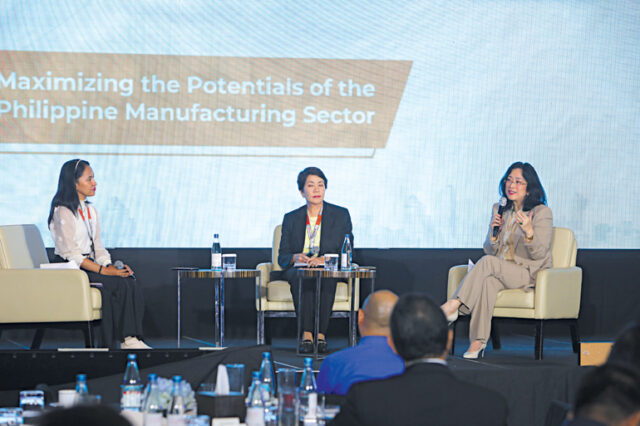
Furthermore, Maria Veronica F. Magsino, deputy director-general for finance and administration of the Philippine Economic Zone Authority, and Olivia Limpe-Aw, president and chief executive officer of Destileria Limtuaco & Co., Inc., joined the panel discussion titled “Maximizing the Potentials of the Philippine Manufacturing Sector,” highlighting the government’s efforts in boosting the said industry and emphasizing the sector’s long-standing significance to the economy as well as its most pressing concerns, respectively.
Lastly, Francis Giles B. Puno, president and chief operating officer of First Gen Corp.; Raymond B. Ravelo, chief sustainability officer of Manila Electric Company (Meralco); Atty. Richard J. Nethercott, president and CEO of Independent Electricity Market Operator of the Philippines; and Jaime Z. Urquijo, chief sustainability and risk officer of Ayala Corp. and board director of ACEN, comprised the panel that discussed “Sustaining Economic Development through Sustainable Power — Navigating Adversities & Opportunities in the Power Sector.”
The forum was hosted by Danie Laurel, news anchor for Cignal TV, with panel moderation by BusinessWorld Editor-in-Chief Cathy Rose A. Garcia, BusinessWorld reporters Luisa Maria Jacinta C. Jocson and Justine Irish D. Tabile, BusinessWorld Corporate Editor Arjay L. Balinbin, and TV5 News Anchor Jester Delos Santos.
1 of 2
This edition of the BusinessWorld Economic Forum was presented by BusinessWorld Publishing Corp., in partnership with GCash, Ayala Corp., and ACEN; with the support of gold sponsors Globe, Metro Pacific Investments Corp., and Globaltronics.
The forum was also supported by silver sponsors BDO Unibank, Converge ICT Solutions, Inc., Federal Land, Inc., Federal Land NRE Global, Inc., First Gen Corp., GT Capital Holdings, Inc., Lazada, Megaworld Corp., National Grid Corporation of the Philippines, Philippine Amusement and Gaming Corp. (PAGCOR), San Miguel Corp., SM Supermalls, Smart Communications, and Toyota Motor Philippines.
Bronze sponsors included Aboitiz Equity Ventures, Astoria Hotels and Resorts, Citicore Energy Philippines Corp., Megawide, EastWest Banking Corp., FWD Philippines, Meralco, Robinsons Land Corp., Santé International, SGV, SM Investments Corp., and Wilcon Depot.
Partner organizations for the event included the Asian Consulting Group, American Chamber of Commerce of the Philippines, Bank Marketing Association of the Philippines, British Chamber of Commerce of the Philippines, Management Association of the Philippines, Philippine Chamber of Commerce and Industry, Philippine Franchise Association, and Philippine Retailers Association, and JLCG Creative and Marketing Solutions; with media partners One News and The Philippine STAR.
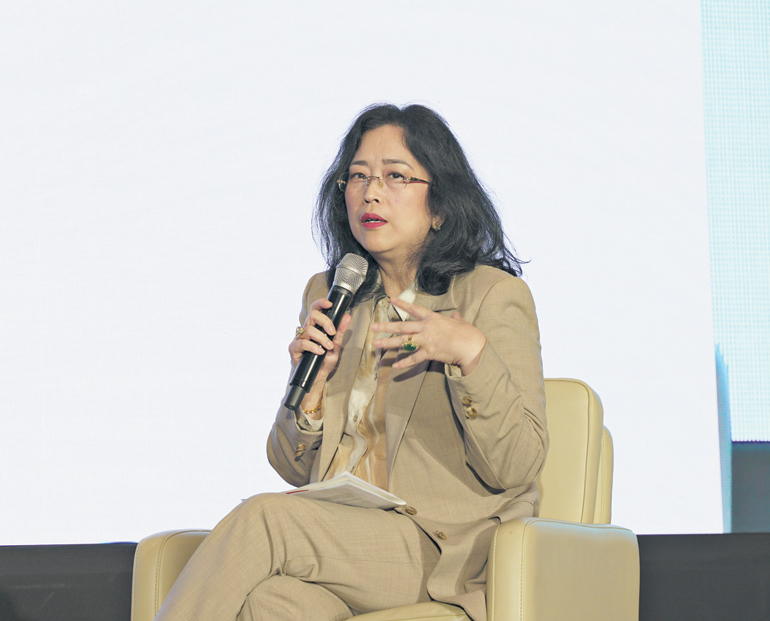
L-R: BusinessWorld Reporter Justine Irish D. Tabile (moderator); Maria Veronica F. Magsino of Philippine Economic Zone Authority; and Olivia Limpe-Aw of Destileria Limtuaco & Co. — Photo by Walter Bollozos / The Philippine Star
By Mhicole A. Moral, Special Features and Content Writer
The manufacturing industry in the Philippines continues to be a vital pillar of the national economy, contributing approximately 19% of the gross domestic product (GDP) as of 2022. Employing about 7% of the country’s labor force, the sector is not only a significant source of employment but also a dynamic driver of economic growth.
In a forecast reported by McKinsey & Company, the manufacturing sector in the Philippines is projected to grow in tandem with the national GDP at a rate of around 6% between 2023 to 2024.
The BusinessWorld Economic Forum, with the theme “PH Next: Growth Drivers,” further discussed predictions about the future of the Philippine manufacturing landscape and the opportunities and challenges ahead last May 22 at Grand Hyatt Manila.
Maria Veronica F. Magsino, Deputy Director-General for Finance and Administration of the Philippine Economic Zone Authority (PEZA), emphasized their role in fostering a conducive environment for manufacturing growth.
“We, at PEZA, believe that we have strong pull factors in the country that enable us to attract investments, and because of our huge market potential and favorable business regulations, the Philippines remains an attractive base for offshore activities,” the PEZA executive explained.
Ms. Magsino referred to the recent surveys by the Japan External Trade Organization (JETRO) and Japan Bank for International Cooperation (JBIC), which highlight these advantages. They cited high productivity, lower labor costs, and strong regulatory support as key factors.
PEZA’s operational model further enhances this appeal by offering a ‘one-stop, non-stop’ shop for permits and services, ensuring efficiency and minimal red tape.
“We aim to create a more competitive business environment by simplifying processes, enhancing transparency, offering targeted incentives for sustainable development, and others. These include ensuring regulatory coherence, reducing regulatory burden, and addressing trade barriers through engagements and partnerships with the government, as well as the private sectors alike,” said Ms. Magsino.
Meanwhile, Olivia Limpe-Aw, President and CEO of Destileria Limtuaco & Co., Inc., provided a nuanced perspective on the manufacturing sector, acknowledging both its vast potential and the significant hurdles that the country needs to overcome.
She pointed out the discrepancy between the manufacturing and services sectors’ contributions to GDP, suggesting that the former has more room for substantial growth. For instance, the Philippines has a large domestic market that can drive manufacturing demand with a population of 119 million and the highest annual population growth rate in ASEAN.
However, Ms. Limpe-Aw said that one major issue in the sector is the underutilization of natural resources and the skills gap in the labor force. She also highlighted the regulatory complexities that manufacturing companies face, such as needing various permits and communicating with multiple regulatory bodies.
“It’s really that gamut of licenses and regulatory bodies you have to deal with. So, imagine if you are a startup company, it becomes really difficult for you to undertake any manufacturing. So, the easiest way is to just import. But if we keep importing goods, we won’t have the multiplier effect that our country needs,” she added.
Moreover, infrastructure and energy costs are additional barriers. High energy prices deter manufacturing investments, emphasizing the need for affordable and reliable energy solutions. While improvements in telecommunications are under way, further enhancements in infrastructure, such as roads and supply chains, are necessary to support the sector’s growth.
Strategic investments for holistic growth
Philippine Economic Zone Authority Deputy Director-General for Finance and Administration Maria Veronica F. Magsino — Photo by walter Bollozos / The Philippine Star
Ms. Magsino highlighted the role of Special Economic Zones (SEZs) in the Philippines, which are designed to create a conducive environment for business operations, distinct from the outside economic landscape.
PEZA facilitates the movement of goods and services within these zones by managing the necessary permits and regulatory requirements. The PEZA executive emphasized that this streamlined process helps ecozone locators — businesses operating within the zones — comply with government regulations more efficiently.
Currently, PEZA focuses on activities that add significant value: “Right now, we follow the investment priorities plan, but inside the [economic] zones, we push for high-value activities, [such as] mineral processing. We do not register extractive industries for incentives but encourage manufacturing industries to process the minerals that are mined,” Ms. Magsino explained.
She also highlighted the priority sectors like pharmaceuticals, medical and healthcare services, and renewable energy. PEZA has seen these sectors as critical to reducing operational costs and ensuring sustainable development within the economic zones.
On the other hand, Ms. Limpe-Aw advocated for leveraging local resources to produce goods domestically, thereby reducing dependency on imports. She pointed out that trade liberalization in the 1990s led many manufacturers to turn to importing due to cost advantages. However, current geopolitical challenges and rising shipping costs necessitate a shift back to local production.
“I think generally in business, it would be advisable to produce what you already have in this country,” Ms. Limpe-Aw emphasized. “If we have a lot of this type of raw material, it would be better to manufacture and process it here, and then sell it here or export the excess.”
Creating a conducive manufacturing environment
Over the past three to four years, the manufacturing sector has experienced a growth rate of 3%, according to Ms. Magsino. Even if the growth is relatively slow compared to other industries, PEZA remains committed to enhancing the sector’s performance by providing vital services to locators (businesses operating within economic zones).
“We do not only register export activities, but rather, we would also be welcoming manufacturers or activities geared towards the domestic market. So, one is information [dissemination], and two, we are trying to bring down the cost,” she added.
Ms. Magsino emphasized the importance of upskilling the workforce to meet evolving industry demands. PEZA is partnering with various institutions to bridge the gap between locators and domestic manufacturers through initiatives like reverse trade fairs. These events enable locators to source products locally, enhancing the overall manufacturing ecosystem both inside and outside the economic zones.
PEZA is also collaborating with banking institutions and multilateral agencies to ensure that locators have access to necessary knowledge and resources. “We have partnered with them to be able to bring information, to bring knowledge to our locators, as well as get our locators even compliant with the requirements on environment in the global market,” she said.
Meanwhile, Ms. Limpe-Aw expressed optimism about the potential for growth in the manufacturing sector, stressing the need to simplify processes and create a more business-friendly environment. She pointed out that the complexity and risk associated with manufacturing deter many potential entrepreneurs.
Destileria Limtuaco & Co., Inc. President & CEO Olivia Limpe-Aw — Photo by Walter Bollozos / The Philippine Star
“There’s a lot of risk to manufacturing. You may produce a good, a particular product, but you’re not sure if it’s going to take off. So, if we make it more conducive and simpler for businesses, I think there’s no reason why we can’t be bigger than what we’re doing now,” said Ms. Limpe-Aw. “We should really grow that [contribution to GDP] number. We should really be bigger than that, given our domestic market and our potential to export.”
Regarding the impact of artificial intelligence (AI) on manufacturing, Ms. Limpe-Aw acknowledged the wide range of manufacturing activities, many of which are labor-intensive and not easily automated. Hence, she believes AI will not replace jobs but rather shift the nature of work, eliminating mundane tasks and enabling workers to focus on more critical functions.
Ms. Magsino shared a similar view, suggesting that AI’s integration into manufacturing will necessitate reskilling the workforce to adapt to new technologies. She believes AI will complement human labor rather than replace it, potentially creating new economic activities and employment opportunities.
She added, “I do not think it will do the thinking portion in an economic activity; that should still be left to humans. In addition to that, if the activities would make use of AI, then it will bring forth other activities, other economic activities where human labor will also be helpful.”
Strengthening the manufacturing sector
Reflecting on PEZA’s 29 years of service, Ms. Magsino noted the agency’s role in fostering collaborations between the private sector and the government. These partnerships have been instrumental in driving economic growth and supporting the expansion of various industries within the country.
She also acknowledged that the dynamic nature of both global and domestic markets necessitates a continuous evolution of strategies: “[PEZA] will continue what we are doing. That is for the short term. But of course, as we go along, as technology moves forward, as new demands for new activities are required, we will adjust to that.”
Meanwhile, Destileria Limtuaco, a company with a rich 172-year history, has proved the relevance of manufacturing industry in the country’s development: “For as long as there are consumers, there is always room for growth for the manufacturing sector,” said Ms. Limpe-Aw.
Both leaders emphasized the importance of the manufacturing sector in the broader economic context. They called for concerted efforts to strengthen the industry, recognizing its potential to drive substantial economic benefits.
“Let’s not forget manufacturing. Let’s not forget the brick-and-mortar industry. We can’t eat digital products, but we can eat the food that we manufacture,” said Ms. Limpe-Aw. “We have a lot of young people. We have to absorb them in the labor industry. We have to absorb them in the economy and make them productive members of society. After all, manufacturing is one of the industries that can give and contribute to the biggest multiplier effect in our economy.”









 The promo period will run from June 1-15, 2024, at all authorized Hyundai Service Centers. To see full promo mechanics, visit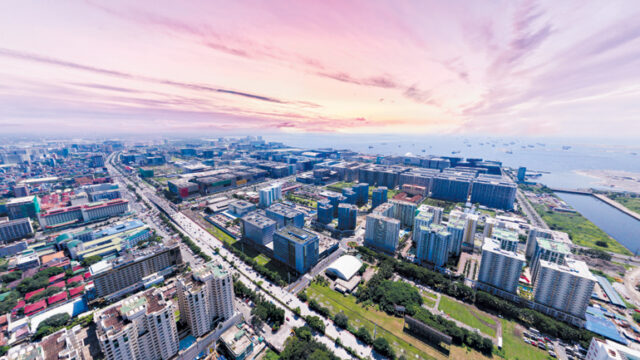








 Lastly, Francis Giles B. Puno, president and chief operating officer of First Gen Corp.; Raymond B. Ravelo, chief sustainability officer of Manila Electric Company (Meralco); Atty. Richard J. Nethercott, president and CEO of Independent Electricity Market Operator of the Philippines; and Jaime Z. Urquijo, chief sustainability and risk officer of Ayala Corp. and board director of ACEN, comprised the panel that discussed “Sustaining Economic Development through Sustainable Power — Navigating Adversities & Opportunities in the Power Sector.”
 The forum was hosted by Danie Laurel, news anchor for Cignal TV, with panel moderation by BusinessWorld Editor-in-Chief Cathy Rose A. Garcia, BusinessWorld reporters Luisa Maria Jacinta C. Jocson and Justine Irish D. Tabile, BusinessWorld Corporate Editor Arjay L. Balinbin, and TV5 News Anchor Jester Delos Santos.

 The forum was also supported by silver sponsors BDO Unibank, Converge ICT Solutions, Inc., Federal Land, Inc., Federal Land NRE Global, Inc., First Gen Corp., GT Capital Holdings, Inc., Lazada, Megaworld Corp., National Grid Corporation of the Philippines, Philippine Amusement and Gaming Corp. (PAGCOR), San Miguel Corp., SM Supermalls, Smart Communications, and Toyota Motor Philippines.
 Partner organizations for the event included the Asian Consulting Group, American Chamber of Commerce of the Philippines, Bank Marketing Association of the Philippines, British Chamber of Commerce of the Philippines, Management Association of the Philippines, Philippine Chamber of Commerce and Industry, Philippine Franchise Association, and Philippine Retailers Association, and JLCG Creative and Marketing Solutions; with media partners One News and The Philippine STAR.