Home Blog Page 28

PSC supports revival of MPTC Tour of Luzon

MPTC TOUR OF LUZON 2026 FACEBOOK ACCOUNT

THE Philippine Sports Commission (PSC) on Wednesday threw its full support to the MPTC Tour of Luzon that is unfurling on April 29 in Calatagan, Batangas and culminating on May 14 in Baguio City.

“The PSC supports the conduct of the MPTC Tour of Luzon 2026 as an activity aligned with the objectives of the National Sports Tourism Inter-Agency Committee (NST-IAC),” said Patrick C. Gregorio, who chairs both the PSC and NST-IAC.

“The PSC likewise recognizes the significance of the event in providing opportunities for athlete participation and in contributing to the continued development of Philippine sports,” he added.

A total of nine local teams and at least six foreign squads, headed by Seoul, South Korea, will be competing not just the honor of becoming the champion of the second edition of the Tour’s revival but also the top purses worth P1 million and P2 million to the individual and team champion, respectively.

There are three more overseas teams have pending applications in this 14-stage race bankrolled by the PSC, Manuel V. Pangilinan group of companies including title sponsor MPTC and sanctioned by PhilCycling under its president Abraham Tolentino.

“Our athletes cannot be deprived of their dreams, let sports continue,” said Mr. Gregorio.

Stage 1 on April 29 of the MPTC Tour of Luzon will be from CaSoBe (Calatagan) to Tagaytay City, Stage 2 is a team time trial from Clark Parade Grounds to New Clark City, Stage 3 from New Clark City to Palayan City, Stage 4 from Palayan City to Bayombong, Stage 5 from Santiago City to Tuguegarao City, Stage 6 from Tuguegarao City to Pagudpud and Stage 7 in Pagudpud-Pagudpud, the first of two individual time trial (ITT) races.

The rest day will be in Pagudpud on May 6 with Stage 8 set the next day from Pagudpud to Paoay, Stage 9 from Laoag City to Candon City, Stage 10 from Candon City to a first-ever Tour finish on Bessang Pass, Stage 11 from Candon City to San Juan in La Union, Stage 12 from Agoo to Daang Kalikasan in Mangatarem, Stage 13 is an ITT on the Baywalk in Lingayen and Binmaley in Pangasinan and the final Stage 14 will be from Lingayen to Scout Hill at John Hay Hotels in Baguio City. — Joey Villar

Cebu-based developer AppleOne Group sees ‘positive’ hospitality outlook amid Middle East conflict

The launch ceremony of the Mahi Center, a mixed-used development designed as a lifestyle, hospitality, and business hub in Lapu-Lapu City, Cebu. — EDG EVA

Cebu-based property developer AppleOne Group Inc. on Wednesday said the outlook for the hospitality industry in the province remains ‘positive’ in the coming months, despite the ongoing conflict in the Middle East.

Leif P. Bajarias, executive president for finance and operations at AppleOne Group Inc., said one key driver is the resilient passenger traffic at Mactan-Cebu International Airport (MCIA), the province’s primary gateway.

In January, the airport recorded an all-time high of 1.3 million passengers, up 15% from January 2025, according to the Mactan-Cebu International Airport Authority website.

The same month also marked the celebration of the province’s biggest annual festival, Sinulog, which draws millions of tourists and helps boost the local local economy.

Passenger traffic declined by 15% in February, with nearly 800,000 total passengers. The MCIAA has yet to release the figures for March.

Mr. Bajarias said that, like many other sectors, the hospitality industry is also feeling the ripple effects of the conflict in the Middle East, but maintained that the outlook remains positive.

“We’re very positive. And if you refer to the current ordeal, of course everybody is affected. The hospitality sector is affected because we also rely on International guests,” he said during the Mahi Center launch press conference.

He also said that the pandemic was more uncertain than the current situation, adding that resilience remains the key response for now.

As for Fairfield by Marriott Cebu Mactan, one of the anchor components of Mahi Center, a mixed-use development by AppleOne Group, both were officially launched on Wednesday.

The nine-story hotel has been posting steady occupancy levels since its soft launch in December, Dottie V. Wьrgler, multi-property general manager of Sheraton Cebu Mactan Resort and Fairfield by Marriott Cebu Mactan said.

“It has been steady, at least from the time that we opened in December through the first full quarter of 2026. Steady in the sense that we didn’t see a dip,” Ms. Wьrgler said during the press conference.

“So, the base could be less, but we were already in double digits in terms of occupancy. And it has, on average, actually been maintained,” she added.

In March, when the effects of the conflict started to be largely felt, Ms. Wьrgler said the hotel did not see a dramatic drop in occupancy, driven by various partnered businesses in Manila.

Since March, the country has been experiencing series of fuel price hikes, among the highest in Asia, which have added burden on business operating costs and pushed airline fuel expenses higher, resulting in increased ticket prices.

Moving forward, Mr. Bajarias said AppleOne Group’s portfolio of properties, retail centers, and hotel partnerships strengthens its resilience by ensuring developments remain accessible to a broad base of users.

“We don’t want to measure volume per visit, but we want frequent, routine visits. If that means putting in place daily-use categories, we will have to do that so that the property is integrated into the lives of employees and residents within Lapu-Lapu City,” he said. — Edg Adrian A. Eva

Sumsub launches partnership with Go Digital Philippines

REUTERS/KACPER PEMPEL/FILE PHOTO

Sumsub, a global verification provider, said it aims to provide a more secure digital identity for the Philippines through its partnership with Go Digital Philippines (GDP), amid rising cybercrime cases.

“We want to be able to help the government and the private sector to be able to communicate better and raise the bar for the rural users,” Sumsub Vice President for APAC Penny Chai told reporters in a briefing.

“With our experience over the last 10 years, we’re going to help the Philippines enter the next era in the next 10 years,” she added.

The partnership aims to bridge private-sector innovation with national and regional policies through Sumsub’s “global full cycle verification,” which streamlines the verification process, detects suspicious user activity, and identifies all types of fraud across user transactions.

“We are together bringing government, technology, and industry stakeholders to come together to work towards a more secure, inclusive, and empowered economy,” Sumsub APAC Government Relations Lead Jason Chan said in the same briefing.

Apart from helping safeguard Filipinos against cyber threats, the partnership also aims to contribute to the ASEAN AI Workstream within the ASEAN Business Advisory Council.

“We are also collaborating and coordinating with them on the interoperable new age finance pillar,” Mr. Chan said.

“Which essentially means that we want to focus more on solutions that will help provide cross-border payments, interoperability, and safer digital finance for MSMEs,” he added.

Cybercrime Investigation and Coordinating Center (CICC) noted that fraud cases are rising annually, raising concerns about the country’s digital security.

“While the digital platforms will be utilized more, the bad actors won’t be idle in exploiting that,” CICC Director Alvin M. Navarro told BusinessWorld.

“We might see a spike in scam incidents, and it can impact the digital economy,” he added.

The Philippine National Police Anti-Cybercrime Group (PNP-ACG) reported arresting 332 cybercrime suspects in the first quarter of 2026.

Sumsub currently has 4,000 clients globally across the fintech, gaming, banking, and digital asset sectors, with 30% of those companies based in Asia.

“We want to invest more and more here to bring more talents… to expand our plans and expand our strategy,” Sumsub Co-founder and Chief Executive Officer Andrew Sever said. — Almira Louise S. Martinez

Rattled by Trump, US allies eye Japan’s biggest arms opening since WW2

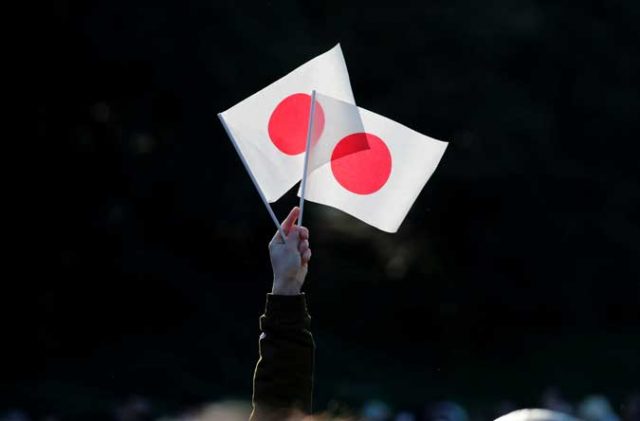
A person holds Japan’s national flag at the Imperial Palace in Tokyo, Japan, Jan. 2, 2020. — REUTERS

TOKYO — Japan’s imminent easing of arms export rules has sparked strong interest from Warsaw to Manila, Reuters reporting found, as President Donald J. Trump wavers on security commitments to allies and the wars in Iran and Ukraine strain US weapons supplies.

Prime Minister Sanae Takaichi’s ruling party approved the changes this week as she tries to invigorate the pacifist country’s military industrial base. Her government will formally adopt the new rules as soon as this month, three Japanese government officials told Reuters.

Despite largely isolating itself from global arms markets since World War II (WW2), Japan spends enough on its own military — $60 billion ($1 = 159.2100 yen) this year — to sustain a sizeable defense industry capable of manufacturing advanced systems like submarines and fighter jets.

Among the potential new customers are the Polish military and the Philippine navy, which are undergoing modernization amid regional security challenges, according to Reuters interviews with Japanese officials and foreign diplomats in Tokyo. Defense contractors Toshiba and Mitsubishi Electric are hiring staff and adding capacity to capitalize on demand, their executives said, providing previously unreported details.

One of the first deals Ms. Takaichi’s government will likely approve are exports of used frigates to the Philippines, which is locked in maritime confrontation with Beijing in the South China Sea, according to two of the Japanese officials. Reuters is the first to report the timeframe of the likely sale, which may be followed by missile defense systems, the officials said.

Warsaw and Tokyo can help plug gaps in each other’s arsenals, cooperating in areas like anti-drone and electronic warfare systems, said Mariusz Boguszewski, deputy chief of mission at Poland’s embassy in Japan.

“There are some bottlenecks that we can overcome having Japan on board,” he added, without providing details of specific deals. Poland’s WB Group, one of Europe’s largest private defense contractors, last year signed a tentative drone deal with Japanese aircraft maker ShinMaywa.

Three other European diplomats said Japan’s easing provided a chance to lessen their heavy dependence on US weapons production, which is strained by conflicts. Mr. Trump’s unpredictability, such as his threats to leave the NATO security alliance and invade Greenland, have also heightened the push to diversify, according to the diplomats, who requested anonymity to discuss sensitive matters.

“Offers are coming from everywhere,” said Masahiko Arai, senior vice-president at Mitsubishi Electric’s defense unit, which has been adding staff in London and Singapore to facilitate defense exports.

Ms. Takaichi’s office declined to answer specific questions for this story, instead referring Reuters to a Feb. 20 speech where she said she was reviewing the controls to bolster Japan’s defense production and strengthen capabilities of allies.

Tokyo’s export overhaul has previously been encouraged by successive US administrations, including Mr. Trump’s, eager for allies to contribute more to collective defense efforts.

White House spokeswoman Anna Kelly did not respond to questions from Reuters about the changes to Japanese policy but said that the two nations were closer than ever under Mr. Trump and Ms. Takaichi.

China’s foreign ministry did not immediately respond to questions about Japanese frigates potentially being sent to the Philippines. Ministry spokeswoman Mao Ning told reporters in April that Beijing was concerned about changes in Tokyo’s arms export policy and that it should “act prudently in military and security areas.”

The Philippines defense ministry declined to comment.

RISKY BUSINESS?
Japan’s first steps to relax the rules began more than a decade ago when Ms. Takaichi’s mentor, the late premier Shinzo Abe, eased a near-blanket ban on exports to encourage joint arms development with allies that would help counter China’s growing military might.

The push largely stalled, however, as many restrictions — including on lethal equipment — remained. Companies continued to shy away from overseas defense sales.

Buoyed by a bumper election win and shorn of the longtime coalition partner that had opposed more radical change, Ms. Takaichi hopes the latest easing will nudge arms makers to add the production capacity Japan needs for a major military buildup.

Some Japanese defense firms say they are ready to pivot.

Air defense systems builder Toshiba told Reuters it plans to hire about 500 people over the next three years and is constructing new testing and manufacturing facilities. It has also established a new department to handle defense exports.

“Reputational risk is not what it used to be,” said Kenji Kobayashi, vice-president in Toshiba’s defense division.

Some big Japanese brands that have sidelines in defense equipment and also make consumer goods have expressed concerns that arms sales will put off their broader range of customers.

“Rather than worrying about that, we focus on fulfilling our role and growing the business,” Mr. Kobayashi said.

A recruitment listing reviewed by Reuters from Mitsubishi Electric — whose products include fridges and missiles — shows the firm is hiring for an overseas sales role covering fighter aircraft and other military exports.

Demand for finished systems is strongest in Asia, while Europe, Australia and the United States offer markets for components and co-development of new products, said Mr. Arai, the Mitsubishi Electric defense executive.

He expects overall sales at his unit, including domestic and international, to increase by 50% to ¥600 billion ($3.8 billion) by 2031.

There remains a gap between the political messaging and the policies of some companies, however, said Latvia’s envoy to Japan, Zigmars Zilgalvis.

He gave the example of carmaker Toyota, whose subsidiary turned down an attempted purchase of engines and related parts by Latvian firm VR Cars for a military utility vehicle in 2023.

The Latvian mission had tried to help broker the failed sale, Mr. Zilgalvis said.

Toyota Customizing & Development said in response to Reuters questions that it could not accommodate the request for military vehicles “based on our business scope and policy.” It declined to comment on the upcoming revisions to Japan’s arms export policy.

VR Cars said it respected the decision.

While Tokyo is expected to maintain strict controls on sending arms to conflict zones, even Ukraine has sensed an opportunity.

Kyiv’s chamber of commerce in Tokyo will soon launch a new industry group of Ukrainian and Japanese drone firms to spur development of new technologies, timed to coincide with the rule changes, its head Kateryna Yavorska exclusively told Reuters.

EMERGING FROM WORLD WAR TWO ‘TIMEOUT’
The US has long dominated global military supply chains. It accounted for 95% of Japan’s defense imports, 85% of Australian and British purchases and 77% of Saudi Arabian buys between 2021-2025, according to a March report by the Stockholm International Peace Research Institute (SIPRI) think-tank.

But Washington’s foreign military sales program, often blamed for late deliveries and rising costs, and its tight control over defense technologies has long been a source of frustration, officials and analysts said.

One objective of Japan’s rule changes is to build defense supply chains in Asia that do not rely on the United States, said a ruling party official involved in drafting security policy.

Neighboring South Korea offers something of a blueprint: It has become the largest defense supplier to Poland and the Philippines after steady growth over the last five years, SIPRI data show.

But the potential for Japan — the world’s fourth-largest economy — is greater.

Even with the curbs, Japan’s arms industry is on a par with South Korea, Germany, Italy and Israel, and nearly twice the size of India’s, according to SIPRI’s analysis of leading defense contractor revenues in 2024. The US industry, however, is 25 times bigger.

“Japan has been kind of in the timeout box because of World War II, frankly. But they were inevitably going to swing closer towards the center of global politics,” said Andrew Koch, founder of Nexus Pacific, a Tokyo-based defense industry advisory. — Reuters


Luxury brands book sales drop as Mideast war takes toll on airport shopping

SIGNAGE is seen outside a World Duty Free store, part of the Avolta Group inside terminal 2 at Manchester Airport in Manchester, Britain, Oct. 15, 2024. — REUTERS/PHIL NOBLE

NEW YORK/LONDON/PARIS — From DFS to Avolta, duty-free stores selling premium perfumes and spirits to big spenders are feeling the pinch as conflict in the Middle East shuts airports and curbs travel to the region, a setback likely to become more acute as the war drags on.

The disruption, now in its sixth week, exposes a vulnerability for luxury and beauty groups that have relied on airport shopping and Gulf hubs — among their highest-margin channels — to offset weaker demand in China and Europe, making even short-term airport closure a potential drag on quarterly profit.

Analysts have said a prolonged slump in Middle East air traffic could compound pressure on a travel-retail industry still recovering from the COVID-19 pandemic, squeezing underperforming businesses such as LVMH’s DFS and weighing on prestige beauty and luxury firms including Estee Lauder, Puig and L’Oreal.

International flights to and from the Middle East plummeted in the first half of March. While some airlines in the United Arab Emirates are slowly restarting, flights remain well below normal levels.

Flight cancellations from the Middle East, excluding Turkey, decreased from their peak of 65% on March 3 to 13% on March 27, showed data from Cirium, but the number of flights scheduled has also fallen.

DFS “is costing two (percentage) points of growth” for its selective retailing division, which includes beauty brand Sephora, LVMH Chief Financial Officer (CFO) Cecile Cabanis told analysts this week.

The conflict shaved at least 1% off group sales in the latest quarter due to lower spending in the Gulf region, LVMH said.

“What we see today is still that demand is very much down,” Ms. Cabanis said.

DRONE STRIKES SHUTTER GULF HUBS
Companies that operate in the $74-billion travel-retail industry have been shifting inventories and temporarily closing airport stores in the region. Normalcy for luxury airport shops may take time, analysts said.

Dubai International Airport, whose retail outlets include L’Oreal’s Aesop, Kering’s Gucci and Estee’s Jo Malone, is operating a reduced number of terminals after a drone attack forced the hub to temporarily close. Kuwait International Airport has been shut due to repeated drone strikes, halting sales for airport outlets owned by Avolta and Boots.

Avolta, which earns 3% of revenue from the Middle East, is moving inventory from locations with slower sales to those with more foot traffic, CFO Yves Gerster told Reuters. Still, partly shuttered airports in some instances were leading to strong sales of food and other items for stranded travelers, for instance at Dubai airport, Mr. Gerster said.

Kering CFO Armelle Poulou told Reuters after the company’s first-quarter earnings report that travel retail was slightly down compared with last year, and that “performance with local customers has been more resilient than tourism-related demand.”

The conflict shaved 3% off overall Kering sales in March, or 1% for the quarter, with a similar effect at Gucci in particular, Ms. Poulou said.

Investors will keenly watch out for Estee’s quarterly results on May 1, as the firm explores a $40-billion acquisition of Spanish competitor Puig, which derives a tenth of sales from travel retail. That makes it one of the more exposed beauty companies to swings in airport shopping and international travel, analysts said. 

L’Oreal, whose travel-retail business in Asia accounted for less than 4% of the company’s $44 billion in 2025 sales, is scheduled to report quarterly results on April 22. The company does not provide total travel-retail sales, although analysts said Asia accounts for the largest share.

Estee Lauder and L’Oreal declined to comment. Puig was not immediately available for comment. — Reuters

Canada, UK, Australia and Japan call for ‘urgent end to hostilities in Lebanon’

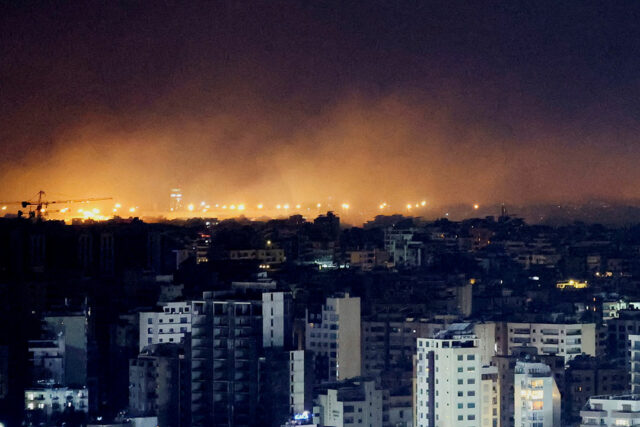
SMOKE rises over Beirut’s southern suburbs after a strike, amid ongoing hostilities between Hezbollah and Israeli forces, as seen from Sin El Fil, Lebanon, Oct. 1, 2024. — REUTERS

WASHINGTON — Canada, the UK, Australia, Japan and six other countries condemned the killings of United Nations (UN) peacekeepers in Lebanon on Tuesday while calling “for an urgent end to hostilities” in the country where Israeli attacks have killed over 2,000 people since March.

“Australia, Brazil, Canada, Colombia, Indonesia, Japan, Jordan, Sierra Leone, Switzerland and the United Kingdom remain deeply concerned by the worsening humanitarian situation and displacement crisis in Lebanon,” the countries said in a joint statement without directly mentioning US ally Israel or Iran-backed Hezbollah militants.

The statement comes after the deaths of three Indonesian peacekeepers last month. The UN has said preliminary findings from its probe showed one was killed by an Israeli tank projectile and two by an improvised explosive device most likely placed by Hezbollah.

Israel intensified air attacks on Lebanon after Hezbollah fired missiles at Israel on March 2, three days into the US-Israeli war on Iran.

Israel has since widened a ground invasion into Lebanon’s south, ordering hundreds of thousands of Lebanese to flee villages. The Israeli offensive has killed more than 2,000 people and forced 1.2 million from their homes, according to Lebanese authorities.

Hezbollah missile fire has mainly targeted towns near Israel’s northern border but has also been aimed at major cities. Two Israelis and 13 soldiers have been killed since March 2, Israel says.

“We condemn in the strongest terms actions that have killed UN peacekeepers and significantly increased the risks faced by humanitarian personnel in southern Lebanon,” the 10 countries said in the joint statement, which only noted Israel in the context of the ceasefire in the US and Israel’s war against Iran.

“We welcome the ceasefire agreed between the United States, Israel and Iran. We call for an urgent end to hostilities in Lebanon.”

The US and Israel attacked Iran on Feb. 28. Iran responded with strikes on Israel and Gulf states with US bases. US-Israeli strikes on Iran have killed thousands and displaced millions. A fragile two-week ceasefire between the US and Iran still has a week to run.

Iran says Israel’s war in Lebanon must be included in any agreement to end the wider conflict. Israel has ruled out discussing a ceasefire in Lebanon and demanded that Beirut disarm Hezbollah. — Reuters

CICC calls for ‘harmonized’ anti-scam, financial protection laws

Cybercrime Investigation and Coordinating Center (CICC) Director Alvin M. Navaro (right) during a press conference at the CICC office in Quezon City, July 11, 2025. — PHILIPPINE STAR/MIGUEL DE GUZMAN

The Cybercrime Investigation and Coordinating Center (CICC) urged financial institutions and law enforcement authorities to have “full coordination” in implementing financial protection and anti-scam laws.

“We already have a set of powerful core laws… There’s always a need to harmonize that,” CICC Director Alvin M. Navarro said in a forum on Tuesday.

“One of the inadequacies of the ecosystem of laws is the lack of very effective enforcement and the cooperation of all stakeholders,” he added.

Among the current laws designed to combat and penalize financial cybercrimes, such as phishing, vishing, and money muling, is the Anti-Financial Account Scamming Act (AFASA) or Republic Act No. 12010.

Offenders under AFASA could face penalties ranging from P50,000 to P10,000,000.

“I think the AFASA is encouraging news,” Mr. Navarro told BusinessWorld in an interview. “If law enforcement wants to get the details of a financial account involved in scamming, they can go to the BSP CAPO (Bangko Sentral ng Pilipinas Consumer Account Protection Office).

“They don’t have to go through the courts to get the name, address, and relevant details of the financial account involved in the scam,” he added.

The Securities and Exchange Commission (SEC) noted that it is already revising its framework to better align with the existing laws implemented by other government agencies.

“We agree to that, and we will come up with our revised circular maybe next week for the public to cover,” SEC Counsel Joseph Bar Paulo V. Moises said during the forum.

However, Mr. Moises warned that harmonizing all consumer protection and anti-scam laws could impose a financial burden on the private sector.

“I think it will add more cost on certain industry players that do not have the capacity to immediately adapt to what the laws require,” he said.

“So on the SEC, we are currently balancing everything. We balance the comments of the stakeholders and the views of the regulators,” he added.

The Philippine National Police-Anti-Cybercrime Group (PNP-ACG) in March reported 67 individuals arrested for violating AFASA from January to February this year.

The nabbed individuals were involved in illegal sales and misuse of financial accounts, such as ATM cards, online banking profiles, and e-wallets, as well as other cybercrime activities. — Almira Louise S. Martinez

CARD Pioneer shows the world how microinsurance works in PH through community immersion

Microinsurance Master delegate Getachew Mekonnin of Ethiopia’s Ministry of Agriculture immerses in a farming community in Sta. Ana, Pampanga.

Pioneer Insurance, with its joint venture CARD Pioneer Microinsurance, Inc., brought global microinsurance leaders to an immersion in a farming community in Sta. Ana, Pampanga, giving them a firsthand look at how inclusive insurance works in communities and how it reaches farmers and underserved families.

“For us, customer centricity means stepping into our clients’ realities and seeing life from their perspective,” said Melinda Grace Labao, President and CEO of CARD Pioneer Microinsurance, Inc. “When we immerse ourselves in their day-to-day experiences, we’re better able to build solutions that truly make a difference.”

The visit formed part of Microinsurance Master, a global accelerator program focused on advancing financial inclusion. Cited as the global standard for microinsurance, Pioneer has been chosen to host the program for the 5th time.

Bert Opdebeeck, founder of Microinsurance Master, shared one of his key learnings from Pioneer, “Let the customer be your guide. To learn their needs, you must go where they are, listen to them, and observe their daily lives.”

During the immersion, the international delegates engaged directly with smallholder farmers, including Jesus Aguas who shared that pests, flooding, and typhoons remain among the biggest threats to their livelihood.

“Sometimes, when you are close to harvest, a typhoon comes and the crops fall,” Mr. Aguas said. “Your investment is wasted.”

For many, however, the risks extend beyond their crops. Bienvenido Timbol, Jr., another farmer who shared his experience with delegates, pointed out that while government programs provide insurance coverage for crops, farmers themselves often remain unprotected.

“The crops are insured, but what about the person working on them?” Mr. Timbol said. “If we get sick, we have nowhere to get money. We end up borrowing and paying debts again.”

For many families, microinsurance provides an additional layer of protection against these uncertainties. Edna Pamintuan, a member of Center for Agriculture and Rural Development Mutually Reinforcing Institutions (CARD MRI) who maintains multiple microinsurance policies for her household, said she decided to get coverage after being encouraged by their local microinsurance coordinator.

“You can never really say what might happen in life,” Ms. Pamintuan said. “That’s why it’s important to have insurance.”

Delegates observed that the Philippine microinsurance ecosystem thrives because of strong partnerships among insurers, microfinance institutions, cooperatives, and community networks that help bring financial protection closer to underserved sectors.

Microinsurance Master delegates Arijana Antunovic of Global Parametrics in the United Kingdom and Getachew Mekonnin of Ethiopia’s Ministry of Agriculture learn about the risks and realities faced by a farmer from Sta. Ana, Pampanga.

Arijana Antunovic of Global Parametrics in the United Kingdom shared, “The Philippines has many cooperatives and organizations through which farmers can organize themselves,” Antunovic said. “It makes it much easier to bring insurance solutions to communities.” 

Getachew Mekonnin of Ethiopia’s Ministry of Agriculture also saw how awareness and education play a critical role in making insurance work for vulnerable communities.

“Farmers here are highly aware of the importance of microinsurance,” Mr. Mekonnin said. “There has clearly been a lot of investment in educating communities, and people really rely on insurance to become more resilient during difficult times.”

Pioneer continues to protect underserved Filipinos, including farmers, through crop insurance and other microinsurance products, counting close to 37 million enrollments as of 2025.

By sharing the Philippine microinsurance experience to the world, Pioneer demonstrates how customer-centric solutions can be scaled and replicated to help close the protection gap across the world.


Spotlight is BusinessWorld’s sponsored section that allows advertisers to amplify their brand and connect with BusinessWorld’s audience by publishing their stories on the BusinessWorld Web site. For more information, send an email to online@bworldonline.com.

Join us on Viber at https://bit.ly/3hv6bLA to get more updates and subscribe to BusinessWorld’s titles and get exclusive content through www.bworld-x.com.

China moves to block entrance to disputed South China Sea shoal, images show

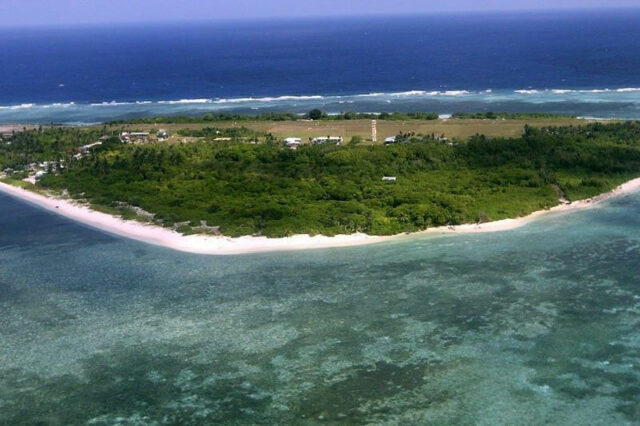
PHILSTAR FILE PHOTO

HONG KONG/MANILA — China is employing ships and a barrier to tighten control of the entrance to the Scarborough Shoal in the South China Sea amid roiling tension with the Philippines over the disputed feature, satellite imagery obtained by Reuters shows.

Scarborough is one of Asia’s most hotly disputed maritime sites, where some diplomats and analysts fear long-running frictions and confrontations could degenerate into armed conflict.

The presence of four fishing boats, a Chinese naval or coast guard ship and a new floating barrier comes as the Philippines sends its own coast guard and fisheries vessels to support its fishermen frequently driven away by larger Chinese patrols.

Photographs taken on April 10 and 11 show the fishing boats anchored along the entrance to the shoal, in addition to a floating barrier stretching across it in the April 11 image.

Satellite image provider Vantor, formerly Maxar Technologies, said a probable Chinese naval or coast guard patrol vessel can be glimpsed just outside the entrance on April 10.

China’s defense ministry did not immediately respond to Reuters’ requests for comment on the deployment to the entrance to the shoal or its timing.

TRADITIONALLY RICH FISHING GROUND
The traditionally rich fishing ground of the Scarborough Shoal lies entirely within the Philippines’ exclusive economic zone, but China also claims it as part of its territory.

Last year, China approved establishment of a national nature reserve there, alarming Philippine security officials, who called the move a “clear pretext for occupation”.

Commodore Jay Tarriela, a spokesperson for the Philippine coast guard, told Reuters on Wednesday the Chinese government had installed a 352-meter (1,150-ft) floating barrier at the entrance on April 10 and April 11.

“Six Chinese maritime militia vessels were observed within the shoal, while three others were spotted outside, seemingly obstructing the entrance to BDM,” he said.

He was referring to the shoal by its Philippine name of Bajo de Masinloc, while China calls it Huangyan Island.

While the Philippines coast guard has cut barriers in the past, Mr. Tarriela said the Chinese side appear to have removed the latest one since the weekend, but the Philippine Navy says its patrols continue.

“According to our assessment in the past, they consistently exhibit suspicion whenever they monitor a group of Filipino fishing boats,” Mr. Tarriela added.

Ten Chinese coast guard vessels were sighted at the shoal from April 5 to April 12, Philippine Navy spokesperson Roy Trinidad said on Tuesday.

SOVEREIGNTY HAS NEVER BEEN ESTABLISHED
Despite the competing claims, sovereignty has never been established and the shoal is effectively under Beijing’s control even if Philippine boats still try to operate there.

In January, the militaries of the Philippines and the United States sailed together at the shoal in the 11th such drill by the treaty allies.

Military engagements between them have soared under Philippine President Ferdinand R. Marcos Jr., who has pivoted closer to Washington in response to China’s growing presence in the busy waterway of the South China Sea.

Thousands of troops from both countries are set to begin large-scale exercises across the Philippine archipelago this month, including in Zambales, whose coast is about 120 nautical miles from the Scarborough Shoal.

Diplomats say the drills and broader tensions are being closely watched amid fears that China could take advantage of perceptions that the US is distracted by the Iran conflict and its effort to re-open the vital Straits of Hormuz waterway.

China has kept a deployment of coast guard and fishing trawlers at the shoal since seizing it in 2012 after a standoff with the Philippines.

Manila has said Chinese maritime militia operate some trawlers at the shoal and other disputed areas of the South China Sea, but Beijing has never acknowledged this.

A landmark 2016 ruling on various South China Sea issues by the Permanent Court of Arbitration backed Manila, but establishing sovereignty over Scarborough Shoal was outside its scope.

The court said Beijing’s blockade there violated international law as it was a traditional fishing ground for several countries, including China, the Philippines and Vietnam. — Reuters

US shuts down Iran’s maritime trade despite optimism for more talks

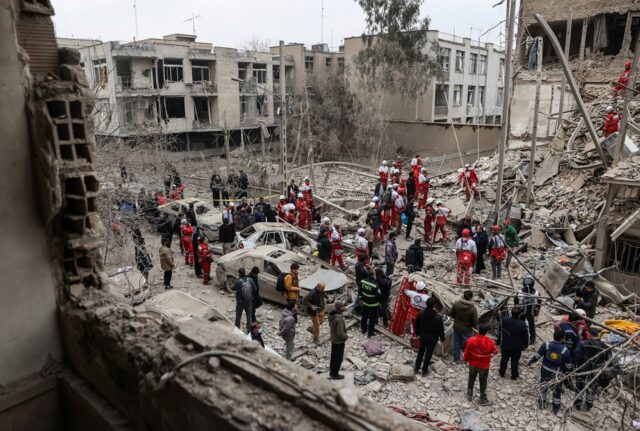
Emergency personnel work at the site of a strike on a residential building, amid the US-Israeli conflict with Iran, in Tehran, Iran, Mar. 16, 2026.—via REUTERS/MAJID ASGARIPOU

DUBAI/WASHINGTON — The United States said on Wednesday its military had completely halted trade going in and out of Iran by sea, while President Donald Trump said talks with Tehran on ending the war could resume this week, sending oil prices down for a second day.

Mr. Trump said negotiations between US and Iranian officials could resume in Pakistan in the next two days and Vice President JD Vance, who led weekend talks that ended without a breakthrough, said he felt positive about where things stood.

“I think you’re going to be watching an amazing two days ahead,” Mr. Trump told ABC News reporter Jonathan Karl, adding he did not think it would be necessary to extend a two-week ceasefire that ends on April 21.

“It could end either way, but I think a deal is preferable because then they can rebuild,” Mr. Trump said, according to a post by Mr. Karl on X. “They really do have a different regime now. No matter what, we took out the radicals.”

Officials from Pakistan, Iran, and the Gulf also said negotiating teams from the US and Iran could return to Pakistan later this week, although one senior Iranian source said no date had been set.

Despite the optimistic note, more vessels were being turned back under the US blockade on Iranian ports, including a US-sanctioned and Chinese-owned tanker Rich Starry that was making its way back to the Strait of Hormuz on Wednesday after exiting the Persian Gulf.

Admiral Brad Cooper, the head of the US Central Command, said American forces had completely halted economic trade going in and out of Iran by sea, which he said fuels 90% of Iran’s economy.

“In less than 36 hours since the blockade was implemented, US forces have completely halted economic trade going into and out of Iran by sea,” Mr. Cooper said in a post on X.

Earlier the US military said it had intercepted eight Iran-linked oil tankers since the start of the blockade on Monday, according to the Wall Street Journal.

RETURN TO ISLAMABAD
Mr. Trump, speaking to the New York Post on Tuesday, said his negotiators are likely to be back, thanks largely to the “great job” Pakistan’s army chief, Field Marshal Asim Munir, was doing to moderate the talks.

Later on Tuesday, at an event in Georgia, US Vice President JD Vance said Mr. Trump wanted to make a “grand bargain” with Iran but there was a lot of mistrust between the two countries.

“You are not going to solve that problem overnight,” he said.

The signs of diplomatic engagement to end the conflict that began on February 28 helped calm oil markets, pressing benchmark prices below $100 for a second day on Wednesday. Asian stocks rose while the safe-haven dollar stabilized after falling for a seventh straight session overnight.

However, the market stands to lose access to further supply as the US does not plan to renew a 30-day waiver of sanctions on Iranian oil at sea that expires this week, according to two US officials, and quietly let a similar waiver on Russian oil run out on the weekend.

The war has prompted Iran to effectively shut the Strait of Hormuz, a crucial global waterway for crude and gas transport, and cut shipments from the Gulf to global buyers, particularly in Asia and Europe, leaving importers scrambling to secure alternate supplies.

About 5,000 people have died in the hostilities, including about 3,000 in Iran and 2,000 in Lebanon.

STICKING POINTS
Iran’s nuclear ambitions were a key sticking point at the weekend talks. The US had proposed a 20-year suspension of all nuclear activity by Iran, while Tehran had suggested a halt of three to five years, according to people familiar with the proposals.

Speaking in Seoul, the head of the International Atomic Energy Agency (IAEA), Rafael Grossi, said the length of any moratorium on Iranian uranium enrichment was a political decision and it was possible Tehran might accept a compromise as a confidence-building act.

The US has also pressed for any enriched nuclear material to be removed from Iran, while Tehran has demanded that international sanctions against it be removed.

One source involved in the negotiations in Pakistan said back-channel talks since the weekend had produced progress in closing that gap, bringing the two sides closer to a deal that could be put forward at a new round of talks.

However, in a major complication for peace prospects, Israel has continued to attack Lebanon as it targets Hezbollah, an Iran-backed militant group. Israel and the US say that campaign is not covered by the ceasefire, while Iran insists it is.

On Tuesday, the UK, Canada, Japan, and seven other countries condemned the killings of UN peacekeepers in Lebanon and called for “an urgent end to hostilities”.

The statement comes after the deaths of three Indonesian peacekeepers last month. The countries welcomed the ceasefire agreed between the US, Israel, and Iran. — Reuters

Trump doubles down in criticizing Pope Leo over Iran

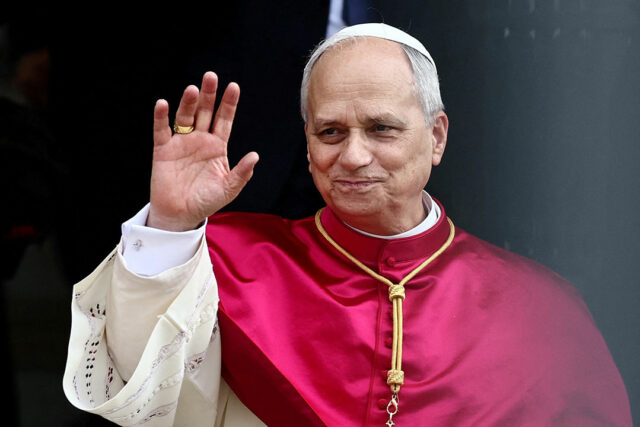
POPE LEO XIV waves as he leaves the basilica of Saint Paul Outside the Walls in Rome, Italy, May 20, 2025. — REUTERS

WASHINGTON — US President Donald Trump, whose war and immigration policies have been condemned by Pope Leo, reiterated his criticism of the religious leader on Tuesday night.

In a post on Truth Social, Mr. Trump urged that “someone please tell Pope Leo” about the killings of protesters by Iran and that “for Iran to have a Nuclear Bomb is absolutely unacceptable.”

The US and Israel attacked Iran on February 28. Iran responded with its own strikes on Israel and Gulf states with US bases. US-Israeli strikes on Iran and Israeli attacks in Lebanon have killed thousands and displaced millions.

Iran does not have nuclear weapons while the US does. Israel is widely believed to be the only Middle Eastern country with nuclear weapons.

While Western countries have long believed that Iran wants a nuclear bomb – or at least the ability to make one very quickly – Tehran has always denied that, citing its membership of the Nuclear Non-Proliferation Treaty.

Mr. Trump’s comments come after Pope Leo warned earlier in the day of the risk of democracies sliding into “majoritarian tyranny”.

The first US pope, Leo wrote in a letter issued by the Vatican about the use of power in democratic societies, and said democracies remained healthy only when they were rooted in moral values.

The pope has criticized Mr. Trump’s decision to launch the war against Iran, saying God rejects the prayers of those who launch wars and have “hands full of blood.” The pope termed Mr. Trump’s threat this month to destroy the Iranian civilization as unacceptable and previously declined to join the US president’s so-called “Board of Peace” initiative for Gaza.

The religious leader has also urged a “deep reflection” on the way migrants are treated in the US while Mr. Trump has pursued a hardline immigration policy.

On Sunday, Mr. Trump called the pope “weak” and “terrible” on crime and foreign policy issues. — Reuters

UN watchdog says North Korea is boosting nuclear weapons capacity

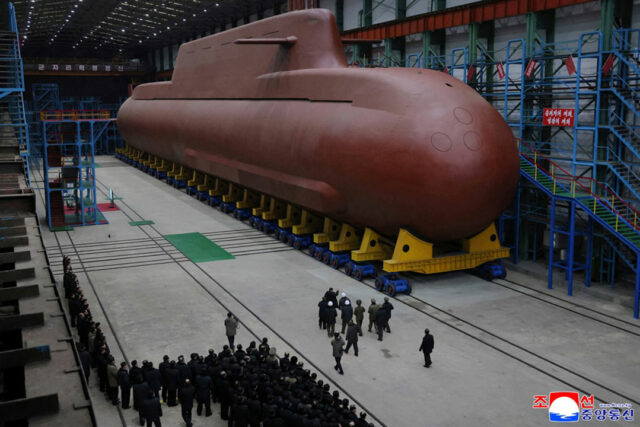
North Korean leader Kim Jong Un visits the construction site of an 8,700-ton nuclear-powered submarine capable of launching surface-to-air missiles in this picture released by North Korea's official Korean Central News Agency (KCNA) on December 25, 2025. — REUTERS

SEOUL — North Korea has made “very serious” advances in its abilities to turn out nuclear weapons, with the probable addition of a new uranium enrichment facility, as it stepped up activity at a key complex, International Atomic Energy Agency (IAEA) chief Rafael Grossi said on Wednesday.

Enriching uranium can provide an alternative, and experts say, a more effective, path to acquiring weapons-grade material in addition to reprocessing spent plutonium extracted from a nuclear reactor.

Speaking in Seoul, the head of the IAEA confirmed a rapid rise in activity at the five-megawatt reactor, the reprocessing unit, a light water reactor, and other facilities at the North’s Yongbyon nuclear complex.

NORTH’S NUCLEAR PROGRAM ESTIMATED AT FEW DOZEN WARHEADS
North Korea’s nuclear program was estimated at a few dozen warheads, he told a news conference, citing signs of activity such as the operation of a light water reactor and activation of other facilities besides Yongbyon.

“All of them point to a very serious increase in the capabilities of the DPRK in the area of nuclear weapons production,” Mr. Grossi said, using the initials of the North’s official name, the Democratic People’s Republic of Korea.

The watchdog had observed construction of a new facility similar to Yongbyon’s uranium enrichment halls, he said, adding that analysis of external features showed a significant expansion of enrichment capacity.

Mr. Grossi told a meeting of the agency’s governors this month that it was monitoring a new building at Yongbyon with similarities to an enrichment facility at Kangson, another key nuclear site near the capital, Pyongyang.

SATELLITE IMAGERY SUPPORTS IAEA ASSESSMENT
Satellite imagery from April supported the IAEA’s assessment, the US-based Center for Strategic and International Studies said on Monday.

It indicated completion of a suspected uranium enrichment plant, capable of producing weapons‑grade material, the center said in a report.

On Wednesday Mr. Grossi said the agency had not seen any evidence of Russian technology being used in North Korea’s nuclear weapons program.

References in a cooperation pact both countries signed last year appeared to be limited to civilian nuclear projects, though it was too early to draw firm conclusions, he added.

“Moving towards nuclear weapons would never give any country increased security,” Mr. Grossi said, but could instead trigger proliferation.

SOUTH KOREA’S NUCLEAR SUBMARINE PLAN
Turning to South Korea’s program to build nuclear-powered submarines, Mr. Grossi said he invited Seoul to work closely with the agency to avert proliferation risks, with formal talks to begin on the matter.

Naval reactors pose special challenges as nuclear fuel on submarines can go uninspected for long periods during missions.

“It is essential that this activity is not conducive to proliferation of nuclear weapons,” Mr. Grossi said, adding that the IAEA would seek an “ironclad guarantee” against any diversion of the material.

South Korea’s submarine ambitions advanced after President Lee Jae Myung and US President Donald Trump finalized joint steps on trade and security last November, in which Washington approved its ally’s plan to build the nuclear-powered vehicles. — Reuters