Home Blog Page 2789

Term deposit yields drop on BSP, Fed easing view
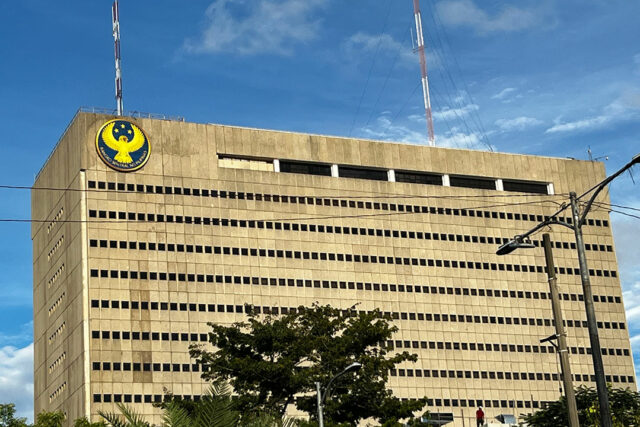
BW FILE PHOTO

TERM DEPOSIT yields went down on Thursday amid expectations of rate cuts by the Bangko Sentral ng Pilipinas (BSP) and US Federal Reserve in the coming months.

The BSP’s term deposit facility (TDF) attracted bids amounting to P164.441 billion on Thursday, above the P160 billion on the auction block as well as the P105.851 billion in bids seen a week ago for the same offer volume.

Broken down, tenders for the six-day papers reached P85.501 billion, slightly higher than the P80 billion auctioned off by the central bank. This was also well above the P40.096 billion in bids seen for the eight-day deposits offered the previous week.

Banks asked for yields ranging from 6.24% to 6.5%, a wider and lower band compared with the 6.4875% to 6.5215% seen a week ago. This caused the average rate of the one-week deposits to decline by 19.96 basis points (bps) to 6.3123% from 6.5119% previously.

Meanwhile, bids for the 13-day term deposits amounted to P78.94 billion, lower than the P80-billion offering but above the P65.755 billion in tenders recorded on Aug. 14.

Accepted rates ranged from 6.25% to 6.55%, also wider and lower than the 6.47% to 6.57% margin recorded a week ago. With this, the average rate for the two-week deposits decreased by 19.63 bps to 6.3477% from the 6.544% logged in the prior week’s auction of 14-day papers.

This week’s TDF tenors were adjusted from the usual seven-day and 14-day maturities as the BSP held the auction on a Thursday instead of Wednesday due to Aug. 21 initially being declared a holiday in observance of Ninoy Aquino Day. This special non-working day was moved to Friday (Aug. 23) by Malacañang last week.

Meanwhile, the BSP has not auctioned off 28-day term deposits for more than three years to give way to its weekly offerings of securities with the same tenor.

The term deposits and the 28-day bills are used by the central bank to mop up excess liquidity in the financial system and to better guide market rates.

TDF yields went down following expectations of monetary easing by the BSP and Fed in the months ahead, Rizal Commercial Banking Corp. Chief Economist Michael L. Ricafort said in a Viber message.

The BSP last week cut benchmark interest rates for the first time in almost four years to mark the start of a “calibrated” easing cycle amid an improving inflation and economic outlook, with its governor signaling at least one more reduction before the end of the year.

The Monetary Board reduced its target reverse repurchase rate by 25 bps to 6.25%, in line with the expectations of nine out of 16 analysts in a BusinessWorld poll.

Prior to the cut, the BSP kept its policy rate at an over 17-year high of 6.5% for six straight meetings following cumulative hikes worth 450 bps between May 2022 and October 2023 to rein in elevated inflation.

“With inflation on a target-consistent path, the current macroeconomic outlook supports a calibrated shift to a less restrictive monetary policy stance,” BSP Governor Eli M. Remolona, Jr. said at a briefing.

Mr. Remolona said they could cut rates by another 25 bps within the year. The Monetary Board’s remaining policy-setting meetings this year are on Oct. 17 and Dec. 19.

Analysts expect the BSP’s easing cycle to continue until next year amid stabilizing inflation, with at least 100 bps in rate cuts seen in 2025.

Meanwhile, the Federal Reserve appears to be very much on track for an interest rate cut in September after a “vast majority” of officials said such an action was likely, according to the minutes of the US central bank’s July 30-31 meeting, Reuters reported.

The minutes, which were released on Wednesday, even showed some policy makers would have been willing to reduce borrowing costs at last month’s gathering.

The policy-setting Federal Open Market Committee left its benchmark interest rate unchanged in the 5.25%-5.5% range on July 31, but opened the door to a cut at the Sept. 17-18 meeting.

Financial markets have been expecting the September meeting to kick off the Fed’s policy easing, with as much as a full percentage point worth of rate cuts expected by the end of this year.

With the Fed letting the data determine what happens with rates, central bank watchers are already contemplating the future scope of cuts and whether aggressive action is needed at the onset of the easing cycle.

Fed Chair Jerome H. Powell largely tipped off the likely outlook after the July policy meeting when he said “if we do get the data that we… hope we get, then a reduction in our policy rate could be on the table at the September meeting.”

Markets are likely to get an update of Mr. Powell’s views on Friday when he speaks at the Kansas City Fed’s annual research conference in Jackson Hole, Wyoming. A number of other Fed officials are also likely to weigh in on the outlook while attending the conference. — L.M.J.C. Jocson with Reuters


Pachinko ups the stakes and character count for Season 2

LONDON — Critically acclaimed TV series Pachinko returns for a second season with a much bigger cast and higher stakes for some of its protagonists, the show’s creators said ahead of the new episodes’ debut this week.

Based on Min Jin Lee’s best-selling novel of the same name, the show’s multi-generational story is told in three languages; Korean, Japanese, and English, and Season Two opens in Osaka, Japan, in 1945.

“We always said the heartbeat has to be the same, no matter what, but I think the biggest difference is just how much bigger the world has become for our characters,” writer and executive producer Soo Hugh told Reuters.

“We added so many more characters in Season Two because that’s how families grow.”

With World War II aggravating the already strained circumstances of central character Sunja, who is played by Kim Min-ha, and her family, Sunja gets back in contact with her former lover Hansu (Lee Min-ho), a businessman with criminal connections.

In a parallel storyline, Sunja’s grandson Solomon (Jin Ha) tries to climb his way back to the top in late 1980’s Tokyo, while the now elderly Sunja (Youn Yuh-jung) is energized by a new friendship.

“With Solomon’s storyline in the present day, the stakes feel more dire for him,” Hugh said.

For Ms. Kim, expressing the growing maturity of young Sunja, now a mother-of-two was a challenge.

“I have never been a mother before, so it took quite a long time for me to figure out how to be like a mother,” said Ms. Kim, 28, who drew inspiration from the women in her own family.

Mr. Lee, one of South Korea’s biggest stars, said Hansu, a character “who is always looking forward, never back” also felt different from the first season.

“It felt like taking on a new character,” said the 37-year-old actor.

“Pachinko came to me at a time when I needed new energy and provided me with new perspectives and ideas. It’s very meaningful work for me,” he added.

The first episode of Season Two is out on Apple TV+ on Friday, with new episodes released weekly. — Reuters

BHP’s quick strike fix sets tone for labor talks as copper rallies

REUTERS

SANTIAGO — BHP’s quick fix to a recent six-day strike at its Escondida copper mine in Chile could set the tone for upcoming negotiations elsewhere, with workers emboldened by high copper prices to push for a larger share of the profits.

Members of Escondida’s powerful Union No. 1 signed a sweetened deal on Sunday after walking off the job a week earlier when contract talks collapsed, demanding better pay and benefits at the world’s biggest copper mine.

With a preliminary deal in hand on Friday, a union lawyer had termed the agreement its “greatest recent victory.”

It gave each worker a bonus and interest-free loan of about $34,000, compared with BHP’s original offer of some $28,900.

The quick turnaround contrasts with a 2017 walkout that dragged on for a month and a half, severely hitting BHP’s production, boosting global copper prices and even denting Chile’s GDP, which is heavily reliant on the red metal.

That was a scenario BHP wanted to avoid, particularly given strong current demand and global copper prices, analysts and other experts said.

Demand for the metal is expected to shoot up, driven by the rise of electric vehicles and artificial intelligence technologies.

“The specter of the 44-day strike in 2017 created constant fear throughout the negotiations,” said Andres Gonzalez, an analyst at mining consultancy Plusmining. “BHP wanted to avoid something similar, which pushed them to seek an agreement.”

The two sides were also not so far apart when the strike started, he noted, making a middle ground easier to achieve. The union’s position also appeared to be buoyed by the public perception of BHP having capital to spare.

The miner is among the world’s biggest, turning out more than a million metric tons of copper a year at Escondida. It recently sought to acquire Anglo American in a $49-billion deal before scrapping the offer.

“Its current image is that of a company that has capital available to acquire assets or even invest in mergers … so the union was going to insist on achieving its goals,” said Cristian Cifuentes, an analyst at Chilean think tank Cesco.

Despite occasional strikes, Chile’s mining industry largely manages to renew workers’ collective contracts without conflict and even in advance, avoiding the risk of disrupting production.

Escondida’s union represents 2,400 people, almost all in key operational roles. The union has frequently clashed with BHP.

Analysts are now watching whether Escondida will set a precedent, but say other mines in Chile are not necessarily in similar situations, such as those that are smaller or grappling with problems in production and costs.

State-run copper group Codelco, fighting to revive production from a 25-year low, is due for pay negotiations at its Ministro Hales mine in September, followed by the El Teniente and Gabriela Mistral mines in October.

At each site, the unions represent a substantial part of the overall workforce. Of particular note is El Teniente, one of Codelco’s biggest mines, a complex that represented more than a quarter of company copper production last year.

El Teniente workers are represented by five separate unions, but those combined represent more than 80% of total workers, or 3,200 people.

“What is worrying is how the unions at El Teniente will react,” Mr. Cifuentes said.

Workers from one of three unions at Lundin Mining’s Caserones copper mine in Chile also went on strike one day before the Escondida strike and remain so.

“The price of copper has been quite favorable in recent months… Those profits have to be paid to the workers,” said Marco Garcia, president of the striking Caserones union, though he admitted the Escondida union had more “productive pressure.”

“We know that the next three years will be quite profitable for Caserones in the production of copper,” he added. “That’s what leads us to our position and to be able to demand higher wages for the members of our union.”

The Caserones management is due to negotiate with other unions at the site later this year.

The head of Chilean mining association SONAMI, Jorge Riesco, cautioned that it is necessary to strike a balance between worker pay and industry competitiveness.

“It is legitimate for workers to aspire to better working conditions, but it is important that they also consider other aspects,” he said. “Issues of labor productivity and industry competitiveness should also be on the table.” — Reuters

A sustainable future within reach: The promise of digital transformation

RAWPIXEL

THE development paradigm has shifted to “digital by default” as a norm, reshaping societies and economies. As a hub for digitally driven innovations, Asia and the Pacific is well positioned to leverage the transformative potential of digital technologies to accelerate progress towards the Sustainable Development Goals.

Emerging technologies are enabling smarter climate action, building more disaster-resilient cities and optimizing urban development. Artificial intelligence is helping improve the accuracy of early warning systems for disasters by providing the right information that reaches all the right people at the right time. Digital finance is more inclusive — expanding access especially for marginalized groups — while digital government platforms likewise enable public services to reach all citizens more effectively and efficiently.

The Asia-Pacific Digital Transformation Report 2024, which will be launched this week, demonstrates how digital innovations have enabled more sophisticated climate mitigation and adaptation measures across infrastructure, governance, mobility, industry and trade, disaster risk reduction, and agricultural and biodiversity ecosystems. Drawing from International Energy Agency data, the deployment of digital technologies and big data could save $80 billion per year or around 5% of total world annual power generation costs, while digitalization can help the integration of renewables by enabling smart grids to better match energy demand.

However, the opportunities presented by digital innovations for sustainable development also face challenges and looming threats. The Asia-Pacific region is confronted with several barriers to the broad-scale adoption of digital solutions. While 96% of the population in Asia and the Pacific live in areas covered by mobile broadband networks, it is estimated that only one-third productively use internet services and up to 40% lack basic digital skills. Moreover, while four out of five people in urban areas use the internet, in rural regions, this figure is only 52%. Such gaps in meaningful access are due to digital divides that broadly follow age, income, education, and geographic fault lines, with the gender divide underlying all these aspects. With the use of artificial intelligence rapidly rising, the need and urgency to bridge the digital divides between and within countries remain critical to ensure the full enjoyment of the benefits of digital technologies for all, while minimizing their risks.

Deploying innovative breakthrough solutions in bridging the digital divide and leveraging digital transformation for sustainable development will require mobilizing investments at scale in new infrastructure and connectivity. To this end, expanding affordable high-speed internet coverage, particularly among marginalized and underserved communities in rural areas, as well as offering digital skills training and lifelong learning, are critical for reducing digital disparities and connecting the unconnected. By sharing knowledge, experiences, and practices among countries, regional cooperation can create a conducive environment for innovation to flourish and steer us towards an inclusive digital future.

These holistic approaches require a high level of policy ambition. At the Asia-Pacific Ministerial Conference on Digital Inclusion and Transformation, which the United Nations Economic and Social Commission for Asia and the Pacific (ESCAP) is organizing in partnership with the Government of Kazakhstan in Astana this week, Ministers are expected to commit to a common vision, centered on innovative, collaborative digital solutions grounded in regional cooperation. In this regard, the conference will consider the possibility of establishing a Digital Solutions Center for Sustainable Development in Kazakhstan that aims to share practical digital solutions to advance the sustainable development agenda in the region.

Relatedly, the ESCAP Asia-Pacific Information Superhighway Initiative and its Action Plan 2022-2026 contributes to the collective push to extend meaningful connectivity to all, scale up digital technology applications, and strengthen digital data, which form the foundations for an inclusive, sustainable digital future.

With Asia and the Pacific at the forefront of a global digital transformation, a sustainable future is within reach. Let us seize on the digital promise to accelerate sustainable development in our region.


Armida Salsiah Alisjahbana is the under-secretary-general of the United Nations and executive secretary of ESCAP. Zhaslan Madiyev is the minister of Digital Development, Innovations and Aerospace Industry of Kazakhstan.

MGen unit signs solar deal with Singaporean firm

PIXABAY

MGEN Renewable Energy, Inc. (MGreen), a subsidiary of Meralco PowerGen Corp. (MGen), recently signed an investment deal with Singapore-based Vena Energy to jointly develop and operate a solar power project in Bugallon, Pangasinan.

The solar power project has an estimated capacity of 450 megawatts of alternating current (MWac) and is expected to reach financial close and commence construction by the third quarter of this year, MGreen said in a statement on Thursday.

Commercial operations are targeted by the fourth quarter of 2025. The project will be under 3 Barracuda Energy Corp., a subsidiary of Vena Energy.

“Beyond ink and paper, the signing of this investment agreement for our 450-MWac solar power project in Bugallon, Pangasinan is a testament to our commitment to power the good life of many Filipinos through solar energy,” MGreen President and Chief Executive Officer Dennis B. Jordan said.

Vena Energy Chief Executive Officer Nitin Apte said the company is committed to accelerating the energy transition and advancing renewable solutions that “foster sustainable growth and environmental stewardship.”

“The Bugallon Solar Power Project stands as a testament to our shared responsibility and dedication to engineering a greener future for the Philippines,” Mr. Apte said.

In 2023, MGen and Vena launched the commercial operations of their 68-MWac solar power project in Currimao, Ilocos Norte.

Vena Energy owns, develops, constructs, and operates a renewable energy portfolio of onshore wind and solar, offshore wind, and energy storage projects totaling 45 gigawatts.

MGreen is a subsidiary of power distributor Manila Electric Co. (Meralco). It owns and operates Global Business Power Corp. and MGreen, which are focused on using advanced and highly efficient technologies that provide reliable and cost-competitive power to customers.

Meralco’s controlling stakeholder, Beacon Electric Asset Holdings, Inc., is partly owned by PLDT, Inc. Hastings Holdings, Inc., a unit of PLDT Beneficial Trust Fund subsidiary MediaQuest Holdings, Inc., has an interest in BusinessWorld through the Philippine Star Group, which it controls. — Sheldeen Joy Talavera

GCash credit arm expects double-digit loan growth

FUSE LENDING, Inc., the credit arm of e-wallet GCash, expects double-digit growth in loan disbursements this year as it targets to reach underserved individuals and small businesses.

Fuse Lending President and Chief Executive Officer Tony Isidro told BusinessWorld on the sidelines of an event last week that he expects their loans to post “at least a double-digit growth” this year.

“We’re still very bullish on the opportunities, not just for this year, but for the coming years. As I said, the opportunity or the gap is just extremely big and we remain committed, not just as Fuse but as GCash, to provide that access to fair loans where previously there was none,” Mr. Isidro added.

Fuse Lending, through GCash, has disbursed P155 billion in loans so far to 5.4 million borrowers as of end-June, he said. Majority of the borrowers were individuals who availed of personal loans.

Mr. Isidro said the e-wallet’s users use GCash loan products for day-to-day purposes.

“As much as we see unemployment at manageable levels, it’s unfortunately still not enough for a big majority of Filipinos. So, they use our products such as GCredit or GLoan or GGives or even our newly introduced Sakto loans to really augment their income. That’s really been their lifeline,” he said.

GLoan Sakto, a nano-loan offer that enables GCash users to borrow small amounts as much as P100 to P300 instantly payable in 14 days with zero interest, has seen significant growth since its launch last year, he noted.

“We introduced Sakto Loans a few months ago and we’ve been able to scale that up over the past months. And we’re seeing very good repayment rates.”

GCash will also continue to cater to micro, small, and medium enterprises (MSMEs) as the country’s economic growth is seen spurring small businesses’ expansion, Mr. Isidro said.

“With the economy continuing to grow and with more businesses looking for opportunities, we hope to bridge that gap on the MSME side,” he said. “Currently, a significant chunk is still the retail customers. But nonetheless, a significant chunk is from MSMEs. And the goal, not just for this year but 2025 onwards also, is to grow both. The gap is really just so big for both retail and MSMEs.”

GCash is also increasing its engagement with rural communities to help give them access to the e-wallet amid a lack of internet infrastructure in these areas, GCash Chief Strategy Officer Rowena L. Zamora told BusinessWorld last week.

“We are also ramping up on our offline activations and engagements by meeting the customers where they are. We don’t assume that everyone will discover us online through the app because not everyone is on a smartphone and not everyone is tech-savvy in that sense,” Ms. Zamora said.

“We meet them in their communities or local government units, so at least that serves as an entry point for them to be introduced to the app and what it can do for them,” she added.

GCash is also working with its telecommunication partners to improve connectivity in underserved areas, Ms. Zamora said.

She added that the company is looking to roll out more innovative products in its bid to help boost financial inclusion in the country.

“We also have certain features in the app that we call zero-rated use cases, such as not needing load in order to use certain features,” Ms. Zamora said. “We ensure that everything that we do from a product, innovation, communication perspective falls under that goal (financial inclusion)… and really ensuring that we are able to measure the impact of those things.” — Aaron Michael C. Sy

China goes ape over culture-boosting Black Myth: Wukong video game

BEIJING — Chinese state media threw its back behind China’s most successful single-player video game to date, saying its adaptation of the Ming dynasty epic Journey to the West would force Western players to learn more about the country’s culture.

Black Myth: Wukong, based on a mythical monkey king from a Chinese literary classic who can shape-shift into humans, animals, and inanimate objects, was being played on Wednesday by 2.2 million concurrent players on Steam, a major online gaming platform, a day after its release.

“Chinese players in the past have gone through this process of cross-cultural understanding, now it is the turn of overseas players to learn… and understand Chinese traditional culture,” China Central Television wrote in a blog.

Drawing heavily on the story of the beloved magical monkey, Sun Wukong, who acquires supernatural powers by practicing Taoism, Black Myth: Wukong can only be enjoyed if players are familiar with the plot of the 16th century classic, the national broadcaster said.

The PC/console-based game was launched on Tuesday by Game Science, a Tencent-backed startup, to much fanfare on Chinese social media. Hashtags on the video game accumulated 1.7 billion views on China’s X-like microblog Weibo.

“This release marks a bold foray by Chinese game developers into a market long dominated by Western triple-A titles,” the official Xinhua news agency wrote in an editorial on Wednesday.

“With this breakthrough, the default language of a triple-A game is no longer English, but Chinese,” it added.

Black Myth: Wukong would “attract more global players to pay attention to domestic games,” said analysts at Shanghai-based Topsperity Securities, adding that companies across a wide range of sectors could expect to profit off intellectual property tie-ins.

Ride-hailing firm Didi, Lenovo Group and Luckin Coffee are incorporating elements inspired by Black Myth: Wukong into their promotional campaigns.

Black Myth: Wukong was widely lauded as China’s first AAA game — high development costs, long production cycles, and immense investment, with industry analysts viewing its sudden fame and popularity as marking an inflection point for China’s PC/console gaming sector.

Pre-sales, which began in June, had reached 400 million yuan ($56 million) as of Tuesday when the game was launched, according to Citi.

Feng Ji, founder of Game Science, told Xinhua in an interview that the global attention has surpassed his initial expectations and that his team would develop more of such games.

“We see signs that the government is recognizing the industry’s potential value for exports and culture, notably the interview of Game Science’s founder by state media Xinhua agency ahead of its game launch,” Goldman Sachs wrote in a note.

Goldman added that it expected more Chinese AAA games to enter the global market in the future.

Be that as it may, gaming stocks were unchanged on Wednesday, with concept stocks linked to the game’s development down after having risen considerably over the past month.

Unlike other Chinese games that are played on mobile devices and involve endless in-game micro-transactions, Black Myth: Wukong is a one-time purchase with a price tag of 268 yuan ($37.58) for the standard version and 328 yuan for the premium.

“It is unclear whether Black Myth: Wukong’s business model can bring more profits… the important thing… is that China is finally getting it’s own AAA game that can excite the world,” state-owned tabloid Global Times cited an industry insider as saying.

“Global players will be able to get a deeper understanding of traditional Chinese culture while having fun,” Global Times declared. — Reuters

Requests for foreign study leave

Mario, a long-time supervisor is applying for a six-month management program fully funded by a foreign entity. If accepted, he plans to take study leave without pay and promises to apply his key learnings when he comes back. Unfortunately, we don’t have a policy on this. What’s the best thing to do? — Blue Sky.

Take advantage of the absence of a policy. That way, you can be reasonably flexible in your decision-making process. But don’t be trigger-happy. Have an open mind as an instant negative reaction could have a serious consequences on Mario’s morale.

All organizations need a dynamic training program. Unfortunately, not many employers can afford to pay for sophisticated programs, especially those that involve foreign training. The nature of jobs changes almost every day in this globally competitive environment.

The trouble is the scarcity of training resources as companies navigate rapidly changing technology, new business demands, cultural and generational workforce shifts, and the changing nature of work.

The above list is not complete. But they hint at the urgency of the need for a management development program for everyone. All employees, regardless of rank and stature, must develop new competencies to respond to the changes. Withhold any training and your people will soon enough risk obsolescence, leading your organization to lose its competitiveness.

Only through the continuous upgrading of the worker skills can an organization maintain its competitive advantage in the industry.

CONDITIONS
Even in the absence of a policy on foreign training, you should approve Mario’s request. If you’re part of the human resources (HR) department, you should be dynamic enough to discover there are many free management programs. Many of them can be accessed online and need not require in-person attendance.

But of course, there’s great appeal in foreign training, as opposed to an online set-up. Thus, I will recommend to management the approval of Mario’s study leave, subject to the following conditions:

One, good work performance. A strong performer gives management confidence that Mario will succeed in such a program.

Two, 10 years of service. Continuous employment is another consideration. It is an important measure of the company’s retention rate. This requirement tells people that they must prove their loyalty to the organization before being allowed to take study leave.

Three, clean record. This means having no violations of the company’s Code of Conduct or other rules and regulations, including minor offenses like absenteeism, tardiness, or non-wearing of company uniform, among others.

Four, the nature of the job. A foreign training program, even if it’s fully funded, should promise improvements in Mario’s work when he returns. He must make the case why such a program is indispensable for his current job.

Five, no sharing of trade secrets. Approval of a study leave does not automatically mean that management will allow the sharing of its vital information or strategy with others in the form of case studies or other means. Prior approval is needed before this can happen.

Six, an agreed employment contract. Such a contract must be signed before Mario leaves for overseas. This contract should require him to apply what he learned from the training program within one or two years. Also consider requiring the payment of a training bond.

Seven, a temporary replacement. Internally appointing a senior person will be necessary to avoid disruption of business operations. This also strengthens the company’s succession and career development plans.

POLICY
Now that you are ready to handle Mario’s situation, prepare to establish a formal policy to handle future cases. Create a new policy that applies prospectively to all workers who may be interested in following in his footsteps. You are establishing a precedent and cannot get away from it.

To avoid any confusion, make this policy part of the company’s career development program and succession plan.

Consult other department managers. This way, it would be easy for you to come out with a dynamic program approved by all managers who may be adversely affected by the absence of people attending foreign training. However, no one can argue against having a training program that requires minimal resources from the organization.


Bring Rey Elbo’s Kaizen Blitz Workshop to teach your management team a unique approach in problem-solving. Contact him on Facebook, LinkedIn, X or e-mail elbonomics@gmail.com or via https://reyelbo.com

Is Elon Musk the bankers’ Moby Dick? Not yet.

BRET HARTMAN / TED/FLICKR

CALL ME Ishmael. The biggest question about an investment banking client like Elon Musk is whether he turns out to be a Moby Dick.

They’re rare beasts, the giant whales of finance. Multi-billionaires with a plethora of entrepreneurial and investment interests that have the potential to be a gushing spout of repeatable fees aren’t easy to find. So when bankers spot one, they obviously keep pursuing it as long as they can — even if they take a few hits along the way.

And there have been some very painful hits, indeed, in Musk’s $44 billion buyout of Twitter — the social network now named X. But that doesn’t mean banks will just let go and look for an alternative catch. The man behind Tesla, Inc., SpaceX, and a string of other companies has brought in big fees before and very likely will do again — not only for capital markets work, or deal advice, but also for private banking and wealth management.

Big banks study the full package of what their whales are worth over years. Since the financial crisis of 2008, the strategy across Wall Street has been to focus on ever-smaller groups of the very biggest clients, and get from them the greatest share of revenue for everything they might do in the corporate and personal worlds. Musk epitomizes this model.

The Twitter takeover was a monster of a deal with an intimidatingly large financing package attached. It has now turned out to be possibly the worst buyout deal for lenders of all time, according to the Wall Street Journal, because of its size and how long banks have been forced to keep it on their books.

Morgan Stanley, Inc., Bank of America Corp., Barclays Plc, and Mitsubishi UFJ Financial Group, Inc. underwrote 90% of the $13-billion debt package between them in 2022 when the deal closed. It came at the tail end of a boom in investment banking when interest rates were already starting to rise, and leveraged-loan prices were taking a nosedive.

Normally, banks would sell this kind of debt quickly, but from the second quarter of 2022 onward, leveraged-finance markets were struggling. Nine of the biggest US and European players in the sector reported more than $1.8 billion of mark-to-market writedowns on their unsellable loans in that quarter alone.

Musk’s radical overhaul of Twitter made potential investors doubly wary of the debt attached. By the end of 2022, banks had explored offloading the debt, but the offers they got were just 60 cents in the dollar. They also asked Musk to refinance some of it with personal loans secured against his shares in Tesla, but with no luck.   

Morgan Stanley, the biggest lender with a $3.5 billion exposure, never disclosed what writedowns it took on Twitter loans, but for all of 2022, the bank disclosed $876 million of market value losses across corporate loans meant to be sold and another $577 million for 2023. If it had sold the Twitter loans for 60 cents in the dollar, the losses would have been almost that much from this single exposure.

Of course, this is painful for the banks (and the bonuses of those involved), but it’s not disastrous. Those with the most unsellable hung loans were more restricted from underwriting new business, but the leveraged-finance market was in a deep freeze for much of 2023 anyway. Banks stuck with Twitter debt didn’t do much worse in volume terms than those that had steered clear of the deal such as JPMorgan Chase & Co. and Goldman Sachs Group, Inc. In fact, compared with totals in the boom year of 2021, Morgan Stanley’s US leveraged-finance volumes have dipped less than both JPMorgan and Goldman Sachs in each year since.

The Twitter debt is still stuck with those underwriters and undoubtedly remains deeply underwater in terms of market value. The company has been making interest payments of more than $1.2 billion per year, and there would have been advisory and underwriting fees, too. Still, it wouldn’t be a surprise if the debt package wasn’t lossmaking overall at this point for the lenders. Things could always get worse: Advertisers aren’t coming back to X — even under the threat of lawsuits — and users appear to be leaving in fits and starts. My colleague Dave Lee has called it a failing social network.

For the banks, the real question is: Have they made money from their relationship with Musk over the longer term? Even the bankers with the longest and broadest history with him might not be able to answer with a resounding “yes” right now, but they would definitely say he remains a highly valued client. That’s a nod to the future as much as anything else.

Whatever you think of Musk’s politics, his management skill, his tweets, or his Cybertruck, he still has billions of dollars in personal wealth to farm and an almost unbridled influence over the strategies and spending of several major companies. SpaceX in particular is seen by bankers as a huge payday if it eventually comes to the stock market. No one is going to let that go easily.

Banks can hold on too long when big clients with rich potential start to turn into bad financial prospects, but they cut them lose eventually. Musk could some day end up looking more like Herman Melville’s great white whale than most, but the Twitter deal alone isn’t the end of the story.

BLOOMBERG OPINION

IABC Philippines seeks sustainability entries for Triple P Awards

Organizations are encouraged to showcase their sustainability achievements by participating in the Triple P Awards, the International Association of Business Communicators (IABC) Philippines said on Thursday.

IABC Philippines said that organizations interested in participating in the Triple P Awards can submit their entries until Aug. 30.

“The Triple P Awards represent a powerful opportunity for businesses to demonstrate how they are making a difference. Each entry contributes to a growing narrative of purposeful business, and I encourage all organizations to share their sustainability stories and inspire positive change,” IABC Chair Melody M. Del Rosario said in an e-mailed statement.

The Triple P (planet, people, and progress) Awards honor and celebrate excellence in sustainable business practices, transparency, and impactful communication.

“As the corporate landscape evolves, the importance of ESG strategies has never been more critical. Investors, customers, and employees are increasingly prioritizing sustainability and ethical practices in their decision-making processes,” IABC Philippines said.

“Participating in the IABC Triple P Awards positions companies as leaders in this transformative arena, allowing them to highlight their commitments to sustainability and social responsibility,” it added.

Interested organizations may visit the IABC Philippines website at www.iabcphppp.com, where they will find the submission guidelines and criteria.

IABC Philippines is an organization for professionals in the field of business communication in the country. The group provides its members with opportunities for networking, professional development, and access to valuable resources.

The Triple P Awards is organized by IABC Philippines in collaboration with Deloitte and the Makati Business Club. — Revin Mikhael D. Ochave

Future forward: Advocating clean energy for a sustainable world

At the 8th FINEX General Membership Meeting, Francis Giles B. Puno, president and chief operating officer of First Philippine Holdings Corp. (FPH), delivered a keynote address that resonated with FINEX’s 2024 theme of “Transformational Growth through Sustainability, Digitalization, and Diversity.” Invited to speak at this event, Mr. Puno provided invaluable insights on the critical role of sustainable power in driving economic development, a topic of paramount importance as the world grapples with climate change and the need for economic resilience.

A compelling aspect of Mr. Puno’s address was FPH’s 2016 decision to cease all investments in coal-fired power plants. This bold move, made even before the Philippine government’s coal moratorium, was driven by the urgent need to transition from fossil fuels to more sustainable energy sources.

In describing this decision, Giles used the metaphor of “burning the ships,” a reference to Hernán Cortés, who ordered his men to burn their ships upon arriving in the New World, leaving no option but to move forward. For FPH, abandoning coal investments was akin to burning the ships — there would be no turning back to old, unsustainable practices. This shift set a powerful example in the industry, aligning FPH with global sustainability goals.

Mr. Puno emphasized First Gen Corp.’s role as the largest producer of electricity from clean natural gas and renewable energy in the Philippines. With over 8,000 gigawatt-hours (GWh) of electricity generated in 2023, primarily from geothermal energy, First Gen accounts for 30% of the country’s total renewable energy production.

First Gen’s $2-billion investment program reflects its commitment to sustainability, with more than 75% of funds dedicated to geothermal and hydroelectric projects, and the remainder allocated to the liquified natural gas (LNG) terminal in Batangas. This underscores the company’s belief that sustainable energy is the future of power generation.

Despite progress in renewable energy, the energy sector faces significant challenges. The growing demand for power, coupled with the aging infrastructure of existing power plants, presents a substantial challenge. Many of the country’s power plants are outdated and inefficient, leading to higher operational costs and increased greenhouse gas emissions.

The sector’s heavy reliance on imported coal exacerbates the vulnerability of the energy supply chain. Global coal prices are volatile, and geopolitical tensions pose risks to energy security. These challenges are further compounded by challenging conditions for new investments in energy infrastructure.

The call was made for a comprehensive approach to these challenges, balancing the need for reliable power at a reasonable price with the imperative to transition to cleaner energy sources. Modernizing the country’s energy infrastructure is essential to meet growing demand while reducing its environmental impact.

Energy security is not just about ensuring that the lights stay on; it is about securing the country’s economic future. A stable and reliable energy supply is crucial for economic growth and development, and this requires a balanced approach that reduces dependence on fossil fuels while ensuring that power is available when and where it is needed.

The role of baseload plants, facilities that provide a continuous and reliable supply of electricity, is essential to this balance. While renewable energy sources like solar and wind are vital to the country’s energy mix, they are also variable, depending on weather conditions. Baseload plants, particularly those powered by geothermal energy, offer a stable supply that can complement these renewable sources, ensuring that the country’s energy grid remains resilient.

There was also a call for policies that encourage investments in sustainable energy infrastructure, arguing that the government has a crucial role to play in creating an environment that is both conducive to investment and protective of consumer welfare. Incentives for renewable energy projects, streamlined regulatory processes, and support for the development of LNG infrastructure are just a few of the measures that could help attract the necessary investments.

Achieving energy security and sustainability requires collaboration across the entire energy ecosystem — from government policy makers and regulators to private sector companies and financial institutions. All stakeholders were urged to work together to create a future where clean, reliable, and affordable energy is available to all Filipinos.

The commitment of FPH and First Gen to lead the decarbonization of the country’s energy future is contained in their current mission: “to forge collaborative pathways towards a decarbonized and regenerative future.” By working together, the Philippines can build a more resilient and sustainable energy future — one that supports economic growth while protecting the environment for future generations.

In conclusion, financial executives and business leaders were encouraged to seize the opportunities that the transition to sustainable energy presents. Adapting to change and prioritizing long-term sustainability over short-term gains is crucial.

Mr. Puno’s speech was a rallying cry for business leaders to take bold steps toward a sustainable future. In a world where the consequences of inaction are increasingly dire, his call to action is both timely and essential. The path to a sustainable future is clear, and the time to act is now.

The views and opinions expressed above are those of the author and do not necessarily represent the views of Ayala Land, Inc., and FINEX.


Augusto D. Bengzon is the CFO, chief compliance officer & Treasurer of Ayala Land, Inc., and the 2024 FINEX president.

Meg Ryan honored for achievement by Sarajevo Film Festival

Meg Ryn in a scene from the 1998 film You’ve Got Mail. — IMDB

SARAJEVO — Hollywood actor, film director and producer Meg Ryan was honored by the Sarajevo Film Festival with the Honorary Heart of Sarajevo for her contribution to the film industry late on Tuesday.

Ryan was one of four film authors who received the award, alongside US and Palestinian film directors Alexander Payne and Elia Suleiman, and US actor and producer John Turturro.

“It’s an award in recognition of outstanding contribution to the world of cinema, to her incredible talents,” festival director Jovan Marjanović said before handing Ryan a silver heart-shaped award.

Ryan symbolically presented a special screening of her 1998 hit romantic comedy You’ve Got Mail at an open-air cinema, the same place where it was first screened at the festival in 1999.

At the masterclass moderated by Oscar-winning Bosnian film director Danis Tanovic, Ryan talked about What Happens Later, her second feature that she directed, wrote, and co-starred with David Duchovny, which was also screened at the festival.

She said that she ventured into acting to pay for her journalism studies, and that she was an “untrained actress.”

“I had a beginner’s mind, which I see now as a very valuable thing, there is certain naivety, innocence that is important when you are an artist,” she said.

The Sarajevo Film Festival, a movie showcase spreading from Vienna to Istanbul, was created by a group of film enthusiasts towards the end of the Bosnian war 30 years ago. It will showcase 240 films in total this year. — Reuters

ADVERTISEMENT
ADVERTISEMENT