Home Blog Page 2627

Consumer group files petitions vs Meralco’s supply contracts

PHILSTAR FILE PHOTO

CONSUMER GROUP Power for People Coalition (P4P) has filed petitions with the Energy Regulatory Commission (ERC) seeking to reject Manila Electric Co.’s (Meralco) power supply contracts with generation companies that procure from fuel plants.

“We are asking the ERC to reject these contracts as part of their responsibility of protecting the public. Otherwise, they will condemn a new generation of consumers to 15 years or more of expensive power,” P4P Convenor Gerry C. Arances said in a statement on Monday.

The consumer group filed petitions with the ERC against the power supply contracts secured by Meralco through competitive selection processes (CSPs) with generation companies including Excellent Energy Resources, Inc. (EERI), GNPower Dinginin Ltd. Co. (GNPD), South Premiere Power Corp. (SPPC), and Mariveles Power Generation Corp. (MPGC).

In January, Meralco announced that it had secured the lowest bids for the 1,800-megawatt (MW) supply from GNPD, MPGC, and EERI, with offers of P6.8580 per kilowatt-hour (kWh) for 300 MW, P6.9971 per kWh for 300 MW, and P7.1094 per kWh for 1,200 MW, respectively.

Meanwhile, SPPC was awarded the 1,200-MW baseload contract after submitting the lowest bid of P7.0718 per kWh.

EERI, SPPC, and MPGC are subsidiaries of San Miguel Global Power Holdings Corp., while GNPD operates under the private limited partnership of Aboitiz Power Corp.’s Therma Power, Inc., AC Energy & Infrastructure Corp., and Power Partners Ltd. Co.

“The terms of these power contracts are unfavorable to consumers and small businesses. Everyone loses except big power players: Meralco, San Miguel, and Aboitiz, who are leaving consumers no choice but to pay for more expensive electricity while their profits are soaring,” Mr. Arances said.

P4P said that the contracts allow the power plants to “automatically” pass on fuel costs to consumers.

Sought for comment, Meralco Vice-President and Head of Corporate Communications Joe R. Zaldarriaga said the company has committed to sourcing the least-cost available supply through, among others, the conduct of a transparent bidding process.

“We strictly observe and follow the requirements and standards set by the government, which includes securing prior approval from the Department of Energy of our Power Supply Procurement Plan and the corresponding Terms of Reference (TOR) of the CSPs,” he said.

Mr. Zaldarriaga said that the TORs considered suggestions from the ERC chairperson before they were published.

“The CSPs involve an open and competitive process with the ultimate goal to secure the lowest bid from qualified generation companies, with no preferential treatment. Thus, the allegations that contracts emanating from CSPs are anti-competitive have no basis,” he said.

“We would like to assure our customers that all power supply contracts resulting from our CSPs undergo a strict review and approval from the ERC before being implemented to ensure that rates are fair and reasonable,” Mr. Zaldarriaga said.

ERC Chairperson and Chief Executive Officer Monalisa C, Dimalanta said the commission is still evaluating the power contracts and “the points raised by consumer groups will all be taken into consideration.”

“We encourage consumers to also participate in the formal process — as intervenors or oppositors in the proceedings — so we can ventilate all issues,” she said in a Viber message.

Meralco’s controlling stakeholder, Beacon Electric Asset Holdings, Inc., is partly owned by PLDT Inc.

Hastings Holdings, Inc., a unit of PLDT Beneficial Trust Fund subsidiary MediaQuest Holdings, Inc., has an interest in BusinessWorld through the Philippine Star Group, which it controls. Sheldeen Joy Talavera

Actor-director Manny Castañeda, 69

IMDB

ACTOR-director Manny Castañeda has passed away, according to his close friend, Film Development Council of the Philippines (FDCP) director Jose “Joey” Javier Reyes, who announced it in a Facebook post on July 1. He passed away on June 30, according to a later announcement from the Castañeda family.

Mr. Castañeda is known for his part in the films Aliw (1979), Oro Plata Mata (1981), Sana’y Wala Nang Wakas (1986), and Sakal, Sakali, Saklolo (2007). He is also known for his roles on television series like Makiling and FPJ’s Ang Probinsyano. His final acting credit according to IMDb.com was in Makiling, where he was in 10 episodes this yar.

Among the movies he directed are Sa Kabilugan ng Buwan (1997), May Isang Pamilya (1999), and Shame (2000).

In a Facebook post, Mr. Reyes recalled how he and the late actor were childhood friends, especially since college.

“We were inseparable since that time, all throughout college … until we both ended up teaching then finding our place in the insane world of show business,” he said.

Mr. Castañeda’s wake is ongoing until July 5 at the Sanctuarium at Araneta Ave. in Quezon City. The innurment will be on July 6. — BH Lacsamana

CTA: Ayala Corp. eligible for P308-M tax credit certificate

CTA.JUDICIARY.GOV.PH

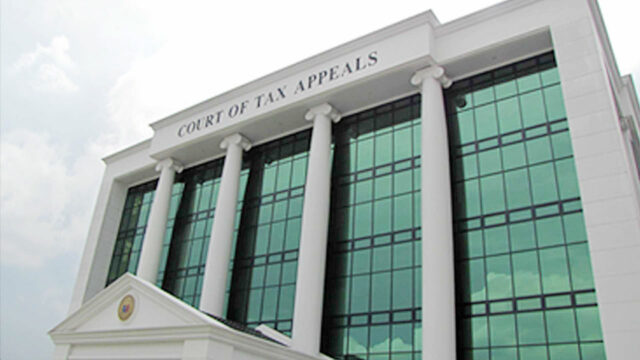
THE Court of Tax Appeals (CTA) has partially granted Ayala Corp. a tax credit certificate worth more than P308 million, covering excess and unused creditable withholding taxes (CWT) for 2018 and 2019.

In a decision publicized on June 19, the CTA Third Division ruled that Ayala Corp. had sufficiently demonstrated its entitlement to the tax credit certificate.

The amount represents the excess and unutilized CWT for the specified years.

“Accordingly, the Commissioner of Internal Revenue is ordered to issue a tax credit certificate in favor of petitioner Ayala Corp. in the reduced amount of P308,235,301.61, representing excess and unutilized creditable withholding taxes for the calendar years 2018 and 2019,” a part of the 20-page ruling of Justice Marian Ivy F. Reyes-Fajardo read.

Ayala Corp. argued for the approval of its CWT claim based on several grounds. Firstly, it filed both administrative and judicial claims within the prescribed two-year period. Additionally, it substantiated its excess and unutilized CWT amounts with Certificates of Creditable Tax Withheld at Source.

Further, Ayala Corp. said it ensured that the income subject to CWT was accurately included as part of its gross income in the amended Annual Income Tax Returns for both 2018 and 2019.

Ayala Corp. also said it did not exercise the option to carry over its excess and unutilized CWTs to following years.

The respondent countered that the corporation is not entitled to claim issuance of the tax credit certificate for its excess and unutilized CWTs over the two-year period due to its failure to submit complete supporting documents. — Chloe Mari A. Hufana

1MDB fugitive to return Warhol, Monet art in new DoJ deal

COURTESY THE U.S. DEPARTMENT OF JUSTICE

THE US Justice Department reached a deal with fugitive Low Taek Jho and his family to get back more than $100 million of assets including artworks by Claude Monet and Andy Warhol, the latest asset recovery linked to the multibillion-dollar 1MDB scandal in Malaysia.

The department announced the agreement on Wednesday with the fugitive, better known as Jho Low, unnamed members of his family, and various trusts to resolve two civil forfeiture cases brought against assets purchased using funds allegedly from the 1Malaysia Development Fund.

“Under the agreement, the department will coordinate with foreign partners to facilitate the liquidation and return of these assets to Malaysia,” the Department of Justice (DoJ) said in a statement. Before this settlement, the US had helped return over $1.4 billion in assets associated with the $4.5-billion money laundering and bribery scheme.

Mr. Low has repeatedly declared his innocence in the past. The 1MDB scandal, which also dragged in Goldman Sachs Group, Inc. and Hollywood, created political upheaval in Malaysia with former Prime Minister Najib Razak losing elections in 2018. Najib was eventually sentenced to jail for crimes related to the fund.

Under the latest agreements with the US, Mr. Low agreed to return a luxury apartment in Paris and artwork in Switzerland by Warhol and Monet, which he bought for about $35 million. The other involves returning to Malaysia about $67 million in property and cash in bank accounts in Hong Kong, Switzerland and Singapore.

In 2020, Mr. Low struck a deal with US prosecutors to recoup almost $700 million of assets, including a Beverly Hills hotel and real estate in New York and London. That was in addition to $260 million of assets, including a $126-million super yacht, seized earlier on Malaysia’s behalf.

Mr. Low still faces charges in New York for conspiring to launder billions of dollars taken from 1MDB and for paying bribes to various Malaysian and UAE officials. He also faces a case in a District of Columbia court for making and concealing foreign campaign contributions to the US presidential elections in 2012.

Malaysian authorities have been trying, with no success, to track and repatriate Low for years. He was spotted last year in Macau.

Mr. Low was charged in absentia in 2018 by a Malaysian court with eight counts of money laundering and issued a warrant of arrest for his role in 1MDB. A separate Malaysian court said in 2020 that he played a key role in transferring 42 million ringgit ($8.9 million) from a former 1MDB unit to Najib’s accounts. Najib has claimed innocence, and got his prison sentence halved under a royal pardon earlier this year. — Bloomberg

Church teachings on sustainable mining: Shared responsibility

CURIOSO PHOTOGRAPHY-UNSPLASH

(Part 5)

The final chapter of the encyclical Laudato Si focuses on the primordial importance of environmental education. Here, every single individual must be involved, especially the young. This education has to affect actions and daily habits, the reduction of water consumption, the sorting of waste, and even turning off unnecessary lights and, among the well-to-do, air-conditioning units.

An integral ecology is also made up of simple daily gestures which break with the logic of violence, exploitation, and selfishness. As Pope Francis proposed in Evangelium Gaudium, sobriety, when lived freely and consciously, is liberating, just as happiness means knowing how to limit some needs which only diminish us, and being open to the many different possibilities which life can offer. In this way we must regain the conviction that we need one another, that we have a shared responsibility for others and the world, and that being good and decent are worth it.

To put this into practice, each individual must add to his regular examination of conscience a new dimension. He or she must reflect seriously on how one has lived in communion, not only with God, with others, and with oneself, but also with all creatures and with nature. In this regard, the Japanese people are the foremost examples. Whether in taking public transport, going to theaters, shopping in a mall, watching football games in the World Cup, the typical Japanese individual is always considering how his or her individual behavior is impacting the welfare of his or her neighbor. I saw this with my own eyes in a recent trip I made to Tokyo. It was impressive how on the grounds of vast public parks and walking trails with which the city is endowed, I did not see a single piece of litter, despite hundreds of people exercising and jogging along the various paths.

When I returned to the Philippines, I was overjoyed to read in the papers that the Department of Environment and Natural Resources (DENR) had agreed with leaders of the mining industry of the Philippines to implement policy reforms that will make the local mining industry more sustainable, responsible, transparent, and investor friendly. Highlighted in the joint declaration are the commitment to sustainable mining practices, the protection of biodiversity, and the respect for the rights of the local communities in the mining areas. Echoing very much the guidelines found in the encyclicals of the Catholic Church, especially those of Pope Francis, the mining companies committed to use the most efficient technologies for judicious extraction and optimum utilization of mineral resources, uphold ecological integrity, and safeguard the common good.

Once again, we have to remind ourselves that the common good is defined in the Philippine Constitution of 1987 as a social or juridical order that enables every member of society to attain his or her fullest human development. Not only those individuals directly affected by the mining operations should benefit from them. The public at large can also share in the earnings of the mining enterprises. This can be made possible by the mining sector pledging to remit to the government the full and correct taxes, royalties, and fees required for the exploration, development, and use of the country’s mineral resources.

For its part, the DENR is committing to encourage investments in mineral processing by providing incentives and strategic support. One of the most serious complaints of those who want to invest in mining, especially foreigners, is the red tape involved in the process of evaluating and issuing mineral agreements. The DENR has pledged to streamline this process. Especially to be tackled are the inconsistencies of policies affecting the mining sector issued by different government agencies. The DENR has committed to develop parallel processing applications with other government agencies, and explore the possibility of honoring the free, prior, and informed consent initiated by indigenous people. The DENR also will take the initiative to craft mining project prospectus and guide investors on lands suitable for exploration.

Industry associations will play a major role in helping individual mining enterprises to engage in responsible mining. The two leading groups — the Chamber of Mines of the Philippines and the Philippine Nickel Industry Association — agreed to establish an ethics committee that will oversee the environmental, social, and governance performance of its players. In the spirit of cooperation, and not of confrontation, the DENR and the mining sector agreed to establish a joint monitoring and evaluation mechanism to determine the impact of mining operations on the environment and the socioeconomic conditions of affected communities.

In this regard, it would be necessary to accumulate and analyze data on the poverty incidence prevailing in specific mining communities instead of relying on the poverty data by province or region available from the Philippine Statistics Authority. The site-specific poverty incidence data should be monitored yearly to determine if the mining operations are actually contributing to reducing poverty in the immediate mining community. This will directly address the criticism of the anti-mining NGOs that the profits of mining enterprises just make the investors richer without lifting the mining communities from poverty.

There was also an agreement from the mining companies to the DENR’s proposal to assign personnel to every mining project who could help the firms comply with rules and regulations. Long-standing issues will be addressed by the DENR such as the levying of a fixed royalty rate for Indigenous Peoples (IPs) and inclusion of a mining representative in the Mining Industry Coordinating Council.

These measures, if properly and resolutely implemented, will go a long way to enable the Philippines, as well as the global economic community, to benefit from the country’s rich mineral resources whose exploitation are necessary for the fulfillment of the goals of Industrial Revolution 4.0. Such technologies as Artificial Intelligence (AI), the Internet of Things (IoS), Robotization and Data Analytics are highly dependent on the availability of the products of the mining sector, especially of copper and nickel that are indispensable for all the hardware needed for digitalization as well as for such renewable energy as solar and wind.

If we are to cite another social doctrine that can be derived from the New Testament, our inability to make use of our very rich mineral resources — because of our failure to arrive at a reasonable consensus — will be tantamount to literally “burying our talents” as described in the Parable of the Talents.


Bernardo M. Villegas has a Ph.D. in Economics from Harvard, is professor emeritus at the University of Asia and the Pacific, and a visiting professor at the IESE Business School in Barcelona, Spain. He was a member of the 1986 Constitutional Commission.

bernardo.villegas@uap.asia

Tracking the BSP’s journey in embracing sustainable finance

Image from bsp.gov.ph

For more than 30 years, the Bangko Sentral ng Pilipinas (BSP) has been the stronghold of the Philippine economy. Established pursuant the New Central Bank Act of 1993, the BSP promotes price stability, a strong financial system, and a safe and efficient payment and settlement system for Filipinos.

Since its establishment, the Philippines’ central bank has weathered several economic challenges over the decades including the Asian Financial Crisis in 1997, a global pandemic in 2020 and, in the past year, skyrocketing inflation rates. But with growing concerns and pressure to act on other looming problems such as climate change and growing social inequality, the BSP has started to embrace sustainable finance as a measure to ensure long-lasting progress.

The BSP refers to this process as “any form of financial product or service which integrates environmental, social, and governance criteria into business decisions that support economic growth” which may lead to long-term economic projects.

These considerations might include climate change mitigation and adaptation, issues of inequality and inclusiveness as well as management structures of public and private institutions that play a fundamental role in the decision-making process.

In this regard, the BSP has made a few steps to integrate sustainable finance into its policies and practices. A circular released in 2020 states that the BSP’s monetary board had approved a sustainable finance policy framework that set out the central bank’s expectations for financial institutions to embed these principles in their operations.

Circular 1085, Series of 2020, required banks in the country to disclose sustainability strategic objectives and risk appetites, overviews of environmental and social risk systems, products and services aligned with internationally recognized sustainability standards including the issuance of green, social, and sustainability bonds, and other initiatives that promote adherence to sustainable finance in their annual reports. Aside from the items above, the circular also mandates banks to report the progress of these initiatives to the BSP yearly.

In 2021, the BSP, along with other central banks, pledged to facilitate sustainable regulations that will respond to climate change through the collective declaration of the Central Banks and Supervisors’ Network for Greening the Financial System (NGFS) in their commitment to the 26th United Nations Climate Change Conference of Parties (COP26).

“Central banks and financial institutions should recognize their important role in contributing to the transition to a low-carbon economy. As stewards of the financial sector, we should all commit to act with urgency in achieving the desired emissions reduction targets and in promoting the sustainability agenda,” former BSP Governor Benjamin E. Diokno said in a statement.

A year later, the central bank released the Philippine Sustainable Finance Roadmap and Sustainable Finance Guiding Principles. Developed by the BSP’s “Green Force” in 2021, the road map and guiding principles aim to facilitate the mainstreaming of sustainable finance in the country and establish an understanding among stakeholders of economic activities considered “sustainable.”

The document laid out the BSP’s strategic plans to develop sustainable finance in the country. These initiatives seek to establish three pillars in the Philippine financial system that aim to create a conducive environment, mainstream sustainable finance, and develop a sustainable pipeline.

The BSP also launched its 11-point Sustainable Central Banking (SCB) Strategy in 2022. The points are: to conduct a comprehensive vulnerability assessment of the economy and financial system accounting for environmental risks; enhance mandatory disclosures of climate-related financial risks by all banks; issue guidance on mandatory climate stress testing for banks; explore the integration of environmental and social risk into prudential practices.

The 11-point SCB Strategy also includes for BSP to: incorporate macroeconomic effects of climate change into monetary policy analysis; consider incentive schemes for the promotion of green lending by banks; include sustainability considerations in its portfolio and risk management and sign the UN Principles for Responsible Investment (UN PRI); develop a task force for inclusive green finance; to include climate-related financial disclosures in its annual report; adopt sustainable practices for its facilities and operations; and to roll out a capacity-building program for all staff in relevant areas.

“Climate change and other environmental hazards impact the prices of goods and change the risk profile of financial institutions. We are doing what we have to do in line with our mandates of promoting price and financial stability,” then-Governor Felipe M. Medalla said in a press release.

Last year, in an effort to foster the transition toward a sustainable economy, the BSP approved additional incentives for financial institutions in the form of additional single borrower’s limit (SBL) for financing eligible projects and zero reserve requirement rates on sustainable bonds.

The introduction of this set of measures is part of the initiative under the BSP’s 11-point SCB Strategy to mainstream sustainable finance as well as support the achievement of the country’s climate commitments and sustainable development goals.

Recently, the BSP’s monetary board approved the adoption of the Philippines’ Sustainable Finance Taxonomy Guidelines (SFTG) for banks which aims to direct, accelerate, and increase capital flows to economic activities that promote sustainability objectives. The SFTG will use a “traffic light system” to classify bank activity: “Green” for an SFTG-aligned activity, “Amber” for partially aligned, and “Red” for not aligned.

This version of the SFTG focuses on climate change mitigation and climate change adaptation with future interactions expected to emphasize biodiversity and circular economy. The taxonomy provides a simplified approach to assessing the economic activities of micro, small, and medium enterprises (MSMEs).

“The issuance of a taxonomy is a crucial step in our sustainability journey. It provides high level guidance in determining the greenness of an investment. But this is just the first step to what I expect will be a long iterative process of calibrating the document to fully capture the conditions of the Philippine economy,” BSP Governor and Monetary Board Chairman Eli M. Remolona, Jr. said in a statement.

Throughout the years, the central bank has shown its commitment to the Filipino people by proactively responding to the financial crisis that they have faced. By adopting sustainable finance and integrating environmental, social, and governance criteria into its policies and practices, the BSP has paved the way to a more sustainable economy and future for the Philippines. — Jomarc Angelo M. Corpuz

Japan imposes new fees on Mount Fuji climbers to limit tourists

FILIZ ELAERTS-UNSPLASH

FUJIYOSHIDA, Japan Park rangers on Japan’s sacred Mount Fuji officially started this year’s climbing season about 90 minutes before sunrise on Monday, levying new trail fees and limiting hiker numbers to curb overcrowding.

At 3 a.m., officials opened a newly installed gate at a station placed just over halfway up the 3,776-meter (12,388-ft) peak that is a symbol of Japan and a magnet for tourists, now swarming into the country at a record pace.

Climbers must pay 2,000 yen ($12) and their numbers will be limited to 4,000 a day after complaints of litter, pollution, and dangerously crowded trails flowed in last year.

“I think Mount Fuji will be very happy if everyone is more conscious about the environment and things like taking rubbish home with them,” said Sachiko Kan, 61, who was one of about 1,200 hikers gathered on the first day of the new measures.

The yen’s slide to a 38-year low has made Japan an irresistible bargain for overseas visitors.

They are injecting record sums into national coffers but are also putting strains on facilities for travel and hospitality, not to mention the patience of locals.

Hordes of tourists became a traffic hazard at a nearby photography spot where Mount Fuji appeared to float over a convenience store, driving officials to put up a barrier of black mesh to obstruct the view that had gone viral online.

The climbing season this year on Mount Fuji, which straddles the prefectures of Yamanashi and Shizuoka about 136 km from Tokyo, runs until Sept. 10, after which the weather gets too cold and snowy.

A still active stratovolcano whose last eruption was in 1707, Mount Fuji has been a site of Shinto and Buddhist worship for centuries.

The number of climbers recovered to pre-pandemic levels last year, with about 300,000 annually, the environment ministry says. Hikers typically start in the wee hours to make it to the top in time for sunrise.

For their money, climbers receive a wristband giving access to the trail between 3 a.m. and 4 p.m., excluding those with reservations for mountain huts closer to the peak, to whom the daily limit on visitors will not apply, authorities say.

The new trail curbs were necessary to prevent accidents and incidents of altitude sickness, particularly among foreign “bullet climbers,” or those racing to the top, Yamanashi governor Kotaro Nagasaki said last month.

Japan should focus on attracting “higher spending visitors” over sheer numbers of people, he told a press conference.

Geoffrey Kula, one overseas climber waiting to scale Mount Fuji on opening day, took the restrictions in stride.

“This is not Disneyland,” said Mr. Kula, a visitor from Boston. “Having some sort of access control system to limit the amount of potential chaos is good.” — Reuters

Gov’t makes full award of reissued 7-year bonds

WIKIPEDIA/JUDGE FLORO

THE GOVERNMENT made a full award of the reissued Treasury bonds (T-bonds) it offered on Tuesday at an average rate slightly below secondary market levels after the Bangko Sentral ng Pilipinas (BSP) signaled that it could start its easing cycle as early as next month.

The Bureau of the Treasury (BTr) raised P30 billion as planned via the reissued seven-year bonds it auctioned off on Tuesday as total bids reached P72.954 billion.

The bonds, which have a remaining life of four years and 10 months, were awarded at an average rate of 6.406%. Accepted yields ranged from 6.39% to 6.44%.

The average rate of the reissued seven-year bonds rose by 30.9 basis points (bps) from the 6.097% fetched for the series’ last award on June 20, 2023, but was 9.4 bps lower than the 6.5% coupon for the issue.

This was also 1.2 bps lower than 6.418% quoted for the five-year bond — the tenor closest to the remaining life of the papers on offer — and 1 bp below the 6.416% seen for the same bond series at the secondary market before Wednesday’s auction, based on PHP Bloomberg Valuation Service Reference Rates data provided by the BTr.

The Treasury made a full award of the reissued papers as they fetched an average yield below secondary market levels and as the offered volume was oversubscribed, it said in a statement after the auction.

Tuesday’s award brought the total outstanding volume for the series to P159.7 billion, it added.

The government fully awarded the bonds as it saw strong demand for its offer, a trader said in a text message.

“Looks like investors, especially end-users, are getting comfortable extending duration following the dovish BSP outlook,” the trader said. “They are now comfortable buying longer bonds for yield pickup, from the usual bills to one-year papers and now to four- to seven-year tenors.”

The average yield fetched for the reissued bonds was slightly below secondary market rates  after the BSP signaled it could cut rates as early as August, Rizal Commercial Banking Corp. Chief Economist Michael L. Ricafort likewise said in a Viber message.

BSP Governor Eli M. Remolona, Jr. on Thursday said the Monetary Board is “on track” and “somewhat more likely than before” to slash rates at its Aug. 15 policy meeting, well ahead of the US Federal Reserve, which has signaled it could begin easing by December.

The BSP could cut rates by 25 bps in the third quarter and by another 25 bps in the fourth quarter, he added.

The Monetary Board’s Aug. 15 review is its only meeting in the third quarter. Meanwhile, its last two reviews for the year will be held in the fourth quarter and are scheduled on Oct. 17 and Dec. 19.

An August rate cut would be the first for the BSP in over three years, which last slashed borrowing costs by 25 bps in November 2020 to bring the policy rate to a record low of 2% during the height of the coronavirus pandemic.

The BSP last week left its policy rate unchanged at a 17-year of 6.5%, as expected by all 15 analysts in a BusinessWorld poll. Interest rates on the overnight deposit and lending facilities were also maintained at 6% and 7%, respectively.

The Monetary Board hiked rates by a cumulative 450 bps from May 2022 to October 2023 to help bring down elevated inflation.

Expectations of easing inflation in the coming months also caused bond yields to go down, Mr. Ricafort added.

Mr. Remolona last week said he expects the consumer price index (CPI) to further ease this semester with the implementation of lower tariffs on rice.

The BSP lowered its average baseline inflation forecasts for 2024 and 2025 to 3.3% and 3.1%, respectively, from 3.5% and 3.3% previously. It also slashed its risk-adjusted inflation forecasts for this year and next to 3.1% from 3.8% and 3.7%, respectively.

Headline inflation averaged 3.5% for the first five months, well within the central bank’s 2-4% goal for the year.

The Philippine Statistics Authority will release June CPI data on Friday (July 5). A BusinessWorld poll of 14 analysts yielded a median estimate of 3.9% for June inflation, within the BSP’s 3.4-4.2% forecast for the month.

The BTr wants to raise P215 billion from the domestic market this month, or P100 billion from Treasury bills and P115 billion via T-bonds.

The government borrows from local and foreign sources to help fund its budget deficit, which is capped at P1.48 trillion or 5.6% of gross domestic product for this year. — A.M.C. Sy

Aiming for food security in a challenging environment

PHILIPPINE STAR/RYAN BALDEMOR

When Filipinos talk about putting food on the table, they often consider the cost of bringing food, from the source, through various channels, and finally to the family home for the consumption and nourishment of its members. Food security is knowing that there will always be food available not only for the day but in the foreseeable future, and that the members of the family, while they have had something to eat today, will also not go hungry tomorrow or the days after that.

Many factors affect food security in the Philippines. Climate change is one. The Philippines ranked first in the World Risk Report 2023 for high disaster risk. Rising temperatures, extreme weather events, and disrupted supply chains contribute to food shortages and inflation.

Aside from the immediate damage done by rain, flooding, and destruction, climate change also has longer-term consequences in terms of compromising harvests, destroying crops, thus driving up demand and prices. In a survey commissioned by the Stratbase Institute for Pulse Asia Research, Inc. in September 2023, it was revealed that 95% of Filipinos claimed that they have seen and felt the price increase with food, with rice prices particularly affected. Inflation rate rose to 3.7% in March 2024. A survey by the Social Weather Stations in December 2023 showed that around 72% of Filipinos consider themselves to be hungry, with 35% of them saying that they are experiencing food poverty.

There is another factor that compounds the cost of food: logistics, or how food is brought from source to destination.

The Stratbase Institute published a paper entitled “Analysis of logistics costs for imported and domestic containers in the Philippines” written by Pablo Corralo Llorente of Bluefocus Infrastructure Advisors. The study shows that maritime transportation is costlier in the Philippines than in neighboring countries in Southeast Asia, with destination charges having more weight. Logistics costs for an average imported container are about $5,300, representing slightly over 10% of final stock value.

Given all these, we at the Institute partnered with PHINMA Corp. and the Makati Business Club in holding a forum on June 24 entitled Achieving Food Security: Advancing Investments for Agricultural Sustainability. The event aimed to encourage insightful and collaborative discussions to cultivate a resilient and sustainable food security environment within the country.

Our takeaway was that prioritizing investments and implementing target measures can overcome food insecurity challenges, improve the standard of living for citizens, and pave the way for a resilient and prosperous future.

During the event, Eduardo Sahagun, PHINMA Corp. Director and Executive Vice-President, Construction Materials, emphasized collaboration among the public and private sectors in improving the lives of Filipinos. He also shared his aspirations for sustainability particularly supporting the cold chain industry for food security and safety, having sufficient cold storages to help the health sector, and, overall, having infrastructure resilient to climate change.

Mr. Sahagun also shared figures from a United Nations report that said that last year, nearly 51 million Filipinos faced moderate or severe food insecurity, the highest in Southeast Asia. He also referred to Agriculture Secretary Francisco Laurel, Jr.’s statement that 30% of the country’s agricultural produce is wasted because of poor logistics systems.

Agriculture Undersecretary for Policy, Planning, and Regulations Asis G. Perez enumerated several sector goals: achieving food security for the Filipino people through boosting local agricultural production to ensure accessibility to affordable and nutritious food, developing the agriculture and fisheries sector as a profitable industry for farmers, fisherfolk, and all stakeholders involved in the value chain, expanding and improving available agri-fishery areas for increased production, mechanizing and modernizing agro-fishery and production systems, developing and improving post-harvest systems and infrastructure, developing efficient logistics systems for both input and production output, and improving and expanding local and international market access.

The Department of Agriculture’s Official Spokesperson Arnel V. de Mesa, who is the Assistant Secretary for Special Concerns and for Official Development Assistance (ODA) – Foreign Aid / Grant, emphasized the department’s core function, to construct and establish infrastructure to support agri-fishery industrialization and modernization even as great inefficiencies in the supply chain must be addressed.

Danielle Del Rosario, Chief Operating Officer of Union Insulated Panel Corp., enumerated the social benefits of investments in agricultural infrastructure including cold storage and the cold chain industry.

The discussions last week brought me back to pronouncements made by President Ferdinand Marcos, Jr.: “Food security remains the forefront of our national agenda,” he said on one occasion. “We must invest in facilities, logistics, and systems that bring nutritious food to our people.” Finally, “we must also cooperate to develop technologies that increase the nutritional value of our food and content and prolong their shelf life.”

The executive guidance showing that our government leaders are acutely aware of the food security issue, as well as the unwavering support and commitment offered by the private sector, gives me hope that despite the difficulties we are facing, food security remains a reachable goal. Let us not take our eyes off this aim, because it affects each Filipino and seeps into each aspect of our nation’s life.


Victor Andres “Dindo” C. Manhit is the president of the Stratbase ADR Institute.

Jollibee acquires majority stake in South Korea’s Compose Coffee for $340M

LISTED Jollibee Foods. Corp. (JFC) has acquired a majority stake in South Korean value coffee brand Compose Coffee for $340 million, or almost P20 billion, as part of strengthening the company’s coffee and tea business.

JFC’s wholly owned subsidiary, Jollibee Worldwide Pte. Ltd. (JWPL), bought 70% in Compose Coffee Co., Ltd. and its roasting facility JMCF Co. Ltd., collectively called Compose Coffee, the company said in a stock exchange disclosure on Tuesday.

Private equity firm Elevation Equity Partners Korea Ltd. will get a 25% stake while Titan Dining II LP (Titan Fund II) will have the remaining 5%.

JFC has a 90% participating interest in Titan Fund II through JWPL. The deal was finalized after the signing of definitive agreements.

“The business that Compose Coffee has built in the past ten years is impressive and we are excited to play a major role in its next phase of growth. We believe that Compose Coffee is a compelling strategic fit for JFC and is on track to becoming the largest, fastest-growing, and leading value coffee player in South Korea,” JFC Chairman Tony Tan Caktiong said.

“Together with Elevation and Titan Fund II, we look forward to working with the Compose Coffee’s accomplished management team to further accelerate the company’s growth in existing and new markets and capture the significant white space in South Korea’s value coffee market,” he added.

JFC has been recently strengthening its coffee and tea business. The company acquired a 10% stake in US-based beverage technology company Botrista, Inc. for $28 million in March.

Botrista holds more than 100 patents worldwide for its proprietary dispense technology, which provides automated solutions to serve cold specialty coffee and tea-based drinks with premium and all-natural ingredients.

With the acquisition of Compose Coffee, JFC expects a 2% increase in revenues, bringing the international business’ contribution to 41% of global revenues.

The company also projects a 12% increase in earnings before interest and taxes and a 34% surge in store count as Compose Coffee has over 2,600 additional stores in South Korea as of June, making it JFC’s biggest brand in terms of store count.

 “It will bring JFC’s store network closer to 10,000 stores, more than 66% of which will be outside the Philippines,” the company said.

 JFC said that Compose Coffee, founded in 2014, ranks first in the industry in terms of the growth rate in the number franchised stores and brand satisfaction among Korean coffee brands. The coffee brand operates the largest in-house coffee roasting plant in Korea.

 “This acquisition is aligned with JFC’s commitment to coffee and tea segment and franchising initiatives. This strategic, rapid growth, financially lucrative investment serves as JFC’s gateway in unlocking the fast-growing international value coffee market in South Korea which ranks third globally in terms of coffee consumption per capita,” it said.

 Compose Coffee’s menu boasts a huge variety of coffee and non-coffee options. Some of JFC’s other brands in the coffee and tea business include Coffee Bean & Tea Leaf, Common Man Coffee Roasters, and Highlands Coffee.

 For the first quarter, JFC saw a 26.9% increase in its first-quarter attributable net income to P2.62 billion as system-wide sales grew by 10.4% to P86.83 billion.

 The company hiked its store network by 5.3% to 6,886 stores as of end-March, consisting of 3,337 in the Philippines and 3,549 international branches.

 JFC shares rose by 0.44% or P1, finishing at P226.20 per share on Tuesday. — Revin Mikhael D. Ochave

Pre-need firms’ Q1 premium income down

THE PRE-NEED INDUSTRY saw its premium income decrease by 2.15% year on year in the first quarter amid lower plans sold, data from the Insurance Commission (IC) showed.

The sector’s premium income went down to P5.61 billion at end-March from P5.73 billion in the same period last year, based on IC data released on Tuesday.

The report was based on the interim financial statements submitted by 17 companies, made up of 11 licensed pre-need firms, four with pending license applications, as well as two servicing companies.

The number of plans sold by pre-need firms declined by 35.71% to 166,286 in the first quarter from 258,677 a year prior.

This was mainly driven by the 35.75% drop in life plans sold in the period to 166,050 from 258,453.

On the other hand, pension plans sold increased by 4.41% to 213 from 204, while education plans more than doubled to 23 from 10.

Still, the pre-need industry’s combined net income surged by 191.01% to P3.25 billion in the first quarter from P1.12 billion a year ago, IC data showed. Only five out of the 17 firms included in the report posted net losses in the quarter.

Investments in trust funds grew by 6.53% year on year to P130.11 billion in the first quarter from P122.14 billion.

Pre-need reserves, which include benefit obligations or payables as mandated by the Pre-Need code, likewise rose by 4.52% to P120.07 billion from P114.87 billion.

As a result, the combined difference between trust funds and reserves per company stood at a P10.05-billion surplus at end-March, up by 38.3% from P7.26 billion a year prior.

Meanwhile, the industry’s total net worth increased by 15.48% year on year to P26.38 billion as of March from P22.85 billion, the IC report showed.

This was driven mainly by the 29.18% rise in retained earnings to P18.22 billion. However, capital stock dropped by 6.19% year on year to P3.5 billion.

On the other hand, the sector’s total assets rose by 5.47% year on year to P152.78 billion from P144.85 billion.

Total liabilities also went up by 3.6% to P126.4 billion from P122.01 billion.

Based on the IC data, in terms of premium income, St. Peter Life Plan, Inc. was the top performer with P5.23 billion as it sold a total of 163,726 plans with a total contract price of P9.5 billion in the first quarter.

This was followed by Philplans First, Inc., which recorded a premium income of P264.54 million in the period, selling 332 plans worth P15.22 million.

Rounding out the top three was Golden Future Life Plans, Inc., which posted a premium income of P52.01 million. It sold 186 plans with a contract price of P18.94 million in the first quarter.

Meanwhile, in terms of net income, St. Peter Life Plan also ranked first with P3.13 billion, followed by Philplans First with P55.01 million and Sunlife Financial Plans with P48.06 million. — A.M.C. Sy

Albania’s best-known novelist Ismail Kadare, 88

RESTLESSBOOKS.ORG
RESTLESSBOOKS.ORG

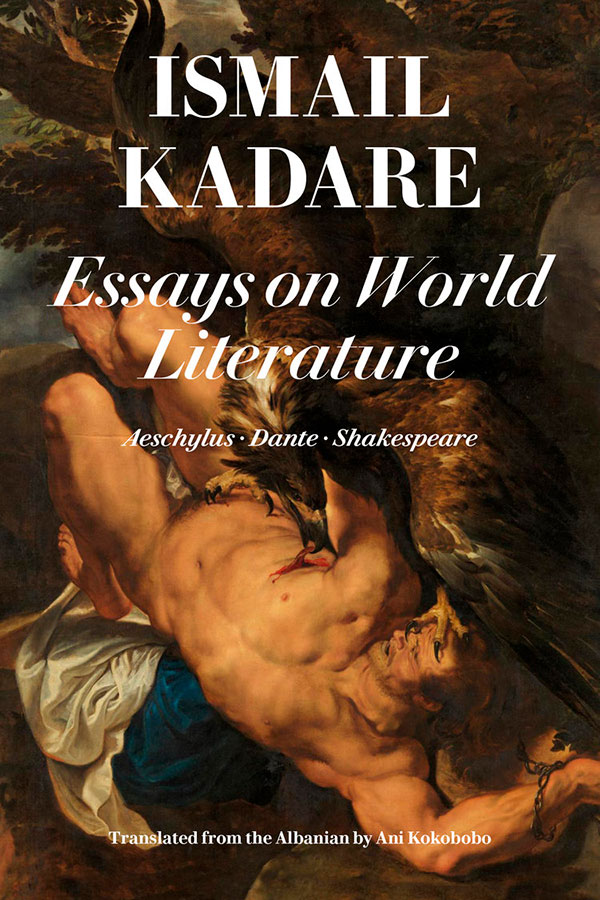
BELGRADE — Ismail Kadare, an acclaimed Albanian novelist and playwright who defied his country’s longtime Communist rulers through his writing, has died in a Tirana hospital after having a heart attack, local television cited his editor as saying. He was 88.

Mr. Kadare, a prominent figure in Albanian and international literature, gained recognition in 1963 with his novel The General of the Dead Army, which drew praise from literary critics around the world.

Prime Minister Edi Rama paid tribute to Mr. Kadare in a message on Facebook, hailing him as a “monument of Albanian culture.”

Mr. Kadare received numerous global awards, including the Man Booker International Prize in 2005, the Prince of Asturias Prize for the Arts in 2009, the Jerusalem Prize in 2015 and the America Award in Literature for a lifetime contribution to international writing in 2023.

He also produced poems, essays, and screenplays, and was nominated for the Nobel Prize in Literature 15 times, once saying that media reports tipping him as a potential winner meant “many people think that I’ve already won it.”

Mr. Kadare, who split his time between Albania and France, was the Balkan country’s best-known novelist and his works have been published in 45 languages, but he repeatedly irked his homeland’s former Communist rulers.

In 1975, after publishing a satirical poem called “The Red Pasha,” which took aim at Albania’s Communist bureaucracy, Mr. Kadare was sent to do manual labor in a remote village in central Albania.

Three of his books fell foul of Albanian censors, and in 1990 he sought political asylum in France after receiving threats following his criticism of the government and calls for democracy.

Last year, French President Emmanuel Macron awarded him the title of Grand Officer of the Legion of Honour.

Born in the town of Gjirokaster in 1936, in the-then Kingdom of Albania, Kadare was the son of a post office employee and a housewife. After World War II, he graduated in languages and literature from the University of Tirana.

He is survived by his wife, the author Helena Kadare, and their two daughters. — Reuters