Home Blog Page 2594

UK meat trade seen improving after Philippines lifts poultry import ban

REUTERS

THE resumption of poultry imports from the UK could boost meat shipments from that country if the produce is well-priced, an importers’ group said.

“Theoretically, it will result in more purchases from the UK. But it depends how competitive they will be,” Meat Importers and Traders Association President Emeritus Jesus C. Cham told reporters late Tuesday.

Last month, the Department of Agriculture issued Memorandum Order No. 34, which lifted the temporary ban on imports of domestic and wild birds and their by-products from the UK.

“They have to find their niche, because the problem with the UK is that their main market is the European Union and (its) domestic market, which pay better prices than what we are willing to pay,” Mr. Cham added.

British Ambassador to the Philippines Laure Beaufils said that the UK and the Philippines recently signed a regionalization agreement outlining what the trading partners will do in case of animal disease outbreaks in the UK.

Under the agreement, only areas in the UK which have reported bird flu cases will be barred from exporting to the Philippines, with those outside of the active zones not affected by any bans. 

“That’s the whole idea of regionalization. So even where there may be a region where there’s avian flu, that will not detract from the ability of other regions to export. So the flow can be steady again which is ultimately what importers want here as well,” Ms. Beaufils told reporters.

The agreement ensures that trade with disease-free areas of the UK remain uninterrupted.

The Philippines banned imports of UK poultry and its by-products in 2021 due to an outbreak of H5N1 highly pathogenic avian influenza (HPAI).

“We’ve lost three years sadly, so I think importers and traders have first and foremost to get reacquainted with the UK market, with UK suppliers, and recognize the opportunity that is presented to them,” Ms. Beaufils said. — Adrian H. Halili

BIR lowers floor price for cigarettes, tobacco

REUTERS

THE Bureau of Internal Revenue (BIR) said it has lowered the floor prices for cigarettes and tobacco products, citing lower production costs.

The updated floor prices were based on current manufacturing costs as well as taxes, BIR Assistant Commissioner Jethro M. Sabariaga said via Viber.

“So, if the floor price based on latest issuance is lower than previous, the manufacturers must have submitted lower costs to produce cigarettes as taxes are statutory, and are constant,” he said.

The floor price is the minimum price of products and is set by the BIR, based on production costs, excise tax, and value-added tax.

Under Revenue Regulations No. 016-2024, the floor price of a pack of cigarettes was lowered to P78.58 from P114.6 last year. A ream of cigarettes now costs P785.8 from P1,146 previously.

The floor price for heated tobacco products was also cut to P60.11 per pack from P120.4 previously.

A 2 milliliter (ml) pod of nicotine salt now has a floor price of 180.67, down from P200 a year earlier. The floor price of a 10 ml bottle was set at P679.12.

Finally, a 10 ml bottle of classic nicotine costs P181.72, up from the P179.2 set a year earlier, while the floor price of a 30 ml bottle was P263.73, down from P403.2 previously.

“The above floor prices shall only be used as reference for taxation purposes in the absence of other documents/proof as to the actual price of the product that is higher than the identified floor price,” according to BIR regulations.

However, those selling below floor price will be fined as much as P500,000 and subject to up to six years’ imprisonment.

“We are warning all e-marketplaces, online sellers, retail sellers, suppliers and distributors that are selling vapes, cigarettes, and heated tobacco products below the floor price… this is a criminal violation penalized by imprisonment of the seller,” BIR Commissioner Romeo D. Lumagui, Jr. said in a statement. — Beatriz Marie D. Cruz

‘Green’ startups angling for tie-ups with major companies

PHILIPPINE ENERGY and climate-mitigation startups have grown since 2020, but will need the clout of major companies working in partnership to ensure access to financing, California-based business accelerator New Energy Nexus (NEX) said.

“Local entrepreneurs are best placed to understand how to deploy solutions in their communities and transition our economy more equitably to clean energy. It really does take a village to build and deploy these solutions,” NEX Philippines Country Director Brenda Valerio said in a media roundtable on Wednesday.

In a report, NEX tallied 91 clean-energy and climate startups in 2024, up 500% since 2020. Of these, NEX supports 85.

Nearly half of these startups are in the renewable energy generation industry, while others are involved in sustainable transportation or electro mobility, energy access, and waste management.

The report noted that while 34.1% of the startups are in Metro Manila, entrepreneurs from Northern Mindanao and Calabarzon are making inroads.

“We still have many energy issues. But at the same time, we can leverage entrepreneurs and innovators to address them,” Ms. Valerio said.

The report said that 18 startup companies have raised almost $1.3 million from loans, grants, competition rewards, crowdfunding, and angel investment.

Ms. Valerio said these kinds of energy startups need backing from major corporations to ensure financing.

“The Filipino clean energy innovation ecosystem has shown huge progress and promise in the past years, but the nascent space runs the risk of stalling because of lack of access to networks, funding, testing facilities, and skills training,” Ms. Valerio said.

The report recommended experimenting with “diverse funding mechanisms and de-risking strategies to create a more investor-friendly environment for both institutions and innovators.”

“This decade is the most critical decade in our transition, not just with trying to limit our greenhouse gas emissions so we can achieve the 1.5 degree of the UNFCCC (United Nations Framework Convention on Climate Change),” Ms. Valerio said.

The government is hoping to accelerate its energy transition, with a goal of increasing the share of renewable energy in the power mix to 35% by 2030 and 50% by 2040. — Sheldeen Joy Talavera

LRA backs bill minimizing court role in updating, cancelling titles, records

LRA.GOV.PH

THE Land Registration Authority (LRA) said on Wednesday that it asked the Senate to ensure that a bill seeking to extend the land lease limit to 99 years for foreign investors to do away with the need to go to court in updating lease records.

At a Senate Justice and Human Rights committee hearing looking into Senate Bill No. 2717, which seeks to extend the lease of private land, not including agricultural land, to 99 years from 75, LRA acting Legal Division head Salvalente Thaddeus B. Elizalde asked the panel to give the Registry of Deeds (RD) the authority to automatically cancel lease annotations after 99 years to spare heirs the need to go to court.

He also asked legislators to give the RD the power to automatically cancel lease records in the event of “default” or failure to comply with the lease terms.

The Senate bill, which cited the need for foreign investors to enjoy longer leases, is classified as a priority measure by President Ferdinand R. Marcos, Jr.

Under the measure, which Senate President Francis G. Escudero filed in July, investors may also sublease a leasehold interest on a property, subject to the provisions of the original contract.

Sublease contracts with a term of less than 25 years are exempt from mandatory registration with the RD, but may be voluntarily registered for legal protection and public notice, based on the bill.

“The efforts of the government and the private sector, however, are stymied by a number of factors — among them is the unsecured property and leasehold rights that may not legally bind third parties due to lack of registrability and indefeasibility,” Mr. Escudero said in the bill’s explanatory note.

“Attracting foreign investors has been a long-standing priority of the government, spanning several administrations.” — John Victor D. Ordoñez

Favorable policies credited with RE investment surge

PHILSTAR FILE PHOTO

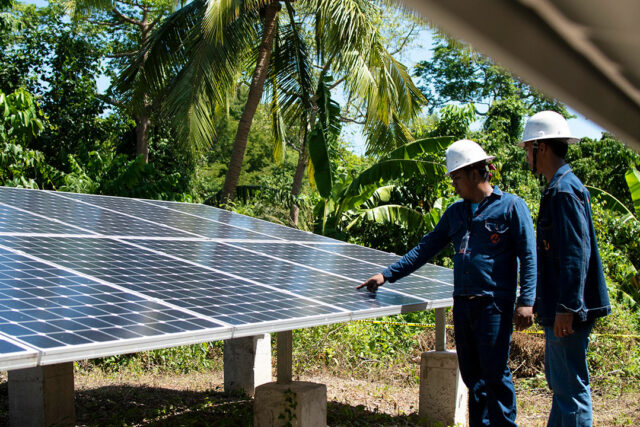
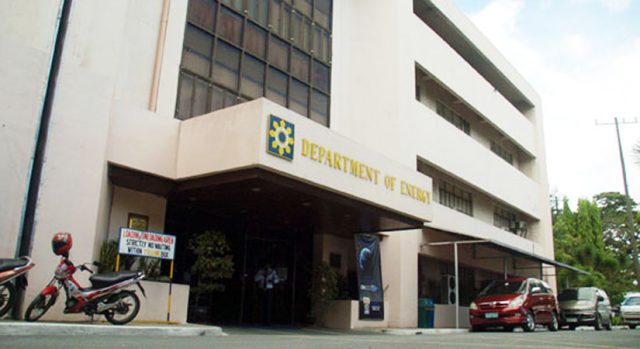
THE INFLUX in renewable energy investments are the result of policies that have created “a favorable business environment,” the Department of Energy (DoE) said.

“The DoE is committed to work with the private sector and our partner agencies in the National Government and local government units to ensure that these approved investments will ripen into beneficial and tangible energy infrastructure for our people,” Energy Secretary Raphael P.M. Lotilla said in a statement on Wednesday.

On Monday, the Board of Investments (BoI) said it approved 225 investment pledges worth P1.35 trillion this year, surpassing the P1.26 trillion tallied in 2023.

The bulk of the approved investments are in the energy sector, accounting for P1.29 trillion or 95% of the total.

The DoE said the lifting of foreign ownership restrictions was the catalyst behind most new renewable energy projects, alongside steps taken to expedite their development.

The DoE also aims to promote transparent and competitive pricing for renewable energy and enhance project bankability by offering a 20-year offtake guarantee through the Green Energy Auction Program.

Investments registered with the BoI enjoy income tax holidays, a preferential tax rate on gross income, zero-rated value-added tax, as well as tax- and duty-free imports of capital equipment, raw materials and supplies.

“We are working closely with banks and financial institutions, through the Bangko Sentral ng Pilipinas (BSP), to align the needs of developers with the objectives of financial institutions to effectively support these projects,” Mr. Lotilla added. — Sheldeen Joy Talavera

Simplified tax rules: What’s not to like?

Three quarters have passed since the Ease of Paying Taxes (EoPT) law took effect. What convenience in the tax processes did it bring to taxpayers? Has there been any improvement in the number of registered businesses? Any increase in tax collections? We know that the aim of EoPT is to simplify tax rules to encourage taxpayers to properly pay their taxes. The hope is to minimize the tax leakage from the informal sector and improve tax collection to adequately fund government services.

For this article, I would like to focus on three items in the EoPT law.

• Timing of withholding tax remains the same, except for prepayment.

Prior to EoPT, the triggers for withholding tax were provided under Revenue Regulations (RR) No. 2-98, or the Withholding Tax Regulations, pursuant to Section 244 of the Tax Code. Now, it is codified in the EoPT that the obligation to withhold tax arises at the time the income becomes payable. The term “payable” was previously defined as the date when the obligation becomes due, demandable or legally enforceable. This definition was retained in the amended withholding tax regulations but that’s not all that was retained. The new version of Section 2.57.4 of RR No. 2-98 also retained “when the income payment is accrued or recorded as an expense or asset, whichever is applicable, in the payor’s books.”

Practically speaking, the amount of accruals at the end of the year could be mere estimates, e.g., based on historical payments, because in most cases, the invoices containing the actual expense amount are yet to be received. Forcing companies to comply with this requirement may result in over- or under-withholding of taxes. The consequence is not without additional cost. In case of under-withholding, taxpayers are assessed an interest penalty in case of a tax audit. Meanwhile, in case of over-withholding, there is an additional cost (e.g., professional fees, time value of money) when trying to cover through a refund. And of course, there’s also some uncertainty if the refund will even be granted.

This does not appear to be an easy way of complying with the tax rules. It would have been better if the withholding tax was pegged on the invoice date. It is fixed, simple and ties both buyer and seller to the same time period. Invoicing signifies the reporting of revenue by the seller and, ideally, of an expense claim by the buyer.

Hopefully, this matter will be taken into consideration when implementing Section 57(C) of the Tax Code which provides for a three-year review by the Department of Finance (DoF) of the processes and rules of withholding. The DoF may direct the Bureau of Internal Revenue (BIR) to amend the existing regulations if they are found to adversely and materially impact the taxpayer.

• Time of claiming creditable withholding tax (CWT) credits was not clarified in the regulations.

Similar to withholding tax, the EoPT codified the timing of CWT claims, whereas previously, it was just covered in the Withholding Tax Regulations. Based on how the provision was crafted in the EoPT law, a few points of jurisprudence were taken into consideration, such that CWTs deducted and withheld in the previous period are still creditable in the subsequent year. However, the last statement in the EoPT confuses taxpayers because it seems to qualify the reporting of CWT claims to the period when the corresponding income is reported. This qualifier is contrary to the statement that it is creditable in the succeeding period. Unfortunately, no other guidance has yet been issued to cover how this should be implemented.

Nonetheless, in at least one decision (G.R. No. 231581 dated 10 April 2019), the Supreme Court (SC) made it clear that prior year CWTs can be claimed as tax credits in the year of actual withholding by the withholding agent even if the actual reporting of income by the seller was done in prior years. According to the SC, what is important is that the income was reported in the proper period by the seller and the prior year CWTs have not been claimed as income tax credits in prior years.

In the absence of detailed guidance from the BIR, I hope that the tax authorities are guided by the above SC case considering that it appears to align with the intention of the legislature and satisfies the goal of the EoPT to simplify our tax rules.

• Refund of excess CWTs in case of closure cannot be elevated to the Court of Tax Appeals (CTA) without a decision from the BIR.

Filing a claim for a refund of excess CWTs by a corporation permanently ceasing operations was not provided for in the Tax Code prior to the EoPT nor in the regulations. Previously, guidance for such situations could only be found in court decisions.

With the EoPT, the Tax Code now clearly states that when the taxpayer can no longer carry over excess CWTs due to dissolution, the taxpayer can file an application for refund of any unutilized CWT with the BIR given two years to decide. RR No. 5-2024 covers refunds and one section is devoted to refunds as a consequence of the dissolution of the business.

As provided for under the RR, the two-year processing period for such refunds is an exception to the 180-day rule for other types of income tax refunds (i.e., due to erroneous payment). However, unlike other types of refund where it is clear that the taxpayer may seek judicial remedies in case of inaction by the BIR within the 180-day processing period, in refund cases for closure, there is no clear remedy under the regulations in case of inaction within the two-year processing period.

Personally, I believe that the taxpayer should be able to elevate the refund cases for closure to the CTA in cases of inaction of the BIR as provided for under the Revised Rules of the CTA.

The EoPT features several amendments which I believe have had an impact insofar as convenience in registering and paying taxes is concerned — as in the case of the file-and-pay-anywhere mechanism, and in the process of transferring the place of business. Though the EoPT amendments and intention are commendable, some of the implementation guidelines may need to be revisited. Enactment of a tax rule is one thing, but enforcement of such rule is another thing. I hope that enactment and enforcement can be better harmonized, and as is the intention, the guiding principle under the EoPT should always prevail, that is, to simplify tax compliance.

The views or opinions expressed in this article are solely those of the author and do not necessarily represent those of Isla Lipana & Co. The content is for general information purposes only, and should not be used as a substitute for specific advice.


Samantha Joy H. Oreta is a director with the Tax Services group of Isla Lipana & Co., the Philippine member firm of the PwC global network.

samantha.joy.h.oreta@pwc.com

Philippines logs hottest June-Aug. period since 1970 — study

People are seen enjoying the view at Manila Bay, March 27, 2024. — PHILIPPINE STAR/ MIGUEL DE GUZMAN

THE Philippines and its Southeast Asian neighbors experienced temperatures at least three times hotter, more likely because of climate change between June and August, according to a global study.

The Philippines and Singapore experienced their hottest June-July-August period since at least 1970, United States-based Climate Central said in a recent study sent to BusinessWorld via e-mail.

Nearly all of the populations of the Philippines, Singapore, and Vietnam were exposed to temperatures that “represent a potential risk to human health for at least a week, made three times as likely because of climate change,” it added.

It said Thailand and Vietnam saw such conditions for 52 and 46 days, respectively.

“Over two-thirds of the Thai and Indonesian populations were exposed to similar health-threatening temperatures.”

The study, which quantifies the impact of climate change on temperatures and estimates the number of people affected by these extreme conditions in 1,200 cities, said Southeast Asia was the region with most people on the planet exposed to climate change-influenced temperatures for at least 60 days in June, July, and August.

“During these months, over 204 million people experienced temperatures made at least five times more likely because of climate change,” it said.

It said over 2 billion people or 25% of the global population experienced 30 or more days of risky heat amid the changing climate.

The study said the peak of global heat was on Aug. 13, when more than 4 billion people faced unusual temperatures “made at least three times more likely by climate change.”

“During this record-breaking season, when 72 countries broke their heat record for the June-August period, few urban areas escaped the impacts of carbon pollution, mainly caused by the burning of fossil fuels,” it said.

It said the average person experienced 17 extra days of “risky heat” around the world because of climate change, representing a potential risk to global health. — Kyle Aristophere T. Atienza

Philippines may bring sea dispute with China to UN General Assembly

BRP SIERRA MADRE, a marooned transport ship which Philippine Marines live in as a military outpost, sits on the disputed Second Thomas Shoal, part of the Spratly Islands in the South China Sea. — REUTERS

By Kenneth Christiane L. Basilio, Reporter

THE PHILIPPINES is looking at bringing its sea dispute with China to the United Nations (UN) General Assembly, a congressman said on Wednesday, a move that could put pressure on Beijing to ease its militarization of the South China Sea.

The Department of Foreign Affairs (DFA) is studying the implications of submitting a resolution to the body, which serves as the UN’s main policy-making organ, since it “is not the venue for political debates,” Nueva Ecija Rep. Joseph Gilbert F. Violago said in plenary as he sponsored the agency’s budget at the House of Representatives.

The General Assembly has taken action across all pillars of the UN, including in regard to political, economic, humanitarian, social and legal matters, according to the UN website.

Tensions between the Philippines and China have worsened in the past year as Beijing continues to block resupply missions to Second Thomas Shoal, where Manila has a handful of troops stationed at a beached vessel.

“The DFA plans to file a resolution with the UN General Assembly regarding the Philippines’ territorial claims in the West Philippine Sea,” Mr. Violago told the floor in Filipino.

“The recommendation to file a particular resolution with the United Nations General Assembly would be… subject to necessity and prudence,” he said. “The department appreciates the recommendation and continues to study its implications.”

“The possible resolution is supported by Articles 34 and 35 of the UN Charter, which allows member states to submit a resolution either to the UN General Assembly or UN Security Council if there is a dispute which can later on threaten international peace and security,” Josue Raphael J. Cortez, a lecturer at the School of Diplomacy and Governance of De La Salle-College of St. Benilde, told BusinessWorld in a Facebook Messenger chat.

He said tensions with China are a “potent threat,” and the Philippines has all the reasons to bring the case to the UN. “At the same time, given that diplomatic protests seem not to work anymore — and despite talks and pressures being exerted by the Philippines’ international partners, China seems to be unfazed — then it is already a signal for us to do more to address the issue.”

Mr. Cortez said the resolution should not just emphasize the rules-based international order. “It should also highlight the fact that this tension, should it continue, is not merely threatening the country’s peace and security but also of the entire region.”

The UN General Assembly meets in regular sessions in New York City from September to December each year.

Philippine President Ferdinand R. Marcos, Jr. this year opted not to attend this year’s session, the Presidential Communications Office said in a statement last week. He will instead be represented by Foreign Affairs Secretary Enrique A. Manalo.

PEACEFUL RESOLUTION
The Philippine government has provided the Foreign Affairs department with flexibility to act on its own “to promote and protect national integrity, territorial integrity and the national interest,” Mr. Violago said.

He added that the Philippines through the DFA would continue to hold talks with China for a peaceful resolution of their sea dispute. “The most effective way to ease tensions is still through communications,” he said in Filipino.

Philippine and Chinese envoys last week held diplomatic talks in Beijing on how to ease sea tensions, even as both sides insist on upholding their sovereignty rights over features in the South China Sea.

The DFA said Undersecretary Ma. Theresa P. Lazaro met with Chinese Vice Foreign Minister Chen Xiaodong in Beijing, where the Philippine side reiterated that the Sabina Shoal, the site of recent collisions between their coast guard vessels, is part of the Philippines’ exclusive economic zone.

The Chinese Foreign Ministry said both countries had a “candid and in-depth exchange of views,” with Beijing renewing its call for Manila to remove an “illegally anchored” vessel at Sabina.

The Southeast Asian nation on Sept. 14 recalled BRP Teresa Magbanua, its biggest coast guard vessel, from Sabina Shoal amid Chinese pressure to leave the disputed atoll.

The ship had been anchored the Sabina Shoal since April to monitor what it suspects to be China’s small-scale reclamation activities. This has angered China, turning the shoal into their latest flashpoint in the disputed waterway.

Sabina Shoal has been a staging ground for Philippine resupply missions to Second Thomas Shoal, where it grounded a World War II-era vessel in 1999 to serve as an outpost for a handful of Filipino troops.

China claims sovereignty over most of the South China Sea, overlapping into maritime zones of Brunei, Indonesia, Malaysia, the Philippines, and Vietnam.

In 2016, a United Nations-backed tribunal in the Hague voided China’s expansive and historical claims for being illegal. Beijing has rejected the ruling.

Both countries held the first round of bilateral talks this year in Manila, where they agreed on a “provisional arrangement” on resupply missions at Second Thomas Shoal and new lines of communications to improve their handling of sea disputes.


VP says House probe laying ground for her impeachment

OFFICIAL FACEBOOK PAGE OF VP INDAY SARA DUTERTE

VICE-PRESIDENT Sara Duterte-Carpio on Wednesday accused congressmen of planning an impeachment complaint against her as a House of Representatives committee launched an inquiry into allegations of fund misuse by her office.

The House committee on good government on Wednesday started its investigation of the Office of the Vice President’s budget use in previous years, including her confidential funds in 2022.

At the hearing, Ms. Carpio insisted “there was no misuse of funds,” adding that she is prepared to respond to any findings by the Commission on Audit (CoA).

“They are now testing what they’ll do [and include in the articles of impeachment],” she told reporters in Filipino on the sidelines of the House hearing.

“They are saying [that the probe] is for the determination of malfeasance and misfeasance. It implies that I have done something wrong,” she added.

The House committee started the probe after Ms. Carpio missed the hearings on her office’s budget for 2025.

Congressmen last week cut her budget by 64% to P733 million, noting that her social projects are already covered by the budgets of the Health and Social Welfare departments.

She earlier accused lawmakers of using congressional budget briefings to revive old issues against her, including her P125-million confidential fund in 2022.

“To be honest, it’s not really the budget you’re targeting… What you are trying to do is make a case for impeachment,” she told congressmen.

“There is a determination of misfeasance, nonfeasance and malfeasance [at the committee],” she said. “Those are cases that should be taken in the courts of law. What we are witnessing now is no legislative inquiry.”

Ms. Carpio said lawmakers are “testing what they’ll do” once an impeachment suit is filed against her.

“I don’t see how this can be considered as a prelude to impeachment,” Party-list Rep. Ramon Rodrigo L. Gutierrez, a member of the House good government committee, told reporters after the hearing.

Congressmen are want to hold Ms. Carpio accountable if the allegations of fund misuse are proven, he added.

Ms. Carpio’s spent P125 million in confidential funds in just 11 days in 2022, Marikina Rep. Stella Luz A. Quimbo told the House plenary exactly a year ago, as she endorsed the 2024 budget of the Commission on Audit (CoA).

Ms. Quimbo, House appropriations committee senior vice chairperson, said this was based on liquidation reports submitted by Ms. Carpio’s office to CoA on Jan. 17.

The funds came from the P221.42-million contingent fund that the Office of the President had approved and released on Dec. 13, according to the Budget department’s special allotment release order.

Executive Secretary Lucas P. Bersamin had said the P125-million confidential funds were used to build satellite offices, a flagship program of Ms. Carpio. — Kenneth Christiane L. Basilio

Death toll from 2 Philippine cyclones hits 20; Pulasan about to exit PAR

PAGASA.DOST.GOV.PH

THE DEATH TOLL in the Philippines from the combined effects of a southwest monsoon and Tropical Depressions Gener and Bebinca (Ferdie) had risen to 20, according to the nation’s disaster agency.

Nine of the deaths were in the Mimaropa region, the National Disaster Risk Reduction and Management Council (NDRRMC) said in a report on Wednesday.

There were four deaths each in Western Visayas and Bangsamoro region, two in the Zamboanga Peninsula and one in Central Visayas, it added.

It said about half-a-million people from 156,524 families in 12 regions have been affected. More than 90,000 people were displaced.

The agency said 136 areas in Calabarzon, Mimaropa, Bicol, Western Visayas, Central Visayas, Zamboanga Peninsula, Soccsksargen and Bangsamoro regions had been flooded.

Meanwhile, the state weather bureau in a 5 p.m. bulletin said Tropical Storm Pulasan (Helen) was about to leave the Philippine area of responsibility (PAR).

Pulasan was moving northwestward at 40 kilometers per hour and may leave the Philippines by Wednesday night. It would remain far from any Philippine landmass and ill not directly affect any parts of the country.

It was expected to remain as a tropical storm and may gradually weaken over the East China Sea.

Pulasan was last seen 930 kilometers east-northeast of extreme Northern Luzon. It was packing maximum sustained winds of 85 kph near the center and gustiness of up to 105 kph.

NDRRMC said the combined effects of the southwest monsoon, Gener and Bebinca had affected 930 houses, 141 of which were totally destroyed. Initial damage was estimated at P1.81 million. Damage to infrastructure had hit P2.4 million.

The Public Works department said four national roads remained impassable due to flooding and soil erosion.

The impassable roads were Kennon Road in Baguio City, Banaue-Hungduan-Benguet Boundary Road in Ifugao, Cabagan-Sta. Maria Overflow Bridge in Isabela province, and Iloilo-Antique Road in Antique. — KATA

SC eyes AI tools to fast-track aging cases

PHILSTAR FILE PHOTO

THE SUPREME COURT (SC) on Wednesday said it is keen on taking advantage of artificial intelligence (AI) tools to keep tabs on clearing case backlogs but maintained it will not rely too heavily on these to decide on lawsuits.

“We would like to make sure that our judges and eventually our justices would be able to monitor the progress of their cases so that aging cases can be given priority,” SC Court Administrator Raul B. Villanueva said at a Senate finance committee hearing on Judiciary’s proposed budget of P84.38 billion for next year.

“AI in so far as providing us with data for policy and decision making, with respect to coming up with draft decisions, can be utilized.” 

Under the proposed budget, P625 million would be used to upgrade the electronic court information system, and P379 million for information communication technology requirements.

SC Associate Justice Mario V. Lopez said the High Court will not be entirely dependent on AI, noting it should only be used to countercheck the decision-making process.

“These should not be left to the control of AI because the court is not just a court of law, but it is also a court of equity where there is humanity involved in the disposition,” he said at the same hearing. 

Under the tribunal’s Strategic Plan for Judiciary Innovations 2022-2027, the court will implement an electronic filing system that will let magistrates and other court personnel view case records online.

It also aims to implement an online payment portal for legal docket fees through digital wallets and major banks.

From January to June this year, the High Court disposed of 2,858 cases, which is 48% of its goal of 6,000 cases this year.

In its 2023 year-end report, the SC noted that as of end-September 2023, it registered a total case output of 3,711 cases, with a clearance rate of 84% and a disposition rate of 21%. This is up from 19% in the previous year. — John Victor D. Ordoñez

Senate OKs PHL-South Korea FTA

SENATE.GOV.PH

THE PHILIPPINE Senate on Wednesday approved on second reading a resolution calling for concurrence in the free trade agreement (FTA) between the Philippines and South Korea.

In Senate Resolution No. 1188, Senator Maria Imelda “Imee” R. Marcos said the free trade deal, which was signed on Sept. 7 last year in Indonesia, would encourage more foreign direct investments and more concessions than those under the Regional Comprehensive Economic Partnership Agreement.

The pact will remove tariffs on about 94.8% of Philippine products and 96.5% of South Korean goods.

Under the Constitution, international agreements and treaties require the concurrence of two-thirds of the Senate’s members for ratification.

The Philippines plans to export more bananas and processed pineapples to South Korea once the FTA is finalized. 

Earlier this month, the Pilipino Banana Growers & Exporters Association, Inc. lobbied for the Senate’s concurrence in the free trade pact to boost banana exports and to compensate for losses caused by the Panama disease.

“The FTA is also expected to stimulate more Korean investments into the country,” Ms. Marcos said in her sponsorship speech earlier this month.

South Korean Ambassador to the Philippines Lee Sang-hwa earlier told reporters he was hoping for the pact to be a “game-changer” for trade and investment between Manila and Seoul.

The Philippines is expected generate as much as P200 billion worth of foreign direct investments from the electric vehicle industry and agricultural processing sector within three years, Ms. Marcos said, citing estimates by the Trade department. — John Victor D. Ordoñez