Home Blog Page 2593

Australia, Britain to strike treaty for joint production of submarines

STOCK PHOTO | Image by 12019 from Pixabay

 – Australia and Britain said they would strike a bilateral treaty to produce a new class of nuclear-powered submarine, under the AUKUS partnership which also includes the United States.

Australia will buy U.S. Virginia class nuclear-powered submarines from the United States in the next decade, with Britain and Australia later building a new class of AUKUS submarine at Barrow-in-Furness in Britain, and in South Australia, under the AUKUS pact announced in 2023.

“We will be negotiating a treaty, a bilateral treaty, between Australia and the UK to enable our portion of AUKUS,” Australian Defense Minister Richard Marles told reporters after a meeting with his British and U.S. counterparts on Thursday in London.

“We will be operating the same class of submarine. So when you look at the industrial cooperation, the technology transfer, the way in which all of those mechanisms operate to do that, that is the subject of the treaty,” he added.

British Defense Secretary John Healey said the meeting of AUKUS defense ministers had also agreed to use British-made Stingray torpedoes in P-8A Maritime Patrol Aircraft which are used as submarine-hunting aircraft in the Indo Pacific region.

U.S. Defense Secretary Lloyd Austin said the AUKUS partners had conducted significant experiments across the ground, undersea and electromagnetic spectrum to enhance war fighting capabilities as part of cooperation under the so-called AUKUS “Pillar Two”.

A joint statement said the AUKUS partners were increasing their ability to develop and deliver offensive and defensive hypersonic technologies, and will conduct a large scale drone exercise later this year. – Reuters

Chinese nuclear-powered submarine sank this year, US official says

FREEPIK

 – China’s newest nuclear-powered attack submarine sank earlier this year, a senior U.S. defense official said on Thursday, a potential embarrassment for Beijing as it seeks to expand its military capabilities.

China already has the largest navy in the world, with over 370 ships, and it has embarked on production of a new generation of nuclear-armed submarines.

A senior U.S. defense official, speaking on condition of anonymity, said China’s new first-in-class nuclear-powered attack submarine sank alongside a pier sometime between May and June.

A Chinese embassy spokesperson in Washington said they had no information to provide.

“We are not familiar with the situation you mentioned and currently have no information to provide,” the Chinese official said.

The official said it was not clear what caused it to sink or whether it had nuclear fuel on board at the time.

“In addition to the obvious questions about training standards and equipment quality, the incident raises deeper questions about the PLA’s internal accountability and oversight of China’s defense industry – which has long been plagued by corruption,” the official said, using an acronym for the People’s Liberation Army.

“It’s not surprising that the PLA Navy would try to conceal” the sinking, the official added.

Speaking in Taipei on Friday, Taiwan Defense Minister Wellington Koo said authorities “have a grasp of the situation through multiple intelligence and surveillance methods”, but did not elaborate.

Taiwan, which China views as its own territory, keeps a close watch on the latter’s military activities. In June, pictures appeared online of a Chinese nuclear submarine surfacing in the Taiwan Strait near Taiwan fishermen.

The Chinese submarine news was first reported by the Wall Street Journal.

A series of satellite images from Planet Labs from June appear to show cranes at the Wuchang shipyard, where the submarine would have been docked.

As of 2022, China had six nuclear-powered ballistic missile submarines, six nuclear-powered attack submarines and 48 diesel-powered attack submarines, according to a Pentagon report on China’s military. That submarine force is expected to grow to 65 by 2025 and 80 by 2035, the U.S. Defense Department has said.

On Wednesday, China said it had successfully conducted a rare launch of an intercontinental ballistic missile into the Pacific Ocean, a move likely to raise international concerns about the country’s nuclear buildup.

The United States and China held theater-level commander talks for the first time earlier this month, amid efforts to stabilize military ties and avoid misunderstandings, especially in regional hot spots such as the South China Sea. – Reuters


India cuts target for fast-track sex crime courts as states fall short

STOCK PHOTO | Image by jorono from Pixabay

 – The Indian government has slashed its goal to create thousands of new tribunals to try sex crimes speedily after states like West Bengal, where the recent brutal rape-homicide of a doctor shook the nation, fell far short of targets, according to three federal government officials and an internal document seen by Reuters.

Prime Minister Narendra Modi’s government moved to establish fast-track special courts (FTSC) in 2019 to try exclusively sex crimes, after the Supreme Court that year criticised state governments for being slow to deliver justice to victims. The court singled out Bengal and Uttar Pradesh for taking too long to reach judgment on cases involving child victims.

Most sex crimes are tried by India’s heavily burdened state courts, but Modi’s government planned to incentivize state governments to establish 1,023 FTSCs by March 2021 by funding 60% of costs. Each FTSC is staffed by one judicial officer and seven support staff.

The government had projected 2,600 FTSCs by 2026 but has now revised its target to 790 due to low interest from states and a lack of judges, according to the officials and the document, an undated summary from this year of progress on the FTSC project.

Just 752 FTSCs have been established nationwide as of August, according to publicly available government data.

Some states were slow to sign up to the project, with Bengal only joining last year. The opposition-led state – whose chief minister Mamata Banerjee is under scrutiny for her handling of sex crimes – was earlier set a target of 123 fast-track tribunals by March 2021, according to the officials and the document.

But only six tribunals are operational in Bengal, where there are some 48,600 cases of rape and other sexual offences pending judgement.

Details of the federal government’s original target and its decision to scale back sharply are reported by Reuters for the first time.

Top West Bengal judicial bureaucrat Siddhartha Kanjilal blamed the slow response on a lack of judges but said authorities were working with the Calcutta High Court, its top tribunal, on appointing retired officials to FTSCs.

“There have been delays,” he said. “We, as well as the Calcutta High Court, are seized of the matter.”

The Indian law and justice ministry and the office of Banerjee, a vocal critic of Mr. Modi, did not respond to requests for comment.

Bengal has now been set a goal of 17 special tribunals by 2026, according to the undated government document and a second Aug. 30 summary on the status of FTSCs in that eastern state seen by Reuters.

India’s strained judicial system has a backlog of tens of millions of cases. State courts of first instance are short of about 5,000 judicial officers, roughly 20% of the judges they have been allocated by state authorities, government data show.

In one notable instance of delay, a district court in Ajmer this August sentenced six men to life imprisonment for their role in mass rapes that occurred in the early 1990s.

One of the Ajmer victims, who cannot be named under Indian law, said she was abandoned by her husband after he learned of the assault and the sentence from a traditional court had come way too late for her: “I am of a grandmother’s age now and have no expectations or hope left.”

By contrast, FTSCs focus on specific crimes and can try them speedily. They are also allowed to hire judges on contract, including retired judicial officers.

In 2022, the last year for which comprehensive data is available, FTSCs passed judgement on 83% of cases on the docket. By contrast, Indian courts overall ruled on just 56% of the sex-crime cases taken on that year.

The original FTSC targets were set by the federal law and justice ministry using a formula that took into account the number of outstanding cases in each state and a target for each tribunal to conclude 165 cases annually, one of the officials said. Like his colleagues, the official spoke on condition of anonymity because he was not authorized to talk to media.

In a country where cases can drag on, FTSCs “have particular relevance in cases involving vulnerable victims and witnesses,” said G.S. Bajpai, vice chancellor of the National Law University Delhi, who has advised the government on criminal law reforms.

Senior lawyer Shobha Gupta, who has represented many rape victims, said FTSCs can be useful but that appeals still go through the slow traditional court system.

“What is needed is fast tracking until the last court and final verdict and execution of the final verdict in a strict time-bound manner,” she said.

There is no publicly available data on how many FTSC cases are appealed but two of the government officials said it was common for sentences from lower courts and tribunals to be appealed. Nearly 42% of the 1.7 million criminal cases pending in India’s high courts are appeals.


BLAME GAME?

Opposition-led states have generally been slower to set up FTSCs, according to government data.

Uttar Pradesh and Rajasthan, both ruled by Mr. Modi’s Bharatiya Janata Party, have met their targets, according to the three officials and justice department data.

But the western state of Maharashtra, governed by a coalition that includes the BJP, has only established 14 of its target 138.

The three officials said the federal government had repeatedly urged laggard states like Bengal to sign up, but often received no response.

The Aug. 30 summary seen by Reuters said the justice department had written to Bengal on Dec. 12, 2023, advising it to hire contractual staff “in the event of an insufficient workforce.”

In 2021, then-minister of law Kiren Rijiju also wrote a letter to Banerjee, seen by Reuters, in which he said his department had sent previous reminders seeking her consent to establish FTSCs.

The three officials said they received no response to the letters.

One opposition-ruled state that has met its target of 22 FTSCs is Jharkhand.

But the state of 33 million has since told the federal government it will pull out of the FTSC program, the three officials said.

Jharkhand’s top law bureaucrat Rajesh Sharan Singh said officials have been conferring about running FTSCs that are entirely funded by the state, one of the poorest in India, but declined to say why.

“If the state government funds it, we will exit the central government funding,” he said. – Reuters

DMAP to address digital skills gap, future-proofing workforce at DigiCon 2024

The Philippine Statistics Authority (PSA) reported that the country’s digital economy amounted to PHP 2.05 trillion in 2023, contributing 8.4% to the Gross Domestic Product (GDP). It is predicted that, if leveraged fully, digital transformation can create up to PHP 5 trillion in annual economic value by 2030.

However, despite the country’s digitally connected population, the workforce remains challenged by a digital skills gap. The 2023 World Digital Competitiveness Ranking by the International Institute for Management Development (IMD) ranked the Philippines 59th out of 64 countries, with particularly low scores in knowledge and talent (63rd), technology (51st), and future readiness (59th).

Amidst the widening digital skills gap that threatens the competitiveness of its workforce, the Digital Marketing Association of the Philippines (DMAP), the country’s center of excellence and innovation in digital marketing, will focus on future-proofing the digital landscape at the ninth Digital Congress (DigiCon) on Oct. 15-16, 2024, in Newport City, Metro Manila.

Recognizing these industry challenges, DMAP will bring together global and local industry experts, thought leaders, and technology pioneers to share key insights with attendees from various sectors, including marketing, advertising, business, academia, media, and innovation.

Attendees will be provided a road map for leveraging rapid digital changes through five focused tracks: ‘From Ecommerce to Digitally Enabled Commerce’ (Ecommerce), ‘From IMC to Customer-Centric Campaigns’ (Brand Building in AI Age), ‘From Digital Transformation to Business Evolution’ (Digital Transformation), ‘From Data Driven to Insight Driven’ (Analytics RPA and Data Science), and ‘From I to AI’ (Innovation Labs on AI).

DMAP Trustee and conference Co-Chair Alan Fontanilla unveiling DigiCon 2024 during DMAP GMM

DigiCon REVOLUTION 2024 Co-Chair Alan Fontanilla highlights the opportunities for upskilling: “The digital revolution is reshaping workplaces with advancements in data analytics and AI impacting decision-making processes across industries. Organizations are now prioritizing talent with the skillsets needed to excel in this complex environment. At DigiCon REVOLUTION 2024, our goal is to help attendees understand the critical importance of upskilling to maintain a competitive edge.”

With the theme “REVOLUTION,” this year’s event is set to drive innovation and digital transformation across the Philippines. Over 2,000 attendees are expected, each provided with tools and insights for digital agility and continuous learning through master classes and immersive activities.

DMAP’s initiative complements the government’s ongoing efforts to address the skills gap. The Philippine Digital Workforce Competitiveness Act (Republic Act 11927) aims to enhance the competitiveness of the workforce by promoting public-private partnerships and establishing an Inter-Agency Council involving industry stakeholders.

To learn more about DMAP DigiCon REVOLUTION 2024 and to secure your slot, visit https://www.digicon.com.ph.


Spotlight is BusinessWorld’s sponsored section that allows advertisers to amplify their brand and connect with BusinessWorld’s audience by publishing their stories on the BusinessWorld Web site. For more information, send an email to online@bworldonline.com.

Join us on Viber at https://bit.ly/3hv6bLA to get more updates and subscribe to BusinessWorld’s titles and get exclusive content through www.bworld-x.com.

PHL to borrow P310B locally in Q4

BW FILE PHOTO

By Aaron Michael C. Sy and Beatriz Marie D. Cruz, Reporters

THE PHILIPPINES is looking at borrowing P310 billion from the domestic market in the fourth quarter, the Bureau of the Treasury (BTr) said on Thursday, amid expectations of further rate cuts that could drive yields lower.

The planned auctions put the government on track for its full-year borrowing target, National Treasurer Sharon P. Almanza said in a Viber message.

This year’s borrowing plan is set at P2.57 trillion — P1.92 trillion from domestic sources and P646.08 billion from overseas, according to Treasury data. 

How does the Philippines’ sectoral debt as a share of GDP compare with other emerging markets in Asia for Q2?

Interest rate cuts by the US Federal Reserve and Philippine central bank could push yields lower during auctions in the last quarter, Michael L. Ricafort, chief economist at Rizal Commercial Banking Corp., said in a Viber message.

He added that the lower borrowings are due to more holidays during the period. “Even borrowing requirements of the National Government are seasonally lower in the fourth quarter, with fewer maturities of government securities during the holiday-shortened month and quarter, though there might be some window-dressing activities toward the accounting yearend.”

The Treasury bureau would try to raise P220 billion from Treasury bills (T-bills) and P90 billion via Treasury bonds (T-bonds), it said in a notice posted on its website. In the third quarter, the BTr raised P672.5 billion, higher than the P630-billion program.

In October alone, the government plans to borrow P145 billion — P100 billion in T-bills and P45 billion in T-bonds.

The government will hold five auctions for T-bills next month and will try to raise P6.5 billion via the 91- and 182-day tenors at each auction. It will also offer P7 billion in 364-day T-bills weekly. Next month’s auctions will be held on Sept. 30, Oct. 7, 14, 21 and 28.

Meanwhile, the BTr will try to raise P45 billion via T-bonds at three auctions for P15 billion each in October — via five-year bonds on Oct. 1, seven-year debt on Oct. 15 and 10-year paper on Oct. 29.

In November, the government will seek to raise P90 billion from the domestic market — P60 billion from T-bills and P30 billion from T-bonds.

The Treasury will offer P6.5 billion worth of 91- and 182-day T-bills and P7 billion of 364-day debt at auctions on Nov. 4, 11 and 13.

For the long-term debt, the government will offer P15 billion each in 20-year T-bonds on Nov. 12 and five-year debt paper on Nov. 26.

In December, the Treasury plans to raise P75 billion from the domestic market — P60 billion via T-bills and P15 billion via T-bonds.

The BTr has four T-bill auctions scheduled for December. It will sell P5 billion each in 91-, 182- and 364-day T-bills at each of the auctions on Nov. 25, Dec. 2, 9 and 16. It will also sell P15 billion worth of 10-year bonds on Dec. 10.

Finance Secretary Ralph G. Recto, who is a member of the central bank’s Monetary Board, has said they could afford to slash interest rates further and match the size of the Fed’s rate cuts, Reuters reported.

“The Fed reduced by 50 basis points (bps). I think we can also do half a percent,” Mr. Recto a told a news briefing this week.

The Fed started cutting rates on Sept. 18, with a larger-than-usual half-percentage-point reduction, which will likely be followed by a 25-bp cut in both November and December, according to a Reuters poll.

Bangko Sentral ng Pilipinas (BSP) Governor Eli M. Remolona, Jr. earlier said there was room for one more interest rate cut this year. The BSP’s next meeting is on Oct. 17.

Slowing inflation allowed the central bank to cut its key rate by 25 bps to 6.25% in August, its first rate cut since November 2020, ahead of major central banks including the Fed.

In the short term, the lower borrowing plan for the fourth quarter could drive yields lower unless the government issues an unscheduled borrowing such as a retail Treasury bond, a trader said in a text message.

Ms. Almanza has said the BTr had yet to decide if it would issue more retail Treasury bonds this year.

“So far, our auctions have been successful, and we have raised much more domestically, so it would depend on the deficit,” she said in mixed English and Filipino on Sept. 17. “We don’t have to really fill in the programmed borrowings for this year… So, for better management of costs and debt service, we don’t have to borrow everything.”

The government last issued retail Treasury bonds in February, when it raised a record P584.86 billion at a coupon rate of 6.25%.

The trader also noted that the fourth-quarter borrowing schedule is almost equal to the scheduled maturities during the quarter.

The government borrows from local and foreign sources to help fund its budget deficit, which is capped at P1.48 trillion or 5.6% of economic output this year.

DEBT-TO-GDP RATIO
Meanwhile, the Philippines’ household debt-to-gross domestic product (GDP) ratio fell to 12.1% in the second quarter from 13.2% a year earlier, showing “stable” liability management, the Institute of International Finance (IIF) said.

This was lower than the 47% average for emerging markets in Asia and the 60.9% global average, it said in a report.

For nonfinancial companies, the debt-to-GDP ratio in the three months ended June also declined to 26.8% from 28.7% a year ago. Philippine government debt fell slightly to 56.8% of GDP from 56.9%.

Debt in the Philippine financial sector also dropped to 7.6% of GDP from 8.8% a year earlier, the IIFC said.

The institute’s Global Debt Monitor looks at indebtedness across sectors in mature and emerging markets.

Richard Francis, Fitch Ratings senior director and co-head for the Americas, said the Philippines’ stable debt outlook continues to be supported by growth.

“There are some challenges there, but I think another key factor is that growth has actually been supportive of the Philippines’ rating as well,” he told a virtual news briefing on Wednesday night.

In June, Fitch Ratings affirmed the Philippines’ “BBB” investment grade rating and kept its “stable” outlook. A “BBB” rating means an economy can pay its debt.

Philippine economic growth averaged 6% in the first half, falling at the low end of the government’s 6-7% target.

Christian Kopf, head of Fixed Income and Currencies at Union Investment Group, said the Philippines could manage its debt given low borrowing costs.

“The Philippines is one country which does a very good job in its investor relations programs… and I think it does play out in the form of very low borrowing costs,” he told the briefing.

Leonardo A. Lanzona, an economics professor at the Ateneo de Manila University, said debt still takes up a huge chunk of the country’s economic output.

“While the government’s debt-to-GDP ratio may have slightly declined, it remains a dominant factor in the system, with a debt that is more than 50% of GDP,” he said in a Facebook Messenger chat.

“Emerging economies are expected to have lower debt-to-GDP ratios because they typically have less borrowing capacity and must avoid excessive debt to maintain investor confidence,” he added.

Treasury data showed that the Philippines’ debt-to-GDP ratio will rise to 60.6% by end-2024. It is expected to fall to 60.4% in 2025, 60.2% in 2026, 58.4% in 2027 and 56.3% in 2028.


Nomura sees wider PHL current account deficit

Workers unload sacks of rice in this file photo. — PHILIPPINE STAR/RYAN BALDEMOR

By Luisa Maria Jacinta C. Jocson, Reporter

THE PHILIPPINES’ current account gap is expected to widen next year, according to Nomura Global Markets Research, reflecting a surge in imports amid a recovering economy and rising commodity prices.

“We still forecast a gradual widening of the current account deficit to 2.5% of gross domestic product (GDP) in 2025 from 2.3% in 2024, driven by the same factors that led to the return of the deficits,” Nomura analysts Euben Paracuelles and Nabila Amani said in a report.

They did not provide an amount.

In the first half of the year, the country’s current account deficit stood at $7.1 billion, accounting for 3.2% of GDP.

The Bangko Sentral ng Pilipinas (BSP) estimates the current account deficit to reach $6.8 billion this year, equivalent to 1.5% of economic output. It expects the deficit to hit $5.5 billion or 1.1% of GDP next year.

“From a savings-investment perspective, the swing to the current account deficit reflects a pickup in investment ratios, while savings ratios have fallen, especially after the pandemic,” Nomura said.

It also noted that the current account deficit has been driven by the widening goods trade deficit.

The Philippines’ trade deficit widened by 18.05% to $4.87 billion in July, according to data from the local statistics agency.

In July, the value of imports increased by 7.2% year on year to $11.12 billion, the fastest rise since 13% in April. It was also the highest since March 2023.

The country’s balance of trade in goods has been in the red for nine years.

“Unlike regional peers, goods exports have remained relatively flat over the past several years, likely reflecting the lack of industrial policy to move up the value chain, particularly in the electronics sector (60% of goods exports),” Nomura said.

“In contrast, imports have more than doubled, reflecting rising domestic demand and an increasingly supply-constrained economy.”

It noted the persistent rise in food imports, particularly rice, reflecting “low productivity in the agriculture sector and the vulnerability to weather-related shocks and external risks.”

In June, President Ferdinand R. Marcos, Jr. issued Executive Order No. 62, cutting tariffs on rice imports to 15% from 35% until 2028.

“The country remains one of the region’s largest oil importers and is therefore susceptible to international crude oil price hikes,” it added.

Nomura also said the trade deficit is “no longer being fully offset by the sum of worker remittances (secondary income) and receipts from outsourcing and tourism sectors (services balance).”

Data from Nomura showed that in nominal dollar terms, worker remittance growth has slowed to 3.1% per year since 2018 from the 6% average from 2011 to 2017.

“Adjusted for inflation and in local currency terms, real remittance growth is even lower, at just 0.7% on average,” it added.

Meanwhile, Nomura said the Philippines’ balance of payments (BoP) has undergone “structural changes” in the past decade.

“First, the current account balance has shifted to a deficit from a surplus since 2016 (except during the pandemic),” it said. “Net unclassified items have also added to the deficit.”

The capital and financial account surplus has also “expanded significantly” after the pandemic, the central bank said and has remained elevated due to external state loans.

Financial account outflows stood at $10.5 billion in the first half, according to data from the central bank.

“Given these new BoP dynamics, we look at a ‘broad basic balance,’ which is showing an increasing deficit and implies greater sensitivity of the BoP to swings in portfolio flows and hence to risk-on/risk-off episodes,” Nomura said.

The country’s BoP level stood at a $1.6-billion surplus as of August.

“The composition of the capital and financial surplus has changed, with external loans now larger than net foreign direct investments (FDI), which indicates a new way of current account deficit financing,” Nomura said.

“A closer look at these loans shows a healthy pipeline through 2025, but the drawndowns are irregular and only partially converted into local currency, contributing to BoP volatility,” it added.

The central bank expects the BoP to post a surplus of $2.3 billion this year, equivalent to 0.5% of GDP.

P3.74T of RE projects endorsed by BoI for ‘green-lane’ treatment

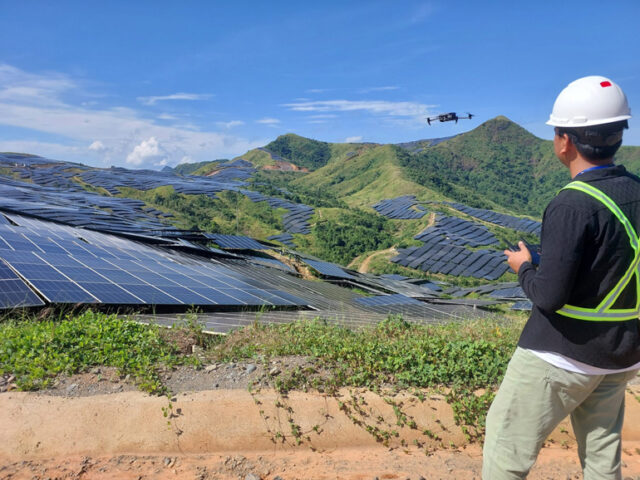
Specialized drones. The operations and maintenance of AboitizPower’s Cayanga-Bugallon Solar Power facility (pictured) is supported by drone technology, allowing for precision and boosting maintenance efficiency.

THE PHILIPPINES’ Board of Investments (BoI) on Thursday said it had endorsed P3.74 trillion worth of renewable energy (RE) projects for green-lane treatment as of Sept. 25, in line with a state goal of boosting RE capacity, reducing carbon emissions and creating local jobs.

In a statement, the investment promotion agency said 114 RE projects had been endorsed to the One-Stop Action Center for Strategic Investments since February 2023.

Of the total, P1.64 trillion worth of investments covering 36 projects were registered with the BoI, while the registrations for the remaining projects worth P2.1 trillion were still being processed.

In September alone, the BoI endorsed 11 RE projects for expedited processing, which include a P289-billion offshore wind power project in Ilocos Norte in northern Philippines.

The recent endorsements brought the total number of projects under green-lane status to 126, with an estimated cost of P4.13 trillion.

“The green-lane initiative ensures that the Philippines remains competitive on the global stage, attracting investors who prioritize innovation and sustainability,” Trade Undersecretary and BoI Managing Head Ceferino S. Rodolfo said in the statement.

“With over P4 trillion in investments already certified, we are setting a clear path towards renewable energy growth, job creation and reducing our carbon footprint,” he added.

Investments in RE projects increased after the government allowed full foreign ownership in the sector, which used to be cap at 40%.

Besides RE projects, green-lane-endorsed investments also include six digital infrastructure projects worth P346.33 billion, four food security projects worth P4.14 billion and two manufacturing projects worth P29.61 billion.

“Out of the 126 green-lane-certified projects, 43 have been registered with the BoI, representing P1.91 trillion in investments, while the remaining 83 worth P2.22 trillion are in the pipeline for registration,” the BoI said.

“These projects are seen as vital to supporting the Philippines’ goals of increasing renewable energy capacity, reducing carbon emissions and creating local jobs,” it added.

The BoI had set an internal target of approving P1.25-1.5 trillion in investment pledges this year.

But the upper limit of the target was increased to P1.6 trillion in July due to the increasing number of projects in the pipeline being endorsed for green-lane status.

The latest report from the BoI showed that it had approved 225 investment pledges worth P1.35 trillion as of Sept. 15.

These surpassed full-year approvals last year worth P1.26 trillion and represented 84% of the agency’s target this year.

Meanwhile, the BoI said that two projects granted green lane certifications have started operations.

One is PV Sinag Power, Inc.’s 94.717-megawatt peak Cayanga-Bugallon Solar Power project in Pangasinan province. The other is Nexif Ratch Energy Investments Pte. Ltd.’s Calabanga Solar Power Plant in Camarines Sur.

“With the BoI’s green-lane endorsement, the provisional authority to operate was fast-tracked, significantly reducing the usual 60-day processing period required by the Energy Regulatory Commission,” the agency said.

It added that the endorsement of the Calabanga project in June 2024 was among the reasons why the project had a quicker deployment. The project was inaugurated on Sept. 12.

In February 2023, the government established through Executive Order No. 18 the “green-lane” system at all government agencies  to speed up approvals and permits for investments. — Justine Irish D. Tabile

From the ground up

The EY Entrepreneur Of The Year 2024 Philippines has concluded its search for the country’s most visionary leaders shaping opportunities and transforming industries. It is a program of the SGV Foundation, Inc., with co-presenters: the Asian Institute of Management, the Department of Trade and Industry, the Philippine Business for Social Progress, and the Philippine Stock Exchange.

Antonio L. Co
President
Carrascal Nickel Corp.

ANTONIO “TONY” L. CO, president of Carrascal Nickel Corp. (CNC), thinks that his hands-on experience from the very beginning of his entrepreneurial journey has given him valuable business insights and a deeper understanding of both his customers’ and employees’ needs.
Born in Tondo, Manila — the second of five children raised by a single mother — Mr. Co’s early life was a daily struggle against economic hardship. At 14, he left school and worked as a delivery boy in a small hardware store to help put food on the family table.

He later became a freelance sales agent until he saved enough to launch his first buy-and-sell steel business and eventually, his first steel manufacturing plant, First Tandem Steel Resources, Inc. He also opened a second plant, Grand Asia Metal Corp., to expand his operations, setting a precedent for the culture of continuous improvement that would define his business ethos.

Mr. Co acquired a mining site in Carrascal, Surigao del Sur, the land where CNC now operates, and identified a niche in the market by selling iron, a component of nickel that was not traditionally sold in the market back then. This strategic pivot diversified CNC’s product offerings and opened new markets.

But success is seldom a straight path. Mr. Co faced a setback when the market price of nickel took a nosedive. The sudden economic downturn forced him to halt operations for a year, but he used this time to strategize. Mr. Co made significant cuts in extraction costs, while still maintaining product quality. Although the market had not fully recovered when operations resumed, his operational efficiency measures kept the company afloat until the market price for nickel recovered.

When asked about his mistakes and failures, Mr. Co said being a risk-taker inevitably means making mistakes. He treats failure as an opportunity to improve and a steppingstone toward both personal and professional growth. He transforms setbacks into lessons, reinforcing his commitment to lifelong learning.

Today, CNC employs nearly 500 people. Mr. Co manages his team by fostering an organizational culture rooted in empowerment and collaboration. He places a strong emphasis on nurturing professional relationships, understanding operational processes of the business, diversifying product offerings and meeting client preferences.

His leadership has not only steered CNC to success but also earned the company accolades for its environmental stewardship and social responsibility, including the prestigious Presidential Mineral Industry Environmental Award Selection Committee Platinum Achievement Award for three straight years, from 2021 to 2023.

CNC’s commitment to sustainability is evident in its progressive rehabilitation efforts. The company has taken initiatives to create stable landforms, restore soils and re-establish native vegetation through reforestation programs. These efforts are part of CNC’s strategy to ensure the long-term sustainability of the local environment and reflect Mr. Co’s belief that mining activities and environmental protection can co-exist.

Mr. Co’s entrepreneurial spirit is also evident in his advocacy for the Philippine nickel industry. As one of the founders of the Philippine Nickel Industry Association, he has been instrumental in positioning the Philippines as a top exporter of nickel ore. His efforts have helped advance the industry and contributed to the country’s economic growth.

As Mr. Co looks to the future, he remains focused on growth, both for his businesses and the people around him. He sees a future where his employees, like him, grow from the grassroots.

Mr. Co’s journey mirrors the process of nickel mining itself. Just as miners delve deep into the earth’s crust, extracting valuable ore through persistence and precision, Mr. Co dug deep into the bedrock of his own resolve, unearthing a wealth of determination and insight that would eventually forge the foundation of CNC.

His story is a powerful reminder that beneath the surface of every obstacle lies an opportunity waiting to be discovered, and that the most enduring successes are often those that are built, layer by layer, from the ground up.

The media sponsors are BusinessWorld and the ABS-CBN News Channel. The Gold sponsors are SteelAsia Manufacturing Corp., Uratex and Converge ICT Solutions, Inc. The Silver sponsor is International Container Terminal Services, Inc. The Bronze sponsor is Lausgroup Holdings, Inc.

The winners will be announced on Oct. 23, 2024. The EY Entrepreneur of the Year 2024 Philippines will represent the country in the World Entrepreneur of the Year 2025 in Monte Carlo, Monaco in June 2025. The EY Entrepreneur of the Year program is produced globally by Ernst & Young (EY).

Hotel101 eyes Q4 US listing, expects early sell-out in Spain and Japan

HOTEL101SALES.COM.PH

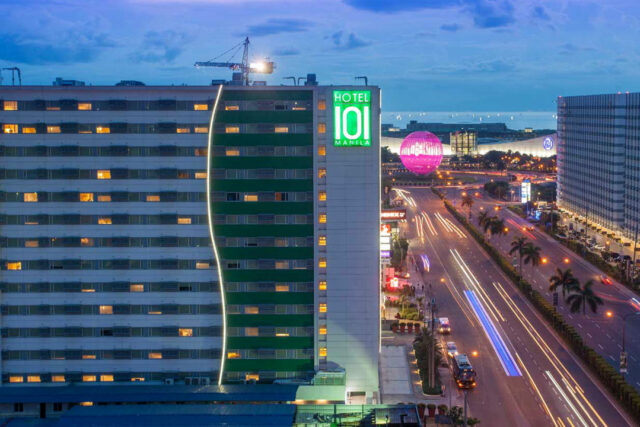
HOTEL 101 Global Pte. Ltd. (Hotel101), a subsidiary of DoubleDragon Corp. (DD), expects to sell all units in Japan and Spain ahead of schedule as it prepares for a planned US listing by the fourth quarter (Q4).

“Hotel101 Global expects to complete and fully sell out its units in Madrid, Spain and Niseko Hokkaido, Japan ahead of schedule,” DD said in a statement to the stock exchange on Thursday.

“Hotel101 Global is currently in the process towards its US listing expected in Q4 2024,” it added.

The 680-room Hotel101-Madrid, located on a 6,593 square-meter property in Valdebebas, Madrid, is scheduled for completion by end-2025.

The 482-room Hotel101-Niseko in Hokkaido, Japan, is set for completion by 2026.

Hotel101 will list on the NASDAQ via a merger with JVSPAC Acquisition Corp.

The combined entity will trade under the ticker symbol “HBNB,” making Hotel101 the first Philippine company to list in the US.

Hotel101 expects to generate P71.2 billion from the Hotel101-Niseko project and P8.8 billion from the Hotel101-Madrid property.

Hotel101 also said that the first batch of golden visas has been issued to the unit owners of its Madrid hotel project, marking a significant milestone for the development.

“The golden visa applications are for evaluation and approval of the proper authorities of the Government of Spain, at its discretion, but the purchase of Hotel101 units may be used by the foreign buyer to comply with the 500,000-euro Spanish real estate investment requirement,” DD said.

Officially known as the Spain investor visa, the golden visa is a residence permit granted to non-European citizens with a substantial investment in the country. The applicants need to purchase three Hotel101-Madrid units each to comply with the investment requirements.

“We have seen incredible traction in our Hotel101 projects globally. Hotel101-Madrid has done exceptionally well not only because it qualifies as an investment under the golden visa regime but because of the opportunity it provides retail real estate investors globally to participate in the booming hotel industry specifically in Madrid, Spain,” Hotel101 Global Chief Executive Officer Hannah Yulo-Luccini said.

“In fact, we have seen an increasing number of local Spanish investors buying Hotel101 units in Madrid purely because they believe in the potential revenue the project will generate once completed,” she added.

Meanwhile, DD Chairman Edgar “Injap” J. Sia II said the hotel project is expected to boost Spain’s economic activity.

“It will be optional for the Hotel101 unit buyers if they wanted to apply for a golden visa with their purchase of the Hotel101 units. It is worth noting that since Hotel101 is building a fresh inventory of units, it will not reduce the existing housing inventory in Spain, but will add economic activity in Spain through the purchase of land, generation of jobs from the construction phase up to the operation of the project, plus the long-term continuous recurring taxes that this project will bring in,” Mr. Sia said.

On Thursday, DD shares fell by 1.48% or 14 centavos to P9.35 per share. Revin Mikhael D. Ochave

Alternergy eyes P15 billion for projects

ALTERNERGY Holdings Corp. plans to allocate P15 billion to fund the capital requirements for its projects, which have a combined capacity of at least 190 megawatts (MW).

“In terms of amount, 191 MW would probably require around P15 billion of capex (capital expenditure),” Alternergy President Gerry P. Magbanua said during a press briefing on Thursday.

Around 75% of the capital requirements will be sourced from debt, while 25% will come from equity. The funding will be used to cover the additional capacity for two projects in the predevelopment stage and one project scheduled for completion by 2026.

“We continue to look at opportunities to raise money or raise capital in anticipation of also building more capacities on the ground,” Mr. Magbanua said.

“Our DNA is that of a developer, so we continue to explore opportunities. But hand in hand with that opportunity, we need to have funding. So that is why we’re also very active in looking at opportunities to raise capital for the group,” he said.

The company previously announced that it had raised P20 billion in capital since the initial public offering in March last year to fund the projects.

The allocated funds will be used for four projects scheduled for completion by 2025.

“We are confident and committed to pushing forward the 500 MW by 2026 target as set,” Mr. Magbanua said.

For the fiscal year 2024, the company reported a consolidated net income to P130 million, almost four times higher than the P38 million last year.

The company attributed the increase to the surge in revenues, which grew by 60% to P275 million, particularly from its operating assets.

“Alternergy posted strong performance for the second time in a row after our public listing. Our current operating assets are contributing significant margins,” Mr. Magbanua said.

“We expect that once the ongoing construction of the five projects is completed by 2025, there will be a substantial boost in Alternergy’s financial standing,” he added.

Alternergy aims to develop up to 500 MW of additional wind, solar, and run of river hydro projects.

At the local bourse on Thursday, shares in the company climbed by 9.33% to close at P0.82 each. — Sheldeen Joy Talavera

Meralco taps MIESCOR to link Terra Solar project to Luzon grid

MANILA Electric Co. (Meralco) has tapped its subsidiary Meralco Industrial Engineering Services Corp. (MIESCOR) to link the P200-billion Terra Solar project to the Luzon grid.

MIESCOR signed a contract with Terra Solar Philippines, Inc. (TSPI) to design and construct critical infrastructure that will connect the solar plant to the grid, the company said in a statement on Thursday.

The connection will ensure the delivery of the energy it would generate once the project becomes operational.

It involves a 34.5/230/500-kilovolt (kV) main collector substation, two 34.5/230-kV solar photovoltaic satellite collector substations, and two double-circuit 230-kV transmission lines.

“The project, formalized through our contract signing with Terra Solar Philippines, Inc., is already underway,” MIESCOR President and Chief Executive Officer Richard O. Ochava said.

TSPI is developing a 3,500-megawatt solar power plant and a 4,000-megawatt-hour energy storage system. It is expected to generate more than five billion kilowatt-hours of electricity yearly.

The first phase of the project is scheduled to be delivered by 2026, while Phase 2 is targeted for 2027.

MIESCOR is the engineering, procurement, construction, and operations arm of Meralco. The company and its subsidiaries provide expertise in engineering, procurement, and construction; distribution utility and pole attachment services; telecommunications services and infrastructure; logistics and facilities management; and trading of electrical supplies and equipment.

Meralco’s controlling stakeholder, Beacon Electric Asset Holdings, Inc., is partly owned by PLDT Inc.

Hastings Holdings, Inc., a unit of PLDT Beneficial Trust Fund subsidiary MediaQuest Holdings, Inc., has an interest in BusinessWorld through the Philippine Star Group, which it controls. — Sheldeen Joy Talavera

CTA partially grants P70.77-M tax credit to Pilipinas Shell

CTA.JUDICIARY.GOV.PH

THE Court of Tax Appeals (CTA) has granted Pilipinas Shell Petroleum Corp. a P70.77-million tax refund or credit certificate for excess excise taxes paid in 2019, partially approving the company’s request.

In a Sept. 23 decision, the tax court’s third division ruled that the company is entitled to a tax return of just over P70 million out of the P71 million it petitioned for, disallowing P414,864 because the company sold fuel to an airline without a valid foreign air carrier’s permit (FACP).

“[The] petitioner sufficiently proved that the excise taxes it paid for the imported Jet A-1 fuel and subsequently sold to tax-exempt international air carriers were erroneous and thus, refundable… but only in the reduced amount of P70,767,488.00,” a part of the 34-page ruling of Associate Justice Catherine T. Manahan read.

“Only the sale of imported Jet A-1 fuel to… airlines with valid FACP may qualify for the refund or issuance of a tax credit certificate of the erroneously paid excise taxes,” it added.

The CTA disallowed around 103,000 liters of imported jet fuel from the 17.7 million liters petitioned after finding that Pilipinas Shell Petroleum Corp. sold it to a European airline without a valid FACP. — Kenneth Christiane L. Basilio