Home Blog Page 2491

President Marcos’ 3rd SONA: What’s in it for PHL property

FANJIANHUA-FREEPIK

PRESIDENT Ferdinand R. Marcos, Jr.’s third State of the Nation Address (SONA) highlighted crucial issues that will have a direct or peripheral impact on Philippine property. From the improvement of the country’s infrastructure network to the upskilling of potential workforce, Colliers believes that these pro-business reforms will play a pivotal role in resuscitating Philippine property post-pandemic. While challenges remain, including business registration bottlenecks, President Marcos’ last SONA infuses much-needed optimism, particularly in stoking the property segment, which is being positioned as one of the key job and livelihood-generating sectors of the Philippine economy. Tourism was also highlighted, which has great potential to employ Filipinos living in the countryside. What’s encouraging is that the president also addressed the country’s costly electricity and measures that can be implemented to plug power shortages. This should play a key role in revivifying the Philippines’ manufacturing competitiveness, which should enable the country to attract much-needed foreign direct investments.

IMPROVEMENT OF PHYSICAL AND DIGITAL INFRASTRUCTURE
President Marcos committed to infrastructure development that is ‘sustained, strategic, and on schedule.’ We expect the president to continue allotting 5% to 6% of the country’s GDP to infrastructure. Previously, he ordered ‘full speed ahead’ to amplify his administration’s goal of ramping up and hastening infrastructure implementation across the country. This is basically a continuation of the level of spending implemented under the previous administration. The strategy is definitely not just Metro Manila-centric. Based on the projects mentioned by the president, among the provinces likely to benefit from this infrastructure program are Bulacan, Cavite, Laguna, Batangas, Pampanga, Zamboanga, Lanao del Norte, and Misamis Occidental.

Colliers previously highlighted the importance of infrastructure projects in raising the attractiveness of office and residential projects, especially outside Metro Manila. This is likely to be supported by decentralization, which the president previously stressed. We also highlighted the importance of infrastructure in raising land and property values as they improve people’s mobility. We believe that this infrastructure blueprint will play a crucial role in guiding developers’ landbanking and expansion plans. Hence, developers should be on the lookout for the progress of these projects.

UPSKILLING OF FILIPINO STUDENTS
The president emphasized the need to focus on technical-vocational education and training (TVET). This is important in ensuring that the Filipino workforce is globally competitive. The Department of Education, Commission on Higher Education, Department of Labor and Employment, and Technical Education and Skills Development Authority have incorporated TVET into the Senior High School curriculum to further boost the employability rate of students. This should be complemented by the president’s earlier push to use English as our medium of instruction. In our view, these are important in retaining our edge in the outsourcing sector, especially for higher value services or Knowledge Process Outsourcing. This should also support the government’s goal of attracting more BPO investments and generating more employment opportunities. More BPO investments could potentially raise the demand for office space in Metro Manila and other key urban areas such as Cebu, Iloilo, Bacolod, Davao, and Clark in Pampanga.

The new Education Secretary should ensure the implementation of a curriculum that will help bridge job mismatch and ensure that college graduates are equipped with skills that will make them employable after graduation.

MULTI-FACETED STRATEGY IN PROMOTING TOURISM
President Marcos highlighted the important role that tourism plays in generating jobs, especially in the countryside. He stressed the need to improve roads and international airports to enable the Philippines to accommodate more tourists. In 2023, the tourism sector contributed about 8.6% to the country’s GDP, lower than the pre-pandemic level of 12.8% in 2019 — the year when the Philippines attracted the most number of foreign tourists at about 8.2 million. Colliers believes that the gradual recovery of tourism augurs well for the country’s economy, including property players that have established their own leisure-related businesses. In our view, the modernization of airports and development of access roads should guide developers that are planning to build hotels and Meetings, Incentives, Conferences, and Exhibitions  facilities outside the capital region. The improvement of infrastructure should also boost the Philippines’ international travel and tourism competitiveness, and this should entice more foreign investors to invest in the country’s leisure sector.

CONTINUED SUPPORT FOR OFWS
President Marcos also highlighted his administration’s programs for Filipinos working abroad. During his SONA, he mentioned that partnerships with like-minded states have resulted in increased investments and strengthened national security, but also quality jobs for Filipinos seeking employment overseas. This should support the continued deployment of migrant workers and sustain the inflow of remittances.

Colliers sees the growth in remittances partly supporting the demand for horizontal units, particularly projects that are within the affordable to mid-income (P2.5 million to P7 million) price segments, and projects located within the Central Luzon and Calabarzon (Cavite, Laguna, Batangas, Rizal, and Quezon) regions, which accounted for about 29% of deployed overseas Filipino workers (OFWs) in 2022. We have observed sustained take-up for house-and-lot and lot-only units in provinces including Pampanga, Bulacan, Cavite, Laguna, and Batangas.

EASE OF DOING BUSINESS AND ADDRESSING COSTLY AND INSUFFICIENT POWER
President Marcos highlighted that the government’s efforts to improve the ease of doing business through the digitalization, integration, and streamlining of government services have produced ‘multiplier effects’. The government has also set in place policies and programs to create a conducive business environment through reforms in the capital markets and the implementation of ‘green lanes’. These measures should enable the country to attract greater interest from foreign firms, including manufacturers that take up space and warehouses in industrial parks.

We recommend that developers highlight the advantages of locating within an industrial park to potential locators. Industrial parks are flexible or easily reconfigured and have zoning regulations tailored for industrial uses. They also have modern infrastructure design such as well-maintained road networks. Locating in an industrial park could also be more cost-efficient as utilities, including water and electricity, are managed systematically.

According to the Department of Energy, electricity rates in the Philippines continue to be some of the most expensive in Southeast Asia. In our view, this will likely be a challenge, especially in attracting locators from power-intensive industries such as data centers.

BANNING OF POGOS
President Marcos has ordered the banning of POGOs. This created a lot of noise, especially in the property market, given that some developers aggressively chased the additional demand from this sector from 2017 to 2019. As my colleagues from Colliers Philippines’ Office Services-Tenant Representation team highlighted through their latest release ‘PBBM bans all Philippine Offshore Gaming Operators’, the share of office space occupied by the POGO sector has been dwindling. At the peak of POGO demand in 2019, these offshore gaming firms from China occupied about a tenth of the total leasable office space in Metro Manila. This is down to only about 3.5% as of this writing. The latest office deals from POGOs have been ‘sporadic’ at best. It appears that the POGO sector is no longer a major player in terms of office space take-up in Metro Manila, with the latest Colliers Philippines commentary stressing that future absorption will likely come from IT-BPM firms, MNCs, and traditional occupants including government agencies.


Joey Roi Bondoc is the director and head of Research of Colliers Philippines.

joey.bondoc@colliers.com

What is wrong with the Universal Health Care Act, and why it made PhilHealth a colossal mess

FREEPIK

Since the declaration of health as a fundamental human right is in the 1948 constitution of the World Health Organization (WHO), the members of the United Nations set, on Sept. 25, 2015, the goal of the achievement of universal healthcare (UHC) by the year 2030.

UHC means people receiving timely medical attention to save their lives or to maintain their good health without ruining them financially. It is about providing whole-person care for health needs throughout life, not just treating a set of specific diseases.

Primary healthcare is the most efficient and cost-effective way to achieve universal health coverage. It ensures people receive comprehensive care, ranging from promotion and prevention, to treatment, rehabilitation, and palliative care as close as feasible to people’s everyday environment. It addresses comprehensive and interrelated physical, mental, and social health and wellbeing.

UHC is not only about individual treatment services, but also includes population-based services such as public health campaigns, adding fluoride to water, controlling mosquito breeding grounds, and so on.

UHC, however, does not mean free coverage for all possible health interventions, regardless of the cost, as no country can provide all services free of charge on a sustainable basis. UHC was not conceived for advanced medical science, miracle drugs, open-heart surgeries, and organ transplants.

In his State of the Nation Address last year, the President mentioned the multi-specialty center being built in Pampanga which will specialize in cardiology, kidney, and cancer treatment. The estimated cost of the multi-specialty center is P10 billion. The President said in his address that similar centers will be built in other regions. That plan goes against the concept of UHC.

For UHC to achieve its goal, several factors must be in place.  They are:

• A strong, efficient, well-run health system that meets priority health needs;

• A sufficient capacity of well-trained, motivated health workers to provide the services to meet patients’ needs;

• Access to essential medicines and technologies to diagnose and treat medical problems;

• Affordability — a system for financing health services to prevent people from falling into bankruptcy.

Quality healthcare makes UHC a large expense for governments. It is usually funded by general income taxes and/or payroll taxes. There are three models for financing UHC: single payer, social health or mandatory insurance, and national health insurance.

In a single-payer model, the government provides free healthcare paid for with revenue from income taxes. Healthcare facilities are government-owned, and healthcare providers are government employees. Every citizen gets the same quality of healthcare.  The United Kingdom developed the single-payer system. Cuba has the same system. But whichever financing system is chosen, it will take some time to design and staff the organization that will administer the system.

The World Health Organization estimated that developing economies would take 15 years to put in place a strong, efficient, well-run, and sufficiently funded healthcare system. That is why it advised our legislators to target the achievement of UHC by 2030.

But many of our legislators rushed the enactment of a law instituting universal healthcare so that they could present UHC in the elections of 2019 as their gift to the Filipino people. Almost all of the members of the House of Representatives and Senators JV Ejercito, Sonny Angara, Nancy Binay, and Cynthia Villar were running for re-election.

On July 23, 2018, the 17th Congress passed Republic Act No. 11223, An Act Instituting Universal Health Care for All Filipinos, Prescribing Reforms in the Health Care System, and Appropriating Funds Therefor. It is better known as the Universal Health Care Act.  President Rodrigo Duterte signed the bill into law on Feb. 20, 2019, enabling members of Congress running for re-election to tell the electorate in their campaign sorties that they have made available quality healthcare at reasonable cost.   

Section 2 of RA 11223 declares that it is the policy of the State to protect and promote the right to health of all Filipinos and instill health consciousness among them. Towards this end, the State shall adopt:

a.) An integrated and comprehensive approach to ensure that all Filipinos are health literate, provided with healthy living conditions, and protected from hazards and risks that could affect their health;

b.) A healthcare model that provides all Filipinos access to a comprehensive set of quality and cost-effective, promotive, preventive, curative, rehabilitative and palliative health services without causing financial hardship;

c.) A people-oriented approach for the delivery of health services that is centered on people’s needs and well-being, and cognizant of the differences in culture, values, and beliefs.

Section 3 states that the Act seeks to:

a.) Progressively realize universal healthcare in the country through a systemic approach and clear delineation of roles of key agencies and stakeholders towards better performance in the health system; and,

b.) Ensure that all Filipinos are guaranteed equitable access to quality and affordable healthcare goods and services, and protected against financial risk.

The policy and objectives of RA 11223 are in line with the goals of UHC. But as to be expected of politicians, they are long on promises, but short on delivering the goods. RA 11223 was premature. The hard fact is that UHC cannot be achieved in the Philippines until 2030 or even beyond because the healthcare delivery system is acutely inadequate.

According to the Department of Health (DoH), as of 2022 there are 721 public hospitals. The number of hospital beds is a good indicator of health service availability. Per WHO recommendation, there should be 20 hospital beds per 10,000 population. Almost all regions have insufficient beds relative to their population. The insufficiency of public hospital beds is unspeakable.

The occupancy rate of DoH-managed hospitals is over 100%. That means there are more inpatients in the hospital than there are beds available. Some inpatients are made to lie on benches in waiting areas, others just have to be treated on visitor chairs. There are instances when two patients share a bed. Such instances occur during the dengue season, when many of those infected are children.

So, many patients are turned away. Poor folks denied admission just go home to their shack or hut, treat themselves with herbal remedies or consult the neighborhood arbolaryo (herbalist). Income earners seek medical attention in private hospitals. Most of these hospitals were established for profit. Their payment system is independent of the strict guidelines observed in government-owned hospitals.

As the physician-stockholder of private hospitals enjoys full discretion in using the hospital’s facilities, his practice is influenced by the incentives available to him. He may recommend more diagnostic tests, longer hospital confinements, and surgeries much more than necessary. For every procedure, for every service, the physician charges a fee. Depending on the doctor’s assessment of the patient’s capacity to pay, he may even order high-tech diagnostic tests the equipment for which he has right in his office. He prescribes the newest and therefore more expensive medicine, for which act he is rewarded by the manufacturer with a fully-paid-for vacation abroad disguised as attendance of a medical convention.

That is the reason why PhilHealth members pay out of pocket in spite of universal healthcare. According to a study conducted by a group of researchers from the Philippine Institute for Development Studies, PhilHealth pays an average of only 40% of total hospital cost.  According to them, the elderly, women, rural, and poor Filipinos are more likely to spend more.

Republic Act No. 11223 law enrolled all Filipino citizens in the National Health Insurance Program administered by PhilHealth. In effect, the legislators who drafted the law chose the social health insurance model of financing UHC. Just as the Philippine healthcare system is unable to service UHC, PhilHealth is incapable of performing the enormous task suddenly thrust upon it — financing UFC, a task made more difficult by the enrollment of 38 million indigent Filipinos.

Based on the law that established it, PhilHealth is a hodgepodge of a healthcare provider/insurance company/ healthcare program administrator. Contrary to its formal name of Philippine Health Insurance Corp., it is definitely not:

• organizationally structured as an insurance company;

• managed by a team of people academically trained for and experienced in running an insurance company, particularly a health insurance company;

• fully staffed by health insurance adjusters (claims processors).

The Universal Health Care Act was poorly conceived and prematurely put into effect.


Oscar P. Lagman, Jr. is a retired corporate executive, business consultant, and management professor. He had extensive exposure to the healthcare field in each of those  three capacities.

UAE tour operator Holiday Factory enters Philippine market

HOLIDAY FACTORY, a tour operator from the United Arab Emirates (UAE), officially launched its operations in the Philippines on Monday.

The company offers comprehensive packages that include hotel stays, flights, transfers, tour guides, and insurance for both local and international destinations.

“With our German background, we stand for quality and make sure you get more for less money. Just as we transformed the travel industry in the UAE approximately ten years ago, we are aiming to change travel habits in the Philippines,” Sandra Daemmrich, general manager at Holiday Factory, said at the launch on July 29.

Holiday Factory differentiates itself by providing packages at prices reportedly 50% lower than the market rate. These packages can be booked online with flexible travel options, eliminating the need for multiple providers.

Prior to this launch, Holiday Factory’s services were limited to the UAE and Georgia.

The company has had a presence in the Philippine market for several years but is now formally expanding its operations.

“We noticed that the Philippines has a rapidly growing mid-income segment, more than a third of which is looking for affordable holiday packages,” said Hakan Bagar, Holiday Factory’s business development director for international markets.

Holiday Factory said it is not a reselling agency but a direct package tour operator. The company manages its own package offerings, which are designed to simplify the holiday booking process.

“We have people who personally go there, handpick the hotels, airlines, and transportation partners, negotiate prices, and commit to them a high number of guests. From this, we get the significantly lower rates,” Mr. Bagar said.

In conjunction with its market entry, Holiday Factory will conduct a giveaway campaign offering free sign-ups on its website to 100 lucky travelers.

The company’s Philippine offerings include destinations such as Boracay, Siargao, and Puerto Princesa, as well as international locations like Bangkok, Hong Kong, Dubai, and the Maldives. For example, the Boracay package starts at P3,699 for an overnight stay, including flights, accommodations, transfers, insurance, and tour guides. The Bangkok package ranges from P11,899 for a two-star accommodation to under P14,899 for a four-star option.

Holiday Factory’s Philippine website is available at holidayfactory.ph. — Brontë H. Lacsamana

Striking video game actors use Comic-Con as platform for a new deal

DANIEL-ROBERT-UNSPLASH

SAN DIEGO — While pop culture fans from around the world eagerly returned for the first San Diego Comic-Con since last year’s dual writers and actors strikes, video game actors arrived to air their grievances about artificial intelligence (AI).

“After 18 months and still getting proposals back as recently as this past week that do not cover all our members and protect all their performances from the unethical use of artificial intelligence,” the chief contracts officer of SAG-AFTRA, Ray Rodriguez, told Reuters at San Diego Comic-Con.

“You know, at a certain point, you can’t just keep doing what hasn’t been working up until now. And we’ve reached that point where it was time to take this action,” he said.

Videogame voice actors and motion-capture performers called a strike starting on Friday over failed contract negotiations focused around AI-related protections for workers, bringing about another work stoppage in Hollywood.

The SAG-AFTRA strike of the Interactive Media Agreement follows months of negotiations with major videogame companies, including Activision Productions, Electronic Arts, Epic Games, Take-Two Interactive, Disney, Character Voices and Warner Bros. Discovery, and WB Games.

Fans at the convention, meanwhile, celebrated a restored Comic-Con brimming with A-list stars and writers once again.

“I’m really happy because now Hall H is back, exhibitions are back, so it’s going to be great this year and I hope I’m going to see somebody — I don’t know — famous or something,” said Paola Guerrero from Mexico.

SAG-AFTRA and the National Association of Voice Actors hosted panels at the convention to discuss the urgency of the issues they face with AI.

“When you bring a performer in to render a performance, you take their data, you take their likeness, you take their voice and you use a computer to then be able to digitally replicate that to generate new performance that that performer would have otherwise been brought in to do,” Mr. Rodriguez said.

“You are taking their career away. You are alienating from them something that is essential to their personhood and something that is irreplaceable from a career perspective,” he added.

Despite the dispute, major video game companies proceeded with their convention panels. Notably, EA Games announced the voice cast for the next installment of the popular Dragon Age videogame franchise Dragon Age: The Voices of the Vanguard.

The panel, held the day before the strike began, included voice actors Ali Hillis and Ike Amadi, both known for Mass Effect 3, Nick Boraine, known for Call of Duty: Modern Warfare, and others. — Reuters

UnionBank posts P3.1-B net income for Q2

BW FILE PHOTO

UNION BANK of the Philippines, Inc. (UnionBank) booked a net income of P3.1 billion in the second quarter amid strong revenues, it said on Monday.

This was 55% higher than the P2-billion net profit it posted in the first quarter, UnionBank said in a disclosure to the stock exchange.

However, this was below the P3 billion in attributable net earnings that it recorded in the second quarter of 2023, based on its quarterly report for that period.

Its latest financial statement was unavailable as of press time.

“We continue to post strong topline revenues. Now that we have completed the integration of the acquired Citi consumer business, the parent bank’s expenses have naturally declined. As a result, our net income in the second quarter of the year is at P3.1 billion, which is up by more than 50% from the P2 billion booked in the previous quarter. Our focus on the higher margin consumer segment and continued expansion of our customer base will allow us to sustain this growth momentum in the years to come,” UnionBank Chief Financial Officer Manuel R. Lozano said.

UnionBank’s acquisition of Citigroup, Inc.’s Philippine consumer banking business was completed in August 2022. The transaction was valued at P55 billion.

The bank’s second-quarter performance brought its net income for the first half to P5.07 billion.

This was likewise lower than the P6.34-billion attributable net profit it recorded in the same period last year.

UnionBank said its revenues grew by 8.3% year on year to P37.3 billion in the first semester.

“The growth in net revenues is driven by the bank’s expanding consumer business, higher net interest margin, and growing transaction fees,” it said.

Net interest income also increased by 14.8% to P27.497 billion in the first half. Interest earnings stood at P40.876 billion, while interest expenses totaled P13.379 billion.

The bank’s net interest margin improved by 55 basis points to 5.7%, it said.

“The bank’s net interest margin is among the highest in the banking industry at 5.7% coming from the higher proportion of consumer loans to total loans. Consumer loans now account for 59% of its total loan portfolio, which is nearly three times higher than the industry average,” UnionBank said.

Non-interest income stood at P9.814 billion.

Meanwhile, the lender’s operating expenses inched down by 2.4% year on year to P21.568 billion as of June.

“Following the successful migration of the acquired Citi consumer business into UnionBank’s system in March, the bank’s IT (information technology) expenses have declined by close to P1 billion quarter-on-quarter,” it said.

“The decline in IT expenses was partly offset by inherent costs related to customer acquisition and revenue growth. New-to-bank customers more than doubled versus last year’s monthly average. As a result, the bank now has over 15 million total customers,” UnionBank added.

Provisions for credit losses amounted to P8.988 billion in the first semester.

The bank’s net loans and other receivables stood at P514.77 billion in the first half.

On the funding side, total deposits stood at P666.05 billion. Its low-cost current account, savings account or CASA deposits were at P427.8 billion.

UnionBank’s assets were at P1.1 trillion at end-June, while total capital was at P187.14 billion.

The bank’s shares went down by five centavos or 0.14% to end at P36.05 apiece on Monday. — AMCS

Phase 1 of PHINMA’s Bacolod township to finish by next year

PHINMA Property Holdings Corp. (PHINMA Properties) said it is developing a P12-billion township in Bacolod City.

The project, named “Saludad,” which means “to say hello” or “to greet,” aims to address the increasing housing demand driven by the city’s booming economy, the company said in an e-mailed statement last week. 

“Located at the heart of Bacolod City, Negros Occidental, Saludad is a 21-hectare community that will offer residents a distinctive and enhanced living experience that captures the essence of Bacolod’s unique charm and potential,” PHINMA Properties said.

The company recently held the groundbreaking for Saludad. The first phase, starting this year, is set for completion by December 2025, with the second phase beginning in January 2026 and finishing by 2028. 

The entire project is expected to be completed by 2039, according to Paolo V. Reyes, vice-president and chief township officer.

“As a mixed-use township, it is poised to be a catalyst for local economic development by creating commercial spaces and a retail center that attract investors and entrepreneurs, generating new jobs and opportunities, and cultivating an environment where businesses can flourish. With this, a new central business district can also potentially emerge within Bacolod through the township,”the company said.

The company also noted that the township will include neighborhoods with open spaces, fitness areas, and communal zones for families. It will feature a retail town center and venues for cultural, entertainment, and sporting events to enhance lifestyle and boost economic opportunities in the city.

In the planning of Saludad, PHINMA Properties emphasized Bacolod’s authentic culture and its residents’ appreciation for open spaces and greenery, according to Mr. Reyes.

“What you will visibly see right away would be the first phase at the southern portion of the property that includes the hotel development and commercial lots as well as our mid-rise buildings,” he added.

The township will showcase Modern-Filipino architecture, designed by architectural firm Royal Pineda, he noted.

The company said it collaborated with JEPP Real Estate Co., Inc. on this flagship project, aiming to create a development that aligns with the city’s character and its residents.

“JEPP Corp.’s profound understanding of Bacolod’s local landscape and commitment to the city’s welfare aligns perfectly with our mission to enrich the communities we serve,” said Raphael B. Felix, president and chief executive officer of PHINMA Properties. — Sheldeen Joy Talavera

On unprogrammed appropriations and Secretary Ralph Recto

The use of the idle funds of some government-owned and -controlled corporations (GOCCs) like PhilHealth to fund the Unprogrammed Appropriations of the budget law, the General Appropriations Act (GAA), has become a big issue recently.

See for instance, see these “Yellow Pad” columns in BusinessWorld: “Maharlika 2: This time, PhilHealth members are the victims” (July 1), “The P89.9 billion taken from PhilHealth are member contributions, not government subsidies” (July 22), “Lame arguments to justify the transfer of PhilHealth funds” (July 29).

From the “Demand and Supply” column in the Philippine Star: “Unhealthy mess” (July 17) and “Shameless, Sec Ralph!” (July 24). And from “Gotcha” column also in the Philippine Star: “Now they’re stealing our PhilHealth contributions” (July 17), “Don’t tempt a tax boycott, you PhilHealth thieves” (July 19).

The immediate trigger for all this was a press statement from July 15, “Statement of the Department of Finance Mobilizing Unused GOCC Funds for Public Programs.” The Department of Finance (DoF) argued that “Unlocking these excess fund balances is a more prudent fiscal option than borrowing more or imposing taxes. The move does not affect the viability of participating corporations. It does not impair their delivery of services.” It cited the Philippine Health Insurance Corp. (PhilHealth) as having “a P500 billion benefit chest, which can fund multiple-year claims.”

I reviewed the country’s overall fiscal condition, both actual and projected. I believe the DoF is correct and the detractors are wrong, on using the idle funds of GOCCs like PhilHealth.

The programmed appropriations, our expenditures, are so many that current and future revenues will not be able to catch up resulting in a huge budget deficit, which in turn results in huge financing and borrowings to plug the deficit, and consequently huge interest payments that add more pressure on expenditures.

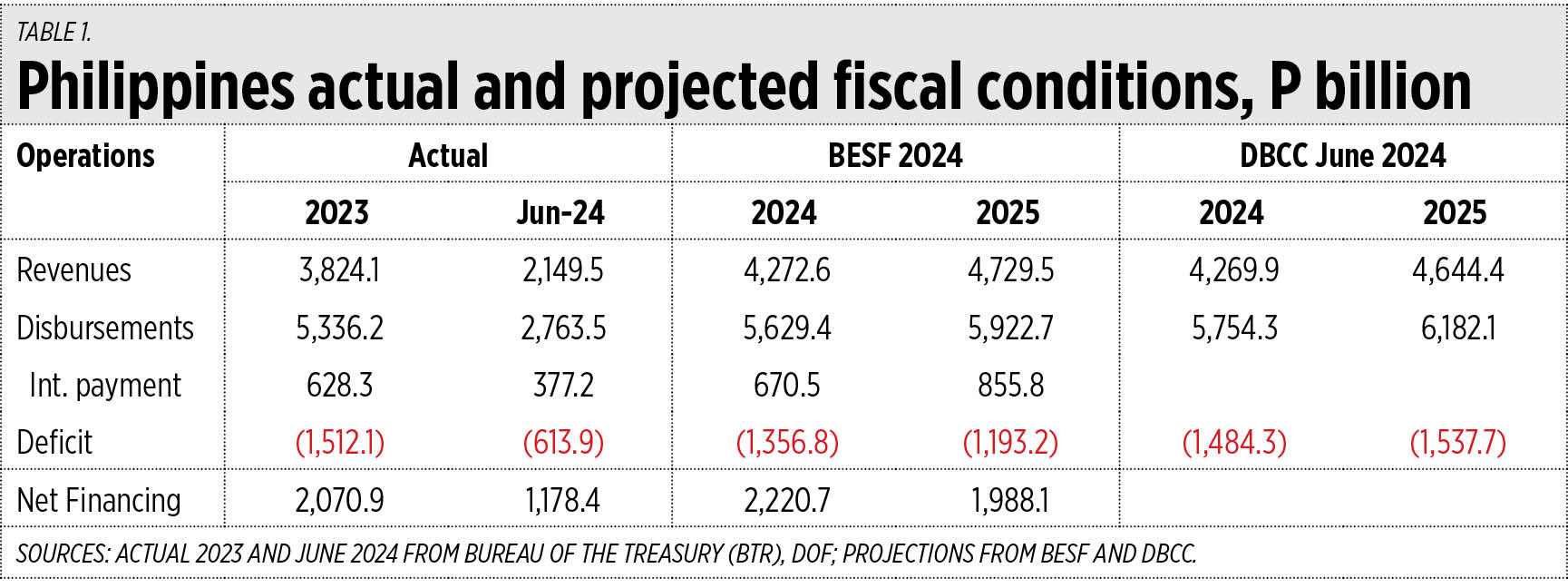
For instance, in the first half of 2024 our interest payment was already P377 billion, likely to reach P750 billion full year 2024 vs. projected interest payments of P670 billion under the Budget of Expenditures and Sources of Financing (BESF) 2024 submitted by the Budget department to Congress in August 2023.

The latest update by the Development Budget Coordination Committee shows that budget deficit for 2024 and 2025 would be at the 2023 level of P1.5 trillion, much higher than BESF projections (see Table 1).

If people can be vehement in opposing certain revenue measures to plug the deficit, they should have been equally vehement in opposing certain expenditures in the programmed appropriations that are contributors to uncontrolled deficit that leads to uncontrolled borrowings, that lead to rising Unprogrammed Appropriations. But this is not happening.

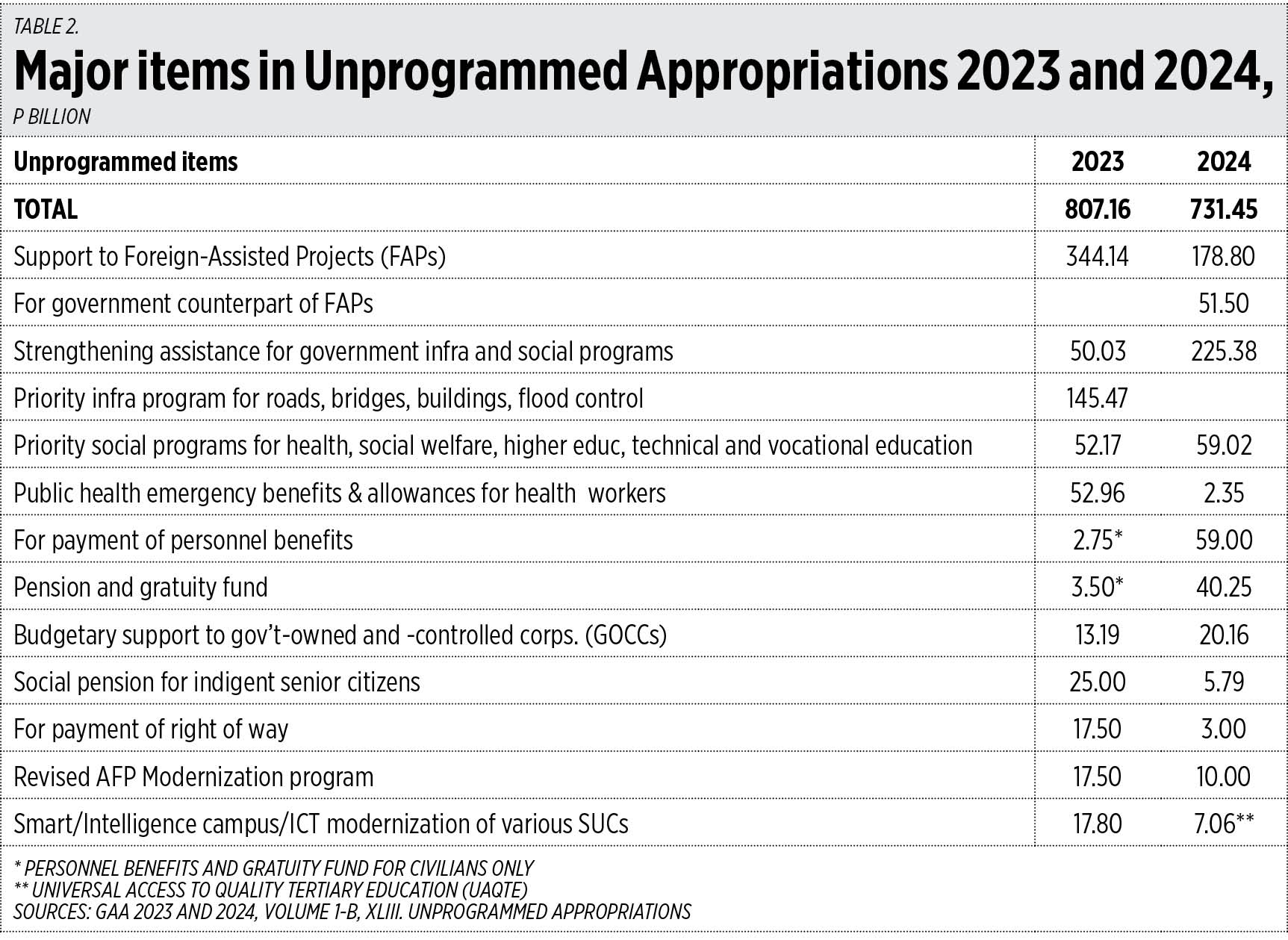
It is precisely because programmed appropriations are already bloated with lots of spending unsupported by projected revenues that Unprogrammed Appropriations were invented and are rising. From the original Malacañang proposal of P282 billion for Unprogrammed Appropriations, it went up to P731 billion after the bicameral conference committee meetings in December 2023 that became the GAA 2024.

The article “Shameless, Sec Ralph!” was particularly strongly worded, including its accusation of “the Great Health Fund Robbery by the BBM administration.” It further argued that “Congress literally robbed the Filipinos of scarce health funds so pork barrel wish lists can be funded.”

I checked the Unprogrammed Appropriations in GAA 2024, also GAA 2023. Here are two things I discovered.

One, out of the P731 billion in Unprogrammed Appropriations for 2024, the potential Congress pork barrel fund would be P225 billion on “Strengthening assistance for government infrastructure and social programs.” The rest, or P506 billion, is earmarked for foreign-assisted projects (FAPs), the Philippines’ counterpart funds, social programs for health and education, etc.

Two, the Unprogrammed Appropriations in 2024 of P731 billion was even lower than that in 2023 of P807 billion (see Table 2).

Among the FAPs are the Metro Manila Subway Project, the North-South Commuter Railway System, the PNR South Long-Haul Project, the Support to Parcelization of Lands for Individual Titling (SPLIT) Project, the MRT Line 4 Project, and the Cebu Bus Rapid Transit Project, etc.

So these important infrastructure projects can no longer be accommodated in the programmed appropriations otherwise the programmed deficit will hover near P2 trillion this year alone. These were moved to Unprogrammed Appropriations and the DoF has correctly identified the use of idle funds of GOCCs, including PhilHealth and Philippine Deposit Insurance Corp. (PDIC), both of which can contribute P200 billion to fund some, but not all, of the P731 billion in Unprogrammed Appropriations.

On July 30, Finance Secretary Ralph G. Recto spoke at the Senate and among the myths and fake news by the detractors that he debunked were the following:

One, that the idle GOCC funds are to be used for the Maharlika Investment Fund. The Maharlika Fund has zero relation on this, it is purely about funding some of the Unprogrammed Appropriations.

Two, that they should refund the P90 billion of PhilHealth reserves now. He clarified that so far only P20 billion, not P90 billion, has been remitted to the National Treasury.

Three, that PhilHealth will go bankrupt and members’ contributions will be tapped. PhilHealth has a P500 billion benefit chest fund. I know that a substantial portion of this does not come from members’ contributions but from alcohol and tobacco tax collections.

Four, that PhilHealth benefits to members will be reduced. The PhilHealth officials themselves assured that not a single centavo will be reduced from programmed benefits.

Five, that the DoF scheme is arbitrary and has no legal basis. Mr. Recto said the legal basis behind this is GAA 2024 or RA 11975, and there is no automatic implementation using the idle funds, it has to go through strict review by the Office of Government Corporate Counsel (OGCC).

Mr. Recto is a credible gentleman, an honorable and highly learned official who knows the numbers better than the detractors. He and the DoF are unjustly vilified for the mistakes of many agencies, departments, and subsidy-seeking dependents and lobbyists who cannot control their itch for more funding and subsidies yearly. The DoF is forced by these agencies and lobbyists to look for funds to satisfy the itch for endless spending.


Bienvenido S. Oplas, Jr. is the president of Bienvenido S. Oplas, Jr. Research Consultancy Services, and Minimal Government Thinkers. He is an international fellow of the Tholos Foundation.

minimalgovernment@gmail.com

Investing in additional large dams may improve flood control — analysts

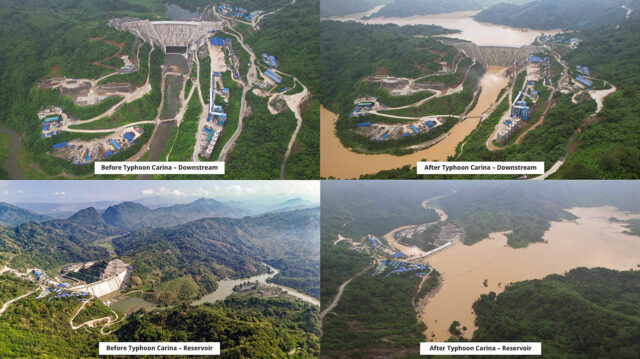
Aerial shots show floodwater entering the Upper Wawa Dam reservoir and how the dam's controlled impoundment managed flooding caused by Super Typhoon Carina. — PHOTOS WERE PROVIDED BY WAWAJVCO.

By Sheldeen Joy Talavera, Reporter

INVESTING in additional large dams may significantly improve flood control and water supply management, according to some analysts, who also emphasized the importance of addressing environmental impacts.

“Succeeding projects will, of course, depend on need and available funding, but they should be based on the most effective intervention for current conditions,” InfraWatch PH Convenor Terry L. Ridon said in a Viber message on Monday.

He cited insights from the National Irrigation Administration and the Department of Public Works and Highways, which mentioned the need for high dams to control the flow of water from upland to low-lying areas.

“We support this view, as long as the environmental and social impacts of future dam projects are addressed,” he said.

Mr. Ridon said that environmental and social impacts should be addressed in all projects located in environmentally critical areas.

“Government and private sector partners must ensure full compliance with existing environmental and social regulations,” he said.

In a statement on Sunday, Wawa JVCo, Inc. said that the Wawa Bulk Water Supply Project was cited by government officials for helping alleviate flooding caused by Super Typhoon Carina (international name: Gaemi).

Wawa JVCo, a joint venture company between Prime Infrastructure Capital, Inc. and San Lorenzo Ruiz Builders and Developers Group, is the developer and operator of the Wawa Bulk Water Supply Project.

“While designed as a water supply dam, the project can also help mitigate flooding in downstream communities, particularly low-lying areas in Rizal province and the eastern district of Metro Manila,” the company said.

In a situation briefing led by President Ferdinand R. Marcos, Jr. last week, Rizal Governor Niña Ynares said that the flooding in certain areas of the province “could have been significantly worse” without the Upper Wawa Dam.

“Mr. President, some time this month…, we saw it was empty and (they said) it would take six months for them to fill it up… If without it, I feel that, most likely, San Mateo and Montalban would be down; and definitely, Marikina and parts of Quezon City and even Pasig would be affected,” Ms. Ynares said.

The Upper Wawa Dam features a reservoir of about 450 hectares and can store up to 120 million cubic meters of water.

The Prime Infra-led WawaJVCo said that the dam’s reservoir accumulated over 90 million cubic meters of water during the super typhoon, which helped mitigate downstream flooding.

The second phase of the project will start supplying bulk water by the end of 2025.

The company said it will keep working with host communities “to help strengthen resilience against future weather-related challenges.”

Antonio A. Ligon, a law and business professor at De La Salle University in Manila, said: “As long as the profile of the Wawa Dam can be fitted to other areas, I see no objection to utilizing the Wawa model in other areas to prevent flooding.”

The Philippines can “effectively avoid floods if there is good environmental management,” he noted.

“We need to reconstruct and provide a long-term solution, not a temporary remedial measure.”

Deadpool at $205 million is biggest opening of the year

IMDB

WALT DISNEY Co.’s Deadpool & Wolverine took in $205 million in US and Canadian ticket sales this weekend, the biggest domestic debut of this year.

The movie also scored the best-ever opening for an R-rated picture, with more than twice the ticket sales of Warner Bros Discovery, Inc.’s Joker during its first weekend. Joker went on to become the highest grossing R-rated film in history with more than $1 billion at the box office after its 2019 release.

Boxoffice Pro had forecast Deadpool & Wolverine opening ticket sales of between $180 million and $200 million going into the weekend.

Deadpool & Wolverine, which sees Ryan Reynolds and Hugh Jackman reprise their roles as the foul-mouthed superhero and X-Men mutant, is the third installment in the Deadpool series. Disney acquired the film and television rights to the characters after its $71.3 billion acquisition of 21st Century Fox in 2019 and considers them some of the most important intellectual property that came with the deal, alongside Avatar.

“It’s tremendous but it’s not surprising — they did a great job marketing this, creating so much anticipation for the product and a feeling that you have to go out and see it now,” said Mike Bowers, chief executive officer of the Harkins cinema chain and vice-chairman of the National Association of Theatre Owners.

Mr. Bowers said its running time of about two hours allowed for more screenings, and the momentum from other successful theatrical movies in recent months such as the horror hit Longlegs and Inside Out 2 from Disney subsidiary Pixar helped drive audiences back to cinemas.

The success of Deadpool & Wolverine energizes the Marvel Cinematic Universe, a roster of 34 interconnected films that together form the most successful movie franchise in Hollywood history with more than $30 billion at the box office. After overtaxing audiences with a high volume of pictures, the wider superhero genre has underperformed in recent years with releases including Marvel’s Ant-Man and the Wasp: Quantumania and The Marvels, as well as DC’s The Flash and Shazam! Fury of the Gods all failing to recoup their production budgets.

“Your little cinematic universe is about to change, forever!” Mr. Reynolds’ character says in the movie.

Deadpool & Wolverine accelerates a turnaround at Disney’s film division, which hasn’t turned a profit since April 2022. Globally, the film sold $438 million worth of tickets.

Before this, the biggest opening weekend of the year in the US and Canada was Inside Out 2. It’s grossed $1.46 billion at the box office since its June release.

The results are also good news for cinema chains such as AMC Entertainment Holdings, Inc. and Regal-owner Cineworld Group, which have been struggling with weaker ticket sales amid a slowdown in film releases. — Bloomberg

Transactions via InstaPay, PESONet climb at end-June

STOCK PHOTO | Image by Pikisuperstar from Freepik

THE VALUE of transactions done through InstaPay and PESONet surged by 34.6% as of end-June, data from the Bangko Sentral ng Pilipinas (BSP) showed.

Central bank data showed that transactions coursed through the two automated clearing houses climbed to P7.98 trillion as of June from P5.93 trillion in the same period a year ago.

In terms of volume, transactions done via InstaPay and PESONet also soared by 66.1% year on year to 660.7 million at end-June from 397.8 million.

Broken down, the value of transactions done through PESONet jumped by 28% to P4.69 trillion from P3.66 trillion in the year-ago period.

The volume of PESONet transactions likewise went up by 7.3% to 48.2 million from 44.9 million.

Meanwhile, the value of InstaPay transactions stood at P3.29 trillion in the January-June period. This was 45.3% higher than the P2.26 trillion recorded a year prior.

The volume of transactions that went through the payment gateway skyrocketed by 73.6% to 612.5 million from 352.9 million in the same period in 2023.

PESONet and InstaPay are automated clearing houses launched in December 2015 under the central bank’s National Retail Payment System framework.

PESONet caters to high-value transactions and may be considered as an electronic alternative to paper-based checks.

Meanwhile, InstaPay is a real-time, low-value electronic fund transfer facility for transactions up to P50,000 and is mostly used for remittances and e-commerce.

Digital payments made up 52.8% of the volume of retail transactions in 2023, latest Bangko BSP data showed, up from the 42.1% share in 2022.

In terms of value, 55.3% of retail transactions last year were done online, also rising from 40.1% the year prior.

The BSP wanted at least 50% of the volume and value of retail transactions done online by end-2023 under its Digital Payments Transformation Roadmap.

The BSP wants online payments to make up 60-70% of the country’s total retail transaction volume by 2028 in line with the Philippine Development Plan. — Luisa Maria Jacinta C. Jocson

RLC Residences commits to net-zero carbon condominiums by 2031

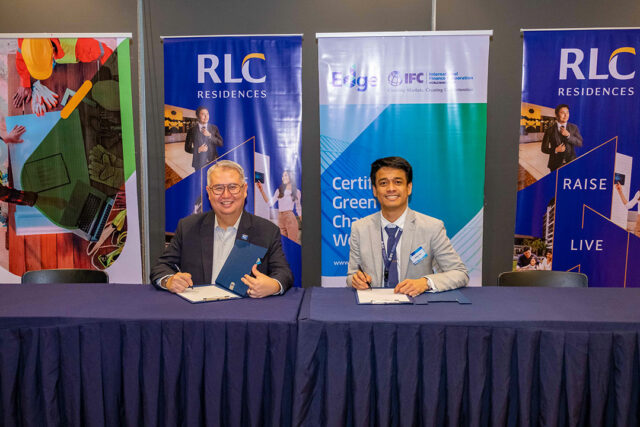
RLC RESIDENCES has pledged to deliver one million square meters of net-zero carbon and resilient condominiums by 2031, in partnership with International Finance Corp. (IFC).

“We started this journey on sustainability back in 2022, and we’re pleased to have advanced enough to have our first building, Le Pont Residences in Bridgetowne [Destination Estate], EDGE-certified,” RLC Residences Senior Vice-President and Business Unit General Manager John Richard B. Sotelo said in a statement on Monday.

The partnership aims to achieve net-zero carbon status by implementing green building measures and obtaining EDGE (excellence in design for greater efficiencies) certification from IFC. Additionally, it will use the IFC’s Building Resilience Index  tool to assess and verify the resilience of RLC Residences projects.

“RLC Residences’ commitment to green and resilient initiatives is commendable and a vital step towards a sustainable future,” IFC Global Lead for EDGE and Building Resilience Index Ommid Saberi said.

Mr. Saberi added that achieving EDGE Preliminary Certification for Le Pont Residences demonstrates a “forward-thinking approach” that benefits both the environment and the local community.

“As a hotspot for disasters, it is crucial to explore how the Philippines can incorporate climate resilience practices into the design and construction of buildings,” he said.

IFC, the private sector arm of the World Bank Group, offers EDGE as a free software and green building standard and certification system.

It aims to empower developers to build sustainable properties through cost-effective and environmentally friendly means while delivering high-quality buildings. — Aubrey Rose A. Inosante

St. Luke’s starts construction on 13-storey QC hospital building

St. Luke’s Medical Center (SLMC) on Monday broke ground for its 13-storey hospital building in Quezon City.

“The current capacity for the old St. Luke’s, as it exists, is around 500 beds. This new building will give us 140 new rooms,” SLMC President and Chief Executive Officer Dennis P. Serrano told reporters on Monday.

The building, which is expected to be ready by 2027, will house nearly 80% of the hospital’s existing services.

The renovation of the Quezon City hospital, established in the 1960s, will cost P6 billion.

SLMC is also working on an P18-billion hospital expansion in Aseana, Parañaque.

“We promised to make this the best, the most modern hospital, better than Global (City), because Quezon City is the birth site of St. Luke’s, where it all began,” Mr. Serrano said.

He said that modern diagnostic imaging equipment, magnetic resonance imaging (MRIs), computed tomography (CT) scan, nuclear imaging, and other equipment will be placed in the Quezon City facility.

He added that SLMC is targeting to have a better turnaround time.

“After the hospital building, we’re looking at redeveloping the outpatient clinics for the doctors, the medical arts building. You can also see our College of Medicine. We’re already cramped,” Mr. Serrano said. — Aubrey Rose A. Inosante