Home Blog Page 2451

China’s rains and floods led to near doubling of natural disaster losses in July

STOCK PHOTO | Image by Hermann Traub from Pixabay

 – Extreme rainfall and severe flooding in China led to a near doubling in economic losses from natural disasters in July from a year earlier, the government said.

China suffered 76.9 billion yuan ($10.1 billion) in economic losses from natural disasters last month, with 88% of those losses caused by heavy rains, floods or their effects, according to the Ministry of Emergency Management.

It was the biggest amount of losses for the month of July since 2021, ministry data showed.

Natural disasters during the month affected almost 26.4 million people across China, with 328 either dead or missing, the ministry said.

During the month, 1.1 million people were relocated, 12,000 houses collapsed and 157,000 more were damaged. Some 2.42 million hectares of crop area were also affected.

Extreme rainfall poured over vast areas such as the Sichuan Basin, Yellow River, Huai River and parts of the North China Plain, breaking precipitation records at 33 weather stations in Henan, Hunan and Shandong provinces.

Swollen major rivers that were slow to recede after bouts of flooding also worsened the impact of the rains, the ministry said.

In central Henan, one of the country’s main commercial crop production areas, more than 1.13 million hectares were affected with some harvests lost from soaked fields.

In the south, Typhoon Gaemi had the most impact in Hunan.

Thunderstorms, winds and hail also damaged crops and greenhouses in Inner Mongolia and Xinjiang. – Reuters

Sinopharm unit denies link to firm suspected of illegally purchasing cadavers

 – Sinopharm unit China National Medicines on Friday said it does not have any business dealings or relations with Shanxi Osteorad Biomaterial Co, according to a filing to the Shanghai Stock Exchange.

Shanxi Osteorad is suspected of illegally purchasing human remains and limbs to be used as raw materials for the production of “allogeneic bone implantable materials”, government-backed media The Paper reported previously.

The case involved the illegal “theft” and sales of thousands of bodies, The Paper reported, adding local authorities had started an investigation.

Shanxi Osteorad does not have an official website and could not be immediately reached for comment.

In the filing, China National Medicines said media reports of its involvement with Shanxi Osteorad are “incorrect” and that the company’s production and operation activities remain normal. – Reuters

Pacific Islands to build climate disaster warehouses

PACIFIC ISLANDS FORUM/FORUMSEC.ORG

 – Australia and New Zealand said they would provide A$42.6 million ($28.05 million) for Pacific Island countries, which span millions of kilometers of ocean, to store humanitarian aid in the region to prepare for increasing climate disasters.

The Pacific Islands region is experiencing worsening cyclones, while the so-called “Pacific Ring of Fire” is seismically active, triggering earthquakes that can cause tsunamis, and the 2022 Hunga Tonga-Hunga Haʻapai eruption.

Many Pacific Island countries are remote with poor transport links and have relied on assistance to arrive from the Australian, New Zealand, US and Chinese defense forces after disasters.

Pre-positioning humanitarian supplies in warehouses in 14 countries would allow Pacific Islands to respond in the first 48 hours after an emergency to save lives, Australia and New Zealand said in a statement. Timor Leste is also covered by the program.

Australia’s Minister for Foreign Affairs, Penny Wong, said it would “ensure there is easily accessible support and supplies on the ground for communities when disaster strikes”.

Foreign ministers from the Pacific Islands region are meeting in Suva, Fiji, on Friday ahead of the annual Pacific Islands Forum leaders meeting this month in Tonga. – Reuters

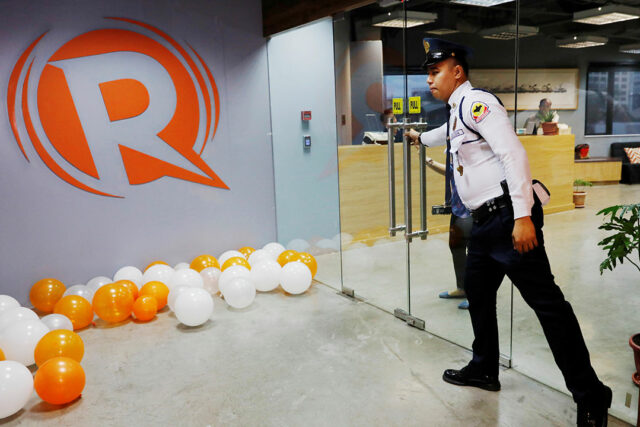
Philippine court orders corporate regulator to restore license of Rappler

REUTERS

 – A Philippine court has ordered the country’s corporate regulator to restore the license of Rappler, a media firm led by Nobel laureate Maria Ressa who reported on former President Rodrigo Duterte’s campaign against illegal drugs.

The Court of Appeals, in a decision dated July 23 that was seen by Reuters on Friday, had voided orders and decisions of the Philippine Securities and Exchange Commission (SEC) to shut down the online news site.

The Securities and Exchange Commission did not immediately respond to a request for comment.

The SEC in 2018 rescinded the operating license of Rappler for violating foreign equity restrictions on domestic media when it sold depositary rights to a foreign entity. The decision was upheld in 2022.

The appellate court said the SEC “acted with grave abuse of discretion” in revoking Rappler‘s certificate of incorporation.

Rappler had previously argued the Omidyar Network, the philanthropic arm of EBay founder Pierre Omidyar, was a silent investor. Omidyar cut ties by donating the depository receipts to Rappler‘s staff.

Rappler was founded by Ms. Ressa, won the 2021 Nobel Peace Prize along with Russian investigative journalist Dmitry Muratov in a decision widely seen as an endorsement of free speech rights that had come under fire worldwide.

Ms. Ressa is currently on bail after being convicted in 2020 in a cyber libel case. She has appealed the decision to the country’s top court. – Reuters

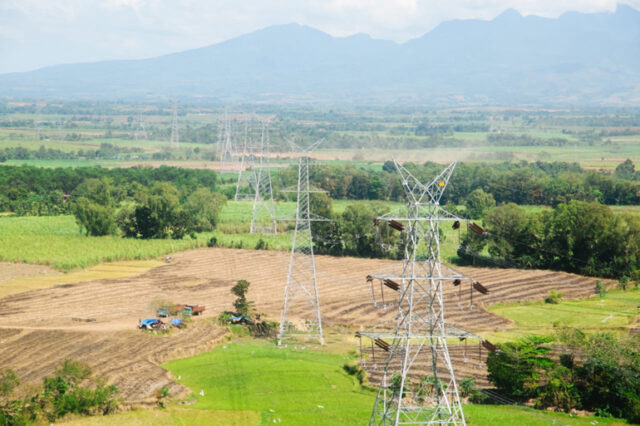
On a roll: NGCP commits to complete more transmission lines

With concerted efforts from the power industry players, the target of the Marcos administration to achieve 100% total electrification by the end of President Marcos’ term under the 2023-2032 National Total Electrification Roadmap (NTER) is within reach.

And the National Grid Corporation of the Philippines (NGCP), for its part, is fully committed to doing its utmost as a strategic partner of the government. Their unwavering dedication ensures that the roadmap is not just a vision on paper but a tangible reality — a lifeline of electricity reaching every home, powering progress, and illuminating the path toward a brighter future for all Filipinos.

The transmission firm has been on a roll since it took over transmission operations from the government in 2009. For 15 years, the NGCP has significantly expanded the country’s transmission network, which reflected the company’s dedication to its mandate of improving and expanding the grid.

These initiatives not only bolstered the country’s power infrastructure, but also underscore the collaborative spirit that drives the nation toward a fully electrified future.

Among these big-ticket projects that are already benefitting Filipino power users are the Mindanao-Visayas Interconnection, the Cebu-Negros-Panay 230kV Interconnection, and the full energization of the Mariveles-Hermosa-San Jose 500kV transmission backbone in Western Luzon that will support the country’s growing energy demands.

Marami na pong nagawa ang NGCP, at marami pa kaming gagawin para makatulong na maiangat ang ekonomiya ng bansa. Asahan po ninyo na kaisa ng gobyerno, lagi kaming nakahandang tumulong at sumuporta,” NGCP President and CEO Anthony Almeda said.

“Commitment to excellence has always been part of NGCP’s DNA, and we will continue to strive harder, along with the support of our national government, in bringing better service for all Filipinos,” he added.

The Mariveles-Hermosa-San Jose Transmission Line, which was inaugurated by President Marcos last July 12, stands to benefit 59 million Filipino consumers and other power users as the facility further secures and stabilizes the power transmission services in Luzon.

Mr. Almeda, however, recognized that total electrification of households in the country, especially in far flung areas, could still be a challenge but that does not deter the NGCP to do more in partnership with the Department of Energy (DoE), the key agency that oversees the implementation of strategies outlined in the NTER.

As of June 2023, the DoE said that approximately 25.3 million households in the Philippines have benefited from the electrification program. This represents a household electrification level of 91.1% out of an estimated potential of 27.7 million households based on the 2020 Census on Population and Housing (CPH).

The DoE added that there are still around 2.5 million unserved households or approximately 10.25 million people that need access to electricity. The government continues to work toward achieving 100% total electrification by 2028 through various strategies, including regular connections, distribution line extensions, standalone home systems, and microgrid systems.

The NGCP chief also said the firm will collaborate closely with the DoE to complete more transmission projects on time, particularly the Batangas-Mindoro interconnection project and the Northern Luzon 230-kV loop, as per instruction of President Marcos during his speech at the Mariveles-Hermosa-San Jose Transmission Line inauguration in Bataan.

Nakahanda ang NGCP na kumilos upang makamit ang target ng pamahalaan na 100% electrification sa pagtatapos ng termino ni Pangulong Marcos,” Mr. Almeda assured.

But he also emphasized the need for the construction of additional power plants as part of a broader strategy to ensure a stable and continuous power supply that will sustain the nation’s progress and support its burgeoning economy.

Mr. Almeda further cited the importance of creating an investor-friendly environment that encourages the inflow of capital into the energy sector and ensures a level-playing field.

“While the enhancement of transmission and distribution systems remains a priority, it is clear that these efforts must be complemented by the establishment of new power generation capacities and the creation of a more friendly business environment to make the sector more appealing to investors,” he said.


Spotlight is BusinessWorld’s sponsored section that allows advertisers to amplify their brand and connect with BusinessWorld’s audience by publishing their stories on the BusinessWorld Web site. For more information, send an email to online@bworldonline.com.

Join us on Viber at https://bit.ly/3hv6bLA to get more updates and subscribe to BusinessWorld’s titles and get exclusive content through www.bworld-x.com.

PHL surprises with 6.3% GDP growth

Faster government spending helped drive the Philippine economic growth in the second quarter. — PHILIPPINE STAR/MIGUEL DE GUZMAN

By Abigail Marie P. Yraola, Deputy Research Head

THE PHILIPPINE ECONOMY expanded faster than expected in the second quarter, as higher government spending and investments offset “anemic” household consumption, government data showed.

Preliminary data released by the Philippine Statistics Authority (PSA) showed gross domestic product (GDP) expanded by an annual 6.3% in the April-to-June period, the fastest in five quarters or since the 6.4% in the first quarter of 2023.

It was stronger than the revised 5.8% growth in the first quarter and 4.3% in the second quarter of 2023.

Philippines' quarterly GDP performanceIt also beat the 6% median forecast in a BusinessWorld poll of 19 economists last week.

On a seasonally adjusted quarter-on-quarter basis, the country’s GDP expanded by 0.5%, slowing from 1.1%.

National Economic and Development Authority (NEDA) Secretary Arsenio M. Balisacan said the second-quarter GDP print kept the Philippines among Asia’s best-performing economies.

At 6.3%, the Philippines’ GDP growth was the second-fastest in the April-to-June period, only behind Vietnam (6.9%). It was ahead of Malaysia (5.8%), Indonesia (5%) and China (4.7%).

“While these numbers are encouraging, our growth performance could have been even more impactful on all Filipinos if not for the high inflation and interest rates the country experienced,” Mr. Balisacan said at a news briefing on Thursday.

For the first half, GDP growth averaged 6%, hitting the low end of the government’s target of 6%-7% this year.

“In the second half, (the economy) would have to grow by [at least] 6% to fall within that range of the target,” Mr. Balisacan said.

Among the main contributors to growth were construction (16%); wholesale and retail trade, repair of motor vehicles and motorcycles (5.8%), and financial and insurance activities (8.2%).

“On the demand side, the acceleration in GDP growth was driven by a significant increase in total investments by 11.5%, fueled by robust construction activities,” Mr. Balisacan said.

Gross capital formation, the investment component of the economy, grew by 11.5% on the second quarter, faster than the 0.5% growth in the previous quarter and 0.7% a year ago.

Public construction grew by 21.8% in the second quarter, faster than the 12.1% a year ago as the government ramped up infrastructure and rehabilitation projects. Private construction also rose by 9.9%, faster than the 5.3% a year ago, with commercial construction increasing by 13.6%.

“Our impressive growth performance clearly demonstrates that infrastructure is our way forward. We need to build more, build better, and build faster so that Filipinos can reap the benefits of these high-impact projects at the soonest possible time,” Finance Secretary Ralph G. Recto said in a separate statement.

Government spending rose by 10.7%, faster than the 1.7% in the previous quarter and a reversal from the 7.1% contraction a year earlier. This was the fastest growth since the second quarter of 2022.

‘ANEMIC’ CONSUMPTION
Household final consumption, which accounts for over 70% of the economy, rose by 4.6% year on year in the second quarter, slowing from the 5.5% growth in the same quarter in 2023.

Mr. Balisacan said household final consumption expenditure continued to be “a bit anemic” in the second quarter.

“The growth is not as strong as one would expect… Which meant that the impact of the high inflation and the high interest rates that were implemented months earlier, quarters earlier, are now being felt and are likely to continue,” he said.

The PSA said spending on health, recreation and restaurants remained strong, but there was a decline in spending on clothing, footwear and household furnishings.

Pantheon Economics’ Chief Emerging Asia Economist Miguel Chanco said household spending fell by 0.1% quarter on quarter, extending the 0.2% dip seen in the first quarter.

How each segment contributed to Q2 2024 GDP“The main story from our perspective is that private consumption — the Philippines’ primary engine — has entered a technical, if shallow, recession,” he said in a note.

Mr. Chanco said household spending is expected to remain constrained by “deteriorating balance sheets and waning consumer confidence.”

“The only real bright spot in the Q2 GDP report was merchandise exports, which rose quarter on quarter for the first time in three quarters,” he said.

Exports of goods and services grew by 4.2% year on year in the second quarter, slowing from the 8.4% growth in the previous quarter and 4.7% a year earlier.

Imports also grew by an annual 5.2% in April to June from 2.2% in the first quarter and a turnaround from the 0.6% contraction a year ago.

STRONGER THAN EXPECTED
“The stronger-than-expected GDP print was probably due to a faster growth pace for both public and private construction as election-related spending has already begun way ahead of the May 2025 midterm elections,” Bank of the Philippine Islands (BPI) Lead Economist Emilio S. Neri, Jr. said in an e-mail.

However, Mr. Neri noted the GDP data suggest that the second-half and full-year 2024 growth are likely to fall below the government’s target for the year.

Shivaan Tandon, Capital Economics markets economist, said that year-on-year GDP growth picked up due to favorable base effects.

“The latest data suggest that after a year of resilience amid tight monetary policy and high inflation, domestic demand has now come under pressure and we expect this weakness to persist in the near term,” he said in a research note.

While easing inflation should support private consumption, Mr. Tandon said the boost to real incomes would be offset by the slowdown in remittances.

Sunny Liu, lead economist at Oxford Economics, said GDP could expand by 5.8% this year, improving from the 5.5% GDP growth in 2023.

“However, we remain wary of the possible real impact if the recent volatility in global markets persists. There are downside risks to our forecasts,” she said in a research note.

HSBC ASEAN (Association of Southeast Asian Nations) economist Aris D. Dacanay said in a research note that GDP growth was in line with expectations, but private demand remained weak.

“Consumers might still be reeling in their expenses from the brunt of high inflation while private investors likely delayed some of their investment projects due to high interest rates,” he said.

TO CUT OR NOT
Meanwhile, ANZ Research economist Arindam Chakraborty and Head of Asia Research Khoon Goh said investment growth will be the main driver of growth this year, as external demand is unlikely to be robust.

‘Overall, we do not think the Q2 GDP and July inflation data together warrant an interest rate cut in next week’s policy meeting,” they said.

Inflation in July quickened to a nine-month high to 4.4% from 3.7% in June, breaching the BSP’s 2-4% target.

On the other hand, BPI’s Mr. Neri said that the probability of rate cut on Aug. 15 has slightly increased following the GDP print.

“If not in August, they can do an off-cycle reduction in early September or during their scheduled meeting in October [if monthly consumer price index] prints decline from their July and August print,” Mr. Neri said.


BSP to grant licenses for four more digital banks

MACROVECTOR-FREEPIK

By Luisa Maria Jacinta C. Jocson, Reporter  

THE BANGKO SENTRAL ng Pilipinas (BSP) will allow four more digital banks to operate in the country starting next year, it said on Thursday.

“The Monetary Board has approved the lifting of the moratorium on the grant of new digital banking licenses starting on Jan. 1, 2025 and allowed a maximum of 10 digital banks to operate in the country,” it said in a statement.

The four additional licenses may come from either new applicants or banks seeking to convert their existing license to a digital one.

“With this limit, the BSP can closely monitor developments in the digital banking industry, obtain a broader perspective as these banks mature further in their operations, as well as assess the impact of the entry of new players on the banking system,” BSP Governor Eli M. Remolona, Jr. said.

In 2021, the central bank capped the number of digital banks at six.

The six online lenders operating in the country are Tonik Digital Bank, Inc.; GoTyme Bank of the Gokongwei group and Singapore-based Tyme; Maya Bank of Voyager Innovations, Inc.; Overseas Filipino Bank, a subsidiary of Land Bank of the Philippines; UNObank of DigibankASIA Pte. Ltd.; and UnionDigital Bank of Union Bank of the Philippines, Inc. (UnionBank).

Mr. Remolona said that applicants must “bring something new to the table.”

“We want to see unique product and service offerings that are different from that offered by the existing market players. These offerings should have significant potential to reach broader clientele, particularly the untapped or underserved market segments.”

The BSP said that the applicants will undergo a “rigorous” licensing process which will evaluate their value proposition, business models and resource capabilities.

Applicants must also be compliant with the standard licensing criteria, which covers transparency on ownership and control structures; the composition of shareholders, directors, and senior management; capital adequacy and corporate governance and risk management, among others. 

“Only digital bank applicants that have demonstrated capacity to meet the minimum criteria and offer unique value proposition, or develop new and innovative business models that are currently not offered or accessed by existing players, will be granted a digital banking license.”

“Applicants must also display sufficient capabilities and readiness to deploy their digital solutions and to sustainably grow their business within the Philippine setting,” the BSP added.

Mr. Remolona also said that the decision to lift the moratorium was based on its assessment of the operation of the current digital banks.   

“The BSP took into consideration the digital banks’ financial soundness and achievement of the policy objectives of the Digital Banking Framework of promoting wider adoption and use of digital financial services in the country and expanding their reach into the unserved and underserved segments of society.”

MORE COMPETITION
Meanwhile, Bankers Association of the Philippines (BAP) President and Bank of the Philippine Islands (BPI) President and Chief Executive Officer Jose Teodoro K. Limcaoco said that more digital banks would help support financial inclusion in the country.

“It’s always welcome when the BSP opens the sector because it promotes competition, it promotes financial inclusion,” he told reporters late last week.

Ronald B. Gustilo, national campaigner for Digital Pinoys, said that digital banks help “ease the usually time-consuming procedure of physically visiting a bank to open an account.”

“It will provide an opportunity for Filipinos to open an account with ease, at their most convenient time,” he said in a Viber message.

However, analysts noted that digital banks still face some challenges, particularly in achieving profitability.

“The lack of a physical presence, I think, could hinder them in looking for assets. And when you look at the current digital banks today, I think some of them continue to be unprofitable,” Mr. Limcaoco said.

Earlier this year, the BSP said that only two out of the six current digital banks were profitable.

The latest BSP data also showed that resources held by digital banks stood at P105 billion as of May. This accounted for just 0.33% of the P31.787-trillion total resources of the Philippine financial system during the period.

“Digital banking is a hard business because they have to compete with the traditional banks, who I’ve always said have all the advantages because we can be digital as well,” Mr. Limcaoco said.

Angelito M. Villanueva, FinTech Alliance Philippines founding chairman and executive vice-president and chief innovation and inclusion officer of Rizal Commercial Banking Corp., said that digital banks must compete with larger and more established players.

“Despite the considerable potential for growth, these challenges mean that most digital banks in the country are not yet transforming the financial industry at the anticipated speed or scale envisioned when their licenses were initially issued,” he added.

Meanwhile, Mr. Gustilo said that the BSP must ensure that digital banks will be able to cater to clients’ needs 24/7 despite not having a physical branch.

There should also be strict implementation of the recently signed Anti-Financial Account Scamming Act (AFASA).

“Opening bank accounts with digital banks is easier compared to opening accounts in person. Digital banks should ensure that the ease of opening accounts will not result in fictitious account names which may be used for illegal transactions,” Mr. Gustilo added.

The BSP wants to onboard at least 70% of adult Filipinos into the formal financial system.

Sy siblings still richest; Razon moves to 2nd spot

(LEFT) TERESITA SY-COSON AND ENRIQUE K. RAZON, JR.

By Revin Mikhael D. Ochave, Reporter

THE SY SIBLINGS remained on top of the Forbes list of the Philippines’ 50 richest this year, while ports and casino tycoon Enrique K. Razon, Jr. climbed to second spot.

According to Forbes, the combined wealth of the tycoons in the list was “nearly flat” at $80.8 billion this year, from $80.4 billion a year ago.

“More than half of the country’s 50 richest are less wealthy this year,” it said, noting that elevated inflation and high interest rates are crimping domestic demand.

The lackluster stock market and weaker peso were also cited as reasons for the drop in wealth of some tycoons.

The six Sy siblings, namely Teresita, Elizabeth, Henry Jr., Hans, Herbert, and Harley, posted a combined net worth of $13 billion. This was 9.7% lower than their net worth of $14.4 billion last year, reflecting the weaker peso, Forbes said.

They are the heirs to the SM Group founded by the late Henry Sy, Sr., who was the richest man in the Philippines until his death in January 2019.

“Their group flagship, SM Investments Corp., a conglomerate with interests in banking, property and retail, is expanding in geothermal energy with five new projects across the country,” Forbes said.

Mr. Razon jumped to second spot on the Forbes list for the first time, as his net worth surged by 37% to $11.1 billion from $8.1 billion a year ago.

Forbes said Mr. Razon was the biggest dollar gainer for the second year in a row, as shares of International Container Terminal Services, Inc. soared by about 80% in the past year amid a recovery in global trade. Mr. Razon also owns Bloomberry Resorts Corp., which operates Solaire Resort and Casino.

Property tycoon Manuel B. Villar, Jr. slipped to third place even though his net worth increased by 12.4% to $10.9 billion from $9.7 billion in 2023.

A former Senate president and House speaker, Mr. Villar is the chairman of listed companies Vista Land & Lifescapes, Inc., Golden MV Holdings, Inc., supermarket chain AllDay Marts, Inc, home improvement chain AllHome Corp. and Vistamalls, Inc.

San Miguel Corp. Chairman Ramon S. Ang ranked fourth as his net worth jumped by 11.8% to $3.8 billion from $3.4 billion last year amid the conglomerate’s push into infrastructure, winning bids for airports, toll roads, and power plants.

DMCI Holdings, Inc. Chairman Isidro A. Consunji and his siblings rose to fifth place from eighth last year. Their net worth rose by 17% to $3.4 billion this year from $2.9 billion a year ago.

Tony Tan Caktiong, chairman of fastfood giant Jollibee Foods Corp. was in sixth place even as his net worth slid by 9.4% to $2.9 billion from $3.2 billion last year.

Taipan Lucio C. Tan, chairman of LT Group, Inc., secured the seventh spot as his net worth increased by 1.9% to $2.65 billion from $2.6 billion in 2023.

Jaime Zobel de Ayala and his family were in eighth place with a net worth of $2.6 billion, down by 7.1% from $2.8 billion a year ago.

Entering the top 10 list were Lucio L. Co and his wife Susan P. Co of Puregold Price Club, Inc. in ninth place with a combined wealth of $2.3 billion, unchanged from last year’s numbers.

Completing the top 10 was the Aboitiz family of conglomerate Aboitiz Equity Ventures, Inc. with a net worth of $2.2 billion, down by 30.2% from $3.15 billion in 2023.

Lance Y. Gokongwei and his siblings slipped to 11th spot as their net worth dropped by 37% to $1.9 billion from $3 billion in 2023.

Shares of JG Summit Holdings, Inc. fell year on year as its petrochemicals subsidiary has been affected by weaker global prices and high operating costs.

Another big gainer on the Forbes list was Eusebio H. Tanco of STI Education Systems Holdings, Inc. Mr. Tanco landed in 22nd place as his net worth rose by 35% to $815 million, as shares in his online gaming company DigiPlus Interactive Corp. surged.

Forbes said there were no newcomers to the 2024 rankings due to the lack of initial public offerings.

However, it noted that two tycoons have returned to the annual list. One of the two returnees is Edgar B. Saavedra, ranked 43rd, with a net worth of $270 million after the public listing of Citicore Renewable Energy Corp. in June.

The other returnee is Michael C. Cosiquien, ranked 48th, with a net worth of $205 million. He runs ISOC Holdings, Inc. which has interests in logistics, energy, property, and infrastructure.

Sought for comment, China Bank Capital Corp. Managing Director Juan Paolo E. Colet said the rankings and combined net worth of the country’s tycoons reflect the state of the local equity market.

“Most of their wealth is tied to the value of their publicly listed holdings, so the generally tepid performance of the stock market is affecting their net worth,” he said in a Viber message.

AP Securities, Inc. Research Head Alfred Benjamin R. Garcia said the weaker combined net worth is a result of the “sluggish market” and depreciating peso.

“A big chunk of their net worth is tied to the prices of the stocks they own, and as you know the market has been weak lately,” he said in a Viber message.

“It’s not to say that the companies they own aren’t earning money, it’s more because the risky environment recently is not encouraging investors to place more value in stocks,” he added.

Forbes said the net worth of top Philippine tycoons were based on the closing stock prices and exchange rates as of July 19. Private companies were valued based on similar companies that are publicly traded.

The minimum net worth to join the list was $170 million, lower than the $180 million last year.

Vehicle sales jump 6.1% in July amid new launches and better supply

Car enthusiasts check out the vehicles displayed at the Manila International Auto Show, April 4, 2024. — PHILIPPINE STAR/RYAN BALDEMOR

By Justine Irish D. Tabile, Reporter

VEHICLE SALES in the Philippines jumped by an annual 6.1% in July, driven by new launches and supply availability, according to an industry report.

A joint report by the Chamber of Automotive Manufacturers of the Philippines, Inc. (CAMPI) and the Truck Manufacturers Association (TMA) showed vehicle sales rose to 39,331 units in July from 37,086 units in the same month last year.

Month on month, car sales inched up by 0.6% from the 39,088 units sold in June.

Auto Sales (July 2024)“New product launches, improved product offerings, good sales momentum, as well as supply availability helped neutralize the impact of Typhoon Carina, especially towards the latter part of July,” CAMPI President Rommel R. Gutierrez said in a statement.

In July, passenger car sales increased by 14.9% to 10,923 units from 9,509 units sold a year ago. Month on month, passenger car sales edged up by 2.78%.

Sales of commercial vehicles, which accounted for 72.23% of the industry’s total sales, went up by 3% year on year to 28,408 units. Month on month, commercial vehicles sales dipped by 0.2%.

Broken down, light commercial vehicle sales slipped by 3.6% year on year to 20,849 units, while sales of Asian utility vehicles (AUV) jumped by 32.7% to 6,620 units.

Sales of medium trucks slid by 23.9% to 299, while sales of heavy trucks slumped by 35.6% to 65. Light-duty truck and bus sales went up by 23.4% to 575 units.

For the first seven months of the year, vehicle sales went up by 10.9% to 265,610 units from 239,501 units a year ago.

Passenger car sales jumped by 17.3% to 70,798 units, while commercial vehicle sales increased by 8.7% to 194,812 units.

Rizal Commercial Banking Corp. Chief Economist Michael L. Ricafort said the latest vehicle sales data were “decent.”

“However, although the vehicle sales growth from January to July is still higher than GDP (gross domestic product) growth, the vehicle sales growth is starting to normalize after double-digit growth rates in recent months and coming from a higher base as a result,” Mr. Ricafort told BusinessWorld via Viber.

In the first half, GDP growth averaged 6%, still on track to meet the government’s full-year target of 6-7%.

Mr. Ricafort said the steady car sales reflect the country’s favorable demographics, as the majority of the population is of working age.

“Local vehicle sales and production growth rates at double-digit levels in recent months are still leading indicators of the further growth and recovery of the Philippine economy,” he said.

Toyota Motor Philippines Corp. remained the market leader with sales of 122,730 units in the January-to-July period, up by 11.47% from 110,158 units a year ago. Toyota sales accounted for 46.21% of the market.

Mitsubishi Motors Philippines Corp. ranked second with a market share of 19.05%. Mitsubishi sales jumped by 15.4% to 50,599 units in the first seven months from 43,831 units last year.

In third spot was Ford Motor Co. Phils. Inc. with a market share of 6.33%. Ford’s sales went up by 1.2% to 16,817 units.

Rounding out the top five were Nissan Philippines, Inc., whose sales inched up by 0.9% to 15,819, while Suzuki Phils., Inc. posted a 13% rise in sales to 11,499 units.

This year, CAMPI set a sales target of 468,300 units, up 9% from the 429,807 units sold in 2023.

The 265,610 units sold in the January-to-July period already accounted for 56.7% of the industry’s target for the year.

DITO CME aims P40.26B for financial lift

By Ashley Erika O. Jose, Reporter

DITO CME Holdings, Inc. (DITO) said it plans to raise as much as P40.26 billion through funding from private investors over the coming five years to improve its financial standing and support its growth.

So far, the company has secured P5.53 billion in funding, DITO CME said in a stock exchange filing on Thursday.

The breakdown of this total includes P3.3 billion obtained in October, P610 million in August, and a further P1.59 billion by the close of 2023.

The capital was raised through financing agreements with external investors, including Xterra Ventures Pte. Ltd., Summit Telco Corp. Pte Ltd., and Summit Telco Holdings Corp., the company said.

“[DITO CME’s] management continues to have discussions with its existing investors and other entities to fulfill the target equity raise such that the company targets to raise additional equity via private placement before the end of 2024,” the company said, adding that any private placements will “partially address the negative equity position.” 

At the same time, the company is considering launching another round of its follow-on offering (FOO).

“If the market conditions are ripe, and considering the heavy capital requirements for the rollout of the network of DITO Tel, DITO CME shall continue to consider launching another follow-on offering or stock rights offer,” DITO CME said.

The additional follow-on offering or stock rights offering will be conducted after its recently announced P4.2 billion follow-on offering, it said.

“The timetable and target equity raise, however, will be determined at a later time,” it said.

In May, DITO CME said its board of directors approved the proposed follow-on offering of up to 10% of its current issued and outstanding capital stock of 1.95 billion valued at P2.15 apiece.

“The company has submitted an application for a Follow-On Offering last May 31, 2023, to the Securities and Exchange Commission and The Philippine Stock Exchange, and it targets to complete such FOO by this September 2024,” DITO CME said.

The company said it is now in the process of securing the necessary regulatory approvals from the Securities and Exchange Commission (SEC) and the listing department of the Philippine Stock Exchange to launch its follow-on offering.

For Globalinks Securities and Stocks, Inc., Head of Sales Trading Toby Allan C. Arce, several factors may impact the viability of DITO CME’s planned additional follow-on offerings.

“Interest rates and inflation are crucial. If interest rates are high, attracting investors to the follow-on offering could be challenging, as investors might favor safer investments with better returns,” he said.

Investors’ confidence will be key in this plan, Mr. Arce noted.

“Uncertainty, especially in emerging markets, might make investors cautious. Furthermore, high market volatility can deter investors, as they may perceive additional offerings as a sign of financial distress rather than growth potential,” he added.

DITO CME, the operator of DITO Telecommunity Corp. (DITO Tel), said the third telco player will continue expanding its operations.

DITO Telecommunity is allocating up to P30 billion for capital expenditures this year, mainly for network rollout.

The company said it will be focusing on gaining market share and commercial rollout while also targeting new product launches.

“DITO Tel projects that it will be EBITDA (earnings before interest, taxes, depreciation, and amortization) positive by the end of 2025 and profitable by the end of 2028. Thus, the accumulated losses will be reduced and/or wiped out as soon as the operations are ramped up in the following years,” DITO CME said.

For the first quarter, DITO CME saw its attributable net loss widen to P4.11 billion from P336.67 million in the comparable period a year ago, despite posting higher gross revenues for the period.

According to the company’s financial statement, the company recorded a gross revenue of P3.78 billion, 61.5% higher than the P2.34 billion previously.

This comes after its gross expenses ballooned to P7.04 billion, up 31.1% from P5.37 billion in the same period last year.

The company has yet to release its second-quarter and first-half financial statement as of writing.

At the stock exchange, shares in the company gained five centavos or 2.56% to close at P2 each.

Lower costs, new farms drive ACEN’s 61.5% income surge

ACEN Corp., the Ayala group’s renewable energy arm, reported a 61.5% increase in its attributable net income to P3.57 billion for the second quarter, driven by the operationalization of new solar and wind farms and a significant reduction in costs.

Revenues declined by 16.6% to P9.45 billion from P11.33 billion; however, costs and expenses went down by 34.8% to P5.97 billion from P9.16 billion, ACEN said in its regulatory filing on Thursday.

For the six-month period, ACEN’s attributable net income rose by 48.7% to P6.29 billion from P4.23 billion a year ago.

This was attributed to the 42% growth in attributable renewable energy generation, as well as an improved net selling position in the Wholesale Electricity Spot Market (WESM), the trading floor of electricity.

“We have strong momentum on the back of a robust increase in operating earnings and steady progress with our project pipeline,” ACEN President and Chief Executive Officer Eric T. Francia said.

“We have won several new projects that we expect to add to our capacity within the next six to twelve months. We remain on track with our goal of achieving 20 GW (gigawatt) of renewables capacity by 2030.”

As of end-June, the company’s attributable renewables capacity was 4.8 GW, 69% of which is already fully or partially operational.

ACEN’s total attributable renewables output increased by 42% to 2,908 gigawatt-hours (GWh).

Broken down, its renewable energy plants in the Philippines generated 1,015 GWh in the first half, up 77% from last year.

ACEN has operationalized solar and wind farms in the first half which are the 385- megawatt-(MW) phases 1 and 2 San Marcelino Solar in Zambales; the 160-MW Pagudpud Wind and 70-MW Capa Wind in Ilocos Norte; the 133-MW Cagayan North Solar in Cagayan, and the second phase of the 116-MW Arayat-Mexico Solar joint venture in Pampanga.

In turn, the company’s net seller position in the WESM rose by 80% to 606 GWh, supported by the said operationalized plants.

Attributable renewables output from ACEN’s international assets went up by 28%, generating 1,893 GWh.

Large-scale projects were commissioned this year, namely the 522-MW first phase of New England Solar in Australia, the 420-MW Masaya Solar in India, and the 60-GW Lac Hoa and Hoa Dong Wind in Vietnam.

The 287 MW first phase of the SUPER solar platform in Vietnam, which was acquired last year, was also added to ACEN’s generation portfolio.

Currently, ACEN holds about 4.8 GW of attributable renewables capacity in operation and under construction, as well as signed agreements and won competitive tenders worth over one GW.

Meanwhile, its listed subsidiary Enex Energy Corp. has trimmed its net loss to P10.83 million for the second quarter from nearly P15 million booked last year.

Expenses for the quarter were relatively flat during the period which was at P4.38 million from P4.37 million previously, the oil and gas exploration company told the local bourse in a separate regulatory filing.

For the six months ending in June, its second-quarter net loss narrowed to P23.04 million from P29 million a year earlier. — Sheldeen Joy Talavera

MPIC unit says Iloilo mega desalination plant ready by 2026

METROPAC Water Investments Corp. (Metro Pacific Water) said it targets to complete the Philippines’ largest desalination plant in Iloilo City by 2026.

“We’re all focused on that. That will be the biggest desalination for the Philippines. So far, the target is to have it operational by 2026,” Metro Pacific Water President and Chief Executive Officer Christopher Andrew B. Pangilinan said on the sidelines of an event on Tuesday.

In June, the company signed an agreement with France-based Suez, a water and waste management solutions provider, for the construction of a P5-billion desalination plant capable of producing 66.5 million liters of water per day.

Mr. Pangilinan said that the project is slated to begin construction in the latter part of the third quarter.

“If you look at the technology, compared it to ten years ago, I think we’re 10 times more efficient now in terms of cost. Still expensive but we’re optimistic in the long run [that] this will be a viable solution to the Philippines especially that we’re an archipelago, so we’re sort of piloting a big risk but we’re willing to pilot this in Iloilo,” he said.

The company noted that Metro Iloilo is undergoing rapid economic and population growth, which is putting a strain on the existing water resources.

A new desalination plant would be a pivotal project to ensure a reliable and sustainable water supply for the region in the immediate and medium term, according to Metro Pacific Water.

“If it turns out successful, I’m sure we could easily replicate this in other islands all across the Philippines,” Mr. Pangilinan said.

Metro Pacific Water, a wholly owned subsidiary of Metro Pacific Investments Corp. (MPIC), manages water and wastewater concessions throughout the Philippines and in Vietnam.

Its Iloilo subsidiary, Metro Pacific Iloilo Water, a joint venture with the Metro Iloilo Water District, serves Iloilo City and the municipalities of Pavia, Leganes, Sta. Barbara, Cabatuan, Oton, San Miguel, and Maasin.

MPIC is one of three key Philippine units of First Pacific, alongside Philex Mining Corp. and PLDT Inc. Hastings Holdings, Inc., a unit of the PLDT Beneficial Trust Fund subsidiary MediaQuest Holdings, Inc., holds a majority stake in BusinessWorld through the Philippine Star Group, which it controls. — Sheldeen Joy Talavera