Home Blog Page 243

Business sentiment stays upbeat, BSP survey says
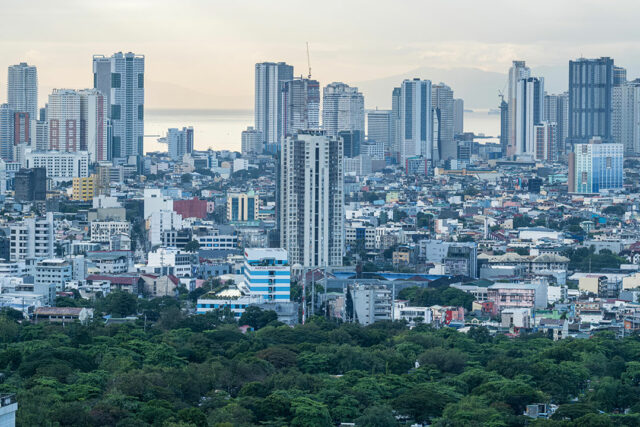
Photo shows the central business district in Makati City, Dec. 16. — PHILIPPINE STAR/ RYAN BALDEMOR

By Katherine K. Chan, Reporter

BUSINESSES remained optimistic in January as they expect higher consumer demand and better processes, with their outlooks for the quarter and year ahead also becoming more positive, results of the the Bangko Sentral ng Pilipinas’ (BSP) inaugural monthly business expectations survey (BES) showed.

The central bank’s BES for January showed that businesses had an overall current-month confidence index (CI) of 0.9%. A positive CI shows that more respondents are optimistic than pessimistic.

However, this was lower than the 29.7% CI in the fourth quarter of 2025.

“The optimistic sentiment of survey respondents in January 2026 was attributed primarily to expectations of: (a) higher consumer demand for certain products and services (e.g., garments, education services, loan products, mailing and shipping services, and motor vehicle parts), and (b) business process enhancements,” the central bank said.

The survey also showed that businesses showed more optimism for the next quarter and the next 12 months with CIs of 33.3% and 38.6%, respectively.

“Stronger consumer demand and sales, improved domestic economic conditions, and more favorable investment prospects lifted business confidence for the next quarter and over the next 12 months,” the BSP said.

Businesses see the upcoming dry season supporting consumer appetite, while they expect the recovery in government spending and better governance to prop up investments.

The release of the monthly BES marks the start of a more frequent assessment of business sentiment, the BSP said.

“The shift from a quarterly to a monthly survey will allow the BSP to monitor business confidence more closely and respond more effectively to rapidly changing domestic and external developments.”

The central bank earlier said it is also planning to conduct its consumer expectations surveys monthly.

This comes as BSP Governor Eli M. Remolona, Jr. earlier said that they are now putting a greater weight on confidence for their own macroeconomic surveillance as the fallout from a corruption scandal linked to flood-mitigation projects that came to light last year showed the impact of investor sentiment on growth.

TIGHTER FINANCIAL CONDITIONS
Meanwhile, firms said they see tighter cash positions and credit access in the first month of 2026.

Their financial condition index, which reflects a business’ general cash position considering the level of cash and other cash items and repayment terms on loans, stood at -19.2%.

The credit access index was at -0.6% in January. This refers to the environment external to the firm, including the availability of credit in the banking system and other financial institutions.

The latest BES also indicated that the average capacity utilization for the industry and construction sectors was at 69.6%.

“Respondents cited stiff domestic competition, insufficient demand, and high interest rates as major constraints to business activities in January 2026,” the BSP said.

Meanwhile, businesses showed favorable hiring intentions for April until January next year, with the employment outlook index for April at 11.3% and for the 12 months ahead at 23.3%.

“Industry sector expansion may gain momentum over the next 12 months,” the BSP said.

About 14.1% of businesses in the Philippine industry sector plan to expand in April, while 24.3% expect the same for the coming year.

INFLATION EXPECTATIONS
Businesses surveyed said they expected inflation to settle at 2.2% in January. This was faster than the actual 2% headline print recorded during the month.

Meanwhile, for April, they see inflation accelerating to 2.4% and picking up further to 2.6% over the next 12 months.

These are all within the central bank’s 2%-4% annual target.

“Business inflation expectations remain well-anchored,” the BSP said. It expects inflation to average 3.6% this year and 3.2% in 2027.

Firms also said that they expect the peso to weaken against the US dollar over the coming year, the survey showed.

They expect the peso-dollar exchange rate to average at P58.88 for January and April and to weaken to an average of P58.99 in the next 12 months.

The peso traded at the P58 to P59 levels in January, even hitting a new record low of P59.46 per dollar on Jan. 15. Based on BSP data, the peso-dollar exchange rate averaged at P59.1622 during that month.

“Meanwhile, businesses expect that peso borrowing rates may decline in January 2026, but may rise in April 2026 and over the next 12 months,” the central bank said.

IMF approves $8.1 billion loan for Ukraine, with $1.5 billion to go immediately

THE International Monetary Fund (IMF) logo is seen outside the headquarters building in Washington, U.S. — REUTERS

WASHINGTON — The International Monetary Fund’s executive board on Thursday approved an $8.1 billion, four-year loan for Ukraine, with $1.5 billion to be disbursed immediately to help keep the government running as its war against Russia’s invasion drags into a fifth year.

The IMF said the new Extended Fund Facility arrangement for Ukraine would help anchor a $136.5 billion international support package for the war-torn country, which this week marked the fourth anniversary of Russia’s full-scale invasion.

The new loan, which replaces a $15.5 billion program that was approved in 2023, will help Kyiv to maintain economic stability and keep public spending flowing, the IMF said.

Ukrainian Prime Minister Yulia Svyrydenko hailed the IMF loan as part of a broader financial framework that would cover an estimated budget shortfall of $136.5 billion over four years, including a 90 billion euro loan from the European Union.

“It is very important for us that in the fifth year of the full-scale war, against the backdrop of systematic attacks on the energy sector, Ukraine has guaranteed international financial support from partners and the resources for the stable functioning of the state,” she wrote on Telegram.

The World Bank, European Union, United Nations and the Ukrainian government this week issued a new report that put the cost of rebuilding Ukraine at $588 billion over the next decade.

IMF Managing Director Kristalina Georgieva said the IMF loan would resolve Ukraine’s balance of payments problem and restore medium-term external viability, while boosting prospects for reconstruction and growth after the war ended and help to facilitate Ukraine’s steps to join the European Union.

“Ukraine and its people have weathered a long and devastating war for over four years with remarkable resilience,” she said in a statement, lauding work by Ukrainian authorities to maintain overall macroeconomic and financial stability, boost domestic revenues and advance some critical reforms.

She said officials were committed to “tackling longstanding bottlenecks to growth,” including through continued efforts to combat corruption, address tax avoidance and evasion, reform energy markets, and strengthen financial market infrastructure.

The program would be “promptly recalibrated” in the case of successful peace negotiations, she said in a statement.

GROWTH SLOW, BUT INFLATION HALVED
Ms. Georgieva, who paid a surprise visit to Ukraine last month, said the war had taken a toll on economic and social conditions, despite efforts by authorities to stabilize the economy, contain inflation and restructure private sector debt. The new loan aimed to deepen structural reforms, she said.

That meant growth was slowing and the economic outlook remained “subject to exceptionally high uncertainty,” she said.

The IMF now projects that Ukraine’s economy will grow by 1.8% to 2.5% in 2026, after growth of an estimated 1.8% to 2.2% in 2025. Inflation was expected to be around 6.1% this year, half the 12.7% rate recorded in 2025, the IMF said.

Ukraine’s estimated financing gap of $52 billion in 2026 would be filled through disbursements under the newly approved IMF program, European Union arrangements, funds from the Group of Seven advanced economies and bilateral support, the IMF said.

Ms. Georgieva said a large number of IMF members, including the US, Germany, Canada, Britain and Japan, had reaffirmed their recognition of the IMF’s preferred creditor status in respect to the money it owed the Fund, and agreed to “adequate financial support” to ensure Ukraine could repay its debts to the IMF. Other countries backing Ukraine were Austria, Belgium, Denmark, Estonia, Finland, France, Greece, Iceland, Ireland, Italy, Lithuania, Luxembourg, the Netherlands, Norway, Poland, Portugal, Spain and Sweden, she said.

The Group of Creditors of Ukraine, which holds the majority of Ukraine’s official bilateral debt, also agreed to extend the current debt standstill and complete a definitive debt treatment after the resolution of the current state of “exceptionally high uncertainty,” the IMF said in its statement.

Ms. Georgieva said the risks to the loan were exceptionally high and the program’s success would depend on continued international support, as well as the authorities’ “steadfast determination” to implement ambitious structural reforms.

A staff report noted that progress on reforms had been mixed under the previous program, with Kyiv completing some important milestones, but missing two end-December benchmarks related to public investment management and valuation standards.

Ukraine’s progress on the program will be reviewed quarterly, with nine reviews planned over the next four years. — Reuters

Canada’s Carney visits India to boost trade, mend ties on latest ‘middle powers’ trip

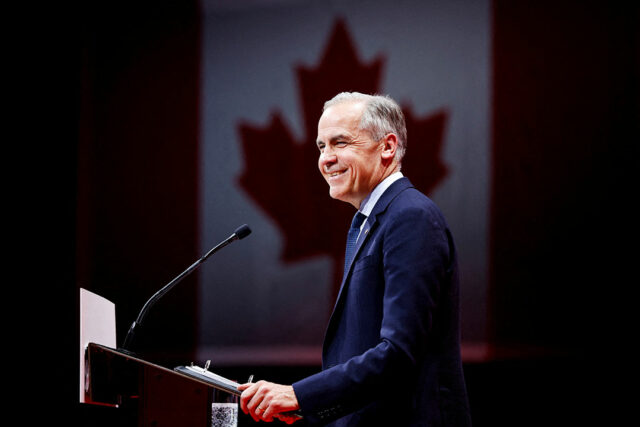
Canada’s Prime Minister Mark Carney — REUTERS

OTTAWA — Canadian Prime Minister Mark Carney arrives in Mumbai on Friday on his first official visit to India, hoping to reset the sometimes fractious relationship with the world’s most populous country as he seeks new global alliances.

Mr. Carney will meet business leaders in Mumbai and start talks on a comprehensive trade agreement, which is expected to be completed by November, his foreign minister told Reuters. He is scheduled to travel on to New Delhi for talks with Prime Minister Narendra Modi.

Mr. Carney has sought closer ties with China and Middle Eastern countries as well as India, as he tries to reduce Canada’s dependence on the United States and forge a new global trading order led by what he calls middle-power countries.

Relations between Canada and India soured several years ago after explosive allegations by then-Prime Minister Justin Trudeau that the Indian government was linked to the assassination of a Canadian citizen who was also a prominent Sikh separatist. India has repeatedly denied any such links.

Unlike several previous Canadian leaders, including Mr. Trudeau, Mr. Carney will not make a stop in India’s Punjab region, a major origin of Indian migration to Canada. Sikh separatists have pushed for an independent state in the Punjab and a visit there risks irking Mr. Carney’s Indian hosts.

Analysts say the move signals a more pragmatic foreign policy that aims to wean Canada away from the United States, spurred by President Donald Trump’s tariff war and annexation threats.

“The Prime Minister has a laser-beam focus on attracting capital to Canada, not playing to the Indian diaspora back home,” said Goldy Hyder, president of the Business Council of Canada.

“This is a business trip aimed at growing the economy to give Canadians more economic sovereignty,” he said, calling the approach a significant shift from the Trudeau era.

Last month, the European Union and India reached a landmark trade deal to cut tariffs on most goods, raising expectations that India might soon sign a similar deal with Canada. India’s high commissioner to Canada told Reuters in January that Mr. Carney will likely sign a 10-year, C$2.8 billion ($2.05 billion) uranium supply deal and smaller agreements on oil and gas, the environment, artificial intelligence, quantum computing, education and culture.

NO BHANGRA DANCING
Mr. Trudeau was mocked for wearing overly elaborate Indian outfits during a 2018 visit and was publicly criticized by Prime Minister Narendra Modi for allowing “anti-India activities,” a reference to vocal Sikh separatists living in Canada.

“Carney has a sense of gravitas and is very strategic,” said Partha Mohanram, a management professor at the University of Toronto. “He’s not going to do a bhangra dance over there.”

But Mr. Carney’s approach to India has drawn criticism from some Sikh groups in Canada.

“The Carney government has failed to hold India accountable or to create any meaningful safeguards to ensure that Sikh Canadians are protected from foreign interference and transnational repression,” the World Sikh Organization of Canada said in a statement on Wednesday.

Canadian Foreign Minister Anita Anand told Reuters there have been conversations between Canada and India at the highest levels regarding concerns about criminal activity with possible links to India. Ms. Anand said there were new measures to track criminal money, digital threats, and surveillance of diaspora communities.

Ms. Anand said Mr. Carney’s foreign policy was driven by the reordering of global trading relationships and that “no country will ever have a pass in terms of the domestic safety and security of this country.”

FENDING OFF AMERICAN HEGEMONY
After India, Mr. Carney will visit Australia, where he will address parliament and discuss military, trade and defense links. En route back to Ottawa, Mr. Carney will meet Japanese Prime Minister Sanae Takaichi and talk about boosting trade in autos, energy, and critical minerals.

Jonathan Kalles, a former adviser to ex-Prime Minister Trudeau, said Mr. Carney’s agenda was defined by the new geopolitical order he outlined in his Davos speech, where he called for middle powers to adopt a “principled and pragmatic” path to fend off American hegemony.

“When the world is nice and calm, you can try to change the world and talk about virtues,” he said. “But when you’re living in uncertain times, the Prime Minister’s job is to advance the country’s interests and Mark Carney knows very well his job is to diversify our trade and strengthen the economy.” ($1 = 1.3684 Canadian dollars) — Reuters

Pakistan bombs targets in Afghan cities, minister calls it ‘open war’

KABUL, AFGHANISTAN — SOHAIB GHYASI-UNSPLASH

KABUL/ISLAMABAD — Pakistan bombed Taliban government targets in Afghanistan’s major cities overnight, officials from both countries said on Friday, with Pakistan’s defense minister calling the conflict “open war”.

Security sources in Pakistan said the strikes involved air-to-ground missile attacks on Taliban military offices and posts in Kabul, Kandahar and Paktia as well as ground clashes in multiple sectors along the border between the Islamic nations.

The Taliban said it launched what it described as retaliatory attacks on Pakistani military installations.

Both sides reported heavy losses, issuing sharply differing figures that Reuters could not independently verify.

“Our cup of patience has overflowed. Now it is open war between us and you (Afghanistan),” Pakistani Defense Minister Khawaja Muhammad Asif said on Friday.

Relations between Kabul and Islamabad have been strained by a long-running dispute over Pakistan’s accusation that Afghanistan harbors militants carrying out attacks across the border. The Taliban have denied the charge and said Pakistan’s security is an internal problem.

The strikes on Taliban government installations are a major escalation, and threaten a protracted conflict along the 2,600-kilometer (1,615-mile) frontier.

Taliban spokesperson Zabihullah Mujahid confirmed Pakistani forces carried out air strikes in parts of Kabul, Kandahar, and Paktia but did not give details.

Kandahar is the headquarters of the Taliban and the city where supreme spiritual leader Haibatullah Akhundzada is based.

Video shared by Pakistani security officials showed flashes of light in the night from firing along the border and the sound of heavy artillery. A video of strikes on Kabul, for which Reuters was able to verify the location, showed thick plumes of black smoke rising from two sites and a massive blaze in part of the capital.

Another video showed a building on fire, which the officials said was a Taliban headquarters in Paktia province.

“Pakistani counter-strikes against targets in Afghanistan continue,” a Pakistani government spokesperson, Mosharraf Zaidi, said in a post on X, describing the action as a response to “unprovoked Afghan attacks.”

Reuters witnesses in Kabul said many ambulance sirens could be heard following loud blasts and the sound of jets.

Mr. Zaidi said 133 Afghan Taliban fighters were killed and more than 200 wounded, with 27 posts destroyed and nine captured.

Mr. Mujahid, the Taliban spokesperson, said 55 Pakistani soldiers were killed and 19 posts seized, while eight Taliban fighters were killed, 11 wounded and 13 civilians injured in Nangarhar province.

HIGH SECURITY
Pakistan’s military capabilities are vastly superior to Afghanistan. However, the Taliban are adept at guerrilla warfare, hardened by decades of fighting with US-led forces, before returning to power in 2021.

Clashes between Pakistan and Afghanistan in October killed dozens of soldiers until negotiations facilitated by Turkey, Qatar, and Saudi Arabia brought an end to the hostilities.

Pakistan and Saudi Arabia’s foreign ministers spoke on Friday to discuss reducing tensions, Riyadh’s foreign office said without providing details on whether Riyadh was involved in brokering a ceasefire.

Russia, the only country to formally recognize the Taliban government, called for an end to hostilities and said it would consider mediating talks if asked by both parties, state media reported citing Moscow’s foreign ministry.

Pakistan has been on high security alert since it launched air strikes earlier this week that Islamabad said targeted camps of Tehreek-e-Taliban (TTP), or Pakistani Taliban, and Islamic State militants in eastern Afghanistan.

Kabul and the United Nations said the strikes killed 13 civilians and reiterated it does not allow militants to operate from its territory. The Taliban also warned there would be a strong response.

The government of Pakistan’s Punjab province said it was on high alert for militant attacks on Friday and had conducted a series of security operations, taking 90 Afghan nationals to holding centers for deportation.

A state-run media outlet from Afghanistan’s Nangarhar, Bakhtar News Agency, shared an image of what it said was a battalion of suicide attackers, and quoted an Afghan security source as saying the bombers were equipped with explosive vests and car bombs and were prepared to strike major targets.

Pakistani officials have said in recent days they feared an escalation of militant strikes in urban centers. — Reuters

NCR retail price growth hit 2-year high in January

PHILIPPINE STAR/ MIGUEL DE GUZMAN

By Pierce Oel A. Montalvo, Researcher

Retail price growth of general goods in the National Capital Region (NCR) grew to its fastest pace in two years in January, fueled by the spike in food prices, the Philippine Statistics Authority (PSA) said in a report on Friday.

Preliminary data from the PSA showed price growth in Metro Manila, as measured by the general retail price index (GRPI), rose by 2.1% year on year in January, faster than the 1.4% seen in the same period last year.

January’s retail price growth was also higher than December’s 1.5% print, and the fastest since the 2.5% reading in January 2024.

“The GRPI rose amid higher price adjustments of utilities, rents, restaurants, accommodation, healthcare, other products and services, and other contract price adjustments usually done at the start of the year,” Rizal Commercial Banking Corp. Chief Economist Michael L. Ricafort said in a Viber message.

He added that higher US dollar/peso exchange rate and global crude oil prices amid geopolitical risks in January 2026 contributed to the uptick.

Marco Antonio C. Agonia, an economist at the University of Asia and the Pacific, said that the uptick may be attributed to the faster increase in food items, which reflects early 2026 pricing adjustments by food retailers.

“Part of the increase in food prices may also be linked to rising fish prices (which occupies an outsized weight in the food component) recently due to fishing bans implemented early in the year,” Mr. Agonia said in an e-mail.

On Feb. 16, the Bureau of Fisheries and Aquatic Resources lifted a three-month ban for sardines and other small species in the Visayan Sea and in waters off the Zamboanga Peninsula.

Under the food subindex, fish & fish preparation accounted for more than a tenth of the GRPI.

The PSA said that the uptrend in the annual growth rate of the GRPI in January 2026 was primarily brought about by the faster annual increase in the heavily weighted index of food at 3.6% from 1.8% in the previous month.

The food subindex accounted for over a third of the GRPI.

Quicker paces were also seen in the subindices for crude materials, inedible except fuels (2.8% from 2% in December), as well as manufactured goods classified chiefly by materials (1.5% from 1.4%)

Meanwhile, the subindex for chemicals, including animal and vegetable oils and fats deflated to 2.1% in January from 2.2% a month earlier.

Likewise, price growth for mineral fuels, lubricants and related materials dipped by 0.4%, reversing its 0.8% growth in December.

Price growth in January was steady in beverages and tobacco (1.4%), miscellaneous manufactured articles (0.8%), and machinery and transport equipment (0.7%).

For the coming months, Mr. Ricafort said year-on-year inflation is expected to moderate initially in 2026 following unfavorable base effects from last year, then potentially rise later in the year, though improved weather conditions could help offset food price pressures.

Philippine inflation quickened to an 11-month high of 2% in January, settling within the Bangko Sentral ng Pilipinas’ 2%-4% target.

“Renewed geopolitical tensions in oil producing regions could provide upward pressure for domestic prices. This may work its way towards general retail prices if retailers have to pass on added costs to consumers,” said. Mr. Agonia.

The GRPI is based on 2012 constant prices.

The PSA uses the GRPI as a deflator in the National Accounts, particularly in the retail trade sector, and serves as a basis for forecasting.

Trade deficit narrows to $4.05 billion in January

A truck is loaded with a container at the Manila International Container Terminal at the Port of Manila in Manila, Philippines, Aug. 11, 2025. REUTERS/Eloisa Lopez

By Matthew Miguel L. Castillo, Researcher

The country’s trade-in-goods deficit narrowed by 17.8% year on year in January as exports growth moderated while imports declined, the Philippine Statistics Authority reported on Friday.

Preliminary data from PSA showed trade balance in goods — the difference between the values of merchandise exports and imports — reached a $4.05-billion deficit that month, narrower than the $4.93-billion gap recorded in January last year.

Month on month, January’s trade deficit widened from the revised $3.99-billion gap logged in December 2025.

The country’s trade balance has been in deficit for over a decade or since it posted a $64.95-million surplus in May 2015.

Cid L. Terosa, a senior economist at the University of Asia and the Pacific, said that the narrower annual trade deficit in January was due to muted import growth.

“While the global trade environment fostered caution and hesitation among importers, the weak domestic economic environment held back stronger demand for capital goods and imports,” Mr. Terosa said in an e-mail.

“The continued use of tariff threats by the US against China, Europe, Canada, and other countries dimmed export prospects in January 2026,” he added.

Outbound shipment of locally made goods grew by 7.9% year on year to $7.09 billion in January, slowing down from the 9.6% expansion in the same month last year. It was the slowest annual export pace in five months or since the 5.5% growth in August 2025.

By value, export receipts in January were the largest in three months or since the $7.45 billion logged in October last year.

Imports, meanwhile, ended two straight months of growth as it fell by 3.1% year on year to $11.14 billion in January. This marked its worst annual decline in 14 months or since imports dropped by 3.3% in November 2024.

Import value that month is also the largest in three months or since the $11.64 billion October a year ago.

On Jan. 14, US President Donald J. Trump imposed a 25% tariff on chips used for artificial intelligence (AI), Reuters reported.

Three days later, amid escalating exchanges with European allies, Mr. Trump threatened to let loose a wave of tariffs on the bloc until the US buys Greenland.

ELECTRONIC PRODUCTS DRIVE EXPORT
“Robust external demand for electronic products — particularly semiconductors driven by surging AI-related needs — continued to underpin overall export growth [in January],” Chinabank Research said in a note.

Manufactured goods comprised more than three-fourths of all exports in January with a value of $5.63 billion, growing by 6.6% from $5.28 billion last year.

Electronic products, which cornered more than 70% of manufactured goods and more than half of January’s total exports, expanded by 18.8% year on year to $4.01 billion.

Semiconductors, which accounted for the bulk of electronic products and more than 40% of total exports, climbed by 21.6% to $3.07 billion in January.

The United States was the main destination of locally made goods in January as exports to the country reached $1.16 billion, accounting for 16.4% of all outbound goods.

It was followed by Hong Kong with $1.12 billion (15.9% share), Japan with $879.73 million (12.3% share), China with $691.80 million (9.8% share), and South Korea with $391.75 million (5.5% share).

Despite the familiar set of export destination countries, Chinabank Research also noted significant growth in exports to the East Asia and European Union economic blocs which reached 22.5% and 11.8% in the month, respectively.

“Renewed uncertainty in US trade policy may further encourage exporters to diversify away from the US market,” it added.

SOFT DEMAND FOR IMPORTS
Raw materials and intermediate goods, which made up the bulk of the country’s import bill (34.7% share), dropped by 8% to $3.87 billion in January.

Capital goods, which accounted for 33.9% of the country’s imports, rose by 16% to $3.77 billion.

Imports of consumer goods, meanwhile, fell by 6.2% to $2.24 billion. Mineral fuels, lubricants and related materials also contracted by 25% to $1.21 billion.

By commodity group, importation of electronic products, which accounted for more than a fourth of total bill in January, went up by 18.6% to $2.99 billion.

Imports of semiconductors jumped by 28.1% to $2.15 billion in January.

China was the top source of imported goods with 29.2% share worth $3.26 billion. South Korea followed with an 11.2% share ($1.25 billion), Japan with 8.3% ($928.05 million), Indonesia with 7.1 ($790.47 million), and the United States with 5.9% ($635.25 million).

WHAT’S NEXT
For the next months, Mr. Terosa expects the country to take advantage of the lower global tariffs imposed by Mr. Trump.

“Since the global tariff rate at 10% is lower than the rate set last year, I expect exporters to aggressively push exports in global markets,” he said.

After the US Supreme Court struck down his previous tariff program, Mr. Trump slapped a new 10% tariff on all imports for 150 days last week, Reuters reported. Less than 24 hours later, said he plans to raise this blanket tariff to 15%.

Mr. Trump in July last year imposed a 19% duty on goods from five Southeast Asian countries — the Philippines, Cambodia, Malaysia, Thailand, and Indonesia.

“During this window, US importers may opt to front-load their orders, especially given President Trump’s threat to raise import duties to 15%,” Chinabank Research said.

On the other hand, Sergio Ortiz-Luis, Jr., president of the Philippine Exporters Confederation, Inc., said that the new tariffs place the country and the globe under a renewed “period of uncertainty.”

“We are in limbo… we do not know what will happen in 150 days, whether the rate will be returned to 19% or set to 15% eventually,” Mr. Ortiz-Luis said in a phone call.

Despite the uncertainty, Mr. Ortiz-Luis said that the government targets for imports and exports growth remain within reach.

The government’s Development Budget Coordination Committee expects exports and imports to grow by 2% this year.

He also forecasted the continuing trend of narrowing trade gaps for the months to come.

Moving forward, Mr. Terosa said that export growth may be maintained above target by reducing both market and commodity concentration.

“Changes in the global trade environment have made it necessary to expand trade relations with as many key trade partners as possible,” Mr. Terosa said.

“The opening of new markets is more likely to take place for nontraditional export products. Infrastructure development and greater ease of doing business can induce stronger export activity,” he added.

“The positive external trade position, if sustained, may continue to provide a welcome buffer for the local economy amid softness in other growth driver,” Chinabank Research said.

BDO net profit hits all-time high of P87.17 billion in 2025

bdo.com.ph

BDO UNIBANK, Inc. saw its net profit rise to another all-time high in 2025 on the strength of its core businesses.

The bank’s attributable net income climbed by 6.28% to P87.17 billion last year from P82.019 billion in 2024, it said in a disclosure to the stock exchange on Friday.

This translated to a return on common equity of 14.4%, down from 15.1% in 2024. Return on average resources slipped to 1.7% from 1.8%.

“BDO’s market leadership and robust business franchise, supported by a strong balance sheet and solid financial performance, position the bank well to capture long-term growth opportunities and emerging prospects,” it said.

BDO’s net interest income increased 8.85% to P203.10 billion from P186.596 billion.

It said this was supported by the 13% rise in its gross customer loans to P3.7 trillion at end-2025 as it saw double-digit growth across all market segments.

Despite its bigger loan book, the bank’s asset quality improved as its nonperforming loan (NPL) ratio dropped to 1.68% from 1.83%. Its NPL coverage was at 133%.

On the funding side, total deposits expanded by 10% year on year to P4.19 trillion at end-2025, with 68% being low-cost current account, savings account deposits.

Net interest margin was at 4.3% last year versus 4.4% in 2024.

Meanwhile, non-interest earnings rose by 8.72% to P77.07 billion from P70.89 billion, while income attributable to its insurance operations went up by 10.45% to P7.56 billion from P6.845 billion.

BDO’s other operating expenses climbed by 12.63% to P165.128 billion from P146.61 billion.

The bank’s resources grew by 11.27% to P5.43 trillion at end-2025 from P4.88 trillion the prior year.

Total equity went up by 11.56% to P644.146 billion from P577.395 billion, supported by its profitability.

Its common equity Tier 1 ratio was at 13.8%, inching down from 14.1% the prior year.

BDO shares went down by P1.20 or 0.87% to end at P137.30 apiece on Friday. — BVR

China conducts patrol in South China Sea, accuses Philippines of ‘disrupting’ peace

FILE PHOTO of a China Coast Guard vessel fires a water cannon at the BRP Datu Pagbuaya near Thitu Island, in the latest flare-up between Manila and Beijing in the disputed South China Sea. — PCG

BEIJING — China’s military said on Friday it conducted a routine patrol in the South China Sea from February 23 to 26, and accused the Philippines of “disrupting” peace and stability by organizing joint patrols with countries outside the region.

The military’s Southern Theatre Command will “resolutely safeguard China’s territorial sovereignty and maritime rights and interests, and firmly uphold regional peace and stability,” spokesperson Zhai Shichen said in a statement.

The navies of the Philippines, the US, and Japan trained alongside each other in the South China Sea this week to ramp up cooperation among the military allies, the Philippines’ armed forces said on Friday. — Reuters

[B-SIDE Podcast] Where the Digital World Converges: Conversations on Cloud | Ep 1 | Why the Philippines Needs an In-Country Cloud Now

Follow us on Spotify BusinessWorld B-Side

Data has the ability to power a nation when it can store data within its shores.

In the Philippines, however, 90% of government data is stored abroad, costing taxpayers around P12 billion annually, according to the Department of Information and Communications Technology.

In the first episode of “”Where the Digital World Converges: Conversations on Cloud,”” a collaboration of BusinessWorld B-Side with Converge Global Business, Converge Studios CEO James Mendoza and National Privacy Commission Deputy Commissioner Atty. Jose Belarmino II share insights on how crucial an in-country cloud is for the Philippines and what stakeholders here should do to secure this cloud.

Interview by Beatriz Cruz
Audio editing by Jayson John Marinas

Follow us on Spotify BusinessWorld B-Side


World’s top money managers favor emerging markets, Citi says

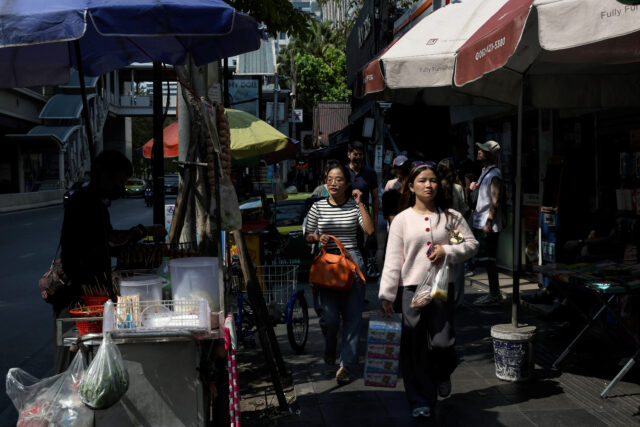
Pedestrians walk past food stalls in Bangkok, Thailand. / BLOOMBERG

Global asset managers who collectively oversee more than $20 trillion of assets have grown more bullish across emerging-market equities, currencies, domestic bonds and credit, potentially offering fresh momentum to the sector’s record-busting rally.

Citigroup Inc., which reviewed the published outlooks of some of the world’s biggest asset managers, found that funds had added to long positions in markets across Asia, Latin America, as well as Europe, the Middle East and Africa. The findings came as MSCI’s main emerging equity index trades close to record highs. The gauge rose 0.2% on Thursday and nearly 15% year to date, helped by tech-heavy bourses in Seoul and Taipei.

Asian tech shares have shrugged off the scare that swept through Wall Street this week, after a report suggested artificial intelligence would disrupt swathes of the economy. That’s because Korean and Taiwanese companies produce the hardware used for building AI networks. South Korean stocks added another 3.8% on Thursday, with Samsung Electronics Co Ltd. up 9%, for its longest winning streak since 1986.

The South Korean bourse, which recently leapfrogged France to become the ninth largest in size globally, has helped drive the emerging stock index 6% higher this month alone.

The S&P 500, meanwhile, is set to end February flat. US stocks were trading lower on Thursday as Nvidia Corp.’s solid forecast failed to inspire investors seeking reassurances about prospects for artificial intelligence.

The over-arching bullishness on emerging markets is a consequence of increased US policy uncertainty and a blowout fiscal deficit, that’s weighing on the dollar. While that’s forcing more investors to try and diversify exposure away from the greenback, concerns are also mounting over spending increases in Japan, Germany and other developed nations.

Developing nations saw an increase in interest “as managers search for diversification in non-US assets and see opportunities in EM due to improved fundamentals and a weak USD,” Citi analysts told clients.

CAUTIOUS SESSION
Most emerging-market currencies were weaker on Thursday even as the dollar was little changed. Some Asian currencies posted gains, with Taiwan’s dollar rising 0.3% on strong foreign investment flows, while China’s yuan and Indonesia’s rupiah also advanced.

Still, broader sentiment toward developing-world FX turned cautious during the session, with most Latin American currencies posting losses against the dollar on a day when commodities also declined.

The Colombian peso saw particularly sharp losses, shedding nearly 4% — its biggest one-day drop since March 2020 — after a new poll showed leftist Senator Iván Cepeda holding a wide lead in the presidential race. Neighboring Ecuador also raised tariffs on Colombian imports, escalating a trade dispute and adding to negative sentiment toward Colombian assets. The peso was by far the worst-performing emerging-market currency on Thursday.

Colombia’s dollar bonds declined across the curve and were among the weakest performers in the EM debt universe. Longer-dated dollar-denominated bonds fell by more than a cent.

“March 8 elections are right around the corner and local yields are spiking,” said Alvaro Vivanco, EM Macro Strategist at Wells Fargo. While the trend reflected in the poll is not entirely new, he added that approval ratings for incumbent President Gustavo Petro have seen a “big jump” recently, providing a “higher ceiling” for Cepeda at the ballot box.

Other Latin American currencies were also under pressure. The Chilean peso fell nearly 1%, while Argentina’s peso dropped 0.6%, retreating from four-month highs reached earlier in the week. Brazil’s real declined about 0.3%.

In Brazil, Flavio Bolsonaro’s presidential bid is gaining momentum, surprising skeptics who initially dismissed his decision to run as a tactic to secure amnesty for his father, jailed former President Jair Bolsonaro, rather than a serious campaign. Many centrists had feared his candidacy would split the right-leaning vote and hand October’s election to President Luiz Inacio Lula da Silva. His recent rise in polls, however, is challenging that view.

Elsewhere in the region, Latin American equities lagged, with a regional stock gauge down 0.7%, diverging from the broader MSCI Emerging Markets Index, which traded slightly higher.

Still, Latin American stocks remain among the top performers globally this year, up nearly 20% in 2026 and outpacing the roughly 15% gain in emerging markets overall.

There are notable outliers, however. Argentine stocks have missed the broader Latin American rally as earlier euphoria surrounding President Javier Milei’s election victories has faded amid concerns over weak corporate earnings. The benchmark Merval index has flattened and is down about 8% this year. — Bloomberg

Reform in action: Dizon, Almirol named PeopleAsia ‘People of the Year’

Photo courtesy of PeopleAsia

Two key government reformers have been named “People of the Year” by PeopleAsia, underscoring a broader push for accountability and digital transformation in the public sector.

Department of Public Works and Highways (DPWH) Secretary Vince Dizon was recognized for institutional reforms aimed at restoring integrity in one of the country’s largest implementing agencies. Since assuming office, Mr. Dizon has prioritized transparency, launching a public Transparency Portal, ordering asset freezes against implicated personnel, dismissing erring officials, and introducing structural reforms to strengthen oversight of infrastructure projects.

“The President asked me to do three things. Hold those responsible to account wherever the evidence leads. Get the people’s money back. Reform the DPWH so that this never happens again,” Mr. Dizon said.

He described corruption within the agency as systemic and deeply embedded, stressing that reform requires confronting long-standing practices and reinforcing internal controls.

At the Department of Information and Communications Technology (DICT), Undersecretary for e-Government David Almirol, Jr. was cited for accelerating digital reforms designed to make government services faster, simpler, and more accessible.

Framing digital transformation as a matter of public service, Mr. Almirol said the push to innovate government systems is rooted in a simple goal: make services easier, faster, and more accessible for every Filipino.

“The mandate was clear: to give Filipinos a government that is accessible. And President Ferdinand Marcos’ tagline expresses it succinctly: Walang pila, walang red tape, walang corruption (No lines. No red tape. No corruption),” Mr. Almirol emphasized, underscoring the President’s direction.

“Why join a long queue when you can process papers from the comfort of your home? Why get stuck in traffic or file a leave to get a document? Why can’t government transactions be done while you’re having your morning coffee? Technology will make all these possible,” Mr. Almirol said. “Once processes are automated, everything will become simple. Government should not be complicated — it should help people, not make things harder for them.”

Under his leadership, the DICT advanced the eGovPH Super App and the digital National ID, integrating services into unified digital platforms. Mr. Almirol emphasized that both initiatives were developed internally by government teams, resulting in significant savings.

“We didn’t get the services of a contractor for the eGovPH Super App. Same with the digital National ID — my staff made it. The government saved a lot,” he said. “Now we can transact with the government in a single app. It’s a major shift.”

Before entering public service, Mr. Almirol served as chief executive of Multisys Technologies Corp. His early career included working in Iraq in 2003 as an illegally recruited janitor, where he learned hard coding skills from American soldiers. After returning to the Philippines, he ventured into business but later lost his savings due to rapid expansion.

“My biggest mistake was that I overexpanded. I had seven computer shop branches in Isabela and nearby provinces. I spent all my savings from Iraq and lost money. It was the most painful experience,” he said, noting that the setback shaped his focus on efficiency and fiscal discipline in government projects.

Also honored was Ramon S. Ang, chairman and CEO of San Miguel Corp., who received the magazine’s Lifetime Achievement Award for his contributions to nation-building. Eduardo Jose Aliño, chairman and administrator of the Subic Bay Metropolitan Authority, was recognized for generating P6 billion in committed investments for the economic zone.

Veteran broadcast journalist Jessica Soho of GMA Network and music icon Martin Nievera were likewise cited for their lasting contributions to media and entertainment.

Entrepreneur Nikki Tang, Dr. Hayden Kho, Jr. of Belo Medical Group, designer Francis Libiran, and Anna Cabrera of the Philippine Animal Welfare Society were also recognized for leadership in business, design, and advocacy.

The recognition of Messrs. Dizon and Almirol highlights how government reform today is being driven on two fronts: enforcing accountability within institutions and leveraging technology to modernize public service delivery.


Spotlight is BusinessWorld’s sponsored section that allows advertisers to amplify their brand and connect with BusinessWorld’s audience by publishing their stories on the BusinessWorld Web site. For more information, send an email to online@bworldonline.com.

Join us on Viber at https://bit.ly/3hv6bLA to get more updates and subscribe to BusinessWorld’s titles and get exclusive content through www.bworld-x.com.

South Korea’s President Lee to visit the Philippines on March 3

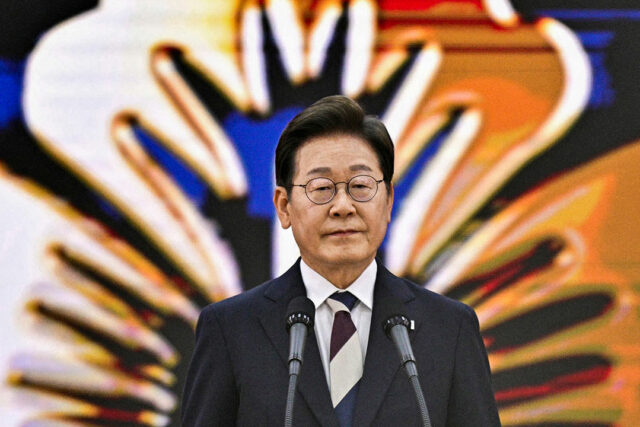
SOUTH KOREA’S President Lee Jae-myung delivers a speech after taking his oath during his inauguration ceremony at the National Assembly in Seoul on June 4, 2025. — REUTERS

SEOUL — South Korean President Lee Jae Myung will make state visits to Singapore and the Philippines in early March and discuss cooperation in artificial intelligence and nuclear energy, according to his office on Friday.

Mr. Lee will hold a summit with Singaporean Prime Minister Lawrence Wong in Singapore during his visit between March 1 to 3. South Korea hopes to expand existing strong investment and trade ties to AI and nuclear energy, Mr. Lee’s office said.

He will then visit the Philippines and meet with President Ferdinand R. Marcos Jr. between March 3 to 4, the presidential Blue House said in a statement.

Defense industry cooperation, infrastructure projects, nuclear energy and critical minerals will be on the agenda for the summit, it said. — Reuters