Home Blog Page 2420

Revenue to be raised from plastics excise questioned

PHILIPPINE STAR/EDD GUMBAN

By Justine Irish D. Tabile, Reporter

THE REVENUE to be earned from a single-use plastics tax may not be as strong as the Department of Finance assumes, the former head of the plastics industry association said.

“The government’s assumption that these taxes will generate significant revenue, mirroring the experience with sugar-sweetened beverages, is flawed,” according to Danny Ngo, former president of the Philippine Plastics Industry Association, speaking to BusinessWorld via Viber.

“The Philippines, currently facing economic challenges, may not be in a position to bear the additional burden of excise taxes on essential items like plastic bags,” he added.

The Department of Finance has identified the excise tax on single-use plastics as a priority tax reform measure. It is projected to yield P21.644 billion in revenue between 2025 and 2027.

In May, the National Economic and Development Authority asked legislators to pass a measure that seeks to impose a P100 excise tax for every kilogram of single-use plastics exiting the factory or released by the Bureau of Customs.

The House of Representatives approved its version of the bill in November 2022, while a similar measure is pending with a Senate committee.

Mr. Ngo also warned that taxing plastics could “undermine” the Extended Producer Responsibility (EPR) Act, also known as Republic Act 11898.

“The reality is that consumers, already facing rising costs of living, may resort to alternative, potentially less sustainable, packaging options. This could lead to increased waste generation and undermine the Extended Producer Responsibility  framework’s effectiveness,” he added.

He said that the EPR law already places the responsibility for managing the entire life cycle of a product on the producers, which promotes a circular economy.

“The law’s stringent requirements, exceeding those of developed nations, demonstrate the Philippines’ commitment to achieving a high standard of environmental responsibility,” he added.

He said the government should do more to make policy more coherent, weighing the economic realities, viable alternatives, and potential consequences of the tax.

He added that such a tax could embolden the underground economy, incentivizing tax evasion, smuggling, the manufacture of substandard products, and environmental degradation. He added that the monitoring of single-use plastics so they can be properly taxed will be challenging.

“In light of these considerations, it is imperative to reassess the potential implications of imposing an excise tax on single-use plastic bags in the Philippines and explore alternative strategies that prioritize both economic growth and environmental sustainability,” he said.


Visayas, Mindanao KADIWA store network could launch next month

DA.GOV.PH

THE Department of Agriculture (DA) said it hopes to expand its KADIWA network of direct-to-consumer food stores to the Visayas and Mindanao by September.

“We expect to have at least 60 KADIWA stores across the country next month to provide greater access to affordably priced agricultural products,” Agriculture Secretary Francisco P. Tiu Laurel, Jr. said in a statement on Sunday.

Mr. Laurel added that the government-subsidized stores in the new locations will feature the P29 per kilogram rice program, targeted at vulnerable segments of society.

He added that the agency had identified about 650 potential locations in the Visayas and Mindanao to set up KADIWA stores.

The ultimate goal is a store network of 1,500 outlets.

“For us to reach the 1,500 target we need to open at least one store a day, which is almost impossible. That’s why we need the private sector’s collaboration in this project,” he said.

KADIWA provides farm cooperatives and associations an opportunity to sell directly to consumers, maximizing their returns by cutting out middlemen.

It added that the DA is planning to invite food manufacturers to offer canned sardines, cooking oil, and condiments in KADIWA stores.

“We’re also talking to manufacturers of other basic goods like condiments, sugar and canned goods to help ease the financial challenges faced by consumers,” Mr. Laurel said. — Adrian H. Halili

PHL dairy imports up 12.9% in first half, but value falls 9.2%

REUTERS

DAIRY IMPORTS rose 12.9% year on year to 1.65 million metric tons (MT) during the first half, according to the National Dairy Authority (NDA).

The NDA said by value, milk and dairy shipments declined 9.2% to $37.11 million.

The report said skim milk powder accounted for 40% of all such imports followed by other milk powders and ready-to-drink milk at 17% and 4%, respectively.

“New Zealand was the largest source of these imports with 31% (by) value, followed by the US (23%) and Indonesia (5%),” it added.

Domestic milk production rose 15% year on year to 16,020 MT in the first half, the NDA said.

It added that domestic production accounted for 21% of the liquid milk supply in the Philippines.

“The domestic milk industry is supported by a dairy animal inventory of 151,059 head, which includes 34,754 dairy cattle, 80,805 carabao, and 35,500 goats,” it added.

The NDA said dairy exports for the six-month period rose 27.5% year on year to 21,030 MT.

Export products included cream (17%), cheese (16%), whole milk powder (7%), and skim milk powder (6%).

The NDA said that key export markets were Singapore and the United Arab Emirates with 19% and 13% of the total by value, followed by Canada (12%) and the US (11%). — Adrian H. Halili

Family firms seen pouring into construction ventures

A WORKER cuts metal in a construction area in Binondo, Manila, March 24, 2022. — PHILIPPINE STAR/ RUSSELL PALMA

FAMILY BUSINESSES have been venturing into the construction and real estate industries in the past two years, according to a family business consultancy.

Premier Family Business Consulting, Inc. Chief Partnership and Relationship Officer Jefferson Al Tio said the perceived trend is based on the number of the firm’s clients entering those businesses.

“We do manage many clients in many industries, including retail, construction, real estate, education, banking, shipping, and agribusiness, but I think for the past two years, our biggest clients have actually been the construction and real estate businesses,” Mr. Tio told BusinessWorld

“These sectors are growing, and I believe that they are already starting to feel the need to really work on succession as they leverage their success,” he added.

He said that since the pandemic, many construction and real estate businesses continue to move forward.

“Family businesses in such industries felt the need to professionalize,” he added.

Based in Cebu, some 40% of the consulting firm’s clients are from there, but Premier also manages clients from Luzon, the Visayas, and Mindanao.

Jonathan A. Ramos, Premier’s chief executive officer and chief consultant, described the bulk of the client base as being micro and small, but with “great potential to become publicly listed someday.”

He noted that about 70%-80% of publicly listed companies are family owned.

Mr. Ramos said he supports legislation that helps family members preserve their share of the business.

“It is important for the law to recognize a clear definition of a family business primarily so that they can come up with laws to keep the wealth, shares, and ownership protected and to be owned exclusively within the bloodlines of the family,” he said.

He said such a law would bring out a family-run business’ strengths, such as loyalty and shared values, while minimizing instances of fragmented ownership by different families. — Justine Irish D. Tabile

SMC backs more domestic production of raw materials

SANMIGUEL.COM.PH

THE PHILIPPINES needs to improve the availability of raw materials to give large manufacturers an option to support domestic suppliers, a San Miguel Corp. (SMC) official said.

“Part of what we do is import raw materials that are not available here,” said Raoul Eduardo C. Romulo, SMC chief finance officer, at a panel discussion at the Metro Manila Business Conference on Thursday.

“But if our contractors and our suppliers can produce their goods, we will contract with them, agree to the terms, and buy completely from them,” Mr. Romulo said.

He said San Miguel is looking to expand domestic purchases of food, yeast, and steel if possible.

“The country is food deficient, and San Miguel has various product lines in food …  and we will appreciate it if you can (provide the) quantities we need,” he said.

“We also have beer products, and we have very little yeast here, so the bulk of the (raw materials for) San Miguel beer has to come from another country, although we try to use as much as the locals can supply,” he added.

San Miguel is also involved in tollways, railways, seaports, and airports.

“Unfortunately, we don’t have a steel industry in the country, so we have to depend on foreign components,” Mr. Romulo said.

President Ferdinand R. Marcos, Jr., has directed the Department of Trade and Industry to update the Iron and Steel Roadmap in order to improve the balance of trade in steel.

Within the Association of Southeast Asian Nations, the Philippines remains the only country without an integrated steel mill.

At a budget hearing on Aug. 14, Trade Undersecretary and Board of Investments Managing Head Ceferino S. Rodolfo identified processed food and beverages and iron and steel as the primary contributors to the trade deficit.

He said the trading relationships that were the source of the largest deficits were China, Indonesia, South Korea, Thailand, Malaysia, Singapore, Australia, Vietnam, Saudi Arabia, and Taiwan. — Justine Irish D. Tabile

Keeping up with advances in employment fraud

IN BRIEF:

• Advanced background checks are being integrated into hiring protocols to address the rise of employment fraud in the digital age, with a focus on enhancing fraud detection rather than guaranteeing complete prevention.

• Future technological developments, such as machine learning and blockchain, hold promise for further improving the integrity of hiring, but caution is advised to avoid overreliance on tech solutions.

As the global economy shifts towards recovery, organizations are ramping up their defenses against the threat of employment fraud. The hiring landscape, ever-evolving and increasingly digital, presents various opportunities for deceitful practices. Impersonation, falsification of qualifications, and sophisticated phishing attacks are just a few of the tactics employed by fraudsters to infiltrate companies.

Employers who place their bets on seemingly promising candidates without conducting thorough background checks are especially vulnerable to fraud. Impersonation, hiding information, falsifying facts, sending proxy attendees during work evaluations, multiple affiliations, and phishing attacks on job portals have been increasing given the advent of technology.

The Report to the Nations 2022 by the Association of Certified Fraud Examiners (ACFE) reports that nearly half of the organizations that fell victim to employment fraud (43%) had bypassed comprehensive background checks in their hiring processes. The data highlight the need for a more diligent and nuanced approach to candidate verification, one that balances thoroughness with the realities of the modern job market.

THE SHORTCOMINGS OF TRADITIONAL BACKGROUND SCREENING METHODS
Currently, the hiring industry relies almost entirely on multiple third-party verification vendors who physically visit addresses to check the claims made by prospective employees. In one of the surveys conducted by EY, as many as 59% of the LinkedIn poll respondents revealed that their organizations employ third-party intermediaries for pre-employment background checks, while 18% conduct manual checks, and 9% onboard employees without any employment verification at all. However, the manual process is not only time consuming but also prone to human error as well as allowing room for misinterpretation. 

As many as 14% of the LinkedIn poll respondents confided that their current manual verification process is prone to error while 66% consider their current method to be time consuming. The costs involved and the exposure of employees’ Personal Identifiable Information (PII) data and the challenges it entails additionally weigh heavily on employers.

Physical verification methods alone are almost redundant given that fraudsters are devising more technically advanced scams. On the other hand, making the process non-virtual makes the process transparent, reduces the chances of employees submitting doctored documents, and ticks all the boxes of data privacy compliance.

NAVIGATING THE EVOLVING TECHNOLOGICAL LANDSCAPE
The rise of the gig economy and the shift to remote work have compounded the difficulty of tracking a candidate’s employment history. Traditional verification methods, which often involve third-party vendors personally verifying claims, are becoming increasingly outdated. These methods are not only slow and prone to human error but also raise privacy concerns as they involve the handling of sensitive personal information.

While the fraud menace threatens to arrest the application of technological advances in the hiring space, the answer to the dilemma lies in tech itself. The development of employee background check tools has led to a complete overhaul of pre-hiring formalities. Technology-supported checks have helped simplify the methods for companies to identify anomalies in the overall assessment of the candidate’s past employment experience. Scaled and customized to fit the hiring prerequisites of diverse industries, these models also have a shorter turnaround time as compared to traditional methods, making for a swifter hiring experience.

Digital address verification, face-match technology, and geotagging are other methods being employed to identify inconsistencies in photographs and validate the authenticity of the claims made by candidates. These solutions are more efficient and offer a higher degree of accuracy and compliance with data privacy standards.

THE ETHICAL USE OF TECHNOLOGY IN HIRING
As we integrate these advanced tools into our hiring processes, it is imperative to consider the ethical implications. It is crucial to ensure that these technologies are used responsibly and that they serve to enhance, rather than replace, human judgment. Technology strengthens our hiring defenses, yet it cannot guarantee absolute protection against fraud.

While these technological advancements significantly enhance our ability to detect inconsistencies and fraudulent claims, they are not foolproof. It is important to acknowledge that no system can guarantee a completely fraud-free hiring process. The goal is to reduce the risk of fraud and to build a more trustworthy workforce.

REVOLUTIONIZING HIRING
Looking ahead, the potential for further technological advancements in hiring is vast. Machine learning algorithms are becoming increasingly adept at analyzing vast amounts of data to identify patterns that may indicate fraudulent behavior. Blockchain technology holds the promise of creating secure, immutable records of candidates’ employment histories, education, and credentials.

HR departments play a critical role in navigating this new landscape. They must be adept at using these technological tools while also maintaining a human touch. It is their responsibility to ensure that the hiring process remains fair, equitable, and free from discrimination.

In an era where hiring practices are being redefined by digital innovation, it may be crucial to consider engaging the services of an experienced and technologically enabled third party who can do precise and regulatory-compliant models to expedite and secure pre-employment checks. This way, companies will be able to harness the power of data and technology to hire candidates with verified profiles, enabling a more secure and reliable recruitment process.

This article is for general information only and is not a substitute for professional advice where the facts and circumstances warrant. The views and opinion expressed above are those of the author and do not necessarily represent the views of SGV & Co.


Roderick M. Vega is the forensic and integrity services leader of SGV & Co.

Philippine competition body eyeing P2.4-B fine versus 12 onion traders

ENGIN AKYURT--UNSPLASH

THE PHILIPPINE Competition Commission (PCC) has recommended a P2.4-billion fine for anti-competitive behavior against 12 importers that allegedly controlled more than half of the country’s onion imports at the height of the onion crisis more than a year ago, the presidential palace said on Sunday.

The importers violated the Philippine Competition Act by sharing with each other sanitary and phytosanitary import clearances issued by the Department of Agriculture-Bureau of Plant Industry, it said in a statement, citing a probe by the commission.

“By agreeing to allocate [import clearances] and divide among themselves the actual volume of imports, respondents effectively controlled more than 50% of the volume of onions imported into the Philippines,” it said. This is illegal because it lessened market competition, it added.

Onion prices hit as high as P700 a kilo between the latter part of 2022 and the early months of 2023. The farming sector had blamed the Agriculture department for failing to make accurate supply estimates and resisting imports. Agriculture officials also suspected internal price manipulations of skyrocketing onion prices.

The palace said the traders also colluded to lessen competition in the market. “Evidence showed that respondents, despite being competitors, shared, exchanged and discussed sensitive business information such as price, suppliers, customers, volume, shipping, distribution and storage.”

The importers and traders avoided competing with each other and failed to independently decide on their policies and “substituted the risk of competition with cooperation,” the palace said, citing the PCC findings.

President Ferdinand R. Marcos, Jr. in his state of the nation address before Congress in July last year ordered the commission and other agencies to investigate the onion crisis and file charges against smugglers, hoarders and those engaged in anti-competitive practices.

The Department of Agriculture in January halted onion imports until May to prevent a free fall in retail prices due to a supply gut. It later extended the ban until July 31 amid stable supply.

The agency last month said it would further extend the ban.

Red onions cost P110.47 a kilo while the white variety costs P108.88 a kilo, according to the Agriculture department’s price monitoring bulletin from Aug. 12-17.

As of July 5, the country had 152,839 metric tons (MT) of red onions, 10,601.42 MT of yellow onions and 63 MT of shallots, according to the Agriculture department.

In the first quarter, onion production was about 201,000 MT, according to the Philippine Statistics Authority, up 36.8% from a year earlier. The DA attributed the production gains to a 40% increase in the land planted with onion.

Agriculture Assistant Secretary and spokesman Arnel V. de Mesa last month said the agency was considering extending the freeze on onion imports to shield domestic producers from price declines just as they are achieving production gains.

The volume was sufficient to meet the demand for about eight months, or until February.

He also said they might opt to import only yellow onions due to the lower inventories of “about 2.5 to three months.”

A bill that seeks to amend the country’s  Anti-Agricultural Smuggling Act/Anti-Agricultural Economic Sabotage Act is among the priorities of the Legislative-Executive Development Advisory Council. — KATA

VP cites abuse of power in raid of Quiboloy house

PHILSTAR FILE PHOTO

VICE-PRESIDENT (VP) Sara Duterte-Carpio on Sunday condemned what she called “gross abuse of police power” after law enforcers served a warrant for the arrest of a church leader who is facing sex and human trafficking charges.

“I cannot help but ask whether the use of extraordinary force and unjust abuse to serve the warrant is because the accused is a Duterte supporter,” Ms. Duterte-Carpio said in a statement, after about 2,000 backed by riot squads surrounded the 30-hectare compound of Apollo C. Quiboloy in Davao City on Saturday morning.

They did not find him.

Ms. Duterte-Carpio said the police takeover of the Kingdom of Jesus Christ’s compound was “not only a blatant violation of constitutionally protected rights but a betrayal of trust” by an institution “sworn to protect and serve us.”

“I want to ask for forgiveness from all the members, devotees and constituents of the Kingdom of Jesus Christ, for encouraging and begging you to vote for Bongbong Marcos, Jr. in 2022,” she said, using President Ferdinand R. Marcos, Jr.’s nickname. “May you forgive me.”

Mr. Quiboloy and five other members of his church are facing charges of child abuse and human trafficking, with two courts from Davao City in southern Philippines and Pasig City in Metro Manila having ordered their arrest.

The Senate has separately ordered his arrest for snubbing its own investigation of the church.

United States federal prosecutors in 2021 indicted Mr. Quiboloy for having sex with women and underage girls who faced threats of abuse and “eternal damnation.”

Charges also included sex trafficking by force, fraud and coercion, marriage fraud, money laundering, cash smuggling and visa fraud.

The Police Regional Office 11 (PRO 11) in Davao in a statement on Saturday confirmed the death of 51-year-old Edwin Cabatbat, who was pronounced dead on arrival at the Southern Philippines Medical Center after losing consciousness while guarding one of the church’s watchtowers.

“PRO 11 expresses deep condolences regarding Mr. Cabatbat’s passing and emphasizes that the police were simply fulfilling their duty in executing the warrant of arrest for Pastor Quiboloy, who has been evading law enforcement,” it said.

Videos circulating on social media showed Mr. Quiboloy’s followers yelling at the police while filming the raid with their mobile phones.

Former President Rodrigo R. Duterte had described earlier attempts to arrest his spiritual adviser as overkill, citing large numbers of cops deployed for the mission.

Police have justified the large number of cops deployed for the Saturday raid, saying the compound has 40 buildings and structures and citing heckling efforts by Mr. Quiboloy’s followers.

Members of the Criminal Investigation and Detection Group and the elite Special Action Force of the Philippine National Police raided the same compound and four other properties in June, but Mr. Quiboloy was not found.

Mr. Marcos, Ms. Duterte-Carpio’s running-mate in the 2022 elections, in July defended the multimillion-peso bounty for Mr. Quiboloy and his associates.

In her statement, Ms. Duterte-Carpio expressed regret for endorsing Mr. Marcos during the 2022 presidential election.

“The Dutertes are pretty predictable and parochial when it comes to their actions now that they are out of national power,” said Hansley A. Juliano, who teaches political science at the Ateneo de Manila University.

“This is predictable, about how they think they’re entitled to determine what is moral and upright when it benefits them, but immoral and unacceptable when not,” he added.

Mr. Duterte had appeared in the news programs of Mr. Quiboloy to promote his anti-illegal drug crackdowns, which are now being investigated by the International Criminal Court (ICC).

The ICC probe covers crimes committed in Davao City from November 2011 to June 2016 when he was still its mayor, as well as cases during his presidency up until March 16, 2019, the day before the Philippines withdrew from the ICC.

“Sara Duterte brings nothing more than a cipher that represents her family’s interests, their barefaced hypocrisy and callousness with their family’s extrajudicial killing casualties, and why she should not be trusted with anything resembling high office,” Mr. Juliano said.

The Kabataan Party-list in a statement said Filipinos are the “biggest losers in the Marcos-Duterte rivalry.”

Party-list Rep. Raoul Danniel A. Manuel said the two camps seek to “outmaneuver” each other to “maintain their hold on power towards the 2025 elections and beyond.”

“We are at a point of no return,” he said. “The tandem that promised unity is quarreling in front of the people,” he added in Filipino, citing the need for alternative politics. — Kyle Aristophere T. Atienza

Maharlika told to invest in RE, defense sectors

WIND TURBINES are seen in Pagudpud, Ilocos Norte. — PHILIPPINE STAR/KJ ROSALES

By John Victor D. Ordoñez,  Reporter

THE MAHARLIKA Investment Corp. (MIC) should look at investments in renewable energy (RE), technology and the local defense manufacturing sector as the Philippines’ sovereign wealth fund continues to scout for opportunities, analysts said at the weekend.

“The MIC should focus on emerging sectors which have the prospect of rapid capital growth such as energy and tech,” Terry L. Ridon, a public investment analyst and convenor of think tank InfraWatch PH, said in a Facebook Messenger chat.

“Renewable energy projects may be a particular focus as the private sector may have difficulty keeping up with the demand for more generation facilities in the future,” he added.

Finance Secretary Ralph G. Recto, who chairs the MIC board, earlier told senators the corporation plans to finalize potential investments by yearend.

The Maharlika Investment Fund has yet to make any investments since President Ferdinand R. Marcos, Jr. signed the law creating the country’s first wealth fund.

MIC Chief Executive Officer (CEO) Rafael D. Consing, Jr. is “looking for opportunities” but had not approached the board to approve investments yet, Mr. Recto told a Senate finance committee hearing with the Development Budget Coordination Committee on Aug. 14.

Mr. Consing has said the board would invest in the energy sector particularly in off-grid power and infrastructure projects, the Finance chief said.

“I would certainly look into investing in the self-reliant defense industry that is about to be set up after the enactment of the Self-Reliant Defense Posture law,” Michael Henry Ll. Yusingco, a policy analyst and a senior fellow at the Ateneo de Manila University Policy Center, said in a Facebook Messenger chat.

Mr. Marcos is set to sign into law a bill that seeks to boost the country’s defense program through investments in local defense equipment manufacturing amid growing tensions with China.

Congress ratified the bicameral conference committee report of the measure on Aug. 12, which offers incentives to attract foreign defense industry investors.

He said the government should explore investment opportunities other than traditional public works such as roads and bridges “given the high probability of this effort getting politicized.”

John Paolo R. Rivera, a senior research fellow at the Philippine Institute for Development Studies, said the real estate and technology sectors could also be viable prospects for the MIC, saying the development of these sectors could yield decent returns.
Last month at a Senate energy committee hearing, Energy Undersecretary Sharon S. Garin said battery technology is evolving fast enough for the Philippines to meet its RE targets. She said the agency was looking to attract more battery system companies to introduce these advanced systems for local energy projects.

The government aims to raise the share of RE in the energy mix from 22% to 25% by 2030 and to 50% by 2040.

The Philippines is hard-pressed to find new power sources as its only indigenous source of gas, the Malampaya gas field, dries up. It is expected to run out of easily recoverable gas by 2027.

Mr. Consing has said the MIC plans to raise about $1 billion for energy projects on grid modernization, electricity distribution and new sources to “diversify supply and create price stability.”

“The Maharlika Investment Fund reducing reliance on official development assistance and widening fiscal space would depend on whether it can leverage its investments by attracting foreign or local funds to co-invest with it,” Calixto V. Chikiamco, Foundation for Economic Freedom (FEF) president, said in a Viber message.

Probe of rising dengue cases sought

Public Health Image Library/US Centers Disease for Control and Prevention

A PHILIPPINE senator has filed a resolution that seeks a probe into the “alarming” rise of reported dengue cases this year to prevent more deaths caused by the mosquito-borne disease.

The Department of Health (DoH) last week reported a 39% increase in dengue cases nationwide, with a total of 150,354 recorded from the start of the year to Aug. 10. There were 107,953 cases posted in the same period last year.

The agency said 396 people have so far died from the disease this year, attributing the rise in cases to the rainy season. This is lower than the 421 deaths recorded during the same period last year.

“It is necessary for the DoH to inform the public of the overall state of dengue outbreak in the country in order to fully address the situation and protect the health and lives of the people,” Senator Maria Lourdes Nancy S. Binay-Angeles said in Senate Resolution No. 1166, filed on Aug. 21.

In a news briefing on Aug. 19, Health Secretary Teodoro J. Herbosa said his agency is set to declare a dengue outbreak after cases reached outbreak levels.

An uptick in cases has been recorded in all regions, except SOCCSKSARGEN, Zamboanga Peninsula, and Bicol Region in the recent 3-4 weeks counting back from Aug. 10. Meanwhile, provinces such as Iloilo, Capiz, and Ormoc City have already declared their own outbreaks due to a significant rise in cases.

A 24% increase to 23,290 cases was first observed by the department between July 14 to July 27, compared to 18,784 cases from June 30 to July 13. While there were only 13,369 cases reported from July 28 to Aug. 10, the department noted this may be due to late consultations and reports.

The Philippine Health department last declared a national dengue epidemic in 2019.

As of April 30, there have been over 7.6 million cases of Dengue and 3,000 deaths reported globally, according to the World Health Organization (WHO).  The disease is the most common mosquito-borne disease worldwide, typically found in tropical and sub-tropical climates.

Common symptoms include high fever, severe headaches, nausea, vomiting, rashes, and muscle pain, based on the WHO’s website.

“The ongoing dengue outbreak warrants an inquiry in aid of legislation not actively prevent further loss of lives,” Ms. Binay-Angeles said in the resolution. — John Victor D. Ordoñez

Tourism roads may boost economy

PIXABAY

THE GOVERNMENT’s proposal to allot P6.4 billion for the development of tourism road projects for next year could further spur tourism due to improved road connectivity to tourist attractions, a congressman said on Sunday.

The budget could also boost economic activity and provide jobs in the infrastructure and transportation sectors, among other industries, Quezon City Rep. Marvin D. Rillo said, citing the stimulus effect of a tourism boost in the country.

“The infrastructure projects create construction-related jobs that readily benefit low-income families,” he said in a statement.

“More importantly, the improved road access will boost tourist passage, thus spurring new jobs in accommodation, transport, food and beverage services, entertainment, and other activities,” he added.

The Tourism Road Infrastructure Program is a component of the Philippine National Tourism Development Plan, which seeks to improve connectivity to tourism sites and gateways, according to the Department of Public Works and Highways. — Kenneth Christiane L. Basilio

Korean ‘fraud’ leader nabbed

PHILSTAR FILE PHOTO

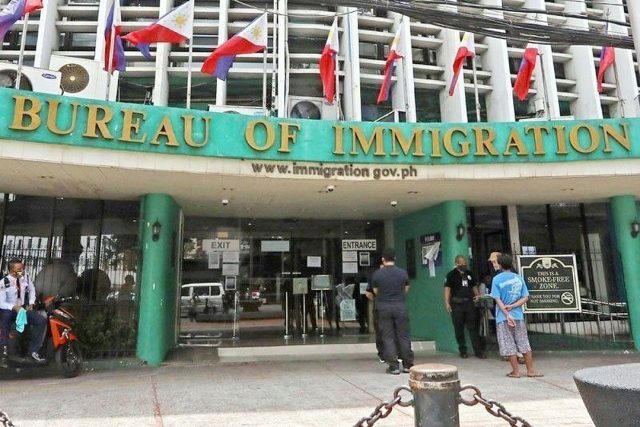
THE BUREAU of Immigration (BI) arrested a South Korean man wanted for telecommunications fraud in his country.

Immigration Chief Norman G. Tansingco said the 32-year-old man was arrested in Mactan, Lapu-Lapu City last Aug. 14.

He added that the arrest was strengthened by a deportation warrant issued by the BI Board of Commissioners in October 2021, when it ordered the man’s expulsion from the Philippines for being an undesirable alien.

There is also a standing red notice from the International Police (Interpol) against the man, which came from an arrest warrant issued by the Suwon district court in South Korea in September 2019.

The Korean man had been overstaying in the Philippines since his arrival in July 2019.

Authorities said the man leads a voice phishing syndicate that operated since 2017. It had already defrauded victims of over $840,000.

The gang allegedly disguised themselves as bankers, managing to lure the victims to share personal information which they used to defraud and gain illegal profits.

The man is already an undocumented alien due to his canceled passport. He is currently detained at the BI facility in Taguig City while awaiting deportation. — Chloe Mari A. Hufana