Home Blog Page 236

Samsung unveils Galaxy S26 Ultra with privacy screen, lighter design and more AI
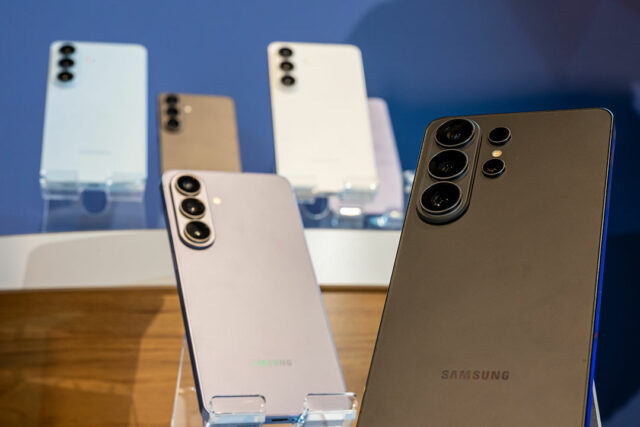
Samsung's Galaxy S26 smartphone series on display at a media event in San Francisco on Feb. 23, 2026. — DAVID PAUL MORRIS/BLOOMBERG

SAMSUNG Electronics Co. unveiled its Galaxy S26 lineup of smartphones, with an emphasis on artificial intelligence features and real-world privacy over major design changes.

The new devices, announced Wednesday at an event in San Francisco, include the extra-large Galaxy S26 Ultra ($1,300), the Galaxy S26 Plus ($1,100) and the more standard-sized Galaxy S26 ($900) — with prices that put Samsung in direct competition with Apple Inc.’s iPhone 17 line. While the Ultra costs the same as its predecessor, the Plus and S26 are both $100 more expensive than last year’s models, an increase that may partially be explained by the ongoing memory chip crunch.

The South Korean company also announced two pairs of earbuds, the $249 Galaxy Buds 4 Pro and the $179 Galaxy Buds 4. All of the new Galaxy products are available for pre-order immediately and will arrive in stores March 11. 

With Samsung’s new handsets, design and camera upgrades mostly take a backseat to AI software additions. That’s a risky gambit when many consumers choose to hold off on trading in their phone until there’s a new model with meaningfully different hardware. It’s no coincidence, for example, that Apple’s record sales last quarter coincided with the release of the iPhone 17 series, which brought a fresh look and new color options. 

Still, with the new Galaxy S26 lineup, Samsung is making the case that it can persuade customers to upgrade without many significant exterior changes.

GALAXY S26 ULTRA
There is at least one exception to that: The high-end Galaxy S26 Ultra introduces what Samsung calls a “Privacy Display.” When this mode is activated, the phone’s 6.9-inch screen becomes much harder to view from the side, above or below.

The effect is similar to using a third-party screen protector, but Samsung has built the privacy measure directly into the Ultra by turning off the pixels that would normally make the device more visible off angle. 

The Privacy Display can be left on at all times if a user wants. Alternatively, it can also be set to automatically engage if specific apps are opened — like banking software, Gmail, Slack or anything that might involve sensitive data. Another mode shields notifications only, and Privacy Display can also be configured to turn on whenever a user is prompted to enter a password or PIN.

Removing the need for a privacy screen protector lets S26 Ultra buyers enjoy the phone’s anti-reflective display, which did better at fending off glare in a hands-on demonstration this week when compared with the iPhone 17 series.

Like Apple did with its revamped Pro models, Samsung has moved away from using titanium side rails and switched back to aluminum. That allowed it to shave off some weight for the S26 Ultra, resulting in what the company hails as its lightest and thinnest version yet. 

The phone’s cameras offer the same resolution as before — 200 megapixels for the main sensor and 50 megapixels for the zoom lenses — but they’re capable of letting in more light thanks to a wider aperture. This should be beneficial in dimly lit environments, and Samsung has also optimized its “Nightography” video mode to recognize the noise patterns from each lens and automatically remove it from clips taken in the dark.

The high-end Ultra model can charge the fastest of all three S26 phones: It supports 65-watt wired charging — which can take the battery from empty to 75% in 30 minutes — along with 25-watt wireless charging. The company has also upgraded the internal vapor chamber to dissipate heat faster and more efficiently for those who use the device to its fullest. 

The Ultra’s signature S Pen stylus remains built into the device, though it doesn’t offer any new features this year.

GALAXY S26 PLUS AND S26
The 6.7-inch Galaxy S26 Plus and 6.2-inch S26 are tamer in comparison. Like the Ultra, they’re powered by Qualcomm Inc.’s Snapdragon 8 Elite Gen 5 chip. Samsung hasn’t made meaningful changes to the camera hardware, but it has added some fun new software tricks. Within the Super Steady stabilization video mode is a “Horizontal Lock” feature that will keep the horizon level while recording — similar to a gimbal — even when physically rotating the phone in your hand. This could appeal to those seeking creative perspectives for social media clips. 

Much like Google’s recent Pixel phones, Samsung is bringing natural-language image editing to the S26 lineup. You can capture a photo and describe in a few words what to change or add to the image, and the company’s generative AI tools will make it so. Call screening and in-call scam detection are also now present. 

AI FEATURES EVERYWHERE
Samsung earlier this week said that the Galaxy S26 phones will include built-in support for Perplexity’s AI technology, letting users quickly access its agent by saying “Hey Plex.” The partnership runs deeper than that, with Perplexity also powering improvements to real-time web answers from Samsung’s own Bixby assistant, a spokesperson for the AI company said.

In addition, Bixby has gotten better at helping users adjust settings or find lesser-known features through natural conversation, according to Samsung.

Perplexity is framing this as the first deal of its kind, with Samsung embracing a multi-agent philosophy that grants AI platforms deep system access and hooks into apps like Notes, Calendar, Gallery, Clock and Reminders. In the coming months, Perplexity will be deeply integrated within Samsung’s mobile web browser app, Samsung Internet.

But Google Gemini is still strongly represented across the S26 line. It’s already the default assistant, and with its new phones, Samsung will let users trigger automated app actions through voice commands — like “get me an Uber to SFO.” Gemini will go through the steps of performing that request. Users can observe everything as it goes and intervene or cancel at any time. A final confirmation step is required from the user before Gemini actually hails any ride. 

Uber Technologies Inc. is the only launch partner for this feature, but Samsung said it’s hopeful that companies like Instacart and DoorDash Inc. will also sign on.

In an interview ahead of Samsung’s press conference, Sameer Samat, a Google president overseeing the Android ecosystem, said that Gemini’s automated actions will be a significant focus of Android 17 later this year. For now, the company is working with Samsung to offer an early preview in the US and South Korea.

Google’s Circle to Search, which lets users circle anything on their phone’s screen for more information (like shopping links), is also being updated to allow multiple selections at once. This feature will arrive first on the S26 series and roll out to Pixel phones in the near future.

Samsung has also tried to dial up the usefulness of Now Brief, its AI-powered feature that shows relevant reminders and other information throughout the day. The feature has been underwhelming since its debut, but now it can pull data from app notifications and tap into usage habits to provide a better snapshot of your day on the lock screen.

GALAXY BUDS 4 PRO
The higher-end Galaxy Buds 4 Pro take aim at Apple’s AirPods Pro 3, while the lower-priced Galaxy Buds 4 competes with the AirPods 4 and similarly priced earbuds from other brands. Both include active noise cancellation.

Samsung said the Buds 4 Pro deliver deeper bass response and continue to offer high-resolution wireless streaming that Apple hasn’t yet matched. But the company is playing catchup with the AirPods in other ways, like adding speech detection and head gestures for answering or ignoring calls. 

The Buds 4 Pro last a maximum of six hours on a single charge with active noise cancellation turned on, or seven hours with it off. The case brings that to a total of 26 hours or 30 hours, also depending on whether ANC is enabled. Playback time on the Buds 4 is slightly shorter since they have a smaller battery. — Bloomberg
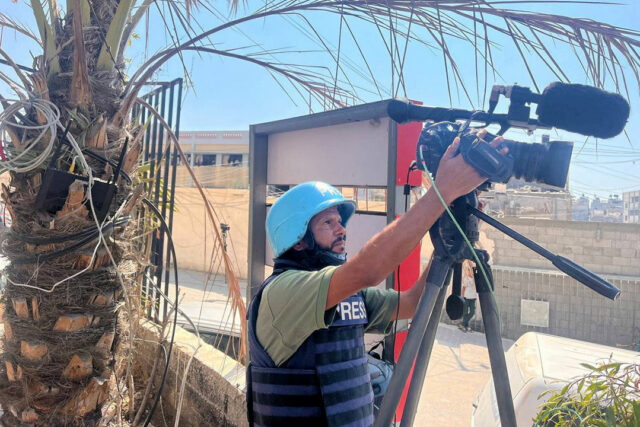
Record 129 journalists and media workers killed in 2025, mostly by Israel, says CPJ

REUTERS journalist Hussam al-Masri, who was killed by an Israeli strike on Nasser Hospital in Gaza on Aug. 25, works at the hospital in Khan Younis, Aug. 7, 2024. — REUTERS/STRINGER/FILE PHOTO

WASHINGTON — A record 129 journalists and media workers were killed in the course of their work last year, two-thirds of them killed by Israel, the Committee to Protect Journalists (CPJ) said on Wednesday.

It was the second straight year that press killings set a record and the second straight year that Israel was responsible for two-thirds of them, the CPJ, a New York-based independent organization which documents attacks on the press, said in its annual report.

Israeli fire killed 86 journalists in 2025, mostly Palestinians in Gaza but also including 31 workers in an attack on a Houthi media center in Yemen, the second deadliest attack the CPJ has ever recorded, it said.

Israel was also responsible for 81% of the 47 killings that the CPJ classified as intentionally targeted, or “murder”. It said the actual figure was probably higher due to access restrictions that made verification difficult in Gaza.

Israel’s military says its troops in Gaza target only combatants, but that operating in combat zones carries inherent risks. Israel acknowledged targeting the media center in Yemen in September, describing it at the time as a propaganda arm of the Houthis.

In several cases Israel has acknowledged targeting journalists in Gaza it said had links to Hamas, without providing verifiable evidence. International news organizations have strongly denied that slain reporters had links to militants. The CPJ called such allegations by Israel “deadly smears”.

A statement from the Israeli Defense Forces (IDF) said it “strongly rejects” the claims presented in the CPJ report.

“The IDF does not intentionally harm journalists or their family members,” it said. “The report is based on general allegations, data of unknown origin, and predetermined conclusions, without considering the complexity of combat or the IDF’s efforts to mitigate harm to non-combatants.”

MOST JOURNALISTS KILLED IN CONNECTION WITH CONFLICT
Israel does not permit foreign journalists to enter Gaza, so all the media workers killed there were Palestinians.

The CPJ report said the “Israeli military has now committed more targeted killings of the press than any other government’s military on record”, noting that the CPJ started collecting data more than three decades ago.

Its report said at least 104 of the 129 journalists killed died in connection with conflicts. Apart from Gaza and Yemen, the deadliest countries for journalists include Sudan, where nine were killed, and Mexico, where six died. Four Ukrainian journalists were killed by Russian forces and three journalists died in the Philippines, it said.

Russia’s embassy in Washington did not respond specifically to the CPJ report, but referred to past Russian Foreign Ministry statements accusing Kyiv of responsibility for the deaths of more than 60 individuals working in Russian media since 2014.

Russia has previously denied deliberately targeting journalists and Ukraine denies targeting Russian reporters.

Those killed in Gaza last year included Reuters journalist Hussam al-Masri, killed by Israeli fire in August while operating a live video feed at the enclave’s Nasser Hospital.

Israeli Prime Minister Benjamin Netanyahu said he regretted the attack, which also killed four other journalists, as a “tragic mishap”.

The Israeli military had said it targeted a Hamas camera, but a Reuters investigation found the device belonged to Reuters. — Reuters

DeepSeek withholds latest AI model from US chipmakers including Nvidia, sources say

THE DeepSeek logo is seen in this illustration taken on Jan. 29, 2025. — REUTERS

SAN FRANCISCO/SINGAPORE — DeepSeek, the Chinese artificial intelligence lab whose low-cost model rattled global markets last year, has not shown US chipmakers its upcoming flagship model for performance optimization, two sources familiar with the matter said, breaking from standard industry practice ahead of a major model update.

Instead, the lab, which is expected to launch its next major update, V4, granted early access to domestic suppliers, including Huawei Technologies, the sources said.

AI developers typically share pre-release versions of major models with leading chipmakers such as Nvidia and Advanced Micro Devices to ensure their software performs efficiently on widely used hardware. DeepSeek has previously worked closely with Nvidia’s technical staff.

NVIDIA, AMD LEFT OUT
For its forthcoming model, which was expected to be released around the Lunar New Year holiday, DeepSeek did not provide access to Nvidia and AMD and gave Chinese chipmakers, including Huawei, a head start of several weeks to optimize the software for their processors, the sources said.

Nvidia and AMD declined to comment. DeepSeek and Huawei did not respond to requests for comment.

Reuters could not immediately determine the reason for the decision.

“The impact to Nvidia and AMD for general data accelerators is minimal – most enterprises are not running DeepSeek, which serves as a benchmarking model more than anything else,” said Ben Bajarin, CEO of research firm Creative Strategies. He added that new AI coding tools are reducing the time it takes to make software run well on hardware, “from months to weeks.”

The move is likely part of a broader strategy by the Chinese government “to try to keep US hardware and models disadvantaged” in China, Mr. Bajarin said.

The development comes as a senior Trump administration official told Reuters DeepSeek’s latest AI model was trained on Nvidia’s most advanced chip, Blackwell, using a cluster in mainland China, in a move that appears to violate US export controls.

DeepSeek may seek to remove technical indicators revealing its use of American AI chips, and plans to publicly claim that it used Huawei’s chips to train its model, according to the US official.

DeepSeek’s models have been downloaded more than 75 million times on the open-source platform Hugging Face since the company burst onto the scene in January 2025, helping fuel a wave of Chinese open-source models competing with US AI labs. Among models released in the past year, downloads for Chinese models have surpassed those from any other country on the platform.

The rapid rise of Chinese open-source models has intensified debate in Washington over exporting advanced US AI chips to China. US authorities last year allowed Nvidia’s H20 and AMD’s MI308 chips — designed for AI inference — to resume shipments to China, even as licenses for more advanced processors remain restricted. It was unclear whether DeepSeek has secured approval to purchase those US chips.

The H20 and MI308 chips are aimed at inference, the process of running trained AI models. Demand for the MI308 was significant, with AMD saying it generated $390 million in sales of the chip in its most recent quarter.

DeepSeek is among several Chinese AI firms expected to unveil new models this month. — Reuters

Chevy charge: Spark fun and captivate the thrill

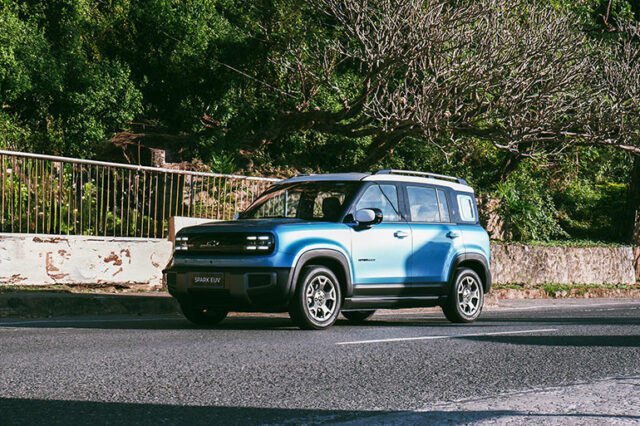
All-New Chevrolet Spark EUV

Hariphil Asia Resources, Inc. (HARI), the official distributor of Chevrolet in the Philippines, ushers in a new chapter of sustainable mobility with the launch of Chevrolet’s first electrified models in the Philippines — the All-New Spark EUV, All-New Captiva EV and PHEV. This milestone underscores Chevrolet’s growing commitment to delivering cleaner, smarter, and more efficient mobility solutions designed for today’s diverse driving lifestyles.

Spark Fun: All-New Chevrolet Spark EUV

The All-New Spark EUV showcases a fun, modern-retro, boxy design, perfectly suited for agile electrified urban driving. Compact yet capable, it is engineered for modern city life, perfect for drivers seeking an eco-friendly vehicle that’s easy to maneuver, tech-forward, and full of personality.

Exterior wise, Spark EUV showcases its style with a striking dual-tone finishes such as Sea Blue with a White roof, Track Yellow, and Gentle Gray with a Black roof, alongside the refined Milky Tea monotone option. Functional features like IntelliBeam® further enhance everyday convenience and visual appeal.

Inside, the Spark EUV offers a tech-driven cabin with ample headroom and a spacious interior. A 10.1-inch infotainment touchscreen pairs seamlessly with an 8.8-inch digital instrument cluster, giving drivers intuitive access to essential vehicle and battery information.

Power comes from a 75-kW permanent magnet synchronous motor (PMSM) paired with a 41.9-kWh Lithium Iron Phosphate (LFP) battery, producing 102 PS of power and 180 Nm of torque with an electric range of up to 360 km (NEDC) ideal for daily city use. Charging flexibility is ensured through a CCS2 Charging Port, supporting 6.6-kW AC charging, 50-kW DC fast charging (30%–80% in 35 minutes).

Safety complements the fun, with ADAS features such as Intelligent Driving Assist, Front Collision Safety System, Lane Safety Features and a 360° Panoramic Camera, making the Spark EUV a smart and exciting entry point into electrified mobility.

The Spark EUV has a suggested retail price (SRP) of P1,547,000, but is available at an introductory price of P1,449,000 for a limited time only, offering exceptional value for those ready to embrace electric urban driving.

Captivate the Thrill: All-New Captiva EV and All-New Captiva PHEV

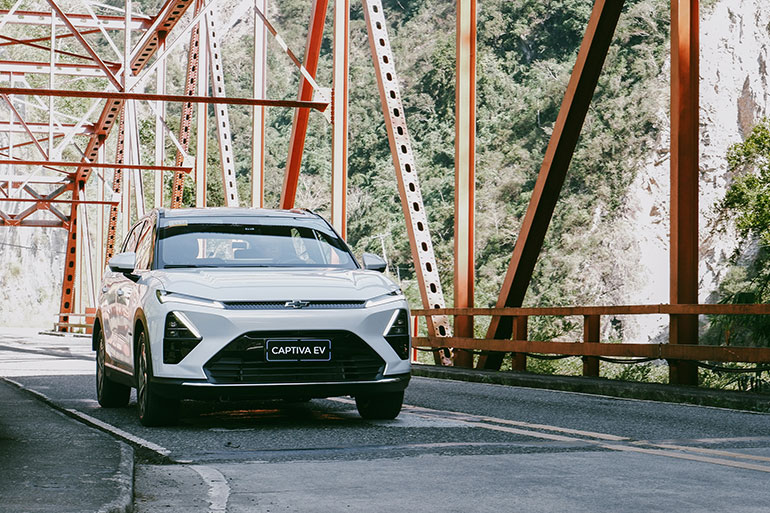
All-New Captiva EV

Designed with families and everyday practicality in mind, the All-New Captiva EV and PHEV deliver thrill through space, comfort, and driving confidence offering flexible solutions for both city commuting and long-distance travel.

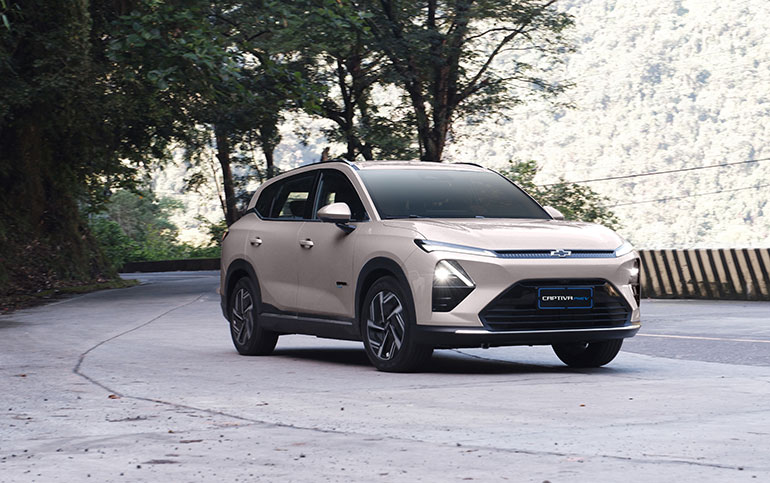
Exterior-wise, the Captiva EV and PHEV project a bold and sophisticated presence bringing in more thrill, enhanced by their vibrant color options. The Captiva EV is available in Sandy White, Shadow Golden, Laser Gray, and Khaki Green, all paired with a black roof. Meanwhile, the Captiva PHEV comes in the same colors but in elegant monotone finishes. Both models are equipped with IntelliBeam®, and Corner Light Function enhancing visibility, safety, and everyday driving comfort.

The Captiva features a spacious cabin enabled by a 2,800-mm wheelbase, ensuring ample room for passengers and cargo. At the center of the interior is a 15.6-inch infotainment touchscreen providing seamless connectivity for modern family needs.

Safety remains a core strength, with the Captiva offering a comprehensive ADAS suite, including Intelligent Driving Assist, Front Collision Safety System, Lane Safety Features, and a 360° Panoramic Camera delivering peace of mind for drivers and families alike.

While the key difference between the variants lies in their powertrains; the Captiva EV offers a pure 100% electric driving experience, powered by a 150-kW PMSM motor and a 60-kWh LFP battery, delivering up to 415 km of range (NEDC) with zero emissions and lower maintenance costs. While the Captiva PHEV combines electric efficiency with hybrid versatility, pairing the same 150-kW electric motor with a 1.5-L engine and a 20.5-kWh battery, achieving an impressive, combined range of approximately 1,040 km (NEDC), ideal for extended trips and mixed driving conditions.

All-New Captiva PHEV

Both Captiva models offer flexible charging through a CCS2 Charging Port. The Captiva EV supports 6.6-kW AC and 120-kW DC charging capacity which restores power in approximately 30%–80% in 30 minutes, while the Captiva PHEV which has a 3.3-kW AC and 24.6-kW DC charging capacity with a similar 30%–80% 30-minute charge. This ensures convenient and efficient charging options for both urban commutes and longer journeys, giving drivers flexibility and peace of mind.

The Captiva EV has a suggested retail price (SRP) of P1,938,000 and is available at an introductory price of P1,860,000 for a limited time only. Meanwhile, the Captiva PHEV has an SRP of P1,899,000 and is offered at an introductory price of P1,821,000 for a limited time only offering strong value for families who prioritize comfort, space, and confidence on every journey.

“Chevy Charge marks a significant milestone for HARI and our customers, enhancing our lineup with electrified models that align with our long-term growth and mobility strategy,” said Maria Fe Perez-Agudo, Vice-Chairman, President, and CEO of HARI. “This launch goes beyond introducing new vehicles it reflects our steadfast commitment to innovation, sustainability, and empowering drivers with smarter, cleaner, and more efficient mobility solutions.”

With the Spark EUV delivering fun and urban agility, and the Captiva EV and Captiva PHEV offering thrill through versatility, comfort, and space, Chevrolet continues to make electrified mobility more accessible, practical, and rewarding for Filipino drivers.


Spotlight is BusinessWorld’s sponsored section that allows advertisers to amplify their brand and connect with BusinessWorld’s audience by publishing their stories on the BusinessWorld Web site. For more information, send an email to online@bworldonline.com.

Join us on Viber at https://bit.ly/3hv6bLA to get more updates and subscribe to BusinessWorld’s titles and get exclusive content through www.bworld-x.com.

GCash Fuse, ADB expand financial access for MSMEs

Earlier in February, Fuse Financing Inc., the lending arm of GCash and the Asian Development Bank has enabled a more inclusive loan access to women-led and underserved enterprises through a P1.75-billion loan facility.

#WeAreGCash
#FinanceForAll


Spotlight is BusinessWorld’s sponsored section that allows advertisers to amplify their brand and connect with BusinessWorld’s audience by publishing their stories on the BusinessWorld Web site. For more information, send an email to online@bworldonline.com.

Join us on Viber at https://bit.ly/3hv6bLA to get more updates and subscribe to BusinessWorld’s titles and get exclusive content through www.bworld-x.com.

North Korea’s Kim promises more nuclear weapons as Congress closes with military parade

REUTERS

SEOUL — North Korean leader Kim Jong Un said he would focus on expanding his country’s nuclear arsenal and that prospects for improving relations with the US rested entirely on Washington’s attitude, state media KCNA reported on Thursday.

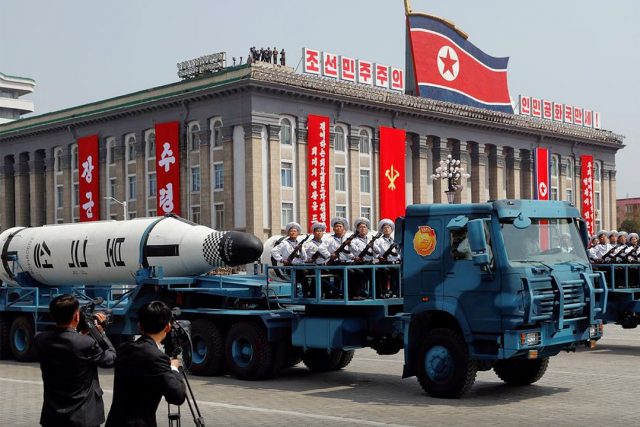
North Korea’s week-long Ninth Congress of the ruling Workers’ Party wrapped with a military parade in the capital Pyongyang on Wednesday, KCNA reported.

The Asian nation’s “international status has risen extraordinarily” as it laid out major policy goals for the next five years, Mr. Kim said.

“It is our party’s firm will to further expand and strengthen our national nuclear power, and thoroughly exercise its status as a nuclear state,” Mr. Kim said, according to KCNA. “We will focus on projects to increase the number of nuclear weapons and expand nuclear operational means.”

North Korea has assembled around 50 warheads, possesses enough fissile material to produce up to 40 more warheads and is accelerating the production of further fissile material, think tank the Stockholm International Peace Research Institute (SIPRI) estimated last year.

Mr. Kim also laid out North Korea’s plans to develop stronger intercontinental ballistic missiles including ones that can be launched from underwater, attack systems using artificial intelligence and unmanned drones, KCNA said.

State media photos of the military parade showed formations of soldiers marching through a brightly-lit Kim Il Sung square under a podium where Mr. Kim and his daughter stood with senior officials. Some troops in the parade were wearing camouflage and special warfare gear and a formation of jets held a fly-by. It was not immediately clear what if any military hardware was on display.

The presence of Mr. Kim’s daughter, known as Ju Ae, will fuel further speculation over whether she is being groomed as his successor.

US RELATIONS
Mr. Kim left the door open for discussions with the United States.

“If the US withdraws its policy of confrontation with North Korea by respecting our country’s current status… there is no reason why we cannot get along well with the US,” Mr. Kim said, according to KCNA.

Mr. Kim has so far not accepted overtures by US President Donald Trump, whom he met with three times during Mr. Trump’s first term.

Mr. Kim’s remarks “all point to an expected refusal of any US–North Korea talks premised on denuclearization, though (Kim) still left the door open for dialogue if Washington first abandons what it calls its hostile policy,” said Yang Moo-jin, former president of the University of North Korean Studies.

Mr. Trump plans to travel to China from March 31 to April 2. Some North Korea experts including South Korea’s spy agency have speculated that Mr. Kim could meet Mr. Trump during that occasion.

However, Mr. Kim called South Korea the “most hostile enemy” and ruled out discussions with its neighbor, saying “the conciliatory attitude that South Korea’s current government advocates on the surface is clumsily deceptive and crude,” according to KCNA.

Since entering office in June last year, South Korean President Lee Jae Myung’s government has made gestures to improve relations between neighbors still technically at war, though North Korea has consistently dismissed efforts by the liberal president.

Mr. Kim said Pyongyang “can initiate arbitrary action” if South Korea conducts “obnoxious behavior” directed at North Korea.

“South Korea’s complete collapse cannot be ruled out,” Mr. Kim said according to KCNA. — Reuters

IMF completes Egypt reviews, unlocking about $2.3 billion

REUTERS

THE INTERNATIONAL Monetary Fund on Wednesday said it completed two reviews of Egypt’s economic reform program, as well as another review under the Resilience and Sustainability Facility (RSF), allowing the country to draw about $2.3 billion.

The IMF said Egypt will receive about $2 billion under its 46-month loan program after completing the fifth and sixth reviews, along with $273 million under the RSF, bringing total disbursements under both programs to about $5.2 billion.

Egypt agreed to a $3 billion loan with the IMF in December 2022. The program was expanded to $8 billion in March 2024, at a time when the country was grappling with high inflation and foreign currency shortages. The program is due to end in December.

In recent months, Egypt has managed to tame inflation, which peaked at 38% in September 2023. Annualized urban consumer inflation stood at 11.9% in January.

The country’s foreign currency shortage has also eased, supported by the IMF loan, record revenue from tourism, remittances from Egyptians working abroad and investment deals with Gulf countries – including the United Arab Emirates – worth tens of billions of dollars.

“Egypt’s macroeconomic situation has improved amid sustained stabilization efforts,” the IMF said in a statement. “Tight monetary and fiscal policies, together with exchange rate flexibility, have helped restore macroeconomic stability, reduce inflation, and strengthen the external position.”

However, the IMF warned that structural reforms have been “uneven,” referring to the divestment of state assets – a centerpiece of the loan deal – where the fund believes progress has been slow.

“Efforts to reduce the state’s footprint, particularly progress on the divestment agenda, have been slower than envisaged, while high public debt and elevated gross financing needs continue to constrain fiscal space and weigh on medium-term growth prospects,” the IMF said.

In August, Egypt ratified legislative amendments aimed at accelerating the sale of state-owned assets. — Reuters

Pentagon asks defense contractors about reliance on Anthropic’s AI services, source says

THE PENTAGON is seen from the air in Washington, US, March 3. — REUTERS

THE PENTAGON has asked defense contractors to assess their reliance on Anthropic, a person familiar with the matter said on Wednesday, ahead of its Friday deadline for the AI service provider to respond to a request to eliminate safeguards.

The Department of Defense has been engaged in a months-long dispute with Anthropic, which Reuters reported has no intention of easing its usage restrictions for military purposes.

Talks are continuing after a meeting between the Defense Secretary Pete Hegseth and Anthropic CEO Dario Amodei.

During the meeting, Mr. Hegseth said if Anthropic did not comply, the Pentagon would take action against it, with options including labeling it a supply-chain risk or invoking a law that would force Anthropic to change its rules, Reuters reported.

The Department of Defense has given Anthropic until Friday 5 p.m. Eastern time (2200 GMT) to respond, Reuters reported.

“The Office of the Secretary of War is preparing to execute on any decision that the Secretary might make on Friday regarding Anthropic,” a senior Pentagon official said.

The Pentagon has asked contractors including Lockheed Martin to provide an assessment of reliance on Anthropic, a step toward a potential designation of the AI firm as a supply-chain risk, the person familiar with the matter told Reuters.

Contacted contractors include Boeing, Axios reported on Wednesday.

A Lockheed spokesperson told Reuters the Pentagon had contacted the company. Boeing Defense, Space and Security said it does not have any active contracts with Anthropic.

Anthropic did not respond to a request for comment.

The person familiar with the matter was not authorized to speak with media so declined to be identified.

The Pentagon has pushed big AI companies including Anthropic and OpenAI to make their AI tools available on classified networks without many of the standard restrictions that the companies apply to users, Reuters has reported.

Its dispute with Anthropic stems from the AI startup’s refusal to remove safeguards that would stop its technology being used to target weapons autonomously and conduct surveillance in the US.

The department used Anthropic’s AI products during a military raid that captured Venezuela’s President Nicolas Maduro, the Wall Street Journal reported. — Reuters

SEC lowers IPO float for big firms

BW FILE PHOTO

THE SECURITIES and Exchange Commission (SEC) eased the minimum free float requirements for large initial public offerings (IPO), a move that may pave the way for mega-IPOs in the Philippines.

SEC Memorandum Circular No. 11 introduced a tiered minimum public ownership framework for companies seeking to list shares on the stock exchange.

Under the circular signed by SEC Chairperson Francisco Ed. Lim on Feb. 24, companies with an expected market capitalization of over P50 billion at the time of listing should have a minimum public float of 15%. This is subject to a minimum offer size of P10 billion.

The 15% minimum public float is higher than the 12% that was proposed in the SEC’s draft circular.

However, this is lower than the 20% minimum public float that was imposed on all companies going public regardless of market capitalization.

“Adopting a tiered minimum public ownership framework provides a proportionate and market-aligned approach that preserves the long-term benefits of adequate public float while addressing present-day constraints in demand absorption for large issuances, thereby supporting capital formation and encouraging more companies to pursue listing in the Philippines,” the SEC said in the circular. 

For companies with an expected market cap of over P1 billion but not exceeding P50 billion, they should have a minimum public float of 20%, subject to an offer size of P250 million.

Companies with an expected market cap of over P500 million but not more than P1 billion should have a minimum initial public ownership of 25%. The IPO should have a minimum offer size of P165 million.

Firms with a market cap not exceeding P500 million should have a public float of at least 33%.

The SEC said that for companies with “exceptionally large” expected market cap at the time of listing, the exchange can endorse an application for a lower minimum initial public ownership requirement.

“(This) shall only apply to issuers with an expected market capitalization at the time of listing of not less than P200 billion. Provided that such minimum initial public ownership shall in no case be lower than 12%,” the SEC said.

However, the SEC will determine a company’s eligibility for the lower public float based on expected market cap, minimum offer size or minimum number of shares held by the public, as well as safeguards to ensure adequate liquidity and fair price discovery.

MORE LISTINGS?
This may clear the path for the long-awaited IPO of Globe Fintech Innovations (Mynt), the parent company of GCash, which earlier said that a 20% minimum public float was too high for its offering that could peg the company’s valuation to at least $8 billion.

“Hopefully this makes it easier for GCash and Maya to consider doing their mega-IPOs in the Philippines. The rules could also facilitate the IPO of Land Bank of the Philippines as the government would be able to keep a larger stake in the bank,” China Bank Capital Corp. Managing Director Juan Paolo E. Colet said in a Viber message.

DragonFi Securities Equity Analyst Jarrod Leighton M. Tin said the new rules could allow Mynt to move forward with its IPO as early as this year.

“This allows major issuers to access public markets while diluting a smaller portion of ownership. More importantly, a lower public float reduces initial tradable supply —potentially supporting stronger price stability and mitigating early selling pressure, which has historically weighed on larger IPOs,” Mr. Tin said.

Investment & Capital Corporation of the Philippines (ICCP) President and Chief Operating Officer Jesus Mariano P. Ocampo said the lower public float is a middle ground after debates over whether large companies should have a 12.5% or 10% public float.

“I believe the 15% floor tries to meet the clamor for lower minimum float (previously at 20%).  If we still wanted to be counted in the MSCI indices — we actually need to have the float at closer to 20%,” he said.

SEC’s Mr. Lim previously said that the push for a tiered minimum public float requirement stems from the limitations of the 20% rule, which he described as a “one-size-fits-all” approach that does not account for differences in company market capitalization.

POST-LISTING REQUIREMENT
Under the SEC circular, companies are required to maintain a fixed minimum level of public ownership corresponding to their tier.

Companies with a market cap exceeding P50 billion at the time of listing must maintain at least 15% public float, while those with less than P50 billion should keep a 20% minimum float.

If public ownership falls below the required level, the company should restore the public float to the mandated level within six months from the date of the drop.

The company is also required to immediately submit a public ownership report to the SEC within the next business day after determining the public float has fallen below the minimum level. The company also has to submit a business plan detailing steps it would undertake to raise the public float to the required level.

The circular also noted that companies that conducted an IPO before the effectivity of these rules will be subject to the minimum public ownership percentage under the rules in effect at the time of their listing.

Companies that do not comply with the requirements may face suspension, and revocation of their registration. — Alexandria Grace C. Magno

DBM prefers 3% cap for unprogrammed appropriations

Department of Budget and Management (DBM) Secretary Rolando U. Toledo — PHILIPPINE STAR/MIGUEL DE GUZMAN

By Justine Irish D. Tabile, Senior Reporter

THE DEPARTMENT of Budget and Management (DBM) is looking at lowering the cap on unprogrammed appropriations (UA) to as low as 3% of the national budget, its top official said.

“As much as possible, [I want it to be low]. Because that is one of the issues that was raised not only in the budget preparation but also in the deliberation in the legislation process,” Budget Secretary Rolando U. Toledo told reporters on the sidelines of an event on Tuesday.

“I myself, I can go lower by 3%, probably not just 5% just to minimize, of course, our UA level,” he added.

Last year, then-Budget Secretary Amenah F. Pangandaman proposed a 5% cap on UAs to serve as an allowance for unforeseen spending needs. This was, however, called “excessive” by former Finance Secretary Ralph G. Recto, now executive secretary, who has proposed a cap of 2% of the national budget.

However, Mr. Toledo said limiting the cap for UA is still subject to congressional approval.

To make this happen, the department seeks the passage of the proposed Philippine Budgeting Code, or the Progressive Budgeting for Better and Modernized Governance bill, which is among the Legislative-Executive Development Advisory Council’s common legislative agenda for the 20th Congress.

Mr. Toledo said that he is hopeful that the provisions of the bill will cover budget preparation, execution, accountability, and monitoring.

“What we also want to emphasize here is citizens’ participation in the budget process. That is what we want to have there in our Philippine Budgeting Code,” he said.

Mr. Toledo said the DBM is looking forward to the inclusion of a mandated calendar for budget preparation, execution, and accountability to prevent delays in the budget calendar.

“The Philippine Budgeting Code actually just institutionalizes what we are now implementing and the reforms that we want to do,” he added.

UAs have been the subject of public scrutiny as the country tackles corruption scandals involving public infrastructure projects, particularly those involved in flood control.

Mr. Toledo said that the lack of flood control projects is the reason for the 15% drop in climate funding to P983 billion this year, from P1.16 trillion in 2025.

“Understandably, because a big part of our climate funding is through flood control. We don’t have flood control projects now, that’s why it is understandable that our budget for climate-related funding has decreased,” he said in a mix of Filipino and English.

Asked if he expects climate funding to rebound in 2027, Mr. Toledo said that it will “depend on the submission of the budget of the different department agencies.”

GlobalSource Principal Advisor Diwa C. Guinigundo said that more than setting a cap, the Philippine government should define what can be included in unprogrammed appropriations.

“It’s not a matter of setting up some kind of a threshold. Define first what needs to be included in the UAs,” he said in a Viber message.

“If this is about pork barrel parading as critical infrastructure, by all means delete it from the list even as the aggregate remains below a certain threshold like 3%,” he added.

RELEASE RATE
For the first quarter, the DBM is targeting to disburse around P1.4 trillion, after the budget release rate hit 62.2% by the end of January.

“We have a target. We’re looking at around P1.4 trillion (programmed)… That is our disbursement target for the first quarter,” said Mr. Toledo.

“That is a higher target compared with the previous year. It is really to help boost the economy and to rebound from the fourth quarter,” he added.

In January, the DBM disbursed P4.25 trillion out of the P6.794-trillion budget for the year.

“We only released the comprehensive operational requirements of the agency. So right now, we’re still receiving requests for the additional funding for their payables for the prior years, at the same time, the additional requirements for the quarter,” he said.

Mr. Toledo said that the DBM is being pushed to increase spending in the first quarter to boost the economy.

“We want to increase our spending in the first quarter so that we can recover from the fourth-quarter low disbursement that affected our growth, so we’re looking forward to increase their disbursement as far as the agencies are concerned,” he said.

“We’re just awaiting the submission of their request. Right now, we’re already receiving requests but we’re still in the process,” he added.

In 2025, the economy expanded by 4.4%, the weakest in five years, as the flood control scandal negatively affected government spending, investments and consumer spending.

In the fourth quarter of 2025, gross domestic product expanded by 3%, from 5.3% in the fourth quarter of 2024 and the revised 3.9% print in the third quarter of 2025. The slowdown came as a surprise as the fourth quarter is typically a strong period for growth due to holiday spending.

Philippine vehicle sales slump in January

Vehicles crawl through bumper-to-bumper traffic along EDSA-Taft in Pasay City, May 20, 2025. — PHILIPPINE STAR/RYAN BALDEMOR

By Beatriz Marie D. Cruz, Reporter

PHILIPPINE CAR SALES slumped in January amid a weaker demand for both passenger and commercial vehicles, according to an industry report.

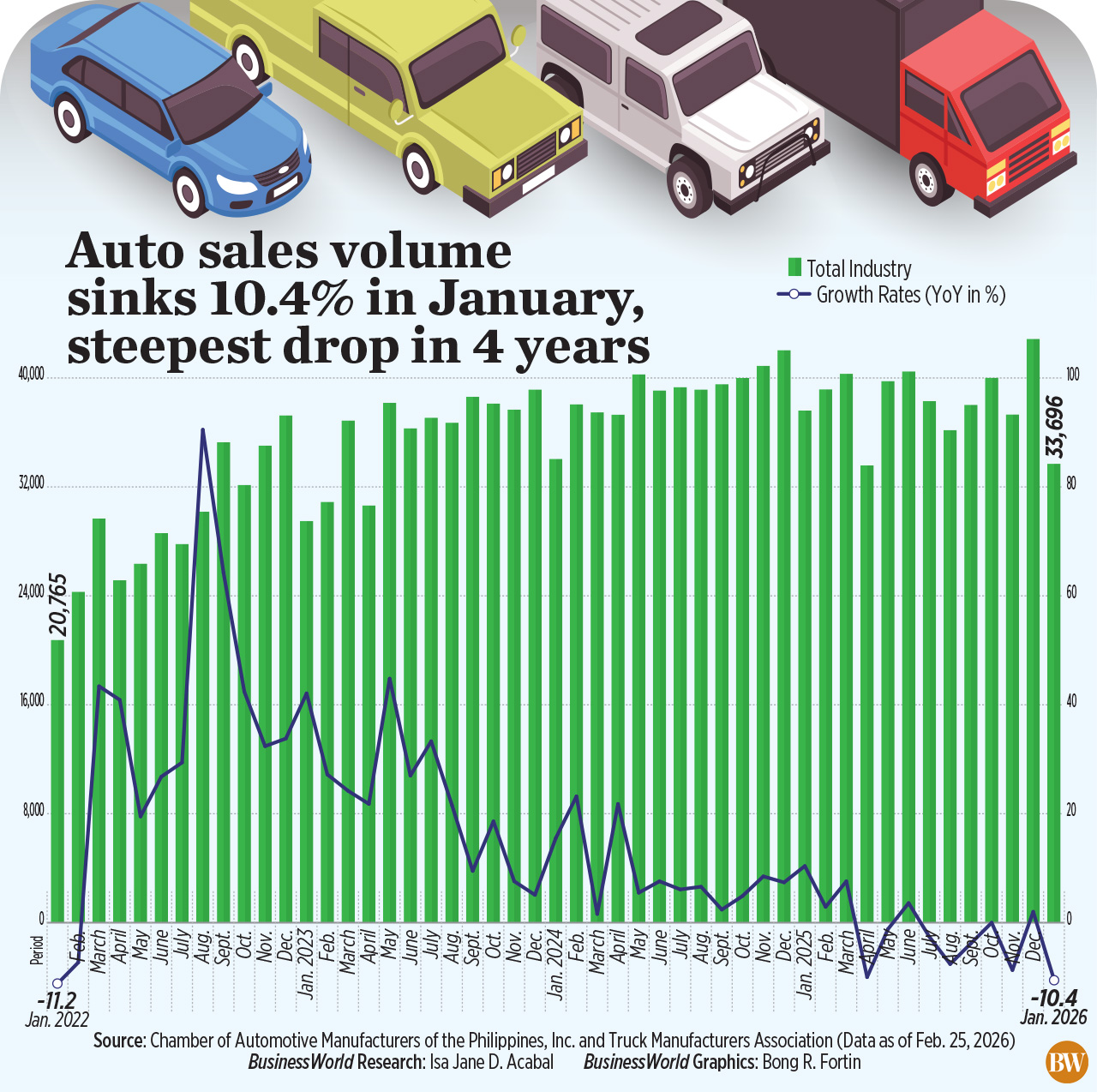
In a joint report by the Chamber of Automotive Manufacturers of the Philippines, Inc. (CAMPI) and the Truck Manufacturers Association (TMA), vehicle sales declined by 10.4% to 33,696 units in January from 37,604 units sold in the same month in 2025.

January saw the biggest annual decline in four years or since the 11.2% drop in January 2022.

Month on month, vehicle sales plunged by 21.4% from 42,870 units sold in December 2025, when demand is typically higher.

Despite this, vehicle sales are still expected to exceed 500,000 units this year, as demand is likely to pick up in the latter part of the year, CAMPI President Jose Maria M. Atienza said in a statement.

“When market seasonality adjustment is factored in, the January sales level aligns with the steady pace observed during the second half of last year,” CAMPI said.

Passenger car sales, which accounted for 18.33% of total industry sales, dropped by 20.1% to 6,178 units in January from 7,729 units sold in the same month last year. Month on month, sales of passenger cars fell by 22.86% from 8,009 in December.

In January, commercial vehicle sales slipped by 7.9% to 27,518 units from 29,875 a year ago. This accounted for 81.67% of the industry’s total sales for the month.

Month on month, sales of commercial vehicles dropped by 21.1% from 34,861 units sold in December last year.

Broken down, light commercial vehicle sales fell by 8.8% to 20,392 units, while sales of Asian utility vehicles (AUV) declined by 6.6% to 6,253.

Sales of light commercial vehicles and AUVs both declined month on month by 17.3% and 32.5%, respectively.

The only segment that saw annual growth was light truck sales, which jumped by 21.7% to 605 units in January from 497 units a year ago. On a monthly basis, sales also increased by 15% from 526 in December.

Medium truck sales slipped by 13.4% year on year in January to 226 units, and also plunged by 40.4% month on month.

Sales of heavy trucks slumped 39.1% to 42 units year on year but doubled from 21 in December.

Rizal Commercial Banking Corp. Chief Economist Michael L. Ricafort attributed the drop in vehicle sales to the weak consumer sentiment that has persisted amid the corruption scandal.

“[Investors are on a] wait-and-see mode if catch-up government spending premised on priority anti-corruption measures/reforms are taken seriously, which could help uplift investor confidence, including spending on big-ticket items like vehicles,” he said in a Viber message.

BRIGHT SPOT
Meanwhile, CAMPI said it is betting on the growing demand for electric vehicles (EV) in the country to drive industry sales this year.

“Despite the decline in both the passenger and commercial vehicle main categories, CAMPI sees a bright spot in the continuous growth in the electrified segment,” it said.

Data from CAMPI and TMA showed that electric vehicle sales surged by an annual 63.1% to 2,610 units in January from 1,600 a year ago.

The segment, which includes battery EV (BEV), plug-in hybrid EV (PHEV), and hybrid EV (HEV), accounted for a 7.75% share of the market.

Month on month, EV sales declined by 40.1% from 4,358 units sold in December 2025.

Sales of BEVs jumped by 78.8% year on year to 261 units in January, while sales of PHEVs surged by 2,977.8% to 277 units.

On a monthly basis, BEV and PHEV sales dropped by 25.2% and 5.1%, respectively.

Sales of hybrid EVs jumped by 43.4% year on year in January to 2,072 units but declined by 44.3% from December.

Mr. Ricafort expects higher EV sales this year, as the entry of new players reduced prices and gave consumers more options.

He also noted that more taxis and utility vehicles are expected to shift to EVs this year, adding that more consumers have shown an increased preference for low-carbon cars.

In January, Toyota Motor Philippines Corp. remained the leader with a 48.51% market share, despite a 9.6% decline in year-on-year sales to 16,346 units.

This was followed by Mitsubishi Motors Philippines Corp., whose sales fell by an annual 5% to 7,003 units in January.

Suzuki Phils., Inc. came in third even as sales declined by 7.6% to 1,646 units.

Also included in the top five were Nissan Philippines, Inc., whose sales dropped by 32.8% to 1,589 units; and Ford Motor Company Phils., Inc., whose sales declined by 19.3% to 1,272 units.

Cybersecurity self-assessment for banks, nonbanks proposed by BSP

FREEPIK

THE BANGKO SENTRAL ng Pilipinas (BSP) is proposing to require all banks and nonbanks to conduct a self-assessment of their cybersecurity maturity amid growing concerns over increasing cyber risks.

This, as the central bank seeks to strengthen the financial system through its supervised financial institutions (BSFI) against rapidly evolving threats in cyberspace.

“Digital financial and payment services and platforms continue to evolve rapidly, with innovative solutions emerging to enhance customer experience, improve operational efficiency, expand accessibility, and strengthen market competitiveness,” the central bank said in the exploratory note of the draft circular.

“However, these developments are accompanied by a corresponding increase in cyberthreats, which heighten risks to both financial institutions and their customers,” it added.

According to the central bank, the Cybersecurity Control Self-Assessment (CCSA) will allow BSFIs to enhance their offsite surveillance and risk assessments for information and cybersecurity.

“This initiative aims to enhance the financial sector’s resilience against  evolving cyberthreats by enabling BSFIs to assess their cybersecurity maturity against established best practices and develop a roadmap toward their target maturity level,” the BSP said.

BSP Deputy Governor Lyn I. Javier earlier noted that more frequent, more scalable and targeted cyberthreats are endangering the financial system’s digital shift, with the improving interconnectivity enabling more cybercriminals to exploit its weak points.

Based on the latest central bank report, social engineering such as phishing scams, account takeover and identity theft accounted for 76% of the total amount lost to financial fraud in the first half of 2025, making it the top cyberthreat of the local banking system.

This was followed by hacking, which made up 13% of the total losses, and card-not-present fraud with 8%.

Under the draft circular, the BSP clarified that the CCSA will not replace the current Supervisory Assessment Framework for cybersecurity and information security. 

Instead, it will serve as an additional requirement alongside the annual information technology (IT) profile that financial institutions were previously required to submit 25 days after the end of each reference year.

“Rather, these tools are designed to complement existing supervisory mechanisms by enabling BSFIs to identify areas for improvement and systematically track progress toward their desired maturity level,” the BSP said. 

The central bank also noted that the CCSA will use a Cybersecurity Maturity Framework (CMF) to measure the BSFI’s maturity level, based on the CCSA results, and its target maturity level aligned with its IT risk profile.

The assessment tool features capability-based questions to evaluate the BSFI’s maturity in specific control areas, as well as survey questions to gather further insights for policy development and regulatory guidance.

NBFIs’ maturity levels could be classified as foundational, established, managed or optimized, according to the BSP.

The level will be evaluated based on their information security governance, information security risk management, security control implementation, and cyberthreat intelligence and collaboration.

Both the CMF and the CCSA will then be integrated in the Advanced Suptech Engine for Risk-based Compliance, which the BSP said “may be periodically reviewed and enhanced to ensure a dynamic and responsive assessment process.”

“The result shall provide the BSFI’s current maturity and inform of the possible areas requiring intervention or a plan for improvement to achieve their target maturity,” the BSP added.

BSFIs with a moderate and complex IT profile will be mandated to electronically submit their respective CCSAs to the BSP yearly on or before March 31, following the end of the reference year. — Katherine K. Chan