Home Blog Page 2333

Ben&Ben develops concept album, immersive concert experience

IT STARTED with a mantra recited before every performance: “Light, energy, feel, hamana-hamana.” Then the name of a show. Now, Filipino pop band Ben&Ben have taken the three words and spun them into a story for their fans to enjoy — both as a concept album and as a concert experience.

The Traveller Across Dimensions, available on streaming platforms worldwide, is Ben&Ben’s first album arranged to convey the journey of a fictional character, named Liwanag. It also marks their first time to integrate animated visuals, care of Puppeteer Studios, into their music. Led by twins Paolo and Miguel Benjamin, the nine-piece band will bring the album to life, complete with the animations, at an arena concert of the same name on Dec. 14.

They were driven by the desire to craft a narrative instead of providing the usual set of songs, said Paolo Benjamin. With an overarching flow, the album’s 12 tracks serve as “an allegory for self-discovery and growth.” The songs are divided into three sections, each representing the three symbolic realms of Light, Energy, and Feel that the main character Liwanag must traverse.

“Light is the dimension of innocence, energy is the dimension of suffering, and feel is the dimension of maturity,” he explained. “The songs you will listen to are Liwanag’s thoughts and feelings during her travels.”

The idea to blend animation with music stemmed from the band’s long-time fascination with visual storytelling. Puppeteer Studios was given free rein to interpret the narrative visually. The result is a fantasy world filled with light and darkness, its whimsical aesthetic having a bright and polished appeal.

While both Mr. Benjamins served as the album’s main songwriters, percussionist/vocalist Andrew De Pano penned “Shutter,” which captured his attachment to photography. “The good thing about having nine members is that we have so many ideas and we can easily bounce them off of each other to come up with something good,” said Mr. De Pano.

Since the songs were already in progress before the animation was conceived, the narrative was shaped by their placement in the three sections. For example, “Could Be Something,” “Supernatural,” “Autumn,” and “Winter” make up the Light Dimension, where the young and innocent Liwanag is still encountering core experiences.

Meanwhile, the last song, “New Dimensions,” signifying the character maturing and finding inner peace, was the most difficult to put together, according to Miguel Benjamin. “It felt like we were doing nine songs in one, so the process of arranging, rehearsing, and recording it per instrument was such a new experience,” he said.

Produced by the band and Ziv, with additional contributions from Petra Sihombing, Sam and Tim Marquez, and JP Verona, the album blends various genres and moods into Ben&Ben’s signature romantic pop band sound.

The arena concert on Dec. 14 — to be held at the Mall of Asia Arena in Pasay City — promises to be “an innovative, multi-dimensional experience, blending live music with state-of-the-art multimedia elements inspired by the album.” Produced by Ovation Productions, it will incorporate animation, film, and live performances, creating an immersive, audiovisual concert.

“We’re getting ready to go into intensive rehearsals in the lead-up to the show,” said Paolo Benjamin. “It’s both scary and exciting, and we’re very eager to take on the challenge.”

Tickets to the concert are now available online, with prices ranging from P1,700 to P7,700 for the Liwanag VIP Package. For more information on Ben&Ben’s upcoming concert and to purchase tickets, visit SM Tickets. — Brontë H. Lacsamana

A milestone for Anne Curtis

WHICH is which? Anne Curtis with her wax figure.

THE STARS aligned when actress and TV host Anne Curtis was chosen to be the next Filipino wax figure at Madame Tussauds’ Hong Kong branch.

She happened to be in Hong Kong with her co-hosts from ABS-CBN’s noontime variety show It’s Showtime when she received the call, she told the press at the unveiling of the wax figure at Discovery Primea last week. Ms. Curtis — known in the Philippines for hosting, modeling, and her work in movies and TV series such as No Other Woman, BuyBust, Dyosa, Dyesebel, ’Wag Kang Lilingon, and Sid & Aya: A Love Story — said the process was much easier than she expected.

“I’ve done so many fantaseryes throughout my career, and it’s a very different process. I thought I would have to lie down and get my prosthetics done and fit, but actually it turned out to be two hours of posing smiling and then it was done. A year later, here we are.” she said.

She added that the pose was a different process altogether, since they had to conceptualize one that encapsulated “an iconic moment” for her. “I chose my first comeback into the fashion industry, when I did a trip with my Tiffany family. That’s where we decided to go with this look.”

The final figure, unveiled by Ms. Curtis in front of family, friends, and select media and fans, is dressed in an elegant, cream-colored Dior gown, with a glittering Tiffany necklace around her neck. The figure is posed with a microphone ready in her hand, as if she were about to speak, in line with the museum’s goal for fans to interact with the wax figures.

It will go on display at the Hong Kong branch of the world-famous wax museum starting Dec. 9.

CONQUERING THE STAGE
Ms. Curtis’ image, being the first wax figure of a Filipino actress at the Hong Kong branch of Madame Tussauds, represents talent from the Philippines making itself known around the world.

“In my 27 years in the industry, I felt that the microphone has been such a powerful tool. Whether it be hosting, giving a speech as a UNICEF ambassador, doing my spiels as a TV host on It’s Showtime, or even doing concerts in the Araneta Coliseum, it has been such a powerful tool,” she said.

“I think it’s about time that Filipinos are able to introduce themselves on a worldwide stage. I feel like whether it be sports, beauty pageants, fashion shows, or acting, now is the time for Filipinos.”

The other Filipino icons at the wax museum’s Hong Kong branch are Miss Universe 2015 Pia Wurtzbach, Miss Universe 2018 Catriona Gray, and boxer Manny Pacquiao.

For Madame Tussauds Hong Kong, having Ms. Curtis’ likeness represents the former crown colony’s strong ties to the Philippines. Its head of sales and marketing, BoBo Yu, said at the launch that “remarkable contribution in their field” is the main requirement for choosing a subject, which Ms. Curtis easily fulfilled.

“Anne Curtis has been very famous in the Philippines since she started her career at age 12, very young, from modeling and acting to her evolution now as a working mom,” said Ms. Yu.

Ms. Curtis also looks at Hong Kong fondly, especially since it is a city where many overseas Filipino workers are stationed. “We have a lot of friends in Hong Kong, so a lot of core memories were made there, just from traveling, eating, seeing attractions, and shopping,” she said.

“I’m just so happy and honored. I’m so excited to see how everyone will react when they see the actual wax figure,” the actress said.

Not everyone is thrilled by the new wax figure. Her sister, actress Jasmine Curtis-Smith, who was at the unveiling, remarked, “It’s so creepy to look at.” — Brontë H. Lacsamana

AboitizPower energizes its first solar plant in Central Luzon

ABOITIZ Power Corp. (AboitizPower), through its renewable energy arm Aboitiz Renewables, Inc., announced that its 45-megawatt (MW) Armenia Solar Project in Tarlac is now operational.

The solar power facility, the company’s first in Central Luzon, connects to the grid via an 11.58-kilometer transmission line that traverses five barangays, the company said in a statement on Thursday.

The Armenia Solar Project is AboitizPower’s fourth energized solar facility, following the 59-megawatt-peak (MWp) San Carlos Sun Power Plant in Negros Occidental, and the 94-MWp Cayanga-Bugallon and 159-MWp Laoag Solar Power Plants in Pangasinan.

Meanwhile, AP Renewables, Inc., the geothermal subsidiary of ARI, announced that its Bay battery energy storage system (BESS) project has inked an engineering, procurement, and construction contract with Chinese firm Shandong Electric Power Engineering Consulting Institute Co. Ltd.

At present, AboitizPower has over 1,000 MW of disclosed projects from various indigenous energy sources, while it pursues opportunities to grow its portfolio for solar, hydro, geothermal, wind, and energy storage systems.

The company is aiming to build 3,600 MW of new renewable energy capacity en route to 4,600 MW by 2030. It also continues to invest in thermal power plants “to support the country’s baseload and peak energy demands.”

At the local bourse on Thursday, shares in the company fell 0.4% to close at P37 each. — Sheldeen Joy Talavera

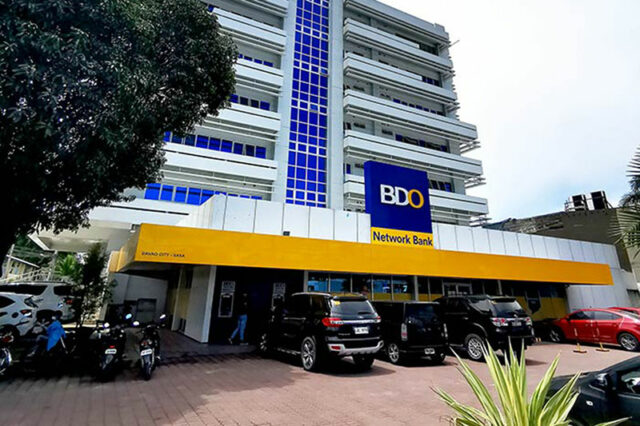
BDO Network Bank expects to end the year with over 70 additional branches

BDO.COM.PH

By Aaron Michael C. Sy, Reporter

BDO Network Bank, Inc., the rural banking arm of listed BDO Unibank, Inc., expects to end the year with more than 70 additional branches as it looks to reach more underserved areas.

“I have about another 20 or so more branches to open this December. So, we’ll end the year at around 560 to 570 branches,” BDO Network Bank President Jesus Antonio S. Itchon told reporters at the sidelines of an event on Wednesday.

This would bring the additional BDO Network Bank branches opened this year to more than 70. Next year, Mr. Itchon said they want to put up more new branches to possibly exceed this year’s number.

BDO Network Bank is targeting tourist destinations for its branch expansion, he said.

“What happens is, when we open a branch, the investors who are putting up resorts are encouraged. So, we actually are able to help the investors invest more easily into the area,” Mr. Itchon said.

The new branches would also help boost connectivity and infrastructure in far-flung areas, he added.

“Well, let me just say I define the market we’re going after as underserved, and it’s underserved in infrastructure and banking. For those that have signal and all, that’s fine. But there’s a big part of the country that doesn’t have that. So, that’s where we are. In fact, I think we have about 40 or so locations where we have to connect through Starlink. There’s no landline or mobile,” he said.

Despite the banking industry’s increasing digitalization, physical branches remain important in rural areas that have little to no internet infrastructure, Mr. Itchon said, as having a brick-and-mortar presence also helps build trust with new customers.

“The underserved communities are not just underserved by the banks. There’s no internet, there’s no WiFi, or no cell signal. So, how can you depend on digital to do financial inclusion? So, we need to provide access — physical access. And we have to be there,” he said.

“Financial inclusion needs access, and the access for our markets needs physical touch. We need to put people on the ground. That’s why we’ve been opening branches,” Mr. Itchon added.

BDO Network Bank, formerly One Network Bank, Inc., was the biggest rural lender in the country in terms of assets as of end-June with P113.8 billion.

BDO took over One Network Bank in 2015 in a transaction valued at P6.7 billion.

Based on its annual report, BDO Network Bank posted a net income of P884.4 million in 2023, down 22% from P1.134 billion in 2022. It had 393 branches, 121 loan offices, and 431 automated teller machines at end-2023.

Meanwhile, its listed parent BDO’s net income grew by 13.26% year on year to P21.18 billion in the third quarter, driven by the continued growth of its core businesses.

This brought its nine-month net profit to P60.62 billion, climbing by 12.47% from a year ago.

BDO was the largest Philippine bank in terms of assets as of June with P4.508 trillion.

Its shares rose by 20 centavos or 0.13% to end at P155.90 apiece on Thursday.

InLife to take over Generali Life

INSULAR LIFE CORPORATE Center in Muntinlupa City — INLIFE

THE Insular Life Assurance Co., Ltd. (InLife) is set to buy 100% of Generali Life Assurance Philippines, Inc.’s shares in a move meant to boost its market position.

“As a homegrown company acquiring a foreign entity, we see this as a strategic step to cement our position as a leader in the life insurance industry. Moving forward, InLife is committed to scaling new heights in delivering exceptional value to our policyholders and the communities we serve,” InLife Executive Chairperson Nina D. Aguas said in a statement late on Wednesday.

InLife expects the acquisition to be completed by the first half of 2025, subject to regulatory approvals.

“It is expected to bring about key business synergies, reinforce distribution strength, and expand the company’s end-to-end corporate product suite,” InLife said.

“The integration will also capitalize on the combined expertise of both organizations’ teams, enabling InLife to deliver world-class insurance solutions and services to its policyholders and stakeholders,” it added.

Following its exit from the Philippine insurance sector, Generali Life said it will “focus on markets where it holds a leading presence.”

InLife booked a premium income of P15.64 billion in 2023, latest Insurance Commission data based on companies’ annual statements showed, ranking seventh among life insurers. Its net income stood at P2.45 billion, while its assets totaled P150.65 billion.

Meanwhile, Generali Life posted a premium income of P1.91 billion and a net loss of P169.39 million last year. It had assets valued at P3.64 billion at end-2023. — A.M.C. Sy

Entertainment News (12/06/24)

DISNEY DISCOVERY REEF

Bookings for the Disney Adventure open Dec. 10

GUESTS will be able to book vacations at sea on the Disney Adventure, Disney Cruise Line’s first ship to homeport in Asia, starting Dec. 10, 8 a.m., Singapore time, for sail dates through March 2026. The Disney Adventure will set sail from Singapore on her maiden voyage on Dec. 15, 2025. Guests will be able to book directly from the Disney Cruise Line website, through the  contact center, or with their preferred travel agents. Sailing on primarily three- and four-night voyages designed with only dedicated days at sea, guests will be immersed in experiences that bring to life the worlds and characters at the heart of Disney, Pixar, and Marvel. The Disney Adventure has seven themed areas: Disney Imagination Garden, Toy Story Place, San Fransokyo Street, Town Square, Wayfinder Bay, Disney Discovery Reef and Marvel Landing.


Royal Hataw Grand Finals to kick off this month

SODA BRAND Royal will host the Hataw Grand Finals on Dec. 7, 3-6 p.m., at Market! Market! in Taguig City. The event will feature the top 15 dance crews from Mindanao, Visayas, and Luzon competing for the title of Royal Ito Ang Gusto Crew and the grand prize of P500,000. The winner will be crowned the first-ever Royal Dance Crew.


Araneta City’s Simbang Gabi schedule

ARANETA CITY will be holding the Simbang Gabi series of midnight masses for Christmas at the Sagrada Familia Church, the Ali Mall Chapel, and Farmers Market. The Sagrada Familia Church, found at Level 5 of Gateway Mall 2, will have Simbang Gabi masses on Dec. 15 and 22 (Sundays) at 7:30 p.m.; on Dec. 16 to 20 and Dec. 23 (Monday to Friday) at 6 p.m., and on Dec. 21 (Saturday) at 6:30 p.m. Meanwhile, the Ali Mall Chapel will hold masses from Dec. 15 to 23 at 6:30 p.m.; and over at the Gen. Aguinaldo Ave. Entrance of Farmers Market, masses will be held from Dec. 16 to 24 at 5:30 a.m. Christmas and New Year’s Masses will also be held at the Sagrada Familia Church throughout Dec. 25 and Jan. 1, 2025 at 12:30 p.m., 2:30 p.m., 3:30 p.m., 4:30 p.m., 5:30 p.m., 6:30 p.m., and 7:30 p.m. Among the various other Christmas activities being held at Araneta City over the holidays is Santa & Friends Meet & Greet. This will be held from Dec. 6 to 8 at the Gateway Mall 2’s Quantum Skyway at 4 p.m.; at Gateway Mall 1’s Upper Ground Floor Activity Center at 5:30 pm.; at Ali Mall lower ground floor Activity Center at 4 p.m.; and at Farmers Plaza’s lower ground floor activity center at 5:30 p.m. Santa and Friends will also be stopping by the Giant Christmas tree at the Green Gate of the Smart Araneta Coliseum at 6 p.m. There will be a mascot parade around Ali Mall (4 p.m.) and Farmers Plaza (5:30 p.m.) on Dec. 8. Meanwhile, Coca-Cola’s Christmas Truck will be making a stop at Times Square Park on Dec. 8, 5:30 p.m. The Coca-Cola Snow Globe is set up at Gateway Cineplex 18, Level 4, Gateway Mall, until Jan. 11, 2025. Visitors can create their own Snow Globe by scanning the QR code. A fireworks display will be held at 7 p.m. every Friday to Sunday. The best viewing locations are near the Giant Christmas Tree and along Gen. Aguinaldo Ave. The Fireworks Display will launch at the Gateway Tower helipad.


Met Park in Pasay unveils holiday season events

MET PARK in Pasay City has kicked off its holiday festivities, starting with the Christmas Tree Lighting Ceremony at Blue Bay Walk. The park is offering a range of events to spread holiday cheer. These include the Met Park Christmas Bazaar, running every Friday to Sunday until Jan. 5, 2025, which features 20 specialty stalls offering artisanal gifts, festive treats, and workshops for perfume-making, candle-making, and wreath-making. Payday promos and complimentary gift wrapping are available with qualifying purchases. From Dec. 2-8, the Heroes PH Comics & Cosplay Convention at Met Live will showcase toy displays, comic vendors, and cosplay competitions. Christmas Carols will fill the air from Dec. 6-14, with choirs and buskers offering traditional holiday performances. Lastly, Simbang Gabi masses will be held nightly from Dec. 15-23, honoring the Filipino Christmas tradition.


Lionsgate offers heartwarming films for the holidays

LIONSGATE PLAY presents a selection of heartwarming films perfect for the holiday season. Among its offerings is Wonder (2017), based on R.J. Palacio’s bestselling novel, which follows August “Auggie” Pullman (Jacob Tremblay), a young boy with facial differences who is navigating his first year of elementary school. I Am David (2004) tells the inspiring story of 12-year-old orphan David (Ben Tibber), who escapes a Bulgarian labor camp and embarks on a life-changing journey across Europe bringing only a compass, bread, and a mysterious letter. In August: Osage County (2013), the Weston sisters — played by Julia Roberts, Juliette Lewis, and Julianne Nicholson — are forced to reunite with their estranged mother, played by Meryl Streep, after a family tragedy. Finally, there is The Impossible (2012) which tells the true story of the Belón-Álvarez family’s fight for survival after a devastating tsunami strikes during their Christmas vacation in Thailand, separating the parents (played by Naomi Watts and Ewan McGregor) from their children.


Viu adds four new Tagalog-dubbed shows

VIU, a streaming platform focusing on Asian media, has added four new Tagalog-dubbed Korean and Chinese series to its lineup. The new shows, which are already available this month, are: Lovely Runner which follows a fan who travels 15 years back in time to change the fate of her idol and prevent his untimely death (it stars Kim Hye-yoon and Byeon Woo-seok); Pyramid Game, which tells the story of a high school transfer student who has the bad luck of scoring zero in the ranking system and must fight through bullying and violence to reach the top of the pyramid (it stars Kim Ji-yeon); My Boss, a romantic comedy about an aspiring lawyer who is determined to prove herself to her colleagues, especially the firm’s head (it stars Zhang Ruonan and Chen Xingxu); and, High School Return of a Gangster follows a gangster who accidentally possesses an 18-year-old boy to stop him from taking his own life (it stars Lee Seo-jin and Yoon Chan-young).


Kuya Kim Atienza renews contract with GMA

KIM “KUYA KIM” ATIENZA renewed his contract with GMA Network on Dec. 2, solidifying his continued partnership with the network. The contract signing was attended by key GMA executives, including GMA Network President and Chief Executive Officer Gilberto R. Duavit, Jr.. Mr. Atienza, often called the “Philippine Trivia King,” has been a key figure in several flagship shows, including 24 Oras, Mars Pa More, and TiktoClock.

EEI Power bags rooftop solar system deal with Mindoro Medical Center-Calapan

EEIPOWER.COM

EEI Power Corp. has signed a contract with the Mindoro Medical Center-Calapan, Inc. for the installation of a rooftop solar system on the latter’s hospital in Oriental Mindoro.

Under the contract, EEI Power will install a 605-kilowatt-peak (kWp) solar photovoltaic rooftop system as part of the hospital’s sustainability goals.

“This partnership with EEI Power is in line with our dedication as a healthcare institution to deliver excellent healthcare while contributing to environmental conservation and the healing of this planet,” Mindoro Medical Center President Arthur Rico R. Villafuerte said in an e-mailed statement on Thursday.

The partnership seeks to utilize clean and renewable energy to power a significant amount of the hospital’s operations. It also lowers the hospital’s dependency on traditional electricity, resulting in savings that could be used for facility improvements and better patient care.

“Our mission of providing sustainable solutions for our clients and stakeholders while doing our share for the betterment of communities continues to inspire us at EEI Power,” EEI Power Vice-President and General Manager Robert Marlon T. Pereja said.

EEI Power is the energy arm of listed construction company EEI Corp. It has business interests in the operation and management of power generating stations of several manufacturing companies as well as the packaging of Build-Operate-Transfer schemes for power plant projects in consortium with power producers.

On Thursday, EEI Corp. shares fell by 5.88% or 20 centavos to P3.20 apiece. — Revin Mikhael D. Ochave

What Filipino liberals can learn from the Democratic defeat in the US

FORMER PRESIDENT RODRIGO DUTERTE appeared before the Senate Blue Ribbon Committee during its probe of his administration’s extrajudicial killings. — PHILIPPINE STAR/JESSE BUSTOS

(Part 2)

RODRIGO DUTERTE’s populist appeal still resonates with many Filipinos, especially in light of the public’s ongoing frustrations with the slow pace of change and the sense that the elite political class has failed to deliver on its promises. As political analyst Julio Teehankee noted, “The Duterte legacy is not just about his presidency but the emotional resonance that continues to echo through the Filipino electorate.” This means that opposition forces must engage with voters not just on policy grounds but by offering a credible, compelling vision that answers the existential questions of Filipino politics today.

In response to Trumpism, the Democrats must reinvent themselves by reconnecting with their base and offering a compelling vision of the future. As President Barack Obama once put it, “The task of rebuilding trust begins with recognizing the very real fears and frustrations of voters who have been left behind.” This is equally true for Filipino liberals. If they are to effectively challenge Duterte’s legacy and his potential comeback, they must offer more than just critique. They must articulate a vision for the future that speaks to the realities of ordinary Filipinos — their economic struggles, their desire for stability, and their need for meaningful change.

Consider the case of Vice-President Leni Robredo’s campaign during the 2022 presidential election. Robredo, often considered the face of the opposition, struggled to reach beyond her well-educated base. Her calls for a more technocratic approach to governance, focused on rational policies and inclusive growth, did not resonate with a significant portion of the electorate who, much like the Trump and Duterte supporters, were looking for more immediate, emotional connections. Robredo’s defeat exposes the challenge the opposition faces in breaking through to voters who no longer trust or believe in the promises of traditional politicians.

FUNDAMENTALS: THE RURAL VS URBAN DIVIDE
In the United States, the reelection of Donald Trump can be understood as a direct response to what many perceive as a Democratic Party increasingly out of touch with the working-class and rural voters of America. As the party pivoted toward cosmopolitan values and increasingly catered to the Washington elite and coastal cities like New York and Los Angeles, a significant portion of the country — particularly in the Midwest, South, and Rust Belt — felt neglected.

Similarly, one of the most striking features of Duterte’s rise to power — and his enduring political appeal — lies in the distinct divide between his rural mass base and the more urban-centric support enjoyed by his political rivals, including Leni Robredo. This divide is not just geographical but socio-economic, rooted in deeply entrenched class and cultural distinctions that reflect the broader tensions within Philippine society.

Duterte’s political power is especially evident among the D and E socio-economic classes, which make up the majority of the Philippine population. According to the 2018 Social Weather Stations (SWS) survey, more than 60% of Filipinos in the D and E categories expressed support for Duterte’s war on drugs and his strongman policies. These voters, often from rural areas or smaller cities, are typically less exposed to the policies of the political elite and tend to favor strong leadership, which they perceive as necessary to combat crime, corruption, and inequality. This mass base is deeply influenced by a form of political fundamentalism — a belief in the necessity of drastic, sometimes authoritarian measures to restore order and address what they see as a nation in decline.

In contrast, Leni Robredo, who represented a more technocratic and democratic alternative to Duterte’s populism, found her strongest support among urban elites. Robredo, while enjoying widespread backing in Manila and among the country’s more affluent sectors, including prominent families like the Ayalas, Aboitizes, and Lopezes, struggled to connect with the mass base that Duterte had mobilized in the provinces. This urban-rural divide reflects not only economic disparities but also cultural differences. Urban centers, where media and educational institutions are more concentrated, tend to be more open to liberal ideas and progressive reforms, while rural areas remain more traditional and cautious, often viewing such proposals with skepticism.

The cultural and economic distance between Duterte’s rural supporters and Robredo’s urban elite backers is crucial in understanding the political polarization that emerged in the 2016 and 2022 elections. Scholars such as Lina S. Ching in her 2021 study on Philippine political dynamics argue that the urban elite, particularly those in Metro Manila, have long dominated the political discourse, focusing on economic liberalization and democratic reforms. However, these elite-driven policies often fail to address the daily struggles of rural and lower-class Filipinos. In contrast, Duterte’s “pro-people” populism, rooted in his promise to end crime and corruption, resonates with those who feel disenfranchised and left behind by the economic policies that have favored the rich and powerful.

This rural-urban divide is also evident in the electoral results. According to a post-election analysis by The Philippine Daily Inquirer in 2022, while Robredo garnered overwhelming support in urban centers, she was significantly outpaced by Duterte’s allies in the provinces, where his message of nationalistic pride and “restoring order” continued to hold sway. SWS surveys from the same period showed that while urbanites were more likely to support candidates with platforms of human rights and social justice, voters in rural areas favored policies that emphasized stability, even at the cost of personal freedoms.

These regional dynamics underscore the challenges faced by liberal and progressive forces in the Philippines. As sociologist Dr. Felipe B. Miranda argues in his study The Philippine Electorate: A Country Divided (2020), “The division between the urban elite and the rural masses is not merely a geographic one; it is a chasm that reflects competing visions of the nation, where the city represents modernization and the countryside, traditional values.” This cleavage is further deepened by Duterte’s portrayal of himself as a defender of the common Filipino, someone who understands their struggles and will fight for their interests — an image that resonates strongly among those who feel alienated from the political establishment.

The mass base supporting Duterte is often described as politically fundamentalist, driven by a belief that drastic measures are needed to restore the country to its perceived former glory. This political fundamentalism is grounded not just in economic frustrations but in cultural identity. Duterte’s rhetoric, invoking themes of nationalism, anti-Western sentiment, and a return to “traditional values,” appeals to a broad swath of Filipinos who view these ideals as threatened by globalization and the liberalism espoused by the urban elite.

In a 2019 survey by The Asian Foundation, over 70% of rural Filipinos indicated that they viewed Duterte as a champion of Filipino nationalism, while only 42% of urban residents felt the same way. This gap highlights the cultural divide that drives much of the support for Duterte’s brand of populism. His message of restoring “order” and “pride” resonates deeply with those in rural areas, where traditional authority figures — such as local leaders and community elders — continue to hold sway. In contrast, urban elites, often more cosmopolitan and exposed to global influences, tend to prioritize issues of governance, rule of law, and human rights.

The challenge for opposition forces, especially those from liberal and progressive circles, is how to bridge this divide. According to political theorist Dr. Teresa R. Anastasios, in her 2020 paper “Populism and the Philippine Electorate”: “To oppose populism effectively, one must first understand the underlying grievances of the populist base, particularly the rural and marginalized sectors, who often feel left out of the narrative of national development.” This suggests that any future political strategy must address the very real concerns of those in rural areas, offering concrete solutions to their economic and social struggles, while also advocating for a more inclusive vision of the nation.

Understanding the dynamics of this rural-urban divide will be critical for any opposition party seeking to challenge Duterte’s enduring influence. By grounding their platforms in a more nuanced understanding of the emotional and socio-economic realities faced by both urban elites and rural Filipinos, opposition leaders can begin to craft a more compelling message that resonates across the political spectrum. It is only by acknowledging the deep-rooted feelings of alienation among the masses and offering them a vision of hope that the forces of populism can be meaningfully countered.

THE ROAD AHEAD
As the 2025 and 2028 elections loom large, the specter of the Dutertes’ return to national politics poses a real threat to the Philippines’ political future. While the Duterte patriarch has stepped down from his presidential position, his influence remains substantial. Political analyst Julio Teehankee notes, “The Duterte legacy is not just about his presidency but the emotional resonance that continues to echo through the Filipino electorate.” His family and allies continue to dominate local politics, and the possibility of a return to power, whether through a proxy or a direct campaign, cannot be discounted. This impending political comeback makes it even more urgent for the opposition to rethink its strategy.

The liberal opposition must grapple with a hard truth: policy expertise and reasoned arguments are no match for a narrative that speaks to anger, fear, and hope all at once.

As former US President Barack Obama put it, “The task of rebuilding trust begins with recognizing the very real fears and frustrations of voters who have been left behind.” This is the challenge facing Filipino liberals: to move beyond critique and present an alternative that addresses the existential questions of Filipino politics today. It requires a new kind of politics — one that combines empathy with policy, one that connects with voters on a deeply personal level.

(Read Part 1 here: What Filipino liberals can learn from the Democratic defeat in the US https://tinyurl.com/28x8ugc2 )


Jam Magdaleno is a political communications expert and currently heads the communication unit at the Foundation for Economic Freedom.


Advancing to a new era: insights on the IT-BPM industry

At the recent FINEX General Membership Meeting, Jack Madrid, president & CEO of the IT & Business Process Association of the Philippines (IBPAP), delivered a compelling keynote on the evolving landscape of the IT-Business Process Management (IT-BPM) industry. His insights align with FINEX’s 2024 theme of Transformational Growth through Sustainability, Digitalization, and Diversity, offering invaluable guidance for Filipino business leaders navigating this dynamic sector.

In 2023, the IT-BPM industry hit a major milestone with a workforce of 1.7 million professionals, contributing $35.5 billion in revenues — equivalent to 8.7% of the country’s gross domestic product (GDP). The Philippines has solidified its position as a preferred partner for global brands, delivering services across six core sectors: Contact Centers, Global Shared Services, IT & Software, Healthcare Information Management, Animation, and Game Development.

Looking ahead, the industry is committed to becoming the world’s “top digital experience hub by 2028.” This ambitious vision aims to create 1.1 million new jobs, with 600,000 based in provincial areas, further bolstering the country’s economy. Despite slightly missing its 2024 targets — 1.82 million jobs and $38 billion in revenues instead of 1.84 million jobs and $39.68 billion — the industry remains on a solid growth trajectory.

Mr. Madrid highlighted that while growth is expected to be moderate between 2024 and 2026, the sector will stabilize by 2027 or 2028, influenced significantly by artificial intelligence (AI). He noted that AI is both a game-changer and a challenge, transforming operations across various domains, including software development, fraud detection, and customer service. In a recent survey, 67% of IT-BPM companies in the Philippines have integrated AI into their processes.

However, this rapid adoption of AI is not without its challenges. Implementation costs, system integration, and data privacy concerns are key hurdles. Additionally, 8% of IBPAP member firms reported workforce reductions due to AI integration. These developments highlight the need for upskilling and reskilling initiatives to equip employees with the competencies required in an AI-driven environment. Beyond technical skills, fostering adaptability and critical thinking among workers will be crucial to navigating the industry’s ongoing transformation.

Microsoft CEO Satya Nadella aptly stated, “In the age of AI, it’s not about man versus machine; it’s about man with machine.” This collaborative approach embodies the essence of transformational growth: blending human ingenuity with cutting-edge technology. By fostering innovation, prioritizing workforce development, and creating inclusive job opportunities, the Philippine IT-BPM industry can thrive in an increasingly competitive global market while driving national economic progress.

The views and opinions expressed above are those of the author and do not necessarily represent the views of Ayala Land, Inc., and FINEX


Augusto “Toti” D. Bengzon is the CFO, chief compliance officer & treasurer of Ayala Land, Inc., and the 2024 FINEX president.

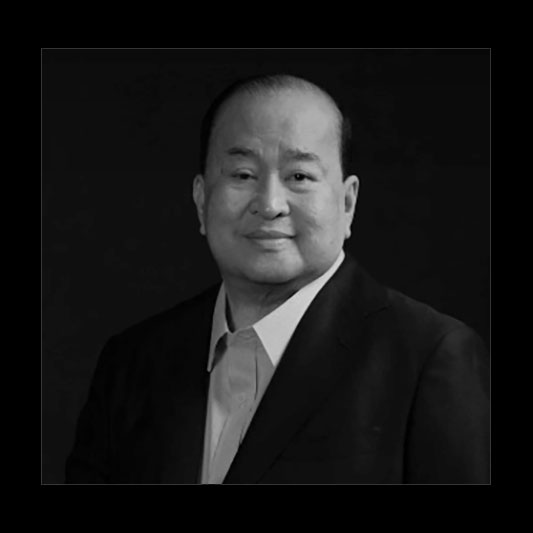
AbaCore’s Raul B. De Mesa, 81

RAUL B. DE MESA — SCREEN GRAB FROM FACEBOOK.COM/ABACORECAPITALHOLDINGSINC

VETERAN banker Raul B. De Mesa, who served as president, chairman, and chief executive officer of AbaCore Capital Holdings, Inc., and as director of Pacific Online Systems Corp., has passed away at age 81.

AbaCore and Pacific Online announced Mr. De Mesa’s death in separate disclosures on Thursday.

“His untimely departure has left an irreplaceable void in our organization and in the lives of all who had the privilege of knowing and working with him,” AbaCore said.

“We extend our deepest condolences to his family and loved ones during this difficult time. We stand with them in grief, mourning the loss of an extraordinary individual,” it added.

AbaCore described Mr. De Mesa as “more than a leader” and “a visionary, a mentor, and a driving force behind the success and growth of AbaCore.”

“His unwavering dedication, compassion, and commitment to excellence inspired us all, and his legacy will continue to shape the future of our company,” it said.

Mr. De Mesa had served as Pacific Online’s director since June 2022.

“His valuable contributions to the corporation will be remembered,” Pacific Online said.

Mr. De Mesa had almost 40 years of banking experience. He held positions in banking institutions such as Bank of Commerce, Security Bank Corp., Manila Banking Corp., and Far East Bank and Trust Co. — Revin Mikhael D. Ochave

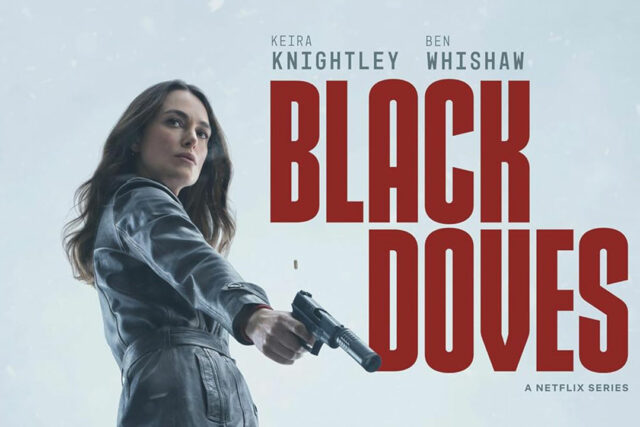
Keira Knightley finds wit and festive tension in spy series Black Doves

LONDON — British actress Keira Knightley says her new series Black Doves stands out for its tongue in cheek take on the world of espionage.

Ms. Knightley, who also executive produced the show, plays Helen Webb, an undercover spy working for the secretive Black Doves intelligence organization. A loving mother of two, Helen has been married to a prominent British politician for years, pilfering and passing on his classified government data. When her lover, a mysterious civil servant, is assassinated, Helen gets tangled in a web of conspiracies and risks her cover being blown.

“I was looking for a series to do, read the pilot and thought it was exactly what I was looking for. It’s a thriller, but it’s got this kind of amazing wit. It’s faintly ridiculous but in the most delicious kind of way,” Ms. Knightley said at the series’ premiere in London on Tuesday.

Ben Whishaw plays Helen’s sidekick Sam, a triggerman distracted by his past and complicated love life.

“It’s so unlikely-slash-absurd because I kill a whole small army of assassins by myself. All of them are sort of twice the size of me,” Mr. Whishaw said. “This show has a twinkle in its eye that means that it knows it’s being a bit ridiculous, but it’s going to go there anyway.”

Ms. Knightley, 39, said she identified with her character’s capacity to compartmentalize the different parts of her personality.

“I’m a parent of two young girls and I’ve definitely got a child-friendly face when I’m with them. And then there’s other parts of my personality and they still exist, they just don’t necessarily get the air that they used to,” she said.

The six-part series was created and written by Joe Barton, whose previous credits include Giri/Haji and The Lazarus Project.

Mr. Barton said he wrote Black Doves, which is set in London in the lead up to Christmas, “on a bit of a whim” between Boxing Day and New Year two years ago.

“I felt like the setting sort of works quite interestingly against the spy stuff, it’s all the jolly and the tinsel, and it’s quite a dark time of year in a way, where everyone’s quite emotionally fraught. So it kind of adds to the tension,” he said.

Black Doves starts streaming on Netflix on Dec. 5. — Reuters

What would Dr. Strangelove do with artificial intelligence?

SLIM PICKENS in Dr. Strangelove or: How I Learned to Stop Worrying and Love the Bomb (1964)

I TRAVELED a distance last week to attend an off-the-record lecture on artificial intelligence (AI), delivered by the head of one of the West’s foremost intelligence agencies. Like many people, even those familiar with the defense and security world, I know next to nothing about AI and the revolution that will impact on every life.

The trip proved not to be worth the gas. Our think tank audience was treated to a half hour of bromides about how important AI is going to be; the need to regulate and use it wisely. However, our speaker didn’t trouble to explain what AI will do, beyond the obvious of thinking autonomously. I wondered, as I left, whether they really know what it’s all about.

I start with this vignette so that if you feel as ignorant as me, you should be reassured, because you have plenty of company; yet all of us can grasp the fact that AI will play a key role in decision-making of every kind, commercial, governmental, and military. On battlefields, almost all future weapons systems will have AI capability, for instance to synchronize drone swarms and to respond to incoming missiles with literally superhuman alacrity. There are fears that when AI urges optimal courses on commanders, it will promote escalation.

Some sages go much further in their predictions. Henry Kissinger, writing from the grave in a new book completed and co-authored by tech elder statesmen Eric Schmidt and Craig Mundie, argues that “immune from fear and favor, AI introduces a new possibility of objectivity in strategic decision-making.” Kissinger and his colleagues see the possibility that machines may behave more rationally, and thus better, than such human aggressors as Russian President Vladimir Putin.

Most of us are more wary, and indeed nervous. If we mistrust China’s President Xi Jinping and America’s President-elect Donald Trump to make wise decisions about peace or war, we are even more appalled by the notion of machines possessing power to usurp their judgments. Steven Feldstein of the Carnegie Endowment for International Peace says that AI “is helping to precipitate a new age of geopolitics,” which “will inevitably shape the functioning of democracy and governance.”

The growing power of chatbots will enable malign engineers vastly to influence political opinion-forming by broadcasting a torrent of propaganda as fact, further poisoning public discourse in the fashion already achieved by many right-wing outlets through social media.

Given that every day we see airline computer systems fail and government databanks hacked, it seems terrifying to contemplate a future in which a systems glitch might launch a nuclear missile. We simply do not trust the “experts,” who seek to reassure us that AI won’t be granted power to do this.

Many of us have seen Stanley Kubrick’s superlative 1964 satirical movie Dr. Strangelove, in which a mad American general launches a strategic bomber wing against the Soviet Union, only for the US president to discover that the Russians have created a doomsday machine, which will unleash massed nuclear weapons automatically, in the event of an American attack. The rest is the future, as they say.

Six decades on, we are obliged to rely, as humankind has in the past, upon the inhabitants of the planet retaining sufficient sense of self-preservation that they don’t build systems with autonomous power to destroy us all. Yet it seems reasonable to fear that Xi, Putin, Trump, and Kim Jong Un themselves understand the finer points of the technology no better than I and perhaps you do.

I never forget the story — a matter of record, not legend — of Winston Churchill, approached by his chief scientific adviser in August 1941 and asked for authority to pursue an investigation of nuclear fission, with the ultimate ambition to create a bomb. This was the seed later brought to its terrible harvest by US wealth and power, through the Manhattan Project.

Churchill responded that he saw no need for a more powerful weapon, when the means of destruction already available seemed perfectly adequate: “Personally I am quite content with the existing explosives.” Since the scientists were so keen, however, he raised no objection to authorizing their research. My point here is that, as a Victorian born in 1874, Churchill couldn’t comprehend the epochal significance of nuclear fission, and really only did so after the US bombings of Hiroshima and Nagasaki in 1945.

My own father wrote me a letter days after my birth in December 1945, which he presented to me when I was 21, anticipating that my generation would spend our lives haunted by the specter of The Bomb. In reality, it is extraordinary how cheerfully we have gotten through the last 79 years, frightened by many things but only briefly — during the 1962 Cuban Missile Crisis — really scared by the prospect of intercontinental nuclear war.

Today, we know this much: AI will prove as critical a game-changer in the affairs of the world as the creation of the atomic bomb. The authors of the Kissinger book, Genesis: Artificial Intelligence, Hope and the Human Spirit, between spasms of optimism, admit: “If AI emerges as a practically independent political, diplomatic, and military set of entities, that would force the exchange of the age-old balance of power for a new, uncharted disequilibrium… Such an… order could witness an internal implosion of societies and an uncontrollable explosion of external conflicts.”

The prophets of AI anticipate war ceasing to be a contest between rival armies, navies, or air forces manned by humans, and becoming instead a struggle between rival machine systems. Courage, or lack of it, will cease to be a factor. The skills that matter won’t be those of a Top Gun pilot but instead those of software engineers who, long before hostilities commence, program the technology that does the fighting.

The Ukraine war has shown how far missiles and UAVs — drones — now dominate battlefields. If I was running weapons procurement for any nation, I would decline funding for any new combat aircraft, which wouldn’t enter service much before 2040, that required a crew.

I recall my sense of amazement 20 years ago in a hangar outside Kabul when, for the first time, I watched a former B-52 pilot fly a drone. I sensed then, and know now, that I was glimpsing the future.

At least the Manhattan Project was run by real people, even if some were as flawed as Robert Oppenheimer. It seems right for us to be scared by the prospect of machines directing our future armed conflicts, not to mention driving the operations of market makers and hedge fund managers. Feldstein observes, “the prospects for the accidental use of force and potential escalation are acute.” But AI is coming. Our enemies, are working furiously to advantage themselves. We have no choice save to keep up, which is what the Manhattan Project scientists told each other through three years of herculean labor to build The Bomb.

We must seek comfort in the fact that we have survived the first eight decades of the nuclear era, which many of our parents believed would be the end of us. Maybe our children will muddle through the AI era, which, like The Bomb, can never hereafter be wished away.

BLOOMBERG OPINION

ADVERTISEMENT
ADVERTISEMENT