Home Blog Page 2238

DoTr inks P16.9-B Cebu port project, 4 others
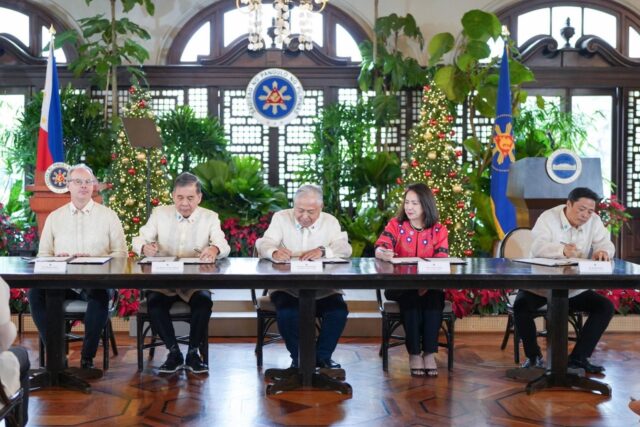
COURTESY OF PRESIDENTIAL COMMUNICATIONS OFFICE

THE Transportation department on Wednesday signed contracts for five transport projects for central Philippines, including the P16.9-billion New Cebu International Container Port.

The port project financed by the Export-Import Bank of Korea (KEXIM) is the Department of Transportation’s (DoTr) first public-private partnership (PPP) project in the maritime sector, agency Secretary Jaime J. Baustista said in a speech at a ceremony at the Malacañan Palace.

Dubbed as the first hybrid PPP project under the Marcos administration, the project’s civil works will be “financed by cheap concessional financing,” according to Mr. Bautista.

Under the setup, “agile private sector financing will be used for operations and maintenance,” he added.

The project is targeted for completion by 2027 and is under a Transaction Advisory Services Agreement. It aims to improve the Cebu Base Port’s cargo handling capacity and reduce logistics costs.

The civil works contract package for the New Cebu International Container Port was awarded to HJ Shipbuilding Construction Co., Ltd. during the event.

Civil works include a 1,365-meter access road that will connect the new port through a 300-meter offshore bridge.

“All these projects are a major win for the economy, for tourism, for the environment, for the private sector, and most of all, for the Filipino people,” Finance Secretary Ralph G. Recto said in a speech.

Mr. Recto assured that the Department of Finance (DoF) would continue to “act fast on PPP projects.” The DoF is responsible for evaluating solicited and unsolicited PPP proposals.

The project was first approved by the National Economic and Development Authority (NEDA) Board in 2016, but it had been delayed due to the pandemic, the Russo-Ukrainian war, and the global tightening of monetary policy, which all resulted in “significant surge” in project costs, Mr. Bautista said.

The DoTr also signed an expression of interest to engage the International Finance Corporation (IFC) of the World Bank as a “transaction advisor” in structuring and bidding out the bus supply and operations and maintenance of the P28.78-billion 35-kilometer (km) Cebu Bus Rapid Transit.

The bus transit will have 17 km of trunk service, 22 stations, 62 bus stops, four terminals, a depot, and 18 km of feeder services in the north and south of the trunk lines.

It is expected to accommodate 116,000 passengers during partial operations, and as many as 164,000 passengers per day once full operations start.

The DoTr also signed the 30-year concession agreement for the Bohol-Panglao International Airport PPP project with Aboitiz InfraCapital.

The agreement involves the construction of a new passenger terminal building and other airport facilities, installment of required and modern aviation equipment, development of commercial assets and services in the airport, the gateway Tagbilaran City and the rest of mainland Bohol.

The expansion project, which was approved by the NEDA Board in October 2023, is expected to increase the airport’s capacity to 3.9 million passengers yearly from 2 million passengers.

“Like other airport development projects, Bohol airport’s transformation is seen to promote regional growth, generate jobs and livelihood, and create investment
opportunities,” the DoTR chief said. 

President Ferdinand R. Marcos, Jr., who witnessed the signing, said the airport project is “expected to generate P15 million in annual revenue during its first five years, rising to P200 million a year by the end of the concession period.”

“But more than just the revenue, its true success will be the number of lives that it will change for the better in Bohol,” he added.

The DoTr also entered into an agreement with the World Bank’s International Finance Cooperation to assist in conducting a preliminary analysis and assessment of the proposed New Dumaguete and New Siargao Regional Airports.

“These transformative initiatives build on the momentum of the successful transfer of operations and management of the Ninoy Aquino International Airport (NAIA) to New NAIA Infrastructure Corporation and Laguindingan Airport to Aboitiz InfraCapital earlier this year,” the Civil Aviation Authority of the Philippines said in a statement.

“These partnerships highlight the critical role of private sector expertise and resources in modernizing Philippine aviation infrastructure.” — Kyle Aristophere T. Atienza

Gov’t needs to spend P220B annually to achieve rice sufficiency — NIA

A worker unloads a sack of rice from a truck in Manila, May 30, 2024. — PHILIPPINE STAR/RYAN BALDEMOR

THE National Irrigation Authority (NIA) said it would cost about P220 billion per year to irrigate a total of 1.2 million hectares of farmlands needed to achieve rice sufficiency, its chief said on Wednesday.

Speaking at a House of Representatives committee hearing, NIA Administrator Eduardo G. Guillen said improvements to the country’s irrigation facilities, while costly, are a key factor in raising palay productivity amid the country’s increasing dependence on rice imports.

“We need a higher budget to complete the required 1.2 million hectares in around 10 years. We need to invest around P220 billion per year,” Mr. Guillen told congressmen in Filipino.

“Our agricultural productivity is really low. So, one key to increasing our productivity level is through irrigation,” he added.

The government of President Ferdinand R. Marcos, Jr. vowed to improve the country’s agriculture sector by investing in irrigation systems, with the goal of irrigating at least 45,000 hectares of new farmland this year.

Mr. Guillen said it costs about P1.2 million per hectare of new farmland and takes three years to operationalize traditional irrigation facilities, while solar pump irrigation facilities cost P200,000 to P300,000 per hectare.

Meanwhile, repairing deteriorated and faulty irrigation structures would cost around P500,000 per hectare, he added.

Lawmakers part of the 2025 budget bill’s joint panel decided to slash NIA’s budget by 25%, to P69.3 billion from the P92.5 billion allocated by the House of Representatives in its General Appropriation Bill (GAB).

“Our House GAB became P90 billion, but we are waiting to see the outcome from the bicameral committee. When we went to the Senate, I think they reduced the amount the House of Representatives added,” said Mr. Guillen. — Kenneth Christiane L. Basilio

House panel recommends crimes against humanity charges vs Duterte

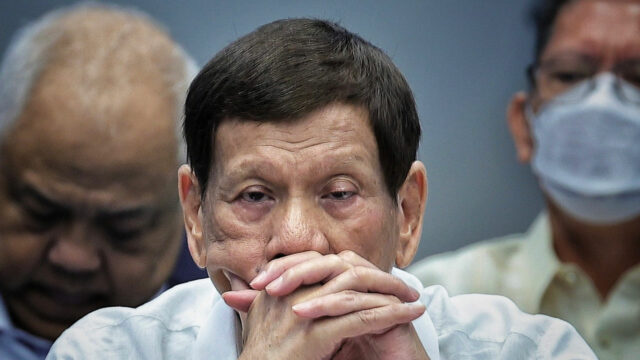
FORMER PRESIDENT Rodrigo R. Duterte — OFFICIAL FACEBOOK ACCOUNT OF THE SENATE OF THE PHILIPPINES

A HOUSE of Representatives committee on Wednesday recommended the filing of crimes against humanity charges against former President Rodrigo R. Duterte for his bloody campaign against illegal drugs.

Mr. Duterte, 79, is culpable of violating Republic Act (RA) No. 9851, a domestic law penalizing crimes against humanity, according to Surigao del Norte Rep. Robert Ace S. Barbers, who heads the House quad committee.

“There was a systemic violation of human rights and blatant disregard of due process,” Manila Rep. Bienvenido M. Abante, Jr., a co-chairman of the House quad committee, told lawmakers during Wednesday’s session.

“The deep probe into the extrajudicial killings (EJK) that occurred during the administration of former President Rodrigo R. Duterte’s war on drugs yielded a far deeper tragedy into the lives of the Filipino people rather than its protection,” he added.

The Philippine Justice department in November launched an investigation into Mr. Duterte’s possible violations of international humanitarian law.

The Philippine government estimates that more than 6,000 died under the campaign, according to a Facebook infographics published in June 2022 by RealNumbersPH, which is operated by the inter-agency Committee on Anti-Illegal Drugs. Human rights groups, however, say the death toll could be as high as 30,000.

The firebrand leader made a crackdown on the illegal drug trade a key plank of his election campaign, promising to kill 100,000 criminals in his first six months in office and throw so many bodies in Manila Bay that the fish there “will grow fat.”

During a congressional hearing in November, Mr. Duterte said he launched his drug war to prevent children being hooked on illegal drugs. “I was particularly worried because drugs target the youth. Not us. Drugs are being distributed in high schools and such.” 

The House quad committee also implicated Senators Ronald M. dela Rosa and Christopher Lawrence T. Go, who served as Mr. Duterte’s former police chief and special assistant, respectively, as being culpable for committing crimes against humanity, citing their connection to the alleged EJKs of drug suspects.

Former spokesperson Salvador S. Panelo and the offices of Mr. Dela Rosa and Mr. Go did not immediately respond to a Viber message seeking comment.

Lawmakers also said two former police chiefs of Mr. Duterte should also face crimes against humanity raps. — Kenneth Christiane L. Basilio

POGO exodus boosts PHL’s image

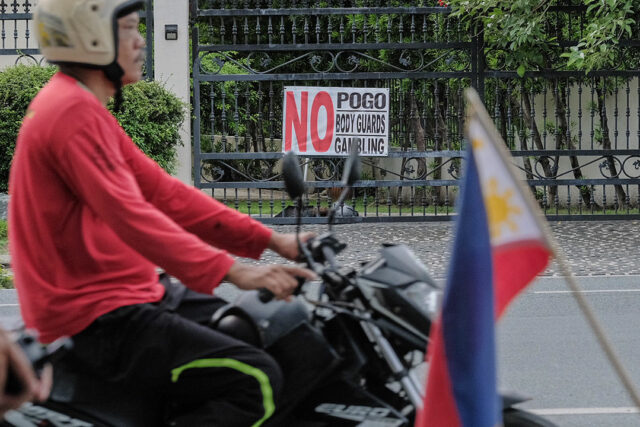
Some residents have displayed signs protesting the presence of Philippine Offshore Gaming Operators (POGO) in Ayala Alabang Village in Muntinlupa, July 13, 2024. — PHILIPPINE STAR/RYAN BALDEMOR

THE total ban on Philippine offshore gaming operators (POGOs) due on Dec. 31 is helping boost the country’s international image as a safe country, the Bureau of Immigration (BI) said on Wednesday.

“The effect of the exodus of POGOs seems to be good because I believe it’s making people feel that it’s safer in the Philippines,” Spokesperson Dana Krizia M. Sandoval said in mixed English and Filipino in a briefing in Manila City.

She said the government has implemented changes to ensure tourists feel safer in the country.

“We believe this is a good sign for foreign nationals to go here. Our numbers of visitors are good. Our numbers of visitors are high. So, we saw the POGO ban didn’t have any adverse effects, and it was even more positive and effective in our tourism,” she added.

Tourism department data showed that international visitors to the Philippines totaled 5.65 million, as of Dec. 15. This accounted for 73.4% of the department’s 2024 target. 

Meanwhile, Commissioner Joel Anthony M. Viado cited Philippine Amusement and Gaming Corporation (PAGCOR) data of 33,000 registered POGO, now called Internet Gaming Licensees (IGLs) workers, noting about 23,000 to 24,000 of them had voluntarily left the country already.

He said a “substantial number” had downgraded their working visas to tourist visas.

About 8,000 foreign IGL workers are still in the country, he said. A thousand of them are unaccounted for or IGL workers who did not downgrade their visas.

Mr. Viado reminded those who did not downgrade their visas to leave the country before the Dec. 31 deadline or they would be blacklisted by the bureau.

“After Dec. 31, the bureau would start blacklisting them.”

During his State of the Nation Address in July, President Ferdinand R. Marcos, Jr. ordered a ban on all offshore gaming operations, citing links to illegal activities such as human trafficking, money laundering, and financial scams. — Chloe Mari A. Hufana

Lawmakers split AKAP distribution

PHILIPPINE STAR/ MICHAEL VARCAS

LAWMAKERS on Wednesday proposed a split scheme for the Social Welfare Department’s indigent aid program to expedite its disbursement, addressing concerns the cash aid could become politicized.

Members of the 2025 budget bill’s bicameral conference committee opted to allocate P26 billion for the Department of Social Welfare and Development’s (DSWD) Ayuda Para sa Kapos ang Kita Program (AKAP), of which, P21 billion would be earmarked for the House of Representatives, while the remaining P5 billion would be for the Senate.

DSWD’s AKAP provides financial assistance to workers whose income falls below the poverty threshold. It provides one-time cash assistance between P3,000 to P5,000 for eligible beneficiaries.

“The allocation might be pegged to the number of congressmen and senators,” Party-list Rep. Jude A. Acidre, a member of the House contingent to the budget bill’s bicameral panel, said in Filipino during a media briefing.

“Basically, it’s one fair way of ensuring that the distributions we provide are equitable. Especially for congressmen, whose constituencies are divided according to population,” he added.

The financial aid program drew the public’s concern amid the possibility that it could be exploited by lawmakers to curry favor with voters, with the country just five months away from its elections.

Bataan Rep. Geraldine B. Roman said that lawmakers would only help DSWD in doling out the cash aid. “The sad fact of the matter is that the DSWD is undermanned. They are not really that capacitated to roll out [the financial aid].”

It would also be “counterproductive” for them to politicize AKAP’s use, saying it could leave a bad impression for their constituents.

“We do not nominate people who do not deserve this (the financial aid) out of political accommodation because it’s counterproductive for us,” she said in the same media briefing. “It’s better for our constituents to see that those receiving AKAP are those who really qualify for AKAP and those who are in need.”  — Kenneth Christiane L. Basilio

Makati promotes solar energy

STOCK PHOTO | Image by Michael Wilson from Unsplash

MAKATI CITY approved an ordinance promoting solar energy systems, offering incentives such as real property tax exemptions and simplified permit requirements as a part of the city’s sustainable transition.

Mayor Mar-len Abigail S. Binay-Campos said the City Ordinance No. 2024-221, the Solar Energy Systems Ordinance, will help the city’s transition to sustainable energy due to the reduction of greenhouse gas emissions.

“We believe that the use of solar energy systems is a long-term commitment that supports the city’s advocacy to reduce greenhouse gas emissions,” she said in a statement on Wednesday.

Under the ordinance, Accessory Solar Energy Systems (ASES) will be permitted in all zoning districts and will be exempt from real property tax.

The ordinance sets rules for ASES, including roof-mounted, wall-mounted, window-mounted, and ground-mounted types.

All ASES must secure an electrical permit and adhere to the provisions of Presidential Decree No. 1096, also known as the National Building Code of the Philippines, along with all other relevant laws, rules, and regulations. 

The ordinance also streamlines the permit process by allowing applicants to submit certifications from licensed professional engineers as an alternative to original as-built plans and detailed architectural and engineering designs for ASES installations. — Chloe Mari A. Hufana

Study permit, visa processing eased

PHILSTAR FILE PHOTO

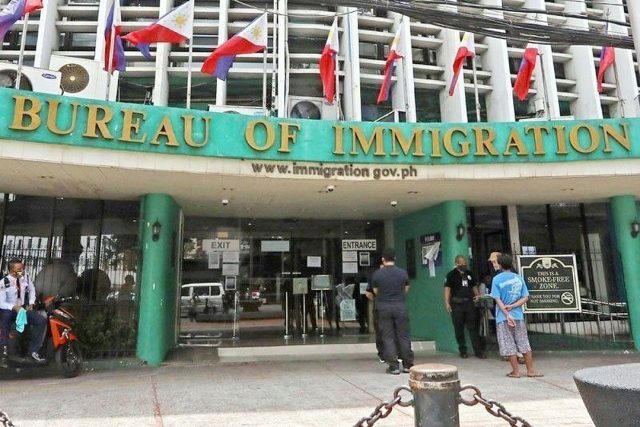
THE Bureau of Immigration (BI) on Wednesday launched its online application and payment system for special study permits and student visas as an effort to digitalize the immigration process.

Commissioner Joel Anthony M. Viado said the e-services platform will help applicants submit requirements and online payments, streamline procedures, and provide convenience for students and educational institutions.

The system allows schools to apply directly to the bureau, removing unnecessary paperwork and adding convenience by making applications online.

“This is a priority project of the BI to make things easier and more secure for foreign students to apply for their visas and permits,” he added during a briefing.

He also said this initiative is a step for the Philippines to be a leading education hub in Asia.

The services may be accessed via the BI’s e-services website at e-services.immigration.gov.ph. — Chloe Mari A. Hufana

Ilocos Norte farmers get $46,000

REUTERS

BAGUIO CITY – The Embassy of Japan handed out a US$46,244 (approximately P2.6-million) grant to small farmers from the Bacarra Multi-Purpose Cooperative, to buy a refrigerated truck for the cooperative’s farmer-members on Tuesday.

The Embassy of Japan in the Philippines Second Secretary Nishimura Tokiko attended the turnover ceremony for The Project for the Provision of a Refrigerated Delivery Truck for Small-scale Farmers in Ilocos Norte in Laoag City, Ilocos Norte’s capital.

Governor Matthew Marcos Manotoc, Vice-Governor Cecilia Araneta Marcos, Bacarra Sangguniang Bayan Chairman on Agriculture Jonathan Sagario, Bacarra Multi-Purpose Cooperative Chairperson Primrose Manglal-lan, and the farmers of Ilocos Norte graced the turn-over rites that could spell huge benefits to the province’s agriculture.

Most residents in Ilocos Norte engage in agriculture as their main source of income.  But small-scale farmers grapple with the dual burden of high demand and escalating logistical costs, the Japanese Embassy acknowledged.    

Lacking their own transportation, small farmers often resort to renting vehicles or relying on intermediaries, posing not only risks to the quality of their fresh produce but can also lead to delays and unpaid incomes.

Ms. Nishimura told farmer-beneficiaries of the grant that she hopes that the use of the truck will significantly improve the farmers’ incomes and that they would become a role model for others to follow. — Artemio A. Dumlao

15 ex-terrorists return to families in Central Mindanao

COTABATO CITY — The Army has started reintroducing 15 local terrorists, to mainstream society after they pledged allegiance to the government on Monday.

Major Gen. Antonio G. Nafarrete, commander of the Army’s 6th Infantry Division (ID), told reporters on Wednesday that the 15 former members of the now moribund Dawlah Islamiya and the Bangsamoro Islamic Freedom Fighters (BIFF) from far-flung areas in Maguindanao del Sur and Maguindanao del Norte provinces agreed to renounce their membership with both groups through the intercession of local executives and officials the 1st Brigade Combat Team (BCT) and its units.

The group first turned over military-type rifles, 40 millimeter grenade and B40 anti-tank launchers to officials of the Army’s 1st BCT, led by Lt. Col. Gilbert L. Boado and his superior, Brig. Gen. Jose Vladimir R. Cagara, before they promised to reform for good and return to their families during a surrender rite in Pigkalagan in Sultan Kudarat, Maguindanao del Norte.

Mr. Nafarrete said the event was witnessed by local executives who helped convince the 15 armed men to surrender via dialogues brokered by Islamic preachers supporting the 6th ID’s peace and security programs.

The group immediately underwent an orientation on Islamic teachings on religious tolerance and respect for people regardless of religion and ethnic origins. The BIFF and the Dawlah Islamiya, tagged in all deadly bombings in Central Mindanao since 2014, both have a reputation for fomenting animosity towards non-Muslims.

More than a thousand members of the two now virtually weakened terror groups had surrendered to units of the 6th ID in Central Mindanao since 2021, many of them now studying in public schools while others are thriving as farmers in their hometowns. — John Felix M. Unson

Canada to impose more tariffs on Chinese imports in new year

A PERSON stands in front of a Canadian flag in Montreal, Quebec, Canada, Sept. 20, 2022. — REUTERS

OTTAWA — Canada plans to impose tariffs on a slew of Chinese products from as early as next year, the government’s fiscal update showed, as part of its wider investigation into imports from the country.

Prime Minister Justin Trudeau’s government has already slapped a 100% tariff on all Chinese electric vehicles and a 25% tariff on imports of Chinese steel and aluminum products, with the finance ministry previously saying it was also exploring options to widen the duties.

The mid-year fiscal update presented on Monday showed that Ottawa has decided to apply tariffs to imports of certain solar products and critical minerals from China early in the new year, with levies on semiconductors, permanent magnets, and natural graphite following in 2026.

“These measures will prevent Chinese non-market trade practices from causing unfair and harmful market distortions in Canada and throughout the North American continent,” the update said.

Mr. Trudeau’s government has frequently criticized the Chinese government-funded policy of oversupply and over-capacity. He says Canada needs to protect local jobs from cheap Chinese products finding their way into the country.

The government has often used its stand against China as a lever to show US President-elect Donald J. Trump that Canada is aligned with its biggest trading partner in its stand against Beijing.

Mr. Trump has vowed to impose 25% tariffs on goods from Canada on his first day in office on Jan. 20 if it fails to stop the flow of drugs and illegal immigrants across its border with the US.

The fiscal update, also called the Fall Economic Statement, did not detail the extent of the duties to be imposed, nor on which specific products, but said further details on the measures would be announced soon. — Reuters

Luigi Mangione charged with murder as a crime of terrorism

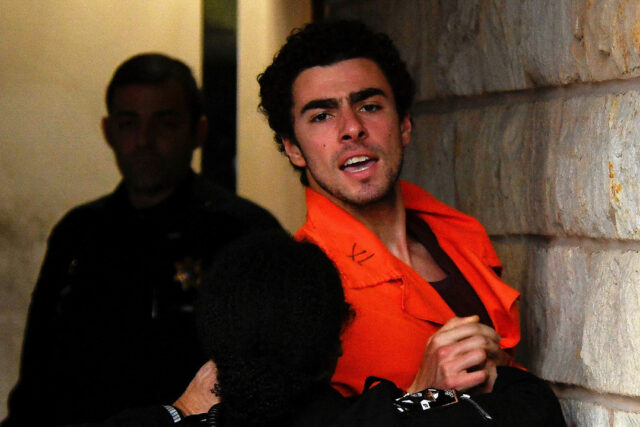
LUIGI MANGIONE, 26, a suspect in the New York City killing of UnitedHealthcare executive Brian Thompson, arrives for an extradition hearing at Blair County Court House in Hollidaysburg, Pennsylvania, US, Dec. 10, 2024. — REUTERS

NEW YORK — Luigi Mangione sought to “sow terror” by shooting dead UnitedHealth Group executive Brian Thompson on a Manhattan street this month, a New York prosecutor said on Tuesday in announcing Mr. Mangione had been indicted for murder.

A grand jury indicted Mr. Mangione on 11 counts, including first-degree murder and murder as a crime of terrorism, Manhattan District Attorney Alvin Bragg told reporters. Mr. Mangione, 26, would face a mandatory sentence of life in prison without the possibility of parole if convicted on all counts.

“This was a frightening, well-planned, targeted murder that was intended to cause shock and attention and intimidation,” Mr. Bragg told reporters. “The intent was to sow terror.”

Mr. Mangione’s defense lawyer in New York, Karen Friedman Agnifilo, declined to comment.

Ivy League-educated Mr. Mangione was charged with murder on Dec. 9 for the killing of Mr. Thompson outside a Manhattan hotel before a company conference, following a five-day manhunt.

Mr. Mangione is currently being held on gun charges in Pennsylvania, where he was arrested last week at a McDonald’s restaurant in the city of Altoona.

Mr. Bragg said he had indications that Mr. Mangione may waive his right to contest his extradition to New York. A hearing over Mr. Mangione’s extradition is scheduled for Thursday in Pennsylvania.

‘NO HEROISM’
The killing of Mr. Thompson has ignited an outpouring of anger from Americans struggling to receive and pay for medical care.

Americans pay more for health care than any other country, with spending on insurance premiums, out-of-pocket co-payments, pharmaceuticals and hospital services on the rise in recent years, government data shows.

The words “deny,” “defend” and “depose” were written on shell casings found at the Thompson murder scene, several news outlets reported, evoking the title of a book critical of the insurance industry.

Mr. Mangione has been celebrated in some circles, and more than a thousand donations have poured into an online fundraiser for his legal defense.

New York Police Commissioner Jessica Tisch said any attempt to rationalize Mangione’s alleged actions was “vile.”

“There is no heroism in what Mangione did,” Ms. Tisch told reporters. “We don’t celebrate murders and we don’t lionize the killing of anyone.”

The indictment accused Mr. Mangione of murdering Mr. Thompson with the intent to “influence the policy of a unit of government by intimidation or coercion.”

Mr. Mangione suffered from chronic back pain that affected his daily life, according to friends and social media posts, though it is unclear whether his own health played a role in the shooting.

UnitedHealth Group said last week Mr. Mangione was not a customer of the health insurer. — Reuters

Syrian mass graves expose ‘machinery of death’ under Assad

SAMAR AL BRADAN-UNSPLASH

QUTAYFAH, Syria — An international war crimes prosecutor said on Tuesday that evidence emerging from mass grave sites in Syria has exposed a state-run “machinery of death” under toppled leader Bashar al-Assad in which he estimated more than 100,000 people were tortured and murdered since 2013.

Speaking after visiting two mass grave sites in the towns of Qutayfah and Najha near Damascus, former US war crimes ambassador at large Stephen Rapp told Reuters: “We certainly have more than 100,000 people that were disappeared into and tortured to death in this machine.

“I don’t have much doubt about those kinds of numbers given what we’ve seen in these mass graves.”

“We really haven’t seen anything quite like this since the Nazis,” said Mr. Rapp, who led prosecutions at the Rwanda and Sierra Leone war crimes tribunals and is working with Syrian civil society to document war crimes evidence and is helping to prepare for any eventual trials.

“From the secret police who disappeared people from their streets and homes, to the jailers and interrogators who starved and tortured them to death, to the truck drivers and bulldozer drivers who hid their bodies, thousands of people were working in this system of killing,” Mr. Rapp said.

“We are talking about a system of state terror, which became a machinery of death.”

Hundreds of thousands of Syrians are estimated to have been killed since 2011, when Mr. Assad’s crackdown on protests against him spiraled into a full-scale war.

Both Mr. Assad and his father Hafez, who preceded him as president and died in 2000, have long been accused by rights groups and governments of widespread extrajudicial killings, including mass executions within the country’s prison system and using chemical weapons against the Syrian people.

Mr. Assad, who fled to Moscow, had repeatedly denied that his government committed human rights violations and painted his detractors as extremists.

The head of US-based Syrian advocacy organization the Syrian Emergency Task Force, Mouaz Moustafa, who also visited Qutayfah, 25 miles (40 km) north of Damascus, has estimated at least 100,000 bodies were buried there alone.

‘PLACE OF HORRORS’
The International Commission on Missing Persons in The Hague separately said it had received data indicating there may be as many as 66, as yet unverified, mass grave sites in Syria. More than 157,000 people have been reported missing to the commission.

Commission head Kathryne Bomberger told Reuters its portal for reporting the missing was now “exploding” with new contacts from families.

By comparison, roughly 40,000 people went missing during the Balkan wars of the 1990s.

For the families, the search for the truth in Syria could be long and difficult. A DNA match will require at least three relatives providing DNA reference samples and taking a DNA sample from each one of these skeletal remains found in the graves, Ms. Bomberger said.

The commission called for sites to be protected so that evidence was preserved for potential trials, but the mass grave sites were easily accessible on Tuesday.

The United States is engaged with a number of United Nations bodies to ensure the Syrian people get answers and accountability, the State Department said on Tuesday.

Syrian residents living near Qutayfah, a former military base where one of the sites was located, and a cemetery in Najha used to hide bodies from detention sites described seeing a steady stream of refrigeration trucks delivering bodies which were dumped into long trenches dug with bulldozers.

“The graves were prepared in an organized manner — the truck would come, unload the cargo it had, and leave. There were security vehicles with them, and no one was allowed to approach, anyone who got close used to go down with them,” Abb Khalid, who works as a farmer next to Najha cemetery, said.

In Qutayfah, residents declined to speak on camera or use their names for fear of the retribution, saying they were not yet sure the area was safe after Mr. Assad’s fall.

“This is the place of horrors,” one said on Tuesday.

Inside a site enclosed with cement walls, three children played near a Russian-made military satellite vehicle. The soil was flat and leveled, with straight long marks where the bodies were believed buried.

SATELLITE IMAGERY
Satellite imagery analyzed by Reuters showed large-scale digging began at the location between 2012 and 2014 and continued up until 2022. Multiple satellite images taken by Maxar during that time showed a digger and large trenches visible at the site, along with three or four large trucks.

Omar Hujeirati, a former anti-Assad protest leader who lives near the Najha cemetery, which was used until the larger Qutayfah site was created because it was full, said he suspected several of his missing family members may be in the grave.

He believes at least some of those taken, including two sons and four brothers, were detained for protesting against Mr. Assad’s government.

“That was my sin, what made them take my family,” he said, a long, exposed trench behind him where the bodies were apparently buried.

Details of Syria’s mass graves first emerged during German court hearings and US congressional testimony in 2021 and 2023. A man identified only as “the grave digger” testified repeatedly as a witness about his work at the Najha and Qutayfah sites during the German trial of Syrian government officials.

While working in cemeteries around Damascus at the end of 2011, two intelligence officers showed up at his office and ordered him and his colleagues to transport and bury corpses. He testified that he rode in a van adorned with pictures of Mr. Assad and drove to the sites several times a week between 2011 and 2018, followed by large refrigeration trucks filled with bodies.

The trucks carried several hundred corpses from Tishreen, Mezzeh and Harasta military hospitals to Najha and Qutayfah, he said in the trial. At the sites deep trenches were already dug and the grave digger and his colleagues would unload the corpses into the trenches, which would be covered with dirt by excavators as soon as a section of the trench was full, he said.

“Every week, twice a week, three trailer trucks arrived, packed with 300 to 600 bodies of victims of torture, starvation, and execution from military hospitals and intelligence branches around Damascus,” he told Congress in a written statement.

The grave digger escaped from Syria to Europe in 2018 and has repeatedly testified about the mass graves, but always with his identity shielded from the public and the media. Reuters