Home Blog Page 2215

Reinsurance seen shielding gov’t from PhilHealth cost blowouts

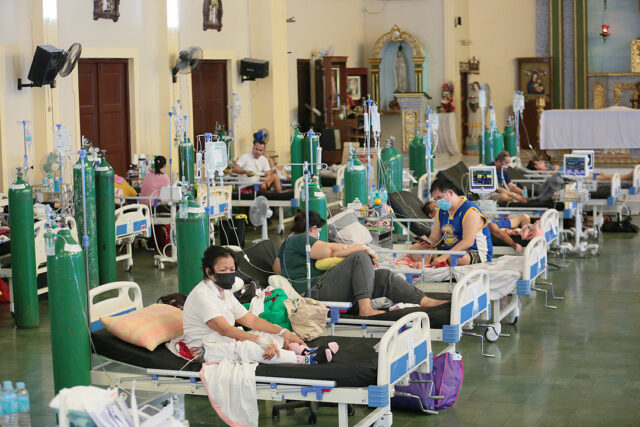
A CHAPEL was converted into an intensive care unit for coronavirus disease 2019 (COVID-19) patients as hospitals struggled with a surge in infections in August 2021. — PHILIPPINE STAR/ MICHAEL VARCAS

THE Asian Development Bank (ADB) said the government needs to consider reinsurance to mitigate the government’s exposure to healthcare costs during epidemics and pandemics.

“Reinsurance would allow for either a category of risk (such as pandemic risk) or a proportion of claim risk to be transferred out of PhilHealth’s portfolio,” the ADB said in a paper released on Dec. 24. 

It also added that reinsurance options are commercially available to limit pandemic and epidemic risk.

The ADB said among the common options for pandemics and epidemics is stop-loss reinsurance, which provides coverage when claims exceed a certain threshold, protecting PhilHealth from sudden increases in claims during such events.

“In this model, PhilHealth and the reinsurer would share proportionally in all premiums and losses from a pandemic or epidemic event,” the ADB said.

It added that reinsurance leads to pandemic risk modeling, risk-based pricing, capital relief, and more.

The ADB highlighted several advantages of reinsurance, including access to pandemic risk models, risk-based pricing, and capital relief.

At the same time, it also emphasized the need for PhilHealth to have clear coverage policies for pandemics and epidemics to manage its premiums and reserves effectively.

PhilHealth said it has P281 billion in reserves set aside to meet benefit payments for two years and P150 billion in surplus as of October.

It also had an investment portfolio of P489 billion as of November.

The ADB said while PhilHealth was able to provide policyholder benefits for coronavirus disease 2019 (COVID-19) as the result of considerable reserves, this may not always be the case and is an “unreliable method of approaching disaster risk financing.”

Social insurers often exclude coverage for pandemic-related prevention, treatment, and immunization due to insufficient data on their severity and frequency, it noted.

However, during the COVID-19 pandemic, PhilHealth was instructed to extend benefits to close the protection gap.

Last week, the bicameral conference committee stripped PhilHealth of its subsidy for the proposed budget for 2025.

In response, PhilHealth President and Chief Executive Officer Emmanuel R. Ledesma, Jr. assured that users will still have “uninterrupted access” to benefits and no reduction despite zero subsidies for next year. — Aubrey Rose A. Inosante

Negotiations with UAE on CEPA enter homestretch

REUTERS

THE PHILIPPINES and the United Arab Emirates (UAE) are in the final stages of negotiations for a Comprehensive Economic Partnership Agreement (CEPA), the Department of Trade and Industry (DTI) said.

“We are almost there, and then we should be able to get things done,” Trade Secretary Ma. Cristina A. Roque said.

“But of course, just like every negotiation, there’s going to be back and forth because it needs to be win-win for both countries,” she added.

Asked for an updated timeline, she said the goal is to conclude the CEPA negotiations next year.

“Definitely not this year. I can’t really say exactly when, but we’re just ironing out a little bit because we just started four months ago,” she said.

“Negotiations do not happen overnight; sometimes it takes years. But of course, we will try to move quickly,” she added.

She said she remains confident that investments from the Middle East will continue to flow. 

“It is not necessarily that with no CEPA, no investments will come in. Other investors want to come in because we also have the CREATE MORE,” she said, citing the Corporate Recovery and Tax Incentives for Enterprises to Maximize Opportunities for Reinvigorating the Economy Act.

“And we also have other incentives. So it’s not necessarily all just dependent on a free trade agreement (FTA) or on a CEPA,” she added.

The DTI has said that the Philippines was hoping to conclude negotiations for a CEPA within 2024. When asked about the delay, Ms. Roque said both sides are hoping the deal will cover a long list of products.

“Actually, there’s really no delay. It’s just that there are many products that we want to export to them … and they want to export also to us,” she said. — Justine Irish D. Tabile

PHL child poverty rates underestimated — PIDS

PHILSTAR FILE PHOTO

THE Philippine Institute for Development Studies (PIDS) said current methods of measuring child poverty tend to produce estimates on the low side, misleading policymakers responsible for resource-allocation decisions.

“The stark divergence between standard poverty measures and our individual-level estimates reveals that current methodologies may significantly understate the extent and depth of poverty, particularly among vulnerable demographic groups,” PIDS said in a report this month.

In the “Measuring Poverty within Filipino Households: Examining of Resource Sharing and Economies of Scale” study, PIDS found that child poverty rates could be up to twice as high as the official estimate of 57% in 2021.

PIDS said although the county is seeing progress in reducing overall poverty rates, “a substantial portion of child deprivation may be hidden by household-level measurement approaches.”

These underestimates particularly occur in larger households and those with complex family structures, it said.

“Gender disparities in resource allocation emerge as another critical measurement challenge,” the report found, adding that adult women’s poverty rates are consistently higher than provided by household-level measures. 

This suggests that “conventional approaches” may be “masking” significant gender-based inequalities in access to resources, it said.

Official statistics also put poverty rates at 30.0% for farmers and 30.6% for fisherfolk in 2021, while PIDS findings suggest rates ranging from 25-29% and 24-28% respectively.

“Our findings suggest that targeting mechanisms based on household-level poverty measures may be insufficient for reaching all individuals experiencing deprivation, with this inadequacy varying significantly across different vulnerable groups,” it said.

It cited programs such as the Pantawid Pamilyang Pilipino Program that may need to add “more nuanced targeting criteria” factoring in household composition and sector-specific patterns of intra-household inequality. — Aubrey Rose A. Inosante

More vape companies, small-scale contractors targeted for registration

CDC-UNSPLASH

THE Department of Trade and Industry (DTI) said it hopes to accredit 10 vape companies by year’s end.

“A lot have been accredited. We hope that by the end of the year, we will have 9 to 10 companies that have registered and complied with the DTI,” Trade Secretary Ma. Cristina A. Roque said at a briefing last week.

“What we want to happen is for them to comply and register with us, just to make sure that these vape products meet the standards,” she added.

“For vapes, most of these are imported, but the ones who distribute them locally are Filipinos who buy them from other countries,” she said.

Ms. Roque also said that the DTI is also promoting the accreditation of small-scale contractors to help them get more clients for jobs that do not require big contractors.

“We have what we call the pakyaw (small-scale contractors). So let’s say I’m a plumber, and I want to be able to do some plumbing work because not everybody needs a big contractor. Sometimes people that live in a townhouse need a plumber, painter, or mason,” she said.

She said the small-scale contractors will only need to pay P500 to be accredited by the department.

“So when they get jobs, like simple jobs, they can show that they are accredited by DTI. So it’s easy for them also to get clients from this kind of program. It’s something that we also want to promote,” she added.

Asked about updates on the draft department administrative order aimed at setting the guidelines for the registration of online sellers of consumer products under mandatory certification, the DTI said that it has been positively received by the online platforms.

“The e-commerce platforms are supportive of this. We have been doing more frequent meetings with them to polish all of the details of the proposed department order,” Fair Trade Enforcement Bureau Director Regino D. Mallari, Jr. said.

“For the smaller sellers, the DTI can assist them in complying with the requirements. It is not actually designed against them because we will support them. We are looking at those who are probably cross-border traders that are unable to have their products certified here,” he added. — Justine Irish D. Tabile

Winds of change

The world under heaven, after a long period of division, tends to unite; after a long period of union, tends to divide. This has been so since antiquity. — Luo Guanzhong, Sanguo Yanyi

As we contemplate the meaning of Christmas two millennia after our Messiah was born in a humble manger, we also come to observe that nothing is really constant except change. Over the ages, the world has experienced recurring plagues, economic upheavals, revolutions and wars, despite best efforts of the authorities to minimize or avoid them. Recently, as a response perhaps to their handling of the economy, social issues and geopolitical tensions, the Democratic party widely lost its mandate to the Trump-led Republican party in the US elections. Trump astutely rode a red wave by promising struggling Americans a brighter future, and is set to chart a widely different course when he assumes office in January.

Meantime, on the other side of the ironically named Pacific Ocean, China is also facing dire straits due to an aging population, spiraling deflation, widespread real estate bust, shrinking export markets, decoupling by western partners, and worsening diplomatic relations with neighboring countries. While the Chinese have no option to change their government now, Xi Jin Ping and the ruling Party have made some policy adjustments. Whether such is enough, however, is never guaranteed.

The Philippines is a mere a pygmy in comparison to these two behemoths, and inevitably, caught in choppy waters stirred by the two superpowers. Thus, the Philippines is not spared some economic malaise due to the weakening of China, its most powerful neighbor and trading partner, and the social and political issues that somewhat echo those of the US, with which it shares significant cultural and political ties.

Nonetheless, as the roll of the dice would have it, the Philippines has a young and dynamic population, a consumption-led and demand-driven economy, and a democratic government that allows it to be more resilient in the face of changes. And these may be the reasons why the country is not only surviving, but apparently still growing — like the proverbial bamboo, Filipinos continue to sway, buckle and spring forth time and time again in the face of repeated difficulties or disasters. And, while not to the liking of many, Filipinos can also change sides easily, like a balimbing.

However, I believe that those very traits, while making the Philippines resilient, do not contribute much to the country’s development. Historically, the country has only made very slow and painstaking gains, while any further progress appears to be even more daunting and difficult.

The national debt has now reached P15.89 trillion, and despite the government’s attempts to manage its deficit levels, the Philippine budget gap is expected to grow to 5.9% of the gross domestic product (GDP) next year, according to BMI Research. And while this is still manageable, the country will continue to be hounded by persistent inflation, and available resources and funds for critical investments and infrastructure will become even more scarce and difficult to secure.

Hurdling these constraints is a huge and difficult challenge. At the same time, the dangers of a geopolitical storm carrying the Philippines along with it cannot be understated as well. Great powers are not only dangerous at their peak, but even more so when declining. Examples are not only numerous, but almost repetitive: Spartans, Persians, Romans, Mongols, Dutch, Spaniards, British, Germans, Japanese, and Russians, among others, embroiled others in ruinous competition or wars as their powers waxed and eventually waned. Now it is the turn of the US and China, as the US struggles to keep its strength and prosperity, while China desperately scrambles to uphold the dream of Great Power status it has painstakingly cultivated for decades.

For the Philippines, it will take much prudence, effort and determination, not only on the part of its leaders, but also its citizenry, to face these challenges and threats. Even as a small country, we can husband limited resources by avoiding waste, division and corruption to the extent possible. We can ill afford internal conflict, which not only stymies peace and development, but also weakens the country before the eyes of everyone else.

Every new year offers a fresh start, and I believe that despite existing disadvantages, Filipinos possess innate patience, talent as well as steadfast faith in the Almighty. These qualities will help steer our course for a better future. Ultimately, it is our daily choices — and our electoral decisions — that determine whether we merely survive, or thrive amidst the winds of change.

The views or opinions expressed in this article are solely those of the author and do not necessarily represent those of Isla Lipana & Co. The content is for general information purposes only, and should not be used as a substitute for specific advice.


Jaffy Azarraga is a director at the Tax Services department of Isla Lipana & Co., the Philippine member firm of the PwC network.

+63 (2) 8845-2728

jaffy.y.azarraga@pwc.com

Quiambao files visa paperwork to join KBL

KEVIN QUIAMBAO — UAAP/JULIUS DOMONDON

KEVIN QUIAMBAO, the UAAP MVP from La Salle, has officially filed his visa application ahead of his stint in the Korean Basketball League (KBL).

Mr. Quiambao processed his papers at the Korea Visa Application Center in Bonifacio Global City, signaling the start of his journey from Taft to the Goyang Sono Skygunners in the KBL.

The 23-year-old forward will spend the holidays with his family in the Philippines before traveling to South Korea after the New Year to join the Skygunners’ training camp.

Mr. Quiambao last week announced his decision to leave La Salle and go pro in South Korea, a move that has been in the works since last year when he towed the Green Archers to the UAAP Season 86 championship.

He has two more years of playing eligibility in the UAAP, but Mr. Quiambao opted to try to spread his wings overseas, with the ultimate goal of making it to the NBA.

In Taft, Mr. Quiambao captured back-to-back MVP honors plus a Finals MVP citation in Season 86. La Salle eventually surrendered its throne after a tough 66-62 defeat in Game 3 of the UAAP Season 87 finals against the University of the Philippines (UP) Fighting Maroons.

That duel was witnessed by 25,248 fans — the biggest crowd in UAAP basketball history — a fitting swan song to his illustrious collegiate career, even in defeat.

The KBL rookie class from the Philippines includes UAAP Finals MVP JD Cagulangan of UP, who signed with Suwon KT Sonicboom.

Also serving as imports in South Korea are his Gilas teammate Carl Tamayo, reigning KBL MVP Ethan Alvano of Wonju DB Promy, SJ Belangel of Daegu KOGAS Pegasus and Miguel Oczon of the Ulsan Mobis Hyundai Phoebus.

Completing the list are Javi Gomez de Liaño of the Anyang Jung Kwan Jang Red Boosters, his younger brother Juan of the Seoul SK Knights, Justin Gutang of the Seoul Samsung Thunders and Calvin Epistola of the reigning KBL champion Busan KCC Egis. — John Bryan Ulanday

Innovation, change on the horizon in new sporting year

LONDON — As a jam-packed sporting year featuring a much-praised Olympic Games and four continental football tournaments rolls to a close it is tempting to expect that 2025 will be a more sedate one.

But that is not the nature of a sports industry continually evolving to sate the thirst of a demanding public that seemingly can never get enough of their chosen product.

What is becoming increasingly clear is that tradition and maintaining the status quo no longer cuts it in a competitive world intent on wringing every dollar out of sporting endeavors.

Novel ways of delivering sport to a high-tech generation are now paramount and the Christmas decorations will hardly have come down before golf, arguably the most conservative of all sports, welcomes the aptly-named Tomorrow’s Golf League (TGL), which kicks off in Palm Beach in January.

Created by Tiger Woods and Rory McIlroy, the new made-for-TV indoor team format featuring state-of-the-art golf simulators and shot clocks resembles a cross between an arcade game and crazy golf. However, the world’s best are on board for a venture designed to hook a generation of fans who no longer have the time or patience to watch five-hour rounds.

“The most interesting and fun aspect about TGL is the fact that it is an arena and you get to see us up close and personal,” American Wyndham Clark said. “We’re mic’d up, you’ll see our personalities. It’s almost a totally different sport.”

Golf ended the year with a contrived showdown between PGA Tour players and those of the Saudi-backed LIV Golf circuit in Las Vegas. Looking ahead, in September, American Ryder Cup players will, for the first time, be paid to take on Europe when the bi-annual clash takes place in New York.

Other sports will also see big changes in 2025 — a year lacking the biggest global showpiece events but still busy.

Football, in which its marquee names rarely have time to draw breath, will add to the load with an expanded 32-team FIFA Club World Cup in June and July in the US.

While it has many critics, it will certainly be a tournament that, unlike previous editions, will be hard to ignore.

Tennis, too, is moving into the future at pace with tradition making way for innovation and the need to capture market share in an increasingly saturated landscape.

Who would ever have thought Wimbledon, of all places, would get rid of line judges from its lawns in favor of Hawkeye technology and computer-generated voices? But that is what fans will witness at the All England Club this year.

In athletics, a blue-riband sport which often struggles to attract eyeballs outside of Olympic years, American great Michael Johnson is launching a lucrative Grand Slam Track league in April with a $12.6-million prize fund split over four events — but not including any field events.

“We’re revolutionizing the track landscape,” said four-time Olympic champion Johnson.

In a non-Olympic year, the movement faces a pivotal year all the same as the International Olympic Committee elects a new president to replace Thomas Bach in March.

Whichever of the seven candidates wins will need to steer the Olympic juggernaut into an increasingly fractured world of geopolitics, climate change, gender issues and doping.

Saudi Arabia’s insatiable appetite to keep shaping the sporting map is unlikely to diminish any time soon and many will see the kingdom’s staging of the inaugural Olympic Esports Games next year as a precursor to a future bid for the real thing.

Tennis kicks things off in 2025 with the Australian Open in January — a tournament that will unfortunately have to deal with the fallout of anti-doping cases involving men’s champion and favorite Jannik Sinner of Italy and Poland’s Iga Swiatek.

Women’s football takes center stage in July with the European Championship in Switzerland with England aiming to retain the title, while September offers the world athletics championships in Japan and the Ryder Cup golf in the US.

Rugby fans have a Lions series in Australia starting in June to look forward to, while in cricket England hosts a five-test series against India before another eagerly-awaited Ashes series Down Under.

New Orleans stages NFL’s Super Bowl in February and in Formula 1 another marathon season revs up in Melbourne in March. Reuters

Tennis in good hands despite retirement of greats Federer, Nadal, Williams, United Cup director says

THE RETIREMENTS of tennis greats Roger Federer, Rafa Nadal and Serena Williams have made promoting events more difficult, but organizers must grab the opportunity to push new talent into the spotlight, the United Cup’s tournament director said.

The $10-million mixed team event aims to do just that when it kicks off the new season Friday, with tournament chief Stephen Farrow confident the sport is in good hands.

“It’s true to say that from a promotional standpoint, it’s very easy if you’ve got Roger Federer or Rafa Nadal turning up,” Farrow told Reuters after the draw for the 18-team tournament was held in Sydney recently.

“You’re talking about people who are absolute superstars of the sports arena… with those guys moving on, it does make it a bit more difficult to promote and tell the story of the athletes playing the event.

“I always see that as a positive, because it’s on all of us in tennis to tell the story of this new talent.

“We’ve got a lot of them playing the United Cup. They’re incredibly exciting and captivating to watch. I’m not worried about the future.”

Grand Slam contenders Alexander Zverev, Taylor Fritz, Iga Swiatek and Coco Guff will all be in action for their countries at the Dec. 27-Jan. 5 tournament staged in Perth and Sydney as they prepare for the Australian Open starting on Jan. 12.

Farrow also said the United Cup was still building its brand and boosting awareness with fans and players.

“Last year we saw a really big step forward when we moved to a new format with one women’s singles, one men’s singles and one mixed doubles. It was incredibly competitive.

“Now we’ve established ourselves on the tennis calendar two weeks from the Australian Open. We’ve seen with the field this year that players want to play this event.”

Spain takes on Kazakhstan while China meets Brazil on the opening day in Perth. Reuters

Man City’s poor form is on everyone, not just Haaland, Guardiola says

MANCHESTER CITY’S dismal run of form, with one win in eight Premier League games, is down to the whole team and not one player, manager Pep Guardiola said, with struggling striker Erling Haaland not to blame.

City’s current streak, which leaves the champions seventh in the standings and 12 points off leaders Liverpool, coincides with Haaland scoring just twice, after the Norwegian netted 10 times in their opening five games.

“It’s about us, it’s not just about one player,” Guardiola told a press conference ahead of Thursday’s game with Everton.

“So when in the past we scored goals and Erling was so prolific in helping us, it’s because of the team. And when you have problems at the back, in the middle, it’s for everyone.

“If it was just one player, the reason why, it would be easy. It’s not about that. Erling is so important for us, will be so important for us, has been, and we try to do the things better, to use him better.”

Guardiola is still uncertain if John Stones, Matheus Nunes or Ederson will be fit when City hosts Everton, and while the coach was unable to pinpoint a single reason for their poor run, he was optimistic of a return to form in the near future.

“All the tendency to say we don’t run, we don’t fight, the reason why is this one, this situation or this player or this manager or this,” Guardiola said.

“It’s not about that. It’s many little details or big details that all together make us not as good as we were.

“But we have another opportunity on Boxing Day to try and win time for the players to come back and in a certain time we’ll be better.”

Everton may be 15th in the standings, 11 points behind City, but they do have a better defensive record than Guardiola’s side, and have kept five clean sheets in their last six games.

“Sean Dyche always has a really good defensive structure, really good patterns defensively, offensively,” Guardiola said.

“And when they are able to do it against Arsenal and Chelsea, that means they are really good because they have good transitions and of course at set-pieces, long balls, they are really, really strong.”

While City players will have some time with their families over Christmas, with the team playing on Dec. 26, there are sacrifices to be made.

“We train today, we train tomorrow night. We stay over here and we are going to play on Boxing Day,” Guardiola said.

“Today we’ll be at home with the families and tomorrow we’ll be with the families during the morning and the night we’ll be here.

“Hopefully they want to be here because it’s our job and our duty.” — Reuters

China hits PHL Defense chief for asserting rights over missile plans

PHILSTAR FILE PHOTO

THE CHINESE EMBASSY in Manila on Wednesday hit back at Defense Secretary Gilberto C. Teodoro, Jr. after he asserted the Philippines’ prerogative to procure or allow the deployment of any assets for its security and defense amid plans to acquire American mid-range missiles. 

In a statement, the Embassy said Mr. Teodoro “baselessly smeared China and maliciously attacked the Communist Party of China.”

“We firmly oppose and strongly condemn such statement which is nothing, but unjust accusation filled with ideological bias and based on bloc confrontation and the Cold War mentality,” it said.

The embassy said this is not the first time Mr. Teodoro “made such unprofessional and ludicrous remarks,” accusing him of personally impeding military-to-military contacts and exchanges between China and the Philippines.

“He even went as far as to state openly that ‘discussions and consultations are the most useless phrase’ in maritime dispute settlement,” the Chinese embassy said.

“Such words run counter to President Marcos, Jr.’s instruction to deescalate maritime tensions through dialogue, and contradict both countries’ relentless diplomatic efforts to manage differences through communication and consultation,” it added. “We cannot help but wonder why and for whom he has been saying and doing in such an unconstructive way.”

This followed Mr. Teodoro’s assertion that the Philippines, as a sovereign state, is not any country’s “doorstep,” arguing that the plans to acquire Washington’s Typhon missile system are within its prerogative and not subject to “foreign veto.”

Mr. Teodoro issued the statement on Tuesday after the Chinese foreign ministry called such a plan an “extremely irresponsible decision.”

“I want to reiterate that the introduction by the Philippines of such a mid-range missile system, which is both strategic and offensive, is a provocative and dangerous move in coordination with external forces to create regional tensions, incites geopolitical confrontation, and provokes an arms race,” Ministry spokesperson Mao Ning was quoted as saying by Beijing-based publication Global Times.

Mr. Teodoro said the enhancement of Philippine defense capabilities is in line with the Philippines’ “own national interest” and “in accordance with our independent foreign policy.”

He cited the Comprehensive Archipelagic Defense Concept, which was launched this year to put focus on the country’s maritime zones amid Chinese intrusions into the Philippines’ exclusive economic zone (EEZ) and as part of Manila’s gradual shift to an external security orientation.

The Philippines’ plan to acquire the missiles “is not targeted against specific countries. Instead, it is targeted against security risks, threats, and challenges,” Mr. Teodoro said.

Philippine Army chief Roy M. Galido on Monday said the Philippines would acquire a mid-range missile system that was deployed by the US Army to its territory in April this year for annual joint military exercises, citing the “the interest of protecting our sovereignty.”

The US Army Pacific in April called the deployment “a significant step in our partnership with the Philippines, our oldest treaty ally in the region,” citing “opportunities for our bilateral training and readiness.”

The asset in question is a land-based, ground-launched system that “enhances multi-domain fires,” according to a US Army Pacific statement, adding that the launcher can fire the Standard Missile 6 (SM-6) and the Tomahawk Land Attack Missile.

The system has a battery operations center, four launchers, prime movers, and modified trailers, it added.

China and Russia have previously criticized the move to keep the system in the Philippines, saying it could fuel an arms race in the region.

Mr. Teodoro said if China really seeks to reduce tensions and instability in the region, “they should cease their saber rattling, stop their provocative actions, halt their interference in other countries’ internal affairs, withdraw their illegal presence from the Philippines’ EEZ, and adhere to International Law.”

Mr. Teodoro said while the Chinese Communist Party hits the “modest capability development” of the Philippines, it continuously builds up “nuclear arsenal and ballistic missile capability.”

He also accused Beijing of “sponsoring criminal syndicates and subversive organizations beyond their shores.”

China is also “unwilling to uphold human rights in their own country,” he added.

The Chinese embassy on Wednesday reiterated Beijing’s opposition to the plan, urging Manila “to heed the call of regional countries and their peoples.”

Manila should have the Typhon missile system promptly pulled out “as it has publicly pledged, and stop going further down the wrong path,” it said. — Kyle Aristophere T. Atienza

Demands of holiday season show need to fast-track bills protecting platform workers

PHILIPPINE STAR/KRIZ JOHN ROSALES

By Chloe Mari A. Hufana, Reporter

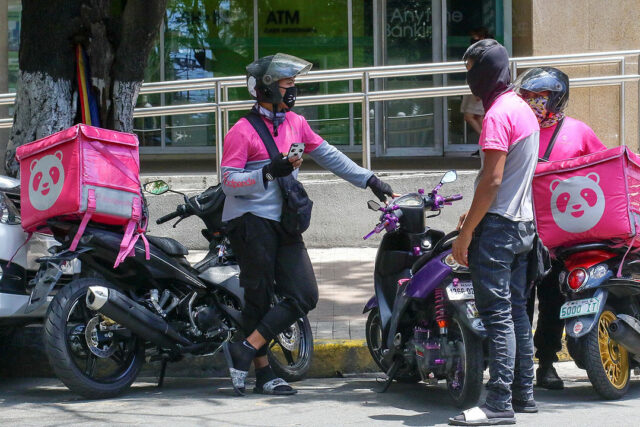
THE heightened demands of the holiday season have exacerbated the challenges faced by gig workers in delivery services, prompting calls for urgent legislative action on bills that would safeguard their rights and welfare, according to a labor expert.

Fairwork Philippines Co-Investigator and Professor at the University of the Philippines Diliman School of Labor and Industrial Relations Virgel C. Binghay noted the insufficient protections for gig workers in the delivery sector.

“The government needs to step up and take action. This is not the time for a ‘wait-and-see’ approach,” he told BusinessWorld in a video conferencing interview in mixed English and Filipino.

He added the government, particularly the legislative branch, must expedite its processes as the rise of atypical work in the Fourth Industrial Revolution will continue to emerge.

He cited progress in the United Kingdom and Spain, which have enacted protective laws for the sector.

“There is a growing prevalence of atypical work, and it’s clear that our regulatory framework, labor code, and laws are no longer aligned with the present times,” he added.

The holiday season brings a surge in demand, offering gig workers a short-term opportunity to earn more income, but at a significant cost to their well-being, Mr. Binghay noted.

“This surge in demand takes a toll on their health because they are constantly on the move,” he said, highlighting that the lack of social safety nets leaves gig workers vulnerable, with their well-being not just at risk but inevitably affected.

“This is part of the future of work, and we can never predict what new technologies or atypical forms of work will emerge, but at the core of it all, they are workers. They deserve protection and should not be marginalized.”

According to Fairwork Philippines’ policy brief published in April, there were seven bills in the Senate and six in the House of Representatives in the 19th Congress regulating and providing for the protection of platform workers. As of this writing, the bills remain pending at the committee level in both chambers.

Geoffrey P. Labudahon, national coordinator of RIDERS-SENTRO, a union for delivery riders across major platforms, urged platforms offering incentives during the peak season to not let the riders struggle to claim the incentives.

“We shouldn’t be made to struggle to get the incentive because this is something we’ve worked hard for the whole year. We didn’t just work hard for it on the holidays. So, it should be retroactive,” he told BusinessWorld in Filipino through a telephone call.

While a few platforms offer accident insurance to their riders, Mr. Labudahon added that a majority still leave the riders alone in this area.

“Even if the fare is high, even if we have incentives, it doesn’t matter if we don’t have insurance,” he said, urging companies to prioritize the well-being of their workers. “We need security in case of accidents. Without insurance, we’re left vulnerable, and that’s not right.”

He noted a rise in accidents during the peak season as vehicles inroads surge, as well as the demand for various services from platform workers.

Lastly, Mr. Labudahon called for better bargaining rights for them to have a stronger voice in negotiations.

“It would be better if the union could have a discussion with the different managements because what we’re asking for isn’t wrong. Maybe that could be their Christmas gift to us, so we don’t have to keep on fighting for it.”

Bill eyes death penalty for corruption

FREEPIK

By Kenneth Christiane L. Basilio, Reporter

A BILL seeking to impose the death penalty by firing squad on government officials convicted of graft and corruption by the Philippines’ anti-graft court was filed at the House of Representatives last week.

House Bill No. 11211 proposes to reinstate the death penalty for all public officials convicted of graft and corruption, misuse of public funds and plunder, including the president, barangay officials, appointed bureaucrats and members of the state’s security and police forces.

“The bill emphasizes accountability and deterrence, making it clear that public office is a public trust, and any violation of that trust must be met with the severest consequences,” Zamboanga City Rep. Khymer Adan T. Olaso, who authored the bill, said in its explanatory note.

“This act applies to all public officials, whether elected or appointed, including officials in the executive, legislative, and judicial branches, as well as those serving in constitutional commissions, government-owned and controlled corporations, and other instrumentalities,” the bill stated. “It also applies to members of the Armed Forces of the Philippines and the Philippine National Police.”

The Philippines abolished the death penalty under the 1987 Constitution, but it was reinstated in 1993 by then-President Fidel V. Ramos to address rising crime rates.

The administration of former President Gloria Macapagal-Arroyo terminated the death penalty in 2006, after she signed into law Republic Act No. 9346, which reduced the maximum punishment to life imprisonment.

“While the death penalty was previously abolished under Republic Act No. 9346, the gravity of corruption as a crime against society justifies the reintroduction for specific heinous offenses,” according to the bill’s note.

Mr. Olaso said the bill is not punitive but rather meant to deter corruption and restore trust in government institutions.

The state would only execute public officials whose convictions are affirmed by the Supreme Court and have exhausted all available legal remedies, he added.

“These safeguards aim to uphold the fundamental rights of the accused while ensuring that the imposition of the death penalty is applied only in cases where guilt is conclusively established,” the bill stated.

Five other measures seeking the reinstatement of the death penalty are also pending at the House.

“The Philippines has a strong anti-death penalty position,” Carlos H. Conde, senior researcher at Human Rights Watch, said via WhatsApp. “This bill, if taken seriously, will mean the Philippines would slide backwards.”

Last week, the Philippines supported a United Nations (UN) resolution calling for a moratorium on the death penalty. The resolution was adopted by the UN General Assembly, with 130 member-states in favor, 32 opposed, and 22 abstentions.

“The country also signed and ratified the second optional protocol against the death penalty in the International Covenant on Civil and Political Rights,” said Mr. Conde.

There is also no evidence indicating that the death penalty would deter corrupt practice, he added. “Corruption persists in the Philippines because corrupt government officials are rarely being punished.”

“It seems clear that it is designed for politicking more than anything else,” he said.