Home Blog Page 2112

Congress to reconcile NEDA bills

PHILSTAR FILE PHOTO

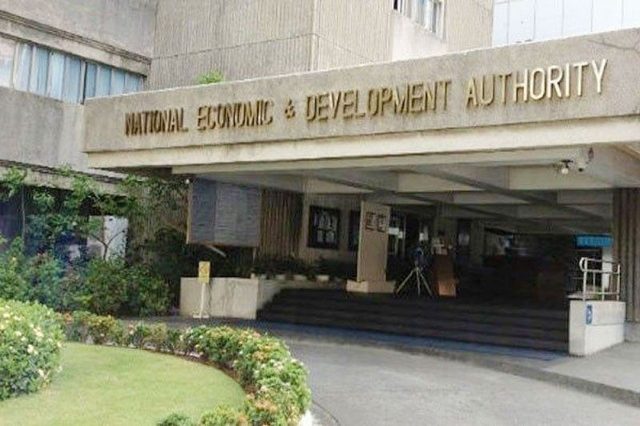
PHILIPPINE lawmakers will begin talks to harmonize their versions of a bill reorganizing the National Economic Development Authority (NEDA) into the Department of Economy, Planning, and Development (DEPDev), elevating it to a full-fledged government agency.

In a statement, Bukidnon Rep. Jonathan Keith T. Flores said a joint panel of senators and congressmen would meet on Jan. 22 to deliberate legislative differences between House Bill (HB) No. 11199 and Senate Bill (SB) No. 2878.

“Both bills essentially update and upgrade the mandates and structure of NEDA. The resulting improvements make it necessary to formalize NEDA as a new department,” he said. 

“[The two bills will] undergo meticulous reconciliation because the provisions are many, over 40 sections, and written differently,” he added.

Mr. Flores said it would be “quite probable” for a reconciled version of the proposal to be given to President Ferdinand R. Marcos, Jr. before the 19th Congress ends.

The Senate gave a nod to SB No. 2878 in December, while the House approved its version in January. — Kenneth Christiane L. Basilio

PHL delegation to WEF should sustain economic, investment momentum — Romualdez

THE PHILIPPINE delegation to the World Economic Forum (WEF) should build “on the momentum” that was generated by previous engagements in the annual Swiss meeting, House Speaker Ferdinand Martin G. Romualdez said on Tuesday.

“Our participation in WEF 2025 is a testament to the Philippines’ commitment to fostering collaboration, securing investments, and driving inclusive and sustainable development,” he said in a statement.

“Central to this objective is ensuring a sustained flow of investments in the country that will enhance the competitiveness, efficiency, and sustainability of the economy,” he said in a statement.

Top Philippine trade and finance officials headlined Manila’s delegation to WEF, a yearly meeting of business and government leaders in Davos, Switzerland. This year’s representatives include Finance Secretary Ralph G. Recto and Trade Secretary Ma. Cristina A. Roque, as well as private sector participants.

“Our participation in WEF 2025 serves as a prelude to our ASEAN (Association of Southeast Asian Nations) leadership, showcasing the Philippines’ capacity to drive innovation, foster digital transformation, and champion climate resilience in the region and beyond,” said Mr. Romualdez.

Manila will serve as the regional bloc’s chairman next year, a year earlier than was scheduled. — Kenneth Christiane L. Basilio

SC issues two TROs vs Comelec

PHILIPPINE STAR/ MICHAEL VARCAS

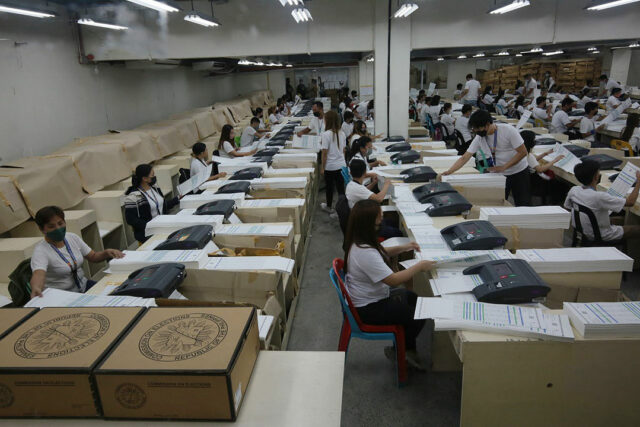
THE Supreme Court (SC) on Tuesday issued two temporary restraining orders (TRO) against the Commission on Elections (Comelec), ordering the poll body to add two political aspirants to the ballots for the 2025 national and local elections in May.

The court en banc issued a TRO after Senatorial aspirant Francis Leo Antonio Marcos challenged a Comelec resolution labeling him a nuisance candidate and revoked his Certificate of Candidacy (CoC).

Spokesperson Camille Sue Mae L. Ting cited Comelec’s argument, saying Mr. Marcos did not show genuine intent to run for office, even though he was allowed to run for the 2022 Senatorial race, where he received over 4 million votes.

“The SC also ordered the Comelec to comment on his petition within a non-extendible period of five days from receipt of notice,” she said in a press briefing in Manila City.

The top court also ruled Noel E. Rosal is eligible to run as Albay governor after the poll body canceled his CoC because the Ombudsman dismissed him from service, carrying the penalty of perpetual disqualification to hold public office.

The high tribunal also gave Comelec five days to comment.

According to Ms. Ting, the high court received a total of 25 petitions against the Comelec from disqualified individuals. Another 22 were filed for party-list representative aspirants.

In total, the high court has so far issued 11 TROs.

Ms. Ting said the top court is fast-tracking the procedures of issuing TROs, noting that many of the cases with TRO prayers were only filed towards the end of December or the first week of January.

Comelec paused its ballot printing last week after the top court issued five TROs. About 6 million ballots were wasted, amounting to about P22 each. — Chloe Mari A. Hufana

Bill seeks Congress OK for PhilHealth rate hikes

PHILIPPINE STAR/MICHAEL VARCAS

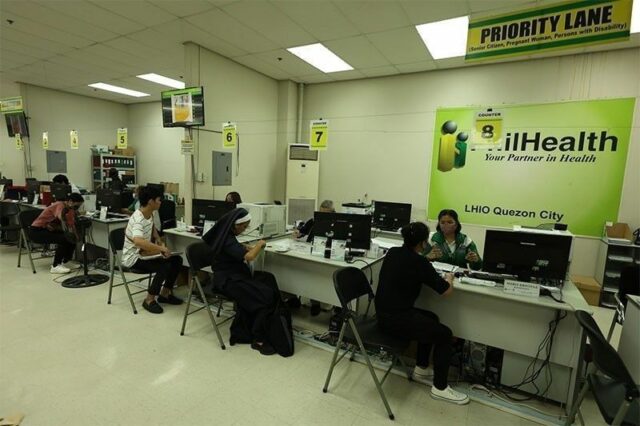
THE Philippine Health Insurance Corp. (PhilHealth) would be required to consider in its contribution rate setting projected healthcare spending and socioeconomic factors, with rate hikes requiring congressional approval, according to a pending House of Representatives bill.

“Premium contributions for direct and indirect contributors shall be derived from actuarially adjusted rates, considering but not limited to, the projected healthcare utilization, cost trends, and demographic and economic purpose,” a Jan. 17 copy of the unnumbered substitute bill stated.

“The actuarially adjusted premium rates, as determined by the annual actuarial review, shall be subject to the approval of Congress,” it added.

The state health insurer should hire an “independent body” to review its actuarial report for the determination of its contribution rates, the bill stated.

The 2025 monthly contribution rate for members stood at 5%, with an income floor and ceiling of P10,000 and P100,000.

“The premium rate shall remain at 5%, and the premium floor and ceiling shall remain the same until the actuarial review has been submitted and approved by Congress,” the measure stated. — Kenneth Christiane L. Basilio

Agoda sets $1.5-M target to fund conservation projects across Asia

FREEPIK

DIGITAL travel platform Agoda has relaunched the fourth edition of its Eco Deals program, setting a $1.5-million target to fund conservation projects in Asian countries, including the Philippines.

The Eco Deals program is part of Agoda’s ongoing partnership with the World Wide Fund for Nature (WWF). Under which, Agoda will donate $1 to the WWF’s conservation efforts for every booking made at a participating hotel.

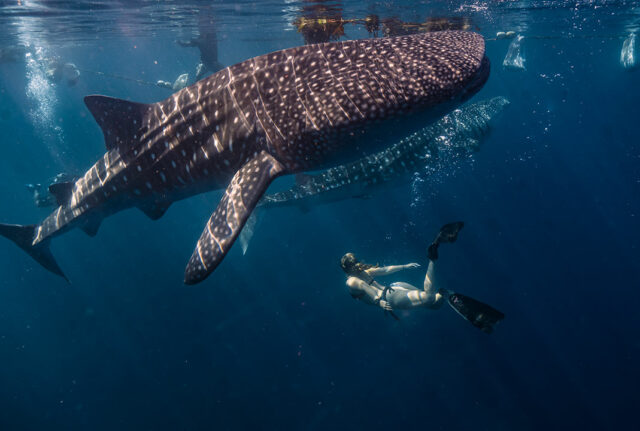
Conservation efforts supported by the program include the protection of the Philippines’ whale sharks, the conservation of tigers in Malaysia, and elephants in Thailand, and saolas in Vietnam.

The funds raised will also help in the restoration of Japan’s wetlands, Indonesia’s ecosystems, Laos’ urban wetlands, and support Cambodia’s rangers.

Illegal wildlife trade in the Philippines alone is valued at P50 billion a year, according to the Asian Development Bank.

“The Eco Deals Program has been an important initiative for our hotel partners since its inception in 2022, offering them an accessible way to support wildlife protection and habitat conservation projects,” Agoda Chief Commercial Officer Damien Pfirsch said in a statement.

The Eco Deals program will be open to consumers for bookings from Jan. 20 to Dec. 19, 2025.

Agoda also teamed up with WWF-Singapore and UnTours Foundation to launch the Sustainable Tourism Impact Fund. It provides investment capital to support sustainable businesses in the tourism sector.

The digital platform has designated $100,000 for the fund and can increase to $150,000 if the $1.5-million donation target is reached. — Beatriz Marie D. Cruz

Three dead, one hurt after truck plunges into Benguet ravine

BAGUIO CITY — Three died while another one is being treated at the hospital after a pick-up truck plunged into a ravine in Sitio Camanggaan, First Gate, Barangay Ucab, Itogon town in Benguet on Monday morning.

The Itogon police identified the fatalities as Amayag Oplas, 29, driver; Ruvelyn Agapinan, 27; and Charles Oplas, 21. Luisito David Bacoco, 14, is being treated at a hospital.

The four were aboard the pick-up truck, traveling along the Baguio-Ucab Road in Itogon town, when it rammed into a concrete barrier. The driver lost control of the vehicle and dived into a 100-meter ravine.

Mr. Oplas was declared dead-on-the spot while the three others were rushed to the hospital. — Artemio A. Dumlao

Driver dead, 2 hurt in Maguindanao del Sur highway robbery

COTABATO CITY — A driver of a freezer-type van loaded with ice cream in containers of various sizes was killed while his two helpers were wounded in an attack by robbers in Barangay Timbangan in Shariff Aguak, Maguindanao del Sur on Monday afternoon.

Rey F. Balmores, died on the spot when men riding motorcycles shot him repeatedly while he was driving their delivery van at a secluded stretch of a highway in Barangay Timbangan.

His killers immediately alighted from their motorcycles as the vehicle stopped and, at gunpoint, took a bag containing a still undetermined amount of cash collections from his two companions, Harris L. Ampatuan and Reymond O. Bajas, who were both wounded in the attack.

Brig. Gen. Romeo J. Macapaz, director of the Police Regional Office-Bangsamoro Autonomous Region, told reporters on Tuesday that the victims had just delivered their merchandise in towns around Shariff Aguak and were headed to their office in Sultan Kudarat, Maguindanao del Norte when the gunmen pulled off the daring heist.

Shariff Aguak Mayor Akmad A. Ampatuan condemned the atrocity and offered an earnest cash incentive for any information leading to the arrest of the robbers.

The mayor told reporters that he had instructed all barangay officials in Timbangan to help police investigators identify the culprits, now subject of an extensive hunt by personnel of the Shariff Aguak Municipal Police Station and the Maguindanao del Sur Provincial Police Office. — John Felix M. Unson

PSEi drops in cautious trade as Trump sworn in

BW FILE PHOTO

PHILIPPINE STOCKS inched lower on Tuesday as investors stayed on the sidelines following the inauguration of US President Donald J. Trump and his initial policy announcements.

The bellwether Philippine Stock Exchange index (PSEi) retreated by 0.15% or 9.68 points to close at 6,340.21, while the broader all shares index dropped by 0.07% or 2.62 points to 3,700.24.

“The local market edged lower this Tuesday as investors maintained a cautious stance while being observant of US President Trump’s first few days in the office,” Philstocks Financial, Inc. Senior Research Analyst Japhet Louis O. Tantiangco said in a Viber message. “Investors are primarily concerned with the specifics of the US president’s planned protectionist foreign trade policies.”

“It was another quiet session for the Philippine markets following the inauguration of President Trump,” Regina Capital Development Corp. Head of Sales Luis A. Limlingan said in a Viber message. “US markets were closed on Monday for Martin Luther King Jr. Day, but futures trading saw gains as Mr. Trump began his second term as president. Optimism grew over anticipated pro-economy measures, particularly in banking and energy, while sentiment was supported by news that no new tariffs would be introduced on day one.”

Financial markets swayed and wobbled at the beginning of Mr. Trump’s second US presidency after he made a softer start on China than many had anticipated, but then signaled punitive tariffs on North American neighbors within hours, Reuters reported.

A wave of relief that swept across markets — as his speech and slew of executive orders imposed no new trade levies — was stopped in its tracks when Mr. Trump told reporters in the White House’s Oval Office that he was thinking about 25% tariffs on Mexico and Canada from Feb. 1.

Mr. Trump had vowed to immediately impose steep tariffs of 10% to 20% on global imports into the US and 60% on goods from China, but a memo he issued after taking office only directed agencies to research and investigate the US trade deficits.

At home, majority of sectoral indices closed lower on Tuesday. Mining and oil sank by 2.12% or 168.70 points to 7,762.26; services retreated by 0.82% or 17.25 points to 2,080.96; industrials went down by 0.56% or 50.85 points to 8,921.78; and financials declined by 0.4% or 8.91 points to 2,180.54.

Meanwhile, property rose by 0.88% or 20.54 points to 2,337.20 and holding firms increased by 0.34% or 18.16 points to 5,343.27.

“Converge ICT Solutions, Inc. was the day’s index leader, climbing 2.62% to P18.00. Universal Robina Corp. was at the bottom, falling 4.07% to P66.00,” Mr. Tantiangco said.

Value turnover increased to P3.87 billion on Tuesday with 1.01 billion shares traded from the P3.81 billion with 1.54 billion issues dealt on Monday.

Decliners outnumbered advancers, 104 versus 76, while 59 names were unchanged.

Net foreign selling climbed to P173.15 million on Tuesday from P107.92 million on Monday. — Revin Mikhael D. Ochave with Reuters

Peso edges up after Trump’s inauguration

BW FILE PHOTO

THE PESO extended its climb against the dollar on Tuesday after the greenback posted losses overnight following US President Donald J. Trump’s inauguration.

The local unit closed at P58.49 per dollar on Tuesday, strengthening by three centavos from its P58.52 finish on Monday, Bankers Association of the Philippines data showed.

The peso opened Tuesday’s session sharply higher at P58.333 against the dollar. Its intraday best was at P58.33, while its worst showing was at P58.50 versus the greenback.

Dollars exchanged rose to $1.6 billion on Tuesday from $1.23 billion on Monday.

“The peso tracked the dollar’s weakness overnight on news that tariff impositions will be delayed,” a trader said in a phone interview.

The dollar was generally weaker after Mr. Trump’s inauguration speech did not immediately give plans for the tariffs to be imposed on China, Rizal Commercial Banking Corp. Chief Economist Michael L. Ricafort likewise said in a Viber message.

For Wednesday, the trader said markets will continue to monitor policy announcements from the Trump administration.

The trader expects the peso to move between P58.40 and P58.80 per dollar on Wednesday, while Mr. Ricafort sees it ranging from P58.35 to P58.55.

The dollar partially rebounded on Tuesday after sliding the day before as Mr. Trump suggested the US could impose tariffs on Canada and Mexico by Feb. 1, challenging suggestions his trade policy may be more gradual, Reuters reported.

Mr. Trump told reporters his team was thinking of tariffs around 25%, but offered no other specifics. He also floated the idea of universal tariffs, but said the US was not ready for that yet.

The dollar had fallen sharply on Monday after Mr. Trump’s first day included no specific plans on tariffs and officials signaled any new taxes would be imposed in a “measured” way, a major relief for trade-exposed currencies. A following trade memo merely directed agencies to investigate and remedy persistent trade deficits.

The dollar index, which measures the currency against six peers, rose 0.6% to 108.58, having shed 1.2% on Monday in what had been the sharpest one-day drop since late 2023.

The inauguration speech focused on emergencies in immigration and energy and a more expansionist foreign policy, including a pledge to take back the Panama Canal.

In his first term in office, Mr. Trump had a history of announcing imminent plans for policy proposals, including on healthcare and infrastructure, only for nothing to eventuate.

The dollar added 0.3% on the offshore Chinese yuan to 7.2896. Mr. Trump has previously threatened China with tariffs of up to 60%, but was vague on his plans on Monday. — A.M.C. Sy with Reuters

Foreign HEIs operating PHL campuses granted SIPP perks

Students answer test questions at a state high school in Manila. — REUTERS

By Justine Irish D. Tabile, Reporter

FOREIGN higher education institutions (FHEIs) that establish branch campuses in the Philippines with local partners have been declared eligible for incentives outlined in the amended 2022 Strategic Investment Priority Plan (SIPP).

In a statement on Monday, the Board of Investments (BoI) said the changes to the SIPP were effected via Memorandum Circular (MC) No. 2024-08 issued on Dec. 18.

Under the MC, FHEIs that establish campuses in the Philippines may now register with BoI and receive incentives, provided that the local partner is at least 60% Filipino-owned.

The incentives cover the development of education cities as well as branch campuses, the BoI said.

“The guidelines include provisions for the establishment of branch campuses in the Philippines, as defined under the Republic Act (RA) No. 11448 or the Transnational Higher Education (TNHE) Act,” it added.

With the MC in place, education cities — defined as the development of a contiguous area of education facilities and buildings with digital infrastructure — are now classified as SIPP infrastructure and logistics investments.

Such cities include research, healthcare, athletic, cultural, and art facilities, as well as the provision of auxiliary services that will enhance the educational experience for students.

BoI Industry Development Services Executive Director Ma. Corazon Halili-Dichosa said education cities will be classified as Tier-I strategic investments.

“The new guidelines will enhance opportunities for international collaboration that would facilitate access to expertise and knowledge relevant to global industry trends, empower students, and bridge the gap between academe and industry,” she added.

She said that the guidelines will support and incentivize the establishment of education cities and campuses, which the BoI considers its contribution to workforce development.

According to BoI, the Philippine population, which a median age of 26 years, makes it an attractive destination for investment and a reliable source of global talent.

“The inclusion of education cities and branch campuses in the SIPP will help nurture this talent pool while fostering international ties,” it added.

The Philippines produces 750,000 graduates every year, with 10-12% of them in engineering and technology courses.

2024 palay output hits four-year low of 19.09 million MT

A farmer threshes newly harvested palay grains at a ricefield in Mogpog, Marinduque in central Philippines, March 22, 2016. — REUTERS

By Adrian H. Halili, Reporter

OUTPUT of palay, or unmilled rice, declined to a four-year low of 19.09 million metric tons (MMT) in 2024, the Philippine Statistics Authority (PSA) reported, citing preliminary data.

The PSA said that palay output dropped 4.84% from 2023, the weakest production since the 19.29 MMT reported in 2020.

Full-year rice output came in under the Department of Agriculture’s (DA) 19.3 MMT revised estimate for 2024.

The PSA added that the harvest from irrigated areas was 14.56 MMT, down 4.71%, while palay production in rainfed areas fell 5.23% to 4.53 MMT.

The region with the top palay production was Central Luzon with 3.48 MMT, followed by the Cagayan Valley with 2.92 MMT and the Ilocos Region with 1.97 MMT.

Rounding out the top five rice producers were the Western Visayas with 1.89 MMT and Soccsksargen with 1.21 MMT.

Agriculture was negatively impacted by dry spells and droughts caused by El Niño in the first half, and heavy rains and typhoons in the latter part of 2024, analysts said.

“I expected it to be a bit lower given the series of typhoons in the fourth quarter,” Federation of Free Farmers National Manager Raul Q. Montemayor said via Viber.

“In any case, output already dropped by 5.5% in the first semester mainly due to El Niño and was projected also to drop in the second semester due to La Niña,” he added.

Agricultural damage caused by El Niño was estimated at P15.3 billion on lost volume of 330,717 MT, across 109,481 hectares of farmland, according to the DA’s final estimate. Damage to the rice crop was 38.8% of the total, or P5.93 billion.

Mr. Montemayor said that the 970,000 MT drop in rice production is equivalent to about 15 days’ national consumption.

He added that the lost rice output for the year was offset by a big bump in imports.

The Philippines imported a record 4.78 MMT of rice in 2024, according to the Bureau of Plant Industry.

“Production in 2025 will simply have to try to recover but potentially large imports at low tariffs may dampen farmgate prices and incentives for farmers to intensify production,” he said.

Earlier, the Agriculture department said that it is targeting palay output of 20.46 MMT this year, which could be fulfilled with P10 billion in additional funding for its National Rice Program.

Samahang Industriya ng Agrikultura Executive Director Jayson H. Cainglet said that better farmgate prices for palay could also encourage more rice farmers to continue planting.

“We are hoping for a good harvest starting at end of February or March, so that our rice farmers can earn money … The dark side of an unlimited import policy, via Executive Order (EO) 62, is the tendency to depress farmgate prices across commodities,” Mr. Cainglet said via Viber.

Tariffs on imported rice were slashed to 15% from 35% previously until 2028, through EO 62 which was signed by President Ferdinand R. Marcos, Jr. in June.

He added that the DA and the National Food Authority should increase palay procurement funds to influence the prices paid by millers and traders.


PHL’s 11-month meat imports up 19%

REUTERS

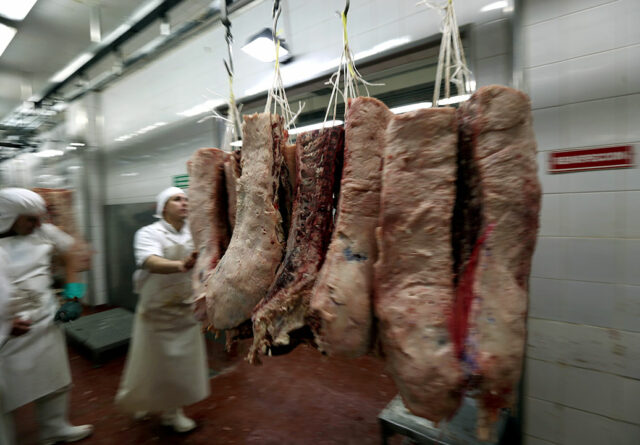
MEAT IMPORTS rose 19.4% by volume in the 11 months to November, led by pork and beef, according to the Bureau of Animal Industry (BAI).

The BAI reported meat shipments of 1.33 billion kilograms in the first 11 months. Meat imports in November grew 46.7% to 141.34 million kilos.

Accounting for about 50.4% of all imports, pork shipments rose 21.9% to 671.56 million kilos for the period.

Brazil supplied around 184.81 million kilos of pork, followed by Spain (158.14 million kilos) and Canada (92.94 million kilos).

Beef imports increased 39.7% to 187.71 million kilos during the 11 months accounting for 14.1% of meat imports.

Imports of beef from Brazil amounted to 80.68 million kilos, followed by Australia (49.59 million kilos) and Ireland (15.54 million kilos).

Shipments of chicken totaled 435.5 million kilos in the 11 months, up 10.7% and accounting for 32.7% of meat imports.

Brazil remained the top supplier of chicken with 216.9 million kilos, followed by the US (145.73 million kilos) and Australia (9.32 million kilos).

Imports of turkey meat more than doubled to 1.27 million kilos. Shipments accounted for 0.1% of total meat imports.

On the other hand, shipments of duck, lamb, and buffalo meat declined during the 11-month period.

Buffalo imports, which accounted for 2.6% of total volume, slipped 9.65% during the period to 35.2 million kilos.

Shipments of duck declined 25.8% to 208,792 kilos, while lamb imports fell 13.4% to 613,448 kilos. — Adrian H. Halili

ADVERTISEMENT
ADVERTISEMENT