Home Blog Page 2082

Wilcon Depot expects strong sales growth

BW FILE PHOTO

WILCON DEPOT, Inc. is banking on improved consumption as the listed home improvement and construction supplies retailer expects a positive financial performance this year.

“Our outlook is always positive. We have nowhere to go but really grow. Of course, we don’t have control over the external factors, but we see some improvements in all the headwinds that have been happening in the past year,” Wilcon Chief Operating Officer Rosemarie B. Ong told reporters on the sidelines of an event in Taguig City last week.

“Hopefully, 2025 will be a better year for us. Once consumption improves, that will stimulate everything,” she added.

Ms. Ong said Wilcon is looking to open more stores this year, without disclosing specific figures.

The company operates two store formats, consisting of the traditional depots and the smaller Do-It-Wilcon stores.

“We will still continue to expand because we see a lot of opportunities in other areas where we are not present,” she said.

In December last year, Wilcon opened its 100th store, located in Lubao, Pampanga. The company reached the milestone a full year ahead of the company’s 2025 target.

Ms. Ong said Wilcon is also renovating its legacy stores to improve the customer shopping experience.

“What we’re doing now is we’re trying to improve the legacy stores. Our focus is really to renovate and to be more adaptive to consumer behavior, how we can make their shopping experience more seamless, more convenient, and more comfortable,” she said.

For the first nine months of 2024, Wilcon recorded a 22.3% decrease in net income to P2.12 billion as net sales shrank by 1% to P25.68 billion.

The company attributed the decline to the persistent softness of demand for major home improvement and finishing construction supplies as well as delayed construction projects due to bad weather.

It added that expansion-related expenses hampered the company’s net income.

Wilcon shares were last traded on Jan. 17 at P9.89 per share. — Revin Mikhael D. Ochave

TikTok’s purveyors of creams and candies under threat from US ban

NEW YORK — TikTok’s Sunday shutdown in the US poses the biggest threat to the universe of small- and medium-sized firms and so-called influencers who depend on the short-form video site for their livelihood, while big brands are expected to move to other sites.

TikTok says its US site generates billions for businesses selling candies, beauty products, clothes ,and other consumer goods. But now, that economy is under threat. The Supreme Court on Friday unanimously upheld the law banning TikTok in the United States on national security grounds ahead of a blackout this weekend.

After the ruling President-elect Donald Trump said he would make a decision on TikTok, without providing details.

As a marketing tool for businesses, Bytedance’s TikTok generates revenue for itself, and for many of its users and merchants, through sponsorships and by collecting fees on sales.

Many TikTok users are paid to be brand ambassadors for companies, selling merchandise and affiliate partnerships where users are paid commissions by companies when audiences purchase items linked on their social profiles. TikTok also compensates some creators for making videos.

Those who receive revenue from TikTok also include startups, consumer companies, and bloggers cashing in on the platform’s massive reach of up to 170 million Americans.

For example, small- and medium-sized food and beverage businesses, which saw revenue increase by $4.1 billion in 2023 from marketing and advertising on the app, stand to lose the most, according to estimates by economic advisory firm Oxford Economics. That data was commissioned by TikTok.

TikTok CEO Shou Zi Chew said in a video posted to the app on Friday that seven million American businesses earn a living on the platform.

For Mama V’s Candy, TikTok Shop, the e-commerce arm of Bytedance’s video platform, changed the trajectory of the business, said owner Valerie Verzwyvelt.

“We have pretty much stayed viral since the beginning of the TikTok shop launch last year,” said Ms. Verzwyvelt. The company, “which sells extremely sour candies,” made $6 million in 2024 and has sold close to 300,000 units on the app, she said.”

“We are on our second expansion,” she said, a decision the Pineville, Louisiana-based company made before the reality of the Jan. 19th deadline set in. “I have to rebuild my business now.”

Sven Greany, co-owner of California-based independent beauty brand Simply Mandys, said that a TikTok ban would bring his business to a “screeching halt” after a record holiday shopping season.

Simply Mandys made more than $20 million in sales in 2024 on TikTok Shop with the help of livestreaming and Mr. Greany said he never fretted the app’s ties to China. Ninety-five percent of the company’s total sales come from shoppers on the platform, he said.

However, the company has plans to shift its marketing to Instagram once TikTok is no longer available.

But TikTok’s privacy policy blocks sellers from accessing shopper e-mails, addresses, and other information that could be useful for marketing outside of the platform. Essentially, if TikTok disappears, so do Simply Mandys’ customers, Mr. Greany said.

Other businesses were holding sales and dropping prices to clear out inventory in the event that traffic to their shops would come to an abrupt end on Sunday.

But that was not stopping some influencers from recommending products as they looked to cash out ahead of the ban.

“These TikTok shops are mass ‘clearancing’ their products in anticipation of the ban, so I’m linking some clearance products that I love for skincare,” one user told her 65,000 followers.

Beyond commissions, a TikTok influencer with 10,000 to 100,000 followers can potentially earn $2,000 per brand campaign, according to Lithuania-based influencer marketing agency Billo. For some of TikTok’s top US creators, the entirety of their income will come to a halt, while the major companies they’ve partnered with pivot to other platforms, such as YouTube or Meta’s Instagram.

Oxford Economics said that small- and medium-business-activity on TikTok contributed $24.2 billion, or a small sliver of overall US gross domestic product (GDP) in 2023, while supporting 224,000 jobs. Reuters could not independently verify those estimates.

Yuriy Boykiv, chief executive of e-commerce consultancy Front Row, said his clients made contingency plans to shift their marketing spending to other platforms which have similar short-form videos including Instagram and YouTube.
“Every client has known about this possibility of TikTok going away since April of 2024, so everybody has done some preparation,” Mr. Boykiv said. Front Row’s clients include Procter & Gamble’s haircare brand Ouai and LVMH’s Sephora, according to its website.

“We go where our community is and right now that includes TikTok. If they shift to other platforms in the future, we’ll be right there with them,” Kory Marchisotto, chief marketing officer at e.l.f. Beauty, said in a statement to Reuters.

Mitchell Halliday, the founder and creative director of British beauty brand Made By Mitchell, which launched on TikTok Shop US at the end of August, started selling on TikTok Shop in the UK in 2022 and became the first British beauty brand to hit $1 million in sales in one day on the platform.

“TikTok is the hub of beauty nowadays. It used to be YouTube, then it was Instagram, and now it is TikTok,” Mitchell Halliday said. — Reuters


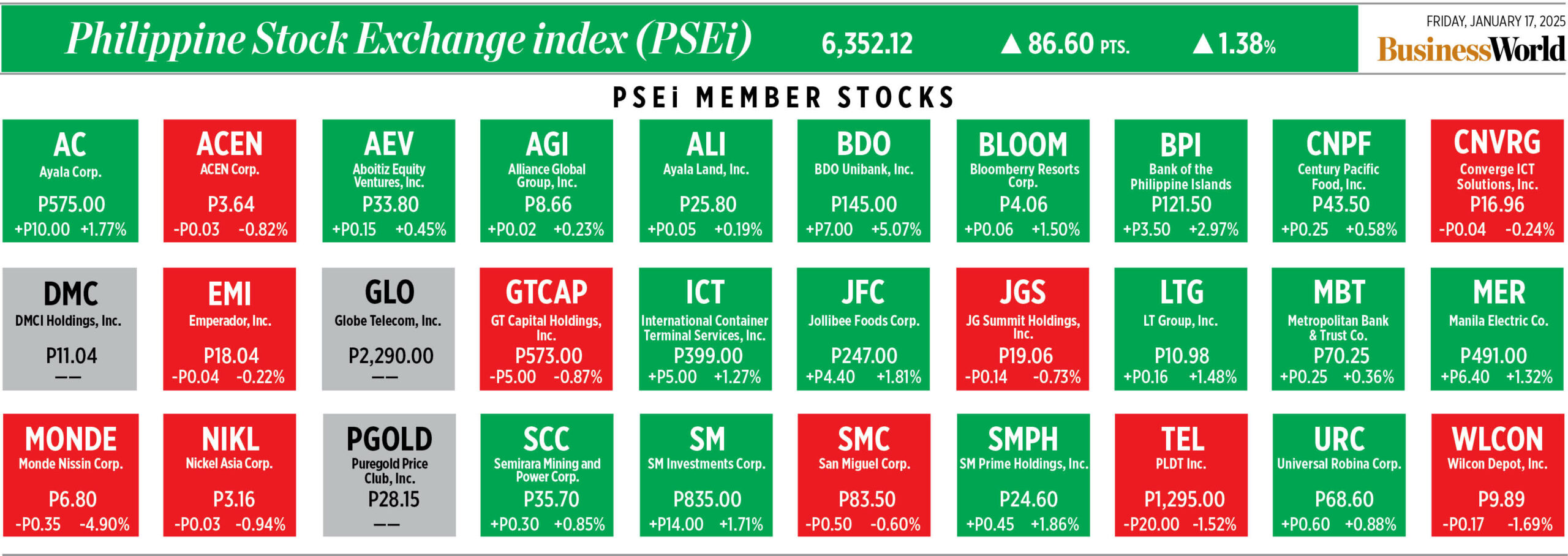
How PSEi member stocks performed — January 17, 2025

Here’s a quick glance at how PSEi stocks fared on Friday, January 17, 2025.


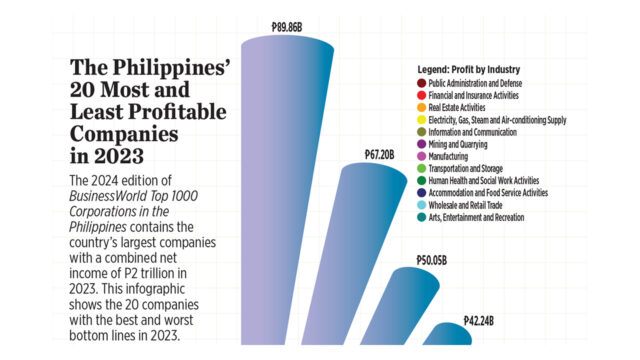
The Philippines’ 20 Most and Least Profitable Companies in 2023

The 2024 edition of BusinessWorld Top 1000 Corporations in the Philippines contains the country’s largest companies with a combined net income of P2 trillion in 2023. This infographic shows the 20 companies with the best and worst bottom lines in 2023.

The Philippines’ 20 Most and Least Profitable Companies in 2023The BusinessWorld Top 1000 Corporations in the Philippines can be purchased directly by reaching out to BusinessWorld’s Circulation Department at (+63 2) 8527-7777 locals 2651 to 2654 or via e-mail at circ@bworldonline.com. The portable document format (PDF) version will also be available for purchase at https://bworld-x.com/.

Market to remain cautious with Trump in focus

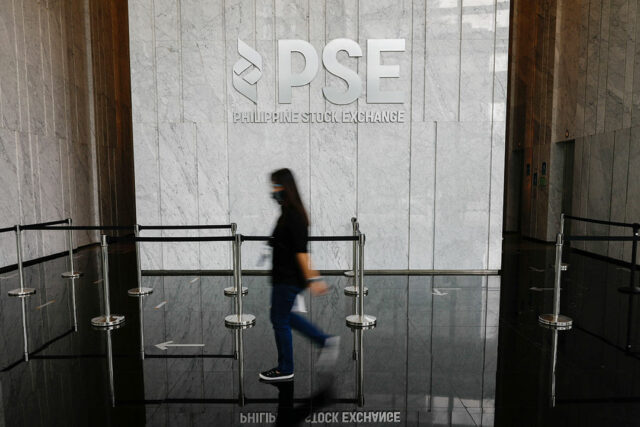
The lobby of the Philippine Stock Exchange in Taguig City, Sept. 30, 2020. — REUTERS

PHILIPPINE SHARES may remain weak this week as market sentiment stays cautious, with US President-elect Donald J. Trump set to take office on Monday and amid the absence of fresh catalysts.

On Friday, the benchmark Philippine Stock Exchange index (PSEi) rose by 1.38% or 86.60 points to 6,352.12, while the broader all shares index increased by 0.76% or 27.95 points to 3,703.73.

However, week on week, the PSEi fell by 2.22% or 144.20 points from its 6,496.32 finish on Jan. 10, marking its second straight weekly decline.

“Local equities tracked regional peers, succumbing to profit-taking ahead of Mr. Trump’s inauguration. Shaky global capital markets were gripped by politico-economic anxiety,” online brokerage firm 2TradeAsia.com said in a market note. “Apart from uncertainties in trade, immigration, and taxation, the overall well-being of the US economy has been sending pain signals to the rest of the globe.”

“The local market has turned more bearish as it extended its decline. At the same time, the market has broken below the 6,400 level, which previously served as a support line,” Philstocks Financial, Inc. Senior Research Analyst Japhet Louis O. Tantiangco said in a Viber message.

The week saw the benchmark index fall to the 6,200 level twice as the release of key US inflation reports caused markets to recalibrate their Federal Reserve policy easing expectations.

On Thursday, the PSEi sank to 6,265.52, which was its lowest close in nearly seven months or since it ended at 6,158.48 on June 21, 2024.

For this week, Mr. Trump’s inauguration will likely be a key source of leads for the market, Rizal Commercial Banking Corp. Chief Economist Michael L. Ricafort said in a Viber message.

“We still expect the cautious atmosphere to remain in the local bourse amid the lack of fresh leads. Investors are expected to wait for new catalysts. Until then, cues are expected to come from other financial markets,” Mr. Tantiangco said.

“We may also see episodes of bargain hunting given that the local market is still at attractive levels, fundamentally speaking,” he added, putting the PSEi’s support at 6,150 and resistance at 6,400.

For its part, 2TradeAsia.com placed the market’s support at 6,000 and resistance at 6,500.

Mr. Trump arrived in the Washington area on Saturday evening for a celebration of his return to power, Reuters reported.

In the Capitol Rotunda, Mr. Trump will be sworn in at 12 p.m. ET (1700 GMT) then deliver an inaugural address, a speech that typically sets the tone for the president’s four-year term. He told NBC News the theme would be “unity and strength, and also the word ‘fairness.’”

Once he returns to the White House on Monday afternoon, Mr. Trump is expected to begin signing dozens of executive orders and directives to crack down on migration, boost US energy production and other priorities. — Revin Mikhael D. Ochave with Reuters

Peso may be range-bound as markets await Trump policies

BW FILE PHOTO

THE PESO may move sideways against the dollar this week as the market awaits US President-elect Donald J. Trump’s inauguration for potential policy pronouncements.

The local unit closed at P58.64 per dollar on Friday, slipping by three centavos from its P58.61 finish on Thursday, Bankers Association of the Philippines data showed.

Week on week, the peso likewise depreciated by 28 centavos from its P58.36 finish on Jan. 10.

The peso consolidated against the dollar on Friday before Mr. Trump’s inauguration, a trader said in a phone interview.

Rizal Commercial Banking Corp. Chief Economist Michael L. Ricafort likewise said in a Viber message the peso-dollar pair moved sideways as markets await hints on the Trump administration’s policy stance and amid elevated global crude oil prices recently.

Policy comments from US Federal Reserve officials also caused market volatility, he added.

For this week, the trader said the peso will continue to be range-bound as global markets await the start of Mr. Trump’s second term.

The trader sees the peso moving between P58.40 and P58.80 per dollar this week, while Mr. Ricafort said it could range from P58.30 to P58.80.

The dollar held gains against the yen on Friday, but ended the week lower after a six-week winning streak, as investors await Mr. Trump’s presidential inauguration and clarity on the course of the incoming administration’s policies, Reuters reported.

The yen was poised for its strongest weekly performance in over a month as expectations for a Bank of Japan rate hike this week grow, putting the dollar on the back foot.

It climbed more than 1% against the dollar last week and touched a one-month high of 154.98 per dollar earlier on Friday.

The greenback was last up 0.68% against the yen at 156.165.

Remarks from Bank of Japan officials along with Japanese data that point to persistent price pressure and strong wage growth have helped boost market confidence that a rate shift is in the offing, with traders pricing in an 80% chance of a hike this week.

Sources also told Reuters that the central bank is likely to hike rates this week barring any market shocks when Mr. Trump takes office.

The dollar index rose on the day but showed a weekly decline after a six-week winning streak, as investors awaited the inauguration, with hopes for more clarity on policy.

The dollar index, which measures the greenback against a basket of currencies including the yen and the euro, rose 0.37% to 109.37.

The dollar has surged in the past few weeks on the back of rising Treasury yields, reflecting expectations that Mr. Trump’s policies could boost inflation when the US economy is already strong.

But bond markets got relief from a relentless selloff after softer US core inflation data on Wednesday, plus remarks from Federal Reserve Governor Christopher Waller on Thursday, who said three or four interest rate cuts were still possible this year if the data supported that.

This led markets to up their bets on Fed cuts this year, putting some pressure on the dollar ahead of Mr. Trump’s return to the White House.

Money markets currently price in about 40 basis points in US rate cuts in 2025.

Investors are now awaiting Mr. Trump’s inauguration speech on Monday to get a better sense of his policy steps and expecting volatility. — AMCS with Reuters

Digital VAT draft regulations to allow 3rd party local reps

SOUVIK BANERJEE-UNSPLASH

THE Bureau of Internal Revenue (BIR) will allow non-resident digital service providers (DSPs) to appoint a local third-party representative to handle administrative matters for them with regard to the value-added tax (VAT) law.

“In registering with the BIR, a nonresident DSP need not have a local representative in the Philippines,” the BIR said in a version of the implementing rules and regulations (IRR) dated Jan. 17.

The 10-page draft IRR previously required an in-country representative upon registering for Republic Act 12023 or the VAT on digital services law.

“However, it may appoint a resident third-party service provider (an individual or entity, such as a law firm, accounting firm, or consultancy firm) for purposes of receiving notices, record keeping, filing of tax returns, and other reporting obligations,” it added.

The nonresident DSP is required to notify the BIR in writing of the designated representative within 30 calendar days from the date of appointment.

For VAT purposes, the appointment of a third-party service provider does not classify the nonresident DSP as a nonresident foreign corporation doing business in the Philippines, according to the draft.

Unregistered non-resident DSPs face suspension of business operations in the Philippines and other penalties, the BIR said.

The Department of Finance (DoF) has said it expects to collect P7.25 billion in 2025 from VAT on DSPs and P21.37 billion in the next year.

The VAT on digital media and advertising is projected to bring the government P102.12 billion in revenue by 2029, a DoF official said.

The VAT scheme is scheduled to go live on March 31. — Aubrey Rose A. Inosante

Finland signals need for tech, healthcare workers

REUTERS

FINLAND’s ageing population has created gaps in its workforce that Filipinos can fill, particularly in technology and healthcare, members of a Finnish delegation said.

“Finland, like most of the European countries, has this challenge that we are an ageing nation. We do not have enough kids coming to the labor market in the future,” Laura Lindeman, senior director and head of Work in Finland, told reporters late Thursday.

“But it is not only that we lack pairs of hands or we have gaps in the labor market, but it is also that international talent bring added value to Finnish companies because they can open connections, and diversity boosts innovation,” she added.

A Finnish delegation led by Finland’s Minister of Employment, Arto Olavi Satonen, visited the country between Jan. 16 and 18.

“We have more than 50 people from Finland. So it is a huge delegation that tells that Finland really sees the Philippines as a very interesting market,” she said.

According to Ms. Lindeman, the specific niches Filipinos can fill include information technology specialists, welders, nurses, caregivers, and restaurant and tourism employees.

By 2040, she said that Finland will need 1.37 million new workers, only part of which will be serviced by Finnish workers.

“On an annual basis, that is about 60,000, and some of that need is met with local labor. The gap is 20,000 per year. So that would be kind of the big picture estimate of the need for international workers,” she added.

The Finnish government is focusing on four countries for international recruitment — the Philippines, Vietnam, India, and Brazil.

Meanwhile, she said that the governments of the Philippines and Finland are discussing how to digitalize migration processes, which may help expedite the recruitment process for Finnish firms.

“We have already agreed on more detailed discussions on how Finland could actually help in digitalize the migration process here because we have learned that it is very time-consuming to work with papers in the process,” she said.

“In Finland, the migration process has been digitalized thoroughly. Almost everything is automated, so hopefully there could be some collaboration,” she added.

Work in Finland has nine private recruitment partners in the Philippines that interested workers can contact. These include IPAMS, Premier Global, Perpetual Help Placement Services, Staffhouse, and GROW, Inc.

During Mr. Satonen’s visit, the Department of Migrant Workers and Finland’s Ministry of Economic Affairs and Employment signed a declaration of intent to ensure Filipino worker safety and ethical deployment.

“That is the first step … I assume that usually the next step is that more negotiations will come out of that and that it might lead to a memorandum of understanding,” Ms. Lindeman said.

According to Mr. Satonen, there were 12,770 Filipino workers in Finland as of 2023 performing healthcare, technology, services, and industrial work. — Justine Irish D. Tabile

SB Corp. targets P460M in operating income this year

THE Trade department’s micro, small and medium enterprise development financing arm, Small Business Corp. (SB Corp.), has set a target of P460 million in net operating income this year after setting a record in 2024.

On the sidelines of a briefing on Friday, SB Corp. President Robert C. Bastillo said the company’s 2025 target is double the 2024 goal.

“The target is still over P400 million,” Mr. Bastillo said, adding that the company will seek to stretch performance to as much as P500 million.

If net operating income hits P500 million, it would represent a 15.9% increase from the P431.1 million booked last year.

The 2024 result was nearly double the performance of the last full pre-pandemic year, when it booked P228.6 million.

He said the revenue target is P1.2 billion in 2025, which would represent a 20% increase from the 2024 performance.

“The corporate losses of the past few years were largely due to SB Corp.’s countercyclical role in the Philippine financial system and prudent provisioning for the mandated COVID-related accounts,” Mr. Bastillo said.

“However, we believe that the corporation’s performance in 2024 signals a new chapter of growth and financial sustainability,” he added.

According to SB Corp., the positive results can be attributed to streamlined and faster loan application and approval processes, enhanced governance, and a commitment to financing 100% of all approved loan applications.

SB Corp. lent to over 61,000 businesses last year, with a target of at least 65,000 businesses in 2025.

On Friday, the Department of Trade and Industry and SB Corp. announced the launch of three more lending programs due to be up and running next month.

These are the receivables financing (P200 million), Creative Industry Fund (P500 million), and Halal Financing (P500 million) programs.

SB Corp.’s other loan programs are Enterprise Rehabilitation Financing (P2 billion), Franchise Funding (P1 billion), Business Expansion Financing (P1 billion), Regular Business Loan (P3 billion), and Purchase Order Financing (P500 million). — Justine Irish D. Tabile

Canning raw material tariff cut seen reducing prices of canned goods

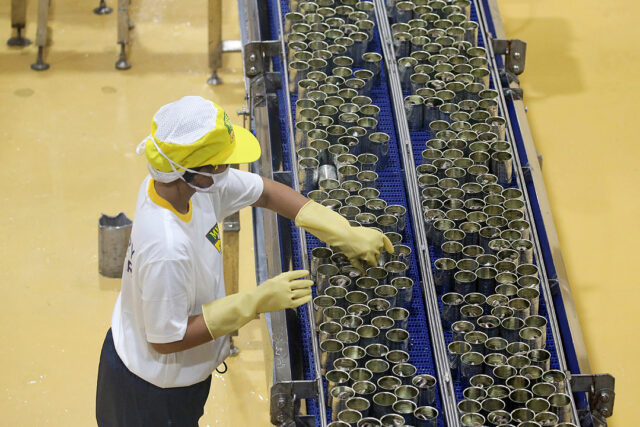
A worker is seen inside the new Mega manufacturing plant in Sto. Tomas, Batangas, March 1, 2023. — PHILSTAR/KRIZ JOHN ROSALES

REDUCING the most favored nation (MFN) tariff rate on tin-mill black plates (TMBPs) is expected to boost domestic production of tin plate and tin-free steel, possibly leading to reduced canned goods prices, the Tariff Commission heard.

At a public hearing on Friday, Perstima (Philippines), Inc., sought the reduction of the MFN tariff rate for TMBPs.

TMBPs are primarily used in the production of food cans, beverage cans, paint cans, and industrial cans.

Perstima, the sole manufacturer of tin plate and tin-free steel in the Philippines, currently imports 77% of its TMBP needs from Japan.

“The TMBP supply from Japan is very limited. And now our operation rate is around 30% or 40% of capacity. So we are thinking we want to increase our utilization rate,” according to Kai Adachi, Perstima sales manager.

“In order to do that, we need more TMBP from countries other than Japan, so a 3% (tariff) reduction on TMBPs from Taiwan and China is really important for us,” he added.

Perstima is a Philippine Economic Zone Authority-registered business enterprise in LIMA Estate. Its plant has the capacity to produce 200,000 metric tons of tin plate annually.

Between 2021 and 2024, source countries for TMBPs were Japan (77%), Taiwan (19%), China (3%), and South Korea (1%). Imports of TMBPs from Japan and South Korea are zero-duty, while Taiwan and Chinese TMBPs are subject to 3% duty.

According to Perstima, reducing the tariff rates on TMBP will not affect domestic industry.

“There are no domestic manufacturers in the Philippines that would be adversely affected by the tariff reduction,” it said. — Justine Irish D. Tabile

Offshore wind to add 16 GW in new capacity — Energy dep’t

STOCK PHOTO | Image by Grahame Jenkins from Unsplash

THE Department of Energy (DoE) said it is projecting more than 16 gigawatts (GW) of new capacity from offshore wind power projects.

The DoE said it is currently assisting 16 offshore wind proponents who committed to start construction by 2027 and to deliver the first kilowatt-hour by 2028. 

The largest project is Domhain Earth Corp.’s Bulalacao Offshore Wind Farm in Oriental Mindoro and Antique with capacity of 3,100 megawatts (MW).

Other large-scale projects are the 1,830-MW Calatagan Offshore Wind Farm in Batangas and Mindoro; the 1,600-MW Claveria Offshore Wind Farm in Ilocos Norte and Cagayan; and the 1,500-MW Mariveles Offshore Wind Farm in Bataan, Cavite and Batangas.

The DoE has also recognized BuhaWind Energy Northern Luzon Corp.’s 2,000-MW Northern Luzon Offshore Wind Power Project in Ilocos Norte as a so-called “frontrunner project.”

Other offshore wind project include CI NMF (PH) Corp.’s 1,000-MW San Miguel Bay Offshore Wind Power Project in Camarines Norte and Camarines Sur; the 650-MW Samar Norte Offshore Wind Power Project in Northern Samar; and the 350-MW Dagupan Offshore Wind Power Project in Pangasinan and La Union.

The other frontrunners include Vind Energy Corp.’s 994-MW Cavite Offshore Wind Project and the 728-MW GS2 Offshore Wind Power Project in Guimaras; Triconti SouthWind Corp.’s 600-MW Guimaras Strait Wind Power Project; and Jet Stream Windkraft Corp.’s 600-MW Guimaras Strait II Wind Power Project.

Also designated frontrunner projects are Ivisan Windkraft Corp.’s 450-MW Frontera Bay Wind Power Project in Bataan and Cavite and ACX3 Capital Holdings, Inc.’s 500-MW San Miguel Bay Wind Power Project in Camarines Sur, 475-MW Lucena Wind Power Project in Quezon, and 275-MW Tayabas Bay Wind Power Project in Quezon.

The DoE is hoping to stage the fifth round of the green energy auction (GEA-5) focused on offshore wind power this year, Undersecretary Rowena Cristina L. Guevara said.

“We announced this in December because some of the front-runner offshore wind projects needed to assure their investors that the Green Energy Auction 5 is going to happen,” Ms. Guevara told reporters last week.

GEA-5 is expected to secure market access for offshore wind developers, ensuring long-term demand for their generation capacities and keep them on track to generate the first kilowatts by 2028.

The government had awarded 92 offshore wind contracts with 68-GW potential capacity as of October. Of the total, 21 contracts were awarded to foreign-owned companies with an aggregate capacity of 19.2 GW.

However, for these projects to be realized, ports need to be developed to serve as logistics hubs throughout the lifecycle of the projects.

Ms. Guevara said that transmission and ports are the crucial components of offshore wind development. The DoE is currently working with the National Grid Corp. of the Philippines for the transmission and local government units for right of way.

The department is also in talks with the Department of Environment and Natural Resources (DENR) and the Philippine Ports Authority (PPA).

The PPA has committed and allocated a budget for repurposing and expansion of three priority ports. Due to their proximity to high-potential wind energy service contracts, Currimao port in Ilocos Norte, the Port of Batangas, and the Jose Panganiban port in Camarines Norte have been identified as critical to offshore wind development.

In October, the DoE and the DENR signed a memorandum of agreement allowing access to both offshore and auxiliary areas during the pre-development/exploration, development and commercial development phases, subject to the necessary DENR requirements.

“Our move is really coordinated because we want to succeed,” Ms. Guevara said.

The Philippines’ offshore wind resources are estimated at a potential 178 GW, according to the World Bank’s 2022 Offshore Wind Roadmap for the Philippines. — Sheldeen Joy Talavera

Commercial vessels could deplete fish stocks in municipal waters — NGO

PHILIPINE STAR/ RYAN BALDEMOR

OCEANA Philippines warned of the potential depletion of fish stocks after a Supreme Court (SC) resolution allowing commercial fishing operations in municipal waters.

“We are worried that this court decision will result in the depletion of our fish stocks with the unabated fishing operations of commercial fishers, displacement of our small, municipal fisherfolk, and destruction of marine habitats and spawning grounds of juvenile fish needed to restore our fisheries,” Oceana Vice-President Gloria E. Ramos said in a statement.

The SC’s First Division upheld a Malabon Regional Trial Court ruling declaring the Fisheries Code’s preferential access provisions unconstitutional.

Under the Republic Act No. 10654, or the Amended Fisheries Code of the Philippines, commercial fishing vessels are only allowed to operate outside a 15-kilometer zone designated as municipal waters.

Oceana said 533 out of 884 coastal towns in the Philippines will now have to open up 90% of their municipal waters to commercial fishing vessels.

“All these will push back the reforms for science-based fishery management areas system now in place, rendering irrelevant the vessel monitoring requirement for commercial fishing vessels,” Ms. Ramos added.

She said that the move could also lead to “deeper hunger and poverty” among small-scale fisherfolk due to more intense competition.

In a statement over the weekend, the Department of Agriculture said that it was urging the High Court to reconsider its decision.

“At a depth of seven fathoms, or 12 meters, corals are at risk, and our scarce marine resources could face further depletion,” Agriculture Secretary Francisco P. Tiu Laurel, Jr. said during a meeting with fishing industry representatives.

The volume of fish catch delivered to regional ports declined by 11.5% to 42,445.26 metric tons in December, according to the Philippine Fisheries Development Authority. — Adrian H. Halili