Home Blog Page 204

South Korea’s President Lee to visit the Philippines on March 3

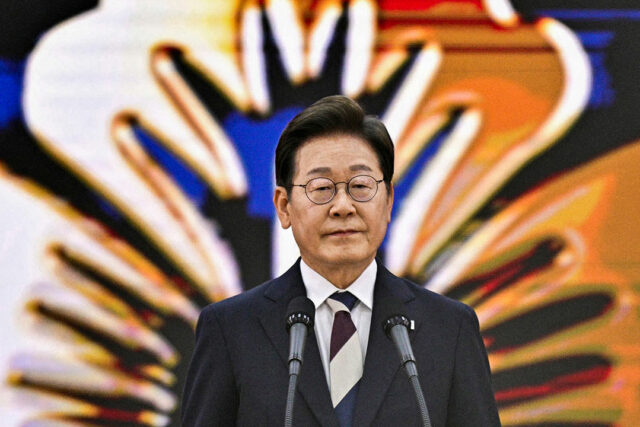
SOUTH KOREA’S President Lee Jae-myung delivers a speech after taking his oath during his inauguration ceremony at the National Assembly in Seoul on June 4, 2025. — REUTERS

SEOUL — South Korean President Lee Jae Myung will make state visits to Singapore and the Philippines in early March and discuss cooperation in artificial intelligence and nuclear energy, according to his office on Friday.

Mr. Lee will hold a summit with Singaporean Prime Minister Lawrence Wong in Singapore during his visit between March 1 to 3. South Korea hopes to expand existing strong investment and trade ties to AI and nuclear energy, Mr. Lee’s office said.

He will then visit the Philippines and meet with President Ferdinand R. Marcos Jr. between March 3 to 4, the presidential Blue House said in a statement.

Defense industry cooperation, infrastructure projects, nuclear energy and critical minerals will be on the agenda for the summit, it said. — Reuters

Philippines should work with China on stalled gas project, tycoon says

Manuel V. Pangilinan / Photographer: Anthony Kwan/Bloomberg

A Philippine tycoon said partnering with China may be an option in the development of a new gas field in an area of the South China Sea where the two nations have competing maritime claims.

“My personal view is we should engage China,” PXP Energy Corp. Chairman Manuel V. Pangilinan told reporters on Wednesday. “Look at what Mark Carney did for Canada.”

Shares of PXP Energy jumped more than 13% on Thursday, the most in a month, with traded volume at over 400% of the daily average in the past three months.

Manila-listed PXP’s exploration work in the Reed Bank in the South China Sea has been on hold for years amid persistent tensions between Manila and Beijing over the resource-rich waterway that have led to clashes between their ships.

Mr. Pangilinan said PXP needs the expertise and capital if it were to proceed with the development of the Reed Bank. The company had estimated in 2014 that it would cost $6 billion to develop it, which PXP can’t afford, he said.

“Whether it’s China or somebody else, you have to partner with somebody who’s got the experience,” he said. “It’s a very complicated business.”

Mr. Pangilinan said he last met with representatives of state-owned China National Offshore Oil Co. in 2019, when the administration of former Philippine President Rodrigo Duterte pushed for joint oil and gas development in the South China Sea amid a broader effort to forge closer economic ties.

The Southeast Asian nation is working to secure its energy supply with the near depletion of its main Malampaya gas field. While the discovery last month of a new gas source in that area would help extend the dwindling field, the country would still need more energy sources to meet its growing power demand.

Mr. Pangilinan said his position on the matter has been relayed to the Philippine government, which he said has the final say. “It’s up to them, because this is all caught up in geopolitics. And that’s beyond our pay grade,” he added. — Bloomberg

Chinese influence operation sought to influence politics in Japan, US and Philippines

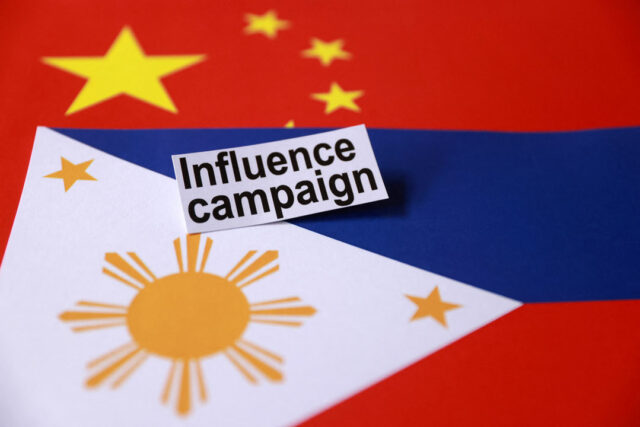
Chinese and Philippine flags and a sign reading "Influence campaign" are seen in this illustration taken Oct. 3, 2025. -- REUTERS/Dado Ruvic/Illustration

In the days surrounding Japanese Prime Minister Sanae Takaichi’s February election win, several dozen X accounts linked to a Chinese misinformation campaign attacked her deeply conservative views and hawkish approach to China, said a US research institute focused on national security and foreign policy.

The 35 accounts, along with nine channels on the microblogging site Tumblr, pushed corruption allegations and portrayed Takaichi as illegitimate and militaristic. The accounts suggest the prime minister is a reckless “cult-backed” leader driving Japan toward war, said Maria Riofrio, a researcher with the Foundation for Defense of Democracy’s Center on Cyber and Technology Innovation.

The accounts, part of a network of at least 327 X and other social media accounts, have since December or earlier attacked adversaries of Beijing or pushed pro-China policy positions, and targeted human rights organizations and sought to influence domestic politics in Japan, the United States, the Philippines and Latin America, according to a new analysis by Riofrio.

A spokesperson for Takaichi said her office is aware of suspicious foreign social media accounts that have posted content related to Japan’s elections.

“We consider this to be a national security threat that undermines the very foundations of democracy, including the fairness of elections and freedom of the press. We believe that countermeasures must be urgently prioritized.”

Spokesperson Liu Pengyu for the Chinese Embassy in Washington said the “analysis” by the FDD was “groundless.”

“The Chinese government consistently opposes and combats the use of fake accounts and other tactics to manipulate public opinion or spread disinformation,” Liu said in a statement to Reuters.

“We urge the relevant parties to stop making unfounded accusations and smearing others based on speculation.”

Riofrio identified the most recent campaign as a distinct cluster based on its pro-China narratives that has coordinated on messaging content containing overlapping hashtags and other similarities. The cluster is likely part of long-running Chinese information operations that internet security analysts have dubbed Spamouflage or Dragonbridge, she said.

Although engagement with the material is low, users do see the content in social media feeds and the operators work algorithms to boost the content. One tweet that accused Takaichi of being in a cult, for example, received only two likes but was viewed more than 1,000 times.

The activity demonstrates “China has the political will to interfere in Japanese elections and internal affairs,” Riofrio said, noting that the overall cluster has similar operations targeting other countries, including the United States.

The FDD is a Washington-based nonprofit focused on “strengthening US national security and reducing or eliminating threats posed by adversaries and enemies of the United States and other free nations,” according to its website.

ATTACKS ON TRUMP, ASIA-PACIFIC NATIONS
The Nikkei newspaper reported earlier this week on another set of suspected foreign-backed online operations attacking the Japanese elections.

Riofrio said nearly half of the 327 accounts attacked US President Donald Trump, pushing the narrative that his drug and border policies have worsened America’s fentanyl crisis, reversing gains made during the Biden era, while also deflecting blame from China, according to the FDD analysis.

In a coordinated sequence of messaging in early February on Trump and fentanyl, six accounts, despite having fewer than 10 followers each, attracted hundreds of likes, retweets and replies and nearly 18,000 views as of February 12, Riofrio said.

One account in the network, FentanylFreeA, created in December 2025, Riofrio said, seemingly seeks to emulate the US Drug Enforcement Agency’s Fentanyl Free America campaign, using a similar name and identical imagery. The account attacks both the US and India, which it blames as the source of fentanyl precursor drugs.

Neither the White House or the DEA responded to a request for comment.

The operations known as Spamouflage or Dragonbridge have been active since at least 2017 and have repeatedly targeted audiences around the world over the years, according to experts.

A spokesperson for Google’s Threat Intelligence Group said Dragonbridge is the most prolific pro-PRC information operations operator that it tracks as of early 2026 based on “its massive scale and assertive narrative agenda.”

Dragonbridge, while maintaining a foundational focus on targeting the US, overseas dissidents, government critics and international NGOs, has become notably more assertive in the Asia-Pacific, the Google spokesperson said, including by targeting the political leadership of Japan, Japan-Taiwan relations, Vietnam over its South China Sea activities, India and the Philippine administration.

OpenAI on Wednesday reported that it had disrupted attempts in mid-October by a Chinese law enforcement official to help plan a multi-stage information attack on Takaichi. — Reuters

Doctors push for a unified national registry on rare diseases

Medical experts and health advocates gathered at AstraZeneca’s Agham Kapihan to celebrate the National Rare Disease Week.—ALMIRA S. MARTINEZ

Health experts said a unified national registry for rare diseases in the Philippines will raise more awareness and support for Filipinos diagnosed with rare conditions.

“The policy makers don’t have [data] that points to what we need. They can decide better, they can craft policies better if they get a better landscape of what rare conditions are,” pediatrician and clinical geneticist Maria Melanie Liberty B. Alcausin told BusinessWorld in an interview on Thursday.

“If there’s no registry, there’s no data. Without data, there’s no policy, so the registry is really important; that’s why it’s at the top of our concern,” she added.

The lack of centralized data on rare diseases in the Philippines resulted in medical societies storing records individually.

“For example, I have a registry of my own patients with osteogenesis imperfecta because we’re the only ones who can manage it,” she said. “But, it shouldn’t be like that. The registry should be unified, and right now, we don’t have that.”

Loudella Calotes-Castillo, a child neurologist and neuromuscular specialist, echoed the same concern, underscoring how this gap could further isolate patients with rare diseases.

“Rare diseases are not always the first disease that doctors or medical professionals think of,” she told BusinessWorld on the sidelines of an event. “As you know, some of these rare diseases might be tagged as infectious, so they are more likely to be stigmatized by the community.”

“One of the gaps is identifying who the patients with rare diseases are and how to cover for them? Because each system… are covering rare diseases,” she added.

On a global scale, Rare Diseases International found that 300 million people live with such conditions, and over 7,000 types of diseases fall under this category.

The group also noted that people with rare diseases often face financial burden brought by hospital bills and treatments.

To further support Filipinos diagnosed with such conditions, the Philippine Health Insurance Corp. (PhilHealth) also aims to expand its Z-benefits to ten rare genetic diseases this year.

The conditions covered by the benefits are Maple Syrup Urine Disease, Methylmalonic Acidemia/Propionic Acidemia, Galactosemia, Phenylketonuria, Gaucher Disease, Pompe Disease, Fabry Disease, MPS II (Hunter Syndrome), MPS IV (Morquio Syndrome), and Osteogenesis Imperfecta.

“They are just polishing those ten, and what processes are involved, because there are more diagnostics and consultations since it’s a genetic condition,” Ms. Alcausin said.

“So there are a lot of processes, it’s very complicated, but at least you’re making some headway,” she added. — Almira Louise S. Martinez

US-Iran talks end with no deal but potential signs of progress

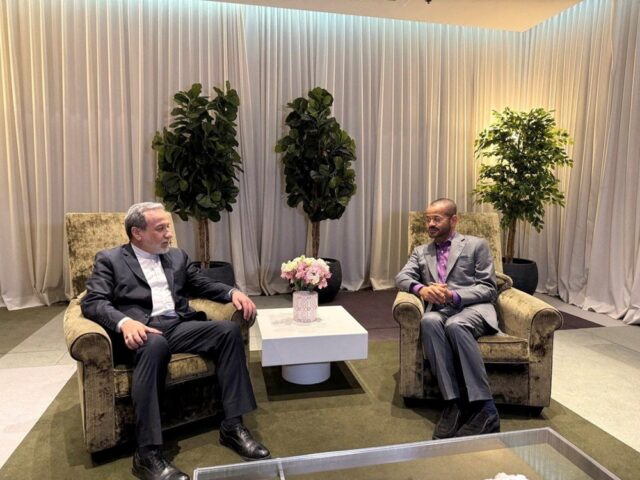
Iranian Foreign Minister Abbas Araqchi meets with Omani Foreign Minister Sayyid Badr Albusaidi in Geneva, Switzerland, February 25, 2026.—REUTERS

GENEVA — The United States and Iran made progress in talks over Tehran’s nuclear program on Thursday, mediator Oman said, but hours of negotiation ended with no sign of a breakthrough that could avert potential US strikes amid a massive military buildup.

The two sides plan to resume negotiations soon after consultations in their countries’ capitals, with techical-level discussions scheduled to take place next week in Vienna, Omani Foreign Minister Sayyid Badr Albusaidi said in a post on X after the day’s meetings in Switzerland.

Any substantial move toward an elusive agreement between longtime foes Washington and Tehran could reduce the imminent prospects for US President Donald Trump to carry out a threatened attack on Iran that many fear could escalate into a wider war.

But Tuesday’s indirect talks wrapped up without a deal, still leaving the region on edge.

The Omani minister’s upbeat assessment followed indirect talks between Iranian Foreign Minister Abbas Araqchi and US envoys Steve Witkoff and Jared Kushner in Geneva, with one session in the morning and the second in the afternoon.

“We have finished the day after significant progress in the negotiation between the United States and Iran,” Mr. Badr Albusaidi said.

But with many analysts seeing the latest diplomacy as the last chance before Mr. Trump could decide to go to war, Mr. Badr Albusaidi provided no details and stopped short of saying the two sides had overcome their biggest stumbling blocks to a deal.

Describing the talks as some of the most serious that Iran has had with the US, Mr. Araqchi told Iranian state television: “We reached agreement on some issues, and there are differences regarding some other issues.”

“It was decided that the next round of negotiations will take place soon, in less than a week,” he said. The Iranians, he added, had clearly expressed their demand for lifting of US sanctions, which Washington has long insisted will only come after deep concessions from Tehran.

There was no immediate comment from the US negotiating team on the outcome of the talks. But Axios quoted a senior US official as saying the Geneva negotiations were “positive.”

The discussions about the decades-long dispute over Iran’s nuclear work come as fears grow of a Middle East conflagration. Mr.  Trump has repeatedly threatened action if there is no deal, and the US military has amassed its forces in waters near the Islamic Republic.

‘INTENSE AND SERIOUS’ TALKS
A senior Iranian official told Reuters earlier on Thursday that the US and Iran could reach a framework for a deal if Washington separated “nuclear and non-nuclear issues.”

The Trump administration has insisted that Iran’s ballistic missile program and its support for armed groups in the region must be part of the negotiations.

After the morning session, Mr. Badr Albusaidi said the two sides had exchanged “creative and positive ideas”.

But a senior Iranian official said at the time that some gaps still had to be narrowed.

Washington, which believes Tehran seeks the ability to build a nuclear bomb, wants Iran to give up all uranium enrichment, a process that makes fuel for atomic power plants but that can also yield material for a warhead.

Iran has long denied wanting a bomb and said earlier on Thursday it would show flexibility at the talks. Reuters reported on Sunday that Tehran was offering undefined new concessions in return for removal of sanctions and recognition of its right to enrich uranium.

US Secretary of State Marco Rubio said on Wednesday that Iran’s refusal to discuss its ballistic missile program was a “big problem” which would have to be addressed eventually.

The missiles were “designed solely to strike America” and pose a threat to regional stability, he said, but offered no proof to back the claim that US territory could be targeted.

TRUMP THREATENS ‘REALLY BAD THINGS’
Mr. Trump said on February 19 that Iran must make a deal in 10 to 15 days, warning that “really bad things” would otherwise happen.

He briefly laid out his case for a possible attack on Iran in his State of the Union speech on Tuesday, underlining that while he preferred a diplomatic solution, he would not allow Tehran to obtain a nuclear weapon.

In June, the US joined Israel in hitting Iranian nuclear sites and has been ramping up the pressure on Tehran again since January, when Mr. Trump threatened to intervene over its crushing of nationwide protests with thousands killed.

Since then, Mr. Trump has deployed fighter jets and aircraft carrier strike groups in the region.

Iran responded to last summer’s strikes by firing fusillades of missiles at Israel and has threatened to retaliate fiercely if attacked again, raising fears of a wider regional conflict that has alarmed Gulf oil producers.

Within Iran, Supreme Leader Ayatollah Ali Khamenei faces the gravest crisis of his 36-year tenure, with an economy buckling under tightened sanctions and renewed protests following the major unrest and crackdown in January.

President Masoud Pezeshkian said on Thursday that Mr. Khamenei has banned weapons of mass destruction, which “clearly means Tehran won’t develop nuclear weapons,” reiterating a religious decree issued in the early 2000s. — Reuters

Stellantis CEO vows profit rebound after 20 billion euro EV writedown hit

MEDIA.STELLANTIS.COM

MILAN — Stellantis CEO Antonio Filosa promised a profitability comeback this year, after the automaker reported on Thursday a massive earnings hit linked to multi-billion euro charges caused by its scaled-back electric-vehicle ambitions.

The net loss of 20.1 billion euros ($23.8 billion) for the second half of 2025 was in line with preliminary ranges the carmaker provided on February 6 when it announced the charges, sending its shares reeling.

Its reported second-half 1.38 billion euro adjusted operating loss was also in line with the preliminary estimate.

With that effect factored in, market focus appeared to shift to the outlook for the Jeep-to-Peugeot carmaker and its Milan-listed shares were best performers among Italy’s blue chips, up 5.2% by 1615 GMT.

Asked during a post-earnings analyst call whether Stellantis’ two largest regions, North America and Europe, would come back to a positive adjusted operating income, Mr. Filosa said “the answer is very easy, it is yes”.

“North American and European order books, both finished in 2025 at three months of sales,” Mr. Filosa told analysts.

A Milan-based trader said Mr. Filosa sounded convincing enough about a return to profitability this year, in Stellantis’ two largest regions, to encourage some purchases on the stock, after its recent fall.

OVERESTIMATED EV TRANSITION
Stellantis said on Thursday it booked a total of 25.4 billion euros in writedowns last year, including 22.2 billion euros for the second half it announced earlier this month.

The charges underscore the financial burden auto groups face globally because of a slower-than-expected and more complex shift to electric vehicles, as both the United States and Europe relax their EV targets.

Mr. Filosa said last year’s results were “reflecting the cost of overestimating the pace of the energy transition.”

Before Thursday’s rebound, Stellantis shares lost about 20% since February 6, when they hit 5.73 euros, their lowest since the automaker was created in January 2021 through the merger of Fiat Chrysler and Peugeot maker PSA.

The writedowns – also caused by vehicle quality problems that Mr. Filosa attributed to cost-cutting under former boss Carlos Tavares – include about 6.5 billion euros in cash payments, expected to be spread across four years from 2026.

The company on Thursday reiterated its 2026 forecasts, including a mid-single-digit percentage increase in net revenues and a low-singe-digit adjusted operating margin. It sees industrial free cash flows returning positive only in 2027.

Stellantis, which confirmed it would not pay a dividend this year, will hold a capital market day on May 21.

The group said it expected costs related to US tariffs to rise to 1.6 billion euros this year from 1.2 billion euros in 2025. ($1 = 0.8462 euros) — Reuters

Melania Trump to chair a meeting of the UN Security Council, White House says

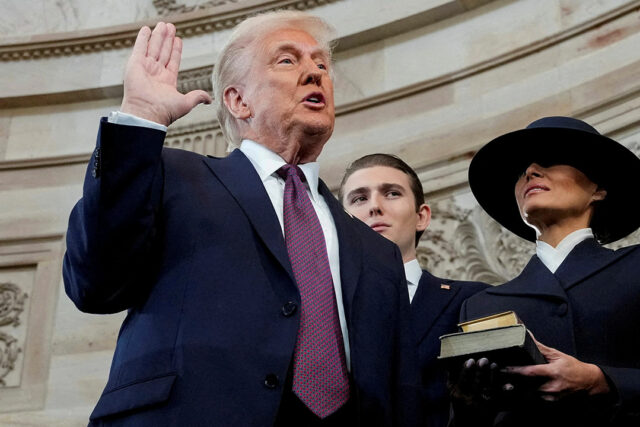
DONALD TRUMP is sworn in as the 47th President of the United States by Chief Justice John Roberts as Melania Trump holds the Bible during the 60th Presidential Inauguration in the Rotunda of the US Capitol in Washington, US, Jan. 20, 2025. — MORRY GASH/POOL VIA REUTERS

WASHINGTON — First lady Melania Trump will chair a meeting of the United Nations Security Council on Monday as the US takes over the monthly rotating presidency, the White House said.

Her office said in a statement on Wednesday she will emphasize education as a way to advance tolerance and world peace in her remarks at the meeting, titled “Children, Technology, and Education in Conflict.”

A UN spokesperson said it would be the first time a spouse of any serving world leader has chaired a meeting of the 15-member Security Council.

US President Donald Trump has been a vocal critic of the United Nations since his first White House term, saying the 193-member world body was ineffective and needed reforms. The United States is billions of dollars behind in its contributions to the UN budget.

Asked at a regular briefing if Melania Trump’s appearance was a positive sign for UN-US relations, UN spokesperson Stephane Dujarric said it showed “the importance that the United States feels towards the Security Council and the subject at hand,” referring to the meeting’s agenda.

The first lady has stayed out of the public eye for much of Mr. Trump’s presidencies but has been an advocate for children’s causes in the past, including by writing a letter to Russian President Vladimir Putin in 2025 calling for the return of Ukrainian children taken to Russia during the war.

She was the subject and executive producer of a big-budget documentary film released in January.

The president struck a more conciliatory tone toward the UN last week at the first meeting of his Board of Peace, an initiative he said aims to resolve conflicts globally but one that many world leaders worry was designed to replace the United Nations.

“The Board of Peace is going to almost be looking over the United Nations and making sure it runs properly,” Mr. Trump said on February 19. “We’re going to strengthen up the United Nations. We’re going to make sure its facilities are good…. We’re going to help them money-wise.”

The United Nations last week said it received about $160 million this month of the more than $4 billion in US dues arrears to the United Nations. That amount appears to have grown substantially during Mr. Trump’s presidency.

Historically, the US has been the biggest contributor to the UN budget. But under Mr. Trump, it has refused to make mandatory payments to regular and peacekeeping budgets and slashed voluntary funding to UN agencies.

The Security Council is the UN body charged with maintaining international peace and security and has the power to make legally binding decisions. — Reuters

PHL economy still strong, says S&P

The Ortigas business district is seen in this file photo. — PHILIPPINE STAR/MIGUEL DE GUZMAN

By Katherine K. Chan, Reporter

S&P GLOBAL RATINGS continues to see strong credit rating prospects for the Philippines as it remains optimistic on the country’s growth fundamentals despite drags from the recent flood control corruption scandal.

Speaking at a webinar on Thursday, Yee Farn Phua, director for sovereign and international public finance ratings at S&P Global Ratings, said the Philippine economy will likely rebound immediately once the flood control controversy wanes.

“Because of the slowdown in many infrastructure projects, there has been (an) economic growth slowdown in the Philippines quite considerably in the last few months,” Mr. Phua said.

“However, we don’t think this is a structural problem in the Philippines’ economic growth story. We think that the fundamentals of the Philippine economy continue to be strong. This investigation, we think that once it passes, we could see growth rebounding quite quickly,” he added.

In November 2025, S&P affirmed the Philippines’ long-term “BBB+” and short-term “A-2” credit ratings. It also maintained its “positive” outlook on the country, indicating a potential rating upgrade over the next one to two years if improvements in credit fundamentals are sustained.

“Now, when we put the Philippines on (a) positive outlook one year plus ago, it wasn’t just because of improvement in climate metrics overnight,” Mr. Phua said. “It was really an observation of the fact that institutional settings in the Philippines have strengthened quite considerably over the last decade or so. And that has led to very good growth outcomes and at the same time sustainable public finance.”

Still, Mr. Phua noted that political concerns emerging from the flood mess could slow some of the country’s credit improvement.

However, he added that the economic spillover from the corruption allegations against several Public Works officials, lawmakers and private contractors as well as the impeachment complaints against the President due to the flood control issue may only be “temporary.”

Last year, the Philippines missed its growth target for a third straight year after gross domestic product (GDP) slowed to a post-pandemic low of 4.4% as weak confidence dampened investments, household consumption and government spending. 

Despite this, S&P sees the economy rebounding to a 5.7% growth this year. If realized, the government will meet its 5%-6% goal for the year.

“For this year, I think our growth forecast for the Philippines is still relatively strong at 5.7%,” Mr. Phua said. “So, despite the economic slowdown of late, the Philippines continues to be an outperformer when compared to peers at a level of similar income.”

This, he added, comes on the back of a projected narrowing of the country’s fiscal and current account deficits over the next year or two, which could boost the case for a higher credit rating.

“Interestingly, because of the slowdown in infrastructure spending in the last few months, it is possible that you will start to see (the) fiscal deficit actually be lower than what was originally budgeted for,” Mr. Phua said.

“The other thing also is because of the slowdown in the projects and also the reduction in capital goods import, we are also starting to see that the current account deficit could come down to be narrower than before as well,” he added.

Based on latest data, infrastructure spending declined for the fifth consecutive month after falling by 45.2% year on year to P48 billion in November.

Meanwhile, the country’s budget deficit sharply narrowed during the same month, shrinking by 26.02% to P157.6 billion from P213 billion a year earlier.

However, single-digit growth in spending and revenue collection led the gap to widen to P1.26 trillion in the 11-month period.

The government wants to cap the fiscal deficit at P1.56 trillion by end-2025.

Meanwhile, the Philippines’ current account balance stood at a $12.5-billion deficit by the end of the third quarter, latest Bangko Sentral ng Pilipinas (BSP) data showed. This was equivalent to -3.6% of the GDP.

The BSP expects the current account gap to end at $15.5 billion in 2025 or -3.2% of GDP, before narrowing to $15.3 billion or -3% of GDP this year.

Still, Mr. Phua said S&P will keep monitoring how further developments in the flood control scandal would impact the Philippines’ long-term credit rating prospects.

Gov’t targets $10.3 billion in ODA deals

A person shows US dollars at a currency exchange store in Manila, Philippines, Oct. 21, 2022. — REUTERS

THE GOVERNMENT is aiming to sign this year 25 official development assistance (ODA) agreements amounting to $10.3 billion (P593.382 billion) before the country reaches upper middle-income status by mid-2026.

Finance Secretary Frederick D. Go said there are 10 ODA loans from Japan, 10 pipeline loans from South Korea, and five loan deals from France lined up for this year.

“These total 25 ODA loan agreements with a total value of $10.3 billion,” he said on Thursday.

Mr. Go said the Philippines is expected to be classified as an upper middle-income country (UMIC) by the World Bank within the year.

“We will be less reliant on concessional loans once the country moves into an upper-middle class according to the World Bank. So, we will have to find other sources of financing,” Mr. Go said, adding that he expects the government to be more reliant on public-private-partnership projects.

The Philippines has remained in the lower middle-income bracket since 1987, despite posting a higher gross national income (GNI) per capita of $4,470 in 2024. This was only $26 shy of the World Bank’s adjusted GNI per capita requirement of $4,496-$13,935 for UMIC status.

The Washington-based lender is scheduled to release its updated annual country status thresholds in July.

Mr. Go added that the government is eyeing alternative financing sources for projects in infrastructure, climate change, energy, and agriculture.

The government is also in discussions with the Asian Infrastructure Investment Bank (AIIB) to fund two projects this year.

This includes the Luzon Digital Connectivity project under the Department of Information and Communications Technology (DICT) worth $500 million and “Metro Manila Sponge City” under the Metropolitan Manila Development Authority (MMDA) worth $150 million.

“So those are the two that they are looking at but not certain yet. We are still discussing with the AIIB, DICT, and MMDA. The cooperation with AIIB continues to be robust,” Mr. Go said.

Since the start of the Marcos administration, the Philippines and Japan have signed 12 financing deals worth ¥910.38 billion (about P341.2 billion).

As of December last year, Japan accounted for $13.9 billion or 33.54% of the Philippines’ total ODA portfolio.

Japan is the Philippines’ largest ODA loan provider and third-largest source of ODA grants.

Meanwhile, Mr. Go said the government is still awaiting clarification from the US on the newly imposed global tariffs.

“What we are hopeful for and what we assume it to be is that if they apply the 15% tariffs on us, it will continue to apply on the goods that they were applying a 19% tariff on. So, our assumption is all the goods that were exempted before, which are the semiconductors and the major agricultural exports, will continue to be not included in the list of items to be subjected to the new 15% tariff,” he said.

The US on Tuesday started collecting a temporary 10% global import tariff, but said it was working to raise it to 15%.

The Trump administration’s new tariff policy comes after the US Supreme Court ruled that President Donald J. Trump had exceeded his authority when he imposed the reciprocal tariffs.

The ruling had invalidated the tariffs imposed by the Trump administration on China, Japan, South Korea, Taiwan and Association of Southeast Asian Nations economies. Most Philippine-made goods had faced a 19% US tariff. — Aaron Michael C. Sy

PHL growth seen to slow to 4.2% this year

CONSTRUCTION workers carry out repair work around Plaza Miranda in Manila, Jan. 6, 2026. — PHILIPPINE STAR/RYAN BALDEMOR

PHILIPPINE ECONOMIC growth may likely be even slower this year, amid uncertainty over a “meaningful” recovery, the University of Asia and the Pacific (UA&P) said.

In its February The Market Call, UA&P cut its full-year gross domestic product (GDP) growth forecast to 4.2% from the “above 5%” forecast previously.

If realized, this will be even slower than the post-pandemic low of 4.4% GDP growth in 2025 when the flood control scandal dampened government spending and investments.

However, UA&P expects first-quarter GDP growth to pick up to 3.3% from 3% in the fourth quarter of 2025. If realized, it will be slower than 5.4% in the first quarter of 2025.

“More indicators revealed the impact of the flood control scandal, hurting economic growth in 2025 as sentiment points to a ‘muddling through’ scenario for 2026,” it said.

UA&P said the government needs to ramp up spending to drive faster growth this year.

“While uncertainty over a meaningful economic recovery remains, we see some bits of light emerging,” it said.

“With inflation remaining in the lowest quarter of BSP (Bangko Sentral ng Pilipinas) target range, policy and interest rates declining, and the peso depreciating, consumer spending, residential property sales, car sales, equipment leasing and other interest-sensitive spending should provide better consumption expenditures in Q1,” it added.

Headline inflation picked up to 2% in January from 1.8% in December and 2.9% in the same month last year.

“A more optimistic PMI in January, along with expected increases in exports and remittances from overseas Filipinos, should be supported by the peso’s depreciation,” UA&P said.

The S&P Global Philippines Manufacturing Purchasing Managers’ Index (PMI) rose to a nine-month high of 52.9 in January due to fresh export orders.

Last year, merchandise exports reached $84.4 billion, reflecting a 15.2% increase amid “holiday demand, US agricultural exemptions, and a weaker peso.”

Cash remittances coursed through banks hit an all-time high in December at $3.5 billion, bringing the full-year tally to a record $35.6 billion.

Meanwhile, the UA&P said that it expects further weakening of the peso after the BSP cut its policy rate by 25 basis points (bps) in February.

The Monetary Board lowered the target reverse repurchase rate by 25 bps to 4.25%, the lowest in over three years. This brought the BSP’s total reductions to 225 bps since it began monetary policy easing in August 2024.

OIL PRICES
Meanwhile, National Statistician Claire Dennis S. Mapa said that he expects oil prices to remain a top risk for inflation in February.

“One possible risk for February is the price of oil because every week the price of oil increases,” he told reporters on the sidelines of an event on Wednesday.

“But I have to look at the data, but I got reports that there are weekly increases… so we have to see if those increases, the total increase, are higher than the same period last year,” he added.

Pump prices on Tuesday jumped for an eighth straight week as global crude oil prices continued to rise amid persistent volatility in the global oil market, driven by escalating geopolitical tensions.

Fuel retailers raised gasoline prices by P0.60 per liter, diesel by P1.20 per liter, and kerosene by P1.20 per liter.

In general, Mr. Mapa said that the BSP expects inflation to be higher compared to 2025, as there are “base effects that we are considering.”

“If there are no interruptions in the second half, meaning there are no typhoons, usually the first half prices of commodities will carry over to the second half,” he added.

The BSP expects inflation to average 3.6% this year, faster than the nine-year low of 1.7% in 2025. — Justine Irish D. Tabile

Philippine banks end 2025 with nearly P30 trillion in assets

PHILIPPINE STAR/JOVANNIE LAMBAYAN

THE PHILIPPINE banking sector finished 2025 with about P30 trillion worth of assets as its total loan book and net investments continued to grow amid stable funding conditions, data from the Bangko Sentral ng Pilipinas (BSP) showed.

Banks’ combined assets stood at P29.864 trillion by the end of last year, up 8.87% from the P27.431 trillion posted a year prior.

Month on month, the industry’s assets went up by 3.98% from P28.722 trillion at end-November.

This was the highest year-end level of banks’ assets, according to central bank data.

Banks’ assets are mainly supported by deposits, loans, and investments. These include cash and due from banks as well as interbank loans receivable (IBL) and reverse repurchase (RRP) net of allowances for credit losses.

At end-December, universal and commercial banks held most of the sector’s assets with P27.881 trillion, 8.37% more than the P25.726 trillion seen in 2024.

Meanwhile, the assets of thrift banks grew by 24.98% year on year to P1.378 trillion from P1.103 trillion.

Digital banks’ assets also jumped by 40.54% to P165.352 billion from P117.658 billion a year ago.

As of end-December, rural and cooperative banks had P440.545 billion in assets, 9.17% lower than the P485.027 billion posted in the previous year.

Based on BSP data, the banking industry’s total net loan portfolio inclusive of IBL and RRP reached P16.607 trillion in 2025, climbing by 11.89% from P14.843 trillion in 2024.

Net investments, or financial assets and equity investments in subsidiaries, rose by 10.51% to P8.586 trillion from P7.77 trillion in the comparable year-ago period.

Meanwhile, banks’ net real and other properties acquired amounted to P138.553 billion last year, up by 17.86% from the P117.558 billion logged in 2024.

The sector’s other assets increased by 17.96% year on year to P2.311 trillion at end-December from P1.959 trillion a year earlier.

However, cash and due from banks fell by 18.99% to P2.221 trillion at end-December from P2.742 trillion in the prior year.

Central bank data also showed that the total liabilities of the banking system stood at P26.194 trillion by end-2025, rising by 8.86% from P24.061 trillion a year ago.

The bulk of banks’ liabilities in 2025 were deposits, which grew by 7.4% annually to P21.882 trillion in the period from P20.374 trillion in the previous year.

Broken down, peso-denominated deposits totaled P18.217 trillion in 2025, while foreign currency deposits amounted to P3.665 trillion.

SM Investments Corp. Group Economist Robert Dan J. Roces said stable domestic demand, moderating inflation and steady funding conditions drove local lenders’ assets growth last year.

“Loan demand improved as borrowing costs stabilized, while banks also increased investments in higher-yielding securities,” he said in a Viber message.

“Strong deposits, remittances, and sound capital buffers gave banks room to expand their balance sheets without taking on excessive risk,” Mr. Roces added.

In 2025, the Philippine central bank eased borrowing costs for five straight meetings following a pause in February, having cut a total of 125 basis points (bps) last year alone.

Its policy decisions brought the benchmark interest rate to an over three-year low of 4.5% as of end-December.

This helped bank lending post double-digit growth for most of 2025, except in December when it expanded by a near two-year low of 9.2%.

Further easing by the US Federal Reserve and the BSP, as well as increasing deposits and net earnings could accelerate banks’ assets growth this year, Rizal Commercial Banking Corp. Chief Economist Michael L. Ricafort said via Viber.

Currently, the policy rate stands at 4.25% following the Monetary Board’s latest reduction on Feb. 19, bringing its cumulative cuts to 225 bps since it began easing in August 2024.

BSP Governor Eli M. Remolona, Jr. left the door open to support domestic growth through monetary policy.

However, he said the policy path ahead is now less certain as they noted that monetary policy easing alone may not be enough to spur the economy.

The Monetary Board will hold its next rate setting meeting on April 23. — Katherine K. Chan

For CEOs this 2026: Caution or courage?

FREEPIK

There is a thin line between courage and recklessness, and it is often the chief executive officer’s (CEO) job to determine where that line is. In a globalized business environment constantly being disrupted by new technology, that job becomes more difficult each year.

Take artificial intelligence (AI). Initiatives that only last year were deemed visionary and future-proof are now being put into question, as many chief executives all over the world are starting to slow down and reassess their bets on AI.

While last year’s PricewaterhouseCoopers (PwC) data showed 56% of leaders attributing efficiency gains to AI — with roughly a third reporting growth in profitability and revenue — this year, only 12% say AI has delivered both cost and revenue benefits.

The latest edition of the PwC Global CEO Survey interviewed 4,454 CEOs in 95 countries and territories from Sept. 30 to Nov. 10, 2025. The report found that only three-in-ten executives feel confident about revenue growth in 2026 as most struggle to turn AI investment into tangible returns, the lowest outlook in five years. The AI hype of previous years has matured into a polarized landscape: a small group of frontrunners is seeing tangible financial returns, while the majority are struggling to scale technology amid rising geopolitical friction.

Moreover, countries all across the world are reconsidering entire energy systems, transportation corridors, industrial zones, and data center investments, essentially “redrawing the global map of infrastructure and influence.” More than half of CEOs expect to make international investments in the year ahead, with notable momentum toward India and the Middle East.

“Volatility is the baseline rather than the exception,” PwC Global Chairman Mohamed Kande wrote for the World Economic Forum.

“For leaders, the question is not simply where to allocate capital. The deeper consideration is how this global rebuilding will reshape competitiveness and opportunity in the decade ahead. Countries and companies that rethink their operations, risk management and business models will be the ones that pull ahead.”

The polarizing impact of AI

Regarding AI, success appears to vary by firm. According to the EY CEO Outlook 2026, which surveyed 1,200 executives, the CEO Confidence Index declined from 83 to 78.5, reflecting growing unease about the pressures shaping today’s business landscape. However, the vast majority of CEOs in the survey report that their AI initiatives have met or exceeded expectations, with only a small minority (3%) falling short of targets.

The EY report concludes that AI is becoming an increasingly reliable driver of productivity, revenue growth, customer experience and operating model efficiency, with the biggest value gains being won by the 20% of organizations whose AI investments are already delivering significantly above-expectation returns.

“CEOs will need to treat AI as a multi-year strategic pillar — embedded in workforce planning, capital allocation, and operating model design. With many early benefits in sight, focus is likely to shift from proliferating pilots to scaling what works, prioritizing depth over breadth by embedding AI across critical value chains to capture enterprise-wide productivity,” the report said.

This suggests intensifying competition across all industries, as laggards risk falling further behind while AI adopters push for accelerated investment cycles and bolder transformation agendas, using the technology not only to optimize current operations but also to reshape products, services, and business models.

In contrast, the 2026 PwC survey found that only 33% of CEOs interviewed reported gains in either cost or revenue due to AI, while 56% say they have seen no significant financial benefit to date.

This data presents a paradox of perception, suggesting that while AI is fulfilling its role as a productivity tool supercharging organizational efficiency, it has yet to become the revenue engine many hoped for.

PwC points to a growing divide between companies piloting AI and those deploying it at scale, with CEOs reporting both cost and revenue gains two to three times more likely to say they have embedded AI extensively across products and services, demand generation, and strategic decision-making.

“Organizations that move from pilots to enterprise-level integration will capture disproportionate value,” Mr. Kande noted.

According to Teneo Vision 2026 CEO and Investor Outlook Survey, which includes the views of more than 350 global public company CEOs and 400 institutional investors representing approximately US$19 trillion of company and portfolio value, for the majority of CEOs, the gains from AI initiatives will take much longer to actualize. As much as 84% believe that positive returns will take longer than six months to achieve.

However, 53% of investors surveyed expect returns within six months, exerting pressure on executives to deliver on their promised gains.

An area where AI is already seeing an impact on is the job market, where most CEOs expect it to drive a near-term increase in hiring across all levels in 2026. Teneo’s survey found that businesses are reshaping their workforces to accelerate returns on investment from an efficiency, cost and commercial perspective, with AI enablement and upskilling billed as top talent priorities.

87% of CEOs included in Teneo’s survey feel confident that their organizations are prepared for future technological disruption, but are uncertain about how future leaders will be able to keep pace with tech advancements. Agility and creativity, they believe, will be the most important traits for a new generation of CEOs.

The risks of overcaution

The global CEO sentiment has shifted from experimentation to disciplined reinvention. Conglomerates are at a disadvantage in this landscape, as change at the scale they are operating on is slow, expensive, and fraught with regulatory friction.

Earlier this year, xAI’s Grok was banned in the Philippines alongside several others in the ASEAN because its online safety measures did not meet local standards. All over the world, especially in the European Union and China, governments are tightening regulations over the new technology, putting early adopters in the crosshairs of regulators. This can put many corporate initiatives regarding AI implementation on hold.

Yet, the window of opportunity regarding AI is undoubtedly shrinking. External and cyber risks can compound as tariffs, regulatory oversight, and AI-powered cybercrime reduce the margin of error for businesses worldwide. If an organization is not using AI-powered cybersecurity today, they expose themselves to more powerful, more sophisticated cyber risks.

According to the EY report, geopolitical dynamics are creating challenges that require adjustments in how the business operates.

“Perhaps most significantly, as data becomes both a strategic asset and a point of geopolitical friction, new regulations and restrictions affect how companies collect, transfer and utilize information,” the report found.

A nearby example is how countries like Indonesia, Malaysia, and Vietnam have recently passed laws or guidelines emphasizing AI sovereignty, or the ability of a nation or organization to exert full control over its own AI stack, including the data, the data centers, and the models themselves. Additionally, EY also pointed out that firms wary of sharing sensitive intellectual property across borders are creating an increasingly splintered digital ecosystem that raises operational costs and slows innovation diffusion even within companies.

Mr. Kande sums up the dilemma facing executives who are still holding out on AI today.

“In periods of rapid change, the instinct to slow down is understandable — but it’s also risky,” he said. “The value at stake across the global economy is increasing, and the window to capture it is narrowing. The companies that succeed will be those willing to make bold decisions and invest with conviction in the capabilities that matter most.” — Bjorn Biel M. Beltran