Home Blog Page 2016

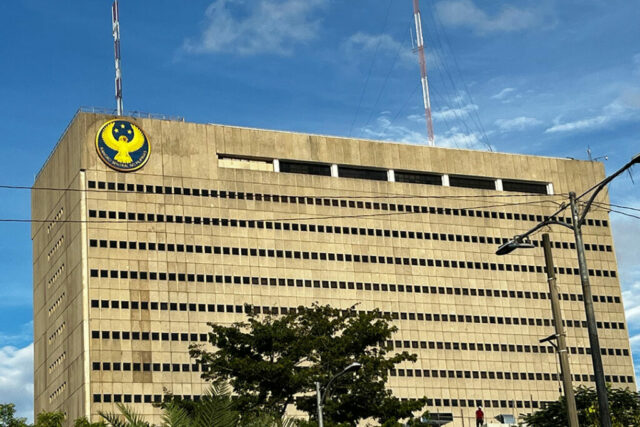
DoubleDragon ends P10-B bond offer early

BW FILE PHOTO

LISTED DoubleDragon Corp. (DD) said it ended the offer period for its P10-billion fixed-rate peso retail bond issuance two days earlier than planned due to high investor demand.

The bond issuance was “more than fully subscribed” as of Nov. 18, earlier than the original end of the offer period on Nov. 20, DD said in a statement to the stock exchange on Tuesday.

“We are deeply grateful for the trust and confidence of the investing public as manifested in this retail bond offering. This will further inspire our whole team to continue the grit and hard work that we believe is essential to enable DD to reach greater heights and become more and more relevant and durable as years go forward,” DD Chairman Edgar “Injap” J. Sia II said.

“We are very glad about the early oversubscription outcome of this DD otso-buenas peso retail bond offering, enabling DD to capture an even wider stakeholder base into DD’s ecosystem,” he added.

DD’s bond issuance was priced at 8% per annum and has a tenor of 5.5 years.

The offer had a base amount of P5 billion and an oversubscription option of up to P5 billion.

The issuance will be listed on the Philippine Dealing & Exchange Corp. on Nov. 27.

“We seek the understanding of the investing public for cutting short the DD retail bond offer period due to oversubscription way ahead,” the company said.

For the first nine months, DD’s attributable net income climbed by 5.2% to P1.51 billion from P1.43 billion in 2023. Revenue for the January-to-September period increased by 4.5% to P6.42 billion from P6.15 billion a year ago.

On Tuesday, DD shares rose by 1.35% or 13 centavos to P9.77 per share. — Revin Mikhael D. Ochave

Rijksmuseum begins years-long restoration of Rembrandt’s Night Watch

CONSERVATORS Giulia Sara de Vivo from Italy and Nienke Woltman from the Netherlands work during the restoration of the painting The Night Watch (De Nachtwacht) by Rembrandt at the Rijksmuseum in Amsterdam, the Netherlands, Nov. 12, 2024. — REUTERS

AMSTERDAM — Eight art conservators have begun a painstaking process to remove a layer of varnish from Rembrandt’s giant Night Watch masterpiece to reveal its original depth and color.

The task, which could last years, began last week at the national Rijksmuseum gallery in Amsterdam.

“Rembrandt painted with a very clear contrast between light and dark and that had become far less obvious in the painting. So I think that once it’s restored it will have much more depth and the figures in the painting will come to life,” museum director Taco Dibbits said.

In the first five-year stage of work, which included researching the delicate process of varnish removal, the 3.8 meter by 4.5 meter canvas was re-stretched.

The next stage of “Operation Night Watch,” the most extensive restoration of the artwork, also will help preserve the painting for future generations and repair any damage.

A tissue impregnated with a very small amount of solvent is placed on the paint surface and the varnish dissolves, said restorer Ige Verslype, showing how the yellowish tint had been removed.

The Rijksmuseum, the most popular gallery in the Netherlands, is visited by more than 2 million people annually. — Reuters

CloudCFO uses AI to simplify accounting for small firms

CLOUDCFO.PH

CLOUDCFO, INC., a Manila-based outsourcing firm, is integrating artificial intelligence (AI) into its accounting products to help small and medium enterprises (SMEs) gain valuable insights into their financial performance.

CloudCFO Chief Executive Officer Mickael Cardoso, who has worked with several multinational companies for years, co-founded the company in 2016 to help SMEs, which often faced long waiting times to generate financial reports.

“I’ve always found it insightful and actually interesting that most business owners operate this way — they work hard day to day, committing their financial resources, time, effort and sweat, but they don’t really know how things are going,” he told BusinessWorld.

“That’s kind of what we’re trying to unlock… We want them to know [their performance] every month, week, or even quarterly. ‘OK, I’m on the right track, and here’s how I can correct it.’”

CloudCFO offers accounting and financial services including bookkeeping, tax compliance, payroll processing, financial reporting and payment management. It also provides specialized corporate services such as management support tailored to each business, primarily SMEs.

As part of its AI integration, CloudCFO analyzes documents uploaded by clients to its platform, identifies their type — such as invoices — and cross-references these with past transactions and supplier records.

The system then determines how to handle similar cases based on historical data, automating the process without requiring manual inputs from accountants.

CloudCFO also uses the data to predict and streamline how certain situations should be handled for their clients.

“This really creates a lot of efficiency gains for us and potentially increases accuracy and faster turnaround times for customers,” Mr. Cardoso said.

The integration of AI elevates the role of accountants, he said, noting that they have spent a painstaking amount of time organizing and categorizing documents to ensure that files are properly stored for future access.

“It frees up time for more value-adding work, such as advisory and customer support,” the CEO said. “That’s what we’re excited about, and that’s what we see as revolutionary. The role of accountants will have to be reinvented, thanks to AI.”

After the automated bookkeeping process, CloudCFO ensures the accuracy of the data by getting these reviewed by their accountants and posting them to the customers’ accounts.

The company now has 300 clients, mostly SMEs in the Philippines and Southeast Asia, with plans to expand globally.

“We do want to expand abroad because we see the value of what we can bring and solve the problems and challenges that SMEs face in other markets, notably the US, Canada, Australia and New Zealand,” Mr. Cardoso said. — Edg Adrian A. Eva

Fruitas expands portfolio with Mang Bok’s asset purchase

FRUITASHOLDINGS.COM

LISTED Fruitas Holdings, Inc. is venturing into the roasted chicken segment after its subsidiary acquired the assets of Mang Bok’s brand.

Fruitas subsidiary Negril Trading, Inc. became a 60% shareholder of Bigboks Enterprises, Inc., which served as the acquisition vehicle for Mang Bok’s business assets, the listed company said in a regulatory filing on Tuesday.

The deal between Negril and Bigboks comprised 960,000 shares, equivalent to a 60% stake, at P9.23 per share, totaling P8.86 million.

“The acquisition includes all assets, including inventories, equipment, leasehold improvements, transportation equipment, if any, intellectual property rights/trademark, franchise ownership grant/rights, contractual rights to suppliers and lessors including security deposits at the time of acquisition,” Fruitas said.

Established in September 2022, Mang Bok’s is known for its roasted chicken, roasted pork belly (liempo), other fried items, and rice meals.

“Our family continues to grow larger and more fruitful. Bringing Mang Bok’s into the diverse portfolio of House of Fruitas is an exciting opportunity for us. This acquisition perfectly aligns with our commitment to excellence and our customer-centricity approach,” Fruitas President and Chief Executive Officer Lester C. Yu said.

For the first nine months, Fruitas grew its net income by 35% to P95 million as revenue surged by 19% to P2.1 billion.

Gross profit increased by 21% to P1.27 billion while earnings before interest, taxes, depreciation, and amortization rose by 18% to P305 million.

Fruitas has 851 stores nationwide. These include 732 kiosks/carts/inline stores, 105 community stores, and 14 cloud kitchens and restaurants.

Fruitas has more than 25 brands in its portfolio, including Fruitas Fresh from Babot’s Farm, Buko Loco, Buko ni Fruitas, De Original Jamaican Pattie, Johnn Lemon, Black Pearl, and Sabroso Lechon.

On Tuesday, Fruitas shares fell by 1.37% or one centavo to 72 centavos apiece. — Revin Mikhael D. Ochave

Analysts: Philippine banks to sustain profits in Q4

BW FILE PHOTO

By Aaron Michael C. Sy, Reporter

BANKS are expected to sustaining their earnings growth in the fourth quarter as loan demand is spurred by year-end spending and after the central bank cut the reserve requirement ratio (RRR).

“For the fourth quarter, we’re hoping to see sustained momentum in loan growth and perhaps some improvement in net interest margins following the reduction in RRR last October,” Charmaine Co, an equity research analyst at COL Financial Group, Inc., said in a Viber message.

The Bangko Sentral ng Pilipinas (BSP) last month cut the reserve requirements for universal and commercial banks and nonbank financial institutions by 250 basis points (bps) to 7%, effective on Oct. 25.

It also cut the RRR for digital banks by 200 bps to 4%, while the ratio for thrift lenders was cut by 100 bps to 1%. Rural and cooperative banks’ RRR likewise fell by 100 bps to zero.

“For the fourth quarter, BSP rate cuts may pressure margins, but this could be offset by lower funding costs and improved loan demand, especially from corporates and small businesses,” Luis A. Limlingan, head of sales at Regina Capital Development Corp., said in a Viber message. “The holiday season and remittance inflows are also expected to boost consumer lending and transaction volumes.”

The central bank has cut interest rates by 50 bps since it started its easing cycle in August, bringing its key interest rate to 6%.

Cristina S. Ulang, head of research at First Metro Investment Corp., said she expects banks to continue their strong earnings growth as loan spreads remain wide and would be boosted by the RRR cut.

She added that the Corporate Recovery and Tax Incentives for Enterprises to Maximize Opportunities for Reinvigorating the Economy (CREATE MORE) law could spur Investments and boost Philippine companies’ capital spending.

President Ferdinand R. Marcos, Jr. last week signed into law the CREATE MORE bill, which further reduces the corporate income tax to 20% from 25% for registered business enterprises.

It also allows these companies to take a 100% deduction on power expenses in a taxable year, up from 50% allowed by the Tax Code.

In the first nine months of the year, bank earnings were driven by continued loan growth, Ms. Ulang said in a Viber message.

She said Bank of the Philippine Islands (BPI) had the fastest income growth, while BDO Unibank, Inc. had the biggest nominal income during the period.

In the third quarter, BDO’s net income grew 13.26% year on year to P21.18 billion, driven by the continued growth in its core businesses. This brought the lender’s nine-month income to P60.62 billion, climbing 12.47% from a year ago.

Meanwhile, BPI’s net income rose 29.4% to P17.4 billion in the third quarter as revenues increased. This brought its nine-month earnings to P48 billion, 24.3% higher than a year earlier and driven by robust revenue growth and sustained positive operating leverage.

“In the third quarter, most banks’ results were either above or in line with our estimates,” Ms. Co said. “Outperformances were characterized by stronger-than-expected revenues from better lending income in addition to some significant trading gains.”

“The Philippine banking sector showed mixed performance in the third quarter. Banks like BDO and BPI stood out due to strong loan growth, higher fee-based revenues, and controlled nonperforming loans, while Metropolitan Bank & Trust Co. (Metrobank) posted steady but slower growth,” Mr. Limlingan said.

Metrobank’s net income rose 11.35% to P12.124 billion in the third quarter amid higher revenues as it booked growth in both interest and noninterest earnings. This brought its nine-month net income to a record P35.729 billion, up 12.4% year on year.

British Museum to receive hefty donation of world-renowned Chinese ceramics

©THE TRUSTEES OF THE BRITISH MUSEUM

LONDON — The British Museum said last week it would receive 1,700 pieces of world-renowned Chinese ceramics worth around £1 billion ($1.27 billion), in the largest donation in its nearly 300-year history.

The collection, which has been on loan to the British Museum since 2009, has been donated by the Percival David Foundation.

Examples from the collection include the blue-and-white “David vases” from 1351, a tiny porcelain wine cup from the late 15th century known as a “chicken cup,” one of the most sought-after items in Chinese art, and “Ru wares,” artifacts dating back to the late 11th century.

“This is the largest bequest to the British Museum in our long history,” said George Osborne, chair of the British Museum. “It’s a real vote of confidence in our future.”

Thanks to the donation, the British Museum said it would hold one of the most important collections of Chinese ceramics of any public institution outside the Chinese-speaking world, numbering 10,000 objects.

Born in 1892, Percival David was a British businessman whose passion for China inspired him to study the language and collect ceramics — mainly objects of imperial quality or of traditional Chinese taste — to build his private collection.

British arts minister Chris Bryant said the collection would “educate and enlighten future generations for many years to come.”

The British Museum said it would loan some of the ceramics to the Shanghai Museum in China and Metropolitan Museum in New York to support exhibitions there.

Porcelain was first produced in China around AD 600, and it is by far the most advanced in the world. The ceramic artifacts were made for the imperial court, for the domestic market or for export. — Reuters

The demographic dividend of the Philippines

PHILIPPINE STAR/WALTER BOLLOZOS

(Part 1)

If the Philippine economy is one of the fastest growing, not only in the Indo-Pacific region but in the whole world, with a GDP averaging an annual growth rate of  6% to 7% during these hard times, a major factor is the so-called “demographic dividend” — our population is still young and growing, in stark contrast with most of our neighboring countries, especially Japan, South Korea, Singapore, and Taiwan, whose populations are both ageing and declining.

In fact, as famous global entrepreneur Elon Musk often points out, even China, despite its huge population, is very worried because the Chinese are ageing very fast, with the consequent pressure on its social security system and a shrinking labor force of young workers who can take care of the senior citizens. Everyone knows that this dire situation is a result of China’s one-child policy that was implemented, oftentimes with inhuman methods, by successive governments from 1980 to 2015. I am confident that Musk, who is one of the closest advisers to US President-elect Donald Trump, will say positive things about the Philippines to Mr. Trump about our young and growing population as a number one asset.

Thanks to a young and growing population (our median age is 25.7 years in 2024 as compared to 30 to 40 years among the ageing societies), some 20% of our GDP is derived from the more than 10 million workers who work abroad and send close to $40 billion in remittances home yearly and another 1.7 million (expected to balloon to 2.5  million in 2028) workers in the BPO-IT (business process outsourcing-information technology) sector that generates some $36 billion today and is expected to cross the $40 billion line in the next three years.  Thanks to our young population, despite the very high rate of poverty at 16% of the population from which we suffer, the remaining Filipinos among the 116 million today who belong to the low middle-income and high middle-income households  constitute a very strong domestic market base that powers the engine of growth of GDP, which is consumption.

Recently, however, there have been alarm signals ringing surrounding the report from the Philippine Statistics Authority (PSA) that the Philippine Total Fertility Rate (TFR) has declined to 1.9 babies per fertile woman, already below the replacement rate of 2.1. Are we about to lose our demographic dividend and follow in the footsteps of Thailand, notorious in development literature for being the first country in the world to suffer from ageing before becoming rich.

Thailand, thanks to its superb set of policies and programs promoting rural and agricultural development, has become a high middle-income economy with a $7,170 GDP per capita today as compared to our $3,900. It is still far, however, from being a high-income economy, which the World Bank sets at some $15,000 as a minimum in 2024 prices.

According to the World Bank, Thailand will see its working age population shrink by about 10% between 2010 and 2040. This would pose a serious threat to its still inadequate social security system. The ratio of working-aged to elderly people in 2022 was 3.4, but by 2040, officials forecast it could be as low as 1.7.  Thailand, still a relatively poor country, is already headed towards becoming a “super-aged society” in which people over 60 years will account for more than 20% of the population. Its TFR today is 1.0 and this is happening long before reaching per capita incomes of $20,000 to $40,000, which rich countries like Spain and South Korea have already attained today. Thailand may soon have a TFR of below 1.0 like these two countries already have today. In fact, Reuters reported recently that Thailand is scrambling to encourage its people to have more babies, offering parents childcare and fertility centers, while tapping social media influencers to showcase the joys of family life.

What Thailand has in common with some of the countries in the Indo-Pacific region that are now suffering from the same predicament of very low fertility rates, like Singapore and China, is a very aggressive campaign by the State to limit births. In Thailand, encouraged by international agencies like the United Nations and the World Bank, a former politician and activist by the name of Mechai Viravaidya, waged a very aggressive campaign to spread a “condom culture” in the rural areas. He literally went around the countryside of Thailand distributing condoms (sometimes dropping them from a helicopter) and made popular the saying that “condoms should be as accessible as cabbages.” In Singapore, it was the “stop at two” campaign promoted by the authoritarian leadership of Lee Kuan Yew, who lived long enough to see the folly of birth control imposed above and spent the rest of his life trying to convince Singaporeans to have more children. As mentioned above, in China it was the one-child policy that prevailed for more than 30 years which today Chinese leaders are desperately trying to reverse.

Today top officials of our Commission on Population and Development (CPD) are claiming that the more widespread use of family planning methods (whether artificial or natural) mainly explains the drop of our fertility rate to less than the replacement rate of 2.1. Does this mean that we are going the way of Thailand in becoming a super-aged society before becoming rich (attaining a per capita income of at least of $15,000 in today’s prices)? Fortunately, the answer of an independent think tank, the ASEAN+3 Macroeconomic Research Office (AMRO) is a resounding “No.” Even if our TFR is already below replacement, we have a window of another 25 years or so during which our working-age population will continue to grow and to be young, reaching a peak in 2051. That will give us enough time (one whole generation) to continue strengthening our sound economic institutions and reforming our very imperfect political institutions so that in the coming two decades, our per capita income can rise to the high-income level required of a First World country. This is, of course, a challenge to the Z (or Centennial) generation, now in their twenties, to learn from both the good and bad examples of our leaders over the last 30 years, at least since the EDSA Revolution of 1986.

According to AMRO, the Philippine population is expected to be among the youngest in the region, with the country still in the early stage of its demographic transition as fertility rates remain relatively high and the number of working-age individuals seen to peak only by 2051. Despite a declining TFR, AMRO data showed the Philippines’ average population growth was still 1.8% as of 2021, the second fastest in the ASEAN region after Malaysia.

Out peak population — the year when the total population/share of working population is projected to reach the highest level — will be in 2092, the latest among the ASEAN member countries plus China, Hong Kong, South Korea, and Japan. Nearly all ASEAN+3 economies have seen their population’s peak, led by Japan in 2010, while China reached its peak in 2021. Thailand will be the first in the ASEAN to reach it population peak — projected around 2030 — while economies like Lao PDR and the Philippines are not expected to see their populations decline in the next 40 years.

The report also showed that the Philippines had the third-fastest average growth in the working age population at 2.27%, behind Malaysia (2.41%) and Laos (2.39%). Working age population refers to those aged 15 to 64.

Needless to say, all this positive data would be for naught if  there is no concerted effort among Government, the business sector, and civil society to improve the quality of basic education and to constantly upskill, reskill and retool all those of working age — to make them employable first and foremost in the domestic economy, and for a small fraction of them in the global economy as OFWs. The developed countries all over the world that have committed “demographic suicide” will have no alternative but to depend on the Philippines to supplement their shrinking labor force, especially in healthcare, tourism, and IT.

(To be continued.)


Bernardo M. Villegas has a Ph.D. in Economics from Harvard, is professor emeritus at the University of Asia and the Pacific, and a visiting professor at the IESE Business School in Barcelona, Spain. He was a member of the 1986 Constitutional Commission.

bernardo.villegas@uap.asia

Startups urged to go green to remain competitive

PHILIPPINE STAR/ERNIE PEÑAREDONDO

PHILIPPINE STARTUPS should start adopting sustainable practices if they want to remain competitive amid a push to reduce the world’s carbon footprint.

Filipinos are also becoming more conscious about their choices and would patronize products and companies that use sustainable methods, according to a Manila-based waste solution startup.

“This is the time when sustainable technology and products are getting a boost,” Jobby D. Maniacop, sales director at Ecological Solid Waste Solutions, Inc., told BusinessWorld in Filipino.

In the 2024 Philippine Startup Week, the Department of Science and Technology (DoST) said more startups are going green, particularly in their use of bioplastics and other sustainable business practices.

“There is a trend on sustainability and one major field of this is making sustainable products or solutions,” DoST- Philippine Council for Industry, Energy and Emerging Technology Research and Development Executive Director Enrico C. Paringit said.

He said the agency sees decarbonization as a “good ingredient” for the future of Philippine startups amid a global push to reduce carbon footprint.

He added that recent typhoons have made more businesses realize the importance of climate adaptation and disaster risk reduction management.

Mr. Maniacop said Ecological Solid Waste Solutions, which helps local governments manage their waste, has come a long way since it was set up in 2017. “Communities are now more welcoming.”

“Although this type of business is not profitable, it helps the environment a lot,” Mr. Maniacop said. “We have to do something. We can’t let all our waste end up in landfills.”

The startup’s eco-innovation called Biowaste Converter Technology converts thousands of kilos of biodegradable waste into soil conditioners within a day. More than 50 local government units (LGUs) nationwide have received help in handling their community waste.

“LGUs know better now, they are now more open to this technology,” Mr. Maniacop said, adding that he is hopeful that more policymakers would push sustainable practices. “If our leaders don’t have an advocacy on sustainability, how can the community learn more about it?” — ALSM

Coinbase eyes expansion with more blockchain use

By Aaron Michael C. Sy, Reporter

CRYPTOCURRENCY platform Coinbase is looking to expand in the Philippines by hiring a country manager as more Filipinos are expected to adopt blockchain technology.

“We are actively working to expand the Base team in the Philippines,” Jesse Pollak, Coinbase founder and executive team member, told BusinessWorld in a Zoom interview on Tuesday.

“We’re actually hiring right now a country leader for the Philippines. They’re going to be responsible for growing the on-chain economy and the Base economy in the Philippines. And then they’ll be building a team underneath them to assist with expansion,” he added.

“We’ve seen the Philippines leading in terms of… crypto adoption. It’s one of the largest crypto adopters behind India and Vietnam,” he added.

Filipinos have been using Stablecoins for remittances and payments due to lower transaction fees, Mr. Pollak said.

Coinbase has also seen Filipinos making profit off gaming on platforms like Yield Guild Games, which uses blockchain technology.

Mr. Pollak also expects blockchain to be used in artificial intelligence (AI), with agents using AI on crypto from a financial platform.

He also expects more companies adopting cryptocurrencies or blockchain-based digital assets due to benefits such as faster settlement, lower fees and more global access to capital.

Mr. Pollak added that the country’s regulatory efforts to create a framework for the use of digital assets by businesses is supportive of Filipinos’ adoption of blockchain technology.

“As we’ve seen around the world, governments and regulators are still trying to figure out how to engage with crypto,” he said. “There hasn’t always been a lot of clarity for builders about how they can use crypto to build businesses. And that’s been a thing that’s kind of slowed down innovation.”

“We’re excited about some of that progress happening in the Philippines. We understand that the Philippine Securities Exchange Commission is working on frameworks for digital assets and crypto and we’re excited to see that potentially come out later this year or early next year,” Mr. Pollak said.

“And we’re excited to partner really closely with them to figure out how to make that a framework that supports innovation, that supports developers,” he added.

The SEC told reporters in May it would release the regulatory framework for cryptocurrency assets and trading by the second half of this year.

“What we’re excited to see is more clarity around the kind of digital assets and more broadly, real-world assets, some of the earlier stage tokens, and figuring out how to balance this need to enable innovation while also protecting consumers,” Mr. Pollak said. “We want to make sure that we’re weighing both of those things as we’re making policy.”

He added that the country’s regulatory bodies could apply how Singapore’s monetary authorities have created their framework for Stablecoin issuers.

“Our thesis is that Stablecoins, like a Philippine peso Stablecoin, are going to be one of the most powerful tools for making the Philippine economy powered on-chain, bringing the speed, the ease of use and the cost reduction of the on-chain economy to the Philippine economy,” he said.

To boost the adoption of blockchain in the Philippines, Coinbase is working on educating those interested through its Buildathon event, which helps participants learn how to use and develop blockchain.

It is also improving its platform’s ease of use, aside from lowering fees. It is also looking to further integrate other products into its recently launched smart wallet, which allows users to use their Coinbase balance without transfers to a self-custody wallet.

Coinbase has an office in the Philippines with 250 employees.

Lazada PHL, PayMongo partner to boost cashless transactions with QR Ph

PHILSTAR FILE PHOTO

E-COMMERCE platform Lazada Philippines and financial solutions platform PayMongo have teamed up to integrate QR Ph, a digital payment option that enables customers to pay using quick-response (QR) codes.

“This new feature on the Lazada app, powered by PayMongo, offers Filipino shoppers a fast and convenient way to complete their purchases online,” they said in a statement on Tuesday.

Lazada and PayMongo said the partnership aims to promote cashless payments and strengthen the digital payments ecosystem.

QR Ph is the latest offering in our suite of payment solutions, giving our users more options and making it easier for them to adopt digital payment methods,” Lazada Philippines Chief Executive Officer (CEO) Carlos O. Barrera said.

“This partnership reflects our mission to make payments simpler, safer, and more inclusive for both merchants and consumers,” said Jojo Malolos, CEO of PayMongo.

The pandemic accelerated the Bangko Sentral ng Pilipinas’ (BSP) push to adopt digital payments. This initiative promotes financial inclusion, lowers transaction costs, and eliminates common barriers to owning a transaction account, according to the BSP’s Digital Payments Transformation Roadmap 2020-2023.

The central bank aims to achieve a 60-70% share of digital payments in the total retail payment volume by 2028.

In 2023, the share of digital payments in the total volume of monthly retail transactions climbed to 52.8% from 42.1% in 2022, according to BSP data.

The Philippine digital economy is projected to be the fastest-growing in Southeast Asia with a 20% growth to $31 billion in terms of gross merchandise value, according to a report by Google, Temasek Holdings, and Bain & Co. — Beatriz Marie D. Cruz

Russian police look into death of celebrated ballet dancer Shklyarov after balcony fall

MARIINSKY.RU

INVESTIGATORS in Russia are looking into the death of Vladimir Shklyarov, a principal dancer at the world-famous Mariinsky Ballet in St. Petersburg, after he fell from an apartment block balcony and died at the age of 39.

Police in St. Petersburg, Russia’s second city, say initial information suggests his fall, which was discovered early on Saturday morning, was the result of an accident, state media have reported.

The Mariinsky said in a statement on Monday it would host a farewell ceremony for him on Thursday ahead of his funeral later that day and that members of the public were welcome to pay their respects to someone who was widely respected for his flair in executing the classical Russian ballet repertoire.

“He has forever inscribed his name in the history of world ballet,” the Mariinsky said, noting he had been the recipient in 2020 of a top state award for his artistry and taken leading roles in numerous productions.

Mr. Shklyarov was famous outside Russia too, having danced at the Royal Ballet in London and at the Bavarian State Ballet in Munich.

Irina Bartnovskaya, who runs a Telegram channel focused on ballet called The Devil in Ballet Shoes, was one of the first to publicize the death — part of which was captured on CCTV — on Saturday morning.

“Volodya (Vladimir) was resting up at home, on painkillers and preparing for an… operation,” she said.

“He went out onto the balcony to get some air and smoke, lost his balance (it’s a very narrow balcony) and fell (from the fifth floor). It was a stupid unbearable accident.

“He loved life, his family, and adored his children and his audience.”

Mr. Shklyarov was variously reported to be suffering from severe back, foot, and hip pain.

The father of two young children was reportedly divorced from his ballerina wife Maria Shirinkina, a first soloist at the Mariinsky.

Some Kremlin critics highlighted what they said was a condemnation of the Ukraine war made by Mr. Shklyarov in 2022 and posted on Facebook by someone else. However, Mr. Shklyarov’s own social media feed contains no such post and Reuters was unable to verify the authenticity of the post made in his name. — Reuters

Institutionalizing transparency in the procurement process

FREEPIK

Governing in a democracy, set against the backdrop of a complex and interconnected global economy, is always a challenge. Government corruption is a tendency that presents itself especially when transactions are done behind closed doors, far from the scrutiny of the public.

To be sure, the Philippines has had laudable initiatives to ensure transparency and accountability in government transactions. An earlier procurement law was enacted in 2003. However, the ingenuity of the corrupt knows no bounds, and over the past two decades they have been able to circumvent the law and continue with their irregular practices — to the detriment of the Filipino taxpayer.

Now comes Republic Act 12009 or the New Government Procurement Act (NGPA). Signed into law in July this year, it is the biggest law to combat graft and corruption in the Philippines.

According to President Ferdinand “Bongbong” Marcos, Jr., this law is “a testament to our unwavering commitment to build a government that truly serves the people by ensuring that every peso spent is accounted for and is used for the benefit of the Filipino people.”

The International Monetary Fund lauded the passage of the law. According to its 2023 Country Report, this would “help further enhance the legal and institutional framework for transparent and competitive public procurement.”

Meanwhile, the World Bank said that with the NGPA, the Philippines has taken a big step forward.

During her presentation at Stratbase’s Pilipinas Conference, Department of Budget and Management Secretary Amenah Pangandaman said: “Through these efforts, the NGPA aims to significantly reduce — if not eliminate — bottlenecks in the procurement process.”

Let me zero in on what we believe are the salient aspects of the law.

Foremost, competitiveness. The previous thinking was that the best project for the government is the one offered at the lowest price. But now we know that real value transcends just a low price tag. The NGPA was designed to enhance the competitiveness of the public procurement system by striking a balance between cost-effectiveness and broader value considerations in procurement decisions, ensuring a fit-for-purpose approach.

To do this, the NGPA incorporated a Most Economically Advantageous Responsive Bid (MEARB) option for evaluating offers, alongside the Lowest Calculated Responsive Bid (LCRB). This allows procuring entities to also consider energy consumption, maintenance, sustainability, or disposal costs to ensure that the winning bid will provide high-quality outputs at a reasonable cost.

Dr. Jamil Paolo Francisco, Executive Director of the Rizalino S. Navarro Policy Center for Competitiveness, Asian Institute of Management (AIM), said that one of weakest spots in national competitiveness is government efficiency. This means any reform that will improve procurement and planning will be beneficial.

Second, transparency. Open contracting is a basic requirement by the NGPA, which requires disclosure of data and documents at all stages of procurement including planning and up to contract implementation, as well as the disclosure of beneficial ownership information of suppliers, manufacturers, distributors, contractors, or consultants to participate in government procurement.

During the conference, Dr. Philip Arnold Tuano, Dean of the Ateneo School of Government, emphasized the need for capacity building — training and workshops for the public to create experts who can support the implementation of the revised process under the new procurement law.

Furthermore, representatives from civil society organizations are included at all levels of the procurement process. All procurement-related conferences will also have video recordings to ensure transparency.

Dr. Francisco Magno, non-resident fellow and program convenor of the Stratbase ADR Institute and director of the La Salle Institute of Governance, said: “You have observers, but if these observers do not have the capacity, and they don’t have the support, then they become token participants. So, I believe there is a need for some kind of strengthening of watchdogs. So, you need a procurement institute, so the financing is something that can be discussed.”

He added: Corruption is perpetrated because of hidden transactions. But if the transactions are open and there are digital platforms for monitoring, including video recording, then these transactions have this electronic footprint, and people can monitor.

In terms of accountability, there is a need to enhance the prosecution of corrupt officials by strengthening the Office of the Ombudsman. The office needs more manpower and more law experts, who can run after powerful government officials. Data shows that the Ombudsman is successful in prosecuting barangay officials but fails to catch the big fish.

The law’s provisions are sound and practicable. They are attuned to the times. As always, however, no matter how comprehensive and well-thought out the laws are, the challenge lies in the implementation. Government officials, who vow to serve the public’s interests, themselves tend to circumvent the law for their personal interests and to favor some bidders over others.

The law is good, but it is not designed to work on its own. Having civil society observers during the procurement process is not enough. What we need is a truly collaborative approach — all sectors working together to ensure that the objectives of the new procurement law are achieved, for the benefit of the Filipino people and for the better competitiveness of the Philippines as an investment destination.


Victor Andres “Dindo” C. Manhit is the president of the Stratbase ADR Institute.