Home Blog Page 2008

EV industry lobbies for more policy support

Image via Ivan Radic/CC BY 2.0

DOMESTIC manufacturing of electric vehicles (EV) and the electrification of the public transport fleet will require stronger policy support to sustain growth, after EV registrations hit 22,637 units last year, the Electric Vehicle Association of the Philippines (EVAP) said.

“The strong growth in EV sales is a positive sign, but we need to ensure that this momentum is backed by long-term policies and investments,” EVAP President Edmund A. Araga said in a statement on Monday. 

“Now is the time to solidify our commitment to electrification and create an ecosystem where EV adoption is practical, convenient, and beneficial for all,” he added.

According to registration documents obtained by BusinessWorld, the Land Transportation Office tallied 22,637 battery electric vehicles (BEVs) and hybrid electric vehicles (HEVs) registered last year, consisting of 5,840 BEVs and 16,797 HEVs.

Of the total, 2,504 were cars, 6,220 were utility vehicles, 13,610 sport utility vehicles, 14 trucks, 19 were, 57 motorcycles and tricycles, and 213 non-conventional motorcycles.

To support this growth, Rommel T. Juan, chairman of EVAP, said that the group is seeking support for manufacturers and the development of supply chains, while promoting the electrification of public and commercial transport.

To strengthen manufacturing, he asked for incentives such as tax breaks, lease subsidies, and production-based perks to companies investing in domestic EV assembly and component making.

He cited the need to establish policies governing battery recycling and disposal to support circularity in the EV industry.

Regarding technology transfer, he called for grants and incentives for research and development in EV technology, battery innovation, and charging infrastructure.

Mr. Araga said that the government should set phased mandates to electrify vehicle fleets and financing options for operators.

For commercial transport, he asked for the introduction of tax breaks or carbon credit incentives for logistics companies transitioning to EV fleets.

He said the Electric Vehicle Industry Development Act, which requires that 5% of government vehicle fleets should be EVs, needs to be enforced and supported with budget allocations.

The group also called for the acceleration of the public charging station rollout.

To date, the Philippines is estimated to have 500 operational charging stations, with at least 5,000 needed by 2030 to meet projected demand.

According to EVAP, consumer demand has also shifted significantly, with more drivers considering EVs as a viable alternative to traditional fuel-powered vehicles. — Justine Irish D. Tabile

Maharlika, CP Group to set up $1-billion agri investment fund

CPF-PHIL.COM

By Aubrey Rose A. Inosante, Reporter

THE Maharlika Investment Corp. (MIC) and Thailand’s Charoen Pokphand Group Co., Ltd. (CP Group) have agreed to set up a private equity fund to raise up to $1 billion for investment in agriculture and food production, digital innovation, and sustainable energy.

In a statement on Monday, MIC President and Chief Executive Officer Rafael D. Consing, Jr. and CP Group Chairman Soopakij Chearavanont signed a memorandum of agreement witnessed by President Ferdinand R. Marcos, Jr.

“With this collaboration, MIC and CP Group aim to establish a private equity fund, with target to raise up to $1 billion,” the MIC said.

CP Group, founded in 1921, operates in more than 30 countries with businesses in agriculture, food production, and retail.

“This partnership will lay the groundwork for a multi-sectoral investment initiative that will drive long-term economic growth while reinforcing the Philippines’ position as a premier investment destination,” Mr. Consing said.

The MIC said a steering committee will drive project selection, fund structuring, and investor engagement. Its first capital close is expected within the next 9-12 months.

“The members will be composed of representatives from both MIC and CP Group, bringing together their respective expertise and perspectives,” he told BusinessWorld via Viber.

Mr. Consing said that the steering committee will provide strategic oversight, while the day-to-day management of the fund will be handled by a team of investment professionals.

“We are currently in the process of finalizing the composition of the steering committee and the fund management structure,” he said, noting that the fund will engage with potential investors in the coming months.

Among the key investment areas are agri-food modernization, digital and e-commerce projects, financial technology, renewable energy and infrastructure.

“CP Group’s century of experience building successful businesses, coupled with MIC’s mandate to strategically invest in key sectors of the Philippine economy, create a compelling proposition for potential investors,” Mr. Consing said.

The sovereign wealth fund has not yet formally solicited indications of interest from Philippine companies, he said.

“We anticipate strong interest from both domestic and international players who recognize the potential for investment returns while contributing to the sustainable development of the Philippines,” he said.

Foundation for Economic Freedom, Inc. President Calixto V. Chikiamco said via Viber that the MIC’s foreign partnership is a “good sign” that it is able to leverage its investment.

Michael Henry Ll. Yusingco, a fellow at the Ateneo de Manila Policy Center said the fund must comply with constitutional limitations on foreign ownership and cannot invest in areas not sanctioned by its charter, “no matter how lucrative they are.”

Mr. Yusingco said allowing representatives from the CP Group for the private equity fund’s steering committee but the majority must still be Filipinos.

“As far as areas of need, investments in the energy sector, public transportation system, and food production need to be prioritized,” Mr. Yusingco told BusinessWorld via chat.

He said the fund’s advantage is that it can mobilize funding more rapidly than the government.

Legislator sees mining fiscal regime approval in June after election break

RAWPIXEL.COM

By Kenneth Christiane L. Basilio and Adrian H. Halili, Reporters

A SENIOR legislator said he expects Congress to harmonize the House and Senate versions of the proposed mining fiscal regime.

“We’ll probably meet after the break. It will take just one day, at most,” Albay Rep. Jose Ma. Clemente S. Salceda, who heads the House ways and means committee and is a member of the congressional joint panel that will sit in bicameral conference, told BusinessWorld on Sunday.

“We’ll probably have a ratified version on the same week session resumes,” he added.

Congress went on a four-month break last week for the 2025 midterm elections. It reconvenes for a two-week session beginning June 2, according to the congressional calendar.

The Philippines aims to streamline its fiscal regime for mining to capture a greater share of the industry’s profits. The country is estimated to hold about $1 trillion worth of untapped copper, gold, nickel, zinc, and silver ore reserves.

President Ferdinand R. Marcos, Jr. said in October that rationalizing the mining fiscal regime will create an “equitable” sharing of mining wealth while simplifying the ore and minerals industry’s tax structure to make it more attractive to investors.

Miners’ tax obligations currently vary depending on the companies’ agreements with the government.

Large-scale miners operating within mineral reservations must pay 4% of their gross output, according to House Bill No. 8937, which was approved in September 2023; while the Senate is pushing for a 5% rate.

The House also proposed an eight-tier margin-based royalty regime ranging from 1.5% to 5% and a 10-tier windfall profit tax system ranging from 1% to 10%. Senators are seeking a five-tier margin-based royalty system ranging from 1% to 5% and a windfall profit tax system ranging from 1% to 10%.

“I’m quite happy with both versions. The only principle-based contention is the mineral ore export ban,” Mr. Salceda said, noting that other differing provisions will be resolved via “amicable give-and-take.”

There will likely be a “few rate adjustments” on the proposed tax schedules. He did not elaborate.

The mining industry supports margin-based and windfall profit tax schemes, regardless of which version is adopted, Michael T. Toledo, chairman of the Chamber of Mines of the Philippines (CoMP), told BusinessWorld.

“We can live with the mining fiscal regime provisions of both the House and Senate version. They are nearly identical,” he said via Viber. “This would put the Philippines at par with other mining jurisdictions and ensure a sustainable and vibrant mining industry.”

But Mr. Toledo said a raw ore export ban being proposed in Senate Bill No. 2826 could hurt the Philippines’ attractiveness to investors. 

“The raw ore export ban provision in the Senate version… dampens our hopes for a mining tax system that would help boost our country’s viability as an investment destination.”

The government should instead implement an export tax on raw ore instead of imposing an outright ban, according to Mr. Salceda.

“The five-year window in the Senate version is not enough time to develop a real mineral refining capacity,” he said. “On the other hand, an export tax will also help generate revenue for developing the government’s capacity to value minerals the right way.”

He said he’s willing to support “cost-based and performance-based” incentives for domestic refineries to help spur the creation of value-added facilities in the country.

Analysts said miners may not be sufficiently incentivized to put up processing plants despite the overhaul of the tax regime.

“The new mining tax regime should boost earnings for the miners. While the additional earnings from this will hardly be enough to cover the required capital to put up a processing plant, it can at least help a little bit,” AP Securities, Inc. Research Head Alfred Benjamin R. Garcia said via Viber.

He added that the Philippines does not currently have sufficient capacity to process ore.

A mining ban to encourage domestic processing is “a good idea, in principle… However, our concern is that we currently don’t have enough capacity to process (ore),” he said.

Miners typically export raw ore to Japan or China due to a lack of processing infrastructure.

“The Mining Fiscal Regime Bill seeks to make it easier for them to do mining. This is the only compensation we ask for. Ito ’yung kapalit na babalik naman sa tao at hindi lang para sa miners (The condition is that the people get a bigger share of the benefits currently cornered by the miners),” Senate President Francis G. Escudero said in a separate briefing.

Mr. Escudero added that the construction of more ore processing facilities will help bring steel prices down.

Mr. Toledo said he hopes that concerns about an export ban “will be addressed in the unified mining fiscal regime version that will be approved in bicameral session.”

CoMP has also said that mining firms are unlikely to complete the construction of processing plants within the five years stated in the Senate bill.

AP Securities’ Mr. Garcia said that developing the Philippines’ capacity to refine raw ore will take a “large amount of capital and keeping them running uses up a lot of resources like water and electricity.”

Rizal Commercial Banking Corp. Chief Economist Michael L. Ricafort said via Viber that high operating costs could discourage potential processors from investing.

“The bigger picture is the overall cost of operating in the country, especially cost of electricity, given the intensive requirements for power and capital for mineral processing,” Mr. Ricafort added.


Rice inventory up 6.4% in January

PHILSTAR FILE PHOTO

THE national rice inventory rose to 2.16 million metric tons (MMT) in January, up 6.4% year on year, the Philippine Statistics Authority (PSA) said on Monday.

Month on month, the rice inventory declined 15.7% from 2.56 MMT in December, the PSA said in a statement.

Year on year, rice held by National Food Authority (NFA) depositories rose 485.1% while grain held by households rose 5.4%.

Month on month, NFA holdings rose 97.7% while stock held by households rose 17.4%.

Rice held by commercial entities fell 16.55% year on year and 46.1% month on month, the PSA said.

The Department of Agriculture (DA) said last month that it is expecting the harvest of palay (unmilled rice) this year to exceed 20 million MT.

If realized, this would represent a 6% increase from the 19.3 MMT estimate for 2024 production and a 1.9% rise from the record 20.06 MMT posted in 2023.

The DA last month declared a food-security emergency for rice, citing an “extraordinary” spike in the prices of the grain despite lower tariffs for imports.

The PSA, meanwhile, said corn stocks fell 45.0% year on year to 328,40 MT and fell 40.1% month on month. — Kyle Aristophere T. Atienza

Cambodia cites rice as possible avenue for expanding economic ties with PHL

REUTERS

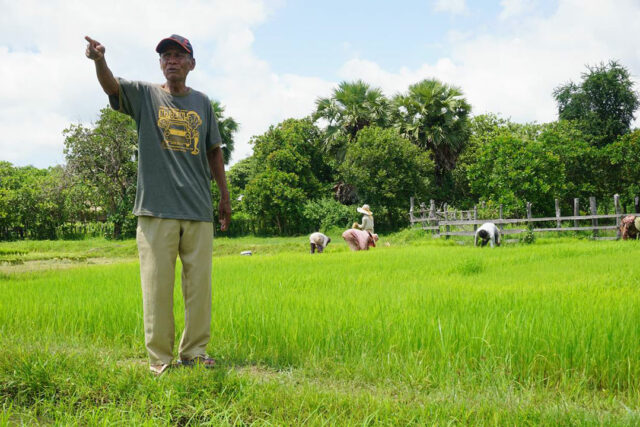
CAMBODIA has proposed that rice form the core of expanded economic ties with the Philippines, alongside tourism.

Cambodia Prime Minister Samdech Moha Borvor Thipadei Hun Manet made the proposal at the Philippine-Cambodia Business Forum on Monday.

“In today’s rapidly evolving global landscape, we encounter geopolitical and geoeconomic shifts, trade realignments, and emerging challenges,” he said. “Therefore, enhancing bilateral and multilateral economic partnerships has become more critical than ever before,” he added.

According to the prime minister, one opportunity lies in Cambodia’s rice, adding that collaboration is also possible in skills development.

Trade Undersecretary Ceferino S. Rodolfo noted that the two countries’ export and manufacturing products are strongly complementary, particularly in agriculture and electronics.

“In terms of the overall composition of our economy, the Philippines is mainly a services-driven economy. For Cambodia, I know that you are very strong in terms of agriculture,” he said.

“Rice is a very strong export product of Cambodia. And then also in terms of manufacturing, you are a world powerhouse when it comes to gardens and textiles, as well as an emerging global leader also in electronics,” he added.

The Philippines’ top source markets for rice are Vietnam, Thailand and Pakistan, with Cambodia currently the seventh-largest overseas supplier. — Justine Irish D. Tabile

Fisheries output decline seen heralding food security crisis

PHILIPPINE STAR/ MICHAEL VARCAS

AN OCEAN conservation group said the 5% decline in fisheries output could lead to a food security crisis.

Oceana said the “disturbing” decline means production levels have fallen to the “lowest in two decades.”

It was citing output data issued by the Philippine Statistics Authority.

It said marine municipal fisheries production dropped 8.8% to 802.77 thousand metric tons (MT) in 2024 — the lowest since 2002.

“This further reduces the share of small-scale fishers in total fisheries production to only 19.8%,” Oceana said in a statement, flagging the potential consequences of a Supreme Court decision allowing commercial fishing in municipal waters.

Oceana said commercial fisheries production, which accounted for 21.2% of total production, rose 4.2% to 857.33 thousand MT in 2024.

“This downturn in fishery output will continue and will jeopardize the livelihoods of millions who depend on marine resources if illegal commercial fishing is legitimized within the 15-kilometer municipal waters zone,” Oceana Vice-President Gloria Estenzo Ramos said.

“Commercial fishing inside municipal waters and overfishing have long plagued Philippine waters, depleting fish stocks and degrading marine ecosystems. These practices threaten biodiversity and can trigger the collapse of essential fish populations,” she added.

The Supreme Court upheld a decision by a Malabon City court that invalidated the definition of municipal waters in the Fisheries Code, allowing commercial scale operators to fish in these waters.

In response, Cagayan de Oro City Rep. Rufus B. Rodriguez has filed a bill to make the municipal waters exclusive for the use of small-scale fisherfolk.

Kabataan Party-list, GABRIELA Women’s Party-list and ACT Teachers Party-list, meanwhile, filed a House resolution directing the Committee on Aquaculture and Fisheries Resources to investigate the impact of the high court’s decision.

The 1987 Constitution and the Local Government Code and the Fisheries Code recognize the need to grant preferential access for artisanal and municipal fisherfolk to municipal waters.

Citing data from the General Bathymetric Chart of the Oceans, Oceana said the court’s ruling will open up more than 90% of the municipal waters for 533 out of 884 coastal municipalities to commercial fishing vessels.

“Legitimizing illegal commercial fishing in the reserved 15-kilometer zone for artisanal fisherfolk poses grave consequences for artisanal fishers, who will unfairly compete with technologically advanced and more efficient commercial fishing vessels,” it said.

“The daily catch of municipal fisherfolk, which sustains their families and local markets, is at risk of significant reduction, pushing many into economic hardship and hunger,” it added. — Kyle Aristophere T. Atienza

Poultry imports banned from 2 US states

REUTERS

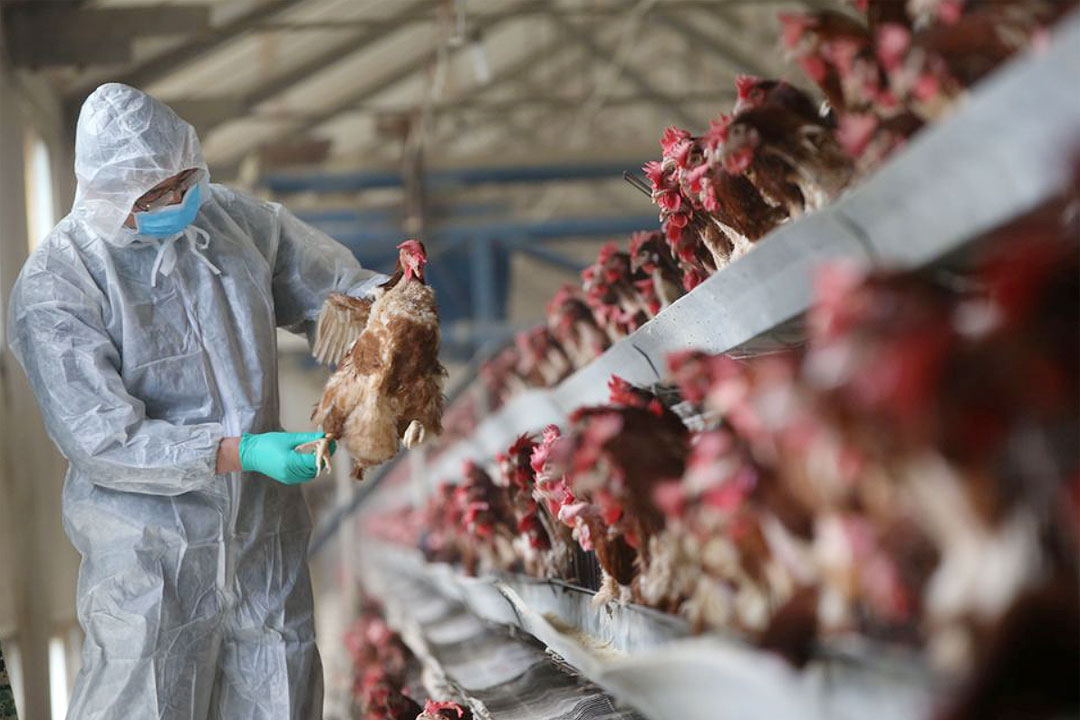
THE Department of Agriculture (DA) has ordered a ban on poultry meat imports from the US states of Maryland and Missouri, following bird flu outbreaks there.

Memorandum Order No. 07 dated Feb. 4 covered domestic and wild birds and their products such as poultry meat, day-old chicks, eggs and semen.

In the order, the DA said the rapid spread of H5N Highly Pathogenicity Inspection Avian Influenza (HPAI) necessitates broader trade restrictions to prevent the entry of the virus and protect domestic producers.

The DA said all shipments coming from the two states that are in transit, loaded, or accepted at port before the communication of the order to US authorities will be allowed “provided that products were slaughtered/produced 14 days before the Jan. 14 outbreak in Caroline County in Maryland and in Newton County in Missouri. — Kyle Aristophere T. Atienza

Ghosting is a taxpayer’s regret

February is often associated with love because of Valentine’s Day. However, to those who are dating, it is now common to hear the term “ghosting,” which means the act of suddenly cutting off ties without explanation due to fear of confrontation. But for taxpayers, ghosting the BIR is something to regret, especially when it comes to tax audits.

The BIR is no stranger to being ghosted by taxpayers, which it classifies as Cannot Be Located (CBL). On Jan. 14, the BIR issued Revenue Memorandum Order (RMO) No. 004-2025, outlining the policies and guidelines in reporting CBL taxpayers and the procedures for handling their cases.

Taxpayers may be considered CBL when they are not found at their registered address, their whereabouts cannot be established, or their indicated address is non-existent. The RMO also provides that those taxpayers with virtual offices (a shared office utilized by various taxpayers), but with no authorized representative available to receive any correspondence addressed to them, may likewise be considered CBL.

In case there are irregularities in the registration process resulting in the taxpayer being tagged as CBL, the concerned Revenue Officers (ROs)/officials involved will be subject to appropriate sanctions.

Equally important to note is that, before the concerned RO handling the case may tag such taxpayers as CBL, they are required to exhaust all possible means available to locate the taxpayer.

One of the ways ROs confirm whether a taxpayer is CBL is by collaborating with government agencies, suppliers, and purchasers possibly connected with the taxpayer. ROs are allowed to send notices to the taxpayer’s e-mail address or to its authorized tax agent of record. In the case of corporate taxpayers, ROs may send notices to their accountable officers, or even to the Certified Public Accountant indicated in the taxpayer’s financial statements.

In case these efforts to locate the taxpayer produce no results, the case officers may also resort to obtaining certifications from other government agencies to confirm the non-existence/non-compliance/inactive status of the taxpayer. A consolidated list of CBL taxpayers is uploaded to the BIR website. The BIR is required to issue an “Advisory” on the newly published lists of CBLs, together with the instructions on what the taxpayers should do if they see their names on the list.

EFFECTS OF BEING TAGGED CBL
So, what happens when a taxpayer with a pending BIR audit/assessment is declared CBL? In general, internal revenue taxes are to be assessed within three years after the last day prescribed by law for its filing or from the day the return was filed, whichever is later. This prescriptive period affords taxpayers protection against lengthy and unreasonable investigation. However, RMO 004-2025 highlights that when a taxpayer is CBL, such a period of limitation is suspended and may only resume upon the service of any previously unserved correspondence/notice.

Notwithstanding the suspension of the period of limitation for both assessment and collection, it is required that the Notice of Discrepancy/Discussion of Discrepancy (NoD/DoD) be issued to document the taxpayer’s deficiency in any internal revenue tax.

In cases where the notices requesting the presentation of accounting records and documents have not been served due to the taxpayer being classified as CBL, the NoD/DoD is to be prepared based on available documents. The issuance of a subpoena is not necessary to justify the assessment based on available documents. Further, the taxpayer’s right to a DoD as indicated in the NoD is forfeited, and the PAN will be issued accordingly.

To those taxpayers who have pending applications (i.e., tax clearance, registration of books of account, etc.), the BIR office concerned is required to conduct a verification of whether the applicant is CBL. In this case, the number of days to process these applications, as mandated under existing revenue issuance in accordance with the Ease of Doing Business law, do not apply.

ROs handling audit or refund cases must verify from the published list of CBL taxpayers if there are expenses/input taxes being claimed by the auditee-taxpayer arising from transactions with CBL taxpayers. Purchases made from a published CBL taxpayer may not be allowed as deductions for Income tax purposes, and if the transaction has a VAT component, the same cannot be claimed as input tax, unless the buyer can prove the authenticity of purchases made, among others.

Clearly, proper communication is important not only when it comes to romantic relationships, but also in dealing with the BIR. It is the taxpayer’s responsibility to keep records updated especially when there are changes in registration, specifically regarding their registered address and other relevant information. Corporate taxpayers using a virtual office as their registered business address, must ensure there is an authorized representative available to receive correspondence from the BIR. Although the CBL classification may not be forever, there are still repercussions that the taxpayer may come to regret, especially when faced with a BIR audit.


Ma. Jessica A. Guevarra is a senior manager of the Tax Advisory & Compliance Practice Area of P&A Grant Thornton.

Tweet us: @GrantThorntonPH

Facebook: P&A Grant Thornton

pagrantthornton@ph.gt.com

www.grantthornton.com.ph

Special session for VP impeachment trial is illegal, says Senate president

VICE-PRESIDENT SARA DUTERTE-CARPIO — FACEBOOK.COM/MAYORINDAYSARADUTERTEOFFICIAL

THE SENATE won’t hold a special session so they could try impeached Vice-President (VP) Sara Duterte-Carpio, who is accused of corruption and other charges, because it is against the law, its president said on Monday.

The chamber is likely after the President’s State of the Nation Address on July 28 or once the new Congress starts, Senate President Francis G. Escudero told reporters.

“I have no intention of requesting to the President a special session,” he said. “This is not one of the things or reasons [under the law] for the Senate to call for a special session,” he added in Filipino.

More than 200 congressmen last week filed and signed an impeachment complaint against Ms. Duterte, more than the one-third vote required by the Constitution for her to be impeached, paving the way for her trial by the Senate.

The House of Representatives sent the bill of the impeachment complaint to the Senate on the last day of the congressional session. Twenty-five more congressmen later endorsed the complaint.

The ouster charges consisted of seven articles of impeachment, including allegations of plotting the assassination of the President, misusing secret funds, amassing unexplained wealth and committing acts of destabilization

Ms. Duterte has denied any wrongdoing, including having threatened to get President Ferdinand R. Marcos, Jr. assassinated in case she herself were killed. She earlier said her lawyers are busy preparing for her defense.

“Who wants us to hold a special session and conduct the trial before the [May 12 midterm] elections?” Mr. Escudero asked in Filipino. “Those who are pro-impeachment. We won’t listen to those who are pro-or anti-Vice-President Sara. We will follow what the law provides.”

Congress is on a four-month break for the midterm elections, where Filipinos will pick a new set of congressmen and 12 of the 24-member Senate, as well as other local officials.

Mr. Escudero cited the case of former Ombudsman Merceditas Gutierrez, whom the House impeached three days before they adjourned. The trial was set more than a month later, he pointed out.

He also noted that former Chief Justice Renato C. Corona was impeached a week before Congress went on a break. “The Senate held the trial after Christmas and the New Year, in January, or about a month after,” he said in Filipino.

“Why should I change the treatment of this impeachment complaint?” he asked, adding that the Vice-President’s impeachment case is not special.

He noted that under the 1987 Constitution, Congress can only hold special sessions for urgent legislation, when it must vote for a new Vice-President in case one is removed or incapacitated or if the President becomes incapacitated by a majority vote of the Cabinet.

The Legislature may also hold special sessions to canvass the votes and proclaim the President and Vice-President after an election, or when martial law is declared and the writ of habeas corpus is suspended, he pointed out.

Meanwhile, the House of Representatives prosecution team plans to subpoena the Vice-President’s bank records as evidence once her trial starts, said Manila Rep. Joel R. Chua, a prosecutor-congressman for the trial.

“The impeachment process allows us to complete the evidence to support our case, and that includes subpoenaing financial records, if necessary, through the Senate impeachment court,” he said in a statement.

“The Bank Secrecy law provides an exception for impeachment cases, and we intend to use all legal means to secure relevant documents, in addition to the evidence already present, that will aid in the trial,” he added.

The Vice-President’s office did not answer several calls outside business hours.

Ms. Duterte is one of few Philippine officials who were impeached, among them ex-President Joseph E. Estrada in 2000, Ombudsman Merceditas Gutierrez in March 2011, Mr. Corona in December 2011 and election chief Juan Andres D. Bautista in October 2017.

Mr. Corona was convicted by the Senate, while Ms. Gutierrez and Mr. Bautista resigned before they could be tried. Mr. Estrada’s trial was aborted as some House prosecutors walked out after senators voted against opening a document containing evidence. He was later ousted by a street uprising.

The House prosecution panel is also considering working with the Anti-Money Laundering Council and state auditors to trace transactions connected to the Vice-President’s confidential funds, Mr. Chua said.

Ms. Duterte has been accused of mishandling P612.5 million worth of confidential and intelligence funds in 2022 and 2023, which stemmed from a House inquiry. She has denied any wrongdoing, calling the probe politically motivated. — Kenneth Christiane L. Basilio, Adrian H. Halili and Norman P. Aquino

Stronger ties between US and PHL defense chiefs sought under Trump 2.0

FACEBOOK.COM/USEMBASSYPH

By John Victor D. Ordoñez, Reporter

MANILA and Washington should pursue deeper ties and constant communications between their defense agencies to ensure the continuity of security engagements under a second Trump administration, security analysts said at the weekend.

“Establishing good personal relations between their defense chiefs is crucial to promote better consultation and coordination,” Lucio B. Pitlo III, a research fellow at the Asia-Pacific Pathways to Progress Foundation, said in a Facebook Messenger chat.

“This can help promote continuity of ongoing security engagements, clarify issues like concerns over military aid suspension and identify and reinforce shared interests and priorities,” he added.

Last week, US Defense Secretary Pete Hegseth spoke on the phone with his Philippine counterpart Gilberto Eduardo Gerardo C. Teodoro, Jr. to discuss boosting deterrence in the South China Sea amid rising tensions with China, according to the US Department of State.

Washington’s Defense chief reaffirmed Washington’s “ironclad” commitment to its Mutual Defense Treaty with Manila to secure peace in the Indo-Pacific region. He also vowed to work with Mr. Teodoro in boosting defense cooperation.

Manila has been embroiled in wrangles at sea with Beijing in the past two years and the two countries have faced off regularly around disputed features in the South China Sea that fall within Manila’s exclusive economic zone.

“There won’t be much of a radical shift under the Trump government despite the whole concept of transactionalism when it comes to recognizing the significance of the alliance,” Don McClain Gill, who teaches foreign relations at De La Salle University in Manila, said in a Facebook Messenger chat.

“As far as the defense angle is concerned, I do not think that there would be major obstacles in pushing this further under Trump 2.0,” he added.

The US Department of State on Jan. 20 issued an executive order that froze foreign funding, with exceptions for emergency food programs and military aid to Israel and Egypt.

US President Donald J. Trump ordered the 90-day pause in foreign development assistance pending a review.

Last month, US Secretary of State Marco Rubio talked about China’s “dangerous and destabilizing actions in the South China Sea” with Philippine Foreign Affairs Secretary Enrique A. Manalo and underscored the ironclad US defense commitment to Manila.

The US is the Philippines’ major security partner, with a 1951 Mutual Defense Treaty compelling both nations to defend each other in case of an armed attack.

Their air forces held joint patrols over the South China Sea last week, a move that angered China, which also conducted a “routine patrol” over the disputed Scarborough Shoal.

Beijing has accused its neighbor of joining patrols it said were organized by foreign countries to “undermine peace and stability” in the waterway.

Security engagements between the allies have soared under Philippine President Ferdinand R. Marcos, Jr., who has moved closer to Washington and allowed the expansion of military bases that American forces could access, including facilities facing the democratically governed island of Taiwan, which China claims as its own.

“I don’t think that the defense aspect of our partnership with the US would be derailed,” Mr. Gill said. “The economic development aspect is another story. But of course, that doesn’t paint the entire picture of the partnership we have with the US.”

The Philippines has contested China’s sweeping claims in the waterway through diplomatic channels by filing more than 190 diplomatic protests since Mr. Marcos took office in 2022.

DMW: 140 Filipino workers and their dependents to come home this month

Smokes rise, amid ongoing cross-border hostilities between Hezbollah and Israeli forces, in Tyre, southern Lebanon Sept. 23, 2024. — REUTERS

THE Philippine government will repatriate 131 overseas Filipino workers (OFW) and nine dependents in Lebanon to ensure their safety amid worsening conflict, the Department of Migrant Workers (DMW) said on Monday.

In a statement, Migrant Workers Secretary Hans Leo J. Cacdac said the Filipinos are expected to come home early this week.

The Filipinos are expected to arrive in two batches — 52 workers with one dependent on Feb. 10 and 79 workers with eight dependents on Feb. 11.

“Most of them were sheltered in Beirut under the auspices of the DMW and the Overseas Workers Welfare Administration (OWWA),” he said “We stand continually ready to assist and support OFWs who wish to come home for safety and security.”

The Filipinos will get immediate financial assistance, airport support and post-arrival services from the Department of Foreign Affairs (DFA), OWWA, Department of Health, Department of Social Welfare and Development and Technical Education and Skills Development Authority.

The DMW’s National Reintegration Center for OFWs will also provide reintegration help, including upskilling opportunities, livelihood assistance and skill training.

The return of the 131 OFWs and their dependents will bring the number of repatriated Filipinos from Lebanon to 1,569 OFWs and 68 dependents, according to DMW data.

The DFA earlier placed Lebanon under Alert Level 3 and Crisis Alert Level 3, suspending the deployment of contract workers to the West Asian country.

Israel and Hamas reached a ceasefire agreement on Jan. 15 that took effect on Jan. 19, allowing Palestinians to return home. Hezbollah, an Iran-backed Lebanese militant group, supported Palestine in its war against Israel.

Israel had vowed to destroy Hamas for its October 2023 attack, in which 1,200 people were killed, most of them civilians, and 251 were taken hostage, according to Israeli tallies.

More than 48,000 people have died in Israel’s retaliatory assault, most of them civilians, according to Palestinian health authorities. — Chloe Mari A. Hufana

Agri dep’t questioned over onion imports ahead of harvest season

ENGIN AKYURT--UNSPLASH

A PHILIPPINE Senator on Monday questioned the Department of Agriculture (DA) plans to allow the importation of red and yellow onions as the harvest season is expected to begin.

“Before bringing in imports, make sure you’re not burying our farmers’ livelihood in the process,” Senator Maria Imelda R. Marcos said in a statement in Filipino.

Last week, the DA said that it would allow the importation of 4,000 metric tons (MT) of onions to ensure stable prices as local stocks are running low.

The Agriculture department has permitted the shipment of 3,000 MT of red onions and 1,000 MT of white onion, expected to arrive by Feb. 20.

Ms. Marcos questioned the need for further onion imports, adding that the local harvest season had already begun.

She added the onion prices are expected to drop during harvest time amid the influx of local supply.

“Why bring in imports now when we know this would mean losses for our farmers?” she asked.

Agriculture Secretary Francisco P. Tiu Laurel, Jr. had said that the agency allowed the importation of onions to avoid risks of a potential shortage and further spikes in prices.

Ms. Marcos said that the DA should also take action on individuals stockpiling onions in cold storage facilities.

“Even if we have enough supply, prices will still skyrocket if hoarders are in control,” she added.

The inventory for red onions was tallied at 2,325.86 MT with white onion stocks at 631.44 MT, according to Bureau of Plant Industry, as of Jan. 31.

Last year, the DA allowed white onion imports totaling 17,000 MT, after delaying imports until August due to higher production.

Meanwhile, Senator Sherwin T. Gatchalian asked the Trade department to enhance monitoring of bread prices in response to the rising retail costs.

“The Department of Trade and Industry (DTI) should strictly monitor prices of bread to prevent unscrupulous traders and retailers from unduly hiking prices given that bread is an alternative to rice, which has remained costly,” Mr. Gatchalian said in a statement. 

He added that any increase in bread prices should be “both reasonable and justified,” citing the need for transparency in pricing.

Last week, the DTI had issued a new suggested retail price (SRP) for basic necessities and prime commodities, which included the SRP for bread.

The SRP for a 450-gram pack of Pinoy tasty went up to P44 from P40.5, while Pinoy tasty saw prices rise to P27.5 from P25 for a 250-gram pack, according to the Trade department’s SRP bulletin as of Feb. 1. These brands are the only stock-keeping units under the bread category.

“The government should explore measures to stabilize production costs, such as securing reliable chains for wheat and other essential ingredients and providing necessary support for bakers to enhance production efficiency,” Mr. Gatchalian added.

The country typically imports most of its wheat requirement for the processing of flour for bread and other baked goods, while animal grade wheat is imported for feed.

According to the United States Department of Agriculture, the Philippines may import 7 million MT of wheat in 2025. — Adrian H. Halili

ADVERTISEMENT
ADVERTISEMENT