Home Blog Page 1984

SPNEC’s P200-B Terra Solar nears completion

THE PROJECT is expected to generate more than five billion kilowatt-hours of electricity annually. — PHILSTAR FILE PHOTO

SP NEW Energy Corp.’s (SPNEC) P200-billion Terra Solar project might be completed slightly ahead of schedule as it has already achieved a 73% progress rate, the company’s president said.

“In terms of completion, the Terra Solar Project achieved 73% overall development,” SPNEC President and Chief Executive Officer Emmanuel V. Rubio said during a briefing on Monday.

SPNEC, through its unit Terra Solar Philippines, Inc. (TSPI), is developing a project in Nueva Ecija and Bulacan, which consists of a 3,500-megawatt solar power plant and a 4,000-megawatt-hour energy storage system.

The project’s first phase is set to be completed by 2026, with the second phase targeted for 2027.

“Just slightly ahead of schedule. We still have a number of transmission lands to secure. We’re close to actually finalizing and acquiring all the lots for Phase 1. Phase 2 is still ongoing,” Mr. Rubio said.

The project is expected to generate more than five billion kilowatt-hours of electricity annually.

Key progress areas include land control, which is 62% complete, and transmission line right-of-way, which is also 62% complete, according to Mr. Rubio.

The company has secured permits at 61%. Solar farm development has already attained a 96% progress rate, procurement of major equipment is at 95%, interconnecting development is at 90%, and photovoltaic site clearing is about 23% complete.

“We continue to make significant strides in our low-carbon energy transition journey, highlighted by the progress made in our flagship project, Terra Solar,” Mr. Rubio said.

In September, SPNEC and its parent company, Manila Electric Co. (Meralco), formed a strategic partnership with global investment firm Actis, which includes a $600-million investment for a 40% equity stake in Terra Solar.

TSPI has partnered with Meralco Industrial Engineering Services Corp. to build the infrastructure needed to connect the Terra Solar project to the grid.

The Terra Solar project was certified by the Energy department as an “energy project of national significance” and secured “green lane certification” from the Board of Investments, enabling it to benefit from streamlined and expedited permit processing.

SPNEC is controlled by the Pangilinan group through MGen Renewable Energy, Inc., the renewable energy development arm of Meralco Power Gen Corp. The latter is a unit of Meralco.

Meralco’s controlling stakeholder, Beacon Electric Asset Holdings, Inc., is partly owned by PLDT, Inc.

Hastings Holdings, Inc., a unit of PLDT Beneficial Trust Fund subsidiary MediaQuest Holdings, Inc., has an interest in BusinessWorld through the Philippine Star Group, which it controls. — Sheldeen Joy Talavera

Topline’s P3.2-B IPO gets PSE nod, listing set for Dec. 12

BW FILE PHOTO

CEBU-BASED fuel retailer Top Line Business Development Corp. (Topline) has secured the approval of the Philippine Stock Exchange (PSE) for its planned initial public offering (IPO) worth up to P3.16 billion.

Top Line’s maiden offering will consist of 3.68 billion primary shares and an overallotment option of up to 368.31 million shares priced at up to 78 centavos apiece, the PSE said in an e-mailed statement on Thursday.

Based on a prospectus dated Oct. 31, the offer period will be from Nov. 27 to Dec. 3, while the tentative listing date is on Dec. 12. The final price will be determined on Nov. 18.

Top Line will be listed on the PSE’s main board and will be traded via the ticker symbol “TOP.”

At the maximum offer price of 78 centavos, Top Line aims to generate P2.75 billion in net proceeds. The company will not receive any proceeds from the overallotment option.

The company will use the proceeds to build fuel depots in Mactan, Cebu, and in Bohol that will have a combined storage capacity of 30 million liters.

A portion of the proceeds will also be allocated for the acquisition of fuel tankers and tank trucks, as well as the construction of ten Light Fuels service stations.

Investment & Capital Corp. of the Philippines and PNB Capital and Investment Corp. were appointed as the joint lead underwriters and joint bookrunners for the offer.

“Doing an IPO is a big step for companies aiming for growth and expansion. We are pleased that the equities market can support Top Line’s business strategy by providing access to capital it needs to accelerate its development, which is crucial in solidifying its position in the industry,” PSE President and Chief Executive Officer Ramon S. Monzon said.

Top Line started commercial fuel trading operations in 2017, mainly in Central Visayas. The company operates a retail distribution network via fuel station chain Light Fuels.

The company is slated to be the fourth IPO this year, joining gold and copper mining company OceanaGold (Philippines), Inc., and renewable energy companies Citicore Renewable Energy Corp. and NexGen Energy Corp. — Revin Mikhael D. Ochave

Cebu Pacific adds three more aircraft

THE ARRIVAL of two A321 NEOs and one A320ceo brings Cebu Pacific to 83.3% of its 18 expected aircraft deliveries for the year. — AIRBUS.COM

CEBU PACIFIC (CEB) is close to completing its expected aircraft deliveries for the year following the arrival of three new aircraft this month, the budget carrier said on Thursday.

“We’re excited to expand our fleet with these additional aircraft ahead of the peak travel season in December,” Cebu Pacific President and Chief Commercial Officer Alexander G. Lao said in a media release on Thursday.

The arrival of two A321 NEOs and one A320ceo brings Cebu Pacific to 83.3% of its 18 expected aircraft deliveries for the year.

“These deliveries are a key part of our continuous efforts to expand routes and enhance our service, allowing us to better serve the increasing number of travelers,” Mr. Lao added.

Cebu Pacific said these new aircraft deliveries are meant to support the growing travel demand and its network expansion goals.

Airbus’ NEO aircraft also align with the budget carrier’s goal of integrating green fuel across its network. All Airbus aircraft are certified to operate with up to a 50% SAF blend, aligning with Cebu Pacific’s goal of integrating green fuel across its network.

In October, the company also finalized its aircraft order with Airbus SE, touted as the largest aircraft order in Philippine history, valued at P1.4 trillion ($24 billion), covering 102 A321neos and 50 A320neo family.

Currently, Cebu Pacific operates a diversified fleet with nine Airbus 330s, 40 Airbus 320s, 24 Airbus 321s, and 15 ATR turboprops.

The airline operates in 35 domestic and 26 international destinations spread across Asia, Australia, and the Middle East. — Ashley Erika O. Jose

Aboitiz InfraCapital eyes MCIA upgrades

MEGAWIDE.COM.PH

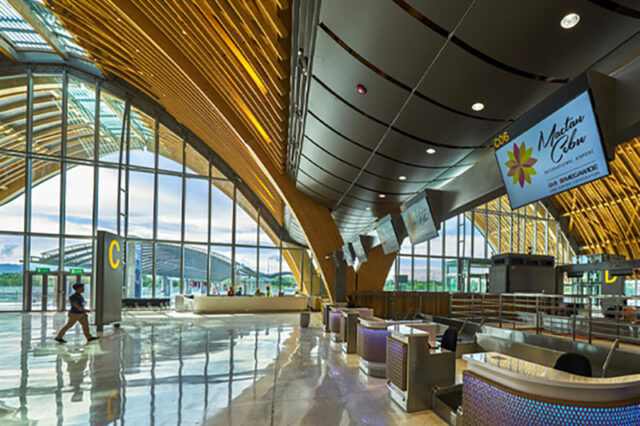
ABOITIZ InfraCapital, Inc. (AIC) is eyeing upgrades to Mactan-Cebu International Airport (MCIA) after acquiring Megawide Construction Corp.’s remaining equity stake, the company said on Thursday.

“With full ownership of AGMCAC (Aboitiz GMR Megawide Cebu Airport Corp.), we are committed to taking the airport to new heights, delivering exceptional passenger experience, and cementing its status as a world-class gateway,” AIC President and Chief Executive Officer Cosette V. Canilao said in a statement.

On Wednesday, Megawide announced that it had completed the divestment of its remaining equity stake in MCIA to AIC for P7.76 billion, allowing it to fully exit from the airport’s operations.

MCIA is considered the second-largest airport in the country after Ninoy Aquino International Airport.

It serves as the main gateway to Central Visayas, serving more than 11 million passengers per year.

“MCIA is more than just an airport; it’s a vital gateway to Cebu and the Philippines. Given the airport’s expansive growth, with international and domestic traffic growing by 35% and 8%, respectively, year on year, we will continue to elevate the airport and, thus, Filipino aviation by setting new standards for what it means to be a Filipino brand of airport management and operations,” said AIC Vice-President and Head of Airports Business Rafael M. Aboitiz.

According to AIC, MCIA continued to elevate passenger experience, citing the transition of MCIA into a silent airport and the introduction of “Cebu Connect,” which allows efficient and seamless passenger transfers.

The company’s acquisition of Megawide’s remaining stake in AGMCAC is part of its goal to bolster its presence in the aviation industry, AIC said, adding that it also aligns with the company’s plan to help accelerate the country’s economic recovery through infrastructure projects.

AIC is also set to take over the operations and maintenance of the Laguindingan International Airport in Misamis Oriental in April 2025.

It also holds the original proponent status for the P4.5-billion New Bohol-Panglao International Airport, which is currently undergoing a Swiss Challenge. — Ashley Erika O. Jose

Death: The Imperial way

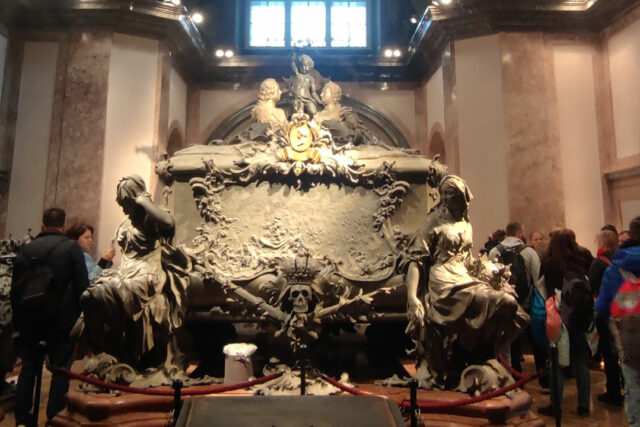
THE Tomb of Empress Maria Theresa (background), and her son Joseph II (front). — JOSEPH L. GARCIA

By Joseph L. Garcia, Senior Reporter

DURING a trip BusinessWorld took to Vienna in October, the Austrian capital felt like the setting of a fairy tale. Across our hotel at the Neuer Markt square (the new market, but it had been so since the Middle Ages) stood the shop of A.E. Köchert, jewelers to the Habsburgs, the former Imperial dynasty of Austria (and once, the Holy Roman Empire). Their windows displayed diamond tiaras, while street performers nearby sang arias, and waltzed with their audience. Bells from St. Stephen’s Cathedral woke the square, populated by old-world shops filled with only one specialty: fur, or silver, or stationery.

Every fairy tale has an end, however, and for the rulers of the House of Habsburg, they were reminded of this by the Kapuzinergruft, the Imperial crypt. Located in the same Neuer Markt square (it was a two-minute walk from our hotel), this is where members of the Habsburg family were laid to rest. Oddly enough, it’s a mere seven-minute stroll from their once-seat of power, the Hofburg Palace (aside from being a museum, it also houses the offices of the Austrian president, now Alexander Van der Bellen). The Hofburg Palace complex also holds their treasures at the Schatzkammer (the Imperial Treasury), for all to gawk at and see — at least one thing is true: you really can’t take it to your grave.

The Habsburg dynasty once ruled over several territories beyond their capital in Vienna, which now constitute a large chunk of continental Europe: most of Germany, the modern Czech Republic, Spain, Italy, Belgium, Luxembourg, Switzerland, and so much more — all united under the Habsburg crown. A succession of wars broke up the empire over the years, concluding in the Napoleonic Wars, which ended the Holy Roman Empire and gave birth to the Austro-Hungarian Empire — later to be dissolved, along with Habsburg rule, in the ashes of World War I. No matter — while pieces of the empire were lost in war, the Habsburgs maintained their influence over most of Europe through strategic marriages, hence the family motto: Bella gerant alii, tu felix Austria nube (“May others go to war, you happy Austria, marry”).

The Kapuzinergruft, maintained in perpetuity by the Capuchin friars, was founded in 1618 by Anna of Tyrol, wife of the Habsburg emperor Matthias. Their coffins, made of lead, are among the first you see once you enter the crypt — but then there are so many tombs (about 150), it really depends on where your eyes rest first. To see the tombs of the Habsburgs, one pays about €8.50. Since the crypt is still a working church and monastery, guests are told by a sign to keep their voices down, not to take videos or photos with flash, and not to touch anything. During our visit on Oct. 12, there was just one other hushed tour group, wearing headsets, while a priest guided them through the tour, speaking in low tones into his own headset.

We skipped over some Habsburgs (sorry), and went to the tomb holding Empress Maria Theresa and her husband, Franz Stefan I, Holy Roman Emperor. Empress Maria Theresa (who died in 1780) and her offspring changed much of the world: she introduced education reform across her dominions, and united them all under one code of laws in her name. Her son, Joseph II, expanded upon these reforms and introduced legal freedom to the serfs in 1782, ending serfdom in most of Europe (and in a way, nudging in the Industrial Revolution). His successor, younger brother Leopold II, fought against the French for his sister, Marie Antoinette, trapped in the French Revolution. His son, Francis, continued this battle into the French Revolutionary Wars (he failed to save his aunt from the guillotine, and wasn’t very much interested in doing so, according to accounts), later evolving into the Napoleonic Wars. The resulting Congress of Vienna helped shape Europe as we know it today.

Maria Theresa and her husband’s tomb stands in the center of a vault: impressive, large as a small ship, beneath a dome where sunlight streams in. Veiled spirits guard her baroque tomb, and amidst all this splendor, a skull: a reminder of what we all turn into after death, no matter how great the life led (it is, however, still a skull wearing an imperial crown). Her successor, Joseph, lies in front of his parents, in humbler style, as per his own wishes: the inscription on his plain tomb is almost faded, reading: Hier liegt ein Fürst, der trotz der besten Meinung keiner seiner Pläne durchsetzen konnte (“Here lies a ruler who, despite his best intentions, was unsuccessful in all of his endeavors”).

His wife Isabella’s tomb, by a corner, changed the world in its own way, affecting the Habsburg matchmaking game. Archduchess Josepha was forced by her mother Maria Theresa to pray for her sister-in-law in the crypt. According to accounts, Isabella’s tomb was improperly sealed, and her body infected her sister-in-law with smallpox, which later killed her. With the death of Archduchess Josepha, earmarked as a bride for Naples, her sister Maria Carolina, intended as a bride for France, took her place, and in turn, younger sister Marie Antoinette was sent to France. No smallpox, no Marie Antoinette, no Napoleon, no Congress of Vienna, no Austro-Hungarian Empire, no World War I — and perhaps, little of the conflicts we see today.

We saw other Habsburg tombs: there’s Marie Christine, Maria Theresa’s favorite daughter, and everyone’s least favorite sibling (Marie Antoinette did not invite her to the Petit Trianon during a state visit), whose art collection forms the backbone of the Albertina Museum, also close by; Maria Carolina, Marie Antoinette’s favorite sister, also ousted from her throne in Italy. After seeking familiar names from that chapter of history, we went to the tomb of Empress Elisabeth, another Habsburg celebrity.

Her tomb shares raised space with her husband, Franz Joseph, and her son, Crown Prince Rudolf, though her husband the Emperor’s tomb is raised in the center a few feet above his wife and child. Elisabeth, affectionately known throughout the world as Sisi, captivated the Belle Epoque world then with her beauty, her style, and her melancholic life. Stylishly thin because of an eating disorder caused by the impact of imperial and family life on her mental health, she moved across Europe to avoid staying in the imperial capital of Vienna. Assassinated in 1898, her life and death are the subject of numerous movies, musicals, even a cartoon. The most recent showcase of her tragic life and its influence in pop culture was most recently seen in 2022, with The Empress streaming on Netflix.

Her tomb is not lonely. Again, she spares space with her husband and son (who died in a mysterious suicide in Mayerling) — but to this day, offerings are laid at her tomb. We saw flowers, a framed photograph of her, and drawings by children telling her they loved her.

Other Habsburgs of her own age are also strangely honored: her brother-in-law, Maximillian, is buried in the Kapuzinergruft as well. Mexican flags and other souvenirs from the country are laid at his tomb, despite failing to successfully rule the weak, newly established Mexican Empire. For this, he was executed in 1867 by forces led by Benito Juarez (which led to the modern state of Mexico). His wife, Charlotte of Belgium, mourned him to the point of insanity — she died a recluse in 1927, outliving the empires that shaped her world.

There are tombs of a relatively new make, still retaining their bronzed sheen. They are conspicuous in their newness: the tombs of the family of Karl, the last Emperor of Austria, who died in 1922. His wife, Zita of Bourbon-Parma, died in 1989, and was laid there to rest. After the dissolution of the Empire, the Habsburgs were exiled from Austria and banned from returning until fairly recently. The ex-Empress was allowed entry only in 1982. After her death, she was declared a Servant of God by Pope Benedict XVI, putting her on the path to sainthood (which probably explains the floral offerings at her tomb). The most recent entombment was just last year, in 2023, for Princess Yolande de Ligne, the widow of Archduke Carl Ludwig of Austria, a son of the last emperor.

We take some comfort when we are told that in death, we are all the same. Judging by the resting place of the Habsburgs, are we sure that’s true? Some graves lie forgotten, while some are cared for by priests, centuries on; flowers laid at their tombs, their names still whispered with reverence. There will be no souvenir shops with skull keychains and books about me when I die, that’s for sure. But the map to the Kapuzinergruft argues: “Those who believe that the wealthy and powerful have erected a final monument of their vanity stand corrected: beauty and splendor are strongly contrasted by bare bones and toothless skulls. Above all there is a reminder that death can strike everyone — regardless of age or rank — at any time.”


CTA denies Pilipinas Shell’s P43-million tax refund claim

PHOTO FROM PILIPINAS SHELL

THE COURT of Tax Appeals (CTA) denied Pilipinas Shell Petroleum Corp.’s petition for a P43-million tax refund on excise taxes for Jet A-1 fuel sold to tax-exempt international air carriers, citing lack of evidence.

The tax court’s Third Division, in a 15-page decision, said the oil company failed to prove payment of excise tax for the imported Jet A-1 fuel.

While Shell provided details of the alleged importations and excise tax payments, the Court noted the absence of supporting documentation.

The tribunal also emphasized the need for concrete evidence in tax refund cases, especially regarding the payment or collection of the refunded tax.

It cited a Supreme Court ruling in Coca-Cola Bottlers Philippines, Inc. vs. Commissioner of Internal Revenue to underscore that claims for tax refunds are treated as claims for exemption, requiring strict scrutiny and proof of compliance with the conditions for a refund.

“In claims for a refund, it is crucial to show the payment or collection of the amount of tax being refunded, not only for the purpose of determining whether there was a timely filing of the administrative and judicial claims… but more importantly, it is because a claim for refund must always be premised on the fact that the said amount went to the government coffers,” Associate Justice Catherine T. Manahan said in the ruling.

In denying the plea, the tribunal also emphasized the timeliness of the tax claims under the 1997 National Internal Revenue Code.

“Within two (2) years from the date of payment of the tax, the claimant must first file an administrative claim with [the] respondent (Bureau of Internal Revenue) before filing a judicial claim with the courts of law,” it said.

The CTA stressed the mandatory and jurisdictional nature of this timeline, highlighting its inability to consider claims filed outside this timeframe, regardless of subsequent developments.

The oil company said that photocopies should be admissible without comparison to originals, without objection to their authenticity.

However, the tribunal rejected this, pointing out that the BIR had agreed to the admission of the exhibits only if they were compared with the originals.

Pilipinas Shell later filed a Tender of Excluded Evidence, but the court clarified that this procedure is meant for appeals and does not change its conclusion regarding the lack of proof of payment. — Chloe Mari A. Hufana

When democracy decays and recedes

FREEPIK

Francis Fukuyama in his 2018 international bestseller Identity, about his take on political institutions, wrote that the state, rule of law and democratic accountability originated and evolved, and later on interacted with one another only to decay over time. Broadly consistent with Daron Acemoglu and James Robinson’s theory in Why Nations Fail, Fukuyama demonstrated how US institutions “were decaying as the state was progressively captured by powerful interest groups and locked into a rigid structure that was unable to reform itself.”

Fukuyama described Donald Trump as the product and a contributor to that decay. As an outsider, he won the presidency and promised to employ his popular mandate to make America great again through his America First policy.

But his policy, anchored on economic nationalism, actually reduced the perimeter of US economic trade and finance, and insularized its politics and economics. He was a populist in that he used the legitimacy of his political office secured by a democratic election to wield power. In the process, he weakened the institution of checks and balances, the hallmark of a democracy. Civil courts, Congress, independent media and professional bureaucracy were effectively emasculated.

For Fukuyama, who also wrote the more popular The End of History and the Last Man (1992) and Political Order and Political Decay: From the Industrial Revolution to the Globalization of Democracy (2014), the former US president can be ranked with Vladimir Putin of Russia, Recep Tayyip Erdogan of Turkey and yes, Rodrigo Duterte of the Philippines.

Quoting his colleague Larry Diamond’s Facing Up to the Democratic Recession (2015), Fukuyama observed that in 1970, there were only about 35 electoral democracies. By the early 2000s, the number had reached nearly 120 following the collapse of the Soviet Union and the emergence of democracy across Eastern Europe. By mid-2000s, there was a reversal of democracy, and authoritarianism held sway especially with the coming of age of Beijing and the reversion to strong-man rule in Moscow.

It should be no exclamation for us that the greatest surprises for Fukuyama are first, Britain’s decision to exit from the European Union and second, Trump’s victory in the 2016 election.

Are we seeing democracy decaying in the Philippines?

If we go by Fukuyama’s proposition that democracy decays when the institution of the state is progressively captured by powerful interest groups, yes, with a plus. For one, fat and thin dynasties have proliferated, appropriating for themselves both local and national elective and appointive positions. It’s a cruel joke but true that Philippine elections are nothing but a recycling game. When the parents have maximized their tenure in public office, the children are then mobilized to run in their place. A recent phenomenon is several whole families running together like a complete political ticket, a full court press, if we will. We see the same surnames from governor to vice governor to congressman in some provinces. It’s no different in the cities. The father runs for mayor, the son for vice-mayor and the younger children for councilor or congressman. No, they can’t wait for their turn. Three years is too long. And as we are beginning to see in the national scene, even the Senate has become a family affair.

Competence aside, when powerful and moneyed families dominate politics, we lose the essence of democracy. Politicians can argue that they have the skills and the experience, and when relatives take turns at governance, there is greater stability. But what about checks and balances?

There are also signs of decay when big corporates support politicians’ run for strategic public offices like the president of the republic, or senator or member of the House of Representatives. People in these positions decide on official public policy including the budget, and which infrastructure projects will be funded. Supporting politicians could be the best investment for business. It would be difficult to monetize access to Malacañang, which appoints key officials in Agriculture, Finance, Public Works or Transportation, but it must be without doubt priceless.

Democracy could also decay when the poor electorates seem to have no other candidates to choose from except ex-convicts, comedians and actors who have become household names. Democracy decays when those who are highly qualified would rather stay on the sidelines rather than run for public office. It’s one’s choice and therefore some could blame neither of them. But when the odds are against running with an actionable platform of government but with feeble resources, it is not fair. Democracy could hardly thrive in such condition.

Which brings us to the plus, the moral dimension of democracy.

Evidence shows that the liberal democracy that we know today has not benefited most of us. In the Philippines alone, poverty remains elevated even as some measures show some mitigation in recent years. Income inequality continues to be serious, with only a small fraction of the population sharing in more than 90% of gross domestic output. Unemployment and underemployment have left millions of people without access or limited access to livelihood. The Global Financial Crisis of 2008-2009, the debt crisis in Europe and recently, the COVID-19 pandemic exacerbated the worst in liberal democracy. As Fukuyama argued, “since the United States and EU were the leading exemplars, these crises damaged the reputation of liberal democracy as a whole.”

Such a situation has not produced some recognition of human dignity. There is democratic recession when recognition of human dignity is confined only to the few, moneyed, politically empowered individuals who could, and actually do, exercise control over democratic institutions like election and appointment, grant of licenses and franchises, or even the budget process itself.

When this happens, the likelihood of the political and economic system getting reformed is very remote.

Democracy decays when people witness mass vote-buying in favor of incompetence and corruption, or when election results are clearly tampered with because those who do it are in positions of authority. This sabotage of democracy happens at the national level, down to the barangay level. This is one reason why banks are extremely busy during election time, servicing withdrawals of cold cash by politicians. And politicians can get away with it. Those who voted differently must have felt violated.

Democracy decays when licenses or franchises to operate public utilities or media outfits can easily be revoked as a matter of political revenge. Or awarded as a matter of political payback. Effective delivery of services no longer counts, what matters is whom they gave the most exposure and the air time consumed. Never mind those workers who were laid off, ending up as collateral victims to this modern vendetta. This is another form of assault to human dignity.

Democracy decays when the budget process favors one lawmaker and discriminates against another; it means some groups of people, some provinces or some cities get relatively more than the rest. In the first place, why should lawmakers be involved in identifying and funding projects based on their close connection to the party in power? That is the job of the Department of Budget and Management in coordination with local governments’ inputs through the regional development councils. This is the kind of budget process that leaves schools with fewer classrooms, textbooks and teachers; hospitals with fewer hospital beds, medicines and medical staff; and provinces and islands with no connectivity to the rest of the country. This is hardly the way to develop human capital and attain quality economic growth.

When democracy fades and recedes, it means there is little respect for human dignity as embodied in individual rights, the rule of law, the right to education and health. But as Fukuyama reminded us, such is never desirable. It was the same issue that sparked the French Revolution and similar popular movements including the Tunisian revolt and Tahrir Square uprising in recent years. With social media and the internet, these possibilities are not remote.

Which is why, the real-time coverage of the congressional hearing on the POGO controversy, extrajudicial killings and official admission of guilt, could foment another episode of asserting human dignity in the Philippines.


Diwa C. Guinigundo is a former deputy governor for the Monetary and Economics Sector of the Bangko Sentral ng Pilipinas (BSP). He served the BSP for 41 years. In 2001-2003, he was alternate executive director at the International Monetary Fund in Washington, DC. He is a senior pastor of the Fullness of Christ International Ministries in Mandaluyong.

RCBC eyes ‘regular’ bond issues to stay present in debt markets

PHILSTAR FILE PHOTO

RIZAL COMMERCIAL Banking Corp. (RCBC) may issue dollar bonds early next year as it looks to tap both the offshore and domestic debt markets on a regular basis, its top official said.

“It will probably be in the earlier part of the year, but we will obviously time it depending on US interest rates, which as you know will be influenced by November developments,” RCBC Chief Executive Officer Eugene S. Acevedo told BusinessWorld on the sidelines of an event on Wednesday.

He said the issue size could be smaller than the bank’s $400-million note issuance in January, but the final amount has yet to be decided.

“We don’t necessarily have to go big because we want to do this more regularly. I don’t know yet how much exactly, but I don’t think it’s a good idea to max out immediately because we don’t really need that much,” he added.

The US Federal Reserve will meet on Nov. 6-7 to review their policy stance. It will cut its key interest rate by 25 basis points (bps) next week, according to all 111 economists in a Reuters poll, with more than a 90% majority predicting another quarter-percentage-point move in December, Reuters reported.

Since the US central bank kicked off its long-awaited easing cycle in September with a half-percentage-point reduction in the federal funds rate to a 4.75-5% range, news on the economy has been strong, including consumer spending and jobs data.

The Fed’s next policy meeting is scheduled to start just after the Nov. 5 US presidential election, with opinion polls showing a neck-and-neck race but recent momentum behind Republican candidate Donald Trump.

All 111 economists in the Oct. 23-29 Reuters poll predicted the Fed will switch back to a quarter-percentage-point reduction next week. More than 90% of them, a total of 103, expected the same-sized move in December, taking the fed funds rate to a 4.25%-4.5% range.

RCBC on Tuesday upsized its medium-term note program to $4 billion from $3 billion and said that it will soon issue bonds under the program. It also appointed SMBC Nikko Securities, Inc. as the program arranger.

“It’s part of our regular funding plan. What we’d like to do moving forward is make it regular so that our investors get used to our papers being there on a regular basis, as opposed to the past where we would not be there all the time. So, this time, we want to have a more steady supply of our papers,” Mr. Acevedo said.

He added that the bank is also planning to issue peso-denominated bonds regularly starting next year as part of their new funding strategy to establish a regular presence in both foreign and local debt markets.

“We will also probably be doing something similar on the peso side. But depending on deposit growth, there’s a chance that we’d like to have a regular issuance,” Mr. Acevedo said. “That’s what we’d like to do moving forward — to issue more on a regular basis rather than just simply opportunistic. That’s really the change in the funding strategy… What I’m convinced of is that we have to do this on a regular basis — not exactly on tap, but as long as we make sure that our name is in the markets on a regular basis.”

“We don’t have anything in mind right now, but I anticipate that within next year, we will be doing something … to start a regularity in issuances. It’s not going to be a giant issue. We don’t even have a number in mind yet, but what’s more important to us is the regularity. Some bigger banks do something similar. Whether interest rates are high or low we will be issuing something. That’s really the general idea,” he added.

RCBC last tapped the foreign bond market in January, raising $400 million from an issuance of five-year senior unsecured sustainability notes. This marked its return to the overseas debt market after over three years.

The notes were issued out of the bank’s medium-term note program, with the proceeds set to finance and refinance its consumer loans and its operating activities for eligible green and social categories in line with the RCBC’s Sustainable Finance Framework.

Meanwhile, the bank last tapped the local debt market in March 2022, where it raised P3 billion from ASEAN sustainability bonds. This represented the seventh tranche of RCBC’s P100-billion bond and commercial paper program, which still has an unissued balance of P27.96 billion.

RCBC’s net income declined by 12.97% year on year to P2.25 billion in the second quarter amid increased tax expenses.

Its shares closed unchanged at P26.90 apiece on Thursday. — Aaron Michael C. Sy with Reuters

Andrew Garfield and Elmo are going viral with their moving chat. Celebrities can help us talk about grief

SCREENGRAB FROM ANDREW GARFIELD AND ELMO EXPLAIN GRIEF - YOUTUBE.COM/@SESAMEWORKSHOP

WHEN was the last time you heard someone talk in detail about their grief?

For many of us, it could be rarely or never. There are several reasons for this.

Grieving people often avoid raising the topic in conversation because they want to avoid upsetting or burdening people. Family and friends of grieving people often feel unsure or uncomfortable about asking them to talk about it, fearing they will infringe on the person’s privacy. One study of grieving adults in Australia and Ireland showed nearly one-third said they didn’t receive the support they would have liked. Some experts note we tend to deny or minimize others’ grief, increasing their isolation.

Actor Andrew Garfield, best known for playing Spiderman, appeared on Sesame Street last week and spoke with Elmo in moving and affirming ways about grieving his mother’s death. Clips of their short conversation have been widely shared on social media. It presents a great example of communicating well about grief.

Sadness can be a gift explains Mr. Garfield, “a lovely thing to feel in a way because it means you really loved somebody when you miss them.”

KIDS GRIEVE TOO
Issues around grief and isolation can be the same for children and young people as for older people.

In fact, grief in young people is recognized as “the last taboo in public health.” By the age of 18, around one in 20 children have a parent die. Even more will experience grief following the deaths of other close people such as siblings and grandparents. Children also grieve the deaths of pets. Yet we struggle to acknowledge, let alone understand and help them with the grief.

Due to a desire to protect them from harm or distress, adults are often reluctant to talk about dying and death with children. We also underestimate their abilities to understand such difficult topics. My recent work with Lionheart Camp for Kids shows such good intentions leave grieving children with many unanswered questions.

So it was great to see Andrew Garfield (who has discussed the topic before on talk shows and in interviews) share his experience on children’s television.

IT TAKES TWO (OR MORE)
Their exchange begins with the character of Elmo checking in with Mr. Garfield, to see if he’s OK. He asks in a warm and open-ended way.

What Mr. Garfield communicates well is checking if Elmo is willing and comfortable to hear him talk about his thoughts and feelings. He conveys his feelings of grief and speaks about how missing someone is due to love. He shares his understanding about the comforting role memories can bring to the bereaved, and about recognizing a deceased person can be celebrated and missed at the same time.

Elmo also does a great job of listening. He normalizes Mr. Garfield’s thoughts and feelings, and gently affirms his memories of his deceased mother. Importantly, Elmo doesn’t make the conversation about himself or resort to tired clichés like “this shall pass” or “she’d want you to move on.” He doesn’t minimize his discomfort with jokes or provide unsolicited advice on how to feel or behave.

Social support in the wake of loss helps grieving people — if it’s done right. Too often, however, it’s not, and can leave grieving people more distressed.

Though an almost universal need, providing effective social support for grieving people is a complex process. It must involve:

• a potential supporter recognizing the bereaved person’s need for support

• support that is available, sufficient and offered to the bereaved

• them perceiving the support as helpful.

Perceptions of whether an offer if support is useful can depend on where it comes from, the type of support, whether it is offered at the right time, and the griever’s level or receptiveness or social isolation.

LISTENING, VALIDATING, SUPPORT
Mr. Garfield and Elmo aren’t the first celebrities to talk openly about grief.

But in daily life, it’s rare to hear anyone talk openly about these feelings. That’s why it’s so refreshing when people in the public eye break the taboo that surrounds grief and loss. It is important for grieving people of all ages to be able to talk about their grief and be listened to. For potential supporters, it is enriching to think about they can listen, validate and support.

As Mr. Garfield and Elmo show, grieving people and their support people can work together to develop a compassionate connection in a conversation that benefits both parties.


Lauren Breen is a professor of Psychology at Curtin University.

Fairview data center on track for Q2 2025, says STT GDC

STTELEMEDIAGDC.COM

ST Telemedia Global Data Centres (STT GDC) Philippines is on track to launch its 124-megawatt (MW) data center in Fairview, Quezon City, by the second quarter (Q2) of 2025, according to the company’s top official.

“We remain committed to delivering on our project timelines. Last year, we projected that STT Fairview would be ready in the first part of 2025, and we are on schedule to deliver the initial capacity by Q2 2025,” STT GDC Philippines President and Chief Executive Officer Carlomagno E. Malana said in a media release on Thursday.

STT GDC Philippines is Globe Telecom, Inc.’s joint venture with Ayala Corp. and ST Telemedia Global Data Centres.

STT GDC’s STT Fairview is designed to meet the country’s artificial intelligence needs, the company said, noting that the data center is carrier-neutral and has seamless connectivity options.

The data center is also built to incorporate emerging green technologies for sustainable operations.

“Our designs are built around the current and future requirements of hyperscalers, and our ability to deliver on our commitments is underpinned by the ongoing development of local technical talent,” Mr. Malana said.

STT GDC Philippines has seven data centers in the Philippines with a combined IT load of 150 MW, data from its website showed. Aside from STT Fairview, it is also constructing STT Cavite 2, which has an estimated IT load of six MW.

Further, STT GDC anticipates utilizing its expanded capacity to attract major cloud service providers amid growing demand for data center services.

“STT GDC Philippines continues to see strong demand for its services, maintaining impressive capacity utilization despite recent expansions. This high level of utilization reflects strong market confidence and underscores the company’s ongoing commitment to serving its customers while attracting new ones,” the company said. — Ashley Erika O. Jose

US election chaos would endanger the whole world

THE WORLD is feeling the angst of liminality, as America’s friends and foes await the outcome of the presidential election next week. Will the superpower have Donald Trump or Kamala Harris as commander-in-chief? Until that question is answered, nothing much can move, nothing of note can be resolved. But what if no answer is forthcoming, at least not for a while?

Picture decision-makers around the world holding their collective breath right now. In the Middle East, which teeters on the edge of major regional war, envoys from Israel, Egypt, the United States and Qatar are once again meeting in Doha about a ceasefire in the Gaza Strip. But nobody will commit to anything until American voters decide who will sit at the Resolute Desk come January.

In the Kremlin, Russian President Vladimir Putin is waiting for the result on Nov. 5 to decide his next steps in Ukraine and elsewhere. (He’s rooting for Trump, but wary of that scenario too.) In North Korea, Kim Jong Un is paying close attention to the vote as he brandishes his nukes at South Korea. From Beijing to Tehran, Minsk and Caracas, anti-American autocrats are on tenterhooks to find out who their new adversary will be.

America’s allies are in limbo too. Japan, which was already nervous about a second Trump turn, suddenly has its own government crisis, after an election that left no clear winner for the first time since the 1990s. Germany’s government, a year from the next parliamentary election, is a zombie coalition that may fall apart at any moment. Like all American allies, Tokyo and Berlin wonder if they’ll still have a friend in the White House next year, or instead a nationalist who slaps tariffs on their exports and threatens to abandon them to their enemies.

And then there are all the other countries, those which are neither allies nor adversaries of the US, but once looked to it, and only it, to provide some semblance of order in an anarchical world. That’s true from the South Pacific to Africa, where nations are feeling pressure to decide between America and China in mapping out future allegiances. The angst is especially acute in places like Moldova and Georgia, which are swaying between a Russian-dominated East and the Euro-American West and just had elections in which Moscow, as usual, ran massive disinformation campaigns.

The liminality extends to the multilateral system, as embodied in the United Nations and other institutions of international law. Already losing relevance in a world of war and disorder, the UN may not survive, at least in recognizable form, a second term by Trump, who dismisses the organization as a club of “globalists.” Its fate under Harris is almost as unclear.

Even if Trump wins, Nov. 5 might bring some relief as long as it delivers a decision and indicates a clear direction. A worse scenario, however, cannot be ruled out. That’s an absence of resolution, through a contested transfer of power that plays out over months, either in the courts or, heaven forbid, in the streets, with verbal or physical violence of the kind that the United States used to criticize in other countries.

Neither the US nor the world has experience with such a horror script set in America. The close election of 2000 (when George W. Bush defeated Al Gore, but only by a hair and after much lawyering) was a cliffhanger. But it took place during a “unipolar” moment of geopolitics, when no other power dared to test American might and resolve during the transition.

The contentious handover of 2020 was more dangerous, but found resolution once the coup of Jan. 6, 2021, failed. World politics was already wobbly but not yet careening: That happened more recently, after Putin invaded all of Ukraine, after Hamas massacred Israelis and Israel bombed Gaza and Lebanon, and as China ratcheted up its intimidation of Taiwan. Worse yet, Russia, China, North Korea and Iran began forming an anti-American “axis” in all but name, raising the specter of World War III.

A contested transition in 2024 would be more perilous for another reason. Both domestic polarization and foreign disinformation are old news. This year, though, Russia, China and Iran have plumbed new depths of malign sophistication in the propaganda and conspiracy theories they plant and spread to pit Americans against one another. Trump is likely to build on his Big Lie about the 2020 election with even bigger lies, and the trolls and bots of America’s enemies, as well as “useful idiots” in America itself, will amplify them.

Even if America avoids violence this fall and winter, even if either Trump or Harris arrives uncontested in the Oval Office, even if the White House and Congress go to the same side: This larger “epistemic crisis” will keep the US divided and the world in the lurch. Just as Americans can no longer agree on who won an election, they’re increasingly unable to stipulate who is aggressor and victim in Ukraine, say, what principles and interests are worth America’s trouble abroad, and what America’s proper role in the world should be.

Nature abhors a vacuum, Aristotle said. So does geopolitics. The world risks facing a vacuum in the coming months and years, no matter what the ballot count says next week — a vacuum not so much of power, as of truth, reason and ambition.

BLOOMBERG OPINION

Stuff to Do (11/01/2024)


Araneta City announces Undas operating hours

THE operating hours for malls in Araneta City have been announced. Gateway Mall 1 & 2, Farmers Plaza, and Ali Mall will have limited hours on Nov. 1. Retail stores will be open a bit later, from 11 a.m. to 10 p.m. while restaurants and food outlets will be open from 11 a.m. to 11 p.m. Regular business hours will resume on Nov. 2. Meanwhile, Araneta City Busport’s daily operating hours remain from 4 a.m. to 11 p.m. to accommodate the expected heavy commuter traffic.


Robinsons Malls announced Undas operating hours

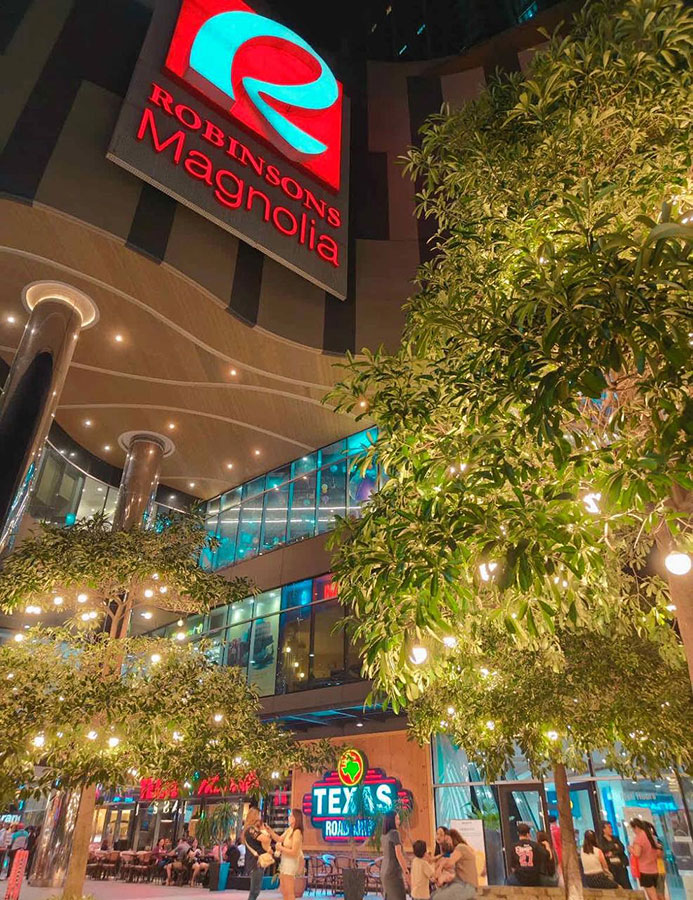
ROBINSONS Malls will be fully operational during the Undas period to service the communities where they are located. NCR-based malls Robinsons Galleria, Robinsons Magnolia, Robinsons Manila, Opus, and Robinsons Antipolo will be open from 10 a.m. to 10 p.m. on Oct. 31, Nov. 1, and Nov. 2. However, on Oct. 31, the malls operating only from 10 a.m. to 9 p.m. are Robinsons Malabon, Robinsons Metroeast, Robinsons Novaliches, Robinsons Malolos, Robinsons Galleria South, Robinsons Las Piñas, and Robinsons Palawan. On Nov. 1 and 2, the following malls will operate from 10 a.m. to 10 p.m.: Robinsons Malabon, Robinsons Metroeast, Robinsons Novaliches, Robinsons Galleria South, Robinsons Lipa, Robinsons Sta. Rosa, Robinsons Luisita, and Robinsons Palawan.


Sean Archer marks his official debut with the release of his first EP

THE first EP of singer-songwriter Sean Archer, BANDA KA NANG BANDA, is named after a common phrase said to passionate musicians. His rock-leaning sound, drawing inspiration from ’90s grunge and pop-punk influences, can be heard in the release, out now via Sony Music Entertainment. Mr. Archer co-produced the album with his mentor Rico Blanco and award-winning record producer and engineer Angee Rozul. Three songs were previously released but re-recorded with the two collaborators while the other new tracks were recorded in separate sessions. BANDA KA NANG BANDA is out now on all digital music platforms worldwide.


Halsey’s new album, The Great Impersonator, out now

GRAMMY-nominated artist Halsey has released her highly anticipated fifth studio album, The Great Impersonator. To visually interpret her new album, Halsey and Vevo partnered for a Vevo Official Live Performance to create four meticulously designed videos that each encapsulate a different musical decade. The series kicks off today in the ’70s for “Panic Attack,” with Halsey clad in a Stevie Nicks-inspired dress sourced from one of LA’s most famous wardrobe rental houses. Starting earlier this month in anticipation for the album, Halsey revealed impersonations of a different icon each day and teased a snippet of the song they inspired, such as Dolly Parton, PJ Harvey, Kate Bush and more. The Great Impersonator is out now on all digital music platforms worldwide.


Young Cocoa drops new EP

FILIPINO rapper-producer Young Cocoa has released his new EP, liv, luvv, cocoa, out now via Sony Music Entertainment. The 7-track release showcases his range, from chill summer jams to fun and whimsical party tunes. The alternative hip-hop release tackles love and relationships and sees Young Cocoa collaborate with several key players in hip-hop and electronic music production: Brido, Playertwo, Trizzy, and CRWN. “liv, luvv, cocoa” is out now on all digital music platforms worldwide.