Home Blog Page 1960

India’s festive gold buying spree continues, defying record price

STOCK PHOTO | Image from Freepik

 – Indian buyers of gold brushed off record high prices and made purchases for the Dhanteras and Diwali festivals starting on Tuesday, hoping bullion would continue to rally and deliver promising returns amid a cooling stock market, industry officials told Reuters.

Robust demand in the world’s second-biggest gold consumer could further support global prices, which hit record highs last week. Rising demand for imports of gold could also widen India’s trade deficit and put pressure on the rupee.

“People are still into gold big time, even with prices at record highs during Dhanteras. With gold giving better returns than the stock market, there’s been solid demand for coins and bars,” said Saurabh Gadgil, chairman of PNG Jewellers PNGD.NS.

Indians were celebrating Dhanteras on Tuesday, a day considered auspicious for buying gold and one of the busiest gold-buying days in India.

Local gold prices MAUc1 jumped to a record high of 78,919 rupees per 10 grams last week, marking an increase of more than 31% since last year’s Diwali. India’s NSE Nifty 50 share index has dropped about 7% from a record high hit on Sept. 27.

Investors are working to diversify their portfolios by adding to or increasing their allocations in gold and silver, Gadgil said.

“In value terms, turnover during this year’s Dhanteras is expected to be significantly higher than last year due to higher prices. In volume terms, it may be slightly lower or around the same level as last year,” Prithviraj Kothari, president of the India Bullion and Jewellers Association (IBJA), said.

Indian dealers on Tuesday charged a premium of up to $1 an ounce over official domestic prices – inclusive of 6% import and 3% sales levies, up from the last week’s discount of $4.

Local silver futures hit a record high of 100,081 rupees per kilogram last week.

“Demand for silver coins and bars was strong today, as silver has delivered better returns than gold in recent months,” said Chirag Thakkar, CEO of Amrapali Group Gujarat, a leading silver importer. – Reuters

ACCESS MCLE upholds commitment to offer the most interesting MCLE courses

When it comes to providing the best and most in-demand programs for mandatory continuing legal education (MCLE) in the country, ACCESS MCLE continues to be the leader. The legal education provider has always been ahead of the league, setting the standard with the commitment to keep Filipino lawyers abreast of the changing legal landscape.

“By providing interesting courses with thought-provoking topics that are conversation starters, ACCESS is continuously persuading our practicing legal professionals to comply with the MCLE requirement,” says Atty. Peaches Martinez-Aranas, Co-Founder of ACCESS MCLE.

“We always offer new courses with new topics that are available only from ACCESS. It is not unusual for speakers of different providers to lecture on exactly the same topic across various providers. But in ACCESS, we make sure all our topics are unique and carefully curated, meticulously written by our seasoned lecturers specifically and exclusively for ACCESS learners,” she added.

Equally interesting learning tools

To further build interest in its curated and timely topics, ACCESS has pioneered in using the most effective learning aids when conducting MCLE lectures, whether in face-to-face (classroom) or online setup.

“We also make sure that our courses are presented with interesting animation and fun gamification to take learning to another level,” says Atty. Martinez-Aranas. “Such materials boost engagement and retention during lectures, making MCLE more enjoyable for lawyers across all ages.”

ACCESS MCLE has tapped the expertise of e-learning solutions provider Jump Interactions to guarantee flexibility especially when producing on-demand or online lectures, which are currently the more in-demand option for taking MCLE among Filipino lawyers due to its convenience and cost effectiveness.

Thus, ACCESS is considered an innovator and trend-setter in its industry. It has introduced the use of creativity in learning, which complements its strategic approach when developing courses on topics that are attuned with the ever-changing society and environment.

Tapping legal luminaries as lecturers

ACCESS MCLE is also known for bringing the country’s legal luminaries to convey topics in their respective areas of expertise that would interest and engage learners. Every compliance period, ACCESS introduces new topics to further widen the options for local legal practitioners. 

Some of the most interesting and timely courses offered during the 8th Compliance Period are “Exploring the Right to Have a Good and Dignified Death” by Atty. Neil Anthony Borja, “Impugning Filiation: Is the Child Yours?” by Atty. Katrina Legarda, “Food Adequacy as a Demandable Right” by Atty. Karlo Alexei Nograles, and “Reproductive Health as a Basic Human Right of Filipino Women” by Atty. Joan de Venecia-Fabul, among others.

“ACCESS is committed to constantly bringing more choices in courses, along with higher level of animation and gamification as well as improvement on all aspects of course design and delivery. We are known for always leveling up MCLE in the country and we’ll keep it that way,” Atty. Martinez-Aranas concludes.

All three modes or platforms for learning are currently available for MCLE learners at ACCESS — face-to-face sessions are for those preferring to take traditional classroom-style learning, while online synchronous sessions are facilitated online via Zoom for real-time lectures and online asynchronous sessions use videos on-demand to conveniently and creatively present topics or lessons.

To learn more about ACCESS MCLE and its programs, visit https://accessonline.ph/.


Spotlight is BusinessWorld’s sponsored section that allows advertisers to amplify their brand and connect with BusinessWorld’s audience by publishing their stories on the BusinessWorld Web site. For more information, send an email to online@bworldonline.com.

Join us on Viber at https://bit.ly/3hv6bLA to get more updates and subscribe to BusinessWorld’s titles and get exclusive content through www.bworld-x.com.

Forest Lake launches new Pagpag video: A blend of humor, Filipino culture, and a reminder to plan for the future

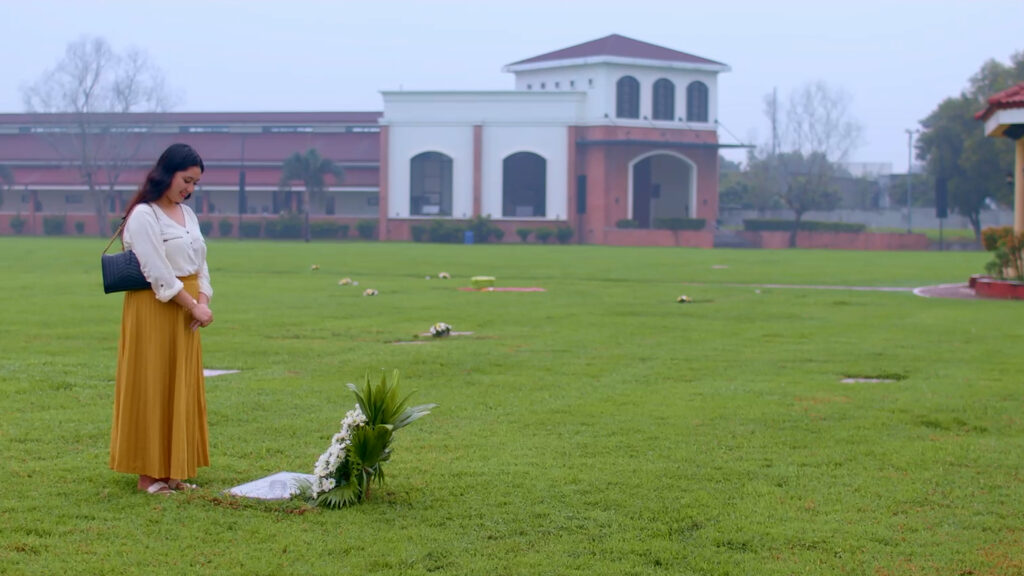
Forest Lake Memorial Parks has released the fourth installment of its groundbreaking series, Pagpag.

Following three humorous and fun videos that featured unique Filipino cultural beliefs, trusted name in memorial care Forest Lake Memorial Parks has released the fourth installment of its groundbreaking series in time for Halloween, Pagpag.

In a light-hearted and quirky way, Pagpag is a Halloween video that explores the Filipino tradition of “pagpag,” in which mourners avoid going home straight from a funeral wake to “deter” the spirit of the departed from following them home.

The Pagpag Halloween Video is the fourth video of a campaign series titled ‘Di Mo Inexpect No.’

Through this long-standing custom, Forest Lake also delivers a deeper and more significant message: while we may try to delay or avoid death, the “end of life” is very much a part of our life cycle — and one that we must ultimately embrace. In Pagpag, Forest Lake also reminds families of the importance of planning ahead — taking proactive steps for the future as preparedness is key to ensuring security for the ones we love.

Forest Lake uses its Halloween Video to approach the realities of death in a lighthearted way.

“Old customs like ‘pagpag’ reflect Filipinos’ desire to shield themselves and their families from the unknown. Forest Lake, however, believes that true peace of mind comes not from avoiding the topic of death, but from accepting it as an inevitable part of life and preparing for it in meaningful ways,” said Alfred Xerez-Burgos III, CEO & President of Forest Lake Development, Inc.

The Pagpag Halloween video is the fourth video of Forest Lake’s campaign series titled ‘Di Mo Inexpect No’, which aims to present Filipino life-and-death-related customs and superstitions in unique and unexpected ways.

Previous videos in the series are Paliwanag, which reflects on the unpredictability of life; Itim na Pusa, which tackles superstitions involving bad luck; and Talon, a fun take on the belief that jumping on New Year’s Eve will make you taller.

This latest campaign stresses the importance of preparation, reminding Filipinos that accepting death is also about planning for it in different ways: arranging memorial services, securing interment rights, and considering long-term care options, which, in the long run, ease the emotional and financial burdens that come with loss.

Forest Lake helps Pinoys anticipate the realities of deaths with their line of deathcare services.

Juan Carlos Xerez-Burgos, Director for Business Development & Digital at Forest Lake, adds, “We hope this campaign helps Filipinos face death with a lighter heart, knowing that with preparation, they can offer comfort to their loved ones. We’re here to support families in every step of the way.”

Designed to provide comprehensive support while celebrating and preserving memories for generations, Forest Lake’s Total Memorial Care Services include the following services, Libing Anywhere, which provides flexibility in interment locations; Libre Burol, a free standard funeral service for families availing of interment services; QRonicle, a digital storytelling platform that allows families to store and share stories of loved ones; and the easy-to-use Customer Portal, which enables families to purchase memorial services with just a few clicks.

For more information on Forest Lake Memorial Parks and their services, visit their social media pages: Facebook (@forestlakememorialparks), and Instagram (@forestlakememorialparks), and explore hashtags #Pagpag, #ForestLakeCares, and #TotalMemorialCare.

For over 27 years, Forest Lake has established itself as a leader in providing thoughtfully designed, family-friendly memorial parks throughout Luzon, Visayas, and Mindanao. These parks are more than places of remembrance; they are vibrant spaces where families gather, connect, and celebrate their loved ones’ memories.

Forest Lake has established itself as a leader in providing thoughtfully designed, family-friendly memorial parks throughout the country.

As the foremost memorial park developer in the Philippines, with over 37 parks nationwide, Forest Lake is committed to expanding its offerings to include total memorial care services such as chapels, columbariums, and cremation. This expansion underscores the company’s dedication to meeting the evolving needs of Filipino families.

Guided by its mission to create “A Better Place,” Forest Lake upholds values of innovation, creativity, teamwork, personalized service, value creation, and professionalism. The company integrates cutting-edge technology to enhance service delivery and foster a seamless, personalized experience for every client. Forest Lake’s collaborative approach ensures that each park is a testament to thoughtful design and professional excellence, offering significant value to both clients and investors through low-risk, high-yield opportunities.

Forest Lake Memorial Parks is headquartered on the third floor of Alexcy One Building, 51 President’s Avenue, 1718, Parañaque City. For more information, email info@forestlakeparks.com or visit forestlakeparks.com. Follow Forest Lake on Facebook and Instagram.

Join Forest Lake in its vision to provide spaces where the memories of loved ones are celebrated and immortalized, and where families can create new, lasting memories together. Check out the viral video on Facebook, YouTube, and TikTok.


Spotlight is BusinessWorld’s sponsored section that allows advertisers to amplify their brand and connect with BusinessWorld’s audience by publishing their stories on the BusinessWorld Web site. For more information, send an email to online@bworldonline.com.

Join us on Viber at https://bit.ly/3hv6bLA to get more updates and subscribe to BusinessWorld’s titles and get exclusive content through www.bworld-x.com.

August infrastructure spending declines 11%

HEAVY FLOODS are seen along Araneta Avenue in Quezon City, Aug. 28, 2024. — PHILIPPINE STAR/MIGUEL DE GUZMAN

INFRASTRUCTURE SPENDING by the National Government declined by an annual 11.1% in August as heavy rains hampered the implementation of public works projects, the Department of Budget and Management (DBM) said. 

In its latest report posted on its website on Tuesday, the DBM said infrastructure and other capital outlays fell to P108.6 billion from P122.1 billion a year earlier.

Month on month, infrastructure spending dropped by 13.1% from P125 billion in July.

The DBM attributed the drop  to lower disbursements by the Department of Public Works and Highways (DPWH) due to “adverse weather conditions which slowed down project implementation.”

Rizal Commercial Banking Corp. Chief Economist Michael L. Ricafort said recent typhoons had caused heavy floods that delayed infrastructure projects.

The DBM also cited “delays in the submission of billing documents by contractors, which affected the timelines for the processing and release of payments for ongoing projects.”

There were also adjustments in project timelines as some major infrastructure projects experienced delays or were rescheduled, it said.

About P22 billion worth of outstanding checks as of end-August had not yet been encashed by contractors, the DBM said.

“Likewise, capital expenditures were down year on year sans the big-ticket releases for local counterpart funds for the various foreign-assisted projects of the DoTr (Department of Transportation),” the DBM said.

As of Aug. 31, key allotment releases included P13.3 billion under the DoTr for capital outlays.

This was allocated “mostly to cover the loan proceeds requirement for the implementation of the Davao Public Transport Modernization Project and for the payment of right-of-way expenses relative to the implementation of the Metro Manila Subway Project Phase I and North-South Commuter Railway System,” the DBM said.

About P3.7 billion was also released to the Department of Information and Communications Technology at the end of August as part of the funding requirements for the government’s Free Internet Wi-Fi Connectivity in Public Places program.

In the January-August period, infrastructure and other capital outlays rose by 14.2% to P845.3 billion from P740.3 billion a year ago.

The DBM expects infrastructure spending to improve after the issuance of P15.1 billion worth of allotments to the DPWH in September. This will mainly cover the government’s counterpart requirements for various foreign-assisted projects this year, such as the Metro Manila Subway, North-South Commuter Railway System and Davao Public Transport Modernization Project.

About P10 billion will be allotted for the revised modernization program of the Armed Forces of the Philippines.

Mr. Ricafort said agencies would likely ramp up infrastructure spending before the midterm elections in 2025.

“For the coming months, government spending especially on infrastructure and other projects could be accelerated in preparation for the midterm elections, especially before the election ban, which could be a major source of economic growth.”

Nigel Paul C. Villarete, senior adviser on public-private partnerships at the technical advisory group Libra Konsult, Inc., said the government should implement catch-up plans as bad weather could affect construction schedules.

“Midyear to later months will have much more deviations in spending due to the onset of the rainy season, which has a significant effect on construction schedules,” he said in a Viber message.

The government aims to spend 5-6% of gross domestic product on infrastructure this year. — Beatriz Marie D. Cruz

Supreme Court issues TRO vs PhilHealth fund transfer

A person holds a sign protesting the transfer of Philippine Health Insurance Corp. funds to the National Treasury during a rally in Manila. — PHILIPPINE STAR/EDD GUMBAN

By Chloe Mari A. Hufana, Reporter

THE SUPREME COURT (SC) issued on Tuesday a temporary restraining order (TRO) on the further transfer of excess funds of Philippine Health Insurance Corp. (PhilHealth) to the National Treasury.

“The TRO is effective immediately,” SC Spokesperson Camille Sue Mae L. Ting said. “The TRO is just really to prevent the further transfer of more funds from PhilHealth to the National Treasury.”

The SC consolidated the petitions filed by 1SAMBAYAN Coalition, a group led by Senator Aquilino Martin “Koko” D. Pimentel III and another group led by Bayan Muna Chairman Neri J. Colmenares.

The three petitions were filed to stop the transfer of P89.9 billion in excess funds from PhilHealth to the National Treasury.

“All three petitions challenge the return of excess reserve funds from government-owned and -controlled corporations to the National Treasury to fund unprogrammed appropriations,” the SC public information office said in a statement.

The TRO was issued after P60 billion in PhilHealth funds have already been transferred to the Treasury in three tranches since May.

A fourth and final tranche worth P29.9 billion was scheduled to be transferred to the Treasury in November.

Ms. Ting said it is still possible for the High Court to tackle the plea for a status quo ante order, which could allow the return of the P60 billion to PhilHealth’s coffers.

The oral arguments scheduled for Jan. 14, 2025, would push through, she added.

A copy of the TRO had yet to be released.

In a statement, Finance Secretary Ralph G. Recto said the department “respects the Supreme Court’s intervention.”

“I recognize the right of every citizen to seek redress from the courts. Rest assured that the DoF (Department of Finance) will fully comply with the order of the Supreme Court,” he said.

“We give our full cooperation to the Supreme Court as we look forward to the opportunity to shed light on the issues presented during the oral arguments.”

A provision included in the 2024 General Appropriations Act allowed the DoF to issue Circular No. 003-2024, authorizing PhilHealth and the Philippine Deposit Insurance Corp. to transfer P89.9 billion and P110 billion, respectively.

These would help fund unprogrammed appropriations worth P203.1 billion, which would support government programs in health, infrastructure and social services.

“We reiterate that before proceeding with the utilization of GOCC (government-owned or -controlled corporation) idle funds, our agency exercised due diligence and consulted extensively with the government’s legal experts,” Mr. Recto said.

“These include the Governance Commission for GOCCs, the Government Corporate Counsel and the Commission on Audit. These efforts were undertaken to ensure full compliance with our laws,” he added.

In a statement, PhilHealth said it fully respects and will abide by the ruling.

PhilHealth said it remains focused on its mission to provide healthcare to Filipinos through “better and responsive benefit packages and availment policies that ensure greater access to healthcare services.”

Solicitor-General Menardo I. Guevarra, whose office represents government agencies in legal cases, said they would “respect the TRO,” noting that it is “limited to PhilHealth funds only.”

One of the petitioners, former SC Senior Associate Justice Antonio T. Carpio, said the TRO “saves the poorest of the poor of Filipinos… whose only source of life-saving medicine is PhilHealth.”

“We hope that the Executive branch will return all the transferred funds back to PhilHealth pending the final decision of the Supreme Court,” he said in a Viber group chat message with reporters.

Mr. Carpio, along with 1SAMBAYAN, said in their petition that since PhilHealth funds are “special funds,” they cannot be transferred unless their purpose has been abandoned or accomplished.

They added that the fund transfers violated Article VI, Section 25 (5) of the Constitution. Under the Charter, “no law shall be passed authorizing any transfer of appropriations.”

Former Finance Undersecretary Cielo D. Magno, who filed the first petition questioning the transfer with Mr. Pimentel, said they are hoping the top court would declare the fund transfer as unconstitutional.

“This measure will temporarily stop the financial hemorrhage of PhilHealth,” she told BusinessWorld in a Viber message.

PHL motor vehicle production jumps 35% in Aug.

Workers at the Toyota Aisin Transmission Plant at the Toyota Special Economic Zone, Santa Rosa City, Laguna, Aug. 22, 2023. — YUMMIE DINGDING / PPA POOL

By Justine Irish D. Tabile, Reporter

PHILIPPINE MOTOR VEHICLE output jumped by 34.7% in August, logging the second-fastest growth in the region, the ASEAN Automotive Federation (AAF) said.

In a report released on Tuesday, the AAF said the country produced 10,941 units in August, 2,816 more than 8,125 units produced a year earlier.

At 34.7%, the Philippine motor vehicle output growth was behind Myanmar’s 48.7% growth but faster than the 8.9% growth in Malaysia.

It also outperformed the 11.3% decline in the region during the month. A decline in output was seen in Vietnam (7.4%), Indonesia (14.6%), and Thailand (20.6%).

In the first eight months of 2024, Philippine motor vehicle production expanded by 17.3% to 86,585 units from 73,789 a year ago.

This was the second-fastest growth in the region, behind Myanmar, which expanded by 180% to 1,697 units in the first eight months from 606 last year.

In third spot was Malaysia, whose production grew 7.8% to 536,313 units from 497,309 a year ago.

Indonesia (18%), Thailand (17.7%), and Vietnam (8.5%) recorded a drop in production in the January-to-August period. The region’s production had fallen by 12% to 2.51 million as of end-August.

Meanwhile, motorcycle and scooter production in the Philippines surged by 101.3% in August to 115,974, the fastest growth so far this year.

The Philippines posted the highest growth in motorcycle and scooter production among the four countries in August. Indonesia posted a 6.9% growth in production to 630,601 units, followed by Malaysia where output went up 3.3% to 53,323 units.

Motorcycle and scooter production in Thailand slumped by 15.8% to 144,244 units in August.

Overall, the four countries produced 944,142 motorcycles and scooters in August, up by 8.5% from 870,144 units a year ago.

In the first eight months, Philippine motorcycle and scooter production jumped by 5.2% to 893,293, followed by Indonesia which increased production by 2.2% to 4.69 million.

Thailand saw a 12.2% drop in production to 1.29 million, while Malaysia’s output fell by 9.6% to 365,876.

This brought the region’s total motorcycle and scooter production to 7.24 million in the January-to-August period, down 1% from 7.31 million a year ago.

Vehicle manufacturers may have ramped up production in August in anticipation of increased demand.

Toyota Motor Philippines, Inc. (TMP) First Vice-President for Corporate Affairs Josephine Villanueva said production is also driven by market requirements.

“We have been placing greater importance in providing the best Toyota ownership experience to our customers. As the customer requirements continue to evolve, we ensure that we provide value-chain offerings suited to the needs of the Filipino market,” she said in a Viber message.

Rizal Commercial Banking Corp. Chief Economist Michael L. Ricafort said higher vehicle sales might have also spurred manufacturers to ramp up production.

“For the coming months, rate cuts could further reduce borrowing costs, thereby further supporting demand for auto and motorcycle loans that could, in turn, lead to faster growth in vehicle and motorcycle sales and production,” he said in a Viber message.

Last week, TMP President Masando Hashimoto cited cooling inflation, strong remittances from overseas Filipino workers and interest rate cuts as revenue drivers.

In the AAF report, the Philippines had the third-fastest growth in motor vehicle sales in the first eight months at 10.3% to 304,765 units.

Meanwhile, motorcycle and scooter sales grew 4.9% in the January-to-August period to 1.1 million, representing the fastest growth in the region.

Region-wide, motor vehicle sales declined by 7.7% to 2.02 million, while motorcycle sales were almost flat (0.3%) at 6.98 million.

BSP sees some gaps in digital payment use

BW FILE PHOTO

THE PHILIPPINES has made progress in promoting digital payments, but there are still many barriers to hurdle before it meets its digitalization goals, the Bangko Sentral ng Pilipinas (BSP) said.

“We recognize that while there is a sustained increase in the use of digital payments, there are still gaps that need to be addressed holistically,” BSP Deputy Director Maria Christina S. Masangkay said during a central bank’s public information campaign.

“Indeed, we have come a long way but still have far to go. We have reached our 50% goal, yet survey results show that we still have a lot to overcome,” she said in mixed English and Filipino.

Earlier data from the BSP showed the share of online payments in the total volume of monthly retail transactions rose to 52.8% in 2023 from 42.1% in 2022. This was slightly higher than the central bank’s target of digitalizing 50% of the volume of retail payments by end-2023.

The BSP is targeting to achieve a 60-70% share of digital payments over the total retail payment volume by 2028.

Ms. Masangkay said there is a need to improve access to digital infrastructure, enhance internet connectivity, make fees for digital payments more affordable and promote the widespread acceptance of digital payments.

“In overcoming these barriers, the BSP has been proactive in providing the enabling policy and regulatory framework that supports the digitalization of priority payment risk cases most relevant to consumers, may they be individuals, businesses or the government.”

“Some of this may not fall squarely within the BSP purview. Thus, strategic collaborations with stakeholders, both from the government and the private sectors, are being pursued,” she added.

Ms. Masangkay noted the central bank’s recent efforts to promote digital payments, such as pushing for PESONet, InstaPay, QR Ph and Bills Pay Ph to become the “preferred mode of payments” for Filipinos.

“Other payment streams in the pipeline will further support the person-to-business, business-to-business, and person-to-person segments,” she added.

The BSP earlier announced it was developing new facilities to boost digital payments, such as the request to pay (RTP) facility and direct debit facility.

Last year, the bulk or 84.4% of retail payments made were from merchant and supplier payments, BSP data showed.

The central bank also seeks to enhance cross-border payments to “increase the business competitiveness of the Philippines’ e-commerce, exports and international trade sector,” Ms. Masangkay said.

In March 2023, the BSP and four other central banks in the region said they would connect their domestic instant payment systems through the Bank for International Settlements’ Project Nexus.

“The BSP’s efforts to promote digitalization of payments are strategically geared towards advancing financial inclusion by ensuring an efficient, safe, and secure digital payments ecosystem that supports the needs of our stakeholders while also increasing the number of Filipinos who have access to financial services,” BSP Assistant Governor Zeno R. Abenoja said.

BANKNOTES STILL NEEDED
Meanwhile, GlobalSource Partners said the Philippines still requires the use of banknotes despite the rapid shift to digital because it lacks the infrastructure to accommodate the transition.

GlobalSource country analysts Diwa C. Guinigundo and Wilhelmina C. Mañalac said the country’s digital transition “still has a long road ahead.”

“If some quarters believe that these trends could dislodge the use of banknotes in the Philippines… this may not be the case, just as yet,” they said in a report.

“The reason is obvious. The Philippines continues to be challenged by the limited communication connectivity including the issues of internet coverage, speed and cost. There is a big deficit in physical infrastructure that is critical to online, digital payments and settlements.”

It cited the BSP’s recent announcement of collaborating with German government banknote printer Bundesdruckerei GmbH to improve currency production and share knowledge on payment management.

BSP Governor Eli M. Remolona, Jr. said there is still a need for banknotes even as more people shift to electronic payments.

Banknotes should also be made “more secure, more durable and even more sustainable,” Mr. Remolona said.

GlobalSource said the partnership to future-proof banknotes showed that the “transition to a higher level of digitalization may still be a remote target, considering the challenges of weak connectivity and infrastructure backbone.”

At the start of 2024, internet penetration in the Philippines stood at 73.6%, according to the “Digital 2024” report by DataReportal. This meant that 26.4% of the country’s population remained offline at the beginning of the year.

“Between urban cities and rural areas, digital access could not be more stark. Fixed broadband speed averages only around 95 Mbps (megabits per second), so much lower than say, Singapore, where internet speed can be as fast as 291 Mbps,” GlobalSource added. — Luisa Maria Jacinta C. Jocson

Nostalgia-filled musical returns to the stage

After garnering acclaim in its first run, Silver Lining returns with more songs and context

A YEAR since it first made its debut, the original Filipino musical Silver Lining will return in a refreshed form, at the Carlos P. Romulo Auditorium at the RCBC Plaza from Nov. 8 to 17.

The musical made an impact in 2023, garnering five nominations at the Aliw Awards, namely nods for Best Director, Best Composer, Best Actor, Best Script, and Best Musical. This year, its creators have given it new life, dubbing it Silver Lining Redux.

“We got a lot of good reviews, but so many people were still not able to watch it last year. That’s why we planned a rerun. While planning it, we thought we could improve on it as well, hence the ‘redux,’” the show’s composer and lyricist Jack Teotico told BusinessWorld at the sidelines of a press conference in Mandaluyong on Oct. 15.

“People will really feel the essence of the story in Silver Lining Redux. It speaks about friendship, love, and confronting your past,” he said.

While it was Mr. Teotico’s music, written during the pandemic, that kickstarted the show, the musical it is today is in large part thanks to producer Jay Valencia Glorioso and artistic director Maribel Legarda.

Silver Lining explores the lives of three friends — Leo, Raul, and Anton — as they go on youthful adventures as students at the University of the Philippines Diliman amid the tumultuous backdrop of the 1970s. The story also takes us to their adulthood in the present, each with their own families.

Playing the older version of Leo is Ricky Davao, with Jamie Wilson as his alternate, while Albert Silos takes on the younger version of the character. Raul Montesa is the older Raul while Jay Cortez is the younger Raul. Jake Macapagal plays the older Anton, with Drei Sugay as his younger counterpart.

The project marks Mr. Davao’s return to musical theater as well — and he will also be the line producer. “I’m honored and privileged to be part of this show. I love singing, and doing theater is like going back to where I started,” he said.

“It’s a magical experience, especially with this wonderful material,” he added.

As for Krystal Brimner, who will play the group’s female friend Julia, the redux is particularly exciting because her role has been expanded.

“I can definitely say that my character has more development, more depth. And, without spoiling why, I don’t have an older version to base it off on, so I’m doing the work by myself of knowing what she’s like,” Ms. Brimner said.

WHAT’S NEW
The show traverses multiple timeframes, with the goal being to contemplate the choices that shape the characters’ lives.

Ms. Legarda, as the director of the musical, told the press that the story is more fleshed out now. One way they did this is by giving each character more context for the decisions that they make.

“We developed the romance with young Leo and Julia with a new song. We also humanized Raul and showed an explanation for his choices,” she said. “Half the cast is also new, so that alone will make this redux different.”

Also in the cast are: Gina Respall, Sara Sicam, Don Anthony, Dippy Arceo, Johnnie Moran, Raflesia Bravo, and Moi Gealogo. In the ensemble are Rodel Pingol II, Nayr De Luna, Sam Marasigan, Misha Fabian, and Nadia Tuviera.

Silver Lining Redux’ musical director is Vince Lim, while the show’s choreographer is PJ Rebullida, and writers are Liza Magtoto and Joshua Lim So.

“They improved the music and the script, so the themes are clearer in the songs. The story is also not as linear as it used to be, which I think is exciting,” Mr. Teotico said.

Ms. Legarda added that the historical context of the 1970s and ’80s up to present day really contextualize the show. “We have actions, and they have effects. Can we recognize them?” she said. “Hopefully it’s a life-giving show. You have to meet the problems, but also find strength in what’s good in it.”

Produced by Rockitwell Studios and MusicArtes, Inc., Silver Lining Redux runs from Nov. 8 to 10 and Nov. 15 to 17 at the Carlos P. Romulo Auditorium at RCBC Plaza, Makati. Tickets are available via Ticket2Me. — Brontë H. Lacsamana

First-time theater talents flex their muscles

Shorts and Briefs Theater Festival turns 10

By Brontë H. Lacsamana, Reporter

Theater Review
Shorts and Briefs Theater Festival

THE Shorts and Briefs Theater Festival (SNB) returns each year to present one-act plays by theater first-timers to a live audience. For its 10th year, the festival upped the ante by accepting musicals helmed by first-time playwrights, directors, actors, and newbie songwriters.

This year, the songwriters were asked to present compositions which the six new directors perused to find a match. Once a director chose a song, a partnership was then forged for the two to create a 15-minute musical, under the mentorship of composer TJ Ramos and playwright Juan Ekis.

On Oct. 26 and 27, festivalgoers filled the Cultural Center of the Philippines’ Tanghalang Ignacio Gimenez to see what musicals were created by the six director-songwriter duos.

“We’ve put up shows in many small spaces over the years, including on stairs, just to showcase Shorts and Briefs. Somehow we’ve made it to 10 years and we’re here now thanks to CCP!” said festival director Karl Alexis Jingco at the penultimate show on the last day.

“This is a festival that celebrates the beauty of being a first-timer. It’s scary, but that’s the beauty of it. We celebrate the fear, that leap,” he said.

The curtain opened that day on the endearing romance Sakto Lang, directed by Migui Moreno with music by Karlo Guevarra. It follows Daniel (Daniel Santos) and Vanessa (played by Vanessa Dulay), who unknowingly harbored romantic feelings for each other back in college and now have the chance to reconnect while waiting for a ride home from work.

Its strength is the clever use of the minimal set and props to convey the two leads’ emotions. With decent songs filled with drama powering the story forward, both actors utilized the space around them well as they performed a gentle tug of war of hidden feelings for each other.

The second play, Ang Kwento ng Bubuyog at Paru-paro, directed by Aaron Alsol with music by Aaron Vincent Jimenez, provided a dark tonal contrast. With a pastel-colored poster, a children’s book title, and its main actors coming in dressed in fluffy bee and butterfly costumes, the last thing the audience expected was a rap-style star-crossed gay lovers’ tragedy.

Minimal stage design gave actors Mateo Oladive as Bubuyog and Radleigh as Paru-paro, much work to do for the mix of whimsy and grit to be convincing, but they played their parts well. The music also lent more desperation, sadness, and power to their romance, its beats and drops leaving an impact.

“I chose to work with rap music kasi sabi ko gusto ko na astig ’yong love story (because I said I wanted the love story to be cool),” Mr. Alsol, the director, told BusinessWorld after the show.

“It also breaks the stereotype na rap, sa mga straight lang ‘yon (that rap is just for straight guys),” he said.

Following the subverted expectations of Bubuyog at Paru-paro was Tala, a grounded tale centered on corporate slaves Ella (Francel Go) and Katherine (Pamy Villa). Directed by Jiezl Virmy Chua with music by Martin Sarmenta, it follows two office workers revealing dreams and frustrations as they work overtime.

Both actresses gave commendable performances, especially Ms. Go whose idealistic fervor shone through even as her mic went out. Her portrayal of a young woman chasing her dreams clashed perfectly with Ms. Villa’s of an older woman whose dreams have already been broken. The songs accompanying this story were beautifully matched to their respective moments.

After a brief intermission came the nostalgic UP Diliman-set Disyembre, directed by Ray Raña with music by Axl Diego. It tells the story of Serine, who brings her boyfriend Enzo to the UP Lantern Parade to help jog his memory and reverse the short-term memory loss he suffered from an accident.

While the story itself isn’t new, the execution was seamless, with Kaye Ann Diana and Luis Orbeso as the leads playing friends-who-are-actually-a-couple without a hitch. Notably, the music suits every heartfelt scene.

Continuing the melodrama was Nakasilip sa Bituin, directed by Hazel Madronero with music by Gerard De Leon. It centers on Kay (Kaith Lawrence Espinosa) and John (Mark Jhonsen Bognot), a sister and brother struggling financially to make ends meet.

While its spoken parts were much stronger than the musical sections, their chemistry as siblings sold the story of them trying to stay strong for each other despite their faults. The set was also the most detailed and polished of all of the plays in the festival.

Finally, Kasloy, directed by Paulito Del Mundo with music by John Custer, served as a solid, poignant finish. It follows Rain (Presh Capistrano) and River (Lev Vergara) as close friends and fellow songwriters who go up to the mountains to compose music together.

Like the other musicals in the set, the drama played out by its actors was impeccable, especially in its well-timed twist. Kasloy, also the title of the song provided by Mr. Custer, was undoubtedly the best of the night, inducing tears in quite a few audience members.

“The responsibility of directing your first piece of musical theater is huge, but it helps that we’re guided by mentors and our collaborators,” said director Mr. Del Mundo after the show. “We’re all proud of our work.”

Shorts and Briefs’ 10th year marked a high note for the festival. Every musical had emotions and insights to impart, with room for improvement for all of them but even more potential filling the theater with energy.

SNB was organized by Eksena PH, which had Filipino Sign Language interpreters for the Deaf community in the audience. For more information on their upcoming events, visit their social media pages.


Arts & Culture (10/30/24)


Eingel Calayag releases debut fable collection

FILIPINO author Eingel Calayag has released her debut collection of modern fables, Kindred Spirits Under the Starlight, an anthology that weaves together tales of animals, folklore, and human emotions, all set in the Philippines. Its characters include Pawi, a curious young sea turtle; Adha, a widowed pigeon struggling with postpartum depression; Tan-Tan, a wise elder whale shark; Uno, a grieving carabao; Mang Ben, a bereaved farmer; Makisig, a domesticated Philippine eagle; and Maliksi, a seasoned traveler. The book is available from 8Letters Publishing via https://www.8lettersbooks.com/shop/kindred-spirits-under-the-starligh-eingel-calayag/.


Lopez family collection on view at Iloilo museum

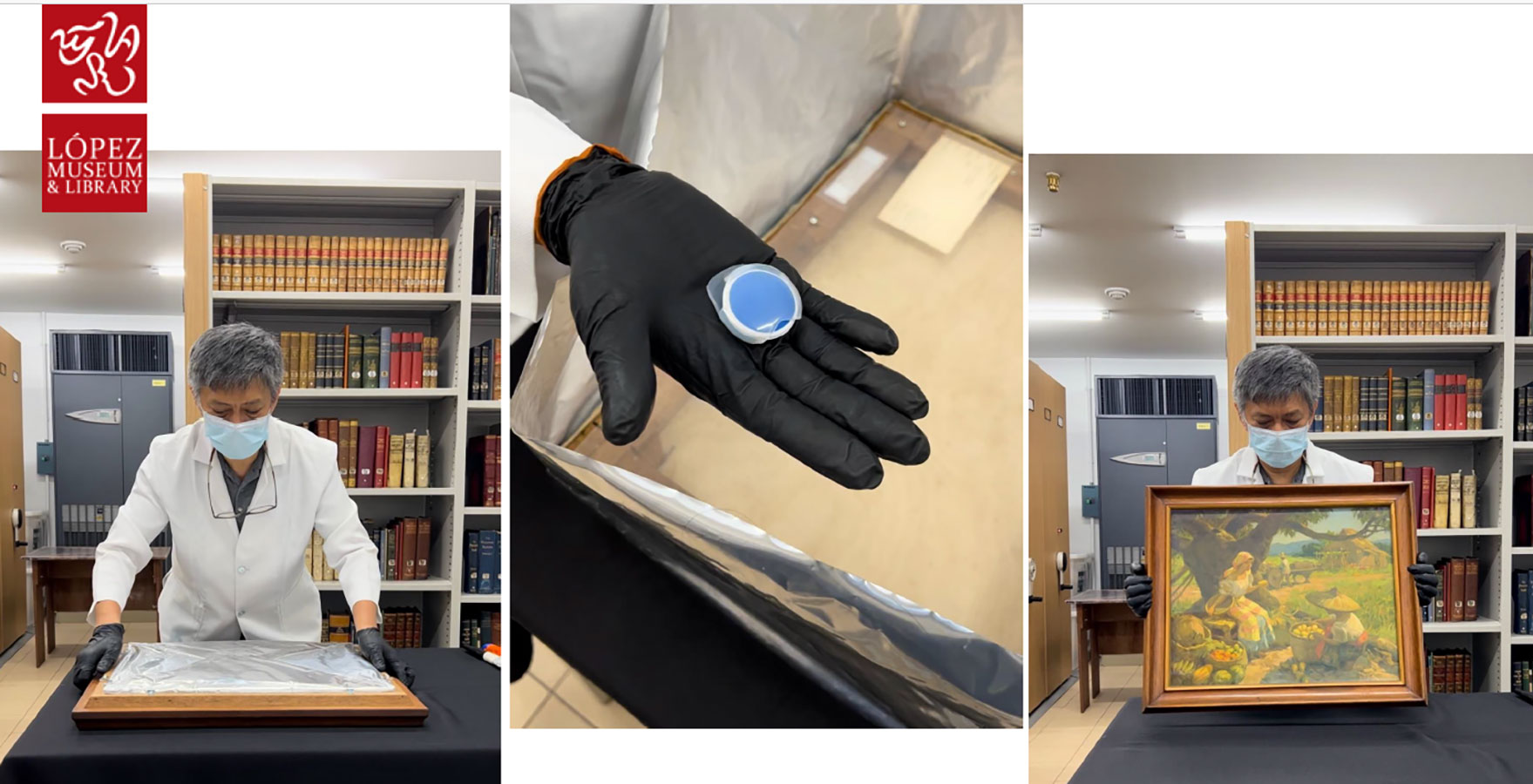
THE Lopez Family of Iloilo will be unveiling The Patrimony of All – Ang Panublion sang Tanan – Paintings from the Lopez Museum and Library Collection, an exhibit showcasing the works of Filipino masters Juan Luna, Felix Hidalgo, Juan Arellano, and Fernando Amorsolo from the Lopez Museum and Library (LML) Collection. According to Mercedes Lopez-Vargas, Lopez Group Foundation president and LML executive director, 16 pieces were selected for the exhibition — four by Luna, four by Hidalgo, five by Amorsolo, and three by Arellano. Curated by Dr. Patrick Flores, The Patrimony of All will open on Nov. 25 at the University of the Philippines Visayas (UPV) Museum of Art and Cultural Heritage, Iloilo City, and run until April 25, 2025.


Kidlat Tahimik, Spanish artist Enrique Marty dialogue

THE meeting of minds between Spanish painter Enrique Marty and Baguio-based Filipino artist Kidlat Tahimik has culminated in Wolves at the Door, an exhibition and dialogue being held at the Instituto Cervantes de Manila until Dec. 4. It is based on a work in progress that Mr. Marty has been undertaking since 2013, in the form of short video-essays entitled All your world is pointless. The exhibition is completed with watercolor works that serve as a storyboard and the video Cosmic Encounters, a conversation between curator Kristine Guzmán, Enrique Marty, and Kidlat Tahimik that took place in Baguio back in August. The interview reveals many parallels in the works of the two artists such as the visibility of the “other,” materialized in the representation of Kaspar Hauser, and the role played by Kidlat Tahimik in the 1974 film born from Mr. Marty’s initial concept. The show is ongoing at Instituto Cervantes de Manila, 385 Real St., Intramuros, Manila.


Film expert to discuss AI’s impact on the arts

FILM professor and industry expert Ed Cabagnot will give a free public lecture on the evolution of artificial intelligence (AI) and its impact on the arts at De La Salle College of Saint Benilde. As a proponent of developing pioneering courses on AI related to media and the creative and culture industries, Mr. Cabagnot will be giving a comprehensive overview of AI’s interconnected relationship with the human experience. Set for Nov. 8, 11:30 a.m., at the 12th floor screening room of the Design + Arts Campus, the talk is part of the Master Lecture Series organized by the school’s BenildeFilm program. It is free and open to students from other colleges and universities. Interested participants may register via forms.gle/cyeeFtmPY32bj3Dj8.


Mga Kuwento ni Juan Tamad premieres in Nov.

ALICE REYES Dance Philippines (ARDP) is set to perform Mga Kuwento ni Juan Tamad on Nov. 10. Touted as a dance adventure for young audiences, it is the latest addition to the company’s repertoire of Filipino works. ARDP choreographer Erl Sorilla crafted the book and the choreography, his first time to do so. The musical score is by award-winning singer-songwriter Toto Sorioso and the sets and costumes are designed by director and Broadway designer Loy Arcenas. It follows Juan Tamad, a misunderstood boy, and his loyal monkey companion Matsing, as they set out to find the village’s most prized treasure, the Gintong Niyog, in order to win the hand of Maria Masipag. ARDP company dancer Renzen Arboleda will play Juan Tamad, with Karla Santos as Maria Masipag and Dan Dayo as Matsing. Mga Kuwento ni Juan Tamad premieres on Nov. 10 at the Samsung Performing Arts Theater, Makati City, as part of the Cultural Center of the Philippines’ Children’s Biennale. Admission is on a pay-what-you-can basis.


Search Mindscape’s immersive art exhibition

THE Search Mindscape Foundation recently presented Immersive Art, a one-day multi-sensory art event, to celebrate its fifth anniversary. On Oct. 26, it held multiple art-related activities, such as a live painting competition titled “Battle of the Brush,” co-created by Kevan Seng of Capulet Art and Canadian artist Raymond Chow. Works by a wide range of digital artists like Idan Cruz, Tey Clamor, Red Sales, and Bea Mariano were showcased. Live music performances coincided with larger-than-life art projections exhibited throughout the venue, Green Sun in Chino Roces Ave. Ext., Makati City. Artists who performed included Barbie Almalbis, Sampaguita, and the Pete Canzon Group, to name a few. For more details on Search Mindscape Foundation’s events, visit their social media pages.

Margaret Atwood, unworried by AI, continues prolific writing career

CANADAPOST-POSTESCANADA.CA

COPENHAGEN — Renowned Canadian author Margaret Atwood, who is currently writing her memoir, said in an interview that she is too old to be worried about the rise of artificial intelligence and described herself as still having a “good time” writing.

Ms. Atwood, 84, debuted as a poet in 1961 and published her first novel, The Edible Woman, in 1969. She has since written more than 60 books, including novels, short stories and children’s books.

“I’m not a writer who exists in a state of misery and finds it terribly difficult to write. You can probably guess that by the number of books I’ve actually written,” Ms. Atwood said. “I’m having a good time.”

Ms. Atwood, spoke with Reuters last week while in Denmark to receive the Hans Christian Andersen Literature Award, named after the famous 19th century fairytale writer.

She was relaxed about the impact that AI could have on her career, drawing a contrast with younger creative people.

“AI is worrying a lot of people. (…) I’m too old to get too worried about this stuff. But if I were 30, I’d be worried,” she said. “If I were a graphic designer, I would be worried.”

Last year, she reviewed poems and literature written by AI in her name.

“So far, AI is a crap poet. Really bad,” she said. “And it’s not a very good fiction writer either.”

Ms. Atwood’s dystopian novel, The Handmaid’s Tale, first published in 1985 about a theocratic dictatorship in the United States, saw a surge in sales following the election of Republican Donald Trump to the White House in 2016.

In 2019, she published a sequel, The Testaments, which was the joint winner of that year’s Booker Prize.

In the interview, Ms. Atwood also renewed her previous criticism of Trump, amid his current close presidential race, saying she was very concerned about what she views as his autocratic tendencies.

Her latest book, Old Babes in the Wood, published in 2021, delves into themes of family, marriage, grief, and loss, written two years after the death of her husband, author Graeme Gibson.

Looking ahead, Ms. Atwood says:

“I love people asking me about the future. What do you have in mind? The next two years, the next five years, the next 10 years? We don’t know. Well, I’m writing a great honking big memoir right now, and I’m only putting in stupid things and catastrophes because everything else is boring.” — Reuters

Will a curfew ease overtourism in Seoul’s historic Hanok Village?

ENGLISH.VISITKOREA.OR.KR

SEOUL — Kwon Young-doo, owner of a private art gallery in Seoul’s historic Bukchon Hanok Village, is concerned about an impending curfew policy aimed at mitigating overtourism in the area.

The curfew, set for a trial in November and to be officially launched in March next year, will limit tourist access to specific areas of Bukchon from 5 p.m. to 10 a.m. Fines of up to 100,000 won ($72) will be imposed on violators.

“Who would want to visit?” said Kwon, the owner of the Asian Cultural Art Museum, who moved to the historic area 18 years ago. “They’ll leave with a bad impression of South Korea.”

Bukchon Hanok Village, with its narrow winding alleyways in hilly northern Seoul, dates back to the Joseon Dynasty (1392–1897). The area has become a popular tourist destination, especially after being featured on a TV show a decade ago.

Tourists and Koreans alike are drawn to the neighborhood for its quaint houses with signature wood columns and doors, a courtyard, and tiled roof.

However, increased tourism has become more than an inconvenience for the residents, who complain about noise, littering, public urination, and invasion of privacy.

Some tourists have been caught on surveillance cameras trying to enter private homes or peeking inside without permission, generating friction with locals.

Many residents have chosen to leave, leading to a 27.6% drop in the village’s population over the past 10 years, according to the Jongno district office.

The area attracted approximately 6 million visitors last year, compared with its resident population of around 6,100.

Chung Moon-hun, the Jongno district head, says the goal is to protect the rights of residents and the restrictions will be adjusted if necessary to make it effective. The area where curfew hours and fines will be imposed is approximately 34,000 square meters, about the size of five soccer fields.

But residents are skeptical about the policy’s effectiveness citing loopholes such as exemptions for tourists staying overnight in hanok accommodations. They also blame the proliferation of corporate-run hanok stays for disrupting their lives.

Since 2020, authorities have loosened restrictions on traditional Korean houses offering accommodation, resulting in a surge in corporate-run hanok stays in the residential areas, residents say.

In 2010, 10 traditional houses were registered in Bukchon under the name Traditional Korean Housing Experience Businesses; by October 2024, that number had ballooned to 116, according to the district office.

“People come for just a day to enjoy themselves, and the noise from parties is extremely loud,” said Kim Eun-mee, who lives next to a hanok stay. Clearing trash in front of her home has become a chore she has to tend to several times a day.

“It’s often difficult to maintain a normal daily routine due to disturbances like people dragging suitcases around even during the early hours, which frequently wakes me up.”

Lee Dong-woo, CEO of hanok stay booking platform BUTLER.LEE, said the business took off when owners who found it difficult to renovate or maintain old houses entrusted the property to hospitality businesses.

“These requests are driving the expansion, not because we are actively evicting current residents to operate hanok stays, which is completely untrue,” Lee who manages 17 hanok stays in Bukchon said.

Tourists, meanwhile, are divided over the curfew. Some agree the residents’ quality of life is important. Others chafe at the idea of getting fined for simply walking down a public street.

There are also questions about enforcement; how to tell tourists from residents, how to make foreigners pay the fine, and the language barrier. — Reuters