Home Blog Page 1897

Airline pilots surprised by Chinese live-fire warning near Australia, messages show

MARK OLSEN-UNSPLASH

 – Pilots first heard about a Chinese live-fire naval exercise near Australia last week when already in the air, receiving messages that forced some to change paths through a busy air corridor, satellite text messages to and from pilots seen by Reuters show.

The incident highlights how airlines are increasingly having to react at short notice to geopolitical disruptions and military hazards, such as missile and drone barrages between Israel and Iran last year.

It also shows how China’s military, in its first drills in the Tasman Sea between Australia and New Zealand, is raising tensions by being more assertive across the Indo-Pacific region, according to Western defense analysts, including near Taiwan.

China has said it gave adequate warning to Australian and New Zealand authorities about the exercise.

Planes first heard about a live-fire drill when a Virgin Australia IPO-VIR.AX pilot picked up a Chinese navy broadcast on the 121.5 MHz emergency radio channel pilots use to communicate between planes at 9.58 a.m. Sydney time last Friday (2258 GMT on Thursday), according to Australian officials.

The pilot reported the broadcast to an air traffic controller, who passed the message to Australia’s military, according to Airservices Australia.

“At that stage we didn’t know whether it was a potential hoax or real,” said Peter Curran, deputy CEO of the air traffic control agency, at a parliamentary hearing this week.

Air traffic control started sending hazard alerts to nearby aircraft, including a Singapore Airlines SIAL.SI flight from Christchurch to Singapore and an Air New Zealand AIR.NZ flight from Auckland to Melbourne around 11:30 a.m., according to previously unreported text messages.

Half an hour later, the Air New Zealand pilots told the ground: “Hi, lots of chatter on 121.5 including Chinese navy. Same pos[ition] and ht/radius as you advised. Cheers.”

An airline dispatcher told the Air New Zealand pilots 20 minutes later there was “unannounced live firing in Tasman to the nth of you by Chinese military.”

“Below is all we know. Broadcast on 121.5… just FYI we have been notified of a Chinese live firing exercise as follows. Posn. 37S 15702E. Radius 40nm. SFC-45000. Until 0300Z. No ack required.”

The messages were sent between aircraft and ground stations using an Aircraft Communications Addressing and Reporting System (ACARS) system.


LEGAL BUT ‘IRRESPONSIBLE’

Civil aircraft have been shot down by military assets highlighting the risk of live fire, including Malaysian Airlines flight MH17 over eastern Ukraine in 2014, a Ukrainian flight departing Tehran in 2020 and a suspected incident involving an Azerbaijani jet over Russia in December.

The Chinese warships were beyond Australia’s 200 nautical mile (370 km) exclusive economic zone on the high seas, where countries routinely do live-fire exercises. China has said the warning it provided complied with international law, which Australia has acknowledged.

However, Australia and New Zealand have said the drills fell short of best practice for notifications.

“In that sense, it was irresponsible,” Australia’s defense force chief Admiral David Johnston told a parliamentary committee.

Pilots are typically alerted to military drills, rocket launches and other airspace issues through Notices to Airmen, or NOTAMs, which are usually filed at least 24 hours in advance.

“We/re don/t have a NOTAM in effect for Chinese exercise. Have not seen or heard any of that,” an airline dispatcher told two American Airlines AAL.O flights approaching Sydney and Brisbane from the U.S. at 3:37 a.m. and 3:39 a.m. on Saturday morning.

Steve Cornell, a Qantas QAN.AX captain and a vice president of the Australian and International Pilots Association (AIPA), said the unexpected incident would have increased the workload on pilots and air traffic control.

“The issue with this one was the short notice, or no notice effectively, really,” Cornell told Reuters. “All of a sudden it came to the attention of the pilots and they had to self-manage maneuvering around this zone.”

Routings were changed for 49 flights last Friday, Airservices said.

Eight hours after Airservices first heard of the live-fire warning, air traffic sent a hazard alert to an Emirates flight from Christchurch to Sydney, but said they have “reports that the activity has finished”.

However a second live-fire warning came on Saturday afternoon, New Zealand’s defense ministry reported.

On Sunday, an airline dispatcher told a Virgin Australia flight about to depart Queenstown, New Zealand for Brisbane: “FYI the govt has confirmed Chinese navy now well south in Southern Ocean”.

The ships are now south of Australia and heading west, New Zealand’s military said on Friday. – Reuters

Taiwan tells China World War Two shows aggression will end in failure

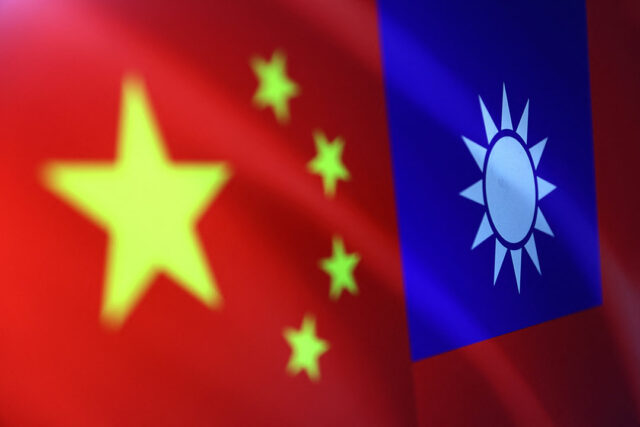
CHINESE AND TAIWANESE flags are seen in this illustration, Aug. 6, 2022. — REUTERS

 – Taiwan’s defense ministry said on Friday that the history of World War Two shows aggression and expansion will end in failure, responding to Chinese comments that the island would come into Beijing’s hands sooner or later.

Democratically governed Taiwan, which China views as its own territory, has repeatedly complained of stepped-up Chinese military activity, including drills this week off the island’s southwestern coast that Beijing said were “routine”.

On Thursday, China’s defense ministry, asked about Taiwan’s annual Han Kuang military exercises later this year, said Taiwan was “like a mantis trying to stop a chariot” and “sooner or later we will take you back”.

Taiwan’s defense ministry said in a statement that China has recently been escalating its military threats in the region, destroying the status quo of regional stability, and has become the biggest “troublemaker” in the international community.

“This year marks the 80th anniversary of (the end of) World War Two, and history has proven that any form of aggression and expansion will end in failure,” it said. “The actions of the Communist military in recent years are repeating the mistakes of the invaders and pushing China towards defeat.”

Taiwan’s military is strengthening its forces to safeguard sovereignty, ensure freedom and democracy, and collaborate to maintain security and stability in the region, the ministry added.

Taiwan’s government rejects Beijing’s sovereignty claims, saying only the Taiwanese people can decide their future.

World War Two, and the full-scale Japanese invasion of China in 1937 that preceded the start of the world war in 1939, is a touchy historical subject in both China and Taiwan.

The Chinese government at the time was the Republic of China and its forces did much of the fighting against Japan.

The republican government fled to Taiwan in 1949 after losing a war with Mao Zedong’s Communists, and Beijing today largely downplays the role of the republican forces.

Chinese President Xi Jinping has accepted Russia’s invitation to attend the commemorations of the Soviet victory over Nazi Germany in World War Two, Russian media said this month.

Taiwan was a Japanese colony during the war, and some Taiwanese fought on the side of the Japanese army.

Speaking at a separate event in Taipei to mark a 1947 uprising against Chinese republican troops in Taiwan, known as the “228 Incident“, President Lai Ching-te said China has not given up its attempts to take Taiwan by force.

“The greatest threat to Taiwan’s sovereignty, Taiwan’s democracy and Taiwan’s people being their own master, comes from China,” he said. – Reuters

Shorter tenor Asian bonds can combat tariff-led volatility

BLOOMBERG

Emerging Asian bonds with shorter tenors may be less exposed to any volatility in US rates, relative to their longer-dated peers, due to interest-rate cuts in local markets.

A Bloomberg analysis showed shorter-term emerging Asian debt moved less in tandem with two-year US yields compared with the region’s 10-year bonds. That means front-end bonds of five Asian nations can better withstand any possible tariff-induced resurgence in US yields as local policy makers diverge from the Federal Reserve and cut interest rates.

The relative attractiveness of shorter-dated emerging Asian bonds is coming into view as investors grapple with incremental tariff headlines. US President Donald Trump made contradictory remarks on the timing of Canada and Mexico levies, before a White House official said the deadline remains on March 4. A report on possible reciprocal tariffs is also due in April.

“The probability of US tariff escalation remains high as the trade review on China nears completion and reciprocal tariff policies are evaluated,” said Rajeev De Mello, portfolio manager at Gama Asset Management SA.

He recommends investors to position along shorter-to-mid maturity interest-rate swaps or local-currency bond curves as monetary policy across emerging Asian economies shifts toward easing.

The possibility of US tariffs on Canada and Mexico had pushed up two-year US yields earlier this month as traders bet the move would fuel inflation and prevent further interest-rate cuts from the Federal Reserve. Even though US yields have fallen in recent sessions, Fed officials like Raphael Bostic and Thomas Barkin this week signaled that US rates will need to remain restrictive to tame inflation.

The correlation between the two-year US yield and 10-year Malaysian debt stands at 0.5, while that between 2-year Treasury yields and the three-year ringgit bonds was 0.2, as per Bloomberg analysis. That implies bigger downside for Malaysia’s longer-dated notes should escalation in global trade tensions push up US rates.

“Front-end rates offer somewhat lower exposure” to shifting market pricing around tariff risks, supported by continuation of interest-rate cuts among emerging market central banks this year, Goldman Sachs Group Inc. strategists including Kamakshya Trivedi and Danny Suwanapruti write in a Feb. 12 note.

Bank of Thailand unexpectedly trimmed interest rates by 25 basis points on Wednesday. Bank of Korea also made a similar rate reduction, with BOK Governor Rhee Chang-yong signaling one or two more quarter-point cuts this year.

Bangko Sentral ng Pilipinas stuck to its guidance for a cumulative 50 basis points of rate easing this year, and said it will slash reserve requirement ratio for big banks by 200 basis points next month. Interest rate cuts are favorable for sovereign bonds, particularly notes on the shorter end of the yield curve.

Shorter dated yields in Indonesia, Malaysia, Thailand, the Philippines, India and South Korea have declined by an average 15 basis points, while 10-year yields have slipped by an average of six basis points this year. — Bloomberg

Teleperformance uses AI to ‘neutralize’ Indian accents of agents

The technology is available for Indian and Filipino accents and is being tuned for other regions, including Latin America. Photographer: Taylor Weidman/Bloomberg

Teleperformance SE, the largest call-center operator in the world, is rolling out an artificial intelligence system that softens English-speaking Indian workers’ accents in real time in a move the company claims will make them more understandable.

The technology, called accent translation, coupled with background noise cancellation, is being deployed in call centers in India, where workers provide customer support to some of Teleperformance’s international clients. Teleperformance provides outsourced customer support and content moderation to global companies including Apple Inc., ByteDance Ltd.’s TikTok and Samsung Electronics Co Ltd.

“When you have an Indian agent on the line, sometimes it’s hard to hear, to understand,” Deputy-Chief Executive Officer Thomas Mackenbrock said in an interview with Bloomberg. The technology can “neutralize the accent of the Indian speaker with zero latency,” he said. This “creates more intimacy, increases the customer satisfaction, and reduces the average handling time: it is a win-win for both parties.”

The company declined to disclose which clients are using the technology.

The roll-out of accent translation is part of a bigger push by Teleperformance to invest up to €100 million ($104 million) in AI partnerships this year, the company said in an earnings statement on Thursday. The technology was developed by Palo Alto-based startup Sanas, in which Teleperformance invested $13 million earlier this year. Under the terms of the deal, Teleperformance becomes the exclusive reseller of Sanas’ technology to its clients.

The rise of AI chatbots has led to investor jitters about the sustainability of the human call-center model. Last year, Teleperformance shares fell to their lowest since late 2016 after Swedish fintech company Klarna Bank AB said its AI assistant, powered by OpenAI, was doing the equivalent work of 700 full-time agents. Teleperformance has sought to allay shareholder concerns by using AI to enhance rather than replace employees, which totaled 490,000 as of the end of 2023.

The French company is using AI across the business, including using AI co-pilots to coach new employees and transcribing calls for quality control.

Sanas, the firm that Teleperformance is using to offer this accent-softening service to clients, is one of the AI upstarts blurring the line between where generative AI tech starts and the human ends. The firm’s software also eliminates background noise — like crowing roosters, ambulance sirens and office chatter. That might sound like an aid to agents, rather than a tool that might displace them.

But it carries a risk for customer service bases such as the Philippines that built market-leading positions by cultivating a preponderance of high-quality English speakers. The tools may also be perceived as taking away from workers’ cultural identities and the authenticity of conversations.

Sanas said it developed the technology with a goal of “reducing accent-based discrimination,” according to its website. The technology is available for Indian and Filipino accents and is being tuned for other regions, including Latin America, where Teleperformance has many workers supporting US-based customers, Mackenbrock said.

“AI will be ubiquitous, it is already today,” Mackenbrock said. “But in order to build connections, customer experience, branding awareness, the human element will be incredibly important.”

Teleperformance’s approach appears to be paying off: Teleperformance is forecasting 3% to 5% revenue growth this year, it said in the earnings statement. Fourth-quarter revenue was €2.68 billion, up 12% from last year or 4% on a pro forma basis.

Earlier this month, Klarna’s CEO Sebastian Siemiatkowski posted on X that Klarna “just had an epiphany,” saying that “in a world of AI nothing will be as valuable as humans.” Klarna would continue to invest in its AI support, but use cost savings to make sure that “the human service part of Klarna becomes even better,” he added.

Teleperformance is also making a push to provide services to the tech giants building AI models, Mackenbrock said.

“Whether it is OpenAI, or any AI model in the world, it needs human support for training,” he said. This includes creating, testing and labeling data. — Bloomberg

Canada watchdog probing X’s use of personal data in AI models’ training

STOCK PHOTO | Image by Julian Christ from Unsplash

 – Canada’s privacy watchdog has opened an investigation into X, the social media platform owned by billionaire tech mogul Elon Musk, on whether its use of Canadians’ personal data to train artificial intelligence (AI) models broke privacy rules.

The Office of the Privacy Commissioner of Canada said in a statement on Thursday that it launched the probe after receiving a complaint.

“The investigation will focus on the platform’s compliance with federal privacy law with respect to its collection, use, and disclosure of Canadians’ personal information to train artificial intelligence models,” the statement said.

The office did not provide any additional details about the nature of the complaint.

An opposition New Democratic Party lawmaker, Brian Masse, said he had written to the privacy commissioner this week calling for an investigation into X.

“I’m pleased to see the privacy commissioner agree to launch an investigation into X’s use of Canadians’ data,” Mr. Masse said in a statement. “Transparency and sunlight are crucial at a time when algorithms could be manipulated to spread misinformation,” he added.

X did not immediately respond to a Reuters request for comment.

The investigation into X comes at a time of increased tension between Canada and the United States over trade, border security and a digital services tax on U.S. technology firms.

President Donald Trump, who has tasked Mr. Musk with downsizing the U.S. government, vowed earlier on Thursday to follow through on proposed 25% tariffs on Canadian and Mexican goods from March 4 because deadly drugs were still pouring into the U.S. from those countries.

Mr. Musk, CEO of electric vehicle maker Tesla, is also the founder of artificial intelligence startup xAI.

Following Mr. Musk’s 2022 purchase of Twitter and its subsequent renaming as X, the social media platform made xAI’s Grok chatbot available to its users.

Grok is an AI assistant that helps users complete tasks, including answering questions, solving problems and brainstorming, X says on its website.

Last week, xAI introduced Grok-3, the latest iteration of its chatbot, which is being rolled out immediately to Premium+ subscribers on X.

Generative AI models such as Grok require lots of data to train and develop.

Canada’s privacy legislation set out rules for how private-sector organizations can collect, use, and disclose personal information in the course of business, the privacy commissioner has said on its website. They include rules around consent, disclosure, retention and safeguards. – Reuters

AI robots may hold key to nursing Japan’s aging population

STOCK PHOTO | Image by Rawpixel.Com from Freepik

 – Recently in Tokyo an AI-driven robot leaned over a man lying on his back and gently put a hand on his knee and another on a shoulder and rolled him onto his side — a maneuver used to change diapers or prevent bedsores in the elderly.

The 150-kg (330 lb) artificial intelligence-driven humanoid robot called AIREC is a prototype future “caregiver” for Japan’s rapidly ageing population and chronic shortage of aged-care workers.

“Given our highly advanced ageing society and declining births, we will be needing robots’ support for medical and elderly care, and in our daily lives,” said Shigeki Sugano, the Waseda University professor leading AIREC’s research with government funding.

Japan is the world’s most advanced ageing society with a falling birth rate, dwindling working-age population and restrictive immigration policies.

Its “baby boomer” generation, a bulging cohort created by a spike in post-war child births from 1947 to 1949, all turned at least 75 by the end of 2024, exacerbating the severe shortage of aged care workers.

The number of babies born in 2024 fell for a ninth straight year, by 5% to a record low 720,988, data from Japan’s health ministry showed on Thursday.

The nursing sector, meanwhile, is struggling to fill jobs.

It had just one applicant for every 4.25 jobs available in December, far worse than the country’s overall jobs-to-applicants ratio of 1.22, according to government data.

As the government looks overseas to help fill the gap, the number of foreign workers in the sector has grown over the years, but stood only at around 57,000 in 2023, or less than 3% of the overall workforce in the field.

“We are barely keeping our heads above water and in 10, 15 years, the situation will be quite bleak,” said Takashi Miyamoto, a director at Zenkoukai, an operator of elderly-care facilities. “Technology is our best chance to avert that.”

Zenkoukai has actively embraced new technologies, but the use of robots has been limited so far.

At one facility in Tokyo, a bug-eyed, doll-sized robot assists a care worker by singing pop songs and leading residents in simple stretching exercises, while human caretakers busily tended to other pressing tasks.

One of the most practical uses of nursing care technologies currently is as sleep sensors placed under residents’ mattresses to monitor their sleeping conditions, cutting back on humans doing the rounds at night.

Although humanoid robots like Tesla’s Optimus are being developed for the nearer future, Sugano said robots that can safely interact physically with humans require next-level precision and intelligence.

“Humanoid robots are being developed the world over. But they rarely come into direct contact with humans. They just do household chores or some tasks on factory floors,” said Sugano, who is also president of the Robotics Society of Japan.

“Once humans enter the picture, issues like safety and how to coordinate a robot’s moves with each individual’s spring up.”

Sugano’s AIREC robot is capable of helping a person sit up or put on socks, cook scrambled eggs, fold laundry and some other useful tasks around the house.

But Sugano does not expect AIREC to be ready for use in nursing-care and medical facilities until around 2030 and at a hefty price of no less than 10 million yen ($67,000) initially.

Takaki Ito, a care worker at a Zenkoukai facility, is cautiously optimistic about the future of robotic nursing.

“If we have AI-equipped robots that can grasp each care receiver’s living conditions and personal traits, there may be a future for them to directly provide nursing care,” he said.

“But I don’t think robots can understand everything about nursing care. Robots and humans working together to improve nursing care is a future I am hoping for.” – Reuters

Meta plans paid subscription service for chatbot Meta AI, source says

Meta

Meta Platforms plans to test a paid subscription service for its AI-enabled chatbot Meta AI, similar to those offered by OpenAI and Microsoft MSFT.O to access advanced versions of their chatbots, a source familiar with the matter told Reuters on Thursday.

The source said the test will begin in the second quarter this year, but they do not expect the subscription service to earn meaningful revenue until next year at the earliest.

Launched in September 2023, Meta AI is a virtual assistant that uses large language models to perform reasoning tasks.

Meta declined to comment when contacted by Reuters.

The move comes as Meta CEO Mark Zuckerberg aims to bolster the company’s position against rivals Microsoft-backed OpenAI and Google in the race to dominate the AI space.

Zuckerberg said in January that the company plans to spend as much as $65 billion this year to expand its AI infrastructure.

Meta is also establishing a new division within its Reality Labs unit to develop AI-powered humanoid robots that can assist with physical tasks, Reuters reported earlier this month.

The social media giant plans to debut a standalone Meta AI app to join Facebook and Instagram during the second quarter, CNBC reported earlier on Thursday, citing people familiar with the matter.

Big technology firms have been investing tens of billions of dollars to develop AI infrastructure after the success of ChatGPT.

In January, Microsoft said it was planning to invest about $80 billion in fiscal 2025 to develop data centers, while Amazon.com has said its 2025 spending would be higher than the estimated $75 billion in 2024. – Reuters

Taiwan is not just Taipei (though it is not a bad place to start a visit)

by Almira Louise S, Martinez, Reporter

Source: https://eng.taiwan.net.tw/

For the record, there is more to Taiwan than Taipei.

The Taiwan Tourism Administration (TTA) wants international visitors, including Filipinos, to explore cities beyond Taipei to experience the country’s culture, history, nature, and cuisine in a showcase of Taiwan’s charm.

“We want to see more Filipino visitors to Taiwan in addition to a higher percentage of repeat visitors,” the TTA said in an email interview.

Taiwan’s tourism brand, Waves of Wonder, was launched in May 2024 to promote the scenic spots around the country. Its logo mimics the contours of mountains, ocean waves, winding roads, and historical railways, highlighting that the self-ruled island has plenty to offer aside from the bustling city of Taipei.

With this branding, the TTA aims to invite visitors to their country to “enjoy the mountains, embrace the sea, and explore the island.”

BusinessWorld, together with six representatives of the Philippine media, visited Taiwan from February 11 to 16 at the behest of the TTA for a familiarization trip around Taoyuan City, Miaoli County, and Hsinchu County to see and experience the “Waves of Wonder” the country has to offer.


Historical and cultural spots

The Lost Army Story House | Photo by Almira Louise S. Martinez, BusinessWorld

The Filipino press group went to the “Lost Army” museum in Zhongzheng New Village, Taoyuan City, opened in 2022 by Simon Wang, one of the soldiers who fought in the Chinese Civil War.

“They don’t know about these people, these soldiers that died in the battle, they sacrificed their lives, and no one [remembers],” Mr. Wang told reporters.

Historical materials such as old documents, fake guns, uniforms, grenades, and even “mission cards” that reveal a message once heated are displayed inside.

The Lost Army Story House | Photo by Almira Louise S. Martinez, BusinessWorld

Along with the war memorabilia, the museum has different areas narrating the trauma experienced by soldiers, how soldiers used opium during the war, and other traditional clothing.

Mr. Wang said that he wanted to establish a story house to commemorate, remember, and let the people know about his fellow soldiers in the Lost Army.

Almost an hour from Taoyuan City lies Jinliangxing Brick Factory, another valuable place in Miaoli County that holds a significant part in the history and culture of Taiwan, particularly in its architecture and construction.

Jinliangxing Brick Factory | Photo by Almira Louise S. Martinez

Before concrete became widely used globally, Taiwan built houses and structures with red bricks. The bricks manufactured by Jinliangxing have made 100-year-old churches and other establishments, Sem Yie, owner of the brick factory, said.

Jinliangxing Brick Factory | Photo by Almira Louise S. Martinez

With the lowering demands as time passed, the factory opened a small museum showcasing the history of bricks and carved artworks. Mr. Yie said by doing so, he hopes to preserve the history and culture of traditional Taiwanese architecture.

Tours exploring the interior and exterior of an old kiln are also open to visitors.

“I am trying to introduce this bricks culture to the new generation,” Mr. Yie said.

Longteng Bridge is one of the notable structures made from Jinliangxing bricks. Although it got damaged by the deadly 1935 Shinchiku-Taichū earthquake, its foundation stood still and is now a tourist spot in Miaoli County.

Old Mountain Rail Bike | Photo by Almira Louise S. Martinez

Through Taiwan’s first mountain-town rail biking system, the Old Mountain Line Rail Bike, tourists can see the remains of the historical bridge while driving an electric bike on a century-old railway.

Visual displays and colorful lights lit up the tunnels the electric bike will pass through, making the experience more unique.


Connecting with nature

For vacationers seeking nature trips, Taiwan is one of the best places to visit. Surrounded by waters and mountainous terrain, breathtaking nature-filled spots are endless.

Located in Fuxing District in Taoyuan City, Xiaowulai Skywalk offers fresh air and scenic views of the mountains, forest, and falls.

Xiaowulai Skywalk | Photo by Almira Louise S. Martinez

Although it was raining when the media group visited the area, the beauty and serenity of the place still shined through. A glass platform view deck overlooking Xiao Wulai waterfall allows visitors to feel like they are “walking on clouds”, hence the name skywalk.

Apart from the skywalk, vibrant cherry blossom trees can be spotted around the area from late January to mid-April. This enhances its visual appeal, making it look like a mini-Japan.

photo by Almira Louise S. Martinez
Leofoo Resort | photo by Almira Louise S. Martinez

Animals are also well-loved in Taiwan. In fact, Leofoo Resort Guanshi in Hsinchu County is Asia’s first resort with herbivorous animals and natural ecology incorporated into its design inspirations.

Capybaras, flamingos, and meerkats can be seen through the big windows inside the 161 rooms available in the hotel, allowing vacationers to have a close-up look at the adorable animals.

If this is not enough, Leofoo Village Theme Park also offers an African safari experience where visitors can ride a bus driving around different habitats of wild animals such as white tigers and lions.


Flavors of Taiwan

Visiting places is not the only way to learn more about a country. A traveler’s stomach must be full, together with his eyes and mind.

photo by Almira Louise S. Martinez

After exploring the countryside, the media group had the opportunity to indulge in one of the staples in Taiwanese cuisine – authentic beef rice noodles, from different local restaurants like Jin Bang Noodles Shop in Sanyi Township, Bebu Chun Jiao Noodles near Beipu Old Street, and Duan Chunzhen Beef Noodles in Hsinchu County.

photo by Almira Louise S. Martinez

A distinct flavor evident in their staples, like beef noodle soup, is the five-spice powder. The five-spice powder is composed of star anise, cloves, Chinese cinnamon, Sichuan pepper, and fennel seeds.

Unlike the typical Filipino cuisine bursting with bold and rich flavors, beef rice noodles in Taiwan tasted light yet filling. The thick rice noodles complement the subtle flavors of the soup paired with the tender beef.

If one wants to be more adventurous, exploring Beipu Old Street is an easy fix for anyone who likes to expand their taste palette. Ranging from dried fruits to the popular stinky tofu, this street in Hsinchu County is the answer to all the foodie travelers.

While exploring the island, it further highlighted a few similarities with the Filipino culture and history – from closely knit families and being colonized to ‘Popiah’ or Lumpia, it is like a “home” away from home.

Last year, the Philippines became Taiwan’s fifth largest source of inbound tourists. The once-known ‘Heart of Asia’ has exceeded far beyond just a neighbor; it has captured and found a place close to the hearts of Filipinos.

China will not apologize for military drills off Australia’s east, ambassador says

ALEJANDRO LUENGO-UNSPLASH

– China’s ambassador to Australia said on Friday his country had no reason to apologize for the military drills it conducted in international waters between Australia and New Zealand that forced at least 49 flights to change path.

Both Australia and New Zealand have raised concerns with Beijing on the rare live-fire drills in the Tasman Sea last week, saying they did not receive adequate notice from China’s navy.

Ambassador Xiao Qian said China’s navy conducted drills that complied with international law and gave advance notice following international practices.

“I don’t see there is any reason why the Chinese side should feel sorry about that, or even to think about to apologize for that,” Xiao told national broadcaster ABC News in an interview.

“Different countries have different practice and based on the nature of the drill, size of the drill, and the scope of the drill, my view is that the Chinese naval certification advice was appropriate.”

Xiao said the drills did not pose any threat to Australia, one of its largest trading partners, and suggested Canberra should expect more Chinese ships sailing in the region in the future.

“As a major power in this region, as a country that has so many things to look after, it is normal for China to send their vessels to different parts of the region to conduct various kinds of activities,” Xiao told ABC News.

A frigate, cruiser and replenishment vessel that formed the Chinese navy task group has continued west on Friday, across the Great Australian Bight, the New Zealand Defense Force said.

Australian air traffic control agency officials this week told a parliamentary committee that a Virgin Australia pilot alerted them first about the live-fire drill after a message from the Chinese task group was broadcast on an emergency radio channel monitored mostly by pilots.

David Johnston, Australia’s defense chief, told the committee on Thursday it was likely the Defense Department came to know about the drill more than 30 minutes after it started.

Prime Minister Anthony Albanese, trailing in polls ahead of a national election due by May, has downplayed the incident, saying the drills occurred in international waters and that China did not break any maritime laws.

But the opposition Liberal-National coalition said it would be a major incident if the Australian Defense force became aware of the drills late and had to be alerted by a commercial pilot. – Reuters

Air safety reporting under scrutiny as crashes lie unresolved

STOCK PHOTO | Image from Pixabay

 – Next month marks three years since a China Eastern jet plunged into a hillside killing 132 people, with relatives still waiting to learn what caused China’s deadliest air disaster in three decades.

It is one of dozens of accidents worldwide in which investigators have yet to issue a final report designed to help prevent new accidents, despite a target of one year.

While recent deadly crashes in KazakhstanSouth Korea and the United States and the non-fatal flip of a crash-landed jet in Canada have thrust safety into the spotlight, the industry is worried that too many past accidents remain unresolved.

According to airlines, almost half of 268 accidents involving fatalities or major damage between 2018 and the end of 2023 lacked a final report.

“That’s a really big concern,” said Mark Searle, head of safety at the International Air Transport Association (IATA).

“The lessons that we learn from accident reports are absolutely critical to avoid future events.”

Aviation safety has improved markedly over decades based on open sharing of information, with investigations intended to draw lessons rather than assign blame.

The “brace position” for emergency landings, for example, was refined over years thanks to such investigations. By pure chance, the least injured person in a fatal 1976 crash in New Jersey had his head between his knees due to air sickness.

Technology to avoid collisions, the importance of not inflating life jackets inside planes and improved seat design are all lessons learned from past crashes.

Coordinated by the U.N.’s International Civil Aviation Organization (ICAO), global guidelines call for an initial report in 30 days and a final one ideally within a year. Failing that, investigators should issue statements on each anniversary.

But in a recent paper, IATA and six other aviation bodies raised the alarm over delayed or non-existent final reports.

“I think a number are being held up at the political government level because they are narratives that perhaps they are not too keen to hit the public eye,” Searle said.

Others blame judicial interference or a shortage of resources for independent investigations in many countries.

The warning comes as social media has transformed how the public interact with air disasters.

Fuelled by statements from U.S. President Donald Trump that January’s mid-air collision in Washington stemmed from diversity policies and a helicopter flying too high, a flurry of rumours circulated online about pilot identities and accident causes.

It is often only when publicity fades that forensic work can unlock the multiple factors in an accident, experts say.

The resulting final reports carry particular weight because they are based on validated data.

Three years on, however, the China Eastern crash remains shrouded in speculation and no final report has been published – only a preliminary one and two anniversary updates.

At three and seven paragraphs long, these contain scant data compared to other major accidents, such as the 150-page interim statement Japan published on a fatal collision in January 2024.

Following the China Eastern crash, investigators examined crew actions after finding no malfunctions, two people briefed on the matter said at the time.

In May 2022, the Wall Street Journal reported that black box data indicated someone had intentionally crashed the Boeing 737, citing a preliminary assessment from U.S. officials.

China’s regulator CAAC has said speculation “gravely misled the public” and interfered with accident investigation work.

Chinese lawmakers will now consider significant changes to the country’s civil aviation law, including measures against spreading rumors about aviation safety, CAAC said this week.

CAAC did not respond when asked if it would issue a final report for the March 21 anniversary, or if the proposed law revisions were linked to the China Eastern crash.

ICAO, without commenting on any specific probe, said there can be challenges in releasing reports “particularly in cases involving security sensitivities or political considerations”.

The guidelines have recently been amended to allow more information to be published earlier to curb speculation.


UNEVEN REPORTING

Even when reports are published, recommendations are sometimes ignored or findings disputed, experts say.

A pair of hotly debated Egyptian accidents almost a decade ago illustrates the uneven reporting practices.

In 2016, EgyptAir 804 plunged into the Mediterranean, killing 66 people. After eight years, a final report identified explosives as the probable cause.

But France’s BEA agency said the report’s accuracy was “questionable” and a cockpit fire likely initiated events.

Even so, the eventual publication of the report – which allowed those dissenting comments to be published – was seen as a victory for the diplomatic machinery behind safety reporting.

By contrast the Sinai crash of an Airbus operated by Russian airline Metrojet in 2015, which Moscow blamed on a bomb while Egypt doubted a terrorist link, has not produced a final report but suspicions of a criminal act were reported to prosecutors.

The International Society of Air Safety Investigators is worried that cases of “unlawful interference” are not always investigated from a safety perspective.

Even when a crime is suspected, civil investigations have a place alongside police probes, it said in a recent paper.

French investigators issued a report urging better mental health checks following the pilot-suicide crash of a Germanwings jet, whose 10-year anniversary also falls next month.

Despite the gaps, investigators argue the reporting system remains robust with tangible gains in safety.

ICAO data indicates reporting rates for fatal accidents rose to 76% between 1990 and 2022 from 41% between 1990 and 2016.

But the issue remains a “significant focus area,” it said. – Reuters

Trump dodges plea from Britain’s Starmer for Ukraine security guarantee

REUTERS

 – President Donald Trump said on Thursday that a minerals deal with Ukraine is the security guarantee Kyiv needs against Russia, brushing aside a plea from British Prime Minister Keir Starmer for a commitment of U.S. military support.

Mr. Starmer, who was meeting Trump at the White House for the first time since the U.S. leader took office, turned on the charm, saying peace in Ukraine had only become possible because of Trump.

Mr. Starmer also delivered an invitation from King Charles for a future state visit, which Mr. Trump accepted.

But underlying differences between the allies remained, including transatlantic frictions over U.S.-Russia talks aimed at ending the Ukraine war and Trump’s tariff threats.

Before the meeting, Mr. Starmer had said there could be no long-term peace in Ukraine without firm U.S. security guarantees – an argument Trump all but dismissed.

“We are a backstop because we’ll be over there, we’ll be working,” as a result of the economic partnership, Mr. Trump said. “We’re going to have a lot of people over there.”

Asked whether he could trust Russian President Vladimir Putin, Trump said, “trust and verify,” echoing former U.S. President Ronald Reagan’s views on negotiations with the Soviet Union.

He said he did not think Putin, who organized invasions of Ukraine in 2014 and 2022, would do so again after a deal. Talks toward such a compact were moving briskly, he said.

“It will either be fairly soon, or it won’t be at all,” Trump said.

Mr. Starmer said not just any deal would do, underscoring the concern among European nations that a rushed peace deal with Russia might lead to further instability in Europe.

“We have to get it right,” he said at a joint press conference with Mr. Trump. “It can’t be peace that rewards the aggressor.”


SHOCKING ALLIES

Mr. Starmer is the latest European leader to meet Trump after French President Emmanuel Macron came to the White House on Monday for a friendly encounter that also displayed stark differences about Russia’s war with Ukraine.

Mr. Trump, who entered office on January 20, has shocked traditional U.S. allies in Europe by drawing closer to Putin, calling Ukrainian President Volodymyr Zelenskiy a “dictator,” and demanding payback for U.S. financial support for Kyiv. On Thursday, Mr. Trump distanced himself from the dictator comment and said he gets along with the Ukrainian leader.

Mr. Zelenskiy is expected to be in Washington on Friday to sign a deal with Mr. Trump on rare earth minerals. Trump portrays the deal as a way to recoup American money that has been spent to support Ukraine. It includes no security guarantees for Kyiv.

Mr. Starmer has signaled that Britain will increase defense spending and tried to reassure the U.S. president that Europe will provide support and security guarantees to Kyiv if peace talks with Russia are successful.

On Thursday, Trump reaffirmed the United States’ long commitments to the mutual defense of NATO nations even if European peacekeepers end up in Ukraine, saying “I support it. I don’t think we’re going to have any reason for it.”

Mr. Putin on Thursday warned “Western elites” against trying to sabotage rapprochement between Russia and the U.S., saying Moscow would use its diplomats and intelligence services to thwart such efforts. The remarks were an apparent reference to the European Union and Britain.

Mr. Starmer has said he is open to British troops providing security guarantees to Ukraine but only alongside other European nations and with “the right conditions in place.”

European countries are concerned about the high level of conflict in Ukraine now, the U.S. official said, while a ceasefire based on a strong political settlement would give them more comfort that their role is more about peacekeeping than deterring active conflict.


TRADE TALKS

Mr. Trump has shattered policy norms since the start of his second term, rattling allies by advocating for U.S. ownership of the Gaza Strip and promising trade tariffs on U.S. friends and foes alike.

During the joint press conference, Mr. Trump said the U.S. and Britain were negotiating a bilateral trade agreement.

A wide-ranging free trade deal has eluded the countries since Trump’s 2017-2021 term in office, but the U.S. president said the two countries could reach a deal “very shortly.”

Asked by a reporter whether Mr. Starmer had convinced him to abandon threats to impose tariffs on Britain, Mr. Trump said, “He tried. He was working hard, I’ll tell you that.”

“We could very well end up with a real trade deal where the tariffs wouldn’t be necessary,” Mr. Trump said. “We’ll see.”

At the start of the visit, U.S. Vice President JD Vance said the leaders also were discussing what he described as “infringements on free speech” in Britain that have affected U.S. technology companies.

“We’ve had free speech for a very, very long time in the United Kingdom,” Mr. Starmer responded.

The British leader took care not to be drawn into any criticism of Mr. Trump. The U.S. president also dished out compliments.

“You’re a very tough negotiator,”Mr. Trump said, drawing laughter from Mr. Starmer. “I’m not sure I like that.” – Reuters

How to succeed in the bakery business

To succeed in business, love and enjoy what you do, advised Wilson Lee Flores, owner of Kamuning Bakery Café.

Interview by Edg Adrian Eva
Video editing by Arjale Queral