Home Blog Page 1896

Megaworld’s new Iloilo skyscraper is the region’s most modern office tower
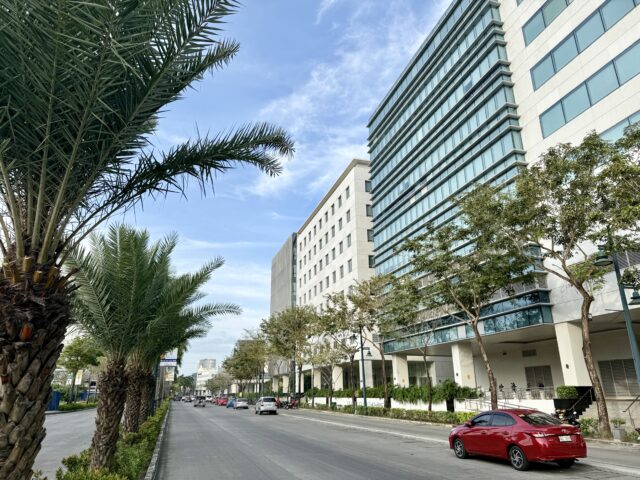
The 19-storey International Corporate Plaza offers varying office layout sizes, unique and first-in-Iloilo shared amenities, and even EV-ready parking slots

Property giant Megaworld, the leading office developer in Iloilo with a 46% share of total supply as per latest data from Colliers International, is once again redefining the landscape with a groundbreaking new tower packed with innovative, first-in-Iloilo features and amenities.
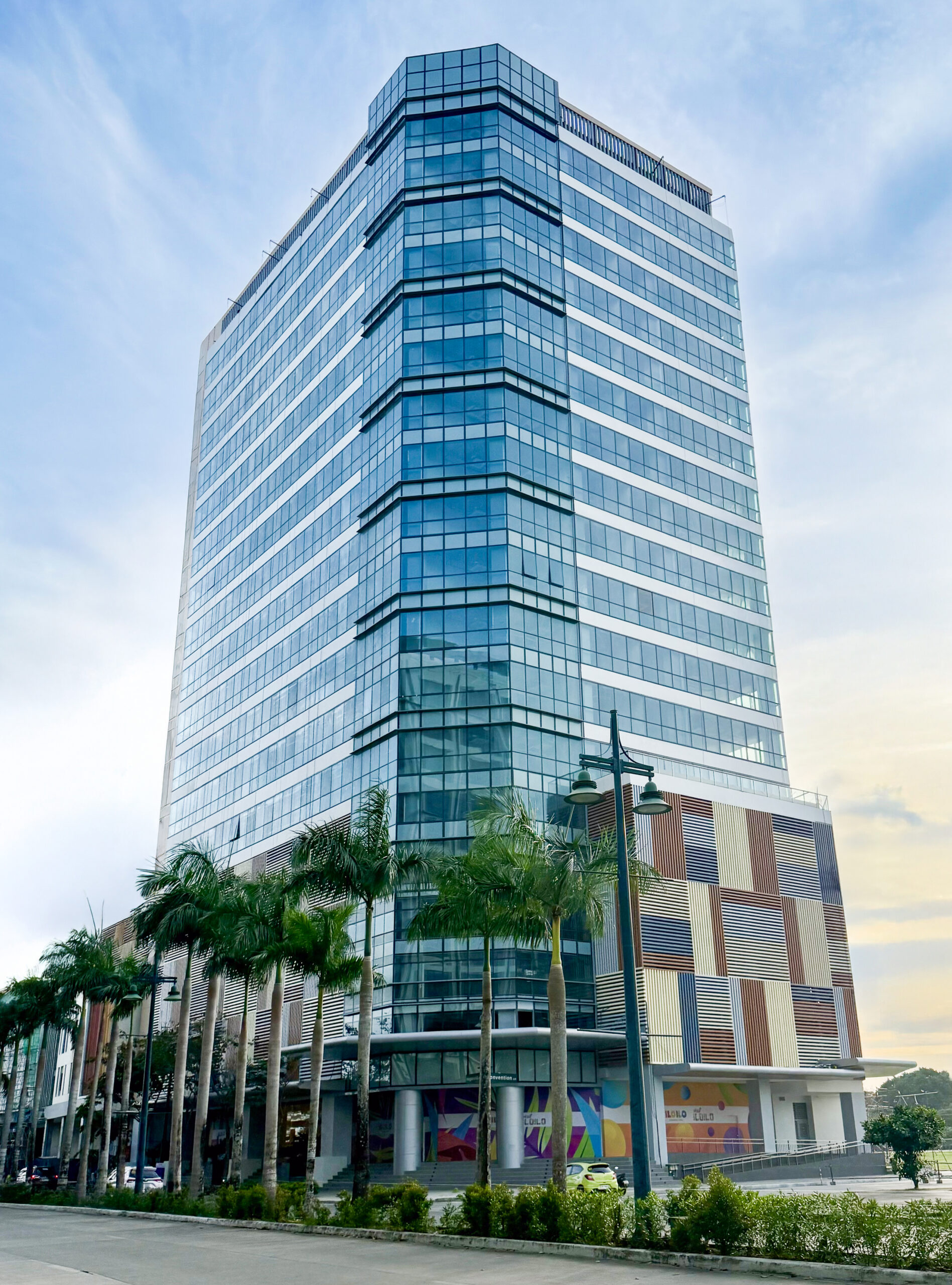
International Corporate Plaza (ICP) is Megaworld’s first office-for-sale development
in Iloilo Business Park

The 19-storey International Corporate Plaza is Megaworld’s first office-for-sale development and is strategically located at the financial district of  the company’s expansive 72-hectare Iloilo Business Park in Mandurriao, Iloilo City.

ICP offers 301 prime office units ranging from 26 sq.m. to 60 sq.m., catering to local businesses, entrepreneurs, and professional firms specializing in marketing, consultancy, and legal services. Notably, it will also house the Western Visayas regional office of the Philippine Economic Zone Authority (PEZA).

‘First in Iloilo’ amenities are available for use for office owners and their guests.

ICP introduces first-of-its-kind amenities in the Iloilo office market, including two boardrooms, three meeting rooms, co-working spaces, and breakout rooms. It also features an executive lounge, an elegantly designed lobby and hallways, and a roof deck garden that provides a refreshing escape with panoramic views of the bustling cityscape and Guimaras Island. It also boasts ample parking spaces with provisions for charging stations for electric vehicles (EVs).

More than its standout features, ICP serves as a catalyst for inclusive growth, providing local businesses, entrepreneurs and professionals with topnotch office space packed with amenities and access to modern conveniences including world-class accommodations such as Richmonde Hotel Iloilo and Courtyard by Marriott Iloilo as well as lifestyle destinations including Festive Walk Iloilo and Festive Walk Parade.

Meeting rooms of varying sizes and capacity are available for owners’ use for big
meetings.

The building is also 28 minutes away from the Iloilo International Airport, and 10-minutes walking distance from Iloilo Business Park Transport Hub. Tenants will also have access to all types of public transportation including PUJs, modernized jeepneys, shuttle service, Grab and taxis.

“Through the International Corporate Plaza, we aim to empower local businesses and professionals in Iloilo and from across the region with the opportunity to own premium office spaces in a prime location like Iloilo Business Park, combining investment value with top-tier amenities, seamless connectivity and utmost convenience. The International Corporate Plaza offers strong investment value, with property prices rising 25% since pre-selling began in 2019, reflecting high demand and growth potential in the Iloilo City office market,” says Jennifer Palmares – Fong, Head of Sales and Marketing, Megaworld Visayas.

Megaworld, the country’s biggest office developer and landlord, currently has over 150,000 sq.m. of office space in its portfolio in Iloilo. These office buildings are situated inside the 72-hectare Iloilo Business Park township and have become home to 12 multinational companies, mostly BPO firms, generating more than 36,000 jobs for Ilonggos.

Top-notch features such as the Executive Lounge provide the perfect venue for client
meetings.

Over the years, Megaworld has already completed 11 office buildings in Iloilo Business Park including One Global Place, One Fintech Place, One Techno Place, Two Global Place, Two Fintech Place, Two Techno Place, Three Techno Place, Richmonde Tower, Festive Walk Office 1 and 2, and Festive Walk Business Hub.

Megaworld is further expanding its office footprint in Iloilo with ICP, and the 12-storey Enterprise One. Another office building, the 12-storey Enterprise Two is also set for completion within the year.


Spotlight is BusinessWorld’s sponsored section that allows advertisers to amplify their brand and connect with BusinessWorld’s audience by publishing their stories on the BusinessWorld Web site. For more information, send an email to online@bworldonline.com.

Join us on Viber at https://bit.ly/3hv6bLA to get more updates and subscribe to BusinessWorld’s titles and get exclusive content through www.bworld-x.com.

Physical stores allow online shops to feel more ‘legit’

Having a physical store still matters to some online businesses because it helps them appear more ‘legit’ to buyers who want to see and experience the products in person, Mariel Ortiz-Luis Veluz, founder of Connect by the Park and Sewn Sandals, told BusinessWorld in an interview. “I still believe in physical stores,” she said. “It’s how I think you can represent your business in a more trustworthy or legal [way].”

Related article: https://www.bworldonline.com/bw-launchpad/2025/02/05/651106/concept-store-offers-flexible-retail-spaces-to-small-retailers/

Interview by Almira Martinez
Video editing by Jayson Mariñas

Philippines says its actions in South China Sea driven by national interest

PHILIPPINE COAST GUARD/HANDOUT VIA REUTERS

MANILA – China should recognize that the Philippines is an independent and sovereign state whose actions and decisions are driven entirely by national interest and not at the direction of other countries, Manila’s foreign ministry said on Monday.

The Philippines’ foreign ministry also said the “real issue is China’s refusal to abide by international law” and how its “illegal, coercive, aggressive and deceptive behavior at sea” have affected Filipino communities.

“We call on countries to be circumspect and to avoid actions and words that only contribute to tensions in the region,” it said in a statement responding to comments from China that Manila was being directed by external forces.

At a press conference on March 7, Chinese foreign minister Wang Yi said the Philippines’ actions in the South China Sea were not independent but part of a “screenplay written by external forces,” to smear China.

The Chinese embassy in Manila did not immediately respond to a request for comment on the foreign ministry’s statement.

The Philippines has embarked on what it calls a transparency initiative to shed light on China’s actions in the South China Sea, including embedding journalists on maritime patrols and resupply missions.

Its approach has resonated with allies, including the United States, who support the 2016 ruling by the Permanent Court of Arbitration that found China’s vast South China Sea claims had no legal basis. China rejects that finding. — Reuters

Trump says US talking to four different groups on sale of TikTok

A TikTok logo is displayed on a smartphone in this illustration taken Jan. 6, 2020. — REUTERS

 – U.S. President Donald Trump said on Sunday that his administration was in touch with four different groups about the sale of Chinese-owned social media platform TikTok, and that all options were good.

TikTok’s fate has been up in the air since a law requiring its owner ByteDance to either sell it on national security grounds or face a ban took effect on January 19. Mr. Trump, after taking office on January 20, signed an executive order seeking to delay by 75 days the enforcement of the law.

Asked if there was going to soon be a deal on TikTok, Mr. Trump told reporters aboard the Air Force One, “it could.”

“We’re dealing with four different groups, and a lot of people want it … all four are good,” he added.

TikTok and ByteDance did not immediately respond to Reuters’ requests for comment outside of normal business hours.

The turmoil at TikTok has attracted several potential buyers, including former Los Angeles Dodgers owner Frank McCourt, who have expressed interest in the fast-growing business analysts estimate could be worth as much as $50 billion.

Mark Carney wins race to replace Trudeau as Canada’s prime minister

Source: By World Economic Forum - Flickr: Mark Carney - World Economic Forum Annual Meeting 2012, CC BY-SA 2.0, https://commons.wikimedia.org/w/index.php?curid=19542924
Source: By Policy Exchange – https://www.flickr.com/photos/policyexchange/19631517244/, CC BY 2.0, https://commons.wikimedia.org/w/index.php?curid=64192687

– Former central banker Mark Carney won the race to become leader of Canada’s ruling Liberal Party and will succeed Justin Trudeau as prime minister, official results showed on Sunday.

Mr. Carney will take over at a tumultuous time in Canada, which is in the midst of a trade war with longtime ally the United States under President Donald Trump and must hold a general election soon.

Mr. Carney, 59, took 86% of votes cast to beat former Finance Minister Chrystia Freeland in a contest in which just under 152,000 party members voted.

“There’s someone who’s trying to weaken our economy,” Mr. Carney said of Mr. Trump, spurring loud boos at the party gathering. “He’s attacking Canadian workers, families, and businesses. We can’t let him succeed.”

“This won’t be business as usual,” Mr. Carney said. “We will have to do things that we haven’t imagined before, at speeds we didn’t think possible.”

Mr. Trudeau announced in January that he would step down after more than nine years in power as his approval rating plummeted, forcing the ruling Liberal Party to run a quick contest to replace him.

“Make no mistake, this is a nation-defining moment. Democracy is not a given. Freedom is not a given. Even Canada is not a given,” Mr. Trudeau said.

Mr. Carney, a political novice, argued that he was best placed to revive the party and to oversee trade negotiations with Trump, who is threatening additional tariffs that could cripple Canada’s export-dependent economy.

Mr. Trudeau has imposed C$30 billion of retaliatory tariffs on the United States in response to tariffs Trump levied on Canada.

“My government will keep our tariffs on until the Americans show us respect,” Mr. Carney said.

Mr. Carney’s win marks the first time an outsider with no real political background has become Canadian prime minister. He has said his experience as the first person to serve as the governor of two G7 central banks – Canada and England – meant he was the best candidate to deal with Mr. Trump.

The prospect of a fresh start for the Liberal Party under Mr. Carney, combined with Mr. Trump’s tariffs and his repeated taunts to annex Canada as the 51st U.S. state, led to a remarkable revival of Liberal fortunes.


RALLY-AROUND-THE-FLAG MOMENT

At the start of 2025 the party trailed by 20 or more points but is now statistically tied with the official opposition Conservatives led by career politician Pierre Poilievre in several polls.

At a protest outside Canada’s Parliament building in Ottawa on Sunday, dozens of Canadians held up signs protesting Trump with no reference to domestic politics.

“There is a rallying-around-the-flag moment that we would never have predicted a year ago,” said University of British Columbia politics professor Richard Johnston. “I think it’s probably true as we speak that the Liberals have been saved from oblivion.”

Polls though indicate that neither the Liberals nor the Conservatives would be able to form a majority government. An election must be held by October 20.

Two Liberal Party sources said Carney would call an election in coming weeks, meaning one could take place much sooner.

Mr. Carney could legally serve as prime minister without a seat in the House of Commons but tradition dictates that he should seek to win one as soon as possible.

Liberals sought to compare Conservative leader Poilievre to Mr. Trump in a recent advertisement. Poilievre in turn ramped up attacks on Mr. Carney on Sunday. –

UK seeks to scale back reviews that delay new housing projects

STOCK PHOTO | Image by Pierre Blaché from Pixabay

 – Britain set out plans late on Sunday to scale back lengthy public reviews that can delay housing developments, as part of its goal to get 1.5 million homes built in the next five years.

The housing ministry said it would hold a consultation over reducing the number of public agencies and civic groups whose views must be sought over new housing, including groups which represent sporting organizations, theatres and historic gardens.

Planning delays are widely blamed by housebuilders and government for the inability of new construction to keep up with population growth and for contributing to broader economic weakness.

In 2023, 193,000 homes were built across the United Kingdom and the construction industry has not exceeded the 300,000-a-year pace needed to meet the new government’s target since 1977.

“We need to reform the system to ensure it is sensible and balanced, and does not create unintended delays,” Deputy Prime Minister Angela Rayner said.

Further legislation on planning reforms is due later in the week.

Britain’s housing and local government ministry, which Rayner heads, said more than 25 agencies now had a legal right to be consulted on housing developments, some of which often objected by default or insisted on expensive modifications.

The ministry cited the example of how the conversion of an office block into 140 apartments was delayed after a sports body judged insufficient expert advice had been sought over whether a 3-metre-high (10 ft) fence was enough to protect residents from cricket balls struck from an adjacent sports ground.

Around 100 such disputes a year had to be resolved by ministers, the government said.

Under the new proposals, local planning authorities would also be instructed to narrow the basis on which other bodies could object and stick more closely to standard rules and deadlines. – Reuters

North Korea calls US-South Korea drills a dangerous provocative act

MICHA BRANDLI-UNSPLASH

 – The North Korea Foreign Ministry said U.S.-South Korea joint military exercises are “a dangerous provocative act,” state media KCNA reported on Monday.

Annual South Korean and U.S. military exercises called Freedom Shield are due to begin on Monday and run until March 20.

They aim to strengthen the readiness of the alliance for threats such as North Korea, the South Korean military said earlier.

North Korea has traditionally called for these joint exercises to be called off, branding them as a prelude to invasion.

“This is a dangerous provocative act of leading the acute situation on the Korean peninsula, which may spark off a physical conflict between the two sides by means of an accidental single shot, to the extreme point,” the Foreign Ministry said, according to KCNA.

The drills will harm U.S. security, the ministry added. – Reuters

Trump won’t predict whether recession could result from his tariff moves

RAWPIXEL

 – President Donald Trump declined to predict whether the U.S. could face a recession amid stock market concerns about his tariff actions on Mexico, Canada and China over fentanyl.

The Republican president, whose trade policies have rekindled fears of worsening U.S. inflation, was asked if he expected a recession this year in a Fox News interview broadcast on Sunday.

“There is a period of transition, because what we’re doing is very big. We’re bringing wealth back to America,” Mr. Trump told the “Sunday Morning Futures” program. “It takes a little time, but I think it should be great for us.”

Tariffs have been one key concern for investors, as many believe they can harm economic growth and be inflationary. While Mr. Trump acknowledged as early as February 2 that his sweeping tariffs could cause some “short-term” pain for Americans, his own advisers have repeatedly downplayed any negative impact.

“Absolutely not,” Commerce Secretary Howard Lutnick said on Sunday. “There’s going to be no recession in America.”

Mr. Lutnick did acknowledge that the Trump tariffs would lead to higher prices for U.S. consumers on some foreign-made goods, but said American products will get cheaper.

“He’s not going to step off the gas,” Mr. Lutnick said on NBC’s “Meet the Press.”

Mr. Trump imposed new 25% tariffs on imports from Mexico and Canada last Tuesday, along with fresh duties on Chinese goods, after he declared the top three U.S. trading partners had failed to do enough to stem the flow of deadly fentanyl and its precursor chemicals into the United States.

Two days later, he exempted many imports from Mexico and some from Canada from those tariffs for a month, the latest twist in a fluctuating trade policy that has whipsawed markets and fanned worries about U.S. inflation and growth.

It was the second time in two months that Mr. Trump has walked back fentanyl-related tariffs on the U.S. neighbors.

“If fentanyl ends, I think these will come off. But if fentanyl does not end, or he’s uncertain about it, he will stay this way until he is comfortable,” Mr. Lutnick said.

White House officials say Canada and Mexico are conduits for shipments of fentanyl – which is 50 times more potent than heroin – and its precursor chemicals into the U.S. in small packages that are often not inspected.

Public data shows 0.2% of all fentanyl seized in the U.S. comes from the Canadian border, while the vast majority arrives via Mexico. In a concession to Mr. Trump, Canada appointed a new fentanyl czar last month.

The exemptions for the two largest U.S. trading partners expire on April 2, when Trump has threatened to impose a global regime of reciprocal tariffs on all U.S. trading partners.

Kevin Hassett, director of the White House’s National Economic Council, said on ABC’s “This Week” that he hoped the drug-related tariffs can be resolved by the end of the month so the focus can be on imposing the reciprocal measures.


TRADE CONFUSION

Seesaw tariff announcements have unnerved Wall Street as investors say flip-flopping moves by the Trump administration to roll back levies on trading partners are causing confusion rather than bringing relief.

The Trump trade policies have raised fears of trade wars that could slam economic growth and raise prices for Americans still smarting from years of high inflation.

China said it would “resolutely counter” pressure from the United States on the fentanyl issue after Trump imposed tariffs of 20% on all imports from China.

Democratic senators from two border states criticized Trump’s tariff policy as inconsistent and irresponsible.

“These broad, indiscriminate and on-again, off-again tariffs don’t help anyone. They don’t help farmers. They don’t help auto workers. They’re a mistake,” U.S. Senator Adam Schiff of California said on ABC.

“Pounding Canada as if they’re the exact same thing as China – it just creates this chaotic feeling,” U.S. Senator Elissa Slotkin, of Michigan, said on NBC.

Mr. Trump said he put a hold on tariffs on some goods last week because, “I wanted to help Mexico and Canada,” according to the “Sunday Morning Futures” interview, which was taped on Thursday.

The three countries are partners in a North American trade pact that was renegotiated by Mr. Trump during his first White House term.

Yet Mr. Trump also told the Fox News program that those 25% tariffs “may go up” and he said on Friday that his administration could soon impose reciprocal tariffs on Canadian lumber and other products.

Separately, U.S. tariffs of 25% on imports of steel and aluminum will take effect as scheduled on Wednesday, Mr. Lutnick said during the interview. Canada and Mexico are both top exporters of the metals to U.S. markets, with Canada in particular accounting for most aluminum imports. – Reuters

US open to minerals partnerships with Democratic Republic of Congo

STOCK PHOTO | Image by DIEGO EFRAIN CADILLO TRUJILLO from Pixabay

The United States is open to exploring critical minerals partnerships with Congo, the State Department said in a statement to Reuters on Sunday, after a Congolese senator contacted U.S. officials to pitch a minerals-for-security deal.

Democratic Republic of Congo, which is rich in cobalt, lithium and uranium among other minerals, has been fighting Rwanda-backed M23 rebels who have seized swathes of its territory this year.

Talk of a deal with the U.S. – which is also in discussions with Ukraine over a minerals pact – has circulated in Kinshasa for weeks.

“The United States is open to discussing partnerships in this sector that are aligned with the Trump Administration’s America First Agenda,” a State Department spokesperson said, noting that Congo held “a significant share of the world’s critical minerals required for advanced technologies.”

The U.S. has worked “to boost U.S. private sector investment in the DRC to develop mining resources in a responsible and transparent manner,” the spokesperson said.

Kinshasa has not publicly detailed a proposal, instead saying it is seeking diversified partnerships.

“There is a desire for us to diversify our partners,” Congolese government spokesman Patrick Muyaya said last week, adding there were “daily exchanges” between Congo and the U.S.

“If today American investors are interested in coming to the DRC, obviously they will find space … DRC has reserves that are available and it would also be good if American capital could invest here,” he said.

Andre Wameso, deputy chief of staff to Congolese President Felix Tshisekedi, travelled to Washington earlier this month for talks on a partnership, two sources told Reuters.

On February 21, a lobbyist representing the Congolese Senator Pierre Kanda Kalambayi sent letters to U.S. Secretary of State Marco Rubio and other American officials inviting U.S. investment in Congo’s vast mineral resources in exchange for helping to reinforce “regional stability”.

That initiative was not sanctioned by the broader Congolese government or presidency, according to two Congolese officials. There are, however, several initiatives underway, albeit in nascent stages, sources from Congo’s presidency, its ministry of mines, and from Washington told Reuters.

A Congolese delegation had been scheduled to meet with the House Foreign Affairs Committee on March 6, but cancelled the meeting at short notice, according to two sources. – Reuters

Dollar reserves rise to $107B in Feb.

A customer holds his US dollar notes at a money changer in Manila. — REUTERS

By Luisa Maria Jacinta C. Jocson, Reporter

THE Philippines’ dollar reserves rose to $106.65 billion as of end-February, according to the Bangko Sentral ng Pilipinas (BSP).   

Preliminary data from the central bank showed gross international reserves (GIR) rose by 3.3% month on month from $103.27 billion as of end-January.

This was also 4.6% higher than $101.99 billion in the same period a year ago.

The dollar reserves were also the highest in three months or since the $108.49 billion posted in November.

Ample foreign exchange buffers protect the country from market volatility and ensure that it is capable of paying its debts in the event of an economic downturn.

“The month-on-month increase in the GIR level reflected mainly the National Government’s (NG) net foreign currency deposits with the BSP, which include proceeds from its issuance of Republic of the Philippines global bonds,” the central bank said.

In January, the NG raised $3.3 billion from the sale of 10-year and 25-year fixed-rate global bonds and seven-year euro sustainability bonds. It was NG’s first global bond offering for the year.

BSP data showed the level of dollar reserves as of end-February is enough to cover about 3.8 times the country’s short-term external debt based on residual maturity.

It is also equivalent to 7.5 months’ worth of imports of goods and payments of services and primary income.

The rise in dollar reserves was also due to the “upward valuation adjustments in the BSP’s gold holdings due to the increase in the price of gold in the international market, and net income from the BSP’s investments abroad.”

The value of the central bank’s gold holdings went up by 2.5% to $12.5 billion at end-February from $11.75 billion a month ago. It likewise jumped by 16.6% from $10.34 billion in the same period in 2024.

Foreign investments stood at $89.41 billion as of end-February, up by 3.5% from $86.37 billion as of end-January and by 3.4% from $86.45 billion a year prior.

Meanwhile, net international reserves increased by 3.3% to $106.6 billion from $103.2 billion as of end-January.

Net international reserves refer to the difference between the BSP’s reserve assets (GIR) and reserve liabilities, including short-term foreign debt, and credit and loans from the International Monetary Fund (IMF).

The BSP’s reserve assets also include foreign investments, foreign exchange, reserve position in the IMF and special drawing rights (SDR).

Reserves with the IMF dipped by 0.2% to $670.2 million as of end-February from $671.3 million a month earlier. It also declined by 10.9% from $752.5 million in the year-ago period.

SDRs — or the amount which the Philippines can tap from the IMF’s reserve currency basket — edged higher by 0.2% to $3.74 billion from $3.73 billion in the previous month. Year on year, it dropped by 1.1% to $3.78 billion.

“The increase in GIR reflects strong external buffers, which are crucial for shielding the economy against external shocks,” Philippine Institute for Development Studies Senior Research Fellow John Paolo R. Rivera said.

Rizal Commercial Banking Corp. Chief Economist Michael L. Ricafort said the rise in GIR was due to the NG’s latest global bond issuance and continued gains in gold holdings.

“Gold holdings continued to improve, largely reflecting and consistent with the 2.1% monthly gain in world gold prices, which again posted new record highs recently partly due to some flight to safe havens such as gold amid the recent global market volatility,” he said.

Mr. Ricafort also noted the increase in foreign investments amid gains in the prices of US Treasuries in February.

“The benchmark 10-year US Treasury yield already eased to 4.3%, among the lowest in three months,” he added.

For the coming months, Mr. Ricafort said the GIR could be supported by the continued growth in overseas Filipino worker (OFW) remittances, business process outsourcing (BPO) revenues, exports and the quicker recovery in foreign tourism revenue.

“OFW remittances are also expected to remain resilient, helping bolster reserves. BPO and tourism can generate foreign exchange inflows that can strengthen GIR,” Mr. Rivera added.

Oikonomia Advisory and Research, Inc. economist Reinielle Matt M. Erece likewise said the GIR will be driven by “strong OFW remittances, foreign investments, a weak peso, and trade diversion.”

The BSP is expecting a GIR level of $110 billion for this year.

Mr. Rivera said the central bank’s forecast for dollar reserves this year is attainable, though this would depend on the BSP’s intervention in the FX market.

“A depreciating peso could lead to higher import costs, increasing demand for the US dollar which may put pressure on reserves. However, a weaker peso also benefits dollar-earning sectors, which could offset some of the risks,” Mr. Rivera said.

“A higher import bill due to infrastructure projects and rising oil prices could widen the deficit, requiring the BSP to use reserves to stabilize the peso,” he added.

The peso closed at P57.206 per dollar on Friday, strengthening by 11.4 centavos from its P57.32 finish on Thursday. This was the peso’s best finish in nearly five months or since its P57.205-a-dollar close on Oct. 11, 2024.

“A weak peso is not necessarily disadvantageous, as it makes exports more competitive in international markets. Higher exports mean more dollar inflows,” Mr. Erece said.

“Add to that the ongoing trade conflict among large producers, which can be an opportunity for the Philippines to be an alternative trading partner for other countries.”

BSP could resume easing cycle in April — analysts

BUILDINGS are seen in Manila’s business district. — PHILIPPINE STAR/RYAN BALDEMOR

THE BANGKO SENTRAL ng Pilipinas (BSP) is expected to resume its rate-cutting cycle as early as April following slower-than-expected inflation in February, analysts said.

In a report, Pantheon Macroeconomics Chief Emerging Asia Economist Miguel Chanco said the “door is now wide open for the BSP to resume easing in April.”

“Given the low inflation environment, we see a possible policy rate cut at the next Monetary Board meeting in April,” Metropolitan Bank & Trust Co. (Metrobank) Research said.

Headline inflation sharply eased to 2.1% in February from 2.9% in January and 3.4% a year ago. This also marked the slowest inflation print in five months.

This brought average inflation to 2.5% in the first two months, well within the central bank’s 2-4% target.

Pantheon expects inflation to settle at 2.7% this year as risks to the inflation outlook are tilted to the downside.

Nomura Global Markets Research analysts Euben Paracuelles and Nabila Amani likewise expect inflation to average 2.7% this year.

On the other hand, Metrobank’s full-year inflation forecast is at 3.1% “barring major supply-side shocks.”

The central bank said the risks to the inflation outlook have become “broadly balanced” for this year and the next. The BSP expects inflation to average 3.5% this year.

Analysts said the within-target inflation outlook will allow the BSP to continue easing.

Mr. Chanco said their baseline view calls for a rate cut at the Monetary Board’s April 3 meeting.

“Moreover, we’re keeping to our view that the BSP will cut by a total of 100 basis points (bps) by yearend to 4.75%, one more 25-bp cut than the consensus currently expects,” he added.

Nomura expects a total of 75 bps worth of cuts this year through the Monetary Board’s meetings in April, August and December.

“BSP still assesses the pass-through from weakening FX (foreign exchange) as limited and has ample FX reserves to intervene and stem currency volatility, and we think it will maintain a laissez-faire approach to FX policy,” it added.

Despite keeping the benchmark rate steady at 5.75% at its February policy review, BSP Governor Eli M. Remolona, Jr. has said they are still in easing mode.

He signaled the possibility of up to 50 bps worth of rate reductions this year.

The central bank slashed borrowing costs by a total of 75 bps last year through increments of 25 bps at its last three meetings of the year.

GlobalSource Partners country analyst Diwa Guinigundo said the lower February inflation will have a “material bearing on both the (BSP’s) baseline and risk-adjusted inflation forecasts for 2025 and 2026 unless a big surprise counterweights that favorable factor.”

“Anchored on this, and assuming that the balance of risks starts to twist towards the midpoint, or the downside, the BSP may be expected to resume easing its monetary policy stance.”

However, Mr. Guinigundo said “some precaution is critical.”

“We cannot dismiss the brewing price pressures in the US as a result of the Trumpian higher tariff (more expensive imports), tax cuts (more spending) and strict immigration policies (higher labor costs). They are all potentially inflationary.”

Reuters reported another reprieve of levies aimed at Mexico and Canada announced by President Donald J. Trump on Thursday offered little relief to whiplashed markets.

The exemption expires on April 2 when Mr. Trump said he will impose reciprocal tariffs on all US trading partners.

“The US Fed would then be more careful in its easing stance such that if the BSP exercises its flexibility to ease monetary policy at least twice during the year, any reduction in interest rate differential with the US could trigger capital flows and weakness in the peso,” Mr. Guinigundo said.

Fed Chair Jerome H. Powell said on Friday the US central bank will be in no rush to cut rates while it waits for more clarity on how policies of the new Trump administration affect the economy.

Mr. Guinigundo said US inflation could “act up again” as global oil markets may be disturbed.

“Indeed no one wins in a trade war, and higher though elusive inflation could be a silent proof,” he added. — Luisa Maria Jacinta C. Jocson

World Bank says PHL can boost revenues by expanding its VAT base

EMPLOYEES arrange products inside a grocery store in Quezon City. The Philippines’ 12% value-added tax rate is relatively higher compared with Southeast and East Asian countries, an analyst said. — PHILIPPINE STAR/MIGUEL DE GUZMAN

By Aubrey Rose A. Inosante, Reporter

THE PHILIPPINES can boost its revenue collections by expanding its value-added tax (VAT) base and improving tax administration, the World Bank said.

In an e-mail interview with BusinessWorld, World Bank Country Director for the Philippines, Malaysia, and Brunei Zafer Mustafaoğlu said the Philippine government has “substantial space to increase VAT revenues by improving compliance and reducing exemptions and special rates.”

“The government could generate significant reforms by improving tax administration and taking steps to broaden the VAT base, through amendments in tax policy,” Mr. Mustafaoğlu said on Feb. 18.

VAT, an indirect tax that can be passed on to buyers, is a form of sales tax imposed on sale, barter, exchange, or lease of goods or properties and services.

Mr. Mustafaoğlu said the country should also address tax policy gaps and opportunities to improve tax administration.

Sought for comment, Department of Finance (DoF) Secretary Ralph G. Recto told BusinessWorld: “We are looking for ways to expand VAT base and that includes VAT on digital services among others.”

President Ferdinand R. Marcos, Jr. last October signed Republic Act No. 12023, which imposes a 12% VAT on digital services providers (DSPs), both resident and nonresident.

About P7.25 billion is expected to be collected from this law this year, and another P21.37 billion in 2026, and P26.27 billion in 2029, the DoF said.

“Yes, we’re improving tax administration. Tax administration also includes our digitalization program. I don’t agree with the International Monetary Fund to VAT senior citizens. It is not in our value system,” Mr. Recto said.

In a 2022 report, the IMF had suggested the Philippine government increase VAT revenue by removing exemptions and zero-ratings, including those for senior citizens, who are entitled to a 12% VAT exemption granted by the Expanded Senior Citizens Act.

Meanwhile, Minimal Government Thinkers (Manila) President Bienvenido S. Oplas, Jr. said that while he agrees with the World Bank that the Philippines should broaden the tax base, he believes that the VAT rate should be reduced instead.

“But for me, broaden the VAT base by reducing the rate from 12% with plenty of exempted sectors to 7-8% with zero exempted sector except raw agriculture and fishery products,” Mr. Oplas said.

The Philippines’ 12% VAT rate is relatively higher compared with Southeast and East Asian countries, he said.

China imposes 13% VAT for general goods sales and imports, this was followed by Indonesia, which is at 12%, and Cambodia, Malaysia, Vietnam (standard rate), and Laos at 10%. Singapore’s VAT is at 9%, while Thailand has a 7% rate.

Myanmar has no VAT but imposes a commercial tax ranging from 0-15% as a turnover tax on goods and services.

Other countries such as South Korea levy a 10% VAT on goods and services, while Japan’s VAT is at 10%. Hong Kong does not have VAT, goods and services tax or sales tax.

Eleanor L. Roque, tax principal of P&A Grant Thornton, said almost all the transactions are already subject to VAT, and increasing taxes affects the most vulnerable.

“Other exempt transactions like sale of certain food items are exempted because increasing their cost due to VAT is detrimental to our vulnerable population,” she told BusinessWorld via an e-mailed statement.

Ms. Roque suggested that regulators should focus on improving taxpayer compliance and simplifying tax rules.

She also argued that the Philippines is not “lesser taxed” compared with its Association of Southeast Asian Nations neighbors.

Meanwhile, Jose Enrique “Sonny” A. Africa, executive director at think tank IBON Foundation, said expanding the VAT base would distort consumption patterns of the low-income households.

“Especially in the context of the Philippines with such wide gaps in income and wealth, the design of the tax system should be rigorously guided by equity considerations and not just by revenue collection,” he said.

He noted that the government’s reliance on VAT has significantly increased as it accounts for 18.9% of BIR revenues in 2023 from 7.9% in 1989.

Mr. Africa said the government should instead impose higher tax rates on luxury goods like luxury cars, jewelry, designer goods and other high-end products in the “inherently regressive VAT system.”

However, he noted the government should grant VAT exemptions for food and agricultural products, educational services, healthcare, specific goods for seniors and persons with disability, and reading materials.