Home Blog Page 1859

MWSS calls dry-season water supply ‘adequate’
PHILSTAR FILE PHOTO

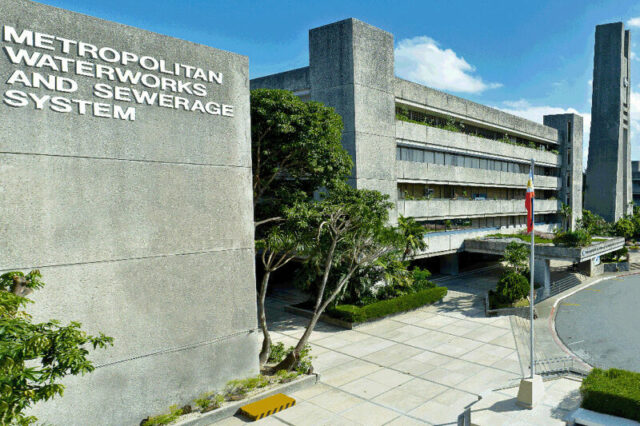
THE Metropolitan Waterworks and Sewerage System (MWSS) said the water supply is expected to be adequate for the upcoming dry season.

Compared to last year, water levels at Angat Dam were higher and even above the normal high-water level, according to Patrick James B. Dizon, manager of the MWSS water and sewerage management division.

“This indicates that the water supply will remain adequate throughout the summer and until the end of the year,” he said via Viber on Monday.

On Monday, Angat Dam water was at 213.47 meters, down from the 213.60-meter reading the previous day, according to the government weather service, known as PAGASA.

These readings were higher than the normal high-water level of 212 meters.

“Last year, on this day, (the water level) at the Angat reservoir was 205 meters, and last year, there was no problem with water supply. So based on the elevation today, we are projecting that we will have sufficient water for the duration (of the dry season),” Mr. Dizon said.

Angat Dam is the main source of water for Metro Manila, accounting for about 90% of the capital’s potable water.

The MWSS is tasked with ensuring uninterrupted supply and distribution of potable water and maintenance of sewerage systems in its service area in Metro Manila and parts of Cavite and Rizal.

For March, Mr. Dizon said that Metro Manila has a water allocation of 52 cubic meters per second from the National Water Resources Board.

Water concessionaires in Metro Manila said their plants and alternate water sources are in place.

“The MWSS took proactive steps earlier this year to increase the water level in Angat Dam, ensuring sufficient supply for the summer months,” Jennifer C. Rufo, head of corporate communications of Maynilad Water Services, Inc., said in a Viber message.

Ms. Rufo said that Maynilad has alternate water sources, such as the Laguna de Bay, deep wells, recycled used water, and dams of the National Irrigation Administration in Cavite, to augment supply from Angat.

“Given these preparations, we don’t foresee service interruptions due to water shortages. Any service interruptions that may occur would be due to maintenance activities necessary to sustain service reliability,” she said.

Meanwhile, Manila Water Co., Inc., said it will assist the Bureau of Fire Protection, especially during the dry season, by maintaining 3,294 fire hydrants in the east zone and parts of Rizal as well as four purple hydrants at some of its sewage treatment plants.

The company also has treatment plants and pumping stations to provide additional supply, alongside its aggressive leak detection and repair activities. — Sheldeen Joy Talavera

Banana industry competitiveness eroding as PHL loses position as top supplier to China

BW FILE PHOTO

By Kyle Aristophere T. Atienza, Reporter

THE displacement of the Philippines by Vietnam as the top banana supplier to China reflects the Philippine banana industry’s declining competitiveness, as well as weak Chinese demand and the impact of plant diseases, analysts and agriculture industry officials said.

Rizal Commercial Banking Corp. Chief Economist Michael L. Ricafort said China’s banana imports last year declined by about 4%, though Vietnam grabbed more market share due to its “lower labor costs and overall cost of living that led to lower prices.”

The International Trade Centre, an arm of the World Trade Organization, reported that China’s banana imports from the Philippines hit a 15-year low in 2024 of 463,306 metric tons. Vietnam’s banana exports to China, meanwhile, rose 24% to 625,166 MT.

Mr. Ricafort cited Vietnam’s proximity to China, which helps cut logistics costs in the face of high fuel prices.

“I think the decline is a result of a combination of the effects of the sigatoka and Panama plant disease and emergence of competing suppliers like Vietnam, which is very competitive and enjoys lower banana tariffs,” Federation of Free Farmers National Director Raul Q. Montemayor said via Viber. 

Philippine banana exports overall fell 2.97% to 2.28 MT in 2024, ceding its position as the third-leading banana exporter.

The Food and Agriculture Organization (FAO) at that time noted that Philippine supplies continued to be affected by “the spread of TR4,” a variety of Panama disease or fusarium wilt.

The Tropical Race 4 strain, a soil-borne fungal disease that deprives bananas of minerals, nutrients, and moisture, was first detected in Davao City in 2009 and still threatens the Cavendish banana, the main export variety.

“Geopolitics and competitiveness has a lot to do with Philippines losing its market share,” according to Philippine Chamber of Commerce and Industry Chairman George T. Barcelon, former chairman of the Philippine Exporters Confederation, Inc. He did not elaborate.

Mr. Ricafort said geopolitical risks are also playing a part due to ongoing tensions between the Philippines and China in the South China Sea, which Beijing claims almost in its entirety.

“The dispute partly led to lower demand for Philippine exports such as bananas,” he said. 

China is the Philippines’ largest source of imports and the second-biggest market for exports. Two-way trade hit $41 billion in 2023. 

Mr. Ricafort cited the flare-up of tensions in 2012, when China imposed what industry representatives called “unbelievably” tight quarantine rules for Philippine fruit products, with Beijing allegedly detecting mealy bugs in Philippines fruit.

“Whenever there were tensions in the past, China would resort to phytosanitary requirements to prevent some Philippine fruit exports to China, causing Philippine products to rot in ports,” he said.

The quarantine restrictions followed a standoff at Scarborough Shoal, although government officials said at the time that phytosanitary issues had surfaced even before the conflict.

“Panama disease is more manageable than the loss of warmer bilateral relations between the Philippines and China, which is driven by the geopolitical dynamics brought about by the Taiwan issue that pits the US and its allies against China,” according to retired agriculture professor Roy S. Kempis, who heads the Center for Business Innovation at Angeles University Foundation.

“The Philippines is directly on the receiving end as well as a victim of collateral damage,” he said via Viber. “While we have the best tasting bananas in the world, the reality is, this can be ignored by China for geopolitical vengeance and gain.”

Mr. Kempis said moving forward, the logical step is to find alternative markets for Philippine bananas.

Mr. Ricafort said another key market for Philippine bananas is South Korea, with which Manila recently signed a free trade agreement.

The deal allows the Philippines to export fresh bananas to South Korea at zero duty by January 2028, “with tariffs starting at 24% upon entry, falling to 18% by January 2025,” according to the Department of Trade and Industry. 

Philippine banana market share in South Korea fell 11 percentage points between January and August 2024.

The FAO said in January that Philippine exports to China and Japan declined last year due to a shortfall in domestic supply, noting that only 51,000 hectares out of the 89,000 hectares of land available for banana cultivation were operational.

$1-B World Bank loan deal due for signing in July

REUTERS

THE PHILIPPINES is set to sign in July a $1-billion loan agreement with the World Bank to support its sustainable agriculture transformation program.

The Department of Agriculture (DA) issued the statement after a meeting between Secretary Francisco P. Tiu Laurel, Jr. and World Bank Country Director Zafer Mustafaoglu on Feb. 10.

The signing of the $1-billion Philippine Sustainable Agricultural Transformation (PSAT) loan program set for July “coincides with President Ferdinand Marcos, Jr.’s fourth State of the Nation Address,” the DA said in a statement.

The five-year PSAT initiative, scheduled for launch in August, seeks to strengthen the agri-fishery sector by providing targeted support to agri-food systems, including climate-responsive strategies, policy reforms, and enhanced fiscal management.

“As the Philippines’ first project under the World Bank’s Program-for-Results (PforR) financing framework, PSAT aims to improve the efficiency of government spending while ensuring sustainable outcomes by building institutional capacity and strengthening governance,” the DA said.

Mr. Laurel and Mr. Mustafaoglu also discussed a $15-million grant funded by the UK for technical assistance that will help the DA implement the transformation program by “enhancing internal audits, evaluating resource use alternatives, assessing sectoral transformation, and expanding the availability of improved planting materials for high-value crops.”

“This supplementary funding, processed through the Philippine government system, will be endorsed by the Department of Finance and the National Economic and Development Authority through the Development Budget Coordination Committee,” the DA said. — Kyle Aristophere T. Atienza

P704.55-M Puerto Galera cruise terminal deal awarded to Ormoc-based contractor

DOT PHOTO

THE Philippine Ports Authority (PPA) said a construction company based in Ormoc City won the P704.55-million contract to build a new cruise terminal in Puerto Galera. 

In a notice of award dated Feb. 26, the PPA awarded the contract to Premium Megastructures, Inc., which was the low bidder, according to the PPA bids and awards committee.

The PPA said 11 companies bought bid documents for the cruise ship project but only 10 submitted bids. The other bidders were MAC Builders Corp.; Khan Kon Chi Construction and Development Corp.; WTG Construction and Development Corp.; Sunwest, Inc.; SB Construction Corp.; Goldridge Construction and Development Corp.; Luzviminda Engineering; Bemkar Construction and Supply; and UKC Builders, Inc.

The port regulator issued the bid invitation for the project in December. In its bid notice, the PPA said the winning contractor is required to build the project at the Poblacion site in Puerto Galera within 780 days.

The PPA’s website lists the Ports of Currimao in Ilocos Norte, Salomague in Ilocos Sur, as well as facilities in Manila, Bohol, and El Nido, Palawan as currently equipped to accommodate cruise vessels. — Ashley Erika O. Jose

Safeguard duty probe into cement imports launched

PHILSTAR FILE PHOTO

THE Tariff Commission (TC) said on Tuesday that it launched formal proceedings to determine whether to impose safeguard duties on imports of ordinary Portland cement and blended cement from various countries.

“(This follows the) receipt of the request from the Secretary of Trade and Industry and the complete case records,” the TC said in a notice.

“Relative thereto, a preliminary conference is hereby scheduled on March 13 at 10 a.m.,” it added.

Last month, the Department of Trade and Industry (DTI) issued an order imposing provisional safeguard duties of P400 per metric ton or P16 per 40-kilogram bag in the form of a cash bond on imports of ordinary Portland cement and blended cement.

According to Department Administrative Order No. 25-01, the provisional duties apply to those classified under AHTN Code Nos. 2523.29.90 and 2523.90.00.

They will be in force for 200 days from the date of issuance by the Bureau of Customs of a Customs Memorandum Order or Circular.

“This decision is based on the affirmative findings after conducting the preliminary safeguard measures investigation and considering the submissions of interested parties and pieces of evidence made available to the department,” the DTI said.

Citing findings from the period of investigation (PoI) between 2019 and to 2024, the DTI said that the market share of domestic cement producers decreased from almost 78% in 2019 to almost 68% in 2023.

Imports are estimated to have displaced Philippine-made cement, taking the 22% market share of imports in 2019 to 32% in 2023.

It resulted in the domestic industry’s declining sales, production, capacity utilization, profitability, and employment, the DTI said.

“The condition of the domestic industry worsened in 2023 when imports recorded their highest market share at 32% while the domestic industry shrank to the lowest level of sales,” it said.

“In addition, the domestic industry’s lowering of prices even with the rising cost of production to compete with the imports has impacted the domestic industry’s profitability, recording its first operating loss in the PoI,” it added.

Currently, the Philippines imposes an anti-dumping duty against cement imports from Vietnam, which accounted for 94% of cement imports in 2024. — Justine Irish D. Tabile

SteelAsia switches on Bulacan solar rooftop in decarbonization push

STEELASIA Manufacturing Corp. said it commissioned its first solar rooftop photovoltaic (PV) system at its Meycauayan steel plant in Bulacan.

“This solar project is a crucial step in reducing the company’s environmental impact while ensuring energy sufficiency across our operations,” the company said in a statement on Tuesday.

The 1.9-megawatt-peak solar rooftop PV system was installed in partnership with TotalEnergies ENEOS.

“With over 3,200 solar modules installed, the system will generate approximately 2,700 megawatt-hours of renewable electricity annually,” SteelAsia said.

The company is seeking to decarbonize its steel manufacturing operations.

“Two other plants — the Calaca green steel manufacturing plant and the Compostela, Cebu rolling mill — are already powered by geothermal energy,” it added.

SteelAsia currently operates four steel mills that have a total capacity of 2.5 million metric tons per year. These are Meycauayan Works, Calaca Works, Davao Works, and Compostela Works.

It is also constructing a green steel H beam plant in Lemery, Batangas, and will begin site development in Candelaria, Quezon for a second green steel H beam plant worth P30 billion. — Justine Irish D. Tabile

Exporters warned of tougher EU packaging rules

REUTERS

EXPORTERS will have 18 months to comply with the European Union’s (EU) new packaging and came into force on Feb. 11, the Department of Trade and Industry (DTI) said.

“Philippine exporters to the EU are strongly advised to ensure that their packaging materials are recyclable, reusable, and have the necessary proportion of recycled content in order to comply with the new EU PPWR,” the DTI said in an advisory on Monday.

“Exploring sustainable packaging options and comprehending compliance expectations may be substantially aided by careful coordination and collaboration with EU importers. Maintaining records to demonstrate compliance is recommended,” it added.

The DTI said that the new regulation will replace Directive 94/62/EC on packaging and packaging waste and aligns with the EU’s Circular Economy Action Plan.

“The PPWR will be applicable from Aug. 12, 2026, allowing stakeholders an 18-month transition period to adhere to the new regulations. The full implementation will be rolled out over the next 15 years,” the DTI said.

The new regulation harmonizes the packaging laws of EU member states to mitigate the adverse effects of packaging on human health and the environment.

“The primary objective of the regulation is to prevent and reduce packaging waste by promoting more reuse and refill systems. It seeks to make all packaging on the EU market recyclable in an economically viable way by 2030,” the DTI said.

“Additionally, the regulation aims to safely increase the use of recycled plastics in packaging, phase out hazardous and harmful substances such as per- and polyfluoroalkyl substances (PFAS), promote re-use, and decrease the use of virgin materials, ultimately putting the sector on track to achieve climate neutrality by 2050,” it added.

After its full application on Aug. 12, 2026, the European Commission is set to establish specific criteria and methods related to packaging on Jan. 1, 2028.

By Jan. 1, 2040, all packaging sold in the EU must be recyclable, with minimum content requirements for plastics. According to the DTI, packaging with recyclability of lower than 70% will be restricted.

On the same date, reusable packaging should only be used for transport packaging between sites of the same business or between different businesses within the same EU country.

For transport packaging for e-commerce, at least 40% should be reusable by 2030, and at least 70% by 2040, while grouped packaging must be at least 10% reusable by 2030 and 25% by 2040.

For alcoholic drinks and drinks excluding milk, wine, and some spirits, packaging should be at least 10% recyclable by 2030 and at least 40% by 2040. Cardboard packaging is excluded from all reuse targets.

By Jan. 1, 2035, packaging must be recyclable at a scale, while by Jan. 1, 2028, packaging may only enter the market if it has recyclability grades of A or B.

By 2040, the EU plans to further increase recycled content requirements for plastic packaging. — Justine Irish D. Tabile

PPP Center, Ilocos Norte sign infra promotion deal

LAOAG INTERNATIONAL AIRPORT — WIKIPEDIA

THE Public-Private Partnership (PPP) Center and Ilocos Norte province signed an agreement to boost the province’s infrastructure and support its agriculture and technology industries.

In a statement on Tuesday, the National Economic and Development Authority (NEDA) said the memorandum of agreement (MoA) aims to boost infrastructure development.

“By leveraging the strengths of both the public and private sectors, we can mobilize resources, enhance efficiency, and ensure long-term sustainability in our development efforts,” NEDA Secretary Arsenio M. Balisacan said.

The signing took place at the PPP Center office in Quezon City on Feb. 28.

NEDA said the MoA seeks to highlight the pipeline of PPP projects and support various stages of the PPP implementation process.

“I hope the activities outlined in the MoA and the lineup of proposed projects by the Provincial Government inspire other local government units and implementing agencies to explore PPPs as a means for rapid and sustainable economic transformation,” Mr. Balisacan said.

Under the agreement, the NEDA said plans include “reviving international flights to destinations such as China, Hong Kong, and Taiwan at Laoag International Airport” to boost the province’s tourism, economy, and improve linkages to international markets.

Governor Matthew J. Marcos Manotoc is hoping to attract airlines to Laoag International Airport for direct services to destinations like Honolulu.

“The partnership also includes policies to support the agriculture sector by empowering farmers through the organization of cooperatives to promote sustainable agricultural practices,” NEDA said.

Innovations in renewable energy, data centers, and manufacturing are also contemplated in the agreement. — Aubrey Rose A. Inosante

Revenue Regulations issued for corporate tax, VAT treatment under CREATE MORE law

President Ferdinand R. Marcos Jr. signs the Corporate Recovery and Tax Incentives for Enterprises to Maximize Opportunities for Reinvigorating the Economy (CREATE MORE) Act into law during a ceremony at Malacañan Palace, Nov. 11, 2024. — NOEL B. PABALATE/PPA POOL

THE Bureau of Internal Revenue (BIR) has released revenue regulations (RR) to implement reduced corporate income tax rates and value-added tax (VAT) procedures for registered business enterprises under the Corporate Recovery and Tax Incentives for Enterprises to Maximize Opportunities for Reinvigorating the Economy (CREATE MORE) Act.

The BIR released RR 007-2025 outlining the rules, which serve effectively as the law’s Implementing Rules and Regulations (IRR).

President Ferdinand R. Marcos, Jr. on Nov. 28, signed CREATE MORE into law, reducing the corporate income tax for registered business enterprises (RBEs).

Corporate income tax rates for domestic and foreign corporations classified as RBEs opting for the Enhanced Deductions Regime (EDR) were reduced to 20%.

Domestic and resident foreign corporations, in general, are taxed 25%, but those small domestic corporations with net taxable income not exceeding P5 million and total assets not exceeding P100 million are subjected to 20% corporate income tax.

In addition, taxpayers can now deduct input tax on VAT-exempt sales from their gross income under Section 34(C)(8) of the Tax Code.

In a separate regulation 009-2025, the BIR clarified the VAT treatment of domestic sales made by RBEs that are subjected to 12% VAT, unless exempt or zero-rated.

“The liability to pay and remit the VAT to the government rests with the buyer of the goods or services. Republic Act 12066 has shifted to the buyer this liability for local sales of RBEs,” the BIR said.

But the RBE-seller must collect and remit VAT when the buyer is not engaged in business.

The regulations also implemented no-location-based exemptions, with local sales within freeports, ecozones, or customs territories subject to VAT.

Revenue Regulations 010-2025 was also issued to update VAT rules.

These regulations clarify VAT zero-rating for goods or properties including export sales and transactions with qualified RBEs.

Under Section 5, the VAT-exempt transactions include “imports of fuel, goods, and supplies for international shipping and air transport operations.”

The regulations also laid out procedures for claiming VAT refunds and tax credits with a 90-day processing period.

“An amount to 5% of the total VAT collection of the BIR and the Bureau of Customs from the immediately preceding year shall be automatically appropriated annually and shall be treated as a special account in the General Fund or as trust receipts to fund claims for VAT refunds,” according to the regulations.

Meanwhile, the BIR also amended provisions on withholding tax rates and adjusting the basis of certain income payments via RR 005-2025.

The withholding tax rate on payments made by credit card companies to merchants has been reduced to 0.5% on the gross amounts paid for goods and services.

Similarly, the regulations impose a 0.5% withholding tax on the gross remittances by e-marketplace operators and digital financial services providers to merchants of goods and services sold through the platform. — Aubrey Rose A. Inosante

Philippine Air Force jet goes missing during ‘tactical operation’ in south

PHOTO SHOWS the exact fighter jet during an exercise last year. — PHILIPPINE STAR/WALTER BOLLOZOS

By Kenneth Christiane L. Basilio, Reporter

A PHILIPPINE Air Force fighter jet went missing during a “tactical night operation” in a southern Philippine province at midnight on Tuesday, a military official said, as search efforts were under way.

The FA-50 jet’s two-man crew lost contact with other aircraft involved in the military operation minutes before reaching the target area, where it was expected to provide air support for ground troops, air force spokesperson Ma. Consuelo N. Castillo told a news briefing.

She did not divulge any more details about the incident, citing security concerns.

The military had begun its search operations for the missing fighter jet, which lost contact over land. Its pilots were wearing locator beacons, but she did not disclose if they were emitting signals.

“This is the first major incident involving our fighter aircraft,” Ms. Consuelo said.

The Philippines bought 12 Korean-made FA-50 light fighter jets for a total of P18.9 billion in 2014, with deliveries starting the following year, as part of efforts to modernize its aging military arsenal. The jets are the Southeast Asian nation’s most advanced fighter aircraft in its inventory.

Manila is contemplating getting a dozen more as it seeks to finalize the deal’s term of reference, according to previous news reports.

There are no orders yet to ground the remaining FA-50s, Ms. Consuelo said.

Other military planes involved with the mission managed to safely return to Mactan Airbase in Cebu province, she added.

Also on Tuesday, the Philippine military spotted 260 Chinese ships within the country’s exclusive economic zone (EEZ) in February, spokesperson Francel Margareth Padilla-Taborlupa told the same news briefing.

There were two People’s Liberation Army Navy and nine Chinese coast guard vessels spotted at Scarborough Shoal, according to Philippine Navy Rear Admiral Roy Vincent T. Trinidad.

Philippine authorities also monitored a single Chinese navy ship and seven coast guard vessels at Second Thomas Shoal, he said at the same media briefing.

“Their persistent illegal presence in the West Philippine Sea blatantly disregards the 2016 arbitral tribunal ruling and infringes upon our sovereignty and sovereign rights,” said Ms. Taborlupa, referring to areas of the South China Sea within Manila’s 200-nautical mile EEZ.

The Chinese Embassy in Manila did not immediately reply to a Viber message seeking comment.

China claims sovereignty over almost the entire South China Sea, deploying an armada of coast guard vessels to protect what it considers its territory, hundreds of kilometers off its mainland. A United Nations-backed court based in The Hague in 2016 voided its claims for being illegal.

SC justice seeks return of P60-B PhilHealth funds from national Treasury

JUSTICE ANTONIO T. KHO, JR. — SC.JUDICIARY.GOV.PH

By Chloe Mari A. Hufana, Reporter

A PHILIPPINE Supreme Court (SC) associate justice on Tuesday called for a major overhaul of the Philippine Health Insurance Corp. (PhilHealth), including changes to its board, over its failure to fully implement mandated benefits for members.

During a court hearing on lawsuits questioning the transfer of P89.9 billion in the agency’s funds to the national Treasury, Justice Antonio T. Kho, Jr. called out the government for PhilHealth’s shortcomings, saying the burden should not fall on shortchanged members.

He also urged PhilHealth to ask President Ferdinand R. Marcos, Jr. to return the P60 billion in PhilHealth funds that were transferred to the national Treasury as unprogrammed funds, arguing that the funds should instead be used to expand benefits, improve services, and hire additional personnel to address the country’s healthcare needs.

“Probably, it’s time to overhaul PhilHealth and change the board for not complying with what the law requires,” he told Health spokesman Albert Francis E. Domingo during the third oral arguments at the Supreme Court building in Manila.

“It’s not a person’s fault for not availing [himself] all of these benefits,” Mr. Kho told the hearing. “Apparently, in your own words, it’s the fault of the administration, the last administration, or the previous administration, and it’s the fault of the PhilHealth board. Let’s not make people suffer because the money is there,” he added in mixed English and Filipino.

“The government will not give it to PhilHealth to serve as health benefits for our people.”

Mr. Domingo explained to the full court the process of how PhilHealth computes its request for a yearly budget.

Mr. Kho scolded PhilHealth and Health officials for disregarding the law when it comes to its budget requests for subsidy.

“When you come up with your budget request for the subsidy, you don’t actually consider the taxes being collected that Congress passed for purposes of subsidy for indirect contributors,” Mr. Kho said.

Mr. Domingo said the observation was correct, adding that they compute the yearly subsidy “based on the need.”

“Budget principles require that it is needs-based,” he told the hearing. “If we follow based on the projected fund ceiling or availability, it might not match.”

Mr. Kho said the PhilHealth budget should be based on needs, but cited its failure to address the health needs of Filipinos.

“The problem there is PhilHealth limits the funding so that you don’t address the health needs of the Filipino people,” he said. “You define your own limits. Congress allocates the budget, provides for the collection of taxes and answers for the subsidy of PhilHealth for indirect contributions.”

He also asked why the Department of Health failed to consider the tax collections made by the Bureau of Internal Revenue (BIR) when preparing its subsidy request.

“Mathematically, it’s the premium rate,” Mr. Domingo said in reply. “The way that the premium rate is determined unfortunately is not actuarially fair.”

“It is not based on the spread of benefits that is due to the Filipino people. PhilHealth is really not paying enough, just 10% in 2024. That’s why it should be increased. And mathematically, the only way to do this is to increase the benefit packages, which we are doing now,” he added.

He also agreed with Mr. Kho’s observation that the Health department defines its own limits, adding this is the reason why “this particular case under litigation has been the signal it has been using to increase the benefits [of members].”

Mr. Kho then sought the return of the P60 billion from the government to PhilHealth. The insurer was supposed to transfer P29.9 billion more to the state before the tribunal stopped it from doing so in October.

“If the current administration recognizes that, thank you very much,” the magistrate said. “Therefore, they should restore it and bring the money back to PhilHealth.”

Under the law, a portion of the revenue from excise taxes on tobacco and alcohol products is used to fund the state health insurer.

These funds help expand PhilHealth coverage, particularly for indigent and poor Filipinos, ensuring their access to essential health services.

In 2024, the government initiated the transfer of P89.9 billion from PhilHealth to the national Treasury, labeling these as “excess funds.” The money was supposed to fund various projects including infrastructure and social services.

The transfer faced legal challenges, with the plaintiffs arguing that PhilHealth’s funds, taken from member contributions and specific taxes, should be exclusively used for health-related purposes, as mandated by the Universal Health Care Act.

Think tank urges PHL gov’t to issue EO on AI regulation

REUTERS/DADO RUVIC/ILLUSTRATION

PRESIDENT Ferdinand R. Marcos, Jr. should issue an executive order (EO) to regulate the use of artificial intelligence (AI) temporarily pending legislation, according to a House of Representatives think tank.

In a February report, the Congressional Policy and Budget Research Department (CPBRD) said the order should include a clause forming a government-wide AI council to consolidate state efforts to regulating AI.

“Efforts in Congress should also be complemented by initiatives from the Executive branch, particularly the issuance of an EO that shall serve as the interim governing framework on AI,” CPBRD author Ephraim D. Valenzuela said in the 28-page report.

“The proposed council shall serve as a coordinating mechanism for all the government’s AI efforts,” he said. “It shall synchronize all the efforts of various government agencies, which currently operate in silos and each pushing their own AI agenda.”

The Philippines lags behind regional peers when it comes to creating an AI governance framework, according to the think-tank.

“It is quite clear that global and regional progress in AI regulation and governance are well ahead of policy developments in the Philippines,” it added.

The Southeast Asian nation could benefit by adopting global best practices in formulating its own AI policies. “It allows policymakers to infer from the presently established frameworks and guidelines, and not build its AI policy from the ground up… saving precious time and resources.”

There are at least 16 bills seeking to establish a regulatory framework for AI use and development pending at the House information and communications technology committee.

Lawmakers should carefully consider whether it would be more advantageous for the country to implement a single, comprehensive AI law versus creating sector-specific laws, such as for health, education and energy, the CPBRD said.

Congress should define AI clearly, it said, adding that it should adopt globally accepted definitions to ensure the Philippines is in-line with other nations.

“Adopting current definitions is not only practical but also allows for harmonization and interoperability at the regional and global levels especially with that of our major trading partners,” it added.

An AI council should also be considered for the AI laws, which could be composed of government agencies and representatives from business industries, academe and nongovernment organizations.

The Department of Science and Technology could be the more ideal head of the proposed council given its mandate as the lead agency tasked to provide central direction, leadership, and coordination of the government’s scientific, technological and innovative efforts, the CPBRD said. — Kenneth Christiane L. Basilio