Home Blog Page 1818

Digitalization to drive PHL rural banks’ growth

THE PHILIPPINE rural banking industry’s growth will be driven by its digitalization as more players embrace the neobank model, an industry head said.

“Growth will be driven mainly by neobanks — rural banks that operate like digital banks but are not actually digital banks. [They have] very similar business models. They have very strong growths,” Rural Banking Association of the Philippines (RBAP) Executive Director Rafael Francisco D. Amparo told BusinessWorld.

“It’s the way forward. Everyone needs digital.”

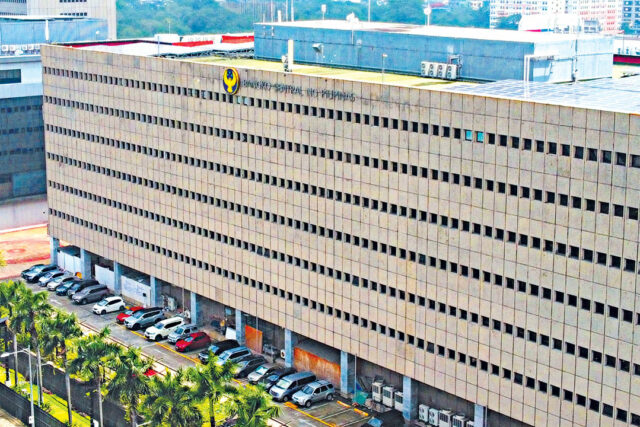
Mr. Amparo said some foreign players have entered the Philippine market via the rural banking industry to operate as neobanks amid the Bangko Sentral ng Pilipinas’ (BSP) ongoing moratorium on the grant of digital banking licenses, which will be lifted by next month.

Similar to digital banks, neobanks offer banking services via online platforms and electronic channels. However, the BSP has separate licensing and prudential requirements for digital banks as they are treated as complex banks, like universal and commercial lenders.

Meanwhile, existing thrift, rural, and cooperative banks that primarily offer financial products and services processed via digital channels can do so under an Advanced Electronic Payments and Financial Services license.

In 2021, the BSP capped the number of digital banking licenses at six as it sought to boost its regulatory capacity and supervision of the sector. It will lift the moratorium on the grant of new licenses on Jan. 1 and will allow four more digital banks to operate in the country, which would bring the maximum number to 10.

Mr. Amparo said the rural banking industry has been performing well.

“If we look at the performance of the rural banking industry in the last three years, we’re not in trouble. I think we have the most potential for growth in terms of capital, income, and loans,” he said.

“When I started in the BSP in 1998, there were more than 800 rural banks. There are less than 400 now. Consolidation has been going on for the last 30 years. It’s nothing new.”

The BSP has been encouraging rural banks to consolidate as part of its Rural Bank Strengthening Program (RBSP) that was launched in 2022.

The RBSP features five time-bound tracks that aim to strengthen the capital position of rural banks: merger/consolidation, acquisition/third-party investment, voluntary exit/upgrade of banking license, capital build-up program, and supervisory intervention.

In September 2022, the BSP raised the minimum capital requirement for rural banks with a head office and as many as five branches to P50 million, while those with six to 10 branches must have a minimum capital of P120 million. Those with more than 10 branches must have a capital of at least P200 million. Rural banks have until 2027 to comply with the new rules.

The Philippine rural banking sector’s combined net income was at P8.34 billion at end-September, up from P6.29 billion a year prior, latest BSP data showed.

Total assets stood at P430.396 billion at end-September, rising from P368.71 billion in the previous year.

Meanwhile, the sector’s total capital accounts stood at P77.92 billion as of September, with capital stock at P46.67 billion, central bank data showed.

Its solo capital adequacy ratio was at 17.74% as of September, while the total capital accounts to total assets ratio stood at 18.16%. — Aaron Michael C. Sy

Asia-Pacific countries to beef up biometric tech as use of deepfakes grows

VECSTOCK-FREEPIK

ASIA-PACIFIC countries are expected to strengthen their biometric verification tools next year amid the increase in deepfake technologies, according to identity authentication solutions provider iProov.

“As deepfake technology becomes increasingly weaponized by hostile state actors and criminals in 2025, a wave of account takeovers and fraudulent transactions will force banking regulators worldwide to take decisive action,” it said in a statement this month.

“Led by pioneers like Thailand and Vietnam, countries will mandate the implementation of biometric verification for payment authentication, adding an extra layer of security to protect customers and financial institutions.”

Facial verification is also expected to improve security and passenger processing in airports, iProov said.

“Automated systems will optimize passenger flow, reduce congestion, and slash wait times while dramatically reducing the load on border officials. Privacy will be prioritized, with travelers opting in and data protected by decentralized identity technologies.”

Increasing demand for data privacy and user control will lead to the adoption of “decentralized identities,” it said, which refer to the ability of an individual to prove their identity without revealing their entire personal profile.

This is expected to “empower individuals to confidently navigate the digital world while safeguarding their privacy,” iProov said.

Technologies specializing in decentralized identities will help new businesses and public bodies build trust and offer personalized services without compromising user data, it added.

Government-led digital programs are also expected to rise next year, with countries seen accelerating efforts to deploy national digital identification systems.

Deepfakes pose information verification concerns among news organizations, iProov added, highlighting the need for new content attribution technologies and better media literacy.

“Companies and investors will respond by prioritizing biometric authentication, investing in deepfake digital injection protection tools, enhancing communication protocols, and putting a strong focus on digital identity verification in all online interactions to prevent impersonation and fraud,” it said. — B.M.D. Cruz

DOON to launch motorbike rentals next year

By Beatriz Marie D. Cruz, Reporter

DOON PH, a local car-sharing startup, plans to launch its motorbike rental service in the first quarter of 2025 in key tourist destinations, according to its chief executive officer (CEO).

“It will be an airbnb for motorbikes,” Enrique Hormillo, cofounder and CEO at DOON, told BusinessWorld in a virtual interview.

The company’s motorbike rental feature will initially target island tourist destinations such as Boracay, Bohol, Palawan, and Siargao, he said.

Mr. Hormillo noted that tourists especially those who stay in high-end hotels often get overcharged for motorbike rentals.

“This has been in our pipeline for the last year already, just to prevent that,” he said. “When you rent a bike on the app, it’s one price and everybody sees it, whether you’re in a nice hotel or a cheap hotel.”

Mr. Hormillo and his cofounder and chief operating officer Miguel Locsin launched DOON in August 2023. Since then, the app has been downloaded more than 25,000 times, and has 15,000 active users.

Dubbed as an airbnb for vehicles, owners can set up their idle cars for rent to earn extra income. People who temporarily need a car may rent one through the app at a lower rate.

DOON follows a pay-per-use “sachet” insurance model, which was developed in partnership with Pioneer Insurance. Car rentals average P2,300 a day.

This is more convenient than other car rental businesses, which typically require an upfront insurance payment of about P50,000 or P60,000 to insure a car annually, Mr. Hormillo said.

Through the app’s “Kotsenometer,” a car owner can see how much they will get paid. The car must be no more than 15 years old and have a fair market value of up to P3 million, he said.

Mr. Hormillo, a veteran in the car industry, got the idea for DOON after getting stuck in an airport in the UK during the holidays. Left with no other options, he downloaded a local car rental app.

“I just registered and signed up for this app, and within like 15 to 20 minutes, there was already a guy coming to meet me at the airport, bringing me his Tesla so I can drive around the UK for like three weeks,” he said.

He thought of replicating the platform for the Philippine market.

“It’s kind of a problem I’ve seen in the Philippines all my life,” he said. “If you don’t have a car, for example… but you have to go somewhere, it’s really hard.”

Despite the emergence of other ride-hailing apps, many roads in the Philippines remain inaccessible without a personal vehicle, he added.

To date, about 500 cars have been registered on the platform, available in 56 cities nationwide.

Mr. Hormillo said the average rental length is two to three days, while car rentals can be extended up to a month during the holiday season.

About 35% of customers who rent cars via DOON are foreigners. Cars are typically rented for family and group trips, mostly for business and site visits.

Mr. Hormillo said Metro Manila’s worsening traffic congestion is not a major issue for DOON. “We’re allowing them (owners) to put these cars on our app and then these cars go out of Manila. They get taken on out-of-town trips.”

DOON users also have access to a free membership in the Automobile Association of the Philippines, which provides roadside assistance to motorists and discounts when they subscribe to Cartrack GPS.

DOON seeks to attract more hybrid and electric vehicles in 2025 and is developing a more “dynamic pricing” for car rentals.

“Our presence is not fully maximized yet,” Mr. Hormillo said. “I want to be in every city in the Philippines that’s got an airport and a seaport by the end of 2025. If you think about that, that’s really us bridging the gap for travel.”

The barnacle, Spain’s favorite Christmas dish, imperiled by climate change

ON THE craggy rocks of northwestern Spain’s treacherous Costa da Morte (Death Coast), wetsuit-clad fishermen dodge crashing waves as they pick barnacles, a prized Christmas delicacy facing decline due to climate change and other factors.

Fetching up to 200 euros ($208) per kilogram (2.2 pounds) during the holiday season, the gooseneck barnacle from the Galicia region has long been treasured by Spaniards for both its flavor and difficulty to harvest.

However, the rise in sea temperatures driven by climate change has severely affected barnacle habitats, as they thrive in icy waters. A recent study by the University of Vigo also linked changing wave patterns to lower quality in the shellfish.

Israel Martinez, an auctioneer in the A Coruna fish market, said that there used to be double or triple the number of barnacles just 10 years ago.

Despite state regulations — such as limiting daily harvests to 7 kg per fisherman — illegal fishing has surged due to the barnacles’ high value.

Licensed percebeiros, or barnacle pickers, have called for increased policing of the coast to deter poachers.

Their job is classified as a risky profession due to the adverse work conditions.

“The percebeiro trade on the Costa da Morte is dying. This is due to climate change, absurd laws, illegal fishing and a lack of workers,” 36-year-old Roberto Vidal, who started out as a percebeiro at 16, told Reuters.

He said there used to be between 100 and 200 percebeiros in his town of Corme. Now, there are around 30.

Fellow percebeiro Serafin Rodriguez said that future generations would be unable to follow in his footsteps due to declining barnacle populations. — Reuters

BSP approves 11 bank branches in Q3

BW FILE PHOTO

THE BANGKO SENTRAL ng Pilipinas (BSP) approved a total of 11 regular bank branches in the third quarter.

The Monetary Board approved applications for new banking offices of three banks in the third quarter, with two being universal and commercial banks and the other a rural bank, according to a circular letter signed by BSP Deputy Governor Chuchi G. Fonacier on Dec. 19.

Among the banks that submitted applications, the BSP allowed Security Bank Corp. to set up six regular branches located in Quezon, Davao City, Zamboanga Sibugay, Southern Leyte, Cebu, Bulacan and Camarines Norte.

The Monetary Board also allowed Rizal Commercial Banking Corp. to put up two regular branches — one in Bulacan and the other in Camarines Norte.

The Rural Bank of Angeles, Inc. also secured approval for three regular branches in Batangas, Leyte and Bukidnon.

The 11 regular branches approved in the third quarter were more than the six approved in the same period in 2023.

There were also three branch-lite units (BLUs) approved in the July-to-September period this year. The applications were from Lifebank – A Rural Bank and A Rural Bank of Tanjay, Inc.

Meanwhile, nineteen lenders opened new banking offices during the quarter.

There were 18 regular branches that were opened for the first time during the period, while banks opened 38 BLUs.

Among universal and commercial banks, BDO Unibank, Inc. and Security Bank opened a combined 10 regular branches in the third quarter. Meanwhile, BDO, Bank of the Philippine Islands, and Development Bank of the Philippines set up a total of five BLUs.

For thrift banks, CARD SME Bank, Inc. A Thrift Bank and Producers Savings Bank Corp. opened five new regular branches, while BPI Direct BanKO, Inc. A Savings Bank, Chinabank Savings, Inc., Rizal Microbank, Inc – A Thrift Bank, and Sun Savings Bank, Inc. opened a combined 16 branch-lite units..

For rural and cooperative banks, Cebuana Lhuillier Rural Bank, Inc. and Top Bank Philippines, Inc. (A Rural Bank) set up a total of three regular branches. Meanwhile, Bankways, Inc. (A Rural Bank), BDO Network Bank, Inc. (A Rural Bank), Card MRI Rizal Bank, Inc. A Microfinance-Oriented Rural Bank, Innovative Bank, Inc. (A Rural Bank), Lifebank-A Rural Bank, Rural Bank of Bansud (Oriental Mindoro), Inc., and Rural Bank of San Narciso, Inc. opened 17 BLUs. — Luisa Maria Jacinta C. Jocson

AI agents paving the way for a new era of productivity in the Philippines

By David Irecki

THE PHILIPPINES, a nation brimming with potential, is facing a productivity challenge. While the labor force is undeniably talented, it is experiencing an efficiency gap compared to its Association of Southeast Asian neighbors. The country’s productivity per worker of $24,830 pales in comparison to Singapore ($186,180), Malaysia ($71,100), and Indonesia ($28,630).

However, generative artificial intelligence (GenAI) can be harnessed to raise productivity. Deloitte estimates the technology can save 16% of working time — or more than 11 billion hours — in the Asia-Pacific every week. This amounts to saving almost a whole day a week through the complete automation of certain tasks and augmenting processes when workers integrate AI into their workflows. AI deployments can benefit the country to the tune of P2.6 trillion (about $44.2 billion) annually, according to National Economic and Development Authority Secretary Arsenio M. Balisacan.

AI AGENTS — CATALYSTS FOR TRANSFORMATION
As the Philippines embraces digitalization, the use of AI agents is essential to increasing productivity and remaining competitive in a rapidly evolving global market. These intelligent software entities represent a significant evolution in GenAI. Their ability to perform tasks autonomously, reason, and make decisions within their defined scope without human intervention empowers them to act independently and adapt to changing environments. As a result, organizations are able to leverage them more effectively for productivity and efficiency gains.

AI agents can be used to improve customer service by providing instant support through chatbots — from answering frequently asked questions to resolving issues and ensuring customers receive timely assistance. In addition, they can support e-commerce by recommending products based on user preferences and analyzing buying behavior to deliver personalized experiences that boost sales.

The AI market in the Philippines is growing rapidly, with a projected expansion of nearly 36% to reach $772.1 million this year. The adoption of AI-powered chatbots for customer service and data analysis across industries is becoming increasingly common. This trend is expected to continue as companies realize the cost-saving benefits and improved efficiency of AI-powered solutions.

These examples only scratch the surface of the possibilities that AI agents can offer. Since AI agents can execute entire sequences of tasks on their own, there is an opportunity to move beyond passive applications of AI to a more proactive model. This transition from mere automation to “autonomous actions” could revolutionize decision-making processes as AI capabilities evolve from productivity tools to something that can actively manage interconnected business operations.

AN AI READINESS BLUEPRINT
This all sounds promising, but for AI agents to work effectively, think logically and make decisions, the quality of their training data is critical. Unfortunately, Boomi’s AI Readiness Assessment shows that 73% of organizations are still struggling with data readiness. The problem? Data that is fragmented, undiscoverable or simply unreliable, all of which could significantly derail organizations’ AI initiatives.

Data is the backbone of AI. To use AI effectively, organizations need to have a solid data foundation in place, and that starts with fostering strong data quality and data liquidity. It is not just about having data, but rather which data is more important than others. The real advantage comes from providing AI with the right data at the right time and in the right form.

Thus, to be AI-ready, organizations need a clear understanding — even a map — of where their data resides, what value it has, who owns it, and how it is generated, processed, secured, and governed. Only once this foundation has been laid can companies harness the potential of AI to turn raw data into useful information, which can then be transformed into actionable intelligence and tangible outcomes.

STARTING WITH THE BASICS
The journey towards enhanced productivity is contingent on how effectively Philippine organizations can connect their data, systems, and applications to fully harness the power of AI to bridge the productivity gap and foster innovation.

Amid various business disruptions locally and globally, organizations that invest in data readiness will be well-positioned to future-proof themselves to achieve growth and success for a long time.


David Irecki, Boomi Chief Technology Officer for APJ

PSE hikes max listing fee to P3.5M

REUTERS

THE Philippine Stock Exchange (PSE) has increased the upper limit of the annual listing maintenance fee by P1.5 million to P3.5 million.

In a notice posted on its website, the market operator said the new rate would take effect on Jan. 2, 2025 as approved by the Securities and Exchange Commission.

The listing fee is 1/100 of 1% of a listed company’s market capitalization but not less than P250,000.

The bourse charges a P100 yearly listing maintenance fee for every P1-million market capitalization under the Small, Medium, and Emerging Board, for a minimum charge of P50,000 and a maximum of P250,000.

Under the PSE’s consolidated listing and disclosure rules, the companies must pay the fee by Jan. 15 each year, with a grace period of a week.

Noncompliant companies must pay a P1,000 fine for every day of delay. A company that fails to pay by Feb. 15 will be slapped a trading suspension until April 15. The company will be considered for delisting if it still fails to pay the fee after that.

The fees charged by the PSE are exclusive of taxes.

The PSE’s net income rose 11.2% to P640.25 million in the first nine months. Its other income climbed 90.8% to P326.17 million on higher fair value estimates of investments in equity funds and dollar-denominated bonds.

Revenue dropped 5.2% to P1.04 billion, while total expenses rose by 11.4% to P618.47 million. — Revin Mikhael D. Ochave

Islamic finance

FREEPIK

When I began my career as a reporter for BusinessWorld more than 30 years ago, I was assigned to the Banking beat under Gert Chavez after a brief stint in Research with Dick Puig. Coming from a background in Political Science and a minor in Economics, my knowledge of banking and finance was rudimentary at best. Suffice to say, I was as clueless as a blank ledger back then.

Looking back, I am deeply grateful for that stint in Banking, which forced me to learn about the intricate world of government financial institutions, foreign banks with full operations (of which there were only four at the time: Bank of America, Standard Chartered, Citibank, and Hong Kong and Shanghai Banking Corp.), development and rural banking, and Islamic finance.

Admittedly, I initially struggled to understand why there was a need for a separate banking system specifically for Islamic finance and how it differed from mainstream banks. However, after thorough briefings on its principles, I came to realize that Islamic banking is not merely a religious mandate but an alternative financial system. It provides profit-based financing instead of interest-based loans, as prescribed by Shari’ah or Islamic law.

Based on the 2020 census, Muslims comprise about 6% of the Philippine population, roughly seven million people. Islamic banking primarily caters to this community, but its significance goes beyond providing services to Filipino Muslims. Promoting the growth of Islamic finance in the Philippines could help attract investments from Arab countries and regional neighbors such as Indonesia, Malaysia, and Brunei.

In 2022, the Philippine government issued its first-ever Islamic or “Sukuk” bonds. These 5.5-year dollar-denominated bonds raised approximately $1 billion, with 30% reportedly purchased by Middle Eastern investors. Unlike conventional bonds, Sukuk grants investors ownership rights in assets or projects instead of interest payments, adhering to the principles of Islamic finance.

Over three decades ago, the government-owned Al-Amanah Islamic Investment Bank was the sole institution engaged in Islamic banking in the Philippines. Fast forward to today, only Maybank Philippines and CARD Bank, Inc., which recently opened an Islamic banking branch in Cotabato City, have joined the field. Additionally, two insurance companies now offer Islamic insurance or takaful, further expanding Sharia-compliant financial services in the country.

Islamic banking deserves a closer look for its potential and growth prospects. However, many policymakers, businesses, and the public remain unfamiliar with the principles of Islamic finance. Addressing this knowledge gap is essential to ensure successful implementation. Congress may also need to revisit the Islamic Banking Act (RA 11439) to explore ways of better supporting Sharia-compliant banking, such as through tax incentives for investors.

Equally important, Islamic banks must clearly differentiate themselves in the market and prove their value proposition not just to the Muslim community but to non-Muslims as well. Collaboration with international Islamic financial institutions may play a critical role in achieving this. The Islamic banking industry needs to prove itself capable, reliable, and dependable.

While deeply rooted in Islamic law, Islamic banking emphasizes universal values such as ethics, equity, and shared prosperity — principles that resonate with both Muslims and non-Muslims. It prioritizes ethical investments and risk-sharing, setting it apart from conventional banking, which relies on interest (riba) and speculative practices (gharar). Moreover, it prohibits investments in haram industries like gambling and alcohol.

The Philippines stands to benefit from promoting Islamic banking. For one, it discourages exploitative practices like charging or earning interest. Instead, investments are tied to tangible assets and real economic activities. Islamic banking also discourages excessive speculation and emphasizes sustainable, ethical growth.

Key Islamic banking principles include Murabaha (Cost-Plus Financing), where the bank purchases an asset and sells it to the client at a markup, ensuring transparency and shared risk; Ijara (Leasing), where the bank buys an asset and leases it to the client, allowing the client to benefit without ownership burdens; Musharaka (Partnership), where the bank and the client contribute capital, sharing profits and losses equitably; and, Mudaraba (Profit-Sharing), where the bank provides the capital, and the client manages the investment, dividing profits based on pre-agreed terms.

Approximately 20 years ago, during a visit to Singapore, I had the opportunity to listen to then Senior Minister Goh Chok Tong explain Singapore’s strategy to attract Middle Eastern investments. In the wake of the 9/11 attacks, when Arab investors faced increased scrutiny in the West, Singapore seized the opportunity to position itself as a hub for Islamic finance. This strategic foresight is something the Philippines could emulate.

Islamic finance can empower Filipino Muslims, particularly in underserved regions like BARMM, by providing access to culturally sensitive banking services. It can also encourage financial inclusion, bringing more of the unbanked population into the formal economy. This, in turn, fosters greater economic participation and regional development.

Globally, countries like the United Kingdom have embraced Islamic finance through institutions such as Al Rayan Bank and sovereign Sukuk issuances. Japan and South Korea are also exploring Islamic finance to attract Middle Eastern investments, while Singapore and Hong Kong have emerged as regional hubs for Islamic banking in Asia. These initiatives highlight the potential of Islamic finance to strengthen trade relations and economic ties with Islamic nations.

The Philippines, too, can leverage Islamic banking to attract investments in halal industries, infrastructure, and renewable energy. Additionally, it could target tourism from Islamic countries, not just in the Middle East but also in Africa and Southeast Asia. Islamic banking is more than an alternative financial system; it serves as a bridge to inclusivity, cultural recognition, and economic prosperity.


Marvin Tort is a former managing editor of BusinessWorld, and a former chairman of the Philippine Press Council

matort@yahoo.com

Punters throng London’s historic Christmas meat auction

MEAT TRADERS flung cheap turkeys to the highest bidders in a public auction at London’s historic Smithfield Market on Tuesday, a long-standing Christmas tradition whose future now hangs in the balance.

For around 900 years, the site in the City of London financial district has been a hub for meat and livestock trading, at one point attracting sellers from all over England and produce from as far as Argentina and Australia.

But city authorities’ decision last month to close Smithfield Market, a move that will free up prime real estate for future redevelopment, means its future is uncertain.

The market can operate at Smithfield until 2028 and most meat traders have said they plan to move to a new location after that within London.

For decades crowds of punters have braved the cold and thronged Smithfield Market on Christmas Eve to snap up surplus produce at bargain prices, exchanging cash — and only cash — for legs of lamb or cuts of red meat tossed into the crowd.

“The atmosphere is fantastic,” Smithfield Market Tenants Chairman Greg Lawrence said. “To a lot of people it’s the beginning of Christmas. They come up here early, they go to breakfast, they come to the auction, they purchase their goods, then they go to the pub.”

Hundreds of people, some in Santa hats and others holding up placards with meat orders, gathered in Smithfield’s Victorian market building.

Punters held up banknotes to grab the attention of butchers in white coats often throwing a turkey or ribeye into the crowd, eliciting loud cheers.

Some in the crowd said they came for the bargains, while others said they loved the atmosphere.

“Everyone’s so friendly and everyone’s rooting for everyone to get something for Christmas Day,” Sharon, who only gave one name, said. “It’s amazing.” — Reuters

BoJ’s Ueda expects further progress in hitting price target next year

WIKIPEDIA.ORG

TOKYO — The Bank of Japan (BoJ) expects the economy to move closer to sustainably achieving the central bank’s 2% inflation target next year, Governor Kazuo Ueda said on Wednesday, suggesting the timing of its next interest rate increase was nearing.

But he warned of the need to scrutinize the fallout from “high uncertainties” surrounding overseas economies, especially the economic policies of the incoming US administration of President-elect Donald J. Trump.

The outlook for next year’s wage negotiations between Japanese firms and unions is also key, Mr. Ueda said in explaining factors the central bank would scrutinize in setting policy.

“The timing and pace of adjusting the degree of monetary accommodation will depend on developments in economic activity and prices as well as financial conditions going forward,” Mr. Ueda said in a speech to business lobby Keidanren.

The remarks underscore the BoJ’s resolve to keep pushing up short-term rates from the current 0.25% next year. Most analysts expect the bank to raise rates to 0.5% in January or March.

The BoJ ended negative interest rates in March and raised its short-term policy target to 0.25% in July. It has signaled a readiness to hike again if wages and prices move as projected.

Consumption has shown signs of improvement as intensifying labor shortages push up wages, Mr. Ueda said, stressing progress Japan has made in durably achieving the BoJ’s price target after years of aggressive monetary stimulus.

In the current phase of transition towards achieving 2% inflation in a sustainable manner, the BoJ will support the economy by keeping its policy rate lower that levels neutral to the economy, Mr. Ueda said.

But if the economy continues to improve, the BoJ will raise rates, as maintaining excessive monetary support for too long could heighten inflationary risks, he said.

“Our projection is that the virtuous cycle will further intensify and that Japan’s economy will move closer to sustainable and stable 2% inflation, accompanied by wage increases,” Mr. Ueda said on the prospects for 2025.

“Prices of a wide range of goods and services have begun to rise moderately recently, reflecting increasing wages. Against this background, we judge that sustainable and stable achievement of our 2% inflation target is now within sight.”

The speech followed remarks Mr. Ueda made last week calling for the need to await more information on Mr. Trump’s policy stance and domestic wage developments before hiking borrowing costs again.

Those remarks at a press conference after the BoJ kept rates steady, were interpreted by investors as dovish, helping push the yen to its weakest since July and triggering warnings by Japanese authorities.

Japan must see wages rise at levels consistent with 2% inflation, Mr. Ueda said on Wednesday, adding that high profits achieved by big firms must be distributed to smaller firms and households for the economy to durably meet the BoJ’s inflation target.

“We will examine how wage hikes by small and midsize firms will evolve, using our network of branches,” Mr. Ueda said.

The BoJ will release its quarterly report on regional economic conditions on Jan. 9, which will likely include its view on whether wage hikes are spreading nationwide.

The report will likely be among factors the BoJ’s board will scrutinize for its next policy decision on Jan. 24. Reuters

Microsoft works to add non-OpenAI models into 365 Copilot products, sources say

REUTERS

MICROSOFT has been working on adding internal and third-party artificial intelligence (AI) models to power its flagship AI product Microsoft 365 Copilot, in a bid to diversify from the current underlying technology from OpenAI and reduce costs, sources familiar with the effort told Reuters.

It is the latest effort by Microsoft, which is a major backer of OpenAI, to lessen its dependence on the AI startup — a departure from recent years when Microsoft touted its early access to OpenAI’s models. When Microsoft announced 365 Copilot in March 2023, a major selling point was that it used OpenAI’s GPT-4 model.

Microsoft is also seeking to reduce 365 Copilot’s reliance on OpenAI due to concerns about cost and speed for enterprise users, according to the sources, who requested anonymity to discuss private matters.

A Microsoft spokesperson said OpenAI continues as the company’s partner on frontier models, a term for the most advanced AI models available. The original agreement between the two companies allows the software giant to customize OpenAI’s models.

“We incorporate various models from OpenAI and Microsoft depending on the product and experience,” Microsoft said in a statement. OpenAI declined to comment.

In addition to training its own smaller models including the latest Phi-4, Microsoft is also working to customize other open-weight models to make 365 Copilot faster and more efficient, the sources added.

The goal is to make it less expensive for Microsoft to run 365 Copilot, and potentially pass along those savings to the end customer, one of the sources said.

Microsoft’s leaders, including Chief Executive Officer Satya Nadella, are tracking the efforts closely, the same source added.

The move mirrors those of other Microsoft business units which have changed the ways in which they use OpenAI models. GitHub, which Microsoft acquired in 2018, added models from Anthropic and Google in October as alternatives to OpenAI’s GPT-4o. Its consumer chatbot Copilot, revamped in October, is now powered by in-house models as well as OpenAI models.

Microsoft 365 Copilot, an AI assistant built in to Microsoft’s suite of enterprise software including Word and PowerPoint, is still trying to prove its return on investment to enterprises. Microsoft has not shared specific sales data on the number of licenses sold, and there have been concerns about pricing and utility. A survey of 152 information technology companies showed the vast majority of them had not progressed their 365 Copilot initiatives past the pilot stage, research firm Gartner said in August.

Still, analysts at BNP Paribas Exane said they have seen an acceleration in adoption, and expect Microsoft to sell 365 Copilot to more than 10 million paid users this year. Microsoft also said in a November blog post that 70% of Fortune 500 companies are using 365 Copilot. — Reuters

Regulation of Philippine crypto service providers may encourage adoption

BW FILE PHOTO

By Revin Mikhael D. Ochave, Reporter

A PLAN by the Securities and Exchange Commission (SEC) to regulate cryptocurrency asset service providers in the Philippines could boost investor protection and entice more Filipinos to adopt the digital currency, analysts said. 

“This marks an important step toward a more organized and secure crypto landscape in the Philippines,” Arlone P. Abello, founding chairman at Innovative Movement of the Philippine Association of Crypto Traders, said in an e-mailed reply to questions.

“The proposed rules are an important milestone in providing investor protection, while creating a structure that can guide both new and established players in the crypto space,” he added.

Mr. Abello, also the chief executive officer at Global Miranda Miner Group, a crypto education platform, said the draft rules are also critical for traders. “Clearer regulations will help prevent fraud, reduce risks for traders and foster a more transparent market.”

“As the crypto industry in the Philippines continues to grow, these rules can help ensure that traders have a clearer understanding of their rights and obligations, creating a safer environment for everyone involved,” he added.

On Dec. 20, the corporate regulator issued draft rules on crypto service providers. Comments on the draft rules may be submitted until Jan. 18, 2025.

Under the rules, crypto providers must be a SEC-registered stock corporation, have at least four staff members living in the Philippines and meet the minimum capital requirements.

Service providers must be able to prevent and detect market abuse. The rules prohibit market manipulation, insider trading and disclosure of material and nonpublic information.

“Overall, it is very good to see… local regulations toward crypto players,” Jiro Luis S. Reyes, chief executive officer at crypto education platform Bitskwela, said in an e-mail. “I would like to stress the importance of support for educational efforts in the Philippines.”

He suggested a separate subclassification for crypto service providers that operate differently, such as a company offering trading of crypto assets versus a marketing company.

Mr. Reyes also sought clearer rules on the circumstances where the SEC can remove a crypto asset on an exchange to protect investors. “The phrase ‘in the interest of investor protection’ has been misused locally and internationally a lot of times.”

Nancy M. Ocampo-Omadto, chief legal counsel at crypto over-the-counter service Moneybees, said the SEC might have forgotten to include transitory provisions for the benefit of existing virtual asset service providers registered with the Bangko Sentral ng Pilipinas (BSP).

BSP Circular No. 1108, dated Jan. 26, 2021 treats crypto as virtual assets.

The government imposed a three-year moratorium on virtual asset service provider licenses due to risks to the financial system. The moratorium may be lifted next year.