Home Blog Page 1809

Economic policy reforms and the Philippine economy
(This article is based on the research undertaken by the Research Teams of Regina Capital Development Corp., a member of the Philippine Stock Exchange and Cristina Research Foundation, a public policy advisory company.)

On Oct. 30, the Hong Kong and Shanghai Banking Corp. (HSBC) issued a most unusual report on the Philippine economy entitled, “The Philippines takes off: From Stability to Prosperity.”

It was unusual in the sense that most economic reports deal prospectively with the coming year, while the HSBC report deals retroactively on the Philippine economy over the past 20 years. From that perspective, HSBC asserts that “Fuelled by demographics, digitalization, and services, two decades of reform have prepared the economy for take-off.” And therefore it predicts that “The Philippines will continue to grow in size and influence, creating many opportunities for foreign and local investment.”

This is welcome news for us, absorbed as we are on the trials and tribulations of the moment, not reflecting on how much progress we have achieved.

According to HSBC:

“The Philippines has built a solid runway for takeoff from two decades of hard-earned reform. Since the beginning of the 21st century, the country has embarked on a number of reforms, including the fiscal reforms and trade deals of the Macapagal administration, the Sin Tax and institutional reforms of the Aquino administration, the fiscal and infrastructure reforms of the Duterte administration, and the liberalization and fiscal reforms of today (see summary in Table 1). The country has laid a solid fiscal and economic foundation that could finance the long-term investments needed to lift its economic potential.”
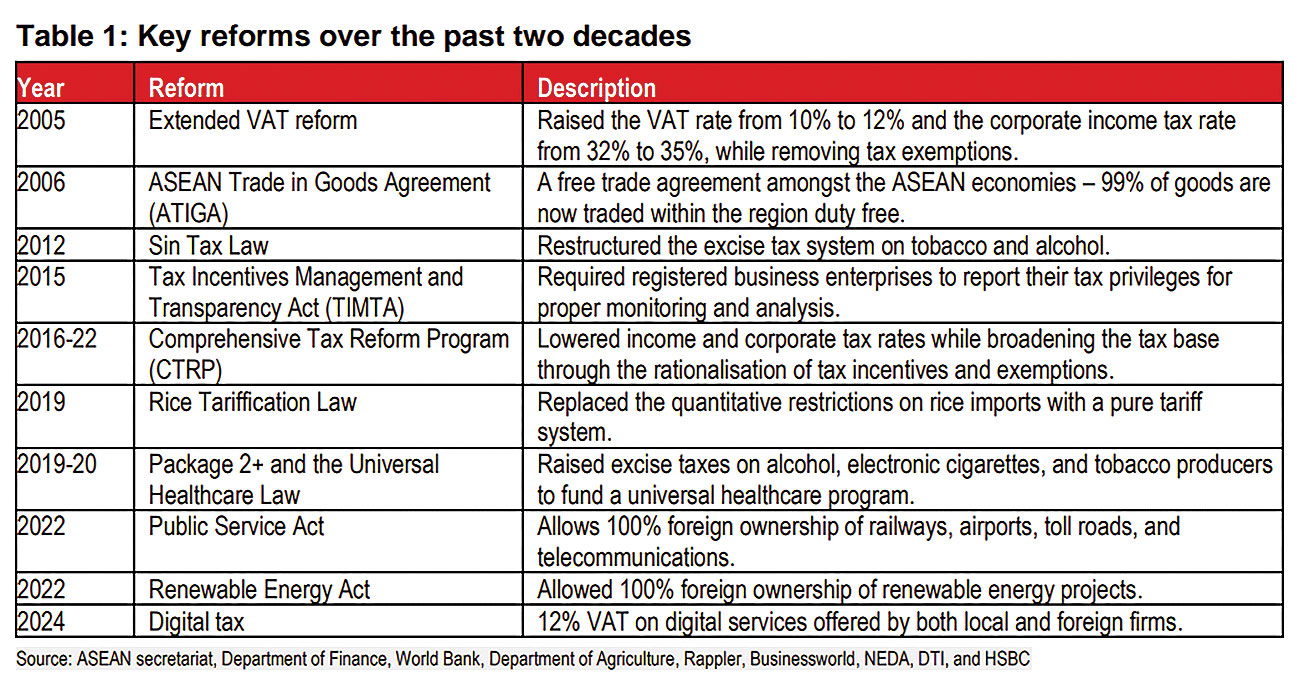
We comment on the following reforms: the Extended VAT reform, the Sin Tax Law, and the Rice Tariffication Law.

The Extended VAT Reform was enacted in the face of a fiscal crisis then besetting the Philippines where the losses of the National Power Corp., among others, were endangering the fiscal stability of the Philippine government. At great political cost, then President Gloria Macapagal Arroyo and then Senator Ralph Recto pushed for the approval in Congress of the Extended VAT Reform Law. The law raised the VAT rate from 10% to 12%, the corporate income tax rate from 32% to 35% and removed certain tax exemptions, thus putting the Philippine government on sound fiscal footing up to this day.

The traditional approach to smoking and drinking is biblical. Those who engage in such activities are considered sinners who must do penance (pay sin taxes) and sin no more. Of course, it is not always clear if the aim is to save sinners or fill government coffers.

Our medical professionals, God bless them, proposed a less moralistic and more realistic framework. The activities of smoking and drinking pose increased medical hazards not only to those who smoke or drink but also to the rest of the population as well. For increasing the health care cost of the medical system, it is but fitting that they carry a heavier burden as enacted in the Sin Tax Law.

In 2024, the programmed contribution of sin taxes to the Philippine Health Insurance Corp., better known as PhilHealth, amounted to around P300 billion, an amount which will reduce the premiums that must be paid by the 113 million members of PhilHealth.

The Rice Tariffication Law is based on one simple economic fact: the price of international rice is roughly half the price of domestic rice. Our astute businessmen have always been aware of the arbitrage possibilities, i.e. import international rice and sell domestically. Admirably our government performed the role of equalizer. Under the Rice Tariffication Law, government allowed the importation of rice thus benefitting the 100 million Filipino consumers, while at the same time imposing an excise tax to be used to benefit the one million Filipino farmers who are adversely affected by the importation of rice.

The Bureau of Customs reported on Aug. 15 that since the start of the year, P29 billion in excise tax has been collected on imported rice or around P29,000 in assistance to each of our farmers.

As a result of these reforms, the HSBC report notes:

“The numbers speak for themselves in terms of their impact. Chart 1 shows that since the 1990s, growth consistently increased, inflation declined and became increasingly stable, interest payments shrunk, and gross reserves grew. The Philippines achieved macroeconomic stability.”

From the perspective of an AIM Professor in the 1990s, we now realize the economic progress the Philippines has made. In the 1990s, the Philippines was struggling to achieve a growth rate of 2-3%, now we assume growth rates of 5-6%. In the 1990s the Philippines experienced inflation rates of 10-12%, now we can aspire to inflation rates of 2-4%. Back then interest rates ranged from 12-18%, now they range from 6-8%, then the difference between the interest rate on Philippine government securities and the US 10-Year Treasury Bills was 14%, now it is around 1%. Finally, then our reserves of around $5 billion barely allowed us to meet our importation requirements, now with our $100 billion reserves, we have sufficient buffer not only for our importation requirements but also for our debt service requirements as well.

The HSBC report rightly credits our government officials for these economic reforms. But we argue that the private sector should share in the credit. Private sector groups did some of the policy reform studies and proposals, attended congressional hearings to expound on the benefits of the proposed laws, and provided the political and moral support for the politicians enacting the needed but politically controversial economic reforms.

One such organization is the Foundation for Economic Freedom (FEF) (Full disclosure: I am a Fellow of FEF). From its website, we learn of its history.

“The Foundation for Economic Freedom was established in 1996 by like-minded individuals who all believed that it is their civic duty to make the Philippines a better place. Formalized as an advocacy institution to engage in public diplomacy to enact free market-oriented change, it counts among its roster visible and well-respected business leaders, retired technocrats, and members of the academe. For over two decades, FEF has been the institution of reference for policies to transform the inward-looking Philippine economy into a trading one.”

Over its almost 30 years of history, it has been involved in legislation such the Residential Free Patent Act, the Electric Power Industry Reform Act, the Retail Trade Liberalization Act, the Rice Tariffication Act, and the Public Services Act, among others.

This work has achieved international recognition, with FEF wining the Asia Liberty Awards and the Templeton Freedom Awards.

Unacknowledged in the FEF website, probably due to his modesty, is the major role its president, Calixto “Toti” Chikiamco, played in making FEF what it is today. (His modesty will not deter me, his friend, from singing his praises considering I was present when he recreated FEF.)

Taking over as president in 2010 when FEF was in a financial crisis, he sought and successfully received grants from international funding agencies.

Once FEF was on sound financial footing, he invited a constellation of outstanding fellows to the cause, proving the adage that an outstanding leader is one who has the confidence to enlist people greater than him.

FEF has for its Board of Advisers, National Scientist Raul Fabella, former Prime Minister Cesar E.A Virata, former Socio-Economic Planning Secretary Gerardo Sicat, and former NEDA Director-General and Central Bank Governor Felipe Medalla.

FEF is currently led by its Board of Trustees composed of former Finance Secretary Roberto de Ocampo, OBE, as Chairman, and investment banker Simon Paterno as Vice-Chairman. Political economist Calixto Chikiamco is FEFs President, Ateneo University Chairman Bernadine Siy is its Treasurer, and lawyer Ricardo Balatbat Ill is its Corporate Secretary.

Other members of FEF’s Board of Trustees include competition lawyer Kristine Alcantara, Angeles University President and UP law professor Joseph Emmanuel Angeles, urban land planning expert Arturo Corpuz, information and technology law expert Jose Jesus Disini, government and regulatory affairs expert Christopher Matthew Ilagan, investment banker Vaughn Montes, real estate developer Jeffrey Ng, corporate lawyer Perry Pe, former Finance Undersecretary Ma. Cecilia Soriano, and former Finance Secretary Margarito Teves.

As President he rides herd over this group of raging incrementalists who do not allow the perfect to be the enemy of the good. In addition to being an enabler of reformers, Toti is himself an ardent reformer. He was the driving force and guiding spirit in the enactment of the Resident Free Patent Act. His central insight was that the issuance of land titles is not a judicial process requiring cumbersome court rules but rather a documentary process easily and quickly done by experts assisted by satellite photo technology. Prior to the enactment of the law, only around 4,000 residential land titles were issued yearly, now around 55,000 are issued yearly.

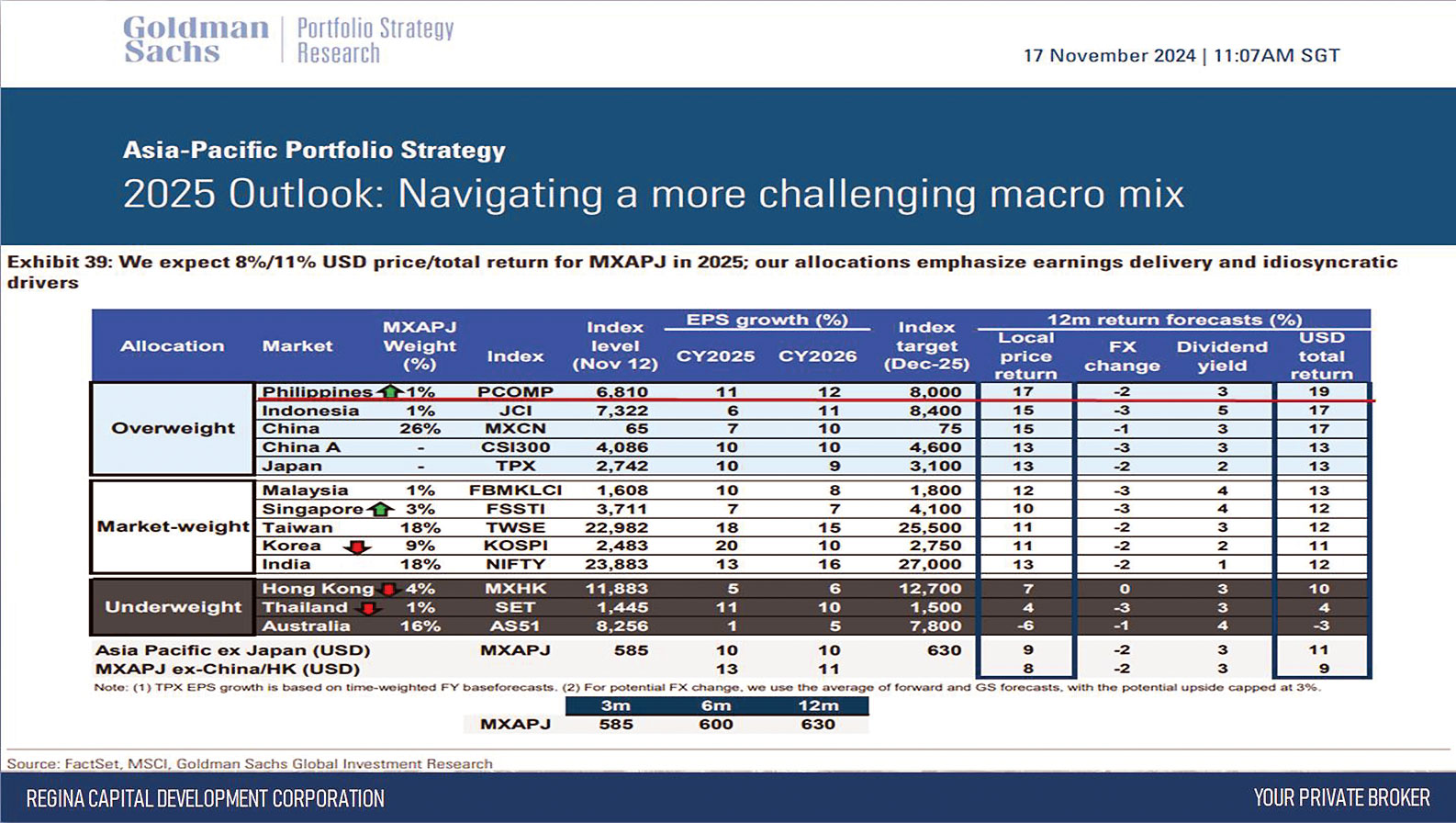
The judgement of HSBC on the bright prospect of the Philippine economy was confirmed by Goldman Sachs in its Nov. 17  report entitled, “Asia-Pacific Portfolio Strategy: 2025 Outlook: Navigating a more challenging macro mix:” The report over-weights its investment in the Philippines projecting that it will give the highest return of 19%. Moreover, the PSE Composite Index is expected to rise from 6,810 to 8,000 by December 2025.
 

Dr. Victor S. Limlingan is a retired professor of AIM and a fellow of the Foundation for Economic Freedom. He is presently chairman of Cristina Research Foundation, a public policy adviser of Regina Capital Development Corp., a member of the Philippine Stock Exchange.


ACEN infuses additional capital into unit Paddak

PHILSTAR FILE PHOTO

AYALA-LED ACEN Corp. is pouring additional investment into its subsidiary Paddak Energy Corp. worth a total of P12 million to provide technical and maintenance services to its local operations.

ACEN signed a contract with Paddak to subscribe to the latter’s 1.2 million common shares and 10.8 million preferred shares at P1 apiece, the company said in a regulatory filing on Thursday.

The shares will be issued from the unissued portion of the authorized capital stock of Paddak, ACEN said.

“The subscription will allow ACEN to have full ownership of Paddak, which will provide technical operations and maintenance-related services to ACEN’s Philippine operating companies,” the company said.

For its international operations, the company said on Wednesday that its affiliate, ACEN Vietnam Investments Pte. Ltd., had acquired a 49% stake in the Vietnamese renewable energy firm BIM Energy Holding Corp. worth $70.5 million.

The acquisition aims to boost ACEN’s pipeline projects in Vietnam.

ACEN, the listed energy platform of the conglomerate Ayala group, boasts about 6.8 gigawatts of attributable renewables capacity in operation, under construction, and committed projects.

The company operates across a diverse range of markets, including the Philippines, Australia, Vietnam, India, Indonesia, Laos, and the United States.

At the local bourse on Thursday, shares in ACEN fell 4.11% to close at P3.97 apiece. — Sheldeen Joy Talavera

Manulife IM launches new feeder fund for dollar fixed-income issues

MANULIFE Investment Management and Trust Corp. (Manulife IM) has launched a unit investment trust fund (UITF) that provides access to dollar-denominated fixed-income and fixed-income-related securities globally.

The Manulife Global Income Feeder Fund “aims to provide a high-quality, low-volatility income opportunity by seeking the best sources of income across the entirety of the fixed income universe,” it said in a statement on Thursday.

“The Manulife Global Income Feeder Fund offers an all-weather wealth solution that combines the entirety of the fixed-income universe, including traditional and nontraditional sources of income. It provides high and sustainable opportunities that can help investors maximize their financial portfolio’s income generation across economic and interest rate cycles,” Manulife IM Philippines President and Chief Executive Officer Aira Gaspar was quoted as saying.

Investors can access the fund for as low as $1,000 or P1,000.

The new UITF is part of the company’s “Better Income” campaign that aims to give clients  more investment options based on their respective financial goals, needs, risk tolerance, and life stages.

Interested investors may open a UITF account online through Manulife’s digital investment platform Manulife iFUNDS.

Manulife IM is a wholly owned subsidiary of The Manufacturers Life Insurance Co. (Phils.) Inc. (Manulife Philippines). It got its stand-alone trust corporation license from the Bangko Sentral ng Pilipinas in 2017.

The trust firm had assets worth P1.37 billion and liabilities valued at P229.26 million at end-June, based on its balance sheet.

Its total stockholders’ equity stood at P1.14 billion, while its contingent accounts, which were wholly made up of trust accounts, were at P188.75 billion.

Meanwhile, its parent company Manulife Philippines’ premium income stood at P15.54 billion in 2023, while its net income was at P1.899 billion. — A.M.C. Sy

CA rejects illegal dismissal claim filed by temps

PHILSTAR FILE PHOTO

THE COURT OF APPEALS (CA) rejected an illegal dismissal charge filed by manpower agency workers against a firearms manufacturer and their agency, upholding earlier rulings by a labor arbiter and the National Labor Relations Commission (NLRC). According to the ruling issued by the third division on Nov. 1, ”Findings of fact of administrative agencies and quasi-judicial bodies, which have acquired expertise because their jurisdiction is confined to specific matters, are generally accorded not only great respect but even finality.”

It added that determinations of fact are beyond the scope of a Rule 65 certiorari petition.

“Where a petition fails to fully satisfy, prima facie, the requirements of the limited, exceptional, extraordinary remedy of a special civil action for certiorari, a resolution for its dismissal should be issued outright,” it said.

The tribunal found that NLRC did not commit grave abuse of discretion, contrary to the petitioners’ claim, finding no evidence of arbitrariness, caprice, or whim on the part of the NLRC.

The case stems from employees who filed an illegal dismissal complaint against the firearms company and the manpower services firm after they were dismissed in September 2023. They alleged the company colluded with the agency to deny them regular employment status and benefits.

The company argued that it entered into a service agreement with the agency for staff responsible for auxiliary tasks at its manufacturing facility.

It said there was no employer-employee relationship, identifying the manpower agency as their employer of records.

The agreement between company and the agency ended in September 2023, a month after, the firearms company received the illegal dismissal complaint.

The manpower agency said upon the expiration of an agreement, it informs employees of options such as redeployment, temporary layoff or resignation. The petitioners refused the options and filed a complaint instead with the NLRC.

The labor arbiter and the NLRC found the complaint without merit, adding the plaintiffs were not dismissed but placed on a floating status instead.

Under the Labor Code, “floating status” may be considered a form of temporary layoff as long as it does not exceed six months. The petitioners filed their complaint after a month of being put in floating status, well within the six-month window. — Chloe Mari A. Hufana

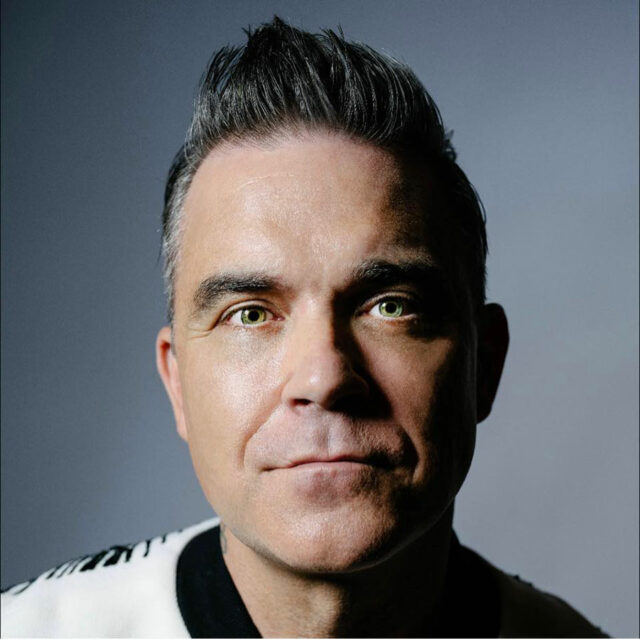
Robbie Williams hopes Better Man film will help viewers heal

FACEBOOK.COM/ROBBIEWILLIAMS

LONDON — British singer-songwriter Robbie Williams’ turbulent life story served as inspiration for the musical movie Better Man, in which the pop star is portrayed as a CGI monkey.

The semi-autobiographical drama follows Mr. Williams’ journey from childhood to global stardom. The “Angels” and “Rock DJ” musician, whose biggest hits are incorporated in the movie, lends his voice to the main character.

Attending the film’s premiere in London on Wednesday, Mr. Williams, who was also the subject of a Netflix documentary last year, said sharing his story came easy.

“I never stop opening up about my past. It’s how I socialize. You tell me about your childhood trauma, I tell you about my childhood trauma, and we get along. It’s par for the course for me,” Mr. Williams, who turned 50 in February, said.

“Music heals, entertainment heals. And I hope that in some way this film is a healing process for people. I know it’s a lofty ambition and some people at home could be going ‘ugh, okay, of course’ but I mean it.”

Better Man sees a teenage Mr. Williams joining the 1990s boy band Take That, his substance abuse, and differing views leading to him leaving the group and launching a successful solo career, while crippled by depression and addiction.

It also depicts the highs and lows of his relationship with All Saints singer Nicole Appleton and the feuds with Take That’s Gary Barlow and Oasis brothers Liam and Noel Gallagher.

Directed and co-written by The Greatest Showman filmmaker Michael Gracey, Better Man was born out of a series of informal interviews in Mr. Williams’ recording studio not initially intended for a movie.

The idea for the movie’s unusual approach came naturally, Mr. Gracey said. The CGI monkey version of Mr. Williams is played by actor Jonno Davies, who wore a performance capture suit throughout the shoot.

“For someone who sees themselves as a performing monkey, it made a lot of sense,” said Mr. Gracey. “I think you see more of Robbie in the monkey. I think you have more empathy for the monkey and I think creatively it makes it really compelling.”

Mr. Williams, who released a new song from the film’s soundtrack titled “Forbidden Road” last week and will embark on a UK and European tour in 2025, teased more new music was on the way.

“New music is coming out, depending on how well this film does. If the film does really well, sooner, if it doesn’t, later.”

Better Man begins its global cinematic rollout on Dec. 25. — Reuters

Brics+ countries are determined to trade in their own currencies — but can it work?

FREEPIK

(Brics+ countries are exploring how they can foster greater use of local currencies in their trade, instead of relying on a handful of major currencies, primarily the US dollar and the euro. The forum for cooperation among nine leading emerging economies — Brazil, China, Egypt, Ethiopia, India, Iran, Russian Federation, South Africa, United Arab Emirates — emphasized this determination at their 16th summit in October 2024. Economist Lauren Johnston recently wrote a paper on this development. The Conversation Africa asked her for her insights.)

Why do Brics+ countries want to trade in local currencies?

There are economic and political reasons to use local currencies.

Using local currencies to trade among themselves will lower the transaction costs and reduce these countries’ dependence on foreign currencies.

Over the past few centuries, the world’s economy has developed in a way that makes certain currencies more valuable and widely trusted for international trade. These include the US dollar, the euro, the Japanese yen, and the British pound. These currencies hold value around the world because they come from countries with strong economies and a long history of trading globally.

When people or countries trade using these currencies and end up collecting or holding them, they consider it “safe” because the value of these currencies remains stable and they can be easily used or exchanged anywhere in the world.

But for countries in the global south, like Ethiopia, whose currency (the birr) isn’t widely accepted outside its borders, trading is far more difficult. Yet these countries struggle to earn enough of the major currencies through exports to buy what they need on international markets and to repay their debts (which tend to be in those currencies). In turn, the necessity of trading in major currencies, or the inability to trade in them, can create challenges that slow down economic growth and development.

Therefore, even some trade in local currencies between Brics+ members will support growth and development.

Oil exporter Russia is a unique case. Though there are fewer foreign currency constraints overall, Russia faces extensive financial sanctions for its war of aggression against Ukraine. Using a variety of currencies in its foreign transactions may make it easier to get around these sanctions.

Politically, the reasons for using other currencies primarily relates to freedom from sanctions.

One of the tools for making sanctions work is an international payments systems known as Swift (Society for Worldwide Interbank Financial Telecommunication). Swift was founded in 1973 and is based in Belgium. It enables secure and standardized communication between financial institutions for international payments and transactions. And it’s almost the only way to do this.

It was first used to impose financial sanctions on Iran in 2012, and has since been used to impose sanctions on Russia and North Korea.

If a country is cut off from Swift, it faces disruptions in international trade and financial transactions, as banks struggle to process payments. This can lead to economic isolation and challenges in accessing global markets.

The reality, and possibility, of exclusion from Swift’s payments system is one of the factors galvanizing momentum towards a new payments system that also relies less on the currencies of the countries that govern Swift — like the euro, Japanese yen, British pound, and US dollar.

What are the likely challenges they will face?

The Brics+ plan to use local currencies faces some hurdles.

The central problem is the lack of demand for most currencies internationally. And it’s hard to supplant the international role of existing major currencies.

If, for example, India accumulates Ethiopian birr, it can mainly only use them in trade with Ethiopia, and nowhere else. Or, if Russia allows India to buy oil in rupees, what will it do with those rupees?

Since most countries seeking alternatives to dollar dependence tend to sell more than they buy from other countries, or are lower-income importers, they must consider what currencies to accumulate via trade.

When it comes to payment systems, at least, alternatives are emerging.

Brics+ is creating its own, Brics+ Clear. Some 160 countries have signed up to using the system. China also has its own, Cross-border Interbank Payment System, which broadly works the same way as Swift.

There’s a risk, though, that these payment methods could merely fragment the system and make it even more costly and less efficient.

Has trading in local currencies been done elsewhere?

Not all trade is done in major western currencies.

For example, in southern Africa, within the Southern African Customs Union, the South African rand plays a relatively important role in cross-border trade and finance. Just as in southeast Asia the currencies of Singapore and Thailand compete to be the dominant currency in the sub-region.

China — the world’s biggest exporter and producer of industrialized goods — is also signing bilateral currency swap agreements with countries. The goal is greater use of the renminbi in the world.

As a means of circumventing sanctions, India and Russia recently trialed using the rupee to trade. Russia’s oil exports to and through India have risen strongly since the Ukraine war and some 90% of that bilateral trade takes place in the rupee and rouble. This leaves Russia with a challenge — what to do with all the rupees it has accumulated. These deposits are sitting in Indian banks and being invested in local shares and other assets.

Another example of efforts to side-step major international currencies is China’s model of “barter trade.” The model works like this: China exports, for instance, agricultural machinery to an African country and receives payment in that country’s currency. China then uses that currency to buy goods from the same country, which are then imported back to China. After these goods are sold in China, the Chinese trader is paid in renminbi.

Ghana is one country involved in this barter model. Challenges facing the model include the digitization of payments and trade, and trust – high levels are needed to establish and maintain relationships between trading parties as individuals and as businesses. It also requires some level of centralization and coordination, but lacks strong laws, regulations, and industry standards. This means that different platforms and enterprises may not be compatible, which can add to transaction time and costs.

Another example is when Chinese investors in Ethiopia make profits in birr. They use these birr to buy Ethiopian goods, like coffee, and export the goods to China. In China, when they sell these goods, they receive renminbi. So they transfer their profits from Ethiopia to China by increasing Ethiopia’s exports to China.

Anecdotal reports suggest this is feasible at a small scale but has relatively high coordination costs.

There could be other challenges. For example, if Chinese buyers pay Ethiopian coffee farmers in their local currency, instead of US dollars, it could lead to fewer dollars being available overall. Some international transactions still rely heavily on dollars.

How should Brics+ nations structure their arrangement?

There is no simple, or easily scalable, solution to moving past the reliance on major international currencies or circumventing Swift.

A fast, digital payment system is needed. This system would calculate and balance currency demand efficiently. It must also be reliable, replace parts of the current system, and not create extra costs for countries that aren’t using it yet.

Although some Brics+ members, like Russia, may have more interest in fast-tracking change, this may be less in the interest of other Brics+ members. A move away from Swift, for instance, requires buy-in from local financial institutions, and those in African countries may not be under pressure to shift to a new lesser-known platform.

Given these challenges, I argue that Brics+ should progress incrementally. What can happen soon, though, is to conduct some trade in local currency.


Lauren Johnston is an associate professor at the China Studies Centre, University of Sydney.

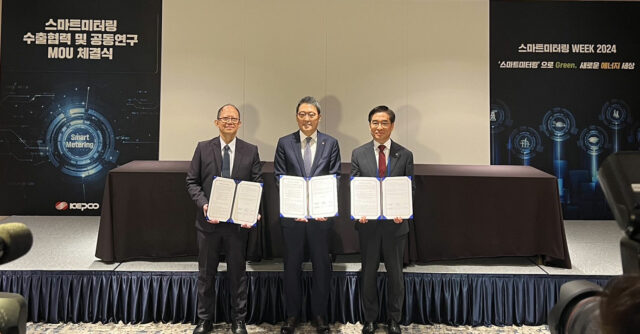
Meralco teams up with South Korean power utility for smart metering advancement

(L-R) Meralco Vice-President and Head for Revenue Assurance and Metering Services Marvin G. Gonsalves, KEPCO Corporate Senior Vice-President, Chief Safety Officer, and Chief Operation Officer Lee Jun Ho, and KEPCO KDN Vice-President for Electric Power Intelligence Safety Division Kim Yong Ho.

MANILA Electric Co. (Meralco) has partnered with South Korean power utility Korea Electric Power Corp. (KEPCO) and its Knowledge Data Network (KDN) to advance the use of “smart metering” technologies.

In a statement on Thursday, Meralco said it signed a memorandum of understanding (MoU) with KEPCO and KDN to facilitate knowledge sharing on the use of digital technology and emerging business trends in the cities of Seoul and Manila.

The partnership also seeks to promote cooperation for participation in the smart metering business, as well as collaboration in securing local partners and networks in both countries.

The MoU also covers cooperation in understanding the technologies of the parties involved through training.

“Our collaboration with KEPCO and its KDN forms part of our efforts to leverage new technologies and continuously find innovative ways to make Meralco’s service more reliable and efficient for the benefit of our customers,” Meralco Vice-President and Head for Revenue Assurance and Metering Services Marvin G. Gonsalves said.

KEPCO is the largest electric utility company in South Korea, responsible for the generation, transmission, and distribution of power.

Since 2021, Meralco has been integrating smart metering technologies into its distribution network to improve operational efficiency, enhance grid reliability and resiliency, as well as empower its customers.

Smart meters allow electricity consumers to monitor their power consumption in real time.

In September last year, Meralco said it would pilot test about 5,000 smart meters as part of its advanced metering infrastructure program.

“As a leader in the energy industry, Meralco actively invests in the improvement of its distribution network to deliver reliable, stable, and safe electricity service to its eight million customers,” the company said.

Meralco’s controlling stakeholder, Beacon Electric Asset Holdings, Inc., is partly owned by PLDT Inc.

Hastings Holdings, Inc., a unit of PLDT Beneficial Trust Fund subsidiary MediaQuest Holdings, Inc., has an interest in BusinessWorld through the Philippine Star Group, which it controls. — Sheldeen Joy Talavera

​Coins.ph records increases in trading volume, users in November following Bitcoin’s surge

CRYPTOCURRENCY exchange Coins.ph saw its trading volume grow by more than 10 times year on year and also recorded an increase in its users in November after Bitcoin’s value reached record highs.

“Coins.ph has become synonymous with trust, innovation, and excellence. As Bitcoin makes headlines worldwide, we are proud to provide Filipinos with the best platform to capitalize on this historic moment,” Coins.ph Chief Executive Officer Wei Zhou said in a statement.

Bitcoin rose 5.05% to $96,286 at 2130 GMT on Wednesday, adding $4,633 to its previous close, Reuters reported.

Bitcoin, the world’s biggest and best-known cryptocurrency, is up 150.3% from the year’s low of $38,505 on Jan. 23.

Aside from Bitcoin’s surge, Coins.ph growth was also driven by its peso-to-crypto features and global expansion.

“Riding on Bitcoin’s historic surge to new all-time highs, Filipinos are returning to the crypto market in droves, and Coins.ph is leading the charge with its unrivaled features, ease of use, and commitment to financial empowerment,” Coins.ph said.

The crypto exchange said it is set to launch new products and expand its services further in the coming months.

Coins.ph in May received sandbox approval from the Bangko Sentral ng Pilipinas (BSP) for PHPC, a peso-based stablecoin.

Stablecoins are pegged to a fiat currency or commodity to give it a stable value, unlike other cryptocurrencies like Bitcoin or Ethereum, which have volatile prices as they are not backed by assets.

PHPC will remain at a stable value of one-to-one to the peso and backed by cash and cash equivalents stored in Philippine bank accounts.

Coins.ph now also has over 120 peso-trading crypto exchange pairs.

“We are taking the Coins.ph experience to the world showing the best of what the Philippines has to offer. With a strong capital position to expand globally, and historic growth locally we are well positioned to be a leader not just here in the Philippines, but internationally as well,” Mr. Zhou said. — Aaron Michael C. Sy with Reuters

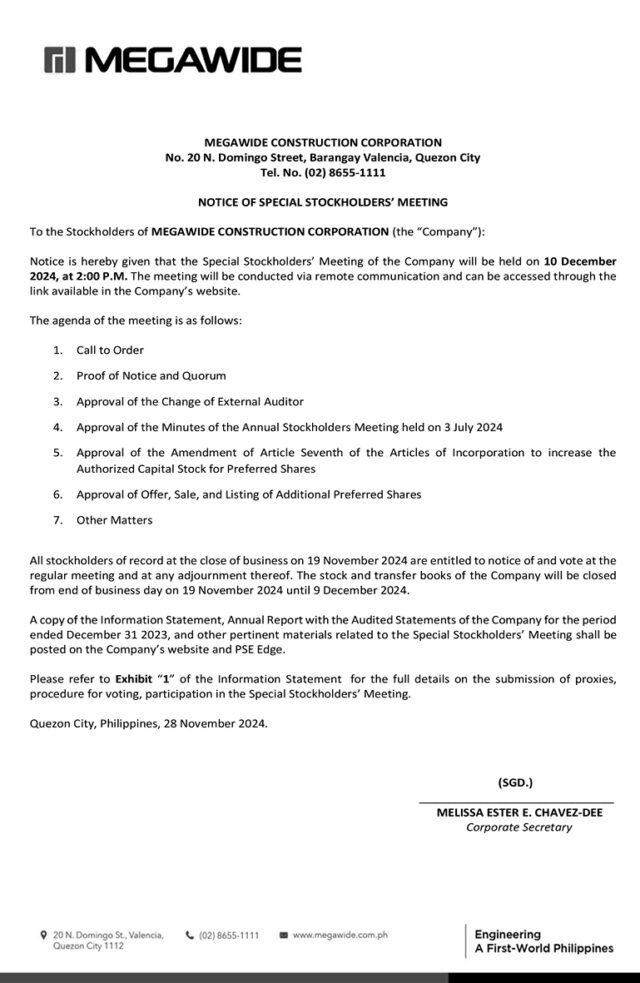
Megawide Construction Corp. announces Special Stockholders’ Meeting on Dec. 10 via remote communication


Spotlight is BusinessWorld’s sponsored section that allows advertisers to amplify their brand and connect with BusinessWorld’s audience by publishing their stories on the BusinessWorld Web site. For more information, send an email to online@bworldonline.com.

Join us on Viber at https://bit.ly/3hv6bLA to get more updates and subscribe to BusinessWorld’s titles and get exclusive content through www.bworld-x.com.

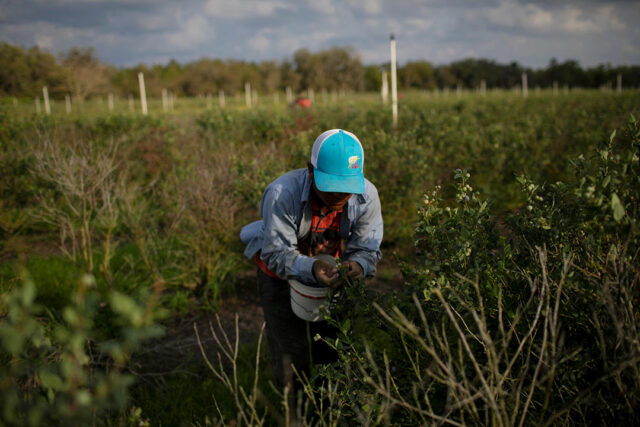
Trump asked to spare farm workers from deportation

REUTERS

WASHINGTON — US farm industry groups want President-elect Donald Trump to spare their sector from his promise of mass deportation, which could upend a food supply chain heavily dependent on immigrants in the US illegally.

So far Mr. Trump officials have not committed to any exemptions, according to interviews with farm and worker groups and Mr. Trump’s incoming “border czar” Tom Homan.

Nearly half of the nation’s approximately two million farm workers lack legal status, according to the departments of Labor and Agriculture, as well as many dairy and meat-packing workers.

Mr. Trump, a Republican, vowed to deport millions of immigrants in the US illegally as part of his campaign to win back the White House, a logistically challenging undertaking that critics

say could split apart families and disrupt US businesses.

Mr. Homan has said immigration enforcement will focus on criminals and people with final deportation orders but that no immigrant in the US illegally will be exempt.

He told Fox News on Nov. 11 that enforcement against businesses would “have to happen” but has not said whether the agricultural sector would be targeted.

“We’ve got a lot on our plate,” Mr. Homan said in a phone interview this month.

Mass removal of farm workers would shock the food supply chain and drive consumer grocery prices higher, said David Ortega, a professor of food economics and policy at Michigan State University.

“They’re filling critical roles that many US-born workers are either unable or unwilling to perform,”  Mr. Ortega said.

Farm groups and Republican allies are encouraged by the incoming administration’s stated focus on criminals.

Dave Puglia, president and CEO of Western Growers, which represents produce farmers, said the group supports that approach and is concerned about impacts to the farm sector if a deportation plan was targeted at farm workers.

Trump transition spokesperson Karoline Leavitt did not directly address the farmer concerns in a statement to Reuters.

“The American people re-elected President Trump by a resounding margin giving him a mandate to implement the promises he made on the campaign trail, like deporting migrant criminals and restoring our economic greatness,” Ms. Leavitt said. “He will deliver.”

Mr. Trump announced on Saturday that he would nominate Brooke Rollins, who chaired the White House Domestic Policy Council during his first term, to become agriculture secretary.

Agriculture and related industries contributed $1.5 trillion to the US gross domestic product, or 5.6%, in 2023, according to the US Department of Agriculture.

In his first administration, Mr. Trump promised the farm sector that his deportation effort would not target food sector workers, though the administration did conduct raids at some agricultural worksites, including poultry processing plants in Mississippi and produce processing facilities in Nebraska.

US Representative John Duarte, a Republican and fourth-generation farmer in California’s Central Valley, said farms in the area depend on immigrants in the US illegally and that small towns would collapse if those workers were deported. 

Mr. Duarte’s congressional seat is one of a handful of close races where a winner has yet to be declared.

Mr. Duarte said the Trump administration should pledge that immigrant workers in the country for five years or longer with no criminal record will not be targeted and look at avenues to permanent legal status.

“I would like to hear more clearly expressed that these families will not be targeted,” he said.

Farmers have a legal option for hiring labor with the H-2A visa program, which allows employers to bring in an unlimited number of seasonal workers if they can show there are not enough

US workers willing, qualified and available to do the job.

The program has grown over time, with 378,000 H-2A positions certified by the Labor department in 2023, three times more than in 2014.

But that figure is only about 20% of the nation’s farm workers, according to the USDA. Many farmers say they cannot afford the visa’s wage and housing requirements. Others have year-round labor needs that rule out the seasonal visas.

Farmers and workers would benefit from expanded legal pathways for agricultural laborers, said John Walt Boatright, director of government affairs at the American Farm Bureau Federation, a farmer lobby group.

“We need the certainty, reliability, and affordability of a workforce program and programs that are going to allow us to continue to deliver food from the farm to the table,” said John Hollay, director of government relations at the International Fresh Produce Association, which represents produce farmers.

For decades, farm and worker groups have attempted to pass immigration reform that would enable more agricultural workers to stay in the US, but the legislation has failed so far.

The risk of enforcement against farms is likely low because of the necessity of the workers, said Leon Fresco, an immigration attorney at Holland & Knight.

“There are some very significant business interests that obviously want agricultural labor and need it,” he said.

But for farm workers, the fear of enforcement can create chronic stress, said Mary Jo Dudley, director of the Cornell Farmworker Program, which is training workers to know their rights if confronted by immigration officials.

If there are again raids on meat-packing plants, immigration enforcement should take precautions to avoid detaining workers in the country legally, said Marc Perrone, international president of the United Food and Commercial Workers union, which represents some meat-packing workers.

Edgar Franks, a former farm worker and political director at Familias Unidas por la Justicia, a worker union in Washington state, said the group is seeing new energy from workers to organize.“The anxiety and fear is real. But if we’re together, there’s a better chance for us to fight back,” he said. — Reuters

Entertainment News (11/29/24)


Dionne Warwick coming to Manila

GRAMMY AWARD winner Dionne Warwick is coming to Manila for a special concert, One Last Time…, together with her band on Jan. 24, 2025 at the New Frontier Theater in Quezon City. Tickets are now on-sale at TicketNet.com.ph and TicketNet outlets nationwide. The concert is presented by Wilbros Live. Ms. Warwick will be performing her greatest hits and favorite songs including classic hits like “Walk On By,” “Don’t Make Me Over,” “I’ll Never Love This Way Again,” “Alfie,” “That’s What Friends Are For,” “I Say a Little Prayer,” “I’ll Never Fall in Love Again,” “Do You Know The Way to San Jose,” “What The World Needs Now” and many more. She is currently working on a gospel album. The first single, “Peace Like a River,” is a duet with Dolly Parton. The Dionne Warwick: Don’t Make Me Over documentary is currently streaming on HBO Max.


Cat adoption, toy jeepneys at Araneta City

ARANETA CITY, along with City Cats of Cubao will be holding a cat adoption drive. This will be held on Nov. 30, 10 a.m. to 8 p.m., at the MacArthur Activity Area of Ali Mall. Meanwhile, a Toy Jeep Competition will be held from Nov. 30 to Dec. 1, 11 a.m. to 7 p.m., at Level 3 of the Farmers Plaza Bazaar Extension, Farmers Plaza. The event will feature the top 40 toy jeepney makers from the National Capital Bulacan, and Rizal as they showcase their crafting skills in making toy jeeps. Over at the Gateway Cineplex 18 Lobby, Gateway Mall 1, Coca-Cola’s Santa Snow Globe will go on exhibit from Nov. 28, 2024 to Jan. 11, 2025. Over at the Expo Centro Parking, Farmers Garden, the Parolan, a space where the traditional Christmas lanterns can be enjoyed and bought, is open daily from 6 a.m. to 9 p.m. until Dec. 31. Meanwhile, Araneta City will be holding regular events throughout the Christmas season. A Santa & Friends Meet and Greet is held Fridays to Sundays at 4p.m., while a Fireworks Display happens on those days at 7 p.m. At 4 p.m. on Sundays, there is a Mascot Parade. The various malls and attractions in Araneta City will have special operating hours over the holiday season. Fiesta Carnival, Gateway Malls 1 and 2, Farmers Plaza, and Ali Mall will be open from 11 a.m. to 10 p.m. on Mondays to Fridays; from 10 a.m. to 10 p.m. on Saturdays, Sundays, and holidays; from 9 a.m. to 7 p.m. on Dec. 24 and 31; from noon to 10 p.m. on Dec. 25 and Jan. 1; and from 10 a.m. to 10 p.m. on Dec. 26 to 30.


Anne Curtis figure in Madame Tussauds HK

MADAME TUSSAUDS Hong Kong (HK) is an attraction featuring wax displays of individuals who important in their craft. Filipina actress Anne Curtis has now joined this lineup, becoming the newest Filipino to be displayed at Madame Tussauds’ star-studded halls. Her waxwork figure is dressed in an elegant cream-colored Dior gown donated by the actress. It was unveiled on Nov. 27 in Makati and will go on view in the Hong Kong branch of the waxworks starting Dec. 9. The figure will be displayed at the Hong Kong Glamour Zone, alongside Hollywood A-listers Brad Pitt, Nicole Kidman, Lady Gaga, Chris Hemsworth, and more. Other Filipino icons in that section are Miss Universe 2015 Pia Wurtzbach, Miss Universe 2018 Catriona Gray, and boxer Manny Pacquiao. Among the actress’ many films and TV series over her 25-year career are No Other Woman, BuyBust, Dyosa, Dyesebel, ’Wag Kang Lilingon, and Sid & Aya: A Love Story. She is also a celebrity advocate for Children of UNICEF Philippines. For admission tickets and more information, visit https://www.madametussauds.com/hong-kong/en/.


Sale at Newport World Resorts

IN TIME for the holiday rush and in celebration of Pasay City’s 161st founding anniversary on Dec. 2, Newport World Resorts will be holding a sale from Nov. 29 to Dec. 2. Style-savvy shoppers score discounts of up to 70% off on chic apparel and accessories from brands like Giordano Ladies, Swarovski, Mango, and more. Tech enthusiasts snag deals at Beyond the Box with up to 50% off on selected gadgets and accessories. For watch aficionados, Segna Tempo, Longines, and Tissot are offering discounts up to 60% off on selected timepieces. Diners will get a free dessert at Tao Yuan with no minimum spend required. Over at The Grove 2F Newport Mall, the first Mega Saver Holiday Sale, in partnership with Megasavers Appliances, offers shoppers even more deals. Discounts of up to 30% will be offered on appliances, gadgets, and furniture from Samsung, LG, Apple, and more. Epic Rewards members enjoy special perks like Epic Points payment for purchases and delivery fees. For more information on the Holiday Sale event at Newport World Resorts, visit www.newportworldresorts.com and follow @newportworldresorts on Facebook, Instagram, and TikTok.


Björn Again coming to Singapore

THE ABBA show, Björn Again, is coming to the Sands Theater, Marina Bay Sands, Singapore for three performances on July 4 and 5, 2025. Presented by Base Entertainment Asia in association with The Music Group, tickets are now on sale via Marina Bay Sands Ticketing, SISTIC and Klook. The show includes performances of ABBA’s biggest hits, from “Dancing Queen,” “Mamma Mia,” “Gimme! Gimme! Gimme! (A Man After Midnight)” and “SOS” to iconic ballads like “The Winner Takes It All,” “Fernando,” and “Knowing Me, Knowing You.”


Mind Rover tours the Philippines

THE MIND MUSEUM has partnered with 2GO, a logistics solutions provider, to bring STEAM (Science, Technology, Engineering, Arts, and Math) learning experiences to kids across the Philippine islands through the Mind Rover. The Mind Rover is a custom-built museum bus which measures over 12 meters, filled with interactive science exhibits, equipped for workshops and science shows led by The Mind Museum’s team of Mind Movers, which will visit communities in the various islands of the archipelago. The first leg under this partnership was in Bacolod. The “mind roving journey” is always FREE of charge to the communities it serves. Follow the Mind Rover’s journey @TheMindMuseum Facebook and Instagram. Parties that are interested to help bring The Mind Rover to the Visayas and Mindanao or have beneficiaries in mind can e-mail inquiry@themindmuseum.org for more details.

Buffett’s life advice may be more valuable than his portfolio

FREEPIK

ON MONDAY, Warren Buffett announced that he was donating more than $1 billion in Berkshire Hathaway, Inc. shares to four family foundations — a continuation of his commitment to give away the vast majority of his wealth to charity rather than pass it on to his family.

With the announcement, Buffett put out a memo that was less about the nuts and bolts of the donation than the importance of getting your affairs in order at the end of your life. Close readers of Buffett know that this is his MO. Below the surface, his musings are often steeped with advice about leadership and management.

But at 94, Buffett is clearly thinking about his mortality and acknowledges that “father time always wins.” More than ever, he seems determined to pass on not just lessons about what makes a good investment but what makes a good life. Here are my takeaways:

Don’t create dynasties (or nepo babies). Buffett mentions more than once in his memo that he does not believe in dynastic wealth. “Parents should leave their children enough so they can do anything but not enough that they can do nothing,” he writes. Two out of his three kids are on Berkshire’s board, but none are in management — nor will any of them ever become CEO.

Contrast this with the nepo baby moment we are seeing in other parts of the business world as a generational shift in power takes place at family-run companies. (For those not fluent in internet-speak, a nepo baby is someone whose career benefits from the wealth or connections of successful parents.) The result often is infighting, a la Estée Lauder Cos. and News Corp., or a tendency to put the wrong person in charge (see: Tyson Foods Inc.). Tasking your children with giving away massive sums of a family’s wealth rather than accumulating more of it seems like a healthier way to live.

Acknowledge your good fortune. Buffett leans toward self-effacement, and more often credits his success with his good luck than he does with his genius. He writes that his lucky streak “began in 1930 with my birth in the United States as a white male,” adding that, “So favored by my male status, very early on I had confidence that I would become rich.”

This mentality — that his lot in life has had an outsized-impact on his prosperity — is what’s motivated him to pass along his wealth “to others who were given a very short straw at birth.” It likely has also prevented a lot of hubris and the kind of unforced errors that can come with it.

Be transparent about your plans for the future. Buffett says that every parent should have their children read their will, explain why they made certain decisions, and adopt their feedback when it makes sense. “I saw many families driven apart after the posthumous dictates of the will left beneficiaries confused and sometimes angry,” he writes. “I also witnessed a few cases where a wealthy parent’s will that was fully discussed before death helped the family become closer.”

Buffett has taken the same approach to succession planning at Berkshire, where his transparency has prevented a lot of drama. As I’ve written before, a CEO handoff should be without mystery and as boring as possible. The same goes for a will.

Live below your means. Buffett has long extolled the magic of compounding, describing it as akin to a snowball rolling downhill picking up speed and mass. In his memo, he writes that the real payoff comes in the final 20 years of life. The famously frugal Buffett — he lives in the same house in Omaha he bought in 1958 — has amassed a huge amount of savings, or as he dubs it, “units of deferred consumption.” That’s allowed the snowball to grow even bigger, accumulating more money for him to give away.

Tell your kids you’re proud of them. That’s what Buffett does at the end of his letter. No notes.

BLOOMBERG OPINION