Home Blog Page 1805

From decree to defeat: Inside South Korea’s failed martial law attempt
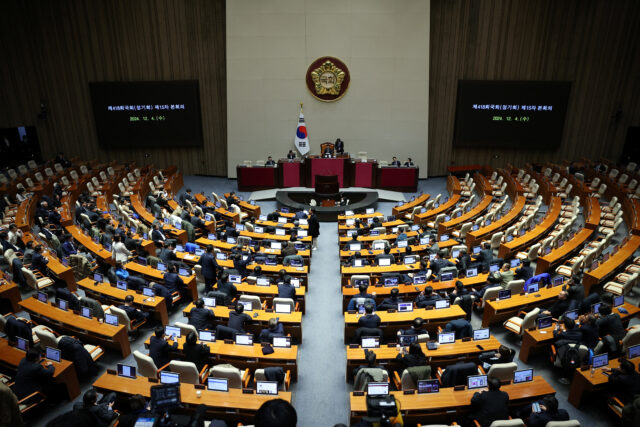
Lawmakers sit inside the hall at the National Assembly, after South Korean President Yoon Suk Yeol declared martial law, in Seoul, South Korea, Dec. 4, 2024. — REUTERS

SEOUL – At his confirmation hearing three months ago, South Korea’s defence minister Kim Yong-hyun rejected accusations from the opposition that he wanted to impose martial law. It was, the conservative hardliner said, political propaganda.

But when tensions between President Yoon Suk Yeol and his political opponents reached a boiling point this week, it was Kim, a longtime confidant of Yoon, who recommended imposing martial law, according to a senior military official and impeachment filings by opposition figures on Wednesday.

Kim proposed the idea because he believed the liberal opposition had pushed Yoon to the edge, said the military source, who denied that planning for martial law had been in the works since before the confirmation hearing.

Yoon’s shock move on Tuesday divided his ministers and his ruling People Power Party and unleashed six hours of political chaos in South Korea. His televised late-night declaration of martial law plunged one of Asia’s largest economies into crisis and blemished the reputation of a U.S. ally that transitioned from dictatorship to a democratic success story in the 1980s.

By the time Yoon, 63, rescinded martial law early Wednesday following a vote by the opposition-dominated parliament to reject it, his political fortunes and his grip on the country had imploded spectacularly.

As the day wore on, many of Yoon’s allies deserted him and support grew across the political spectrum for his impeachment and removal from office. He now faces an impeachment vote that the opposition is seeking to push through this week.

This account of the moments leading up to the martial law declaration and its aftermath is based on Reuters interviews with more than a dozen officials, lawmakers and staffers. Some spoke on the condition of anonymity to discuss a sensitive issue.

Four of these people highlighted the pivotal role played by Kim, a high-school buddy of Yoon, in supporting and facilitating a botched power grab that the president said was necessary to eradicate unspecified “pro-North Korean and anti-state forces” arrayed against him and the country.

The defence ministry said it had no comment on detailed questions posed by Reuters about Kim’s involvement in planning the decree. In a statement released through the ministry on Wednesday, Kim took responsibility for the orders given to the troops who stormed the parliament building, and offered to resign.

A spokesperson for Yoon’s office told Reuters that the martial law decree was done in accordance with the constitution and was necessary to protect democracy.

There have been more than a dozen declarations of martial law since the foundation of the South Korean republic in 1948, the last in 1979-1980 following the assassination of former President Park Chung-hee.

CABINET MEETING
The speed with which long-simmering disputes between the conservative government and its opponents over budgets, investigations and scandals spiralled stunned South Korea and its allies.

It also blindsided the ruling party, whose leader Han Dong-hoon told reporters the presidential office had not consulted with him about the move. He joined calls for Yoon to rescind the order.

About four hours before his 10:23 p.m. announcement of martial law, Yoon’s office first told the national police chief to be on standby, a police official told Reuters. At 9 p.m. Yoon convened a cabinet meeting.

At that meeting “most” members were against the plan, according to three government officials. Yoon forged ahead regardless.

Among those opposed were Prime Minister Han Duck-soo, a Yoon appointee who would become acting president if Yoon is removed from office, as well as Foreign Minister Cho Tae-yul, and Finance Minister Choi Sang-mok, one of the sources said.

A spokesperson for the prime minister’s office said they had no comment. A foreign ministry official confirmed Cho attended cabinet meetings before and after the martial law announcement but did not elaborate. A finance ministry spokesperson could not be reached outside business hours on Wednesday.

Yoon, who was narrowly elected in 2022, has battled record low approval ratings as scandals engulfed him and his wife, and has expressed increasing frustration over opposition moves to control government budgets.

“The so-called Chungam faction, those who went to the same school as the president, these people have been assigned to positions with authority over martial law and those able to carry out martial law for several months already,” said Kim Min-seok, a lawmaker from the opposition Democratic Party, who questioned Kim Yong-hyun at the September hearing.

Chungam is the name of the high school that Yoon attended alongside Kim Yong-hyun, who would become a key confidant of Yoon and his head of presidential security.

While the defence minister played an influential role, Kim Min-seok said he believes the president was ultimately calling the shots.

Yoon sought to use the military as a tool to prevent investigations into him and his wife over influence peddling allegations, among other scandals, and to maintain power, Kim Min-seok told Reuters in an interview at his office on Wednesday. Yoon and his wife have denied wrongdoing.

Outside the office, the halls of the parliament building bore the damage and debris from clashes with special forces troops the night before.

SCRAMBLE FOR PARLIAMENT
Kim Min-seok was among 190 lawmakers who rushed back to the domed National Assembly building on the south bank of the Han River after Yoon’s TV address.

Central to the failure of Yoon’s gambit was the swift and unanimous vote by lawmakers who defied police and special forces troops to gather in the legislature to block the martial law decree.

The main opposition parties summoned members of parliament and their staffers back to the building when they heard Yoon’s speech. A short time later came a military decree banning activity by parliament and political parties and calling for government control of the media.

Confusion reigned as elected representatives, journalists, and others grappled with what the order meant for them. On YTN, a major broadcaster, a male anchor was visibly shaken, his voice trembling after Yoon’s address.

By 10:50 p.m., just 25 minutes after Yoon’s speech, police were blocking access to the parliament, Kim Min-gi, the Secretary-General of the National Assembly, said at a briefing on Wednesday.

An “uncountable” number of police surrounded the main doors of the national assembly hall building, said Jeon Ki-eun, with the office of the parliamentary leader of the Democratic Party of Korea.

“Police were at all of the doors blocking lawmakers and citizens from going in and out,” he said.

Lee Jun-seok, New Reform Party lawmaker and ousted former leader of Yoon’s People Power Party, said it appeared that some police did not know what to do.

“I overheard some of them communicating over walkie-talkies, some saying ‘let lawmakers in’ and at other times ‘don’t let them in’,” he said.

Some lawmakers, including Kim Min-seok and senior Democratic Party leaders, scaled the walls to enter the complex.

At about 11:40 p.m. the military began deploying 230 soldiers in 24 helicopter flights into the national assembly compound, and another 50 entered over a fence.

The American-designed UH-60P Black Hawk helicopters landed on a sports field inside the complex and disgorged masked soldiers.

Park Sun-won, a member of parliament who previously worked for the National Intelligence Service, provided Reuters with his analysis that concluded the troops included members of the 707th Special Missions Group, which is tasked with anti-terrorism and top-secret missions, and the 1st Airborne Special Forces Brigade, which had a history of involvement with a coup in 1979.

The military contingent also included the Special Duty Team (SDT) of the Army Capital Defense Command, another anti-terrorism unit.

Kim Tae-hyung, a member of boy band BTS who is known professionally as V, is serving his mandatory national service with the SDT in Seoul, though Reuters could not determine whether he participated in the operation.

When asked about the units deployed and whether the K-pop star was involved, the defense ministry said it could not comment on specific units or agents. BTS’s agency, HYBE, was not immediately available for comment.

Another Democratic Party lawmaker, Kim Nam-geun, said he and 10 others were blocked by troops from entering a side door and resorted to climbing a wall.

“It was very intense,” he said.

The troops tried to enter the main building, breaking windows, raising fears that they would block a vote, but lawmakers’ aides and citizens helped build a barricade to block access.

Jeon said he and other staffers stacked chairs, tables, flower pots and other furniture against the doors, hoping that any lawmakers who had yet to arrive could make their way in through hidden corridors.

Footage showed some staffers using fire extinguishers to keep troops at bay. Lee Jun-seok said the troops were armed with non-lethal projectiles.

While scuffles broke out at the gates, there was no serious violence. And despite the order for media censorship, no such control was exerted.

“The generation that experienced real martial laws in Korea see this as child’s play and an amateurish show because of what appeared to be the soldiers’ inability to lock down the National Assembly, or perhaps even lack of communication from the command,” said Duyeon Kim, a Seoul-based analyst with the Center for a New American Security.

HISTORIC VOTE
Shortly before 1 a.m., National Assembly Speaker Woo Won-shik convened a session. Within 10 minutes the gathered lawmakers unanimously passed a resolution calling for Yoon to lift the state of martial law.

Under South Korea’s constitution the president must rescind a martial law decree if the parliament votes to oppose it.

“Inside the voting room, Democrats were pretty vocal and were absolutely unified on stopping this situation,” Lee Jun-seok said. “It was obvious that the Democrats were in the driving seat, leading up to the vote.”

Some members of Yoon’s ruling party showed up for the vote, which passed 190-0.

Around 1:10 a.m., troops started leaving the parliament building. The last were gone by 2 a.m.

Finally, at 4:30 a.m., Yoon backed down and said he would lift the martial law, sparking joyous celebrations among the thousands of demonstrators gathered outside the parliament. — Reuters


Commitment to stable, reliable and efficient electricity service

From left: Meralco Vice-President and Head of Corporate Communications Joe Zaldarriaga, Meralco Senior Vice-President and Head of External and Government Affairs Atty. Arnel Casanova, and Pampanga Electric Cooperative II (PELCO II) Chief Management Advisor Joe-Mel S. Zaporteza

Manuel V. Pangilinan-led Manila Electric Company (Meralco) pledged to continuously work to improve delivery of stable, reliable and efficient service to consumers across its franchise area.

During the recently concluded Capampangan in Media, Inc. (CAMI) Forum held in Clark, Pampanga moderated by CAMI member and Meralco Vice-President and Head of Corporate Communications Joe Zaldarriaga, officials highlighted Meralco’s ongoing initiatives to enhance power service reliability within and beyond its franchise area, including Pampanga.

These efforts, driven by strategic investments and partnerships, aim to spur economic growth, expand businesses, and improve community livelihoods.

Mr. Zaldarriaga emphasized the critical role of stable, adequate, and reliable electricity in driving national development and Meralco Senior Vice-President and Head of External and Government Affairs Atty. Arnel Casanova shared that several local government unit (LGU) leaders from various provinces have approached Meralco to explore potential partnerships with respective electric cooperatives. These initiatives are designed to support LGUs in powering economic growth and uplifting the lives of their communities.

Pampanga Electric Cooperative II (PELCO II) Chief Management Advisor Joe-Mel S. Zaporteza, for his part discussed the tangible benefits of Meralco’s investments and management support to PELCO II. These efforts have enhanced customer service and reliability, with further improvements under way, including a new 20-megavolt ampere (MVA) substation in Mabalacat set to be energized early next year.

PELCO II, an electric cooperative co-managed by Meralco, recently acquired a new mobile substation to boost existing supply in its service area.


Spotlight is BusinessWorld’s sponsored section that allows advertisers to amplify their brand and connect with BusinessWorld’s audience by publishing their stories on the BusinessWorld Web site. For more information, send an email to online@bworldonline.com.

Join us on Viber at https://bit.ly/3hv6bLA to get more updates and subscribe to BusinessWorld’s titles and get exclusive content through www.bworld-x.com.

Trump’s crypto advocacy steers businesses away from traditional treasury assets

STOCK PHOTO | Image by André François McKenzie from Unsplash

U.S. President-elect Donald Trump’s pro-crypto stance is prompting small businesses to allocate portions of their cash to bitcoin, challenging the dominance of traditional assets as companies look for more robust inflation hedges.

Over the past month, biotech firms Enlivex Therapeutics, Acurx Pharmaceuticals and Hoth Therapeutics have set a target of purchasing up to $1 million of bitcoin to hold as a treasury reserve asset.

The moves underscore the growing appeal of bitcoin as a legitimate tool for corporate treasurers, who see it as a better alternative in a landscape fraught with economic uncertainty, geopolitical risks and fiscal concerns that have complicated the outlook for conventional assets like Treasuries and cash.

“The benefits of bitcoin being used as a treasury reserve asset are obviously apparent. Inject bitcoin into a company and now it’s on its way into the top 100 company (by market value) rankings,” said Samson Mow, CEO of crypto infrastructure firm JAN3.

Corporations held around 3.3% of the total supply of bitcoin as of August, up 30% year over year, according to a report by bitcoin-focused financial services firm River.

“The things that we’ve been going through in the last three or four years were such that evaluating bitcoin as an additional tool became a must,” Enlivex CEO Oren Hershkovitz said.

“We were considering this regardless of Trump’s election, but it was definitely another argument in favor of executing this strategy.”

Once confined to the fringes, bitcoin has soared in popularity in the last few years after endorsements from major institutions. Trump’s promise of a crypto-friendly administration has grown its clout further.

“The next four years should be pretty good for crypto,” Acurx CEO David Luci said.

The incoming president has said he wants to make the U.S. the “crypto capital of the planet” and has promised a council to advise on industry-related policy.

Still, skeptics say the volatility risks associated with bitcoin, given its notorious price fluctuations, make it unfit as an inflation hedge.

Securities and Exchange Commission Chair Gary Gensler has called the asset speculative and volatile, even as the regulator approved spot bitcoin exchange traded funds earlier this year.

The currency has also mirrored declines in the S&P 500 index <.SPX> during periods of economic slowdown in the past, calling into question its effectiveness.

But such criticism is “unfair,” said Henry Robinson, co-founder of crypto mining firm Decimal Digital Currency, adding that “bitcoin is not uniquely volatile.”

BALANCING HYPE WITH FOCUS
MicroStrategy, the largest corporate holder of bitcoin, pioneered the approach of integrating bitcoin into its treasury in 2020. Since then, the token’s influence on the company’s stock price has been significant, with shares often moving in lockstep with the overall crypto sentiment.

But recent adopters of bitcoin have emphasized that they do not plan on becoming a proxy for the currency and will continue focusing on their core business.

“We’re a biotech company. We focus on developing our clinical assets. What I know how to do at the end of the day is to take a drug from pre-clinical to clinical to approval,” Enlivex’s Hershkovitz said, referring to the different stages of testing an experimental treatment.

Analysts say companies could explore ways to monetize their bitcoin holdings without selling them, should they need capital, by using the currency reserves as collateral to secure loans, either from banks or investors.

“Lending against crypto is totally normal and the collateral is safe,” Decimal Digital’s Robinson said.

The hype around bitcoin may also drive stock valuations higher, giving such companies added leverage to sell shares for their capital needs. MicroStrategy shares have jumped over 31-fold since it made bitcoin its primary treasury reserve asset.

“The balance sheets of these companies will be more attractive to the public,” said Brandon Mintz, CEO of Bitcoin Depot, which began investing a portion of its cash into the crypto in June.
MicroStrategy and Hoth did not immediately respond to a request for comment. — Reuters

A holiday gift of health and security: PhilCare partners with Globe Business for cyber protection

L-R: PhilCare Executive Vice-President for Operations Raymond Tiangco and Globe Business VP for Sales and Account Management Cocoy Claravall shook hands at the contract signing, highlighting the need to strengthen cybersecurity in essential sectors such as healthcare.

PhilCare, one of the country’s leading Health Maintenance Organizations (HMOs), has partnered with Globe Business to enhance its cybersecurity measures and deliver the dual gift of health and security to its members this holiday season.

With phishing and business email compromise (BEC) on the rise, healthcare providers are increasingly at risk of cyberattacks. Globe Business enables PhilCare to handle these risks effectively through its suite of cybersecurity solutions. It also helps them stay compliant with industry regulations and reduce financial and reputational damage.

“By integrating Globe’s advanced cybersecurity solutions, we can ensure that our members’ personal information remains safe and secure as they access their healthcare plans online. Having Globe Business as our partner allows us to focus on what truly matters — providing peace of mind and reliable healthcare services, not just during the holidays but every day,” said Raymond Tiangco, Executive Vice-President for Operations of PhilCare.

Globe Business’ cutting-edge cybersecurity solutions are designed to protect critical systems and data. These tools equip PhilCare to proactively address cyber threats, ensuring seamless service delivery, confidentiality, and reinforcing operational resilience.

L-R: Alex D. Panganiban, Assistant Vice-President, IT Group, PhilCare; Alex S.D. Aquino, Vice-President, CIO, IT Group, PhilCare; Raymond Tiangco, Executive Vice-President for Operations, PhilCare; Cocoy Claravall, Vice-President for Sales and Account Management, Globe Business; and Jovitt Bajar, Vice-President for Sales, Globe Business.

“We understand that cybersecurity is crucial in today’s digital environment, particularly for healthcare providers like PhilCare that manage sensitive information daily. Through this partnership, we’re not only reinforcing PhilCare’s digital infrastructure but also supporting their mission to deliver secure healthcare services to Filipinos,” said KD Dizon, Vice-President and Head of Globe Business.

The partnership underscores the dedication of Globe Business to strengthen cybersecurity in essential sectors such as healthcare. Through its continuous efforts to prioritize data security, Globe Business helps organizations enhance brand trust and protect their customers.

For more information about Globe Business’s cybersecurity services, visit https://www.globe.com.ph/business. Learn more about PhilCare’s healthcare plans at https://philcare.com.ph, facebook.com/philcareph, and linkedin.com/company/philcareph-inc/.


Spotlight is BusinessWorld’s sponsored section that allows advertisers to amplify their brand and connect with BusinessWorld’s audience by publishing their stories on the BusinessWorld Web site. For more information, send an email to online@bworldonline.com.

Join us on Viber at https://bit.ly/3hv6bLA to get more updates and subscribe to BusinessWorld’s titles and get exclusive content through www.bworld-x.com.

French government felled in no-confidence vote, deepening political crisis

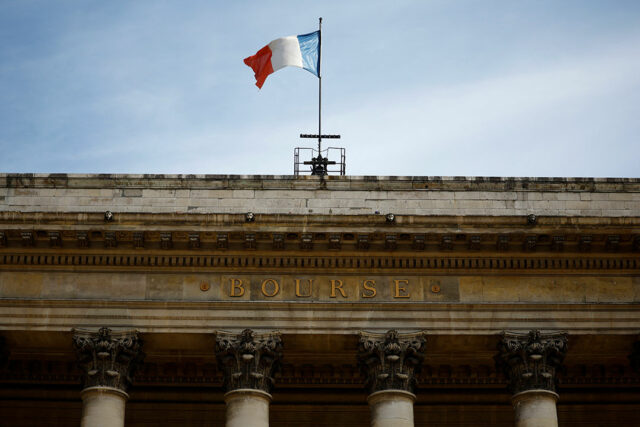
A French national flag is seen at the Palais Brongniart in Paris, France, March 25, 2024. — REUTERS

PARIS – French lawmakers passed a no-confidence vote against the government on Wednesday, throwing the European Union’s second-biggest economic power deeper into a crisis that threatens its capacity to legislate and tame a massive budget deficit.

Far-right and left-wing lawmakers joined forces to back a no-confidence motion against Prime Minister Michel Barnier, with a majority 331 votes in support of the motion.

Barnier now has to tender his resignation and that of his government to President Emmanuel Macron, making his minority government’s three-month tenure the shortest lived in France’s Fifth Republic beginning in 1958. He is expected to do so on Thursday morning, French media reported.

The hard left and far right punished Barnier for using special constitutional powers to adopt part of an unpopular budget without a final vote in parliament, where it lacked majority support. The draft budget had sought 60 billion euros ($63.07 billion) in savings in a drive to shrink a gaping deficit.

“This (deficit) reality will not disappear by the magic of a motion of censure,” Barnier told lawmakers ahead of the vote, adding the budget deficit would come back to haunt whichever government comes next.

No French government had lost a confidence vote since Georges Pompidou’s in 1962. Macron ushered in the crisis by calling a snap election in June that delivered a polarised parliament.

With its president diminished, France now risks ending the year without a stable government or a 2025 budget, although the constitution allows special measures that would avert a U.S.-style government shutdown.

France’s political turmoil will further weaken a European Union already reeling from the implosion of Germany’s coalition government, and weeks before U.S. President-elect Donald Trump returns to the White House.

The country’s outgoing defence minister Sebastien Lecornu warned the turmoil could impact French support for Ukraine.

The hard left France Unbowed (LFI) party demanded Macron’s resignation.

Barnier’s demise was cheered by far-right chief Marine Le Pen, who has sought for years to portray her National Rally party as a government in waiting.

“I’m not pushing for Macron’s resignation,” she said. “The pressure on the president will get greater and greater. Only he will make that decision.”

NO EASY EXIT FROM FRENCH POLITICAL CRISIS
France now faces a period of deep political uncertainty that is already unnerving investors in French sovereign bonds and stocks. Earlier this week, France’s borrowing costs briefly exceeded those of Greece, generally considered far more risky.

Macron must now make a choice. The Elysee Palace said the president would address the nation on Thursday evening.

Three sources told Reuters that Macron aimed to install a new prime minister swiftly, with one saying he wanted to name a premier before a ceremony to reopen the Notre-Dame Cathedral on Saturday, which Trump is due to attend.

Any new prime minister would face the same challenges as Barnier in getting bills, including the 2025 budget, adopted by a divided parliament. There can be no new parliamentary election before July.

Macron could alternatively ask Barnier and his ministers to stay on in a caretaker capacity while he takes time to identify a prime minister able to attract sufficient cross-party support to pass legislation.

A caretaker government could either propose emergency legislation to roll the tax-and-spend provisions in the 2024 budget into next year, or invoke special powers to pass the draft 2025 budget by decree – though jurists say this is a legal grey area and the political cost would be huge.

Macron’s opponents also could vote down one prime minister after the next.

ECONOMIC PAIN
The upheaval is not without risk for Le Pen.

Macron allies sought to present her as an agent of chaos after her party joined forces with the left to down Barnier.

“The French will harshly judge the choice you are going to make,” Laurent Wauquiez, a lawmaker from the conservative Les Republicains party who backs Macron, told Le Pen in parliament.

Since Macron called the summer snap election, France’s CAC 40 .FCHI benchmark stock market index has dropped nearly 10% and is the heaviest loser among top EU economies.

The euro showed little immediate reaction versus the dollar, trading for around $1.05 per euro, but dipping against other European currencies, such as the Swiss franc and the pound.

“I’m amazed the euro hasn’t moved much,” said Nick Rees, senior foreign exchange market analyst at Monex Europe. “There are two major powers in Europe, France and Germany, both of which right now are emasculated.”

Barnier’s draft budget had sought to cut the fiscal deficit from a projected 6% of national output this year to 5% in 2025. Voting down his government would be catastrophic for state finances, he had said.

Le Pen shrugged off the warning. She said her party would support any eventual emergency law that rolls over the 2024 budget’s tax-and-spend provisions into next year to ensure there is stopgap financing. — Reuters

US, Britain say they target global money laundering network used by Russians

An employee holds 1000 Russian Rouble notes at Goznak printing factory in Moscow, Russia July 11, 2019. — REUTERS

WASHINGTON/LONDON – The U.S. and Britain announced on Wednesday they had disrupted what they described as a global money laundering ring used by rich Russians to evade sanctions, and which London said laundered cash for drug traffickers, criminals and spies.

Britain’s National Crime Agency said the internationally coordinated law enforcement effort codenamed ‘Operation Destabilise’ had disrupted the network spanning 30 countries.

The operation also involved authorities in France, Ireland and United Arab Emirates, the NCA said. It had so far led to 84 arrests, and the seizure of over 20 million pounds ($25 million) in cash and cryptocurrency.

The network’s reach spanned Britain and mainland Europe to the Middle East and South America, supporting serious and organised crime around the world, the NCA said.

The U.S. Department of Treasury said it had imposed sanctions on members of the group, which it said helped elite Russians use cryptocurrency to evade sanctions imposed after the Feb. 2022 invasion of Ukraine.

Five individuals and four entities tied to “a sprawling international network of businesses and employees that have facilitated significant sanctions circumvention”, known as the TGR Group, were hit with Treasury sanctions.

“Through the TGR Group, Russian elites sought to exploit digital assets — in particular U.S. dollar-backed stablecoins — to evade U.S. and international sanctions, further enriching themselves and the Kremlin,” Acting Under Secretary for Terrorism and Financial Intelligence Bradley Smith said in a statement.

Britain’s NCA said the TGR group operated alongside another network known as “Smart”, helping Russians under sanctions access the financial system.

“For the first time, we have been able to map out a link between Russian elites, crypto-rich cyber criminals, and drugs gangs on the streets of the UK,” said Rob Jones, Director General of Operations at the NCA.

“The thread that tied them together – the combined force of Smart and TGR – was invisible until now.”

CASH EXCHANGE
The U.S. Treasury statement said Smart was headed by Ekaterina Zhdanova, already previously sanctioned by the U.S. Office for Foreign Assets Control for helping a Russian client transfer cash into western Europe through a fraudulently opened investment account and real estate purchases. Her whereabouts were not known, it said.

The Treasury said it was also targeting George Rossi, a Ukrainian national born in Russia, who it said was believed to control the TGR Group.

Britain’s NCA said the Smart network was used to fund Russian espionage operations in the past.

Both Smart and TGR were heavily enabled by the use of cryptocurrency, the NCA said. As an example, it said criminal groups in Russia with cryptocurrency would connect with drugs gangs with the same amount of money in cash elsewhere.

The networks would then arrange for the gangs to be paid in virtual currency in exchange for their cash, which would then be laundered out of the country through cash-rich businesses, such as construction companies.

After the exchange, the gangs could use the crypto to buy more drugs or firearms without the need to move any physical money across borders, the NCA said.

U.S. Treasury sanctions generally prohibit any U.S. persons or entities from conducting any transactions with sanctioned targets and freeze any U.S.-held assets belonging to the sanctioned individuals or entities. — Reuters

Lamudi recognizes top developers, launches new platform at The Outlook 2024: Philippine Real Estate Awards

Lamudi’s The Outlook 2024: Philippine Real Estate Awards recognized the country’s leading developers and key players last Nov. 21, 2024. The property platform presented 19 awards during the gala night at Shangri-La The Fort, Manila, acknowledging exceptional achievement across the industry. It also introduced new award titles that cater to the country’s reputation as a top luxury property market.

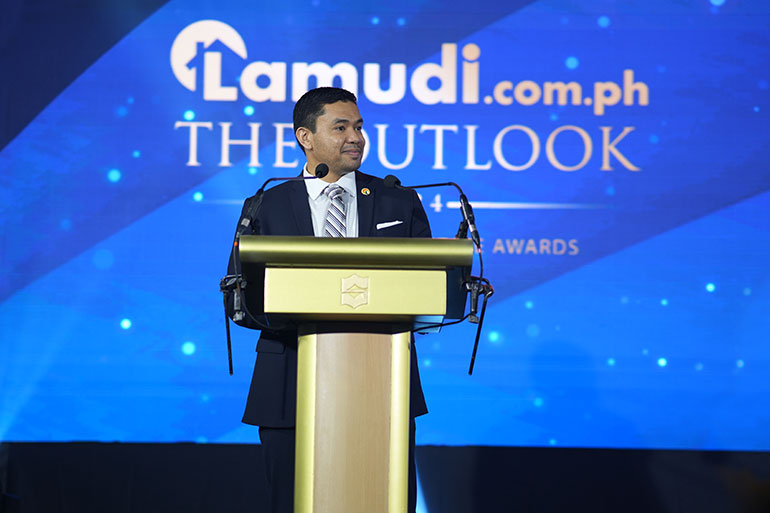
“As I look around this room, I see leaders who have shaped the skylines of our cities — leaders who have contributed to the growth of our economy and leaders who have built opportunities for families to live in their dream homes,” Michael Raquiza, Chief Executive Officer of Lamudi Philippines, welcomed the brightest minds, boldest visionaries, and most dedicated real estate professionals in the Philippines.

“The real estate market, like any other sector, is not immune to change,” he added. “Economic shifts, evolving consumer behaviors, and tech advancements require us all to remain agile, innovative, and collaborative. And that’s why events like tonight are so important. They allow us to come together, share insights, and build the partnerships necessary to shape the future of our industry.”

“From developers to financial institutions, and from policy makers to brokers, you all have played a pivotal role in driving the industry forward,” stated Lamudi CEO Michael Raquiza during The Outlook 2024: Philippine Real Estate Awards.

Apart from citations for the best houses and condominium developments across the country, Lamudi recognized the developers and projects that are building the future of real estate, one innovative and sustainable solution at a time. The Outlook 2024 acknowledged developers who are catering to market demand across different segments in established locations and emerging hotspots nationwide.

The Innovative Community Builder of the Year went to Suntrust Properties, Inc. for showcasing a diverse portfolio of themed communities that provide quality homes for every Filipino family. Meanwhile, Amaia Land Corp. was hailed the Sustainability Advocate of the Year for its commitment to building sustainable projects that can withstand the test of time and house Filipino families for generations to come.

The Outlook 2024: Philippine Real Estate Awards cited the top property developments across the three major Philippine islands in the House, Condominium, and Mixed-Use Development categories.

Here is the complete list of winners:

Luzon Awards

  • Best Affordable Condo of the Year — I-Land Residences Sucat (ISOC Land, Inc.)
  • Best Premium Condo of the Year — The Seasons Residences (Sunshine Fort North Bonifacio Realty Development Corp.)
  • Best Luxury Condo of the Year — The Residences at The Westin Manila (RLC Residences)
  • Best Affordable House of the Year — Bella Vista (Dolmar Land)
  • Best Premium House of the Year — Camella Provence (Camella by Vista Land)
  • Best Luxury House of the Year — Seafront Residences (Aboitiz Land)
  • Best Mixed-Use Development of the Year — Scala (Vista Land)

Visayas and Mindanao Awards

Special Awards

Grand Awards

Lamudi Connect: Taking the Philippine Real Estate Industry to Greater Heights

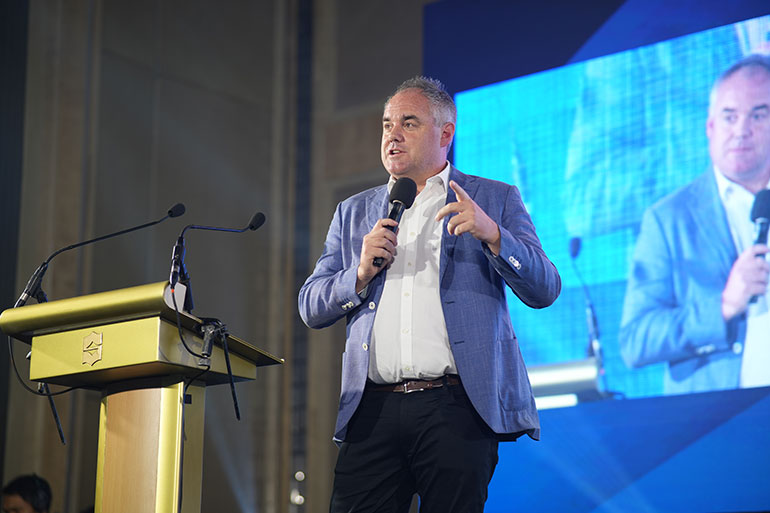
During his opening remarks, Mr. Raquiza said. “At Lamudi, our mission has always been clear: to connect people to their dream homes, empower real estate professionals with cutting-edge tools, and build a transparent, accessible, and efficient property marketplace.” It was a subtle introduction to a later segment of the night, which is the launch of Lamudi Connect by Mark Nosworthy, the Group CEO and Director of Lamudi’s parent company, Digital Classifieds Group (DCG).

Lamudi Connect allows developers, brokerages, and licensed brokers to coexist in one platform that provides the necessary tools and support for seamless transactions. It lets developers widen their network and sales channels while disseminating accurate project information in real time.

Mark Nosworthy introduces Lamudi Connect, an app that isn’t just about transactions — it’s about transformation.

The app gives real estate professionals limitless access to marketing materials that they can cascade to clients in the Philippines and abroad. Through this platform, brokers also gain access to the latest projects by top developers, professional development training, and upcoming industry events.

Lamudi Remains Committed to Connecting Filipino Property Seekers with Their Dream Property

The Outlook 2024: Philippine Real Estate Awards is a testament to Lamudi’s commitment to helping Filipinos find their dream property and remain at the forefront of the property marketplace. As Mr. Raquiza said earlier in the night, it was a time to “celebrate excellence, recognize innovation, and build the future of real estate — one outstanding development and one groundbreaking solution at a time.”

The event partners include gold sponsor Panasonic, silver sponsor BPI, and minor sponsors Zalora and Santos Knight Frank. The gala’s media partners are Philippine Daily Inquirer, Inquirer Property, Manila Bulletin, Manila Standard, Philstar, BusinessWorld, Manila Times, and Malaya Business Insight. Media support includes Real Estate Blog PH, Negosentro, Negosentro Media, Bravo Filipino, Property Finds Asia, World Executives Digest, Village Connection, and Yo Manila.

Stay tuned by connecting with Lamudi Philippines on these social media platforms:

  • @LamudiPhilippines on Facebook
  • @lamudi_ph on Instagram
  • @LamudiPHtv on Youtube, and
  • Lamudi-Philippines on LinkedIn

Visit lamudi.com.ph/outlook2024/ to learn more about The Outlook 2024: Philippine Real Estate Awards.


Spotlight is BusinessWorld’s sponsored section that allows advertisers to amplify their brand and connect with BusinessWorld’s audience by publishing their stories on the BusinessWorld Web site. For more information, send an email to online@bworldonline.com.

Join us on Viber at https://bit.ly/3hv6bLA to get more updates and subscribe to BusinessWorld’s titles and get exclusive content through www.bworld-x.com.

‘Large number’ of Americans’ metadata stolen by Chinese hackers, senior official says

REUTERS

WASHINGTON – A large number of Americans’ metadata has been stolen in the sweeping cyberespionage campaign carried out by a Chinese hacking group dubbed “Salt Typhoon,” a senior U.S. official told journalists on Wednesday.

The official declined to provide specific figures but noted that China’s access to America’s telecommunications infrastructure was broad and that the hacking was still ongoing.

“We believe a large number of Americans’ metadata was taken,” she told reporters. Pushed on whether that might include every American cell phone’s records, the official said: “We do not believe it’s every cell phone in the country, but we believe it’s potentially a large number of individuals that the Chinese government was focused on.”

Dozens of companies across the world had been hit by the hackers, the official said, including “at least” eight telecommunications and telecom infrastructure firms in the United States.

U.S. officials have previously alleged the hackers targeted Verizon, AT&T, T-Mobile, Lumen others and stole telephone audio intercepts along with a large tranche of call record data.

Call record metadata is sometimes described as the who, what, when, and where of phone calls. It doesn’t include the content of a call but can include who a call was placed to, how long it lasted, and where it was made from. Even without the content, call record metadata — especially when captured in bulk — can reveal extraordinarily granular details about a person’s life, work, and intimate relationships.

The official said the White House had made tackling the Salt Typhoon hackers a priority for the federal government and that President Joe Biden had been briefed several times on the intrusions.

The press call occurred as U.S. government agencies were due to hold a separate, classified briefing for all senators on Salt Typhoon’s efforts to compromise American telecommunications companies, according to officials and a notice seen by Reuters. — Reuters

BoI-approved investments hit P1.58T

Philippine flags line the road in the City of Dasmariñas in Cavite, June 2, 2023. — PHILIPPINE STAR/EDD GUMBAN

THE BOARD of Investments (BoI) has approved a total of P1.58 trillion in investment pledges as of November, putting it on track to hit its P1.6-trillion target for the year.

In a statement on Wednesday, the Department of Trade and Industry (DTI) said the total investments approved in the first 11 months represent 98.7% of its full-year target.

Year on year, BoI-approved investment pledges rose 43.6% from P1.1 trillion.

The approved investments are primarily in the renewable energy (RE) sector, accounting for P1.35 trillion. This was a 48% increase from a year ago.

The government saw an increase in RE projects after it allowed full foreign ownership in the sector, which was previously capped at 40%.

Other top-performing sectors are air and water transport, which attracted P121.2 billion in investments; real estate with P34.67 billion; manufacturing with P30.4 billion; and water supply, sewerage, waste management, and remediation with P16.28 billion.

Around P10.5 billion of the investment pledges are in the agriculture, forestry, and fishing projects; P8.25 billion for wholesale and retail projects; and P7.26 billion for the information technology and business process management sector.

Of the total, P1.2 trillion came from local investors, while P379.31 billion came from foreign investors.

The top international sources were Switzerland, the Netherlands, Japan, South Korea, Singapore, Thailand, and the United States.

“This growth is fueled by a significant 254% increase in local investments, with Filipino companies contributing P1.06 trillion,” the DTI said.

“The Calabarzon Region is the leading recipient, with P623.19 billion in investments, followed by Central Luzon with P277.08 billion and Western Visayas with P245.95 billion,” it added.

Secretary Frederick D. Go said that the robust investments in key sectors reflect the steady progress in realizing the country’s national priorities.

“This growth is driven by the government’s steadfast implementation of investor-friendly policies — such as the Corporate Recovery and Tax Incentives for Enterprises to Maximize Opportunities for Reinvigorating the Economy (CREATE MORE) Act,” said Mr. Go.

Last month, President Ferdinand R. Marcos, Jr. signed into law the CREATE MORE Act, which further reduces the corporate income tax to 20% from 25% for registered business enterprises.

Mr. Go, who heads the Office of the Special Assistant to the President for Investment and Economic Affairs, said that the law enhances the country’s competitiveness in attracting local and foreign investments.

“These efforts are vital in sustaining our country’s strong economic growth and ensuring that the Philippines remains a prime investment destination,” he added.

Meanwhile, Trade Secretary Ma. Cristina A. Roque attributed the investment growth to investors’ confidence in the Philippines.

“These figures underscore our commitment to sustained economic growth that transforms the Philippine economy. We are focused on creating a virtuous cycle of growth by empowering the private sector through market-based tools,” she said.

“This underpins the Philippines’ continuously improving investment climate, sending clear signals that we are ‘Making It Happen in the Philippines,’” she added. — Justine Irish D. Tabile

Nomura sees slower PHL growth

Shoppers look for Christmas decorations in Divisoria, Manila. Nomura Global Markets Research expects 6% growth for the Philippines in 2025. — PHILIPPINE STAR/RYAN BALDEMOR

NOMURA Global Markets Research has trimmed its gross domestic product (GDP) growth forecast for the Philippines next year, citing risks such as from US President-elect Donald J. Trump’s policies and domestic political tensions.

“We expect growth to gradually improve in 2025 but still undershoot official targets. The economy is vulnerable to Trump policies but public investment and election-related spending will support domestic demand,” it said.

Nomura clipped its GDP growth forecast to 6% for 2025 from its earlier projection of 6.1%. This would be the lower end of the government’s revised 6-8% growth target for next year.

However, it kept its 5.6% estimate for this year, lower than the 6-6.5% government target.

Nomura cited “strong external headwinds” that could dampen growth, especially in the second half of 2025.

“As we have highlighted, the Philippines is among the most vulnerable in the region to Trump’s policy proposals and is likely to be caught in the crossfire of deteriorating US- China ties.”

Mr. Trump’s planned restrictive trade policies may impact the Philippines, which heavily relies on the United States for business and economic activity.

“Therefore, we pencil in slow growth of goods and services exports, with the tariffs likely to weigh on external demand, while worker remittances, which support domestic consumption, are likely to be negatively affected by tighter immigration policy in the US, similar to Trump’s first term.”

“Sharply weaker global growth and higher global trade protectionism pose downside risks to growth. Escalating geopolitical tensions, particularly in the South China Sea, could also generate more growth headwinds,” it added.

On the domestic front, Nomura also flagged political uncertainty from the upcoming elections as well as recent tensions between the country’s top officials.

“Domestically, a weak result during the midterm elections for the administration and its allies could reignite political risks, as well as a continued intensification of the conflict between President (Ferdinand R. Marcos, Jr.) and Vice-President (Sara Z. Duterte-Carpio).”

Impeachment talks have gained ground in Congress amid lawmakers’ probe of Ms. Duterte-Carpio’s confidential funds at the Office of the Vice-President and the Department of Education, which she led for about two years under the Marcos administration.

On the other hand, domestic demand is seen to act as a buffer to these headwinds.

Economic growth is seen to be supported by increased investment spending, which will be ramped up amid the upcoming elections, Nomura said.

“We think public investment spending will remain a significant growth engine, as the government pushes for more progress on infrastructure projects, which remain a top priority of the Marcos administration.”

An improving inflation outlook will also boost consumer sentiment and private consumption, it added.

Nomura projects inflation to average 2.7% in 2025 and 3% in 2026, well within the Bangko Sentral ng Pilipinas’ (BSP) 2-4% target.

The central bank expects inflation to average 3.1% this year.

Nomura said the BSP will likely embark on an “aggressive” easing cycle, with a 25-basis-point (bp) cut at the next four Monetary Board meetings.

“Our policy rate forecasts suggest BSP’s terminal rate will be 5%, which is similar to the BSP’s estimate of the neutral rate. If inflation continues on a downward path, as we expect in the near term, BSP will likely look to further remove the restrictiveness in the monetary stance to support a recovery in domestic demand,” it said.

BSP Governor Eli M. Remolona, Jr. earlier said that the Monetary Board could reduce or keep rates steady at its Dec. 19 meeting, its last policy review for the year.

The central bank has lowered borrowing costs by 50 bps since August, bringing the key rate to 6%.

The BSP chief also signaled further easing next year in the ballpark of 100 bps, though not necessarily at every meeting or every quarter, he added.

“A shallower cutting cycle by the Fed will unlikely be a significant constraint, taking into account BSP’s laissez-faire approach on currency weakness, if interest rate differentials with the US become narrower,” Nomura added.

It also expects the BSP to deliver another 200-bp reduction in the reserve requirement ratio (RRR), bringing it to 5% by mid-2025.

The BSP slashed the RRR for universal and commercial banks and nonbank financial institutions with quasi-banking functions by 250 bps to 7% from 9.5%, effective on Oct. 25.

Mr. Remolona earlier said they are eyeing to bring down big lenders’ RRR to as low as zero before his term ends in 2029. — Luisa Maria Jacinta C. Jocson

BSP eyes issuance of new polymer banknotes in Q1

BANGKO SENTRAL NG PILIPINAS FB PAGE

By Luisa Maria Jacinta C. Jocson, Reporter

THE BANGKO SENTRAL ng Pilipinas (BSP) is looking to issue the country’s first polymer banknote series by the first quarter of 2025.

The central bank in a social media post said it is readying the First Philippine Polymer (FPP) banknote series with “smarter, cleaner and stronger features.”

“The BSP is targeting to launch the new polymer banknote series in the first quarter of 2025,” it said in a follow-up statement.

In April 2022, the central bank issued the polymer version of the P1,000 banknote, which featured the Philippine eagle, the Sampaguita flower and the Tubbataha Reefs. At that time, the BSP said it was the first note in a new series that will focus on ‘the country’s rich flora and fauna.”

The BSP has said it chose the P1,000 bill to be the first polymer banknote as it is the most circulated denomination in the country.

In 2021, it was also the most counterfeited currency.

The central bank has yet to announce the specific design of the rest of the polymer series but will continue to feature the country’s natural resources.

“The BSP has always featured the country’s heroes and natural wonders in banknotes and coins. While the paper banknotes — which will remain in circulation — feature heroes, the polymer series will showcase the country’s rich biodiversity,” it said.

“Featuring different symbols of national pride in our banknotes and coins reflects numismatic dynamism and artistry and promotes appreciation of the Filipino identity.”

The BSP earlier said that it has printed and minted more than 70 circulated and commemorative coins, banknotes, and medals featuring national heroes.

However, paper banknotes will still remain in circulation, the BSP noted.

“The new polymer banknotes shall be circulated alongside the existing paper banknotes. Paper banknotes shall remain legal tender.”

“They (the national heroes) will not be removed from the paper banknotes, which will co-circulate with polymer banknotes,” it added.

The shift to polymer banknotes is part of the BSP’s efforts to “improve banknotes in response to the evolving needs of Filipinos and the availability of modern technologies.”

Polymer notes are more secure, sanitary and durable than paper, it added. Polymer lasts two to five times longer than paper and is resistant to water and dirt.

It is also more eco-friendly and cost-effective as it has a smaller carbon footprint and uses less resources to produce.

“When deemed unfit, these banknotes can be recycled to produce various products such as building components, plant pots, and garden furniture.”

The central bank’s initiative to introduce polymer banknotes was partly driven by the coronavirus disease 2019 pandemic.

“The smoother, non-absorptive surface of polymer banknotes makes them cleaner. Based on studies reviewed by our Department of Health, the survival time of bacteria and viruses in polymer banknotes is significantly shorter than in paper banknotes.”

Most central banks revise banknote designs on an average of 10 years, the BSP said earlier.

Countries that use polymer banknotes include the United Kingdom, Canada, Australia, New Zealand, Malaysia, Mexico, Fiji, and Vietnam.

The BSP initially rolled out 10 million pieces of the P1,000 polymer banknote, or 0.7% of the total P1,000 bills in circulation.

From October 2022 to June 2023, the total polymer banknotes hit 500 million pieces, equivalent to 31.9% of the overall P1,000 banknotes in circulation.

The central bank earlier this year said it was looking to issue an additional one billion more pieces of polymer notes.

PHL worsens in anti-money laundering index

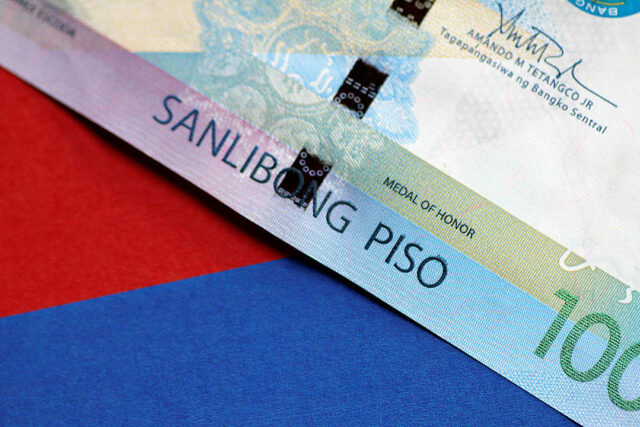
A Philippines peso note is seen in this picture illustration on June 2, 2017. — REUTERS

By Luisa Maria Jacinta C. Jocson, Reporter

THE PHILIPPINES’ SCORE in a global anti-money laundering index worsened as its ranking declined to the 49th place out of 164 countries.

This, as President Ferdinand R. Marcos, Jr. on Wednesday cited the Philippines’ “progress toward exiting” the Financial Action Task Force’s (FATF) “gray list.”

“This is a very, very important item,” Mr. Marcos said in a speech at the 33rd regular meeting of the Anti-Terrorism Council, based on a transcript from his office.

Philippines worsens in the Anti-Money Laundering Index

“I know that it’s not spoken about a great deal in the public domain but nonetheless, as an obstacle to the continuing transformation of our economy, to the continuing transformation of our place in the world, this, us exiting from the gray list is a significant move,” he added.

The Philippines is targeting to exit by February the FATF’s gray list of jurisdictions under increased monitoring for “dirty money” risks. It has been on the gray list for over three years or since June 2021.

In the latest edition of the Basel Anti-Money Laundering (AML) Index published by the Basel Institute on Governance, the Philippines ranked 49th with an overall score of 5.84 (out of 10). It was worse than its previous rank of 53rd out of 152 jurisdictions, with an overall score of 5.64.

The index ranks a jurisdiction based on its risks of money laundering and terrorist financing and its capacity to counter them. It uses a 0-10 system, where a score of 10 indicates the highest risk level.

Myanmar topped the Basel AML index with a score of 8.17, followed by Haiti, Democratic Republic of the Congo, Chad and Venezuela.

The Philippines’ score was higher than the global average of 5.30.

“Issues of financial transparency are this region’s main weak spot, with more than half of jurisdictions having a high risk score in the Financial Secrecy Index,” the report said.

In the East Asia and the Pacific region, Myanmar had the highest score, followed by Lao PDR (6th), China (11th), Vietnam (15th), Cambodia (21st), Solomon Islands (35th) and Thailand (39th).

East Asia and the Pacific’s weakest area is financial transparency and standards, it added.

It cited low effectiveness scores for beneficial ownership transparency; the investigation, prosecution and sanctioning of money laundering offenses; and the prevention of proliferation of weapons of mass destruction.

“Almost half of the jurisdictions receive high risk scores for fraud and financial crimes,” it added.

Meanwhile, the countries that scored the lowest risk were San Marino (2.96), Iceland (3.00), Finland (3.07), Estonia (3.16) and Andorra (3.29).

Analysts said that the Philippines still has much to do to address in strengthening its money laundering/terrorist financing systems.

“It is indeed ironic that despite all the talk about the Philippines exiting the gray list, the world’s perception is that money laundering and the related issues in governance have worsened,” Filomeno S. Sta. Ana III, a coordinator of Action for Economic Reforms, said.

At its October plenary, the FATF kept the country in its list of jurisdictions under increased monitoring for dirty money risks.

However, the FATF said it initially determined that the Philippines has “substantially completed” the recommended action items to improve its anti-money laundering and counter financing of terrorism regime.

“Philippine officials and their apologists think that putting in place the technical standards would be enough for us to be taken off from the gray list. But what matters is the substantial compliance of rules,” Mr. Sta Ana said.

Chester B. Cabalza, founding president of Manila-based International Development and Security Cooperation said the country must “show consistency and transparency” in its goal of exiting the gray list.

“We have legal instruments to support and strengthen our institutions. The Philippines must stringently enforce it and prosecute violators to become more compliant,” he added.

Antonio A. Ligon, a law and business professor at De La Salle University in Manila, said: “The country needs to strictly enforce the anti-money laundering laws. Make sure to have strong monitoring measures.”

The FATF is set to conduct an onsite assessment in the Philippines to verify the progress of its action plan and implementation of reforms, which will likely take place early next year.

However, the Basel report also noted that exiting the gray list is just one step in a country’s anti-money laundering journey.

“Being delisted is naturally a cause for celebration and hope, but it’s not the end of the story. FATF standards continue to evolve and to strengthen, so jurisdictions need to constantly improve in order to keep up.”

“Avoiding or graduating from the gray list is one step along a never-ending journey to a resilient system that successfully wards of money laundering and related threats while not limiting financial inclusion and innovation,” it added.