Home Blog Page 1782

Sufficient fire exits essential to a building’s safety

Ensuring a building has adequate fire exits is the top consideration during fire safety inspections, according to Van Arnel J. Pacatang, chief of the fire prevention section of the Makati City Fire Station.

Interview by Patricia Mirasol
Video editing by Arjale Queral

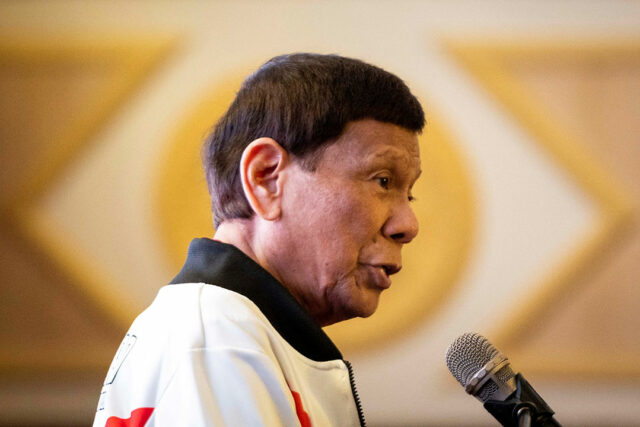
After Duterte’s arrest, Philippine drug war victims face abuse and online falsehoods

FORMER PRESIDENT RODRIGO R. DUTERTE — REUTERS

MANILA – The bloodied body of Sheerah Escudero’s 18-year-old brother was found in 2017 with hands bound and head wrapped in packaging tape, a suspected victim of the Philippines’ then-President Rodrigo Duterte’s “war on drugs” that left thousands dead.

The arrest of Duterte on March 11 on an International Criminal Court warrant over the drug war murders gave her some comfort, but Escudero and many others working on drug war cases have since faced a wave of online attacks from Duterte supporters.

Ms. Escudero’s Facebook account has been flooded with comments and direct messages calling her a drug addict and a liar for seeking justice in her brother’s case, and accusing her of being paid to malign Mr. Duterte.

“They’re really cursing us, and one person even told me, ‘addicts should be beheaded. They should just die.’ Knowing that my brother was the victim, they still sent me that message,” she said.

Other grieving mothers, human rights advocates and lawyers say they have faced similar, fierce harassment online since Mr. Duterte was arrested and whisked to the ICC in the Hague, where he awaits trial.

A surge of false claims also swept social media, with supporters claiming the ICC had no jurisdiction and calling it a “kidnapping”, while paid advertisements on Facebook promoted the former president, Reuters found.

Reuters spoke to three human rights groups who each said they had assisted several victims of targeted online harassment.

Representatives for Mr. Duterte and his daughter, Sara Duterte, the Philippine vice-president who has flown to the Hague to support her father, did not respond to requests for comment.

The recent online onslaught is reminiscent of a well-organized social media campaign in 2016 that propelled Mr. Duterte into the presidency, analysts say. Critics at the time blamed pro-Duterte trolls and influencers for spreading falsehoods to discredit and threaten opponents.

The 2016 campaign led to the Philippines being dubbed “patient zero” in the worldwide spread of online disinformation.

Kristina Conti, a human rights lawyer representing victims of the drug war, said such tactics increasingly aim to discredit families of those killed by labelling them as “fake” victims.

“There’s that real risk that Duterte supporters or Duterte’s cohorts could go after these witnesses in hopes of hindering trial or ensuring his acquittal,” Ms. Conti said.

FAKE QUOTES, FICTIONAL LAWYERS
Mr. Duterte, who led the Philippines from 2016 to 2022, is facing allegations of crimes against humanity for overseeing death squads in his anti-drugs crackdown.

He could become the first Asian former head of state to go on trial in the Hague.

A study by the Stratbase ADR Institute, a Philippine think tank, found that around 51% of Filipinos strongly agreed that Duterte should be held accountable for the killings.

But others have criticized the arrest and accused the government led by Ferdinand Marcos Jr. of betraying the country.

The backlash has been fueled by a “torrent of disinformation across social media”, according to fact-checking coalition Tsek.ph, which described fabricated quote cards and videos and narratives that attempted to cast Mr. Duterte as a victim.

The group identified at least 200 Facebook accounts and pages that posted identical messages, in close succession, before and after the arrest, claiming any legal move against him amounted to “kidnapping”.

Mr. Duterte’s children, and lawyer used the phrase to denounce the arrest.

Quote cards were circulated featuring fictional lawyers such as Elle Woods from Legally Blonde supposedly defending Mr. Duterte, and viral video clips falsely suggested Duterte supporters were gathering to protest.

Other posts wrongly said U.S. President Donald Trump had threatened heavy tariffs on the Philippines unless Mr. Duterte was released.

“Media literacy is still lacking, so many people are easily deceived,” said Rachel Khan, professor of journalism at the University of the Philippines and project coordinator for Tsek.ph.

Hundreds of paid advertisements supporting Mr. Duterte on Facebook have reached audiences of millions, according to the social media platform’s ad library.

The ads included videos saying Mr. Duterte was “kidnapped”, promotions for prayer rallies, and the sale of T-shirts bearing his image with the phrase “I did it for my country”. l

Many ran without the disclaimer required for political advertising, according to the ad library.

Paid ads are reviewed by Meta’s “ad review system” before they go live but “both machines and human reviewers make mistakes”.

A spokesperson for the company said it takes “significant steps to fight the spread of misinformation” by removing content that violates its standards, curbing the distribution of stories that are flagged as false by independent fact checkers, and labelling content so users are informed about its accuracy.

A spokesperson for TikTok said the platform did not allow “harmful misinformation” and has “taken down content that violates our Community Guidelines.”

LET TRUTH SPEAK
The Philippine government is “making necessary actions to eradicate fake news,” including holding discussions with social media platforms like Facebook, Presidential Communications Undersecretary Claire Castro told Reuters.
Some human rights activists are trying to fight back on their own.

Carlos Conde, a senior researcher at Human Rights Watch, who was targeted by Duterte supporters during the drug war and came under fresh attack after the arrest, said it was “like 2016 all over again”.

The 59-year-old created a TikTok account where he posts short explainer videos about the arrest and the drug war, garnering tens of thousands of views.

“I did that so I will not lose by default in this disinformation warfare,” he said.

Ms. Escudero said she fears the online abuse could lead to violence against her and avoids booking taxis under her real name, but insisted she would not back down from seeking justice.

“This is the time to stand up against fake news… We will let the truth speak and be seen.” — Reuters

‘Pissed off’ at Putin, Trump threatens tariffs on Russian oil if Moscow blocks Ukraine deal

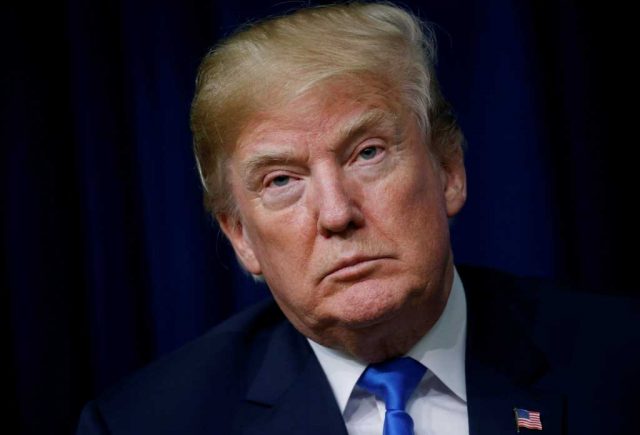
U.S. President Donald Trump — REUTERS/LEAH MILLIS/FILE PHOTO

ABOARD AIR FORCE ONE – U.S. President Donald Trump said on Sunday he was “pissed off” at Russian President Vladimir Putin and will impose secondary tariffs of 25% to 50% on buyers of Russian oil if he feels Moscow is blocking his efforts to end the war in Ukraine.

Mr. Trump told NBC News he was very angry after Mr. Putin last week criticized the credibility of Ukrainian President Volodymyr Zelenskiy’s leadership, the television network reported, citing a telephone interview early on Sunday.

Since taking office in January, Mr. Trump has adopted a more conciliatory stance towards Russia that has left Western allies wary as he tries to broker an end to Moscow’s three-year-old war in Ukraine.

His sharp comments about Mr. Putin on Sunday reflect his growing frustration about the lack of movement on a ceasefire.

“If Russia and I are unable to make a deal on stopping the bloodshed in Ukraine, and if I think it was Russia’s fault … I am going to put secondary tariffs on oil, on all oil coming out of Russia,” Mr. Trump said.

“That would be, that if you buy oil from Russia, you can’t do business in the United States,” Mr. Trump said. “There will be a 25% tariff on all oil, a 25- to 50-point tariff on all oil.”

Mr. Trump later reiterated to reporters he was disappointed with Mr. Putin but added: “I think we are making progress, step by step.”

Mr. Trump said he could impose the new trade measures within a month.

There was no immediate reaction from Moscow. Russia has called numerous Western sanctions and restrictions “illegal” and designed for the West to take economic advantage in its rivalry with Russia.

Mr. Trump, who spent the weekend at his estate in Palm Beach, Florida, told NBC News he planned to speak with Mr. Putin this week. The two leaders have had two publicly announced telephone calls in recent months but may have had more contacts, the Kremlin said in video footage last week.

The White House had no immediate comment on when the call would take place, or if Mr. Trump would also speak with Mr. Zelenskiy.

Mr. Trump has focused heavily on ending what he calls a “ridiculous” war, which began when Russia invaded Ukraine in February 2022, but has made little progress.

Mr. Putin on Friday suggested Ukraine could be placed under a form of temporary administration to allow for new elections that could push out Mr. Zelenskiy.

Mr. Trump, who himself has called for new elections in Ukraine and denounced Mr. Zelenskiy as a dictator, said Mr. Putin knows he is angry with him. But Trump added he had “a very good relationship with him” and “the anger dissipates quickly … if he does the right thing.”

GROWING PRESSURE TO END WAR
Mr. Trump’s comments followed a day of meetings and golf with Finnish President Alexander Stubb on Saturday, during Mr. Stubb’s surprise visit to Florida.

Mr. Stubb’s office on Sunday said he told Mr. Trump a deadline needs to be set for establishing a Russia-Ukraine ceasefire to make it happen and suggested April 20 since Mr. Trump would have been in office then for three months.

U.S. officials have been separately pushing Kyiv to accept a critical minerals agreement, a summary of which suggested the U.S. was demanding all Ukraine’s natural resources income for years. Mr. Zelenskiy has said Kyiv’s lawyers need to review the draft before he can say more about the U.S. offer.

Mr. Trump told reporters on Air Force One he thought Mr. Zelenskiy was “trying to back out of the rare earth deal…. if he’s looking to renegotiate the deal, he’s got big problems.” Mr. Trump also told reporters that Ukraine would never be part of NATO.

Mr. Trump’s latest tariff threats would add to the pain already facing China, India and other countries through trade measures imposed during his first two months in office, including duties on steel, aluminum and cars. More duties on imports from the countries with the largest trade surpluses are slated to be announced on Wednesday.

William Reinsch, a former senior Commerce Department official now at the Center for Strategic and International Studies, said the haphazard way Mr. Trump was announcing and threatening tariffs leaves many questions unanswered, including how U.S. officials could trace and prove which countries were buying Russian oil.

Mr. Trump set the stage for Sunday’s news with a 25% secondary tariff imposed last week on U.S. imports from any country buying oil or gas from Venezuela.

His remarks to NBC suggest he could take similar action against U.S. imports from countries that buy oil from Russia, a move that could hit China and India particularly hard.

The U.S. has not imported any Russian barrels of crude oil since April 2022, according to U.S. government data. Before that, U.S. refiners bought inconsistent volumes of Russian oil, with a high of 98.1 million barrels in 2010 and low of 6.6 million in 2014, according to a review of EIA data since 2000.

India has surpassed China to become the biggest buyer of seaborne Russian crude, which comprised about 35% of India’s total crude imports in 2024.

Mr. Trump on Sunday also said he could hit buyers of Iranian oil with secondary sanctions if Tehran did not reach an agreement to end their nuclear weapons program. — Reuters

Argentina requests first tranche of more than 40% under $20 billion IMF program

Image by David from Pixabay

BUENOS AIRES – Argentina is seeking a first disbursement of more than 40% under a $20-billion program it is negotiating with the International Monetary Fund (IMF), Economy Minister Luis Caputo said on Sunday.

The South American country had eliminated the fiscal deficit and cut public spending, Caputo reiterated, as the government aims to beef up central bank reserves and begin unwinding forex curbs that arguably hinder business and investment.

“We’ve requested more because, traditionally, these are made in exchange for monetary and fiscal targets,” Mr. Caputo said in remarks on television, adding that first disbursements were usually between 20% and 30%. “We’ve already done everything.”

Last week, the government and the IMF confirmed the lender’s board of directors must still approve the four-year program that follows one of $44 billion signed in 2018. — Reuters

Trump says TikTok sale deal to come before Saturday deadline

A TikTok logo is displayed on a smartphone in this illustration taken Jan. 6, 2020. — REUTERS

ABOARD AIR FORCE ONE/WASHINGTON – President Donald Trump said a deal with TikTok’s Chinese parent ByteDance to sell the short video app used by 170 million Americans would be struck before a deadline on Saturday.

Mr. Trump set the April 5 deadline in January for TikTok to find a non-Chinese buyer or face a U.S. ban on national security grounds due to have taken effect that month under a 2024 law.

“We have a lot of potential buyers,” Mr. Trump told reporters on Air Force One late on Sunday. “There’s tremendous interest in Tiktok,” adding, “I’d like to see Tiktok remain alive.”

TikTok did not immediately comment.

Reuters reported on Friday private equity firm Blackstone is evaluating making a small minority investment in TikTok’s U.S. operations, according to two people familiar with the matter.

Blackstone is discussing joining ByteDance’s existing non-Chinese shareholders, led by Susquehanna International Group and General Atlantic, in contributing fresh capital to bid for TikTok’s U.S. business. The group has emerged as front-runners.

Washington says TikTok’s ownership by ByteDance makes it beholden to the Chinese government and Beijing could use the app to conduct influence operations against the United States and collect data on Americans.

Mr. Trump previously said he was willing to extend the April deadline if an agreement over the social media app was not reached.

Last week, he acknowledged the role China will play in getting any deal done, including giving its approval, saying “maybe I’ll give them a little reduction in tariffs or something to get it done.”

Vice President JD Vance has said he expects the general terms of an agreement resolving the ownership of the social media platform to be reached by April 5.

The future of the app used by nearly half of all Americans has been up in the air since a 2024 law, passed with overwhelming bipartisan support, required ByteDance to divest TikTok by January 19.

The White House has been involved to an unprecedented level in the closely watched deal talks, effectively playing the role of investment bank. — Reuters

EvoEnergi strengthens market position with Second Retail Aggregation Switch, delivering meaningful cost savings for businesses

EvoEnergi, a dynamic Retail Electricity Supplier and affiliate of publicly-listed D&L Industries, has successfully switched over the second Retail Aggregated Group under the Retail Aggregation Program, from the captive market onto the contestable retail electricity market. The successful switching, achieved last March 5, 2025, underscores EvoEnergi’s commitment to providing businesses with lower electricity costs and enhanced flexibility in managing their energy consumption.

By offering not only reduced rates but also clear and transparent terms, EvoEnergi distinguishes itself in the energy market. Through Retail Aggregation—a program that allows multiple electricity end-users within a contiguous area, or within the same distribution franchise, to combine their electricity demand—businesses can collectively meet the threshold required to participate in the contestable market, thereby securing significantly lower rates previously accessible only to large-scale consumers.

Advocating for Fairer Electricity Pricing

EvoEnergi fully supports the Energy Regulatory Commission (ERC) and the Department of Energy (DOE) in their efforts to expand access to competitive electricity rates through Retail Aggregation. By bringing businesses together under this program, EvoEnergi ensures that more industries benefit from transparent pricing and lower energy costs—without additional risks or complexity.

“For many businesses, electricity is a major cost driver, but few realize they are overpaying,” said Julian Lao, President of EvoEnergi. “We help businesses achieve real savings, allowing them to reallocate resources to growth and innovation, instead of paying excessive electricity costs.”

With discussions ongoing about lowering the contestability threshold to 100 kW, EvoEnergi anticipates that more businesses will soon benefit from these cost-saving opportunities, creating an even more competitive market.

Beyond Cost Savings: The EvoEnergi Approach to Energy Procurement

Having been in the manufacturing sector for decades, the management team of EvoEnergi fully understands the operational and financial challenges businesses face when it comes to electricity costs. This deep industry experience allows the company to design solutions that are practical, flexible, and tailored to real business needs.

EvoEnergi goes beyond simply reducing rates—it gives businesses control over their energy strategy. Unlike traditional suppliers that offer rigid contracts, EvoEnergi enables businesses to scale their energy use through tiered capacity increases and hybrid pricing structures, ensuring they get the best possible value without compromising operational stability.

“Electricity procurement should be a strategic decision, not just another fixed expense,” added Lao. “Our goal is to help businesses optimize their energy use in a way that aligns with their financial and operational objectives.”

Redefining the Role of the Retail Electricity Supplier

EvoEnergi’s approach is built on trust, transparency, and long-term partnerships. By prioritizing customer success over transactional engagements, the company continues to challenge conventional electricity supply models—putting businesses in a stronger position to make cost-effective and well-informed energy decisions.

As Retail Aggregation gains momentum, EvoEnergi remains focused on helping businesses unlock savings, improve efficiency, and gain greater financial flexibility in a rapidly evolving energy landscape.

For businesses looking to take control of their electricity costs, EvoEnergi provides the expertise and tailored solutions to make a real impact.

For inquiries, email info@evoenergi.com.ph or contact 0917-1569137.


Spotlight is BusinessWorld’s sponsored section that allows advertisers to amplify their brand and connect with BusinessWorld’s audience by publishing their stories on the BusinessWorld Web site. For more information, send an email to online@bworldonline.com.

Join us on Viber at https://bit.ly/3hv6bLA to get more updates and subscribe to BusinessWorld’s titles and get exclusive content through www.bworld-x.com.

Myanmar military still bombing towns despite earthquake crisis, rebels say

Flag of Myanmar | STOCK PHOTO | Image by www.slon.pics on Freepik

An armed resistance movement against Myanmar’s military-run government criticized the junta on Sunday for conducting airstrikes on villages even as the country reels from an earthquake that has killed around 1,700 people.

The Karen National Union, one of Myanmar’s oldest ethnic armies, said in a statement the junta “continues to carry out airstrikes targeting civilian areas, even as the population suffers tremendously from the earthquake”.

The group said that under normal circumstances, the military would be prioritizing relief efforts, but instead is focused on “deploying forces to attack its people”.

A spokesman for the junta did not reply to queries from Reuters about the criticism.

Myanmar has been locked in civil war with multiple armed opposition groups since a 2021 coup, when the military seized power from the elected government of Nobel Peace Prize laureate Aung San Suu Kyi.

Shortly after Friday’s devastating earthquake, military jets launched airstrikes and drone attacks in Karen state, near the KNU headquarters, according to the Free Burma Rangers, a relief organization. Singapore’s Foreign Minister Vivian Balakrishnan called for an immediate ceasefire to help aid distribution, following a virtual meeting with his ASEAN counterparts on the disaster.

“(Balakrishnan) called for an immediate and effective ceasefire in Myanmar which would facilitate the efforts to deliver humanitarian assistance and longer term national reconciliation, peace and reconstruction,” Singapore’s foreign ministry said in a statement.

The epicenter of the 7.7-magnitude quake was in an area held by junta forces, but the devastation is widespread and also affected some territory held by armed resistance movements.

On Sunday, the opposition National Unity Government, which includes remnants of the government ousted in 2021, said anti-junta militias under its command would pause all offensive military action for two weeks.

Richard Horsey, the senior Myanmar adviser at Crisis Group, said some anti-junta forces have halted their offensives but fighting continues elsewhere.

“The regime also continues to launch airstrikes, including in affected areas. That needs to stop,” he said.

The regime was not providing much visible support in quake-hit areas, he added.

“Local fire brigades, ambulance crews, and community organizations have mobilized, but the military – who would normally be mobilised to support in such a crisis – are nowhere to be seen,” Mr. Horsey said. — Reuters

Peso rally to fade on Philippine balance of payments deficit

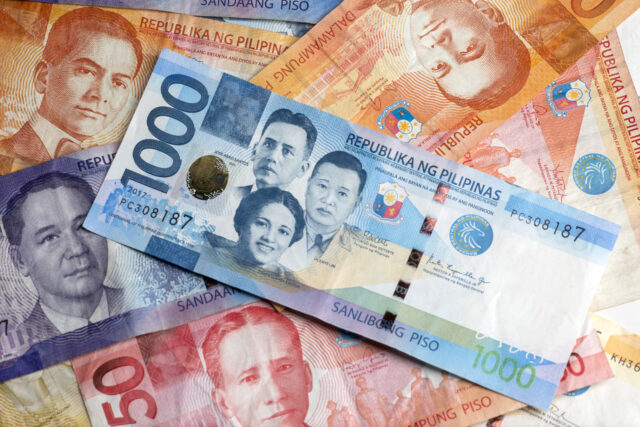
Philippines peso notes are displayed in an arranged photograph in Bangkok, Thailand, on Sept. 12, 2019. Photographer: Brent Lewin/Bloomberg

The Philippine peso’s rally may run out of steam after the central bank revised its projection for the nation’s balance of payments to a deficit from a surplus.

The currency may fall toward a record low of 59 per dollar next quarter from around 57.4 now, according to forecasters at Australia & New Zealand Banking Group Ltd. and Malayan Banking Bhd. Meanwhile, analysts at Wells Fargo & Co. and Standard Chartered Plc predict the peso will depreciate to just below 59 by June after gaining this month.

Bangko Sentral ng Pilipinas revised its balance of payments forecast for 2025 last week and predicted a bigger current-account shortfall, citing worries over international trade policy. The gap will mean that there’s less demand for the peso at a time when US tariffs are already weighing on global markets.

“The negative sentiment from tariff threats is likely to still guide the pair higher throughout the rest of first half. This would not dissipate in the second half,” said Saktiandi Supaat, FX research head at Maybank. “The country’s persistent twin deficit condition would also add to the currency’s weakness.”

The Philippine peso has gained 1.1% this month to beat all but one of its Asian peers. It climbed to a five-month high of 57.09 in March amid broad weakness in the dollar.

While the rally will likely lose steam, the Philippines’ reliance on consumption and service exports may temper the impact of tariffs and provide the peso some relief, according to Michael Ricafort, chief economist at Rizal Commercial Banking Corp. in Manila. A possible BSP rate cut in April may have also been priced in by the market, he added.

Traders now await a report on March inflation due Friday to gauge the outlook for monetary policy and gain more insight into the peso’s near-term direction. Economists surveyed by Bloomberg predict that consumer-price growth slowed to 2% year-on-year from 2.1% in February, backing the case for an interest-rate cut.

Investors should also be careful about underestimating the political risks in the Philippines, according to Barclays, which sees the peso falling to 59 per dollar by the fourth quarter. Concerns have been mounting with President Ferdinand Marcos Jr. locked in a feud with the family of his predecessor Rodrigo Duterte.

The challenges are “likely to see investors demand a higher political risk premium in Philippine assets over the medium term,” FX strategists Mitul Kotecha and Audrey Ong wrote in a note this month. — Bloomberg

Britain hosts key nations to coordinate fight against people smugglers

KRISTINA GADEIKYTE-UNSPLASH

LONDON – Britain will on Monday host a meeting of more than 40 countries and organizations, including the United States, France and Vietnam, to try to coordinate internationally its fight against illegal migration and those who profit from it.

British Prime Minister Keir Starmer, like all his predecessors for more than a decade, is seeking new ways to stop migrants coming illegally to Britain, where immigration remains a key issue for voters who worry about the pressure it puts on scarce resources like healthcare and housing.

Monday’s Organized Immigration Crime (OIC) Summit looks to address every stage of the global industry in people smuggling, including the supply chains for the small boats used to travel from France to Britain, and the tech firms whose social media platforms are used to advertise such illicit crossings.

“This vile trade exploits the cracks between our institutions, pits nations against one another and profits from our inability at the political level to come together,” Mr. Starmer will tell the summit, according to advance extracts of his speech.

Representatives from Meta, X and TikTok will participate.

Migrants from North Africa, the Middle East, Europe and elsewhere pay thousands of pounds to traffickers for places in small inflatable boats that then try to cross one of the world’s busiest shipping channels to reach the English coast.

Mr. Starmer was elected last year, promising to “smash the gangs” behind the crossings. He immediately ditched the previous Conservative government’s policy to deter migrants by setting up a scheme to deport them to Rwanda.

More than 36,800 people made the crossing in 2024, 25% more than the previous year, according to British government data. More than 6,600 people have crossed successfully so far in 2025.

“I simply do not believe Organized Immigration Crime cannot be tackled. We’ve got to combine our resources, share intelligence and tactics, and tackle the problem upstream at every step of the people smuggling routes,” Mr. Starmer will say. — Reuters

[B-SIDE Podcast] Colorectal cancer: All you need to know

Follow us on Spotify BusinessWorld B-Side

March is National Colorectal Cancer Awareness Month. In this B-Side episode, we dive into everything you need to know about the disease.

Colorectal cancer is the fourth leading cause of cancer-related deaths in the Philippines, with an estimated one in 1,800 Filipinos at risk each year. To help understand its symptoms, treatments, and prevention, Dr. Dave Rennel L. Sebollena, Vice President of the Philippine Society of Gastroenterology, joins the conversation.

We also explore the financial and healthcare support available for patients with Dr. Israel Francis A. Pargas, Senior Vice President for the Health Finance Sector and Spokesperson of PhilHealth.

Interview by Edg Adrian Eva
Audio editing by Jayson Mariñas

Follow us on Spotify BusinessWorld B-Side

Trump says reciprocal tariffs will target all countries

A “tariff” sign is displayed on a laptop screen and an American flag displayed on a phone screen are seen in this illustration photo taken in Krakow, Poland on Feb. 1, 2025. — JAKUB PORZYCKI/NURPHOTO VIA REUTERS CONNECT

ABOARD AIR FORCE ONE – US President Donald Trump said on Sunday that reciprocal tariffs he is set to announce this week will include all nations, not just a smaller group of 10 to 15 countries with the biggest trade imbalances.

Trump has promised to unveil a massive tariff plan on Wednesday, which he has dubbed “Liberation Day.” He has already imposed tariffs on aluminum, steel and autos, along with increased tariffs on all goods from China.

“You’d start with all countries,” he told reporters aboard Air Force One. “Essentially all of the countries that we’re talking about.”

White House economics adviser Kevin Hassett recently told Fox Business that the administration’s tariffs focus would be on 10 to 15 countries with the worst trade imbalances, though he did not list them.

Trump sees tariffs as a way of protecting the domestic economy from unfair global competition and a bargaining chip for better terms for the US.

However, concerns about a trade war are unsettling markets and creating fears of a recession in the US.

Trump has said he will impose a suite of reciprocal tariffs against nations that charge fees on US exports, promising to match those countries’ duties.

In February, Trump signed a memorandum that directed US trade officials to go country by country and put together a list of tailored counter-measures.

Last week, he suggested he might scale back his reciprocal plans, perhaps imposing tariffs in some cases at lower rates than countries charge the United States. — Reuters

Inflation likely eased further in March

FUEL PUMPS are seen at a gasoline station in Paco, Manila, Feb. 22, 2025. — PHILIPPINE STAR/NOEL B. PABALATE

By Luisa Maria Jacinta C. Jocson, Reporter

HEADLINE INFLATION likely eased slightly in March as prices of rice and fuel further dropped, analysts said.

A BusinessWorld poll of 18 analysts conducted last week yielded a median estimate of 2% for the March consumer price index (CPI).

If realized, this would be slower than the 2.1% in February and the 3.7% clip in the same month a year ago.

Analysts’ March inflation rate estimates

This would also be the lowest monthly inflation in six months or since the 1.9% print in September.

The Bangko Sentral ng Pilipinas (BSP) has not yet released its month-ahead inflation forecast for March.

The Philippine Statistics Authority (PSA) is set to release March inflation data on Friday, April 4.

“For March, I’m looking at 2% inflation as food prices will likely continue to slow down, driven by good weather and further softening in rice prices,” Sun Life Investment Management and Trust Corp. economist Patrick M. Ella said.

Security Bank Corp. Vice-President and Research Division Head Angelo B. Taningco gave a March inflation forecast of 2%, citing “low food inflation due to declining rice prices amid monthly price upticks in fish, meat, fruits, and vegetables.”

Rice inflation dropped to 4.9% in February from the 2.3% decline in January. This was the lowest rice inflation since the 5.7% contraction in April 2020.

The PSA had previously said rice inflation could remain in the negative for the rest of the year amid continued interventions by the government.

The government has slashed tariffs on rice imports to 15% starting July 2024.

“The reduction in rice tariffs will help bring prices lower than a year earlier,” Moody’s Analytics economist Sarah Tan said.

The Agriculture department in February declared a food security emergency on rice, which authorized the National Food Authority to release buffer stocks at subsidized prices.

In mid-February, the department also lowered the maximum suggested retail price (MSRP) of 5% broken imported rice to P52 per kilo from P55 previously. This was further slashed to P49 per kilo, starting March 1.

Apart from rice, pork prices are also seen to contribute to the lower inflation print.

“The key driver of the deceleration will come from the food category, especially in the prices of pork and rice,” Ms. Tan said.

She cited the Agriculture department’s move to cap the retail price of pork in March to “insulate the domestic market from rising prices due to the African swine fever that has disrupted supply chains.”

On March 10, the MSRP was set at P380 per kilo for liempo (pork belly) and at P350 per kilo for kasim (shoulder) and pigue (rear leg).

LOWER PUMP PRICES
Meanwhile, Nomura Global Markets Research analyst Euben Paracuelles noted the decline in energy prices, as well as stable core inflation in March.

In March, pump price adjustments stood at a net decrease of P1.50 a liter for gasoline, P1.10 a liter for diesel and P2.40 a liter for kerosene.

Aris D. Dacanay, an economist for ASEAN at HSBC Global Research, said retail fuel prices fell in March “on the back of softer global oil prices and a stronger peso.”

“Nonetheless, upward price pressures continue in the less-weighted goods and services. Electricity prices were hiked by more than 2%, while the prices of some food items, such as fish and eggplants, steeply rose,” Mr. Dacanay said.

Chinabank Research also said inflationary pressures “stemmed from higher costs of key food items such as meat, fish, and fruits, along with increases in electricity rates.”

In March, Manila Electric Co. (Meralco) raised the overall rate by P0.2639 per kilowatt-hour (kWh) to P12.2901 per kWh from P12.0262 per kWh in February,

Analysts also noted upward price pressures during the month.

Mr. Dacanay said risks to inflation are still tilted to the downside as rice prices still have room to ease.

“Though not our baseline scenario, it is still possible for inflation to breach the lower end target of the central bank’s 2-4% target band,” he added.

IMMINENT RATE CUT?
Ruben Carlo O. Asuncion, chief economist at Union Bank of the Philippines (UnionBank), said inflation is expected to ease further.

UnionBank’s nowcast models show that monthly inflation is seen settling below 2% until June.

“Without a doubt, the inflation forecasts with the key assumption that these would be close or in line with actual data, support a BSP rate cut of 25 basis points (bps) — 50 bps sooner than later,” Mr. Asuncion said.

“The fear of materially positive real interest rate setting taking root, posing deflationary threats to spending and growth prospects should prompt imminent BSP rate cuts,” he added.

The BSP’s baseline forecasts for inflation are at 3.5% for 2025 to 2026. Accounting for risks, inflation could reach 3.7% in 2026.

“Looking ahead, with inflation running near the lower end of the BSP’s 2-4% target range, we think the central bank could resume its easing cycle at its April 10 meeting,” Chinabank Research said.

“However, it will likely maintain its cautious messaging given persistent inflation risks and increasing global policy uncertainties,” it added.

Ms. Tan said inflation settling around the “low 2%” will support the case for a rate cut in April.

“Another month of subdued inflation gives BSP more than enough reason to finally pull the trigger on a rate cut in April,” Nicholas Antonio T. Mapa, chief economist at Metropolitan Bank & Trust Co., said.

Both Mr. Paracuelles and Mr. Ella also expect the BSP to deliver a 25-bp cut next month.

The Monetary Board had rescheduled its meeting to April 1 0 from April 3 previously.

“I’m sure that the Monetary Board will take this release into account for its next meeting in April and, if we’re right about it staying near the lower bound of the BSP’s target range, then members probably will have the all clear to go for another 25-bp rate cut,” Pantheon Macroeconomics Chief Emerging Asia Economist Miguel Chanco said.

“Of course, events could get in the way, as the planned announcement in Washington of potential worldwide reciprocal tariffs on April 2 could throw more uncertainty into the mix,” he added.

Mr. Taningco said the March CPI will be a crucial data point for the Monetary Board’s decision.

“Other factors to be considered for the upcoming meeting would include global tariffs, international oil prices, and the movement of the US dollar,” he added.

Markets are widely anticipating President Donald J. Trump’s announcement on reciprocal tariffs on April 2.

“The BSP will also have some time to consider the impact of the reciprocal tariffs by the US on the Philippine economy, which is slated to be rolled out from April 2,” Ms. Tan said.

“Further monetary policy easing in the country will help ease the pressure on households’ budgets, which will bring some relief to the domestic economy amid global uncertainties,” she added.

Reinielle Matt M. Erece, economist at Oikonomia Advisory and Research, Inc., also noted that the BSP could cut rates “to avoid faltering consumer demand and to boost economic growth.”

“I expect a 25-bp cut, which is a good compromise to boost market activity and to avoid extreme foreign exchange fluctuations,” he added.

On the other hand, Standard Chartered Bank economist and FX (foreign exchange) analyst Jonathan Koh Tien Wei said the central bank could opt to keep rates steady again amid persisting uncertainties.

“In our view, this uncertainty remains high even as USD-PHP is lower and we are still calling for the BSP to pause in April and only deliver the first rate cut in June,” he said.

“The risk to our view is, however, a 25-bp rate cut in April, given recent comments by BSP Governor [Eli M.] Remolona [Jr]. Key to watch will be USD-PHP movements given concerns over imported inflation and inflation expectations.”