A man wearing a Santa hat is seen at a gas station along East Ave in Quezon City, Dec 24. Photo by Noel B. Pabalate, The Philippine Star
MANILA – The Philippines’ annual inflation rate was likely to be within a 2.3% to 3.1% range in December, with full-year inflation averaging 3.2%, the central bank said on Friday.
The central bank said it “will continue to monitor developments affecting the outlook for inflation and growth in line with its data-dependent approach to monetary policy decision-making”.
The Philippines’ statistics agency will release inflation data early in January. — Reuters
THE National Government’s (NG) budget deficit widened to P213 billion in November, as revenue collections dipped and spending accelerated, Treasury data showed.
Data from the Bureau of the Treasury (BTr) showed the budget deficit more than doubled to P213 billion in November from P93.3 billion in the same month last year.
Month on month, this was a reversal of the P6.3-billion surplus in October.
In November, revenue collections slipped by 0.61% to P338.3 billion from P340.4 billion a year ago, due to the 70.7% decline in nontax revenue collections.
Nontax revenues plunged to P15.9 billion in November from P54.3 billion a year ago which included a one-off P23.8-billion remittance of additional dividends from the Bangko Sentral ng Pilipinas (BSP).
Revenues from the Treasury slumped by 80.86% year on year to P7.9 billion, while those from other offices fell by 37.83% to P8 billion.
On the other hand, tax revenues rose by 12.7% to P322.4 billion in November from P286.1 billion in the same month a year ago.
Collections by the Bureau of Internal Revenue (BIR) went up by an annual 17.77% to P247.6 billion in November.
“The year-on-year positive growth in the BIR collections for November 2024 can be attributed to the double-digit rise in collections from income taxes, value-added tax (VAT), excise taxes, and documentary stamp tax (DST). The increase in income tax can be attributed to the influx of taxpayers filing for their third Quarterly Income Tax Return on or before Nov. 15 of the current taxable year,” the BTr said.
Collections by the Bureau of Customs (BoC) fell by 1.69% year on year to P72.4 billion in November, “driven by lower year-on-year collections from import duties and excise taxes, but it was counterbalanced by higher VAT collections.”
Meanwhile, NG expenditures jumped by 27.13% to P551.3 billion in November from P433.6 billion a year ago.
“The notable expansion can be attributed to higher capital expenditures for road and defense infrastructure projects, social protection and education-related programs, as well as personnel services requirements,” the BTr said.
The faster spending in November was also attributed to the local government units’ (LGU) higher National Tax Allotment shares, as well as the release of special shares in the proceeds of national taxes.
Primary spending — which refers to total expenditures minus interest payments — rose by 25.85% to P484.6 billion year on year in November.
Interest payments increased by 37.29% to P66.7 billion in November from P48.5 billion in the same month in 2023.
WIDER DEFICIT Meanwhile, the budget deficit ballooned to P1.18 trillion in the January-to-November period from the P1.11-billion deficit last year. This represents 79.29% of the P1.5-trillion full-year deficit ceiling.
For the 11-month period, revenue collection climbed by 15.16% to P4.11 trillion from P3.56 trillion a year ago.
“Nevertheless, the year-to-date collection of P4.11 trillion, which represents 96.12% of the P4.3-trillion revised full-year program, outperformed the previous year’s 11-month total by 15.16%,” the BTr said.
Tax collections went up by 11.51% to P3.55 trillion as of end-November. BIR revenues increased by 13.88% to P2.67 trillion, which already makes up 93.64% of the P2.8-trillion revised program.
Collections by the BoC inched up by 4.68% to P850 billion in the January-to-November period. This is equivalent to 90.46% of the full-year target of P939.7 billion.
“The positive year-to-date growth can be primarily attributed to the higher year-on-year collections from import duties, VAT, and excise taxes as a result of a higher value of non-oil imports (net of rice), PHP/USD exchange rate, and value and volume of petroleum oil imports, among others,” BTr said.
On the other hand, nontax revenues increased by 45.6% to P555.3 billion as of end-November.
The Treasury’s revenues rose by 7.57% to P232.7 billion due to “higher interest on advances from GOCCs (government-owned and -controlled corporations), guarantee fees, and the NG share from PAGCOR (Philippine Amusement and Gaming Corp.) income.”
“Furthermore, BTr’s year-to-date income has already surpassed the revised full-year program of P187 billion for 2024 by 24.43%,” it said.
Revenues from other offices surged by 95.46% to P322.6 billion in the 11-month period, surpassing the revised P262.6-billion full-year program by 22.84%.
For the January-to-November period, the government spending jumped by 12.96% to P5.28 trillion, accounting for 91.78% of the revised P5.8-trillion full-year expenditure program.
Primary spending increased by 11.4% to P4.6 trillion, while interest payments grew by 24.25% to P705.3 billion.
Rizal Commercial Banking Corp. Chief Economist Michael L. Ricafort said the November budget deficit mainly reflected the faster government expenditures.
“This also reflected increased debt servicing/interest costs amid increased debt incurred since the COVID-19 (coronavirus disease 2019) pandemic… and also amid still relatively higher interest rates locally and globally… and still relatively weaker peso exchange rate that increased the peso equivalent of foreign debt interest and principal payments,” he said.
Mr. Ricafort also pointed out the year-on-year decline in Customs revenues in November was “partly due to reduced tariff rate on imported rice that partly reduced government revenues.”
President Ferdinand R. Marcos, Jr. ordered rice tariffs to be cut to 15% from 35% previously, until 2028.
Customs Commissioner Bienvenido Y. Rubio earlier estimated around P16.34 billion in foregone revenue in the second semester due to the lower rice tariffs.
“One measure that would help reduce the NG’s budget deficit and also reduce additional borrowings/overall debt by the NG would be the increased remittance of dividends and surplus by some GOCCs,” Mr. Ricafort said.
Mr. Ricafort said further rate cuts by the BSP and the US Federal Reserve would help ease debt servicing costs and narrow the budget deficit.
“However, continued budget deficits in recent months would still lead to more National Government borrowings and overall debt, thereby would require more tax and other fiscal reform measures in an effort to bring down further the NG debt-to-GDP ratio to below the international threshold of 60%,” he added.
Filomeno S. Sta. Ana III, coordinator of Action for Economic Reforms, said despite the BIR’s “aggressive” efforts against smuggling, the tax effort has to increase.
“Still and all, tax effort has to increase but the administration dislikes increasing taxes even though some taxes are efficient and politically acceptable to the public like the ‘health taxes,’ taxes on alcohol, soda and ultra-processed food, vape and heated tobacco products, cigarettes,” Mr. Sta. Ana said. — Aubrey Rose A. Inosante
Workers of the Department of Public Works and Highways put temporary asphalt on the potholes along Roxas Blvd. in Manila. — PHILIPPINE STAR/EDD GUMBAN
By Aubrey Rose A. Inosante, Reporter
STATE INFRASTRUCTURE spending in October inched up by 2.52% annually, the Department of Budget and Management (DBM) said.
In the latest disbursement report, the DBM said spending on infrastructure and other capital outlays was “nearly flat” at P110 billion in October from P107.3 billion last year.
The DBM said the Department of Public Works and Highways (DPWH) had posted higher expenditures for its road and bridge network infrastructure projects in October.
However, this was offset by lower disbursements by the Department of Transportation (DoTr) and the Department of National Defense (DND), “due to the different timing of releases or schedule of payables for their big-ticket capital outlay items.”
“These, in turn, weighed down the growth of infrastructure spending for October 2024,” the DBM said.
Data from the DBM showed infrastructure spending rose by 13.22% to P1.09 trillion in the January-to-October period from P964.9 billion in the same period in 2023.
The DBM said the “robust” spending performance for this year was due to road infrastructure and defense projects, as well as “direct payments made by creditors to suppliers/contractors in connection with the implementation of the DoTr’s foreign-assisted rail projects.”
These include the Malolos-Clark Railway Project, the South Commuter Railway Project, and the Metro Manila Subway Project.
Meanwhile, the DBM said overall infrastructure disbursements this year went up by 11.3% to P1.28 trillion as of end-October.
“The overall infrastructure disbursements (inclusive of the transfers to local government units and support to government-owned and -controlled corporations intended for infrastructure activities) were seen to reach P1.54 trillion, equivalent to 5.8% of gross domestic product (GDP),” it said.
“This compares well to the high 5.8% infrastructure to GDP ratio in the previous year. This remarkable infrastructure spending outturn likely resulted from the accelerated implementation of infrastructure activities both from ongoing and carryover projects of the DPWH and foreign-assisted railway projects of the DoTr.”
Meanwhile, Nigel Paul C. Villarete, senior adviser on public-private partnerships at the technical advisory group Libra Konsult, Inc., said the lower DoTr disbursements in October are related to individual projects and “shouldn’t automatically be seen as a slowdown.”
He said the government should guarantee that payments and releases are made on time to ensure timely completion of projects.
“Project utilization and operations redound to economic productivity and thus, for as long as projects are completed on time, as scheduled, they can then contribute to economic productivity,” Mr. Villarete said.
Sought for comment, Rizal Commercial Banking Corp. Chief Economist Michael L. Ricafort said adverse weather conditions affected the progress of infrastructure projects.
“This could be partly attributed to the series of storms/typhoons that could have caused some disruptions/delays on some infrastructure projects, especially in hard-hit areas,” Mr. Ricafort said in a Viber Message.
Super typhoons Leon, Marce, Ofel, Pepito, and typhoons Kristine and Nika battered Luzon from Oct. 24 to Nov. 16, which caused significant damage to agriculture and infrastructure.
Mr. Ricafort said infrastructure spending could pick up in the coming months as some projects may need to be completed ahead of the May 2025 elections.
“Especially before the election ban, as some voters would like to see accomplishments/results, including on various infrastructure projects around the country,” he added.
“Wider budget deficits in some months this year could have also been a constraint on further growth in government spending on infrastructure,” Mr. Ricafort added.
THE VALUE of transactions done through InstaPay and PESONet jumped to P15.62 trillion as of end-November, data from the Bangko Sentral ng Pilipinas (BSP) showed.
Transactions coursed through the two automated clearing houses climbed by 35.2% in the January-to-November period from P11.56 trillion in the same period a year ago.
Meanwhile, the combined volume of transactions done via InstaPay and PESONet surged by 62.3% to 1.34 billion from 824.86 million.
Broken down, the value of PESONet transactions rose by 28.3% to P9.09 trillion as of November from P7.08 trillion in the same year-ago period.
The volume of transactions that went through the payment gateway also increased by 10.2% to 91.77 million from 83.3 million.
On the other hand, the total value of transactions done through InstaPay jumped by 46.2% to P6.54 trillion as of end-November from P4.47 trillion in the previous year.
The volume of InstaPay transactions stood at 1.25 billion in the January-November period, soaring by 68.2% from 741.56 million the previous year.
PESONet and InstaPay are automated clearing houses launched in December 2015 under the central bank’s National Retail Payment System framework.
PESONet caters to high-value transactions and may be considered as an electronic alternative to paper-based checks.
On the other hand, InstaPay is a real-time, low-value electronic fund transfer facility for transactions up to P50,000 and is mostly used for remittances and e-commerce.
Rizal Commercial Banking Corp. Chief Economist Michael L. Ricafort said that the consistent rise in Instapay and PESONet transactions was due to the increasing preference for digital payments versus over-the-counter transactions.
“The continued strong year-on-year growth in InstaPay and PESONet transactions may be largely supported by and consistent with the continued strong growth in online transactions, also reflecting the shift from physical payments and queues to use of bank and other payment apps,” he said.
Digital payments made up 52.8% of the volume of retail transactions in 2023, latest BSP data showed, higher than the 42.1% share in 2022.
This was also slightly higher than the central bank’s target of digitalizing 50% of the volume of retail payments by end-2023.
In terms of value, 55.3% of retail transactions last year were done online, rising from 40.1% the year prior.
Ronald B. Gustilo, national campaigner of Digital Pinoys, said that this also reflects the “growing trust and convenience in digital payments.”
“The government’s initiatives to promote financial inclusion and digitization created an enabling environment while fintech companies and banks offered user-friendly digital payment platforms,” he said in a Viber message.
“The public’s shift towards digital-first solutions, driven by tech-savvy youth and increasing smartphone penetration also helped increase use of digital payment platforms,” he added.
Mr. Gustilo said e-payments will continue to persist amid improved digital infrastructure, broader internet access, and increased public awareness of the shift to cashless.
“However, addressing digital fraud and ensuring inclusivity will sustain this momentum,” he added.
The central bank wants online payments to make up 60-70% of the country’s total retail transaction volume by 2028, in line with the Philippine Development Plan.
The First Philippine Polymer Banknote Series is composed of the 1000-piso polymer banknote, as well as new polymer denominations: 500-, 100-, and 50-piso. — COURTESY OF THE BANGKO SENTRAL NG PILIPINAS
THERE WERE FEWER recorded counterfeit and damaged bills for polymer banknotes versus paper notes, the Bangko Sentral ng Pilipinas (BSP) said on Thursday.
The total documented counterfeits of the P1,000 polymer notes were at one per 82 million pieces from 2022 to November 2024, BSP data showed.
This was equivalent to 10 counterfeits out of 825.4 million in circulation.
“Moreover, these counterfeits were of low quality, as their elements poorly matched the advanced security features of polymer banknotes.”
“In contrast, documented counterfeits of the P1,000 paper banknotes stood at one per 19,000 (98,316 out of 1.86 billion),” it added.
On Monday, the BSP began circulating limited quantities of the “First Philippine Polymer Banknote Series” in the Greater Manila Area.
The polymer series includes new denominations of P50, P100 and P500. The polymer version of the P1,000 bill was already launched in April 2022.
The polymer series features native and protected species in the country. The banknotes are also cleaner, more durable and include more security features to make it harder to counterfeit, the BSP said.
Its new security features include clear windows, embossed mirror denominations and iridescent figures, among others.
“The BSP also receives fewer worn-out polymer banknotes compared with paper banknotes,” it said.
From 2022 to November 2022, there were a total of 689,571 pieces or 0.08% of the P1,000 polymer banknotes were returned as worn-out or damaged.
“In comparison, of the P1,000 paper banknotes issued during the same period, 54.4% (or about one billion pieces) were returned to the BSP as worn-out and damaged banknotes.”
The polymer banknotes help in “significantly reducing replacement costs,” the central bank said.
Polymer notes also have a lifespan of 7.5 years compared with the 1.5 years for paper banknotes, the BSP added.
“The global warming potential (GWP) of the P1,000 polymer banknote is 38.36% lower than that of its paper counterpart, as shown in a study conducted by De La Salle University’s Center for Engineering and Sustainable Development Research in 2023, commissioned by the BSP,” it said.
“The lower GWP is attributed to the longer lifespan of polymer banknotes, which reduces the consumption of resources, such as electricity, throughout their life cycle.”
The central bank earlier said it plans to issue around 70 million to 90 million pieces per denomination of the new polymer bills.
Latest data from the BSP showed that 661 million pieces of the P1,000 polymer are already in circulation, equivalent to around 33% of the overall circulation of P1,000 bills. — Luisa Maria Jacinta C. Jocson
In photo from L to R, 1st row: Kristoffer Rada (Head of Government and Regulatory Affairs, Maya), Atty. Rogelio V. Quevedo (Commissioner, Securities and Exchange Commission), Andres Reyes Jr. (Retired Supreme Court Justice and Cybercrime Investigation and Coordinating Center Consultant), Francisco “Coco” Mauricio (Lead Advocate, Protecta Fintech and President and CEO, JuanHand), Atty. Roy Ibay (Founder and Lead Convenor, Protecta Pilipinas). 2nd row: Col. Jay Guillermo (Chief, PNP Anti-Cybercrime Group - Cyber Response Unit), Prosecutor Rodan Parrocha (Chief, Department of Justice - Office of Cybercrime), Rojun Hosillos (Director, Cybercrime Investigation and Coordinating Center), Atty. Ben Joshua A. Baltazar (President, Credit Information Corporation)
The Cybercrime Investigation and Coordinating Center (CICC), JuanHand, Maya, and PROTECTA PILIPINAS officially launched PROTECTA FINTECH, an initiative aimed at creating a safer fintech ecosystem in the Philippines.
Held on Dec. 6, 2024, at the National Cybercrime Hub in Bonifacio Global City, Taguig, the launch brought together public and private sector leaders to tackle rising cybercrime threats, particularly during the peak holiday season for online transactions. The event featured a Fireside Chat with sessions covering crucial issues such as protecting against phishing, scams, and identity theft, as well as ensuring regulatory compliance and promoting consumer protection efforts in the online lending industry.
PROTECTA FINTECH unites fintech stakeholders, regulators, and law enforcement to combat cybercrime. “We are proud to introduce PROTECTA FINTECH as a collaborative effort to tackle cybercrime challenges in the fintech industry,” said Francisco Roberto “Coco” D.C. Mauricio, Lead Advocate of PROTECTA FINTECH and President and CEO of JuanHand. “By working with both government and private sectors, we are setting the stage for a more secure digital financial ecosystem that supports fairness, innovation, and empowerment for all Filipinos.”
Kristoffer Rada, Maya’s Head of Government and Regulatory Affairs, highlighted the collective mission of Protecta Pilipinas: “The fight against cybercrimes demands a united and proactive approach, especially during high-risk periods like the holidays. Protecta Pilipinas serves as a platform to bring together stakeholders from various sectors, enabling us to share resources, expertise, and strategies to combat fraud, data breaches, and other threats. By collaborating, we can build a safer digital environment that protects Filipinos and promotes trust across the fintech ecosystem.”
As digital transactions continue to grow, PROTECTA FINTECH underscores the importance of collaboration between government and private sectors to address cybersecurity challenges and promote trust in the fintech ecosystem.
Spotlight is BusinessWorld’s sponsored section that allows advertisers to amplify their brand and connect with BusinessWorld’s audience by publishing their stories on the BusinessWorld Web site. For more information, send an email to online@bworldonline.com.
Join us on Viber at https://bit.ly/3hv6bLA to get more updates and subscribe to BusinessWorld’s titles and get exclusive content through www.bworld-x.com.
One of FNG’s first developments, The Observatory in Mandaluyong aims to provide a complete, comfortable, and convenient living experience to its future residents. (Artist’s perspective)
FNG has established itself as a notable player in the Philippine real estate industry. Formed through a partnership between Federal Land, Inc., a trusted local developer with over five decades of experience, and Japan’s Nomura Real Estate Development Co., Ltd., which boasts more than 65 years of expertise and global innovation, FNG seeks to redefine the development landscape by blending global innovation with local understanding.
At a time when Filipinos become more discerning, innovative, and more mindful of sustainable practices, FNG is repositioning itself as a key player at the forefront in designing human-centric developments. Anchored by their values to combine Japanese precision with Filipino sensibilities, the developer is set on delivering spaces designed for ease, comfort, and adaptability.
Built on Solid Legacies
FNG’s strength can be attributed to its roots. Federal Land, Inc.’s experience in creating residential, retail, and commercial developments in Metro Manila and Cebu equips the former with unparalleled insights and understanding of the local market and its unique needs.
This expertise is complemented by Nomura Real Estate’s background in a diverse range of real estate businesses like their residential brand PROUD, offices brand PMO, and other facilities. Furthermore, they are bringing their Japanese innovation, strategies, and design principles to incorporate in the local setting to cater to the Filipino audience.
The cornerstone of this partnership is The Seasons Residences in Bonifacio Global City, the first project of Federal Land and Nomura Real Estate.
MITSUKOSHI BGC, the first Mitsukoshi Mall in the country, solidifies its position as the new lifestyle destination. It recently won Best Retail Architectural Design at the 19th PropertyGuru Asia Property Awards, with FNG’s Executive Advisor Shimpei Okawa and Senior Management Advisor Yasuhiro Ohira receiving the award.
Drawing inspiration from Japanese design principles, the development features earthquake-resistant technology, customizable storage, and innovative air-cleaning tiles. It also houses the first Mitsukoshi Mall in the Philippines, offering a distinct Japanese shopping experience.
It offers a slice of the Japanese lifestyle through its concept and design. Since its launch, the development has bagged multiple awards locally and internationally. The Seasons Residences’ amenities stay true to its Japanese influence by being minimalist yet innovative and advanced.
The Seasons Residences in Bonifacio Global City, with MITSUKOSHI BGC at its podium, brings Japanese-inspired living in the city through its amenities and features. (Artist’s perspective)
The Seasons Residences is only the first showcase of the partnership, but it stands as testament to the potential that the partnership has to offer. With the powerhouse developers’ combined influences, FNG is slated to stand out in the real estate industry.
Commitment to Creating New Standards
Almost three years since its launch, FNG is recognized in the regional space as Best Breakthrough Developer in Asia. In Photo: FNG’s Senior Management Advisor Yasuhiro Ohira, PropertyGuru Group’s Jules Kay, and Federal Land’s Project Development Group Head Stephen Comia
Being the first to bring authentic Japanese designs in the country, through Nomura Real Estate, FNG aims to elevate the way Filipinos live with well-thought-out, intentional, and functional features.
In 2024, it has received two accolades at the 12th PropertyGuru Philippines Property Awards, the largest and most prestigious awards ceremony in the local real estate industry that recognizes the country’s finest, most innovative real estate developers and projects.
FNG was named Best Breakthrough Developer, one of the main categories in the awards ceremony. This is considered a great feat for the developer and is a testament of its potential as a rising contender in the industry that will reshape the way Filipinos think about homes, communities, and development offerings. The developer also brought home the same award from the 19th PropertyGuru Asia Property Awards, cementing its potential and vision on a global scale.
FNG President Thomas Mirasol (leftmost) and FNG Vice Chairman Yusuke Hirano (rightmost) receive the Best Subdivision Development award for Yume at Riverpark at the 12th PropertyGuru Philippines Property Awards.
FNG’s projects highlight its commitment to thoughtful design and quality. Yume at Riverpark, a subdivision in Cavite, won the Best Subdivision Development award at the 12th PropertyGuru Philippines Property Awards for its modern approach to suburban living. Similarly, The Observatory in Mandaluyong exemplifies urban sophistication, combining residential, commercial, and retail spaces with panoramic views of the city skyline.
Yume at Riverpark will have dedicated parks for different lifestyles, to cultivate health and activity in the community. (Artist’s perspective)
Yume at Riverpark combines tranquility and convenience in a masterfully planned community tailored for various lifestyles, catering to young families and retirees alike. Meanwhile, The Observatory, located in the bustling Mandaluyong City, with its unmatched view of the BGC skyline and its fusion of residential, retail, and commercial spaces, exemplifies FNG’s capability to create holistic developments that suit the changing needs of today’s city dwellers.
These thoughtfully designed environments foster connection, productivity, and well-being. Yume at Riverpark and The Observatory serve as FNG’s first commitments in crafting the future of living.
Leadership-driven Innovation
Beyond individual developments, FNG focuses on creating environments that foster well-being and community connections. Guided by the expertise of Federal Land’s leadership, alongside insights from Nomura Real Estate’s team of experts, FNG bridges local needs and international perspectives. The partnership emphasizes innovation, sustainability, and adaptability to meet the evolving demands of Filipino consumers.
Federal Land, a subsidiary under GT Capital Holdings, is composed of seasoned real estate professionals who offer valuable insights on navigating the local market. Their understanding of the country’s landscape shapes FNG’s developments to be adaptive to the Filipino resident’s needs and aspirations.
FNG is also being shaped with global insight through Nomura Real Estate’s experts. A team of fourteen expatriates works closely with local teams to hone FNG’s offerings with a global market mindset. Bringing in their own strengths, professionals with property development, operations, architecture, and sales and marketing backgrounds drive the Japanese ingenuity and precision in FNG’s developments.
Charting the Way Forward
Looking ahead, FNG aims to elevate Philippine real estate through projects designed with functionality, human-centricity, and sustainability at their core. Its strategic approach ensures convenience and efficiency while addressing emerging customer needs.
FNG brings Japanese design concepts to its developments that will maximize space and storage such as adjustable cabinets, the genkan, and thoughtful layouts. (Artist’s perspective)
As it continues to expand its portfolio, FNG positions itself as a transformative force in the industry, introducing Japanese-inspired living concepts and fostering thriving communities across the Philippines.
FNG’s vision is clear: to elevate the Philippine real estate with its developments. The company’s approach that emphasizes intentional functionality, nature, and human centricity will be ever-present it the properties that they will continue to develop.
Live in a neighborhood that’s safe, secure, and self-sustaining. Yume at Riverpark is a community that fosters connection with its amenities and surrounding nature. (Artist’s perspective)
The developer’s commitment to prioritizing convenience, efficiency, and well-being will lead the way in making livable, lasting homes available for Filipinos. FNG is steady in its evolution to create smarter communities and will equip itself to anticipate and respond to emerging needs of customers.
More than reintroducing the brand, FNG reaffirms its aim to transform the sector. With its expanding portfolio and its guidance from Japanese ways of working, the company is perfectly positioned to create new value for its stakeholders.
As FNG President Thomas Mirasol said, “At FNG, we envision more than just developments; we see nests where lifestyles across various walks of life converge to nurture thriving communities. We are also always grateful to contribute to the growth of areas that we are present in, creating impact not only to the location but its people.”
FNG will not only continue to make its mark with its unique blend of expertise, but it will also be bringing Japanese-inspired living, one development at a time. Know more about FNG and its projects at https://fng.ph/.
Spotlight is BusinessWorld’s sponsored section that allows advertisers to amplify their brand and connect with BusinessWorld’s audience by publishing their stories on the BusinessWorld Web site. For more information, send an email to online@bworldonline.com.
Join us on Viber at https://bit.ly/3hv6bLA to get more updates and subscribe to BusinessWorld’s titles and get exclusive content through www.bworld-x.com.
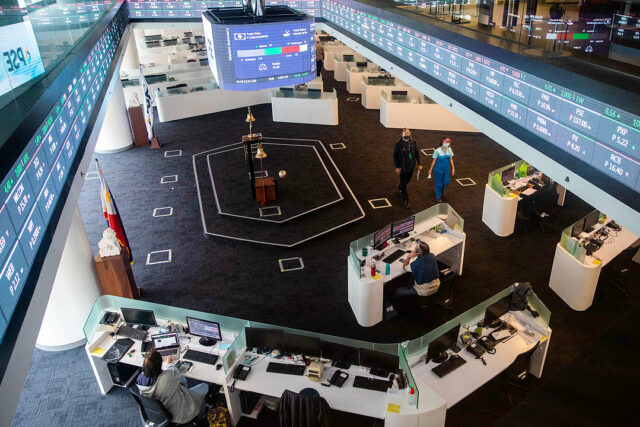
THE Philippine Stock Exchange, Inc. (PSE) is set to take over Philippine Dealing System Holdings Corp. (PDS) after buying the stakes of various shareholders in a deal worth P2.32 billion.
In an e-mailed statement late Thursday, the PSE said it would buy 3.87 million PDS shares at P600 each for a 61.92% stake as part of its plan to unify local capital markets.
The bourse has a 20.98% stake in PDS. The deal cost was based on the P3.75-billion enterprise value of PDS.
PDS owns fixed income exchange operator Philippine Dealing and Exchange Corp. and Philippine Depository & Trust Corp.
The PSE signed term sheets with the Bankers Association of the Philippines (BAP) for its 28.83% stake, as well as with Mizuho Bank Ltd. for its 0.08% stake.
The market operator also signed share purchase agreements to acquire Singapore Exchange Ltd.’s 20% stake, Whistler Technologies, Inc.’s 8% stake, San Miguel Corp.’s 4% stake, Investment House Association of the Philippines’ 0.65% stake and Golden Astra Capital, Inc.’s 0.36% stake. — Revin Mikhael D. Ochave
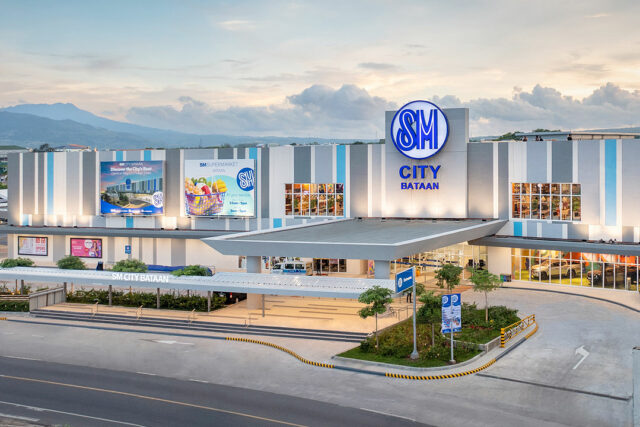
SM Investments Corp. expects slowing inflation to boost consumer demand in 2025, which it said could create opportunities in the Philippine retail sector.
“Any moderation in inflation should trigger a strong confidence rebound,” SM President and Chief Executive Officer Frederic C. DyBuncio said in a statement on Thursday. “This could create opportunities in consumer-focused sectors in the country, and we are poised to cater to these evolving demands.”
He said the business sector has adapted well despite inflation and the peso’s volatility against the dollar.
Household spending rose 5.1% in the third quarter, according to data from the local statistics agency. Inflation quickened to 2.5% in November as prices of vegetables, meat, and fish rose due to a series of typhoons.
The peso sank to an all-time low of P59 against the dollar on Dec. 19, though it has since recovered. It closed at P57.97 a dollar on Thursday, 48 centavos stronger than its P58.45 finish on Monday, according to Bankers Association of the Philippines data posted on its website.
To meet growing demand, Mr. DyBuncio said SMIC continues to expand to underserved areas. He added that the company continues to contribute to sustainable economic development and collaborate with the government to improve access to modern retail, financial services, and integrated property development.
“By investing and expanding to more areas nationwide, SM creates new markets and improves access to these essential sectors, serving more communities and helping stimulate sustained economic activities,” Mr. DyBuncio said.
Meanwhile, the group continues to invest in renewable energy and logistics, he added.
SM has invested in the clean energy sector via Philippine Geothermal Production Co., which produces 300 megawatts of geothermal steam supply.
SM aims to continue to develop geothermal concessions through Philippine Geothermal in support of the Energy department’s goal of reaching 50% renewable energy supply by 2040.
The holding company’s property unit, SM Prime Holdings, Inc., has partnered with GUUN Co. Ltd. to implement a technology that converts nonrecyclable and hard-to-recycle packaging into alternative fuel.
SM’s consolidated net income grew 9% to P60.9 billion in the first nine months as revenue increased 5% to P462.5 billion.
SM shares dropped 2% or P18 to P882 each. — Revin Mikhael D. Ochave
THIS YEAR has seen a heightening of the semiconductor wars between the US and China, stoking superpower tensions and raising visions of a global economy decoupled into opposing spheres.
Does history provide clues to how this might all play out?
Let me take you on a ride to revisit a millennia-old innovation that dictated the conduct of war, the shape of trade, and the very concept of mobility and speed. A commodity that required expert handling, it was the basis of much political and military power — and the quest for supplies led to violent takedowns of would-be monopolies.
That would be the horse.
The animal has been part of Western imagination since Paleolithic humans painted the Lascaux caves around 20,000 years ago. But consider this: Those depictions were of wild horses, descendants of a species that had evolved and was already extinct in North America. They were swift and powerful, as terrifying as the mammoth and the rhinoceros that co-starred on the cave walls. No one knew how — or dared — to ride horses then.
The key breakthroughs — getting on horseback and using the steeds to ferry vehicles like war chariots — probably took place around the Ural mountains and Central Asia about 4,200 years ago. Harnessing the beast’s speed, the innovators migrated into other regions of Eurasia — taking equine breeding and technology with them. Cultures everywhere adapted or died. Kingdoms were lost and won for love or lack of horses. Quickly enough, everyone from the pharaohs of Egypt to Alexander the Great (and his legendary steed Bucephalus) were waging swift and cruel war on horseback. The threat of the horse-powered Egyptian cavalry is so great that only God has the power to drown it — and save the fleeing Israelites — by unparting the waters of the Red Sea.
And so, the horse became more than a horse, of course: It was a disrupter of the status quo, the cutting edge of military technology, mover and shaker of empires. It also became the animal spirit of trade. That’s because some places were more equal than others for horse breeding. The Indian subcontinent was too hot and humid. The soil of ancient China didn’t have enough selenium to cultivate the strong-boned military steeds required to fight wars. As a consequence, those civilizations traded for the horses they needed. The Chinese offered silk in exchange — and by doing so, helped create a demand for the textile as the luxury spread further west.
In the second century BCE, when the people of the Ferghana Valley — in what is now eastern Uzbekistan — imposed a limit on how many horses the Chinese could purchase, Emperor Wudi of the Han dynasty sent armies to punish that distant region, which was ruled by descendants of Alexander the Great’s soldiers. After a couple of tries, he got the trade back to his terms.
In that way, the horse was at the basis of the luxury commerce (not just silk but spices and delicate Indian cotton fabric) that linked one end of Eurasia to the other. The British Museum has a spectacular Silk Roads show*—which runs until Feb. 25 — that provides material evidence of this compulsion to connect across vast terrain. There are two remarkable items. The first is a replica of a glass bauble from 6th century Iran that somehow made it to the court of Japan’s Emperor Shōmu, a journey of thousands of miles through deserts and mountains or perilous seas. (The original remains in an 8th century storehouse in the city of Nara). From roughly the same period, a copper alloy Buddha from the Swat Valley in what is now Pakistan found its way to a small island just outside Stockholm.
While the glass bowl in Japan and the Buddha in Sweden may be considered exotica, the historian James Belich says, the “luxury trade was a proxy for interaction” — just as it is today, for example, with the huge presence of Hermes, Gucci, and other fashion houses in China.**
A further explosion of horse-borne military expansion propelled the Mongols into the center of history. The riches of the vast domains of Genghis Khan and his descendants would inspire Western Europeans to sail the ocean blue on their own quest for empires.
That’s how horses finally made their way back to North America — with Spanish conquistadors who used them to defeat the Aztec and Inca empires. The Europeans tried to secure the military edge by limiting the number of mares they brought over so the indigenous peoples couldn’t steal them and breed horses to match the invader. But, just as the secrets of Chinese silk technology eventually filtered westward, Native Americans got their horses. That is reflected in the legacy of the Comanche, Arapaho, and the other mighty fighters of the Plains whose might challenged the westward push of the US. Indeed, federal troops slaughtered horses to eliminate the potential of indigenous uprisings.
Horses were a globalizing force for thousands of years — for both good and ill. That’s easy to forget in our machine age, when all of human history seems to be dancing precariously on the head of a microchip. It wasn’t that long ago that horses were still crucial to the way nations functioned. In 1914, when the Great War broke out, the British Army fielded hundreds of thousands of horses in the western theater not just as cavalry mounts but to haul weapons, ammunition, and supplies. Equine utility persisted in other parts of the world, at least for a while. In Manila, in the early 1960s, my ride home from second-grade classes was sometimes on a calesa — a type of horse-drawn buggy that provided cheap transport in the older parts of the Philippine capital.
We still talk of horsepower (equivalent to 735.5 watts in the metric system) but nowadays, there are no real horses attached to them. New technology can swiftly supplant the old — and often you can’t or refuse to go back. While not entirely put out to pasture, horses have become more symbolic than utilitarian, more quaint than strategic. In some cases, they’ve become luxuries (hood ornaments or thoroughbred racers). But they still retain some terrifying power. After all, the apocalypse is embodied in four fearsome figures mounted on horses. The last steed is a pale one: “And his name that sat on him was Death, and Hell followed with him.”
BLOOMBERG OPINION
*“Silk road” is a recent formulation, translated from the German Seidenstrasse, a term popularized in 1877 by a recent formulation for the various Central Asian land routes that brought goods from China to the Middle East and Western Europe before Spain and Portugal initiated their ocean-crossing expeditions in the late 15th and 16th centuries.
**The thesis of Belich’s latest book examines the consequences of interaction well beyond the horse. The World the Plague Made: The Black Death and the Rise of Europe contends (quite convincingly in my view) that the halving of Europe’s population by the bubonic plague led to economic conditions conducive to Western expansion.
COSCO Capital, Inc. on Thursday said it has ended its P500-million home improvement warehouse joint venture (JV) with Thailand’s Siam Global House Public Co. Ltd., citing market conditions.
They agreed to terminate the joint venture agreement on Dec. 23, Cosco Capital, which operates S&R Membership Shopping and the Puregold Price Club, Inc. chain of supermarkets in the Philippines, said in a stock exchange filing on Thursday.
“The management of both parties mutually decided to no longer proceed and finally terminate the agreement,” it said. “This decision was mutually arrived at after strategically reviewing the current market conditions.”
In June 2022, Cosco Capital and Siam Global signed a deal to set up and operate a one-stop home improvement warehouse for building materials, construction equipment and tools.
The joint venture had a P500-million initial investment — 55% from Siam Global and 45% from Cosco Capital.
Cosco Capital said the joint venture was part of its plan to expand into a new business and create more income sources.
Siam Global has interests in selling home, building, and construction materials.
Cosco Capital’s net income rose 10% to P10.04 billion in the first nine months from a year earlier as revenue grew 9.2% to P164.06 billion.
The grocery retailing business accounted for 69% of its net income, followed by The Keepers Holdings, Inc. at 22%, commercial real estate segment at 7%, energy and minerals at 1.5%, and specialty retail at 0.5%.
Cosco Capital shares rose 1.33% or seven centavos to P5.35 each. — R.M.D. Ochave
Movie Review Isang Himala Directed by Jose Lorenzo “Pepe” Diokno
EARLIER this year, Broadway star Patti LuPone appeared on the talk show Hot Ones, where, instead of apologizing to singer Madonna about her previous criticism of the singer’s acting skills in the movie musical Evita (Ms. LuPone played the dictator’s wife in the 1979 Broadway run of the musical), she decided to eat an extra-hot wing and proceeded to criticize the singer even further (despite Madonna winning a Golden Globe for the role; there will be no Madonna criticism in this home).
Isang Himala, the movie musical based on the 2003 and 2018 musicals, in turn inspired by Ishmael Bernal’s epic 1982 film (all written by Ricardo “Ricky” Lee, now National Artist of the Philippines for Film and Broadcast Arts) avoids this conflict by casting almost all the same actors from the 2018 run in the 2024 musical, a contender at the Metro Manila Film Festival.
The Patti LuPone vs. Madonna conflict opens up a can of worms about the adaptability of pieces from the stage to the screen. We’ve seen its success in Broadway’s latest offering to Hollywood in the critical acclaim achieved by Wicked (Part 1), but will this same effect translate to an all-Filipino show? We’ll try to answer that in this review.
For starters, Isang Himala is shot on a set instead of arid Ilocos as in the cinematic source of the musical’s source material. That’s okay — the movie wants to resemble the musical, not the original movie.
If anything, it highlights the artifice in the story: Elsa (a provincial maiden originally played straight by Nora Aunor; cementing her status as local Superstar) claims to see the Virgin Mary and begins a faith-healing journey that shoots her to a degree of celebrity; the journey ends in tragedy. The film was regarded then as the best this country could offer, and what that story says about us, I’d rather not think about.
A colleague had told me that I should watch this movie because I was the only one among the Lifestyle reporters to have seen the musical’s 2018 run (related story: https://tinyurl.com/9nmu35n3). Big mistake: all I did in my seat was compare the magic of the theatrical run to the experience in the cinema, giving this review an unfair slant. I do, however, envy those who will see the musical for the first time in this form, for it really is quite a good movie — if you hadn’t seen the musical.
For example, one of the musical’s highlights was the interactive set (the theater at Circuit Makati was comparatively small) where actors would pop in at your side, and the sound of howling winds wrapped around your seat, making you truly feel as if you were part of the story. The movie version really made you just a watcher, though the character of the filmmaker, Orly (played by David Ezra), would often attempt to break the fourth wall. We also feel that new songs were added and the character of the prostitute Nimia (Kakki Teodoro) was expanded — to the detriment of Aicelle Santos’ Elsa.
Ms. Santos has a beautiful voice (I once described it as “having a certain purity”; she won First Runner-up in 2005’s Pinoy Pop Superstar), but her solos are few and far in between. Everybody and their mother gets a song (even the town lunatic gets a few lines) in this film, detracting attention from Elsa’s town-wide stardom. But I guess that’s okay: what the play added to the movie was making the townspeople of cursed Cupang into a hungrier and needier chorus, adding to the pressures of being Elsa.
Speaking of wasted opportunities to showcase Ms. Santos, I was very excited to hear “Gawin Mo Aking Sining,” a song that Elsa sings in the theater version while being dressed by her attendants as Orly takes videos of her. It’s a very powerful song about photography-as-immortality (I don’t think there are many songs in this theme) and self-delusion. In the movie, she just sings this as part of an interview, robbing the number and Ms. Santos’ voice of grandeur. As I’ve said, however, I will envy the person hearing this for the first time, because it really is a great song (it still gave me goosebumps after all these years). Frankly, I’d watch the movie again just to hear it; we wish they’d release a soundtrack.
As we’ve said, the movie musical is shot on a set instead of on location. While this gives more control for lighting and other elements (as needed in the story), the scale of the stage followed on the medium of cinema has a hand in diminishing its epic qualities. In the original movie, scores of people flock to Nora Aunor’s Elsa, so you can really feel the suffocation of small-town drama. In the stage production, a limited number of people can be forgiven due to the limits of the venue’s size. In this movie production, the score (singular) of people who follow Elsa around don’t really hit the spot. Furthermore, while the theater stars who populate the film have some screen experience, their acting in this movie seems to fit better onstage instead of on-screen. The entire effect seems like one of those live American TV specials of Broadway musicals.
The film, much like its source materials, is an intellectual exercise. The movie is great — but you have to want to watch it. You watch it to compare it to the musical. You watch it to compare it to the movie. You watch it because you liked the story, the singing, the actors; et cetera, but I can’t see any Juan off the street entering the theater to watch this on a blind buy. It is an excellent piece independent of its influences, but we’re all only human, and we are shaped by the things that have come before. It’s also to its handicap that the theater is often open only to those who can afford it, so the movie’s appeal will be limited to the theater’s small audience.
Still, despite all my nitpicking, the cinema where we watched it saw a full house. We truly wish for a miracle for this production — that it can go beyond its limited, fashionable audience and pick up a few new fans along the way.