Home Blog Page 177

House to pass travel tax, 3 other LEDAC bills ahead of break

BW FILE PHOTO

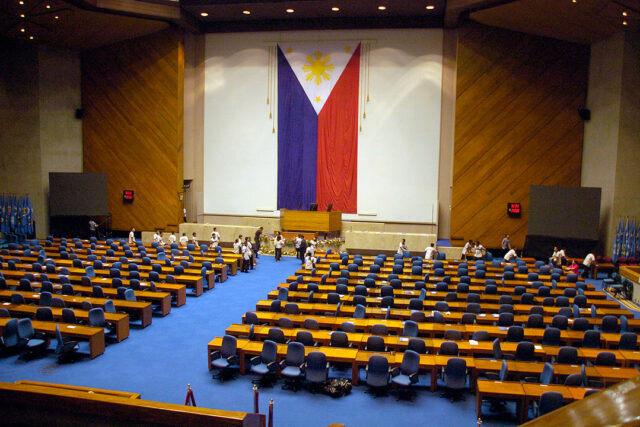
THE House of Representatives aims to pass four priority bills this week before a six-week legislative break, its majority leader said on Sunday, as lawmakers seek to keep pace with the Marcos administration’s legislative agenda.

The chamber is set to approve bills abolishing the travel tax, mandating digital payment platforms for government transactions, amending the 2017 free college education law and creating a new scholarship program for top senior high school students, Majority Leader and Ilocos Norte Rep. Ferdinand Alexander “Sandro” A. Marcos III, the President’s son, said in a statement on Sunday.

He said the measures’ imminent approval “reflect[s] a mix of relief and reform,” as lawmakers seek to improve the quality of life for Filipinos.

“We are right on track to approving LEDAC measures on time,” he said in a statement, referring to the Legislative Executive Development Advisory Council, which has identified 52 priority bills for President Ferdinand R. Marcos, Jr. for the remainder of his term.

President Marcos, now at the tail end of his six-year term, is seeking to leave a political legacy through a legislative agenda aimed at tackling core issues, advancing economic reforms and strengthening governance.

“The public does not live on promises alone, they need results,” Congressman Mr. Marcos said. “That is exactly what we are trying to deliver by moving these measures with urgency and discipline.”

He said that bills barring political dynasties, instituting a national land use policy and introducing amendments to the country’s 2006 biofuels law are also set to be discussed by the House floor this week.

In a separate statement, Congressman Mr. Marcos said the House is also set to approve on final reading a bill authorizing the President to cut or suspend the excise tax on fuel, giving the government a mechanism to curb rising prices due to the global oil shock caused by the Iran war.

“The House is moving to address an oil price crisis,” he said. “This bill gives the President a lawful and time-bound way to cut or suspend fuel excise taxes so relief can reach the public before higher oil prices trigger a wider increase in fares, food and other basic expenses.”

Now entering its third week, the Iran war shows no sign of ending as both Washington and Tehran signal no interest in a ceasefire, prolonging a conflict in the energyrich Middle East that has driven oil prices higher and rattled global markets.

“The proposal offers real relief, especially for workers, drivers, small businesses and families who feel the impact of every peso added to the cost of fuel,” Congressman Mr. Marcos said.

The Philippines imposes an excise tax of P10 per liter on gasoline, P6 per liter on diesel and P5 per liter on kerosene under the 2017 Tax Reform for Acceleration and Inclusion law. It previously allowed the government to suspend the collection of excise tax on petrol when world oil prices reach $80 per barrel for three straight months, but that provision lapsed six years ago. — Kenneth Christiane L. Basilio

PHL lags in adapting to US-China trade fallout

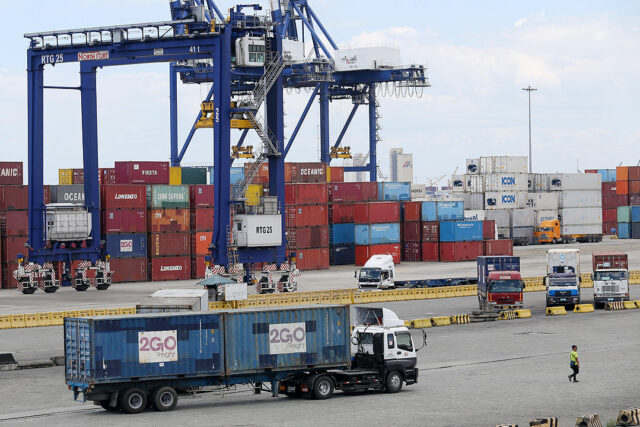
Trucks enter the port area in Manila. — PHILIPPINE STAR/EDD GUMBAN

By Justine Irish D. Tabile, Senior Reporter

HANOI — The Philippines remains behind in adapting to the US-China trade tensions, which have redirected supply chains toward Southeast Asia, the DHL Group said.

Released last week, the DHL Global Connectedness Report 2026 indicated that US-China ties continue to diminish since 2016, as the share of US trade, capital formation, and people flows with China dropped 42%, with China’s share own 37%.

The report, which was released last week, found that while the US and China reduced their direct engagement, the two countries saw increased trade with other countries.

“As companies look to build capacity outside of China, Southeast Asia has been the most attractive location for this,” Steven A. Altman, senior research scholar and director of the DHL Initiative on Globalization at the New York University Stern School of Business, told BusinessWorld.

“Part of it is due to the inherent competitiveness of this region, its growth, and also its proximity to China, as well as its integration into what is really a broader Asian manufacturing ecosystem,” he added.

He said that within Southeast Asia, Vietnam could be leading the countries that have captured that business activity.

“The Philippines also has, but so far other countries have benefitted more thus far than the Philippines,” he said. “But if we look at the forecasts, the Philippines stands out as one of the countries that has the most potential to benefit from this dynamic.”

The DHL Group has identified 20 countries that it expects to benefit from supply chain diversification, which it has dubbed Geographic Tailwinds 20, or GT20. The Asia-Pacific countries are China, India, Indonesia, Vietnam, Bangladesh, the Philippines, Pakistan, and Australia.

“Of the eight countries that we have identified, I would say the one that has not quite lived up to what we believe for now is the Philippines,” Ken Lee, chief executive officer of DHL Express Asia-Pacific, told reporters on the sidelines of a facility tour in Vietnam.

“I believe what is going to drive the Philippines big time will be the small and medium enterprises (SMEs),” he added.

The report ranked the Philippines at 59th in global connectedness in 2024, an improvement from 62nd place in 2023. It was the highest ranking the country achieved in the DHL index since it ranked 57th in 2019.

Mr. Altman said five areas that the Philippines could improve on to tap its potential are peace and security, the domestic business environment, international openness, regional integration, and public opinion.

“The first one is peace and security, without which it is really hard to develop mutually beneficial ties with other countries. We take peace and security as the foundation,” he said.

“The second one is sometimes surprising for people, it is the domestic business environment. The third is international openness. But what we found is that the attractiveness of the domestic business environment has an even bigger impact,” he added.

Meanwhile, he said that even with the tariffs being imposed by the US, Southeast Asian countries are still set to enjoy an advantage over China.

“For the US market specifically, what I would always be looking at is the relative tariff. So up until the latest developments, the pattern that we were seeing was higher tariffs for China,” he said.

“Now, how that develops in the future, we don’t know. But if that continues to be the case, even though the tariffs are much higher than they were last year, Southeast Asia still has the potential to benefit relative to China,” he added.

Into 2026, DHL Express President John Pearson said that he remains optimistic about global trade despite headwinds such as the US-Iran war and the tariff adjustments in the US.

“What I am positive about is global trade, because the GCR Report and the Global Trade Atlas give me 9 million data points that say I should be positive about global trade,” he said.

“I fully recognize that there are economic cycles of downturn and upturn, and all the positives and the negatives. I accept that. But trade is continuing to grow faster and did grow faster during the tariff year than it did in 2017. In fact, the first half of last year was faster than 2010,” he added.

He said that if the Russia-Ukraine war were to be resolved somehow and if the Middle East crisis doesn’t escalate further, businesses will be active — and will want to buy, sell, trade, repair, put salespeople on a plane and overseas salespeople to sell their wares.

“Businesses were wanting to get going. So I had a positive outlook towards this year. And, you know, the first two months of this year bore that out … Now, we’ve got a slightly unusual March because of what’s happened in the Middle East,” he said.

“But, you know, I tend to have a positive belief that business heals. Business is very self-resuscitating. And trade, if I look at the linear progression over the last 10 to 15 years, has been positive,” he added.

The Association of Southeast Asian Nations (ASEAN) +3 countries have direct exposure to the war in the Middle East, the ASEAN+3 Macroeconomic Research Office (AMRO) said in a commentary over the weekend.

“Based on AMRO’s internal estimates, if oil prices remain elevated at around $90 per barrel for the remainder of the year, inflation in the region could increase by an additional 0.7 percentage points, and growth could be reduced by 0.2 percentage points,” it said.

Despite this, AMRO said ASEAN+3 countries’ macroeconomic starting point is solid, after the region grew 4.3% in 2025 despite a shift in US trade policy and after regional inflation stood at 0.9%.

“It gives central banks and fiscal authorities greater room to absorb a supply-driven price shock without being forced into growth-damaging policy tightening,” it said.

AMRO said the region’s monetary policy should prioritize maintaining orderly market conditions rather than tightening prematurely in response to supply shock.

“At the same time, central banks will need to stay alert. Should inflationary pressures broaden beyond energy prices and become more entrenched, a policy response would be warranted,” it said.

Meanwhile, it said that the region should implement interventions that are “targeted at vulnerable segments through transparent, time-bound measures, rather than broad-based subsidies that distort price signals and erode the fiscal space that may be needed if the conflict deepens.”

“Policymakers should also watch developments beyond headline energy prices: disruptions to shipping and logistics may signal broader economic effects ahead,” it added.


Philippines is hoping to complete Chile free trade agreement talks in April

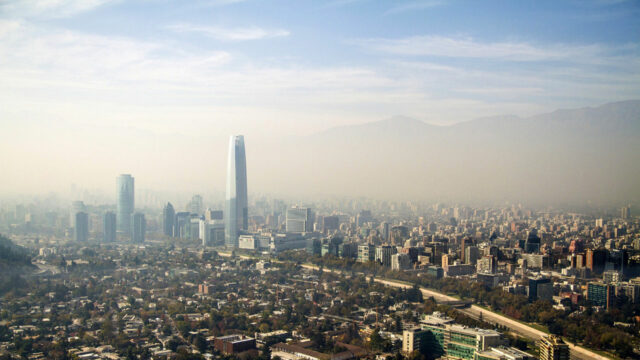
STOCK PHOTO | Image by Wirestock from Freepik

THE PHILIPPINES is hoping to conclude negotiations for a free trade agreement (FTA) with Chile next month, the Department of Trade and Industry (DTI) said.

“For Chile, we’re almost there. We hope to conclude the negotiations, by next month,” Trade Undersecretary Allan B. Gepty told reporters last week.

“We’re just finalizing a few items.”

While the DTI cannot disclose which items have yet to be finalized, Mr. Gepty said “there is no major issue that can hinder the completion (of the FTA with Chile.)”

Once concluded, the Chile FTA would be the Philippines’ first trade deal in Latin America.

The countries first opened talks for a Comprehensive Economic Partnership Agreement (CEPA) in 2024.

Under the CEPA, the Philippines and Chile seek to go beyond trade in goods and services to cover areas like intellectual property rights, digital economy, micro, small and medium enterprises, environment, labor and trade and gender, among others.

Trade Secretary Ma. Cristina A. Roque has said the Philippines is aiming to sign its FTA with Chile this year.

In 2024, trade between the Philippines and Chile amounted to $266 million, with an average annual growth rate of 4.1%.

The Chile FTA forms part of the Philippines’ aim to conclude 20 FTAs by 2028.

The Philippines is also holding the next round of talks for its FTA with Canada next month, Mr. Gepty said.

“We intend to cover all the chapters of the FTA, so it will be a full round of negotiation,” he said.

“We’ll focus on the text-based negotiation, and we’ll start also discussing on the modalities for the market access,” Mr. Gepty noted.

The Philippines is also looking to conclude talks for its FTA with the European Union by June or July.

Ms. Roque cited the need for the Philippines to leverage FTAs to boost its global competitiveness.

Over 70% of Philippine exports reach partner markets through trade agreements, Ms. Roque said.

“One country is not the market… so, we must find a way to be competitive globally,” she said. — Beatriz Marie D. Cruz

Industry capacity seen sufficient for up to 7% coco-diesel blend

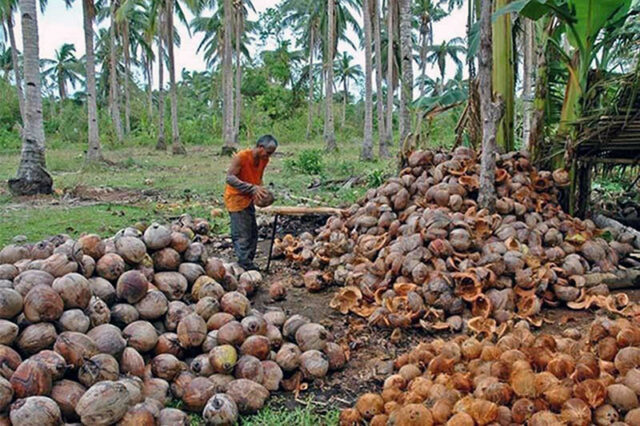
PHILSTAR FILE PHOTO

BIODIESEL PRODUCERS said they are prepared should the Philippines intend to increase the coconut content of the biodiesel blend, noting it has the capacity to supply more after recent investments.

In a statement over the weekend, the Philippine Biodiesel Association (TPBA) said the industry’s current capacity is adequate to service up to a 7% (B7) blend if the government mandates it.

Currently, all diesel fuel sold in the Philippines contains 3% coco methyl ester (CME), a fuel derived from coconut oil.

TPBA said 14 biodiesel facilities use 100% domestically sourced coconut oil to produce CME.

Last week, Philippine pump prices adjusted by as much as P38.50 per liter with the Iran war continuing to disrupt the fuel supply.

Republic Act (RA) No. 9367 or Biofuels Act of 2006 requires all liquid fuels for motors and engines to contain a fixed percentage of biofuel such as bioethanol and biodiesel as a means of transitioning to cleaner energy, cutting dependence on imported oil, and supporting agriculture.

Senators are also weighing amendments which would allow the President to suspend or adjust the mandatory blend.

Rather than suspending the implementation, the group has urged legislators to strengthen it further instead.

“Given RA 9367’s multiplier benefits — from fortifying the coconut industry, to increasing mileage and proven emission reductions, we call for the continued implementation of the blending mandate and to maintain local sourcing of biofuels, which supports millions of coconut farmers who form this country’s backbone,” TPBA Executive Director Ramon Taniola said.

The TPBA said the law remains “the country’s most reliable defense against its inherent vulnerability with imported fuel.”

“Its continued implementation ensures the country not only directly supports agricultural communities but also helps shift the country’s position towards reducing import dependence,” the group said.

The coco-biodiesel blend was supposed to increase to 4% (B4) by Oct. 1, 2025, and further to 5% (B5) a year after. However, the National Biofuel Board recommended the suspension of B4 due to the high cost of coconut oil. — Sheldeen Joy Talavera

PHL external debt grows 7.3% in 2025

US DOLLAR and euro banknotes are seen in this illustration taken on July 17, 2022. — REUTERS/DADO RUVIC/ILLUSTRATION

OUTSTANDING EXTERNAL debt rose 7.3% in 2025 as the National Government (NG) and the private sector took on new obligations last year, the Bangko Sentral ng Pilipinas (BSP) said.

The BSP said the debt stock had risen to $147.651 billion by the end of 2025.

“This was driven primarily by new borrowing, which included bond issues by the National Government amounting to $3.29 billion and external financing tapped by private-sector banks amounting to $3.72 billion,” the central bank said in a statement late Friday.

Net valuation adjustments amounted to $1.34 billion, while net acquisition of Philippine debt securities by non-residents hit $1.23 billion.

The debt tally at the end of December was 0.97% lower than the record of $149.093 billion set in the three months to September.

“External debt fell to $147.65 billion in December 2025 from $149.09 billion in September 2025, as non-residents on a net basis sold $2.28 billion worth of Philippine debt securities,” the BSP said.

“Debt manageability also improved slightly amid weaker-than-expected economic growth and cautious market sentiment,” it added.

External debt refers to all types of borrowing by residents from nonresidents.

According to the BSP, net availments amounted to $1.44 billion in the fourth quarter, tempered by net valuation adjustments during the period.

“Net valuation adjustments reflecting lower dollar valuations of borrowing denominated in other currencies also reduced the debt stock by $659.38 million,” the central bank said.

In December, weak market sentiment due to the corruption scandal dragged the peso to between P58 to P59 against the dollar.

According to the Bankers Association of the Philippines, the peso unit fell eight centavos to close at P58.79 to the dollar on Dec. 29, the last trading day of 2025. It was also 1.61% weaker than its P57.845 close on Dec. 27, 2024.

Philippine foreign debt was equivalent to 30.3% of  gross domestic product (GDP) at the end of December, lower than the 30.9% ratio at the end of September.

The BSP said public-sector obligations totaled $94.867 billion at year’s end, making up the bulk of the national debt and up 11.16% from 2024 levels.

The NG acquired debt amounting to $89.028 billion, followed by state banks with $5.839 billion and the BSP with $3.906 billion.

Private-sector obligations rose 0.95% to $52.784 billion.

The Philippines took out the most loans from Japan with $16.583 billion, followed by China with $4.9 billion, the UK with $4.003 billion, the US with $2.329 billion, France with $2.31 billion and Germany with $1.591 billion.

Dollar-denominated debt accounted for $106.127 billion of the borrowing, while yen debt comprised $11.398 billion of the total.

Meanwhile, short-term external debt based on the remaining maturity concept (STRM) rose 1.67% quarter on quarter to $26.80 billion in the three months to December.

“Gross international reserves of $110.83 billion also provided adequate buffers to absorb these near-term obligations, reflecting 4.14 times cover and indicating a strong reserve adequacy position relative to emerging economy peers,” the BSP said.

STRM debt is composed of loans with original maturities of one year or less plus amortization on medium and long-term accounts falling due within the next 12 months.

The BSP also noted that lower principal and interest payments helped the Philippines’ debt service ratio ease to 8.3% in 2025 from 11.5% in 2024. This ratio measures a country’s capacity to meet its obligations based on its foreign exchange earnings. — Katherine K. Chan

PHL seeking $280-million ADB loan for semiconductor development

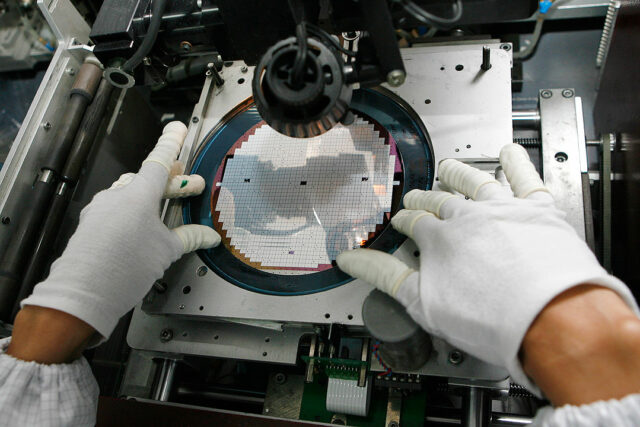
A worker operates the die attach machine at a semiconductor manufacturing plant in Manila, Dec. 10, 2008. — REUTERS

THE PHILIPPINES is seeking a $280-million loan from Manila-based Asian Development Bank (ADB) to finance research into the domestic production of semiconductors, the Department of Trade and Industry  said.

“We are working closely with ADB on the ASCEND (Advancing Skills, Competitiveness and Enterprise-Driven Innovation) program, which is vital to our ASEAN Semiconductor roadmap,” Trade Secretary Ma. Cristina A. Roque said at a forum last week.

She said the program aims to position the Association of Southeast Asian Nations (ASEAN) as a global hub for high-tech manufacturing.

ASCEND is still subject to review and approval by the National Economic and Development Authority Board’s Investment Coordination Committee.

The ADB has yet to disclose the timeline for implementing ASCEND. The loan amount could also be subject to change, it said.

In a statement, the ADB said the program aims to boost R&D in selected state universities and translate them into commercially viable products.

“It will improve collaboration mechanisms between education institutions and industry enterprises through grants for applied research, startup incubation, and enterprise development,” ADB said.

The project will also support facility upgrades and training programs to match industry needs, it said.

“This investment initiative builds on previous ADB support that promoted Industry 4.0 development and opportunities identified for technology-driven startups,” the lender said.

The Philippines has been a key player in back-end processes like assembly, testing, and packaging.

However, it has long struggled to move up to high-value manufacturing due to high power costs and other industry constraints.

Ms. Roque noted that ASCEND aligns with the ASEAN Semiconductor Roadmap, which “aims to strengthen regional value chains, develop skilled workers, and position ASEAN as a global hub for semiconductor investment.”

The roadmap is one of ASEAN’s Priority Economic Deliverables this year. The Philippines is currently chairing the bloc and steering its agenda.

Philippine semiconductor exports rose 21.6% to $3.07 billion in January, according to the Philippine Statistics Authority. — Beatriz Marie D. Cruz

Petroleum association touts potential of PHL gas in lowering power prices

BW FILE PHOTO

THE PHILIPPINES needs to maximize its use of domestic natural gas to reduce dependence on overseas energy and relieve pressure on electricity prices, the Petroleum Association of the Philippines (PAP) said.

“There’s an opportunity to fully implement the (upstream) natural gas law by maximizing indigenous gas,” PAP Chairperson Donnabel Kuizon Cruz told a Senate hearing last week.

“We still have capacity there that we can use and push into our power generation companies so we can help reduce the price,” she added.

Proposals are being floated to suspend petroleum taxes to mitigate high pump prices. Energy Sharon S. Garin earlier warned of a potential 16% increase in electricity rates by April, driven by surging fuel costs.

Signed into law last year, Republic Act No. 12120, or the Philippine Natural Gas Industry Development Act, aims to develop the natural gas industry.

The law exempts indigenous natural gas and electricity generated from it from value-added tax, providing some relief to consumers, Ms. Cruz said.

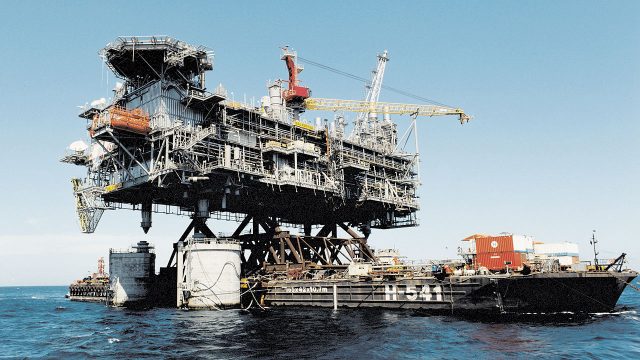
Ms. Cruz, who also serves as the president and chief executive officer of Prime Energy Resources Development B.V., the operator of the Malampaya Deep Water Gas-to-Power Project, said using domestic natural gas offers significant advantages over importing liquefied natural gas (LNG).

Earlier this year, Prime Energy confirmed commercially viable quantities of natural gas at the Malampaya field.

Ms. Cruz said that electricity generated from the Malampaya gas field costs around P4.80 per kilowatt-hour (kWh), against P10.30 per kWh for imported LNG.

“That’s how big the difference between our own fuel is, compared to imported gas today,” she said.

Ms. Cruz said the Iran war should prompt the Philippines to turn more to domestic fuel.

“The Iran conflict underscores the importance of having our own resources, our indigenous or domestic fuel sources such as indigenous gas, our own oil sources, and indigenous coal,” she said.

She said the government’s recent award of service contracts is also “very timely” if the crisis persists as the country can develop indigenous blocks that can unlock potential resources.

“Under the leadership of the DoE (Department of Energy), members of the energy sector have started to coordinate in this crisis and see how we can balance the fuel mix to help consumers during this time,” Ms. Cruz said. — Sheldeen Joy Talavera

NLEX sees Northlink section completed by June 

NLEX Corp., a unit of Metro Pacific Tollways Corp. (MPTC), expects to complete Section 1A of the NLEX-C5 Northlink Segment 8.2 by June, with operations set to begin in September.

“In terms of completion we are 60% for the construction completion, hopefully by June this year, we will complete that segment,” NLEX President and General Manager Luis S. Reñon told reporters last week.

Mr. Reñon added that construction of its extension is now under discussion.

“Afterwards, we will request from the DPWH (Department of Public Works and Highways) the next part,” he said, referring to the extension from Mindanao Avenue to Congressional Avenue.

The extension is expected to cost more than Section 1A, he said, due to the right-of-way rather than the construction cost itself.

NLEX is also the builder-concessionaire and operator of major expressways, including the North Luzon Expressway, Subic-Clark-Tarlac Expressway, and NLEX Connector.

Once completed, Section 1A will link the Mindanao Toll Plaza to Quirino Highway through an all-weather elevated expressway over Mindanao Avenue and the Tullahan River.

The elevated expressway will operate 24/7 for all vehicle classes, according to NLEX, adding that around 11,000 vehicles daily are expected to benefit, easing congestion along Quirino Highway and Mindanao Avenue.

The entire NLEX-C5 Northlink project spans 11.3 kilometers and serves as a vital corridor connecting the northern and southern parts of Luzon via eastern Metro Manila.

Last year, NLEX partnered with China Road and Bridge Corp. for the construction of Section 1A, which carries an overall cost of P2.2 billion.

MPTC is the tollway unit of Metro Pacific Investments Corp., one of three Philippine subsidiaries of Hong Kong-based First Pacific Co. Ltd., alongside Philex Mining Corp. and PLDT Inc.

Hastings Holdings, Inc., a unit of the PLDT Beneficial Trust Fund subsidiary MediaQuest Holdings, Inc., holds a majority stake in BusinessWorld through the Philippine Star Group, which it controls. — Ashley Erika O. Jose

The next move: Reshaping strategy through AI

(First of two parts)

IN BRIEF:

• Measured optimism defines 2026 as CEOs balance domestic confidence with global uncertainty and rising cost pressures.

• AI readiness becomes the decisive priority, with national assessments highlighting both urgency and opportunity for Philippine enterprises.

• The advantage goes to the prepared enterprises that upgrade systems, invest in skills, and build digital strength to lead the next wave of growth.

With 2026 reshaping competitive realities at unprecedented speed, Philippine CEOs face a strategic landscape where decisions carry amplified impact. Insights from the Philippine edition of the 2026 CEO Outlook Pulse Survey, gathered from CEOs across the country’s major sectors, reveal how enterprises are rebalancing portfolios, accelerating AI integration, and strengthening resilience amid ongoing uncertainty.

In today’s NAVI world, where change is nonlinear, accelerated, volatile and interconnected, these insights offer Philippine business leaders a sharp lens into how organizations are adapting to rapid and interconnected change. AI readiness is no longer optional — it is the defining advantage for Philippine enterprises in 2026, and it is rapidly becoming the differentiator that sets industry leaders apart.

ECONOMIC PRESSURES RESHAPING CEO PRIORITIES
Philippine CEOs enter 2026 facing economic pressures that mirror those of the previous year, now intensified by geopolitical dynamics and accelerating technological change. The World Uncertainty Index indicates that global uncertainty remains elevated due to persistent geopolitical tensions and volatile trade policies — conditions that continue to affect cost structures, capital allocation, and long‑term planning.

Domestically, concerns around fiscal governance persist, weighing on investor confidence and contributing to a more cautious business outlook.

These combined forces have shaped the country’s recent economic performance. Philippine GDP slowed from 5.7% in 2024 to 4.4% in 2025, falling short of the government’s minimum target of 5.5%, as noted in the Development Budget Coordination Committee’s review of medium‑term macroeconomic assumptions.

Meanwhile, the Bangko Sentral ng Pilipinas, in its February 2026 briefing, projected a modest recovery to 4.6% in 2026 and 5.9% in 2027 — projections that hinge on strengthened governance and renewed investor trust.

While the macroeconomic environment remains constrained, the technology landscape is advancing at a pace that demands CEO‑level attention. Global competition is accelerating investment in artificial intelligence (AI), creating meaningful openings for economies that modernize quickly — and exposing vulnerabilities in those that lag.

AI READINESS AND STRUCTURAL GAPS
The 2025 UNESCO AI Readiness Assessment Report notes that the Philippines has made real progress in building responsible, ethics‑driven AI governance. Yet the same assessment underscores structural gaps that now carry strategic consequences: weaknesses in digital infrastructure, limited R&D investment, siloed policymaking, inconsistent public–private collaboration, and shortages in critical technology skills. As AI becomes a core driver of competitiveness, these gaps must be addressed with urgency.

Reinforcing this, the 2025 Government AI Readiness Index by Oxford Insights ranks the Philippines 43rd among 195 economies, reflecting improved policy direction, governance, and public‑sector readiness. For enterprise leaders, this signals that government has largely set the foundation; the real challenge now lies in execution, specifically, scaling AI with speed, discipline, and measurable business outcomes.

One of the speakers at the 2026 Philippine CEO Outlook event from the Asian Development Bank underscored the scale of the country’s AI opportunity. Citing Public First’s Turbocharging Growth: The Philippines’ AI Opportunity, they highlighted that today’s AI technologies could significantly augment roughly 37% of Filipino workers, driving substantial productivity gains and enabling higher incomes. The message to CEOs is direct: AI is no longer merely an operational enhancement — it is a national productivity catalyst.

Global insights further reinforce the urgency of enterprise‑level action. The World Economic Forum’s Future of Jobs Report 2025 identifies AI and information technologies as the strongest forces reshaping business models worldwide, while Microsoft’s Work Trend Index 2025 notes that although awareness of AI is rising, many organizations remain underprepared for transformation at scale.

This readiness gap is even more pronounced in the Philippines. The Philippine Institute for Development Studies (PIDS), in its 2024 study Readiness for AI Adoption of Philippine Business and Industry, found that only 14.9% of firms are currently using AI, with adoption concentrated among digitally mature ICT and BPO organizations.

PIDS emphasized that industry‑wide AI uptake continues to be limited by infrastructure gaps, low levels of awareness, constrained investment capacity, and widespread shortages in critical digital skills. The study also cited the Salesforce Asia Pacific AI Readiness Index, where the Philippines scored 25.4 out of 100 in Business AI Readiness — ranking 10th out of 12 economies, well behind regional leaders such as Singapore, China, and South Korea.

This signals a substantial opportunity for Philippine enterprises to accelerate AI capability and strengthen their competitive position in the region. As highlighted by the Global Consulting Markets Leader at Ernst & Young during the 2026 Philippine CEO Outlook event, AI offers a genuine productivity leapfrog opportunity for companies that act decisively. He underscored that realizing this potential will depend on CEOs modernizing legacy systems and rethinking enterprise capabilities to overcome entrenched barriers that hinder transformation.

PHILIPPINE CEOS ENTER 2026 WITH MEASURED OPTIMISM
The CEO Outlook Pulse Survey shows that Philippine business leaders enter 2026 with measured optimism. While 48% express net optimism about business prospects, sentiment remains nuanced. Leaders retain confidence in domestic and sector‑specific performance yet remain cautious about global conditions and persistent cost pressures. The 2026 CEO Confidence Index registered a score of 59, down from 74 the previous year — a reflection of sourcing challenges, rising operational costs, and continuing uncertainty. Even with this softer sentiment, CEOs still anticipate improvements across key metrics: 64% expect revenue growth, 54% foresee stronger profitability, and 64% project productivity gains, with 26% pointing to meaningful efficiency improvements.

Executives remain confident but deliberate in capital deployment. Net optimism of 46% for revenue, 42% for competitiveness, and 36% for investment in existing operations signals a clear emphasis on strengthening core capabilities. Expansion plans, technology investments, and R&D spending are being paced with greater discipline, shaped by pressures around input costs, limited cost‑through mechanisms, and tighter cash flow.

Cost pressures continue to loom large, with 42% of CEOs expecting operating expenses to rise due to supply‑chain disruptions, higher input prices, and labor market tightening. Leaders are accelerating efficiency, digital adoption, and reskilling to manage cost pressures and reinforce organizational resilience.

CLEAR-SIGHTED AND TRANSFORMATIVE LEADERSHIP
This direction aligns with the International Monetary Fund’s view in Gen‑AI: Artificial Intelligence and the Future of Work, which notes that economies with strong digital foundations and adaptable labor markets are best positioned to benefit from AI while managing disruption. The Philippines’ ASEAN Chairmanship in 2026 further amplifies this opportunity, positioning the country to help shape regional digital priorities that will define the operating environment for CEOs in the years ahead.

As Philippine CEOs move through 2026, the realities of a NAVI world demand leadership that is clear-sighted and transformative. This moment is both a signal and mandate: business leaders who modernize core systems, build future-ready talent, and strengthen digital foundations will be best positioned to turn uncertainty into advantage — driving growth while advancing the country’s competitiveness in a rapidly shifting region.

The second part of this article will discuss how Philippine CEOs in 2026 are advancing transformation agendas focused on modernization, AI integration, governance, and strategic transactions to sustain growth and competitiveness amid a rapidly digitalizing and geopolitically shifting market.

This article is for general information only and is not a substitute for professional advice where the facts and circumstances warrant. The views and opinions expressed above are those of the authors and do not necessarily represent the views of SGV & Co


Noel P. Rabaja is the deputy managing partner, strategy and transactions leader, and markets leader, and Christine Rose L. Lapada is a strategy and transactions associate director, both of SGV & Co.

Trump warns of more strikes on Iran’s Kharg Island, pressures allies on Strait of Hormuz

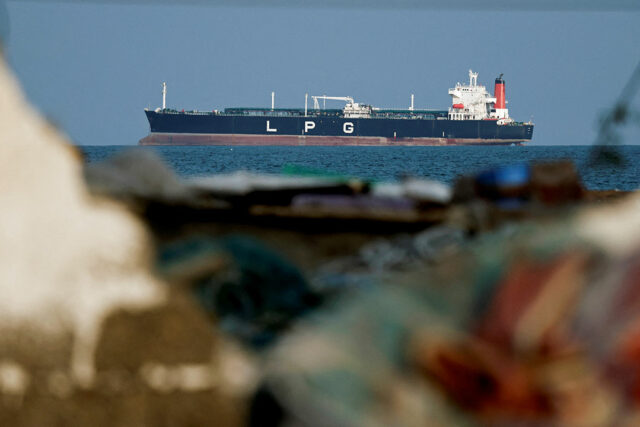
An LPG gas tanker at anchor as traffic is down in the Strait of Hormuz, amid the US-Israeli conflict with Iran, in Shinas, Oman, March 11, 2026. — REUTERS

PALM BEACH, FLORIDA/DUBAI/JERUSALEM — US President Donald J. Trump threatened further strikes on Iran’s Kharg Island oil export hub and urged allies to deploy warships to secure the Strait of Hormuz, an artery for global energy supplies, as Tehran vowed to intensify its response.

With the US-Israeli war on Iran in its third week, Mr. Trump said US strikes had “totally demolished” much of the island and warned of more, telling NBC News on Saturday, “We may hit it a few more times just for fun.”

The remarks marked a sharp escalation from Mr. Trump, who had previously said the US was targeting only military sites on Kharg, and undercut diplomatic efforts. His administration has rebuffed efforts by Middle Eastern allies to start negotiations, three sources told Reuters.

WAR, ENERGY CRISIS LOOK SET TO PERSIST
The war showed no sign of ending. Mr. Trump said Tehran appeared ready to make a deal to end the conflict but that “the terms aren’t good enough yet.”

Tehran’s ability to halt shipping through the Strait of Hormuz, through which a fifth of the world’s oil passes, poses a difficult problem for the US and its allies. Energy prices are soaring as the war causes the biggest-ever disruption in oil supply, and the energy crisis looked set to continue.

“The Countries of the World that receive Oil through the Hormuz Strait must take care of that passage, and we will help — A LOT!” Mr. Trump wrote in a social media post on Saturday. “The US will also coordinate with those Countries so that everything goes quickly, smoothly, and well.”

Iranian Foreign Minister Abbas Araghchi said Iran would respond to any attack on its energy facilities.

Iran’s Revolutionary Guards said on Sunday they had carried out missile and drone strikes on targets in Israel and three US bases in the region, calling the attacks the first round of retaliation for workers killed in Iran’s industrial areas. The Israeli military said it was intercepting incoming launches.

Saudi Arabia intercepted and destroyed 10 drones in Riyadh and the east, the defense ministry said. Iran’s Revolutionary Guards said they no had connection to the attack, semi-official Fars news agency reported.

A drone attack disrupted a major United Arab Emirates (UAE) energy hub on Saturday, and the US warned US citizens on Saturday to leave Iraq.

The war that Mr. Trump and Israeli Prime Minister Benjamin Netanyahu launched on Feb. 28 has killed more than 2,000 people, mostly in Iran, according to reports from governments and state media. At least 15 were killed when an airstrike hit a refrigerator and heater factory in the central Iranian city of Isfahan, Fars news agency said on Saturday.

NO IMMEDIATE TAKERS ON TRUMP’S HORMUZ REQUEST
Russia is supplying Iran with Shahed drones to use against the US and Israel, Ukrainian President Volodymyr Zelensky told CNN. Shahed drones have been linked to other attacks on countries in the region, although their manufacturers are not always clear.

Oil market disruptions looked unlikely to end soon. Some oil-loading operations were suspended in the UAE’s Fujairah emirate, a global ship-refueling hub, after a drone attack, industry and trade sources said on Saturday.

Mr. Trump, in a post on his Truth Social platform, urged China, France, Japan, South Korea, Britain and others to send warships to the Strait of Hormuz. None of those countries gave any immediate indication they would do so.

Takayuki Kobayashi, Japan’s ruling party policy chief, declined to rule out the possibility, but told public broadcaster NHK that “the (legal) threshold is very high.”

Japan interprets its pacifist post-war constitution to mean it can deploy its military if the nation’s survival is threatened, but the government would have to invoke a 2015 security law that has not been used.

France is seeking to assemble a coalition to secure the Strait of Hormuz once the security situation stabilizes, while Britain is discussing a range of options with allies to ensure the security of shipping, officials have said.

Iran’s Supreme Leader Ayatollah Mojtaba Khamenei, who replaced his slain father, has said the Strait of Hormuz should remain closed. Reuters

Taiwan says large-scale Chinese military flights return after unusual absence

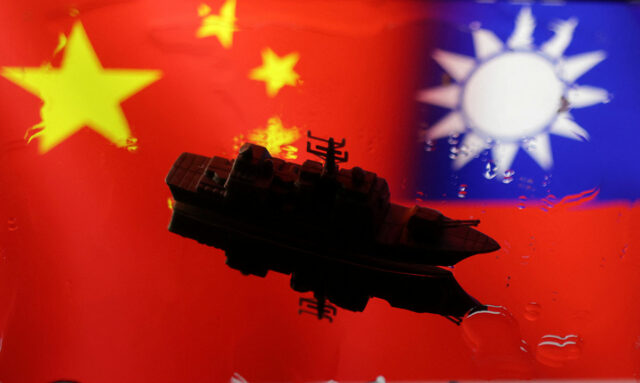
A Navy miniature is seen in front of displayed Chinese and Taiwanese flags in this illustration taken, April 11, 2023. — REUTERS/DADO RUVIC

TAIPEI — Taiwan on Sunday reported the return of large-scale Chinese air force activities around the island after an unexplained absence of more than two weeks that prompted speculation in Taipei as to Beijing’s motives.

China, which views democratically governed Taiwan as its own territory, normally sends fighter jets, drones and other military aircraft around the island on a daily basis, with interruptions generally caused by bad weather.

Taiwan’s defense ministry, in a daily update on Sunday morning, said it had detected 26 Chinese military aircraft, concentrated in the Taiwan Strait, over the previous 24 hours. It last reported that many on Feb. 25, when it spotted 30 aircraft after saying Beijing was carrying out another “joint combat readiness patrol.”

From Feb. 27, Taiwan reported no Chinese military aircraft until March 7, when it said it spotted two aircraft to Taiwan’s far southwest. There have been only sporadic, small-scale incidents since then.

China has provided no explanation for its motives and did not respond to a further request for comment on Sunday.

But China’s Taiwan Affairs Office late on Saturday lambasted Taiwan President Lai Ching-te for a speech that day discussing the need to boost defense spending and protect the island’s democracy.

“People like Lai Ching-te should not miscalculate; if they dare to take reckless risks, they will dig their own grave,” an office spokesperson said in a statement.

Officials and experts in Taipei have said reasons for the disappearance of the aircraft could range from Beijing trying to recalibrate its pressure campaign ahead of US President Donald J. Trump’s planned visit to China from March 31 to President Xi Jinping’s ongoing purge of senior Chinese generals.

Taiwan Defense Minister Wellington Koo has said that while the aircraft had gone, the Chinese warships around the island remained and China’s threat had not gone away.

Taiwan’s government rejects Beijing’s sovereignty claims. Reuters

Japan to release oil stocks as US says buy American

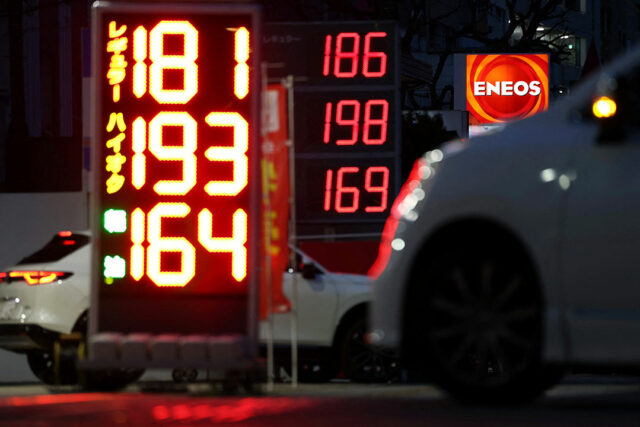
SIGNBOARDS display fuel prices outside gas stations, amid the US-Israel conflict with Iran, in Tokyo, Japan, March 13, 2026. — REUTERS/ISSEI KATO

TOKYO — Japan plans to start releasing oil from its stockpiles on Monday to soften the shock from the US-Israeli war on Iran, a stark reminder of the oil crisis half a century ago that prompted Tokyo to create reserves.

As gasoline prices across Japan started to rise with the war disrupting supplies from the Gulf’s Strait of Hormuz, Tokyo pledged to release a record 80 million barrels of oil, about 45 days of supply for the resource-poor nation.

The government has asked Japan’s refiners to use the released crude, which will reduce the national reserves by 17%, to secure domestic supplies. It is not known how much of the oil will go to a global release of 400 million barrels being coordinated by the International Energy Agency to address the war’s supply shock and price volatility.

RESERVES CAN STABILIZE SUPPLY BUT ‘MAINLY BUY TIME’
Japan’s release shows how seriously Tokyo views the disruption, said Yuriy Humber, chief executive officer of Tokyo-based consultancy Yuri Group.

“The reserves can help stabilize supplies and prices in the short term but they mainly buy time. They can’t fully offset a prolonged disruption in the Strait of Hormuz,” he said.

Any potential release from 12 million barrels jointly held in Japan by Saudi Arabia, the United Arab Emirates and Kuwait would be in addition to the announced 80 million barrels, the Ministry of Economy, Trade and Industry (METI) says.

Japan started its national oil reserve system in 1978, several years after the Arab oil embargo. The Group of Seven nation, reliant on the Middle East for around 90% of its oil, now stockpiles 254 days of consumption.

It will start releasing 15 days’ worth of private-sector oil on Monday and a month’s worth from the state reserves from late this month, according to METI.

As private companies prepare to tap Japan’s stockpiles, METI Minister Ryosei Akazawa said they are also looking for supplies from the US, Central Asia, South America and Gulf nations that can bypass the Strait of Hormuz.

Japan gets around 4% of its oil from the US after largely stopping purchases from Russia following Moscow’s 2022 Ukraine invasion — when Tokyo last tapped its reserves.

“When you look at the conflict in the Middle East… you’re reminded of all that crude oil that has gone from Alaska to Japan was never targeted with a successful terrorist attack,” US Environmental Protection Agency Administrator Lee Zeldin told Reuters.

“This conflict… is a reminder that along the Indo-Pacific, a lot of other nations can look to the United States, where we have the resources.” Reuters