Home Blog Page 176

Medvedev ousts Alcaraz to set up Indian Wells final against Sinner

INDIAN WELLS, California — Carlos Alcaraz’ bid for a third straight Indian Wells title was brought to a halt on Saturday by Daniil Medvedev, who swept past the world number one, 6-3 7-6(3), to set up a final against Jannik Sinner after the Italian brushed aside Alexander Zverev, 6-2 6-4.

Medvedev, who ended Alcaraz’ 16-match winning streak to start the season, won six points in a row in the tiebreak before serving an ace to close out the match.

The Russian played smartly to break Alcaraz early and take a 3-1 lead, never relinquishing his advantage to claim the opening set.

The second set was a far more dramatic affair as Alcaraz stepped up a gear to break Medvedev and surge to a 3-1 lead, only for the 30-year-old Russian to dig deep and level at 3-3, taking advantage of the Spaniard’s unforced errors.

The pair traded blows to reach the tiebreak, where a ruthless Medvedev sealed his place in the final.

“Playing someone like Carlos, you play many times, you lose many times,” he said. “He’s an amazing player with amazing shots, defence, attack, return, everything. So, you need to be at your best.”

Earlier in the day, Sinner dismissed fourth seeded Zverev to reach his first Indian Wells final, the world number two firing eight aces and committing just 13 unforced errors, eight fewer than his opponent, while winning seven of his eight net points.

Zverev showed early promise, grabbing a foothold in the opening set, but Sinner broke twice to close it out before breaking again at 4-3 in the second to seal the match.

The 24-year-old has not dropped a set throughout the tournament, a run of dominance that underlines his growing supremacy on hard courts.

“It’s a great achievement. The first time here in the final, it means a lot to me,” Sinner said.

“The third time that I’ve played the semis here… It was a great performance from my side. Sascha didn’t play very well today. I broke him a couple of times in the first set, which gave me confidence to continue, and I served very well at important moments.” — Reuters

EAC forces a rubber match over UPHSD

EMILIO Aguinaldo College (EAC) continued its giant-slaying ways with a 25-18, 19-25, 27-25, 25-22 victory over a heavily favored University of Perpetual Help System Dalta (UPHSD) on Sunday to force a sudden death in their NCAA Season 101 women’s volleyball quarterfinal duel at the San Andres Gym.

This forced a rubber match where Angel Joy Perez was heaven sent after swooping down on the overconfident Lady Atlas with a match-high 24 points that she laced with 22 bazooka kills. — Joey Villar

Warriors’ wear & tear

The fraying did not happen overnight. Then again, unravelings rarely do. Seasons that go awry usually begin with small fissures: a missed encounter here, a strained knee there, and on and on until the impact on the whole becomes too significant to ignore. And for the Warriors, the wear has reflected a battle of attrition.

The latest blow came against the Timberwolves the other day, when four more players went down during the course of the match, leaving head coach Steve Kerr to survey a roster as if managing a triage. The defeats have mounted accordingly. Lineups have been patched together out of necessity rather than design, forcing the National Basketball Association’s most fluid offensive system to operate in fits and starts. There is little to no rhythm when availability changes by outing night.

The absence that continues to frame everything, of course, belongs to Stephen Curry. The 12-time All-Star has been sidelined with a lingering knee issue and remains out for at least another stretch of days, depriving the Warriors of both their primary scorer and the gravitational pull that anchors their entire attack. His presence has invariably gone beyond filling up the stat sheet; it bends defenses, creates space, and puts teammates into roles they understand. Without him, their competitiveness is affected, and never for the better.

Needless to say, the earlier loss of Jimmy Butler compounded matters. The Warriors have tried to compensate by leaning more heavily on younger players, asking them to shoulder responsibilities that normally belong to veterans. At times, the effort has been nothing short of remarkable. At others, it has merely underscored how fragile even former champions can become once depth begins to evaporate.

It is against this backdrop that Kerr recently revived an old argument: the idea that the league might benefit from shortening its regular season by roughly 10 outings. The logic is straightforward. The modern game moves faster, features much wider spacing, and demands more continuous motion than at any other time in pro hoops annals. Reducing the schedule, he has argued, may well preserve player health while improving the nightly product.

Whether such a proposal ever gains traction is another matter altogether. The league’s economic architecture, banking on television windows, arena revenues, and a global audience that expects a steady stream of fare, rests comfortably on the current calendar. Altering it would require more than medical logic; it would necessitate the willingness to disrupt an extremely lucrative financial model.

Still, the Warriors’ present circumstances serve as a pointed reminder of the tension embedded in the sport. Basketball at its highest level is both competition and commerce, and the two do not always move in perfect alignment. For now, they continue to navigate what is left of their 2025-26 campaign with a lineup held together by equal parts resilience and improvisation.

Dynasties, after all, are not undone by a single moment. Rather, they yield slowly, worn down not by one decisive blow, but by the steady accumulation of smaller hits.


Anthony L. Cuaycong has been writing Courtside since BusinessWorld introduced a Sports section in 1994. He is a consultant on strategic planning, operations and human resources management, corporate communications, and business development.

More than 1,600 Filipinos in Middle East return amid war

Smoke rises after reported Iranian missile attacks, following strikes by the United States and Israel against Iran, in Manama, Bahrain, February 28, 2026. — REUTERS/STRINGER TPX IMAGES OF THE DAY

By Adrian H. Halili, Reporter

THE Department of Migrant Workers said that it has supported more than 1,600 Filipinos from the Middle East as the government’s push to bring Filipinos home amid the escalating conflict in the Middle East.

A total of 341 Filipinos from Saudi Arabia safely arrived in the country on Sunday, including 328 overseas Filipino workers (OFWs) and 13 dependents, Migrant Workers Secretary Hans Leo J. Cacdac said in a livestreamed news briefing on Sunday.

The repatriated Filipinos arrived at the Ninoy Aquino International Airport on Sunday at 7:07 a.m. through a Philippine Airlines flight.

This is on top of the 1,315 overseas Filipinos the agency helped repatriate, as of March 14, according to a statement on Sunday. This included 1,022 OFWs and 293 dependents.

Mr. Cacdac was quoted as saying that the government is prioritizing OFWs within high-risk areas, those who are sick, or have other humanitarian concerns as arrangement are being done for their safe return to the Philippines.

The agency said that it is ensuring continuous cooperation with other agencies to assist affected migrant workers through airport assistance, financial aid, repatriation, and reintegration services.

Repatriation efforts were funded under the Overseas Workers Welfare Administration’s (OWWA) P1.2-billion Emergency Repatriation Fund.

OWWA Administrator Patricia Yvonne M. Caunan said that most of the repatriated Filipinos were from Al Khobar and Riyadh, Saudi Arabia, while others utilized a land border crossing from Bahrain.

“These were mostly distressed OFWs from the government’s Bahay Kalinga, they have been supported by the government even before the conflict started in the Middle East,” she said in Filipino.

Ms. Caunan added that additional chartered flights are being scheduled by the government to repatriate more Filipinos from the Middle East.

She said that the first batch of Filipinos from Kuwait are set to arrive home in the next few days.

“Fifty Filipinos, the first batch from Kuwait, are now in Riyadh and are expected to return to the country in the coming days,” she said in the same briefing.

The escalating conflict in the Middle East has placed millions of migrant workers in the region, including Filipinos, in precarious situations, with canceled flights, missile strikes, and oil hub attacks disrupting livelihoods and mobility.

According to data from the Philippines Foreign Affairs department, there are about 2.4 million Filipinos in the Middle East.

ACTIVE ASEAN RESPONSE
Analysts said that the Philippines as chair of the Association of Southeast Asian Nations (ASEAN) should push for the activation of the regional bloc’s humanitarian response mechanisms to aid and extract OFWs affected by the ongoing conflict in the Middle East.

Hansley A. Juliano, political science lecturer at the Ateneo de Manila University, said that the regional bloc should utilize its ASEAN Humanitarian Assistance (AHA) Centre and its Emergency Response and Assessment Team (ERAT) to extract workers from the Middle Eastern countries.

The ERAT is a rapid deployment unit under the AHA Centre which seeks to support affected nations with assessments and response coordination during disasters.

“While these structures are usually deployed for natural disasters, it is perhaps most prudent to begin considering whether AHA and ERAT have the capacity to provide aid and extraction for ASEAN nationals,” he said in a Facebook Messenger chat.

Mr. Juliano added that this move would also improve ASEAN cooperation and regional independence.

The Philippines may also propose a joint emergency evacuation among ASEAN countries, for workers affected by the Middle Eastern conflict, Josue Raphael J. Cortez, an ASEAN Studies lecturer at De La Salle-College of St. Benilde, said.

“With the Philippines chairing ASEAN this year, its embassies in the Middle East may lead coordination efforts for migrant workers’ refuge so as to ensure that collective action is carried out,” he said via Messenger chat.

Mr. Cortez added that the regional bloc must also formalize a regional framework on how to improve coordination in protecting migrant workers.

“All that is left to do at this point is to devise a regional roadmap aimed towards harmonizing standards in terms of reintegration of migrants who opt to be repatriated to their home countries,” he said, noting that an intra-ASEAN mobility and migration option could be studied.

Last week, the Philippines called for a Special ASEAN Foreign Ministers meeting to address the escalating Middle East conflict, where minsters tackled the bloc’s shared commitment to ensure the safety and welfare of ASEAN nationals in the affected countries.

The meeting also focused on the possible creation of a “mutually beneficial collaboration with external parties” to ensure the safety of ASEAN nationals.


Philippines pressed to tap SCS reserves as Iran war fuels oil shock

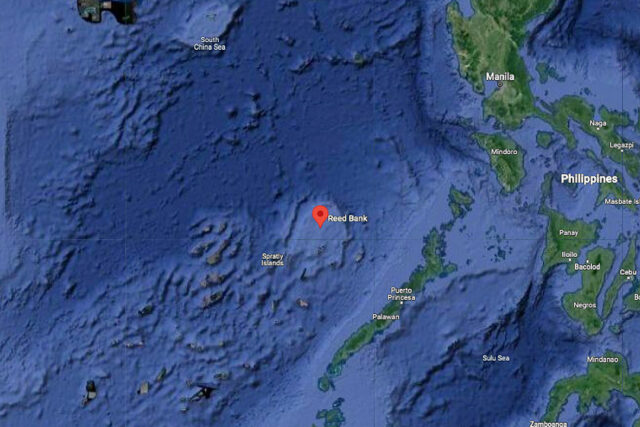
PHOTO FROM GOOGLE MAP

By Kenneth Christiane L. Basilio, Reporter

THE Philippines should resume exploration and consider tapping energy reserves within its exclusive economic zone (EEZ) in the South China Sea (SCS) to bolster its energy security, analysts said over the weekend, as the Iran war continues to disrupt global supplies and expose Manila’s vulnerability to oil shocks.

Developing oil and gas sources there would help the Philippines be insulated against global shocks and dampen price spikes, they said, stressing reserves must be tapped to achieve energy independence even as they acknowledge China’s growing coerciveness in the waterway could complicate drilling.

“The oil and gas reserves in the West Philippine Sea are one of the most direct levers we have for bringing down energy costs for every Filipino,” Noel M. Baga, co-convener of think tank Center for Energy Research and Policy, said in a Facebook Messenger chat, referring to parts of the South China Sea within the country’s 200-nautical mile EEZ.

Pushing into its third week, the Iran war has shown no sign of ending as both Washington and Tehran signal no desire for a ceasefire, prolonging a conflict in the energy-rich Middle East that has fueled oil spikes and sent shockwaves through global markets. This leaves the Philippines, a net oil importer, highly vulnerable to sharp swings in global prices.

“The Philippines imports a significant portion of its energy, which means Middle East disruptions translate quickly into higher electricity bills and fuel costs at home,” Mr. Baga said. “Developing domestic reserves would reduce that exposure and give the country more control over long-term energy pricing.”

The Philippines has offshore energy reserves, but lingering tensions in the South China Sea have stalled exploration there amid competing territorial claims. Its main energy source — the Malampaya gas field off the major island of Palawan — is projected to run dry by 2027.

Beijing claims nearly all of the South China Sea via a U-shaped, 1940s nine-dash line map that overlaps with the exclusive waters of the Philippines and its neighbors like Vietnam and Malaysia despite a 2016 ruling by the Permanent Court of Arbitration in The Hague that voided its claims.

The tribunal ruling held that the energy‑rich Reed Bank lies within the Philippines’ continental shelf, while a 2024 law defining the country’s maritime zones affirmed Manila’s sovereign rights to explore and exploit resources in the area.

“The legal foundation is already in place,” Mr. Baga said, noting the ruling gives the Philippines a “clear basis to develop these oil and gas resources.”

Efforts by Philippine companies to explore at Reed Bank have been hampered by the South China Sea dispute. The area may hold as much as 5.4 billion barrels of oil and 55.1 trillion cubic feet of natural gas, according to a 2013 report by the US Energy Information Administration.

Manila’s Energy department had suspended all exploration activities over the region since 2022 amid lingering territorial disputes.

Security experts said tapping the reserves is a necessary step toward energy independence, but warned Manila must stand firm as the move carries the risk of heightening tensions in the waterway.

“China maintains its dominance on gas exploration activities because the Philippines lacks a national roadmap to acknowledge its own resources in the oceans and lacks the ability to explore and exploit those energy deposits,” Chester B. Cabalza, founding president of Manila-based think tank International Development and Security Cooperation, said in a Facebook chat.

Vincent Kyle D. Parada, an Emerging Leaders fellow at think tank FACTS Asia, said the government needs to implement an industrial policy that will make extraction profitable for upstream oil companies.

“We need to understand that oil and gas exploration in the South China Sea isn’t just a maritime security issue — it’s an economic one,” he said in a Viber message. “Major expenditure, either from the government, the private sector, or both, will be necessary to explore and exploit those resources.”

Chinese maritime forces will likely attempt to block efforts by upstream companies to survey the area for energy reserves if the government allows it, defense economist Rocio Salle Gatdula said.

“They will likely respond with a mix of legal protests, gray-zone coercion — such as harassment by coast guard and maritime militia, water cannoning, ramming, and dangerous maneuvers — and economic or political pressure,” she said in a Facebook chat.

The Chinese Embassy in Manila did not immediately reply to a Viber message seeking comment.

Competing claims between the Philippines and China in the disputed waters have led to frequent confrontations involving repeated use of water cannons and sideswiping maneuvers against Philippine ships.

Ms. Gatdula said Philippine authorities would need to deploy a regular patrol of coast guard and navy ships alongside foreign vessels rotationally deployed by Manila’s allies to discourage Chinese forces from blocking attempts to survey the energy-rich region.

“There’s not much that Manila’s allies and partners can do short of maintaining a regular presence in the disputed territories,” Mr. Parada said. “What they can do, however, is invest in Philippine industry: loans, tech transfers and capacity-building initiatives.”

VP Duterte’s refusal to answer could speed up impeachment proceedings

Vice President Sara Duterte arrives at the Department of Justice, May 9, 2025. — PHILIPPINE STAR/RYAN BALDEMOR

IMPEACHMENT proceedings against Vice‑President (VP) Sara Duterte‑Carpio may move faster if she chooses not to answer the charges, a congressman said over the weekend, as the deadline for her response nears.

Party-list Rep. Terry L. Ridon said the House of Representatives Justice Committee may rule on the sufficiency of the ouster complaints’ grounds “as early as the final weeks of this month” should Ms. Duterte refuse to respond to the accusations.

“In the event that she does not respond by Monday, the process will be shortened,” he said in a statement on Sunday.

The Justice committee in early March found two out of four complaints against Ms. Duterte were sufficient in substance, moving them to the next step of the impeachment process that will determine whether the charges should be elevated to the Senate for trial.

The Vice-President faces a range of accusations, including claims she misused hundreds of millions of pesos in secret funds under the Office of the Vice-President and the Education department during her tenure as its secretary.

Filings made also include accusations she amassed wealth disproportionate to her income, efforts to destabilize the government and plotting to assassinate President Ferdinand R. Marcos, Jr., his wife and former Speaker Ferdinand Martin G. Romualdez, charges which Ms. Duterte has denied.

WAIT AND SEE
Ms. Duterte on Saturday said the House should just wait for her to file her response on Monday.

“Monday is coming up soon, right? Let’s wait and see whether I’ll file or not. Let the people at the House of Representatives just wait,” she told reporters in Filipino on March 14, a video from her office showed.

She also questioned the Justice committee’s plans to bar two of her legal counsels to join the impeachment proceedings.

This comes as the House panel said last week it will discuss the possible rejection of the entry of former Education spokesman Michael T. Poa and former Office of the Vice-President spokesman Reynold S. Munsayac as Ms. Duterte’s legal counsels.

“This is the first time I’ve heard a respondent is not allowed to choose her lawyers.”

Meanwhile, Ms. Duterte said she approached an individual to be her running mate in the 2028 national polls following her announcement to vie for the country’s top post.

The unnamed person has not made a decision yet, she said.

“I recruited someone last year, but this person hasn’t decided yet, so let’s just wait for the decision; let’s not bother this person anymore,” she said. “Let’s not name this person because this person might be attacked.”

For her senatorial slate, she said four people had approached her already but added she is “allergic” to politicians.

Ms. Duterte is at odds with Mr. Marcos’ administration despite being running mates in the 2022 national elections, which delivered a landslide victory for two of the country’s most prominent political families.

She stepped down as Mr. Marcos’ Education chief in 2024 following allegations of the misuse of confidential funds in the country’s top-funded department.

This followed the arrest of her father and former President Rodrigo R. Duterte in March last year for alleged crimes against humanity, further widening the rift between the two families. — Kenneth Christiane L. Basilio and Chloe Mari A. Hufana

DoLE strengthens programs as unemployment climbs

Job seekers fill out application forms at a job fair in Manila, Feb. 24, 2023. — PHILIPPINE STAR/EDD GUMBAN

By Erika Mae P. Sinaking, Reporter

THE government will continue to strengthen its labor market programs, the Department of Labor and Employment (DoLE) said after the unemployment rate rose to 5.8% in January.

In a statement over the weekend, the department said the increase in the number of unemployed Filipinos to 2.96 million from 2.17 million a year ago reflects a “seasonal normalization” following the holiday peak.

The agency noted that the transition of workers out of temporary arrangements led to a 1.489 million decline in total employment from December 2025.

“The department notes that despite these short-term fluctuations, the Philippine labor market continues to benefit from sound macroeconomic fundamentals and sustained employment generation efforts across sectors,” the DoLE said.

“The department will continue to promote the adoption of flexible work arrangements and MSME’s availment of the Adjustment Measures Program, to help them retain workers and preserve jobs during periods of economic adjustment or structural shifts.”

Jose Enrique A. Africa, executive director of IBON Foundation, told BusinessWorld in a Viber chat that the 790,000 year-on-year increase in unemployment is the “biggest monthly year-on-year increase in 36 years” outside of the pandemic.

“Explaining the adverse January 2026 LFS (Labor Force Survey) figures away as due to seasonality will be burying our head in the sand,” Mr. Africa said. “This is absolutely not seasonal but structural: work in backward agriculture is extremely volatile, the industrial sector especially manufacturing isn’t creating enough jobs, and the low-productivity service sector is a catch-basin for those unable to find work anywhere else.”

Philippine Statistics Authority data show the agriculture and forestry sector suffered the heaviest blow, losing 1.42 million workers year on year and 1.76 million month on month. Underemployment in January also estimated at 13.2%, affecting 6.35 million Filipinos.

Chinabank research said that the “soft labor market conditions could intensify as geopolitical risks escalate.”

It pointed to the resumption of rice imports and the recent oil price shock as factors that “could raise production costs for firms, potentially prompting businesses to freeze or delay hiring plans.”

Labor groups Sentro and LEARN described the outlook as “bleak,” highlighting that youth employment continues to deteriorate, with the youth NEET (not in education, employment, or training) rate rising to 14%. The groups called for a robust public employment program and an urgent shift in government employment strategy.

Kilusang Mayo Uno Deputy Secretary General Joanne Cesario denounced the administration’s reliance on job fairs and foreign investment. “The programs the Marcos government flaunts… are nothing more than band-aid solutions,” Ms. Cesario said in a statement, adding that expected repatriation of overseas Filipino workers from the Middle East would face a “cold reality of unemployment” upon their return.

P1 provincial bus fare hike OKd

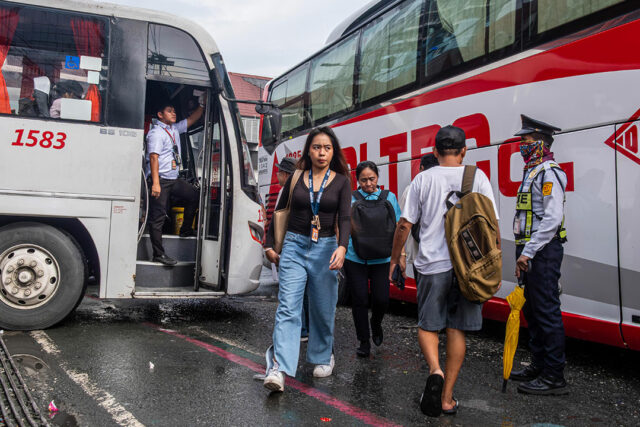
PASSENGERS flocked to a bus terminal in Pasay City on Thursday, a day before the observance of the All Saints’ Day and All Souls’ Day as people head to their home provinces to visit the graves of their departed loved ones. — PHILIPPINE STAR/RYAN BALDEMOR

THE Land Transportation Franchising and Regulatory Board (LTFRB) has approved the adjusted fare of up to P1 for provincial public utility buses (PUBs) effective March 14.

“The LTFRB remains committed to ensuring that public transport fares remain fair, transparent, and responsive to prevailing economic conditions while protecting the welfare of commuters and transport operators alike,” the regulator said.

Under the approved fare adjustments, the provisional increase for provincial PUB air-conditioned, deluxe, and super deluxe buses is set at 35 centavos per kilometer.

For provincial luxury buses, the approved provisional increase is 45 centavos per kilometer, while ordinary provincial buses will see a P1 increase on the base fare and 30 centavos per succeeding kilometer.

According to the approved fare guide dated March 13, posted on the regulator’s website on Sunday, the regular fare for the first five kilometers is P12.25 for air-conditioned buses, P13 for deluxe, P13.50 for super deluxe, and P16.75 for luxury buses.

The regular fare for ordinary provincial buses will be P12 for the first five-kilometer distance, data from LTFRB said.

Transportation Acting Secretary Giovanni Z. Lopez said last week that there will be a fare increase for public utility vehicles (PUVs), but did not give details, noting that the LTFRB is still reviewing the fare hike petitions.

Transport groups like Pinagkaisang Samahan ng mga Tsuper at Operators Nationwide and Manibela are seeking P5 and P2 provisional fare increase, respectively, due to soaring fuel pump prices.

Just last week, the country had its largest single-week adjustment, as pump prices climbed as much as P38.50 per liter.

The Department of Transportation is also set to disburse P5,000 fuel subsidy to PUV drivers in Metro Manila starting on March 17. — Ashley Erika O. Jose

Procurement law review sought

VECTORJUICE-FREEPIK

A SENATOR has filed a resolution seeking to assess the implementation of the New Government Procurement Act to safeguard transparency and integrity of public funds usage.

In the Senate Resolution 336 filed on March 9, Finance Committee Chairman Sherwin T. Gatchalian stressed the need to probe the New Government Procurement Act which has been enacted in 2024.

“The objective is clear; to strengthen transparency and improve the monitoring of funds for infrastructure projects,” Mr. Gatchalian said in a mix of Filipino and English in a press statement.

Mr. Gatchalian noted in the resolution that the Government Procurement Policy Board must be assessed before the compliance deadline on May 15, 2028.

This is to ensure that the new procurement operations under Republic Act No. 12009 are being followed by agencies and bureaus.

“A transparent, effective and efficient government procurement system ensures that public funds are spent judiciously in order to maximize value for money in the delivery of public service and enhances accountability in the use of public funds,” the resolution read.

The resolution, according to Mr. Gatchalian, follows the controversies in the use of public funds as seen in anomalous flood control projects, which erupted mid-2025 when the government flagged 421 projects to be nonexistent.

As of January, 14 of these have been confirmed by the Department of Justice to be ghost projects. — Kaela Patricia B. Gabriel

New Antipolo lawmaker elected

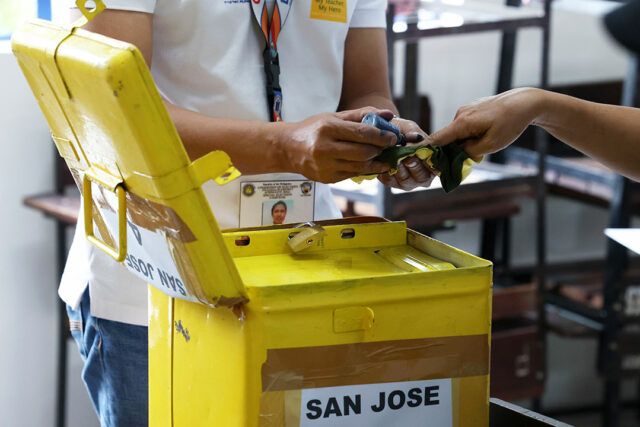
Individuals cast their votes at the San Jose National High School during the special election in the second legislative district of Antipolo City, Rizal on Saturday. — PHILIPPINE STAR/MIGUEL DE GUZMAN

PHILIP CONRAD M. ACOP has been proclaimed as the new representative of the 2nd district of Antipolo City, following a decisive win in the special election held Saturday.

The National Unity Party candidate secured the seat previously held by his father, the late Romeo M. Acop, maintaining the family’s decade-long hold on the congressional post.

Data from the Commission on Elections (Comelec) showed Mr. Acop garnered 60,051 votes, representing approximately 71.9% of the total valid ballots cast.

His closest contender, independent candidate Reden Llaga, trailed with 12,054 votes, while another independent, Irvin Paulo Tapales, followed with 10,080 votes.

Other contenders in the six-way race — Nathaniel A. Lobigas, Maria Trinidad Galang Cafirma, and Dandin Infante — each received less than 1% of the vote.

The special election was called to fill the vacancy left by the elder Mr. Acop, who passed away last December.

Despite the landslide margin, voter turnout was notably low at 33.4%, falling short of the Comelec’s 35% minimum target and well below the 72.6% turnout recorded during the 2025 midterm elections.

Comelec Chairman George Erwin M. Garcia said the special poll proceedings were generally peaceful and orderly, noting that all precincts functioned without technical failure.

The canvassing process ended early on Sunday, with the City Board of Canvassers proclaiming Mr. Acop at around 3 a.m. The representative-elect, a pediatrician and former city councilor, will serve the remainder of the term ending in June 2028. — Erika Mae P. Sinaking

GCash, CICC block illegal merchants

BW FILE PHOTO

ELECTRONIC wallet platform GCash and the Cybercrime Investigation and Coordinating Center (CICC) have blocked more than 3,200 merchants connected with illicit activities like the operations of illegal online gambling since 2025.

In a media release over the weekend, it said that this action also prevented illegal operators from misusing the QRPh, the Philippines’ national standard for QR code payments, that redirects to fake GCash payments.

“By proactively blocking unauthorized actors and reporting them to our regulators and authorities, we are helping protect Filipinos and maintain trust in the country’s digital financial ecosystem,” GCash operator G-Xchange, Inc. Chief Information and Security Officer Miguel Geronilla said.

The electronic wallet platform said it works with CICC and the Philippine National Police’s Anti-Cybercrime Group. It said that entities trying to misuse the application and QRPh without authorization will be flagged, suspended, and reported.

“GCash uses proactive monitoring to identify and disable these connections, reporting the sites to regulators and the CICC to support government enforcement,” it said. — Ashley Erika O. Jose

P10.2-M drugs seized in two Zamboanga City busts

COTABATO CITY — Agents of the Philippine Drug Enforcement Agency in Zamboanga Peninsula (PDEA 9) and policemen seized P10.2 million worth of crystal meth (shabu) from three peddlers entrapped in separate anti-narcotics operations on Saturday.

The first to fall in the two joint PDEA 9-police entrapment operations were a 39-year-old man and his 22-year-old accomplice, residents of Barangays Tetuan and Calarian in Zamboanga City, respectively.

Bryan B. Babang, director of PDEA 9, said on Sunday that their agents, backed by operatives from different units of the Zamboanga City Police Office, had seized from the duo half a kilo of shabu, costing P3.4 million, during an entrapment operation along Mayor Jaldon Street in Barangay Canelar, laid with the help of tipsters and local executives.

Separately, PDEA 9 agents and policemen confiscated a kilo of shabu, worth P6.9 million, from a 27-year-old man, during a trade-off along Corcuera Street in Barangay Zone-4 in Zamboanga City.

Mr. Babang said they are grateful to police units in Zamboanga City that are under the Police Regional Office 9, led by its director, Brig. Gen. Police Brigadier General Edwin A. Quilates, for supporting both entrapment operations.

Local executives, among them Zamboanga City Mayor Khymer Adan T. Olaso, who is presiding chairperson of their multi-sector city peace and order council, were also instrumental in both entrapment operations that led to the arrest of the three shabu dealers and confiscation from them of P10.2 million worth of shabu.

Mr. Babang said they will prosecute the three detained suspects for violation of the Comprehensive Dangerous Drugs Act of 2002 using the shabu confiscated from them as evidence. — John Felix M. Unson