Home Blog Page 1761

PHL real estate to soar with major infrastructure projects — analysts
PHILIPPINE STAR/MICHAEL VARCAS

By Aubrey Rose A. Inosante, Reporter

THE PHILIPPINE government’s ambitious infrastructure program is expected to reshape the real estate market, driving up land values and office lease rates, according to analysts.

“Massive public investments in infrastructure should stoke Philippine property, benefiting developers with condominium projects across the country,” Joey Roi Bondoc, director and head of research at property consultancy group Colliers Philippines, said in an interview with BusinessWorld.

“Buyers of luxury projects will likely gravitate towards residential developments near public infrastructure projects,” he added.

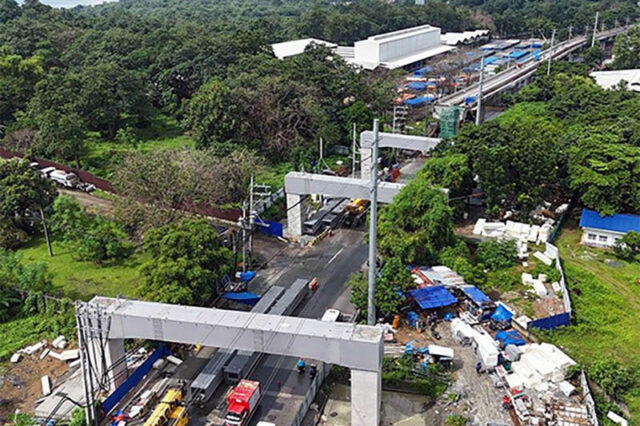
Transport infrastructure projects, such as the Metro Manila Subway, expected to be completed in 2028, are seen to benefit major central business districts (CBDs) like Quezon City, Ortigas, Fort Bonifacio, Pasay, and Valenzuela.

Other projects awaited by property developers include the Mass Rapid Transit (MRT)-7 and 4, the Manila-Clark Railway, the New Manila International Airport in Bulacan, and the Light Rail Transit Cavite Extension Phase 2. The Cavite-Batangas Expressway, the Central Luzon Link Expressway, the Bataan-Cavite Bridge, and the rehabilitation of the Ninoy Aquino International Airport are also in the pipeline.

“Proximity to infrastructure is a normal amenity these days, and developers can command premium prices and rents for properties situated near infra projects,” Mr. Bondoc said.

He noted that from 2016 to 2023, house and lot prices in these regions rose by an average of 3.6 to 7.2% per annum.

Meanwhile, lot-only developments saw price increases of between 6.7% and 15.4% per year during the same period.

For the office market, Mr. Bondoc said the increase in rents and values of properties near new transportation hinges on the attractiveness of locations to tenants and the current vacancy rates.

“Aboitiz InfraCapital’s Economic Estates and Aboitiz Land’s residential communities are strategically positioned to capitalize on the transformative effects of new infrastructure developments,” Aboitiz Land, Inc. said in an e-mail to BusinessWorld.

Aboitiz InfraCapital, the infrastructure arm of the Aboitiz Group, includes LIMA Estate in Batangas, TARI Estate in Tarlac, West Cebu Estate in Cebu, and the Mactan Economic Zone Processing 2 in Lapu-Lapu City in its roster of economic estates.

The firm said the estates are designed as “industrial-anchored townships” strategically linked to essential infrastructure like major highways, airports, and seaports, ensuring efficient supply chains and strong connectivity.

For example, LIMA Estate is located near the Southern Tagalog Arterial Road (STAR) tollway and will soon benefit from the upcoming Southern Luzon Expressway (SLEX) Toll Road (TR) 4 project, reinforcing its status as Southern Luzon’s leading industrial and business hub.

Similarly, the TARI Estate is accessible through the North Luzon Expressway (NLEX), Subic-Clark-Tarlac Expressway (SCTEX), Tarlac-Pangasinan-La Union Expressway (TPLEX), and Central Luzon Link Expressway (CLLEX).

“Enhanced connectivity through infrastructure projects like the Metro Manila Skyway Stage 3, SLEX TR4, TPLEX, CLLEX, and the NLEX-SLEX Connector Road has significantly boosted demand and property values across our developments,” Aboitiz Land said.

It cited that the 800-hectare LIMA Estate’s location and accessibility have driven growth, with housing developments such as The Villages at Lipa seeing a 145% value appreciation since its launch in 2019.

Masterplanned communities Ajoya Cabanatuan and Ajoya Capas have seen value appreciation of 181% and 86%, respectively, since their launches in 2018, it said.

“Through strategic investments in infrastructure, sustainable housing solutions, and long-term planning, we continue to support locators, property seekers, and communities — ensuring ongoing growth and expansion beyond today’s developments,” the firm said.

The efforts are all aligned with the Build, Better, More agenda, which targets infrastructure investment of 5% to 6% of the country’s gross domestic product, it said.

This infrastructure flagship program is set to roll out 186 infrastructure flagship projects with a combined value of P9.6 trillion, or approximately $163 billion.

Nigel Paul C. Villarete, a senior adviser on public-private partnerships at Libra Konsult, Inc., said that the traditional real estate mantra of “location, location, location” is not entirely accurate. Instead, a more fitting mantra would be “access, access, access,” he said, noting that from a planning perspective, “land use and transport” are inherently linked.

Mr. Villarete also said the infrastructure projects have a “turbocharger” role in promoting sustainable urban growth in the country.

He noted the Cordova-Cebu Link Expressway (CCLEX), which has boosted not only the linked local government units of Cebu City and Cordova but also the entire Metropolitan Cebu and Central Visayas (Region VII) economies.

Meanwhile, DMCI Homes, Inc. President Alfredo R. Austria said building transit-oriented developments (TODs) benefits not only the value of properties but also future residents of housing developments.

“Think about it 10 years or five years from now. You can see the traffic there; that’s a lot of vehicles added every year,” he told BusinessWorld.

Mr. Austria also noted that Metro Manila is one of the densest cities in the world and cannot survive without a good mass transit system.

“We have a lot of developments near train stations, so transit-oriented. This one, [The Crestmont], then there’s Erin Heights, the Infina [Towers]. There are a lot of them. It’s all within 300 meters [train stations],” he said.

The Crestmont condominium is located along Panay Avenue in Quezon City, steps away from the MRT-3 Quezon Avenue Station, and accessible via major road networks like EDSA.

DMCI said the property’s future residents are expected to benefit from ongoing infrastructure projects such as the Metro Manila Subway Project, the MRT Line 7, and the Unified Grand Central Station in North Edsa, Quezon City.

Meanwhile, the Infina Towers along Aurora Boulevard is near the Anonas Station of the upcoming Metro Manila Subway project, indicating the area’s significant investment potential.

He also said that similar to other major cities globally, buying property near a train station, the value increase is “contagious.”

Regarding transit-oriented developments, Mr. Bondoc said transit-oriented retail is now becoming the norm.

“Beyond 2025, we see the development of more masterplanned communities that are developed near public projects such as airports, railways, bus rapid transits, and toll roads,” he said.

The consultancy group sees property firms banking on the capital appreciation potential of their residential projects that will be developed near these “game-changing infrastructure projects.”

Colliers recommends developers align their future residential developments in provinces with upcoming infrastructure such as Cavite, Laguna, Bulacan, Tarlac, Pampanga, Cebu, and Davao, as these public projects have the potential to raise land values and property prices.

“Among the developers likely to benefit from being near public projects are Rockwell Land, Inc., Megaworld Corp., Ayala Land, Inc., Robinsons Land Corp., Sta. Lucia Land, Inc., Vista Land & Lifescapes, Inc., Brittany Corp., Shang Properties, Inc., etc.,” Mr. Bondoc said.

He added that property firms should further ramp up their presence near transportation projects or even build their own TODs to take advantage of the property sector’s growth post-pandemic.

“For both office and residential segments, one thing is certain: developers’ strategies even beyond 2025 are likely to be dictated by the government’s infrastructure push,” Mr. Bondoc said.

He said the firm sees infrastructure projects eventually raising the attractiveness of office spaces and their lease rates.

However, the consultancy company remains cautious about the overall outlook for rental appreciation potential, especially as there are about 2.6 million square meters of available office space across Metro Manila.

TheKoolPals Bar blends stand-up comedy, live podcast recording

(L-R):James Caraan, Muman Reyes, Ryan Rems, GB Labrador, and Nonong Ballinan making the crowd laugh.

THERE is no greater joy than doubling over from laughter with friends, especially if the jokes at the root of the chaos are fun and irreverent. Powerhouse comedy ensemble The KoolPals, consisting of stand-up comics GB Labrador, James Caraan, Nonong Ballinan, Ryan Rems, and Muman Reyes, specializes in recreating this exact atmosphere — be it live on a comedy stage or online through their podcast.

Since 2019, The KoolPals have generated belly laughs among Filipinos in various establishments while their virtual community thrived, Spotify even named them the Top Comedy Podcast in the Philippines of 2024.

At The KoolPals Bar, located in The Cellar at the Century Park Hotel Manila, the shared experience of a live stand-up venue and the exclusivity of listening in on a new podcast episode are combined.

“We’ve always dreamed of putting up our own bar,” founding member Mr. Labrador told the media at the official launch last week. “We imagined this, the bar area, and the space in the back being the studio. After a year, it came to life.”

Deemed an “entertainment and live podcast hub,” it is open on Sundays, when the five members are in the studio to record their three episodes for the week, all livestreamed for bargoers to see on a projected screen. In between recordings, The KoolPals go out to the bar space to perform live sets.

While this was not BusinessWorld’s first time hearing jokes from the five, it was still a memorable experience to sample unfamiliar material as well as old stuff told in new ways. Fan favorites include Mr. Ballinan’s hilarious impressions of Filipino Transformers robots (jeepneys, UV Express vans, and e-bikes), and Mr. Labrador’s pitch for a TV commercial promoting the Philippines’ exorcism center.

Noong 2019, naisip namin gumawa ng podcast para ma-promote ang stand-up shows. Kaya solid ang mga set namin, kasi nagsisimula sa mga batuhan at kwentuhan namin bilang KoolPals (In 2019, we thought of creating a podcast to promote our stand-up shows. That’s why our sets are solid, because they stem from the exchanges and stories we share as KoolPals),” said founding member Mr. Caraan.

THE SPACE
The KoolPals Bar, tucked away in a hallway behind the hotel’s ground floor escalators, has a welcoming atmosphere befitting a comedy venue. Aside from the five hosts’ podcast recordings and live sets, it will occasionally be open to other comics and even musicians.

JJ Tan, managing director of Century Park Hotel Manila, told the press that the area where the studio and bar are now used to be a storage space. As a KoolPals fan, he was glad to help out.

Bodega lang ito dati. Twelve years nang di ginagamit, at ngayon punung puno na ng tao at tawa. (It used to be storage space. Unused for 12 years, now filled with people and laughter),” Mr. Tan said.

Already set apart from its contemporaries by being the only venue in the Philippines that offers both a live podcast studio and a comedy stage in one, The KoolPals Bar aims to feature “Pinoy stand-up comedy’s finest performers.”

“This is a comedian’s playground,” Mr. Labrador said. “It’s a space where good food, drinks, and comedy come together. It’s where people can relax, laugh, and make memories.”

NATIONWIDE TOUR
In addition to launching the comedy hub, The KoolPals are also set to start a nationwide tour.

This will bring their live shows across the Philippines, including Pampanga, Tagaytay, Baguio, Cebu, and more. The tour will culminate in the recording of their very first comedy special, which they hope to stream on global platforms in the near future, the hosts told the press. Arcade Film Factory and director Marius Talampas will helm the production.

As for the podcast, they are working on securing top TV comedians as guests in response to fan requests. Their latest format, filled with interactive games and chaotic fun, is “Noontime Show,” which airs on Sundays at 4 p.m. via Facebook Live.

Mr. Caraan revealed that they have come a long way from recording in a cramped room with minimal equipment. “The community we’ve built has been incredible, and we’re excited to see where 2025 will take us,” he said. — Brontë H. Lacsamana

Cebu Landmasters enters co-working space market

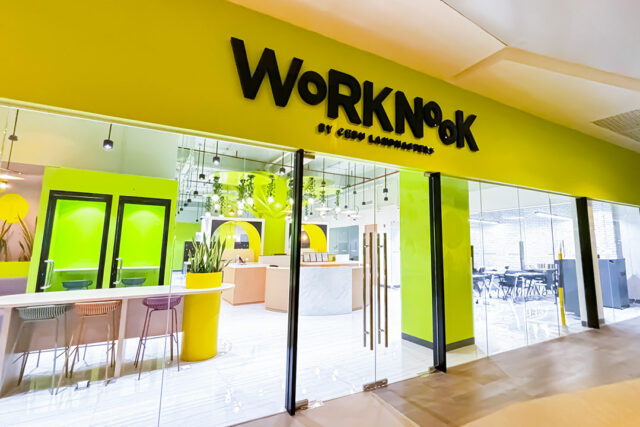
LISTED property developer Cebu Landmasters, Inc. (CLI) has entered the co-working space market with the launch of WorkNook in Cebu City.

WorkNook caters to freelancers, small businesses, and students, CLI said in a regulatory filing on Monday.

CLI’s first co-working space is located at the Base Line Center mixed-use development along Juana Osmeña Street.

WorkNook features private offices for teams and groups, co-working spaces for individuals, and meeting rooms for discussions or presentations.

Citing a study by digital communications technology company Cisco, CLI said that 37% of Filipino workers feel that traditional office setups limit their potential, underscoring the need for co-working spaces.

“Our goal is to support professionals seeking alternatives to working from home in a modern, positive work environment,” CLI Senior Vice-President for Marketing and Leasing Joanna Marie Soberano-Bergundthal said.

“WorkNook reflects our vision of creating spaces where today’s professionals can thrive,” she added.

CLI said the flexible workspaces are priced at introductory rates starting at P250 for half a day, P350 for a whole day, P1,800 weekly, and P5,500 monthly.

The private office spaces are available for P9,000 monthly, dedicated seats at P7,500 monthly, and meeting rooms of various sizes for four-hour use designed for professionals and teams.

CLI said the launch of WorkNook will contribute an additional 32,196 square meters (sq.m.) of leasable space to the company’s pipeline.

The property developer saw a 47% increase in leasing revenue from January to September 2024, reaching P144 million, led by 9,219 sq.m. of new leasable space in its portfolio.

WorkNook is open Monday to Saturday, from 8:00 AM to 6:00 PM, with 24/7 access to private offices.

Meanwhile, CLI said in a separate regulatory filing that the Securities and Exchange Commission on Jan. 10 approved a move to increase the number of its board directors to 11 from 9. 

For the first nine months of 2024, CLI grew its net income by 7% to P2.3 billion as revenue climbed by 9.2% to P14.1 billion on strong demand across residential, mid-market, and economic housing segments, along with commercial lot sales.

CLI shares fell by 0.76% or two centavos to P2.62 per share on Monday. — Revin Mikhael D. Ochave

iACADEMY launches 2nd edition of film project lab

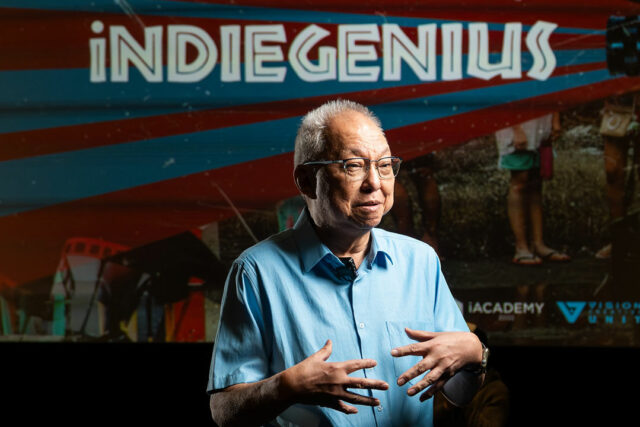
TWO short films about the displacement of communities from the perspective of the youth have been made after undergoing a project lab and winning production grants worth P500,000 each under iACADEMY’s iNDIEGENIUS program.

This year, the second edition of the program aims to empower more filmmakers with regional backgrounds to bring their films to life.

Launched in 2023, iNDIEGENIUS is part of a greater commitment to “foster film education and support the next generation of filmmakers,” in partnership with the Film Development Council of the Philippines (FDCP) and the Directors Guild of the Philippines (DGPI).

The short film Bisan Abo, Wala Bilin (Even Ashes, Nothing Remains) by Kydylee Torato, one of the two finalist grantees from the first edition, recently premiered at the Sinag Maynila Film Festival among other regional film festivals. Meanwhile, Muli Ka Na, Merlie (Uwi Ka Na, Merlie) by Shane David, the other winner, is set to premiere this year.

At a screening of the two films last week at the Power Plant Mall in Makati, iACADEMY president Raquel Perez-Wong said that the iNDIEGENIUS film lab is one of the best in the Philippines.

“We’re a school that specializes in software engineering, game development, film, and multimedia, and we try to make it accessible to the next game changers and creative storytellers. But there are students who, for different reasons, are not able to go to school or complete a degree. This led to the birth of iNDIEGENIUS,” she said.

Building on the success of last year’s inaugural event, which was open to all, the second edition will focus on younger filmmakers, aged 18 to 35. The call for applications runs until Jan. 27.

Ten projects will once again be selected to undergo the film lab, two of which will win P500,000 production grants. Meanwhile, the program has expanded its scholar slots (those filmmakers  whose projects are not ready for production but who will still join workshops) from two to 10.

The two scholars last year were Cedrick Labadia and Sophia Velonza, who went on to create their own films and also represented the Philippines at the Busan International Film Festival.

“This expansion means that up to 20 projects in development will benefit from the project lab,” said Keith Sicat, program director of iNDIEGENIUS. “The whole point is to open the door and make sure it’s accessible. We don’t want to be gatekeepers. We want to open the floodgates for everybody.”

Those interested in applying can do so until Jan. 27 via https://indiegenius.iacademy.edu.ph. iNDIEGENIUS will select 10 finalist projects and 10 scholars, all of whom will undergo intensive workshops in March. — Brontë H. Lacsamana

Three business trends SMEs should prepare for in 2025

FREEPIK

Last year brought significant challenges and developments for Philippine small and medium enterprises (SMEs). Access to financing remains an issue: banks only lent 4.52% of their loan portfolio to SMEs as of June 2024. In August and October, the Bangko Sentral ng Pilipinas (BSP) reduced its key policy interest rates after four years, making it easier for businesses and consumers to borrow and finance their spending due to lower interest rates.

The passing of the CREATE MORE Act (Corporate Recovery and Tax Incentives for Enterprises – Maximize Opportunities for Reinvigorating the Economy Act) and other landmark legislation also enhanced the ease of doing business by making tax incentives more competitive, reducing red tape, and providing better guidelines on business obligations.

These developments have set the stage for 2025 — a year poised to bring even greater transformation. In 2025, three key business trends will have a profound impact on how SMEs operate and compete. Keeping pace with these business trends will help SMEs maintain growth, profitability, and relevance in an increasingly dynamic and digital marketplace.

1. AI BECOMES STANDARD PRACTICE
Artificial Intelligence (AI) is no longer a futuristic concept — it’s now a standard business tool for many SMEs. By using ChatGPT and Canva AI to create their own marketing materials, SMEs have reduced marketing development costs; chatbots have also improved operational efficiency by enabling 24/7 customer support.

Last year saw tech giants like Google, Amazon, and Netflix, reinvent their business models through deep learning, causing widespread changes in industries, like online advertising, e-commerce, and streaming. In 2025, SMEs are expected to follow suit with generative AI at the forefront. Instead of simply embedding AI into their processes, forward-thinking SMEs will build entirely new products and services powered by AI. This shift will impact sectors like healthcare, manufacturing, and education — unlocking new possibilities and business models.

More SMEs will also use AI for automation, predictive analytics, and personalized customer interactions. Aside from transforming operations, this will create new opportunities for growth and differentiation. However, SMEs must not be too hasty in adopting AI-driven solutions at the expense of displacing employees. Balancing automation with human roles can create a more sustainable growth strategy and preserve workforce morale.

2. CUSTOMERS DEMAND A BETTER EXPERIENCE
Customers are constantly raising their standards. Today’s consumers are vocal on social media — and one poor experience can easily lead to a viral post that tarnishes a brand’s reputation. In 2025, businesses will face heightened expectations for seamless, efficient, and personalized experiences.

To stay relevant, businesses must prioritize customer experience (CX) as a core differentiator — executing it as a holistic approach that covers every touchpoint in the customer journey. Customers expect personalized interactions, frictionless transactions, faster deliveries, and lower delivery costs. Companies that meet these demands will emerge as market leaders.

Modern customers also expect brands to recognize their preferences and interactions across platforms, whether online or offline. In response, businesses must implement more sophisticated omnichannel strategies that ensure smooth transitions between online and offline interactions. For example, customers should be able to return a product bought online to a physical store without any issues, or receive personalized product recommendations online based on their in-store shopping history.

By 2025, CX will be a critical factor in customer retention and brand loyalty. Businesses that create a unified brand experience — whether through websites, mobile apps, or in-store touchpoints — will build stronger customer relationships. Agility will be essential as businesses respond to customer feedback, adapt to trends, and continuously improve their services.

3. RED TAPE HINDERS SMEs — AND ECONOMIC GROWTH
In the Philippines, navigating bureaucratic red tape remains one of the most significant hurdles for startups and SMEs. According to Acclime, the process of registering a business property in the Philippines takes 39 days on average; companies are expected to make 47 tax payments per year. Such regulations and bureaucratic processes can stifle SME growth and limit their contributions to the economy in 2025.

Policy reforms are underway to address these issues. Recent amendments to the Public Service Act, Retail Trade Liberalization Act, and Foreign Investment Act aim to simplify procedures and reduce foreign equity restrictions. Initiatives, like the Philippine Business Hub (PBH) and the Green Lanes for Strategic Investments, offer entrepreneurs more streamlined ways to start and manage their businesses. But in the meantime, entrepreneurs must stay up to date with regulatory changes and make do with available digital tools to comply with business and tax obligations.

For businesses that are able to navigate these regulatory hurdles, the payoff can be significant. Entrepreneurs that keep pace with digital government initiatives and compliance requirements will have a competitive edge. Government reforms, once fully implemented, could foster a more business-friendly environment, enabling growth in the startup ecosystem.

FINAL THOUGHTS
The three biggest business trends of 2025 — AI becoming standard practice, heightened customer experience demands, and the dual impact of bureaucratic red tape — will shape the future of businesses, particularly SMEs. Companies that embrace these trends will be better positioned to seize growth opportunities, while those that resist change may struggle to remain relevant.

The evolution of business trends calls for adaptability, innovation, and resilience. SMEs that stay ahead of the curve by leveraging AI, prioritizing customer experience, and navigating regulatory challenges will be poised for sustainable growth in 2025 and beyond.

To stay ahead of these emerging business trends, SMEs must have access to reliable financial support. A business credit line or flexible financing option can empower companies to invest in R&D, expand operations, and enhance processes. Entrepreneurs looking for financial flexibility can explore solutions like a revolving credit line, which provides accessible funds to seize opportunities and manage challenges as they arise.

This article reflects the personal opinion of the author and does not reflect the official stand of the Management Association of the Philippines or MAP.


Benedict S. Carandang is a member of the MAP ICT Committee and is the VP for External Relations of First Circle. This article was co-written with Jess Jacutan, content marketing consultant for First Circle, a fintech company that empowers SMEs through funding and free growth tools.

map@map.org.ph

benedict@firstcircle.ph

Maynilad says P4.84-B sewage facility 33% complete

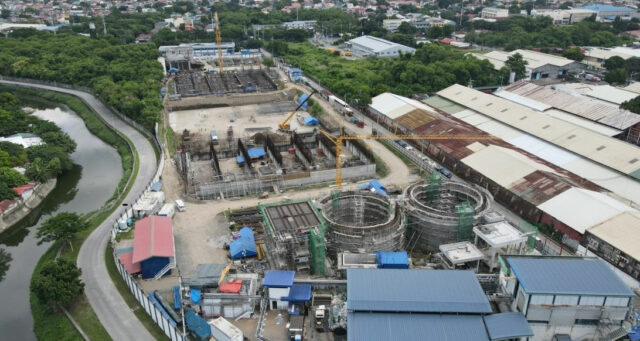
WEST-ZONE CONCESSIONAIRE Maynilad Water Services, Inc. said its P4.84-billion water reclamation facility in Las Piñas City has reached 33% construction progress and is slated to start operations by July 2026.

Once operational, the facility will treat up to 88 million liters of wastewater per day, serving approximately 360,000 residents across 20 barangays in Las Piñas City, Maynilad said in a statement on Monday.

Treated wastewater from the facility will be discharged into the Zapote River, which flows into Manila Bay.

“Our construction timeline was unfortunately delayed by pandemic restrictions in 2020, but we resumed work in 2023 with renewed focus,” said Ramoncito S. Fernandez, president and chief executive officer of Maynilad.

“This project reinforces our commitment to providing reliable wastewater services for our customers and easing the pollution burden on Manila Bay,” he added.

Maynilad said the Las Piñas Water Reclamation Facility is part of its “larger program to accelerate the rollout of sewerage and sanitation services in Metro Manila.”

The project is financed through a partnership with the Japan International Cooperation Agency and the Development Bank of the Philippines.

The company said it has invested over P46.4 billion in enhancing the wastewater infrastructure across its concession area since 2007.

At present, Maynilad operates 22 sewerage treatment plants, two sewage and septage treatment plants, and one septage treatment plant, with a combined treatment capacity of approximately 724,000 cubic meters per day.

“This latest facility is a testament to Maynilad’s continued dedication to environmental sustainability and public health through improved wastewater management,” it said.

The company serves certain portions of Manila, Quezon City, and Makati. It also operates in Caloocan, Pasay, Parañaque, Las Piñas, Muntinlupa, Valenzuela, Navotas, and Malabon. It also supplies the cities of Cavite, Bacoor, and Imus, and the towns of Kawit, Noveleta, and Rosario, all in Cavite province.

Metro Pacific Investments Corp., which has a majority stake in Maynilad, is one of three Philippine units of Hong Kong-based First Pacific Co. Ltd., the others being Philex Mining Corp. and PLDT Inc. 

Hastings Holdings, Inc., a unit of PLDT Beneficial Trust Fund subsidiary MediaQuest Holdings, Inc., has an interest in BusinessWorld through the Philippine Star Group, which it controls. — Sheldeen Joy Talavera

Entertainment News (01/14/25)


Paolo Sandejas releases debut album

FILIPINO singer-songwriter Paolo Sandejas has released his debut album which is out now via Sony Music Entertainment. Titled the world is so small, the eight-track album is an exploration of love, loss, and self-discovery, particularly within the formative years of one’s 20s. The album is divided into four thematic arcs, each representing a different phase of a relationship.


Medical drama Doc out on AXN ASIA

THE brand-new medical drama Doc has debuted in the Philippines, exclusively at AXN Asia. It centers on the brilliant Dr. Amy Larsen (played by Molly Parker), Chief of Internal Medicine at Westside Hospital. After a brain injury erases the last eight years of her life, she must navigate an unfamiliar world where she has no recollection of patients she’s treated, colleagues she’s crossed, the man she loves, or the tragedy that caused her to push everyone away. Based on the globally acclaimed Italian series Doc – Nelle Tue Mani, the new show airs every Monday at 8:50 p.m. on AXN Asia, available at Cignal on Channel 121, GSAT on Channel 60, and Sky Cable on Channel 49.


Barbie Almalbis drops 5th studio album

ICONIC Pinoy rock musician Barbie Almalbis has released her new album, Not That Girl. It aims to offer a fresh direction in her evolving sound. Its themes are emotional healing, resilience, and the challenges of navigating mental health. Not That Girl is out now on all digital music streaming platforms.


Three movies opening on Jan. 15

THE midpoint of January will see three movies out in Philippine theaters. Paramount Pictures’ Sonic the Hedgehog 3, starring Jim Carrey, Ben Schwartz, James Marsden, Tika Sumpter, Idris Elba, and many others, will see the beloved Team Sonic take on a new enemy. Universal Pictures’ Wolf Man, directed by Leigh Whannell and starring Christopher Abbott and Julia Garner, offers an Oregon-set horror drama where a young family moves to the countryside and confronts a dangerous creature. Finally, the Ayala Malls Cinemas-exclusive 4DX concert experience, Tomorrow x Together: Hyperfocus, gives a glimpse of the K-pop boy group Tomorrow x Together’s latest performance with immersive visuals.


Little Mix’s JADE releases new single

POP star JADE has kicked off 2025 with the release of her song, “IT girl.” The bass-heavy, bold, electro pop track is written by JADE with Cirkut and Lostboy. The sharp lyrics reflect her experiences in the music industry and the often ruthless and complex nature of fame. It was first teased at the end of the music video for her previous song, “Angel of My Dreams.” It is out now on all digital music streaming platforms.


FDCP, Taskovski Films launch #DocsConnect film lab

THE Film Development Council of the Philippines (FDCP) has announced its partnership with the international documentary production company Taskovski Films. Together, they will bring the intensive documentary film lab #DocsConnect to the Philippines. From Jan. 16 to 20, 18 filmmakers will be chosen to develop their 10 documentary projects in a course designed to equip participants with the tools needed to bring their vision to life.


Global boy group search to premiere on TV5

In February, Be the Next: 9 Dreamers, a global collaboration between MLD Entertainment PH and TV5, is set to air. It is a talent survival show which brings gifted individuals from across Asia to showcase their potential. From the global auditions held in 2024, the aspirants have been narrowed down to 74 young men who must fight their way to debut as part of a new nine-member boy group. The show features 2NE1’s Sandara Park as the show’s emcee, with EXO-CBX’s Chen, MOMOLAND’s Hye-bin, AB6IX’s Woo-jin Park, Ye-dam Bang, and HORI7ON’s Vinci as the celebrity mentors. Leading K-pop choreographer Bae Wan Hee and producer Bullseye will participate as dance mentors. Be the Next: 9 Dreamers will air on TV5’s Weekend Trip block at 7:15 p.m. starting Feb. 8.


Pinoy rock queens reunite for concert

DUE to insistent public demand, Pinoy rock queens Acel Bisa, Aia de Leon, Barbie Almalbis, Hannah Romawac, Kitchie Nadal, and Lougee Basabas are restaging their sold-out concert, TANAW. The show will take place at the Newport Performing Arts Theater in Pasay City on Feb. 9, 8 p.m. The six Filipina alt-rock icons will be performing never-before-heard arrangements of their 1990s  hits and early 2000s songs with the help of The Manila String Machine. There will also be collaborations and new material. Tickets are available via https://tanawtherepeat.helixpay.ph.

BBM’s Infrastructure Complex

FREEPIK

Speaking at a Palace briefing last Tuesday, Transportation Secretary Jaime J. Bautista said the first full Cabinet meeting of the year tackled the 16 flagship infrastructure projects that need the government’s immediate attention, with the goal of achieving at least partial operations before the government steps down in 2028.

The 16 flagship projects include the North-South Commuter Railway, the Metro Manila Subway Project, the Metro Rail Transit (MRT) Line 4, MRT Line 7, Light Rail Transit Line 1 Extension, the New Cebu International Container Port, the Philippine National Railways South Long Haul, Mindanao Railway, and the New Dumaguete Airport.

President Ferdinand “Bongbong” Marcos, Jr. is focusing on rail projects, especially the proposed North-South Commuter Railway, a 147-kilometer line connecting Clark Airport to Calamba, Laguna.

The total cost of the Marcos administration’s Build Better More program is P9 trillion. He said this is crucial for improving standards of living and attracting more investments in the Philippines. Boosting infrastructure investments will likewise aid in accelerating economic recovery and resiliency while maintaining the country’s debt sustainability.

However, the national budget continues to be criticized for its deep cuts for social services, which include education, health, and social security. It is very likely that the 2025 budget would be challenged in the courts because of the alleged violation of the constitutional provision that the education sector should get the biggest share of the annual budget, and the brazen violation of Republic Act No. 11223 or the Universal Health Care Act that mandates subsidizing PhilHealth (Philippine Health Insurance Corp.) to provide healthcare benefits to the underprivileged.

It will be recalled that Bongbong Marcos’ campaign slogan during his run for the presidency in 2022 was “Babangon muli” (will rise again). It was intended to evoke a memory of the Golden Era of booming economy and golden infrastructure that was supposed to have been his father’s presidency.

It worked. He was elected president. As he said right after he was sworn in as president, “The campaigns have run, and have taken me here where I stand today.”

Addressing the Filipino people, he said, “My father built more and better roads. Much has been built and so well that the economic dogma of dispersing industry to develop the least likely places has been upturned. Development was brought to them. Investors are now setting up industries along the promising routes built. And yet, the potential of this country is not exhausted.

“Following these giants’ steps, we will continue to build on the success that’s already happening. We will be presenting the public with a comprehensive infrastructure plan, six years could be just about enough time. No part of our country will be neglected. Progress will be made wherever there are Filipinos so, no investment is wasted.”

In his first State of the Nation Address, he said the backbone of an economy is its infrastructure. “We shall confidently build on this firm foundation established by my predecessor. As it is in building an edifice. We must keep the momentum and aspire to build better more.

“It is clear in my mind that railways offer great potential as it continues to be the cheapest way of transporting goods and passengers. We can build upon already existing lines by modernizing these old railway systems. There are dozens of railway projects — on the ground, above the ground, below ground, not just in Manila, but in other regions — at various stages of implementation, and with a combined cost of P1.9 trillion.

“My order to the Department of Transportation is really very simple: FULL SPEED AHEAD!”

In his second State of the Nation Address, he said, “One of the keys to continuing economic growth is infrastructure development. So, we will build better, and more. Our P8.3-trillion ‘Build Better More’ Program is currently in progress and being vigorously implemented.

“The underlying logic to our infrastructure development is economic efficiency. We are opening up all gateways to mobilize goods and services at less cost and in less time, and ultimately, to drive the economy forward. Our road network plans must link not only our three major islands, but all prospective sites of economic development.

“The 1,200-kilometer Luzon Spine Expressway Network Program will effectively connect Ilocos to Bicol, from 20 hours to just nine hours of travel. Under the Mega-Bridge Program, 12 bridges totaling 90 kilometers will be constructed, connecting islands and areas separated by waters.

“To improve capacity for specialized medical treatment, specialty centers in various fields are being established and integrated into our government hospitals.”

In his third State of the Nation Address, he bannered two new specialty hospitals that aim to decongest public hospitals and galvanize the “nation’s fight against cancer.” These are the UP-PGH Cancer Center, the first Public-Private Partnership project to be approved under Marcos, and the Philippine Cancer Center of the Department of Health, which broke ground in March.

His defenders’ counter to the criticism that his infrastructure program had syphoned funds from the Health department is that the infrastructure program includes centers for specialized medical treatment.

But as I wrote in my Aug. 14, 2023 column in reaction to his second SONA, where he said that the estimated cost of the multi-specialty center being built in Clark is P10 billion, “There goes the budget for the universal healthcare (UHC) for the next five years. The full implementation of UHC will be set back by five more years. That huge sum of money can build thousands of 20- to 30-bed primary care hospitals in congressional districts with no healthcare facility. The Universal Health Care Act or Republic Act No. 11223, which was enacted in 2016, mandated that all Filipinos get the healthcare they need, when they need it.”

RA 11223 was meant for people whose lives can be saved or whose good health can be maintained if they receive timely medical attention without ruining them financially. Complications of the leading diseases in the Philippines like bronchitis, influenza, chicken pox, diarrhea, and respiratory tract infection can be prevented if the patient receives preventive, curative, rehabilitative, and palliative health services. But the rural and poor Filipinos cannot avail themselves of those services because there are no facilities that render those services in their area.

When the Philippine Heart Center was built under President Ferdinand Marcos, Sr.’s Decree No. 673, Senator Jose W. Diokno commented that the government can spend 50% of the health budget for the “designer hospital.” “While around the country, Filipinos were dying of curable illnesses like tuberculosis, whooping cough, and dysentery.”

The hospital, designed by architect Jorge Ramos, was finished reportedly to heed First Lady Imelda Romualdez Marcos’ request that the building be inaugurated on Valentine’s Day 1975, so that the First Lady could refer to it as “The Monument to the Heart.”

That “monument” was one of the many “monuments” built by Mrs. Marcos by which she is remembered. The others are the Cultural Center of the Philippines, the Manila Film Center, the Folk Arts Theater, the Coconut Palace, the Makiling Center for the Arts, the National Kidney and Transplant Institute, and the Lung Center of the Philippines. They are identified with what is referred to as the former First Lady’s “Edifice Complex,” for her obsession of building grandiose edifices with public funds.

Bongbong Marcos does not have an Edifice Complex. His obsession is with railways. As he said in his third SONA, “There are dozens of railway projects — on the ground, above the ground, below ground, not just in Manila, but in other regions — at various stages of implementation, and with a combined cost of P1.9 trillion.”

It should be noted that not one of the edifices identified with Imelda Marcos is named Imelda. But there were avenues re-named Imelda when she was First Lady — the major east-west route in Makati and Taguig now known as Kalayaan Avenue, and the four-lane major road in Cainta that connects Marcos Highway to Ortigas Avenue Extension that is now called F.P. Felix Avenue.

There were highways named after President Ferdinand Marcos, Sr.  that have been renamed after the People Power Revolution but still referred to as Marcos Highway, among them the one in Cainta and the road from Agoo, La Union to Baguio City.

There are Quezon Boulevard, Osmeña Highway, Roxas Boulevard, Quirino Avenue, Magsaysay Boulevard, Carlos P. Garcia Avenue, Diosdado Macapagal Boulevard, various Marcos roads and highways — all named after former presidents. Maybe Bongbong Marcos wants to be remembered by his railway system, or maybe even by the national road network as his 1,200-kilometer Luzon Spine Expressway will not only connect Ilocos to Bicol but his 90-kilometer Mega-Bridge Program, will connect Luzon to Mindanao via the major Visayan islands.


Oscar P. Lagman, Jr. has been a keen observer of Philippine politics since the late 1950s.

LANDBANK, DBP looking to issue bonds this year

By Luisa Maria Jacinta C. Jocson, Reporter

STATE-RUN Land Bank of the Philippines (LANDBANK) and Development Bank of the Philippines (DBP) are looking to conduct bond offerings this year to raise fresh funds, their top officials said.

LANDBANK President and Chief Executive Officer Lynette V. Ortiz said they could tap the domestic debt market by the second quarter.

“It depends, so we obviously have to see interest. At the minimum, we’re hoping we could go for P10 billion and hopefully, there will be some oversubscription for investors who really believe in the bank,” Ms. Ortiz told reporters on the sidelines of the Bangko Sentral ng Pilipinas’ annual reception for the banking community held on Friday.

“We were actually hoping it would be earlier, but I think reasonably, it would be the second quarter, just looking at all the approvals that will need to be secured.”

LANDBANK is looking to offer peso-denominated papers, Ms. Ortiz said.

“Our balance sheet is mostly a peso balance sheet and the projects — renewable, clean energy — they’re all peso-based, so we don’t want to take unnecessary FX (foreign exchange) risks,” she said.

She added that LANDBANK is looking to offer papers with a tenor of at least five years.

“That should be the sweet spot… We are trying to match it as well with the kind of projects,” Ms. Ortiz said. “If it’s solar, it can be a bit shorter. Depending on what those other projects are. Technically, we would want five to 10 years in terms of tenor.”

The official added that LANDBANK is looking into issuing sustainable bonds.

“We want to match it (projects) with bonds that are either green, blue, or sustainable, sustainability-linked. So, yes, we’re working on that, and it depends on all the approvals. We’re hoping it can be done this year.”

LANDBANK’s new charter, which is pending with Congress, would allow it to secure faster approvals for fundraising exercises, Ms. Ortiz noted. The state bank requires approvals from the Monetary Board, the National Economic and Development Authority and the Office of the President.

“The approval process for LANDBANK is a bit long. That’s in our charter. So hopefully, if we get our charter changed, we want our ability to go to market to be swifter so that all of these approvals and basically requisite steps can hopefully be shortened,” she said. “Because by the time we get all of those approvals, it’s very possible that the markets would have changed already.”

Meanwhile, the DBP said it is also eyeing to issue bonds towards the latter part of the year.

“It’s possible, maybe about P5 to P10 billion. It’s something to look at. We’re still studying it,” DBP President and Chief Executive Officer Michael O. de Jesus said separately at the same event.

The bank is also looking to issue peso bonds with a tenor of at least five years, he said.

“Just basically for liquidity purposes for our daily banking needs,” he added.

Mr. De Jesus likewise said the DBP’s proposed charter amendments will give it easier access to the capital markets.

The Finance department has pushed to amend the charters of both the LANDBANK and DBP to increase their capitalization, allow for their public listing and streamline the bond issuance process.

Proposals to revise LANDBANK’s charter are still pending at the House committee level. The LANDBANK bills seek to increase its capitalization to P1 trillion from the current P200 billion.

Meanwhile, the Senate bill seeking to amend the DBP’s charter was approved on final reading in September, while the House version is currently up for second reading.

Under the measure, the bank’s authorized capital stock will be raised to P300 billion from P35 billion.

LANDBANK saw its net profit decline by 21.07% to P25.14 billion as of end-September 2024 from P31.85 billion a year prior, based on its financial statement posted on its website.

Meanwhile, DBP booked a net profit of P4.68 billion at end-September 2024, down by 8.95% year on year.

Global box-office decline was even steeper than in US last year

TONI POMAR-UNSPLASH

HOLLYWOOD executives and theater owners have fretted loudly and often about the tough box-office in the US. Turns out it’s worse overseas.

Global ticket sales fell at a double-digit clip last year due to a sharp drop in China, the world’s second-largest market, along with contractions in Japan, South Korea, and Germany.

Worldwide revenue slumped 10% to $30.5 billion in 2024, according to data from researcher Gower Street Analytics, making the US and Canada a bright spot with a decline of just 3.3%. China’s box office shrank by 25%, while the rest of the international market was down 8.2%.

The numbers show that sluggish theater attendance was far more than just a domestic problem for Hollywood’s movie industry. Major releases, like last year’s box-office leader Inside Out 2, can generate more than 60% of their ticket revenue outside the US, making falling international receipts a big concern.

Results worldwide were hurt by the 2023 strikes by actors and writers. Their walkouts halted production and forced studios to postpone a number of potential 2024 blockbusters. Those include Paramount Global’s Mission Impossible: The Final Reckoning. Walt Disney Co. had to shelve Snow White, Pixar’s Elio, and two Marvel releases: Captain America: Brave New World and Fantastic Four: First Steps from its Marvel Studios.

The decline outside the US was exacerbated by the strong dollar, which reduced the revenue US studios receive from foreign box-office sales, according to Rob Mitchell, director of theatrical insights at Gower Street.

The strong dollar “impacts results from a huge number of markets,” Mr. Mitchell said.

But even in local currencies, the decline was steeper than in the US. In Japan, the No. 3 movie market, ticket sales measured in yen slumped 10% last year. In Germany, they fell 8.4%, and in South Korea they declined 6.9%, according to data tracker Comscore, Inc. Of the top 10 markets outside the US and Canada, only the UK and France matched their 2023 sales.

While strikes and currency fluctuations explain part of the international slump, other forces are at work as well.

Audience tastes in China, historically the most dependable international market for Hollywood fare, changed in favor of local films over US productions. That’s coincided with deteriorating relations between the two countries.

The number of government-approved US releases in China plunged from a peak of over 60 in 2018 to as little as 15 in 2022, according to industry data. They rebounded to 35 in 2023 and totaled 31 last year.

Local-language films in China have soared in quality over that period, possibly blunting demand for American fare. More than 80% of China’s box office is now generated by homegrown pictures. And the country’s deteriorating economy has curbed local spending on cinema tickets.

Like the US market, China’s theater industry is suffering from the growing popularity of streaming. The Chinese online video market — which is dominated by platforms such as Tencent’s WeTV and Baidu’s iQIYI — is now worth $31 billion, according to estimates from Media Partners Asia.

The so-called micro drama industry, which produces short television episodes that air on platforms such as Douyin, the Chinese version of ByteDance Ltd.’s TikTok, swelled to $6.9 billion in 2024, according to industry data, making the genre larger than the box office for the first time.

“Over the last 10 years, there are also more choices, streaming content, but also other out-of-home entertainment choices that compete for leisure time,” said Rance Pow, chief executive officer of the film industry advisory firm Artisan Gateway.

Mr. Mitchell is optimistic that the delayed films, and other titles such as Avatar: Fire and Ash on the 2025 calendar will see global ticket sales bounce back to $33 billion.

That’s still 22% below the global high mark of $42.3 billion set in 2019. — Bloomberg

BCDA signs 15-year lease with pizza chain, specialty cafe

CAMP JOHN HAY — BW FILE PHOTO

THE BASES Conversion and Development Authority (BCDA) has signed a 15-year commercial lease agreement with Amare La Cucina and Top Taste and Trading, Inc.

BCDA President and Chief Executive Officer Joshua M. Bingcang said the newly signed contract reflects a vote of confidence from investors after the change of management in Camp John Hay (CJH).

“Our vision for CJH is to provide enterprises of all sizes an environment where they can all thrive and empower the local community with more employment opportunities,” he said in a statement on Monday.

The BCDA signed the contracts with the homegrown pizzeria and specialty café and restaurant on Jan. 8 following the successful recovery of the CJH property.

The contract with Amare La Cucina covers the lease for a 1,500-square-meter lot, while the deal with Top Taste and Trading, Inc. is for the lease of an 800-square-meter property.

Aside from the commercial lease contracts, BCDA also signed its first long-term residential lease agreement with Victorino “Ricky” Vargas, a director at Metro Pacific Investment Corp.

The 25-year residential lease contract involves two Forest Cabin units that were previously leased with CJH Development Corp. (DevCo).

The BCDA regained control over the 247-hectare CJH property after a notice to vacate was served to CJH DevCo last week.

It followed the ruling of the Supreme Court on Dec. 12, which upheld an arbitral ruling that ordered CJH DevCo to vacate the property it leased from BCDA.

“While we are setting up a positive climate for enterprises and the people, we also want to assure the local community that we will preserve and protect the forest watershed of CJH, as the remaining lung of the city,” said Mr. Bingcang. — Justine Irish D. Tabile

Why PDIC, PhilHealth remittances and spending control are good

Among the recent fiscal issues that have come up after the sustained attack against the newly enacted budget or General Appropriations Act (GAA) 2025 is the clamor against the remittance of the Philippine Deposit Insurance Corp. (PDIC) to the Bureau of the Treasury (BTr) of P107.2 billion to help finance some unprogrammed appropriations.

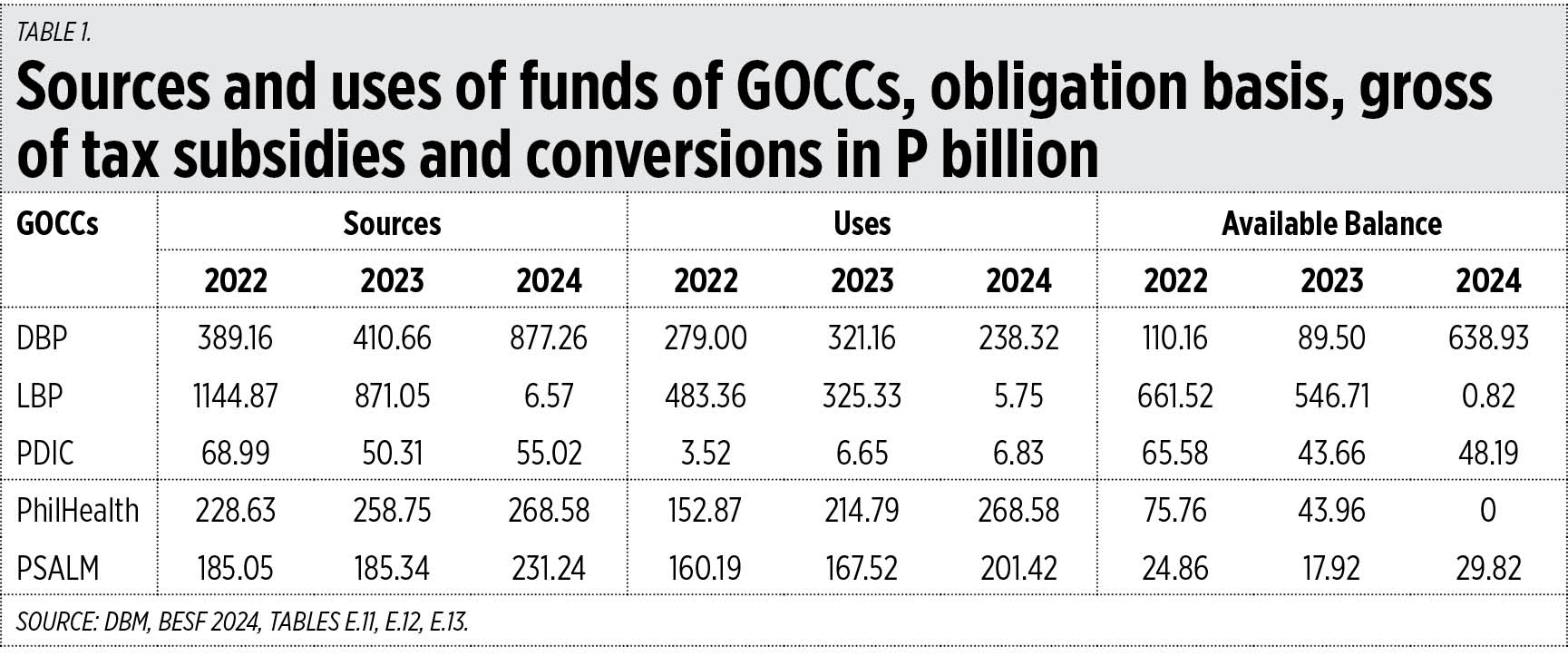
I checked some numbers of government-owned and -controlled corporations (GOCCs) at the Budget of Expenditures and Sources of Financing (BESF). Sources of funds of GOCCs are equity and subsidy from the National Government, corporate borrowings, and corporate funds. Uses of funds are general administration and support (GAS), support to operations, operations, and projects.

Those under the Department of Finance (DoF) with high available balances (sources minus uses) are the Development Bank of the Philippines (DBP), the Land Bank of the Philippines (LANDBANK), and the PDIC. Earlier, DBP and LANDBANK resources had been remitted for the initial funding of the Maharlika Investment Fund.

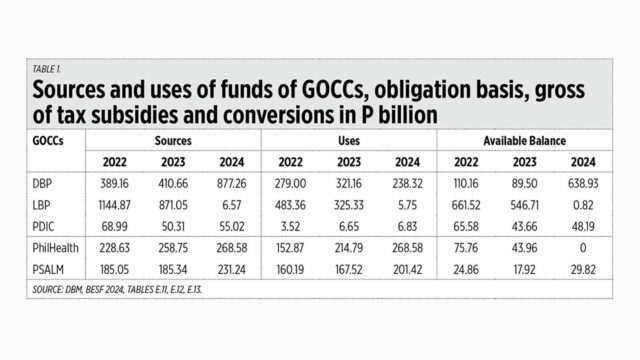
The Power Sector Assets and Liabilities Management Corp. (PSALM) under the Energy department also has a large available balance yearly, but only about half of PDIC’s. The Philippine Health Insurance Corp. (PhilHealth) had no available balance in 2024 (see Table 1).

Tapping PDIC’s excess funds for some government expenditures is a good move, for four reasons. One, the P107 billion is equivalent to its available balance for 2022 and 2023 alone. Two, it is less than the Deposit Insurance Fund (DIF) requirement in 2023 of P187 billion, derived as the DIF ratio 5.5% multiplied by total insured deposits of P3.4 trillion. Three, the assurance from PDIC President Roberto Tan that the DIF “remains adequate to cover risks in the banking system in case of insurance calls.” And, four, tapping excess funds of financially stable GOCCs is a lot better, far superior, to raising taxes or raising additional borrowing.

So, I support the DoF and the Department of Budget and Management (DBM) in tapping the PDIC excess funds. The same way that I supported their move to tap excess funds of PhilHealth (funds that came from taxes paid by smokers, vapers and drinkers of alcohol and sugary beverages, not from direct contribution of members).

If there is one thing that I wish the DoF and DBM would do, or that President Ferdinand Marcos, Jr. would push, is to have an across-the-board spending cut, targeting a budget balance, and significantly reducing the public debt stock, reducing interest payments.

I want to see spending cut from infrastructure, foreign aid-funded projects, and social services like the budgets of state universities and colleges (SUCs) including UP. The SUCs budget has been jumping up, from P67 billion in 2019 to P81 billion in 2021, P107 billion in 2023, and P133 billion in 2024 — which is double its budget just five years earlier.

Much of the infrastructure — roads, airports, seaports, power plants, etc. — are now financed and constructed by private corporations via public-private partnership (PPP). The user-pay principle is a lot superior to the all taxpayers-pay principle.

Education, healthcare, and household welfare should first and foremost be personal and parental responsibilities, not the government’s responsibility. Government should still help, but be limited to primary and secondary education, limited to infectious diseases and not compromised with non-infectious diseases because these result in bottomless health spending. Plus, local governments units (LGUs) are putting up their own hospitals, their own universities, their own social welfare programs, and they always have a budget surplus while the National Government (NG) always has a budget deficit.

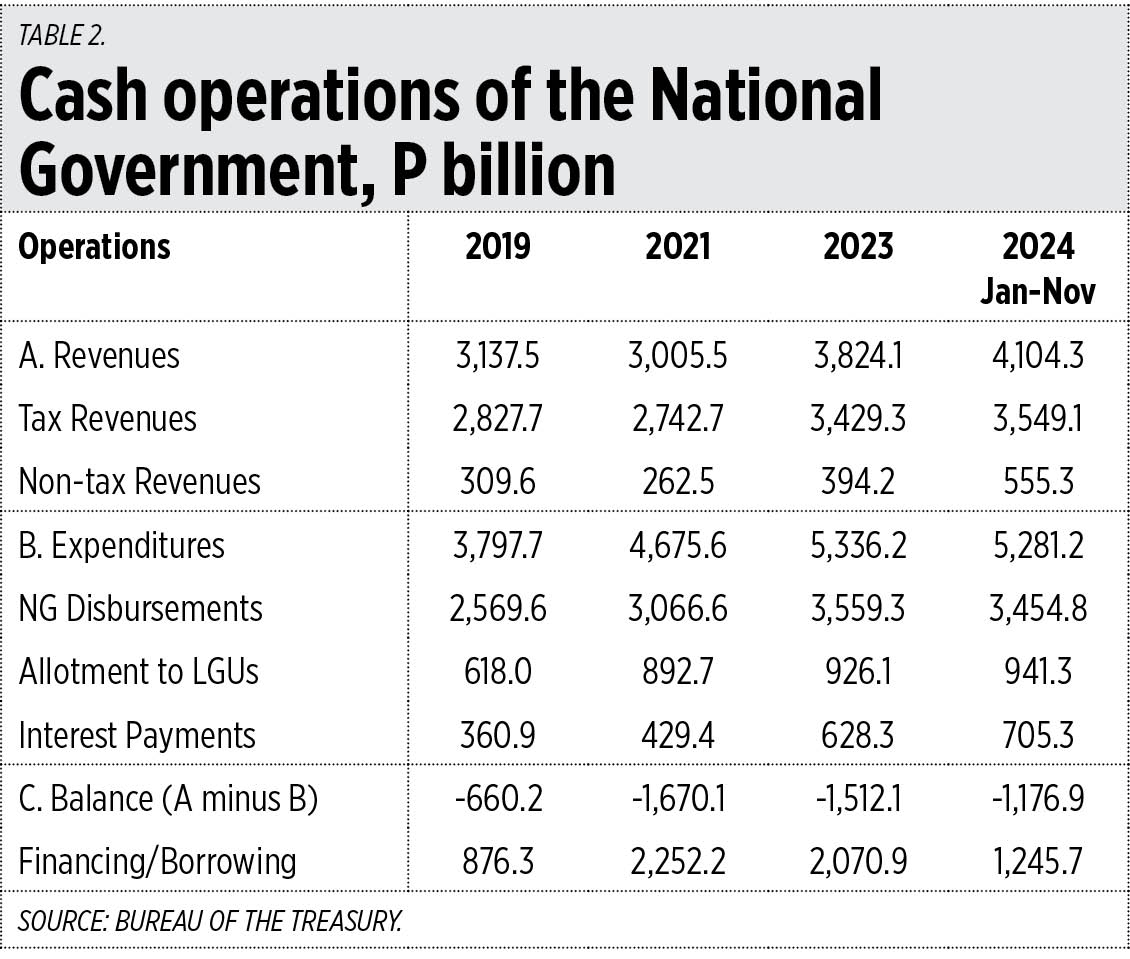
There was some good news in public finance in 2024: revenues in January-November were higher than in the full-year 2023 while expenditures were controlled. This led to a lower deficit, although it was still above P1 trillion, and borrowings are below P2 trillion (see Table 2).

We should sustain this momentum. A lot of the criticism made by various NGOs and pressure groups about the GAA 2025 is that their favored sectors — like healthcare and education — did not get more money than they wished. They wanted more health and education socialism and are not interested in fiscal balance, nor in asserting personal and parental responsibility in how people run their lives. They hate the legislators and want the endless dependence of the people on the government, which is run and fund-appropriated by the politicians they hate. There is irony and hypocrisy there.

To remove the irony, people should demand less public spending and borrowing, less taxation and regulations, and more money in their pockets to finance their household needs, to do more philanthropy for needy people.


Bienvenido S. Oplas, Jr. is the president of Bienvenido S. Oplas, Jr. Research Consultancy Services, and Minimal Government Thinkers. He is an international fellow of the Tholos Foundation.

minimalgovernment@gmail.com