Home Blog Page 1713

Century Pacific Food ‘cautiously optimistic’ for 2025, sets P3-B capex

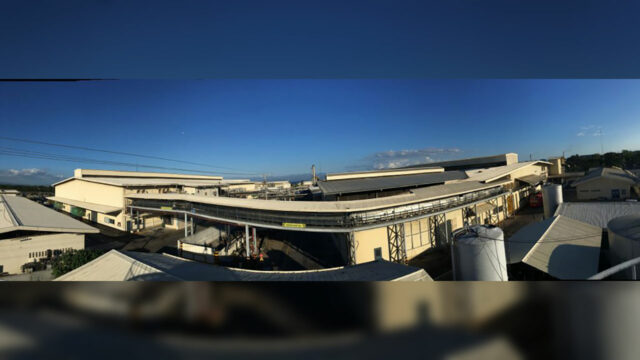
CENTURY PACIFIC Agricultural Ventures, Inc., a subsidiary of Century Pacific Food, Inc. — CPAVI.COM.PH

FOOD and beverage manufacturer Century Pacific Food, Inc. (CNPF) said it is “cautiously optimistic” about its growth for 2025, citing improving consumer spending despite ongoing global uncertainties.

“We are already seeing signs of a better consumer environment as we enter 2025. So far, our Q1 (first quarter) has gone as planned. While this provides grounds for optimism, we remain mindful of lingering cost pressures and ongoing shifts in the global trading environment,” CNPF Chief Finance Officer Richard Kristoffer S. Manapat said in a statement on Tuesday.

“We plan to approach 2025 with caution — remaining agile and responsive to change. We believe our diverse and resilient portfolio positions us well to navigate these headwinds while continuing to pursue our goal of double-digit growth, all while staying true to our mission of delivering affordable nutrition to the market,” he added.

For 2025, CNPF has earmarked approximately P3 billion in capital expenditure (capex) to expand its production capacity in the tuna, coconut, and pet food segments. The company is also targeting mid-teen growth in both profit and revenue for the year.

This statement comes as CNPF reported a 14% increase in net profit for 2024, reaching P6.3 billion, up from P5.6 billion in 2023, primarily driven by its export businesses.

Consolidated revenue increased by 12% to P75.5 billion, largely due to the strong performance of its diversified portfolio.

Original equipment manufacturing (OEM) exports saw a 36% revenue growth, driven by a low base, favorable input costs, and robust global demand.

The branded segment, which accounts for the majority of CNPF’s sales, grew 7% in revenue, led by higher volume across its brand portfolio. This segment includes marine, meat, milk, and other emerging verticals.

Operating cash flows reached P8.1 billion, enabling the company to fund capacity expansion, increase dividends, and meet debt repayments.

“Our results in 2024 underscore the resilience and balance of our synergistic portfolio. Diversification enabled us to navigate economic challenges more effectively, with exports benefiting from favorable commodity cycles and global demand, providing support amidst a subdued domestic environment,” Mr. Manapat said.

“We are particularly grateful for the sustained growth we’ve experienced, despite ongoing inflationary pressures on Filipino households. Throughout, we remained focused on delivering affordable nutrition — ensuring our products remain accessible. Additionally, we reinvested margin gains into brand-building, innovation, and promotional activities to support consumers and stimulate demand,” he added.

CNPF shares rose by 9.06%, or P2.90, to close at P34.90 per share on Tuesday. — Revin Mikhael D. Ochave

Still ironclad: US reaffirms its commitment to alliance with the Philippines

PHILIPPINESTAR/WALTER BOLLOZOS

United States Defense Secretary Pete Hegseth’s visit to the Philippines last week underscored the two countries’ deep ties amid — or despite — an increasingly uncertain environment.

The uncertainty comes from many factors. There were initial misgivings regarding the commitment of the new administration of US President Donald Trump, who has been making unconventional executive decisions not only domestically but also on foreign policy.

He announced that he would impose sweeping tariffs on American imports from the rest of the world. These will take effect today, April 9.

And then, here at home, the Philippines continues to grapple with China’s provocative maneuvers in the West Philippine Sea. Furthermore, reported spying activities here have given rise to deep concerns regarding its next moves.

The fact that Mr. Hegseth chose to make the Philippines his initial stop in his Indo-Pacific tour — his first official overseas visit as defense chief — is a strong indication of Manila’s strategic importance to Washington.

That the alliance of the US and the Philippines is “ironclad” has been a characterization often invoked at the height of China’s provocative acts in recent years. Changes notwithstanding, Mr. Hegseth’s visit showed that this remains so.

He met with his counterpart, Defense Secretary Gilberto Teodoro, Jr. In their conversation, the former underscored America’s enduring commitment to the Philippines and pledged continuity in US security assistance, including the continuation of $500 million in military financing. This sends a strong signal that programs initiated under the previous administration will not only be maintained but strengthened under the new US administration.

Mr. Hegseth’s visit, then, did not just reaffirm existing ties — it elevated them. Just days after his engagements in Manila, the US State Department approved a potential Foreign Military Sale to the Philippines involving 20 F-16 fighter jets. This move reflects Washington’s view of the Philippines’ strategic importance in the Indo-Pacific region.

“This proposed sale will support the foreign policy and national security of the United States by helping to improve the security of a strategic partner that continues to be an important force for political stability, peace, and economic progress in Southeast Asia,” the announcement stated.

During their meeting, the two defense chiefs outlined a bold and forward-looking defense agenda, agreeing on several initiatives that will significantly enhance interoperability, readiness, and joint capability between the US and Philippine armed forces.

There are several initiatives: the deployment of advanced capabilities, for instance, includes the Navy-Marine Expeditionary Ship Interdiction System (NMESIS), a cutting-edge mobile anti-ship missile platform, along with highly capable unmanned surface vessels. These assets are designed to provide strategic coverage of vital sea lanes from Philippine coastal positions to reinforce deterrence. This will form part of the 40th iteration of the Balikatan exercises scheduled from April 21 to May 9 this year.

This year’s Balikatan will serve as a clear demonstration of this deepened partnership. With new technologies, joint exercise, and high-level strategic alignment, the exercise will not only boost interoperability but also send a clear signal to the region — that the US and the Philippines are ready to respond to any challenge, together.

Filipinos themselves are well aware of the strategic importance of such an exercise. In a Stratbase commissioned survey conducted last month by SWS, the findings showed that 77% of Filipinos agree that the Philippine government must further strengthen its alliance with other countries. This will be accomplished through joint patrols, joint sails, and joint military exercises to assert and defend the Philippines’ territorial and economic rights in the West Philippine Sea.

Indeed, as Balikatan 2025 draws near, Filipinos can take confidence in the strengthening of the Philippines’ defensive posture, backed by the world’s most powerful military.

Other initiatives that were discussed include the special operations forces training to be held in Batanes, the crafting of a defense industrial cooperation vision statement, and a bilateral cybersecurity campaign.

The new Defense Industrial Cooperation Vision Statement was released a few days before Mr. Hegseth’s visit, and it outlines plans for co-production of unmanned systems, enhanced logistics cooperation, and the reduction of barriers to defense technology transfer — promoting not only maritime security but also economic security.

“The United States and the Philippines are committed to a strong and enduring alliance that is anchored in a shared, ironclad commitment to a secure and prosperous Indo-Pacific region. Built on the 1951 Mutual Defense Treaty, the 1998 Visiting Forces Agreement, and the 2014 Enhanced Defense Cooperation Agreement, the United States and the Philippines have developed close and continuing bilateral defense cooperation. Defense and security cooperation has been a vital pillar of engagement in the ever-deepening partnership between the United States and the Philippines,” the first paragraph of the statement read.

Finally, because both countries recognize the importance of digital resilience, they have launched a campaign to strengthen cyber defenses. This includes the development of secure defense networks, a capable cybersecurity workforce, and operational cooperation.

These initiatives go beyond building military capability. They position the US-Philippines alliance as a credible force for deterrence in the face of mounting threats in the region. As coercive actions in the West Philippine Sea continue to challenge Philippine sovereignty, we take comfort in the message: the Philippines does not stand alone.


Victor Andres “Dindo” C. Manhit is the president of the Stratbase ADR Institute.

The climate crisis in focus

By Brontë H. Lacsamana, Reporter

Theater Review
Mga Anak ng Unos
Presented by Dulaang UP

THE LATEST twin-bill production by Dulaang Unibersidad ng Pilipinas (Dulaang UP), Mga Anak ng Unos, can be best described as a horrific funhouse mirror reflecting the worsening realities of the climate crisis.

The first piece assumes the intriguing lens of folklore, where otherworldly creatures fight against humanity’s self-destructive tendencies. The second presents scenes that are frenetic, fragmented reimaginings of our current and possible future states of distress. Campus theater group Dulaang UP brings both to life with a stark sense of urgency.

GODS AND CREATURES
Sa Gitna ng Digmaan ng mga Mahiwagang Nilalang Laban sa Sangkatauhan is written by Joshua Lim So, a playwright in the Carlos Palanca Award for Literature Hall of Fame. Under the direction of José Estrella, the war that bathalas (gods) and mythological creatures wage against the sangkatauhan (humanity) unfolds on stage.

Immediately striking is the diversity of languages spoken by the deities, based on the regions from which their folk tales originate. The stage design is clever, with frayed ropes coiled into a gigantic mass on one side representing a mountain being destroyed by miners.

The costumes are also beautiful to look at, the bathalas, diwatas, aswangs, and the like each standing out as their own character. It begins with Dadanhayan Ha Sugay (played by Jasper John), a supreme being with 10 heads originating from Bukidnon folklore. Nicknamed Dan by his fellow mythological creatures, he is an intimidating figure who punishes mankind with thunder and torrential rainfall, much to the chagrin of Tausug-based trickster deity Abunnawas (Tristan Bite), who advocates for a tamaraw stuck in the ensuing landslide.

From then on out, the piece keeps adding on its innovative worldbuilding, the various creatures that Filipinos read about converging in an uncanny military alliance in the war on mankind. Based on Edgar Samar’s book Mga Nilalang na Kagila-gilalas, a compendium of mythological creatures drawing from folklore all over the country, the play puts the divine creatures in a tight spot where they are pushed to the brink. The entire exercise successfully leaves the audience with the sobering message that perhaps the destruction has gone too far.

Of course, the downside to having diverse dialogue using various Philippine languages is the audience’s inability to follow the whole thing completely, for lack of subtitles to the languages we don’t know. But the actors fill in this gap very easily, their expressions, tone of voice, and body language providing the context for what they’re probably saying in the moment.

There are humorous scenes as well, such as when one aswang declares that she has gone vegan and refuses to feast on the blood of a human. There are popularity dynamics at play, with the overbearing nuno sa punso reveling in being the most recognizable creature, and the humble anito being almost unknown. When not overwhelming in parts, the play at least manages to be amusing.

From the moment the tamaraw is stuck in the muddy ditch and seemingly doomed, the audience is immersed in an intriguing aspect of Philippine folklore that other tales haven’t really tackled — how humans’ effect on the environment ripples throughout the archipelago in ways unimagined.

HUMAN RESPONSES
The next play, Climate Crazies, is a feverish reckoning of what’s to come. From the local, it expands to the global experience of the climate crisis. The play is directed by Issa Manalo Lopez and Tess Jamias.

Based on Australian playwright David Finnigan’s Scenes from the Climate Era, it transposes the original text into the Filipino perspective of the crisis, tackled with a healthy mix of dread and playfulness. Vignettes take us through a plethora of realistic issues: plastic pollution, rising sea levels, the overconsumption of goods, and deadly super-typhoons.

Here, the audience is compelled to nod or shake their heads out of relatability, often in frustration over segregating or processing the trauma of individual actions being basically useless. Many voices are heard here — brought to life by the four extremely versatile main actors: Delphine Buencamino, Bong Cabrera, Herbie Go, and Ethan King — characters ranging from educated citizens and everyday people to climate scientists and uncaring celebrities. Their ability to take on all these perspectives throughout the barrage of vignettes is mind-blowing, to say the least.

One character says that the term “climate anxiety,” denoting an exaggerated worry over something, must instead be named “climate distress,” because it is unfair to claim that the dire situation is exaggerated at all. Later on, in a scene mimicking a TV program, a scientist bemoans how false hope chains people to the system. This is all grounded in harrowing scenes of the earth’s future, like a mother shielding her child from the deadly heat to a young man scrambling to get his elderly wheelchair-bound grandmother evacuated from the flood.

Tying the second play with the first is a Bagobo mythological character, Mebuyan (played by MJ Briones), a goddess with multiple breasts used to feed infants who have died. Here, adorned in trash bags, she flits in and out of the various vignettes, the only consistent character all throughout, embodying the decay that has befallen the earth. She is depicted as drawing unlucky numbers for humans who will perish from climate crises and feeding on her breasts are both human babies and turtles who have died consuming plastics in the ocean. 

Befitting the craziness promised by the title, the play is full of energy, from hilarious slapstick moments to more solemn and thought-provoking speeches. There are earth summits where world leaders struggle to enact policy, and average people eat a never-ending slew of takeout, or order products upon products online. In short, it’s a rollercoaster of emotions, and ultimately a rousing call to action.

Mga Anak ng Unos has shows on Fridays to Sundays until April 13 at the IBG-KAL Theater in UP Diliman, Quezon City. Regular tickets cost P1,000 while persons with disabilities and senior citizens can buy tickets for P800, all available via Ticket2Me. For more details, visit Dulaang UP’s social media pages.

PHL banks to see ‘low’ credit risk from US tariffs

BW FILE PHOTO

THE PHILIPPINE banking system is unlikely to face significant credit risk from the United States’ tariff policies due to its lower tariff rate compared with its neighbors in the Asia-Pacific (APAC) region, Moody’s Ratings said.

“In Asia-Pacific, the impact on banks is credit-negative albeit to different levels, leading to heightened uncertainty for investors and consumers… Within APAC, the lowest additional US tariffs are now in Australia, New Zealand, Hong Kong, Singapore, Mongolia and the Philippines, with these economies’ banks experiencing the least damage from direct tariffs,” it said in its latest credit outlook, saying in a chart that the impact from the levies will be “low.”

Meanwhile, it expects banks in Vietnam, Thailand and Bangladesh to be the worst hit in the region by the US tariffs, with the impact expected to be “high,” while those in China, Indonesia, Taiwan, Japan, Korea, India and Malaysia are expected to see a “moderate” impact.

“The higher tariffs are more negative, on a relative basis, for banks in Vietnam, Thailand and Bangladesh because of their economies’ higher reliance on exports to the US compared with other economies in the region,” Moody’s Ratings said. “In these three countries, a moderation in exports to the US will hurt economic growth, straining loan growth for banks and hurting loan quality.”

“Elsewhere in APAC, despite significant increases in US import tariffs, the related impact on banks in China, Japan, Korea, India, Indonesia, Malaysia and Taiwan, China, will be more manageable because of either economic diversification, low exports to the US, or both.”

US President Donald J. Trump last week announced a slew of tariffs on the country’s trading partners that are set to take effect on April 9.

In the region, the Philippines has the second-lowest tariff rate at 17%, just after Singapore, which received the 10% baseline tariff.

Countries that were slapped “moderate” tariffs (24% to 27%) were Japan, South Korea and India.

Meanwhile, Cambodia, Vietnam, Thailand, Indonesia and China saw the rates (32% to 49%).

Moody’s Ratings said the reciprocal tariffs are likely to affect economic growth and corporate creditworthiness in Asia-Pacific, which in turn could hurt banks’ loan expansion asset quality.

“In terms of large corporate exposures, we do not expect significant deterioration in loan quality for APAC banks. Listed APAC nonfinancial firms, on average, typically generate around 10% of revenue from the US market, and the drop in sales because of US tariffs should not significantly reduce their debt-servicing capacity,” it added.

“Still, some industries in APAC are more heavily dependent on US sales, which could lead to mildly higher asset quality risk for creditors, particularly in automobiles and parts, steel, chemicals, textiles and shipyards.”

Latest data from the Bangko Sentral ng Pilipinas (BSP) showed bank lending growth slowed to 12.2% year on year in February from the 12.8% expansion in January, which was the fastest in two years.

Separate data showed Philippine banks’ asset quality worsened as the industry’s gross nonperforming loan (NPL) ratio rose to 3.38% in January from 3.27% in December. This was the highest in two months or since the 3.54% in November.

Potential actions by monetary authorities to support economic growth amid the risk of a global recession could also affect APAC banks’ margins, Moody’s Ratings added.

“To counter the strain from higher US tariffs, it is likely that some central banks in APAC will begin reducing interest rates sooner than when the markets expect, or moderate the pace of their rate hikes, as in the case of Japan. These measures, if implemented, will lead to lower bank margins,” it said.

“We also expect higher government support and other measures from the central banks, including interest rate reductions and loan restructurings for borrowers in the most affected industries.”

The BSP is widely expected to resume its easing cycle on Thursday amid low inflation, with the potential economic impact of the US’ tariff policies bolstering the possibility of further rate cuts.

A BusinessWorld poll of 17 analysts conducted last week all expect the Monetary Board to reduce the target reverse repurchase rate by 25 basis points (bps) to 5.5% from the current 5.75%.

The central bank kept interest rates steady in February as it waited to see how global trade uncertainties would unfold. It slashed borrowing costs by a total of 75 bps in 2024. — Luisa Maria Jacinta C. Jocson

Philippine Labor Force Situation

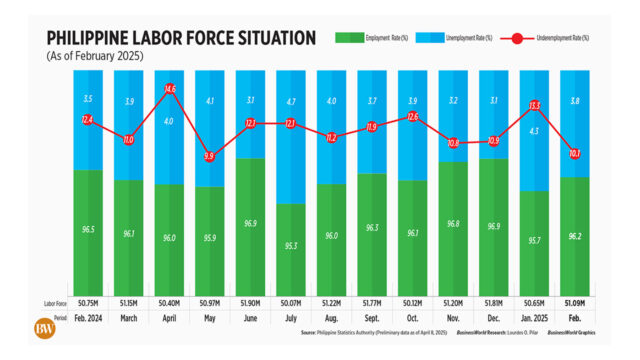
THE JOBLESS RATE slipped to a two-month low in February, as more Filipinos joined the labor force ahead of the summer season and midterm elections, the statistics agency said on Tuesday. Read the full story.

Philippine Labor Force Situation

BPI taps ACEN RES for renewable energy supply

BW FILE PHOTO

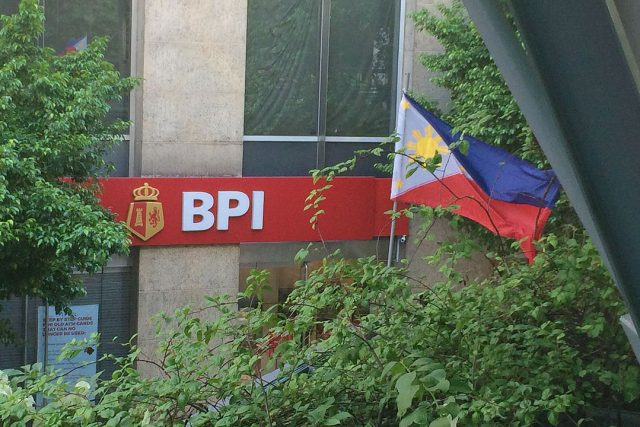
THE BANK of the Philippine Islands (BPI) has tapped ACEN RES, the retail electricity supply arm of the Ayala group, for its power supply under the government’s expanded retail aggregation program (RAP).

BPI aggregated the power demand across its 70 branches, making it the first customer in the banking sector under the government program, the Energy Regulatory Commission (ERC) said in a statement on Monday.

“BPI’s participation in RAP sends a clear message to other banks and the entire financial sector: the retail electricity market is viable and offers real opportunities to enhance the bankability of energy projects,” ERC Chairperson and Chief Executive Officer Monalisa C. Dimalanta said.

“My hope is that banks across the country will recognize the enormous potential in retail competition — that they are not just financiers of power projects, but also active contributors to the country’s energy security,” she added.

The enhanced RAP allows facilities owned by the same consumer within the same franchise area of a distribution utility to aggregate their demand to meet the 500-kilowatt threshold and select their power supplier.

BPI also moved its corporate office in Manila to renewable energy through the Green Energy Option Program (GEOP), a voluntary mechanism that allows electricity end-users to choose renewable energy as their power source.

BPI Chief Finance Officer and Chief Sustainability Officer Eric M. Luchangco emphasized that switching 70 branches to RAP is “just the beginning of the bank’s broader efforts to promote energy sustainability within its operations.” — Sheldeen Joy Talavera

The end of BPO as we know it — and the rise of KPO in the Philippines

PRESSFOTO-FREEPIK

The Philippine’s business process outsourcing (BPO) industry, once the undisputed engine of economic growth and job creation, is facing a crossroads. With over 1.7 million Filipinos employed in the industry and contributing 8-10% of the nation’s GDP, the BPO sector has long been a source of national pride and economic resilience. But this foundation is now shaking, as artificial intelligence (AI) rapidly automates the very roles that gave rise to the country’s outsourcing boom.

AI tools like ChatGPT, customer service bots, and robotic process automation are now being integrated at scale into customer-facing operations, data processing tasks, and even specialized service areas once thought safe from automation. From New York to Sydney, global companies are embracing AI to cut costs and enhance efficiency. And for countries like the Philippines — where tens of thousands of young professionals earn their livelihood handling routine customer service tasks for foreign firms — this transformation is as urgent as it is disruptive.

A recent Bloomberg report shed light on this unfolding reality. In the video, BPO professionals in Metro Manila and Cebu spoke of how AI is already replacing voice-based roles. One BPO company reportedly shut down an entire business line, laying off over 2,000 employees, after an AI solution took over a major account. The writing is on the wall: AI is not coming for BPO jobs — it is already here.

Yet this isn’t a death sentence. This is a pivot point.

The world may be witnessing the end of the BPO industry as we know it, but it also signals the beginning of a new chapter: the rise of the Knowledge Process Outsourcing (KPO) sector.

Unlike BPO, which thrives on volume, repetition, and scale, KPO is built on expertise, analytics, and insight. It values human judgment, creativity, and critical thinking — qualities that AI, for all its sophistication, still lacks.

For the Philippines, the solution lies in one word: upskilling.

If we are to survive this wave of disruption and ride it toward opportunity, we must embark on an unprecedented national effort to train, re-train, and elevate our BPO professionals into globally competitive knowledge workers. This means mastering not only customer interaction but also data analysis, prompt engineering, cybersecurity monitoring, project management, business intelligence, and AI operations.

It will require public and private institutions to come together and act decisively. The Department of Information and Communications Technology (DICT), the Commission on Higher Education (CHED), and the Technical Education and Skills Development Authority (TESDA) must accelerate the rollout of national digital literacy programs and AI-focused bootcamps. These should not be general webinars or workshops but structured, industry-aligned certification programs on data analytics, cloud computing, information security, and machine learning basics.

In parallel, private BPO firms must recognize that investing in their people is not just a moral imperative but a strategic one. They must offer tuition support, continuous learning stipends, and on-site training platforms where their employees can gain new digital capabilities. Every BPO company should build its own internal “future workforce academy,” with tracks for analytics, tech support, creative work, and AI-human hybrid services.

Industry organizations are already stepping up. The Information Technology and Business Process Association of the Philippines (IBPAP), the main industry body for outsourcing firms, has acknowledged the dual nature of AI. While it admits that some jobs are being lost due to automation, it also reports that many BPO companies are expanding and hiring for AI-supported services. IBPAP is now working with global experts to create roadmaps that align AI integration with job preservation and transformation.

Meanwhile, the Healthcare Information Management Association of the Philippines (HIMAP) is focused on protecting and expanding the healthcare outsourcing subsector. HIMAP has launched initiatives to upskill workers in medical coding, telehealth support, healthcare analytics, and even AI-assisted diagnostics. These are areas where AI is used not to replace people but to empower them — assisting nurses and support agents with faster, more accurate decision-making.

To ensure long-term sustainability, the Philippines must also develop a five-year national roadmap for BPO-to-KPO transition. Year one should focus on large-scale training and certification programs, including aggressive marketing of scholarships and free courses for BPO professionals. Local governments must be enlisted to help map displaced workers and provide access to digital education hubs.

In years two and three, the country should support startups and new ventures in high-value niches: fintech services, health tech outsourcing, creative process outsourcing, and cybersecurity as a service. Government incentives should reward companies that hire upskilled workers or build AI-human hybrid teams instead of simply replacing agents with bots.

By years four and five, we should aim to establish the Philippines not just as the call center capital of the world — but as a global hub for knowledge-based services. This includes AI development, content moderation, financial analysis, software QA testing, and risk management support. The shift won’t be easy — but it is necessary.

This transformation is also deeply personal. The average BPO worker in the Philippines earns between P20,000 to P40,000 per month — often supporting entire families, paying off mortgages, sending children to school. A sudden job loss due to AI could spell disaster for hundreds of thousands of people. This is why the government must strengthen the social safety net: emergency unemployment insurance, subsidized healthcare, and access to mental health resources must be part of the equation.

Incorporating AI into the workplace doesn’t have to come at the cost of human livelihoods. We must promote the mindset of AI as augmentation, not replacement. The most effective customer service strategies today are no longer purely human or purely automated — they are hybrid. Filipino workers still possess a crucial edge in empathy, problem-solving, and cultural nuance. When paired with AI, they can become super-agents, solving problems faster and providing an even better experience.

Education institutions also have a key role to play. Colleges and universities must integrate AI, data science, and cybersecurity modules across all disciplines — from business administration to nursing to communications. Micro-credentialing, modular learning, and flexible online certifications should become standard for working professionals.

Ultimately, the survival of the BPO industry — and its transformation into a KPO powerhouse — depends on a whole-of-nation approach. Government, academia, private companies, industry associations like IBPAP and HIMAP, and the workers themselves must move in sync. The clock is ticking.

The rise of AI marks the end of the BPO industry as we know it. But it is also the beginning of a smarter, more resilient, and more competitive future. If we act with urgency, collaboration, and vision, the Philippines can once again emerge as a global leader — not in low-cost labor, but in high-value intelligence.

We must embrace this change not with fear, but with resolve. The world is changing — and the Filipino workforce is more than capable of changing with it.


Dr. Donald Lim is the founding president of the Global AI Council Philippines and the Blockchain Council of the Philippines, and the founding chair of the Cybersecurity Council, whose mission is to advocate the right use of emerging technologies to propel business organizations forward. He is currently the president and COO of DITO CME Holdings Corp.


The Handmaid’s Tale star Elisabeth Moss not ready for final season farewell

LOS ANGELES — As a producer, director, and the lead actor for the Emmy-winning Hulu series The Handmaid’s Tale, Elisabeth Moss isn’t ready to say goodbye to the dystopian drama series after a six-season long run.

“There’s been a very few periods of my life in the last nine years that I have not been working on this show,” Ms. Moss said. “It hasn’t hit me at all yet that I’m not playing her (June Osborne) anymore,” she added.

The series, created by Bruce Miller and based on the 1985 novel of the same name by Canadian author Margaret Atwood, debuted its sixth and final season on Hulu on Tuesday.

The show follows the totalitarian religious extremist government of Gilead that is driven by power-hungry men who brutally subjugate women in the aftermath of collapsing fertility rates and war.

Some women, called handmaids, are treated as breeders who must bear children for superior infertile families.

Ms. Moss plays a woman named June Osborne, who is forced to become a handmaid along with her friend Moira Strand, played by Samira Wiley.

Other cast members include Ann Dowd as Aunt Lydia Clements, a woman in charge of overseeing the handmaids and Bradley Whitford as Commander Joseph Lawrence, a repentant leader in Gilead.

Mr. Whitford and Ms. Moss find it striking how much the show has become a symbol for the real-life global women’s rights movement.

“There’s a message about resistance, that is basically what I would say, the theme of this final season is,” Mr. Whitford said.

“I think we all feel very lucky to be part of something that’s getting that out,” the actor, who also starred in The West Wing, added.

Echoing this, Ms. Moss reflected on how the final season makes an effort to create a bigger impact and highlights the importance of revolution.

“I feel like we feel so proud and so honored that people have taken this show as a symbol of resistance and using that (handmaid) costume as a symbol of resistance and being able to use this show to encourage themselves to fight for what they believe in,” Ms. Moss said.

For her, it was vital to push further than ever before for the show’s finale.

“It was the biggest season we’ve ever done, more locations, more cast, more story, more sets, just everything we did was bigger,” the actor said. — Reuters

T-bonds fetch lower rates on BSP cut bets

BW FILE PHOTO

THE GOVERNMENT made a full award of the reissued Treasury bonds it offered on Tuesday as rates were in line with secondary market levels amid expectations that the Bangko Sentral ng Pilipinas (BSP) will resume its monetary easing cycle this week.

The Bureau of the Treasury (BTr) raised P30 billion as planned via the reissued 20-year bonds it auctioned off on Tuesday as total bids reached P53.356 billion, or almost twice the amount on offer.

The full award brought the total outstanding volume for the bond series to P413.3 billion, the Treasury said in a statement.

The bonds, which have a remaining life of six years and three months, were awarded at an average rate of 5.986%. Accepted bid yields ranged from 5.925% to 6.015%.

The average rate of the reissued papers was down by 14.2 basis points (bps) from the 6.128% fetched for the series’ last award on Aug. 13, 2024. This was also 187.2 bps lower than the 8% coupon for the issue.

However, this was 4.33 bps higher than the 5.9427% quoted for the seven-year bond, or the benchmark tenor closest to the remaining life of the issuance, and 7.78 bps above the 5.9082% seen for the same bond series at the secondary market before Tuesday’s auction, based on PHP Bloomberg Valuation Service Reference Rates data provided by the BTr.

A trader said the government fully awarded its T-bond offer as rates were within the expected range and were close to the comparable secondary market yields.

“It looks like investors are comfortable to buy at the current levels in view of a possible rate cut this Thursday,” the trader said in a text message.

Rizal Commercial Banking Corp. Chief Economist Michael L. Ricafort likewise said in a Viber message that T-bond rates were in line with secondary market levels as better-than-expected March headline inflation reinforced bets of a BSP rate cut this week.

Philippine inflation eased to 1.8% in March from 2.1% in February and 3.7% in the same month a year ago, the government reported last week.

This was the lowest consumer price index (CPI) reading in 58 months or since the 1.6% logged in May 2020 at the height of the coronavirus pandemic.

This was also within the BSP’s 1.7%-2.5% forecast for the month and slightly below the 2% median estimate in a BusinessWorld poll.

For the first quarter, the CPI averaged 2.2%, well within the central bank’s 2-4% annual target.

Analysts have said that the slower-than-expected March inflation print and prospects of an economic slowdown due to the US government’s trade policies, give the BSP room to cut rates further.

A BusinessWorld poll conducted last week showed that all 17 analysts surveyed expect the Monetary Board to reduce its target reverse repurchase rate by 25 bps to 5.5% at its meeting on Thursday.

This would mark its first easing move since December as the BSP unexpectedly kept benchmark interest rates steady in February to assess the potential impact of the Trump administration’s evolving policies on the Philippine economy.

The Monetary Board has brought down borrowing costs by a cumulative 75 bps since it began its rate-cut cycle in August last year.

BSP Governor Eli M. Remolona, Jr. last month said that the central bank could slash benchmark rates by up to 75 bps this year.

The BTr is looking to raise P245 billion from the domestic market this month or P125 billion via Treasury bills and P120 billion through T-bonds.

The government borrows from local and foreign sources to help fund its budget deficit, which is capped at P1.54 trillion or 5.3% of gross domestic product this year. — Aaron Michael C. Sy

Yearly Job Gains by Industry (February 2025 vs February 2024, in thousands)

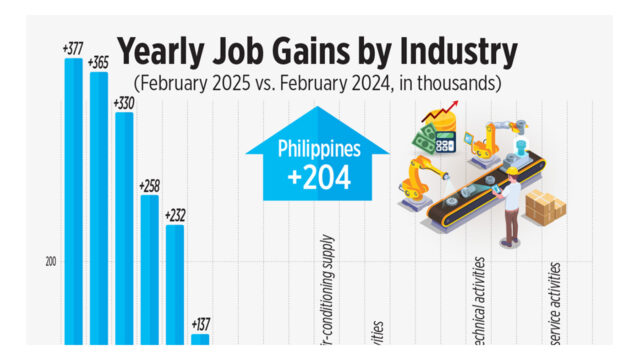
THE JOBLESS RATE slipped to a two-month low in February, as more Filipinos joined the labor force ahead of the summer season and midterm elections, the statistics agency said on Tuesday. Read the full story.

Yearly Job Gains by Industry (February 2025 vs February 2024, in thousands)

First Gen expects LNG delivery this month

REUTERS

LOPEZ-LED First Gen Corp. expects a new liquefied natural gas (LNG) cargo delivery this month to meet the supply requirements of its gas-fired power plants in Batangas.

The company said it recently completed a tender for its seventh LNG cargo, which is due to arrive in April, according to its annual report.

“The IOT (interim offshore LNG terminal) project will enable the company to utilize both Malampaya gas and LNG for the 2,000 MW (megawatts) of power plants located at the FGEN Clean Energy Complex,” the company said.

Last year, First Gen completed the tender and receipt of six LNG cargoes following the completion of the terminal in 2023.

First Gen operates four existing gas-fired power plants with a combined capacity of 2,017 MW, located at the First Gen Clean Energy Complex in Batangas. These plants have been supplied for many years with gas from the Malampaya gas field.

In 2023, its subsidiary, FGEN LNG Corp., completed the interim offshore LNG terminal and entered into a five-year time charter party for its floating storage and regasification vessel, BW Batangas.

Earlier this year, FGEN LNG received a permit from the Department of Energy to operate and maintain its interim offshore LNG terminal for 25 years.

Currently, First Gen has a total of 3,668 MW of combined capacity from its portfolio of plants that run on geothermal, wind, hydro, solar energy, and natural gas.

The company aims to expand its portfolio to 13,000 MW by 2030.

For 2024, First Gen reported an attributable net income of $252.9 million, down 19% due to lower contributions from its green energy business.

On the local bourse, shares in the company declined by 1.23% to close at P16 each on Tuesday. — Sheldeen Joy Talavera

Yeskah’s Eco-friendly Shop makes money from paper

EDG ADRIAN A. EVA

YESKAH’S Eco-friendly Shop, a Quezon City-based business, is promoting the country’s circular economy by upcycling discarded paper into profitable products.

The business started by selling paper bags in 2020 and has since expanded to various upcycled products.

The paper scraps left from making paper bags are transformed into various products including woven boxes, fans, paper seed bombs — recycled paper pulp mixed with seeds — and more.

“A lot of scraps came to me, so what we did was innovate — we transformed them into new products,” owner Jessa R. Velo Atnero-Sabaldan told BusinessWorld in Filipino during an ecofriendly bazaar at Farmers Plaza, Quezon City last month.

They have also expanded into bags and purses made from discarded jeans and clothing, which were a crowd favorite at the bazaar.

Ms. Sabaldan said she did not originally mean to promote sustainability, but she eventually realized that she was doing so by finding ways to make money from waste.

The Department of Trade and Industry in a 2022 report said the local paper industry has boosted recycling efforts in the past 10 years, with 85% to 90% of its fiber now obtained from locally recovered paper.

The initiative diverts 1.4 million tons of waste yearly and contributes more than P7 billion to the informal economy, it said.

Ms. Sabaldan said apart from the business’s sustainability efforts, the heart of her business also lies in the craftsmanship of at least 10 single mothers and senior citizens in their neighborhood.

She plans to hire more local women as her business grows. She also dreams of having her own space once she has saved enough. — Edg Adrian A. Eva