Home Blog Page 1668

Peso ends lower on Trump 2.0 jitters

ANGIE REYES-PEXELS

THE PESO dropped against the dollar on the first trading day of 2025 as the market stayed cautious ahead of US President-elect Donald J. Trump’s return to the White House this month and amid a lack of fresh trading drivers.

The local unit closed at P57.91 per dollar on Thursday, weakening by 6.5 centavos from its P57.845 finish on Dec. 27, Bankers Association of the Philippines data showed.

The peso opened Monday’s session slightly weaker at P57.90 against the dollar. Its worst showing was at P58.04, while its intraday best was at P57.78 versus the greenback.

Dollars exchanged went down to $1.195 billion on Thursday from $1.52 billion on Friday.

Philippine financial markets were closed for holidays on Dec. 30, Dec. 31, and Jan. 1.

“The dollar-peso ended higher but the market traded mostly sideways due to lack of fresh catalysts following the holidays,” a trader said by phone.

The dollar was generally stronger amid concerns over Mr. Trump’s potentially inflationary policies, which could lead to a more hawkish US Federal Reserve, Rizal Commercial Banking Corp. Chief Economist Michael L. Ricafort said in a Viber message.

For Friday, the trader sees the peso moving between P57.70 and P58.10 per dollar, while Mr. Ricafort expects it to range from P57.80 to P58.

The US dollar wobbled at the start of 2025 trade on Thursday after a strong year of gains against most currencies, with the yen anchored near its lowest level in more than five months as investors ponder US interest rates staying higher for longer, Reuters reported.

The dollar index, which measures the US currency against six others, eased 0.2% to 108.32 on Thursday but remained close to the two-year high touched on Tuesday. The index rose 7% in 2024 as traders drastically cut back rate-cut expectations. — A.M.C. Sy with Reuters

Congress urged to pass new LANDBANK, DBP charters

BW FILE PHOTO

THE Department of Finance (DoF) said it is pushing for Congressional approval of the new charters of state-run banks Land Bank of the Philippines (LANDBANK) and the Development Bank of the Philippines (DBP).

“To further strengthen the financial standing of state banks, the DoF is advocating for Congressional approval of amendments to the charters of LANDBANK and DBP,” it said in a statement on Thursday.

The DoF also said the changes will allow the banks to “access capital more efficiently, reducing their reliance on National Government support or dividend relief.”

House Bill No. 11230, which seeks to amend the DBP’s charter, was approved by the House banks panel in November 2019; proposals seeking to revise LANDBANK’s charter remain stuck in that committee.

The LANDBANK bills propose to increase its capitalization to P1 trillion from the current P200 billion.

Meanwhile, legislation on DBP’s new charter hurdled the Senate in September.

Senate Bill No. 2839 proposed to increase the bank’s authorized capital stock to P300 billion from P35 billion.

The International Monetary Fund (IMF) has called for the restoration of capital to the government banks after they contributed to the startup funding of the Maharlika Investment Corp. (MIC).

The IMF noted the importance of returning startup capital and exiting regulatory relief “as soon as possible.”

“While the establishment of the MIC can help address the country’s investment needs, it should not come at the cost of a resilient financial system, sound regulatory framework, and level playing field,” it said in a report.

LANDBANK and DBP had contributed P50 billion and P25 billion respectively to the sovereign wealth fund.

Asked for comment, Rafael D. Consing, president and chief executive officer (CEO) of MIC said: “I concur with them.”

“The reality, however, is that LANDBANK (capital ratios) actually meet the minimum regulatory requirements. But all the Philippine banks do,” Mr. Consing told BusinessWorld.

He said most banks are compliant with the 10% capital adequacy ratio (CAR) standard set by the Bank of International Settlements.

At the end of November, LANDBANK’s CAR remains at a healthy level of 16.42% while DBP is at 14.78%, the DoF said in the statement.

“The solid financial footing of LANDBANK and DBP reaffirms their indispensable role in advancing the nation’s progress,” Finance Secretary Ralph G. Recto said in the statement.

Mr. Recto said this enables the banks to “continuously adhere to prudent financial management practices, utilize their resources to support Filipinos and sectors such as infrastructure; agriculture; fisheries; micro, small and medium enterprises.

“Our robust financial health and consistent revenue growth empower us to fulfill our mandate, serving as a dependable partner in the National Government’s inclusive development agenda,” LANDBANK President and CEO Lynette V. Ortiz said in the statement.

Meanwhile, DBP President and CEO Michael O. de Jesus said its bank “remains financially strong and more than capable of supporting” the President’s 10-point economic agency while following its mandate and servicing clients and stakeholders. — Aubrey Rose A. Inosante

Medical coverage subsidy rules for gov’t employees approved

PIXABAY

THE Department of Budget and Management (DBM) has approved the guidelines and regulations governing a subsidy that will allow government employees to obtain their own health insurance coverage.

Circular No. 2024-6, which was first issued on Dec. 6, covers the grant of yearly medical allowances of up to P7,000 to civilian government personnel.

The allowances were authorized by Executive Order No. 64, issued on Aug. 2.

“Starting in 2025, they will be able to receive a medical allowance to help them obtain HMO (coverage) for their health-related expenses or costs,” Budget Secretary Amenah F. Pangandaman said in a statement on Thursday.

The subsidy will go towards paying for health maintenance organization (HMO)-type benefits, the DBM said.

It added that the subsidy applies to all civilian government personnel in National Government agencies, including state universities and colleges and government-owned and -controlled corporations not covered by Republic Act No. 10149 and Executive Order No. 150.

“The Medical Allowance may be granted in the form of HMO-type product coverage, which could be availed of by either government agencies concerned or their respective employees’ organizations/groups,” the DBM said.

The DBM said the subsidy can be issued in cash to those seeking to take on or renew HMO-type benefits and to those who paid for their own medical expenses, subject to conditions. — Aubrey Rose A. Inosante

BPOs tout AI early adoption efforts, back broader upskilling

WANGXINA-FREEPIK

THE IT & Business Process Association of the Philippines (IBPAP) called for comprehensive efforts to prepare the workforce in all industries for the opportunities and challenges of artificial intelligence (AI).

The Philippines, the world’s second-largest destination for IT and business process management (IT-BPM) services, is projected to end 2024 with $38 billion in revenue and 1.82 million employees, it said in a statement on Thursday.

It added that 67% of IBPAP member companies have integrated AI into their operations. This early adoption has enhanced productivity and elevated the industry’s value, positioning it as a model for navigating AI disruption.

However, IBPAP warned that broader workforce upskilling is essential to sustain this momentum and mitigate potential job losses in other industries.

“AI is not a distant challenge; it is a present reality reshaping industries and economies globally,” the association’s president and chief executive officer Jack Madrid said in a statement.

“The IT-BPM sector has shown that early adoption of AI can create opportunities. However, we must not stop there. The Philippines must act decisively to prepare the broader workforce, leveraging our leadership in IT-BPM as a blueprint for other industries.”

IBPAP is advocating for a nationwide focus on upskilling and educational reform.

It urged increased funding for AI-focused training programs and the integration of digital and AI-related skills into the national curriculum.

Strategic partnerships through collaboration with the Department of Education and the Technical Education and Skills Development Authority are expected to develop scalable training initiatives in data analytics, machine learning and cybersecurity, it said.

IBPAP rolled out the Philippine Skills Framework for Contact Center and Business Process Management to complement such efforts, aiming to upskill a million workers by 2028, it said.

Additionally, it is equipping industry leaders with tools to adopt AI responsibly and implement ethical workforce transition strategies. — Chloe Mari A. Hufana

Commercial EVs seen as niche PHL can develop via PUV modernization

PHILIPPINE STAR/WALTER BOLLOZOS

By Justine Irish D. Tabile, Reporter

THE PHILIPPINES can establish a niche for itself in commercial electric vehicle (EV) manufacturing as its entry point into the global EV supply chain, by enlarging the existing base market created by public utility vehicle (PUV) modernization, regulators and industry officials said.

“We still have not missed the boat of EV manufacturing since we are already on the boat,” Board of Investments (BoI) Industry Development Services Executive Director Ma. Corazon H. Dichosa told BusinessWorld in an interview. 

“Several electric PUV and three-wheeler assemblers are already here in the Philippines. There are companies assembling battery packs here, and our electronics manufacturing services companies are already supplying relevant electronics components for EVs,” she said.

She added that PUV modernization could serve as a jumping-off point for electric PUV (ePUV) assemblers.

“The production of electric commercial vehicles and ePUVs could pose a significant opportunity for our niche EV market considering the capabilities of our auto parts makers and our need to modernize and electrify our public transport system,” Ms. Dichosa said.

In a separate interview, Electric Vehicle Association of the Philippines (EVAP) Chairman Emeritus Ferdinand I. Raquelsantos told BusinessWorld that the Philippines is still in the EV game.

“Although we have been overtaken by others, I still believe if we can develop local production of commercial vehicles, not only can we supply the Philippine market but also export because nobody is making commercial vehicles in ASEAN,” he said, noting that China is the other current maker of commercial EVs.

“Everybody is focused on passenger cars, so we should focus on something that they are not in, such as Asian utility vehicles, whose chassis is (applicable to) delivery vans,” he added.

He said that the Philippines could continue investing in commercial vehicles as they can be used for public transport and be exported to serve logistics customers like delivery services, among others.

“Unfortunately, we still don’t see any original equipment manufacturers (OEMs) interested in locating in the Philippines for completely knocked down (CKD) assembly. In Thailand, by the end of this year, there will be 11 brands doing CKD assembly of EVs,” he said.

He said that among those that went to Thailand is China’s BYD, which the Philippines had been seeking to attract.

“For the last 2-3 years, the market has been favoring BYD. BYD is number one in EV sales worldwide when it comes to passenger cars, and it decided to go to Thailand. It was the first one, actually, to assemble CKDs in Thailand,” he said.

“Although our focus is actually on PUVs, we’re still working in that direction. Because of course, it would be nice if there would be a different brand principal that would do CKD assembly in the Philippines,” he added.

ADOPTION
According to Ms. Halili-Dichosa, EV adoption in the Philippines is expected to hit 5% by the end of the year, based on the projections of the Accelerating the Adoption and Scale-up of Electric Mobility for Low-Carbon City Development in the Philippines project.

“New EV sales in the Philippines totaled 11,584 units in 2023 and 10,001 units in the first half of 2024,” she said.

“This constitutes around 3% adoption vis-à-vis total vehicle sales in 2023 and 4.4% for the first half of 2024. It is expected that the adoption rate will increase to 5% by the end of the year,” she added.

She said adoption is increasing due to the influx of new vehicle releases and the closing of the price gap between EVs and internal combustion engine (ICE) vehicles.

“Currently, EVs are 20-40% more expensive on average compared to their ICE counterpart,” she added.

Asked what level of adoption would constitute critical mass for more assemblers to enter the market, she said that would depend on current and forecasted demand and on the development of the industry’s value chain.

“We currently have several EV manufacturers in the country, particularly focusing on ePUVs and electric tricycles. Based on consultations with various assemblers, a ballpark demand of around 1,000-2,000 units per year would be a viable business case for them,” she added.

In terms of local content, she said the Philippines can manufacture body shells, large plastic parts, chassis, wheels and tires, and vehicle electronics.

For EVs, she said the Philippines has the capacity to produce battery packs at St Baker Gigafactory and Greener Solar Power & Electric Motor, Inc. and EV charging stations through BTC Power.

“But we still need to pursue expanding this existing supply chain to enhance competitiveness in local manufacturing and assembly,” she said.

“Based on estimates, our auto parts industry can supply local content of between 20% and 60-70%, considering the potential value added from using locally assembled battery packs,” she added.

EVs are estimated to account for 2-3% of all vehicles registered with the Land Transportation Office in 2023, EVAP President Edmund A. Araga said.

“It is still far from (the adoption of) ICE vehicles, as not all Filipinos will switch immediately to EVs because they do not understand the full benefits of using EVs due to cost and charging infrastructure concerns,” Mr. Araga told BusinessWorld via Viber.

According to the Department of Energy (DoE), the Philippines had 833 EV charging points as of the end of November.

“This consists of 329 alternating current charging stations, 41 direct current charging stations, and 463 battery swapping stations,” according to Patrick T. Aquino, director at DoE’s Energy Utilization Management Bureau.

Mr. Raquelsantos said that one of the factors that makes other countries attractive for EV assembly investment is the clustering of parts makers.

“Obviously, in Thailand, they have a lot more local parts makers, so their supply chain is much better, much more complete. And because they have volume, the price of the parts is cheaper,” he said.

“Even CKD assembly is about P100,000 cheaper to produce in Thailand than in the Philippines. So those are the things that explain why foreign investors go to Thailand,” he added.

POLICY
Asked why he thinks such investments have been going to countries like Thailand, Mr. Raquelsantos said it is mainly due to better incentives and benefits.

“Here in the Philippines, a foreign company who will export or whatever has to lease property. In Thailand, it’s free. So right away, if you’re an investor, your cost goes down because the rent is free,” he said.

“And of course, in terms of bureaucracy in getting local permits and government permits, it’s much harder here than in other countries,” he added.

He said that although the Corporate Recovery and Tax Incentives for Enterprises to Maximize Opportunities for Reinvigorating the Economy (CREATE MORE) Act is set to improve incentives enjoyed by registered business enterprises, it will not be enough compared to Thai offerings.

Representative Rufus B. Rodriguez has said that “CREATE MORE is a ‘one size fits all’ measure that may not address the concerns of the automotive industry.

He noted that the government should pass a bill that expands incentives on offer under the Comprehensive Automotive Resurgence Strategy (CARS) program to other manufacturers.

A bill aimed at increasing the incentives given to car manufacturers has been with the House Committee on Trade and Industry since September 2022.

Mr. Araga noted the incentive packages already available under the Electric Vehicle Industry Development Act and Comprehensive Roadmap for the EV Industry.

“But we are still hoping for some amendments in terms of zero tariffs under Executive Order (EO) 62,” he added.

On June 20, President Ferdinand R. Marcos, Jr. signed EO 62, which modified the nomenclature and rates of import duty on various products.

The EO covered the expansion of the reduced Most Favored Nation tariff rates of the products covered under EO 12 to other battery EVs, hybrid EVs (HEVs), plug-in hybrid EVs (PHEVs), and certain parts and components.

Aside from the 34 lines of EVs covered by EO 12, it also covered e-motorcycles, e-bicycles, nickel metal hydride accumulator batteries, e-tricycles and quadricycles, HEVs, and PHEV jeepneys or buses.

According to Ms. Halili-Dichosa, the BoI is also looking forward to the EV Incentive Strategy, which aims to provide more incentives similar to those that can be availed of under CARS.

“This program will provide incentives similar to those of the CARS Program and is aimed to encourage local EV and parts manufacturing,” she said.

“This program also aims to drive the growth of the sector by lowering the cost gap between ICEs and EVs, making the latter more attractive and cost-effective,” she added.

Launched by the Department of Trade and Industry, the EVIS aims to produce 4 million locally manufactured EVs, particularly two-wheelers, e-trikes, ePUVs, and eBuses, over the next 10 years.

Meanwhile, Mr. Aquino said that the government is also planning to issue other policies aimed at increasing the number of charging stations.

“The government will issue further policies to support EV charging station expansion with rules on dedicated parking slots and EV chargers in gasoline stations, among other issuances for public consultation next year,” he said.

OUTLOOK
Despite better incentives in other countries, Mr. Raquelsantos said that the Philippines could still attract EV assembly due to its demographics.

Because of the workforce’s English-language fluency, the Philippines has an advantage over Indonesia, Malaysia, Thailand, or Vietnam, he said.

“We have an abundance of skilled manpower in technical or information technology and software development. We have a lot of that manpower. So those are the things that would entice them,” he added.

Asked how the geopolitical situation and trade wars will affect the EV industry, Mr. Araga said the industry remains positive and it will continue to grow.

“We have other options in sourcing our supplies, like with our ASEAN neighbors who are very close to us,” he said.

He added that sourcing from neighboring countries is a reasonable strategy, as most of the car brands also source from ASEAN manufacturers.

“So we are optimistic that EVs will flourish as more and more people are now aware of the benefits of using EVs, and maybe in the next 2-3 years the ratio of the number of chargers to EV users will be similar to Thailand’s of about 15:1,” he said.

According to Mr. Aquino, the EV industry is expected to sustain its growth next year as pricing becomes more competitive.

“With the continued implementation of the import tariff suspension until 2028, the costs of EVs are becoming more accessible to the public, coupled with the increasing number of EV charging stations,” he added.

Ms. Halili-Dichosa said the future of the EVs in the Philippines is still hard to predict as the industry is still developing.

“But based on (the comprehensive EV roadmap), in the business-as-usual scenario, it is expected that EV adoption will hit at least 10% of the total fleet by 2040 for all sectors, excluding EV trucks,” she said.

“On the other hand, the clean energy scenario sets a more ambitious target with the mandated re-fleeting of at 50% of all fleets excluding the household sector with EVs by 2040,” she added.


Farmer land ownership rate only 21.8%, agriculture census finds

Farmers are seen in a rice field in Bustos, Bulacan, Oct. 17, 2023. — PHILIPPINE STAR/KJ ROSALES

THE Philippine Statistics Authority (PSA) said only 21.8% of the 19.68 million persons engaged in agriculture own or have rights to their farmland.

The 2022 Census of Agriculture and Fisheries (CAF) defines the agricultural population as individuals aged 18 and above that are members of households with at least one person engaged in agriculture.

Out of the total population, 10.13 million or 51.5% are males, while 9.55 million or 48.5% are females.

Some 4.3 million persons told the census that they own their land or have rights to farm it.

The Cordillera Administrative Region (CAR) posted the highest rate of farmland ownership or rights with 28.6%.

“This reflects the region’s strong emphasis on land ownership, which aligns with cultural and historical practices,” the PSA said.

Rounding out the list of leading regions were the Cagayan Valley (26.6%), Soccsksargen (25.69%), Central Luzon (25.68%), the Davao Region (25.4%), Bangsamoro Autonomous Region in Muslim Mindanao (25.1%), the Central Visayas (23.3%), Northern Mindanao (22.7%), and the Zamboanga Peninsula (22.2%).

Towards the bottom of the table were the Bicol Region (16.8%) Eastern Visayas (17.6%) and Western Visayas (18.2%).

“At the provincial level, Bohol, home to the highest number of farms in 2022, also led in the agricultural population with ownership or secure rights, totaling 191,867 individuals,” the PSA said.

“Isabela ranked second with 153,409 individuals, closely followed by Pangasinan with 149,863 individuals,” it added.

The census revealed that only 1.97 million of the agricultural population held formal title of ownership.

This was highest in Isabela (103,269), Bohol (81,236), and Pangasinan (72,449).

Meanwhile, 1.52 million individuals said they have owner-like possession over agricultural land with the leading provinces listed as Bohol (90,727), Negros Oriental (71,678), and Camarines Sur (50,406).

FISHERIES
In a separate report, PSA said that the number of fishing operators increased to 830,954 in 2022, up 9.3% from 760,297 in 2012.

The census also revealed 7.3% growth in the number of fishing operators to 853,065 from 795,070 10 years prior.

However, the average number of fishing operators dropped to 1.03% in 2022, down 1.8% from 2012.

“This suggests that fishing is becoming more of a household activity with fewer members per household actively engaged as operators, potentially due to diversification or transition of livelwihoods or a decrease in younger generations engaged in fishing,” PSA said.

The census recorded 854,587 engaged in capture fishing operations.

“Single proprietorship dominated the industry, accounting for 843,469 operations, or 98.7% of the total. Partnerships made up only 1.3% of fishing operations,” PSA said.

“Institutional involvement, such as corporations, cooperatives, and government agencies, was minimal, collectively contributing only 0.03%,” it added. — Justine Irish D. Tabile

GSIS allocates P8.6B for Luzon typhoon-victim loans

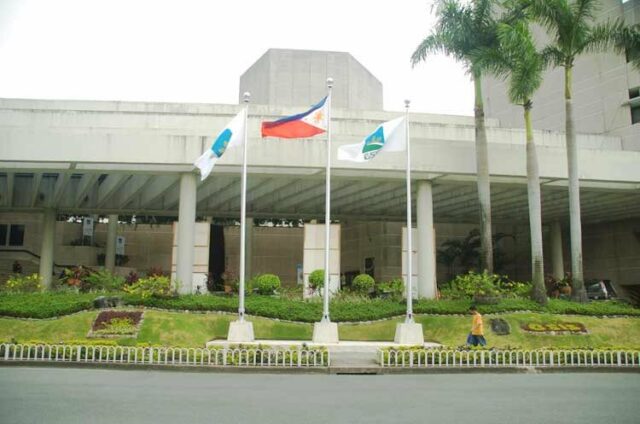
The Government Service Insurance System headquarters in Pasay, Philippines. May 28, 2012. — BW FILE PHOTO

THE Government Service Insurance System (GSIS) has set aside nearly P8.6 billion in emergency loans for members and pensioners in Luzon affected by typhoons.

The loans are expected to benefit 363,547 active members and old-age and disability pensioners in Luzon, the pension fund for civil servants said in a statement on Thursday.

Members in Isabela province have until Jan. 4 to apply for emergency loans.

Members in Ifugao and Nueva Vizcaya, and the towns of Burgos and Bautista, Pangasinan province, can apply until Jan. 5.

“The emergency loan window is also open in the provinces of Cagayan until Jan. 16; Albay on Jan. 23; Batangas, Camarines Norte, and Catanduanes, until Jan. 28,” the GSIS said.

Borrowers in Quezon (excluding Lucena City), Camarines Sur, and Laguna; Naga City; the municipalities of Juban, Bulan, Irosin, Barcelona, Donsol, Matnog, and Castilla in Sorsogon had a Jan. 30 application deadline.

Also allocated emergency loan funds was the municipality of San Fernando, Masbate, who were given until Jan. 30.

The GSIS also extended the deadline for calamity-affected members in Sorsogon City, Bacon, Casiguran, Bulusan, Magallanes, Santa Magdalena, Gubat, Prieto Diaz, and Pilar until Feb. 5.

Members in the municipality of Pio V. Corpuz in Masbate province can apply until Feb. 12, while those residing in Uson have until Feb. 21.

To apply for the emergency loan, members must be active and have no due and demandable loan, are not on unpaid leave, have paid premiums in the last six months prior to application, have no pending administrative or criminal cases, and enjoy monthly take-home pay of at least P5,000.

“Old-age and disability pensioners may also apply for a P20,000 emergency loan, provided they are residing in the calamity areas and their net basic monthly pension is at least 25% after loan deductions,” GSIS said.

The loans offer a 6% interest rate, no service fee, and a three-year repayment term. — Aaron Michael C. Sy

New EDCA site pushed after suspected Chinese sea drone found in PHL waters

United States Ambassador to the Philippines Sung Kim and Defense Secretary Delfin Lorenzana toss couns at the Basa Air Base warehouse, symbolizing good luck and fortune for the newly-constructed building. — US EMBASSY/PHILSTAR FILE PHOTO

By Kenneth Christiane L. Basilio, Reporter

A PHILIPPINE lawmaker on Thursday urged the Defense department to consider establishing a naval facility in Surigao del Norte, under the country’s 2014 Enhanced Defense Cooperation Agreement (EDCA) with the United States, after a suspected submersible drone from China was found in central Philippines.

In a statement, Surigao del Norte Rep. Robert Ace S. Barbers raised concerns over a remotely operated submersible drone found by fisherfolk off central Philippine island Masbate on Dec. 30, 2024, which was allegedly of Chinese origin based on its markings.

“It is not far-fetched that China has long been conducting in-depth intelligence gathering inside Philippine waters,” he said.

The Chinese Embassy in Manila did not immediately respond to a Viber message seeking comment.

The Philippine Navy is currently conducting its investigation to determine the origin and purpose of the sea drone, Xerxes A. Trinidad, chief of the Armed Forces of the Philippines Public Affairs Office, said in a statement, according to news reports.

Mr. Barbers said the Department of National Defense should another EDCA site in Surigao del Norte Province, rather than in Misamis Oriental province. 

Both provinces are located on the country’s major southern island, Mindanao.

Talks of establishing a naval base within the Philippine Veterans Investment Development Corp. (PHIVIDEC) facility in Misamis Oriental have started, which Defense Secretary Gilberto C. Teodoro, Jr. said would become the Philippine Navy’s operations hub for Mindanao, according to a Dec. 20 Mindanews report.

“While I do not question the logic and wisdom behind the plan to put up… [a] naval site inside the PHIVIDEC facility, I think it would be prudent for us not to inter-mix the business complex with a military complex,” said Mr. Barbers.

The PHIVIDEC facility covers a total area of 30 square kilometers, spanning across 13 barangays in Misamis Oriental. It is one of the country’s largest industrial estates, according to the special economic zone’s authority body.

Mr. Barbers said establishing a joint US-Philippines base in his province would prevent foreign states from extracting minerals in the country’s eastern coast.

“[We] have long been offering the province as a possible EDCA naval site to protect the country’s eastern seaboard from foreign intruders allegedly eyeing… minerals extraction in the region,” his statement read.

STRATEGIC IMPORTANCE
“Surigao del Norte, as part of the country’s second largest island in Mindanao, is still vulnerable to security anxieties such as piracy, terrorism, and illegal fishing,” Chester B. Cabalza, founding president of Manila-based International Development and Security Cooperation, said in a Facebook Messenger chat.

He added that Surigao del Norte is of “strategic importance” to the eastern seaboard of Mindanao. “It has to protect Dinagat and Surigao islands at the same time, which are rich in minerals.”

Armed Forces of the Philippines chief of staff Romeo S. Brawner, Jr. said last year they are looking to set up “strategic bases” along the eastern seaboard as part of the Comprehensive Archipelagic Defense Concept, and to secure the resource-rich Benham Rise.

Having an EDCA site in Surigao del Norte would help the Philippines extend its “naval reach” to the eastern seaboard, said Georgi Engelbrecht, senior analyst for the Philippines at international think tank Crisis Group.

“A site (in Surigao del Norte) would be generally helpful for power projection into the eastern Philippine maritime space… [and] having better naval positioning could give the Philippines a chance to monitor and analyze Chinese maneuvers,” he said in an X message.

“An additional perk is that typhoons and disasters often hit the eastern portions of the Philippines. Having a site there would also facilitate quick response [for disaster initiatives],” he added.

President Ferdinand R. Marcos, Jr. in mid-2024 said his government has no plans to open additional EDCA sites in the Philippines.

In early 2023, the Philippine government gave US troops access to four additional military bases, under EDCA.

Three of the four new locations were in the northern part of the Philippines, particularly: Naval Base Camilo Osias in Sta. Ana, Cagayan; Lal-lo Airport, also in Cagayan; and Camp Melchor Dela Cruz in Gamu, Isabela.

The other EDCA site is in Balabac Island in Palawan, which is facing the South China Sea.

These are on top of the five existing EDCA sites since 2016: Basa Air Base in Pampanga, Fort Magsaysay in Nueva Ecija, Antonio Bautista Base in Palawan, Mactan-Benito Ebuen Air Base in Cebu, and Lumbia Air Base in Cagayan de Oro.

PBEd seeks oversight mechanism for state funds, cites learning crisis

Students line up to enter Araullo High School in Manila, Jan. 15, 2024. — PHILIPPINE STAR/EDD GUMBAN

THE PHILIPPINE Business for Education (PBEd) on Thursday urged the government to establish effective and robust accountability and oversight mechanisms to ensure state funds are not wasted, citing the need to fund programs to address the country’s lack of classrooms and teachers.

This comes after Philippine President Ferdinand R. Marcos, Jr. signed the P6.326-trillion national budget for 2025, vetoing more than P194 billion worth of line items that he said were inconsistent with his administration’s priorities.

“We urge the administration and Congress to establish robust monitoring and oversight mechanisms to ensure taxpayers’ money is used efficiently and effectively to achieve our nation’s priorities,” PBEd said in a statement.

“Our people have always been our biggest asset; yet we are still deep in the learning and nutrition crisis. Our education system continues to face backlogs in teacher recruitment, classroom construction, and provision of learning materials.”

The group also raised concerns over “discretionary funds” that may be prone to the misuse of funding meant for priority health and education programs.

Mr. Marcos had vetoed P26.065 billion worth of projects under the Department of Public Works and Highways (DPWH) and projects worth P168.24 billion under “unprogrammed appropriations.”

Public Works Secretary Manuel M. Bonoan earlier told reporters the vetoed projects were “not ready for implementation.” “It will take us sometime anyway to make sure that these will be implemented right away,” he said in mixed English and Filipino.

Under this year’s spending plan,  the education sector will still receive the highest allocation with P1.053 trillion amid questions on the legality of massive budget cuts faced by the Department of Education (DepEd).

The sector is composed of DepEd, state universities and colleges, the Commission on Higher Education, and the Technical Education and Skills Development Authority.

Budget Secretary Amenah F. Pangandaman earlier said unprogrammed appropriations now account for 4.7% of the General Appropriations Act of 2025, “consistent” with the standard that standby funds should only be 5% of the total budget. The DPWH was given a budget of P1.007-trillion budget for 2025, lower than the P1.034-trillion funding approved by Congress.

“Realigning discretionary funds towards institutions that ensure people are educated, fed, and healthy not only immediately impact the poor, but also lay the groundwork for a strong economy,” PBEd said.

“While mending the budget is vital, it must be accompanied by clear, long-term strategies that prioritize the needs of our people and benefit the entire nation.”

The group added that it will work with policymakers to ensure transparency in government education spending as the country tries to boost the performance of Filipino students and to make them competitive with their global counterparts.

In the Organization for Economic Cooperation and Development’s (OECD) 2022 Programme for International Student Assessment (PISA) published on Nov. 14, Filipino students showed among the highest levels of mathematics anxiety among 15-year-old students globally.

Previously, 16% of Filipino students attained at least Level 2 proficiency in mathematics, significantly lower than the 69% average across OECD countries.

Filipino students were also among the world’s weakest in mathematics, reading, and science as the Philippines ranked 77th out of 81 countries in all categories, performing worse than the global average in another PISA 2022 assessment.

Meanwhile, Senator Sherwin T. Gatchalian said this year’s spending plan will include a subsidy program for the poorest students who will enroll in private schools, with P12.077 billion allotted for the Educational Service Contracting  Program.

Under the program, the government will shoulder the tuition and other miscellaneous fees of students in overcrowded junior public high schools moving to private schools. The subsidies will be given in vouchers. — John Victor D. Ordoñez

Law vs offshore outfits sought as post-POGO tasks begin

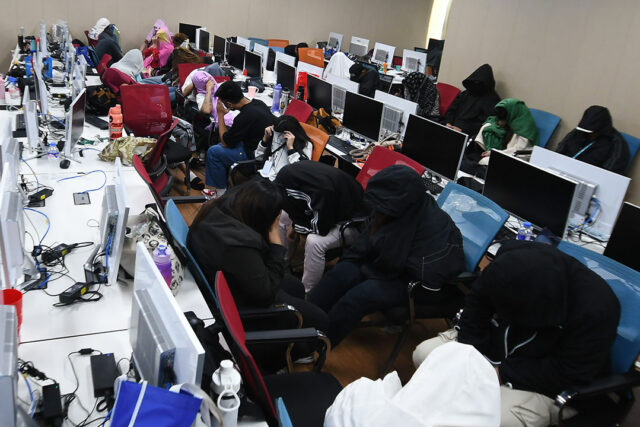
Police raided a suspected Philippine offshore gaming operator hub in a building in Parañaque City. — PHILIPPINE STAR/EDD GUMBAN

A PHILIPPINE senator on Thursday pushed for the passage of a law punishing offshore gaming companies that are linked to crimes, also citing the need to fast-track efforts by the Office of the Solicitor General (OSG) to seize properties illegally used by Philippine Offshore Gaming Operators (POGOs).

“I hope the year 2025 is the year we finally pass the Anti-POGO Act,” Senator Ana Theresia N. Hontiveros-Baraquel said in a statement. “We need a comprehensive law to ensure that no POGO scams, harms, or deceives many people.”

Senate Bill No. 2868, the “Anti-POGO Act,” is currently pending second reading in the Senate, while its counterpart House bill has so far secured committee approval.

This comes after Solicitor General Menardo I. Guevarra told reporters in a Viber message on Wednesday that his agency has been canceling fake birth certificates used by foreigners who are often linked to organized crime syndicates.

Mr. Guevarra also noted that the OSG’s “post-POGO” tasks include forfeiting illegally acquired real properties and other assets in the country.

Philippine President Ferdinand R. Marcos, Jr. earlier issued an executive order ordering the ban of POGOs due to their links to organized crime such as human trafficking. This is in line with his policy directives during his third State of the Nation Address to shut down POGOs by year-end.

Philippine Amusement and Gaming Corp. Chairman and Chief Executive Officer Alejandro H. Tengco had said that the government was on track to shut down POGO firms by year-end.

Mr. Tengco said in December that there were only 17 POGOs in operation, down from 298 licensed POGOs in 2019.

“The OSG should also work on seizing properties illegally used by POGOs,” Ms. Hontiveros said in a statement. “These properties should then be used as reparation for human trafficking victim-survivors, as stated in the Anti-Financial Account and Scamming Act.” 

Ms. Hontiveros had introduced an amendment to the Anti-Financial Account Scamming Act entailing the civil forfeiture of all properties and other non-liquid assets of individuals involved in cases of economic sabotage. Under the law, the Supreme Court will be tasked to craft rules on carrying out the proposed provision, which would include releasing a portion of the assets to the Justice department that would be used for support and protection for human trafficking victims.

“I am sure there are still foreigners out there using Philippine birth certificates in the wrong way, so I hope they can be identified and punished by law,” the senator said. “Let us be vigilant about efforts of POGO criminals to obtain Filipino citizenship by whatever means.” — John Victor D. Ordoñez

Lawmaker bats for better pay for Filipino nurses, investments in health sector

PHILSTAR FILE PHOTO

A CONGRESSMAN on Thursday raised concerns over the inadequate pay of Filipino nurses, prompting many to practice overseas rather than in the Philippines, as the country faces a growing shortage of nurses.

“We are not paying our new nurses enough to encourage them to practice their profession,” Quezon City Rep. Marvin D. Rillo said in a statement. “We must invest more in our nurses if we want to retain some of them in the local health sector.”

Many Filipino nurses have decided to pursue a career unrelated to medical practice, with some opting to work as “real estate agents, insurance agents, or car sales agents” and enter business process outsourcing companies, according to Mr. Rillo, a vice-chairperson of the House of Representatives higher education panel.

“Largely due to the pressure to survive, some of them will likely try to seek immediate employment, even if it means taking on other jobs and not practicing nursing,” he said.

Bills seeking to increase the entry-level pay of government nurses have been filed at the Philippine Congress, with the proposals pending in the House of Representatives appropriations panel and Senate civil services committee.

The congressman also said the country is facing a nurse shortage due to fewer graduates from nursing schools and “nonstop overseas migration.”

The World Health Organization in 2020 pressed the Philippine government to provide “greater investments” into the country’s health sector as the country faces a possible 250,000 nurse shortage by 2030.

Philippine schools produced about 37,000 new nurses in 2024, which dwarfs in comparison to the average 63,800 nurses the country produced annually a decade ago, according to Mr. Rillo.

Federation of Free Workers President Jose Sonny G. Matula earlier told BusinessWorld demand for healthcare workers would further rise this year as global health challenges underscored the need for more robust healthcare systems, increasing the need for professionals. — Kenneth Christiane L. Basilio

Fourth impeachment complaint vs VP Sara eyed next week

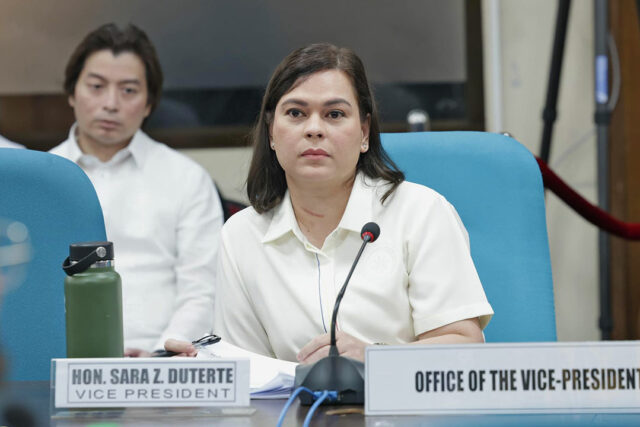
VICE-PRESIDENT SARA DUTERTE-CARPIO — HOUSE OF REPRESENTATIVES OF THE PHILIPPINES FACEBOOK PAGE

THE PHILIPPINE House of Representatives is expecting a fourth impeachment complaint to be filed against Vice-President (VP) Sara Z. Duterte-Carpio on Monday, a House official said on Thursday.

House Secretary-General Reginald S. Velasco did not identify who will file the complaint nor the congressman who will endorse the complaint, but said a lawmaker from the House majority caucus floated the possibility of filing ouster charges against the embattled vice-president.

“They haven’t said how many will endorse it yet. They just said to wait for the fourth complaint,” he said in a phone interview with reporters in Filipino. “It was given to me in confidence. So, I cannot reveal their names until they actually file the fourth complaint.”

Ms. Duterte faces a slew of impeachment raps at the House, with previous impeachment complaints seeking her removal from office due to her inability to account for the use of P612.5 million worth of secret funds in 2022 and 2023.

The three impeachment complaints, filed by civil society groups, activists, and clergymen, similarly alleged that Ms. Duterte committed graft, corruption, bribery, and betrayal of public trust.

The Office of the Vice President did not immediately respond to an e-mail seeking comment.

Meanwhile, about “10 to 12” lawmakers from both the House majority and minority blocs expressed their willingness to endorse the filed impeachment complaints, according to Mr. Velasco. — Kenneth Christiane L. Basilio