Home Blog Page 1638

Report on 19M illiterate Filipinos should jolt authorities to prioritize education — lawmaker
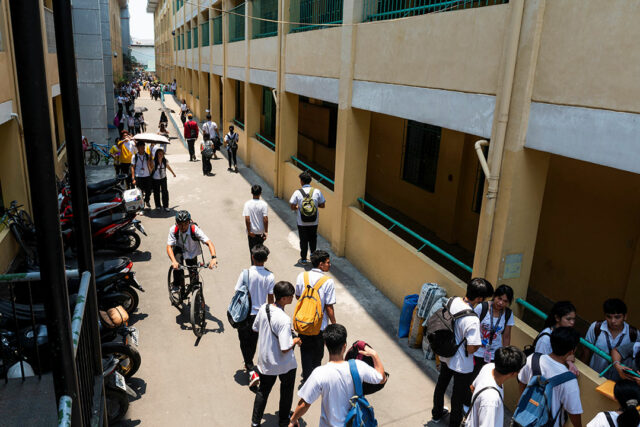
Students walk inside the campus of a high school in Quezon City, April 18, 2024. — REUTERS

A REPORT showing that about 19 million Filipino high school and senior high school graduates are illiterate should be considered as a “national emergency” and prompt authorities to prioritize education reforms, a congressman said on Thursday.

Around 18.9 million Filipinos who completed secondary education from 2019 to 2024 may be considered illiterate, as they struggle to read and comprehend a simple story, according to a Philippine Statistics Authority (PSA) report discussed in a Senate hearing on Wednesday.

“This is not just a crisis — it’s a national emergency,” Party-list Rep. France L. Castro said in a statement. “When one out of five senior high school graduates cannot comprehend a simple story despite years of schooling, we are looking at a systemic failure that threatens our country’s future.”

A 2022 World Bank report showed that nine of 10 Filipinos are unable to read and understand age-appropriate text at age 10.

“It’s alarming that despite the K-12 program, millions of young Filipinos still struggle to understand what they read,” Ms. Castro said.

A new curriculum, introduced in August 2023, sought to streamline learners’ education by focusing on reading, literacy, and numeracy in the first three schooling years of a student.

In 2024, Education Secretary Juan Edgardo M. Angara said the curriculum, launched by Vice-President Sara Duterte-Carpio during her stint as education chief, will continue to be revised based on the experience of teachers and students.

The Philippine government’s failure to ensure a sufficient budget to the education sector have left schools underfunded and teachers with inadequate salaries, Antonio L. Tinio, a party-list nominee in the midterm elections, said in the same statement.

“The government has consistently failed to meet the UN-recommended education budget allocation of 6% of GDP,” he said in Filipino. “The truth is simple: if investment in education is lacking, teachers and education support personnel receive inadequate salaries, and in turn, students learn less.”

The Philippines only allocated 3.6% of its GDP to education in 2022 according to World Bank data, below the 4-6% benchmark set by the Incheon Declaration.

“We need to double our current education budget to address classroom shortages, hire more qualified teachers, increase the salaries of teachers and education support personnel, provide quality learning materials, and implement effective literacy interventions,” said Ms. Castro.

In 2025, the combined budget of the Department of Education, Commission on Higher Education, Technical Education and Skills Development Authority, and state universities and colleges stood at P913.3 billion.

Meanwhile, an education advocacy group on Thursday said that political candidates for this year’s midterm election should prioritize education in their policy agenda.

“It is time to rise above politics and champion education. We urge the candidates to present concrete plans and real solutions that tackle the learning crisis, workforce readiness, and systemic reforms,” Philippine Business for Education Executive Director Hanibal Camua said in a separate statement.

“Education agencies cannot fix this crisis alone — and without bold, sustained support from elected leaders at every level of government, our most critical goals will remain out of reach,” he added. — Kenneth Christiane L. Basilio
Over 90,000 labor inspections conducted since 2022

PHILIPPINE STAR/KJ ROSALES

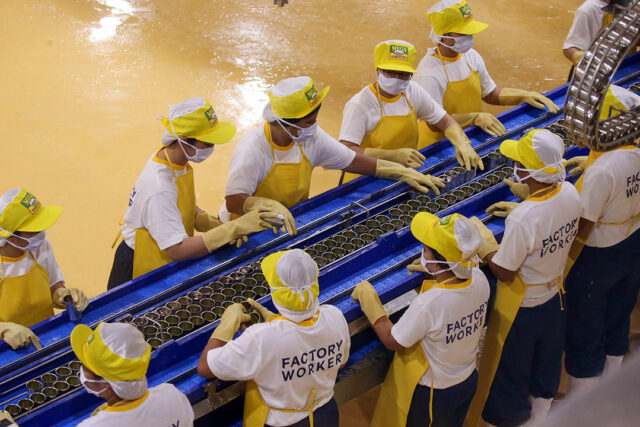
THE Philippines is intensifying its labor reform efforts, with over 90,000 labor inspections conducted from June 2022 to March 2025, as the government aims to align with global standards and promote safe and fair working conditions.

“We remain steadfast in our task to fully advance international labor standards,” President Ferdinand R. Marcos, Jr., said in Filipino during a Labor Day event on Thursday, citing improved workplace safety, fair wages, and just treatment of workers as top priorities.

He said the Philippines is preparing to ratify International Labour Organization (ILO) Convention No. 155, which outlines a national framework for occupational safety and health (OSH).

“This includes a dynamic policy approach to OSH,” he noted, adding that reforms also target the enhancement of labor dispute resolution services.

Highlighting Manila’s bid to rebuild global trust in its labor governance, Mr. Marcos cited the country’s renewed commitment to freedom of association and the right of workers to organize.

“We also continue to restore the status of the Philippines and the international community as a beacon of democratic rights and civil liberties of workers in the Asia Pacific,” he said. 

In 2024, the Philippines secured a seat on the ILO’s Governing Body and its Freedom of Association Committee, as well as on the ILO International Training Center board.

Mr. Marcos added the country has begun implementing a tripartite roadmap to institutionalize the right to organize, marking progress on a long-standing labor issue frequently raised by international observers.

The Philippines has faced persistent criticism over violations of workers’ rights to freely associate and organize. Labor unions and civil society groups have long reported incidents of union harassment, red-tagging, and even violence against labor leaders, especially in export zones and agribusiness sectors.

In 2023, the ILO sent a High-Level Tripartite Mission (HLTM) to Manila in response to mounting complaints about attacks on trade unionists and insufficient government enforcement of labor protections.

The HLTM report urged the government to end impunity for labor rights violations and strengthen mechanisms to protect union activities.

It also recommended the development of a roadmap on freedom of association and a more consistent application of ILO Conventions No. 87 and No. 98, which safeguard the right to organize and bargain collectively. — Chloe Mari A. Hufana

Actions vs climate change backed

PHILSTAR FILE PHOTO

MOST Filipinos support projects that address climate change and methane emissions as more Filipinos feel their impact on their personal lives, a study showed.

In a poll commissioned by Global Methane Hub, 93% of Filipinos expressed total support for actions that minimize the impacts of climate change and 86% for minimizing harmful methane emissions.

According to the survey, almost all of the 600 Filipino respondents said that they believe in climate change, with 83% of them believing that human actions are to blame.

They also reported feeling the greatest impacts of climate change, with nearly seven out of 10 saying they felt strong or extreme climate impacts.

“Communities that are feeling the most heat — literally — are also the most vocal in calling for climate action,” said Marcelo Mena, chief executive officer of the Global Methane Hub.

“Cutting methane is one of the fastest ways to bring temperatures down, and people know it. It’s not just science—it’s a direct response to what they’re experiencing on the ground,” he added.

Global Alliance for Incinerator Alternatives (GAIA) Asia Pacific Regional Organics Campaigner Shibu Nair said that the Philippines generates about 60,640 tons of waste per day, of which 52% is organic.

“There is a great potential for organic waste reduction in the country. The survey result brings in more attention to Zero Waste Cities programs, which reduce organic waste methane through source segregation and decentralized recovery through composting,” he said.

“We recognize the importance of local governments that implement programs to enable organic waste methane reduction. GAIA is facilitating the Cities Methane Pledge to encourage local governments to commit to contribute to the goal of 70% reduction of methane by 2030,” he added.

Meanwhile, the survey also showed that Filipinos expressed enthusiasm for targeted policies such as actions that will minimize methane emissions from the energy, agricultural, and waste management sectors.

“When Filipinos were asked about their biggest environmental concerns, climate change topped the list with 74% saying they were very concerned, exceeding even hurricanes and typhoons,” Global Methane Hub said.

“This places the Philippines second only to Colombia (75%) in the countries surveyed when it comes to expressing similar levels of concern, and it aligns with the broad constituencies of support for action on methane pollution,” it added. — Justine Irish D. Tabile

Speaker seeks support for admin bets

PRESIDENT Ferdinand R. Marcos, Jr. attended a party convention in Pasay City where the administration’s senatorial bets for the 2025 elections were announced. The alliance comprises the country’s five major political parties — Partido Federal ng Pilipinas, Lakas-Christian Muslim Democrats, Nationalist People’s Coalition, Nacionalista Party and National Unity Party. — PPA POOL/ RYAN BALDEMOR

HOUSE Speaker Ferdinand Martin G. Romualdez on Thursday met with more than 100 lawmakers of the House of Representatives, urging them to intensify grassroots campaigning for the administration’s Senate slate as the midterm vote nears.

Mr. Romualdez met with congressmen across party lines alongside his deputy speakers at Malacañang, where he urged lawmakers to campaign for the Senate candidates backed by President Ferdinand R. Marcos, Jr.

“Your endorsement carries weight,” he said in a statement. “You are trusted voices in your districts. The people listen to you, and now is the time to speak with clarity and conviction in favor of the Alyansa team.”

Mr. Romualdez, who also leads the Philippines’ dominant political party Lakas-Christian Muslim Democrats (Lakas-CMD), previously urged its support for the Alyansa Para sa Bagong Pilipinas (Alliance for a New Philippines) in pursuit of a decisive victory.

Shortly after his meeting with Lakas-CMD, the Speaker also met with a coalition of more than 50 party-list groups, rallying them behind the alliance.

“We need to put extra effort into our Alyansa candidates. As I’ve said in many of our gatherings, we must vote straight Alyansa. We have to go that extra mile for them, and that’s why we’re here,” he said. — Kenneth Christiane L. Basilio

New unified labor body sought

PHILSTAR FILE PHOTO

A SENATOR on Thursday said he would file a bill seeking the creation of a labor body that would include members of Congress, the Executive, businesses and workers to pursue a “sustainable solution” to hiking Philippine minimum wage rates.

“This would provide a comprehensive look at what the real wage should be, taking into account the actual expenses of a family for education, health, among others,” Senator Alan Peter S. Cayetano said in a statement, who will file a bill next week Monday.

Minimum wages in the Southeast Asian nation are set by regional wage boards. But slow and meager increases amid rising prices have prompted lawmakers to push the legislated wage increase.

The Senate approved a counterpart proposal for a P100 daily wage increase for private-sector workers in February last year, while a counterpart bill by the House of Representatives sought a P200 daily minimum wage hike and was approved in February this year.

Business groups have opposed the proposed legislated wage hikes, arguing the move does not take into account differences in each region’s cost of living and industry needs. — Kenneth Christiane L. Basilio

APECO begins construction of P185-M tourism, ice plant projects

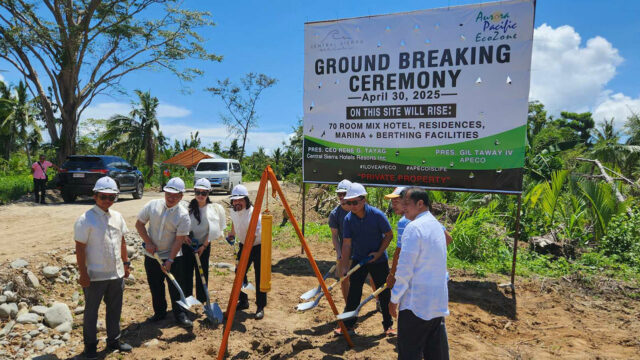
APECO President and CEO Gil G. Taway IV (fourth from left) and Central Sierra Hotel Resorts Inc. and TGV Development Corp. President and CEO Rene Tayag (third from right) led the groundbreaking ceremony for the P145-million beachfront resort within the Casiguran Economic Zone.

THE Aurora Pacific Economic Zone Authority and Freeport Zone (APECO) has started the construction of the P185-million tourism and ice plant projects within the Casiguran Economic Zone (ecozone).

In a statement on Thursday, APECO said that it held a groundbreaking ceremony for the projects together with Central Sierra Hotel Resorts, Inc. (CSHRI) and TGV Development Corp. on April 30.

In particular, the CSHRI will be developing a P145-million beachfront resort on a 1.5-hectare lot within the ecozone. The 70-room development is targeted to begin operations in the next 12 months.

“This will truly change the tourism landscape in Casiguran,” said APECO President and Chief Executive Officer Gil G. Taway IV.

“Casiguran is already home to many beautiful spots, but with this development, we expect a rise in visitors. Beyond the area’s natural charm, travelers are also seeking comfortable and high-quality accommodations,” he added.

TGV Development also began construction for its P40-million ice and food processing plant facility which has the capacity to process 20 tons of tube ice and 1 ton of marine products sourced from local fisherfolks.

TGV Development President and Chief Executive Officer Rene Tayag said that the company also has plans to further expand the development to include commercial spaces and a gas station.

“Our funding facilities, including support from the Development Bank of the Philippines, Philippine Guarantee Corp., and Pampanga Development Bank, remain in progress,” he said.

“The president of the Pampanga Development Bank is also expected to visit the site soon for an on-ground assessment,” he added. — Justine Irish D. Tabile

P3.13-B Davao Bucana Bridge to be completed ahead of target, DPWH says

DPWH

THE Department of Public Works and Highways (DPWH) is expecting to complete the P3.13-billion Bucana Bridge in Davao ahead of its target completion timeline after the project entered its final phase.

The 1.34-kilometer Davao River (Bucana bridge) is now 85% complete, the DPWH said.

The project’s final bridge deck connection is projected to be finished by June which would give way for final works, allowing the bridge to be operational by November.

The project, consisting of a four lane, six-span bridge, is set to enhance mobility and connectivity in Davao City, the agency said.

DPWH Senior Undersecretary Emil K. Sadain said the Bucana bridge project is also anticipated to improve traffic congestion in Davao City by accommodating up to 35,000 vehicles per day.

The DPWH said the Bucan bridge project is also projected to bring economic opportunities by connecting Davao’s east and coast areas and enhancing access to essential services while also promoting agricultural and commercial activities in the region.

The project, targeted to be completed by the third quarter, is funded through an official development assistance grant from China.

The Bucana bridge also features a 480.20-meter extradosed design, with each pier supported by 10 stay cables, described as an innovative engineering solution. — Ashley Erika O. Jose

US tariff deal expected to shift source markets for imports

REUTERS

By Justine Irish D. Tabile, Reporter

ANY DEAL lowering tariffs between the US and the Philippines is not expected to flood the Philippines with imports, though the leading source countries for key commodities are likely to change, the Department of Agriculture (DA) said.

Agriculture Secretary Francisco P. Tiu Laurel, Jr. said the interests of Philippine industries will not be sacrificed as the Philippines negotiates lower tariff rates with the US.

“I think wala sigurong dapat ikatakot ang ating mga industries (industries have nothing to fear) because it is not about adding the amount to be imported. It is just a shifting of preference,” Mr. Laurel said on the sidelines of the Sustainable Agriculture Forum 2025.

“Meaning, kung dati malakas ka bumili sa Brazil, dahil ngayong may ganitong move ang America, baka pagbigyan sila na mas makuha ng mas malaking share, mabawasan naman ’yung sa Brazil. Parang ganon (Purchases from Brazil, for instance, could fall because of the negotiations, which could result in Philippine concessions that give US goods a larger share),” he added.

A Philippine delegation led by the Office of the Special Assistant to the President for Investment and Economic Affairs and the Department of Trade and Industry (DTI) is currently in Washington, DC to negotiate for lower tariffs.

The Philippine delegation is set to meet US Trade Representative Jamieson Greer on Friday. He met with Japan, Guyana, and Saudi Arabia on Thursday, Reuters reported.

“In my discussion with Secretary Frederick D. Go, I said that we have to protect the local industry. So that is the way we will try to negotiate … It is the shifting of (sourcing) that we are looking at, not adding more imports,” he said, referring to the Special Assistant for investment.

Philippine goods were initially assigned a 17% tariff by the US, second lowest in Southeast Asia next to Singapore’s 10% baseline rate. The reciprocal tariffs have since been suspended for 90 days, with most US trading partners paying 10% for the time being.

“It is very hard to say what America wants from us … But I think 17% is more of an advantage,” Mr. Laurel said.

However, he said the overall goal is to secure improved access for Philippine exports, particularly agricultural products, including coconuts, tilapia, and white shrimp.

“In any negotiation, we want the minimum (rate). So, I will leave it up to Secretary Go, as I am very confident in his ability to get something that is fair for the Philippines,” he said.

“We are all hanging and monitoring, and we just have to be patient and react accordingly,” he added.

The DTI Export Marketing Bureau reported that the US was the Philippines’ top export market last year, accounting for $12.12 billion, or 16.55%, of all exports.

It was also the Philippines’ fifth-largest source of imports with a 6.41% share or $8.17 billion.

The US is the Philippines’ third-largest trading partner with two-way trade of $20.29 billion.

Philippines applying to join CPTPP this year

REUTERS

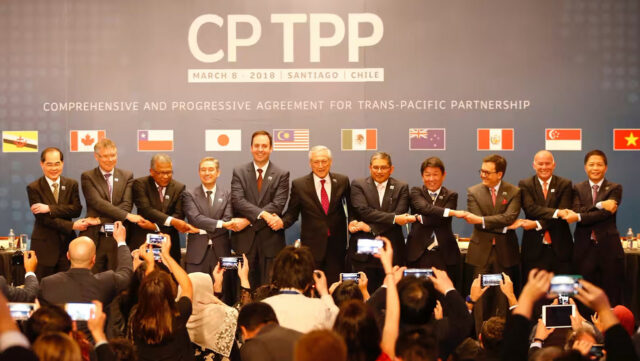
THE PHILIPPINES is set to submit its formal application to accede to the Comprehensive and Progressive Agreement for Trans-Pacific Partnership (CPTPP), a trade official said.

“The first step is to file your formal application … So, this year we intend to submit our application to accede,” Trade Undersecretary Allan B. Gepty told reporters this week.

“As part of the process, informally you have to engage with CPTPP parties … We are doing that right now; we actually met a lot of them,” he added.

He said that the Philippines has been expressing its interest in joining the CPTPP even when it was still called the Trans-Pacific Partnership (TPP) Agreement.

The TPP was signed by Australia, Brunei Darussalam, Canada, Chile, Japan, Malaysia, Mexico, Peru, New Zealand, Singapore, Vietnam, and the US. However, the US withdrew its membership in 2017.

The free trade agreement (FTA) later evolved into the CPTPP, and in July 2023, the remaining signatories signed an accession protocol with the United Kingdom (UK).

He said that the DTI has conducted an evaluation and assessment of the FTA and has commissioned a study on the advantages and benefits of joining the CPTPP.

“There are two things: market access and rules. Now in terms of market access, of course the value add would be market access to Mexico, Canada, Peru, Chile, and now of course the UK,” he said.

“Actually, with the entry of the UK, it gave us more reason to join CPTPP because the UK is one of our biggest trading partners,” he added.

On rules, he said that the standards of the CPTPP are higher, making foreign investors who are very particular on certain rules welcome the country’s accession.

Meanwhile, Mr. Gepty said that the Philippines and Chile will be holding their first in-person round of negotiations in July.

“But in May, we have to meet virtually to at least start the talks … because our schedule is tight. It is already May, and in June we have the negotiations with the European Union,” he said.

“And then we have a joint economic commission (JEC) with Canada on June 6,” he added, noting that the JEC will also cover exploratory talks for an FTA.

In a statement, the Tariff Commission said it will be holding a public consultation regarding participation in the ASEAN-Canada Free Trade Agreement negotiations.

The consultation is scheduled for May 7. — Justine Irish D. Tabile

PEZA eyes second pharma ecozone

THE Philippine Economic Zone Authority (PEZA) is looking to proclaim a second pharmaceutical economic zone (pharma zone) within the year.

“Some people are vying from other areas. But obviously they would want to see the performance of this park first,” PEZA Director General Tereso O. Panga told BusinessWorld on the sidelines of the official launch of the Victoria Industrial Park late Wednesday.

“But there is one in Tarlac, the one under Lloyd Laboratories. That might be our second pharma zone in the country because the compliance for its proclamation requirements is already ongoing,” he added.

He said that the second pharma zone is targeted for proclamation within the year, as it already has an American partner.

“They will be manufacturing APIs (active pharmaceutical ingredients) and drugs. As you know, Lloyd Laboratories is already in India,” he added.

On Wednesday, the country’s first pharma zone, the Victoria Industrial Park, was officially launched.

“This move is in response to the marching orders of President Ferdinand R. Marcos, Jr. to make medicine more accessible and affordable, to empower Filipino manufacturers, to be self-sufficient, and to be the hub in ASEAN for the pharmaceutical industry, thus strengthening our own local supply chain,” Mr. Panga said.

The 30-hectare park in Victoria, Tarlac is poised “to become a dynamic hub for investment, innovation, medical research, and inclusive progress.”

“We are likewise pleased to highlight that the construction of a satellite laboratory of the Food and Drug Administration has commenced on-site, which will further strengthen our supply chain and advance our healthcare and industrial capabilities,” he added.

He said the FDA laboratory will help in streamline companies’ compliance with FDA-related permits and requirements.

During the event, 13 memoranda of agreement and understanding were signed, reflecting growing interest from investors to locate in pharma zones.

These include agreements with Lifestrong Marketing, Inc., ACP Heavy Industries, Greenstone Pharmaceutical, Goodfield, Ethosperic, Inc., Solstice ECOventures, Inc., Triumphus Ventures, Inc., Medinext, Inc., Revitalix, Inc., Kweens Ventures, Inc., K Food, Verdant Dreams Hong Kong, and Creative Ecohub for Philippine Artistry.

Meanwhile, he said that PEZA is also in talks with Japanese and Chinese-American companies to locate in Victoria Industrial Park.

“We have an incoming big-ticket American investment into nitrile gloves … They will scout around, but we will nominate Victoria Industrial Park,” he added. — Justine Irish D. Tabile

PPP Center calls for more smart city projects

FREEPIK

THE Public-Private Partnership (PPP) Center said more smart city projects are needed, citing the need to incorporate advanced technology in key infrastructure projects.

“There is a need for us to develop more digital infrastructure, smart city projects,” PPP Center Director for project development service Raphael M. Badillo said in an online briefing.

Smart City projects refer to the efficient management of infrastructure and public services like mobility, water, and energy.

The PPP Center website lists 18 information and communications technology projects valued at a combined P35.87 billion. The projects are currently in the pipeline or being implemented, the PPP Center said.

“Private sector expertise and efficiencies play a vital role in enabling smart city development since these smart cities heavily depend on technology and innovation,” Mr. Badillo said.

Projects include the P2.10-billion Bacolod Super City Project which was awarded to Highdata Infra Corp.

This project involves a centralized command center for traffic monitoring, natural disasters, criminal activity, emergency response and public alerts. The Bacolod Super City project also includes the installation of video surveillance equipment, deployment of analytics, and the development of comprehensive geographic information system software for the creation of maps, spatial analysis and data integration.

The smart city PPP projects also include the P3.29-billion smart urban mobility proposal of the Metro Pacific Tollways Corp. (MPTC) which is currently being negotiated.

MPTC’s unsolicited proposal for Baguio City involves the financing, design, procurement, construction, and installation of urban mobility solutions, including a congestion fee scheme; traffic enforcement system; parking management system and smart command center.

“The private sector can finance these critical infrastructure development projects to enable this smart city development. We encourage companies expressing interest in pursuing more digital infrastructure because a lot of local government units definitely need these innovations and technological advancements,” Mr. Badillo said. — Ashley Erika O. Jose

Subsidized P20-per-kilo rice rolled out in Cebu

PHILIPPINE STAR/EDD GUMBAN

THE Department of Agriculture (DA) launched its P20-per-kilo subsidized rice program in Cebu City on Thursday.

“Today, Labor Day, we fulfill a promise made three years ago by President Marcos to the Filipino people: to bring down the price of rice to P20 per kilo,” Agriculture Secretary Francisco P. Tiu Laurel, Jr. said.

Accompanying the launch, Food Terminal, Inc. and Cebu province signed a memorandum of agreement on the shared subsidy of the P20-per-kilo rice pilot test in the province.

Expected to run until December, the pilot test will cover other parts of the Visayas, benefiting 800,000 households or about 4 million people.

“President Marcos has directed the DA to draw up plans to extend this food program until 2028 and expand it nationwide to cover as many financially challenged Filipinos as possible,” DA said.

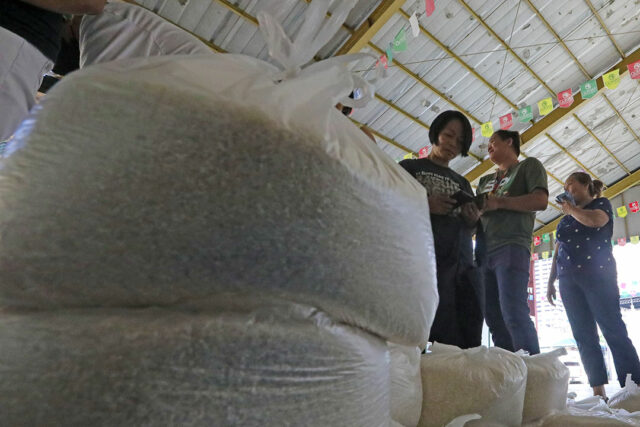
Meanwhile, local government units in Cebu have started drawing stocks from the National Food Authority (NFA) warehouse. Between April 29 and May 1, they withdrew 3,700 50-kilo bags of rice.

“NFA continues to reposition stocks from rice-producing areas in the Visayas and from Mindoro to areas like Cebu that have little rice output,” DA said.

The subsidized rice sales are being billed as part of the KnP20 program (Katuparan ng Pangakong P20 na Bigas).

Under the law, the NFA is not permitted to sell rice directly to the general public, but KnP20 makes it available to targeted beneficiaries. Each qualified household, typically from the more vulnerable segments of society, may purchase up to 30 kilos a month, the DA said.

Initially the DA planned to roll out the program in 16 locations across Metro Manila.

Meanwhile, the DA said it is currently awaiting clarification from the Commission on Elections (Comelec) on whether the program is exempt from the May 2–12 ban on the distribution of government aid during the election period.

“If Comelec disallows rice distribution during the restricted period, the DA plans to start selling the subsidized rates in earnest right after the midterm elections,” it added.

Mr. Laurel said he hopes Comelec will grant an exemption as the program can alleviate financial pressure on low-income families while also helping decongest NFA warehouses. — Justine Irish D. Tabile