Home Blog Page 16

ACLED: Philippines slips in Conflict Index, now classified as ‘turbulent’

The Philippines fell two places to 31st out of 244* countries in the 2025 release of the Conflict Index by the Armed Conflict Location and Event Data (ACLED). The country was reclassified as “turbulent,” down from “high” in the previous edition. The index assesses conflict using four key indicators: deadliness (fatality rates), danger (the number of violent events targeting civilians), diffusion (the geographic distribution of conflict), and fragmentation (the number of organized violent non-state groups).

Allianz expects faster growth this year

MACROVECTOR/FREEPIK

ALLIANZ PNB Life Insurance, Inc. expects faster growth in its key financial metrics this year, driven by changes in its bancassurance partnerships, a revamped agency model and more aggressive customer expansion through its tie-up with HSBC.

“We remain very bullish and very, very positive about the Philippine market,” Allianz PNB Life President and Chief Executive Officer Joseph Gross said in a speech on Thursday, adding that the insurer is bullish on growth prospects this year.

Chief Financial Officer Lukas Immanuel M. Cacayan said the company posted double-digit growth across its financial metrics last year, with assets under management likely to hit the P135-billion target.

Growth was supported by double-digit gains in customer numbers from its bancassurance businesses, particularly partnerships with Philippine National Bank (PNB) and HSBC.

Mr. Gross said the agency channel lagged in customer growth last year after a restructuring aimed at improving quality rather than scale.

He said the agency arm might rebound this year following stricter standards and the appointment of Floro “Jun” Marasigan, Jr. as chief agency officer.

The insurer is also overhauling its sales model with PNB and expects improved branch performance. For its HSBC partnership, Allianz PNB Life is targeting double-digit customer growth among affluent and high-net-worth clients, amid rising demand for protection products.

Allianz PNB Life plans to simplify its product lineup and introduce additional investment options. — AMCS

Spanish prosecutors to hear testimony of Julio Iglesias accusers, rights group says

MADRID — Two women who say they were sexually assaulted by singer Julio Iglesias will provide testimony to Spanish prosecutors, the women’s rights group that filed a complaint on their behalf said on Wednesday.

This after a Spanish High Court prosecutor’s office said on Tuesday that it was investigating allegations in Spanish and US media outlets that singer Julio Iglesias sexually assaulted two former female employees.

Attempts by Reuters to contact representatives of Mr. Iglesias, 82, on Tuesday and Wednesday by e-mail and phone went unanswered. The star’s record label, Sony, declined to comment.

Women’s Link Worldwide said the complaint, which it filed at Spain’s High Court on Jan. 5, accused Mr. Iglesias of human trafficking for forced labor and servitude, alongside sexual abuse and violations of workers’ rights.

The group’s executive director, Jovana Rios, told an online press conference that the High Court prosecutor’s office would take statements from the two women as protected witnesses, adding that no date had yet been set and the court had yet to formally assert jurisdiction over the case.

The prosecutor’s office declined to comment, citing the secret nature of the preliminary inquiry.

“Being heard by prosecutors is a very important step in (the victims’) quest for justice, and we appreciate that authorities are being agile in their handling of the case,” Ms. Rios added.

The women, said to have worked in Mr. Iglesias’ Caribbean residences in the Dominican Republic and Bahamas over a 10-month period in 2021, were cited in a three-year investigation by US broadcaster Univision and Spanish outlet elDiario.es published on Tuesday.

Both women reported suffering sexual assault and workplace harassment while working for the singer, the outlets reported. The reports said Mr. Iglesias pressured them into sexual encounters and subjected them to additional physical and verbal abuse.

Mr. Iglesias is one of the world’s best-selling Latin artists, with more than 300 million records sold in 14 languages.

Ms. Rios described the two complainants as young Latin American women “in vulnerable situations who were heavily dependent on their wages due to their economic and social conditions.”

Criminal probes into alleged offences by Spanish citizens committed abroad are usually handled by the High Court, a recent example being the sexual assault trial of former Spanish soccer chief Luis Rubiales for kissing a player in Sydney, Australia.

Ms. Rios said Women’s Link had also been contacted by other women who said they had worked for Mr. Iglesias, but declined to provide further details, citing safety concerns.

She quoted one of the two complainants as saying she had decided to come forward for herself, for other women working for Mr. Iglesias and for her country, the Dominican Republic.

The allegations sparked a noisy reaction in Spain, where he is considered a national treasure.

Ana Redondo, the Socialist-led government’s Equality Minister, said in a statement she respected Mr. Iglesias’ presumption of innocence but that she believed the women’s testimony.

“He’s a great singer but people can have a dark side,” she said, praising the women for raising their complaints.

Leftist party Mas Madrid suggested the right-wing government of Madrid region should strip Mr. Iglesias of the keys to the city he was awarded as the capital’s most famous son. Mr. Iglesias has backed conservative political candidates in the past.

Regional president Isabel Diaz Ayuso issued a furious response on X, saying: “The Community of Madrid will never contribute to attacks on the prestige of artists, not least the most universal singer of all: Julio Iglesias.” — Reuters

Preparing Philippine business and workers for the age of AI

STOCK PHOTO | Image by DC Studio from Freepik

By Ferdinand A. Ferrer

ARTIFICIAL INTELLIGENCE (AI) is here and is already transforming how businesses in the country operate. Across industries like manufacturing, finance, marketing, and education, AI is enhancing efficiency, guiding smarter decisions, and unlocking insights from data like never before.

What we are seeing today is not a minor technology upgrade. The rapid spread of AI, and the productivity gains that come with it, is forcing both business and government to rethink how they manage operations, deliver services, and make decisions.

This was very clear in a recent discussion between the Philippine Chamber of Commerce and Industry (PCCI) and Artificial Intelligence for Public Health (AI4PH), a network of AI policy experts and industry leaders. The focus was not on whether AI will affect the Philippine economy, but on how it can be used to strengthen our competitiveness while making sure Filipino workers remain globally relevant.

One thing stood out: AI is no longer confined to manufacturing or back-office automation; it is now driving innovation across the entire economy — from customer service and creative industries to education, and research and development. Companies are using AI because it gives them deeper, faster, and more useful data, which leads to better decisions and better results.

Used well, AI allows people to do more, do it better, and do it more efficiently. But this transition will not manage itself. If AI is to lift the economy (rather than widen inequality), investment in people must be seriously pursued, similar to investment in technology. Filipino workers need more than just basic digital skills — they need to know how to work alongside AI tools to improve productivity, quality, and competitiveness.

This is where government, schools, and the private sector must work together. Government could consider recognizing and encouraging AI-related work as an apprentice-able occupation under the Enterprise-Based Education and Training (EBET) framework. This would allow companies to train young Filipinos in real workplace settings, at lower cost, while building the talent pipeline the industry badly needs.

Society’s mindset must also go beyond skills. If we envision our country to be more than just a user of AI, we need to compete in the infrastructure that makes AI possible — data centers, cloud services, and advanced computing. Without these, Filipinos will always be dependent on technology built elsewhere.

As PCCI continues to engage government on AI policy, our position is straightforward: AI should be a tool for growth, not fear. With smart regulation, serious investment in skills, and the right business environment, AI can help Philippine companies become more productive, more competitive, and better prepared for a rapidly changing global economy.


Ferdinand A. Ferrer is the newly elected president of the Philippine Chamber of Commerce and Industry (PCCI). He is the chairman and CEO of the EMS Group, which is engaged in electronics assembly, engineering services, contract manufacturing, and skills development with four locations in the Philippines and presence in five countries. He is a graduate from De La Salle University, Philippines, with a Bachelor of Science in Marketing Management.

Covert union avoidance strategies

Academically speaking, what common management best practices are there to deter workers from organizing a union? — Paper Crane.

Unfortunately, many of these “best practices” are legally questionable, if not outright illegal. Also, they have been silently considered ethically questionable by some human resources (HR) professionals.

I know because I was in a situation where at least three of my prospective employers asked me about my feelings about unions during job interviews. I was flatly rejected when I said I support the establishment of a union, if that’s what the employees want.

At one time, I was asked about how to bust an existing union. I politely ended the job interview. Even today, many of my HR friends still consult me on how to handle those unethical job interview questions as some employers try to explore such actions with their current and prospective HR people.

UNION AVOIDANCE TACTICS
Almost all of these management tactics may constitute unfair labor practices (ULPs) which must be proven in court. They are called gray areas by HR people (sometimes black), which makes it difficult to prove:

One, locating operations in some export processing zones (EPZs). This is preferred by factories that seek out locations with a weak union presence. Some EPZ authorities even silently promote their location as such, promising that they discreetly discourage union formation.

Two, fragmenting or dislocating the workforce. Organizations would prefer hiring only workers from cooperatives or manpower agencies, even if the work to be done is for regular workers. If not, they cycle through the hiring of project-based employees. 

Three, rotating workers under a training program. “Noisy” workers or rabble-rousers who have the potential to become union leaders are deployed to far-flung areas. It’s typically accompanied by a promise of a promotion after a yearlong assignment. 

Four, cultural and social engineering. This is done by establishing and maintaining an active community relations program by hiring workers from the same locality, organizing feeding programs for malnourished children, operating a day care, or sponsoring sports leagues, religious events, and barangay projects.

Five, hiring workers from a specific religion. These religious groups are perceived to have disciplined members that are less confrontational and believe in the supremacy of organizational hierarchy. Their workers are known to follow the orders of their religious leaders, who reciprocate by recommending them to employers.

Six, promoting a ‘family culture’ narrative. Unions are considered divisive as an external force “not aligned with their family values.” Some organizations even promote a bayanihan (communal spirit) culture.

Seven, signaling fear among the workers. Management would often talk about losing competitiveness, telling workers they can’t afford a labor union because their customers don’t like unionized suppliers whose members may sabotage their products.

Eight, selective enforcement of rules. This can take the form of suddenly enforcing dress code, ID, and absenteeism and tardiness rules. These minor offenses are often directed against perceived union sympathizers.

While the rules don’t change, enforcement becomes strict for no reason at all with the help of line supervisors.

Nine, manipulating the bargaining unit’s composition. In unionized establishments, this is typically done when a new collective bargaining agreement is negotiated. The playbook can call for reclassifying certain job categories as supervisory or confidential, rendering such workers unqualified to become union members.

Ten, giving wage increases, promotions, or bonuses. Usually, this could happen before a union certification election to influence the vote. To avoid any suspicion of manipulation, wage increases may given to all employees, including non-union members.

Eleven, paper compliance. Management can tell people that it “respects their right to unionize” while throwing procedural delays during negotiations, including claims of “lost” all documents and endless clarifications about the company’s future.

Twelve, hiring labor relations consultants. The job of these consultants is to coach line supervisors and managers in coded language about the impracticality of having a labor union. Many times, they are provided with scripts (nothing is written down) to minimize legal blowback.

DECEPTION COLLAPSES
From both my experience and from jurisprudence, many employees eventually see through the façade. They ask, “Why bother pretending?” That is why some workers — especially those who fear retaliation — turn to labor inspections, relying on authorities trained to detect patterns of abuse and hidden management intent.

When these cases reach the labor courts, labels no longer matter. What matters is effect. Courts look beyond job titles, policies, and corporate wordplay to determine whether labor rights were violated.

Yes, unethical managers may delay union formation through illegal tactics — but delay is not defeat. In the end, deception collapses under scrutiny, and no strategy is powerful enough to extinguish the workers’ collective will for dignity, voice, and justice.


Discover the answer to the old-age question — “Why People Hate HR?” Join Rey Elbo’s Feb. 20, 2026 public workshop on “Lean HR: Removing Waste from People Processes.” For details, check the link https://reyelbo.com/contact-us

PhilWeb, Hann Casino team up to expand online gaming

HANN CASINO — HANN HOLDINGS INC.

LISTED electronic gaming technology services provider PhilWeb Corp. and Hann Casino have entered into a partnership to expand Hann’s regulated online gaming operations.

“This partnership reflects both parties’ shared commitment to delivering a secure, compliant, and high-quality digital gaming experience aligned with regulatory requirements,” PhilWeb said in a disclosure on Thursday.

Under the agreement, PhilWeb will support the operation and management of Hann’s online gaming platform, leveraging its experience, technical expertise, and track record in the Philippine gaming industry.

“Hann Casino remains fully committed to responsible gaming, strong governance, and regulatory compliance, while PhilWeb’s operational and technical capabilities will enhance platform performance, player experience, and overall operational efficiency,” PhilWeb added.

Hann Casino Resort, Central Luzon’s first integrated resort, is owned by Hann Philippines, Inc.

The 11-hectare (ha) property features a casino with 274 table games and 1,721 gaming machines, over 800 hotel rooms at Swissôtel Clark and Clark Marriott, and the 8th Avenue Lifestyle Mall, which houses outlets such as Hard Rock Café, Tom N Toms, Lucky Dumpling, The Dine by Tony Jung, Las Flores, and Taboo bar.

The resort recently expanded its main casino floor by 1.22 ha and added The Canyon (a café by day and winery by night) and Three Woks (contemporary Asian dining) to its 20 restaurants, bars, and cafés offering local and international cuisines.

PhilWeb said the partnership represents a long-term collaboration aimed at sustainable growth, innovation, and the further development of regulated online gaming in the Philippines.

PhilWeb shares rose 8.92% to close at P7.08 apiece on Thursday. — Alexandria Grace C. Magno

Cash remittances reach P2.91 billion in November

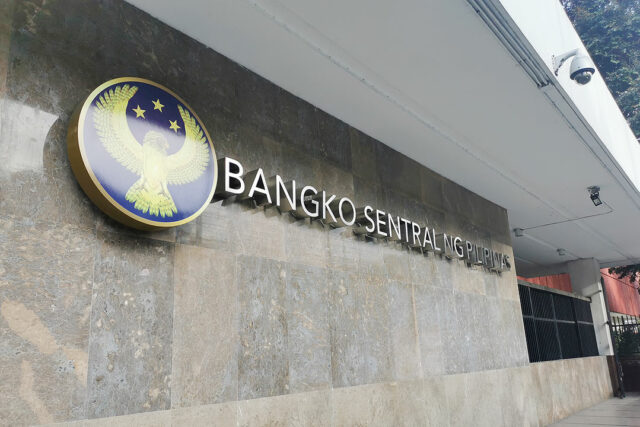
MONEY SENT HOME by overseas Filipino workers (OFW) fell to its lowest level in six months in November, the Bangko Sentral ng Pilipinas (BSP) reported. Read the full story.

Learning from Japan’s infrastructure edge

My recent visit to Tokyo once again reminded me why Japan remains among the world’s most admired nations when it comes to infrastructure and urban management. The country’s quiet efficiency does not compete for attention — it simply works. Whether in the form of ultra-modern railways, century-old network logic preserved through order and discipline, or underground engineering marvels hidden from public sight, Japan demonstrates what long-term planning, continuity and technical excellence can achieve.

Even in Shibuya — already one of the world’s most photographed intersections — major redevelopment continues. The district’s iconic Scramble Crossing remains the centerpiece, but a closer look reveals cranes, construction and newly risen towers forming what is arguably Tokyo’s  most ambitious urban renewal program in decades. Instead of slowing down after having “arrived,” Tokyo keeps rebuilding, reimagining and preparing for the next 50 years. Infrastructure is not treated as a political trophy; it is a national habit.

One of Japan’s most impressive feats is one that tourists rarely see: its vast underground flood control system, particularly the Metropolitan Area Outer Underground Discharge Channel — often called the G-Cans Project. This subterranean cathedral of engineering lies beneath Saitama and protects Tokyo from catastrophic flooding by diverting water from overflowing rivers into enormous silos before pumping them safely into the Edo River. Measuring more than 25 meters high and stretching about 6 kilometers, it is one of the world’s largest flood control facilities.

The Philippines, of course, is no stranger to flooding. Metro Manila’s perennial inundation during the typhoon season, exacerbated by clogged waterways and unplanned urban growth, makes one appreciate  the foresight behind Tokyo’s decision to invest in infrastructure that citizens never directly see. It is a reminder that the most important infrastructure is sometimes invisible — and that long-term risk mitigation requires an engineering mindset, not a short election-cycle horizon.

During this trip, our visit to TeamLab Planets —one of the city’s most innovative attractions — also revealed another piece of Tokyo’s brilliance: the Yurikamome Line. This elevated, driverless monorail connects Shimbashi to the  Toyosu area, gliding over Tokyo Bay with sweeping views of the skyline and waterfront. Unlike JR East or the Tokyo Metro, the Yurikamome is managed independently by a third-sector company, showing how multiple operators can co-exist productively through integration and coordination.

The Yurikamome Line is a lesson in urban transport innovation: automation, punctuality and seamless connectivity with other systems. And because it is elevated, commuters and tourists alike get a glimpse of the continuous developments around Tokyo Bay —a testament to how reclaimed land, when thoughtfully planned, can become a thriving economic and cultural hub.

In the Philippines,  infrastructure remains the Achilles’ heel of national competitiveness. Metro Manila’s road networks are choked, railways are limited, mass transit systems are either under construction or overloaded and flooding still paralyzes entire districts after a few hours of rain. The country’s infrastructure “nightmare” is rooted in three chronic issues: fragmented planning, inconsistent political commitmentand the lack of a long-term blueprint insulated from administrative turnover.

To this, one must add a fourth — and perhaps most painful — ailment: corruption. What should be budgeted must be spent properly, transparently, and free from the leakages that have long plagued Philippine public works. When the previous administration launched its ambitious “Build, Build, Build” program, there was initial hope that the infrastructure gap could finally be narrowed. Instead, many projects became mired in delays, questionable contracts, and accusations that padded deals served to enrich well-connected operators. Infrastructure is expensive — but corruption makes it unaffordable.

A glaring example is MRT-7. Launched with much fanfare and originally targeted for completion years ago, MRT-7 was positioned as a transformative project that would finally connect Quezon City to San Jose del Monte, Bulacan. Today, it stands as a symbol of chronic delay. The project keeps getting pushed back —affected by right-of-way issues, contractor disputes, shifting timelines and poor coordination among implementing agencies. For commuters who spend hours navigating Commonwealth Avenue daily, the endless construction has become a painful reminder that timelines in the Philippines are often aspirational rather than binding commitments.

MRT-7’s predicament reflects a deeper malaise: we plan grandly but execute weakly. Japan builds rail lines in phases but adheres to clear engineering schedules and transparent progress reporting. In the Philippines, by contrast, project slippage is normalized, and public frustration is met with shifting deadlines rather than accountability. If the Philippines is serious about solving its infrastructure deficit, it must fix the pipeline from feasibility study to right-of-way acquisition to implementation.

What, then, can we learn from Japan?

First, infrastructure must be apolitical and anchored on continuity. Japan’s projects span administrations, sometimes lasting decades, yet they are completed with the original objective intact.

Second, mass transit should be the backbone, not an afterthought. Tokyo’s railways —JR, Metro, Toei and private lines — form an integrated ecosystem. Manila must evolve toward a true multimodal, rail-centric model.

Third, invisible infrastructure matters. Investments in drainage, earthquake protection, underground utilities, and risk management are indispensable.

Fourth, continuous urban redevelopment is essential. Shibuya’s transformation shows that cities must evolve with time, not stagnate.

Finally, infrastructure integrity requires a culture of transparency and accountability. Clean governance is not optional; it is the foundation of credible public investment.

Tokyo shows what is possible. The question is whether we have the resolve — and honesty — to follow through.

The views expressed here are his own and do not necessarily reflect the opinion of his office or FINEX.


Benel Dela Paz Lagua was previously EVP and chief development officer at the Development Bank of the Philippines.  He is an active FINEX member and an advocate of risk-based lending for SMEs. Today, he is independent director in progressive banks and in some NGOs.

Actor Timothy Busfield makes first appearance in court on child abuse charges

TIMOTHY BUSFIELD in a scene from Entourage.

ACTOR-DIRECTOR Timothy Busfield made his first court appearance on Wednesday in New Mexico on child sex abuse charges.

Mr. Busfield will continue to be jailed without bond pending a hearing that will take place in the next five business days, the judge said via Zoom.

The West Wing actor will have a preliminary hearing on Jan. 29.

Mr. Busfield did not comment during the brief court appearance. He was not asked to enter a plea.

The Field of Dreams actor surrendered to authorities in New Mexico on Tuesday to face child sexual abuse charges, accused of inappropriately touching two young cast members on the set of a television show he was directing and producing.

According to a criminal complaint and arrest warrant affidavit, the case involves 11-year-old twin boys who reported the alleged contact occurred over a two-year period, when they were aged seven and eight, during production of the Fox crime drama The Cleaning Lady.

Mr. Busfield was an executive producer of the show, which was filmed in Albuquerque, New Mexico’s largest city, and he began directing episodes around the end of the second season, in 2022.

The arrest warrant was issued on Monday. Mr. Busfield, 68, turned himself in to the Albuquerque Police Department on Tuesday and was booked into the Bernalillo County jail without bond, said Nancy Laflin, a spokesperson for the district attorney’s office.

In a video posted online shortly before his surrender, Mr. Busfield professed his innocence, called the allegations against him “lies” and said, “I’m going to be exonerated. I know I am.”

“I did not do anything to those little boys,” he said during the 45-second clip.

Mr. Busfield is best known for his prime-time television roles as a White House reporter on the NBC political drama The West Wing, which ran from 1999 to 2006, and as an ad agency executive on the 1980s ABC ensemble series Thirtysomething.

He is married to actor Melissa Gilbert, a former president of the Screen Actors Guild who gained fame in the 1970s as a child actor on the hit family drama Little House on the Prairie.

Mr. Busfield is charged in the complaint with child abuse and two counts of criminal sexual contact with a minor.

According to the affidavit, one of the boys reported multiple instances of Mr. Busfield touching his “private areas” over his clothes during pauses in production. His brother also reported being touched by Mr. Busfield but was less specific, the affidavit said.

In his own interview for the investigation in November, Mr. Busfield acknowledged he probably had physical contact with the boys on occasion, like tickling or picking them up, but in a playful manner with others present, the affidavit said.

Mr. Busfield also suggested a possible motive for false allegations against him, according to the affidavit. Citing information he said he gleaned from the show’s star, Elodie Yung, Mr. Busfield told police that the boys’ mother was upset with him to the point of wanting “revenge” after producers decided to replace her sons in the final season of the series.

Ms. Yung declined to be interviewed for the police investigation, the affidavit said, but had related a similar account of the mother vowing revenge against Mr. Busfield when Ms. Yung was questioned by a private investigator for the show’s producer, Warner Bros. Television. — Reuters

How PSEi member stocks performed — January 15, 2026

Here’s a quick glance at how PSEi stocks fared on Thursday, January 15, 2026.


Manila, Tokyo ink military supply deal

MR. MOTEGI Toshimitsu, Minister for Foreign Affairs of Japan, who is visiting Manila, the Republic of the Philippines, held a Japan-Philippines Foreign Ministers’ Meeting and Working Brunch with Hon. Maria Theresa Lazaro, Secretary of Foreign Affairs of the Republic of the Philippines. — MOFA.GO.JP

By Adrian H. Halili, Reporter

THE Philippines and Japan on Thursday signed an agreement that would grant mutual access to defense supplies and services during joint military exercises and training, as both countries seek to deepen defense ties amid rising tension in the South China Sea.

Philippine Foreign Affairs Secretary Ma. Theresa P. Lazaro and Japanese Foreign Minister Toshimitsu Motegi signed the Acquisition and Cross-Servicing Agreement following a bilateral meeting. The agreement allows the allied states to exchange supplies such as fuel, food, and ammunition, as well as services vital to joint military exercises, training, and disaster relief operations.

The envoys also signed a pact providing Manila with P341 million or 900 million Japanese yen in Official Security Assistance to support the Armed Forces of the Philippines’ modernization.

“Japan is a vital strategic partner of the Philippines, and our relationship will continue to be bound by shared values of democracy, respect for the rule of law, and a commitment to peace, stability, and prosperity in our region,” Ms. Lazaro told a news briefing.

In 2024, Manila and Tokyo signed a reciprocal access agreement aimed at facilitating the implementation of cooperative activities, such as joint exercises and disaster relief, by easing entry of equipment and troops on each other’s soil. It took effect last September.

The Philippine-Japan access deal is the first of its kind to be signed by Japan in Asia and coincides with increased Chinese assertiveness in the South China Sea, where Beijing’s expansive claims conflict with other Southeast Asian nations.

“The signing of these agreements reflect the close and evolving collaboration between the Philippines and Japan under our Strengthened Strategic Partnership, and support ongoing collaboration across priority areas of the relationship,” she added.

Ms. Lazaro said that both countries reiterated their shared commitment to upholding rules-based order governed by international law during their bilateral meeting earlier.

“We reiterated the Philippines and Japan’s shared commitment to upholding a rules-based order governed by international law, and the importance of resolving disputes peacefully and through dialogue,” she added.

She said that both countries also expressed the need to promote the rule of law, including the freedom of navigation and overflight, in the South China Sea.

Japanese Foreign Minister Motegi added that Tokyo seeks to deepen its defense cooperation with Manila.

“I am determined to deepen Japan-Philippines relations even further towards the realization of a free and open Indo-Pacific,” he said.

Mr. Motegi added that both countries also agreed to continually oppose any unilateral attempts to change the status quo by force or coercion in the disputed waterway.

“The Secretary and I also confirmed the importance of the Japan-Philippines-US trilateral cooperation in the face of increasingly severe strategic environment,” he said.

Manila has actively sought closer defense ties with countries outside its traditional partners, like the US, Japan, and Australia, forging security partnerships with the United Kingdom, Canada, and France to push back against China in the South China Sea.

The relations between Manila and Beijing have soured in recent years over their overlapping claims in the disputed waterway which handles trillions of dollars in annual seaborne trade each year.

Meanwhile, Ms. Lazaro said that the meeting also focused their cooperation for trade and investment, infrastructure development through Official Development Assistance, economic security, agriculture, protection of supply chain, semiconductors, and the Luzon Economic Corridor.

Both countries signed an agreement providing a grant for the establishment of wireless broadband connectivity in Sulu, Tawi-Tawi, and Basilan, amounting to P617 million or 1.63 billion yen. This would enable better connectivity and digital access in the area.

They also agreed to continue working on enhancing the connectivity of the National Capital Region through the Metro Manila Subway Project and the North-South Commuter Railway Project, along with flood control and disaster management, according to a readout of the meeting.

Mr. Motegi also pushed for Manila to urgently diversify its supply chains amid heightened concerns over the export of critical minerals.

“The two ministers then confirmed the necessity to deepen cooperation in the field of economic security,” the readout stated.

Both countries also seek to continue their cooperation in civil nuclear energy under the Asia Zero Emission Community, a regional framework to cooperate on achieving net-zero emissions by balancing decarbonization, economic growth, and energy security.

Fresh plunder complaint filed against Recto, Ledesma over PhilHealth fund transfer

PNA/JOAN BONDOC

By Erika Mae P. Sinaking

A FRESH plunder complaint against Executive Secretary Ralph G. Recto and former Philippine Health Insurance Corp. (PhilHealth) President Emmanuel R. Ledesma, Jr. was filed before the Office of the Ombudsman on Thursday over the alleged illegal transfer of P60 billion in reserve funds.

The complaint was filed by a coalition of Ilonggo doctors, lawyers, and health advocates seeking a preliminary investigation and the determination of possible criminal, civil, and administrative liability for plunder, technical malversation, violations of the Anti-Graft and Corrupt Practices Act, and grave misconduct. 

“The respondents deliberately, willfully, and maliciously, acting with evident bad faith, dishonesty, and grave misconduct, unlawfully and intentionally caused the transfer of P60 billion in PhilHealth reserve funds to the National Treasury,” the complainants said in their complaint-affidavit.

The filing centers on Department of Finance Circular No. 003-2024, which ordered the remittance of so-called “excess” funds of government-owned and -controlled corporations to bankroll unprogrammed appropriations under the 2024 General Appropriations Act. PhilHealth transferred P60 billion in three tranches before the Supreme Court (SC) issued a temporary restraining order stopping further transfers, leaving P29 billion unreleased, the complainants said.

In its ruling last year, the SC noted that Mr. Recto, who issued the transfer order as Finance secretary, acted in “institutional good faith” and performed a “strictly ministerial” role by following Congress’ instructions.

The Court, however, did not rule on whether he could be held personally liable for technical malversation or plunder, focusing instead on the legality of the budget provision itself.

Despite this, the complainants said that the transfer was illegal, arguing PhilHealth funds are meant solely for health services and member benefits — not for general government spending — and that the law clearly forbids moving these funds to the National Government.

In response to the new complaints, Mr. Recto maintained that he acted in accordance with the law and in good faith, citing the Supreme Court ruling.

“No criminal liability may attach to me, as former secretary of Finance, for acting in good faith and in accordance with a direct mandate from Congress in ordering the remittance of PhilHealth’s unused funds,” he said.

“The issue has already been addressed by the Supreme Court, and the government has fully complied with its ruling. Consistent with this, funding for PhilHealth has since been restored and even augmented to better serve our countrymen,” Mr. Recto said.

Mr. Ledesma did not immediately reply to a Viber message seeking comment.

“No portion of the reserve fund or income thereof shall accrue to the general fund of the National Government or to any of its agencies,” the complaint quoted from the Universal Health Care Act.

The group said the plunder charge is anchored on the alleged illegal diversion of public funds amounting to far more than the P50-million threshold under the Anti-Plunder Act, arguing that the transfer caused “substantial damage and serious prejudice” to PhilHealth and its members.

They also cited the high court ruling that declared the budget provision allowing the transfer invalid, saying Congress cannot alter the Universal Health Care law through a budget measure.

The complainants also claimed PhilHealth lost more than P50 million in potential interest income, which could have been used to expand health benefits or reduce member contributions.

“PhilHealth and its contributing members have lost so much which has a direct impact on the latter’s benefits,” the complaint said.

The complainants, who identified themselves as PhilHealth members and taxpayers, said the filing seeks accountability for the diversion of funds “earmarked exclusively for public health” and warned that allowing such transfers undermines the sustainability of the country’s universal health care system.