Home Blog Page 1574

Three dead, one hurt after truck plunges into Benguet ravine

BAGUIO CITY — Three died while another one is being treated at the hospital after a pick-up truck plunged into a ravine in Sitio Camanggaan, First Gate, Barangay Ucab, Itogon town in Benguet on Monday morning.

The Itogon police identified the fatalities as Amayag Oplas, 29, driver; Ruvelyn Agapinan, 27; and Charles Oplas, 21. Luisito David Bacoco, 14, is being treated at a hospital.

The four were aboard the pick-up truck, traveling along the Baguio-Ucab Road in Itogon town, when it rammed into a concrete barrier. The driver lost control of the vehicle and dived into a 100-meter ravine.

Mr. Oplas was declared dead-on-the spot while the three others were rushed to the hospital. — Artemio A. Dumlao

Driver dead, 2 hurt in Maguindanao del Sur highway robbery

COTABATO CITY — A driver of a freezer-type van loaded with ice cream in containers of various sizes was killed while his two helpers were wounded in an attack by robbers in Barangay Timbangan in Shariff Aguak, Maguindanao del Sur on Monday afternoon.

Rey F. Balmores, died on the spot when men riding motorcycles shot him repeatedly while he was driving their delivery van at a secluded stretch of a highway in Barangay Timbangan.

His killers immediately alighted from their motorcycles as the vehicle stopped and, at gunpoint, took a bag containing a still undetermined amount of cash collections from his two companions, Harris L. Ampatuan and Reymond O. Bajas, who were both wounded in the attack.

Brig. Gen. Romeo J. Macapaz, director of the Police Regional Office-Bangsamoro Autonomous Region, told reporters on Tuesday that the victims had just delivered their merchandise in towns around Shariff Aguak and were headed to their office in Sultan Kudarat, Maguindanao del Norte when the gunmen pulled off the daring heist.

Shariff Aguak Mayor Akmad A. Ampatuan condemned the atrocity and offered an earnest cash incentive for any information leading to the arrest of the robbers.

The mayor told reporters that he had instructed all barangay officials in Timbangan to help police investigators identify the culprits, now subject of an extensive hunt by personnel of the Shariff Aguak Municipal Police Station and the Maguindanao del Sur Provincial Police Office. — John Felix M. Unson

PSEi drops in cautious trade as Trump sworn in

BW FILE PHOTO

PHILIPPINE STOCKS inched lower on Tuesday as investors stayed on the sidelines following the inauguration of US President Donald J. Trump and his initial policy announcements.

The bellwether Philippine Stock Exchange index (PSEi) retreated by 0.15% or 9.68 points to close at 6,340.21, while the broader all shares index dropped by 0.07% or 2.62 points to 3,700.24.

“The local market edged lower this Tuesday as investors maintained a cautious stance while being observant of US President Trump’s first few days in the office,” Philstocks Financial, Inc. Senior Research Analyst Japhet Louis O. Tantiangco said in a Viber message. “Investors are primarily concerned with the specifics of the US president’s planned protectionist foreign trade policies.”

“It was another quiet session for the Philippine markets following the inauguration of President Trump,” Regina Capital Development Corp. Head of Sales Luis A. Limlingan said in a Viber message. “US markets were closed on Monday for Martin Luther King Jr. Day, but futures trading saw gains as Mr. Trump began his second term as president. Optimism grew over anticipated pro-economy measures, particularly in banking and energy, while sentiment was supported by news that no new tariffs would be introduced on day one.”

Financial markets swayed and wobbled at the beginning of Mr. Trump’s second US presidency after he made a softer start on China than many had anticipated, but then signaled punitive tariffs on North American neighbors within hours, Reuters reported.

A wave of relief that swept across markets — as his speech and slew of executive orders imposed no new trade levies — was stopped in its tracks when Mr. Trump told reporters in the White House’s Oval Office that he was thinking about 25% tariffs on Mexico and Canada from Feb. 1.

Mr. Trump had vowed to immediately impose steep tariffs of 10% to 20% on global imports into the US and 60% on goods from China, but a memo he issued after taking office only directed agencies to research and investigate the US trade deficits.

At home, majority of sectoral indices closed lower on Tuesday. Mining and oil sank by 2.12% or 168.70 points to 7,762.26; services retreated by 0.82% or 17.25 points to 2,080.96; industrials went down by 0.56% or 50.85 points to 8,921.78; and financials declined by 0.4% or 8.91 points to 2,180.54.

Meanwhile, property rose by 0.88% or 20.54 points to 2,337.20 and holding firms increased by 0.34% or 18.16 points to 5,343.27.

“Converge ICT Solutions, Inc. was the day’s index leader, climbing 2.62% to P18.00. Universal Robina Corp. was at the bottom, falling 4.07% to P66.00,” Mr. Tantiangco said.

Value turnover increased to P3.87 billion on Tuesday with 1.01 billion shares traded from the P3.81 billion with 1.54 billion issues dealt on Monday.

Decliners outnumbered advancers, 104 versus 76, while 59 names were unchanged.

Net foreign selling climbed to P173.15 million on Tuesday from P107.92 million on Monday. — Revin Mikhael D. Ochave with Reuters

Peso edges up after Trump’s inauguration

BW FILE PHOTO

THE PESO extended its climb against the dollar on Tuesday after the greenback posted losses overnight following US President Donald J. Trump’s inauguration.

The local unit closed at P58.49 per dollar on Tuesday, strengthening by three centavos from its P58.52 finish on Monday, Bankers Association of the Philippines data showed.

The peso opened Tuesday’s session sharply higher at P58.333 against the dollar. Its intraday best was at P58.33, while its worst showing was at P58.50 versus the greenback.

Dollars exchanged rose to $1.6 billion on Tuesday from $1.23 billion on Monday.

“The peso tracked the dollar’s weakness overnight on news that tariff impositions will be delayed,” a trader said in a phone interview.

The dollar was generally weaker after Mr. Trump’s inauguration speech did not immediately give plans for the tariffs to be imposed on China, Rizal Commercial Banking Corp. Chief Economist Michael L. Ricafort likewise said in a Viber message.

For Wednesday, the trader said markets will continue to monitor policy announcements from the Trump administration.

The trader expects the peso to move between P58.40 and P58.80 per dollar on Wednesday, while Mr. Ricafort sees it ranging from P58.35 to P58.55.

The dollar partially rebounded on Tuesday after sliding the day before as Mr. Trump suggested the US could impose tariffs on Canada and Mexico by Feb. 1, challenging suggestions his trade policy may be more gradual, Reuters reported.

Mr. Trump told reporters his team was thinking of tariffs around 25%, but offered no other specifics. He also floated the idea of universal tariffs, but said the US was not ready for that yet.

The dollar had fallen sharply on Monday after Mr. Trump’s first day included no specific plans on tariffs and officials signaled any new taxes would be imposed in a “measured” way, a major relief for trade-exposed currencies. A following trade memo merely directed agencies to investigate and remedy persistent trade deficits.

The dollar index, which measures the currency against six peers, rose 0.6% to 108.58, having shed 1.2% on Monday in what had been the sharpest one-day drop since late 2023.

The inauguration speech focused on emergencies in immigration and energy and a more expansionist foreign policy, including a pledge to take back the Panama Canal.

In his first term in office, Mr. Trump had a history of announcing imminent plans for policy proposals, including on healthcare and infrastructure, only for nothing to eventuate.

The dollar added 0.3% on the offshore Chinese yuan to 7.2896. Mr. Trump has previously threatened China with tariffs of up to 60%, but was vague on his plans on Monday. — A.M.C. Sy with Reuters

Foreign HEIs operating PHL campuses granted SIPP perks

Students answer test questions at a state high school in Manila. — REUTERS

By Justine Irish D. Tabile, Reporter

FOREIGN higher education institutions (FHEIs) that establish branch campuses in the Philippines with local partners have been declared eligible for incentives outlined in the amended 2022 Strategic Investment Priority Plan (SIPP).

In a statement on Monday, the Board of Investments (BoI) said the changes to the SIPP were effected via Memorandum Circular (MC) No. 2024-08 issued on Dec. 18.

Under the MC, FHEIs that establish campuses in the Philippines may now register with BoI and receive incentives, provided that the local partner is at least 60% Filipino-owned.

The incentives cover the development of education cities as well as branch campuses, the BoI said.

“The guidelines include provisions for the establishment of branch campuses in the Philippines, as defined under the Republic Act (RA) No. 11448 or the Transnational Higher Education (TNHE) Act,” it added.

With the MC in place, education cities — defined as the development of a contiguous area of education facilities and buildings with digital infrastructure — are now classified as SIPP infrastructure and logistics investments.

Such cities include research, healthcare, athletic, cultural, and art facilities, as well as the provision of auxiliary services that will enhance the educational experience for students.

BoI Industry Development Services Executive Director Ma. Corazon Halili-Dichosa said education cities will be classified as Tier-I strategic investments.

“The new guidelines will enhance opportunities for international collaboration that would facilitate access to expertise and knowledge relevant to global industry trends, empower students, and bridge the gap between academe and industry,” she added.

She said that the guidelines will support and incentivize the establishment of education cities and campuses, which the BoI considers its contribution to workforce development.

According to BoI, the Philippine population, which a median age of 26 years, makes it an attractive destination for investment and a reliable source of global talent.

“The inclusion of education cities and branch campuses in the SIPP will help nurture this talent pool while fostering international ties,” it added.

The Philippines produces 750,000 graduates every year, with 10-12% of them in engineering and technology courses.

2024 palay output hits four-year low of 19.09 million MT

A farmer threshes newly harvested palay grains at a ricefield in Mogpog, Marinduque in central Philippines, March 22, 2016. — REUTERS

By Adrian H. Halili, Reporter

OUTPUT of palay, or unmilled rice, declined to a four-year low of 19.09 million metric tons (MMT) in 2024, the Philippine Statistics Authority (PSA) reported, citing preliminary data.

The PSA said that palay output dropped 4.84% from 2023, the weakest production since the 19.29 MMT reported in 2020.

Full-year rice output came in under the Department of Agriculture’s (DA) 19.3 MMT revised estimate for 2024.

The PSA added that the harvest from irrigated areas was 14.56 MMT, down 4.71%, while palay production in rainfed areas fell 5.23% to 4.53 MMT.

The region with the top palay production was Central Luzon with 3.48 MMT, followed by the Cagayan Valley with 2.92 MMT and the Ilocos Region with 1.97 MMT.

Rounding out the top five rice producers were the Western Visayas with 1.89 MMT and Soccsksargen with 1.21 MMT.

Agriculture was negatively impacted by dry spells and droughts caused by El Niño in the first half, and heavy rains and typhoons in the latter part of 2024, analysts said.

“I expected it to be a bit lower given the series of typhoons in the fourth quarter,” Federation of Free Farmers National Manager Raul Q. Montemayor said via Viber.

“In any case, output already dropped by 5.5% in the first semester mainly due to El Niño and was projected also to drop in the second semester due to La Niña,” he added.

Agricultural damage caused by El Niño was estimated at P15.3 billion on lost volume of 330,717 MT, across 109,481 hectares of farmland, according to the DA’s final estimate. Damage to the rice crop was 38.8% of the total, or P5.93 billion.

Mr. Montemayor said that the 970,000 MT drop in rice production is equivalent to about 15 days’ national consumption.

He added that the lost rice output for the year was offset by a big bump in imports.

The Philippines imported a record 4.78 MMT of rice in 2024, according to the Bureau of Plant Industry.

“Production in 2025 will simply have to try to recover but potentially large imports at low tariffs may dampen farmgate prices and incentives for farmers to intensify production,” he said.

Earlier, the Agriculture department said that it is targeting palay output of 20.46 MMT this year, which could be fulfilled with P10 billion in additional funding for its National Rice Program.

Samahang Industriya ng Agrikultura Executive Director Jayson H. Cainglet said that better farmgate prices for palay could also encourage more rice farmers to continue planting.

“We are hoping for a good harvest starting at end of February or March, so that our rice farmers can earn money … The dark side of an unlimited import policy, via Executive Order (EO) 62, is the tendency to depress farmgate prices across commodities,” Mr. Cainglet said via Viber.

Tariffs on imported rice were slashed to 15% from 35% previously until 2028, through EO 62 which was signed by President Ferdinand R. Marcos, Jr. in June.

He added that the DA and the National Food Authority should increase palay procurement funds to influence the prices paid by millers and traders.

PHL’s 11-month meat imports up 19%

REUTERS

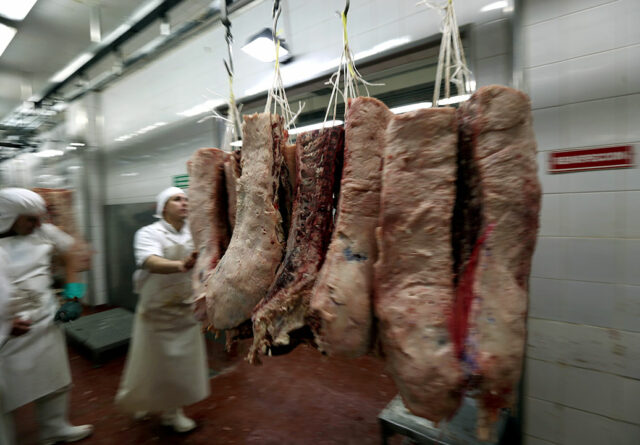
MEAT IMPORTS rose 19.4% by volume in the 11 months to November, led by pork and beef, according to the Bureau of Animal Industry (BAI).

The BAI reported meat shipments of 1.33 billion kilograms in the first 11 months. Meat imports in November grew 46.7% to 141.34 million kilos.

Accounting for about 50.4% of all imports, pork shipments rose 21.9% to 671.56 million kilos for the period.

Brazil supplied around 184.81 million kilos of pork, followed by Spain (158.14 million kilos) and Canada (92.94 million kilos).

Beef imports increased 39.7% to 187.71 million kilos during the 11 months accounting for 14.1% of meat imports.

Imports of beef from Brazil amounted to 80.68 million kilos, followed by Australia (49.59 million kilos) and Ireland (15.54 million kilos).

Shipments of chicken totaled 435.5 million kilos in the 11 months, up 10.7% and accounting for 32.7% of meat imports.

Brazil remained the top supplier of chicken with 216.9 million kilos, followed by the US (145.73 million kilos) and Australia (9.32 million kilos).

Imports of turkey meat more than doubled to 1.27 million kilos. Shipments accounted for 0.1% of total meat imports.

On the other hand, shipments of duck, lamb, and buffalo meat declined during the 11-month period.

Buffalo imports, which accounted for 2.6% of total volume, slipped 9.65% during the period to 35.2 million kilos.

Shipments of duck declined 25.8% to 208,792 kilos, while lamb imports fell 13.4% to 613,448 kilos. — Adrian H. Halili

NAIA 2024 passenger throughput tops 50 million 

REUTERS

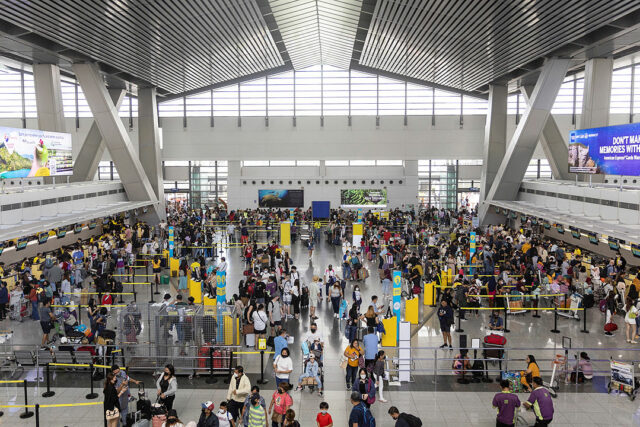
THE Ninoy Aquino International Airport (NAIA) posted passenger throughput of more than 50 million in 2024, up nearly 11%, powered by the increase in the overall number of flights and the boom in domestic travel.

The Manila International Airport Authority reported that the gateway booked passenger numbers of 50.26 million 2024, 10.9% higher than the 2023 level and 4.9% higher than the 47.90 million posted in the last full pre-pandemic year of 2019. 

Domestic passenger traffic was 26.89 million, up 8.1%. International passenger traffic rose 14.4% to 23.37 million.

Aircraft movements — the sum of takeoffs and landings — amounted to 293,427 last year, up 8.3%.

Last year, the San Miguel-led New NAIA Infra Corp., the new NAIA operator, said it expects to end 2024 with 50 million passengers.

The private operator took over operations at NAIA in September, and announced plans for the expansion of roads and curbside enhancements; terminal upgrades, and terminal reassignments.

It also said that it is planning to build a new terminal which can accommodate 22 million passengers annually. — Ashley Erika O. Jose

Release of P30.41B for Q1 military pensions approved

PHILIPPINE STAR/WALTER BOLLOZOS

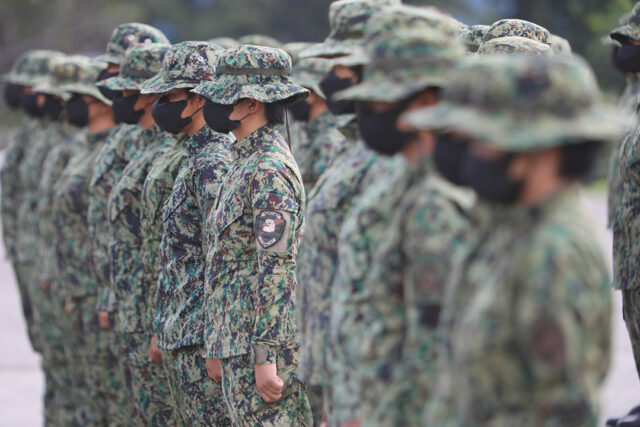
BUDGET Secretary Amenah F. Pangandaman has approved the release of P30.41 billion to fund the pensions of military retirees in the first quarter. 

The Department of Budget and Management (DBM) said the fund release has been charged to the Pension and Gratuity Fund of the 2025 General Appropriations Act.

“For many military and uniformed personnel (MUP) retirees and their families, pensions are a lifeline that ensure their daily needs are met, like buying their medicine and food,” Ms. Pangandaman said in a statement on Tuesday.

The DBM said P16.75 billion has been released to the Armed Forces of the Philippines – General Headquarters-Proper and the Philippine Veterans Affairs Office under the Department of National Defense.

Agencies under the Department of Interior and Local Government received P13.297 billion. These include the Philippine National Police, Bureau of Fire Protection, Bureau of Jail Management and Penology, and the National Police Commission.

Meanwhile, the DBM said 34 pensioners from the National Mapping and Resource Information Authority of the Department of Environment and Natural Resources have been granted P8.530 million.

For the first three months of 2025, P350.680 million was released to fund the pension of the 2,836 retired uniformed personnel of the Philippine Coast Guard, an arm of the Department of Transportation.

“The releases are based on the actual pension payroll submitted by the above-mentioned MUP agencies as of Dec. 31, 2024,” the DBM said. — Aubrey Rose A. Inosante

Philippine packaging industry sees growth lagging GDP due to rising costs

FREEPIK

THE packaging industry’s growth is expected to lag that of gross domestic product (GDP) this year due to high raw material costs, the Asia Packaging Federation said.

“It will be a bit slower … because of the rising costs of packaging materials as the materials are imported,” according to Joseph Ross S. Jocson, president of Asia Packaging Federation, on the sidelines of a ProPak Philippines 2025 briefing on Tuesday.

“We cannot sometimes compete with the volume of China or India, so we have to help the industry,” he added.

He said the Philippine packaging industry will need to scale up to be more competitive.

He said the industry is being challenged by the lack of government support, the need to comply with sustainability rules imposed by Philippine laws and overseas jurisdictions.

“If you go to Bangkok, their durian and pineapple packaging is very nice because their government fully supports their packaging industry, and we hope the same for the Philippines,” he said.

“Our packaging is way behind what South Korea and Thailand have,” he added.

Asked what kind of government support the industry needs, he cited the need to raise the funding of the departments of Science and Technology (DoST) and Trade and Industry (DTI).

“That is the only way that micro, small and medium enterprises (MSMEs) can avail of their services. The multinational corporations have the capacity, but the local, the small, or those in backyard industries need support, and that is where the DoST and the DTI can come in,” he added.

Meanwhile, he said the industry is concerned about the impending tax on single-use plastics and other similar measures.

“If the bills on single-use plastics or other kinds of bans are passed, there will be a radical change. Because there is nothing we can do if it becomes a law, then we have to comply,” he said.

“It could negatively affect the economy and positively affect the environment. But in any case, we have to be balanced, and technology can also help in that,” he added.

He said that the government’s implementation of the Extended Producer Responsibility (EPR) is showing good results but noted the need for it to be expanded to other materials.

“As of now, the implementation of EPR is good. But maybe it is not [enough] because we are only tackling plastics right now with the EPR; we are not yet into paper and tin cans, and there are a lot of other materials,” he added.

Meanwhile, he said that complying with green policies, such as those being imposed by the European Union (EU), is a challenge for MSMEs.

“If you’re exporting now to the EU, you need to comply with their requirements. They need to make a certain percentage of their packaging is recycled; otherwise, they cannot export,” he said.

“The multinational companies are ready for it, but the smaller companies are not,” he added.

On Tuesday, Propak Philippines announced that the fifth edition of the annual international processing and packaging trade event will run from Feb. 12 -14 at the World Trade Center.

The 2025 edition of the trade show is expected to bring in over 250 exhibitors and brands from over 30 countries.

It is also projected to welcome 12,000 trade visitors, buyers, and other stakeholders. — Justine Irish D. Tabile


ERC defers ruling on NPC petitions

PHILSTAR FILE PHOTO

THE Energy Regulatory Commission (ERC) has deferred ruling on National Power Corp. (NPC) petitions regarding the universal charge for missionary electrification (UCME), citing the need for further evaluation, saying that a resolution is expected within the first quarter.

“Given the pending issues that need to be resolved, the matter has been deferred for further deliberation,” the ERC said in a document posted on its website.

NPC has filed several applications with the ERC to tap the UCME to offset the shortfall in the missionary electrification subsidy. The applications cover various periods between 2015 and 2022.

As authorized by the Electric Power Industry Reform Act or EPIRA, the UCME is a monthly charge collected from on-grid electricity end-users to subsidize the cost of power in off-grid areas.

ERC Chairperson and Chief Executive Officer Monalisa C. Dimalanta said that the commission deferred a decision to address outstanding questions.

“We expect them to come back to us soon so we can resolve this within the first quarter,” Ms. Dimalanta said via Viber.

She said that among the items that need to be addressed is whether or not NPC is entitled to receive a 12% return on rate base (RORB) on top of its cost recovery for missionary electrification. The RORB is the recovery of reasonable costs to enable an entity to operate viably.

“The Commission had previously denied this claim, given that UCME is already a subsidy provided by end-users, but NPC asked for reconsideration,” she said.

“NPC’s position is that the EPIRA did not repeal the provision in their charter as regards RORB. So their claim is that as a rule they are still entitled to RORB every year,” she added. — Sheldeen Joy Talavera

Ban on Russian meat imports lifted following FMD-free declaration

REUTERS

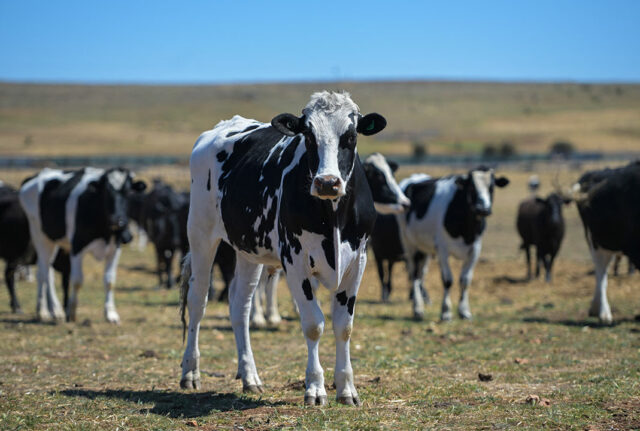
THE Department of Agriculture (DA) said that it lifted a ban on meat imports from Russia after veterinary officials declared that country free of foot and mouth disease (FMD).

In Memorandum Order No. 3, the DA said that it would now allow shipments animals susceptible to foot and mouth disease, their products and byproducts, from Russia.

“All import transactions of the above commodities shall be in accordance with existing rules and regulations of the (DA),” it added.

Citing reports from the Trade Representation of the Russian Federation in the Republic of the Philippines and the World Organisation of Animal Health (WOAH), the DA said that Russia was FMD-free without vaccination.

According to the WOAH Terrestrial Animal Health Code, a country may be considered FMD-free without vaccination when no other infection has been reported and there is proper surveillance from veterinary authorities.

The DA ban was first imposed in 2013 when the outbreak was first detected.

FMD is highly transmissible, causing lesions and lameness in cattle, sheep, goats and other cloven-hoofed animals. The disease does not affect humans.

The DA had earlier, banned imports of buffalo meat from India following an outbreak of FMD on the states of Bihar, Maharashtra, and Telangana.

The issuance of sanitary and phytosanitary clearances for buffalo meat was subsequently halted for products from the three states. — Adrian H. Halili