
How PSEi member stocks performed — May 29, 2025

Here’s a quick glance at how PSEi stocks fared on Thursday, May 29, 2025.


Here’s a quick glance at how PSEi stocks fared on Thursday, May 29, 2025.

THE Philippines on Thursday said that it “rejects and refutes” China’s recent remarks claiming it has “indisputable sovereignty” over Spratly Islands, the Department of Foreign Affairs (DFA) said.
“The fundamental fact is that Pag-asa Island and the Pag-asa Cays form part of the Kalayaan Island Group (Spratly Islands), which is an integral part of the Philippines over which it has longstanding sovereignty and jurisdiction,” DFA Spokesperson Teresita C. Daza said in a statement.
“The Philippines is clearly within its rights to conduct routine maritime operations and scientific research in and around these features and will continue to do so.”
The Chinese Embassy in Manila did not immediately reply to a Viber message seeking comment.
The Embassy on Monday accused the Philippines of intruding its territorial waters, claiming that the Southeast Asian nation conducted “27 unauthorized landings,” involving 167 personnel on uninhabited features in the South China Sea.
“Notably, these so-called scientific research missions included media crews, seemingly to stage and record the events, resembling film production rather than genuine research,” the embassy said. “The underlying intentions behind such activities are self-evident. It is clear which party initiated the provocation, and which is engaging in deception.”
The DFA asserted the Philippines’ actions in the area are a valid exercise of Philippine sovereignty and consistent with international law, citing the 1982 United Nations Convention on the Law of the Sea (UNCLOS), the 2016 South China Sea Arbitral Award, the 2002 Declaration on the Conduct of Parties in the South China Sea
“China has no right to object much less interfere with these lawful and routine activities,” Ms. Daza said, adding it should respect the Philippines’ sovereignty and jurisdiction.
Last week, Manila accused Beijing’s coast guard of endangering two Philippine civilian vessels conducting research near the in Pag-Asa Cays 1, 2 and 3 in the South China Sea.
The Chinese coast guard had reportedly fired its water cannons at BRP Datu Sanday before colliding the vessel, damaging its bow and chimney.
In April, Chinese state media reported that China’s coast guard had asserted sovereignty over the Sandy Cay by landing and displaying Beijing’s national flag on the feature.
Manila has since rejected their claims as the features form part of the country’s exclusive economic zone. It had likewise deployed its own troops shortly after reinforcing its claims.
Ties between Beijing and Manila have worsened in recent years due to repeated encounters between their coast guard ships in the South China Sea.
China claims more than 80% of the South China Sea based on a 1940s map, which a United Nations-backed arbitration court in The Hague voided in 2016 for being illegal. Other countries like Brunei, Indonesia, Malaysia, and Vietnam also have claims in the disputed waterway.
PHL-JAPAN SECURITY TIES
Meanwhile, the Philippines and Japan are in talks to deepen their security and economic ties after a bilateral meeting between the Foreign Affairs Secretary Enrique A. Manalo and Japanese Foreign Minister Takeshi Iwaya in Tokyo.
“Regarding security, the two foreign ministers held in-depth discussions on further strengthening the foundation for security and defense cooperation, based on last month’s Summit Meeting,” the Japanese Embassy said on Thursday.
Mr. Iwaya had also pushed for further cooperation between the two nations through the official security assistance to further build the Philippines’ defense capabilities.
Manila was one of the first recipients of Tokyo’s official security assistance, a program aimed at helping boost deterrence capabilities of partner countries.
The two envoys also discussed the possibility of a potential information security agreement between Manila and Tokyo, that would enable the sharing of classified information and strengthen security cooperation.
They also agreed to hold maritime consultations and vice-ministerial strategic dialogue within the year to “share strategic perceptions and further advance cooperation in the field of security, including the maritime domain.”
Security ties between the two US allies have strengthened in the past two years as Japan and the Philippines share common concerns over China’s increasingly assertive actions in the region.
Mr. Iwaya added that Japan would also like to further promote infrastructure development in the Philippines as equal partners through public-private partnerships.
The two envoys also recognized the need for a stable investment environment for the development of mineral sources projects in the Philippines.
Mr. Iwaya and Mr. Manalo said that they will proceed with preparations on or the next Japan-Philippines High Level Joint Committee on Infrastructure Development and Economic Cooperation in Japan this year.
SHANGRI-LA DIALOGUE
Separately, the Philippines’ defense chief is set to attend a high-level security summit in Singapore, where he will be joined by counterparts from other nations and push for talks on advancing Manila’ strategic interests amid tensions in the South China Sea.
Defense Secretary Gilberto C. Teodoro, Jr. will attend the Shangri-La Dialogue alongside other top military officers in Singapore from May 30 to June 1 in hopes of strengthening defense ties with allies, the Department of National Defense (DND) said.
“The DND and the Armed Forces of the Philippines (AFP) is scheduled to hold bilateral and multilateral meetings with counterparts from various countries,” it said in a statement.
The Shangri-La Dialogue is Asia’s leading security summit, convening top defense officials from across the region and beyond. It features debates led by officials and is an avenue for bilateral talks among delegates.
President Ferdinand R. Marcos, Jr. defended Manila’s territorial claims in the contested South China Sea in last year’s forum.
“Secretary Teodoro’s participation underscored the Philippines’ commitment to a rules-based international order and sustained peace and stability in the Indo-Pacific region through open dialogue and strategic partnerships,” the DND said.
Meanwhile, the Philippine military has activated a new special operations command on Wednesday, a move aimed at making its forces more responsive amid persistent security challenges faced by the Southeast Asian nation.
The AFP has transferred its special operations command to the Philippine Army and launched a new joint special operations unit in a restructuring aimed at enhancing force agility.
“This transformation is operationally driven, doctrinally sound and aligned with our vision of a credible and unified armed forces,” AFP Chief-of-Staff General Romeo S. Brawner, Jr. said in a separate statement. — Adrian H. Halili and Kenneth Christiane L. Basilio
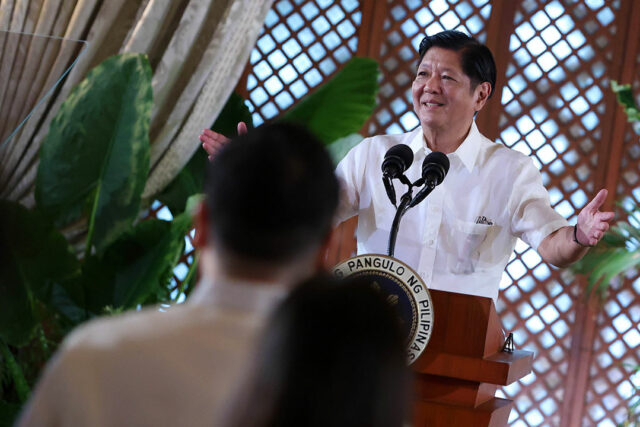
PHILIPPINE President Ferdinand R. Marcos, Jr., retained his administration’s current Justice, Interior and Local Government, and Defense secretaries, but appointed a new solicitor general (SolGen) and police chief amid the “bold” reset of government.
The President declined the courtesy resignation of Justice Secretary Jesus Crispin C. Remulla, Interior and Local Government Secretary Juanito Victor C. Remulla, Jr., and Defense Secretary Gilberto C. Teodoro, Jr., Executive Secretary Lucas P. Bersamin said at a news briefing on Thursday.
Mr. Bersamin noted there are no updates yet on the resignation of National Security Adviser Eduardo M. Año, whose letter was addressed directly to the President.
Mr. Marcos, however, decided to replace Solicitor General Menardo I. Guevarra, appointing University of the Philippines College of Law Dean Darlene Marie B. Berberabe as the government’s new top legal counsel. She was sworn in on Thursday morning.
“It’s time for fresh blood to come in,” said Mr. Bersamin. “Her strong philosophy background will help her use the wisdom and the ethical leadership she has gained from deep reflection and rigorous study to competently perform her tasks as the Solicitor General.”
Mr. Bersamin denied the move to replace the government’s top lawyer was tied to the arrest of former President Rodrigo R. Duterte, whose justice secretary was Mr. Guevarra.
The former justice chief had recused his entire office in March from representing the government in lawsuits questioning the arrest of Mr. Duterte.
The 80-year-old tough-talking leader is currently detained in The Hague, awaiting trial for alleged crimes against humanity tied to his bloody war on drugs.
“I don’t think that that was a factor at all because if you recall, there was a strong clamor for the termination or removal of Solicitor Guevarra at the time,” Mr. Bersamin said. “But he and the president had a conversation about this, and the president respected his ethical decision to recuse.”
According to Mr. Guevarra, the 11th highest-paid government official in 2024, it is time for him to “go back to a quiet and peaceful private life.”
“I am happy for Darlene Berberabe. As a top-caliber lawyer with an impressive management background. She will surely do as well as Solicitor General,” he said in a message to reporters through Viber.
Ms. Berberabe served as the chief executive officer of the Home Development Mutual Fund in 2010 before becoming a law school dean.
The President also accepted the courtesy resignation of Philippine National Police (PNP) Chief Rommel Francisco D. Marbil ahead of his retirement in June.
He will be replaced by Nicolas D. Torre III, who currently heads the Criminal Investigation and Detection Group, effective starting June 2.
Mr. Torre also led the high-profile arrests of Mr. Duterte and his spiritual advisor accused of trafficking, Apollo C. Quiboloy.
This is the first time a graduate of the PNP Academy (PNPA) has held the top police position. Mr. Torre graduated from the PNPA in 1993, ranking fourth in his class.
Interior and Local Government Secretary Remulla welcomed Mr. Torre’s appointment, saying in a statement the department is “confident his leadership will drive transformation, innovation, and strengthen the PNP’s mandate to serve and protect.”
Meanwhile, the President also sacked the Commission on Higher Education (CHED) Chairman Prospero E. De Vera III. He will be replaced by CHED Commissioner Shirley C. Agrupis.
According to her LinkedIn profile, Ms. Agrupis served as the president of the Mariano Marcos State University in Batac, Ilocos Norte, the president’s hometown. She became CHED commissioner in September 2024.
Mr. De Vera, who led the Commission since 2018, was an appointee of Mr. Duterte.
“I respect the President’s decision and thank him for the trust and the opportunity to continue with the educational reforms in higher education that I started when I was appointed Commissioner in 2016 and Chairman in 2018, and under his administration,” he said in a statement.
More than 50 agency leaders handed the President their resignation last week after he issued a sweeping order for a government reset following the dismal performance of his bets in the recently concluded midterm elections. Mr. Marcos has also retained his economic team, composed of the Trade, Finance, Budget, and Economic planning secretaries. — Chloe Mari A. Hufana

EIGHT out of 10 of Filipinos want their incumbent and newly elected officials to focus on policies that would deliver better healthcare, food security, and infrastructure development, according to a Social Weather Stations (SWS) survey on Thursday.
The survey, commissioned by Stratbase ADR Institute, found that 84% of Filipinos look for better healthcare access and services, while 81% call for better food security and agricultural development.
The survey added that 80% of surveyed Filipinos want leaders to address the development of infrastructure, followed by climate resilience and protection of natural resources (70%), national security and defense in the West Philippine Sea (76%), and the management of inflation (62%).
“People are demanding that they want honest and effective leadership. There is growing awareness that progress in sectors like healthcare and infrastructure is not possible without good governance,” Stratbase President Victor Andres C. Manhit said in a statement.
SWS added that Filipinos expect the incoming Congress to prioritize social programs that directly address the daily needs of Filipinos.
“Filipinos expect both Houses of Congress to direct public resources towards solutions that improve lives, which can be felt through quality jobs, just compensation, improved infrastructure, enhanced health facilities, accessible education, and stable and affordable food supply,” Mr. Mahnhit added.
“These are not new calls, but what is different now is the louder clamor from the public for better governance,” he said.
LOWER COSTS, INCREASE WAGES
Measures that would lower the cost of basic goods, increase wages, and address poverty also topped the list of what Filipinos want the next Congress to prioritize, as struggles due to steep prices and stagnating salaries continue, a separate survey revealed.
In an April survey, polling firm WR Numero Research found that 38% of Filipinos said they want lawmakers to push for measures that could lower the costs of goods, while 36% said they should prioritize raising languishing wage rates (36%) in the 20th Congress. A record half of the population considered themselves poor, according to an SWS poll.
Policymakers should also look at combating poverty and fighting criminality, as around 36% of Filipinos want them to prioritize poverty alleviation with 29% seeking a tougher stance against illegal drugs.
“Lowering the cost of basic goods and raising workers’ wages are the top priorities that Filipinos want newly elected and returning members of Congress to address,” the pollster said in a statement on Thursday.
The issues that topped the WR Numero Research are “long-standing ‘food on the table issues’” that Filipinos expect the government to resolve, said Hansley A. Juliano, who teaches political science at the Ateneo de Manila University.
“These are the basics of competent governance and providing quality of life,” he said in a Facebook Messenger chat, adding that the results of the survey showed the failure of past administrations in pushing for “fundamental” policy shifts in resolving them.
WR Numero said that 25% of Filipinos want lawmakers to create more jobs, while 23% called for stronger measures against corruption. The survey also showed that 18% desire solutions to the country’s education crisis.
About 8% of Filipinos said they want lawmakers to resist China in the South China Sea dispute, while only 7% showed support for efforts to strengthen the country’s military and coast guard.
The low concern for issues affecting the country’s sovereignty is likely due to Filipinos not recognizing the importance of security policies in safeguarding the nation, said Mr. Juliano.
Around 7% of Filipinos said lawmakers should prioritize the impeachment trial of Vice-President Sara Duterte-Carpio and to promote sex education in the school curriculum, the survey revealed.
Roughly 4% of Filipinos want policymakers to regulate political dynasties and legalize divorce, with 3% pushing for same-sex marriage. — Adrian H. Halili and Kenneth Christiane L. Basilio

THE onset of the rainy season is expected to be declared within days, the Philippine Atmospheric, Geophysical, and Astronomical Services Administration (PAGASA) said on Thursday.
“The onset of the rainy season is just around the corner. We are just counting the days, not weeks,” Ana Liza S. Solis, PAGASA’s assistant weather services chief and chief of climate monitoring and prediction, said in an interview.
To declare the rainy season, Ms. Solis said that PAGASA requires at least 25 millimeters of rainfall to be recorded in at least 7 out of 14 monitoring stations across the country.
This rainfall must occur over a five-day period, with at least three consecutive days of rain amounting to a total of 25 millimeters.
Another indicator is the presence of a westerly or southwesterly wind component, as this signals the southwesterly wind flow that typically coincides with the onset of the southwest monsoon season.
Ms. Solis added that areas along the country’s western section are being closely monitored by the weather bureau.
She also urged the public to be prepared and stay alert for the upcoming rainy season, citing the increased risk of flooding and landslides, especially in flood-prone areas. — Edg Adrian A. Eva
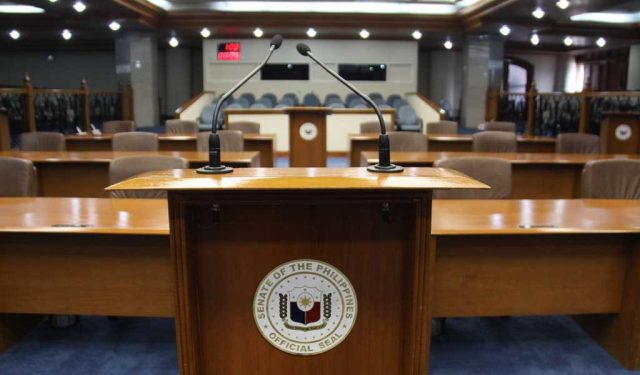
SENATE PRESIDENT Francis “Chiz” G. Escudero moved the readings of the articles of impeachment against Vice-President Sara Duterte-Carpio to June 11 to give way for the Senate to tackle priority legislation.
“With only six session days before the sine die adjournment, it is imperative for the Senate and the House of Representatives to prioritize the passage of these measures, consistent also with the administration’s thrust to align our government with the people’s needs and expectations,” Mr. Escudero said in a statement on Thursday.
The presentation for the Articles of Impeachment was originally scheduled for June 2.
The Senate chief said that it would also allow the upper house to act on more than 200 presidential appointments, including the three cabinet secretaries, four officials of constitutional commissions, 39 foreign service officers, and 277 officers of the Armed Forces of the Philippines.
A letter of the rescheduled date had also been sent to the Speaker of the House and the Office of the Vice-President. — Adrian H. Halili
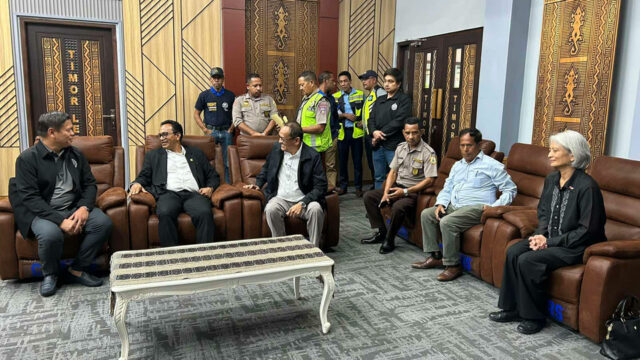
A former lawmaker accused of killing his political rival and 12 others arrived in Manila after staying in Timor Leste for months, President Ferdinand R. Marcos, Jr. confirmed on Thursday night.
In a video message posted across his social media accounts, Mr. Marcos confirmed that former Negros Oriental Rep. Arnolfo A. Teves, Jr. returned to the country in a chartered plane.
“I was informed by Prime Minister [Kay Rala Xanana] Gusmão in the [Association of Southeast Asian Nations] meeting that I just returned from in Kuala Lumpur, that Timor Leste was ready to send Teves back to the Philippines so this would not have happened without the assistance of President [José Ramos-Horta] and Prime Minister Gusmão,” Mr. Marcos said.
He assured Filipinos that lawlessness will not go unpunished.
This comes after the Timorese government on Wednesday, a day after the ASEAN Summit concluded in the Malaysian capital, ordered Mr. Teves’ deportation for being an undocumented alien.
Mr. Teves will face multiple charges upon his return, including those related to the assassination of Negros Oriental Governor Roel R. Degamo, as well as accusations of orchestrating several other killings in the province.
He has denied any wrongdoings. His camp filed a habeas corpus plea against his arrest yesterday as a last-ditch effort to prevent his return in the Philippines.
He left the country shortly after Mr. Degamo’s murder in 2023 and remained overseas despite the cancellation of his passport.
Timor Leste is seeking membership in the ten-member regional bloc, which the Philippines will chair in 2026. — Chloe Mari A. Hufana

THE Metropolitan Manila Development Authority (MMDA) said motorists covering their plate numbers using objects like face masks and masking tape would face a P5,000 penalty amid the implementation of the No Contact Apprehension Policy (NCAP).
“I am warning them that the penalty for this is P5,000. They might be surprised,” MMDA Traffic Enforcement Director Victor Maria D. Nuñez said in Filipino during a Palace briefing on Thursday. “We monitored in many of our CCTV cameras, [people] covered [their plate numbers] with electrical tape, covered with masking tape.”
The memo, he said, was promulgated early Thursday.
The NCAP is among the government’s traffic enforcement solutions as it plans to rehabilitate the Epifanio de los Santos Avenue (EDSA), the capital’s major highway, by mid-June.
MMDA started enforcing the policy again on Monday after the Supreme Court partially lifted its 2022 order that stopped its implementation.
The NCAP covers EDSA, C5, Buendia, Roxas Boulevard, Marcos Highway, Katipunan, Commonwealth Avenue, Quezon Avenue and West Avenue.
It monitors and penalizes traffic violations with surveillance cameras and other digital monitoring systems to encourage driver discipline, reduce traffic congestion, and minimize corruption. — Chloe Mari A. Hufana

THE Bureau of Customs (BoC) on Thursday said it handed over nearly 3,000 abandoned balikbayan boxes to the Department of Migrant Workers (DMW) for distribution to respective owners.
In a statement on Thursday, Customs said it turned over 2,954 balikbayan boxes to the DMW in a ceremonial event held on May 29 in Davao City.
“These boxes, originally sent by Overseas Filipino Workers to their loved ones, were left unclaimed after being mishandled and abandoned by unscrupulous freight forwarders at the Port of Davao,” the BoC said.
The approval of the Department of Finance, the BoC declared the boxes forfeited and officially donated them to the DMW through a signed Deed of Donation.
In a separate statement on Thursday, Customs said it examined two 20-foot container vans from Thailand containing 1,000 sacks of refined sugar in its first operation on May 23.
Another shipment examined by BoC found two abandoned 20-foot containers at Warehouse 3 in Port of Manila. They found 1,040 bags labeled “sweet mixed powder.”
Both shipment of sugar are valued at approximately P9 million, the agency said.
During the same inspection activity, the team also assessed a 40-foot container misdeclared as fabric, which was found to contain 1,046 boxes or 52,300 reams of illicit cigarettes with an estimated value of P81.065 million. — Aubrey Rose A. Inosante

THE GOVERNMENT Service Insurance System (GSIS) has set aside more than P22 million in emergency loan for flood and prolonged rain-affected members and old-age and disability pensioners in La Paz, Agusan del Sur.
“Active members working or residing in the area are eligible to apply if they have no due and demandable GSIS loan, are not on unpaid leave, have paid premiums in the last six months before applying, have no pending administrative or criminal case, and have a net monthly take-home pay of at least P5,000,” the state pension fund said in a statement on Thursday.
It said qualified members and pensioners have until June 15 to apply for a loan. Proceeds will be electronically credited to the borrower’s eCard or Unified Multi-Purpose ID (UMID) card.
Under the facility, qualified members who have an existing emergency loan may borrow up to P40,000 to pay off their previous emergency loan balance and enable them to receive a maximum net amount of P20,000.
Meanwhile, those without an existing emergency loan balance may apply for a P20,000 loan.
“Pensioners may also apply, provided they are residing in La Paz and their net basic monthly pension is at least 25%,” GSIS said.
The loan carries an interest rate of 6% and is payable in 36 equal monthly installments.
“It is covered by a loan redemption insurance, which deems the loan fully paid, in case of the borrower’s demise, provided the loan payment is up to date.” — Aaron Michael C. Sy

COTABATO CITY — Leaders of the Moro National Liberation Front (MNLF) are worried of a backlash in the government’s peace process with southern communities if President Ferdinand R. Marcos, Jr. designates a new peace, unity and reconciliation adviser who has limited understanding of the Mindanao secessionist issue.
Bangsamoro Labor and Employment Minister Muslimin G. Sema, who is chairman of the MNLF, told reporters on Thursday that they want the President to reappoint the retired Army Officer Carlito G. Galvez, Jr. as his adviser on peace, reconciliation and unity, asserting that he has ample knowledge about the government’s separate peace accords with the MNLF and the Moro Islamic Liberation Front (MILF).
The MNLF and the MILF oversee the operations of several ministries in the Bangsamoro Autonomous Region in Muslim Mindanao (BARMM). Both fronts also have representatives in BARMM’s 80-seat regional parliament.
Mr. Galvez complied with the President’s directive for all members of his cabinet to resign for him to have leeway in initiating a revamp.
He had served as commander of the Army’s 6th Infantry Division covering Central Mindanao and as chief of the Western Mindanao Command before he retired from military service.
“We are appealing to the President to reappoint him. Only a soldier who had experienced the difficult, painful consequences of armed conflicts in Southern Mindanao would know what are the best solutions to the nagging security issues in the region,”Mr. Sema said, referring to Mr. Galvez.
MNLF officials in Cotabato, South Cotabato, Sultan Kudarat and Sarangani provinces, as well as in the island province of Basilan and in BARMM’s capital, Cotabato City, were quoted in radio reports on Thursday as saying that Mr. Galvez was a frequent visitor of their camps, now recognized as peace zones by the police and military.
“He had extensive military engagements in Mindanao as a soldier. That makes him a good presidential adviser on peace, reconciliation and unity,” Mr. Sema said. — John Felix M. Unson
BAGUIO CITY — Re-elected Benguet lawmaker Eric Go Yap said he is bent on filing charges against those involved in the disqualification charges filed against him before the Commission on Elections (Comelec).
Seven disqualification cases have so far been filed against Mr. Yap.
“Another disqualification case was filed against me today, it’s the seventh (time) already. Again, the petition questions my citizenship but with no proof to back up their claims,” Mr. Yap said.
Despite garnering 144,093 votes, Mr. Yap’s proclamation was put on hold earlier following an order from Comelec due to a disqualification case filed before the May 12 election.
“As mentioned previously, the petitioners will face serious charges. Our lawyers are drafting the charges already against every single one of them,” he said.
On May 27, Mr. Yap also received his sixth disqualification case filed, also questioning the citizenship of the re-elected solon.
“We know who’s behind all these but we will deal with that later. This needs to be addressed first, otherwise, we risk not having a sitting Benguet Representative come July 1st. We will hurdle these, and the petitioners will have their day in the court after,” Mr. Yap said in mixed English and Filipino. — Artemio A. Dumlao
