Home Blog Page 1337

Mitsubishi signs P18.4-B deal with Ayala Corp. for indirect GCash stake

PHILSTAR FILE PHOTO

AYALA CORP. has signed an agreement to sell 50% of its stake in AC Ventures Holding Corp. (ACV) to Japan’s Mitsubishi Corp. for at least P18.4 billion, a transaction that could increase the valuation of GCash ahead of its planned public listing.

The two companies signed the investment agreement on March 31, Ayala Corp. said in a regulatory filing on Wednesday.

Mitsubishi will subscribe to 18.03-million common and redeemable preferred shares of ACV as part of the transaction.

After the transaction, Ayala Corp. and Mitsubishi will each hold 50% of ACV.

ACV owns 13% of Globe Fintech Innovations, Inc. (Mynt), which has two fintech companies, G-Xchange Inc., the operator of GCash, and Fuse Lending, a tech-based microlender.

Ayala Corp. said the investment will be finalized only after receiving approval from the Securities and Exchange Commission for the amendment of ACV’s articles of incorporation and from the Philippine Competition Commission.

“ACV shall use the subscription proceeds to redeem Ayala Corp.’s redeemable preferred shares in ACV and cover related costs,” Ayala Corp. said.

Ayala Corp. said in October last year that Mitsubishi could help Mynt’s overseas growth as well as in areas like cloud-based payments and new credit algorithms.

“We believe Mitsubishi can add meaningful value to Mynt, which will allow Mynt to deliver significant value to its over 94 million registered users. It’s all about serving better the many Filipinos that depend on GCash and Fuse, and for making a wider variety of financial and other products available to as many Filipinos as possible,” Ayala Corp. President and Chief Executive Officer Cezar P. Consing previously said.

The deal comes as GCash prepares for an initial public offering (IPO) later this year, with the company reportedly aiming for a valuation of at least $8 billion.

For 2024, Ayala Corp.’s core net income increased 10% to a record P45 billion, led by strong performance in banking, real estate, telecommunications, and renewable energy.

The conglomerate has allotted P230 billion for its consolidated capital expenditures this year.

Ayala Corp. shares were unchanged at P591 per share on Wednesday. — Revin Mikhael D. Ochave

Rolling with Nobu

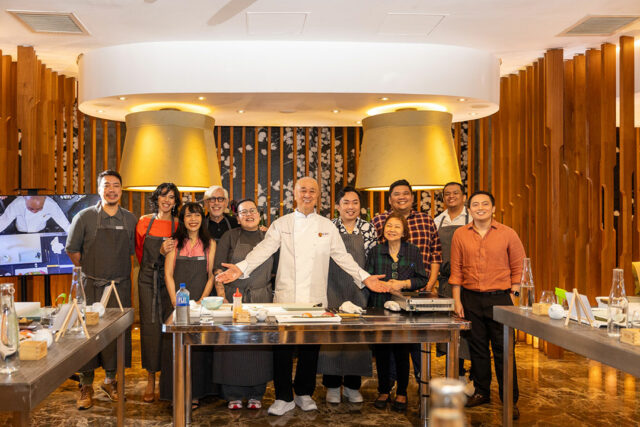
CHEF Nobu Matsuhisa’s sushi-making demo at Nobu Manila with media participants.

NOBU MATSUHISA was in Manila at his namesake hotel to host two dinners on March 25 and 26. This marked the celebrity chef’s first visit to his Philippine property since 2019 — before the pandemic.

The scars of that season were nowhere to be seen as Mr. Matsuhisa taught gathered media guests how to make his signature sushi during a preview lunch on March 25, before the P8,500 net per person dinner that evening.

At the Nobu restaurant in the City of Dreams Manila, tables were arranged into a U, while guests rolled and balled to Mr. Matsuhisa’s instructions. He knew what he was doing: his Matsuhisa restaurant in Beverly Hills brought his Peruvian-Japanese style to Hollywood in 1987, and to this day, his restaurants are namedropped in movies to reflect the dining preferences of the rich and famous. Robb Report included him in its Most Powerful People in American Fine Dining list in 2023 and 2024, and last year, the Emperor of Japan conferred on him The Order of the Rising Sun, Gold and Silver Rays.

Yet that day in Manila, Mr. Matsuhisa closely inspected each roll made by the guests. He instructed them to place a 10- to 12-gram rice ball on top of a slice of fish, with just a touch of wasabi, then to form it into a rectangle. They then gently shaped the sides with the thumb and the forefinger; after flipping it so the fish would be on top. A lot of the steps are just carefully “massaging” the roll so it stays in place. The whole process is delicate and requires care: press too hard and you smash it, then you’ll have to do it again.

LUNCH WITH NOBU
For lunch, Mr. Matsuhisa served his signature sashimi with yellowtail, jalapeno, yuzu soy, and cilantro. This was impossibly light, granted some earthiness with the jalapeno and the grassy cilantro.

The next course was the Sashimi Salad, with tuna tataki, field greens, his namesake Matsuhisa dressing, shaved roots, and daikon radish. The tangy and spicy dressing gave color and life to the otherwise very mild selection.

The dish that propelled him to stardom, his Black Cod Miso, came wrapped in a leaf with pink ginger fastened by a toothpick, which one pulls so the leaf unwraps from the fish. It is mild and sweet, given some jazz by the yuzu miso, then punctuated by the heat of the pink ginger.

This is was followed by something heftier: US Prime Dry-aged Ribeye Yakimono, dressed in an Anticucho (Peruvian barbecue) sauce. The first bite of the grilled vegetables was enough to convince us about the mastery behind the dish, but the anticucho sauce on the steak gave it heat and depth.

For dessert, we had a Whisky Cappuccino (a modified tiramisu), with its sweetness tempered by the zing of whisky.

PLANS
In an e-mail, Mr. Matsuhisa told us about his plans for the next few years. While he can count over 50 Nobu Restaurants, 38 Nobu Hotels, and 12 residence projects spanning across five continents bearing his name, he says, “Our brand expansion will continue with new restaurants and hotel openings in Maui, Del Coronado, New Cairo, Rome and several more over the next two to three years. Personally, I want to continue to mentor and educate the next generation of chefs.”

Mr. Matsuhisa was named the official chef twice at the 81st and 82nd Golden Globes in 2024 and 2025 — with a wealth of projects around him, how can he be sure that everything that comes out of his kitchen comes with excellence?

“The key to making the best sushi is the rice. The quality, preparation, and technique are important. The way the rice is formed in your hand is also important — you cannot pack it too tight,” he said in the e-mail. More important than ingredient and technique though, he notes, “You must put your heart, kokoro, into everything you do — the guests can taste the difference.”

For inquiries about Nobu in Manila, call 8800-8080 or e-mail noburestaurant@cod-manila.com or guestservices@cod-manila.com. — Joseph L. Garcia

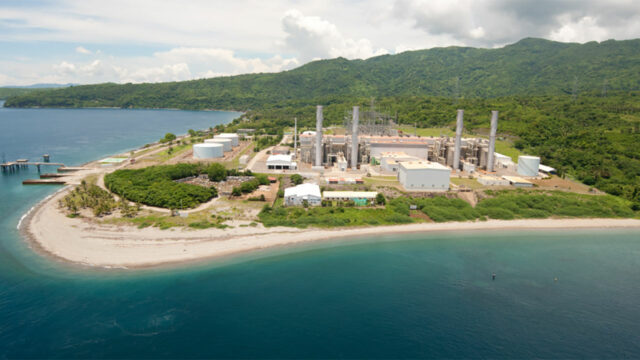
Batangas LNG plants to attain full capacity by May — DoE

SMCGLOBALPOWER.COM.PH

THE Department of Energy (DoE) said it expects sufficient power supply during the warm and dry season, when electricity demand peaks, as two gas-fired power plants in Batangas are set to generate a full combined capacity of 2,500 megawatts (MW) by next month.

“We were told that by the middle of May, instead of the 1,350 MW we have from those two plants now, we will reach 2,500 MW. So, we’ll be fine this summer,” Energy Undersecretary Rowena Cristina L. Guevara said on the sidelines of a forum on Wednesday.

“We are just hoping that other plants will not have outages,” she added.

South Premiere Power Corp. (SPPC) and Excellent Energy Resources, Inc. (EERI) implemented a three-day temporary shutdown of their gas-fired power plants in Batangas.

During the maintenance shutdown from March 29 to 31, Linseed Field Corp. (LFC) conducted mechanical activities at its liquefied natural gas (LNG) terminal in preparation for the completion of its onshore LNG tank by the end of this month.

Both plants have resumed operations, increasing their combined output to 1,350 MW from the previous 1,300 MW.

SPPC and EERI are jointly owned by Meralco PowerGen Corp. (MGen) of Manila Electric Co., Therma NatGas Power, Inc. (Therma) of Aboitiz Power Corp., and San Miguel Global Power Holdings Corp. (SMGP) of San Miguel Corp. Earlier this year, these firms signed a $3.3-billion LNG deal to launch the country’s first LNG facility.

Under the agreement, MGen and Therma jointly invested in two of SMGP’s gas-fired power plants: the 1,278-MW Ilijan power plant and the new 1,320-MW combined-cycle power facility, both in Batangas.

MGen and Therma, through Chromite Gas, along with SMGP, also invested in the LNG import and regasification terminal owned by Linseed.

While there is sufficient electricity supply, Energy Assistant Secretary Mario C. Marasigan said the possibility of red or yellow alerts cannot be ruled out.

“In our simulations, the possibility of having a yellow or red alert is not ruled out. But we just want to clarify that a yellow alert does not necessarily mean there will be brownouts, only a thinning of reserves,” Mr. Marasigan said partly in Filipino in a televised interview.

A yellow alert is issued when the operating margin is insufficient to meet the grid’s contingency requirement, putting the system at risk if the available contingency reserve falls below the required operating margin.

Last month, the state weather bureau, the Philippine Atmospheric, Geophysical, and Astronomical Services Administration (PAGASA), announced the start of the dry season with the termination of the Northeast Monsoon over most parts of the country.

The DoE earlier urged consumers to adopt energy efficiency measures to manage electricity consumption and ensure power supply stability.

The department forecasts peak demand this year to reach 14,769 MW for Luzon, 3,111 MW for Visayas, and 2,789 MW for Mindanao.

Meanwhile, the maximum adjusted available generating capacity is 15,504 MW in Luzon, 3,040 MW in Visayas, and 3,314 MW in Mindanao, as outlined in the Grid Operating and Maintenance Program 2025–2027 and committed power projects for 2025. — Sheldeen Joy Talavera

Ippudo introduces stylish ramen bar

IPPUDO RAMEN BAR

Mixing heritage with innovation

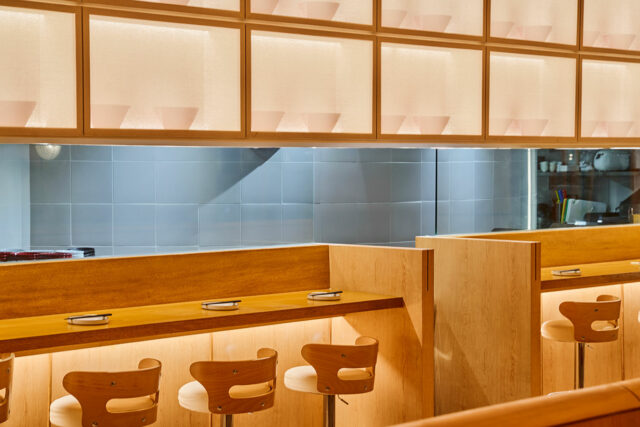
IPPUDO in Uptown Mall, Bonifacio Global City (BGC), has gone through a makeover and has been rebranded as Ippudo Ramen Bar. In addition to the renovation, they’ve added quite a few things to the menu, from cocktails and sushi to more side dishes and new desserts.

“The ramen bar is kind of a notch above, like an Ippudo ‘Plus,’” said Michael Concepcion, business development head and creative director for Standard Hospitality Group, which has brought many Japanese brands to the Philippines.

“It’s still rooted in the heritage and history of making good ramen, but more modern and high-energy, where friends can have some highballs and order small plates and chat under the dim lights,” Mr. Concepcion said.

EXCLUSIVE DISHES
During a media preview on March 27, we tasted the exclusive menu items not found in other Ippudo branches.

The Salmon Soy Ginger Sashimi, coated with a bold mix of soy and ginger, is perfect as a palate opener, especially with the orange segments that come with it. Its counterpart among the sushi, the Goma-E Salmon Roll, gives a torched spin on the minced salmon, paired with fried tofu, spinach, and rice rolled into a creamy bite.

All the sushi items were developed by Koyo, a handroll concept by New York-based specialist Mark Manaloto.

Many guests tried out the highball cocktails, the popular choice being the classic. But an unexpected favorite was the gari (pickled ginger) highball, its unusual component giving it a tangy yet refreshing taste. Also on the drinks menu are Sapporo draft beer, Bombvinos wine, and Dassai sake.

For the cold plates, the Charred Edamame prevailed as a solid pairing with the cocktails. Though it has the expected green soybean taste, the lemon vinaigrette, roasted nori flakes, and togarashi spice powder used in the dish elevate it to a nice snack.

The Hanetsuki Gyoza was a popular order, the usual pork and shrimp gyoza dumplings given a crispy golden skirt, but it’s the ponzu sauce and garlicky olive oil that make it addictive to eat.

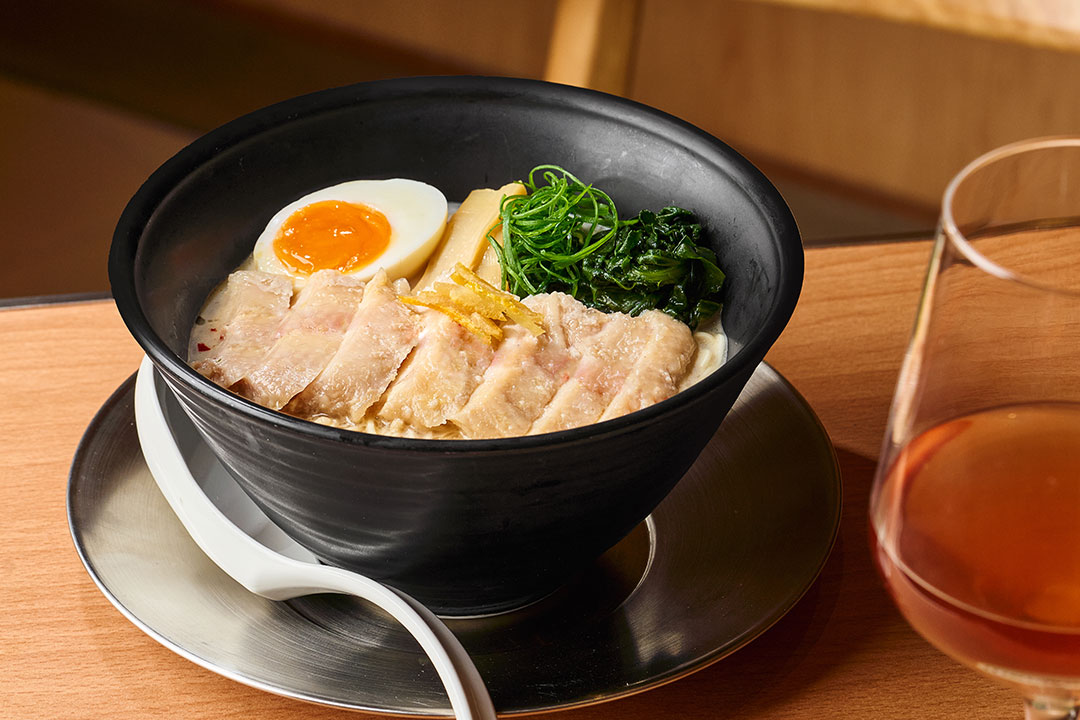
We opted to try the White Chicken Yuzu Ramen for our main dish, this iteration not being found in any other Ippudo branch, and it didn’t disappoint. The yuzu-infused pork broth gave the tender chicken meat a brighter, zesty tone. Some may not be used to tasting citrus in ramen, but it actually provides a lovely balance to the meal.

Finally, for dessert, we ordered the Classic Tiramisu, which comes in a cute, minimalist wooden box from which you scoop up the soft cake. The tiramisu’s coffee soak is not overdone, blending well with the mascarpone cream and cocoa powder dusting. For a new dessert item, it checks all the boxes right out of the gate.

HERITAGE AND INNOVATION
The concept of the Ippudo Ramen Bar is to provide a “well-rounded, modern dining experience that honors Japanese culinary heritage while embracing contemporary innovation,” said Mr. Concepcion.

He pointed out that the design of the branch, done in collaboration with Hong Kong-based architecture firm DEFT, showcases that balance, featuring “clean lines, warm textures, and a dynamic yet inviting atmosphere.”

Though Ippudo in Japan started back in 1985 and was brought to the Philippines in 2011, it is innovation that will “keep it going for many more years to come,” he added.

Asked why the group chose to transform the BGC branch over others, Mr. Concepcion went into detail on their expansion strategy.

“We trimmed it down and made this Ippudo Ramen Bar, to match BGC’s vibe of having malls but also a nice, street-level atmosphere,” he explained. The space next door, still under construction, will be taken by one of their other Japanese brands.

He mentioned that his father John Concepcion, chief executive officer of the Standard Hospitality Group, taught him that growing a business is not always about being aggressive.

“We want to grow and scale our business, but we’re focusing on making sure that our concepts are timeless. We’re not looking to make things that will come and go,” the younger Mr. Concepcion said.

According to him, Ippudo Ramen Bar is really “the sum of its parts,” with the details making the whole experience special.

“Start off with a highball, have our edamame, engage in conversation, get some gyoza, share a bowl of ramen. It’s social, it’s friendly, it’s shared. We designed it to be an experiential dining concept,” he said.

Ippudo Ramen Bar is located on the ground floor of Uptown Mall in Bonifacio Global City, Taguig. — Brontë H. Lacsamana

Reissued bonds fetch lower rates on BSP bets

BW FILE PHOTO

THE GOVERNMENT made a full award of the Treasury bonds (T-bonds) it offered on Wednesday as rates dropped on strong demand amid expectations of continued monetary policy easing by the Bangko Sentral ng Pilipinas (BSP) this year.

The Bureau of the Treasury (BTr) raised P30 billion as planned via the reissued seven-year bonds it auctioned off on Wednesday as total bids reached P80.713 billion or nearly three times the amount on offer.

This brought the total outstanding volume for the bond series to P254.7 billion, the Treasury said in a statement.

The bonds, which have a remaining life of five years and three months, were awarded at an average rate of 5.908%. Accepted bid yields ranged from 5.875% to 5.919%.

The average rate of the reissued papers decreased by 11.1 basis points (bps) from the 6.019% fetched for the series’ last award on March 4 and was also 46.7 bps lower than the 6.375% coupon for the issue.

However, this was 1.48 bps higher than the 5.8932% quoted for the five-year bond and 1.29 bps above the 5.8951% seen for the same bond series at the secondary market before Wednesday auction, based on PHP Bloomberg Valuation Service Reference Rates data provided by the BTr.

Following the strong demand for the offering, the BTr opened its tap facility window to raise P7 billion more via the papers.

The Treasury fully awarded its T-bond offer as rates were within expected levels as investor demand was strong, a trader said in a text message.

The trader said the BTr opened its tap facility to take advantage of the robust demand to extend debt maturities.

“Still, the market is cautious ahead of tomorrow’s US ‘Liberation Day,’” the trader said.

US President Donald J. Trump was poised to impose sweeping new reciprocal tariffs on global trading partners on Wednesday, upending decades of rules-based trade, threatening cost increases and likely drawing retaliation from all sides, Reuters reported.

Details of Mr. Trump’s “Liberation Day” tariff plans were still being formulated and closely held ahead of a White House Rose Garden announcement ceremony scheduled for 4 p.m. Eastern Time (2000 GMT).

The new duties are due to take effect immediately after Mr. Trump announces them, White House spokesperson Karoline Leavitt said on Tuesday, while a separate 25% global tariff on auto imports will take effect on April 3.

The reissued bonds fetched a lower average yield versus the previous auction amid dovish signals from the BSP chief recently, Rizal Commercial Banking Corp. Chief Economist Michael L. Ricafort said in a Viber message.

BSP Governor Eli M. Remolona, Jr. said last week that the Monetary Board could cut rates by 25 bps at their April 10 review.

He said the BSP remains on an easing cycle and could reduce borrowing costs by as much as 75 bps this year.

The central bank has brought down benchmark interest rates by a total of 75 bps since it began its rate-cut cycle in August last year, with its policy rate currently at 5.75%.

The Monetary Board unexpectedly kept rates unchanged at its Feb. 13 review amid uncertainties due to the Trump administration’s policies.

Mr. Ricafort added that the latest round of cuts in banks’ reserve requirement ratios (RRR) that took effect on Friday, which freed up about P330 billion in liquidity, also caused auction yields to go down as this likely boosted demand for government debt.

The RRR of universal and commercial banks and nonbank financial institutions with quasi-banking functions was brought down by 200 bps to 5% from 7%.

The reserve ratio for digital banks was cut by 150 bps to 2.5%, while the ratio for thrift lenders was lowered by 100 bps to 0%, now at par with rural and cooperative banks’ RRR.

The BTr is looking to raise P245 billion from the domestic market this month, or P125 billion via Treasury bills and P120 billion through T-bonds. — A.M.C. Sy with Reuters

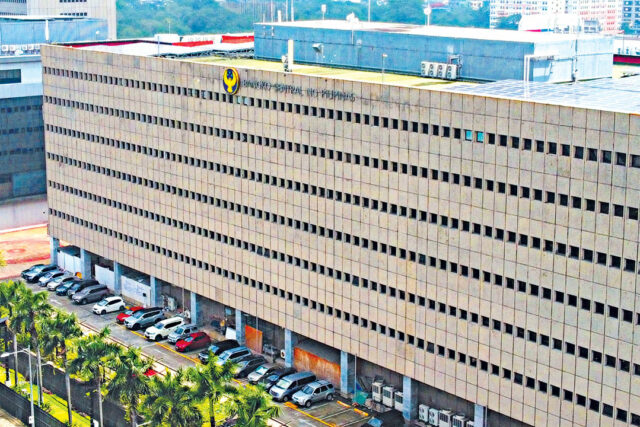
SEC eases SBG investment limits for equity and multi-asset funds

BW FILE PHOTO

THE Securities and Exchange Commission (SEC) has eased the single business group (SBG) investment limit for equity funds, balanced funds, and multi-asset funds exposed to equity securities, following requests from fund managers. 

The corporate regulator issued Memorandum Circular (MC) No. 2 on March 28, which provides exemptions to the SBG limit imposed by MC No. 15, issued in 2020, the SEC said in an e-mail statement on Wednesday.

Under the current limit, an investment company is barred from investing, in aggregate, more than 20% of its net assets in transferable securities, money market instruments, deposits, and over-the-counter financial derivatives issued by any SBG, provided the investments do not exceed 5% of the net assets of the investment company.

MC No. 2 provides that funds with no actual investment in financial derivatives, including equity funds, balanced funds, and multi-asset funds that have actual exposure to equity securities, are not covered by the SBG limit.

“Instead, these exempted classes of investment companies will be subject to the single entity or issuer investment limitation under Rule 6.8(b) of the implementing rules and regulations of Republic Act No. 2629, or the Investment Company Act (ICA), until further notice by the commission,” the SEC said.

However, the SEC said that all investment companies, including the covered funds, will continue to be subject to other investment limits and restrictions under existing rules and regulations, including investment companies with or without actual investments in financial derivatives.

It added that investment companies seeking to engage in the cross-border offering of their funds to other ASEAN member jurisdictions as qualifying collective investment schemes must comply with the 20% SBG limit in the ASEAN standards of qualifying collective investment schemes.

The corporate regulator also said it will not impose fines or penalties for any breach of the SBG limit committed by the covered funds from May 15, 2020, until March 27 of this year.

“Any breach of the single entity/issuer limit in Rule 6.8(b) by the covered funds will result in the imposition of corresponding fines and penalties under the ICA implementing rules and regulations and other applicable laws, rules, and regulations,” the SEC said. — Revin Mikhael D. Ochave

The Macallan pays homage to the mighty oak

THE MACALLAN, the luxury single Malt Scotch Whisky, has unveiled the latest in the Harmony Collection, with two new whisky releases as part of the brand’s collaboration with Cirque du Soleil.

Last year, the troupe had a special performance at the Macallan estate in Scotland to celebrate the whisky brand’s 200th anniversary. This was called Spirit, and the show is reflected in the Harmony Collection Vibrant Oak’s packaging, with a character from the show, Ayla, represented in the box. The second release, Harmony Collection Guardian Oak, also has another character from the show, Davonna.

During a tasting on March 25, The Macallan transformed Kenneth Cobonpue’s Fable Café into an homage to the oak — the theme for this year’s Harmony Collection. An ersatz oak tree was set up in the middle, while glasses of the whisky were covered by acorn tops.

The Harmony Vibrant Oak was matured in a combination of first fill sherry-seasoned American oak casks and refill sherry oak casks. Bottled at 44.2% alcohol by volume (ABV), this whisky delivers key flavors of vanilla, lime, sweet oak, apple, toasted almonds, according to a release. To us, it had a very forward oak flavor, tempered with a little vanilla and nut.

The Harmony Guardian Oak, meanwhile, was matured in a combination of first fill sherry-seasoned European oak casks and refill sherry oak casks. Bottled at 44.2% ABV, this whisky delivers key flavors of dates, orange, rich oak, raisins, and baking spices.

The Harmony collaborations have seen partnerships with figures such as the culinary Roca brothers, with their harmony collection recalling chocolate, a second one inspired by coffee. The most recent one before this oak-inspired collaboration was one with the artistic McCartney sisters, celebrating the lands of Scotland.

More than the celebrity names, each Harmony release has sustainability at its heart: for example, the coffee collaboration used coffee farming byproducts in the packaging; the McCartney sisters’ one used meadow cuttings in their box. The latest one uses oak chips in the packaging.

This is reflective of the brand’s embrace of the environment. Hans Eckstein, brand ambassador of The Macallan in the Philippines said in an interview after the tasting, “The Macallan believes very strongly (about) not negatively affecting the impact in nature where we produce our whisky. You’ll see that in our distillery — it blends into the hills.”

It’s not just aesthetics and lip service. Mr. Eckstein said that The Macallan has partnered with car manufacturer Bentley in an effort to reduce their environmental impact. “We want to make our entire vehicle fleet electric by this year,” he said. “The ultimate goal of The Macallan is to become carbon-neutral by 2030. We have five more years to hit that aim.” — JL Garcia

BMI sees 25-bp rate cut next week

THE BANGKO SENTRAL ng Pilipinas (BSP) is likely to cut benchmark interest rates by 25 basis points (bps) at its meeting next week amid a stable peso and slowing inflation, Fitch Solutions’ unit BMI said.

“We expect the BSP to cut its policy interest rate by 25 bps next week. The peso has stabilized in recent weeks, inflation is barely above the 2% target lower bound at 2.1%, while growth underperformed government targets in 2024,” BMI said in a report.

The Monetary Board will meet to review policy on April 10. A 25-bp cut will bring the policy rate to 5.5% from 5.75% currently.

At its Feb. 13 meeting, the Monetary Board unexpectedly kept benchmark rates unchanged amid uncertainty stemming from the Trump administration’s policies.

BSP Governor Eli M. Remolona, Jr. said last week that there is a “good chance” that the Monetary Board will cut rates by 25 bps at next week’s meeting.

He said the BSP remains on an easing cycle and could reduce borrowing costs by as much as 75 bps this year depending on data.

The central bank has brought down benchmark interest rates by a total of 75 bps since it began its rate-cut cycle in August last year.

BMI said Mr. Remolona’s comments on possibly cutting borrowing costs by a cumulative 75 bps for 2025 align with their own forecast that the policy rate will be at 5% by yearend.

“Overall, inflation in the Philippines has shown signs of a slow easing. Inflation figures for February 2025 (latest data available) came in at 2.1% year on year, the slowest price hike since September 2024. This would support the BSP cuts…,” it said.

Lower benchmark rates would reduce debt servicing costs, which would be positive for consumer spending, BMI added.

It expects household spending growth to accelerate to 5.3% this year from 5% in 2024, it said, or to P13.2 trillion in real terms.

“Spending will remain influenced by the elevated inflationary pressures seen over 2025 as well as currently high debt levels, along with related debt servicing costs,” BMI said.

“A tight labor market will support spending, as real wage growth returns to positive territory, which will support purchasing power over the year.”

The BSP expects headline inflation to average 3.5% this year, within its 2-4% annual target.

In the first two months, the consumer price index (CPI) averaged 2.5%.

The central bank said in its latest Monetary Policy report that the CPI could exceed the 2-4% annual goal in the latter part of 2025 due to base effects, but the full-year print would be within target amid declining rice prices.

For this year, inflationary pressures could come from “higher global oil and non-oil prices, peso depreciation, and recent above-expectation inflation readings,” the BSP said. — A.R.A. Inosante

MPower renews power supply deal with Toyota car parts maker

TOYOTA-AISIN.PH

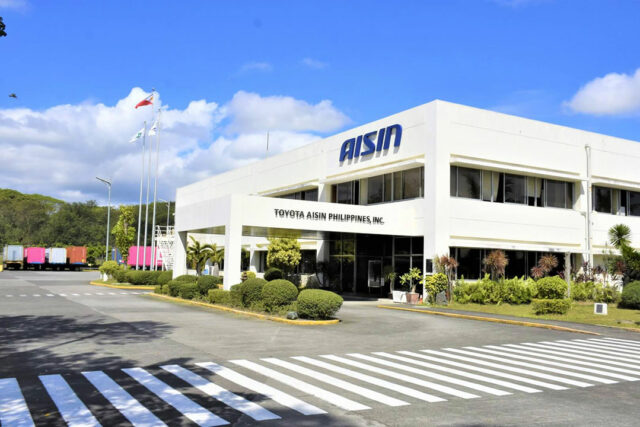
MPOWER, the local retail electricity unit of Manila Electric Co. (Meralco), said it has renewed its power supply deal with car parts maker Toyota Aisin Philippines, Inc. (TAP) to provide electricity to its manufacturing plant in Sta. Rosa, Laguna.

“At TAP, we continuously seek partners who not only share our values but can also actively contribute to advancing our operational excellence and sustainability goals,” TAP Acting General Manager Allan Cantal said in a media release on Wednesday.

TAP is a joint venture of global automotive components supplier Aisin Corp. Japan and carmakers Toyota Motor Corp.-Japan and Toyota Motor Philippines Corp.

TAP and MPower started their partnership in 2013 and have supported the car company’s goal of transitioning to 100% renewable energy since 2019.

“MPower remains committed to delivering dependable, efficient energy solutions that empower businesses like TAP to thrive,” Meralco First Vice-President and Head of MPower Redel Domingo said.

“By offering competitive energy prices, MPower enables Toyota to be competitive in their own industry and remain top-of-mind,” he added.

Meralco’s controlling stakeholder, Beacon Electric Asset Holdings, Inc., is partly owned by PLDT Inc.

Hastings Holdings, Inc., a unit of PLDT Beneficial Trust Fund subsidiary MediaQuest Holdings, Inc., has an interest in BusinessWorld through the Philippine Star Group, which it controls. — Sheldeen Joy Talavera

Dining In/Out (04/03/25)


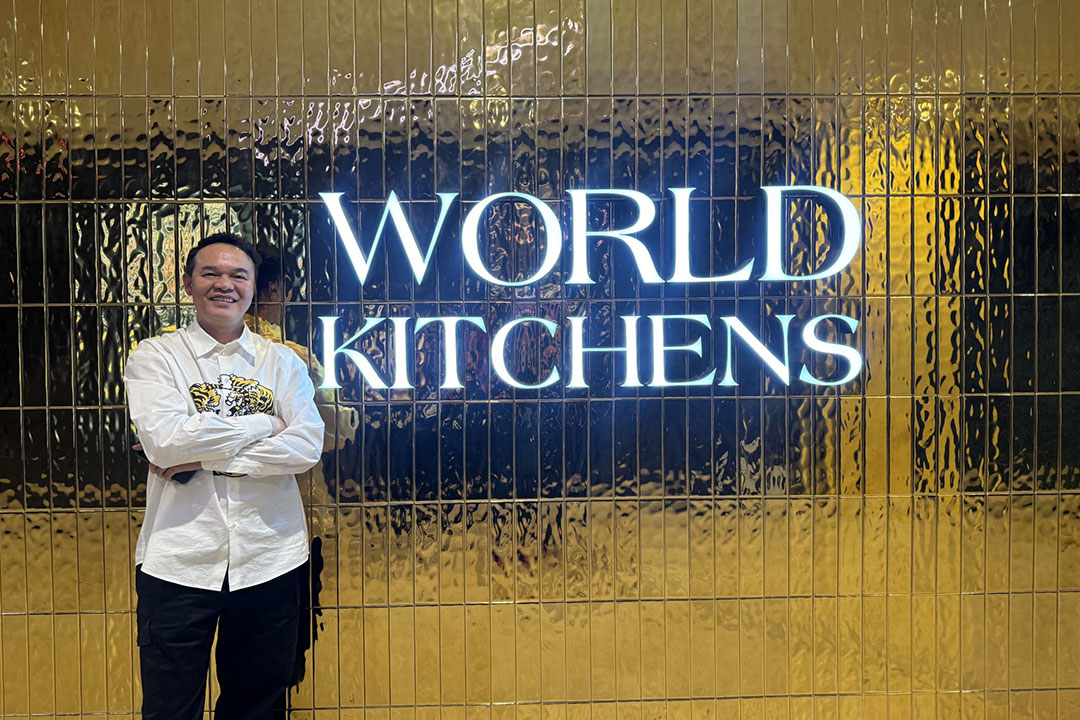
Singapore’s Chef Fung opens at World Kitchens

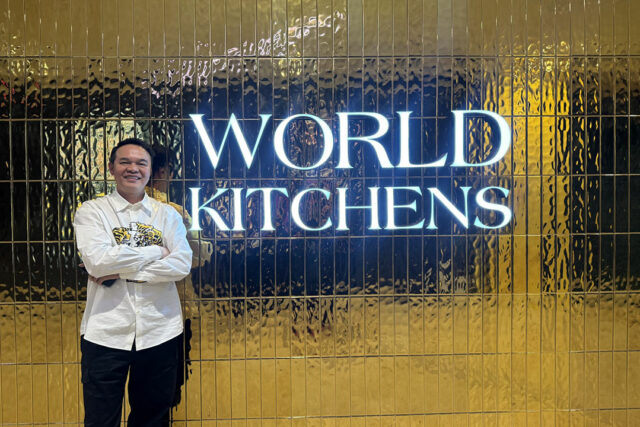
CHEF Fung Chi Keung, the man behind restaurants like Taste Paradise, Kai Garden, and Kai Duck, is opening Chef Fung Private Kitchen at World Kitchens in Gateway Mall 2, Cubao, Quezon City. As Group Executive Chef for the Paradise Group, he launched award-winning concepts and earned top honors including a Gold Medal at the Food and Hospitality Asia’s Imperial Challenge in 2012. While the full menu of Chef Fung Private Kitchen is still under wraps, expect some of Chef Fung’s signature dishes to reach Manila including his Peking Duck, served with five unique wraps and five dipping sauces. This dish is enjoyed with a choice of Original, Pumpkin, Spinach, Bamboo Charcoal, or Beetroot wraps, and Traditional, Black Pepper, Sesame, Seafood, or Special Mixed sauces. Another signature dish to watch out for is Classic Superior Shark’s Fin, a hot bowl of flavorful Supreme Broth accompanied with a crispy spring roll and served in a stone pot. Chef Fung Private Kitchen is opening soon at World Kitchens, located at Gateway Mall 2 in Araneta City.


Okada gives a peek of Executive Lounge

NESTLED on the 19th floor of Okada Manila, the Executive Lounge in the resort offers views of Manila Bay, world-class amenities, and a curated ambiance. Access to the Executive Lounge is available to guests staying in the Executive Suite, Garden Suite, Manila Bay Suite, Celebrity Suite, Presidential Suite, or Villas. “Our Executive Lounge is just one of the many reasons why Okada Manila is a six-time Forbes five-star integrated resort,” said Rob Scott, vice-president for hotel operations. “This unique and exclusive space offers guests exceptional service and topnotch amenities which empower them to work and unwind seamlessly.” This 600-square-meter space has floor-to-ceiling windows which frame the sunset. There one can have breakfast, all-day snacks, and evening cocktails, and on select nights there are live music performances. The Executive Lounge’s meeting rooms can be booked for intimate meetings, while extra guests can also enjoy the lounge with an add-on rate for each person. For inquiries, e-mail RestaurantReservation@okadamanila.com or call 8555-5799.


Starbucks and Peanuts join forces

STARBUCKS and Peanuts have come together to launch a global brand partnership that celebrates kindness, coffee, and community. Starbucks stores are introducing an exclusive line of Peanuts-inspired merchandise, food and beverages. This collaboration will feature the Peanuts gang, as well as the Snoopy persona, Joe Kind Snoopy, available exclusively at Starbucks. The Joe Kind Snoopy encourages people to connect through the simple, everyday acts of kindness. The collaboration is available throughout April, which is Starbucks Global Month of Good. For the past 15 years, Starbucks employees have dedicated their time to volunteering with local non-profit organizations throughout April. In stores across the Philippines, Starbucks customers will enjoy new beverages, merchandise, and an exclusive Starbucks card. Starbucks customers are encouraged to join the kindness movement on social media with #GlobalMonthofGood. The global partnership between Starbucks and Peanuts, features exclusive, limited-edition Joe Kind Snoopy merchandise including reusable cups, tumblers, water bottles, tote bags, and gift cards. Special drinks are the Joe Kind Snoopy Chocolate and Caramel Oatmilk Frappuccino, a creamy blend of vanilla syrup and chocolate chips with a combination of chocolate and caramel sauces, topped with whipped cream, chocolate sauce, and a Joe Kind Snoopy chocolate topper (available in blended coffee and cream formats); and the Joe Kind Snoopy Chocolate and Caramel Oatmilk Latte, built with an espresso base, a drizzle of caramel and chocolate sauces on the sides of the cup, milk and topped with whipped cream, chocolate sauce, and a Joe Kind Snoopy chocolate topper (available in hot and iced).


Watermelon cocktail tops drink tilt

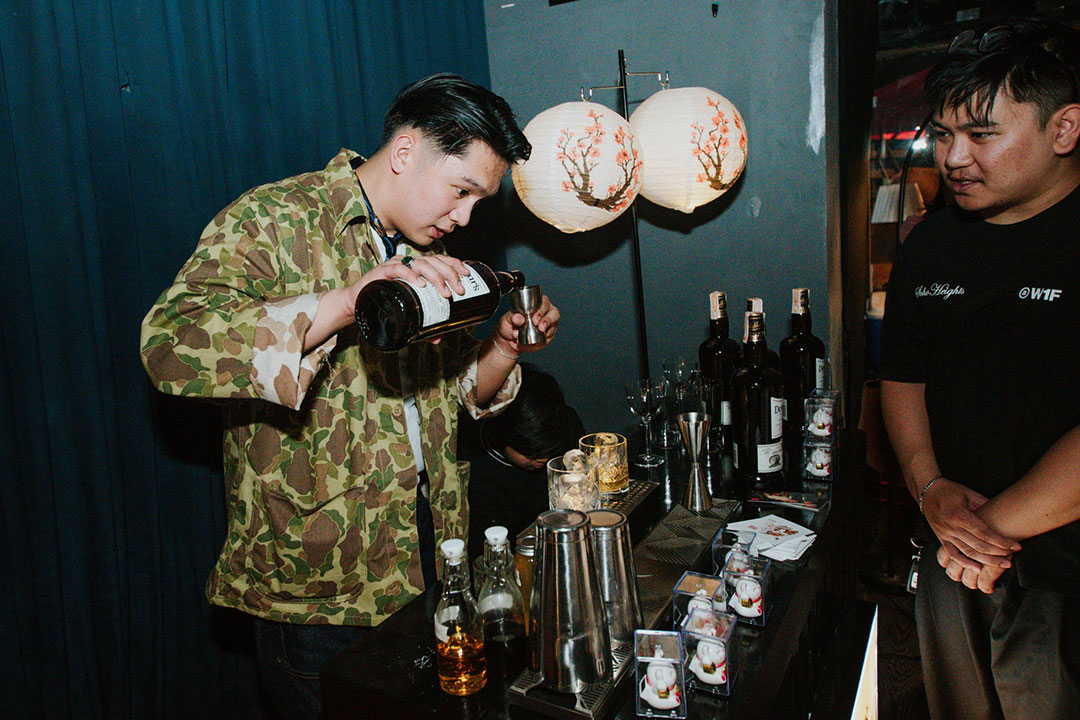
BARTENDER Clyde Ferrer bested over 20 other professional beverage contenders to claim the Dewar’s Highball Challenge National Championship title in the Philippines. Mr. Ferrer, from the Hospitality Management Program of the De La Salle-College of Saint Benilde (DLS-CSB) School of Hotel, Restaurant, and Institution Management, topped the contest with an innovative cocktail dubbed “What if…” The winning drink, headlined by Dewar’s 12-year-old scotch whiskey, has carbonated watermelon juice, lemon extract, watermelon seed orgeat, and balsamic vinegar. “It takes inspiration from my childhood, wherein watermelons as a snack became a cherished ritual as my parents opted for healthier options rather than junk food,” he said. The drink is called so because, “What if 50 years from now, I can no longer taste the real watermelon I loved as a kid?” he said. “What if, in the future, watermelons are engineered or faked, and that pure, natural sweetness is lost?” He represented Fat Cat, a jazz and cocktail bar in Makati, at the competition. He was mentored by its owner, Ron Cruz, and bar manager and head bartender Vernie Peña. “The drink revolves on how I can focus on the flavors of a watermelon with a twist of sustainability,” he explained. As the Philippine titleholder, Mr. Ferrer received a cash prize plus the opportunity to represent the country at the special Dewar’s Highball Challenge tour in Tokyo, together with fellow national champions from India, Malaysia, and Thailand.


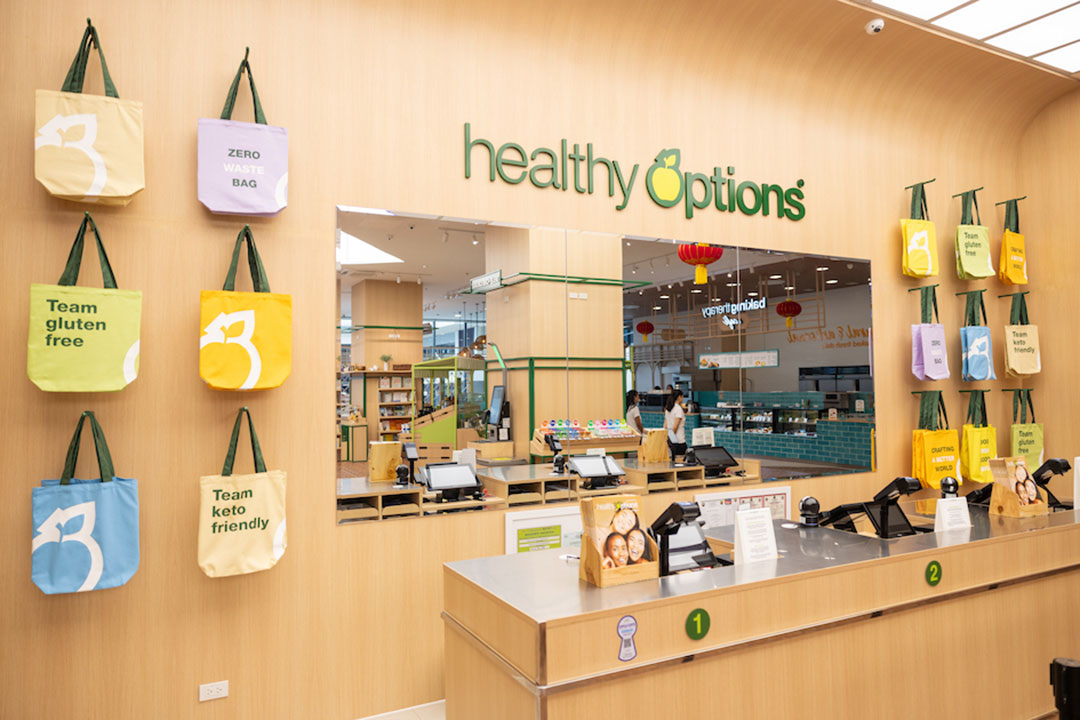
Healthy Options’ 35th store has fresh market concept

HEALTHY OPTIONS opens its 35th store at the Greenhills Mall, where it is introducing a fresh market concept designed by the French agency, Stories. Adding to the store’s modern vibe are Healthy Options’ first self-checkout counters. San Juan mayor Francis Zamora led the ribbon-cutting, joined by founder and Chief Executive Officer Romy Sia and Chief Operating Officer Belle Sison. Baking Therapy, the all-natural bakery by Healthy Options, unveiled its largest café inside the new Greenhills store. They offer a wide variety of guilt-free options, including artisanal gluten-free bread, no-sugar-added pastries, and other wholesome treats. The new store is located on the ground floor of Greenhills Mall, across Hoshino Coffee.


Jollibee offers treats for summer

JOLLIBEE is now offering Summer Saya Treats, rolling out the campaign with a series of sulit (bargain) offers and must-try deals. Ongoing until April 30 is the Summer Delights with Umbrella Promo in which customers can get a limited-edition Jollibee Umbrella for P149 with any value meal purchase paired with choice of Summer Delights: Mango Jelly Sundae, Cookies & Cream Sundae, or Iced Mocha. It is available at participating Jollibee stores nationwide via dine-in, take-out, and drive-through. Also available until April 30 at all branches, customers can get a Free Soda Float upgrade when they buy a Crunchy Chicken Sandwich with Fries & Drink for P125 (saving P25 in the process). From April 1 to 20, Jollibee offers Lenten Deals with the Visita Iglesia Digital Map. For those observing Lenten traditions, Jollibee offers a meat-free option with its Tuna Pie with Fries & Drink for P145 (saving P12). Plus, consumers can access Jollibee’s Visita Iglesia Digital Map featuring recommended and notable churches.

Lost in translation?

BW FILE PHOTO

That the quality of lawmakers has deteriorated over decades has been the topic of discussions ad nauseam, with one social media post, for example, noting that the first Senate in 1916 included a medical doctor, a diplomat, an Islamic theologian, a teacher, and a revolutionary general, among others.

But the task of educating voters, on whom elective hopefuls pin their hopes, remains a timeless task that is crucial for the preservation and growth of any democratic system faced with shifting sands like the misuse of artificial intelligence of late.

While our country has been known for maintaining a vibrant (or just plain noisy?) political system, it has chalked merely “mid-range performance” in international metrics, including:

• The 2024 “Global State of Democracy” report published by Stockholm-based intergovernmental organization International Institute of Democracy and Electoral Assistance in October last year, which tracks the state and quality of democracy worldwide, placed the Philippines 90th out of 173 countries, as well as 96th, 104th, and 64th, respectively, in the areas of representation (free and equal access to political power), rights (individual liberties and resources), rule of law (predictable, equal enforcement to the law and limitation of government power), and participation (instruments for and realization of political involvement, particularly through election and civil society).

• The “Freedom in the World 2025” report that was released by Washington, DC-based Freedom House in February, which rates people’s access to political rights and civil liberties in 208 countries and territories, classified the Philippines as “partly free,” retaining an overall score of 58/100 (the higher the number, the better), as well as 25/40 for political rights and 33/60 for civil liberties, for the past three years, though down from 55/100 in 2022.

“Democracy Index 2024” published by London-based Economist Intelligence Unit (EIU) early in March, still described the Philippines as a “flawed democracy” even as it rose two spots to 51st out of 167 countries, though with an overall score of 6.63 (out of 10, which is the best) that was the worst in three years and the second straight annual drop (meaning many others saw a bigger score reduction, since we still bested averages of 5.31 for Asia and Australasia and 5.17 for the world). EIU’s study gave us the highest scores in electoral process and pluralism (8.75), political participation (8.33), and civil liberties (7.06), and our lowest grades in functioning of government (4.64) and political culture (4.38).

Not exactly the picture our politicians would want to paint when they trumpet the merits of our democratic system.

Free fair elections are both a bedrock and barometer of a healthy democracy. And quality of an electorate — besides a supportive system — lies at its core.

In terms of framework: target reforms range from the push for a genuine party system (with some quarters noting that, unfortunately, it seems that only the communist party has a solid platform and program) to a ban on political dynasties (members of civil society groups like 1SAMBAYAN Coalition, SANLAKAS, Advocates for National Interest as well as former senior government officials and church leaders on March 31 asked the Supreme Court to compel Congress to pass a law that will define “political dynasty” in order to operationalize the ban enshrined in Article II, Section 26 of the 1987 Constitution). Reform gains have been few and far between, but hopefully this move vs dynasties will finally bear fruit nearly 40 years after the Constitution banned these political monopolies (notably: the Bangsamoro Autonomous Region in Muslim Mindanao, or BARMM, spells out an anti-dynasty provision in both its Bangsamoro Electoral Code and its Bangsamoro Local Governance Code1, as does Republic Act No. 10742, or the SK Reform Act, which provides that kin of elected/appointed officials within the second civil degree of consanguinity — by blood, or affinity — and by marriage, are prohibited from seeking seats in the Sangguniang Kabataan2.)

NOT ENOUGH VOTER EDUCATION
A few civil society groups have also taken up the task of voter education in cooperation with the Commission on Elections (Comelec), including the National Citizens’ Movement for Free Elections (Namfrel), the Parish Pastoral Council for Responsible Voting (PPCRV), the Legal Network for Truthful Elections, Kontra Daya, the Philippine Social Science Council, the Center for Liberalism and Democracy, and the Student Christian Movement of the Philippines, among others. Comelec and these groups have sought to inform the electorate on election processes, rights and responsibilities, as well as irregularities like vote-buying and misinformation/disinformation like Deepfakes.

Namfrel Secretary General Eric Jude O. Alvia — who joined the group as a volunteer in the mid-1980s and observed the 1993 Cambodian, 1999 Indonesian, and the 2009 Afghan presidential/general elections — said in a recent chat that the watchdog has sought to convince the public on the “importance of getting involved” even after elections by pushing for good governance and accountability in their own communities. Namfrel conducts voter education in both face-to-face and online settings, including on Meta, YouTube, TikTok, X, and its own mobile app. Key performance indicators it tracks include an increase in voter turnout, particularly among the marginalized; greater citizen involvement in safeguarding the electoral process; confidence in the integrity of vote counts; fair, orderly conduct of campaigns; and that citizens mobilize and monitor the performance of elected officials.

With decades of such initiatives, one would think that we would have seen results by now, particularly the election of more officials for whom good governance is second nature.

Well, no such luck (for now, one can count known good governance advocates among national and local officials with the fingers of two hands), meaning these efforts clearly lack something.

I recall good governance advocate Jesus P. Estanislao, a former Finance and Socioeconomic Planning chief, as ruing a backsliding to “the old ways” of government just when one would have thought that inroads and progress had been made in this regard. The bolt that should have secured hard-earned governance gains lies with the electorate who, as the governed, ought to keep holding elected officials accountable.

BETTER MESSAGING NEEDED
So, how can voter education be taken a step further?

For one, it may be time for the various civil society groups to pool or at least coordinate efforts with one another, thus ensuring more effective distribution and delivery of a more coherent message. Mr. Alvia said that Namfrel focuses on areas with a high concentration of marginalized groups, including in the BARMM, while PPCRV concentrates on Catholic parishes.

There are enough studies showing that, given the right mix and conditions, more brains drawing from a wider bank of experiences should yield better solutions3 — in this case, sharpen messages and their delivery, as well as come up with a system that would cover more communities nationwide. These groups do not have to hold a public summit to exchange notes — at least not at the outset — but, clearly, much of our country’s future is at stake in being able to improve efforts to upgrade the knowledge and attitude of our electorate.

Such messages may range from simple, pointed questions for voters in the run up to elections, e.g., something like the Rotary Club’s The Four Way Test — has the candidate authored substantive laws/have a track record of actually improving the lives of constituents? — plus pointers on where to find such information, to other facets of voter education, e.g., how to keep officials on their toes until the next elections.

And as any marketer will tell you, one should observe prescribed message form and delivery according to platform — whether one-site/in-person, television, radio, virtual meeting, or on social media, as well as across the various social media platforms — else, one risks messages getting lost in translation.

HOLY GRAIL
Another element to consider is the composition of the audience: a Pulse Asia survey put classes D and E at 78% and 14% of registered voters, respectively.4

That, says Namfrel’s Mr. Alvia, dictates the content and form of messaging. “These people want certainty and stability,” he said, noting that their families’ difficult circumstances top all other factors in shaping their voting preferences (hence, one cannot convincingly talk about the evils of selling votes in exchange for P500-P1,000 to those seeking desperately to put the next meal on the table).

Thus, voter education results have so far been a mixed bag, Mr. Alvia said, noting “some success among the youth sector” though campaigns have not been “as successful with the older generation and the D/E [classes] since they are most vulnerable… to their soc[io]/eco[nomic] plight…”

Any message harping on the need for “good governance” and “integrity” will likely fall on deaf ears in this segment. Indeed, one wonders how such abstract ideals fly in the face of nearly three out of 10 Filipino families (27.2% or about 7.5 million households, according to a March 15-20 Social Weather Stations, or SWS, survey) who grew hungry “at least once in the past three months” — the worst level since the record-high 30.7% recorded as the COVID-19 pandemic picked up in September 2020.5

While lofty principles are, to be sure, most crucial to improving our electoral system — well, to these, perennial skeptics would argue: “Eh, hindi naman nakakakain ang prinsipyo (One cannot eat principles).” So, such advocacy should be creatively designed to show how they address gut issues that are ever-present and always immediate to the poor.

That goes for election candidates as well, by the way.

Campaign strategist Alan S. German said over ABS-CBN News Channel late last week that candidates will do well to focus messages on health, education, livelihood, peace and order, and social services (HELPS), if they expect voters to remember them. He noted that survey top-notcher Senator Christoper Lawrence “Bong” T. Go clearly learned that secret early on, choosing since 2019 to focus on his Malasakit Centers which, from local government accounts, have actually been helping the poor, thus, sealing his moniker, “Mr. Malasakit.”

That view is backed by a Feb. 15-19 SWS survey showing that voters would choose candidates who they perceive would increase jobs, develop agriculture and enhance food security, reduce poverty and hunger, strengthen healthcare, provide equal access to education, and control the prices of basic services and goods.6

Similarly, a group bearing the same acronym as the government’s conditional cash transfer program — the Pagtibayin at Palaguin ang Pangkabuhayang Pilipino (Strengthen and Grow the Filipino Economy), or 4Ps — has been topping the SWS survey of 156 party-list groups.7

Actually, this is not something new, as I recall one prominent economist who, addressing a then newly elected president who asked how he could do a good job, replied: “Mr. President, just focus on helping the poor get jobs or start a livelihood, put food on the table and a roof over their heads, and you will do just fine.”

Until those seeking to sway voters — whether Comelec, watchdogs, political parties/candidates — get this right, connecting with most of them will remain a holy grail.

1 https://tinyurl.com/2chvyrgn

2 https://tinyurl.com/269aeyup

3Anita Williams Woolley, Ishani Aggarwal and Tomas W.  Malone, “Collective Intelligence and Group Performance,” Current Directions in Psychological Science, Association for Psychological Science, SAGE Publishing, 2015, https://tinyurl.com/25sx8u5j and https://tinyurl.com/29o9px6m

James Surowiecki, The Wisdom of Crowds, Doubleday, 2004

4 https://tinyurl.com/2auex2lz

5 https://tinyurl.com/2283j43o

6 https://tinyurl.com/285f66ym

7https://tinyurl.com/243av87w


Wilfredo G. Reyes was editor-in-chief of BusinessWorld from 2020 through 2023.

Term deposit yields inch higher as market awaits US’ reciprocal tariffs

BW FILE PHOTO

YIELDS on the Bangko Sentral ng Pilipinas’ (BSP) term deposits inched higher on Wednesday as the offer went undersubscribed, with the market preferring to stay on the sidelines ahead of the Trump administration’s announcement of its planned reciprocal tariffs.

The central bank’s term deposit facility (TDF) fetched bids amounting to P155.35 billion on Wednesday, below the P200 billion placed on the auction block but higher than the P123.96 billion in tenders for the P140-billion offer a week ago. The BSP accepted all bid submissions for both the one- and two-week tenors.

Broken down, tenders for the eight-day papers reached P77.355 billion, lower than the P100 billion auctioned off by the central bank but higher than the P49.504 billion in bids for the P70-billion offer of seven-day deposits the previous week.

Accepted yields were from 5.69% to 5.799%, wider than the 5.7% to 5.795% band seen a week ago. This caused the average rate of the one-week deposits to inch up by 0.09 basis point (bp) to 5.7623% from 5.7614% previously.

Meanwhile, bids for the 14-day term deposits amounted to P77.995 billion, lower than the P100-billion offering but above the P74.422 billion in tenders for the P70 billion auctioned off on March 26.

Banks asked for yields ranging from 5.72% to 5.8%, narrower than the 5.7% to 5.8% margin seen a week ago. With this, the average rate for the two-week deposits increased by 0.11 bp to 5.7657% from 5.7646% logged in the prior auction.

The BSP has not auctioned off 28-day term deposits for more than four years to give way to its weekly offerings of securities with the same tenor.

Both the TDF and BSP bills are used by the central bank to mop up excess liquidity in the financial system and to better guide market rates.

Term deposit yields rose ahead of the Trump administration’s announcement of new tariffs dubbed as “Liberation Day,” Rizal Commercial Banking Corp. Chief Economist Michael L. Ricafort said in a Viber message.

US President Donald J. Trump was poised to impose sweeping new reciprocal tariffs on global trading partners on Wednesday, upending decades of rules-based trade, threatening cost increases and likely drawing retaliation from all sides, Reuters reported.

Details of Mr. Trump’s “Liberation Day” tariff plans were still being formulated and closely held ahead of a White House Rose Garden announcement ceremony scheduled for 4 p.m. Eastern Time (2000 GMT). The new duties are due to take effect immediately after Mr. Trump announces them, White House spokesperson Karoline Leavitt said on Tuesday, while a separate 25% global tariff on auto imports will take effect on April 3.

Mr. Trump for weeks has said his reciprocal tariff plans are a move to equalize generally lower US tariff rates with those charged by other countries and counteract their non-tariff barriers that disadvantage US exports. But the format of the duties was unclear amid reports that Mr. Trump was considering a 20% universal tariff. — Aaron Michael C. Sy with Reuters