Home Blog Page 1338

IP sector poorest in 2023 — PSA

PHILIPPINE Indigenous Peoples (IPs) posted a poverty incidence of 32.4%, the highest out of 11 basic sectors in 2023, the Philippine Statistics Authority (PSA) reported on Monday.

This was followed by the fisherfolk sector at 27.4%, farmers at 27%, children at 23.4% and self-employed and unpaid family workers at 16.1%.

Other sectors such as senior citizens, formal labor and migrant workers, and individuals residing in urban areas posted the lowest poverty incidences among the basic sectors at 7.8%, 8.3 %, and 10.3%, respectively, the PSA said.

“A comparison of poverty incidences among the basic sectors from 2021 to 2023 reveals a decline across all sectors. In the same period, poverty incidence at the national level also declined by 2.6 percentage points,” it said. — Aubrey Rose A. Inosante

Group pushes for pro-women policies

FREEPIK

A COALITION of women’s organizations on Monday urged candidates for this year’s midterm elections to take up their legislative agenda, which they see as vital in addressing barriers to achieving women’s equality.

It is urging senatorial and congressional candidates to push for the passage of a menstrual leave law and the implementation of a Magna Carta for informal workers, while also seeking the reinstatement of divorce and the approval of a gay rights bill.

Political candidates should also take up amendments to the 2019 Safe Spaces Law to make it receptive to advancements in artificial intelligence and campaign for the approval of a measure addressing teenage pregnancy, the Caucus of Women Organizations, composed of 14 women’s organizations, said.

“These legislative measures are critical for addressing long-standing barriers to women’s equality and empowerment in the Philippines,” Juanna Marie Caumeran, gender officer of coalition member Akbayan Women, said in a media briefing.

“We have already sent the agenda to senatorial and party-list representatives for their review,” she added in Filipino.

Progressive lawmakers have had difficulty in advancing bills on women and gender issues, such as reproductive health, divorce, abortion and gender equality due to pushback from the Southeast Asian nation’s predominantly catholic and conservative population. — Kenneth Christiane L. Basilio

PPA to complete 4 projects in 2025

MARIAH DALUSONG-UNSPLASH

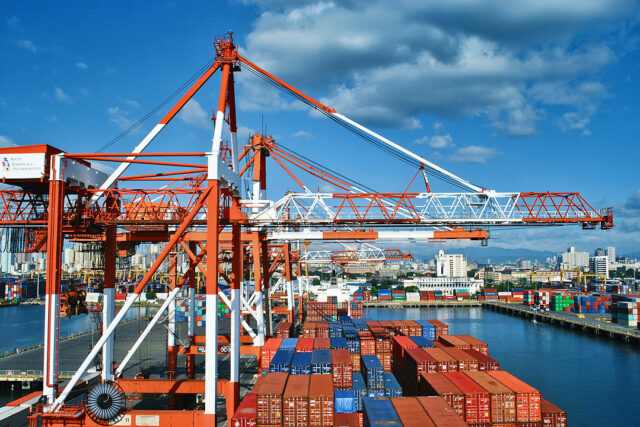
THE Philippine Ports Authority (PPA) said it is expecting to complete at least four port projects valued at a combined P1.56 billion within this year.

In a statement on Monday, the port regulator said it has enough funds to complete its ongoing seaport projects and accommodate new project development that will help boost tourism, trade logistics, and economic growth.

For this year, PPA said it is set to finish the P426.18-million Salomague port expansion project in Cabugao, Ilocos Sur which was awarded to Goldridge Construction and Development Corp. in December 2023.

PPA is also expecting the completion of the P155.96-million San Andres port expansion and improvement project which was awarded to Bemkar Construction and Supply.

Also among the four projects projected to be completed in 2025 are the upgrade of Banago Port in Negros Occidental, and the expansion of Balingoan Port in Cagayan de Oro.

The P568.77-million Banago port project was awarded to the joint venture of Mamsar Construction and Industrial Corp. and Silver Dragon Construction and Lumber and Glass Supply, Inc.; while the P411.8-million Balingoan port expansion was awarded in 2021 to Premium Megastructures, Inc.

Further, PPA said there are also cruise ship port projects in the pipeline for Coron, Palawan; Buruanga, Aklan; and Mambajao, Camiguin to accommodate the growing demand for international cruise ships. For 2025, the PPA set its passenger target at P85.41 million, higher by 9.5% than its target in 2024.

PPA General Manager Jay Daniel R. Santiago said previously that the port regulator is expecting more sea travel this year as the government continues to promote domestic travel and improve passenger facilities at regional ports.

Meanwhile, PPA said on Monday that it generated a total revenue of P27.64 billion in 2024, 8.61% higher than the P25.45 billion logged in 2023.

PPA attributed this revenue growth to “strategic income management” and enhanced revenue collection.

In 2024, PPA increased cargo handling fees by 16% at the Manila port. The first tranche will involve a 10% increase in cargo handling fees. The second tranche, which will involve a 6% increase, will be implemented six months after the first tranche takes effect. — Ashley Erika O. Jose

Batangas LNG terminal resumes operations — DoE

AG&P COMPANY

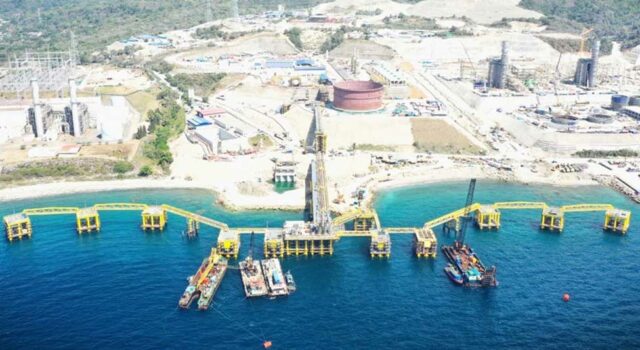
THE liquefied natural gas (LNG) terminal of Linseed Field Corp. has resumed its operations on Monday as one of the two gas-fired power plants in Batangas that were temporarily shut down comes online, the Department of Energy (DoE) said.

In a statement, the DoE said the LNG terminal resumed the delivery of gas supply with a capacity of 1,350 megawatts (MWs).

South Premiere Power Corp. (SPPC) and Excellent Energy Resources, Inc. (EERI) implemented a scheduled shutdown on their natural gas power generation facilities with a combined running capacity of 1,300 MW from 9 a.m. on March 29 until 6:30 a.m. on March 31.

SPPC had been synchronized to the grid by 4 p.m. on Monday, while EERI remains offline due to “ongoing technical issues” with its 500-kilovolt gas-insulated switchgear, delaying its return to service, according to DoE.

The DoE said that the temporary shutdown of the facilities was “a necessary measure to facilitate critical mechanical activities” at the LNG terminal over the weekend.

“These works were part of broader infrastructure enhancements, including the completion of Linseed’s first onshore LNG storage tank, expected to be operational by the end of April 2025,” the department said.

SPPC and EERI are jointly owned by Meralco PowerGen Corp. of Manila Electric Co., Therma NatGas Power, Inc. of Aboitiz Power Corp., and San Miguel Global Power Holdings Corp. of San Miguel Corp. These firms earlier this year sealed a $3.3-billion LNG deal to launch the country’s first LNG facility. — Sheldeen Joy Talavera

Probe of BARMM killings sought

@BANGSAMOROGOVT

A SENATOR is calling for an inquiry into the killings and acts of violence against Non-Moro Indigenous Peoples (NMIPs) in the Bangsamoro Autonomous Region in Muslim Mindanao (BARMM).

A resolution filed by Senator Lorna Regina “Loren” B. Legarda on Monday, directs the Senate to assess the full range of challenges faced by NMIPs in the region. These include probing the adequacy of existing protection programs and the urgent need for strengthened legal and policy interventions.

Beyond ensuring accountability for specific incidents of violence, there is a pressing need to reinforce the rule of law and establish clear, enforceable mechanisms that safeguard the rights and security of NMIPs without exacerbating tensions or exposing communities to further vulnerabilities,” she added.

Ms. Legarda said that the resolution was filed following the killing of a tribal chieftain in Teduray-Lambangian, Maguindanao del Sur on Feb. 19.

Data from the Timuay Justice and Governance and Climate Conflict Action reported there were at least 84 NMIP killings from 2014 to 2024, including 12 leaders, seven youth, and eight women.

However, data from the regional police office showed that only 36 NMIP were killed during the period.

“These significant discrepancies among the records highlight the urgent need for independent validation, comprehensive investigation, and reinforced protection measures to hold perpetrators accountable while safeguarding NMIPs from further risks, threats, endangerment, and violence,” she added. — Adrian H. Halili

Globe deploys new green tech in rural areas

GLOBE TELECOM, INC. is deploying green technology to expand connectivity access in rural areas while also reducing its carbon footprint, the Ayala-led telecommunications company said.

In a media release on Monday, Globe said it is deploying RuralLink which aims to expand its coverage in far-flung areas by delivering reliable mobile coverage to remote communities.

“RuralLink enables us to reduce our carbon footprint and power consumption while ensuring that no community is left behind in the digital age,” said Globe Head of Service Planning and Engineering Joel R. Agustin.

RuralLink covers up to 20 locations allowing the company to deliver connectivity to more underserved and unserved areas, Globe said, adding that this technology combined the capabilities of multiple antennas into a single unit.

Globe said this technology also consumes 65% less power allowing it to reduce greenhouse gas emission per site.

The company has said previously that it is further expanding its sustainability initiatives and investments as part of its commitment to achieving its net-zero goal.

The listed telecommunications company said it would continue pursuing climate action strategies, including its target to cut greenhouse gas emissions by 50% by 2030 and achieve net zero by 2050. — Ashley Erika O. Jose

BARMM celebrates Eid al-Fitr feast despite bad weather

PHILIPPINE STAR/RYAN BALDEMOR

COTABATO CITY — Inclement weather did not affect the Eid al-Fitr outdoor congregational worship rites in many areas in Central Mindanao on Monday.

The Eid al-Fitr, which marks the end of the Islamic Ramadan fasting, is an important holiday in Islam.

Muslims in Central Mindanao and in the five provinces in the Bangsamoro region prayed early Monday in open fields, guarded by soldiers, policemen and local executives, as part of the Eid al-Fitr festivity.

Brig. Gen. Romeo J. Macapaz, director of the Police Regional Office-Bangsamoro Autonomous Region in Muslim Mindanao (PRO-BARMM), and the commander of the Army’s 6th Infantry Division (ID), Major Gen. Donald M. Gumiran, separately told reporters on Monday afternoon that the congregational prayers in areas under their jurisdiction were peaceful.

There were heavy downpours in parts of Central Mindanao and in the Bangsamoro region hours before the outdoor Eid al-Fitr prayers were held in designated sites, led by Islamic missionaries.

Thousands joined the congregational prayers, despite the drizzles that dampened the surroundings.

“All went well,” Mr. Gumiran said.

In separate statements, Mr. Gumiran and Mr. Macapaz had extended their Eid al-Fitr greetings to the Muslims in areas covered by the 6th ID and PRO-BARMM.

The Eid al-Fitr also marks the start of the month of Shawwal in the lunar-based Islamic Hijrah calendar.

Muslims fast from dawn to dusk during Ramadan as a religious obligation and reparation for wrongdoings.

Fasting during Ramadan is one of the five fundamentals of the Islam faith, which include absolute belief in Allah, praying five times a day facing west, giving of zakat, or alms to the poor, and, for those who can afford the cost of travel, performing the hajj, or pilgrimage to Makkah in Saudi Arabia even just once in a lifetime. — John Felix M. Unson

16 NPAs, 20 supporters surrender in Sultan Kudarat

COTABATO CITY — Sixteen members of the New People’s Army (NPA) and 20 of their supporters, who collected food and money from hapless villagers, surrendered in the seaside Lebak town in Sultan Kudarat on Saturday.

Local executives told reporters on Monday that all 36 agreed to surrender through the joint intercession of senior members of the Lebak Municipal Peace and Order Council, officials of the Army’s 57th Infantry Battalion (IB) led by Lt. Col. Aeron T. Gumabao and their immediate superior, Brig. Gen. Michael A. Santos, the commander of the 603rd Infantry Brigade.

Major Gen. Donald M. Gumiran, commander of the Army’s 6th Infantry Division (ID), said the group first turned over to the 57th IB their assault rifles, shotguns, 40-millimeter grenade launchers, pistols and home-made explosives before they pledged allegiance to the government in the presence of local officials, among them Lebak Mayor Frederick F. Celestial.

The symbolic surrender rite was held in Barangay Salangsang in Lebak, attended by barangay officials and traditional community leaders from across Lebak, a coastal town in Sultan Kudarat.

More than 400 members of the NPA had surrendered in batches, since 2023, to different units of 6th ID in Central Mindanao and to officials of the regional offices of the police in the Bangsamoro region and in Administrative Region 12. — John Felix M. Unson

Makati City lowers tax rates for real property

PHILSTAR FILE PHOTO

MAKATI Mayor Marlen Abigail Binay-Campos approved an ordinance lowering real property tax (RPT) rates in the city.

In a statement on Monday, Makati said Ms. Binay-Campos signed City Ordinance No. 2025-047 on March 24, which has an effectivity date of Jan. 1.

The ordinance amends the Revised Makati Revenue Code or City Ordinance No. 2004-A-025, which deals with basic real property tax and assessment levels.

“Following a comprehensive review of current tax rates and prevailing economic conditions, we have proceeded with our plan to lower tax rates for all classes of land in the city,” the mayor, a candidate for the Senate, said.

“Residents and property owners in the city will now enjoy substantial savings from the biggest tax reduction and lowest assessment levels implemented by the city government to date,” she added.

Even though city revenue could take a hit, Ms. Binay-Campos said she expects the long-term gains to offset the losses.

The mayor also noted that the estimated annual P7.9 billion savings from the removal of subsidies to 10 Embo barangays transferred to the jurisdiction of Taguig could help cushion the impact.

“I believe we can manage very well even with lower RPT collection. As more businesses choose to locate in Makati, our revenue from business tax and relevant fees will increase as well. More importantly, more jobs will be created for our residents,” she said.

For land, rates of levy for residential property is now at 1% from 1.5%, commercial property at 1.5% from 2%, industrial property at 1.5% from 2% and special property at 0.5% from 1.5%.

Meanwhile, real property tax rates for buildings, machinery, and other improvements were left unchanged for residential (1.5%), commercial (2%), industrial (2%), and special (0.5%) categories.

However, residential property that is not exclusively used by the owner or his immediate family and offered for rent will still be classified as residential/commercial, with an additional 0.125% tax on the assessed value of the land and 0.25% on improvements. — Aubrey Rose A. Inosante

Marcos advises BSP to act if Trump tariffs stoke inflation

BW FILE PHOTO

PRESIDENT Ferdinand R. Marcos, Jr. urged the Bangko Sentral ng Pilipinas (BSP) to act immediately if US tariff policy pushes inflation higher, the Palace said.

At a briefing on Monday, Presidential Communications Office Undersecretary Clarissa A. Castro said Mr. Marcos made the remarks at a meeting with the BSP, urging it to “immediately address any potential impacts (on the economy) in the coming year.”

“There was a meeting with the BSP where this was discussed,” she said. “It was noted that inflation rates could be affected by what is happening in the US. We will monitor the situation and take action.”

The central bank on March 27 published its financial stability report which indicated that the financial sector is expected to remain robust and well-positioned to absorb shocks, but could face moderate economic risks such as heightened geopolitical tensions, evolving monetary policies in major economies, and potential shifts in US policy.

Inflation eased to 2.1% last month from 2.9% in January and 3.4% a year earlier. This brought the two-month average to 2.5% well within the central bank’s 2-4% target.

BSP Governor Eli M. Remolona, Jr. has expressed concern about the indirect spillovers coming from increasingly aggressive US trade policy.

Since taking office, US President Donald J. Trump has imposed a 20% levy on all Chinese imports and a 25% tariff on all steel and aluminum imports.

He is also planning to impose reciprocal tariffs on countries that tax US imports early next month.

The US is the top destination for Philippine-made goods with exports to the country valued at $12.12 billion last year or 16.6% of total export sales.

Manila’s imports from the US amounted to $8.17 billion or 6.4% of total imports.

The Philippines, a domestic demand-driven economy, has the potential to avoid the worst of the new US tariff regime compared to its neighbors, Moody’s Ratings said in a report last week.

“Indonesia and the Philippines, with smaller surpluses and growing defense ties with the US, are likely to face fewer tariffs,” the credit rater said.

Moody’s Analytics projects Philippine gross domestic product to grow 5.9% this year, weaker than its 6% baseline forecast in November, citing the impact of uncertainty arising from US tariff policies. 

The BSP reported on March 29 that business confidence rose in the second quarter, with a confidence index reading of 45.4% against 40.3% in the fourth quarter of last year.

“This is a positive sign, showing that more people trust our government and administration, encouraging investors to allocate their investments within the Philippines,” Ms. Castro said at the briefing.

“The administration will do its utmost to maintain this status or improve upon it so that we can encourage more investors to invest in our country.” — John Victor D. Ordoñez

PHL rice imports to decline 1.9% — USDA

PHILSTAR FILE PHOTO

PHILIPPINE RICE imports will likely decline 1.9% to 5.2 million metric tons (MMT) this year due to an expected increase in domestic production, according to the US Department of Agriculture (USDA).

Milled rice production is expected to increase 2.1% to 12.25 MMT in marketing year (MY) 2025/26 due to favorable weather and increased government intervention backed by an enlarged competitiveness-enhancing budget funded by rice tariffs, the USDA said in a report, citing its Foreign Agriculture Service.

A 2024 law that amended the Rice Tariffication Law of 2019, which deregulated the rice industry by removing the power of the National Food Authority (NFA) to import the commodity, expanded the Rice Competitiveness Enhancement Fund (RCEF) to P30 billion from P10 billion.

Aside from a rebound in production, other factors driving Philippine imports down are stocks carried over from 2024/25 and the imposition of a maximum suggested retail price on imported premium rice, the report said.

Vietnam and Thailand will remain as the key suppliers of rice to the Philippines in MY 2025/26, it said.

“This is due to established trade relationships, competitive prices, and the geographical proximity of Vietnam and Thailand to the Philippines,” the report noted.

However, it forecast “a decrease in supply of imported 5% broken rice in the Philippines in MY 2025/26, given the ongoing implementation of the MSRP on imported premium rice,” it said.

Imported rice is subject to a 15% tariff until 2028 under Executive Order No. 62, which farmer groups said has failed to significantly bring down the retail price of rice.

The Federation of Free Farmers (FFF) is asking the Tariff Commission to restore rice import tariffs to 35% for Southeast Asian grain. The FFF has also asked the commission to impose a 50% tariff on grain from all other countries.

The MSRP for imported rice was set at P45 per kilo beginning March 31. It started at P58 per kilo on Jan. 20, followed by P55 per kilo on Feb. 5, P52 per kilo on Feb. 15 and P49 per kilo on March 1.

The USDA report said the estimated land area to be harvested will also likely increase 2.2% to 4.70 million hectares in MY 2025/26.

It noted that RCEF contributed to production growing by an average rate of 1.9% year on year between MY 2018/19 and MY 2022/23.

Rice imports hit an all-time high of nearly 4.7 MMT in 2024.

Raul F. Montemayor of the FFF said due to excess imports last year, “a lot of rice stocks were not consumed in 2024 and were instead carried over to 2025.”

“That is why the National Economic and Development Authority (NEDA) is estimating that our 2025 beginning stock was equivalent to 3.8 million tons, good for about 108 days,” he said via Viber.

Beginning stock is usually good for 60-70 days’ demand, he noted.

“Whether better production, larger RCEF, and the MSRP will temper imports remains to be seen,” he said.

“If international prices continue to go down, importers will continue to bring in rice and sell imports for less than local rice even if we have sufficient supply,” he added.

The USDA report, meanwhile, noted that Philippine rice consumption will increase 0.6% to 17.30 MMT in MY 2025/26, largely driven by steady population growth, moderating inflation levels, and growing income levels.

It said the Philippine population is projected to grow from 118.28 million to 121.94 million people from 2024 to 2026.

Retail rice prices are gradually declining due to softening global prices, allowing consumers.

National daily demand for rice averages 37,000 MT, according to the DA.

The USDA report also said Philippine rice stocks will rise 4.1% to 3.85 MMT in MY 2025/26, due to an increase in the procurement activities of the NFA, coupled with the ongoing rice imports by private traders.

Meanwhile, “rice stocks held at the household level are forecast to decline in MY 2025/26, as lower prices reduce the need for households to hold excessive stock,” it added.

A food security emergency on rice was declared on Feb. 3, allowing the NFA to release stocks onto the market to tame retail prices and prepare its warehouses for the procurement of the new harvest beginning mid-February.

The NFA is hoping to procure as much as 870,000 MT of palay (unmilled rice) this year.

“With the Philippine Statistics Authority’s updated milled recovery rate at 63%, this would translate to around 550,000 MT of milled rice, leading to the higher forecast of rice stocks in MY 2025/26,” according to the report. — Kyle Aristophere T. Atienza


Recovery seen in wearables exports this year — CONWEP

REUTERS

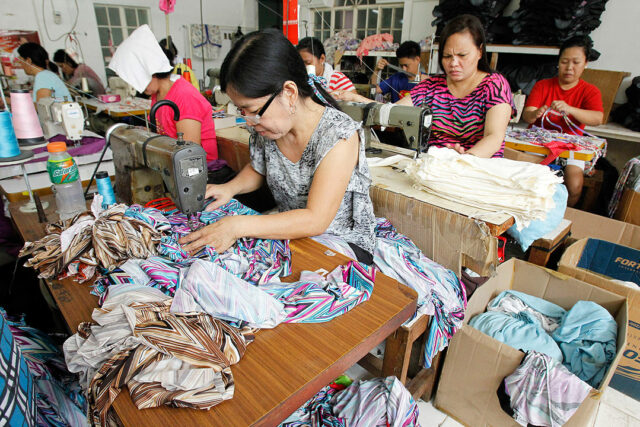
THE Confederation of Wearables Exporters of the Philippines (CONWEP) is hoping to see a recovery in wearable exports this year amid plans to secure a trade agreement with the US and relaxed requirements for garments in the UK.

“We are trying to mitigate the 4% decline in 2024. We are targeting to raise the bar and break even at least in 2025, just so we can retain jobs,” said CONWEP Executive Director Ma. Teresita Jocson-Agoncillo in a Viber message.

“That will happen if something moves between the Philippine and the US government in the discussion on the trade reference agenda; (exports) could pick up very fast,” she said.

However, she said that without the agreement with the US, the industry can still maintain last year’s export levels and register flat growth.

CONWEP reported that apparel exports declined 6% to $661.75 million last year, while exports of travel goods slipped 4% to $546.62 million.

Meanwhile, textile exports rose 3% to $256.44 million while footwear exports rose 11% last year.

These brought total wearable exports to $1.299 billion in 2024, down 4%.

She said the expected relaxation of requirements in the UK market can also help the industry.

She said that before the pandemic, the industry’s utilization rate of trade preferential schemes was only between 6-7% due to the strict rules of origin.

“That is why our utilization is normally below 10%. But that will rise if the rules are relaxed,” she added.

Last week, the Department of Trade and Industry’s Export Marketing Bureau said that the UK is looking at relaxing some of the rules for industries that are underutilizing the UK’s Developing Countries Trading Scheme. — Justine Irish D. Tabile