Home Blog Page 1315

Japan seeks US tariff talks during Bessent visit, Yomiuri reports

PHILIPPINE STAR/EDD GUMBAN

 – Japan is seeking talks between tariff negotiator Ryosei Akazawa and U.S. Treasury Secretary Scott Bessent when the U.S. official visits Japan for the World Expo next week, Yomiuri newspaper reported on Thursday citing Japanese government sources.

Prime Minister Shigeru Ishiba has said Japan would continue tariff negotiations with the U.S. to reach a mutually beneficial deal after U.S. President Donald Trump raised tariffs on Japanese imports to 25% starting August 1.

Japan aims to host the first ministerial-level tariff talks with the U.S. in Japan ahead of a new negotiation deadline of August 1, the Yomiuri reported.

Japan and the U.S. previously held ministerial tariff talks seven times in Washington.

Mr. Bessent is scheduled to attend the U.S. “National Day” event on July 19 at the World Expo 2025 in Osaka, western Japan, with the U.S. delegation.

Japan is likely to seek a telephone conversation between Mr. Akazawa and Mr. Bessent before the latter arrives and an in-person meeting during the U.S. official’s stay, the Yomiuri reported. It may also seek a meeting between Mr. Ishiba and Mr. Bessent as well, the newspaper reported.

Mr. Ishiba has instructed Mr. Akazawa to focus on tariff negotiations even during the campaign period for an upper house election on July 20, Yomiuri reported. – Reuters

5 reasons why Pico de Loro Cove belongs on every eco-traveler’s radar

Pico de Loro Cove stands as a model for sustainable coastal development, where thriving biodiversity and eco-conscious design come together in perfect harmony.

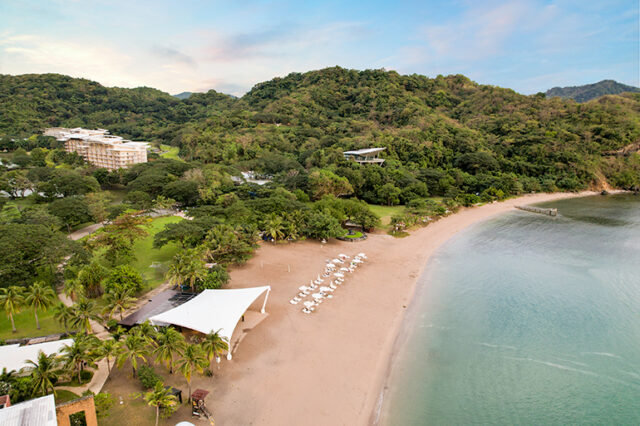
Nestled within the Hamilo Coast in Nasugbu, Batangas, Pico de Loro Cove, the premier beach resort destination, is a haven for eco-conscious travelers. Known for its stunning landscapes and commitment to sustainability, this destination also offers the perfect blend of nature, adventure and relaxation.

Here’s why Pico de Loro should be on your eco-travel bucket list:

1. A Sanctuary for Marine Biodiversity

Pico de Loro Cove is one of the 13 coves in Hamilo Coast, where 30% of the coastline is designated as a marine-protected area. These sanctuaries safeguard coral reefs and marine life, making the cove an ideal spot for snorkeling and diving. Tropical fish such as Moorish idol, clown fish, among others, can be seen underwater. And when in season, even green and hawkbill sea turtles lay eggs on the beach.

In partnership with the local government and World Wide Fund for Nature (WWF), Pico de Loro Cove actively monitors and preserves its marine protected areas, reinforcing its commitment to safeguarding marine ecosystems for generations to come.

2. Sustainable Practices at Its Core

Sustainability is embedded in Pico de Loro Cove’s operations. Eco-friendly initiatives include rainwater harvesting that is utilized in the Pico lagoon and landscape irrigation; solid waste management to properly dispose different kinds of trash to preserve the nature; and renewable energy integration to save usage of electricity in the area.

Adding to these green efforts is the resort’s sea turtle hatching and release program, which protects endangered marine species and raises awareness among guests about ocean conservation.

Over 60% of the land is also allocated for green spaces and open areas, fostering a harmonious balance between luxury and environmental responsibility.

3. Nature Trails for the Adventurous Soul

Adventure seekers will love the scenic nature trails that wind through Pico de Loro Cove’s lush landscapes. These trails invite visitors to hike up Mount Pico while enjoying panoramic views and encounters with the region’s rich flora and fauna.

As part of its biodiversity conservation efforts, Pico de Loro Cove also runs programs dedicated to protecting local wildlife. The area is home to a variety of bird species — including tarictic hornbills, brahminy kites, woodpeckers, kingfishers, and orioles — making it a vibrant birdwatching destination for nature lovers.

4. Community Engagement and Livelihood Support

Pico de Loro Cove’s commitment extends beyond preserving nature — it also uplifts local communities by hiring 80% of all the workers from Batangas. By prioritizing local employment and supporting small businesses, the development ensures that tourism benefits the communities creating sustainable livelihood opportunities.

5. Eco-Friendly Leisure and Luxury

Guests can enjoy premium amenities while embracing sustainability. The Pico de Loro Beach and Country Club offers swimming, dining and recreational activities designed with eco-conscious principles. The architecture maximizes natural light and ventilation, reducing energy consumption while enhancing the guest experience when they play pickleball and tennis. Pico de Loro Cove’s varied residential properties such as Freia, Sola and Pico Terraces foster eco-friendly designs and practices, and yet offers seclusion, security and serenity.

Whether seeking an adventure-filled getaway or a tranquil retreat, Pico de Loro Cove offers an eco-friendly escape where sustainability and comfort coexist. It’s the perfect destination for eco-travelers who want to leave a positive impact while enjoying a slice of paradise.


Spotlight is BusinessWorld’s sponsored section that allows advertisers to amplify their brand and connect with BusinessWorld’s audience by publishing their stories on the BusinessWorld Web site. For more information, send an email to online@bworldonline.com.

Join us on Viber at https://bit.ly/3hv6bLA to get more updates and subscribe to BusinessWorld’s titles and get exclusive content through www.bworld-x.com.

Philippines plans to negotiate with US to lower tariffs, envoy to Washington says

MANILA – The Philippines is planning to negotiate with Washington to lower tariffs after the United States moved to impose higher 20% duties on goods imported from Manila, its ambassador to the United States said on Thursday.

“We are still planning to negotiate that down,” Jose Manuel Romualdez said in a phone message.

US President Donald Trump on Wednesday issued August 1 tariff notices to several trading partners including the Philippines, which he slapped with a 20% duty, higher than the previously announced 17%.

Asked what rate the Philippines is looking at, he said: “Will see.”

US goods trade with the Philippines reached an estimated $23.5 billion in 2024, according to data from the Office of the United States Trade Representative.

US exports to the Philippines stood at $9.3 billion, a 0.4% increase from 2023, while imports from the Philippines totalled $14.2 billion, up 6.9% year-over-year.

The resulting US goods trade deficit with the Philippines widened to $4.9 billion in 2024, marking a 21.8% increase from the previous year.

There was no immediate comment from the office of the Philippine president. — Reuters

Trump raises tariff rate on Philippines to 20%

US President Donald J. Trump announced he will impose a 10% baseline tariff on all imports to the United States. — REUTERS

WASHINGTON/BRUSSELS – US President Donald Trump issued final tariff notices to seven minor trading partners on Wednesday as his administration inched closer to a deal with its biggest trading partner, the European Union.

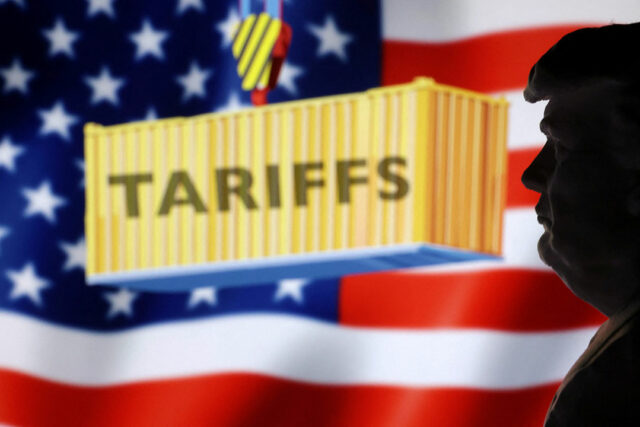
Trump said in posts on his Truth Social media platform that starting August 1 he would impose a 20% tariff on goods from the Philippines, 30% on goods from Sri Lanka, Algeria, Iraq, and Libya, and 25% on Brunei and Moldova.

No letter was issued to the EU, but Trump had said late on Tuesday that he would issue “a minimum of seven” tariff notices on Wednesday morning and more in the afternoon.

The latest letters add to 14 others issued earlier in the week including 25% tariffs for powerhouse US suppliers South Korea and Japan, which are also to take effect August 1 barring any trade deals reached before then.

They were issued a day after Trump said he was broadening his trade war by imposing a 50% tariff on imported copper and would soon introduce long-threatened levies on semiconductors and pharmaceuticals. Trump’s rapid-fire tariff moves have cast a shadow over the global economic outlook, paralyzing business decision-making.

NEGOTIATIONS WITH THE EU

Trump said trade talks have been going well with China and the European Union, which is the biggest bilateral trading partner of the US.

Trump said he would “probably” tell the EU within two days what rate it could expect for its exports to the US, adding that the 27-nation bloc had become much more cooperative.

“They treated us very badly until recently, and now they’re treating us very nicely. It’s like a different world, actually,” he said.

EU trade chief Maros Sefcovic said good progress had been made on a framework trade agreement and a deal may even be possible within days.

Sefcovic told EU lawmakers he hoped that EU negotiators could finalise their work soon, with additional time now from the extension of a US deadline to August 1 from July 9.

“I hope to reach a satisfactory conclusion, potentially even in the coming days,” Sefcovic said.

However, Italian Economy Minister Giancarlo Giorgetti had earlier warned that talks between the two sides were “very complicated” and could continue right up to the deadline.

HIGHEST TARIFF LEVELS SINCE 1934

Equity markets shrugged off the Republican president’s latest tariff salvo on Wednesday, while the yen remained on the back foot after the levies imposed on Japan.

Following Trump’s announcement of higher tariffs for imports from the 14 countries, US research group Yale Budget Lab estimated consumers face an effective US tariff rate of 17.6%, up from 15.8% previously and the highest in nine decades.

Trump’s administration has been touting those tariffs as a significant revenue source. Treasury Secretary Scott Bessent said Washington has taken in about $100 billion so far and could collect $300 billion by the end of the year. The United States has taken in about $80 billion annually in tariff revenue in recent years.

The Trump administration promised “90 deals in 90 days” after he unveiled an array of country-specific duties in early April. So far, only two agreements have been reached, with Britain and Vietnam. Trump has said a deal with India was close.

Massachusetts Governor Maura Healey, a Democrat, blasted Trump for his “failed trade war”.

“President Trump was elected to lower costs, and all he is doing is raising prices and hurting our businesses,” she said in a statement. — Reuters

Rice tariff stays at 15% till November

REUTERS

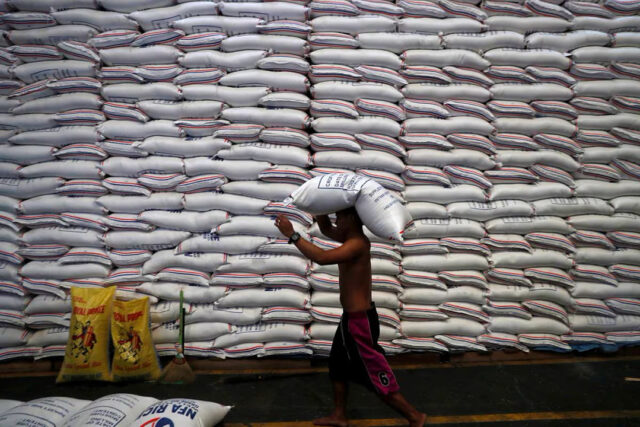
THE 15% TARIFF on imported rice will remain unchanged at least until November, according to the Department of Economy, Planning, and Development (DEPDev), as the government seeks a “win-win” solution that balances inflation control with protecting local farmers.

“Not in the immediate [term], but most likely by November,” DEPDev Undersecretary for Policy and Planning Rosemarie G. Edillon told a news briefing on Wednesday. “After four months, we will submit the study to the President.”

The lower tariff was introduced through Executive Order (EO) No. 62, which took effect in July 2024 and slashed the import duty on rice to 15% from 35% until 2028. The EO mandates a review every four months to assess its impact.

The announcement comes amid a petition from farmer groups, including the Samahang Industriya ng Agrikultura, to go back to the original 35% duty to shield local producers from the influx of cheaper rice imports.

The Department of Agriculture, meanwhile, said it would recommend a gradual tariff increase during the next harvest season.

Ms. Edillon said they met to discuss the review and petition, and they agreed that the periodic review is meant to report on what has happened, not to make recommendations at this stage.

The lowered tariff appears to be achieving its inflation-control goals. Rice prices dropped by 14.3% in June, improving from the 12.8% decline in May, according to the local statistics agency. It was the sharpest drop since 1995.

Rice supply also appears to be stable. As of June, the country’s rice inventory reached 2.24 million metric tons (MT), 3.5% more than a year earlier. “Most of them are still in the warehouses. And we had the bumper harvest, actually, for the first half,” Ms. Edillon said.

She added that the rice import volume would be capped at 3.5 million MT for the year.

The government is also exploring more measures to support farmers, including enhanced access to the Rice Competitiveness Enhancement Fund, which provides planting assistance.

The DEPDev is also participating in discussions on whether to restore the regulatory powers of the National Food Authority (NFA), which was stripped of many functions following the Rice Tariffication Law.

Speaker Ferdinand Martin G. Romualdez said the House of Representatives is ready to act on a draft bill that seeks to reinstate the NFA’s market functions once it reaches the chamber.

The Agriculture department has said the draft legislation includes provisions for the NFA to manage buffer stocks, regulate rice marketing and set floor prices for rough rice.

“I think at that time, the context was different. So NFA was so much in debt. It was really bleeding, hemorrhaging,” Ms. Edillon said, referring to the agency’s former monopoly on imports. “It was not really fulfilling its mandate… What we need to consider now is how the market has adjusted to the new regime.”

She also acknowledged the challenges in setting floor prices. “It will be very tricky though, operationalizing it and even estimating it. But yes, that’s something that we’re studying as well.” — Aubrey Rose A. Inosante

Income-price gap keeps Filipino families from owning homes — ULI

PHILSTAR FILE PHOTO

By Beatriz Marie D. Cruz, Reporter

HOME OWNERSHIP in the Philippines remains out of reach for many households due to the wide gap between residential property prices and income, particularly in urban areas like Metro Manila and Davao, according to the Urban Land Institute (ULI).

In the 2025 ULI Asia-Pacific Home Attainability Index, the Philippine capital was identified as one of the most expensive livable cities in the Asia-Pacific region.

How affordable are Metro Manila’s home prices compared with its peers in the region?Condominium prices in Metro Manila are now 19.8 times the median annual household income, far exceeding affordable levels, the Washington, DC nonprofit research and education group said. Townhouses are even more unattainable at 33.4 times the average income.

“Home attainability is still a problem in Metro Manila, to the extent that many families, even those working in one of the capital’s business districts, choose to buy a landed home on the outskirts of the city and commute,” ULI said in the report.

To be considered attainable, median home prices should not exceed five times a household’s annual income, while median monthly rents should take up no more than 30% of their monthly income. Metro Manila and Davao, however, both far exceed these thresholds.

ULI said the average rent for a Metro Manila apartment consumes about 141% of a household’s monthly income. In Davao, rents take up 94% of earnings, still significantly above the affordability benchmark.

While Davao fares better than Metro Manila, home prices are still about 14 times the median income, which ULI described as “scarcely more attainable.”

Data from the Bangko Sentral ng Pilipinas showed that in the first quarter, condominium prices rose 10.6% year on year, while house prices climbed 4.5%.

Amid rising property prices, ULI noted that the development of major railway infrastructure projects has made living outside the capital more attractive to working families, even as commuting remains a challenge.

Ironically, despite high prices, Metro Manila is also grappling with a supply glut of condominiums due to a wave of new projects launched from 2019 to 2023.

Many of these unsold units are in areas outside business districts that were affected by the government’s crackdown on Philippine offshore gaming operators.

“The oversupply is mainly noticeable in the lower-mid segment, where units typically cost between P3 million and P7 million,” ULI said, citing data from real estate consultancy KMC Savills, Inc.

For a studio or one-bedroom condo in this price range, monthly mortgage payments may run from P20,000 to P40,000 ($354 to $708) — a significant burden for Filipino families earning P50,000 to P60,000 monthly.

At the same price, a three- to four-bedroom house outside Metro Manila could be bought, according to the report. “The problem is that many of these condominiums were targeted at middle-class families who prefer a more distant home to a city condo,” it pointed out.

While developers have introduced more flexible payment terms to drive sales, high land acquisition and construction costs have limited their ability to offer significant price cuts.

“Some observers believe this will lead more to explore alternatives such as co-living or multifamily rental use for unsold projects,” ULI said.

To improve affordability, the group urged property developers to cut construction costs and use less expensive land.

“Developers could look at using modular construction to reduce development costs and focus on simple, repeatable designs to ensure faster delivery and therefore lower costs,” Mark Cooper, senior director for thought leadership at ULI Asia-Pacific, said in an e-mailed reply to questions.

“They should consider partnering with local governments to access land more cheaply in return for developing public or affordable housing,” he added.

Across the Asia-Pacific region, ULI said home attainability remains a widespread issue. Only seven of 51 market segments studied offered homes priced within five times the median income. In contrast, rental homes were generally more affordable, with 41 of 51 markets offering rents below 30% of monthly income.

ULI noted that key factors influencing home demand include population growth, aging demographics, household formation, urbanization, immigration, income growth, financing availability and transaction costs.


NCR wage hike unlikely to stoke prices

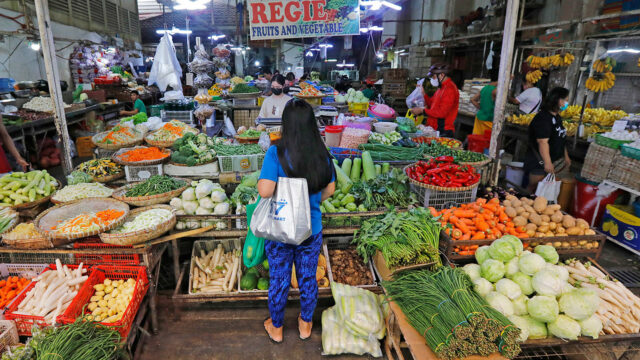
A customer buys fresh produce at the public market in Marikina. — PHILIPPINE STAR/ WALTER BOLLOZOS

THE P50 daily minimum wage hike for Metro Manila workers that will take effect on July 18 is unlikely to fuel inflation, according to economists.

Its limited coverage means it probably won’t be inflationary compared with earlier proposals for a nationwide wage hike, said Ruben Carlo O. Asuncion, chief economist at Union Bank of the Philippines, Inc.

“It’s going to take effect this month, so that has to be factored in,” he told Money Talks with Cathy Yang on One News on July 2. “But versus P100 to P200, I think P50 is a huge difference from the huge uptick that was originally proposed by Congress.”

The P50 wage hike is a “well-calibrated move,” said Jonathan L. Ravelas, senior adviser at Reyes Tacandong & Co.

“It boosts worker income without significantly stoking inflation,” he said. “Given current low inflation and soft growth, the impact should be manageable — especially if businesses adjust gradually and productivity improves.”

“It’s a positive step, but we’ll need to watch for second-round effects in labor-intensive sectors,” he added.

The Labor department last week said the P50 daily wage increase — the biggest pay hike ever granted by the National Wages and Productivity Commission — would benefit about 1.2 million workers in the Philippine capital and nearby cities and provinces.

The new daily minimum wage in the National Capital Region (NCR) is expected to increase to P695 in the nonagricultural sector.

The pay of workers in the farm sector, service and retail outlets with 15 or fewer staff members and factories with fewer than 10 workers will go up to P658.

Congress adjourned last month without approving the bill seeking to hike the daily minimum wage by P100-P200. Economic managers had warned that the legislated wage hike could have “dangerous repercussions” for the Philippine economy.

Philippine inflation picked up to 1.4% in June from 1.3% in May amid higher utility costs, the government reported on Friday.

This was slower than 3.7% in June last year and was within the central bank’s 1.1% to 1.9% forecast for the month. This was also below the 1.5% median estimate in a BusinessWorld poll of 17 analysts.

National Statistician Claire Dennis S. Mapa on Friday said the latest wage hike’s impact on inflation could be lagged, adding that this would likely be reflected in personal care, miscellaneous goods, and services.

Michael L. Ricafort, chief economist at Rizal Commercial Banking Corp., said a P50 wage hike that is given to other regions could add a percentage point to inflation.

“Businesses tend to pass the higher minimum wages, or pass-through effects, as much as possible, depending on competition locally and from imports,” he said in a Viber message.

Ateneo Center for Economic Research and Development Director Ser Percival K. Peña-Reyes said the NCR wage hike could “lead to job losses or inflation if the hike is merely artificially imposed and is not commensurate with any actual productivity increase.”

IBON Foundation Executive Director Jose Enrique “Sonny” A. Africa said the hike is “minuscule” and should not have any impact on consumer prices.

“The P50 NCR wage hike is just 0.4% of NCR establishment expenses and barely 2.5% of profits,” he said in a Viber message.

He added that “any firm that raises prices because of the tiny hike is just using that as an excuse for further profiteering.” — Aubrey Rose A. Inosante

S&P sees 11-13% loan growth in next 2 years

REUTERS

S&P GLOBAL RATINGS expects Philippine bank lending to grow by 11% to 13% in the next two years, supported by the country’s resilience to global tariff shifts and a growing focus on consumer loans.

“The Philippine economy is expected to be resilient to tariffs due to its low reliance on exports,” Nikita Anand, director of financial institution ratings at S&P Global Ratings, told a webinar on Wednesday.

“This could benefit banks, translating to stable operating conditions for the next two years. We forecast strong credit growth of 11% to 13% over the next two years,” she added. She expects loans to grow faster at about 18% after that.

Outstanding loans of universal and commercial banks rose 11.3% year on year to P13.37 trillion as of May, according to Philippine central bank data. This was slightly faster than 11.2% in April.

Ms. Anand said banks’ increased focus on consumer lending would help diversify their portfolios and boost profitability.

“Unsecured consumer loans such as credit cards and personal loans will continue to grow rapidly,” she said. “Yields for these products are significantly higher compared with corporate or housing loans, providing opportunities for profitability improvement.”

Corporate loan growth is expected to stabilize after rebounding in 2024, while overall asset quality is likely to remain steady in the next two years, aided by lower inflation and borrowing costs.

The banking system’s bad loan ratio rose to 3.39% in April from 3.3% in March, though it was lower than 3.45% a year earlier. This was the highest level since 3.54% in November 2024.

Still, Ms. Anand warned that the rising share of unsecured consumer credit and household debt could pressure banks’ asset quality.

“We are observing an uptick in the nonperforming loan ratio of unsecured loans, i.e., credit cards and personal loans,” she said. “We believe this trend is likely to continue over the next few years.”

S&P Global Ratings also flagged potential vulnerabilities stemming from Philippine banks’ significant exposure to the property sector, alongside geopolitical tensions that could affect loan demand.

“Any disruptions or sharp corrections in property prices will affect the banking sector’s revenues,” Fiona Chen, associate director at S&P Global Ratings, told the webinar.

She said property developers are increasingly capturing a larger share of the financing market amid weak activity in traditional income-related lending. “The interconnectedness is increasing, and these loans are not monitored at all.”

“We are also seeing elevated vacancy rates in office spaces and condominiums,” she said. “Both of these pose some risk to the banking sector because the sector has significant exposure to the real estate market — about 20% of its revenues,” she added.

Ms. Chen further cautioned that inflationary pressures due to rising geopolitical tensions and oil prices could dampen credit demand. Geopolitical instability could also weaken the peso and weigh on companies with foreign currency exposure.

Still, she noted that Philippine companies remain relatively shielded. They would be able to absorb any currency depreciation due to the “relatively small” share of external debt in their funding, she added. — AMCS

SM Prime debuts premium line, sets P25-B initial budget

SUSANA HEIGHTS ESTATE ENTRANCE — SM PRIME HOLDINGS, INC.

LISTED real estate developer SM Prime Holdings, Inc. has allocated an initial P25 billion in capital expenditure for the first project under its newly launched Signature Series by SM Residences, marking its entry into the premium residential market.

With the P25-billion budget, Signature Series by SM Residences will develop a 284-hectare property in Susana Heights, Muntinlupa City, featuring residential clusters, neighborhood retail, civic spaces, pocket parks, and an ultra-luxury village.

Jose Juan Z. Jugo, SM Prime executive vice-president and Signature Series Group head, said the residential lots in the Susana Heights project will feature large cuts of land with a starting price of P100 million per lot.

“These are not small cuts (of land). Nothing less than 750 square meters (sq.m), probably all the way up to 1,000 sq.m,” he said during a media briefing on Wednesday.

“We’re looking probably at an entry level of P100 million per residential lot. These are not small cuts. These are very exclusive, very premium cuts,” he added.

Mr. Jugo said there is no launch date yet for the planned Susana Heights project. However, he noted that developing a residential subdivision typically takes about three to four years.

“A residential subdivision in my experience would take anywhere between three and four years to develop. We haven’t fixed the launch date yet. It’s coming soon,” he said.

“It’s been there — brewing and appreciating in value — and now we are unlocking its full potential. It is a very powerful address, and there is no other parcel of land of this size and scalability in Metro Manila that will be developed from scratch,” he added.

Including the Susana Heights project, Mr. Jugo said the Signature Series Group has a 400-hectare landbank, of which over 300 hectares are located within Metro Manila.

“It’s a bit fragmented, but still very prime locations,” he said.

Aside from the Susana Heights project, the Signature Series Group is also partnering with an unnamed high-end real estate developer to develop a 6,000-square meter property in Makati City.

The Signature Series Group has also identified locations in Manila, Pasay, Pasig, Parañaque, Taguig, Cebu, Cavite, Tagaytay, and Batangas as part of its project pipeline.

Mr. Jugo said the residential offerings of the Signature Series Group will range from entry-level premium (starting at P15 million), upscale (starting at P25 million), and luxury and ultra-luxury (P65 million and above).

Jessica Bianca Sy, SM Prime vice-president and head of design, innovation, and strategy, said that every Signature Series development comes with a specialized and dedicated team of designers, strategists, technical experts, and service professionals.

“From the earliest design decisions to the way every detail comes together on-site, intentionality, wholeheartedness, and excellence define how we work,” she said.

“For Signature Series, this means creating visually refined spaces that are responsive to how people live, and are built to stand the test of time,” she added.

Meanwhile, Mr. Jugo said the Signature Series Group is a separate organization operating under the company Signature Development Corp.

“This is Signature Series, which is under a separate company called Signature Development Corp. wholly owned by the SM Group,” he said.

SM Prime shares rose by 4.46% or P1.05 to P24.60 per share on Wednesday. — Revin Mikhael D. Ochave

AirAsia PHL to get 20 new aircraft in 5 years

NEWSROOM.AIRASIA.COM

LOW-COST carrier AirAsia is accelerating its fleet expansion with a planned purchase of 150 additional aircraft, with up to 20 expected to be delivered to its Philippine unit over the next five years.

Tony Fernandes, chief executive officer (CEO) of AirAsia’s parent company Capital A Berhad, announced the plan on Tuesday during the inauguration of AirAsia Philippines’ new office at Horizon Center in Pasay City.

“The strategy of the group is this: to have aircraft that can fly at the best cost. The newer generation of aircraft will save about 30% of operational costs,” AirAsia’s Deputy Group CEO for Airline Operations Chester Shee Soon Voo said during a media briefing.

The airline’s aircraft order is expected to be finalized within the next three weeks, Mr. Voo said, adding that over the next five years, AirAsia Philippines is looking to add 20 new aircraft.

This planned purchase is separate from the 70 Airbus A321XLRs of AirAsia, valued at $12.15 billion, which was announced earlier this month.

“We are currently operating 15 aircraft. For 2025, we are going to revamp the aircraft numbers up to a total of 21 aircraft. Moving forward, for 2026, our route is going to be two to four aircraft,” AirAsia Philippines President and General Manager Suresh Bangah said.

The budget airline also said it is still choosing an aircraft manufacturer for its large-scale fleet expansion plan.

“We will have to wait two to three weeks for that… We are looking for the best fit to actually be able to achieve the best plan to keep our price competitive,” Mr. Voo said.

The planned aircraft order will be deployed for its domestic and international operations, he said, noting that the airline is planning to strengthen its domestic presence.

Further, Mr. Voo said the airline is working with airport authorities and the slot committee to accommodate its growing fleet.

“Again, we will look at how we will position the aircraft. We can even look at having bases where it makes sense. The growth will have to be there because we are not going to end the growth just because there are some slot issues,” he said.

Earlier, AirAsia Philippines said it was studying the possibility of launching new hubs outside Manila, with Bohol, Clark, and Cebu being considered as potential alternative hubs.

For this year, AirAsia Philippines is confident it will reach more than seven million passengers after carrying over three million in the first half of the year. — Ashley Erika O. Jose

Xurpas in talks to sell stake in Indonesian firm

STOCK PHOTO | Image by Docusign from Unsplash

LISTED technology firm Xurpas, Inc. is exploring the potential sale of its stake in Indonesian company PT Sembilan Digital Investama (SDI) as part of efforts to improve its equity position.

In a regulatory filing on Wednesday, Xurpas said it has started preliminary talks with a prospective buyer and aims to finalize definitive agreements by September.

The Philippine Stock Exchange asked the company about its plans to address its negative equity, which puts it at risk of involuntary delisting.

“Proceeds from the sale will support the company’s liquidity. The funds will be used to support the company’s operations, with the goal of improving financial performance and, in the long term, contribute to equity recovery,” Xurpas said.

As of end-March, Xurpas posted negative equity amounting to P111.51 million.

In March 2015, Xurpas acquired a 49% stake in SDI for P10.83 million. The acquisition provided Xurpas with access to SDI-owned mobile content and distribution company PT Ninelives Interactive.

Xurpas has extended advances totaling P22.08 million to SDI as of end-March and end-December last year to support its mobile content and distribution services.

Aside from the divestment, Xurpas is also planning various initiatives from this month until December to increase equity capital and improve its financial position, including ongoing discussions with prospective investors for a private placement.

“The company aims to finalize terms and execution within the second half of 2025,” it said.

Xurpas is looking to implement cost-saving initiatives such as workforce rightsizing, strategic resource allocation, streamlining of administrative functions, and prioritization of high-margin service offerings. It is also considering the use of its additional paid-in capital to reduce its deficit.

“The company is also strengthening its revenue base by expanding enterprise services such as information technology staff augmentation and artificial intelligence consulting, developing digital solutions targeted at small and medium enterprises to diversify its customer base and enhancing brand positioning through targeted marketing and international expansion,” Xurpas said.

For the first quarter, Xurpas trimmed its net loss to P9.43 million from P26.36 million in the same period last year. Service income rose by 20% to P42.4 million, driven by an increase in enterprise and other services.

The company provides mobile marketing and advertising solutions integrated into consumer digital products and platforms for mobile users.

Xurpas shares were last traded on July 8, closing unchanged at P0.241 per share. — Revin Mikhael D. Ochave

FDC gets SEC nod for P8-B preferred share sale

ONE FILINVEST IN ORTIGAS AVENUE — FILINVEST.COM

GOTIANUN-LED Filinvest Development Corp. (FDC) has secured approval from the Securities and Exchange Commission (SEC) for its planned P8-billion preferred share offering.

On July 8, the commission en banc favorably considered FDC’s registration statement and issued the corresponding pre-effective approval for the offer, the conglomerate said in a regulatory filing on Wednesday.

“Nonetheless, the offer remains subject to further approval by the Philippine Stock Exchange (PSE) and the SEC,” FDC said.

FDC aims to issue up to 8 million preferred shares priced at P1,000 per share.

The offer will include a base tranche of up to 6 million preferred shares and an oversubscription option of up to 2 million preferred shares.

The shares will be offered in up to two series.

The offer period will run from July 21 to July 25, with the listing on the PSE scheduled for Aug. 4.

FDC will use the proceeds to refinance existing obligations and support growth initiatives aligned with its long-term investment strategy.

The conglomerate tapped BPI Capital Corp. as the sole issue manager. BPI Capital, along with BDO Capital & Investment Corp., China Bank Capital Corp., Land Bank of the Philippines, and Security Bank Capital Investment Corp., will serve as joint lead underwriters and bookrunners.

FDC shares were last traded on July 8, closing unchanged at P4.89 per share. — Revin Mikhael D. Ochave