Home Blog Page 1313

Most ‘dynamically accomplished’ Defender arrives in PHL

IC Land Automotive Vice-President Chris Ward discusses the Defender Octa. — PHOTO BY KAP MACEDA AGUILA

By Kap Maceda Aguila

IF YOU’RE ONE who takes off-road performance as seriously as you value luxury, then the Defender Octa may just be for you. Let’s start with the asking price — from P24.59 million for the standard-issue Octa to a hefty P26.59 million for the Octa Edition One, said to be available through the first year of production. The name alone, derived from the “octahedron” shape of a diamond, suggests the rarity and premium nature of the vehicle.

Based off the Defender 110 but fortified and enriched quite like bread, you might say, the Octa is the range topper (pardon the pun) among its 4×4 ilk. It starts with a stout heart — a 4.4-liter twin turbo mild-hybrid V8 serving up 635ps and 750Nm. Incredibly, the Octa is said to muster sportscar quickness — getting from standstill to 100kph in but four ticks.

Proffers Defender Managing Director Mark Cameron in a release, “With the new Defender Octa, we have been able to unlock the full potential of Defender. It is the very definition of breadth of capability, and a testament to what we can achieve utilizing the very best technologies and talents within our engineering division. With its powerful V8 engine, ground-breaking 6D Dynamics suspension technology, exquisite finishes and unique detailing, it is rare, incredibly tough and inherently desirable.”

The brand reports the presence of “heavily revised chassis components with innovative technologies, including 6D Dynamics suspension.” The Octa’s ride height has been elevated by 28mm, its stance widened by 68mm, and its wheel arches extended. To improve off-roading readiness, the bumpers have been redesigned for greater approach and departure angles, and underbody protection improved. Water-wading depth has been claimed at one meter.

Said IC Land Automotive Vice-President Chris Ward in his presentation at the launch of the Octa, “Ultimately, (6D deals with) all the elements of how the car behaves. Basically, 6D Dynamics aim to neutralize any body roll, pitch, dive, up and down movement. The way it does it is, instead of traditional anti-roll bars which would help prevent the roll, we’ve done away with that and it’s now a hydraulic system. So it’s now feeding directly depending which suspension needs to counter the G, or when we’re off-road, it will look for grip — moving the wheel up and down to find grip.”

The Defender Octa Edition One, on the other hand, features a “curated specification,” getting an exclusive new Faroe Green paint color with a Khaki and Ebony Ultrafabrics polyurethane seamless knit interior, Chopped Carbon Fiber detailing, and 20-inch forged alloy wheels with a choice of all-terrain or optional especially developed advanced all-terrain tires.

Mated to an eight-speed automatic transmission, the Octa’s mill can speed it to a top rate of 250kph when fitted with optional 22-inch lightweight wheels and all-season tires. It also gets uprated 400-mm front brake discs with Brembo calipers and the “fastest steering ratio of any Defender to date” for immediate and precise response. The Defender Octa can automatically detect the surface it is on, and adjust its dynamic setting accordingly. The company said that, “in addition to the default Comfort Mode, Dynamic Mode provides the ultimate performance-focused on-road experience, tuning the vehicle’s steering, throttle and suspension settings with one press of the transparent signature logo button on the steering wheel.”

Speaking of the button, long-press it to access Octa Mode — a first-ever, dedicated Defender off-road mode focused on performance. “This has been especially developed to ensure ultimate control and driver confidence. Octa Mode also enables an Off-Road Launch mode for optimum acceleration on loose surfaces. And, when combined with the lowest traction control settings (TracDSC or DSC off) it also engages a unique Off-Road ABS calibration for optimum braking performance on loose surfaces, too.”

For more technical off-road maneuvers, the Defender still features “specific calibrations” for Sand, Mud and Ruts, Grass Gravel Snow, and Rock Crawl — assisted by off-road driver aids such as ClearSight Ground View, which effectively makes the bonnet transparent for improved visibility and reassurance on difficult, tricky terrain.

Inside, the Octa receives all-new Performance Seats with more supportive bolsters and integrated headrests. An immersive, so-called “Body and Soul Seat” audio technology is available for the first time. Crafted in collaboration with music industry experts SUBPAC and Coventry University, the system allows the driver and front passenger to feel, as well as hear, the music. “Six wellness programs are also available to help relax occupants or help improve cognitive responses on the move, depending on their preference.”

Louis Vuitton Korea says systems breach led to customer data leak

SEOUL — A systems breach at Louis Vuitton Korea in June led to the leak of some customer data including contact information, but did not involve customers’ financial information, the luxury brand’s South Korea unit said on Friday.

“We regret to inform that an unauthorized third party temporarily accessed our system resulting in the leak of some customer information,” the unit said in a statement.

The company became aware of the breach on Wednesday and had notified government authorities, the statement said.

Measures had been taken to contain the breach and to boost system security, it added.

The South Korean units of two other labels, Christian Dior Couture and Tiffany, under the world’s largest luxury group have been under government investigations since May for customer data leaks they reported earlier in the year, according to the country’s Personal Information Protection Commission. — Reuters

SEC seeks support to boost market competitiveness

BW FILE PHOTO

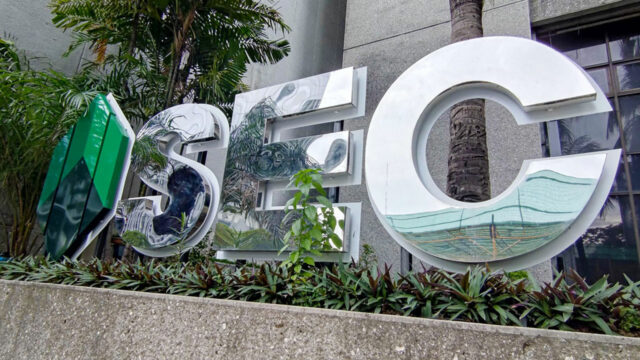
THE Securities and Exchange Commission (SEC) is calling for collaboration with capital market participants to enhance the competitiveness of the country’s financial markets, following President Ferdinand R. Marcos, Jr.’s directive to streamline the agency’s processes.

“We call on all capital market participants to join the SEC in enhancing the global competitiveness of our markets. Through collaboration and a firm commitment to reform, we believe that we can create a financial sector that both local and international investors can trust,” SEC Chairperson Francisco Ed. Lim said in an e-mail statement over the weekend.

Mr. Lim said this as President Ferdinand R. Marcos, Jr. directed the SEC last week to streamline its procedures, remove bureaucratic bottlenecks, and reduce transaction costs following the effectivity of Republic Act No. 12214, or the Capital Markets Efficiency Promotion Act (CMEPA), on July 1.

“The SEC stands ready to deliver on this mandate with urgency, integrity, and accountability,” Mr. Lim said.

“We are confident that the enactment of CMEPA will help the commission in expanding accessibility of investment opportunities to more Filipinos, thereby encouraging them to invest in the capital market,” he added.

CMEPA, signed by Mr. Marcos on May 29, allows for the reduction of the stock transaction tax (STT) to 0.1% from the previous 0.6% to boost local stock market activity.

It also lifts the documentary stamp tax on mutual funds and unit investment trust funds and imposes a 20% uniform final tax rate on interest income.

Meanwhile, the SEC said all its departments and offices have been directed to prioritize the resolution of applications and requests pending before the commission, in line with the time frames mandated by law.

The corporate regulator will also continue to invest in technology to further improve its systems, enhance accessibility, and increase operational efficiency, it said.

The SEC recently opened a public assistance and complaints desk at its headquarters in Makati City.

It also issued Memorandum Circular No. 6, which reduces by 50% the rates for documents requested from the SEC, including articles of incorporation, by-laws, and general information sheets, among others. — Revin Mikhael D. Ochave

Indonesia offers to cut duties on US goods, purchase $500 million of wheat in tariff talks

JAKARTA — Indonesia has offered to cut duties on key imports from the US to “near zero” and to buy $500 million worth of US wheat as part of its tariff talks with Washington, its lead negotiator and a wheat industry association said.

Chief Economics Minister Airlangga Hartarto, who is Indonesia’s lead negotiator, also confirmed that state carrier Garuda Indonesia would buy more Boeing planes as part of a $34 billion pact with US partners due to be signed next week.

Indonesia, which ran a goods trade surplus of $17.9 billion with the United States in 2024 according to the US Trade Representative, is facing a 32% tariff in US markets and has proposed increasing US imports to facilitate trade talks between the two sides.

Mr. Airlangga said the Indonesian government has offered to cut tariffs on key American exports, including agricultural products, to near-zero from between 0% and 5% at present.

“It will be near zero (tariffs for US main exports), but it will depend as well on how much the tariffs we get from the US,” Mr. Airlangga said.

Garuda’s CEO has said it is in discussions with Boeing to buy up to 75 aircraft. Garuda group did not respond to requests for comment.

The chairman of Indonesia’s wheat flour mills association, Franciscus Welirang, said its “members will purchase two million tons in total through tenders with a competitive price.”

“The point is all of the members will buy US wheat,” Mr. Welirang, who is also a director at Indofood, told Reuters.

The US counterparts in the wheat deal include Cargill, Bunge Global SA, Pacificor, Archer-Daniels-Midland, Columbia Grain International, and United Grain Corporation, Mr. Welirang added.

US exports to Indonesia include soybeans, petroleum gases and aircraft, Indonesian government data showed.

When asked whether the trade talks include military deals, Mr. Airlangga said they were “not part of the negotiation.”

Susiwijono Moegiarso, a senior official with Indonesia’s Coordinating Ministry for Economic Affairs, told Reuters that in return, Jakarta has asked the US for preferential tariffs on its main exports, including electronics, textiles and footwear.

“We want them to lower the tariffs (for those goods) as low as possible,” he said.

Indonesia has also offered the US opportunities to invest in critical minerals projects, including in copper, nickel and bauxite. — Reuters

Inflation Rates in the Philippines

Headline inflation slightly inched up in June, driven by higher costs of utilities and education, the Philippine Statistics Authority reported on Friday. Read the full story.

Inflation rates in the Philippines

Yields on BSP securities end mixed

BW FILE PHOTO

YIELDS on the Bangko Sentral ng Pilipinas’ (BSP) short-term securities ended mixed on Friday as both tenors were oversubscribed.

The BSP bills fetched bids amounting to P136.922 billion on Friday, higher than the P110-billion offer and the P119.984 billion in tenders for the P120-billion auctioned off on June 27. Both tenors were fully awarded.

Tenders for the 28-day BSP bills reached P61.221 billion, above the P50 billion placed on the auction block and the P58.887 billion in bids seen for a P60-billion offer seen the prior week. The BSP accepted all the submitted bids.

Banks asked for rates ranging from 5.35% to 5.536%, a narrower margin compared to the 5.35% to 5.6% band seen a week earlier. This caused the average rate of the one-month securities to inch down by 0.83 basis point (bp) to 5.4662% from 5.4745% previously.

Meanwhile, bids for the 56-day bills amounted to P75.701 billion on Friday, higher than the P60-billion offering but lower than the P61.097 billion in tenders for the same offer volume in the prior week. The central bank made a full P60-billion award of the two-month securities.

Accepted rates were from 5.375% to 5.546%, a tighter range compared with the 5.37% to 5.565% margin a week earlier. With this, the average rate of the 56-day securities rose by 8.42 bps to 5.4854%.

The central bank uses the BSP securities and its term deposit facility to mop up excess liquidity in the financial system and to better guide short-term market rates towards its policy rate.

The BSP bills also contribute to improved price discovery for debt instruments while supporting monetary policy transmission, the central bank said.

Data from the central bank showed that around 50% of its market operations are done through its short-term securities.

The BSP bills are considered high-quality liquid assets for the computation of banks’ liquidity coverage ratio, net stable funding ratio, and minimum liquidity ratio.

They can also be traded on the secondary market. — Aaron Michael C. Sy

Weighing the health and economic burden of obesity

STOCK PHOTO | Image from Freepik

Overweight and obesity are growing public health challenges in the Philippines. In just over two decades, the prevalence of overweight and obesity among Filipino adults has doubled, rising from 20% in 1998 to 40% in 2022. Among adolescents aged 10 to 19, the rates more than doubled, from 4.9% in 2003 to 13% in 2022. Alarmingly, 14% of Filipino children aged five to 10 are now also classified as overweight or obese.

The World Health Organization (WHO) defines overweight and obesity as abnormal or excessive fat accumulation that may impair health. The primary cause is a sustained energy imbalance, or consuming more calories than are expended, largely driven by diets high in fat and sugar, along with increasingly sedentary lifestyles. Technological advancements, urbanization, and shifts in transportation and work patterns have all contributed to reduced physical activity.

Obesity significantly increases the risk of a range of serious health conditions, including type 2 diabetes, cardiovascular disease, reproductive and bone health issues, and certain cancers. It also diminishes quality of life, contributing to sleep disturbances, impaired mobility, and psychological stress.

For children and adolescents, the consequences are equally concerning. Obesity during youth raises the risk of early onset of noncommunicable diseases (NCDs) like diabetes and heart disease. Psychosocial effects — such as poor self-esteem, bullying, and reduced academic performance — are compounded by stigma and discrimination. Moreover, overweight children are far more likely to become obese adults, perpetuating a cycle of health risks and social challenges.

Beyond the individual, obesity imposes a heavy economic burden. According to the STOP Obesity Alliance, a coalition of stakeholders committed to addressing obesity in the United States, this burden includes both direct and indirect costs. Direct costs stem from the treatment of obesity and its more than 200 associated comorbidities, including hypertension, type 2 diabetes, coronary heart disease, certain cancers, and asthma. In 2019, the US Centers for Disease Control and Prevention (CDC) estimated the annual medical cost of obesity in the United States at $173 billion (around P9.86 trillion), with individuals affected by obesity incurring an average of $1,861 (P106,020) more in medical expenses than those with a healthy weight.

Indirect costs include lost productivity due to absenteeism, reduced workplace efficiency, premature death, increased disability claims, and loss of Quality-Adjusted Life Years (QALYs). QALY is a measure that reflects both the quantity and quality of life lost due to illness.

While global studies have quantified the cost of obesity, there remains a gap in local data for the Philippines. Addressing this, a landmark study titled “Epidemiological Burden and Cost of Obesity in the Philippines (EpiCOb-PH)” was launched in March this year. The study aims to estimate the national burden of obesity and its economic implications using local disease models, existing epidemiological data, and cost/resource-use analyses.

EpiCOb-PH is led by Dr. Madeleine de Rosas-Valera, former Department of Health (DoH) Undersecretary and former Senior Vice-President at PhilHealth, with support from Novo Nordisk Pharmaceuticals (Philippines). Research support is provided by metaHealth Insights and Innovations.

A recent stakeholder consultation brought together notable figures including Ambassador Franz-Michael Skjold Mellbin of Denmark; Dr. Israel Pargas, SVP for Health Finance Policy at PhilHealth; former Health Secretary Dr. Jaime Galvez-Tan; Novo Nordisk General Manager Wei Sun; and representatives from key health organizations including the Philippine Alliance of Patient Organizations, the Philippine College of Endocrinology, Diabetes and Metabolism, the Philippine Association for the Study of Overweight & Obesity, and the Philippine Society of Nephrology.

The study is designed to answer two key questions: What is the current and projected burden of obesity in the Philippines among adults and children? And what are the associated economic costs, including healthcare spending, productivity losses, and broader socioeconomic impacts?

By developing locally relevant disease models and cost estimates, EpiCOb-PH aims to inform evidence-based policy, guide healthcare resource allocation, and support educational and advocacy campaigns.

Slated for completion by the end of 2025, the study will produce critical data to help decision-makers prioritize and implement sustainable interventions to curb obesity’s rise in the Philippines.

Reliable data is essential. It helps identify at-risk populations, evaluate existing policies, improve clinical care, quantify economic impact, and promote health equity. With the right insights, we can better respond to the obesity epidemic and build healthier communities.


Teodoro B. Padilla is the executive director of Pharmaceutical and Healthcare Association of the Philippines which represents the biopharmaceutical medicines and vaccines industry in the country. Its members are in the forefront of research and development efforts for COVID-19 and other diseases that affect Filipinos.

ExxonMobil marks 100 years of Mobil Delvac

IMAGE FROM EXXONMOBIL

THIS YEAR, the Mobil Delvac brand celebrates its 100th anniversary in diesel engine lubrication. The brand is globally recognized for continually pushing the limits of engine performance and endurance, the company said in a release.

To commemorate this milestone, and to honor the generations of customers, the Mobil Delvac team will highlight the most significant stories from the brand’s history throughout the year. These stories will showcase Mobil Delvac customers who redefined possibilities, fleets that connected the world, engineers who developed groundbreaking formulas, and many others.

“Just like our customers, Mobil Delvac products give 100% day in, day out,” said ExxonMobil Vice-President for Finished Lubricants Dave Hergenrether. “To work with the best, you have to be the best. This celebration is a century in the making and motivates us to keep outdoing ourselves and pushing the boundaries of what’s possible for years to come.”

Mobil Delvac 100 will hold roadshows, exhibitions and workshops throughout the Philippines. The Mobil Delvac team will be available to educate about their lubricant products and showcase customer stories together with longtime customers. In the Philippines, Malaysia, and Vietnam, limited-edition consumer promotions will feature the Mobil Delvac 100-year logo. Authorized distributors will also be organizing roadshows running from July onwards across the country.

Established in 1925, DELVAC stands for “Diesel Engine Lubricant by Vacuum Oil.” Initially created to support the emerging diesel industry, the brand demonstrated remarkable resilience against global challenges, eventually becoming the gold standard across multiple industries.

Throughout the century, Mobil Delvac teams have made diesel technology indispensable worldwide. They enhanced cargo truck reliability for efficient material flow, improved machine resilience in harsh climates, and developed lubricant analysis programs for better operational planning.

For more information, visit www.mobil1.com and follow @Mobil1 on Facebook, Instagram and Twitter.

After Prada ‘sandal scandal,’ Indian brands tap heritage pride to boost sales

A KOLHAPURI SANDAL — REUTERS/ADNAN ABIDI

MUMBAI/MILAN — Indian footwear sellers and artisans are tapping into nationalist pride stoked by the Prada ‘sandal scandal’ in a bid to boost sales of ethnic slippers with history dating back to the 12th century, raising hopes of reviving a struggling craft.

Sales have been surging over the past week for the Kolhapuri sandals that have garnered global attention after Prada sparked a controversy by showcasing similar designs in Milan, without initially crediting the footwear’s origins.

After viral photos from a fashion show drew criticism from Indian artisans who make the sandals — named after a historic city in Maharashtra state — Prada was forced to acknowledge that its new open-toe footwear was inspired by ancient Indian designs.

“Prada 0: Kolhapur 1,” said an Instagram post by e-commerce website Shopkop, whose founder Rahul Parasu Kamble’s open letter to Prada pointing out the footwear is “soaked in tradition” was reshared 36,000 times on social media.

“I saw the controversy as a way to promote Kolhapuri,” said Mr. Kamble, 33, who has seen sales of sandals he sources from local artisans touch 50,000 rupees ($584) in three days, five times the average.

Social media has been abuzz in recent days with criticism and sarcastic memes, with politicians, artisans, and a trade body demanding due credit to Indian heritage.

Prada has said it will arrange follow-up meetings with artisans. In a statement to Reuters last Tuesday, it added the Italian group intends to make the sandals in India in collaboration with local manufacturers, if it commercializes them.

BREEZY ADS, BIG DISCOUNTS
India’s luxury market is small but growing, with the rich splurging on Lamborghini cars and pricey watches. Prada does not have a single retail store in India and its products are usually reserved for the super rich — its men’s leather sandals start retailing at $844, while Kolhapuris can be priced as low as $12.

But linking the Prada name to the Kolhapuri sandals, which are made by around 7,000 artisans, is providing a business opportunity for some.

Mumbai-based Ira Soles is running new Facebook and Instagram advertisements which proclaim its $32 “Tan Handcrafted Kolhapuris just walked the ramp at Prada… Limited stock. Global spotlight. Own a piece of what the world is applauding.”

E-commerce website Niira is offering up to 50% discounts on its Kolhapuri slippers it says are “rooted in tradition.” Its sales of $18 sandals, that looked like the one Prada showcased in Milan, have tripled, founder Nishant Raut said.

“Why can’t an Indian Kolhapuri brand become as big as a Birkenstock,” he said.

Handmade in small factories, Kolhapuri sandals, or chappals as they are called in Hindi, are often paired with Indian attire. Similar designs are sold in big outlets of Bata India and Metro Brands, and also on Amazon and Walmart’s Flipkart.

In 2021, India’s government said the sandals could achieve $1 billion a year in exports. Though latest estimates are not available, artisans say the business has struggled as consumers increasingly opt for more fashionable, upmarket footwear.

Still, the Prada controversy is breathing new life into a craft that Lalit Gandhi, president of Maharashtra’s main industry lobby group, says is “a dying art.” Mr. Gandhi said he is in talks with Prada to develop a co-branded, limited-edition sandal.

Kolhapur craftsman Ashok Doiphode, 50, is pinning hopes on a Prada boost. He hand-stitches sandals for nine hours daily but can sell a pair for just 400 rupees ($5).

“If big companies like Prada come, craftsman like me can get a good price.” — Reuters

Globe says cell site upgrades to support rural connectivity

BW FILE PHOTO

GLOBE Telecom, Inc. said it is working to further expand the reach of its mobile connectivity by upgrading its cell sites in geographically isolated and disadvantaged areas (GIDAs).

“Globe is responding with deliberate investments in expanding its mobile footprint to cover underserved areas. This includes the enhancement of existing cell sites, the deployment of energy-efficient infrastructure, and the gradual migration from legacy networks to more reliable LTE (long-term evolution) services,” Globe said in a media release on Sunday.

As of end-2024, more than 600 Globe cell sites were operational in GIDAs, it said, adding that about 7,063 barangays are classified as GIDAs.

The listed telecommunications company said it continues to invest in expanding its mobile footprint to serve underserved areas.

Globe’s mobile connectivity expansion includes the enhancement of its existing cell sites, the deployment of energy-efficient infrastructure, and the shift from legacy networks to LTE services.

“These efforts are part of Globe’s broader commitment to equitable growth and long-term nation-building. Connectivity in underserved areas is more than a business opportunity — it’s a responsibility,” the company said.

Last year, Globe said its mobile subscribers grew by 7% year on year to 60.9 million, while mobile data users increased by 3% to 37.4 million.

Shares in the company were last traded on Friday at P1,705 apiece. — Ashley Erika O. Jose

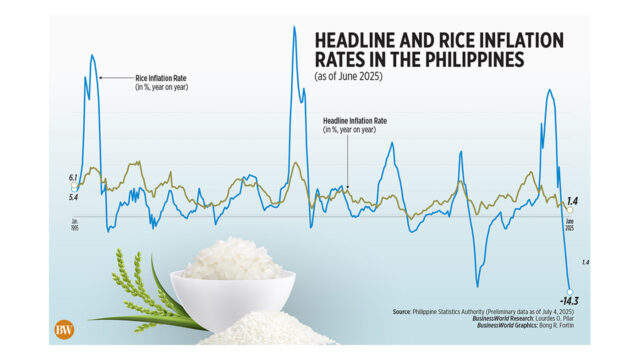
Headline and Rice Inflation Rates in the Philippines

Headline inflation slightly inched up in June, driven by higher costs of utilities and education, the Philippine Statistics Authority reported on Friday. Read the full story.

Headline and rice inflation rates in the Philippines

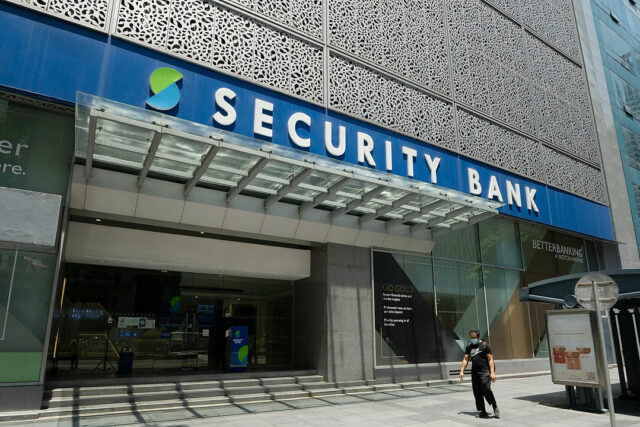
Security Bank partners with Euronet

SECURITY BANK/BW FILE PHOTO

SECURITY BANK Corp. has partnered with Euronet to roll out automated teller machines (ATM) that will serve businesses and their employees, as the lender tries to lure more corporate clients.

“Through this initiative, we aim to better serve our payroll and corporate clients by offering on-site access to cash, right at their offices,” Security Bank Executive Vice-President and Chief Operating Officer Lucose T. Eralil said in a statement on Sunday.

“It’s a practical, forward-thinking solution that simplifies everyday banking and brings financial services closer to where they’re needed most,” he added.

Under the partnership, Security Bank will use Euronet’s ATM infrastructure and Ren payment platform to deliver banking services to its business clients and their employees.

The partners will launch co-branded, white-label ATMs in office spaces and commercial hubs to improve access to cash and financial services for payroll and corporate accounts.

The ATMs will give employees easier access to their salaries, expand ATM coverage in underserved and high-traffic areas and provide payroll services with built-in cash management features. Employers, in turn, are expected to benefit from reduced cash handling and improved operational efficiency.

“This strategic alliance positions the ATM as a key channel for expanding our payroll services, attracting new corporate clients and delivering faster, more reliable access to cash,” said Security Bank Senior Vice-President and Retail Channel head Myla R. Untalan.

“With Euronet’s wide ATM network, we’re enhancing both reach and service quality for our clients,” said added.

Security Bank said the tie-up supports its push to boost its payroll and corporate banking portfolio while attracting more business clients.

The lender posted a 7.32% increase in net income to P2.82 billion in the first quarter, driven by steady growth in loans and deposits. — Aaron Michael C. Sy