Home Blog Page 1300

GDP likely grew by 6% in Q1 — Recto
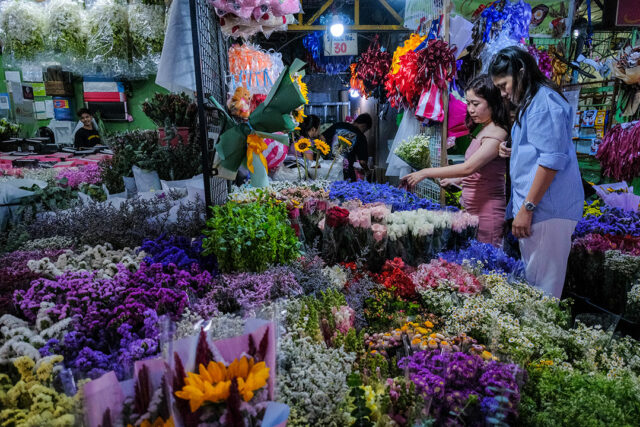
Customers browse flowers at Dangwa Flower Market in Manila, Feb. 10, 2025. — PHILIPPINE STAR/RYAN BALDEMOR

By Aubrey Rose A. Inosante, Reporter

THE PHILIPPINE ECONOMY may have expanded by 6% in the first quarter, Finance Secretary Ralph G. Recto said.

Asked for his first-quarter gross domestic product (GDP) forecast, Mr. Recto told BusinessWorld that he expected 6% growth.

If realized, a 6% GDP growth in the January-to-March period would be slightly faster than the revised 5.9% expansion in the first quarter of 2024.

It would also hit the lower end of the Philippine government’s 6-8% growth target band for this year.

The Philippine Statistics Authority will release first-quarter GDP data on May 8.

Asked if his previous 6-6.5% GDP growth projection for 2025 is still doable amid the US tariffs, Mr. Recto replied: “Yes.”

Last week, National Economic and Development Authority Secretary Arsenio M. Balisacan said he is hopeful the economy grew by at least 6% in the first quarter, as rate cuts and cooling inflation drove domestic consumption.

Rizal Commercial Banking Corp. Chief Economist Michael L. Ricafort, said in an e-mail that first-quarter GDP likely expanded by 6.3%.

He said he expected household spending to have grown by 5% in the first three months of 2025 versus 4.7% last year, supported by “benign” inflation.

In the first quarter, inflation averaged 2.2%, well within the central bank’s 2-4% target range.

Mr. Ricafort said consumption may have been driven by “among the strongest employment data in nearly 20 years, continued growth in overseas Filipino workers’ remittances, business process outsourcing revenues, [and] tourism receipts.”

However, some analysts expect growth in the January-to-March period to settle below 6%.

Moody’s Analytics economist Sarah Tan said the economy may have expanded by 5.5% in the first quarter.

“Private consumption should lift 5.2% year on year, supported by lower borrowing costs as the effect of monetary policy easing filters through the economy. That will ease the pressure on household budgets,” Ms. Tan said in an e-mailed statement on April 11.

The Bangko Sentral ng Pilipinas paused its easing cycle in February but cut rates by 25 basis points at the April 10 meeting. This brought the target reverse repurchase rate to 5.5% from 5.75% previously.

Ser Percival K. Peña-Reyes, director of the Ateneo Center for Economic Research and Development, said in a Viber message that “construction, transport and storage, and accommodation and food service activities” likely drove GDP expansion to 5.4% in the first quarter.

He said household consumption may have grown by 4.6% in the January-to-March period.

Asked for the reason of a relatively slower GDP projection, Mr. Peña-Reyes said that elections no longer provide a significant boost to Philippine growth.

Mr. Balisacan earlier said that election spending would likely be “muted” compared with previous elections as more candidates are allocating more of their campaign funds on social media ads.

TARIFF THREAT
Meanwhile, the outlook for the second quarter may be clouded by the turmoil caused by US President Donald J. Trump’s tariff policies.

Mr. Trump on April 9 paused the new reciprocal tariffs for 90 days, although the baseline 10% tariff on almost all US imports remained in effect. The Philippines faced a 17% reciprocal tariff, which was the second lowest among Southeast Asian countries.

“The immediate risk to the outlook for the rest of 2025 will be slowing export growth due to the hike in US tariffs. These make the Philippines’ goods to the US more costly and less competitive, which is concerning because the US is the Philippines’ largest export destination,” Ms. Tan said.

She also noted that escalating tensions between the US and its trading partners could dampen external demand for the country’s goods, potentially slowing production.

“We expect the Philippines to expand 5.8% this year, but this could be revised lower should the heightened US-China trade war cause significant disruptions to the global economy,” Ms. Tan said.

The Philippines exported $12.14 billion worth of goods to the US in 2024.

Mr. Ricafort said the easing inflation trend would justify further rate cuts “that would fundamentally lead to faster GDP than otherwise.”

“However, offsetting risk factors include US President Trump’s higher US import tariffs, reciprocal tariffs, and other protectionist policies that could slightly reduce GDP growth starting the second quarter 2025,” Mr. Ricafort said.

Despite the tariff threats, he said second-quarter growth could still reach 6%, driven by election spending.

Ms. Tan anticipates an increase in government spending ahead of the midterm elections on May 12.

Mr. Peña-Reyes said he sees the economy expanding by 5.9% in the second quarter, as well as the full year.

Mr. Balisacan has said it may be too early to revise the full-year growth targets in the Development Budget Coordination Committee’s meeting in May.

However, he said the upper end of the 6-8% target may be unrealistic to hit amid global uncertainty over the US tariff policy.
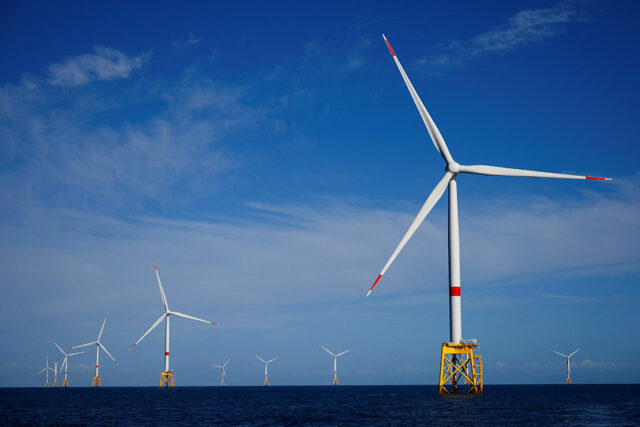

PHL banks eager to back offshore wind projects

A view shows wind turbines at the Saint-Brieuc offshore wind farm operated by Iberdrola near Saint-Quay-Portrieux, Brittany, France, Oct. 22, 2024. A World Bank report estimates the Philippines’ offshore wind resources has a potential of over 178 gigawatts (GW). — REUTERS

By Sheldeen Joy Talavera, Reporter

DESPITE the nascent stage of offshore wind projects in the Philippines, local banks are stepping up to finance these ventures that are aiming to deliver the first kilowatt-hour by 2028.

“We are keen on supporting offshore wind projects as there appears to be a good business case for their adoption in the Philippines. Our sense is that probably all the major local banks are seriously looking at financing this type of renewable energy technology,” Juan Paolo E. Colet, managing director of China Bank Capital Corp., told BusinessWorld.

He said that there is a sufficient appetite and ample domestic liquidity for financing renewable projects.

While interest rates remain relatively high in the Philippines, Mr. Colet said that government initiatives have made the energy market attractive for offshore wind developers. These include the Green Energy Auction Program (GEAP), the Green Lane for Strategic Investments, and the Corporate Recovery and Tax Incentives for Enterprises to Maximize Opportunities for Reinvigorating the Economy Act.

“Foreign investors never fail to mention to us that the Philippines is a promising destination for offshore wind energy investments,” he said.

Other major banks such as the Bank of the Philippine Islands (BPI) also expressed support in financing offshore wind projects.

“BPI is keen to support offshore wind projects by providing the required financing. Although relatively new to the Philippines, there are numerous successful applications globally, so the technology is not untested, and therefore there should be good appetite for such projects,” said Eric Roberto M. Luchangco, chief sustainability officer and chief finance officer of BPI.

“Appetite will be important given the large scale of projects.”

Meanwhile, John Cary L. Ong, executive vice-president and wholesale banking segment head of Security Bank Corp., said that the company is “cautiously optimistic” about financing offshore wind projects.

“We recognize the long-term potential of offshore wind as a critical component in the clean energy transition. However, we also acknowledge the high early-stage risks,” he said.

Mr. Ong said that the company focuses on supporting “well-capitalized developers” as well as ensuring “robust project fundamentals” and utilizing de-risked structures to mitigate potential challenges.

Offshore wind farms generate electricity from turbines positioned in bodies of water, usually at sea.

According to the World Bank’s 2022 Offshore Wind Roadmap for the Philippines, the country’s offshore wind resources have a potential of generating over 178 gigawatts (GW).

The Philippines is now tapping into this potential as the Department of Energy (DoE) assists 16 offshore wind proponents that are estimated to deliver a total of more than 16 GW of capacity.

BDO Capital and Investment Corp. President Eduardo V. Francisco said that the company is currently assisting Danish renewable energy investor Copenhagen Infrastructure Partners (CIP).

CIP, through its affiliate Copenhagen Infrastructure New Market Fund Philippines Corp., is developing a 1,000-megawatt (MW) San Miguel Bay Offshore Wind Power Project located in the provinces of Camarines Norte and Camarines Sur.

The company is the first 100% foreign-owned company to be awarded a wind energy service contract by the DoE in 2023, granting it the exclusive right to explore and develop an area in San Miguel Bay for an offshore wind project.

“I think BDO has a responsibility to understand it (offshore wind) because being one of the larger banks, so we have to be at the forefront. So, we’re trying to understand it and then we’re trying to invite other smaller banks to participate also to get a better understanding of it [so] we can help the other projects,” Mr. Francisco said via phone call.

To date, a total of 92 offshore wind service contracts have been awarded with a potential capacity of around 69 GW.

The DoE is planning to launch the fifth round of green energy auction (GEA-5) by the third quarter, which will focus on offshore wind power projects.

GEA-5 is expected to facilitate market access for offshore wind developers, ensuring long-term demand for their generation capacities and keep them on track for power generation by 2028.

The DoE sees offshore wind to play a transformative role in the Philippines’ target of increasing the renewable energy share in the power mix to 35% by 2030 and 50% by 2040.

Energy Undersecretary Giovanni Carlo J. Bacordo earlier told BusinessWorld that the DoE is working with the World Bank Group for expert guidance and support in the upcoming auction.

“This collaborative approach ensures a well-structured and investor-friendly auction,” he said.

While local banks are seeing support from the government by working on the mechanisms and infrastructure needed, further mobilization is needed to assist developers.

Chinabank’s Mr. Colet said the government has been “very helpful.”

“To further boost offshore wind development, the government needs to mobilize investment in essential infrastructure, such as ports and roads; effectively assist in permitting issues; and expedite value-added tax refunds for renewable energy developers,” he said.

BDO’s Mr. Francisco said that GEAP is important for proponents as it secures winning bidders of off-take contracts for their projects.

He said, however, that local government units could help make the permitting process easier, as well as assist in resolving right-of-way and land leasing issues.

“Government support would be necessary in the form of longer-term contracts to allow project certainty over a longer period, ports to accommodate the massive parts (which they are working on) and perhaps relief to sponsors for grid issues not under their control,” BPI’s Mr. Luchangco said.

Security Bank’s Mr. Ong said that to make offshore wind investments more attractive, the government should take steps to de-risk the market, ensure regulatory stability, and streamline the development process.

“Implementing a comprehensive Grid Integration Plan, offering substantial financial and fiscal incentives, and committing to stable and long-term policies will signal confidence to investors and encourage substantial investment in this promising sector,” he said.

External debt service burden slumps in Jan.

PIXABAY

By Luisa Maria Jacinta C. Jocson, Senior Reporter

THE PHILIPPINES’ external debt service burden slumped by more than 50% in January amid a sharp decline in principal payments, the latest data from the Bangko Sentral ng Pilipinas (BSP) showed.

Preliminary data from the central bank showed debt servicing on external borrowings declined by 54.3% to $799 million in January from $1.75 billion in the same month in 2024.

Broken down, amortization payments plunged by 92.5% to $79 million from $1.06 billion in the year-ago period.

On the other hand, interest payments inched up by 3.8% to $719 million in January from $693 million a year ago.

Rizal Commercial Banking Corp. Chief Economist Michael L. Ricafort said the drop in debt servicing could be largely attributed to the lower amount of foreign debt maturity or principal payments at the start of the year versus a year ago.

“This amid efforts in recent years to reduce the share of external borrowings in the total borrowing mix to reduce foreign exchange risks entailed in foreign debt,” he added.

From this year until 2027, the National Government (NG) plans to source at least 80% of its borrowing program from domestic sources, and 20% from foreign lenders. The government previously adopted a 75:25 borrowing mix

“This is also partly consistent with the budget surplus at the start of the year, after the seasonal increase in the budget deficit and debt payments towards yearend, a consistent pattern seen in recent years, thereby slowing down upon crossing the New Year,” Mr. Ricafort added.

Data from the Treasury showed the NG posted a P68.4-billion budget surplus in January, though 22.27% lower than the P88-billion surplus a year ago.

The debt service burden represents principal and interest payments after rescheduling, according to the BSP.

This includes principal and interest payments on fixed medium- and long-term credits including International Monetary Fund credits, loans covered by the Paris Club and commercial banks’ rescheduling, and New Money Facilities.

It also covers interest payments on fixed and revolving short-term liabilities of banks and nonbanks.

However, the debt service burden data exclude prepayments on future years’ maturities of foreign loans and principal payments on fixed and revolving short-term liabilities of banks and nonbanks.

The latest data from the central bank showed the Philippines’ outstanding external debt rose by 9.8% to $137.63 billion as of end-December 2024 from $125.39 billion in the same period in 2023.

This brought the external debt-to-gross domestic product (GDP) ratio to 29.8% at the end of 2024 from 28.7% at end-2023.

At end-2024, the external debt service burden as a share of GDP stood at 3.7%, up from 3.4% at the end of 2023.

The BSP’s external debt data cover borrowings of Philippine residents from nonresident creditors, regardless of sector, maturity, creditor type, debt instruments or currency denomination.   

PHL unlikely to benefit from shifting trade routes amid tariff war

A US FLAG and a “tariffs” label are seen in this illustration taken on April 10, 2025. — REUTERS/DADO RUVIC/ILLUSTRATION

SHIFTING TRADE ROUTES amid tit-for-tat tariffs would likely occur within Southeast Asia, Oxford Economics said, though this may not necessarily benefit the Philippines due to its poor logistics sector.

“The Philippines and Malaysia might also be able to capture some of the diverted trade flows looking to avoid ports with higher tariffs. They have the next two lowest tariff rates in the region, which are also below the global average of 27%,” it said at a research briefing.

“That said, the Philippines will probably not gain much from re-routing given its less developed trade logistics sector.”

In early April, US President Donald J. Trump announced higher reciprocal tariffs on most of its trading partners.

Southeast Asia was hit with some of the highest duties, though the Philippines was slapped with a 17% tariff, the second lowest in the region, just after Singapore.

However, Mr. Trump suspended the reciprocal tariffs for 90 days starting April 9 but implemented the 10% baseline tariff for all. The suspension would be lifted in July.

Oxford Economics said that the Association of Southeast Asian Nations (ASEAN) will likely undergo a “reordering of shipping routes” within the region.

“The ‘Liberation Day’ tariffs announced by US President Trump have been postponed. But they will have significant consequences for ASEAN if they are eventually implemented.”

“Given the extreme uncertainty, high fixed-asset investment costs, and the region’s strong labor cost advantages, we doubt ASEAN supply chains can adjust quickly,” it added.

Some businesses could opt to soften the impact of the higher tariffs by shifting production to locations slapped with lower tariffs.

“But not all businesses have diversified production bases and relocation costs are enormous. Also damaging is the hit from extreme trade policy uncertainty, which will lower business investment even if tariff hikes are eventually reduced or scrapped.”

“Lower-tariffed economies with transshipment capabilities could benefit. That said, a key risk is the potential for disruption to supply chains. A supply glut may arise as orders are canceled, while transportation capacity could also be strained.”

In the region, countries with the higher tariffs include Cambodia, Laos, Myanmar and Vietnam. Meanwhile, those that are “moderately exposed” to the US are Malaysia and Thailand.

“The relatively larger size of domestic spending in the Philippines buffers its economy against external volatility from an almost 20% export exposure to the US,” it added.

In 2024, the US was the top destination for Philippine exports, accounting for 17% of the total.

“Tariff rate differential considerations are key to production decisions. Companies with facilities in different economies could tap existing and available capacity in lower-tariff economies to fulfill production orders.”

However, the global economic advisory firm noted that not all companies have diversified production bases.

“Relocating or setting up new facilities typically involves significant fixed investment, even to lower-tariffed economies. The time needed to set up in new locations could stretch over several years, especially in sectors that require more complex facilities.”

Oxford Economics said the region’s “comparative advantage in the production of these goods should persist even with higher tariff rates.”

“This is particularly the case for lower value-added, labor-intensive manufacturing processes, such as the assembly of electricals or cut-and-trim processes for textiles, which some ASEAN economies dominate.”

“Given the labor-intensive nature of these processes, the large wage differential between the US and ASEAN economies is a core driver of the region’s competitive edge.”

In the medium term, Oxford Economics said it is unlikely that companies in ASEAN will reshore to the United States.

“Labor costs in the US are prohibitively high for the labor-intensive processes dominant in ASEAN. The region also benefits from economies of scales as an existing production hub.”

To cushion the impact of tariff hikes, ASEAN economies could consider lowering trade barriers on US goods.

“However, given the already low effective tariff on US goods relative to those imposed by the US, it’s unclear by how much these reciprocal tariffs will be lowered.”

ASEAN countries can also seek to ramp up US imports, it said.

“This was a method employed by China when Trump raised tariffs during his first term. However, it’s unlikely ASEAN will manage to do so in a manner that significantly reduces the US trade deficit.”

“The ASEAN consumer market is far smaller than that of the US given the sheer difference in income. This is also why we think the removal of what the US administration considers to be non-trade barriers isn’t likely to change much.”

Economies in the region can also invest more in the United States, it added.

“This approach is taken by Northeast Asian economies like South Korea. and Japan. But it’s probably not viable for ASEAN since most producers are foreign owned.” — Luisa Maria Jacinta C. Jocson

UP physicist among winners of prestigious Breakthrough Prize in Fundamental Physics

University of the Philippines Diliman-College of Science National Institute of Physics Assistant Professor Dr. Marvin Flores at the Large Hadron Collider Detector

Dr. Marvin Flores, assistant professor at the University of the Philippines Diliman-College of Science National Institute of Physics (UPD-CS NIP), has been recognized as part of the international ATLAS collaboration, one of the recipients of the prestigious 2025 Breakthrough Prize in Fundamental Physics.

The award was given to the ATLAS group at CERN’s Large Hadron Collider, alongside its sister experiments — ALICE, CMS, and LHCb — in honor of their pioneering contributions to particle physics and the continued exploration of the fundamental forces of nature.

ATLAS is one of the largest and most complex scientific instruments ever built. As a general-purpose particle detector measuring over 40 meters in length and around 25 meters in height, it was designed to investigate the fundamental building blocks of matter and the forces governing our universe. Its cutting-edge systems track particles produced in particle collisions at unprecedented energies, enabling discoveries like the Higgs boson and searches for new physics beyond the Standard Model.

The Breakthrough Prize specifically highlights the ATLAS Collaboration’s significant contributions to particle physics, including detailed measurements of Higgs boson properties, studies of rare processes and matter-antimatter asymmetry, and the exploration of nature under the most extreme conditions.

“The Breakthrough Prize is a testament to the dedication and ingenuity of the ATLAS Collaboration and our colleagues across the LHC experiments,” ATLAS Spokesperson Stephane Willocq said. “This prize recognizes the collective vision and monumental effort of thousands of ATLAS collaborators worldwide.”

UPD-CS NIP has been at the forefront of ATLAS research since 2021, contributing to the search for new Physics beyond the Standard Model (BSM).

“Our team’s work on BSM modeling and simulation exemplifies the innovation driving ATLAS forward,” Dr. Flores said. “This recognition affirms the impact of our contributions and inspires us to continue exploring the universe’s most fundamental questions.”

The third operation period of the LHC is currently under way and preparations for the High-Luminosity LHC upgrade are advancing rapidly. NIP’s High Energy Physics & Phenomenology (HEP-PH) team of 15 physicists and students is deeply involved in preparing ATLAS for its next chapter. Although their current contributions are currently in the theoretical and phenomenological side, the team is ramping up their experimental involvement through concrete steps like the formation of the ATLAS Philippine Cluster involving other Philippine universities.


SparkUp is BusinessWorld’s multimedia brand created to inform, inspire, and empower the Philippine startups; micro, small and medium enterprises (MSMEs); and future business leaders. This section will be published every other Monday. For pitches and releases about startups, e-mail to bmbeltran@bworldonline.com (cc: abconoza@bworldonline.com). Materials sent become BW property.

Filipina tech leaders represent PHL at 2025 Mobile World Congress

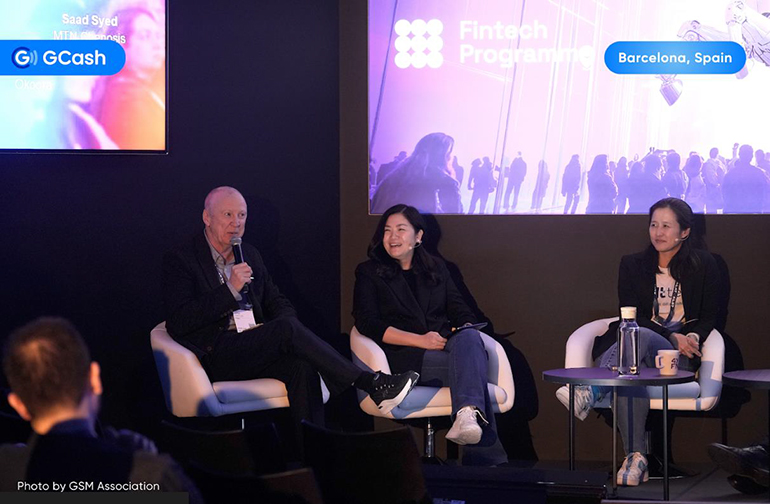
Breaking barriers to financial inclusion. Martha Sazon, GCash President & CEO (second from left), discussed delivering financial services to the underserved communities at the MWC CEO Panel in Barcelona alongside (L-R) Brian Gorman (GSMA), Melike Kara Tanrikulu (e& Money), and Erwan Gelebart (Axian Group).

Filipina tech leaders share perspectives on financial inclusion and how tech can be used to empower unserved and underserved communities in the Philippines

Two Filipina tech leaders from Mynt, the holding company of GCash, the #1 finance super app in the Philippines—Martha Sazon, President & CEO, and Pebbles Sy, Chief Technology and Operations Officer—represented the country’s transformative adoption of connectivity, mobile tech, and the digital economy during the prestigious Mobile World Congress (MWC) in Barcelona, Spain.

Sazon and Sy once again brought GCash’s mission of “Finance For All” to a global audience, who highlighted how fintech innovations can be used for social good—from increasing access to essential financial services within historically underserved communities to leveraging cutting-edge fintech developments to drive meaningful change and economic empowerment.

Transforming mobile moments into financial freedom. At MWC CEO Panel, GCash President & CEO Martha Sazon showcased how the Philippines’ #1 finance super app evolved from basic transfers to a comprehensive ecosystem.

Redefining the super app

Martha Sazon was part of the MWC CEO Panel, “Fintech and Mobile Commerce Summit: Powering Mobile First Commerce,” which explored how companies like GCash can enhance the leapfrog effect of tech and artificial intelligence to address barriers to financial inclusion.

Sazon discussed how GCash first set out to meet an increased demand for seamless, mobile-first solutions among Filipinos as a money transfer app—but then went on to elevate its services by establishing a diverse and wide-ranging financial ecosystem that actively caters to unbanked and traditionally underserved sectors.

“Our money transfer services were the gateway to a broader digital economy. Across the years, and in response to our users’ needs, GCash has broadened its functionalities into a comprehensive selection of financial services, including savings, investments, insurance, and banking,” explained Sazon. “Our work has empowered individuals to take control of their financial well-being and pursue economic opportunities previously out of reach, all from the convenience of their mobile phones.”

Sazon stressed that the key to the digital financial ecosystem’s success is how it focused on addressing systemic issues and the limits of traditional financial institutions: GCash aimed to break down fundamental barriers to inclusion, which included lack of infrastructure, lack of avenues for boosting financial literacy, and the lack of progressive solutions that allow for widespread access to services.

Today, GCash has accelerated financial inclusion in the Philippines, helping raise the number of customers with access to a bank account from 29% to 65%, those with access to formal credit from 2% to 8%, and those with access to insurance from 23% to 51%, all in four years.

Democratizing finance through seamless connections. At the MWC Platform Economy panel, GCash Chief Technology and Operations Officer Pebbles Sy (center) joined global fintech leaders including Brian Gorman of GSMA (left) and Bolttech’s Melissa Wong (right) to showcase how digital integration drives financial inclusion.

The features of GCash range from payments and transfers that make online and offline commerce easier to lending solutions that utilize AI. A groundbreaking example of the latter is GCash’s in-house credit scoring model, GScore, which uses transactional behavior as a proxy for measuring a user’s creditworthiness and has ultimately changed the landscape of microlending.

GScore, in particular, has allowed GCash to disburse roughly $3.2 billion by 2024 to over seven million Filipinos, most of whom are women from underserved sectors. Its suite of solutions also includes tools for wealth management, with the company introducing bite-sized financial offerings to match the “sachet economy” of the Philippines.

“The conventional super app is defined as having multiple features in a single platform, but for us, a super app means being an everyday companion,” said Sazon. “It’s about constant innovation: We look at our daily use cases and find ways to make things better.”

Using fintech for empowerment

In addition to opening doors for the underbanked and underserved, GCash invests in innovations, such as APIs (application programming interfaces), which allowed it to connect and collaborate with service partners to deliver personalized solutions. These, in turn, have boosted the super app’s capabilities in catering to a multitude of diverse, and personalized needs of its users.

During the “Platform Economy” MWC panel, which focused on increasing access to financial services through everyday apps and fintech ecosystems, Pebbles Sy shared how GCash’s API integration has been a key factor in expanding reach and improving user experience.

She also noted how this approach has necessitated the continuous adoption and development of modular and reusable features that must work well with other app components: “Today, we’re connecting thousands of microservices on our platform through APIs. We also use APIs to connect with external partners like merchants and other service providers.”

According to Sy, when financial services are seamlessly integrated, they become second nature for its users. Thanks to APIs, GCash connects users with 1,200 billers and 17 insurers within the app, as well as with four partner banks for savings accounts and to a platform that enables Filipinos to invest with the Philippine Stock Exchange.

Sy added, “This is where embedded finance goes beyond just inclusion. It’s not just about providing access to financial services; it’s about making them work for people [as they] build better financial habits, protect what they earn, and plan for the future.”

The future is now for fintech

Meanwhile, during the MWC’s “The Currency of Change” session—which discussed how mobile money contributes to GDP growth and how financial innovations drive economic development—Sy emphasized the importance of aligning the future of fintech with strategies for ensuring the security and sustainability of innovations.

Citing Google’s e-Conomy Southeast Asia Report in collaboration with Temasek and Bain & Company, she shared that the Philippines emerged as the fastest-growing digital economy in the ASEAN region, where mobile money penetration more than quadrupled in the two years during the COVID-19 pandemic. These advancements highlight the profound economic impact of mobile money in the Philippines, which GCash is ready to safeguard and facilitate further.

She added, “At the end of the day, the goal is clear: We must make financial services accessible, safe, and empowering. We want to go beyond inclusion and see financial progress in Filipinos, which hopefully can [translate into] financial health and freedom.”


Spotlight is BusinessWorld’s sponsored section that allows advertisers to amplify their brand and connect with BusinessWorld’s audience by publishing their stories on the BusinessWorld Web site. For more information, send an email to online@bworldonline.com.

Join us on Viber at https://bit.ly/3hv6bLA to get more updates and subscribe to BusinessWorld’s titles and get exclusive content through www.bworld-x.com.

Pushing financial inclusion for a more secure future

macrovector | Freepik

GCash goes beyond payments, expands access to job opportunities for millions of Filipinos through GJobs

By Bjorn Biel M. Beltran, Special Features and Content Assistant Editor

Nonbank financial institutions (NBFIs) such as digital financial services providers like GCash, GrabPay, and Maya have been a massive step forward in promoting financial inclusion in the country, allowing unbanked communities access to life-changing financial tools like savings accounts, investments, and credit for entrepreneurship.

According to a 2024 report by Euromonitor International, as much as 76% of Filipinos in the Philippines can be classified as unbanked or underserved by formal financial institutions.

Yet, even as millions remain unbanked, digital financial services have begun to close the gap by offering alternative pathways to financial access, often through mobile-first platforms that bypass traditional and formal banking infrastructures altogether.

By the end of 2023, according to the Report on E-Payments Measurement of the Bangko Sentral ng Pilipinas (BSP), digital payment transactions accounted for 52.8% of total monthly retail payments in the country, increasing from 42.1% in 2022.

Such rapid growth in NBFIs has prompted the BSP and the International Monetary Fund (IMF) to take measures to monitor and regulate their growth more closely. At the 2024 BSP-IMF Systemic Risk Dialogue in Cebu, BSP Governor Eli M. Remolona, Jr. emphasized that the expansion of the nonbank financial sector, while beneficial in diversifying the financial system and mitigating concentration risks, has introduced new issues and complexities worth addressing.

This is because instead of replacing traditional banks as sources of systemic risk, nonbank entities are increasingly becoming interconnected with them, creating a more intricate financial network that requires close regulatory oversight.

“There is much diversity within nonbank financial institutions, just as there are interlinkages with nonbanks and banks. In exchanging interlinkages, its opportunities and risks should be of great interest to regulators and practitioners,” Mr. Remolona said.

The latest central bank data showed that the number of nonbanks rose by 2.3% to 17,018 as of the second quarter of 2024, up from 16,631 the year before. This includes private insurance companies, which only cover domestic and foreign companies.

Meanwhile, the total resources of the nonbanking sector went up by 5.3% to P5.52 trillion as of end-June 2024 from P5.24 trillion in 2023.

Expanding and changing roles in the financial sector

IMF Asia and Pacific Department Director Krishna Srinivasan said that the role of less-regulated NBFIs has become larger, and the risks they pose to the greater national economy have grown with it.

“These developments could amplify negative shocks, especially given the worsening risk landscape and increased uncertainties with significant implications for financial stability,” he said.

Mr. Srinivasan noted it is particularly relevant at a time when the global economic outlook remains uncertain due to a range of external pressures like geopolitical conflicts and heightened tensions that risk disrupting commodity and financial markets, driving up trade costs, and weakening domestic demand. He also pointed to the possibility of escalating trade disputes among major economies and the impact of monetary policy shifts in advanced markets on emerging Asian economies.

In addition, technological developments present emerging risks for financial systems. “We must consider how the adaptation of digitalization and artificial intelligence in financial market activities may affect financial stability,” he said. “While these advancements can drive efficiencies, they may also introduce new risks and exacerbate existing vulnerabilities.”

GCash, as the biggest fintech platform in the country, is well-aware of the expanding role of NBFIs. Beyond basic digital payments, the platform offers in-app credit services and affordable lending products like GCredit, GLoan, and GGives, with a reported P155 billion being disbursed to 5.4 million unique borrowers, including underserved segments as of late 2024.

The company said that in wealth management and insurance, GFunds has on-boarded 6.6 million users and handles three in four unit investment trust fund (UITF) transactions. Meanwhile, GStocks represents one in five Philippine Stock Exchange (PSE) accounts with 682,000 users, and GInsure protects 7.8 million Filipinos with 28 million policies sold, making investment products and financial protection more inclusive and responsive to the needs of Filipinos.

“At GCash, we recognize our role in helping expand financial inclusion and using tech for good in the country,” Ren-Ren Reyes, president and chief executive officer of G-Xchange, Inc., which operates GCash, told BusinessWorld in an email.

Mr. Reyes said that GCash acknowledges its significant role in improving the lives of Filipinos and so leverages such role by expanding its offerings beyond digital financial services. GJobs, their newest initiative, is a job marketplace platform accessible through the GCash app that connects users with job opportunities from the job-matching platform PasaJob.

“This initiative demonstrates our dedication to utilizing technology for positive social impact. Digital platforms like the GJobs marketplace can tackle socioeconomic issues, such as unemployment and underemployment, by offering accessible job opportunities to Filipinos across the country. With a simple tap on their phones, users can easily discover blue collar work, and connect with credible employers,” Mr. Reyes said.

He further said that this growing interconnectedness between NBFIs and formal banking institutions can serve to uplift more Filipino lives, precisely because platforms like GCash continue to innovate and extend beyond conventional financial services to address the reasons why Filipinos are financially excluded and unable to participate in the economy.

“Building on the extensive adoption of digital wallets in the country, the next step is to integrate services that address users’ holistic needs. GJobs is a testament to this approach, offering a job marketplace platform where users can find and apply for employment opportunities or earn by referring others through the job offerings of our partners,” Mr. Reyes said.

GCash sees NBFIs as not just digital alternatives to banks, but as tech-enabled platforms for social mobility, especially in regions underserved by traditional systems. GCash has already established itself as a platform that makes it easy for Filipinos to gain access to financial services simply because they don’t have a stable source of income to begin with.

GJobs, then, aims to bridge the gap, using that foundation to tackle underemployment, unemployment, and the broader income challenges faced by millions of Filipinos.

“By placing these opportunities within the GCash app — a platform already familiar and trusted by millions — we’re using tech to bridge the gap between job seekers and employers, especially in areas where access to employment resources is limited. GJobs isn’t just about helping people find work; it’s also about helping Filipinos thrive every day through the pathways to income, growth, and long-term financial security opening up for every Filipino,” he said.

Regulating digitally-driven nonbank financial institutions

rawpixel.com | Freepik

For expanding the financial services available to consumers — investment and lending to financial consulting — nonbank financial institutions (NBFIs) are unleashing their potential to transform the financial landscape. Nonetheless, though these institutions and traditional banks have different roles to play, these two are interconnected with each other and are balancing the financial ecosystem.

“The nonbank financial sector has noticeably grown since the GFC (Global Financial Crisis). On one hand, this is welcome news because it addresses some of the concentration risks that arise from relying too much on the banking industry. On the other hand, financial markets are never an ‘either-or.’ There is much diversity within nonbank financial institutions, just as there are interlinkages with nonbanks and banks. In exchanging interlinkages, its opportunities and risks should be of great interest to regulators and practitioners,” Bangko Sentral ng Pilipinas (BSP) Governor Eli M. Remolona, Jr. said in a forum last year.

Realizing the significant impact the nonfinancial sector could bring, the Philippine central bank is making breakthroughs to strengthen the nonbank financial sector.

NBFIs are seen leveraging technologies to redefine financial services, expand financial access, and cater to consumer demands. For instance, leveraging generative artificial intelligence (GenAI) has seen improvements in consumer banking, investment banking, and even in capital markets. It streamlined research and financial modeling, as well as improved business lending, risk management, service delivery, and customer interaction.

“[Generative AI] is an enabler for the nonbank financial market. It is something that banks have embraced. It is redefining the demands of the consumer,” Mr. Remolona said.

With further use of AI technologies and solutions, the central bank is looking to release regulations on the ethical use of the technology. It will cover regulations on untouched areas in managing risks associated with AI, biases, and AI-assisted cybersecurity, among others.

“We should always prioritize AI solutions that are human-centric solutions associated with AI,” Melchor T. Plabasan, BSP’s Director of Technology Risk and Innovation Supervision Department, said in a previous statement.

“While there are a lot of groundbreaking benefits that can be reaped from the use of AI, we must always remember that AI is primarily driven by humans. AI needs the prompts, instructions of humans. It is humans that set the direction for AI,” he added.

From this, both existing and new regulations are set to not only maximize the use of AI but also foster responsible digital environments for banking and nonbanking financial institutions.

“The BSP is committed to fostering an enabling regulatory environment that would promote responsible use of AI, the trustworthiness, and the resilience of our digital finance ecosystem,” Mr. Plabasan said.

Alongside technological innovations, the central bank is also looking at refining policy and regulatory frameworks to ensure financial stability and resilience in the sector, as mentioned in the BSP’s 2024 Financial Stability Report.

“Improving the monitoring of NBFIs and regulating shadow banking activities start with addressing gaps in the availability of granular data that are necessary for systemic risk surveillance,” the report said.

On another note, nonbanks are also stepping into the repurchase agreement (repo) market, which served as a financial market where one party sells securities to another and agrees to repurchase those securities later at a higher price. Currently leading this initiative is the Securities Exchange Commission (SEC).

Expanding the repo market for nonbanks means improved activities in financial markets. Previously, only established dealer networks, like the Government Securities Eligible Dealer (GSED), which are licensed SEC security dealers, were involved in the repo market. However, bringing nonbanks into the mix will not only broaden market participation, but will also potentially enhance financial market activity.

“The repo market is envisioned to support the market-making activities of government securities dealers in the country. Expanding this market provides us with another opportunity to improve liquidity, manage short-term funding, and boost overall market activity,” Emilio B. Aquino, chairperson of SEC, shared in a previous statement.

Also, in efforts to strengthen this initiative, the SEC has recently collaborated with the Bankers Association of the Philippines and the Asian Development Bank. Together, they organized a three-day Global Master Repurchase Agreement (GMRA) workshop, which put a spotlight on the implementation of GMRA frameworks, which are standardized international agreements used for repurchase transactions, its importance on the repo market, and the risks associated with it — Angela Kiara S. Brillantes

Digital transactions among sari-sari stores surge in 2024, Packworks data shows

Packworks, a Filipino tech startup with an app ecosystem for sari-sari stores, has seen a significant increase in the number of stores transacting on its app from its network of over 300,000 sari-sari stores across various regions in the Philippines.

Data from Packworks reveals over 175,000 stores actively transacted through its Sari.PH Pro app in 2024, representing a 32% increase from about 133,000 stores in the previous year.

Region VI (Western Visayas) saw the largest increase in transacting stores, at 62%, followed by Region IV-A (CALABARZON) with 50% and Region V (Bicol Region) with 47%. Notable growth was also recorded in Region III (Central Luzon) (26%) and Region VII (Central Visayas) (21%).

Significantly the spikes in transactions across regions were recorded from September to December, which aligns with the peak ‘ber’-months season in the Philippines. On average, there was a 12% increase in transacting stores across the country.

“Our data illustrates the robust growth of sari-sari store activities in the regions. The surge in the number of stores recorded in our app is a testament to the savvy entrepreneurial spirit of these businesses, which are the grassroots foundation of local economies. As they thrive, they create jobs, stimulate the local retail ecosystem, and contribute to the overall economic development of the Philippines,” Packworks CEO and Founder Bing Tan said.

While many regions experienced significant growth, Region IV-B (MIMAROPA) saw the most significant decrease in transacting stores, particularly in April and May 2024, the same time when Typhoon Aghon hit the region. During this period, transacting stores fell to 20% in April and approximately 38% in May.

Packworks Co-Founder Ibba Bernardo emphasized the crucial role of access to vital services to support the growth of sari-sari stores in the provinces, especially in areas frequently affected by natural calamities. “Aside from providing them with business tools, empowering sari-sari stores also means ensuring they have the essential services to remain operational, even during challenging times. Access to reliable Internet connectivity and power is critical for community preparedness and recovery,” he said.

“We hope that by sharing this data we can highlight where strategies for growth and support can be focused this 2025, especially with upcoming elections and seasonal climate impact events on the horizon. By strengthening these crucial services, we can help nurture these businesses further, and make them more resilient and sustainable to the communities they serve,” he added.

Covering 96% of the Philippines’ provinces and extending to more than 15,000 barangays, Packworks’ platform now reaches nearly 23% of the estimated 1.3 million sari-sari stores nationwide.

Launched in 2018 as a solution for multinational companies with only a handful of sari-sari store partners, Packworks has rapidly expanded as a B2B platform that enables growth and success throughout all stakeholders in the supply chain ecosystem, from small sari-sari store owners to wholesalers, distributors, and renowned FMCG companies and brands. Through the Sari.PH Pro app, sari-sari store owners can access pricing tools, inventory management, sales and revenue tracking, and working capital loans.


SparkUp is BusinessWorld’s multimedia brand created to inform, inspire, and empower the Philippine startups; micro, small and medium enterprises (MSMEs); and future business leaders. This section will be published every other Monday. For pitches and releases about startups, e-mail to bmbeltran@bworldonline.com (cc: abconoza@bworldonline.com). Materials sent become BW property.

UST students win innovation award for sustainability app in Singapore

The ‘USTainability’ team accompanied by Asst. Prof. Eugenia R. Zhuo, DIT (5th from left) receives their award.

A team of students from the UST College of Information and Computing Sciences (UST-CICS) won the Best Use of Technology Award for their mobile app project addressing food waste and animal welfare at the EDUtech Asia 2024 Planet Protector Sustainability Challenge held from Nov. 6 to 7, 2024, at the Marina Bay Sands Expo in Singapore.

The “USTainability” team, under the BS Information Technology Automation Track, is composed of Gerwin Bryan L. Tuanquin, Cher Elisha Cruz, Enrique Resurreccion, Lara Nicole Gatchalian, and Miguel Adrian Torrejos, who were under the mentorship of Asst. Prof. Eugenia R. Zhuo, DIT. They presented their project titled “Stray Surplus,” which uses Gemini AI to assess surplus food items for safety and suitability for stray animals and leverages the Google Maps API to connect donors with local animal shelters.

Stray Surplus offers a GoogleTech-powered solution that fosters sustainability and compassion by reducing food waste and supporting animal welfare. This innovative approach transforms surplus food or leftovers into a sustainable resource for stray animals and animal shelters, addressing waste reduction and care for stray animals.

The mobile application was developed with Android Studio and uses Firebase for backend services, Google AI Studio for prompt engineering capabilities, Gemini AI for intelligent processing, and Google Maps API for location-based features.

The team’s success at EDUtech Asia highlights UST-CICS’s commitment to advancing socially responsible technological solutions, showcasing the university’s dedication to fostering sustainability. Stray Surplus adheres to the ideals of SDG 12 that promotes responsible consumption and production of food products.

EduTech Asia 2024 brought innovators from various organizations and institutions to tackle pressing sustainability challenges. The competition featured two leagues: the K-12 League and the Higher Education Institutions (HEI). The USTainability team represented UST-CICS in the HEI League, one of six short-listed teams from the Philippines, Singapore, Malaysia, and Thailand.


SparkUp is BusinessWorld’s multimedia brand created to inform, inspire, and empower the Philippine startups; micro, small and medium enterprises (MSMEs); and future business leaders. This section will be published every other Monday. For pitches and releases about startups, e-mail to bmbeltran@bworldonline.com (cc: abconoza@bworldonline.com). Materials sent become BW property.

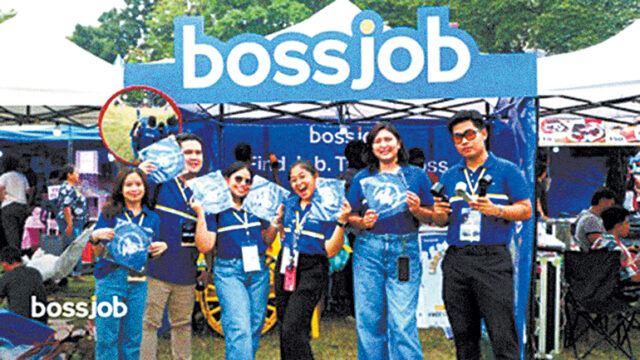
Bossjob taps student crowd at UP Fair 2025 to promote AI-powered career tools

Artificial intelligence-powered recruitment platform Bossjob participated in UP Fair 2025, held from April 2 to 5 at the University of the Philippines Diliman, marking its first appearance at a major student event outside of traditional job fairs. The fair drew over 50,000 attendees across four days.

Bossjob set up an interactive booth that attracted over 2,000 visitors. Attendees were encouraged to engage with the platform by downloading the app, registering their profiles, and exploring features such as chat-based messaging with recruiters, AI resume analysis, and tools for generating CVs and professional photos.

The platform, which promotes itself as accessible to a wide range of job seekers including those in blue-collar and entry-level roles, emphasized themes of inclusivity and equitable hiring. Its participation aligned with the daily advocacies of the UP Fair, including support for marginalized groups, gender equity, and education access.

Bossjob’s involvement focused on increasing visibility among students and first-time job seekers, offering them tools to prepare for employment in a digital hiring environment.


SparkUp is BusinessWorld’s multimedia brand created to inform, inspire, and empower the Philippine startups; micro, small and medium enterprises (MSMEs); and future business leaders. This section will be published every other Monday. For pitches and releases about startups, e-mail to bmbeltran@bworldonline.com (cc: abconoza@bworldonline.com). Materials sent become BW property.

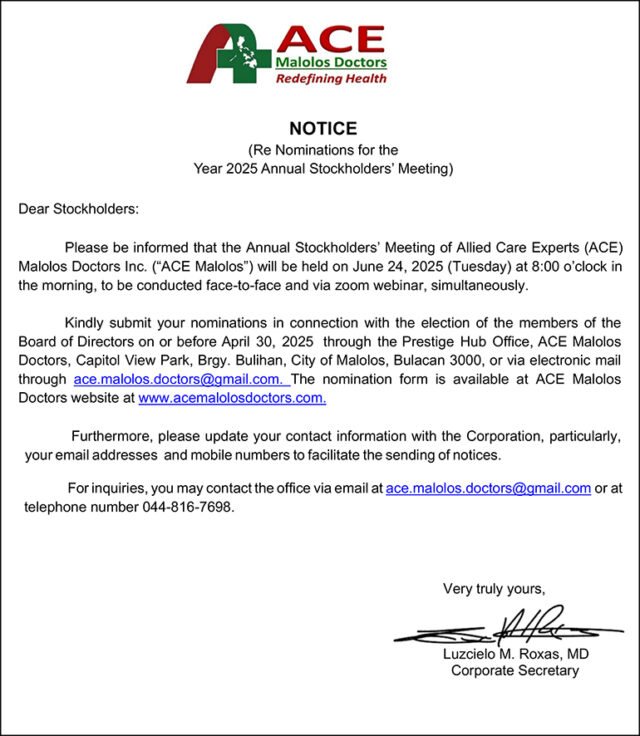
Allied Care Experts (ACE) Malolos Doctors, Inc. opens nominations for Board of Directors ahead of Annual Stockholders’ Meeting on June 24


Spotlight is BusinessWorld’s sponsored section that allows advertisers to amplify their brand and connect with BusinessWorld’s audience by publishing their stories on the BusinessWorld Web site. For more information, send an email to online@bworldonline.com.

Join us on Viber at https://bit.ly/3hv6bLA to get more updates and subscribe to BusinessWorld’s titles and get exclusive content through www.bworld-x.com.