Home Blog Page 1295

Patio Madrigal: Where heritage meets modern living along Roxas Boulevard

Skyline views in your own personal balcony

Metro Manila’s iconic Roxas Boulevard is poised to welcome a new residential development as Patio Madrigal, the first residential development of Avida Land in the area, captures the interest of discerning homebuyers and business professionals. This mid-rise condominium, a joint venture between Avida Land and the Madrigal family, offers a distinctive combination of urban lifestyle, proximity to cultural heritage, and enhanced convenience for modern city living.

A Destination Address for Business Leaders and Professionals

Strategically located at the boundary of Pasay, Manila, and Parañaque—and just a short drive from Makati’s financial district—Patio Madrigal is designed for professionals, entrepreneurs, investors, and returning overseas Filipinos who seek a coveted address without the congestion of central business districts. The development is also near major thoroughfares and transport routes, including the South Luzon Expressway and Ninoy Aquino International Airport.

Unwind after a busy day in your cozy bedroom, complete with a relaxing balcony retreat.

The development sits on an approximately 6,222.50-square-meter property, featuring two residential towers, complemented by retail units for everyday essentials.

Patio Madrigal’s first tower offers 595 units across 15 residential floors, with streamlined options such as studio, junior one-bedroom, and one-bedroom units—most with balconies to maximize natural light, ventilation, and skyline views. Prices start at P7 million for a studio and go up to P13 million for a one-bedroom unit, catering to established professionals and young business owners seeking both comfort and investment value.

The lower three podium levels are dedicated to parking and commercial spaces, ensuring that residents have access to retail and service establishments within the property. This integration of living and commerce is ideal for those who value time, efficiency, and the vibrancy of city life.

Lifestyle-Driven Amenities that Elevate Everyday Living

Spaces to unwind, connect, and energize—right outside your door.

Patio Madrigal’s amenities are thoughtfully curated to foster community and relaxation amidst the urban bustle. Residents can unwind and host gatherings in the multi-function room or enjoy the garden lounge and viewing deck. Wellness is a priority, with an adult pool, kiddie pool, children’s play area, and an indoor gym all within a secure community.

A Front-Row Seat to Manila’s Heritage and Entertainment

Living at Patio Madrigal means being at the heart of Manila’s cultural and entertainment scene. Future residents are just minutes away from heritage landmarks, renowned theaters, museums, and the vibrant nightlife of Roxas Boulevard.

Whether it’s catching the famed Manila Bay sunset or exploring the city’s culinary and artistic offerings, everything is within reach.

Find your Rhythm, Live at Your Tempo

Patio Madrigal offers a rare opportunity to live in a destination where history, entertainment, and modern comforts converge. Immerse yourself in the city’s energy and, at the end of the day, retreat to your own sanctuary—finding your rhythm and living at your tempo amidst the dynamic landscape of Roxas Boulevard.

For 34 years, Avida Land has been shaping inspired living spaces in master-planned communities, enhancing the lifestyles of upper middle-income individuals and families. By integrating sustainable practices into high-quality developments, Avida ensures its homes are future-proof and attuned to the needs of the next generation of homeowners.

For more information and updates on Avida Land’s projects, visit their website at https://www.avidaland.com/, like and follow @AvidaLandPH on Facebook and Instagram, and @avidaofficial on YouTube.


Spotlight is BusinessWorld’s sponsored section that allows advertisers to amplify their brand and connect with BusinessWorld’s audience by publishing their stories on the BusinessWorld Web site. For more information, send an email to online@bworldonline.com.

Join us on Viber at https://bit.ly/3hv6bLA to get more updates and subscribe to BusinessWorld’s titles and get exclusive content through www.bworld-x.com.

Nearly half of MSME afraid to take loans due to perceived high interest rates, says BCG survey

““We didn’t expect the gap between fear and reality when it comes to financing,” Jamie Bawalan, Principal at Boston Consulting Group told BusinessWorld.

“Forty-two percent of micro, small, and medium enterprises (MSMEs) haven’t applied for a loan because they fear high interest rates or getting into debt,” she added.

Building a legacy for employees

“Sonya Garcia, owner of Sonya’s Garden, shares the legacy she aims to leave to her employees.

Interview by Edg Adrian Eva
Video editing by Arjale Queral

DigiPlus backs tighter regulation of online gaming, urges constructive path forward

As calls mount for tighter controls on online gaming, DigiPlus Interactive Corp., the Philippines’ leading digital entertainment company, expresses its strong support for smart, balanced regulation that protects players, ensures industry accountability, and sustains the economic value generated by the legal online gaming sector.

“We believe regulation is the path to player protection. It’s the only way to safeguard players, preserve jobs, and close the door on illegal, underground platforms that operate without any oversight,” said DigiPlus Chairman Eusebio Tanco.

As the operator behind leading online gaming platforms such as BingoPlus, ArenaPlus, and GameZone, DigiPlus has consistently aligned with the principles being raised by lawmakers and advocacy groups. In fact, many of the proposed safeguards are already embedded across its platforms. All users undergo strict Know-Your-Customer (KYC) verification, including government ID checks and age gating. Responsible gaming features, such as deposit limits, self-exclusion options, and cooling-off periods, have been readily accessible since November 2024.

Beyond existing tools, DigiPlus is rolling out a new wave of initiatives. These include enhanced affordability checks, behavioral nudges to curb excessive gaming, and referral pathways to licensed mental health experts. In July 2025, the company will also launch in-app community spaces to engage players in responsible gaming conversations and peer support. Across all its platforms, responsible gaming content is now featured more prominently than ever, not as fine print, but as part of the core user experience.

The company also complies with existing advertising restrictions and is actively revising its promotional strategies in light of new government guidance. Its internal marketing mandate prohibits targeting minors, avoids depictions of wealth or urgency, and excludes messaging that could be construed as predatory. DigiPlus has also partnered with NGOs and civil society organizations to promote financial literacy and digital responsibility among players, efforts that go beyond what is required under current law.

DigiPlus emphasizes that these measures are not reactions to regulatory pressure, but part of a multi-year strategy to build a responsible gaming ecosystem. The company invests in data science, player support systems, and compliance technologies precisely because it believes the future of gaming depends on trust and transparency. That is why it fully supports updated legislation, particularly around stronger penalties for illegal operators, and clearer advertising standards.

Crucially, DigiPlus urges policy makers to weigh the consequences of a total ban. The experience of other countries has shown that banning licensed platforms does not eliminate demand for online gaming, but merely shifts users to unregulated black markets where there are no protections, no taxes, and no accountability. In contrast, a well-regulated environment can protect players, generate billions in government revenue, and sustain over 40,000 jobs across tech, marketing, entertainment, customer service, and compliance.

“With the right rules in place, the Philippines can be a model for safe, transparent online gaming in Asia,” Mr. Tanco said. “We are ready to work hand-in-hand with regulators, legislators, and community groups to make that vision real.”

As the industry continues to evolve, DigiPlus remains committed to adapting with it, just as it has done over the past two decades. As a homegrown company listed on the Philippine Stock Exchange and now expanding into global markets, DigiPlus stands ready to be part of the solution: protecting consumers, upholding public trust, and sustaining responsible innovation.

About DigiPlus Interactive Corp.

DigiPlus Interactive Corp. pioneered digital entertainment in the Philippines. It introduced leading platforms BingoPlus, ArenaPlus, and GameZone, widely known for their engaging experiences in interactive gaming and sports entertainment. For more information, visit: www.digiplus.com.ph.


Spotlight is BusinessWorld’s sponsored section that allows advertisers to amplify their brand and connect with BusinessWorld’s audience by publishing their stories on the BusinessWorld Web site. For more information, send an email to online@bworldonline.com.

Join us on Viber at https://bit.ly/3hv6bLA to get more updates and subscribe to BusinessWorld’s titles and get exclusive content through www.bworld-x.com.
OEd: Redefining access to education in the Philippines and beyond

Maria Adoracion R. Octavio

In today’s digital era — where technology touches nearly every aspect of our lives from how we work to how we connect — Online Education (OEd) stands at the forefront of a new educational movement. It proves that learning no longer has to be confined within the four walls of a classroom or bound by rigid schedules. By harnessing the power of digital tools, OEd is breaking down long-standing barriers in education, making it more inclusive for learners of all ages and backgrounds. As one of the Philippines’ pioneering platforms for flexible, fully online education, OEd is built for the dreamers: the working professionals, the overseas Filipino workers (OFWs), the undergraduates who paused for life’s responsibilities, and the second-chancers who never gave up. OEd’s mission is simple yet powerful: to make quality education available to anyone, anywhere, at any time.

Learning Without Limits

The core of OEd’s value lies in its flexibility. Students can take classes and complete coursework on their own schedule — without sacrificing their jobs or responsibilities at home. Its programs range from bachelor’s degrees to short courses and continuous learning, all officially granted by AMA University Online Education, which is accredited by the Commission on Higher Education (CHEd).

For countless students, OEd is more than a platform; it’s an enabler. It allows you to pursue a diploma or professional development while still meeting your day-to-day obligations. The experience is designed to be intuitive and efficient, with a user-friendly system and a support team ready to assist.

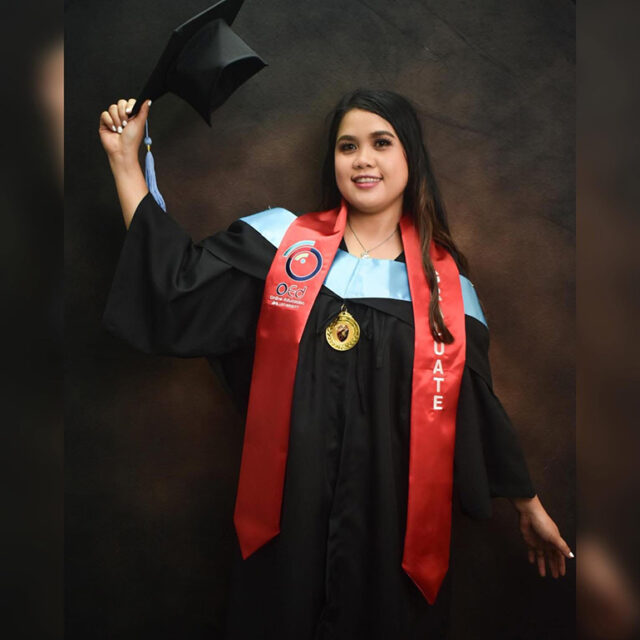
One such student is Maria Adoracion R. Octavio, an OFW in Hong Kong who recently made headlines after placing Top 2 in the Licensure Examination for Teachers (LET) — all while continuing to work full time as a domestic helper abroad.

A Journey Fueled by Opportunity

Maria’s educational journey was long delayed — not by a lack of ambition, but by financial hardship. “After high school, I worked immediately to help my family. Later on, both my parents fell ill, and I had to prioritize their medical needs. My dream of finishing a degree kept getting pushed back,” she shared.

It wasn’t until years later, while working in Hong Kong, that Maria learned about OEd. “What convinced me to study at OEd was its flexibility. I didn’t need to leave my job. The platform was easy to use, and the team was very accommodating. OEd gave me back the chance I thought I had lost forever.”

Her OEd experience became a turning point. Beyond the knowledge and training she gained, she found confidence, independence, and self-discipline. “I learned to manage myself and study without a teacher by my side. The system helped me navigate everything independently.”

A Milestone Moment

Maria described her most unforgettable memory with OEd as her graduation ceremony held at the Metropolitan Theater in October 2024. “As I sat there, I was in tears. I had almost given up on my dream of becoming a teacher. But OEd made it possible.”

With her OEd-accredited degree, Maria was able to take the LET — and she didn’t just pass, she excelled. Her documents were even validated by WES (World Education Services) in Canada, confirming their equivalence to a bachelor’s degree, something not all institutions can offer.

Education That Moves With You

Whether you’re in Metro Manila, the provinces, or overseas, OEd makes learning possible wherever life takes you. It is ideal for:

  • Working professionals looking to upgrade their credentials
  • OFWs aiming to transition into new careers
  • People with disabilities who benefit from home-based study
  • Individuals pursuing a second degree or refresher course

By eliminating barriers like rigid schedules and physical attendance, OEd has transformed what access to education looks like.

Looking Forward

Today, Maria is finishing her contract in Hong Kong, but she has plans to return to the Philippines and apply for SPIMS — a government program that hires OFW professional teachers. “This is why I took the LET before coming home. Because of OEd, I’m finally taking the path I’ve always wanted.”

Her advice to her younger self is what OEd stands for at its core: “Believe in yourself. You are greater than you think.”

Education for the Modern Learner

OEd is not just a digital platform — it is a revolution in learning. It empowers those who once believed their time had passed. It restores hope to workers overseas, reignites dreams in the hearts of mothers, and opens pathways for students bound by distance, disability, or duty.

In a world that often says it’s too late,” OEd boldly answers: “You’re right on time.”

So whether you’re chasing a childhood dream, upgrading your skills for tomorrow’s job market, or simply proving something to yourself — OEd is where your new beginning starts.

Because education should never be a privilege of circumstance. With OEd, it becomes a right — accessible, achievable, and entirely your own.

Ready to start your journey with OEd?
For inquiries and assistance, reach out to our Admissions Team through any of the following channels:

📞 Mobile/SMS/Call: 📲 Viber / WhatsApp:
0917-190-1821   / 0917-190-1817   /  0917-190-1821

☎️ Landline:
(632) 8737-5580

📧 Email:
admission@amauonline.com

Our team is here to guide you every step of the way. Start your flexible and accredited online education today with OEd Online Education redefined for you.


Spotlight is BusinessWorld’s sponsored section that allows advertisers to amplify their brand and connect with BusinessWorld’s audience by publishing their stories on the BusinessWorld Web site. For more information, send an email to online@bworldonline.com.

Join us on Viber at https://bit.ly/3hv6bLA to get more updates and subscribe to BusinessWorld’s titles and get exclusive content through www.bworld-x.com.

China-linked hackers target Taiwan’s chip industry with increasing attacks, researchers say

REUTERS

Chinese-linked hackers are targeting the Taiwanese semiconductor industry and investment analysts as part of a string of cyber espionage campaigns, researchers said on Wednesday.

While hacking to steal data and information about the industry is not new, there is an increase in sustained hacking campaigns from several China-aligned hacking groups, researchers with cybersecurity firm Proofpoint said in a new analysis.

“We’ve seen entities that we hadn’t ever seen being targeted in the past being targeted,” said Mark Kelly, a threat researcher focused on Chinese-related threats at Proofpoint.

The previously unreported hacking campaigns were carried out by at least three distinct Chinese-linked groups primarily between March and June of this year, with some activity likely ongoing, Proofpoint said. They come amid rising restrictions by Washington on exports to China of U.S.-designed chips that are often manufactured in Taiwan. China’s chip industry has been working to replace its dwindling supply of sophisticated U.S. chips, especially those used in artificial intelligence.

The researchers declined to identify the hacking targets, but told Reuters that approximately 15 to 20 organizations ranging from small businesses, analysts employed by at least one U.S.-headquartered international bank, and large global enterprises faced attacks.

Major Taiwanese semiconductor firms include Taiwan Semiconductor Manufacturing Co, MediaTek, United Microelectronics Corp, Nanya Technology and RealTek Semiconductor. TSMC declined to comment. MediaTek, UMC, Nanya and RealTek did not respond to requests for comment.

Reuters was unable to identify the specific hacking targets or determine whether any of the efforts were successful.

A spokesperson for the Chinese embassy in Washington told Reuters in an email that cyber attacks “are a common threat faced by all countries, China included,” and that the Asian country “firmly opposes and combats all forms of cyber attacks and cyber crime — a position that is consistent and clear.”

The activity ranged from one or two emails sent as part of the more targeted campaign focused on specific people, to as many as 80 emails when trying to gain information from the company at large, Kelly said.

One group targeted semiconductor design, manufacturing and supply-chain organizations using compromised Taiwanese university email accounts to pose as job seekers and send malware via PDFs with URLs leading to malicious files, or a password-protected archive.

Another targeted financial analysts at major unnamed investment firms focused on the Taiwanese semiconductor industry by posing as a fictitious investment firm and seeking collaboration. Two of the entities are based in Asia, while the third is based in the U.S. The FBI declined to comment.

A representative of TeamT5, a cybersecurity firm based in Taiwan, told Reuters that it had also seen an increase in emails being sent targeting the semiconductor industry tied to a few hacking groups, “but not a wide or general phenomenon.”

Targeting of semiconductors and the supply chain around them “is a persistent threat that has existed for long,” the representative said, and a “constant interest” for Chinese-related advanced hacking operators.

These groups often target “peripheral suppliers or related industries,” the representative said, such as a situation in June where a China-linked hacking group identified by TeamT5 as “Amoeba” launched a phishing campaign against an unnamed chemical company that plays a critical role in the semiconductor supply chain. – Reuters

Trial begins as Meta investors try to recoup $8 billion over privacy claims payout

 – Facebook’s board was not trying to protect founder Mark Zuckerberg in 2019 when it agreed to pay a $5 billion regulatory fine to resolve claims over its privacy practices, but was instead focused on growth, a former company director testified on Wednesday.

Jeffrey Zients, White House chief of staff under President Joe Biden and a Meta Platforms director for two years starting in May 2018, was the first defendant to take the stand on Wednesday in the $8 billion non-jury trial before Kathaleen McCormick, chief judge of the Delaware Chancery Court. Facebook changed its name to Meta in 2021.

Mr. Zients testified that the Federal Trade Commission initially sought “tens of billions of dollars” but was willing to accept $5 billion and the company felt it was important to reach a deal that did not name Zuckerberg as a defendant.

“There was no indication he did anything wrong,” Mr. Zients told the court. He said Zuckerberg was a “driving force” as chief executive for the company and “it was important he continued in that role.”

The trial began on Wednesday and is scheduled to last until July 25.

A group of Meta shareholders, mostly union pension funds, allege Mr. Zuckerberg and former Chief Operating Officer Sheryl Sandberg ran the company as an illegal data harvesting operation and the board completely ignored their duty to oversee the company.

Shareholders want Ms. McCormick to order the 11 defendants to reimburse Meta for more than $8 billion in fines and legal costs that Facebook paid to resolve claims that it had violated users’ privacy in violation of a 2012 agreement with the Federal Trade Commission.

The case was brought following revelations that data from millions of Facebook users was accessed by Cambridge Analytica, a now-defunct political consulting firm that worked for Donald Trump’s successful U.S. presidential campaign in 2016.

Other defendants include venture capitalist and current board member Marc Andreessen as well as former board members Peter Thiel, Palantir Technologies co-founder, and Reed Hastings, co-founder of Netflix.

A lawyer for the defendants, who have denied the allegations, declined to comment.

The defendants have said in court filings that Facebook was the victim of Cambridge Analytica’s “deceit.”

Ms. McCormick, the judge who last year rescinded Elon Musk’s $56 billion Tesla pay package, is expected to rule on liability and damages months after the trial concludes.

On Wednesday morning, Neil Richards of Washington University Law School, an expert for the plaintiffs, described what he called “gaps and weaknesses” in the company’s privacy program.

But under cross-examination, Mr. Richards acknowledged that he could not say if the company had violated the 2012 agreement with the FTC — a central claim to the case.

Meta, which is not a defendant, declined to comment. On its website. The company has said it has invested billions of dollars into protecting user privacy since 2019.

The lawsuit is considered the first of its kind to go to trial that alleges that board members consciously failed to oversee their company. Known as a Caremark claim, such lawsuits are often described as the hardest to prove in Delaware corporate law.

Four months ago, Delaware lawmakers overhauled the state’s corporate law to make it harder for shareholders to challenge deals struck with controlling shareholders like Mr. Zuckerberg. The bill, which did not address Caremark claims, was drafted after the state’s governor met with representatives of Meta.

Andreessen Horowitz, the venture capital fund co-founded by Andreessen, said this month it was reincorporating in Nevada from Delaware and encouraged other companies to do the same. The company cited the uncertainty of the state’s courts and referenced the Musk pay ruling.

Mr. Andreessen is expected to testify on Thursday. – Reuters

G20 finance chiefs to meet under tariff cloud in South Africa

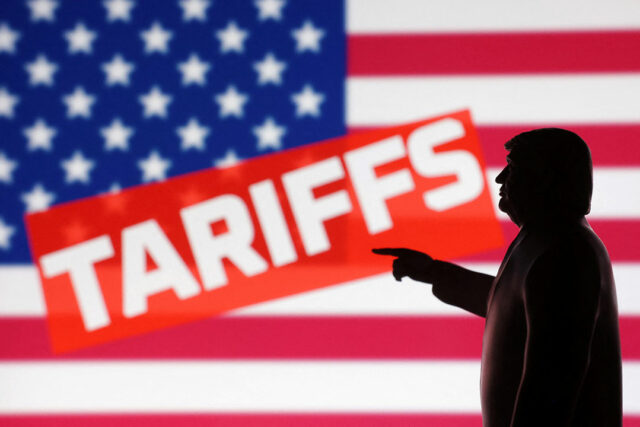
A 3D-printed miniature model depicting U.S. President Donald Trump depicting US flag and word “tariffs” in this illustration taken, April 17, 2025. — REUTERS

 – G20 finance chiefs will meet in South Africa on Thursday under the shadow of President Donald Trump’s tariff threats and questions over their ability to tackle global challenges together.

The club, which came to fore as a forum for international cooperation to combat the global financial crisis, has for years been hobbled by disputes among key players exacerbated by Russia’s war in Ukraine and Western sanctions on Moscow.

Host South Africa, under its presidency motto “Solidarity, Equality, Sustainability,” has aimed to promote an African agenda, with topics including the high cost of capital and funding for climate change action.

The G20 aims to coordinate policies but its agreements are non-binding.

U.S. Treasury Secretary Scott Bessent will not attend the two-day meeting of finance ministers and central bank governors in the coastal city of Durban, marking his second absence from a G20 event in South Africa this year.

Mr. Bessent also skipped February’s Cape Town gathering, where several officials from China, Japan and Canada were also absent, even though Washington is due to assume the G20 rotating presidency at the end of the year.

Michael Kaplan, U.S. acting undersecretary for international affairs, will represent Washington at the meetings.

A G20 delegate, who asked not to be named, said Mr. Bessent’s absence was not ideal but that the United States was engaging in discussions on trade, the global economy and climate language.

Finance ministers from India, France and Russia are also set to miss the Durban meeting.

South Africa’s central bank governor Lesetja Kganyago said that representation was what mattered most.

“What matters is, is there somebody with a mandate sitting behind the flag and are all countries represented with somebody sitting behind the flag?” Mr. Kganyago told Reuters.

U.S. officials have said little publicly about their plans for the presidency next year, but one source familiar with the plans said Washington would reduce the number of non-financial working groups, and streamline the summit schedule.

Brad Setser, a former U.S. official now at the Council on Foreign Relations, said he expected it to be “kind of a scaled-back G20 with less expectation of substantive outcomes.”


‘TURBULENT TIMES’

Mr. Trump’s tariff policies have torn up the global trade rule book. With baseline levies of 10% on all U.S. imports and targeted rates as high as 50% on steel and aluminum, 25% on autos and potential levies on pharmaceuticals, extra tariffs on more than 20 countries are slated to take effect on August 1.

His threat to impose further 10% tariffs on BRICS nations — of which eight are G20 members — has raised fears of fragmentation within global forums.

German finance ministry sources said on Tuesday that the Durban meeting would seek to deepen global relationships in “turbulent times”.

South Africa’s Treasury Director General Duncan Pieterse said the group nonetheless hoped to issue the first communique under the South African G20 presidency by the end of the meetings.

The G20 was last able to take a mutually agreed stance to issue a communique in July of 2024, agreeing on the need to resist protectionism but making no mention of Russia’s invasion of Ukraine. – Reuters

‘Japanese First’ party shakes up election with alarm over foreigners

REUTERS

 – An upstart party is gaining support ahead of elections in Japan by railing against a ‘silent invasion’ of immigrants, pushing the government to tackle fears about foreigners as it drags into the mainstream rhetoric once confined to the political fringe.

Birthed on YouTube during the COVID-19 pandemic spreading conspiracy theories about vaccinations and a cabal of global elites, the party, Sanseito, is widening its appeal with a ‘Japanese First’ campaign ahead of Sunday’s upper house vote.

And while polls show it may only secure 10 to 15 of the 125 seats up for grabs, it is further eroding the support of Prime Minister Shigeru Ishiba’s shaky minority government increasingly beholden to opposition parties as it clings to power.

“In the past, anyone who brought up immigration would be attacked by the left. We are getting bashed too, but are also gaining support,” Sohei Kamiya, the party’s 47-year-old charismatic leader, told Reuters in an interview.

“The LDP and Komeito can’t stay silent if they want to keep their support,” Mr. Kamiya added, referring to Ishiba’s Liberal Democratic Party, which has ruled Japan for most of the past seven decades, and its junior coalition partner.

Mr. Kamiya’s message has grabbed voters frustrated with a weak economy and currency that has lured tourists in record numbers in recent years, further driving up prices that Japanese can ill-afford, political analysts say.

The fast-ageing society has also seen foreign-born residents hit a record of about 3.8 million last year, although that is still just 3% of the total population, a tiny fraction compared to numbers in the United States and Europe.

Mr. Kamiya, a former supermarket manager and English teacher, says he has drawn inspiration from U.S. President Donald Trump’s “bold political style”.

It remains to be seen whether he can follow the path of other far-right parties with which he has drawn comparisons, such as Germany’s AFD and Reform UK.

Yet the ingredients are there, said Jeffrey Hall, a lecturer at Tokyo’s Kanda university who has studied Japan’s right-wing politics, pointing to their online following, appeal among young men and warnings about immigration eroding indigenous cultures.

“Anti-foreign sentiment that was considered maybe taboo to talk about so openly is now out of the box,” he added.

With immigration emerging as a top election issue, Mr. Ishiba this week unveiled a new government taskforce to fight “crimes and disorderly conduct” by foreign nationals and his party has promised to pursue “zero illegal foreigners”.

Polls show Mr. Ishiba’s ruling coalition is likely to lose its majority in the upper house vote, in a repeat of elections last year in the more powerful lower house.

While he is expected to limp on, his government may have to broaden its coalition or strike deals with other parties on policy matters, analysts say.


‘HOT-BLOODED’

Mr. Kamiya, who won the party’s first seat in 2022 after having gained notoriety for appearing to call for Japan’s emperor to take concubines, has tried to tone down some controversial ideas formerly embraced by the party.

His election manifesto, for example, includes plans to cut taxes and increase child benefits, policies promoted by a raft of opposition parties that led investors to fret about Japan’s fiscal health and massive debt pile.

While Sanseito is the latest in a string of small far-right parties that have struggled for a foothold in Japan’s staid politics, its online support suggests it may have staying power.

Its YouTube channel has 400,000 followers, more than any other party on the platform and three times that of the LDP, according to socialcounts.org.

There are still hurdles. Like right-wing parties in the U.S. and Europe, Sanseito support skews heavily toward men in their twenties and thirties.

Mr. Kamiya is trying to widen its appeal by fielding several female candidates such as the single-named singer Saya seen as likely to clinch a seat in Tokyo.

Earlier in the campaign, Mr. Kamiya faced a backlash for branding gender equality policies a mistake, as they encourage women to work and keep them from having children.

“Maybe because I am hot-blooded, that resonates more with men,” Mr. Kamiya replied to a question on the party’s greater appeal to men. – Reuters

Trump says India trade agreement is close, Europe deal possible

REUTERS

 – The United States is very close to a trade deal with India, while an agreement could possibly be reached with Europe as well, but it is too soon to say whether a deal can be agreed with Canada, President Donald Trump said in an interview aired on Real America’s Voice on Wednesday.

To press for what Mr. Trump views as better terms with trading partners and ways to shrink a huge U.S. trade deficit, his administration has been negotiating trade deals ahead of an August 1 deadline, when duties on most U.S. imports are due to rise again.

“We’re very close to India, and … we could possibly make a deal with (the) EU,” Trump said, when asked which trade deals were on the horizon.

Mr. Trump’s comments come as EU trade chief Maros Sefcovic was headed to Washington on Wednesday for tariff discussions, while an Indian trade delegation arrived in Washington on Monday for fresh talks.

“(The) European Union has been brutal, and now they’re being very nice. They want to make a deal, and it’ll be a lot different than the deal that we’ve had for years,” he added.

Asked about the prospects of a deal with Canada, which like the EU, is readying countermeasures if talks with the U.S. fail to produce a deal, Trump said: “Too soon to say.”

His comment was in line with the assessment of Canadian Prime Minister Mark Carney, who said earlier on Wednesday that a deal that works for Canadian workers was not yet on the table.

Mr. Trump also said he would probably put a blanket 10% or 15% tariff on smaller countries. – Reuters

Recto sees below 6% growth this year

Economic managers are targeting 6-7% gross domestic product (GDP) growth this year. — PHILIPPINE STAR/MIGUEL DE GUZMAN

By Aubrey Rose A. Inosante, Reporter

PHILIPPINE economic growth may have picked up in the second quarter, but full-year expansion is likely to be below 6% amid uncertainty over US tariffs, Finance Secretary Ralph G. Recto said.

“I think the second quarter, for sure, will be better than the first,” Mr. Recto told reporters in an informal press chat on Wednesday.

Mr. Recto said this second-quarter forecast depends on government spending and household consumption, which accounts for over 70% of the economy. 

In the first quarter, gross domestic product (GDP) grew by 5.4%, weaker than expected and slower than the 5.9% expansion in the same quarter last year.

For the full year, Mr. Recto said GDP may grow by around 5.7% to 5.8%.

“Realistically, probably 5.7%, 5.8% for the year. But there’s still a possibility, (but) it depends because there’s a lot of uncertainty — uncertainty with trade policy. There’s no final [tariff rate] yet,” Mr. Recto said.

Economic managers last month lowered the full-year growth target to 5.5%-6.5% from 6%-8% previously, “reflecting a more measured and resilient outlook amid global headwinds.”

Last week, US President Donald J. Trump announced a 20% tariff on most Philippine goods sent to the US, higher than the 17% previously announced in April.

Philippine trade negotiators are in Washington this week to secure a deal with the US.

President Ferdinand R. Marcos, Jr. will meet with Mr. Trump during his official visit to Washington from July 20 to 22.

In a Viber message to BusinessWorld, Budget Secretary Amenah F. Pangandaman said she remains confident in meeting the GDP growth target this year on the back of strong domestic demand.

“Our growth momentum is expected to be driven primarily by strong domestic demand, specifically, robust household spending and accelerated government investments in social services and critical infrastructure,” said Ms. Pangandaman, who also serves as the Development Budget Coordination Committee chairperson.

She also noted the resilient labor market and easing inflation will support growth momentum.

Inflation averaged 1.8% in the first six months of the year.

“In addition, lower inflation creates room for the Bangko Sentral ng Pilipinas (BSP) to ease monetary policy, which would help sustain consumption and domestic activity, reinforcing our growth trajectory,” Ms. Pangandaman said.

The BSP delivered a second straight 25-basis-point (bp) cut at its June 19 meeting, bringing its policy rate to 5.25%.

BSP Governor Eli M. Remolona, Jr. also signaled they could deliver two more cuts this year.

At the same time, Finance Undersecretary and Chief Economist Domini S. Velasquez said it may be difficult for GDP to grow more than 6% this year amid an expected global slowdown due to US tariffs.

She said the US tariffs have slowed international trade and “dragged down all the growth prospects of all the countries, including the Philippines.”

“We do think that the potential of the Philippines is at the minimum 6% growth. But of course, it’s quite difficult, especially now with some of the challenges that we’re seeing,” she told reporters late Tuesday.

Union Bank of the Philippines, Inc. Chief Economist Ruben Carlo O. Asuncion said it is becoming increasingly challenging for the government to reach 6% growth this year.

“Hitting the 6% midpoint will depend on how strongly domestic demand can offset external risks,” he said in a Viber message.

“Domestic demand is expected to remain resilient but cautious in the near term… Growth will be driven by everyday retail channels, but broader consumption recovery may hinge on stronger job creation and improved purchasing power,” he added.

REMITTANCES
Meanwhile, Ms. Velasquez said the US tax on remittances would likely impact 12.8% of the Philippines’ total annual remittances.

“In our estimate, when we used the survey of overseas Filipinos, 12.8% say they’re receiving remittances from North and South America,” she told reporters on Tuesday.

US President Donald J. Trump on July 4 signed into law the “One Big Beautiful Bill,” which overhauls tax rates and spending. It imposes a 1% excise tax on cash-based remittances from the US to recipients abroad. The tax will be implemented starting Jan. 1, 2026.

Ms. Velasquez said the tax would impact around $1.9 billion in remittances from the US in 2026.

“For example, we estimate $36.5 billion in remittances by 2026, and $1.9 billion will be affected and will be taxed 1%,” she said.

In the first five months of the year, cash remittances grew by 3% to $13.77 billion from $13.37 billion in the comparable year-ago period.

The United States was the top source of remittances in the five-month period, accounting for 40.2% of the total. — with Aaron Michael C. Sy

BSP could cut by another 50 bps this year — Nomura

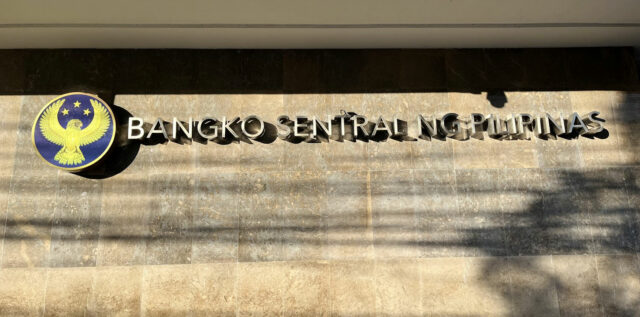
The main office of the Bangko Sentral ng Pilipinas in Manila. — BW FILE PHOTO

THE BANGKO SENTRAL ng Pilipinas (BSP) could cut by another 50 basis points (bps) this year, which would bring the benchmark to below 5% by yearend, Nomura Global Markets Research said.

“We continue to believe BSP has scope to steadily shift to an accommodative stance, as inflation expectations remain well-anchored and domestic demand is still subdued,” it said in its latest Global Economic Outlook.

“We reiterate our call for the BSP to deliver an additional 50 basis points of rate cuts this year, taking the policy rate to a below neutral 4.75%,” it added.

The central bank delivered a second straight rate cut in June, reducing borrowing costs by 25 bps to bring the key rate to 5.25%.

The Monetary Board has now lowered interest rates by a total of 125 bps since it began its easing cycle in August last year.

BSP Governor Eli M. Remolona, Jr. earlier this month said there is room for two more rate cuts this year amid benign inflation.

Nomura expects headline inflation to average 1.8% this year, higher than the central bank’s 1.6% projection.

“Our forecast pencils in CPI (consumer price index) inflation staying benign at 1.4% in the third quarter, before edging up to 2.1% by the fourth quarter, partly on base effects.”

Headline inflation picked up to 1.4% in June from 1.3% in May, but slowed from 3.7% a year ago. This brought the six-month average inflation to 1.8%.

“Our forecast is underpinned by various factors, such as a negative output gap, low crude oil prices and the government maintaining supply-side measures (to keep rice prices low, in particular),” Nomura said.

Meanwhile, Nomura said it is maintaining its Philippine gross domestic product (GDP) growth forecast at 5.3% this year. This falls short of the government’s 5.5-6.5% growth target for the year.

It noted the “disappointing” first-quarter outturn which reflected “soft private investment spending growth.” In the first quarter, the economy grew by a weaker-than-expected 5.4%.

“This, in turn, suggests businesses have already become cautious amid surging global trade uncertainty,” Nomura said.

“The output gap has turned negative, by our estimates, and we expect still-subdued investment spending and slowing export growth due to the impact of US tariffs, including via indirect effects.”

Nomura expects GDP growth to accelerate to 5.6% next year, primarily driven by infrastructure spending. The government is targeting 6-7% growth from 2026 to 2028.

It cited downside risks to growth such as rising global trade and geopolitical tensions while upside risks include a faster rollout of infrastructure projects and lower oil prices.

FISCAL POLICY
Meanwhile, Nomura noted the Development Budget Coordination Committee’s (DBCC) latest revisions to its medium-term fiscal framework.

“This matches our forecast and supports our long-held view that DBCC’s targets are challenging due to the government’s prioritization of large infrastructure spending, while revenues will likely underperform, in part because fiscal reforms are now more difficult to enact following the midterm elections.”

At its meeting in June, the DBCC raised its budget deficit ceiling to 5.5% of GDP this year from 5.3% previously and raised its 2026 forecast to 5.3% of GDP from 4.7%.

It also now expects the deficit-to-GDP ratio to reach 4.3% by 2028 from its previous target of 3.7%.

“The government is materially slowing the pace of fiscal consolidation, likely in response to a weakening growth outlook due to external headwinds,” Nomura said.

Meanwhile, Nomura’s current account deficit projection was maintained at 4.1% of GDP this year and 4.4% in 2026.

The BSP expects the current account deficit ratio to hit 3.3% this year and 2.5% in 2026.

This is amid “higher capital goods imports from infrastructure implementation and weaker exports,” it added.

The current account deficit ballooned to $4.25 billion in the first quarter. This brought the deficit-to-GDP ratio to 3.7%, larger than 1.9% a year earlier. — Luisa Maria Jacinta C. Jocson

ADVERTISEMENT
ADVERTISEMENT