Home Blog Page 1241

NG budget deficit balloons to P171.4 billion in February
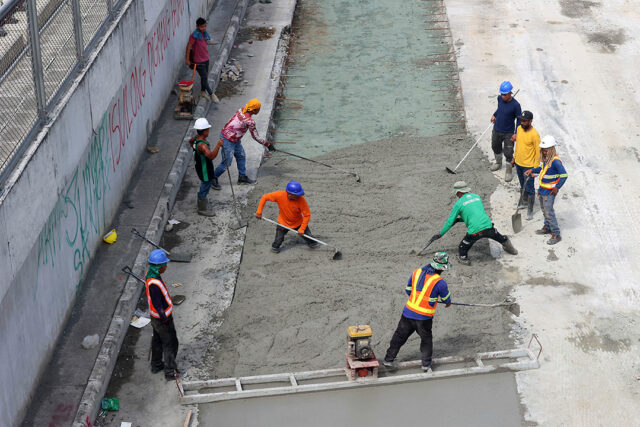
Workers pour cement on a road in Quezon City. — PHILIPPINE STAR/MIGUEL DE GUZMAN

By Aubrey Rose A. Inosante, Reporter

THE NATIONAL GOVERNMENT’S (NG) budget deficit ballooned to P171.4 billion in February despite double-digit revenue growth, the Bureau of the Treasury (BTr) reported on Wednesday.

Data from the BTr showed the budget deficit widened by 4.11% to P171.4 billion in February from the P164.7-billion gap in the same month last year.

Month on month, this was a reversal of the P68.4-billion surplus in January.

National Government fiscal performance

In February, revenues jumped by 12.39% to P251.8 billion from P224 billion a year earlier, as tax revenues increased by 10.9% to P234.3 billion.

Collections by the Bureau of Internal Revenue (BIR) jumped by an annual 15.7% to P159.7 billion in February, while Bureau of Customs’ (BoC) revenues inched up by 1.71% to P71.8 billion.

“The growth in the BIR’s February collection was primarily due to higher collections from corporate income tax (CIT), personal income tax (PIT), excise tax on tobacco and alcohol products, value-added tax (VAT), and documentary stamp tax (DST),” the BTr said.

Nontax revenues rose by 37.11% year on year to P17.4 billion in February.

“The increase was partly attributed to the one-off remittance of the Department of Agrarian Reform’s share of penalties imposed on lending institutions for noncompliance with the mandatory Agri-Agra credit requirement under Republic Act 10000,” the BTr said.

During the month, Treasury income went up by 21.9% to P7.9 billion due to higher interest income from NG deposits, managed funds, and NG’s share of Philippine Amusement and Gaming Corp.’s (PAGCOR) profit.

Revenues from other offices — which consisted of other nontax revenue, privatization proceeds fees, charges and grants — also rose by 53.04% to P9.5 billion.

Meanwhile, NG expenditures went up by 8.88% to P423.2 billion in February from P388.7 billion a year ago.

This was mainly due to higher capital expenditures of the Department of Public Works and Highways, which were used for progress billings and payment of right-of-way acquisition for various infrastructure projects.

More disbursements were also made by the Department of Health and Department of Social Welfare and Development for their programs.

Primary spending — the total expenditures minus interest payments, went up by 9.95% to P374.8 billion in February.

Interest payments inched up by 1.29% to P48.4 billion in February amid higher coupon payments on domestic securities. However, it was offset by lower foreign payments.

TWO-MONTH DEFICIT
In the January-to-February period, the budget deficit swelled to P103.1 billion from P76.7 billion a year ago.

“The NG’s total revenue collections and expenditures maintained double-digit year-on-year (YoY) growth during the first two months of 2025, which puts it on track to hit fiscal targets for the year,” the BTr said.

Revenues went up by 11.32% to P718.9 billion in the two-month period, as tax collections rose by 12.64% to P671.9 billion.

BIR revenues jumped by 15.31% to P514.7 billion due to higher VAT collections, CIT, PIT, final withholding tax on government securities, and DST.

“The BIR’s continued progress in revenue performance is credited to its ongoing improvements in tax payment systems and collection efficiency,” the BTr said.

Collections by BoC went up by 4.91% to P151 billion, which mirrored the 4.93% increase in import goods in the January-to-February period.

“BoC’s continuous modernization, border protection, and capacity development efforts have enabled the bureau to maintain its positive performance in the first two months of the year,” the Treasury said.

On the other hand, nontax revenues slipped by 4.67% to P47 billion “partly due to lower receipts from Malampaya proceeds.”

Revenues from other offices declined by 10.48% to P23.4 billion while the Treasury income inched up by 1.86% to P23.7 billion due to the increased NG share in PAGCOR’s profits.

On the other hand, state spending grew by 13.76% to P822 billion in the January-February period from P722.5 billion a year ago.

Primary expenditures rose by 11.43% to P669.1 billion as of end-February.

Interest payments also increased by 25.26% to P152.9 billion.

“The growing deficit shows the faster growth of disbursements, especially for social and infrastructure programs, compared to the revenue generation capability of the government,” Oikonomia Advisory and Research, Inc. economist Reinielle Matt M. Erece told BusinessWorld in a Viber message.

Rizal Commercial Banking Corp. Chief Economist Michael L. Ricafort said the February budget deficit widened as expenditures increased by P34.5 billion despite the P27.8-billion increase in revenues.

Mr. Ricafort expects another budget surplus in April “due to the seasonal increase in yearly tax collection/filing in view of the April 15 deadline set by the BIR.”

“The recent tax reform measures in terms of the 12% VAT imposed on foreign digital services providers and the 1% withholding taxes on online sellers… would help increase the country’s recurring tax revenues, narrow the budget deficit, and improve the overall fiscal performance,” he said.

Meanwhile, Mr. Erece said the budget deficit may continue to widen this year.

“We expect the deficit to continue growing this year, both as a result of an election year, as well as reflective of higher debt servicing costs in response to the higher borrowings they have incurred and will incur this year. The growing deficit calls the need for better revenue generation, especially in tax collections, to slowly close the gap of the national budget,” he said.

For this year, the NG’s deficit ceiling is capped at P1.54 trillion or 5.3% of gross domestic product (GDP).
Villar is still top Filipino billionaire with $17-B net worth

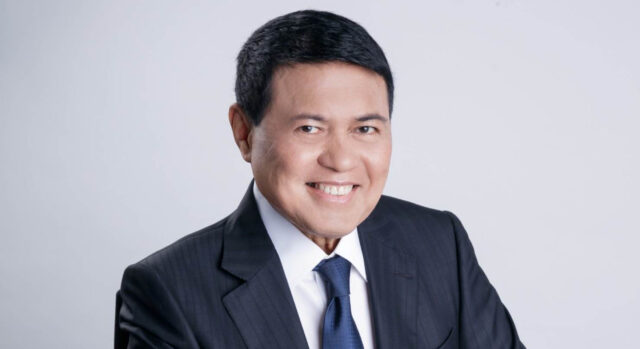
MANUEL B. VILLAR, JR.

TYCOON and former Senate President Manuel B. Villar, Jr. is the richest Filipino, according to Forbes’ latest World’s Billionaires List.

With an estimated net worth of $17.2 billion, Mr. Villar ranked 117th on the list, which also included 14 other Filipino billionaires.

Mr. Villar is the chairman of several listed companies: Golden MV Holdings, Inc.; Vista Land & Lifescapes, Inc.; supermarket chain AllDay Marts, Inc.; home improvement chain AllHome Corp.; Vistamalls, Inc.; and VistaREIT, Inc. His biggest asset is Golden MV, which posted nearly P1 trillion in net profit in 2024.

15 Richest Filipinos in <i>Forbes</i>’ 2025 World’s Billionaires List

Ports and casino tycoon Enrique K. Razon, Jr. ranked 227th on the list with a net worth of $10.9 billion. He is the chairman of International Container Terminal Services, Inc. and Bloomberry Resorts Corp., which operates Solaire Resort and Casino.

San Miguel Corp. Chairman, President and Chief Executive Officer (CEO) Ramon S. Ang ranked 979th on the list with a net worth of $3.7 billion.

LT Group, Inc. Chairman Lucio C. Tan placed 1,219th with a $3-billion net worth.

The World’s Billionaires List also included the six children of the late Henry Sy, Sr., who founded the SM Gorup.

Henry T. Sy, Jr. was ranked 1,573rd with a net worth of $2.3 billion, followed by Hans T. Sy at 1,626th place with $2.2 billion, Herbert T. Sy at 1,688th with $2.1 billion, Harley T. Sy at 1,850th with $1.9 billion, Teresita T. Sy-Coson at 1,850th as well with $1.9 billion, and Elizabeth T. Sy at 2,019th with $1.7 billion.

Alliance Global Group, Inc. Chairman Andrew L. Tan landed on 2,110th place with a $1.6-billion net worth.

Puregold Price Club founder Lucio L. Co ranked 2,356th with a $1.4-billion net worth, while his wife Puregold Chairman Susan P. Co was at 2,479th place with a $1.3-billion net worth.

Tony Tan Caktiong, chairman of fastfood giant Jollibee Foods Corp., ranked 2,479th with a $1.3-billion net worth.

Gaming, education, and shipping tycoon Eusebio H. Tanco landed on 2,623rd spot with $1.2-billion net worth. He is the chairman of DigiPlus Interactive Corp. and STI Education Systems Holdings, Inc.

The 2025 list featured 3,028 billionaires, the most since being started in 1987, with a collective wealth of $16.1 trillion.

Tech mogul Elon Musk topped the list, with an estimated net worth of $342 billion, led by higher valuations of his companies xAI and SpaceX, and a surge in Tesla stocks.

Facebook founder Mark Zuckerberg ranked second with an estimated net worth of $216 million, followed by Jeff Bezos at $215 billion, Larry Ellison at $192 billion, and Bernard Arnault and family at $178 billion.

“It’s another record-breaking year for the world’s richest people, despite financial uncertainty for many and geopolitical tensions on the rise,” Forbes Senior Editor for Wealth Chase Peterson-Withorn said in a separate statement.

“And, from Elon Musk to Howard Lutnick and the other billionaires taking over the US government, they’re growing more and more powerful,” he added.

The 2025 list saw 288 newcomers, while the US has the most billionaires on the list with 902 and a total net worth of $6.75 trillion.

The list also saw 15 people with 12-figure wealth, higher than 14 last year, with a total net worth of $2.4 trillion.

The Forbes World’s Billionaires List used stock prices and exchange rates from March 7, 2025. — RMDO

PEZA greenlights P6-billion investment pledges in March

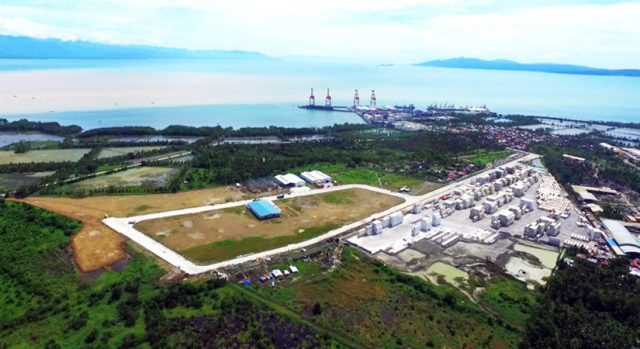
ANFLOINDUSTRIALESTATE.COM

THE Philippine Economic Zone Authority (PEZA) has approved P6 billion worth of investment pledges in March, bringing the first-quarter approvals to P58.947 billion.

In a statement on Wednesday, the investment promotion agency said it greenlit 27 new and expansion projects worth P6.01 billion at its March 28 meeting. This was 110% higher than the P2.855-billion investment pledges it had approved in March 2024.

“These projects are seen to generate $223.497-million exports and directly employ more than 4,500 Filipino workers,” PEZA said.

PEZA approved 12 information technology and business process management (IT-BPM) projects, 10 export manufacturing projects, two utilities projects, two economic zone (ecozone) development projects, and one domestic enterprise project.

These projects are located across Metro Manila, Central Luzon, Region IV, Central Visayas, and Northern Mindanao.

PEZA said it greenlit two big-ticket projects worth a combined P2.615 billion — a water treatment facility in Batangas and a coconut milk production plant in Misamis Oriental.

For the first quarter, PEZA said it approved P58.947 billion worth of investment pledges, a 294.3% increase from the P14.951-billion pledges a year ago.

“I believe that the first-quarter performance of PEZA is a testament to the improved policy and investment environment established by the President. It basically keeps us at par or even above that of our neighbors when it comes to providing benefits to prospective foreign direct investments,” PEZA Director-General Tereso O. Panga said in a statement.

The 66 new and expansion projects approved in the January-to-March period are expected to generate $497.461 million in exports and create 15,815 jobs.

Broken down, this includes 24 manufacturing projects, 24 IT-BPM projects, seven ecozone development projects, seven domestic enterprise projects, two utilities projects and two facilities projects.

Thirty-two of the projects are in Region IV, while 12 are in the National Capital Region. Eight projects are located in Central Luzon, while the other eight are in Central Visayas.

The rest of the projects are in Davao Region, Ilocos Region, Northern Mindanao and Western Visayas.

PEZA said that it is confident that investments will further increase due to the fiscal incentives under the Corporate Recovery and Tax Incentives for Enterprises to Maximize Opportunities for Reinvigorating the Economy (CREATE MORE) Act.

“We are bullish that we will sustain this upward trajectory coming into the second quarter of the year as we intensify our investment promotion initiatives partnered with the CREATE MORE incentives, the most generous fiscal incentives among ASEAN (Association of Southeast Asian Nations) to date,” Mr. Panga said.

Mr. Panga said the agency has hosted inbound delegations from US, Japan, China, Taiwan, and Spain, who have expressed interest in investing in economic zones.

“We are anticipating the influx of more investors looking into the Philippines for their offshore operations in Asia,” he said.

“With geopolitics at play as well as future movements of supply chains due to the tariffs, we expect more investments coming to the Philippines,” said Mr. Panga.

Mr. Panga expressed confidence PEZA will hit its target for 2025.

For this year, PEZA hopes to approve P250 billion worth of investment pledges. If realized, this will be a 16.7% increase from the P214.18-billion pledges greenlighted in 2024. — Justine Irish D. Tabile

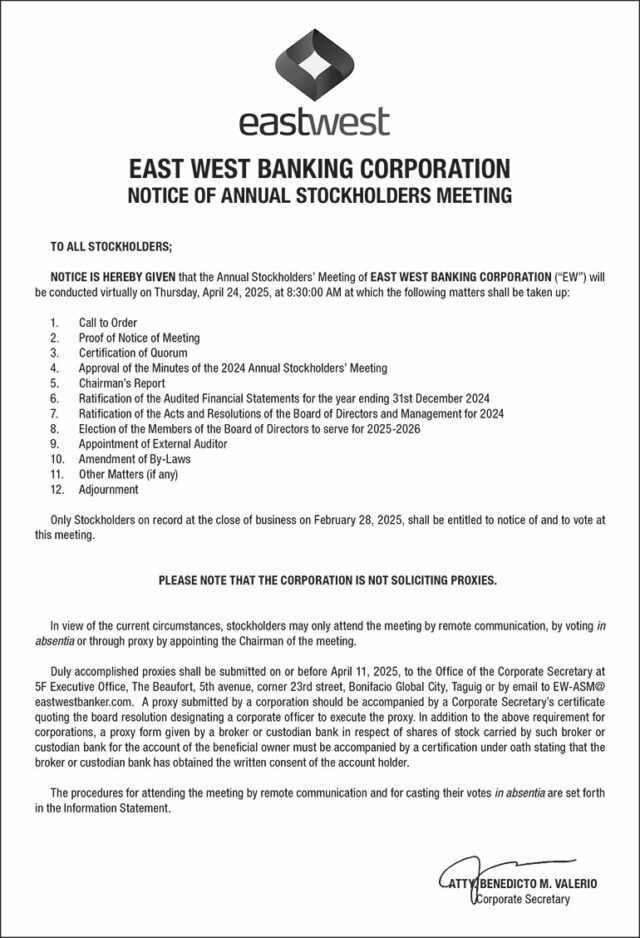
East West Banking Corp. to hold virtual Annual Stockholders’ Meeting on April 24


Spotlight is BusinessWorld’s sponsored section that allows advertisers to amplify their brand and connect with BusinessWorld’s audience by publishing their stories on the BusinessWorld Web site. For more information, send an email to online@bworldonline.com.

Join us on Viber at https://bit.ly/3hv6bLA to get more updates and subscribe to BusinessWorld’s titles and get exclusive content through www.bworld-x.com.

Mitsubishi signs P18.4-B deal with Ayala Corp. for indirect GCash stake

PHILSTAR FILE PHOTO

AYALA CORP. has signed an agreement to sell 50% of its stake in AC Ventures Holding Corp. (ACV) to Japan’s Mitsubishi Corp. for at least P18.4 billion, a transaction that could increase the valuation of GCash ahead of its planned public listing.

The two companies signed the investment agreement on March 31, Ayala Corp. said in a regulatory filing on Wednesday.

Mitsubishi will subscribe to 18.03-million common and redeemable preferred shares of ACV as part of the transaction.

After the transaction, Ayala Corp. and Mitsubishi will each hold 50% of ACV.

ACV owns 13% of Globe Fintech Innovations, Inc. (Mynt), which has two fintech companies, G-Xchange Inc., the operator of GCash, and Fuse Lending, a tech-based microlender.

Ayala Corp. said the investment will be finalized only after receiving approval from the Securities and Exchange Commission for the amendment of ACV’s articles of incorporation and from the Philippine Competition Commission.

“ACV shall use the subscription proceeds to redeem Ayala Corp.’s redeemable preferred shares in ACV and cover related costs,” Ayala Corp. said.

Ayala Corp. said in October last year that Mitsubishi could help Mynt’s overseas growth as well as in areas like cloud-based payments and new credit algorithms.

“We believe Mitsubishi can add meaningful value to Mynt, which will allow Mynt to deliver significant value to its over 94 million registered users. It’s all about serving better the many Filipinos that depend on GCash and Fuse, and for making a wider variety of financial and other products available to as many Filipinos as possible,” Ayala Corp. President and Chief Executive Officer Cezar P. Consing previously said.

The deal comes as GCash prepares for an initial public offering (IPO) later this year, with the company reportedly aiming for a valuation of at least $8 billion.

For 2024, Ayala Corp.’s core net income increased 10% to a record P45 billion, led by strong performance in banking, real estate, telecommunications, and renewable energy.

The conglomerate has allotted P230 billion for its consolidated capital expenditures this year.

Ayala Corp. shares were unchanged at P591 per share on Wednesday. — Revin Mikhael D. Ochave

Rolling with Nobu

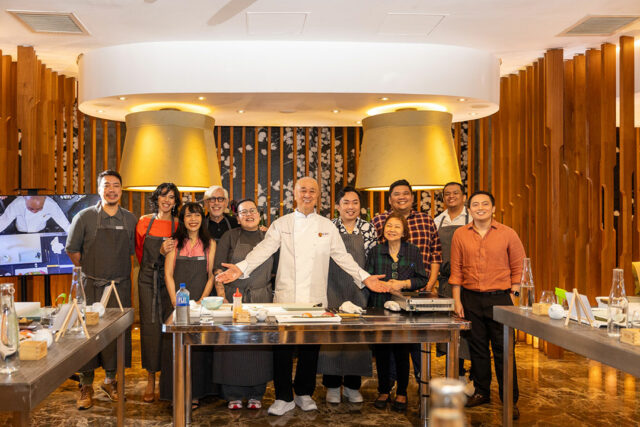
CHEF Nobu Matsuhisa’s sushi-making demo at Nobu Manila with media participants.

NOBU MATSUHISA was in Manila at his namesake hotel to host two dinners on March 25 and 26. This marked the celebrity chef’s first visit to his Philippine property since 2019 — before the pandemic.

The scars of that season were nowhere to be seen as Mr. Matsuhisa taught gathered media guests how to make his signature sushi during a preview lunch on March 25, before the P8,500 net per person dinner that evening.

At the Nobu restaurant in the City of Dreams Manila, tables were arranged into a U, while guests rolled and balled to Mr. Matsuhisa’s instructions. He knew what he was doing: his Matsuhisa restaurant in Beverly Hills brought his Peruvian-Japanese style to Hollywood in 1987, and to this day, his restaurants are namedropped in movies to reflect the dining preferences of the rich and famous. Robb Report included him in its Most Powerful People in American Fine Dining list in 2023 and 2024, and last year, the Emperor of Japan conferred on him The Order of the Rising Sun, Gold and Silver Rays.

Yet that day in Manila, Mr. Matsuhisa closely inspected each roll made by the guests. He instructed them to place a 10- to 12-gram rice ball on top of a slice of fish, with just a touch of wasabi, then to form it into a rectangle. They then gently shaped the sides with the thumb and the forefinger; after flipping it so the fish would be on top. A lot of the steps are just carefully “massaging” the roll so it stays in place. The whole process is delicate and requires care: press too hard and you smash it, then you’ll have to do it again.

LUNCH WITH NOBU
For lunch, Mr. Matsuhisa served his signature sashimi with yellowtail, jalapeno, yuzu soy, and cilantro. This was impossibly light, granted some earthiness with the jalapeno and the grassy cilantro.

The next course was the Sashimi Salad, with tuna tataki, field greens, his namesake Matsuhisa dressing, shaved roots, and daikon radish. The tangy and spicy dressing gave color and life to the otherwise very mild selection.

The dish that propelled him to stardom, his Black Cod Miso, came wrapped in a leaf with pink ginger fastened by a toothpick, which one pulls so the leaf unwraps from the fish. It is mild and sweet, given some jazz by the yuzu miso, then punctuated by the heat of the pink ginger.

This is was followed by something heftier: US Prime Dry-aged Ribeye Yakimono, dressed in an Anticucho (Peruvian barbecue) sauce. The first bite of the grilled vegetables was enough to convince us about the mastery behind the dish, but the anticucho sauce on the steak gave it heat and depth.

For dessert, we had a Whisky Cappuccino (a modified tiramisu), with its sweetness tempered by the zing of whisky.

PLANS
In an e-mail, Mr. Matsuhisa told us about his plans for the next few years. While he can count over 50 Nobu Restaurants, 38 Nobu Hotels, and 12 residence projects spanning across five continents bearing his name, he says, “Our brand expansion will continue with new restaurants and hotel openings in Maui, Del Coronado, New Cairo, Rome and several more over the next two to three years. Personally, I want to continue to mentor and educate the next generation of chefs.”

Mr. Matsuhisa was named the official chef twice at the 81st and 82nd Golden Globes in 2024 and 2025 — with a wealth of projects around him, how can he be sure that everything that comes out of his kitchen comes with excellence?

“The key to making the best sushi is the rice. The quality, preparation, and technique are important. The way the rice is formed in your hand is also important — you cannot pack it too tight,” he said in the e-mail. More important than ingredient and technique though, he notes, “You must put your heart, kokoro, into everything you do — the guests can taste the difference.”

For inquiries about Nobu in Manila, call 8800-8080 or e-mail noburestaurant@cod-manila.com or guestservices@cod-manila.com. — Joseph L. Garcia

Batangas LNG plants to attain full capacity by May — DoE

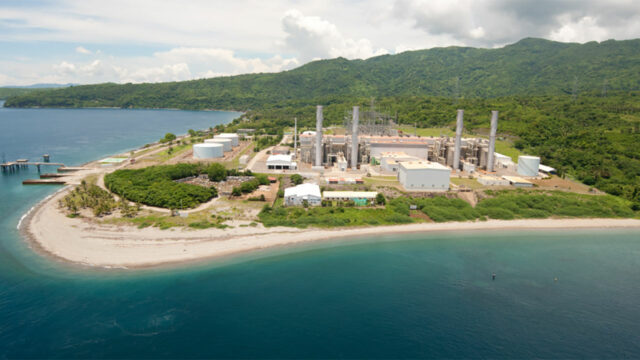
SMCGLOBALPOWER.COM.PH

THE Department of Energy (DoE) said it expects sufficient power supply during the warm and dry season, when electricity demand peaks, as two gas-fired power plants in Batangas are set to generate a full combined capacity of 2,500 megawatts (MW) by next month.

“We were told that by the middle of May, instead of the 1,350 MW we have from those two plants now, we will reach 2,500 MW. So, we’ll be fine this summer,” Energy Undersecretary Rowena Cristina L. Guevara said on the sidelines of a forum on Wednesday.

“We are just hoping that other plants will not have outages,” she added.

South Premiere Power Corp. (SPPC) and Excellent Energy Resources, Inc. (EERI) implemented a three-day temporary shutdown of their gas-fired power plants in Batangas.

During the maintenance shutdown from March 29 to 31, Linseed Field Corp. (LFC) conducted mechanical activities at its liquefied natural gas (LNG) terminal in preparation for the completion of its onshore LNG tank by the end of this month.

Both plants have resumed operations, increasing their combined output to 1,350 MW from the previous 1,300 MW.

SPPC and EERI are jointly owned by Meralco PowerGen Corp. (MGen) of Manila Electric Co., Therma NatGas Power, Inc. (Therma) of Aboitiz Power Corp., and San Miguel Global Power Holdings Corp. (SMGP) of San Miguel Corp. Earlier this year, these firms signed a $3.3-billion LNG deal to launch the country’s first LNG facility.

Under the agreement, MGen and Therma jointly invested in two of SMGP’s gas-fired power plants: the 1,278-MW Ilijan power plant and the new 1,320-MW combined-cycle power facility, both in Batangas.

MGen and Therma, through Chromite Gas, along with SMGP, also invested in the LNG import and regasification terminal owned by Linseed.

While there is sufficient electricity supply, Energy Assistant Secretary Mario C. Marasigan said the possibility of red or yellow alerts cannot be ruled out.

“In our simulations, the possibility of having a yellow or red alert is not ruled out. But we just want to clarify that a yellow alert does not necessarily mean there will be brownouts, only a thinning of reserves,” Mr. Marasigan said partly in Filipino in a televised interview.

A yellow alert is issued when the operating margin is insufficient to meet the grid’s contingency requirement, putting the system at risk if the available contingency reserve falls below the required operating margin.

Last month, the state weather bureau, the Philippine Atmospheric, Geophysical, and Astronomical Services Administration (PAGASA), announced the start of the dry season with the termination of the Northeast Monsoon over most parts of the country.

The DoE earlier urged consumers to adopt energy efficiency measures to manage electricity consumption and ensure power supply stability.

The department forecasts peak demand this year to reach 14,769 MW for Luzon, 3,111 MW for Visayas, and 2,789 MW for Mindanao.

Meanwhile, the maximum adjusted available generating capacity is 15,504 MW in Luzon, 3,040 MW in Visayas, and 3,314 MW in Mindanao, as outlined in the Grid Operating and Maintenance Program 2025–2027 and committed power projects for 2025. — Sheldeen Joy Talavera

Ippudo introduces stylish ramen bar

IPPUDO RAMEN BAR

Mixing heritage with innovation

IPPUDO in Uptown Mall, Bonifacio Global City (BGC), has gone through a makeover and has been rebranded as Ippudo Ramen Bar. In addition to the renovation, they’ve added quite a few things to the menu, from cocktails and sushi to more side dishes and new desserts.

“The ramen bar is kind of a notch above, like an Ippudo ‘Plus,’” said Michael Concepcion, business development head and creative director for Standard Hospitality Group, which has brought many Japanese brands to the Philippines.

“It’s still rooted in the heritage and history of making good ramen, but more modern and high-energy, where friends can have some highballs and order small plates and chat under the dim lights,” Mr. Concepcion said.

EXCLUSIVE DISHES
During a media preview on March 27, we tasted the exclusive menu items not found in other Ippudo branches.

The Salmon Soy Ginger Sashimi, coated with a bold mix of soy and ginger, is perfect as a palate opener, especially with the orange segments that come with it. Its counterpart among the sushi, the Goma-E Salmon Roll, gives a torched spin on the minced salmon, paired with fried tofu, spinach, and rice rolled into a creamy bite.

All the sushi items were developed by Koyo, a handroll concept by New York-based specialist Mark Manaloto.

Many guests tried out the highball cocktails, the popular choice being the classic. But an unexpected favorite was the gari (pickled ginger) highball, its unusual component giving it a tangy yet refreshing taste. Also on the drinks menu are Sapporo draft beer, Bombvinos wine, and Dassai sake.

For the cold plates, the Charred Edamame prevailed as a solid pairing with the cocktails. Though it has the expected green soybean taste, the lemon vinaigrette, roasted nori flakes, and togarashi spice powder used in the dish elevate it to a nice snack.

The Hanetsuki Gyoza was a popular order, the usual pork and shrimp gyoza dumplings given a crispy golden skirt, but it’s the ponzu sauce and garlicky olive oil that make it addictive to eat.

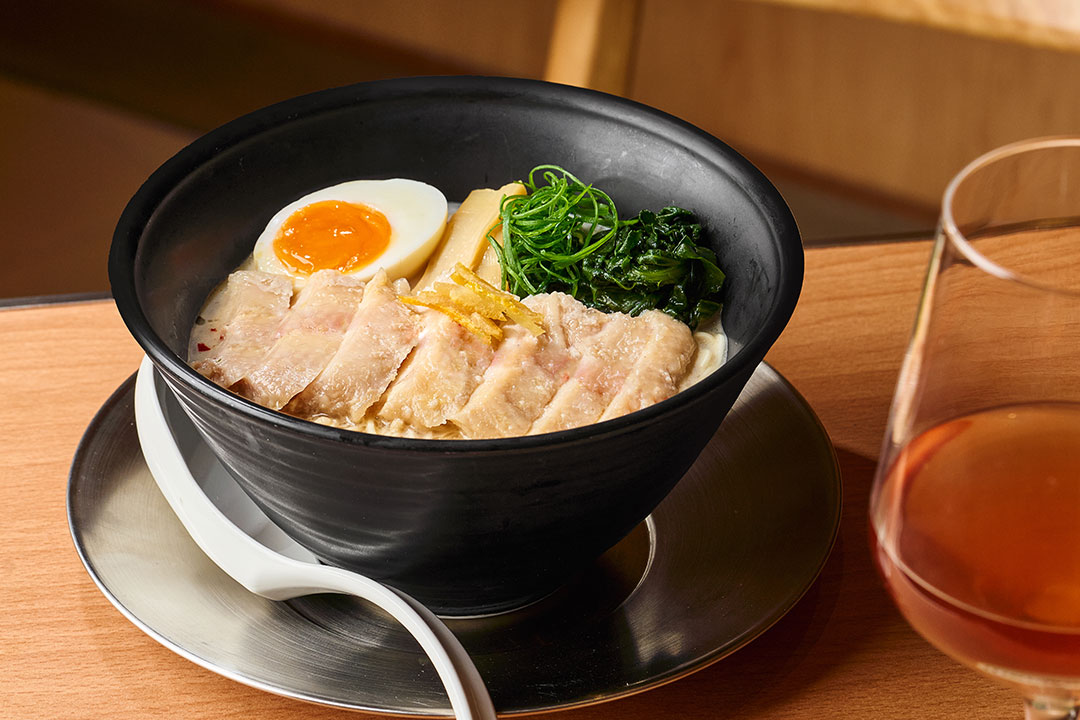
We opted to try the White Chicken Yuzu Ramen for our main dish, this iteration not being found in any other Ippudo branch, and it didn’t disappoint. The yuzu-infused pork broth gave the tender chicken meat a brighter, zesty tone. Some may not be used to tasting citrus in ramen, but it actually provides a lovely balance to the meal.

Finally, for dessert, we ordered the Classic Tiramisu, which comes in a cute, minimalist wooden box from which you scoop up the soft cake. The tiramisu’s coffee soak is not overdone, blending well with the mascarpone cream and cocoa powder dusting. For a new dessert item, it checks all the boxes right out of the gate.

HERITAGE AND INNOVATION
The concept of the Ippudo Ramen Bar is to provide a “well-rounded, modern dining experience that honors Japanese culinary heritage while embracing contemporary innovation,” said Mr. Concepcion.

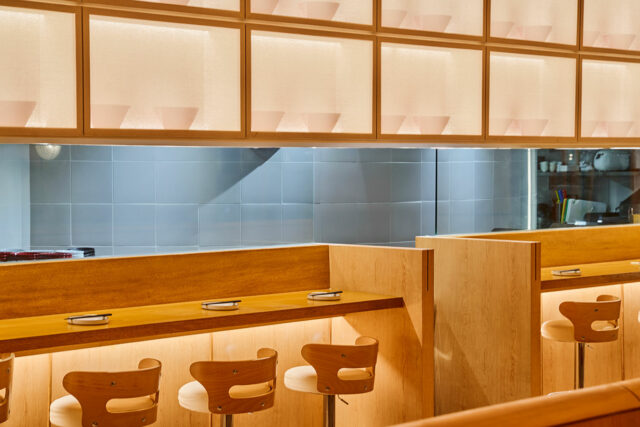
He pointed out that the design of the branch, done in collaboration with Hong Kong-based architecture firm DEFT, showcases that balance, featuring “clean lines, warm textures, and a dynamic yet inviting atmosphere.”

Though Ippudo in Japan started back in 1985 and was brought to the Philippines in 2011, it is innovation that will “keep it going for many more years to come,” he added.

Asked why the group chose to transform the BGC branch over others, Mr. Concepcion went into detail on their expansion strategy.

“We trimmed it down and made this Ippudo Ramen Bar, to match BGC’s vibe of having malls but also a nice, street-level atmosphere,” he explained. The space next door, still under construction, will be taken by one of their other Japanese brands.

He mentioned that his father John Concepcion, chief executive officer of the Standard Hospitality Group, taught him that growing a business is not always about being aggressive.

“We want to grow and scale our business, but we’re focusing on making sure that our concepts are timeless. We’re not looking to make things that will come and go,” the younger Mr. Concepcion said.

According to him, Ippudo Ramen Bar is really “the sum of its parts,” with the details making the whole experience special.

“Start off with a highball, have our edamame, engage in conversation, get some gyoza, share a bowl of ramen. It’s social, it’s friendly, it’s shared. We designed it to be an experiential dining concept,” he said.

Ippudo Ramen Bar is located on the ground floor of Uptown Mall in Bonifacio Global City, Taguig. — Brontë H. Lacsamana

Reissued bonds fetch lower rates on BSP bets

BW FILE PHOTO

THE GOVERNMENT made a full award of the Treasury bonds (T-bonds) it offered on Wednesday as rates dropped on strong demand amid expectations of continued monetary policy easing by the Bangko Sentral ng Pilipinas (BSP) this year.

The Bureau of the Treasury (BTr) raised P30 billion as planned via the reissued seven-year bonds it auctioned off on Wednesday as total bids reached P80.713 billion or nearly three times the amount on offer.

This brought the total outstanding volume for the bond series to P254.7 billion, the Treasury said in a statement.

The bonds, which have a remaining life of five years and three months, were awarded at an average rate of 5.908%. Accepted bid yields ranged from 5.875% to 5.919%.

The average rate of the reissued papers decreased by 11.1 basis points (bps) from the 6.019% fetched for the series’ last award on March 4 and was also 46.7 bps lower than the 6.375% coupon for the issue.

However, this was 1.48 bps higher than the 5.8932% quoted for the five-year bond and 1.29 bps above the 5.8951% seen for the same bond series at the secondary market before Wednesday auction, based on PHP Bloomberg Valuation Service Reference Rates data provided by the BTr.

Following the strong demand for the offering, the BTr opened its tap facility window to raise P7 billion more via the papers.

The Treasury fully awarded its T-bond offer as rates were within expected levels as investor demand was strong, a trader said in a text message.

The trader said the BTr opened its tap facility to take advantage of the robust demand to extend debt maturities.

“Still, the market is cautious ahead of tomorrow’s US ‘Liberation Day,’” the trader said.

US President Donald J. Trump was poised to impose sweeping new reciprocal tariffs on global trading partners on Wednesday, upending decades of rules-based trade, threatening cost increases and likely drawing retaliation from all sides, Reuters reported.

Details of Mr. Trump’s “Liberation Day” tariff plans were still being formulated and closely held ahead of a White House Rose Garden announcement ceremony scheduled for 4 p.m. Eastern Time (2000 GMT).

The new duties are due to take effect immediately after Mr. Trump announces them, White House spokesperson Karoline Leavitt said on Tuesday, while a separate 25% global tariff on auto imports will take effect on April 3.

The reissued bonds fetched a lower average yield versus the previous auction amid dovish signals from the BSP chief recently, Rizal Commercial Banking Corp. Chief Economist Michael L. Ricafort said in a Viber message.

BSP Governor Eli M. Remolona, Jr. said last week that the Monetary Board could cut rates by 25 bps at their April 10 review.

He said the BSP remains on an easing cycle and could reduce borrowing costs by as much as 75 bps this year.

The central bank has brought down benchmark interest rates by a total of 75 bps since it began its rate-cut cycle in August last year, with its policy rate currently at 5.75%.

The Monetary Board unexpectedly kept rates unchanged at its Feb. 13 review amid uncertainties due to the Trump administration’s policies.

Mr. Ricafort added that the latest round of cuts in banks’ reserve requirement ratios (RRR) that took effect on Friday, which freed up about P330 billion in liquidity, also caused auction yields to go down as this likely boosted demand for government debt.

The RRR of universal and commercial banks and nonbank financial institutions with quasi-banking functions was brought down by 200 bps to 5% from 7%.

The reserve ratio for digital banks was cut by 150 bps to 2.5%, while the ratio for thrift lenders was lowered by 100 bps to 0%, now at par with rural and cooperative banks’ RRR.

The BTr is looking to raise P245 billion from the domestic market this month, or P125 billion via Treasury bills and P120 billion through T-bonds. — A.M.C. Sy with Reuters

SEC eases SBG investment limits for equity and multi-asset funds

BW FILE PHOTO

THE Securities and Exchange Commission (SEC) has eased the single business group (SBG) investment limit for equity funds, balanced funds, and multi-asset funds exposed to equity securities, following requests from fund managers. 

The corporate regulator issued Memorandum Circular (MC) No. 2 on March 28, which provides exemptions to the SBG limit imposed by MC No. 15, issued in 2020, the SEC said in an e-mail statement on Wednesday.

Under the current limit, an investment company is barred from investing, in aggregate, more than 20% of its net assets in transferable securities, money market instruments, deposits, and over-the-counter financial derivatives issued by any SBG, provided the investments do not exceed 5% of the net assets of the investment company.

MC No. 2 provides that funds with no actual investment in financial derivatives, including equity funds, balanced funds, and multi-asset funds that have actual exposure to equity securities, are not covered by the SBG limit.

“Instead, these exempted classes of investment companies will be subject to the single entity or issuer investment limitation under Rule 6.8(b) of the implementing rules and regulations of Republic Act No. 2629, or the Investment Company Act (ICA), until further notice by the commission,” the SEC said.

However, the SEC said that all investment companies, including the covered funds, will continue to be subject to other investment limits and restrictions under existing rules and regulations, including investment companies with or without actual investments in financial derivatives.

It added that investment companies seeking to engage in the cross-border offering of their funds to other ASEAN member jurisdictions as qualifying collective investment schemes must comply with the 20% SBG limit in the ASEAN standards of qualifying collective investment schemes.

The corporate regulator also said it will not impose fines or penalties for any breach of the SBG limit committed by the covered funds from May 15, 2020, until March 27 of this year.

“Any breach of the single entity/issuer limit in Rule 6.8(b) by the covered funds will result in the imposition of corresponding fines and penalties under the ICA implementing rules and regulations and other applicable laws, rules, and regulations,” the SEC said. — Revin Mikhael D. Ochave

The Macallan pays homage to the mighty oak

THE MACALLAN, the luxury single Malt Scotch Whisky, has unveiled the latest in the Harmony Collection, with two new whisky releases as part of the brand’s collaboration with Cirque du Soleil.

Last year, the troupe had a special performance at the Macallan estate in Scotland to celebrate the whisky brand’s 200th anniversary. This was called Spirit, and the show is reflected in the Harmony Collection Vibrant Oak’s packaging, with a character from the show, Ayla, represented in the box. The second release, Harmony Collection Guardian Oak, also has another character from the show, Davonna.

During a tasting on March 25, The Macallan transformed Kenneth Cobonpue’s Fable Café into an homage to the oak — the theme for this year’s Harmony Collection. An ersatz oak tree was set up in the middle, while glasses of the whisky were covered by acorn tops.

The Harmony Vibrant Oak was matured in a combination of first fill sherry-seasoned American oak casks and refill sherry oak casks. Bottled at 44.2% alcohol by volume (ABV), this whisky delivers key flavors of vanilla, lime, sweet oak, apple, toasted almonds, according to a release. To us, it had a very forward oak flavor, tempered with a little vanilla and nut.

The Harmony Guardian Oak, meanwhile, was matured in a combination of first fill sherry-seasoned European oak casks and refill sherry oak casks. Bottled at 44.2% ABV, this whisky delivers key flavors of dates, orange, rich oak, raisins, and baking spices.

The Harmony collaborations have seen partnerships with figures such as the culinary Roca brothers, with their harmony collection recalling chocolate, a second one inspired by coffee. The most recent one before this oak-inspired collaboration was one with the artistic McCartney sisters, celebrating the lands of Scotland.

More than the celebrity names, each Harmony release has sustainability at its heart: for example, the coffee collaboration used coffee farming byproducts in the packaging; the McCartney sisters’ one used meadow cuttings in their box. The latest one uses oak chips in the packaging.

This is reflective of the brand’s embrace of the environment. Hans Eckstein, brand ambassador of The Macallan in the Philippines said in an interview after the tasting, “The Macallan believes very strongly (about) not negatively affecting the impact in nature where we produce our whisky. You’ll see that in our distillery — it blends into the hills.”

It’s not just aesthetics and lip service. Mr. Eckstein said that The Macallan has partnered with car manufacturer Bentley in an effort to reduce their environmental impact. “We want to make our entire vehicle fleet electric by this year,” he said. “The ultimate goal of The Macallan is to become carbon-neutral by 2030. We have five more years to hit that aim.” — JL Garcia

BMI sees 25-bp rate cut next week

THE BANGKO SENTRAL ng Pilipinas (BSP) is likely to cut benchmark interest rates by 25 basis points (bps) at its meeting next week amid a stable peso and slowing inflation, Fitch Solutions’ unit BMI said.

“We expect the BSP to cut its policy interest rate by 25 bps next week. The peso has stabilized in recent weeks, inflation is barely above the 2% target lower bound at 2.1%, while growth underperformed government targets in 2024,” BMI said in a report.

The Monetary Board will meet to review policy on April 10. A 25-bp cut will bring the policy rate to 5.5% from 5.75% currently.

At its Feb. 13 meeting, the Monetary Board unexpectedly kept benchmark rates unchanged amid uncertainty stemming from the Trump administration’s policies.

BSP Governor Eli M. Remolona, Jr. said last week that there is a “good chance” that the Monetary Board will cut rates by 25 bps at next week’s meeting.

He said the BSP remains on an easing cycle and could reduce borrowing costs by as much as 75 bps this year depending on data.

The central bank has brought down benchmark interest rates by a total of 75 bps since it began its rate-cut cycle in August last year.

BMI said Mr. Remolona’s comments on possibly cutting borrowing costs by a cumulative 75 bps for 2025 align with their own forecast that the policy rate will be at 5% by yearend.

“Overall, inflation in the Philippines has shown signs of a slow easing. Inflation figures for February 2025 (latest data available) came in at 2.1% year on year, the slowest price hike since September 2024. This would support the BSP cuts…,” it said.

Lower benchmark rates would reduce debt servicing costs, which would be positive for consumer spending, BMI added.

It expects household spending growth to accelerate to 5.3% this year from 5% in 2024, it said, or to P13.2 trillion in real terms.

“Spending will remain influenced by the elevated inflationary pressures seen over 2025 as well as currently high debt levels, along with related debt servicing costs,” BMI said.

“A tight labor market will support spending, as real wage growth returns to positive territory, which will support purchasing power over the year.”

The BSP expects headline inflation to average 3.5% this year, within its 2-4% annual target.

In the first two months, the consumer price index (CPI) averaged 2.5%.

The central bank said in its latest Monetary Policy report that the CPI could exceed the 2-4% annual goal in the latter part of 2025 due to base effects, but the full-year print would be within target amid declining rice prices.

For this year, inflationary pressures could come from “higher global oil and non-oil prices, peso depreciation, and recent above-expectation inflation readings,” the BSP said. — A.R.A. Inosante