Home Blog Page 1189

Expect to be safe this Holy Week, says PCG

“Philippine Coast Guard (PCG) ensign Jesus S Mandi, deputy commander of CG Station Bataan, assures passengers that they are safe under the PCG’s watch this coming Holy Week.

Interview by Edg Adrian Eva
Video editing by Arjale Queral

[B-SIDE Podcast] Policy uncertainty: The ripple effects of sudden tariffs

Follow us on Spotify BusinessWorld B-Side

US President Donald Trump has given a 90-day pause on the reciprocal tariffs he imposed, and everything is still in flux.

In this B-Side episode, BusinessWorld speaks with former tariff commissioner George N. Manzano about the tariffs, their impact on the Philippines, the motivations behind them, and recommendations for how the country can navigate this trade environment.

Interview by Patricia Mirasol
Video editing by Jayson Mariñas

Follow us on Spotify BusinessWorld B-Side

How the PCG anchors up for the Holy Week rush

“Philippine Coast Guard (PCG) ensign Jesus S Mandi, deputy commander of CG Station Bataan, shares how the PCG is gearing up for the Holy Week rush.

Interview by Edg Adrian Eva
Video editing by Arjale Queral

TikTok encourages PHL users to report misinformation, harmful content amid elections

STOCK PHOTO | Image by antonbe from Pixabay

by Almira Louise S. Martinez, Reporter

TikTok, a short-form video social media platform, encourages its Filipino users to report misinformation and harmful content on the platform in line with the Philippines’ 2025 midterm elections. 

“In a global community, it’s natural for people to have different opinions but our goal is to operate on a shared set of facts and reality,” Peachy A. Paderna, Philippine Public Policy Manager at TikTok, told reporters on Thursday.

In January, the social media platform launched an in-app Philippine Elections Center site in partnership with the Commission on Elections (COMELEC), the National Citizens’ Movement for Free Elections (NAMFREL), and the Legal Network for Truthful Elections (LENTE) to avoid the spread of misinformation, and promote reliable and trustworthy election-related content.  

TikTok’s Philippine Election Center site houses verified “critical election resources” such as voting procedures, polling locations, key election dates, and other essential information regarding elections.

Peachy Paderna, Philippine Public Policy Manager at TikTok. | photo by Almira Louise S. Martinez, BusinessWorld

According to Ms. Paderna, the platform’s community guidelines are based on three key themes to ensure the safety of its users – balancing harm prevention and expression, embracing human dignity, and ensuring actions are fair.

“We also rely on the larger TikTok community to help us spot content that we may not have caught in the initial phase,” Ms. Paderna added.

Although the social media company has over 40,000 professionals and machine technology that handles content moderation, Ms. Paderna said users are still encouraged to report harmful content. 

Users can find the in-app report button under the share feature of the platform. Violence, hate and harassment, self-harm, nudity, and misinformation are some of the available reasons to file a report. 

“We want to make sure that our community of users stays safe even as we promote the diversity of ideas on the platform,” she said. “We do not allow misinformation that may cause significant harm to individuals or society regardless of intent.”  


Reported accounts and videos 

From July to September 2024, the video hosting site took down 4.5 million videos in the Philippines, of which 99.7% were removed proactively due to violations of the platform’s community guidelines. In addition, 98% of the reported videos were removed within 24 hours.  

“When content is taken down or acted on by our enforcement team, that doesn’t necessarily mean that the [content creator’s] account will be taken down all the time,” Ms. Paderna said. 

Getting banned on TikTok depends on the gravity of the violations. “Sometimes all it takes is one post, sometimes it takes multiple posts,” the TikTok executive added. 

The severity of violations can be categorized as significant and moderate harm. Content that leads to severe forms of physical harm, such as life-threatening injury or death, falls under ‘significant harm’. Meanwhile, moderate harm is false or misleading content regarding treatments or prevention of health-related issues that could not lead to life-threatening concerns.  

Ms. Paderna noted that mass reporting would not help the video or account be removed from the platform.  

“One thing that we want to remind everybody is that it’s not a matter of people reporting one account,” she said. “We don’t need multiple reports to take down or pay attention to a violation.”  

“We want to ensure that actions are fair so that when we take enforcement action, it’s always in fair way, it’s always just, it’s always rational,” Ms. Paderna said. 

US Treasury’s Bessent backs Argentina’s economic reforms with eye on China

Image by David from Pixabay

 – U.S. Treasury Secretary Scott Bessent said he met with Argentine President Javier Milei on Monday to underscore the Trump administration’s full support for economic reforms that were bringing the Latin American country “back from the precipice.”

Mr. Bessent also commended Mr. Milei for working to reduce barriers towards reciprocal trade with the United States, Treasury said in a statement about the visit.

In an interview with Bloomberg TV after his meeting with Mr. Milei, Mr. Bessent said the Trump administration was focused on helping Latin American countries avert what he called “rapacious” agreements made by China in Africa.

Argentina on Friday sealed a $20 billion, 48-month Extended Fund Facility deal with the International Monetary Fund after dismantling key parts of its years-long currency controls. It also announced a $12 billion loan program with the World Bank and a separate $10 billion deal with the Inter-American Development Bank.

“I wanted to come here today to show support for President Milei and his commitment … to what I think is historic in terms of bringing Argentina back from the precipice,” Mr. Bessent said in the interview.

The U.S. sought to prevent Latin American countries giving up mining rights to China in return for aid, he said.

“China has signed a number of these rapacious deals marked as aid, where … they’ve taken mineral rights. They’ve added huge amounts of debt onto these countries balance sheets,” he said. “They’re guaranteeing that future generations are going to be poor and without resources. And we don’t want that to happen any more than already has in Latin America.”

Chinese lenders provided a combined $182.28 billion to 49 African countries from 2000-2023, leaving many countries heavily in debt. Since 2005, Chinese lenders provided more than $120 billion in loans to Latin American and Caribbean countries, according to data from Boston University Global Development Policy Center.

China said it opposed Mr. Bessent’s remarks and criticized him for “maliciously slandering and smearing” China, and told the U.S. to refrain from “obstructing and deliberately sabotaging” developing countries.

“We advise the U.S. to adjust its mindset, instead of spending time repeatedly smearing and attacking China, meddling in the foreign cooperation of regional countries,” the Chinese embassy in Argentina said in a statement on Tuesday.

Mr. Bessent said the U.S. was not considering a credit line directly to Argentina like the one extended by China. He said Beijing had shown a “very good faith effort” in conjunction with the IMF deal, and would be rolling forward the $5 billion drawn down by the previous Argentine government.

He said Mr. Milei’s government should eventually have enough foreign exchange inflows to repay that amount as it stayed the course on economic reforms.

President Donald Trump has sought to expand ties with a handful of leaders in Latin America, including Salvadoran President Nayib Bukele, who visited the White House on Monday, and Ecuadorean President Daniel Noboa, who met with Trump in Florida last month.

Mr. Bessent did not say whether Argentina, which received the 10% base rate in Trump’s recent reciprocal tariff announcement, could achieve a zero tariff rate, saying he told Argentine officials to bring their “A game” for negotiations.

Asked if any country could negotiate a zero tariff rate, Mr. Bessent said the negotiations were focused on “a whole box of things we’ve got to overcome: tariffs, non-tariff barriers, trade barriers, currency manipulation and subsidization of labor and facilities.” – Reuters

Europe had most widespread floods for more than a decade in 2024, scientists say

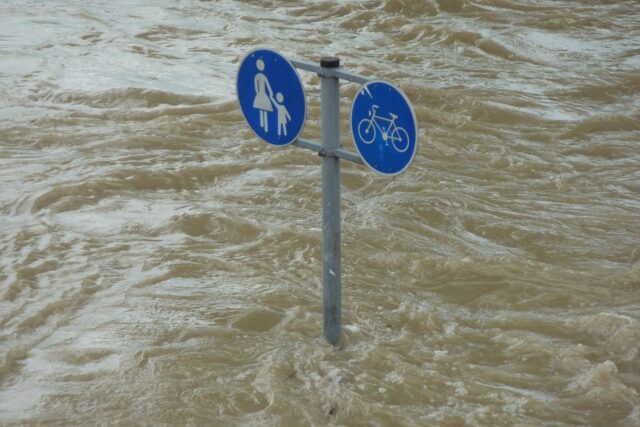
STOCK PHOTO | Image by Hermann Traub from Pixabay

 – Europe faced its most widespread flooding last year since 2013, with 30% of the continent’s river network hit by significant floods, scientists said on Tuesday, as fossil fuel-driven climate change continued to prompt torrential rain and other extreme weather.

Flooding killed at least 335 people in Europe in 2024 and affected more than 410,000, the European Union’s Copernicus Climate Change Service and the World Meteorological Organization said in a joint report on Europe’s climate.

Western Europe was hit hardest, with 2024 ranking among the region’s ten wettest years in records going back to 1950. Storms and flooding are Europe’s costliest weather extremes, last year causing damage exceeding 18 billion euros.

Globally, 2024 was the world’s warmest year since records began, as well as the warmest for Europe – the planet’s fastest-warming continent. The planet is now around 1.3 degrees Celsius warmer than in pre-industrial times, mainly due to human-caused climate change.

“Every additional fraction of a degree of temperature rise matters because it accentuates the risks to our lives, to economies and to the planet,” said WMO Secretary-General Celeste Saulo.

The report noted bright spots, including that renewable energy sources produced a record-high 45% of Europe’s energy in 2024, while most European cities have plans in place to better adapt to climate change.

But weather extremes were recorded across the continent. Southeastern Europe had its longest heat wave on record, totaling 13 days, while Scandinavia’s glaciers shrank at the highest rates on record, and heat stress increased across the continent.

Much of Eastern Europe was hit by lack of rain and drought, while floods ravaged western Europe.

Nearly a third of Europe’s overall river network exceeded a “high” flood threshold, while 12% breached “severe” flood levels in 2024.

Devastating floods in Valencia in late October accounted for most of the lives lost and economic damage caused in Europe by floods, with 232 people killed in the disaster. Storm Boris in September dumped the heaviest rain ever recorded in Central Europe onto countries, including Austria, Czechia, Germany and Slovakia.

Scientists have confirmed climate change has made such downpours more likely, because a hotter atmosphere can hold more water, leading to intense rain. Atmospheric water vapor reached a record high in 2024.

Other factors that influence flooding include river management and urban planning that determines whether homes and infrastructure are built in flood-prone areas. – Reuters

The impact of robotic surgery in healthcare

Robotic surgery is transforming healthcare in the Philippines, according to medical doctors at a media roundtable organized by Makati Medical Center (MMC).

In this video, MMC doctors talk about the benefits of such a surgery, as well as the top concern of patients in relation to it.

Interview by Patricia Mirasol
Video editing by Arjale Queral

Taiwan to simulate impact of US tariffs on semiconductor sector

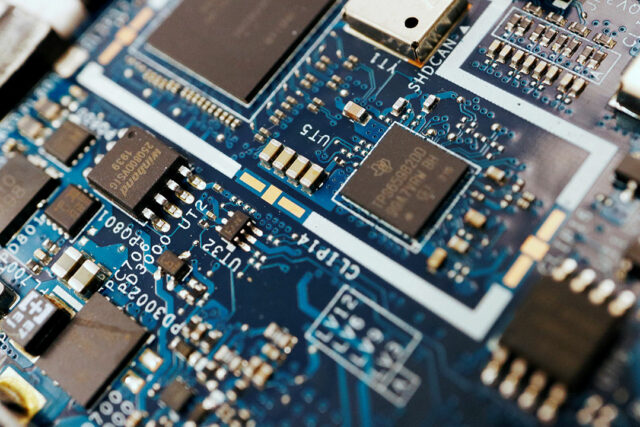
Semiconductor chips are seen on a circuit board of a computer in this illustration picture taken on Feb. 25, 2022. — REUTERS

TAIPEI – Taiwan will simulate the impact of any U.S. tariffs on the semiconductor industry and seek talks with Washington on the issue, the island’s economy minister said on Tuesday.

The Trump administration is probing the import of chips, along with pharmaceuticals, in a bid to impose tariffs on both on grounds that extensive reliance on foreign production of semiconductors and medicine is a national security threat.

The United States relies heavily on chips imported from Taiwan, a reliance former President Joe Biden sought to end during his term by granting billions of dollars in Chips Act awards to lure chipmakers to expand production in the country.

Speaking to reporters outside parliament, Taiwan Economy Minister Kuo Jyh-huei said he would seek to discuss the matter with the United States and ensure “fair competition” for Taiwanese industry.

The Taiwanese and U.S. chip sectors are complementary, he added.

“As to how much (the tariffs) could be, we will of course carry out simulations,” Kuo said. “On the tariffs issue, we will try as hard as possible to communicate with the U.S. side.”

The level of chip tariffs will be “the outcome of talks”, he added, without elaborating.

Taiwan is home to TSMC, the world’s largest contract chipmaker and a major supplier to companies including U.S. tech giants Apple and Nvidia.

On Monday, Nvidia said it is planning to build AI servers worth as much as $500 billion in the U.S. over the next four years with help from partners including TSMC. That followed Apple’s February promise of half a trillion dollars in U.S. investment over a similar time frame.

TSMC last month announced a $100 billion investment in the United States, on top of previous investment pledges.

Its Taiwan-listed shares traded 0.7% higher on Tuesday morning, largely in line with the broader market. — reuters

Trump administration sued over tariffs in US Court of International Trade

STOCK PHOTO | Image by Pexels from Pixabay

A legal advocacy group on Monday asked the U.S. Court of International Trade to block President Donald Trump’s sweeping tariffs on foreign trading partners, arguing the president overstepped his authority.

The lawsuit was filed by the nonpartisan Liberty Justice Center on behalf of five small U.S. businesses that import goods from countries targeted by the tariffs. The businesses range from a New York wine and spirits importer to a Virginia-based maker of educational kits and musical instruments.

The lawsuit challenges Mr. Trump’s April 2 “Liberation Day” tariffs, as well as duties he separately levied against China.

“No one person should have the power to impose taxes that have such vast global economic consequences,” Liberty Justice Center senior counsel Jeffrey Schwab said in a statement. “The Constitution gives the power to set tax rates — including tariffs — to Congress, not the President.”

White House spokesman Harrison Fields defended Mr. Trump’s tariffs in a statement.

“Never Trumpers will always oppose him, but President Trump is standing up for Main Street by putting an end to our trading partners — especially China — exploiting the U.S. His plan levels the playing field for businesses and workers to address our country’s national emergency of chronic trade deficits,” Mr. Fields said.

The Trump administration faces a similar lawsuit in Florida federal court, where a small business owner has asked a judge to block tariffs imposed on China.

Mr. Trump imposed 10% tariffs on goods from all countries and higher tariffs for countries the administration says have high barriers to U.S. imports, most of which he later paused for 90 days.

The president’s executive order invoked laws including the International Emergency Economic Powers Act, which gives presidents special powers to combat unusual or extraordinary threats to the U.S.

In Monday’s lawsuit, the Liberty Justice Center said the law does not give presidents the authority to impose tariffs.

“There is no precedent for using IEEPA to impose tariffs. No other President has ever done so or ever claimed the power to do so,” the lawsuit said.

The lawsuit asks the court to block enforcement of the tariffs and declare Mr. Trump lacked the authority to impose them.

The New York-based Court of International Trade is a U.S. federal court with broad jurisdiction over most trade-related matters. — Reuters

Vehicle sales jump 7.6% in March

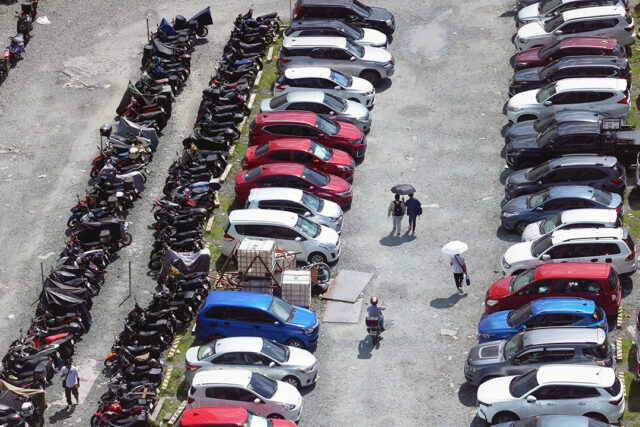
Philippine automotive sales rose by 7.6% to 40,306 units in March. — PHILIPPINE STAR/MIGUEL DE GUZMAN

PHILIPPINE automotive sales grew by 7.6% in March as steady commercial vehicle sales offset a double-digit slump in sales of passenger cars, an industry report showed.

A joint report by the Chamber of Automotive Manufacturers of the Philippines, Inc. (CAMPI) and the Truck Manufacturers Association (TMA) showed new vehicle sales increased to 40,306 units in March from 37,474 units in the same month a year ago.

Auto Sales (March 2025)Month on month, car sales also grew 2.9% from 39,164 units sold in February.

“Vehicle sales continued to grow but already started to normalize on a year-to-date basis, closer or similar to gross domestic product growth of about 6% for 2025,” Rizal Commercial Banking Corp. Chief Economist Michael L. Ricafort said in a Viber message.

Data from CAMPI-TMA showed passenger car sales declined 16.6% in March to 8,449 from 10,127 a year prior. Passenger cars made up 21% of the total sales in March.

Month on month, sales of passenger cars inched up by 3.6% from 8,154 cars sold in February.

Mr. Ricafort noted the decline in passenger cars reflected a “greater preference for sport utility vehicles, pickups, and vehicles with higher clearance in view of the series of storms, typhoons, and floods in the latter part of 2024.”

On the other hand, commercial vehicle sales, which accounted for 79% of the total, increased by 16.5% to 31,857 in March from 27,347 a year ago.

Month on month, commercial vehicle sales grew 2.7% from 31,010 in February.

Broken down, light commercial vehicle sales rose by 18.2% year on year to 23,754, while Asian utility vehicle (AUV) sales went up by 9.9% to 7,057.

Sales of light-duty trucks and buses surged 40% to 626 in March from 447 units in the same month last year. Sales of medium-duty trucks and buses slipped by 3.9% to 320 from 333 last year.

In March, sales of heavy-duty trucks and buses surged 122.2% to 100 units from 45 units sold last year.

For the first three months of the year, vehicle sales went up by 6.8% year on year to 117,074 units from 109,606 in the same period in 2024.

Commercial vehicle sales increased by 13.9% to 92,742, while passenger car sales dropped by 13.7% to 24,332 in the January-to-March period.

As of end-March, Toyota Motor Philippines Corp. remained the market leader with a 47.42% share as its sales rose by 11.8% to 55,513 units.

Mitsubishi Motors Philippines Corp. came in second with a 12.1% increase in sales to 23,382 units in the January-to-March period. It accounted for almost 20% market share.

In third spot is Nissan Philippines, Inc. which saw a 15% drop in sales to 6,722 units in the first three months.

Rounding out the top five were Suzuki Phils., Inc., which saw a 23.8% increase in sales to 5,441 units, and Ford Motor Co. Phils., Inc. which posted a 30.7% drop in sales to 5,219 units.

RCBC’s Mr. Ricafort said that the industry has been seeing growing demand for electrified vehicles (EVs), hybrid vehicles, and self-driving vehicles.

“The Philippines has yet to catch up with other countries in increasing the demand for EVs and hybrid vehicles, given increased competition in terms of lower prices from China, Vietnam, and other countries,” he said.

“Newer models, more brands, low down payments, and more affordable vehicle purchase schemes… are also still driving demand or sales of vehicles,” he added.

The CAMPI-TMA report showed that 1,895 EVs were sold in March, bringing three-month sales to 5,311 units. This represented a 5.73% market share.

Broken down, hybrid EVs accounted for 4,554 units sold in the first three months. There were 692 battery EVs and 75 plug-in hybrid EVs sold as of end-March. — Justine Irish D. Tabile


Balisacan hopeful of 6% growth in Q1

Economic managers are targeting 6-8% growth this year. — PHILIPPINE STAR/MIGUEL DE GUZMAN

NATIONAL Economic and Development Authority Secretary Arsenio M. Balisacan is hopeful the economy grew by at least 6% in the first quarter, as rate cuts and cooling inflation drove up domestic consumption.

Mr. Balisacan told reporters it may be unrealistic to expect gross domestic product (GDP) growth to hit the upper end of the 6-8% target amid global uncertainty over the US tariff policy.

However, it may be too early to revise the growth targets, he added.

“Yeah, we are keeping for now the 6%, 6-8% growth. And we’re still quite confident that we may hit at least the low-end part (of the full-year target),” he said.

Asked if first-quarter GDP may have expanded faster than the 5.9% print in the first quarter of 2024, Mr. Balisacan replied: “If we are going to get something close to that (5.9%) for the first quarter, that to me is a respectable achievement. But I would like to see hopefully 6%.”

First-quarter GDP data will be released on May 8.

“Our target is to move the economy faster than it used to so that we can catch up with our neighbors,” Mr. Balisacan said.

Mr. Balisacan said domestic consumption, which makes up around three-quarters of GDP, will continue to drive growth.

“I would think that because of the lower interest rates and the much more favorable inflation that has happened over the last first three months of the year, this would surely have impacted favorably on domestic consumption,” he said.

In the first quarter, inflation averaged 2.2%, well within the central bank’s 2-4% target range.

The Bangko Sentral ng Pilipinas paused its easing cycle in February, but cut rates by 25 basis points at its meeting last week. This brought the target reverse repurchase rate to 5.5% from 5.75% previously.

Mr. Balisacan said second quarter economic performance may be “challenging” amid the turmoil caused by the US reciprocal tariffs.

US President Donald J. Trump on April 9 paused the new reciprocal tariffs for 90 days, although the baseline 10% tariff on almost all US imports remained in effect.

The Philippines faced a 17% reciprocal tariff, although this was the second lowest among Southeast Asian countries.

“In fact, when we did our simulation, the net benefits for us in terms of the increases in exports, overall exports, not just for the US but overall, as well as for increases in GDP, are now more favorable for us compared to the reciprocal tariffs,” he said.

Mr. Balisacan said that exports could possibly increase by 1.5% with the 10% blanket tariff during the 90-day pause.

“But then again, because exports as a contributor to our economy is quite small, the overall impact and impact is still quite high,” added.

The Development Budget Coordination Committee projects 6% and 5% growth in exports and imports, respectively, this year.

Despite the growing uncertainty in global trade, Mr. Balisacan said the Philippine economy remains relatively insulated due to its smaller role in global trade compared to its Asian neighbors.

“The economy is not as vulnerable to shocks in the global marketplace as our neighbors… because the Philippine economy’s exposure to trade is fairly small,” he said.

However, he cautioned against complacency, stressing the importance of strengthening export performance by diversifying markets and addressing investment constraints so the country could take advantage of trade diversion opportunities resulting from the sweeping US tariffs.

“We need to double, even triple, our efforts to improve the investment environment so investors see the Philippines as a viable destination,” Mr. Balisacan said. — Aubrey Rose A. Inosante with Reuters

Philippines, France to hold JEC meeting in September

A PROTESTER holds a French national flag as people gather to protest against the French far-right Rassemblement National (National Rally - RN) party, at the Place de la Republique following partial results in the first round of the early 2024 legislative elections, in Paris, France, June 30, 2024. — REUTERS

By Justine Irish D. Tabile, Reporter

THE Philippines and France are scheduled to hold a Joint Economic Committee (JEC) meeting in September, according to an official of the Department of Trade and Industry (DTI).

“We have a JEC with France. Our proposal actually is to do it on Sept. 30, if I am not mistaken. The date is not yet definite, but it will either be in late September or October,” DTI Undersecretary Allan B. Gepty told BusinessWorld on the sidelines of the France-Philippines Business Forum.

“The purpose of that is for both sides to sit down together to thresh out trade and investment issues. So, if there are concerns, we will resolve them. And then also in cooperation areas, if we want to promote trade and investments, we discuss those also on that platform,” he added.

This year’s Philippines-France JEC will take place in Manila.

According to Mr. Gepty, France is a significant trade and investment partner of the Philippines.

Last year, France was the country’s 19th top trading partner, 18th biggest source of import, and 20th biggest export market.

Total trade between France and the Philippines reached $1.5 billion in 2024, representing a 4.3% growth in the last 10 years, according to the Trade official.

“We see further potential to increase our trade. For the Philippines, there is $1.8 billion worth of export potential to France. Products of top export potential include electronic equipment, machinery, bananas and plantains, spectacle lenses, and copper cathodes,” said Mr. Gepty.

“We continue to invite French companies to explore investment opportunities in the Philippines in priority sectors such as renewable energy, infrastructure, automotive and electric vehicles, electronics, information technology and business process management, and shipbuilding,” he added.

French Chamber of Commerce and Industry in the Philippines Managing Director Kevin Charuel said that there are many sectors in which the Philippines and France can cooperate.

“As you know, France has a long history in terms of excellence and innovation. So, when we discuss sectors, it could be agriculture, agri-food, or renewable energy, and we are also very strong when it comes to infrastructure and construction,” said Mr. Charuel.

“There are already so many projects happening between Philippine and French firms… These collaborations show that there are so many industries where we can collaborate and be stronger together,” he added.

He said that the Philippines is only France’s sixth-largest trading partner in Southeast Asia, which shows the need to further develop the two countries’ economic relationship.

“One of the best examples of this is the direct flight of Air France between Manila and Paris because in ASEAN (Association of Southeast Asian Nations) there are other countries that are also very dynamic, and what is important for us is for France to also understand more about the Philippines,” he said.

Aside from improving tourism, Mr. Charuel said the direct link between Manila and Paris may encourage French business leaders to introduce their solutions and innovations and develop their businesses here.

“It’s not just about tourism; it’s also about business ties. It makes things much easier for business leaders to come to the Philippines to discuss possible collaborations,” he added.

However, Mr. Charuel said that French businesses hope that the Philippines will further improve ease of doing business.

“To be honest, there are still many challenges, and sometimes those can be very impactful. It can be related to bringing products to the Philippines, related to certifications, related to customs, and related to some barriers that we need to make more efficient,” he said.

“I think the administration is aware and is making the right move to make things work better to attract more foreign investments and, of course, more French companies to come to the Philippines,” he added.