Home Blog Page 117

Nubia Air 5G review: tougher than it looks

ED GERONIA

The battle between premium phones may be exciting to watch but the best fights can be seen at the mid-range and value segments.  
 
The Nubia Air 5G might be mistaken for a device that belongs to a higher tier because of its ultra-slim build. Not only that, but it also has a triple ingress protection rating of IP68, IP69, and IP69K which translates to the phone’s resistance to submersion and high-pressure and high-temperature water jets. It’s really tougher than it looks.  
 
At 5.9mm and 172 grams, it’s definitely one of the thinnest and lightest phones out there. The 6.78-inch AMOLED screen is incredibly bright and vibrant with a 120hz refresh rate. It’s quite easy to see even outdoors. Perhaps the only downside is the screen’s tendency to oversaturate some colors. Eye comfort and read mode settings can help mitigate the boosted colors for those who prefer less eye candy. The under display fingerprint sensor is fast and responsive.

The phone comes packed with a 5000mah battery and 33W fast charging. It won’t beat battery endurance records, but it’s on par with phones with similar battery capacity, giving it a whole day of battery life under normal usage. For contactless payments, the phone is equipped with NFC. Sadly, there’s no wireless charging. 

At the back is a prominent hump that houses the camera array. There’s a main 50MP sensor with a pair of auxiliary lenses and LED flash. It’s the main shooter that does all the work and in good lighting conditions, the images that it produces are rather decent for uploading to social media. Look elsewhere if you’re looking for ultrasharp images or noise-free lowlight and night shots. The lack of an ultrawide lens may also turn off some photography buffs. Video is limited to a max setting of 1080p/30 fps. 

The Unisoc T8300 chip under the hood copes well with day-to-day tasks such as browsing, productivity, basic connectivity, and light gaming. When trying to quickly switch between tasks and under heavy load, there may be some occasional stutter or slowdown. The 6-nanometer 8-core chipset may not dominate benchmarks but as long as the graphic settings aren’t set to max level, the Nubia Air 5G is surprisingly good enough for most 3D games.

Those who encounter working with multiple languages will appreciate the AI Translate feature but that’s pretty much the extent of the AI features that’s baked in the phone. You have to rely on other AI apps such as Gemini for other tasks.

In terms of value proposition, you are getting a lot of phone for just a hair under P11,000 with 8GB of RAM and 256GB of storage. If you’re willing to live without the top tier features but need a mid-level device for use as a daily driver or a second phone, the Nubia Air 5G ticks all the boxes of having a slim and premium-looking phone without the hefty price tag. — Ed G. Geronia Jr. 
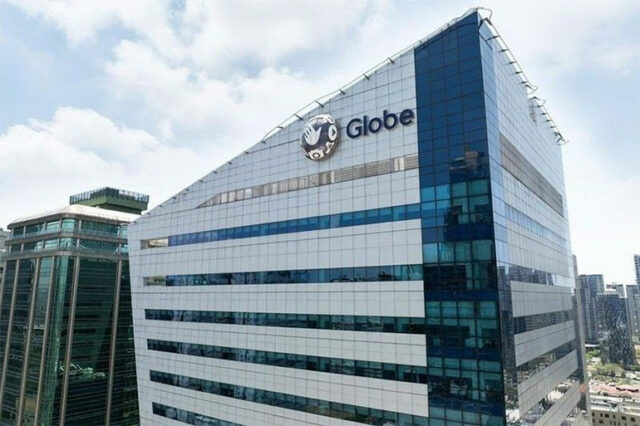
Globe completes live pilot test of Starlink Satellite-to-Mobile Service in Rizal, Batangas and Bataan

Globe has successfully completed its first live trial of the Starlink Mobile, a satellite-to-mobile service in partnership with Starlink, marking a significant step in expanding mobile connectivity beyond the limits of traditional cell towers. Following the earlier announcement of the Globe and Starlink partnership, the live pilot validated the technical performance, interoperability, and overall user experience of satellite-to-mobile connectivity integrated with the Globe core network. Testing was conducted across multiple remote locations in Rizal, Batangas, and Bataan.

Starlink’s satellite-to-mobile technology functions as a cell tower in space, delivering app-based voice calls, simple data and SMS directly from Low Earth Orbit satellites to standard LTE smartphones. No additional hardware, special device, or new application is required. As long as users have a clear view of the sky, connectivity becomes possible even in areas with no terrestrial signal.

During the pilot, Globe tested essential services in areas with no existing mobile coverage. The trial successfully enabled SMS, app-based voice calls, simple data access for messaging services such as Viber and WhatsApp, navigation through map apps, access to eGovernment services via the eGov PH app, sending money and payment transactions through GCash, and load and promo top-ups through the GlobeOne app.

The pilot confirmed the feasibility of extending mobile connectivity beyond traditional terrestrial networks. The technology is designed to support connectivity in Geographically Isolated and Disadvantaged Areas (GIDA), provide an additional communication layer during network outages caused by disasters, and enable mobile access in maritime environments up to 12 nautical miles.

Joel Agustin, Senior Vice President for Service Planning and Engineering at Globe, emphasized the importance of this milestone as “another breakthrough service from Globe in partnership with Starlink to serve Filipinos using satellite technology for connectivity.”

“This will be our lifeline especially during disasters and our complementary coverage in areas where terrestrial network is not available. The service will also address the connectivity requirements of GIDA communities and strengthen coverage across the country’s territorial boundaries,” he added.

With network integration and initial testing successfully completed, Globe and Starlink have validated satellite-to-mobile capability in the Philippine setting, laying the groundwork for the next stage of the partnership and onto commercial rollout. The milestone reflects tangible progress in translating the collaboration into operational readiness and reinforces Globe’s commitment to deliver resilient and inclusive connectivity nationwide.

Following the live pilot tests, Globe and Starlink will expand testing scenarios to include additional locations and operational scalability. The next stage will focus on broader validation of various operational scenarios and functions, including stress testing and limitations, in preparation for Globe’s satellite-to-mobile commercial rollout, subject to regulatory approvals.


Spotlight is BusinessWorld’s sponsored section that allows advertisers to amplify their brand and connect with BusinessWorld’s audience by publishing their stories on the BusinessWorld Web site. For more information, send an email to online@bworldonline.com.

Join us on Viber at https://bit.ly/3hv6bLA to get more updates and subscribe to BusinessWorld’s titles and get exclusive content through www.bworld-x.com.

Filipinos urged to explore locally made EVs amid surge in oil prices – DOST

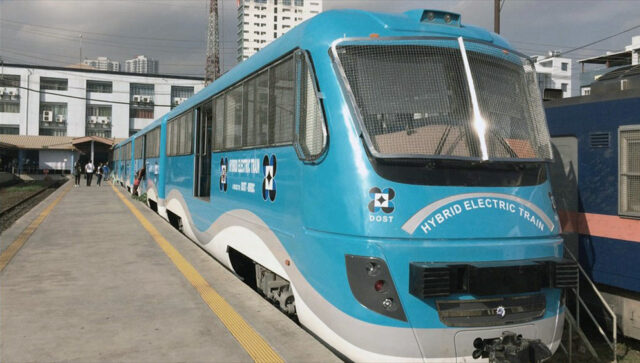
The Hybrid Electric Train developed by DOST's Metals Industry Research and Development Center (MIRDC) runs on diesel and electric power from its batteries. — DOST

Amid a series of oil price hikes, the country has a suite of locally made electric vehicle (EV) innovations that can serve as a practical alternative for commuters and transport operators, according to the Department of Science and Technology (DOST) on Thursday.

“We made smart, long-term investments in Filipino e-mobility research,” Renato U. Solidum Jr., DOST Secretary, said in a statement.

“With the continuing rise of global fuel prices, these technologies offer a real, practical way for Filipinos to save on costs while contributing to cleaner communities.”

DOST cited six EV innovations that have huge potential for wider adoption in the country.

Among these is M/B Dalaray, the country’s first locally designed and manufactured battery-electric ferry, first launched in October.

It traverses the Pasig River, allowing commuters to arrive at major urban areas in the capital in a cleaner and more sustainable way.

DOST earlier said that the ferry is powered by lithium-ion batteries and can sustain voyages of around 45 kilometers, or two to three hours of operation.

M/B Dalaray operates daily from Monday to Saturday. It departs at 1:30 pm from Guadalupe to Escolta station, and at 3:00 pm from Escolta back to Guadalupe.

Another Filipino-made EV innovation is the C-Trike, an electric-powered version of the traditional tricycle.

It consumes only 4.5 kilowatts of power for a 56.4-kilometer ride, DOST said, noting its mileage efficiency.

On rail transit, DOST also developed the Hybrid Electric Train (HET), a 20-meter-per-coach pilot transit system that runs on both diesel power and electric batteries.

It was developed by engineers from its attached agency, the Metal Industry Research and Development Center, for the Philippine National Railways (PNR), and had its inaugural run in 2019.

Meanwhile, DOST has also helped deploy electric tricycles (e-trikes) in Cauayan City, Tuguegarao, Batanes, Iloilo, and Metro Manila to help these areas adopt sustainable mobility while lowering operational costs for drivers.

For the “King of the Road” jeepney, the Electric Vehicle Association of the Philippines (EVAP) developed a 23-seater e-jeepney with DOST, which helps drivers save on fuel costs while also reducing emissions.

DOST earlier proposed the e-jeepney as part of the country’s Public Utility Vehicle (PUV) Modernization Program.

A locally engineered fast-charging system that can charge EVs, such as e-trikes, in about 30 minutes—faster than conventional charging methods—has also been developed.

Called CHarM (Charging in Minutes), it was developed by researchers from the University of the Philippines Diliman with support from DOST’s Philippine Council for Industry, Energy and Emerging Technology Research and Development (PCIEERD).

CHarM charging stations are already available in various locations in Quezon City, Bonifacio Global City in Taguig, and Binondo, Manila. They have also been deployed in nearby areas outside Metro Manila.

With this suite of EV innovations, DOST urged commuters to explore EV options for daily travel and encouraged transport cooperatives to adopt e-trikes, e-jeepneys, and CHarM-supported charging systems.

Local government units are also encouraged to integrate EV routes into their transport modernization plans.

“These actions strengthen long-term resilience, reduce dependence on imported fuel, and accelerate the adoption of clean, Filipino-made technologies,” DOST said.

“DOST’s continued expansion of e-mobility research aligns with its commitment to sustainability, wealth creation, and human well-being—supporting national goals for a cleaner, more efficient transport system,” it added. — Edg Adrian A. Eva

Philippine central bank holds rate at 4.25% as inflation risks rise

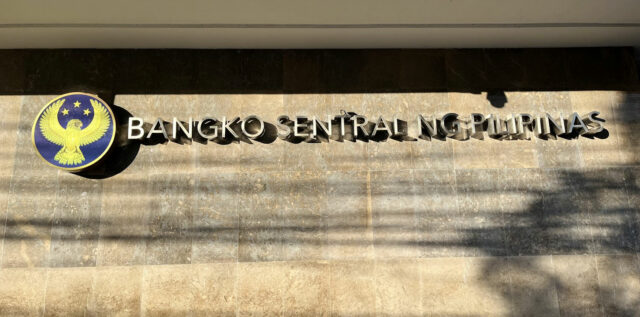
The main office of the Bangko Sentral ng Pilipinas in Manila. — BW FILE PHOTO

MANILA — The Philippine central bank said on Thursday that it had decided to keep its policy rate at 4.25%, adding that it will act as needed to maintain price stability and address likely second-round effects.

The Bangko Sentral ng Pilipinas (BSP), which was not scheduled to review interest rates until April 23, said mounting risks to inflation require sustained vigilance.

In a statement it said inflation this year was expected to breach the 4.0% ceiling but move back toward the tolerance range by 2027.

“As a data-driven monetary authority, and in light of fast-changing developments and uncertain economic conditions, the Monetary Board met today and decided to maintain the policy rate at 4.25%,” it said.

“Over the near term, the Monetary Board sees upside risks to inflation as largely supply-driven, for which monetary policy has limited effectiveness. At the same time, the BSP sees continued weak economic growth in 2026. To raise the policy rate at this time would delay the recovery.” — Reuters

JICA-backed rail projects on track with targets despite rising costs

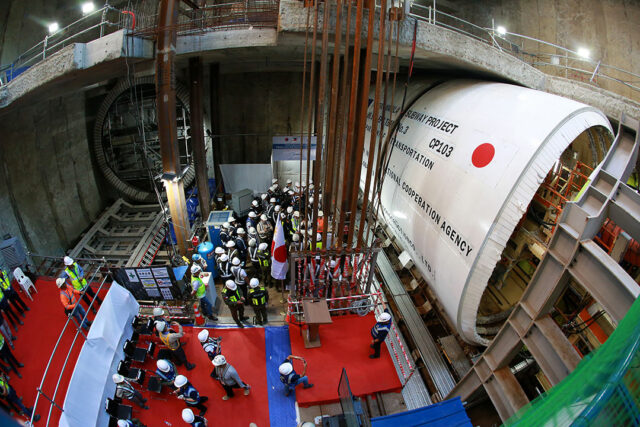
The tunnel boring machine is seen at the planned Camp Aguinaldo station of the Metro Manila Subway Project (MMSP) in Quezon City. — PHILIPPINE STAR/MIGUEL DE GUZMAN

By Justine Irish D. Tabile, Senior Reporter 

Railway projects funded by the Japan International Cooperation Agency (JICA) are still on track with completion targets despite the potential impact of the Middle East war on oil prices and costs, contractors said.

“Although we are facing various challenges, including the Middle East conflict, we will achieve our target,” said Takashi Date, the project manager of the Metro Manila Subway Project (MMSP) Contract Package (CP) 103 during a press tour conducted by the Japan Embassy in the Philippines.

MMSP CP103 Construction Manager Ricky P. Salenga said rising oil prices are a concern as the contractor, Sumitomo Mitsui Construction Co., Ltd., uses fuel for its heavy machinery.

“Since this is a construction project and we use heavy machinery, it requires a lot of oil. So, the (limited supply) of oil can affect us,” he said.

He said that the delays will only happen if there is no supply of oil. 

Recent oil price hikes have already affected the project’s costs. 

The MMSP spans 6.516 kilometers and covers two underground stations — Anonas and Camp Aguinaldo — as well as the tunnels. 

As of March 21, the MMSP CP103 package has a 28.43% completion rate. The subway is expected to be completed by 2032.

A joint venture between Shimizu Corp., Fujita Corp., Takenaka Civil Engineering & Construction Co., Ltd., and EEI Corp. (SFTE) also expressed confidence in completing the MMSP CP101 on time for the completion target.

To date, the works under CP101 are about 52% complete. The contract covers the 30.7-hectare Ugong depot as well as the MMSP Valenzuela, Quirino Highway, Tandang Sora, and North Avenue stations.

However, Antonio M. Aganon, Jr., station deputy civil manager of the SFTE joint venture, said that the company has made plans for all the materials the project will need in advance. 

“It will affect the final cost of the project,” he said. “But no one could really tell when (the war) will be done. So, what we can do is to go with our schedule.”

So far, the company has already imported most of the materials and is expecting the delivery of tunnel boring machines in the next two weeks, Mr. Aganon said. 

MMSP CP101 also covers the construction of the Philippine Railway Institute, which is eyed for completion within the year.

Meanwhile, Taisei-DM Consunji, Inc. Joint Venture (Taisei-DMCI JV), the contractor behind the North-South Commuter Railway (NSCR) CP01, said that it sees rising prices of oil and materials impacting the project.

“We are now in the finishing stages of the stations and some of the buildings here. So, the only impact on us probably is the fuel price increase or the costs of other materials that will be increased,” said Gerardo S. Ancheta, Jr., deputy project manager of Taisei-DMCI JV.

He said that the war could impact the prices of the materials the company has yet to import from other countries.

“We are coordinating that properly with the manufacturers and suppliers that we have … For now, we have not heard any issues or problems from them,” he added.

As far as the JV’s part in the project, he said that the company is on track to complete its part by year-end.

“However, there are some interface works that we need to work on with the CP04,” he added, noting that the company will not be able to finish the facilities without the electrical and mechanical (E&M) systems and track works from CP04.

Mr. Ancheta said that the delay stemmed from the late awarding of the CP04, as it was only awarded three years after CP01.

As of March 11, the overall progress of the NSCR CP01 is at 88.77%. The partial operations for the NSCR are eyed for 2027. 

To ensure the timely completion of the two railway systems, President Ferdinand R. Marcos, Jr. has ordered the release of P44.17 billion to the Department of Transportation (DoTr).

According to the Department of Budget and Management (DBM), the funding will “cover critical loan proceeds requirements—ensuring that construction timelines remain on track and momentum is sustained.”

“The funding was authorized through two Special Allotment Release Orders (SAROs) approved by DBM Secretary Rolando “Rolly” U. Toledo on March 23.

The release was charged against the unprogrammed appropriations under the Fiscal Year 2026 General Appropriations Act, specifically for Support to Foreign-Assisted Projects (SFAPs).

Philippines suspends electricity market due to Middle East conflict

PHILSTAR FILE PHOTO

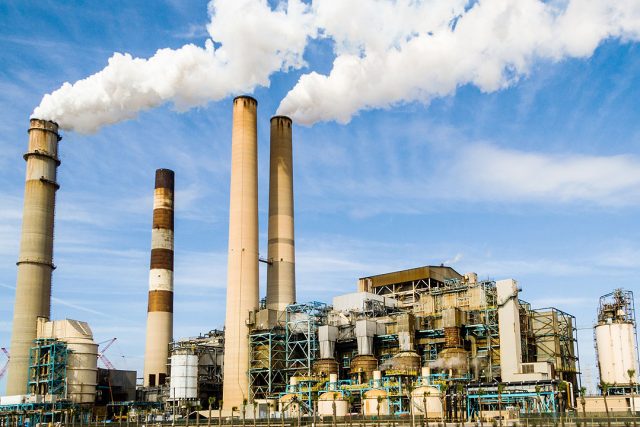
SINGAPORE — The Philippines suspended electricity sales on the Wholesale Electricity Spot Market until further notice on Thursday due to fuel supply risks and price volatility caused by the Iran war.

The suspension – a rare state intervention in one of the few Asian markets where electricity bills are linked to market prices – was ordered under a decree that declared a state of national energy emergency to deal with the fallout from the war, including disruptions to fuel procurement.

The country’s Energy Regulatory Commission said it expects to finalize a modified pricing scheme by Wednesday.

Data from the Independent Electricity Market Operator of the Philippines showed average spot power prices in the Philippines jumped 58% this month after the war launched by the US and Israel on February 28 rattled fuel supplies.

Prices in Mindanao and Visayas territories have nearly doubled, while those in more populous Luzon rose 42%.

The suspension follows through on plans flagged by Energy Secretary Sharon S. Garin in an interview with Reuters on March 13, in which she said the government would intervene in the market to stop a projected surge in power bills.

Power tariffs in the archipelago of more than 100 million are the highest in the region after Singapore.

A modified pricing scheme was being adopted as historical market prices no longer “reflect current conditions marked by geopolitical tensions and fuel supply constraints,” the commission said.

During the suspension, the power system will operate under guidelines that aim to prioritize renewable energy and conserve critical fuel inventories, it said.

“Coal plants may be paid at a fixed rate, natural gas plants based on contracted prices,” the commission said in a statement, adding that the market will remain suspended until the conditions are suitable for normal operations. — Reuters

Philippines launches $333 million fund to boost fuel security

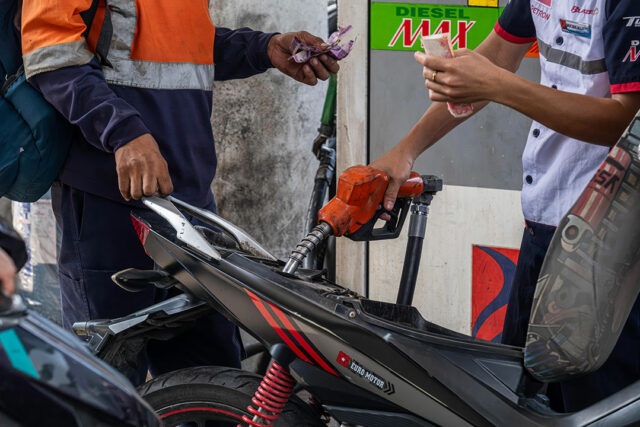
A motorist pays a gas attendant at a gas station on March 1, 2026. — PHILIPPINE STAR/RYAN BALDEMOR

MANILA — The Philippine energy ministry said on Thursday it is activating a 20 billion peso ($333 million) emergency fund to strengthen fuel security amid continued volatility in oil prices due to the conflict in the Middle East.

“This decisive action demonstrates the administration’s firm resolve to protect the Filipino people from external supply shocks and to ensure the continuous, adequate, and reliable availability of fuel across the country,” the energy department said.

  • Under the program, the government plans to buy up to two million barrels of fuel to support domestic supply and purchase refined petroleum products and liquefied petroleum gas.
  • President Ferdinand R. Marcos Jr. said on Wednesday the country has around 45 days’ worth of oil supply.
  • The Philippines imports almost all of its crude from the Middle East, with Saudi Arabia its biggest supplier, making it vulnerable to oil price shocks and supply disruptions.

Reuters

Middle East war may shift Filipinos to domestic, regional travels

Klook unveils its Travel Pulse 2026, which highlights travel trends and predictions among Filipino travelers.—ALMIRA S. MARTINEZ

Travel platform Klook said on Wednesday that Filipino travelers are likely to explore domestic destinations and other nearby countries, as the effects of the ongoing war in the Middle East intensify.

“Because of the ongoing conflict in the Middle East, because of the oil price swings, we’re seeing that Filipinos are still traveling but choosing to travel closer to home,” Klook Philippines General Manager Michelle Ho said in a media briefing.

“And that may mean domestic or that may mean an hour or two-hour flight outside of the Philippines,” she added.

Although travel costs are increasing globally, Ms. Ho noted that Filipinos still intend to travel to ‘predictable cities’.

“The reality is people feel that it’s a lot more unpredictable,” she said. “If I’m going to spend this much money on my next travel getaway, I’d rather go for a more predictable city.”

“Their choices, where they should travel and how they spend their money, that’s evolving,” she added.

Data from Klook’s Travel Pulse 2026 revealed that Northeast Asia (67%), Southeast Asia (30%), and South Asia and Oceania (3%) are the top travel destinations among Filipinos this year.

“Regardless of what is happening from a macroeconomic standpoint, I think what we’re seeing is that Filipinos love to travel, and they like to do so both internationally and domestically,” Ms. Ho told reporters in an interview.

“What could possibly change is the frequency, how many times they would travel domestically versus internationally,” she added.

In 2025, the platform recorded 71% of its Filipino users travelled locally. The top destinations booked are Metro Manila, Boracay, Cebu, Cavite, and Pampanga.

“I would say that domestic remains to be a key driver for Filipino travel and for Filipino tourism, and that will continue to stay,” she said.

INFLUENCE OF ARTIFICIAL INTELLIGENCE AND SOCIAL MEDIA
With the rise of content creators and artificial intelligence (AI) in the country, Filipinos are now utilizing both resources for their travel plans.

“AI can consolidate the information, AI can provide this basic information,” Ms. Ho said.

“But when it comes to really being able to share lived experiences, I think that’s where our consumers are leaning into social content creators, friends, family,” she added.

The report revealed that AI usage for travel-related concerns is more prominent among millennials compared to Generation Z.

Comparative data showed that 41% of millennials use AI to search for travel deals, compared to 37.7% of the younger generation.

Such a trend can also be seen in activities research (48.9%), destination research (60.3%), and flight and hotel searches (44.1%).

“What we’re seeing is that the adoption is high. I would say that the increase is phenomenal, in my opinion,” Ms. Ho said. “So it’s more of a synergistic view, in a way that they lean into AI platforms for discovery, for basic research.”

Klook’s Travel Pulse 2026 report was conducted among 11,000 users globally, including 500 Filipino participants. — Almira Louise S. Martinez

Iran says it is reviewing US proposal to end war

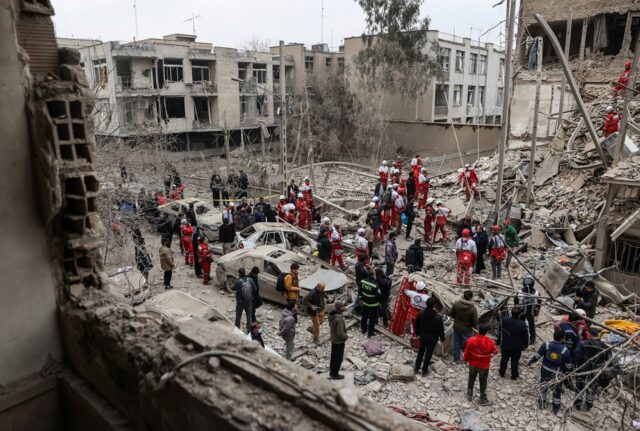
Emergency personnel work at the site of a strike on a residential building, amid the US-Israeli conflict with Iran, in Tehran, Iran, Mar. 16, 2026.—via REUTERS/MAJID ASGARIPOU

DUBAI/TEL AVIV — Iran is reviewing a US proposal to end the war in the Gulf but has no intention of holding talks to end the widening Middle East conflict, the country’s foreign minister said on Wednesday.

The comments by Iranian Foreign Minister Abbas Araqchi suggested some willingness by Tehran to negotiate an end to the war if its demands were met, despite an initial response that was negative as Iranian officials publicly poured scorn on the prospect of any negotiations with the US.

The exchange of messages through mediators “does not mean negotiations with the US,” Mr. Araqchi said on state television.

“They put forward ideas in their messages that were conveyed to top authorities, and if necessary, a position will be announced by them,” Mr. Araqchi said.

Additionally, Iran has told intermediaries that Lebanon must be included in any ceasefire agreement with ​the US and Israel, six regional sources familiar with Iran’s position said.

US President Donald Trump’s 15-point proposal, sent through Pakistan, calls for removing Iran’s stocks of highly enriched uranium, halting enrichment, curbing its ballistic missile program and cutting off funding for regional allies, according to three Israeli cabinet sources familiar with the plan.

The White House declined to disclose specifics of its proposal and threatened to escalate its strikes.

“If they fail to understand that they have been defeated militarily, and will continue to be, President Trump will ensure they are hit harder than they have ever been hit before,” White House press secretary Karoline Leavitt told reporters.

A senior Israeli defense official said Israel was skeptical Iran would agree to the terms, and that Israel was concerned US negotiators might make concessions. Israel also wants any agreement to preserve its option to conduct pre-emptive strikes, a second source said.

Admiral Brad Cooper, the Central Command chief leading US forces in the Middle East, said in a video briefing that the US had hit over 10,000 targets inside Iran and was on track to limit Iran’s ability to project power outside its borders.

Mr. Cooper said 92% of Iran’s largest naval vessels had been destroyed and that its drone and missile launch rates were down by more than 90%. The US and Israel have damaged or destroyed two-thirds of Iran’s missile, drone, and naval production facilities and shipyards, Mr. Cooper said.

Still, the war has raged on with no let-up in air attacks against Iran, as well as Iranian drone and missile strikes against Israel and US allies.

The Israeli military on Wednesday described several new waves of attacks on Iran during the day, including one on Iran’s construction of ships and submarines. The semi-official Iranian SNN News Agency said a residential area was hit in Tehran, with rescuers searching the rubble. Kuwait and Saudi Arabia said they repelled new drone attacks.

MARKETS RESPOND POSITIVELY TO PROPOSAL
Global equity markets regained some ground while oil prices fell on Wednesday after reports that Washington had sent the proposal to Iran, with investors hoping for an end to a war that has disrupted global energy supplies and risks fueling inflation.

The Pentagon is meanwhile planning to send thousands of airborne troops to the Gulf to give Mr. Trump more options to order a ground assault, sources have told Reuters, adding to two contingents of Marines already on their way. The first Marine unit, aboard a huge amphibious assault ship, could arrive around the end of the month.

Iran could open a new front at the mouth of the Red Sea if attacks are carried out on its territory, Iran’s semi-official Tasnim news agency cited an unnamed military source as saying on Wednesday. The source said that Iran has the capability to pose a “credible threat” in the Bab al-Mandab Strait, which lies between Yemen and Djibouti.

Iran’s Parliament Speaker Mohammad Baqer Qalibaf said his country would attack an unnamed neighboring country if it cooperated with efforts by “the enemies” to occupy one of its islands.

Since the start of what the US calls “Operation Epic Fury”, Iran has attacked countries that host US bases and effectively closed the Strait of Hormuz, conduit for a fifth of the world’s oil and liquefied natural gas.

UN Secretary-General Antonio Guterres on Wednesday warned: The “world is staring down the barrel of a wider war” in the region.

“It is time to stop climbing the escalation ladder – and start climbing the diplomatic ladder,” he said at the UN headquarters in New York. — Reuters

Golden Haven recognizes top sales leaders nationwide at Golden Stars 2025, awards grand car and cash incentives

Luzon Division

Golden Haven successfully concluded its Golden Stars Annual Awards 2025, a simultaneous nationwide celebration honoring its top-performing sales partners for their exceptional achievements in 2025.

Two grand events were held concurrently to recognize excellence across divisions. The Luzon Division gathered at Las Casas Filipinas de Acuzar in Bataan, while the VisMin Division celebrated at an upscale resort in Camiguin. The dual celebrations underscored the company’s commitment to recognizing excellence across the country.

The annual awards ceremony highlighted the remarkable dedication, resilience, and performance of Golden Haven’s sales force. Top achievers were recognized on stage and awarded substantial cash incentives in acknowledgment of their outstanding production and contribution to the company’s growth.

The highlight of the evening was the awarding of the prestigious Grand Car Incentive for 2025, presented to Rizalina Lorenzo De Villa, Sales Director from Golden Haven Iriga. Her exemplary leadership and exceptional sales performance throughout the year earned her the highly coveted reward, symbolizing the company’s culture of excellence and high achievement.

For De Villa, the milestone represents more than personal success. “What drives me in sales is not just the targets or the incentives,” she shared. “It is knowing that through this opportunity, I am able to help build careers for my sales managers and associates, giving them a sustainable source of income. At the same time, we are helping Filipino families secure their future through memorial investments.”

VisMin Division

In addition to the car incentive, multiple cash incentives were distributed to top sales partners across both divisions, reinforcing Golden Haven’s commitment to rewarding hard work and results.

The Golden Stars Annual Awards continues to serve as a platform to inspire, motivate, and celebrate the individuals who drive the company’s mission forward. By recognizing excellence and rewarding performance, Golden Haven reaffirms its dedication to empowering its sales network and sustaining a culture of achievement nationwide.

As Golden Haven continues its nationwide expansion, the company invites individuals who are interested in building a meaningful and rewarding career in sales to join its growing network. The opportunity is open to everyone, offering flexible work arrangements, unlimited earning potential, comprehensive trainings, seminars, and continuous professional development programs designed to help sales partners succeed.

Those interested in becoming part of Golden Haven’s dynamic sales force may contact the numbers below to begin their journey toward a purposeful and income-generating career. 

About Golden Haven

Golden Haven Memorial Parks, Inc. is the gold standard in memorial care and the largest comprehensive memorial care provider in the Philippines. A pioneer in themed memorial parks, the company continues to redefine memorialization through beautifully master-planned parks and accessible death care facilities.

For inquiries, visit www.goldenhaven.com.ph or call 0919-0790-208 / 0919-079-0209.


Spotlight is BusinessWorld’s sponsored section that allows advertisers to amplify their brand and connect with BusinessWorld’s audience by publishing their stories on the BusinessWorld Web site. For more information, send an email to online@bworldonline.com.

Join us on Viber at https://bit.ly/3hv6bLA to get more updates and subscribe to BusinessWorld’s titles and get exclusive content through www.bworld-x.com.

Meta, Google lose US case over social media harm to kids

ARPAD CZAPP-UNSPLASH

LOS ANGELES — A Los Angeles jury on Wednesday found Meta and Alphabet’s Google negligent for designing social media platforms that are harmful to young people, in a $6 million verdict that will serve as a bellwether for numerous similar cases.

The jury found Meta liable for $4.2 million in damages and Google for $1.8 million, small amounts for two of the world’s most valuable companies with annual capital spending over $100 billion each.

The Los Angeles trial is meant to serve as a bellwether, or test case, for the thousands of similar lawsuits consolidated in California state courts.

‘ACCOUNTABILITY HAS ARRIVED’

The case involves a 20-year-old woman, a minor when the case began who is known in court by her first name Kaley. She said she became addicted to Google’s YouTube and Meta’s Instagram at a young age because of their attention-grabbing design, such as the “infinite scroll” that encourages users to keep looking at new posts.

The jury found Google and Meta were negligent in the design of both apps and failed to warn about their dangers.

“Today’s verdict is a referendum — from a jury, to an entire industry — that accountability has arrived,” the plaintiff’s lead counsel said in a statement.

Meta and Google disagree with the verdict and plan to appeal, spokespeople for each company said.

Shares of Meta closed up 0.3%, and Google parent Alphabet finished 0.2% higher.

US law strongly protects social media companies from liability for what is on their platforms, but the plaintiff in the Los Angeles proceeding focused on platform design rather than content.

The verdict is a “setback” for Meta and Google, said Gil Luria, a technology sector analyst at investment firm D.A. Davidson.

“This process will likely get dragged out through future cases and appeals, but eventually may cause these companies to put in consumer safeguards that may dampen growth,” he said.

Snap and TikTok were also defendants in the trial. Both settled with the plaintiff before it began. Terms of the agreements were not disclosed.

MOUNTING CRITICISM

Large technology companies in the US have faced mounting criticism in the last decade over child and teen safety. The debate has now shifted to courts and state governments. The US Congress has declined to pass comprehensive legislation regulating social media.

At least 20 states enacted laws last year on social media usage and children, according to the nonpartisan National Conference of State Legislatures, an organization that tracks state laws.

The legislation includes bills that regulate the use of cellphones in schools and require users to verify their ages to open a social media account. NetChoice, a trade association backed by tech companies such as Meta and Google, is seeking to invalidate age verification requirements in court.

US senators Marsha Blackburn, a Republican, and Richard Blumenthal, a Democrat, in statements after the verdict, called on Congress to pass legislation directing social media companies to design their platforms with kids’ safety in mind.

A separate social media addiction case brought by several states and school districts against technology companies is expected to go to trial this summer in federal court in Oakland, California.

Another state trial is slated to begin in Los Angeles in July, said Matthew Bergman, one of the attorneys leading the cases for the plaintiffs. It will involve Instagram, YouTube, TikTok, and Snapchat.

Separately, a New Mexico jury on Tuesday found Meta violated state law in a lawsuit brought by the state’s attorney general, who accused the company of misleading users about the safety of Facebook, Instagram, and WhatsApp and of enabling child sexual exploitation on those platforms.

TRIAL ARGUMENTS

At trial, the plaintiff’s lawyers sought to show Meta and Google intentionally targeted kids and made decisions that put profit over safety. Meta’s attorneys emphasized the plaintiff’s difficult home life as a child as the cause of her mental health struggles, while YouTube argued her usage of the streaming platform was minimal.

Jurors saw internal documents revealing how Meta and Google sought to attract younger users, and heard executives, including Meta CEO Mark Zuckerberg, take the stand last month to defend company decisions.

When asked about Meta’s decision to lift a temporary ban on beauty filters that some inside Meta warned could be harmful to teen girls, Mr. Zuckerberg said he decided to let users express themselves.

“I felt like the evidence wasn’t clear enough to support limiting people’s expression,” he said.

How free speech and content moderation factored into the companies’ decisions is likely to play a part in any appeal. — Reuters

Trump plans May visit to China for talks with Xi after Iran war delay

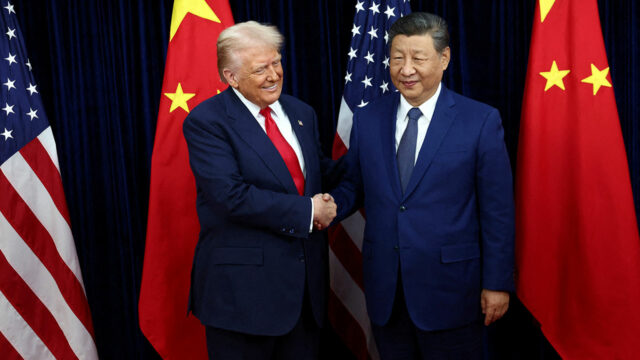
US PRESIDENT Donald J. Trump shakes hands with Chinese President Xi Jinping as they hold a bilateral meeting at Gimhae International Airport on the sidelines of the Asia-Pacific Economic Cooperation (APEC) summit in Busan, South Korea, Oct. 30, 2025. — REUTERS/EVELYN HOCKSTEIN

WASHINGTON — US President Donald Trump will meet Chinese President Xi Jinping in May during his first visit to China in eight years, a closely watched trip postponed due to the ongoing Iran war.

Mr. Trump’s effort to reschedule the trip reflected the Republican president’s eagerness to project confidence in a challenging Middle East war and simultaneously to manage a tense relationship between the world’s biggest economies.

Initially slated to travel next week, Mr. Trump will now visit Beijing on May 14 and 15, he said in a Truth Social post on Wednesday. Mr. Trump added that he would host Mr. Xi for a reciprocal visit in Washington later this year.

“Our Representatives are finalizing preparations for these Historic Visits,” Mr. Trump said. “I look very much forward to spending time with President Xi in what will be, I am sure, a Monumental Event.”

China’s embassy said it had no information to provide on the announcement of the visit. Beijing normally does not detail Mr. Xi’s schedule more than a ​few days in ⁠advance.

The long-scheduled trip – and Washington’s broader effort to reset relations in the Asia Pacific region – have been repeatedly overtaken by events.

In February, the Supreme Court curtailed the US president’s power to impose tariffs, a source of leverage for Mr. Trump in negotiations with the US’ third-biggest trading partner. Later that month, Mr. Trump’s joint military operation with Israel against Iran introduced a new point of tension with Beijing, Tehran’s main oil buyer.

Mr. Trump’s last trip to China, in 2017, was the most recent by a US president. Mr. Trump’s visit in May will be the leaders’ first in-person talks since an October meeting in South Korea, where they agreed on a trade truce.

WHITE HOUSE SAYS XI UNDERSTANDS TRUMP’S REASONS FOR DELAY

The two-day trip is set to combine the lavish pomp and circumstance that has become a feature of Mr. Trump’s trips abroad with hard-nosed diplomacy.

While the two sides could strike goodwill agreements in Beijing on trade in agriculture and airplane parts, they are also expected to discuss areas of deep tension like Taiwan, where little progress is expected.

Mr. Trump has dramatically ramped up US arms sales to Taiwan during his second term in office. The moves have angered Beijing, which claims the democratically governed island as its own territory.

It is also not clear whether the war with Iran, which has shaken the global economy, will be settled by the time of the Xi-Trump meeting.

Mr. Trump has sought support from the world’s major oil consumers, including China, to help counter Iran’s efforts to close the Strait of Hormuz.

Mr. Trump’s request for assistance so far has largely been rebuffed. China, which imported around 12 million barrels of oil daily during the first two months of ​2026, the most in the world, has ​not directly responded to ⁠his request.

Asked whether the war could wind down in time for the China trip, White House spokeswoman Karoline Leavitt told reporters on Wednesday that “we’ve always estimated approximately four to six weeks. So you could do the math on that.”

Ms. Leavitt also said Mr. Trump and Mr. Xi spoke about rescheduling the trip and that Mr. Xi had understood the reasons for doing so.

“President Xi understood that it’s very important for the president to be here throughout these combat operations right now,” she said. — Reuters